 Ask ChatGPT


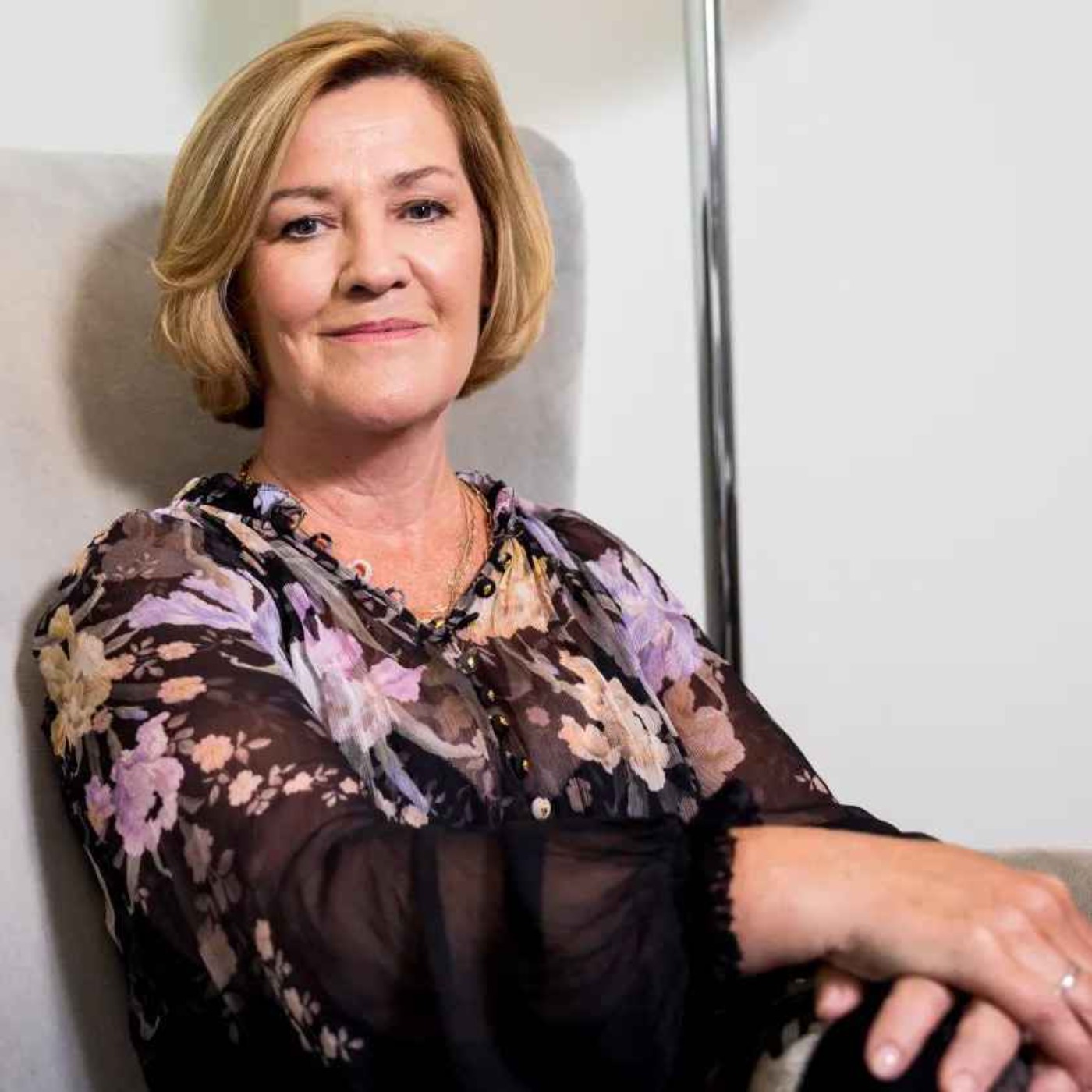
In this episode, co-hosts Danny Fortson and Katie Prescott delve into the intersection of artificial intelligence (AI) and data centres, featuring an interview with Adaire Fox-Martin, CEO of Equinix. The discussion centers around California's new AI safety law, the rise of AI in everyday life, and the critical role of data centres in supporting AI’s exponential growth. The episode explores how Equinix is preparing to meet burgeoning data demands and the challenges posed by energy consumption.
Written by AI. May contain mistakes.

Get the gist, explore an idea or ask about something said.
 Claude
On Times Tech, what are the key points of this episode?
Searching your listeningAutomatic transcript. May contain errors.
0:28I love it. I see many people with Zoom backgrounds. Danny Fortson, who's inside a ghetto blaster, but like a crackly screen over his face. You look great. Thank you, because you can't really see my face. It's kind of a backhanded compliment. Wow. Get back in your boombox. Come on.
0:48Hello and welcome to the Times Tech Podcast with me, Danny in the Valley, Danny Fortson. And me, Katie Prescott, Katie in the City of London. This week, we're looking at how AI is leaving the lab and seeping into everyday life. And of course, as that's happening, the question is and has been and will be, who is setting the guardrails on this mad experiment? And our other big, big theme for this week is data centers. If AI is the brain, data centers are the skull, the heart, the lungs, the infrastructure that is carrying AI, and they are under strain, and with it, the rest of our infrastructure, I should say, like never before.
1:36So we've got a fantastic interview this week with Adair Fox Martin, who's the boss of Equinix, which is one of the world's largest data center operators. But before we get there, let's go back to what you were saying about AI regulation, Danny, because it's fascinating. There's been a landmark new safety law, new AI safety law in California, of all places. Indeed. The place where you think AI should be running free. Yeah, well, so Governor Gavin Newsom, who is one of the most prominent Democrats in the US, probably presidential candidate in 2028, huge thorn in the side of Donald Trump. He's just signed one of the first kind of big state level laws on AI safety in America.
2:23And what does it say? What do companies have to do? It forces companies to put in place and publish safety protocols to stop their most advanced models being misused, saying to like, I don't know, hack a power grid or design a bioweapon, stuff like that. Little things. Minor things. And they can get really, really big fines for this. Is that the idea? Yeah. Millions of dollars per violation, whistleblower protections for AI workers, and the industry you might not be surprised here they've been fighting this they think there should there should be kind of like one ring to rule them all you know one big federal ai safety law really want that i mean yes they do no well but i mean this is the thing there if the alternative is 50 ai laws one that is different from each state they're like look we know we're gonna have to be regulated we want one and what's really interesting as in many things in california where California goes, many states will follow.
3:20And why this is so important is because most of like the kind of leading AI developers in America, 30 of the top 50 AI companies, for example, are based in California. So it is, in a way, could become a kind of de facto national standard. You talk about the 30 top 50 in America, I mean, probably most of the top ones in the world as well. I mean, that's why it's so significant. It's interesting because it's very, very different to what we're doing here in the UK, where there's no set legislation. Instead, what they've decided to do is push all of the regulation onto AI, onto individual bodies. So people like Ofcom, who oversee the media, or the energy regulator, or the financial conduct authority looking after the city.
4:06Because the idea is that they say, if you're doing finance in AI, or healthcare and AI, it's very different to media. So they've delegated that to them, which again is a very different approach to what's happening in Europe. But it comes back to what we've talked about a lot before, that there is no one ring to rule them all. And actually that's becoming globally quite problematic. Yeah, absolutely. In the meantime, you know, the technology is just galloping ahead. And this is where it's going to get really interesting because of course the tech industry now very chummy with the White House. We have elections coming up next year.
4:43And the tech industry now has a pretty effective playbook on how to shape laws at once or those that it doesn't. And I can point you to just in the last election cycle in 2024, a political action committee called Fairshake. They raised$250 million from a bunch of big like pro-crypto tech firms, Coinbase, Andreessen Horowitz, et cetera. And what they did is like, look, we're going to back pro-crypto candidates. And they were wildly successful, including the president of the United States, right? Like he was famously anti-crypto. Then he became pro-crypto. Now he has his own crypto. And he had them all over the White House.
5:26We talked about that on a previous episode. It's been a real dramatic reversal. Is that because all of a sudden Silicon Valley is showering DC with money where previously they were like proud of ignoring the powers that be in Washington, you're starting to see there's at least three, maybe more now, pro-AI political action committees with hundreds of millions of dollars that have just been set up in the last three months to do this again. Try to get pro-AI people, keep the guardrails low, and let them, as the kids say, let the chef cook. And in a very, very different place, as you said, with the recent visits to the White House, the state visit over here to the UK, that political allegiance.
6:04I just wonder if these rules start being developed in California, maybe this is a really daft thing to say, would those companies move? Would you get a state which would make itself the AI friendly place to be? And people would like OpenAI would go, hang on a sec, we don't want to open up our protocols and show you if we're developing bombs. I think you can move state to avoid state taxes. But if you're operating in California, you're going to have to, I presume, operate by their rules. That's the kind of the power of California. It's the fifth largest economy on the planet just by itself. And so when California makes a law, people generally get in line because they don't want to miss out on the on that kind of that key market.
6:46So they wouldn't just get down to Texas or something. No, I mean, again, they could, but I don't think it would be very effective in circumventing these new rules. Well, amazing to watch and an amazing development for somewhere like California to just leap into because it always seemed to me that the states was really, really holding back on regulation. Because of the importance of tech companies, the economy, it was a little bit like we'll let them do what they want. Yeah, exactly. And you have inside the White House, you have David Sachs, who's a big billionaire venture capitalist lives in San Francisco, kind of hard right guy, he is the AI czar.
7:21And I'm sure he will be pushing for a kind of a loose national framework that regulates the industry, but, you know, very light touch. Maybe that could supersede what California ultimately is doing. But, you know, inside the White House, you have a Silicon Valley insider, huge Trump supporter. He's the one leading the charge on crypto as well as AI and really being like, hey, don't kill our golden goose. Let's not regulate this too harshly. So we'll see how it develops. The golden goose seems to be doing all right at the moment. I mean, we had the $100 billion investment, didn't we, from NVIDIA into OpenAI last week.
7:58And this week, OpenAI's announced they're putting checkouts into ChatGPT, which just feels like a leap forward into making it, hey, you never need to leave our site. That's the other big kind of news story this week. OpenAI Stripe, which is the biggest payment processor online, they managed something like a trillion dollars in sales annually on e-commerce deals they built this thing that's like yeah we can now you can now check out inside chat gpt so if you say chat gpt i'm looking for whatever then it'll generate oh these are the good products etc and then you can hit buy and stay within there and of course that's a shot across the bow of google that's a shot across the bow of amazon because people are developing these really personal relationships with these bots using them as therapists seeing them as almost friends and so the question is is that behavior change going to follow if you're already talking to your chatbot like a therapist i'm guessing you're going to trust them when they recommend a product they know that your favorite color is blue i don't know they might know everything about but it's a change isn't it's a bit like we were talking about to jim lanzone from yahoo yeah it just keeps you in that same space you don't need to leave your little chatbot friend and that is what so many publishers are really really worried about if you think about the companies that make their money from these links it's around the idea of what's the front page of the internet is it going to be chat gpt or clod or whatever your favorite chatbot friend is is that going to be the thing that you open up first when you're looking for answers when you're shopping when you're booking travel all of that stuff because i don't think it's there yet but again i think what's weird about the technology is people have are forming such an intimate relationship with them that it wouldn't be hard to see how they take primacy in terms of people's kind of the way they interact with tech well speaking of everyday life the one other story that i think we should talk about this week is a woman and she's called she's called tilly norwood have you heard of her oh vaguely please do tell do tell okay so she is the new star unveiled this week at the zurich film festival okay yeah tilly norwood this is a catch okay there's a catch guess what it is it's an ai related catch let me see it's an ai related catch is she not real she's not real she's an ai generated actress from a startup called shikoya and she's already being called the next scarlett johansson which might upset scarlett johansson who accused open ai of stealing her voice is she called is she being called the next star scarlett johansson by the person who created tilly norwood she maybe that is the link but she's the just the latest of this I follow a number of AI bots on Instagram.
10:56I don't know if you do. I just find them fascinating. AI influencers who do extraordinarily well and have many, many followers like me. They make lots of money. But they are not they. No, well, it does sound a little Black Mirror-y, to be honest. I guess my question is, has anyone seen her act? Because I've seen some of the actresses and actors are just like, look, all you agents who are wanting to glom onto the next thing, do not do this. Do not hire basically an algorithm as your next talent to manage. But it gets to the point, right, of all the stuff that is happening in Hollywood and entertainment.
11:31And we're not that far removed from the actor's strike and the writer's strike. Those negotiations for a new deal are going to probably start next year. And so this feels like a little bit like a parlor trick. But again, I think it shows a real glimpse of why talent in particular are so freaked out. A parlor trick with 42.6 thousand followers. That's wild. That's a lot. And it's very in your face in her little blurb about Tilly. You'll either get it or pretend you don't. AI not as a replacement for people. Yeah, right. I think if you're an actor, you'd feel very nervous about that. And there's been stories like this in the past.
12:12This year, Spotify, there's some AI band that has millions of downloads, for example. and it's just like this very milquetoast music pop music not particularly extraordinary not like horrific but just kind of like you know a notch above elevator music but they've got millions of followers there's a band picture there's four or five people they're all fake the music is computer generated but i wonder if we'll look back and we'll be like remember when that all that nonsense was happening around everybody was freaking out that like people are going to want to watch AI actresses listen to AI generated music.
12:49It reminds me of when we had Sam Altman on and he was like, people are really interested in people. Yeah. And I just wonder how this all kind of shakes out. And do you really want to watch a film where you know that it's just so perfectly made by a computer? I mean, maybe, you know, I guess we're happy to in some ways, aren't we, when we watch cartoons and avatars and things, but in some, some films you want, you want real. I've got a very personal story about this I'm not an actress in my spare time This is not what I'm about to say I've had to take some time off this week To record the audio book of my book Which is coming out soon And it is taking four days That's why I'm sitting in a brown cubicle at the moment Now, the obvious solution Is to upload a chunk of your voice And then get 11 labs or something To read it out And the guy who owns the studio where I'm recording has been thinking about this a lot.
13:43And he said they used it to fill in the gaps with recording, but it's still not quite as good as getting someone to read something out themselves. Circling back to the story, the other thing I think is interesting, and it feels like as with almost every story, it all circles back to OpenAI. Because this week, the other thing that they did was they announced the launch of a new social media app called Sora, in which you can create videos with text prompts and basic photos of yourself, your friends doing anything you want. Crazy stuff. And OpenAI had apparently went around to the Hollywood studios before they launched this and said, you basically have to opt out, proactively opt out of your IP being kind of usable in this new social media app.
14:27And so it caused a bit of a stir in Hollywood because they're creating this new social media app. And you can kind of see it taking off if like I send you a video of myself, I don't know, riding a unicorn across the Pacific or something. And then you send one back like dunking a basketball or whatever. But like the kind of there's a fun and lightness to it that you can see it. Oh, maybe this will take off. But it also just shows to me OpenAI is just wild ambitions. Like on Monday, they're like, yeah, we want to take on Amazon and Google Shopping. And then Tuesday is like, we want to take on TikTok.
15:05Yeah. And it just keeps going and going. and going. They are literally fingers in every place. So all of this fun is going on, on the surface, and holding it all up, keeping it all together, are the data centers, the infrastructure, the lungs. What a segue. Did you like that? Yeah, what I was just thinking about, you know. But it is perhaps the boring but important side of AI. Is that fair? It is. I mean, you don't want to visit a data center. It's not like playing around with Sora. Again, the way I think about it, if you think about between now and 2030, the latest figures are that$3 trillion is going to be spent on data centers and the energy to power them.
15:51That is like, and I think I've made the analogy before, but like canals or railroads or like an epic infrastructure buildup for an entire new thing. And it's happening now. and of course where they are, who controls them, on what shores, all of that stuff is really interesting and really matters. And a lot of it's about energy, which of course was your old beat. Yes, exactly right. Exactly right. Which was why there was so much issue about them when during the state visit all anyone was talking about was data centers, the big jets full of servers. I'm excited that you managed to sit down with Adair Fox Martin, which sounds like somebody from like a John Bacari novel or something.
16:40Yeah, she's very cool. Women actually don't meet many female CEOs in Silicon Valley for a start. And just to give you a sense of their size, they're planning to add as much capacity in terms of data centers, which you'll know are always measured in gigawatts. gigawatts. So in terms of the energy that they need, essentially, not in square meters, as you might expect. So they're planning to add as much capacity in the next five years as they have done in the entirety of their existence in the last 27 years, which is just amazing. And she was saying that 90 % of all internet traffic goes through Equinix facilities.
17:18So a big old beast. But anyway, because I thought it was very unusual to have a female boss of a Silicon Valley company and because she was Irish. I started the interview just by asking her how she got into it. Fantastic. Let's hear it. I think in some ways, you know, all roads were leading to this role, although I didn't recognise that as a destination in the first instance. I actually began my career as a high school teacher. Really? Yes, actually in the UK. I would often just with my colleagues on one of my former companies on the board that when you can manage a classroom of 16 year old boys, 32 of them, that the board of any company is easy pickings after that particular.
18:04What were you teaching? English literature. Wow. So not even technology. So, you know, a very opportunistic moment for me was when a company was looking to test the theory that you could take a teacher and turn them into a technician? And would that be easier than taking a technician and trying to turn them into a teacher? Right. And it was at the point in time when the software industry was changing, when 4GLs or fourth generation languages were the next programming language. And there were seven of us that were recruited into this program of taking teachers and doing all of the necessary training to turn us into technicians.
18:49Wow, it's like a mad experiment. It was, we were, I think, the most successful trainers they had. There was a huge degree of empathy on our side of the classroom for people who were learning this technology for the first time. And yeah, it was, the company was Oracle. Right. And that was the start of my journey in tech. So it's a gentle reminder to me, you know, all the way through my career to make sure that we're always looking in different talent pools for different capabilities. So if we come to Equinix and the business model, I'd really like to understand more about how that works, because in essence, you're a real estate company.
19:26I think structured as a real estate investment trust. Or structured as a REIT, a real estate. But also a tech business. So it is an interesting dichotomy because there are two aspects to the business. The real estate side represents, if you like, the physicality of the business that we operate 272 data centres around the world. And in the vast majority of cases, we own the land that that data center operates on. That's part of the strategy of the company to take that position. But on the other hand, we also offer a range of technology services to our customers. So we straddle both worlds. And I guess I like to think of us as maybe the place where the physical meets the digital, right, where the two worlds come together.
20:13Equinix is a company with 27-year history. so quite a lot of pedigree for me to build on in the company and in my current role. I have an extraordinary time as well. So are you essentially like landlords, like tech landlords? No, I wouldn't describe us like that. I think the best analogy that I would use for Equinix is to describe us almost as an international airport. So we offer data centres where companies can choose to place their technology into our infrastructure. rather than build that infrastructure themselves. But in addition to that, we are also the place where companies connect with each other.
20:55So if I use the analogy of an international airport, a flight might come in to London Heathrow from KLM. You go through Heathrow, you connect, and then you go on to your next destination, which could be on a different airline. And behind the scenes, there's a whole series of things that have happened to make that transition for you as a passenger possible. We do exactly the same thing for data. So a data packet might come in from company A. We are the hub that connects, interconnects that data and sends it on its way to where it needs to be, which might be in company B. So think of us rather like the airport of the Internet.
21:37And actually, 90 % of Internet traffic comes through Equinix facilities. But in terms of your clients, then, they will essentially rent space in one of your giant sheds. And then you might or might not provide the tech infrastructure with it. So essentially, our customers will rent space and power. I see. So a combination of some space that they will configure in a way that either we'll provide or that they may have very specific specifications for. And then, of course, we provide the energy. And then around that space, there's a whole range of things that happen around security and other facilities to render that space private, secure and safe for our customers' data.
22:21But our customers then will also perhaps choose using Equinix as a base to, as we say, interconnect with other companies. And to the extent that some companies choose to physically closely co-locate with others in their ecosystem. So 70 % of the trades in the world happen through Equinix's infrastructure because you would take a facility like a stock exchange and then their trading partners co-locate around them. So there's literally no latency between the transactions that occurs. I made a programme for the BBC many years ago about data centres that were being put in Arctic Norway. I mean, talking of energy, and we'll get on to the energy question shortly.
23:03We've also had someone on this podcast who is planning to put data centres in space again because of energy, because of it being cool. What's the sort of weirdest place that you've ever put a data centre in? Are you exploring things like putting them under the ocean? Well, you know, we have 272 already. We're certainly open to... And there's 272 traditional sheds in normal inverted commas places. This is the thing, you know, one or two have been, you know, as a result of acquisitions that we've made in different locations. And so there is actually a data center hidden behind, I wouldn't say exactly which city, but hidden behind the wall in a casino.
23:45Cool. And, you know, you're in red, red plush carpet, red and gold on the wall. And I feel there's a podcast moment where I can go, what's behind this door? And it's a data hall in one of our data centres. The original use of that building was different when the data centre was built. And so the data centre has remained and the casinos positioned around it. But you're not looking at the Arctic or the ocean? Are you looking at data centres to Las Vegas? I don't. So just me or me, are you looking at sort of stranger parts of the world? So space or oceans or all the Arctic? I guess I would say that we're innovating, you know, for a period of time where we can see out into the future five, 10 years ahead.
24:30You know, as you mentioned already, there are a number of opportunities and I think challenges in this segment, because today we're at such a pivotal point with AI as a technology and all that we feel can be possible from that technology. But much of the training that AI requires is very resource intensive when it comes to energy use. And so we're looking at ways that we innovate around that challenge. NVIDIA is one of your partners. Could you tell me a bit more about that relationship and how that works? It's a very important relationship to us. We have relationships with many of the GPU as a service providers right across the ecosystem.
25:15And in fact, our ecosystem is an important part of our strategy. With NVIDIA, we offer a number of different services to our joint customers. So in our data halls, we have innovated on how you bring liquid cooling into an existing production data center. And even at your most simple level, we know that water and electricity do not mix and water and sarvars do not mix. And the team have worked to engineer the capabilities to bring into existing data centers the liquid cooling that is necessary to run the GPUs provided by NVIDIA. Because they're so energy intensive. And you need to cool them in a different way than you would cool a traditional CPU.
26:00And so a number of our customers want to have that capability. and we offer it in a number of ways, building the stack and they can have that as an OPEX service or they buy the assets themselves and then we help them install it and implement it into our environment. And looking at how very many of our customers are creating the concept inside their companies of an AI COE or an AI factory, bringing some of the skills together, defining the governance around the introduction of this technology into their business. And again, that's something that we're partnering with NVIDIA on. We're one of the first data centers to run the NVIDIA's new chips.
26:39We have that in our Silicon Valley facility. And so we host a lot of visits through to show that technology in action. We'll talk about what's happening in the UK with data centers shortly. But it's pretty obvious that across the board, with the advent of AI, the AI revolution, the demand for data centers is growing exponentially. I think it was in one of your recent earnings, you said you're struggling to meet demand and to get the capacity you need. What does that look like to you on the ground? So for us, you know, we really feel that this is quite a pivotal point. We're very fortunate to be a company that's, you know, at the centre of such a pivotal moment.
27:19And where so many of the things that we offer are relevant to that technology landscape. We have adopted an element of our strategy that we refer to as Build Boulder. And this is really about understanding how we bring more capacity to the market. In the 27 years that Equinix has been a company, we have brought on two gigawatts of power through the 272 data centers. Now, that might, in the world of BragaWatts, that might not sound like a lot. I don't know what BragaWatts is. There's a lot of statements in the market about, OK, we'll be bringing on five gigawatts, six gigawatts. And in our 27 year history, we have been such a careful custodian of resources that we have brought on two gigawatts.
28:08And in two gigawatts of energy, we're servicing over 10 ,000 customers across that footprint. What's two gigawatts? And, you know, how do you bring that to life for someone listening to know what it is? looking at it in terms of you have KVAs as the lowest level in electricity and then megawatts is the next level up and then gigawatts up and that almost like metric measures. 600 onshore wind turbines, the entire city of Paris. There you go. So what's happening now? So now customers are asking for larger footprints in data centres and we are planning to bring on as much capacity in the next five years as we have brought on in the previous 27.
28:50Wow. And that means a lot more power. In the last 27, we've brought on two gigawatts. So we're looking to double our footprint. In other words, add another two gigawatts to our global footprint over the next five years. And that means a lot more spending up from$3 billion this year to up to$5 billion. We're a very physical business. And as you say, this change is hugely resource heavy. Just hearing the numbers for your company and the change that you're having to bring on stream, the sort of energy for a city the size of Paris, within the next five years, which is what you've done in 27 years, essentially.
29:25Power, we know, is a major issue with data centres. We just need to look at what Microsoft has done with Three Mile Island, isn't it? Bringing more nuclear power. Do you think nuclear is the way that the AI revolution is going to be powered? I think from an energy perspective, It's quite a multifaceted topic. Everybody's looking at everything. I guess you have to when you're talking about that. Everybody's looking at everything. We look at SMRs. So small modular reactors. Small modular reactors, yes. And we look at on-site generation. We look at gas turbines. We have some data centres that are operating on gas fuel cells.
30:05We have others that have backup generators that are hydrogen-based. So everybody is looking at the totality of the options that are available to ensure that we can secure the energy future for our customers. You know, I will say the other thing that I guess from a, you know, historical perspective and just as I've mentioned already, you know, our enterprise focus that marks us as a little unique is that we have got 26 years, 27 years of operating data centers. And that means that we have 26 years of data showing us power usage, you know, and enabling us to use all of that information to project forward, you know, the kind of capacity and power requirements that we would have and need.
30:59it must be very different though when you're talking about power requirements in the us compared to over here in the uk and in europe and i've certainly spoken to data center bosses in the past you say it's becoming harder and harder to find space in the uk connection to the grid there's real concern from policymakers and the boss of the national grid who said last year that data centre power consumption is due to grow 500 % over the next decade. What's that like when you think about building here? Or do you think actually we're not going to, it's easier to not be in the UK? Well, I think there are some very important aspects to consider.
31:40First of all, we've been here since 2016 in the UK. So you've got 16 data centres in England? Yes, 14. 14, yeah. So we've been here since 2016 and we're here for the long term. We're continuing to invest. We have 13 projects underway across the country in various different stages right now. Secondly, I think there's been some really good moves from the government in terms of defining data centres as part of the critical infrastructure of the country. And that's, I think, a very important signal. In fact, I think that announcement was made from one of our data centres just outside London. You know, so I think that's a very important indicator to data center operators is to the importance that the government holds this segment in.
32:25And that's a great thing. When it comes to acquiring powered land, that is always a challenge, right? And that is a challenge actually right across the globe, because you're not just looking to buy acres of land. You're looking for land that, A, for us, is adjacent to a metro. So that's an important part of being able to facilitate the latency requirements. So near a city centre. Near two cities rather than city centres. Yeah. You're also looking for land that can be powered. And ideally for us, we would like that land to be powered by the grid, you know, and that isn't always possible. Then we have to look at what options would we have to power that land if that is not possible.
33:12and then you look at the supply chain of just the construction process itself and you know from the time that you acquire land to ensure that that land is powered and then prepare and develop the land to begin construction you're often talking about months and years before you get to end of life with a data center product that's available for market consumption and so I do think that there is an opportunity for the government here and in other locations to look at, you know, processes such as permitting and permissions and planning that are processes that were maybe built for a different time.
33:51And to understand is there opportunity to smooth, simplify, streamline those processes so that it can take time out of the construction process. That would be, I think, a huge enhancement to, you know, to the data centre landscape here. Do you see it as too difficult to build in Britain? I know you said you've got those 13 projects. No, it's not that it's too difficult, but you have to factor in, you know, permitting, permission, plannings. And there are often unknowns in that in your timeline that you have to navigate in real time. How about in Ireland? Because very famously, they stopped the building of data centres there because of fears of blackouts, because of the energy demands.
34:34Yeah. You know, again, I would say that, you know, we are a very good custodian of energy. We have a demonstrated history of doing that for many years. You know, Dublin, we have eight data centers located around Dublin City and just finalizing the acquisition of another two. Yeah, but the government is asking for bills to happen, you know, further away from the city. You know, when I think of countries like Singapore, for instance, another country that is extremely dense and also in a very constricted environment as far as energy is concerned. You know, the Singapore government have recognized the role that companies like Equinix play in supporting the local economy rather than a single tenant environment and supporting local businesses in the local economy.
35:30And very recently, you know, as a result of work that we've done, we were one of four vendors who were given some additional capacity in Singapore in recognition of the contribution that we make to their economy. We look at our strategy through the lens of the resources that we use and the goals that we've set for ourselves in terms of renewables and the targets that we're looking to achieve in terms of deploying those. So I think it was in 2015, again, just a little before my time in SEAT, we set a goal to be at 100 % renewable across our data center footprint by 2030. For the last seven years or so, we've been at 90 % plus.
36:15We're currently at 96 % plus. And as part of that, we look at two aspects. We look at PUE, which is our power usage effectiveness. It's a ratio that you use to measure the effectiveness of energy use in a data center. The average for the industry is 1 to 1.56 as a ratio. We're at 1.39. so we're working really hard to continue to bring that down and we're one of the first data centre operators to do the same for water so water usage effectiveness we've begun to publish that in our sustainability reports and to look at how we're using you know that very valuable natural resource in our data centre environments.
37:02And we continue to measure and evolve that. Now, the WUE standard in the industry is not as evolved as the PUE one. So we're continuing to work so that we can evolve that, not just for Equinix and for Equinix customers, but for the industry as a whole. So in terms of the environmental impact, you were saying 96 % of your data centres? I have renewable cover at this point and over for the last several years, we've been above 90%. 90 % of renewable energy. I'd love to hear with your global hat on how important you think sovereignty of data is at the moment. It's something that a lot of leaders, Jensen Huang from NVIDIA was talking about it this year.
37:46A number of AI companies in Europe speak about it. Is it becoming more important, do you think? Do people want to see data, their own data kept in their own jurisdiction? There is a combination of things to consider here. Sovereignty is certainly an important conversation. And probably if I thought about it from a territorial perspective, it would be more in the European Union and that we engage in those conversations on a more active basis. I think, you know, we can absolutely see, though, a move for many companies into private environments, you know, particularly when we start to think about the role of the AI inference engine coming into core business processes and core business workflows.
38:36So it's estimated that a substantial proportion of company workloads will stay private and not by private, I mean, not be moved to a public cloud environment. And I think this is something that is something that we're seeing that's quite universal. There's lots of reasons why that might be so. Some could be sovereignty requirements. Some could be regulatory requirements. Some could be intellectual capital, you know, an intellectual property. When I think about that kind of architecture, that typically means that a customer has quite a complex environment because they probably have some data residing in cloud, some data residing privately at Equinix or similar.
39:18And now they have to navigate and create an architecture that allows you to navigate across all parts of that architecture. So that probably is, you know, the preeminent conversation around helping a customer support a hybrid multi-cloud environment. Well, sovereignty is certainly a conversation that we absolutely have. And we're naturally sovereign because we're always in country, on the land, Your data is your data in your environment. And we can very clearly show the data flows in and out of that environment. I'd just like to end by asking you, how worried do you think we should all be about the energy demands of AI?
40:00I mean, you're in such a unique position to answer this question. When you talk about people grabbing energy from where they can get it, can we really cope? I am a firm believer in the innovative and imaginative capabilities of humans, right? And I believe that we will collectively find a way to address the energy challenge so that we can continue to progress the opportunity that we see here. So maybe it is data centers in space. Maybe it is data centers in space or below the sea, who knows? Yeah. does that fill you with confidence no didn't sound like there was an answer did it no i mean obviously they're trying everything right that's what she said we're grabbing energy where we can get it yeah data centers and casinos cooling chips with water i mean obviously liquid cooling is like the thing it's going to be a big thing completely agree and it obviously has different impacts depending where you are.
41:06And over here, where space is far more limited than in the States and our national grid is creaking and you've got the electrification of vehicles coming up at the same time as the energy needs of AI, you do wonder where you are going to put data centers. And actually, the space, water, Arctic ideas don't seem terrible when you hear the boss of the world's biggest data center say everybody's grabbing energy wherever they can get it i also i want to thank her personally for the term braggawatts that's good isn't it i was also very interested that by the impact she said by the needs that she talked about of nvidia chips the fact that they needed more cooling than other chips i guess it's maybe obvious because they're more powerful but i hadn't really thought about that before and it's also what's uh jaben's paradox sam altman was like The cost of it per unit of intelligence has come down 100-fold in two years, and we expect that to continue.
42:06And then they're like, the newest NVIDIA chip is 40 % more energy efficient, but you're still needing more because it's like, the better things get, the more of it you want. And so it's kind of just like you're still fighting a losing battle. Yeah. And the way she described it, they still need more power and more cooling and more special treatment than other sorts of chips. I mean, hearing her just buttresses my sense that it's really electrons are going to be the key kind of bottleneck. Everybody wants chips, but NVIDIA seems to be doing quite well in pumping those out. And then we had, you know, friend of the pod, Lisa Sue on.
42:43They're doing their own. The AMD boss. Exactly. It feels like chips is less the issue and it's going to be more like, where's your power coming from? Yes. How dirty is it? Yes. How much water do you need? All of that stuff, like the real nitty-gritty, basically real-world stuff that is quite difficult to sort out, especially, as you say, on a crowded island. I'm delighted that you are doing our energy section at Tech Summit. I think that is going to be really, really interesting. And you're the perfect person to do it, having done both the energy beats and the tech beat. But you've got Mike Intratour from CoreWeave, who we interviewed not that long ago, who's all on AI infrastructure, among others.
43:25So it should be good. And we got the boss of Rolls Royce as well, right? Rolls Royce, yeah. So it should be interesting. Anyway, data centers are interesting. It is. And I think this is the kind of where the rubber meets the road of all this. The AI revolution, it's also whizzy, but it comes down to just like, you know, real estate, utility connections, water, all the boring stuff that's like quite important. All the boring stuff. Yeah. That's not as fun as fake AI actresses. Exactly. Anyway, we should tell listeners, if you have any questions, suggestions, comments, anything, email us at techpod at thetimes.co.uk, techpod at thetimes.co.uk.
44:05Also, go check out the info for the upcoming Times Tech Summit in London on October 21st. It's going to be fabulous. Katie and I are going to be on stage. we're going to be talking to. Lots of folks there having some really interesting conversations. This is something you will not want to miss. And looking forward to the tech summit. That'll be good. I'm glad you put your tickets. I can't wait. Bye.
Danny and Katie look at California’s new AI safety law, OpenAI’s in-chat checkout, and the rise of AI “actors”, and how it all depends on one thing – data centres, the hidden plumbing of the internet. They’re joined by Adaire Fox-Martin, CEO of Equinix, which runs the giant facilities where the world’s data lives, to explain how the company is racing to keep up with demand and why it plans to add as much capacity in the next five years as it did in the past 27. But with soaring energy use and limited space, can the industry keep pace?
Image: Jack Taylor/The Times
Hosted on Acast. See acast.com/privacy for more information.