Ask ChatGPT


 Times Tech
10 Oct 2026 · 27m · 14 chapters
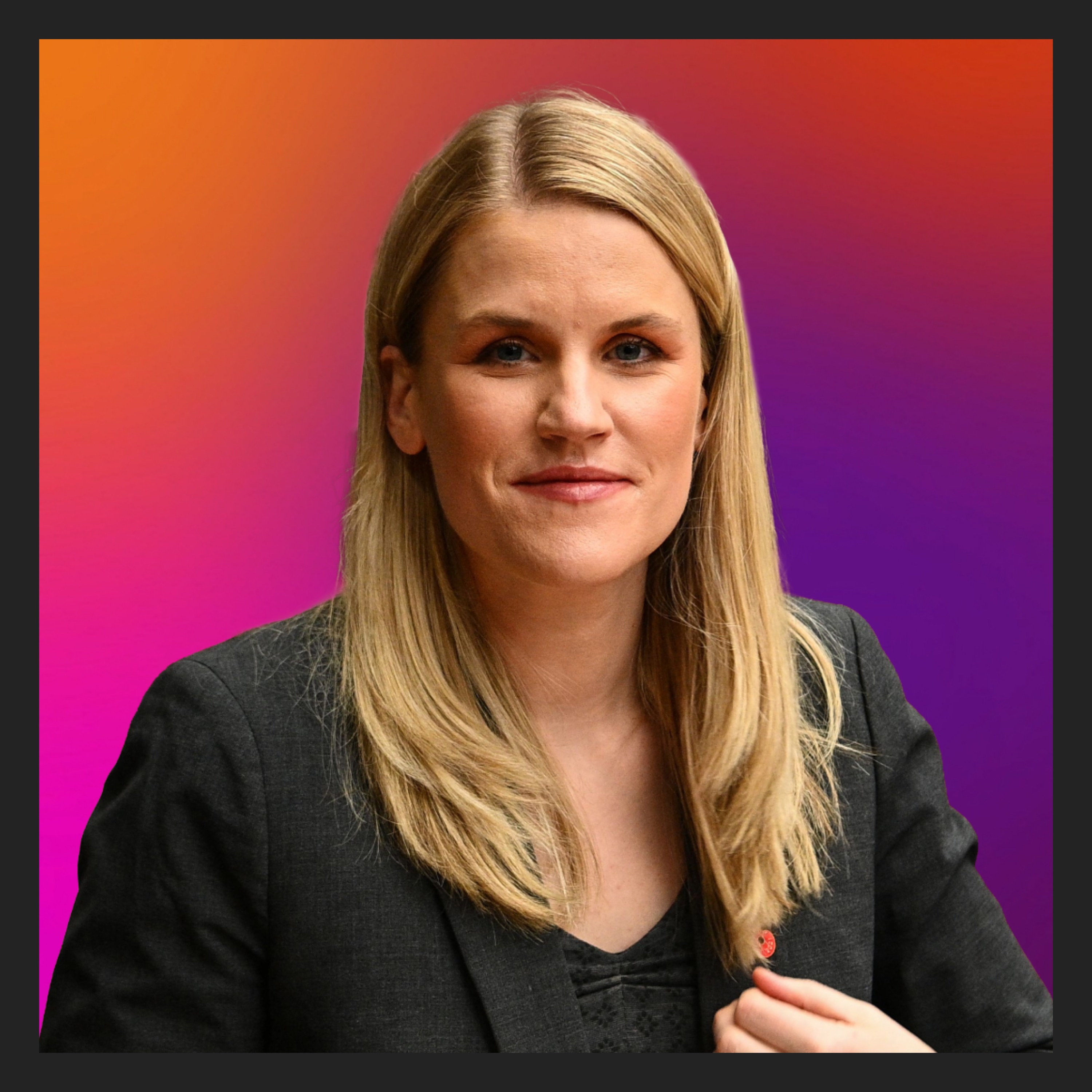
Interview with Frances Haugen about her Facebook whistleblowing, the film The Social Reckoning, and what recent Meta lawsuits/settlements reveal about Meta’s priorities and AI direction.
Frances Haugen is a former Facebook employee who blew the whistle in 2021, releasing thousands of internal documents; she testified in Congress and worked with Jeff Horowitz at The Wall Street Journal.
Meta prioritized profit over user safety; settlements show ongoing harm despite Meta denying wrongdoing; court discovery has revealed far more than Haugen initially provided; AI “friend” products risk replacing human connection; Meta’s AI safety/privacy responses are inadequate.
focus-group research comparing Instagram vs Snapchat body-image effects; internal tracking of reports of unwanted sexual messages to children; user research in kids’ homes about Instagram’s role in family use; evidence of adults sending lewd photos to children; New Mexico’s child-exploitation case and AG/school-district settlements.
Written by AI. May contain mistakes.
Exploration of Frances Haugen's experience as a Facebook whistleblower.
“Exactly, because most organizations aren't neat, shiny systems.”
Exploration of Frances Haugen's experience as a Facebook whistleblower.
“And this week, I've been speaking to Frances Haugen, friend of the pod, the former Facebook employee who blew the whistle on the company back in 2021.”
Discussion on the implications of Meta's legal issues and recent settlements.
“of how Facebook first came to be, you know, from young Mark Zuckerberg, starting out at Harvard.”
Frances Haugen provides insights on the significance of Meta's settlement.
“So we thought it would be a great time to get Frances back on to talk about, you know, what she did then and what she has seen since.”
Frances discusses new findings revealed through lawsuits against Meta.
“I have to say like the thing that's been kind of like eye opening for me about the settlements.”
Insights into the ongoing child safety issues on platforms like Instagram.
“I had nothing that was like that egregious.”
Frances shares her thoughts on the film inspired by her whistleblowing story.
“That was kind of built into the settlement.”
Explore the insights and experiences shared by the whistleblower regarding their memoir and film adaptation.
“Remember, they had to consolidate not just my memoir, but Jeff's memoir and at least one other memoir, which is like over a thousand pages between all those different books, nonfiction books into a two hour movie.”
The discussion delves into Meta's AI initiatives and the implications of substituting real friendships with AI counterparts.
“You know, Meta's an AI company, don't you know?”
Examining the safety measures and public perceptions surrounding Meta's AI technologies and privacy issues.
“AI is when we talk about Dario Amadei, the CEO of Anthropic, or even Sam Altman, they at least talk about how to keep their own companies honest.”
Analyzing the rise of documentaries about big tech and their significance in today's society.
“You have the OpenAI Sam Altman film coming out.”
A nuanced discussion on the future of technology, optimism regarding progress, and the challenges faced.
“found in a newspaper article or a journal article.”
Explore the evolution of societal changes and the slow pace of progress.
“Like if you had talked to anyone in the world in 1900 and then like, will the British leave India?”
Discuss the implications of AI on Meta and the potential for societal impact.
“Like what, what does it mean to watch Facebook decay?”

Get the gist, explore an idea or ask about something said.
 Claude
On Times Tech, what are the key points of this episode?
Searching your listeningAutomatic transcript. May contain errors.
0:00Your heart can tell you a lot about your health. Apple Watch Series 12 measures your heart rate every five seconds with the most advanced heart rate sensing in an Apple Watch. So your vitals app, now with heart rate variability, could tell you when something is off. And your readiness score can let you know when to rest and when to push. Hear the story in every heartbeat with Apple Watch Series 12. For general wellness purposes only, not intended for clinical use or to detect, diagnose, monitor or treat medical conditions. requires iPhone 11 or later. This episode of the Times Tech podcast is sponsored by KPMG.
0:36Katie, we've been tracking the AI surge for a while, but some of the latest data is pretty striking. It is. KPMG's latest quarterly AI pulse suggests that seven in 10 UK business leaders still see AI as a top investment priority, even if the economy slows down in the next year. But turning that investment into tangible value is another question. And so a lot of organizations are still figuring out how to move from endless AI pilots to something that works across the business. KPMG's focus is on that gap, helping organizations scale from the pilot phase to AI-powered transformation they can trust.
1:14To find out more about how KPMG can help your organization make the difference, you can visit kpmg.co.uk forward slash AI. This episode of the Times Tech Podcast is sponsored by ServiceNow. Danny, one thing we keep hearing from business leaders right now is AI sounds great, but how do you actually make it work inside a company? Exactly, because most organizations aren't neat, shiny systems. They're layers of software, legacy tech, and teams all doing things slightly differently. ServiceNow sits across all that, acting as a control tower for making work move seamlessly through the organization.
1:51Connecting people, systems, data, and increasingly AI agents so that things don't happen in silos. Learn how ServiceNow puts AI to work for people at servicenow.com. There's a running joke about Silicon Valley, where if you have a problem held by an affluent 25-year-old single man, there will probably be a good startup that will try to address that problem. Hello and welcome to the interview from Times Tech, our weekly conversation with the people shaping the future of technology. I'm Katie Prescott. And I am Danny Fortson. And this week, I've been speaking to Frances Haugen, friend of the pod, the former Facebook employee who blew the whistle on the company back in 2021.
2:36I was going to say, I remember you spoke to her at the time because this was an enormous story when she released thousands of internal documents from Facebook and exposed all of these extraordinary things which she said were a sort of culture of prioritizing profit over the safety of users and Mark Zuckerberg we should say denied all the allegations that she made. Yeah and you know she ended up testifying in Congress and there was a series of stories in the Wall Street Journal based on the documents that she purloined and now that story, you know, which also led to Zuckerberg being hauled in front of Congress and lots of, you know, public outrage.
3:15That story has now been made into a film called The Social Reckoning, which is really kind of like a sequel to The Social Network, which told, you know, the story of how Facebook first came to be, you know, from young Mark Zuckerberg, starting out at Harvard. Gosh, you know, those halcyon days and the way he was portrayed as this forward thinking entrepreneur, it feels so strange now to think back to that. And I remember how I felt using Facebook for the first time seeing that film for the first time. And then now with all of the concerns there are about the impact of social media, we've spoken a lot about how we feel about that with our kids, but also the very many court cases that have been brought against meta over the years and and, you know, until so very recently as well.
4:03Yeah, and this the timing wise, just for context you know and we talked about it on the pod meta just agreed to pay up to 17 billion dollars to settle allegations yeah and agree to change their product as well yeah they've denied any like wrongdoing but they're like we're gonna pay up to 17 billion dollars we want the other social media companies to change their practices as well and we're going to change our product but we didn't do anything wrong. So that movie comes out this week. So we thought it would be a great time to get Frances back on to talk about, you know, what she did then and what she has seen since.
4:42So here is my conversation with Frances Haugen. Frances, hi, how are you? Hi, I'm good. How are you? I'm great. Thank you for taking the time. I have lots of questions you may or may not recall, but you and I spoke three years ago-ish. You had just come out with your book, The Power of One, which recounted your whole experience coming out as a Facebook whistleblower and kind of getting all of these documents out with your digital camera, working with Jeff Horowitz at the Wall Street Journal, etc. And I wanted to start, now that we are here, well, I think it's five years after you first kind of those stories first ran.
5:24We have been talking on the pod a lot about, and I've actually been covering the meta trial here in Oakland. So I've been kind of, you know, in and out of the courtroom. And I was obviously we covered the$17 billion settlement with, I think it's 47 state attorneys general. And really about this core idea that you were alleging all those years ago. And it must be said, meta denies any wrongdoing. They're just like, we're just going to spend$18 billion because it's the right thing to do. But I'd love to just get your sense of one, that settlement. And is there any sense of vindication of, you know, you were in Congress on 60 Minutes saying these things five years ago and just would love to get your thoughts on kind of where we've got to.
6:15I have to say like the thing that's been kind of like eye opening for me about the settlements. Because just for your listeners' sake, I never know how much people have been following them and what level of detail. So we have the AG settlement. We have the school district settlement, which is still underway. So that's a bunch of school districts alleging they had to pay more for security and counselors and tutoring because of disruptions from social media. We have individual parents and families of kids who've been hurt. And that's at state levels and at federal levels. So there's a bunch of court cases that have not completed yet.
6:45And then there is this multi-state lawsuit that has completed. And in the process of just the lawsuits that have wrapped, a lot of exhibits have been released to the public. And when I came forward, maybe only 10 % of the documents I brought out were about kits. So we're talking thousands of pages. They were able, because they had those pages, subpoena millions of pages. And we have had released probably tens of thousands of pages into freely available now that court exhibits have been published or some of the court exhibits have been published. And the stuff that I brought out is nothing compared to what was found once they could actually subpoena.
7:25So, for example, I brought out stuff on focus groups of people asking kids about their self-perception, their body image issues were impacted by Instagram versus, say, Snapchat. and like talking about comparative differences that, you know, Instagram was worse because TikTok was much more oriented at performance, you know, people doing funny dances, you know, that kind of thing. Snapchat was about faces and like augmented reality, but Instagram was about comparing bodies, like comparing lifestyles. You know, that stuff seems quaint compared to getting to see the internal reporting on like, you know, Facebook was tracking how many people were reporting that they were receiving unwanted sexual messages, right?
8:09Like I had nothing that was that juicy. I had nothing that was like that egregious. Yeah. So hold on. So for those who don't remember, and I was rereading kind of my review of your book and our interview that we did, you kind of extracted by basically using a digital camera to take screenshots so you wouldn't get caught. 22 ,000 pages-ish of internal research and data around Facebook, Instagram, and these research projects, et cetera. What has come out since in all of these cases through discovery in the courts, do you find that what has come out since stunning or surprising? Yeah. So remember, my focus was on ethnic violence and genocide.
8:53The stuff that I had access to on kids was much, much more limited. Because remember, my focus, like what I worked on inside of Facebook was foreign agents weaponizing Facebook and using it to hurt people. It was ethnic violence provoked by information operations in African countries in Southeast Asia. Like, that was my scope of what I was supposed to be working on. And so I had access to all of it. For kids, you know, the closest I came to kids was helping the threat intelligence team that was working on like child exploitation, like basically hunting the worst of the child predators. I didn't have any business looking at research on mental health impacts of kids.
9:34And so the stuff that I was able to access was, was stuff that either snuck through the cracks. Like there were a couple of, of, of reports in there that I thought were, were quite illuminating. Like for example, there was a user research study that had looked at whole families. So usually user research is done with like just a focus group of kids. They'd actually gone into kids' homes and talked to like all the siblings and talked to the parents and like talked to understand like what is the role of a child on Instagram for bringing their parents on Instagram, for bringing their younger siblings on Instagram.
10:07And there were parts of that research that showed maybe a little cravenness in terms of like how kids were perceived, you know, so they would say things like older siblings will tell younger siblings to be careful about what they post because it stays on the internet forever, which sounds like common sense. And they would label that as this is a myth that the marketing team is going to have to debunk because they're telling kids they can't be their authentic selves on Instagram, right? You know, that's true. It's two different lenses, but that compared to research saying, we know, we know it's an ongoing problem that a disproportionate number of the lewd photos that are unwanted are being sent to children and the people sending them are adults.
10:47Like that is just like an order of magnitude worse in my mind because it shows like they knew there was a problem. They knew what to do about it and they chose not to. So when you think about that 17 or it could be 12, it could go up to 17 billion if Meta's rivals kind of agreed to the same changes, right? That was kind of built into the settlement. Are you encouraged or are you like drop in the bucket? this is one of the biggest companies that has ever existed in the history of humanity. And like, this is all just a bit of a bummer because there's still so much bad. So I, I, I have to be honest, I think they should have gotten a lot more money.
11:26But one of the things that the AGs had to weigh is they could have taken Meta to court and I think probably gotten hundreds of billions of dollars, but Meta would have appealed it. That would probably been in appeals for years. They might've lost in the Supreme court. You know, what is the value of a generation of children being woken up in the middle of the night by notifications or like distracted during the school day by notifications versus, you know, like what, how much is five years worth? And I think the way they looked at it, I don't know for sure. Like I haven't had a chance to like pick the minds of the AGs is they knew that there were more bites of the apple coming, right?
12:05So they're in the school district lawsuits are still coming down the pipeline, they're going to hold out for much, much more money because they know a lot of the table stakes of restrictions. So that's things like you shouldn't be able to distract kids late at night. You should be limited to two hours per day. Those things are already baked into the settlement. I have a feeling we are going to see much, much bigger numbers in the future. So for context for your listeners, New Mexico chose not to participate and brought their own case around just one issue, which is child exploitation. They said kids are being trafficked on Instagram and child abuse materials, that kind of thing.
12:41And it's just flagrant and inadequate protections are happening. And they've been awarded thus far about$900 million between punitive and rehabilitative penalties. And they can come back for mental health issues and self-harm. So I think it'll be interesting to see how that plays out more holistically, because I do think we're likely going to see even more from the courts. This is the beginning, not the end. This is definitely the beginning. You know, let's, let's check back in a year and see how they play out. Cause it'll be interesting to see what the consequences are. Right. The movie, how weird is it to see yourself portrayed like this kind of, because I remember just for, again, for people who haven't seen the movie, the thing that always stuck with me yet.
13:21You haven't seen it yet. The thing that stuck with me from the book was this image of you. You're in Puerto Rico. You're still working for Meta. Jeff Horowitz, the reporter, has flown down to Puerto Rico. And you guys are just huddled over your screen and taking photos and getting access to the documents you need to make the best public case possible before you quit, before you leave, before this all comes out. It all felt very kind of dramatic, that kind of tableau. But I'd love to just understand, like, what do you think of the movie? And how was it seeing that kind of portrayed? So for those who haven't read my memoir, it's on paperback now.
14:00It's called The Power of One. Remember, they had to consolidate not just my memoir, but Jeff's memoir and at least one other memoir, which is like over a thousand pages between all those different books, nonfiction books into a two hour movie. And so I think there are lots of fun things that I put in my book that I think are interesting experiences of the flavor of both like what it was like to be inside of Facebook and even just like that period of time that, of course, they can't capture it all. But I would say one of the things that I found the most magical was like, I don't really ruminate on like that period of time.
14:33That was a wild, relatively short window that happened five years ago, right? But a thing the movie captured really, really well was when I first started working with Jeff, there were things that I knew with high confidence. So like there were very specific issues where it's like, at a minimum, you have to look into this. And they chose slightly different issues to have that initial issue be in the movie than was in reality. but like I came in with like a pretty tight scope of being like, this is what I'm most concerned about. And there were other things where we, I didn't know. Like I, there were known unknowns, if you will.
15:05And the movie does a really good job of capturing like how exciting it was as like the puzzle pieces were like clicking into place. And like suddenly the larger picture made sense. Like I, I am really grateful that I now have this like little memento of like this period of time when like Jeff and I were, were like kind of kids in a candy store being like, wow, like we finally understand this like giant mystery that is swirling around us. So I think it's a thriller. It's like funny on the, I hope people, especially at like the AI companies watch it and say like, oh, I can imagine if I was put under like unfortunate circumstances and I had to be a whistleblower, I could stand up and do the right thing.
15:47And I think it'll be interesting to see how it is more broadly received. You mentioned the AI companies. You know, Meta's an AI company, don't you know? And I'm curious your take because we've been talking on the pod last couple weeks about like the rollout of these kind of consumer agents like Meta's Muse. Like this little cuddly like, you know, it looks like a navy bean with eyes or whatever it is. I don't know. Then you have Mark Zuckerberg who's like, you know what? People don't have enough friends. That's one of our big problems, loneliness. We should all have AI friends. and we're creating this thing, right?
16:22And I'm just wondering what your take is on this AI moment in which we find ourselves. And particularly around meta's kind of, it's the new thing, right? Muse, AI, everybody's personal AI, we're all gonna have it. There's a running joke about Silicon Valley where if you have a problem held by an affluent 25-year-old single man, there will probably be a good startup that will try to address that problem. Yes. Um, um, if you are a 55 year old widowed, lower middle class woman, like your problems may not have startups. Like, it's just like the nature of these things. I find it so fascinating. Like Marcus had this like recurrent theme around creating friend alternatives for a couple of years now.
17:05Right. So since he started talking about meta, or excuse me, the shift to making the company meta, um, he was like, you know, we're all going to hang out in the metaverse all day. You know, we're going to, we're going to be in there. you know we're gonna go to cafes in the metaverse and we see our friends in the metaverse like like it's gonna be amazing like you know this is a man who hasn't been able to walk down the street without getting dirty looks in in in a decade more than a decade you know when he goes in the metaverse he can be a cartoon character and no one grimaces at him but the fact that he can talk about the idea that we're going to substitute real friends for ai friends you know we're gonna we're gonna go in there and say like an ai friend is an equivalent thing it's like saying we've given you Soylent.
17:43Like, of course you have nutrition. Now you'll get all your vitamins, like all your vitamins and minerals. You're going to get them every day. Who needs to chew their food? Liquid, liquid meals are the future. Yum, yum, yum. Yeah. They're the meal. They're so much more efficient and we know you need everything you need. You're going to get it. And so it's just one of these things where I think one of the things that's really, really powerful about the movie is it goes and it tries to capture a scene of life of what it's like to be Mark, right like to be surrounded by people who are completely at your mercy right because he holds the majority of the votes for the company like the only opinion that really matters is his and i don't think he's very used to being challenged in meaningful ways if mark believes that life is just as meaningful when your friends are ais than as when they're human humans that's a huge problem because we we do live in a world where it is harder to connect in person like saying it is better to just have AI friends than fix those problems is how we get a future that is not a future.
18:39It's like a dead end. I think the larger issue I have around how Mark has been addressing AI is when we talk about Dario Amadei, the CEO of Anthropic, or even Sam Altman, they at least talk about how to keep their own companies honest. And they talk about having independent auditors embedded inside their companies who get access to all the data, just like their employees, to help incentivize them to tell the truth. When you talk to Mark about AI safety, he says things like, well, if people think your model's not safe, you should just not release it, right? Or they just came out with new augmented reality glasses and there are now two models.
19:16There's one with a camera, which has been the one people have been complaining about is like creeper glasses. And there's now one without a camera. You can still like get the translation and the maps and access the internet, but there's no camera taking pictures of everything around you. When Mark was asked directly by a reporter, like, oh, like, did you hear the feedback that people are concerned about violating, like, the privacy of their friends and family? Is that why you now have one that doesn't have a camera? I took these to a garage in a random man's garage in New Jersey. Do not recommend.
19:47Did we brick them correctly? These are now bricked. But, yeah, just to explain, right, like, I took these to a random man's garage. He drilled the light out and I was able to record without people knowing. And then, yes, you guys responded pretty swiftly with, hey, we're going to figure out some ways to clamp down on this. But my question has actually been all along. How many people are actually doing that? So I think what we've seen is it's less than one tenth of a percent of people who have the glasses. So it's a very small fraction. But second, like, it's just cheaper. You know, there's always going to be people who want the cheaper option.
20:21And when you take the camera out, it's cheaper. And, like, the glasses look just like normal glasses. Like it's just, that's why we did it. And for me, like when I look at a scenario like that, it's like, so did, did have people not really given him adequate feedback on like how these things are perceived or like how they're being used out in the world or the impact of it? Or does he not care? And in either of those cases, given that he, he is, he, like you said, he is one of the big frontier AI companies now. Like he is shaping what future we all get to occupy. That, the fact we can't answer that question in a convincing way is a problem.
20:59This episode of the Times Tech Podcast is sponsored by KPMG. We often talk about the shiny object problem with AI, where things look impressive in isolation, but are much harder to roll out across a large organization. Issues like governance, workforce readiness, and trust tend to become more important as things scale. KPMG's approach is to look beyond AI as just another technology rollout, and instead, how it could redesign work across the organization and fit into wider processes and decision making. So it's less about individual use cases and more about how organizations can transform and deliver outcomes, powered by AI.
21:39To find out more about how it can help your organization make the difference, you can visit kpmg.co.uk slash AI. Today's episode of the Times Tech Podcast is sponsored by ServiceNow. ServiceNow describes itself as an AI control tower for business reinvention, connecting people, systems, data, and AI, so workflows more smoothly across an organization. The platform integrates with different clouds, models, and data sources, bringing them together in one place to help your team. To learn more about how ServiceNow puts AI to work for people, visit servicenow.com.
22:22Apple Watch Series 12 measures your heart rate every five seconds with the most advanced heart rate sensing in an Apple Watch. So your vitals app, now with heart rate variability, could tell you when something is off. And your readiness score can let you know when to rest and when to push. Hear the story in every heartbeat with Apple Watch Series 12. For general wellness purposes only, not intended for clinical use or to detect, diagnose, monitor or treat medical conditions, requires iPhone 11 or later.
22:56I'm curious because, you know, you have this film coming out this week. You have the OpenAI Sam Altman film coming out. You have the Elon Musk documentary. You also have the Theranos documentary. And we have Cupertino. Don't forget Cupertino. What's Cupertino? Cupertino is the new procedural, I think on CBS. It might be NBC. but it is about lawyers that take on big tech companies that have hurt people. And the fact that we now believe there's enough ways that big tech has hurt people that we can do a procedural and have like a new episode. A procedural and four or five films. I think, yeah, as a technologist, when you started out, is it surprising where we are now?
23:38Like, you know, you can kind of have your opinions about Hollywood or whatever, but when you have like this kind of brush of pieces about a thing, it is indicative of something, of power, of culture, or whatever. I'd love to get your sense of, you know, because you've been, I think you went to Olin, is that right? And studied engineering, you know, just the rise of Silicon Valley and what the role it has taken in society. So when I was in college, two of my friends were in like one of the first classes of Y Combinator, right? So they went and like did the whole Y Combinator thing. Famous startup bootcamp where Airbnb and a bunch of other companies were formed initially.
24:16Yeah. You would recognize many, many names of companies you regularly use. All came out of Y Combinator. And so I really am of that generation where like, you know, the flowering of the internet and like how exciting web 2.0 was back in the day. Yeah. And Sam Altman famously ran Y Combinator and really turned it into a really big thing for many years. Yeah. Yeah. And when I went to business school. So I was a very odd one out when I went to business school in 2009, because I had been at Google. I got into the management rotation program at Google, and I had chosen to leave to get an MBA, partially because of the kind of behavior that was depicted on the TV show Silicon Valley.
24:54So like Silicon Valley is supposed to be a comedy about, you know, the hijinks of Silicon Valley startups and tech companies. And I watched maybe four or five episodes and I had to stop because it was not a comedy. It was a documentary and it was just like way too real. And stuff was played for laughs that I had seen done to real people. And it was not funny when it happened to like an actual person. And when I went to HBS, only 10 % of the students there had a tech background. And today it's over half of them have a tech background at Harvard Business School. Yeah. So the kind of center of mass of like, where do ambitious people go in our economy, that where is the success class located?
25:33I think it has shifted from finance and law much, much more to tech. And I think the fact that we are seeing this kind of surge in media right now is symptomatic of the fact that we are in a moment of inflection in our culture, in our civilization, where we have this question of like, how is AI going to reshape very, very basic things about how we relate to each other, how our economy functions. And historically, when we've gone through like similar levels of change. I think the railroads, I think introduction of electricity, you know, we could turn to our spiritual leaders. We could turn to our politicians for guidance and interpreting in this moment.
26:12And I think both those places we would usually turn for guidance, they've taken on a much less dominant role in our society, at least in terms of how we interpret things. And so in that vacuum, I think art has stepped in and we are turning to Hollywood and saying, like, help us interpret what this means. Like, what is this moment we are in? And like, where do we go from here? And I think the good part about that is the first step to imagining a new world or like getting a new world is imagining a new world. You know, the first step to being angry and wanting change is to know. And so the fact that we're seeing a bunch of documentaries, I think is a really good thing because it means people are investing the time to package information in a way that is accessible to a broader set of people than is going to be found in a newspaper article or a journal article.
26:59And the fact that people are willing to take a bet on it and say, we think there's going to be a hunger to actually consume this is a symptom of how there's a need right now to understand where do we go from here. Right. You know, since you blew the whistle, since you wrote your book, you've been kind of working on this issue. a big tech has just gotten bigger meta has just gotten bigger and more powerful are you pessimistic are you ground down by just a relentless march of a you know now it's ai but like are you still optimist a tech optimist you know like what are we getting wrong and what are you excited about if anything so i think those are like very different questions so like one is this question of like you know after having worked on this for five years like am i discouraged like do i expect to go further?
27:46Like, is it worth it? That kind of, that vein. And I have the gift that I was a Cold War studies minor in college. So, you know, part of the reason why I wanted to focus on that time period of history was like, it was just like a magical era where like truly impossible things happened, right? Like if you had talked to anyone in the world in 1900 and then like, will the British leave India? Like no one thought that. Like there were like a hundred crazy people in like the Indian National Congress who were like, yes, we will be free. You know, if you'd asked anyone, will the Soviet Union end in like 1960?
28:20No one thought that was going to happen. If you would ask people, will apartheid end? No one thought that was going to happen, right? Like the story of the 20th century really is about people imagining a different world and a different world happening. And I think one of the most important things to remember in all those stories is they just took forever. And I'm five years in. And because I look at everything with such a long time horizon, you know, I may be talking to you again in 10 years, and that would not be failure to me. The way that we get technologies and an economy that works for us as people is we fight for it.
28:55And it will take time and a constant reshaping as we go through this transition. It will take reevaluating as we win victories or as we get defeats, we'll have to again, re-examine and fight for new things. And so I am not discouraged at all. And I think the fact that we got the settlement is like a wonderful first jumping off point because like our legislative system is much, much better at extending things and iterating on things than it is at making new things. And so going from zero to one is hard. Going from one to 1.1 is less hard. And we now have, we've gone from zero to one, right? So I think it'll be interesting to see whether or not in their pursuit for AI, they burn the rest of meta to the ground.
29:33Like what, what does it mean to watch Facebook decay? It's going to be, it's going to be interesting, put it that way. But I think the fact that the AI, like the Frontier Lab CEOs in general are actively talking about how they should be treated differently. These are all good first steps and we need to just keep pushing for more. Well, look, let's not make it three years until you come on again, but thank you very much. And appreciate your time very much. Well, thank you for listening to this episode of the interview from Times Tech. Please do follow us wherever you get your podcasts or on YouTube so you never miss an episode.
30:10And we'll be back next Friday with all of the latest mad, wild, bad. That's good. There's some good. Tech news. That's what we're bringing you. We will see you next week. Goodbye. Bye bye.
30:26This episode of the Times Tech Podcast was sponsored by KPMG. One of the themes we keep coming back to is the gap between AI ambition and real world application. And that's where KPMG is focusing its work, helping organizations move beyond pilots and think about how AI can change the way the business operates and how it fits into wider processes and decision making. You can find all their insights and how they can help your organization make the difference through successful AI workforce adoption. Visit kpmg.co.uk slash AI.
31:20And your readiness score can let you know when to rest and when to push. Hear the story in every heartbeat with Apple Watch Series 12. For general wellness purposes only, not intended for clinical use or to detect, diagnose, monitor or treat medical conditions. Requires iPhone 11 or later. At PwC, we optimize the systems that put your data to work so you can scale your AI from proof of concept to competitive edge. And accelerate your tech evolution so you can redefine what's possible. From blueprint to breakthrough, we take you further with tech. So you can outthink, outpace, and outperform. PwC.
31:59So you can. PwC refers to the PwC network and or one or more of its member firms, each of which is a separate legal entity.
Five years after leaking thousands of internal Facebook documents, whistleblower Frances Haugen joins Times Tech to talk about The Social Reckoning, Aaron Sorkin’s new film about her story and the sequel to The Social Network.
She talks about Hollywood’s current obsession with Silicon Valley, how attitudes towards Big Tech have changed since she blew the whistle and what Mark Zuckerberg, Meta and today’s AI companies can learn from the social media era.
The Interview is our weekly conversation with the people shaping the future of technology.
Get in touch: [email protected]
Presenters:
Katie Prescott, Technology Business Editor, The Times
Danny Fortson, US West Coast Correspondent, The Sunday Times
Producer: Marnie Duke
Executive Producer: Priyanka Deladia
Video Producer: Bronwen Latham
Image: Getty
Clip: NBC News
Hosted on Acast. See acast.com/privacy for more information.