 Ask ChatGPT


The Times Tech Podcast episode asks how “agentic” AI is changing work: whether it’s a productivity boom or the start of a jobs apocalypse. It describes “token” usage as a new workplace KPI, with engineers judged on tokens generated/used; Jensen Huang reportedly said engineers should use at least $250k worth of tokens annually, and Meta AI usage may appear in performance reviews. The hosts discuss “OpenAI/Anthropic-style” coding agents and NVIDIA’s “OpenClaw” and “NemoClaw” (enterprise, with guardrails), plus fears about security and hallucinations. They cite a landmark Meta/Google social media addiction liability case ($3m damages) as part of broader safety regulation momentum.
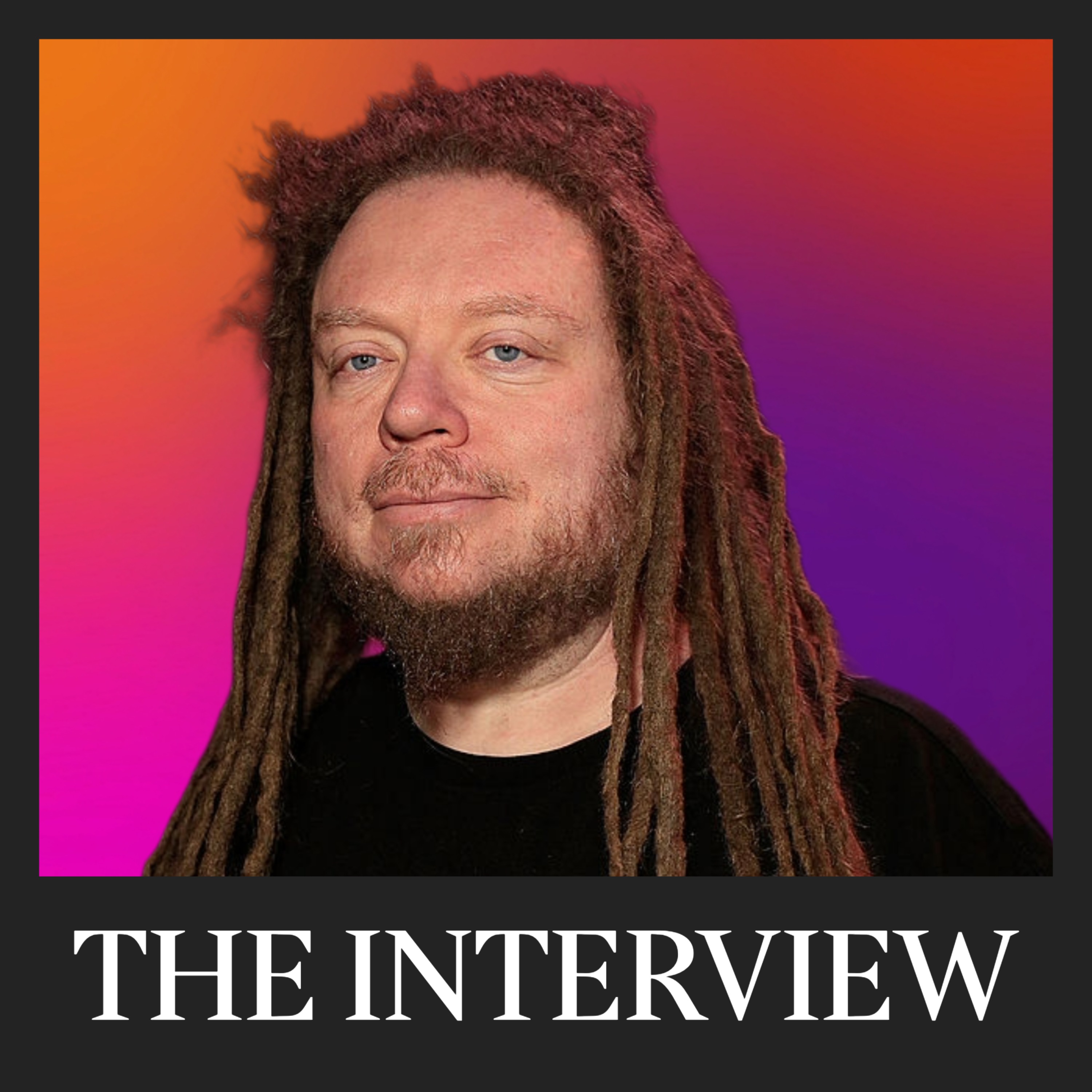
Dean Forbes, CEO of Forterro, a UK industrial mid-market software provider (50–100 person manufacturers).
AI should “enable and accelerate” people, not replace them; Forterro’s customers won’t write software themselves; AI-driven efficiency may cause downsizing or “AI washing.”
Forterro’s enterprise precision/compliance needs; robotics in warehouses; Dorsey’s right-sizing blamed on AI.
Written by AI. May contain mistakes.
Discuss the landmark trial against major tech companies for addiction.
“Learn how ServiceNow puts AI to work for people at servicenow.com.”
Introduction to Baroness Kidron and her advocacy for online safety.
“So this could be the beginning of a very huge change in social media.”
Explore how AI agents are changing productivity measurements in companies.
“And this week, a new question is continuing to emerge in the workplace, which is how much AI are you using?”
Discuss the emerging culture of 'token anxiety' driven by AI use.
“So this has started to create a culture of token anxiety in Silicon Valley.”
Introduction to Dean Forbes and discussion on AI's impact on software.
“we're going to be talking to Dean Forbes, who is the chief exec of a company called Fortero.”
Light-hearted discussion about an AI pet and its potential roles.
“But before that, I wanted to ask you a question.”
Examine NVIDIA's announcements and their significance for AI technology.
Discussion on Zuckerberg's plans for personal AI agents in the workplace.
“So, you know, he wants everyone inside and outside the company to eventually have their own personal AI agent, or as I said, many, and he's starting with himself.”
Explore how AI is changing workplace dynamics and employee perceptions.
“They can obviously suck up from your inbox how you write.”
Understand what Fortero does and its impact on the economy.
“Shall we kick off then by just explaining to listeners what is Fortero?”
Learn about Dean's transition from aspiring footballer to tech CEO.
“And if you could just give us the potted version of your history, because it's, you know, you have quite an amazing personal story that has got you to this point.”
Discover how experiences in US firms shaped Dean's career.
Discuss the current moment in AI and its implications for businesses.
“Well now Mike got the job I suddenly feel like Mike's a great guy, by the way.”
Explore the current transformative moment in enterprise software and what it means for the industry.
“And then you've had open claw, this idea that like anybody can now have their own agent, spin it up, et cetera.”
Understand how companies are adapting to rapid technological changes and the impact on their operations.
“Well, 250 trillion has been wiped from enterprise software companies market cap, I think, in the last eight or so days, right?”
Learn how AI is reshaping workforce dynamics and efficiency in businesses.
“So because it's a bit easier, I don't know that they're going to do that.”
Delve into the complexities of AI efficiency, downsizing, and the implications for job markets.
“There's people who have downsized their organization on the back of efficiencies gained from AI.”
Examine the changing job landscape and what advice is given to the next generation regarding careers.
“And for the foreseeable, we'll take people to ensure precision and have those people supported by AI.”
Discuss the unique challenges faced by tech companies operating in the UK compared to the US.
“and develop skills and talents in other places.”
Explore the current state and future potential of robotics in various sectors.
“But I would say probably more real than not.”
Learn about the challenges of sudden career changes and relatable struggles.
“And I was so interested in his call center.”
Explore the potential impacts of AI on productivity and employment.
“question we started with which is you know in the advent of agentic ai is this a productivity boom or the beginning of a jobs apocalypse.”
Inviting listeners to share their experiences with AI tools in the workplace.
“And if you are using a Snappy or agents in your office, let us know how it's going.”

Get the gist, explore an idea or ask about something said.
 Claude
On Times Tech, what are the key points of this episode?
Searching your listeningAutomatic transcript. May contain errors.
0:00Delicious spring gatherings start at Whole Foods Market. Shop the Spring and Bloom sales event with yellow sales signs throughout the store and serve your loved ones Whole Foods Market seafood. Always responsibly farmed or sustainable while caught. Explore vibrant seasonal flavors like their trending mango yuzu chantilly cake. Great for brunch or an after dinner treat. Speaking of brunch, check out their deviled eggs, cold pressed juices and more. Spring is in bloom now at Whole Foods Market. This episode of the Times Tech Podcast is sponsored by ServiceNow. Danny, one thing we keep hearing from business leaders right now is AI sounds great, but how do you actually make it work inside a company?
0:44Exactly, because most organizations aren't neat, shiny systems. They're layers of software, legacy tech, and teams all doing things slightly differently. ServiceNow sits across all that, acting as a control tower for making work move seamlessly through the organization. Connecting people, systems, data, and increasingly AI agents so that things don't happen in silos. Learn how ServiceNow puts AI to work for people at servicenow.com. Boom! Look at this. What's happened? Jury finds meta, Google, liable, and landmark social media addiction trial awards$3 million in damages. You are joking. This is, I will say, monumental, not trying to be too dramatic, but this is the first of these series of cases.
1:35And the whole notion is if you can establish a legal theory that these are designed to be addictive, faulty products that hurt people, you are tobacco. You have to pay for things as if you are a tobacco company. So this could be the beginning of a very huge change in social media. Yeah. Astonishing. I mean, as we record this, it's almost six o 'clock in the evening on Wednesday, the 25th of March. It's actually really good timing, Danny, because, of course, next week on the pod, we've got the social media campaigner, Baroness Kidron, who's really been leading the charge here when it comes to things like the online safety bill, the implementation of that, what the government needs to do about things like the safety when it comes to chatbots.
2:26So I'm sure she'll be reading this news with interest. This is the snowball starting to roll down the mountain. Hello and welcome to the Times Tech Podcast where every week we unpack how technology is reshaping business culture and everyday life. I am Danny Fortson covering all things tech out here in Silicon Valley. And I'm Katie Prescott looking at technology here in the city of London. And this week, a new question is continuing to emerge in the workplace, which is how much AI are you using? And believe it or not, Danny, the answer is the more the better. Yes, indeed. Yes, indeed. Out here, something strange is happening.
3:15We're in a moment. Engineers aren't just writing code anymore. They're using armies of AI agents, and they need to come up with a better name. They're calling them AI swarms, agent swarms to do their jobs. And the way you measure productivity, it's not output. It's tokens, baby. It's tokens. It's probably worth just saying what tokens are. They are the tiny little bits of data, sort of chunks of words sometimes that AI systems use to process information. They're becoming a bit of a currency. So engineers now, in some quarters, are now judged on how many tokens they're using. So if you use more AI, generate more tokens, you look more productive.
4:02That's right. It's kind of become a bit of a status game. And yeah, so tokens are basically the unit of measure of intelligence, tokens in, tokens out. And the more you use, the higher you are ranked. Whoever's running the most agents who's scaling themselves the fastest is becoming a thing. So Jensen Huang, the boss of NVIDIA, recently said that he'd be deeply alarmed if his engineers, who were earning half a million dollars, sorry, the sums are just, are not using at least$250 ,000 worth of tokens annually. He'd be deeply alarmed, quote unquote. Exactly. That's your salary plus 50%. So you're not costing the company 500 grand, you're costing them 750.
4:47And that's what he wants. And it's not just NVIDIA. Meta AI usage is reportedly becoming part of performance reviews. So you use it a lot in your head. You don't. And you're, you know, you're at risk. So this has started to create a culture of token anxiety in Silicon Valley. So it is no longer about doing your job well. It's about proving that you're keeping up with the machines. Yeah. And I would say there's kind of like a vibe of paranoia that has taken hold. And it's really interesting because I feel like we're in the strange, strange moment where you've had the arrival of these very, very powerful tools, these agents.
5:26And theoretically, it's supposed to lead to us working less. Right? People are like, oh, you know, these agents are going to do everything for us. And instead, people are working more. Right? Because now you have these AIs. Companies are tracking what you're doing with them. And the notion is like, well, I better just supercharge what I'm doing and even work more, be more productive, or maybe I'll just get replaced. And I talked about it last week. Mark Zuckerberg is supposedly considering cutting up to 20 % of Meta's workforce. And there's news out this week that he's building his own AI, quote unquote, CEO agent.
6:05and so all of that leads to this big question of like if you have to deploy an army of bots to do your job for you is the agentic era a productivity boom or is the beginning of a job apocalypse is it tokens plus people or tokens versus people it's quite sad isn't it i was sort of holding out for the era of universal basic income and kicking back well on the beach we may get there we may get You did my job for me. Speaking of the jobs apocalypse, remember the software apocalypse? Sasspocalypse. Sasspocalypse. So the apocalypse that's happening to the software as a service industry, which is basically that now we have agents and vibe coding that we don't necessarily need many of the software products that are already on the market.
6:57And that's led to a collapse in the valuations of publicly listed companies and certainly investors in the private sector taking a very hard look at their portfolio and the valuations of some of those smaller software companies. And the big ones, right? That's this huge, huge, huge fear. And whether it's well founded or not, I kind of think it speaks to the time we're in right now. Well, later on, we're going to be talking to Dean Forbes, who is the chief exec of a company called Fortero. It's one of the largest private tech B2B companies in the UK. One of those companies that does important things that you've never heard of.
7:32It builds the software running thousands of the factories that make the things that we use day to day, really serving the sort of what they call in Germany, the middle strand, the sort of middle sized businesses. Yeah, 50 to 100 person kind of manufacturer types. Yeah, making things from furniture to jewelry. And we're going to ask him about whether the rise of agentic AI is the death of software and hear more about his extraordinary story. But before that, I wanted to ask you a question. Did you ever have like a class pet when you were at school? Yeah, I think we had a one year we had a snake and then we had a turtle one year.
8:11Gosh, you're so exotic in America. Where's your hamster? No hamster. No hamster. Sorry. I am pleased to tell you that the business desk at the Times has got its own class pet. Oh. Yeah. What'd you get, a snake or a turtle? We got an open claw agent. Oh, you did. We did. We got an open claw agent on Tuesday. What's the name? Snappy. Snappy? Built on a Raspberry Pi, which is one of the computers that's obviously done incredibly well out of the agent revolution. So anyway, Snappy is on the eighth floor at the moment of this building, which is where the, yeah. I mean, if you're going to boss something around, I'd rather it as a man.
8:54And with the tech team who have been incredible, the News UK tech team at really embracing this idea. And Tom, they're building Snappy for us. What is Snappy doing? Doing any writing? Probably be doing some writing. Definitely be doing some research. And it's plugged into Google Docs as well as the internet. so can do that and can start pulling information together. Is Snappy mining Bitcoin? Doing something useful? I mean, there's so many things that you could do with Snappy. I think it's incredibly exciting. So I'll keep you posted. I guess the question is kind of very pertinent to the discussion, which is, will Snappy take the place of a work experience person or a junior reporter, right?
9:41Because they're, for example, the Cleveland Plain Dealer, one of the oldest newspapers in America is now using an AI reporter to do a first go at various types of news stories. And there's been a big kerfuffle inside the newsroom and the editors like this is the future, everybody relax. But that's why I think the kind of things like Snappy freaking people out. It's scary. I think at present, because of the limitations on Snappy, and particularly not being connected to our extraordinary systems at news with access to things like a back catalogue of news articles until you know from the 1880s or whatever I don't think it's going to replace anyone but that's why we're we're playing with him and seeing what he can do and I think it's everyone I speak to in the business world is doing this sort of experimentation even if it's just in a wall garden in their tech team not really using it yes for anything important they're coming the agents are coming and you know the yes and and the most and most of the tech companies already are using them last week was nvidia gtc their big annual developer conference and jensen wong went up on stage and he had a two and a half hour keynote but there are a few key messages one is he was like the open claw moment is bigger than the chat gpt moment chat gpt was you know basically like a a cooler version of google you know giving better answers conversational but like agents things like open claw are like oh this is now an action agent going from an answer engine to an action engine and it's the promise of that everybody's going to have their own jarvis their own personal digital butler whatever but to your point around the security involved you don't know how these agents are gonna what they're gonna do what motivates them and all of that stuff and what was really interesting the other thing that came out of nvidia last week was the announcement of nemo claw which you which you referenced which is an what he said was an enterprise ready version of open claw so something that has more guardrails more safety built in and the whole idea is that like you or i can have an agent or a swarm of agents doing stuff for us and if you're a business you're like huh it goes back to that point around tokens like you know do i want to hire an intern on 30 grand a year or do i just want to like spend 20k on tokens not have to hold somebody's hand and have 80 of that work and 90 percent of that or 100 plus percent work of that done this kind of moment that is bigger than chat gpt when you have folks like there's kind of people are reckoning with this in real time i'll give you one example is aditya agarwal he's a former cto of dropbox he wrote this open letter about 10 days ago about this notion that like what was once made him a special snowflake that he had these amazing coding skills now we're free and abundant and everywhere and he wrote you know there's something deeply disorienting about watching the pillars of your professional identity get reproduced in a weekend by a tool that doesn't need to eat or sleep and so there's lots of people kind of coming out being like whoa the positive caveat of that is that he went on to say after i kind of got over myself i did more coding in five days than i did in the previous five years and what's more what i produced was more ambitious it was better because now i have these superpowers that i can kind of bring to bear so it's um it's the kind of two sides of this of this jobs apocalypse coin anyway astonishing to watch and of course katie you're not the only one building an agent um it's yes it's the thing uh as we said a minute ago mark zuckerberg met a ceo is also building his very own CEO agent to help him do his job.
13:44So, you know, he wants everyone inside and outside the company to eventually have their own personal AI agent, or as I said, many, and he's starting with himself. It is amazing because they learn what you need the more time you spend with them. They learn your style. They can obviously suck up from your inbox how you write. So it's not that surprising. I mean, Zuckerberg has said this is going to help him get information faster, cutting out middlemen, I'm afraid. And, you know, employees have started to use personal agents that have access to their chat logs and work files and can go and talk to colleagues.
14:24So, it's the future. Can I ask you a question, Katie? Of course. Are you token maxing? I don't. You see, when we were talking about this at the beginning, this idea that you've got to use ai i i still don't feel that psychologically we're there so no i'm not you're not token maxing i don't think in journalism there's still a this there's this thing you know you should be using as much we're token lessing or we're token minimizing or whatever but yeah token maxing for those outside this weird bubble is this idea that you know what we kind of talked about at the top of people trying to kind of maximize their token use to show how switched on they are in AI.
15:05So again, inside these companies, there's this kind of growing sense of paranoia and you have to token max. You have to maximize your use of AI because now it's becoming a KPI, a key performance indicator, something that's going to be used for your reviews. And again, it's just, we are in a super weird time right now. And everybody's trying to like, you know, protect themselves basically. And again, I think it's, we're in this moment of paranoia but it's also like what are those tokens being used for like are you just making these really amazing cat videos are you actually producing something that's important and useful and productive but people i'm meeting are like i'm really freaked out and it's not like you're you're kind of hair shirt wearing luddites it's the people building this stuff and it's the arrival of these kind of really powerful coding tools the arrival of open claw all at the same time.
15:59And, you know, we are somehow landed amazingly in a kind of second chat GPT moment, but that's potentially even probably even bigger than the original chat GPT moment. But anyway, please stay with us because after the break, we're going to be hearing from Dean Forbes, who is a tech entrepreneur from here in the UK. He has got the most extraordinary story. He's transformed his life from being a homeless teenager at one point in South London to becoming the chief executive of Fortero, one of the largest private tech software companies in the UK. We'll be right back.
16:52so work flows more smoothly across an organization. The platform integrates with different clouds, models, and data sources, bringing them together in one place to help your team. To learn more about how ServiceNow puts AI to work for people, visit servicenow.com.
17:22Always responsibly farmed or sustainable while caught. Explore vibrant seasonal flavors like their trending mango yuzu chantilly cake. Great for brunch or an after dinner treat. Speaking of brunch, check out their deviled eggs, cold pressed juices and more. Spring is in bloom now at Whole Foods Market. There's one place for the newest drops in wellness and performance and the biggest sale of the year. It's the drop by GNC. Curating the best of what's new, handpicked by the pros who know what works. And right now, get it all, buy one, get one 50 % off during the semi-annual LiveWell sale. From crushing workouts to leveling up your nutrition and everything in between, get the best deals on the latest innovations.
18:04All the newness is all on sale right now during the LiveWell sale on The Drop by GNC.
18:17Hello and welcome back to the Times Tech Podcast. Now, our guest today has the most extraordinary success story. He grew up on a tough housing estate in South London and experienced homelessness while he was a teenager. But fast forward to today, and now he's the chief executive of Fortero, one of the largest private tech B2B companies in the UK. It builds the software running thousands of factories. He's been named the most influential black Brit in 2025. But if you ask him, he's just a guy from Catford who has worked very hard and worked his way all the way to the top. Dean, welcome to the podcast.
18:56Thanks so much for joining us. Thank you for having me. Shall we kick off then by just explaining to listeners what is Fortero? And I was looking at the website and you have so many different trading entities and you're in so many different countries. Just set out this sprawling conglomerate that you're the boss of and what you do. So Fortero is a software and solutions provider to the industrial mid-market in Europe. So we provide the core systems and the backbone applications that people who manufacture things or components of things or who sell and distribute those things that have been manufactured or are making heavily crafted things like bespoke staircases, windows and archways.
19:39So we provide the core software solutions that those types of organizations use to run their business, everything from selling, estimating, accounting, collections, project management, those core systems that organizations like that rely on. It really does seem like you're everywhere, right? Offices in China, US, every European country. Yeah. Most of our business comes from the European, what we call the European mid-market, right? We're powering the businesses that are typically founder-led, have grown to 50, maybe 100 people, often still family-owned. I mean, it's really the backbone of the economy because when economies go badly, it's always the middle stand or the mid-market that seems to prop them up.
20:23So it's such an honor to support these amazing entrepreneurs. Could we go back to the very beginning when you were in short pants? And if you could just give us the potted version of your history, because it's, you know, you have quite an amazing personal story that has got you to this point. I mean, people are always gracious and say stuff like that. I grew up in Southeast London. Like a lot of young men who grew up in the neighborhood I grew up in, the most viable and legitimate career opportunities were music and entertainment, sport, and then a whole bunch of less savory options. I was very lucky.
21:01I had an incredible mother. I had a good run at becoming a professional footballer and was a professional footballer for a short amount of time. But when that didn't work out, I had to find my way in the corporate world, helped by a good body of debt that I ran up in my late teens as an aspiring footballer, which just created compulsion to go out to work and earn money to service that debt. And I'm very grateful for it because had I not had it, I probably would have spent more time pursuing this dream. But I was fortunate enough to find my way into a number of sales roles and then ended up running the international sales, marketing, professional services engine of a US headquartered, private equity-backed software company.
21:45And that role and project went incredibly well. We ended up selling that company to Oracle. And as many people may know, when you're an exiting exec of a successful PE-backed project, the phone rings after you do the first one. People call you and ask you if you want to do another one. So that was in 2008. And since then, I've done four more as CEO. All have exited reasonably well. You kind of glazed over something that I just want to go back to because it's that moment. And I was reading up a little bit before we got on where it became clear to you at a certain point that football was not going to be the thing.
22:23And then you had to go from that potentially fabulous, amazing life to a windowless room where you're making sales calls. yeah I can't imagine a more contrast situation you know like on on Friday there's you plus 24 friends running around on the pitch playing football it's enjoyable not one part of his work the camaraderie the banter the there's a little bit of structure in a football club there's nothing like you have in a 3 ,000 person company like the one I run um so it's just great and I grew up playing football I played football in my estate I played football up and down the country so this was just fun right it was fun yeah um and then i went for dinner with harry gerber and harry gerber said you know they're not going to renew your contract and we trialed up and down the country for another six months and it was a combination of you can have good money but on a three-month contract or you can have terrible money on a two-year contract and neither one of those would service the debt i had so yeah harry said look my friend at motorola will give you a cold calling job you need to take it because if you don't service this debt it can cripple you for a good portion of your life so you know you start 8 a.m on monday and when i got to work at 8 a.m on monday there was no field there was little to no laughter there was no football there were no friends there was just uh lists of phone numbers and semi-maniacal line managers who managed at very high volume and close proximity so it was a it it wasn't fun the company you mentioned that that was bought by oracle was called primavera right and the current ceo the current co-ceo i should say of oracle mike cecilia was at primavera that's right with you uh we can talk about that in a second but do you think there was something about working for an american company and then kind of coming back to to the uk that could have really inspired your business journey i mean that's quite unusual in itself you know for for your route that you took into tech i'm often credited or it's suggested that there's there's so much more serendipity and good fortune and amazing timing that has been helpful to my career than brilliant genius or excellent mates i'll give you some examples when i played football it was normal that performance reviews happened at half-time and full-time and people shouted at each other and in the game you shouted each other so when I went to Motorola and people were shouting at people lots of people who worked there struggled to deal with that because that was their first interaction with managers who talked to them that way it didn't bother me because I'd grown up in football where people got coached by that right so that's one example when I went to Primavera as a relatively junior sales rep 12 people in the the London office, about 300 in Philadelphia.
25:21For Primavera, the international business was not core, it wasn't important, it wasn't big, it wasn't meaningful. Because of that, a young, inexperienced, unqualified person could graduate to a senior leadership position. It was only because it was so unimportant to them at that time that that could happen. I'm sure you're doing yourself a disservice there. I mean I made my numbers but I can tell you something I would never give me the job Joel I would never give me with that experience at that age the job Joel gave me and then Joel who was the CEO of Primavera is an important person too because for reasons that have never been clear to me he took this amazing paternal interest in me so when I would travel to the US and he was a CEO of the company at the time maybe 300 people maybe 200 million in revenue maybe a bit less at that time when i would travel to the us for meetings management sessions training he would tell me to stay at his house and not in a hotel so i would spend three days with a qualified seasoned ceo and we would talk about running the company and what decisions he was making and acquisitions he was going to do so i got this i got this education that a 24 year old ex-footballer without a degree and proximity.
26:40You just would, you couldn't buy it. But it's only that combination of situation and circumstances that allow that to happen. I get released from football a week later. None of this happens. None of this at all happened. So yeah, I'm very grateful to that part of the thing. And then you have the acquisition of Primavera by Oracle, one of the biggest US tech firms. Do you regret leaving? No. I learned a lot in the year I was there. I worked with some amazing people in the year I was there but one of the things I learned was I was most motivated by the freedom and flexibility to deliver the outcome in the way I saw fit and in a big company like that there's structure, there's discipline, there's processes at Primavera I didn't have any of that so I looked for a new version of Primavera where I had that freedom and latitude I wasn't going to succeed at Oracle for the long term You don't think I could have been the next CEO of Oracle?
27:34Well now Mike got the job I suddenly feel like Mike's a great guy, by the way. When he got the job, I did think maybe I could have got that job. Can we fast forward to this present moment? Because as you know, I'm out here on the West Coast. And we were talking before you came on about the vibe out here right now. And especially in the last like 90 days, it feels like there's been this big shift between the arrival of these very powerful coding agents from Anthropic and OpenAI. And then you've had open claw, this idea that like anybody can now have their own agent, spin it up, et cetera. And I'm talking to a lot of founders, a lot of kind of billionaire types who are like, I'm really worried.
28:16Like I'm kind of freaking out. And I'm just wondering, you know, you've been at this coalface of software inside industrial processes, companies paying for this stuff for a long time. What are you seeing? Like, how do you think about this moment? Does it feel as seismic as people seem to think it is out here? What is your view of this kind of moment we find ourselves in? I think for sure it's the most energizing and motivating and thrilling opportunity of my professional lifetime. And I would argue most people's professional lifetime in the enterprise software space. I mean, it's just an incredible opportunity.
28:59and it's challenging so many fundamental beliefs not all fundamental beliefs and this is where i think the the kind of you know the market has reacted uh in a real extreme in too much of an extreme way but it's challenging a lot of apocalypse right saspocalypse you know you have an announcement from uh open ai and then it's like oh there's 30 billion gone from you know sector x because they're like, oh, we don't need that anymore. Well, 250 trillion has been wiped from enterprise software companies market cap, I think, in the last eight or so days, right? So on the left hand side, you know, for a long time, time to create software has been one of the barriers to entry.
29:43That's now changed. Deep expertise around software as a general horizontal was a barrier to participation in this space, you know, that's now changed. Pricing mechanisms and the way people like me build value in their company, long-term contracts, recurring revenue cloud, that is changing, right? So some of the fundamentals that we've built our businesses on have absolutely now changed on the left-hand side. On the right-hand side, especially as it relates to the market we serve, which is the industrial mid-market, you know, across Europe, 50-person companies who want to concentrate on making the tables that they make, making the zippers that they make, making the engine components that go into Rolls-Royce engines or playing their part in the automotive supply chain, as many of our customers do, they want to focus on that.
30:34And they've wanted to focus on that for the 10, 20, 30, 40 years that we serve them. And over that time, as each technological evolution has taken place, they've looked to us and said, we rely on you to make sense of this in a way that's going to add value to us and our business. When that was mainframe to CPU, CPU to network and cloud computer, the emergence of mobile. With each of these evolutions, they look to us, you know, how do we leverage that? And I think that's what they're going to continue to do. As long as we step up with answers that make sense and deliver value, I think that's what they're going to continue to do.
31:13They've never wanted to write software themselves or code software themselves. So because it's a bit easier, I don't know that they're going to do that. I was with a CTO of a bank recently who said they were looking across their software stack, basically, and working out what they could start to do themselves. But I guess when you talk about smaller customers, perhaps it's less likely. It's different for a bank. If you're a tier one bank, you had 2 ,000 people in IT before this happened. you had a few hundred people who wrote applications or finished applications or wrote integrations so you had the muscle memory and you asked yourself that question often can we or should we do this ourselves you that's what you did as a big bank or as a bulge bracket consulting firm when you're a 40 person manufacturer of aluminium framed windows you've never asked yourself or you you are less likely to ask yourself that question.
32:11And if you do, you don't have the reflexes to do it as easily. Well, let's talk about it now, the job apocalypse. What's happening to the labour market with all of this? Have you got any reflections on that? What are you seeing across your businesses when it comes to how you use AI and how that's changing your workforce? I think the best companies, it's a kind of model that we're following, is that we've created a lot of value with human endeavor and intelligence, and we'll continue to create a lot of value with human endeavor and intelligence, but that can now be supported and enhanced with AI, right?
32:49So the best companies, including us, are driving our people, supporting our people, enabling our people to leverage AI so that they can do a better job, so that they can be better, so that they can be more efficient. And for sure, there are efficiency gains for us to have as a consequence of doing that, But we are growing so quickly. I mean, we've trebled in the last five years. I think we can treble again in the next five years. In terms of revenue. In terms of revenue. Maybe go even faster because of AI. So maybe we can do that with a similar workforce scale to what we have today because they'll be powered by AI.
33:22Then there's two other motions I see. There's people who have downsized their organization on the back of efficiencies gained from AI. And there are also people who have downsized their organization because they were just too big and have wrapped that under an umbrella of AI efficiency. I think what we saw with Jack Dorsey's organization, we were all staring at that for a while saying, this organization is too big. And then he right sizes and blames AI and suddenly his stock price jumps. But we're all looking at the company saying it was over hired in the first place. So I think that's like a third stream of what I've seen.
34:00Yeah, there's that notion of AI washing. that people are being like, you know, basically, this is a poorly organized company, and we're going to blame AI and fire everybody. But it does feel like there is a, and I'd love to get your sense of this of around hiring in particular, because we were talking about it. And you know, Jensen Wong said, I think it was last week. He's like, if I have a$500 ,000 engineer, I want them to be using at least$250 ,000 worth of tokens. And$250 ,000 is a lot of money. like that's a salary many many salaries to most people but yeah well in silicon valley i know it's like half of one but but the point is is like you know that's uh that's an entry-level salary for here in silicon valley i'd love to get your sense of how you're thinking about this type of thing for a lot of our ai tool usage and proposed ai tool usage we we have a fundamental belief that It's people enabling, right?
34:58It's people enabling. For the kind of work we do in the end markets we serve, we have to be correct. We have to be precise. We've got legislation. We've got compliance. We're making, our customers are making components that are going into other components. So you can't be directionally correct or you can't be in the ballpark. If it's four feet and two and a half inches, it's four feet and two and a half inches. And AI, at least at the moment, still has some propensity to be a little bit off, to make incorrect assumptions, to hallucinate a little bit. And that just won't work. The work that we do internally and the work that we do internally that serves our customers and then the work that our customers do.
35:40So at least for now, the value and efficiencies to be gained through deploying AI tools is people enabling and people accelerating, which means to answer your question, Danny, And for the foreseeable, we'll take people to ensure precision and have those people supported by AI. Can I ask about what you, as a tech boss, then tell your kids to do? Because we are seeing an impact of AI on entry-level jobs. And it is young people who are being disproportionately affected. And if you look at the unemployment rate in the UK, it is, I think, about 16 % for the under-24s at the moment. compared to 5 % of the general population.
36:23Are you telling your kids to do, I don't know, to go in a certain direction, to look in a certain way? What I find fascinating about this is the kind of full circle nature of it, right? So we went through a number of technological revolutions and evolutions, which kind of moved the dominant workforce from blue collar, manual labor, into white collar, higher paying, higher brow jobs, at least from a perception standpoint. And now because of technology, we seem to be going back to where blue collar work is a premium, right? I saw something the other day where I think it was Gary Vee, the American businessman and social commentator was saying, you know, plumbers will be the new millionaires and electricians will be the new millionaires because those jobs are last in line to be automated meaningfully by AI.
37:13So I find that fascinating. It doesn't change my direction to my kids much, which has always been, you know, you have a craft, you have to get up and go and do meaningful work that matters to someone, including you, and you need to be good at it. Now, the new part is there's going to be a category of jobs which won't be available to you or are unlikely to be available to you, so you're going to have to look in other places and develop skills and talents in other places. But the headline narrative, you know, I don't, it doesn't change in our household. You're a Brit who's got experience working in an American firm and then also is running a business which is global but has a massive European footprint.
38:02What do you think about running a tech company in the UK? This is something we talk a lot about on the podcast, being a transatlantic podcast. And what do you think we're doing well here? and what do you think makes it difficult for a business like yours? I've always been envious of US technology companies that get to start in such a huge market, right? Just a fabulous, huge economy. That's single language, single currency. Sure, there's... Scary too, right? You know, small fish, big con. It's quite scary, but... Oh, well, that too. You know, you go state to state and there are some differences in taxation, some differences in labor law, but not that meaningful.
38:49So you just start with this opportunity to scale in your home territory to a meaningful size, and then you decide to go conquer or go scale internationally. Europe is a collection of smaller economies, right, smaller GDPs. So to get to similar scale as you would in the US, you have to master a number of different, you probably have to master a number of different jurisdictions, languages, cultures, labor law, commercial law, ways of working and doing business. You might be able to do that in a single currency with the euro if you're headquartered here. Of course, you have to deal with at least two currencies.
39:28And it's just a different degree of complexity trying to do that. You carry a different cost base trying to do that. so that makes it harder in my opinion to do that in europe which is why i have huge admiration for some of the u.s supers uh and a lot of us would love to be them but i have a higher degree of admiration for my european colleagues who have built you know built scale companies because i just know it takes something different uh to to do that i have one other question that katie is not going to be surprised to ask so you service a lot of these companies a lot of these manufacturers as katie knows i love a robot i knew this is coming okay i love a robot lots of hype around this is like we are about to enter this new era where labor is going to be free everybody's going to have their own robot every factory is going to be just a bunch of humanoids walking around doing stuff what do you think do you have a view because like out here you have elon musk you have companies like figure boys toys billions and billions boys toys billions and billions of dollars and promising the moon but you have a unique vantage point given listeners are what do you think total nonsense or real or somewhere in the middle probably more real than not across SWOT timeline, I don't know.
40:55But I would say probably more real than not. If I look at some of the Fortiro customers who make great use of robotics in warehouse management, warehouse automation, some but less on actual production line type work. So there's already a evidenceable footprint of deployment of robotics among our customers and in our sector. So like anything, that will improve. People will innovate. That will get better. So probably more real than not, but again, to what timeline? Who knows? I think the broader question is the societal impact of all of this. Like what happens when we've automated our companies to the workforce that may get displaced?
41:37If we add robots into that mix, that makes the problem a little bit worse. So the societal impact is probably more the thing to focus on than is it two robots per factory or 10? Dean Forbes, Chief Executive of Forte Zero. Thank you so much for joining us. It was really, really nice to meet you. Thanks for coming in. So it was really great to have him on. Yeah, for sure. Such a cool story. And I was so interested in his call center. You know, you're a professional footballer on Friday and you're in a call center on Monday. I just find that scene has got to be so brutal. And we have obviously very different upbringings, upbringings but i had a moment after college where i got laid off from my first job and i got my the only job i could get was as a temp at this company called babycenter.com where it sold baby goods and services to new and expectant mothers not a cohort of people that you're probably that familiar with at the time no i was 22 and i had you know i was always bright eyed bushy tailed and the world was my oyster and then i had been laid off i had no money and i was working eight to ten hours a day fielding emails about breast pump baby poop baby poop color and consistency and breast pumps and i was like oh this is it this is it for me it's amazing you described it as a scene in his life as well because i i now can see it as a movie totally and obviously like from that point to like two years later he's like staying at the ceo's presumably mansion in philadelphia and getting this kind of like learning and it's i think it's amazing i have not scaled to his heights but you know i have moved on for baby center but i just it was i could relate because it was a dark time well when someone makes the movie of your life um that's that's also gonna make be very short a very a very lovely scene it'll be a tick tock holding up 45 seconds diapers being like which way around does does this go so that is about it that chat with uh dean was really i thought a good bookend to the kind of question we started with which is you know in the advent of agentic ai is this a productivity boom or the beginning of a jobs apocalypse.
44:13Yeah, and I'll keep you posted on the productivity gains of the business desk at the Times with Snappy as our boom, boom, boom, secret agent, friend and helper. So we would love to hear your thoughts on the program. And if you are using a Snappy or agents in your office, let us know how it's going. Yes, indeed. tell us by emailing us at techpod at thetimes.co.uk. That is techpod at thetimes.co.uk. And that is it for us. I will see you next week. Yes, see you next week.
44:55This episode of the Times Tech Podcast is sponsored by ServiceNow. There's a lot of excitement around AI right now, but the problem is what happens after the demo. When you have to plug that technology into a real company. Different clouds, different data, different systems that were never designed to talk to each other. ServiceNow's platform is designed to help people by connecting these pieces, enabling organizations to coordinate work across departments, tools, and increasingly AI agents. In fact, the company says more than 80 billion workflows run on its platform every year. Which gives you a sense of the scale of operations it's designed to handle.
45:33Learn how ServiceNow puts AI to work for people at servicenow.com.
45:41Shipping, billing, admin, payroll, marketing. You're managing all the things. So why waste time sending important documents the old-fashioned way? Mail and ship when you want, how you want with Stamps.com. Print postage on demand 24-7 and schedule pickups from your office or home. Save up to 90 % with automated rate shopping. That's why over 1 million small businesses trust Stamps.com. Go to stamps.com and use code podcast to try stamps.com risk-free for 60 days.
A new trend is emerging in Silicon Valley – engineers are using more and more of AI agents to do their jobs. At some companies like Meta, AI usage is reportedly being linked to performance. But it’s also fuelling a growing anxiety, if AI can do your job better and faster, where does that leave you? Danny Fortson and Katie Prescott discuss the paranoia currently consuming Silicon Valley, what this really means for the future of work and whether we’re heading toward a genuine AI jobs crisis. Plus, they speak to CEO of Forterro, Dean Forbes, on his remarkable story from homelessness to leading a top private software firm in Europe.
Are you using AI agents to do your job? Get in touch: [email protected]
Producer: Marnie Duke
Executive Producer: Priyanka Deladia
Image: Getty
Hosted on Acast. See acast.com/privacy for more information.