 Ask ChatGPT


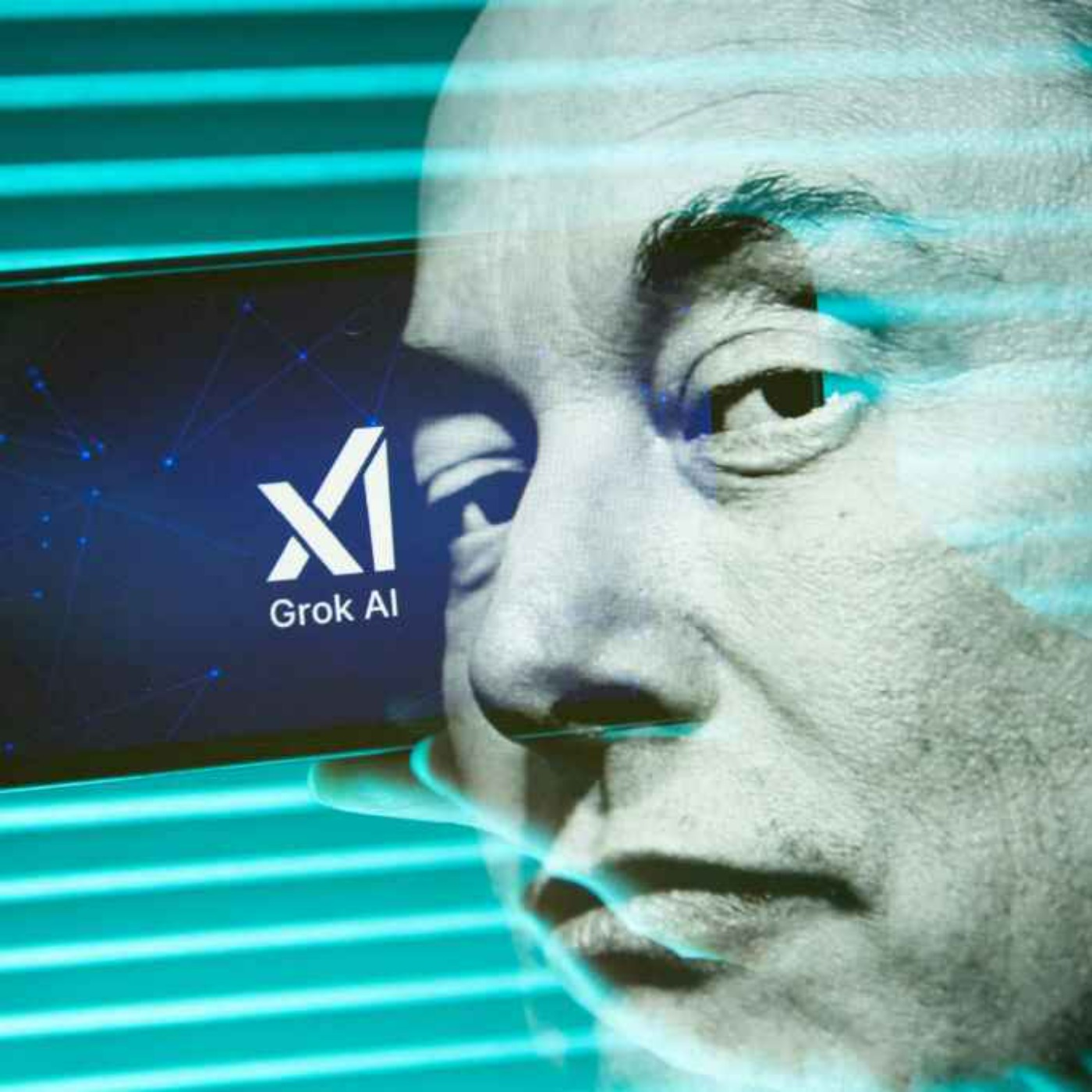
In this episode of The Times Tech Podcast, hosts Danny Fortson and Katie Prescott explore the implications of new AI technologies, focusing on the misuse of Elon Musk's AI tool, Grok. The discussion delves into the backlash against AI applications that generate inappropriate or harmful content and the challenges of regulating such technologies effectively.
Written by AI. May contain mistakes.
Danny and Katie share their holiday experiences and time off.
“We did safari and saw all the big animals uncomfortably close to our safari jeep.”
Discussion on the relentless pace of innovation in Silicon Valley.
“And obviously, as you say, Silicon Valley does not sleep.”
A look at CES and some of the bizarre gadgets showcased.
“And he was talking about a pet penguin on a skateboard following people around.”
Exploring Amazon's drone delivery trials and their implications.
“and little videos of people sitting on the balconies of their flats with these kind of things.”
Discussing the ethical implications of AI technologies like Grok.
“How do you put the clamps on a technology when the home country where these companies are operating, where they're inventing this stuff has taken a completely hands off approach?”
Examining the role of regulators in managing AI technologies and their risks.
“But it also is limited by the process that it has to follow itself.”
Explore the rapid evolution of AI and its implications for free speech and regulation.
“ask her while she's wearing a dress, can you put her in a bikini?”
Kate shares her insights on Grok's actions and the societal implications.
“Institute and also a lead investigator on Responsible AI UK, which is looking at how we shape AI to deal with, live with humans.”
A critical look at the current landscape of AI regulation in the UK and EU.
“And then you have all of these edge cases where it's like, yeah, you can do some really horrible stuff.”
Exploring the potential of AI and the need for accountability in its development.
“And as for the US, Trump has actually ripped up some of those executive orders that were in place around AI.”
Examine the power struggles between tech companies and regulations.
“we're going to be able to be empowered in ways that we've never thought about, can't even kind of envision.”
Discussing how consumer resistance shapes AI development and ethics.
“So we're seeing cases against big tech firms, especially where there have been harmed people.”
An exploration of humanity's tendency to misuse technology, particularly AI.
“a bit like the IPCC, that will be able to advise on what could and should be done.”
Explore the harmful implications of AI technology in the realm of non-consensual content and child safety.
“this amazing tool that can allow me to be more productive and to be more creative and all this stuff.”
Discuss the financial motivations behind AI companies and recent legal cases involving AI chatbots.
“It's kind of brilliant for us as journalists, isn't it?”
An overview of the latest developments in the UK tech scene and the potential for job growth.
“Just to move on to something a little bit more positive.”

Get the gist, explore an idea or ask about something said.
 Claude
On Times Tech, what are the key points of this episode?
Searching your listeningAutomatic transcript. May contain errors.
0:04Hello and welcome to the Times Tech Podcast where every week we unpack how technology is reshaping business, culture and everyday life. I am Danny Fortson out here in Silicon Valley, back from my winter break. Welcome back. Good to talk to you. I am Katie Prescott in the city, in the city of Cambridge today, actually. Cambridge? Yeah, our own little cauldron of Silicon Valley, churning out tech companies right and center. I can't wait to hear how your break was because it's been ages since we spoke. It feels like it's been a million years since we got a pod. Yeah, we took a big, big, big family holiday to South Africa for like two weeks.
0:44It's the first two-week vacation, two-week holiday we've taken since our honeymoon. Oh, that's special. It was very, very, very cool. We did safari and saw all the big animals uncomfortably close to our safari jeep. Oh, it sounds like a holiday of a lifetime territory. It really was. What about you? Did you do anything fun? I did nothing, actually. It was just very, very nice to have two weeks off doing nothing with the family and just hunkering down at home while everyone else was off as well. It doesn't often happen with this gig. Usually when you're off, everybody else is still working or vice versa.
1:20We have like an asynchronous kind of type of job. Exactly. The news doesn't stop. The newspaper doesn't stop. But you know what wasn't stopping? You guys out in Silicon Valley, you might have stopped. Jensen Huang signed a deal with Grok. He did an acquihire office. Eve. I know. Come on. I know. Well, he did say he always says he's like, yeah, I have great work life balance. I wake up, I think about work. I work all day. I work through dinner. And then when I go to bed, I'm thinking about work. I have great work life balance. So he he hired all of the important people at Grok, this rival chip startup and licensed its technology.
1:57Cool. 20 billion. And it made me think, oh, yeah, Silicon Valley just just doesn't sleep. Well, on that note, and I'm sure people want to hear about our holidays for the next 45 minutes, but maybe we should move on. So we spoke last week in our episode, which we obviously had pre-recorded, looking ahead to tech this year. And obviously, as you say, Silicon Valley does not sleep. Things keep happening. And what's funny is you kick off the year every year with CES, the big tech gadget boondoggle in Las Vegas where 200 ,000 people show up. Boondoggle. Straight up to Christmas. Correct. And it's always like, come to CES, look at all our stuff.
2:42And every year, literally every year, you cannot imagine how many new kind of tech gadgets are on display. 95 % of them feel like complete nonsense. and my favorite always always is the smart toilet there's always a smart toilet and this year's no exception i've not really well what was it was a thing particularly smart about there's a smart toilet this year that analyzes your urine to see how hydrated you are useful so that's super useful i think we all need it yeah yeah i've ordered one i hope you have i hope They're giving you a freebie to test. Mark Selman goes for us from The Times. And he was talking about a pet penguin on a skateboard following people around.
3:27So I'm not quite sure what that was all about. It's the weird little world of VES. It's what we need. But it is like this kind of jolt of kind of techno optimism, which is, you know, very American, very West Coast. But different vibes, different vibes on your side of the pond. Some excitement here. So Amazon has started testing drone deliveries in Darlington. Excited by that? Very soon, the people of Darlington will have packages dropped into their gardens about two hours after they've ordered something from Amazon. Useful. Well, I was going to say, I'm just looking at Bezos 60 Minutes drone delivery.
4:08He said this in 2013, I think. 2013. Yeah. 13 years ago, it was just around the corner. We're now trialing it here. Just trialing it. Well, you don't want to reckon it. The drones can go around, you know, and then all being well. Is that how it goes? No, it is. Actually, I was researching this in my column this week. In Dublin, they already have these drones that are delivering tapeways, believe it or not, on strings rather than dropping packages. Slightly different. Lots and lots of complaints on the Facebook pages of Dublin residents about the noise. and little videos of people sitting on the balconies of their flats with these kind of things.
4:46This is why I love this job, because you're like, I got to do a deep dive into the Dublin community Facebook pages to see about complaints about... The drone company there disputes that it's a problem. But actually, that is not the big news in the UK. It is big news. It's not. Could be, the buzzing. but it's actually what's been going on with grok yeah elon musk's ai that has been undressing people i say people mainly women digitally undressing and putting them in all sorts of can i use the word saucy clothes is that the right word you can use that word so it sounds a bit old-fashioned a bit but you know bikinis and lingerie and stuff without asking them and And for the UK, really, this puts us in uncharted waters, because as you know, Ofcom, the media regulator, traditionally responsible for looking after things like radio and television, has recently been put in charge of the Internet and regulating it through what's called the online safety bill.
5:54So essentially protecting people, especially kids, from seeing inappropriate stuff and also making sure that websites treat people with respect. And so while they have already announced investigations into various porn sites for breaching of the new regulations, which includes things like not putting appropriate age verification blockers in place, this really is a massive test of these new powers that the UK government has given Ofcom about how to monitor these sites. And it is the first really, really big, big test of that. And it seems like it's sort of Ofcom and by association, the British government versus Elon Musk.
6:40Yeah. And I think this is kind of a perfect example of why this podcast was created, really. It's from moments like this where you have Silicon Valley on the West Coast just pumping these things out, often without thinking about the consequences. And then you have regulators or the world reckoning with the fallout. Right. And I think it's a little bit of a big windup, but I think that's kind of what we're going to try to tackle today. Now that we're back is, you know, what happens when I AI goes wrong? How do you put the clamps on a technology when the home country where these companies are operating, where they're inventing this stuff has taken a completely hands off approach?
7:20But of course, this technology is available to anybody with a device or anybody with Internet access. And I can't emphasize enough just how upset everybody is about this. So if we just rewind a little bit, Grok is the generative AI chatbot developed by XAI and launched in 2023. And it's also become a really key part of Elon Musk's social media app X, the app formerly known as Twitter. so people have been using it to do very innocent things like fact check news articles or try and win arguments about tv shows and there have been some scandals that have come up around it just as they have with some of the other chatbots about bias and its political allegiances but a few weeks ago users noticed that grok could be used to edit pictures and then very quickly people mainly men I should say, started asking Grock to take people, mainly women's clothing off, put them in a bikini, edit pictures of themselves.
8:24And in one instance, one horrific incident, Bella Wallensteiner, who was a descendant of Holocaust survivors, someone asked Grock to generate a picture of her in a striped bikini outside Auschwitz. oh oh and it just goes to this dregs of you know that's horrific that's just behavior and and even ashley sinclair who's a who's the ex-girlfriend of elon musk a mother of of one of his kids said that she'd found sexualized photos of herself and she was saying to the times that that she felt violated by all of this so there has been this huge backlash and the The government's got involved. The tech secretary, Liz Kendall, who, as you know, we've had on the pod before and who was at our tech summit, has called the content really, really disturbing.
9:17X acted last week and restricted the public image generation function, but to paid users only and blocked it from creating. So paid users can still do this function. At the end of last week. And it was blocked from creating sexualized images of children. which begs the question, why was that only blocked last week? Anyway, and Grok also said it was against its terms of service to create deepfake nudes. And then Ofcom on Monday sent out a release saying that it's investigating the company over the sexualised imagery and it's looking at its options basically under the online safety bill. And after all that, by Thursday this week, X had announced it was imposing restrictions for all users on editing images of real people to put them in revealing clothing, including bikinis.
10:12And it reiterated that there would be zero tolerance for child sexual exploitation. In a statement, Ofcom said it welcomed the news, but the investigation is going to continue. And I think we know from past experience that this is not going to be swift by Ofcom. No. But I think how it acts with X and with Elon Musk and its response is going to be very, very closely watched. And a lot of other governments around the world and regulators are going to follow. But it also is limited by the process that it has to follow itself. should it find that there has been a breach of its rules it could ban the app completely but also fine it up to 10 of its turnover or 18 million pounds whichever is the highest so that's what's been going on there's a world where the x gets banned potentially a world where it gets banned yeah i'm not saying that's going to happen but i think that's kind of from doing nothing to ban and a massive fine at the other end of the spectrum.
11:21Exactly right. And I mean, I remember when the online safety bill came in, the sort of the big companies, they don't like it. As you said, they're not getting regulated very much over where you are, but over here in Europe, separately, actually by the EU and by the UK, there are, I guess, the restrictions around content online, but also digital markets and competition are getting tighter and tighter. And this, to me, feels like such a obviously brazen case of people breaching the rules, but also a real test case of how the regulators are going to act under these new powers, which they're just only getting to grips with themselves.
12:00And for me, it really highlights kind of what I mentioned before, is just this notion of complete and total lack of regulation in the States. you know it's like these things chat gpt is used by i think almost 900 million people a week now and grok is not small they have 30 million monthly users so not like the biggest obviously but also not nothing and it's falling to ofcom which all due respect to ofcom is a small regulator on an island in a very big world in the states there's just a little bit of a shoulder shrug right and you've had like Senator Ted Cruz he criticized Grok but he's also praised its response I do think it also gets to this question of the kind of just how quickly this stuff is being developed and rolled out it kind of reminds me what we talked about on last week's pod with John Callahan of True Ventures that we're really running this kind of real-time experiment very much on society it's a good good way of putting it yeah it's like we're just we're just rolling these super powerful things that allow you to do all kinds of stuff and then putting it in the hands of billions of people and who wants to go to the lowest common denominator right of course that's what people do of course that's the whole spectrum right it's like oh maybe we might cure cancer in five years but we might also do some really just gross just growing terrible stuff yeah yeah i should say it's not just not just britain who's piled in on this so just before ofcom came out on monday morning Malaysia and Indonesia have temporarily blocked Grok.
13:33Brazil's government's been asked to block it. European commissions told X to keep all its internal documents and data related to Grok. It doesn't sound very strong, does it? When you know it kind of talking about all of these almost like administrative punishments on Grok. Yeah, it's worth saying also, it's not just Grok, right? I think it was just today we're recording on a Wednesday. In the Times today, it was reported that you could do the same thing on chat GPT, where you take a photo of somebody, a woman, ask her while she's wearing a dress, can you put her in a bikini? And it did so. Now, our fantastic producers have tried to recreate that experiment and have been unable despite multiple attempts.
14:17So they may have already addressed that. But again, it just speaks to this kind of how fast moving this all is. If you try to do this experiment on Claude, which is Anthropics chatbot or Gemini from Google, they just said no right and again it gets to the kind of this kind of you know Silicon Valley is very good at that you know they really lean into this idea of experimentation put something out there see how people use it experiment fail fast if you're going to fail whatever but again in this context it's just yeah we're just putting these things out there and then it's it's also becomes very political because of course Elon Musk is back in the circle of trust in the White House and you have heard nothing from the White House, at least as of recording.
15:02And you're just kind of like, it's like, well, this is kind of free speech, you know, don't tread on me. Just like basically everybody relax. These are just bikini images or whatever. Just this kind of very dismissive. Interesting thing as well is we haven't heard, as you say, from the White House directly on this. But over the past few months, Trump has been very, very explicit about what he thinks about European regulation of Silicon Valley companies, what he thinks of the online safety bill, what he thinks of the Digital Markets Act and all of those sorts of things. And he's not, you know, he doesn't love them, does he?
15:36In fact, he's almost gone so far as to say, we will restrict our technology to you if you continue to put these sorts of restrictions on our companies. The attitude about the UK on the West Coast right now is as if like it is a society that is just gone completely in reverse and of course you had like jd vance making these very strident speeches about like the death of free speech and civil rights in in europe and it's become a very politicized right versus left issue and they see the uk as just basically this is speech police gone mad and it's a really dismissive like you you basically europe is getting it wrong as being led by the uk so there's you know when things like this come up there's a kind of dismissive hand wave approach to like oh there they go there go the brits again whereas here there's abject horror about how this can be allowed to happen And I think a real push for the regulator, for somebody to do something.
16:45Although, as I just set it out to you, launching an investigation that takes a lot of time doesn't exactly feel like the sort of action that's needed or that they will pay attention to. Yeah, if there's a white paper followed by a green paper, followed by an inquest, followed by a response, you know, and then three years, they're like, well, we fined them three million quid. There is a lot to discuss and we're not done yet. Let's just take a quick break. And then we're going to be joined by Kate Devlin, who's a researcher into the relationship between AI and humanity.
17:27welcome back to the times tech podcast we are discussing the need for guardrails around ai in the wake of this grok photo editing scandal and to discuss what can be done to maybe put up those sorts of guardrails for ai we're joined by kate devlin who's professor of artificial intelligence and Society at King's College London. And Kate is the chair director of the Digital Futures Institute and also a lead investigator on Responsible AI UK, which is looking at how we shape AI to deal with, live with humans. So Kate, welcome to the Time Stake podcast. Welcome. I like the way you said that, Danny.
18:10Shape AI to deal with humans. deal with us pesky carbon-based life forms. Yeah, yeah, absolutely. Kate, picking up on what's been happening with Grok this week, what were your thoughts when you first heard about it? Were you surprised? I was not in the slightest bit surprised, really, because this is not the first time this kind of thing has happened. So what's changed here is that Grok is able to do these sexualized images in replies through prompts that people have made while they're using X. So really the surprise is that it's been able to go on for so long. You know, but we were talking earlier about Grok and it's billed itself almost as a place where you go to push the limits, right?
18:57Because of those, we have this whole universe of chatbots. You have ChatGPT and Gemini and Claude and Grok and perplexity and all these ones. but Elon Musk is like you know look this is the anti-woke place come one come all. So Grok is there to push the boundaries and of course that's what's happening here but it's happening at the expense of other people and people are getting harmed by this. My working theory is this is social media all over again but just far worse and I'm wondering how you see this going because it does feel like we're you know we're three years into this since ChatGPT came out we have millions and millions of people, which we talked before about on the pod, who are using these bots as friends, as therapists, as kind of lovers almost.
19:45And then you have all of these edge cases where it's like, yeah, you can do some really horrible stuff. Do you have any hope that Ofcom, for example, can push back or kind of there is a groundswell of regulation, certainly not in the States, it's not happening, but in UK and Europe? Regulation in AI is really lagging. We have a patchwork of laws in the UK that we can use in this particular instance. But yes, regulation is a problem with AI. The tech moves fast. Really, the EU AI Act is probably the first that had an actual way of addressing AI through law. Not even all of that is enforced yet.
20:24China has some regulations. The UK want to, but they're taking a very sector-based approach. Ofcom is an example of that. So they're saying this is your area, Ofcom, you have to legislate for this. But there's no specific AI legislation in place. And as for the US, Trump has actually ripped up some of those executive orders that were in place around AI. But Ofcom does have the powers to look at content through the online safety bill. And obviously, that's incredibly new. And I was saying to Danny earlier, this is a bit of a test case, really, of its powers. What do you think it should do? And what do you think of its moves so far?
20:59And are they enough, frankly? The problem is that Ofcom is going to move relatively slowly on this. This AI is so fast paced, right? Things are happening by the minute. And Ofcom being Ofcom, much larger and unwieldy. And so they have kicked off an investigation, but that's going to take some time. And in the meantime, this continues. Yeah. I mean, Danny was joking. It's like a sort of green paper followed by a white paper. Is that where we are with it? This is like, you know, Ofcom trying to be scrupulously fair with its investigation, but frankly, facing something that is completely unfair. Yes.
21:33And we've seen, I mean, Ofcom always feels a bit limited in what it actually can do to push back. And if they come up with something like a fine, that's going to be a drop in the ocean for someone like Elon, right? He's one of the richest men in the world. What's he at? 10 million in a fine or whatever the fight might be. I have an easy question for you. You are the chair of the Digital Futures Institute. What is our digital future? Stepping back out here, people are like, look, we have never had anything like this before. In the history of humanity, these AI tools are going to unlock a new era of abundance.
22:07Work is going to become optional. we're going to be able to be empowered in ways that we've never thought about, can't even kind of envision. How do you view this moment? Do you think that's real? Like, what is your view of it from where you sit? I'm a bit of a tech optimist. You wouldn't think it when you hear me talk about AI, because I tend to be incredibly critical of it. But I do think that this technology can be used very well and has been right up until the point where generative AI was unleashed without any guardrails in place. So we see AI used in a very wide range of domains where it has good success.
22:43Medicine, agriculture, disaster response, heritage, lots of the old-fashioned types of AI of the straightforward, I suppose, machine learning. Its generative AI was dropped on the public, unsuspecting public, back in November 2023. And of course, that just went crazy. Everybody suddenly had this tool that they didn't really know what the repercussions would be. We haven't seen this speed or this scale of things before, but we have lived through a number of industrial revolutions and we've seen the kind of changes that come from those. And they're not always negative, right? We can have some positive results.
23:17One of the things we do in our Digital Futures Institute is look at how we got to this point. So it's about where do we go next, having seen what we've been through before. I really am hopeful in some ways that responsibility can be a big factor in that. There are lots of people trying to work towards a responsible use case and responsible ways that we can use AI. But that can't be done just through a few people who are willing to push that agenda. It has to be backed up by regulation. It has to be backed up with the tech companies themselves taking part and taking some accountability and responsibility.
23:51And that's what we're not seeing. Right now, the tech companies are marking their own homework. They are out there. They can do what they like without any pushback whatsoever. and we need to start holding them accountable. And there are a couple of ways we can do that. One we're seeing already, which is through the courts. So we're seeing cases against big tech firms, especially where there have been harmed people. There are cases where people have taken their own lives after using these chatbots and those families are taking the companies to court. And the other is through consumer power, rejecting it and pushing back and saying, we don't want this.
24:27We might want a variation on this, but this is not what we're happy with. I'm glad you used the word power there because that's what it seems to me this is all about. There's a power struggle going on. And I think it's going to be about the willingness of governments around the world, and it will be outside the US, to stand up to these big companies and by association to stand up to the White House. 100%. It is about power. And if you look at the amount of power, and it's geopolitical, right? So these are companies that have the GDP of small nations, right? Or even larger nations. And they are controlling so much of the planet.
25:01The supply chain alone, it stretches right across the globe. The amount of hidden labour that goes on throughout the world, the amount that's outsourced to the global south. This is all about power. And those companies are not really returning on investment. So they're promising great things, but they've not actually made a profit yet. So most of this is about accumulating wealth and power. Danny, it must seem a bit of a joke to you over there sometimes when we talk about all of this regulation and stuff, because it just doesn't exist. It doesn't. And again, just with the social media kind of analogy here, you know, we're 20 years into social media.
25:32And in the US, there is zero regulation, even though we have this kind of growing body of research that shows what it is doing to young people. in particular and kind of the societal changes it is driving, there are no guardrails, right? Because this is all about, as you say, these are nation states. These are tech nation states. They have all the money to do all the lobbying. They're very smart. And this is where we are. Yeah. And we saw all of the kind of tech bros on the front row at Trump's inauguration. They know that they've got that power through being allowed to do whatever they like. Some optimism.
26:14So the United Nations, for example, are putting together a scientific panel, a bit like the IPCC, that will be able to advise on what could and should be done. So there is appetite for this. And that makes me a little bit hopeful. Yeah. And as you say, the consumer power thing and the sort of outrage that this has sparked is going to have an impact. It definitely does. And we've seen that inside companies as well. So a few years back, Google was going to renew a contract with the Department of Defence and Project Maven, which was to work on drones. The workers walked out. So they said, no, we don't want to do that.
26:46And they walked out and the contract was not renewed. Of course, then you get right into labour laws and unionisation. Lots of things that don't really exist in the US around things like unions. But there is more and more resistance. I think it's because the AI that we're being given is baked into everything now. You can't really get anything that doesn't have AI, whether you want it or not. But we're starting to see signs of that being rejected. And we saw it in the UK last year with the copyright consultation where there were about 11 ,000 replies to the government's consultation call from creative industries, from people who make their living from writing and from art and from music.
27:21And they said, we don't want our work to be used to train these models. We want to be able for them to pay us if there is, if our content is being used. So I think if we start to listen to what people are saying and push back, then perhaps we will have some more success. That feels almost like a business model question though, which is very, which to my mind is very different from just, are people using these things? And I think the answer is yes. Like I can't, I don't see a world where people are like, you know what, this makes me feel gross. Or I don't, I'm not comfortable with this. I'm not going to use it.
27:54I mean, again, look at social media. But I guess my question is, what does it say about humanity? That we're like, cool, this amazing tool that can allow me to be more productive and to be more creative and all this stuff. And we're like, ah, I know how I'm going to use this. I'm going to use it to kind of digitally undress people and put it online. It was ever thus. So we've had people trying to do things like this for, I mean, some of the first transactions online via credit cards were because of the porn industry. We've actually seen technological breakthroughs because of people's desire to do this kind of thing.
28:28It's right back to people typing the word boobs into calculators, you know. Got school-aged children. 80085. So it always goes on. Yeah. People have been doing it even with voice assistants, right? So talking dirty to Alexa, you know, trying to get a response, Amazon bringing out patches to try and stop that. It's a bit of human nature. But this is taking it a step further. This is non-consensual. This is people bullying. They're doing this to other people and it's harmful. And we've seen as well that on X there is now child sexual abuse material that is being produced through this. That's illegal.
29:05That should not be happening. No, and Elon's trying to make this into a free speech issue. and absolutely freedom of expression is something we should totally defend absolutely but you have to draw a line when it comes to harming others I think that's my belief anyway and this is harm, it's not just oh you've hurt someone's feelings because you've made a picture of them we know that this kind of material especially the child sexual abuse material can be used to groom and to blackmail children and can lead to further abuse so this is actual evidenced harms that are happening it certainly goes beyond sniggering in the playground, doesn't it?
29:42I should say, X says that it has taken action against illegal content, including CSAM, so child sexual abuse material, by removing it, permanently suspending accounts and working with local governments and law enforcement as necessary. Kate, thank you so much for coming on and joining us. Thanks so much for coming on and do join us again. It's been great. Thank you, Kate. It is fascinating though, isn't it, Danny, that xai has recently raised 20 billion dollars while this was all going on and hearing from some people in the investment community who know investors it hasn't hasn't affected that yeah i mean i think that's kind of the point i was making right is that like follow the money these companies just keep raising more money and growing faster and the cold calculus is like look if you're being used by say a billion people there are going to be cases where things go wrong and there's only so much you can do as i was saying earlier this is like the biggest thing since in the history of humanity we're creating it in real time people are like yeah it's worth taking the bet and they're putting a lot of money on it and hoping they're going to make a lot of money and talking about potential ipos this year xai is one of those that might float which yeah you know exactly fascinating to see if it does.
31:06It's kind of brilliant for us as journalists, isn't it? Because you get a huge slug of transparency and you get to look under the bonnet of these companies. But yeah, as you say, follow the money. And before we wrap things up, I just want to talk about one lawsuit in the States. So earlier this week, Google and Character AI, to start up out here, they settled the lawsuit filed by families accusing artificial intelligence chatbots of harming minors, including contributing to a Florida teenager's suicide. This is according to the court filings. And Character AI, for those who may not have heard of it, was an AI chat app that allowed you to create and chat with any number of AI characters.
31:45And Noam Shazir, who's a former Google AI researcher, was its founder. And way before Character AI was acquihired or hired back or brought back into the fold by Google. And before this court case, we had him on the pod way back in February, 2023. Back when this pod was called Danny in the Valley. So just for context, February, 2023, that is three months after the chat GPT kind of big bang moment. Everybody was super excited about all things AI. And I'd come across this little startup called Character AI. they had raised a bunch of money and they put up this website where you could go on and create any AI character you wanted to do anything you wanted with it.
32:32And I just want to play a clip from that interview because I think it's really telling about kind of this moment we're in and kind of how we've got here. So sometimes it's actually just fans creating the characters. Sometimes it's the person who actually runs the character creating it. But, you know, it's never in a million years would have thought that that would be a big use case, but it happens. And like another thing we just hear a lot is like people using this as like therapy and emotional support, like, you know, all kinds. Really? Yeah. We get all kinds of emails, things like I have no friends.
33:06I was depressed. This makes me feel good. This, you know, like, thank you. This saved my life. Like it's really. Yeah. Again, not what we set out to do, but it just stands to reason. There are a lot of lonely people in the world, and there are a lot of people who could just really use someone to talk to. Even someone with friends. You often need someone to talk to, and you bounce things off of at any time of day. And someone who's going to be completely confidential better. If you want to complain about your coworkers, you should probably do it to an AI rather than to your other coworkers. um basically we haven't been focusing on use cases we we just launched something so that's what's interesting that's what i think is interesting you put it out there yeah and then you're like let's see what happens exactly yeah and so now you have like virtual therapists effectively and we're not like advertising this is yeah yeah or anything but but like we get feedback like this cartoon character is now my therapist it cares about me and my actual therapist doesn't like yeah like obviously uh caveat emptor but um it was amazing hearing that clip so much of it was so prescient yeah and again just i think it's worth reminding people that interview was three months after chat gpt was released and the thing that kind of has stuck with me for that interview because then months after i saw the suicide case and the lawsuit And I just kept coming back to this interview that I did with with Noam where he's like, look, we just put it out there just to see what people did with this thing.
34:51But again, I think it speaks so kind of eloquently to just the Silicon Valley approach. I feel like there's so many kind of lessons in this one little case. Yeah. Around kind of just the financial incentives, the paranoia here, just how desperately people are wanting to not be left behind these big companies. And yeah, here we are. And the lack of anybody doing anything, as we just heard from Kate. Yes, we have regulation in place, but do big companies really care? Just to add that Character AI announced in October that it would stop chat for users who are younger than 18 following that uproar over the suicide case.
35:33Just to move on to something a little bit more positive. Let's end on a high. We're tech positive here. Your Amazon deliveries in the UK may soon be delivered by drone. And there's a bit of noise, a bit of privacy problem. It's too loud. Maybe some broken stuff. Anyway, there's one more thing I should mention. So you may recall following this when Richard Tyler, our enterprise editor at the Times, the Sunday Times, looked into the ranks of the UK's fastest growing private tech companies. And the Sunday Times has just published its 100 tech, which lists them out. And it feels appropriate to be talking about this while I'm in Cambridge, actually.
36:13So these companies have brought in£3.7 billion of revenue last year, a rise from£700 million three years ago. And when they talk about hiring in the year ahead, which is good because joblessness in the UK is going up, they plan to hire 4 ,300 more people. I'm not going to read the entire list. If you have a look at the Sunday Times, you can find it. But the top 10 software companies. Any friends of the pod? No friends of the pod, but I feel like we should invite them on to be friends. None at all. We should. Looking at the top 20 in software and hardware. But Abound, FinTech Company, is number one software company.
36:53And Vertice, an AI procurement platform, is number two. And I love the sound of this. Second top hardware company is E1, an electric raceboat developer. I feel like we definitely have to have them on. I think it's kind of interesting that there's no Friends of the Pod on here because we have companies like Wave, for example, Unicorn, very buzzy. So why didn't they make the cut? Because your company has to have annual sales between£5 million and£250 million in their latest financial year. Which again, this all speaks to this crazy moment we're in. You know, multiple giant kind of unicorn companies.
37:39That are valued highly by investors. right which is yeah talking about happens you actually have to make some money though you have to you have to bring money in and that's but they will uh so there are lots of very exciting things happening in the uk tech scene and we're going to bring you some of the top british tech entrepreneurs over the coming year that is it for this week's episode of the times tech podcast if you're enjoying the show you know it's coming do follow or subscribe or leave us a rating or review it really helps other people find us. Like and subscribe. Like and subscribe, as you say.
38:12Like smash the subscribe button. And? That's what YouTubers say. Is that what they say? Crikey. Okay. Yeah. Smash the subscribe button. And smash the Times website. You can find more developments about Grok and the UK government's reaction. We'll be covering all of that on thetimes.co.uk. And do email us as well with any ideas or questions or things you'd like us to look at this year. We'd love to hear from you. Our address is techpodatthetimes.co.uk. And do take a look, as I say, at that list of the Sunday Times top 100 tech companies. That is it. See ya. Bye.
What happens when AI gets it wrong? After a backlash over the misuse of Elon Musk’s AI tool Grok, new restrictions have been imposed on editing images of real people. Is this a sign that AI regulation is lagging, and who should be in charge – governments or Silicon Valley? This week, Danny and Katie are joined by AI computer scientist Kate Devlin from King’s College London to discuss why this moment could be a turning point for global AI rules.
Image: Getty
Hosted on Acast. See acast.com/privacy for more information.