 Ask ChatGPT


Nvidia’s role in AI financing—argued to be “the bank of mum and dad” via circular deals where Nvidia chips are effectively funded by the same money that returns to Nvidia, raising sustainability concerns. It also revisits Jensen Huang’s leadership and Nvidia’s history through author Stephen Witt.
Stephen Witt, author of The Thinking Machine (Jensen Huang/Nvidia). He interviewed nearly 100 Nvidia executives, Jensen’s friends, and co-founders; sources close to Jensen.
Nvidia sells GPUs to cash-poor AI firms (OpenAI, Anthropic) using financial backstops/co-signing and related arrangements; reports include Nvidia offering up to $250B for OpenAI’s Ohio $500B data center lease. Nvidia then partners with suppliers (e.g., SK hynix) to keep the cycle going. Witt says Huang is a “wartime” paranoid leader, discourages stock-price obsession, and fears employee complacency.
OpenAI/Anthropic circular financing; Ohio mega data center; SK hynix partnership; UK firm Nscale (Nvidia-backed, IPO talks around $25B, not yet built data centers).
Written by AI. May contain mistakes.
Explore NVIDIA's influence and financial strategies in AI.
“Vitality's health and life insurance is built around that reality.”
Explore NVIDIA's influence and financial strategies in AI.
“we are going to be talking about this little company you may have heard of called NVIDIA.”
Discussion about NVIDIA's circular financing and market reactions.
“So we want to replay an interview that we did back in February with Stephen Witt.”
Details on Nscale's rise and its potential IPO amid market skepticism.
“which is, again, not to make you guys feel small over there, a trillion dollars of value.”
Insights from Stephen Witt about Jensen Wang and NVIDIA's history.
“and why it's interesting in this context.”
An examination of Jensen Wang's character and leadership strategies.
“Katie and I spoke to him back in February, and he gave some really interesting and kind of surprising insights into his character, his leadership style.”
Understanding Jensen Wang's cautious approach in business management.
“Have you been to any of these watch parties?”
Explore Jensen Huang's leadership philosophy shaped by his early experiences.
“Like he's saying we all have to pull together.”
Discuss the contrasting aspects of Jensen Huang's personality and leadership.
“I mean, I've met him a few times and I've seen the sharp side of Jensen when he doesn't like what journalists are asking him in a press conference and he gets touchy.”
Examine the gap between AI ambitions and practical applications in business.
“One of the themes we keep coming back to is the gap between AI ambition and real-world application.”

Get the gist, explore an idea or ask about something said.
 Claude
On Times Tech, what are the key points of this episode?
Searching your listeningAutomatic transcript. May contain errors.
0:00Stephen Witt: At PwC, we optimize the systems that put your data to work so you can scale your AI from proof of concept to competitive edge and accelerate your tech evolution so you can redefine what's possible. From blueprint to breakthrough, we take you further with tech so you can outthink, outpace and outperform. PwC, so you can. PwC refers to the PwC network and or one or more of its member firms, each of which is a separate legal entity.
0:32Danny Fortson: This episode of the Times Tech Podcast is sponsored by health and life insurer Vitality, your health's best friend. Most of us want to be healthier, yet life so often gets in the way. Vitality's health and life insurance is built around that reality. Get active, look after yourself, and you can unlock rewards from some of the UK's top brands and help keep your insurance premiums low. It's insurance that works for you. By using tech and insight to understand your health, they can incentivize you to live better. The healthier you get, the more you are rewarded. Find out more at vitality.co.uk. This is the most powerful man in the world.
1:11He tells the president what to do. Jensen you see in public is an act. It's a carefully cultivated persona that he's groomed and built. His greatest fear is that his company will get rich and his employees will grow complacent. How many people can say they got screamed at by the most powerful man in the world?
1:31Danny Fortson: Hello and welcome to the Times Tech Podcast. I'm Danny Fortson covering all things tech out here in Silicon Valley. And once again, with me is Mark Selman.
1:42Stephen Witt: Don't sound so disappointed, Danny.
1:46Danny Fortson: I love it. Katie will be back next week, I promise you. We shall see. Maybe this is it. Maybe she's just, I don't know. Maybe she's got a new job. Maybe she's running a team of agents. somewhere. Who knows what she's up to.
1:57Stephen Witt: We all will be one day, don't worry.
1:59Danny Fortson: Indeed. Well, today, we are going to be talking about this little company you may have heard of called NVIDIA. They make these chips, GPUs, powering the whole AI revolution. They, until recently, were the most valuable company on the planet, but they've run into, I wouldn't say they've not run into hard times. They're still worth like$4.9 trillion. But the markets are starting to have some questions and a little concern about kind of their role in this whole AI boom. And that's the reason we wanted to bring this up because there's this kind of simmering concern on Wall Street and around the world.
2:44Danny Fortson: I did a piece from this month talking about how NVIDIA has basically become the bank of mom and dad for tech companies. Like they are, the problem, the main problem is that they're selling their chips to companies that don't have the money to buy them. Companies like OpenAIA and Anthropic. So they're actually investing companies, investing huge amounts of money and then getting that money right back in what we are, everybody knows now is circular deals, circular financing. And it's getting people a little worried. So we would thought, given that it is August, lots of people are away, but podcast world doesn't stop.
3:20Danny Fortson: So we want to replay an interview that we did back in February with Stephen Witt. He is the author of The Thinking Machine, which is really about Jensen Wang and NVIDIA. He had great access and really good insights into the kind of the ringleader of the AI circus. But just to get a little bit into the context of what is happening out there in the world, NVIDIA, they're growing really fast, obviously. They're on track for$200 billion in free cash flow, which I have a little factoid for you, Mark. Go. $200 billion is more than all of the money that the FTSE 100, the top 100 companies, gave back to investors in share buybacks and dividends in all of 2025.
4:11Stephen Witt: And we know how much British investors love dividends.
4:15Danny Fortson: I know. You know how to make a country feel small, Danny.
4:18Stephen Witt: That's all I can say.
4:21Danny Fortson: But this is, it just kind of gives you a sense of like, this company is just printing money. But since mid-May, they've lost about 18 % of their value, which is, again, not to make you guys feel small over there, a trillion dollars of value. So four AstraZeneca's worth of value has just gone poof in about two months.
4:46Stephen Witt: three months what i always find interesting about markets is is is when they decide to react to something yes because obviously as you say like these circular deals it's not a revelation they've
4:57Danny Fortson: been around for a while and i think the reason why people are kind of thinking about this again in the last you know month-ish three weeks or so there's been reports coming out that nvidia was offering up to$250 million, billion, sorry, with a B, to OpenAI in terms of a financial backstop to help it cover a lease that it wants to make on what would be the largest data center on the planet, this place in Ohio, a$500 billion data center being built on a former uranium enrichment site. $500 billion being built by SoftBank and OpenAI wants to be the kind of lease all of its capacity, but they need to come up with$250 billion.
5:45Danny Fortson: But shock surprise, OpenAI is losing a ton of money. They don't have the money. So NVIDIA, which is going to have all of its chips inside this mega data center, is like, well, you know, we'll step in. We'll co-sign. It's like your first flat. You know, you don't have like the goods. And so you have to have your parents come in. And then just like a week or days before or after, I can't remember exactly, Jensen, leather jacket on, was in Seoul, Korea, announcing a$500 billion with a B partnership agreement with SK Hynek's big memory chip maker. And again, these deals are really, they're like letters of intent, as far as I can tell, which don't really mean much.
6:29Danny Fortson: But it's like$750 billion. We're putting up hundreds of billions. And the whole thing at the core of it is we want people to buy our chips, right? But they don't have the kind of money that they need. So we're going to give it to them, and then we're going to recycle it right back into our balance sheet.
6:47Stephen Witt: If you are generating that much cash as a company, what are your other options to do with it? Dividends. You can give it back to shareholders, but there's only so much you can do that. Are they caught in a situation where this is the logical thing to do? Essentially, investing in other companies, they're obviously helpful to you, but actually do ultimately undermine the whole system if one of the cards falls down.
7:18Danny Fortson: Well, this is a little bit the worry, right? And you have one of these companies on British shores, this little company called Nscale. And we've talked about them on the pod before, but it's been some months. I don't know if you want to give listeners the 30-second rundown of Nscale and why it's interesting in this context.
7:34Stephen Witt: It is a company that no one knew very much about until essentially NVIDIA announces a big deal. And they announced it. It was a big sort of government-back deal. It was one of these sort of, you know, when you get foreign dignitaries, a bit like Jensen Wang, flying in to meet with the government, to do a conference, and they announced these deals. And by the way, there's a big tie up with a company called N-Scale that no one's ever heard of before.
8:08Danny Fortson: Yeah, it's like a two-year-old company to build. And they basically have anointed, Jensen Wong's anointed this company. Yeah. To be like the key British partner for the great British data center build out. But this company didn't exist effectively two years ago. It's run by this guy, Josh Payne, who no one's ever heard of. from Australia. And what was really interesting is in the context of all of this, all these like simmering worries about whether this is sustainable or not. The new thing is that Nscales apparently has been in New York this month, August, talking to bankers about a$25 billion IPO.
8:54Danny Fortson: And again, they haven't built a data center yet.
8:59Stephen Witt: and it's going to get harder and harder to build data centers if sentiment and local residents get their way.
9:09Danny Fortson: Absolutely. Well, this will be interesting. We'll definitely come back to the theme and particularly to Nscale because if they can pull off this company that came out of nowhere two years ago, big funding round from NVIDIA because, of course, Nscale also does not have the money to buy all the chips it needs to build the data centers it hasn't built yet. If they can pull off a$25 billion IPO, which would be powered effectively by Jensen Wong, I think that'll be a thing, right? That'll be a thing that a lot of people look at as like, hmm, what is going on here? But that is the context why we thought, what a great time to revisit our chat with Stephen Witt.
9:51Danny Fortson: He is the author of The Thinking Machine, which is a brilliant history of Jensen Wong and NVIDIA. He spent a few years, these past few years, getting really close to Wong. Katie and I spoke to him back in February, and he gave some really interesting and kind of surprising insights into his character, his leadership style. It's a real insider's view of this man who, from nothing, has created one of the most valuable companies on the planet and really the company in the middle of the AI tech boom. Let's hear it.
10:30Stephen Witt: Stephen, the book's based on interviews with Jensen, clearly, but also on sources close to him and from within the company. Yeah, that's right. I interviewed almost, I think, 100 NVIDIA executives. I interviewed many of Jensen's old friends. I interviewed his co-founders. I interviewed people who knew him from a long time ago. I really wanted to build out the character of Jensen, the person of who he is, which is hard. he's guarded you know he didn't give me access to his emails or anything like i had to kind of piece it together as best i could but there was enough information going into the past to build to me at least a convincing kind of three-dimensional portrait of who jensen is from the pieces of data that were lying around i mean i i read every new york times article that ever mentioned nvidia going back to 1999 and there's 700 of them um just to get a sense of what nvidia looked like to Jensen at that time.
11:29Yes. The success of this company was 30 years in the making, and there were 20 years where it was tough. Jensen hasn't forgotten that that happened. And in some ways, he still lives in the bad old days. He still lives in the world where, you know, NVIDIA is not a success. That's his mentality. You know, he didn't really break through into the kind of top tier of business until he was in his 50s, you know. So it was a long time in coming. He wasn't some kind of overnight success. And I think that was the story I really wanted to tell.
11:57Danny Fortson: NVIDIA has become almost like the every six week meeting of the Fed where everybody just like stops and watches because it's become so important to the economy. There's watch parties. Have you been to any of these watch parties? I was actually an NVIDIA watch party at NVIDIA, which was pretty funny. I mean, they knew the results they were going to report, but they were embargoed. So it was funny. I actually was physically present in the company on the day when it became the most valuable company on earth. Wow. Nobody acted any different. There was no champagne or anything. No people like staring at their phone being like, I can't believe how much my shares are worth.
12:36A couple other employees had formerly worked at it. Look how rich I've become. You would think so, but Jensen really discourages this. You've got to remember, Jensen's been doing this for 30 years. There have been several times in NVIDIA's company where the stock went down almost 90%, sometimes more. I mean, there was a period where NVIDIA went, was it like$2? So he hasn't forgotten that. So he discourages his employees from paying too much attention. There's no, CNBC's not on or at the office. There's no ticker tape showing NVIDIA's stock price. In fact, I talked to somebody who previously worked at Intel, and he was like, actually, at Intel, we paid way more attention to the stock price day-to-day than we do at NVIDIA.
13:14It's a distraction if your employee – you're not going to do anything over the course of the workday that it's going to – the stock price is a meaningful input into unless you're like this.
13:24Danny Fortson: Yeah, you're like, I just shipped this line of code another 20 cents. Yeah. It's like, what is that? How is that going to change what you're doing? His greatest fear is that his company will get rich and his employees will grow complacent. And he's terrified of this. I'm dead serious. He's just completely neurotic about this particular thing happening. and I'm talking to people inside the company. You remember when Deep Seek happened last year, which wiped out about a trillion dollars in value. It turned out to be an overreaction, but at least in the short term, it did a lot of pain. And I was talking to people inside the company, like how's it going?
13:57They're like, oh, Jensen's like in a much better mood. He's much more compassionate. He's a better leader. Like he's saying we all have to pull together. He's such a good leader under pressure. I remember talking to him. His first job was a waiter at Denny's. It's this restaurant chain in the United States. And he was like, yeah, I think I calmed down during the dinner rush hour. I think my heart rate goes down. It's when nothing happens that I get agitated and upset. And I think that's true to NVIDIA too. When things are going well, he becomes very nervous. Remember, the profits that he earns are just the opportunity for somebody else.
14:32NVIDIA's motto is you should act like the company is 30 days from going into bankruptcy. Is that right?
14:39Stephen Witt: That's fascinating. So he's a wartime leader.
14:42Danny Fortson: That's like – it's the only paranoid survived, right? Only the paranoid survived. That was the title of Andy Grove's book about Intel, right? The CEO of Intel wrote that. And Jensen has absorbed that lesson completely. He's totally paranoid. He envisions doomsday scenarios for NVIDIA constantly. And even though it's not literally true that NVIDIA is 30 days from going out of business. I said this to him. It's not actually true. Well, no, it's not literally true, but the decisions we make over the next 30 days could lead to us eventually going out of business if we don't make the right ones. You know, if it has a target on its back, Google's chasing it, ASICs, Broadcom, China, people see how much they're making it.
15:28You know, you 70 % gross margin on a chip, like you've got a target on your back and you're hunted. And so when you succeed and make more money for Jensen, it's just another person trying to shoot him down.
15:43Stephen Witt: So what got you interested in Jensen Huang and NVIDIA? Why did you start to write about this subject? I had actually known about him going way back. I wasn't really a gamer, but I actually, the first thing I did in my career was trade stocks on Wall Street for a hedge fund. And I remember when Enron was kicked out of the S &P 500 and NVIDIA was put in. That's when I learned about who they were. when Enron got kicked out of the S &P 500, believe it or not. Because there used to be this trade that no longer exists, but you could buy a company that you thought might get added to the S &P 500 and then capitalize on the fact that the index funds would sort of provide liquidity and you'd make a little money.
16:21So we actually bought the stock, barely understanding what they did.
16:26Stephen Witt: Oh, my goodness. When was that? 2001. I don't want to know. Oh, wow. Oh, wow. There we go. When it was a flat line on the bottom of the graph. Well, at that time, actually, they looked kind of like an up-and-coming company because they were having success with this video game stuff. Nobody had ever heard of them. Then for the next 12 or 13 years, they were just absolutely in the toilet. They were one of the dogs of the S &P 500. They never performed. They never outperformed anybody, and people would make fun of them. Jensen was in trouble. This reputation that he has garnered as a visionary, as a great leader, he did not have that for the first 20 years of his career.
17:02People thought he was eccentric. He didn't wear a leather jacket. I was going to say, did he have the leather jacket then?
17:09Danny Fortson: Because the leather jacket is like a prop. No, the whole rebrand, the whole... What started to happen was that his video game chips were so good at doing massive calculations in parallel that scientists became interested in them. And they would actually hack the video game programming software just to get at the circuits to do more complex kinds of things. like doing like weather forecasting or or you know petroleum engineering or quantum physics
17:36Stephen Witt: so just for listeners who don't know so he started off making computer graphics cards he basically made a hobbyist product for nerds so so you would you if you're really into video games you wanted the highest possible frame rate for your game you wanted it to run as smoothly as possible and there was a certain class of consumer that would pay basically any price to make this happen. And Jensen realized that and built these powerful kind of video game engines for his customers. And then they would buy these things and they would be so proud of them. They would get like clear computer cases to showcase the video game cards that they were running.
18:18It was like a whole subculture. In fact, even today, if you go to the NVIDIA subreddit, all they talk about is video games. Like there's no discussion of the stock or AI. It's totally for hobbyist PC guys who want to build what they call rigs. It's basically hot rodding your PC.
18:41Danny Fortson: This episode of the Times Tech Podcast is sponsored by KPMG.
18:45Stephen Witt: We often talk about the shiny object problem with AI, where things look impressive in isolation, but are much harder to roll out across a large organization. Issues like governance, workforce readiness, and trust tend to become more important as things scale.
19:02Danny Fortson: KPMG's approach is to look beyond AI as just another technology rollout, and instead, how it could redesign work across the organization and fit into wider processes and decision-making.
19:13Stephen Witt: So it's less about individual use cases and more about how organizations can transform and deliver outcomes, powered by AI.
19:21Danny Fortson: To find out more about how it can help your organization make the difference, you can visit kpmg.co.uk slash AI.
19:31Stephen Witt: Today's episode of the Times Tech Podcast is sponsored by IBM.
19:35Danny Fortson: Wimbledon may look timeless, grass courts, white kits, strawberries and cream, but the way people follow sport has changed.
19:42Stephen Witt: Fans now expect fast updates, highlights and useful stats wherever they are.
19:47Danny Fortson: IBM works with Wimbledon to help turn live match data into digital experiences, including match chat and the likelihood to win.
19:55Stephen Witt: It's AI in action in a setting everyone understands.
19:59Danny Fortson: To find out more, visit ibm.com slash Wimbledon.
20:03Stephen Witt: This episode of the Times Tech Podcast is sponsored by health and life insurer Vitality, your health's best friend. Vitality works differently. Get active, build healthy habits, and you can unlock rewards from some of the UK's top brands while helping to keep your premiums low. It's award-winning health and life insurance that helps you live healthier. Find out more at vitality.co.uk.
20:32Stephen Witt: What's he like, Stephen? I mean, I've met him a few times and I've seen the sharp side of Jensen when he doesn't like what journalists are asking him in a press conference and he gets touchy. And I've seen the very, very charming side outside 10 Downing Street where he's with British ministers and he's, you know, on his smiling A game. The Jensen you see in public is an act. It's a carefully cultivated persona that he's groomed and built. You know, the most amazing thing that I learned about Jensen, of all the many amazing things I learned, I think the most amazing thing is he hates public speaking, which is so weird because he's so good at it.
21:10I mean, he can sit up there in front of an audience and talk for two hours and have everyone on the edge of their chair. But I was with him in the green room before he went out to give a speech one time. I'm looking at the guy, and he's rocking back and forth on his feet, and he's cracking all these weak jokes. And I'm like, oh my God, this guy is nervous. This is a meaningless speech he was giving when I saw him too. It was like 400 people. And he was nervous to be up there. He's like, yeah, I can't sleep whenever I have to do this. I can't sleep the night before. I get so nervous. Which is crazy to think about.
21:41You know, this is the most powerful man in the world. And he tells the president what to do. You know, like, it's unbelievable. But it's really true. And to see that human side of him was really extraordinary.
21:53Stephen Witt: So he's shyer than he comes across. I don't know if he's, I would never call Jensen shy. But I think that he does get a little stage fright. Or not so comfortable with being kind of the guy on stage. which is amazing he's great at it he's better than any other ceo at least going back to like steve jobs you know steve jobs is good too yeah and the leather jacket came along later right actually what happened was his daughter got a job at louis vuitton and i think she was like dad you need a makeover in upgrade ouch so but but aside from the sort of stage fright stuff what's he like with his staff what's his reputation like within the company what's he like to work i mean this is the thing everyone has a story about a time that jensen went out of his way to give them extra time to help them and to encourage them and to be nice to them and then everyone has a story at the time jensen exploded and started screaming at you in public in front of a hundred people and so he has both of those things right uh and as a result the people stick around they want his love and they're also afraid of him right it's a combination of love and fear um i would say and i think you see that a lot in kind of religious leaders too, where they cultivate kind of the idea that you're always a little afraid that the guy might just explode at you.
23:12You know, as a result, his executives, I mean, they're excellent. Most of them could be CEOs of other company in their own rights, but ironically, they'd probably like make less money than they would as a top executive in video. Yeah.
23:24Danny Fortson: He's famously said, I've made, I've created more billionaires in my company than maybe anybody else in America. Yeah. I mean, that was partly, it was primarily because, well, obviously the stock price went up a ton, but the other thing is they're very generous with their stock options. And in fact, they had not always been that generous as an employer. If you go back and talk to people during the video games days, they're like, yeah, you know, Nvidia didn't pay that well actually. But, but they always are very generous with the stock options because what was happening is people would buy the stock and during the bad days when they weren't doing too well, it would like drop like 70 % and suddenly they'd be in the hole.
23:59Right? Oh, I bought the company stock through the ESLP and now I'm like 50 % underwater. This sucks. So what Jensen did was he instituted a plan where not only could you buy the stock at a discount to the prevailing market price, you could buy the stock at a discount to the prevailing market price at any time in the past two years. So what happened is the stock started to rocket upwards in the AI era, 2014 onwards, it was free money. The stock would go up like 600%, and you could still buy it to the discount of the price like two years before. And so everybody just maxed out their employee stock option cap and became I think something like 50 % of the company now has a net worth of more than$25 million.
24:43That's nuts. Now, when we say that, 99 % of their net worth is this volatile tech stock. So it's not like it's sitting in a bank account. You know what I mean?
24:53Stephen Witt: But it's been high for quite a while. And whether it's five trillion or four trillion, you know, it was a trillion among friends. It's interesting you talked about the yelling because he yelled at you, didn't he, when you were writing the book? What happened? Yeah, I did. I got to incur the wrath of Wong as I described it. It felt special to get yelled at by him. Congratulations. That was part of his inner circle. Congratulations. Now you love him. How many people can say they got screamed at by the most powerful man in the world?
25:27Danny Fortson: That is it for this week's episode of the Times Tech Podcast. Would love to know your thoughts on today's show. What do you think of Mr. Wong and all his circular deals and whether it's sustainable? Are we in an AI bubble? I think I know the answer. What do you think? Let us know at...
25:47Stephen Witt: techpod at thetimes.co.uk. And Mark, it's been real.
25:53Danny Fortson: It's been really real. And, you know, Katie's going to be back to return to normal service this week. But I look forward to our next meeting on these airwaves. I'm going to miss you, Danny. I'm going to miss you too. Thanks for listening, everybody. See you later.
26:16Danny Fortson: One of the themes we keep coming back to is the gap between AI ambition and real-world application.
26:22Stephen Witt: And that's where KPMG is focusing its work, helping organizations move beyond pilots and think about how AI can change the way the business operates and how it fits into wider processes and decision-making.
26:35Danny Fortson: You can find all their insights and how they can help your organization make the difference through successful AI workforce adoption. Visit kpmg.co.uk slash AI. This episode of the Times Tech Podcast is sponsored by health and life insurer Vitality, your health's best friend. Most of us want to be healthier, yet life so often gets in the way. Vitality's health and life insurance is built around that reality. Get active, look after yourself, and you can unlock rewards from some of the UK's top brands and help keep your insurance premiums low. It's insurance that works for you. By using tech and insight to understand your health, they can incentivize you to live better.
27:18Danny Fortson: The healthier you get, the more you are rewarded. Find out more at vitality.co.uk.
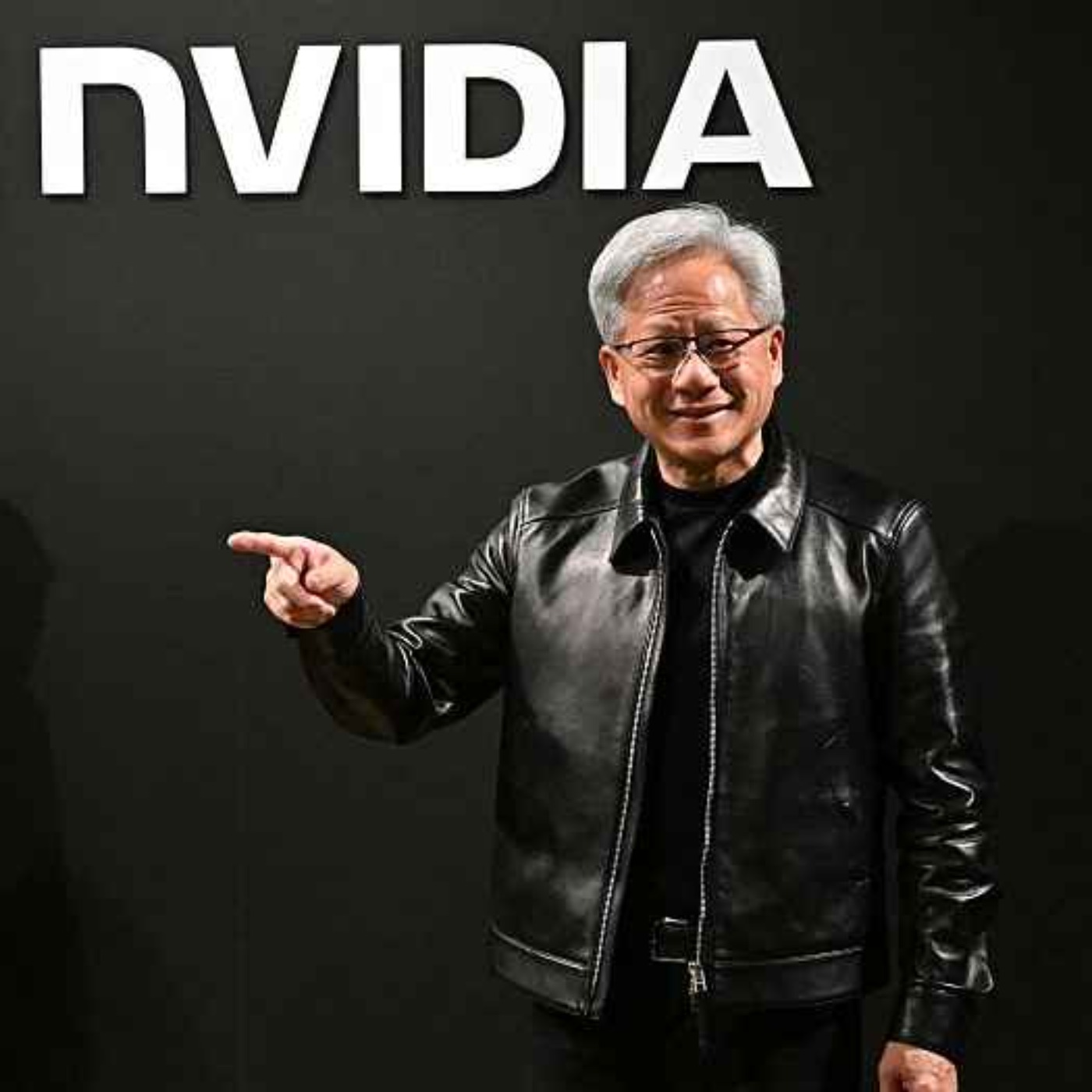
There’s a simmering concern on Wall Street about Nvidia and CEO Jensen Huang’s role as leader of the AI revolution.
Despite bringing in billions of dollars in profit from the GPUs powering AI, investors are worried about the company’s recent “circular” deals with other tech companies, and some are asking if the chip giant is building the future of AI or inflating the next tech bubble.
To better understand Huang, the man pulling the strings of this global AI boom, Danny Fortson and Mark Sellman revisit an interview with Stephen Witt, author of ‘The Thinking Machine’, a history of Jensen Huang and Nvidia.
Stephen talks about how Huang hatched the idea for Nvidia in a diner, why getting rich was his biggest fear, and the time he got shouted at by the CEO.
Read more: Nvidia is becoming tech’s Bank of Mum and Dad
Get in touch: [email protected]
Producer: Marnie Duke
Executive Producer: Priyanka Deladia
Video Producer: Bronwen Latham
Image: Getty
Hosted on Acast. See acast.com/privacy for more information.