Ask ChatGPT
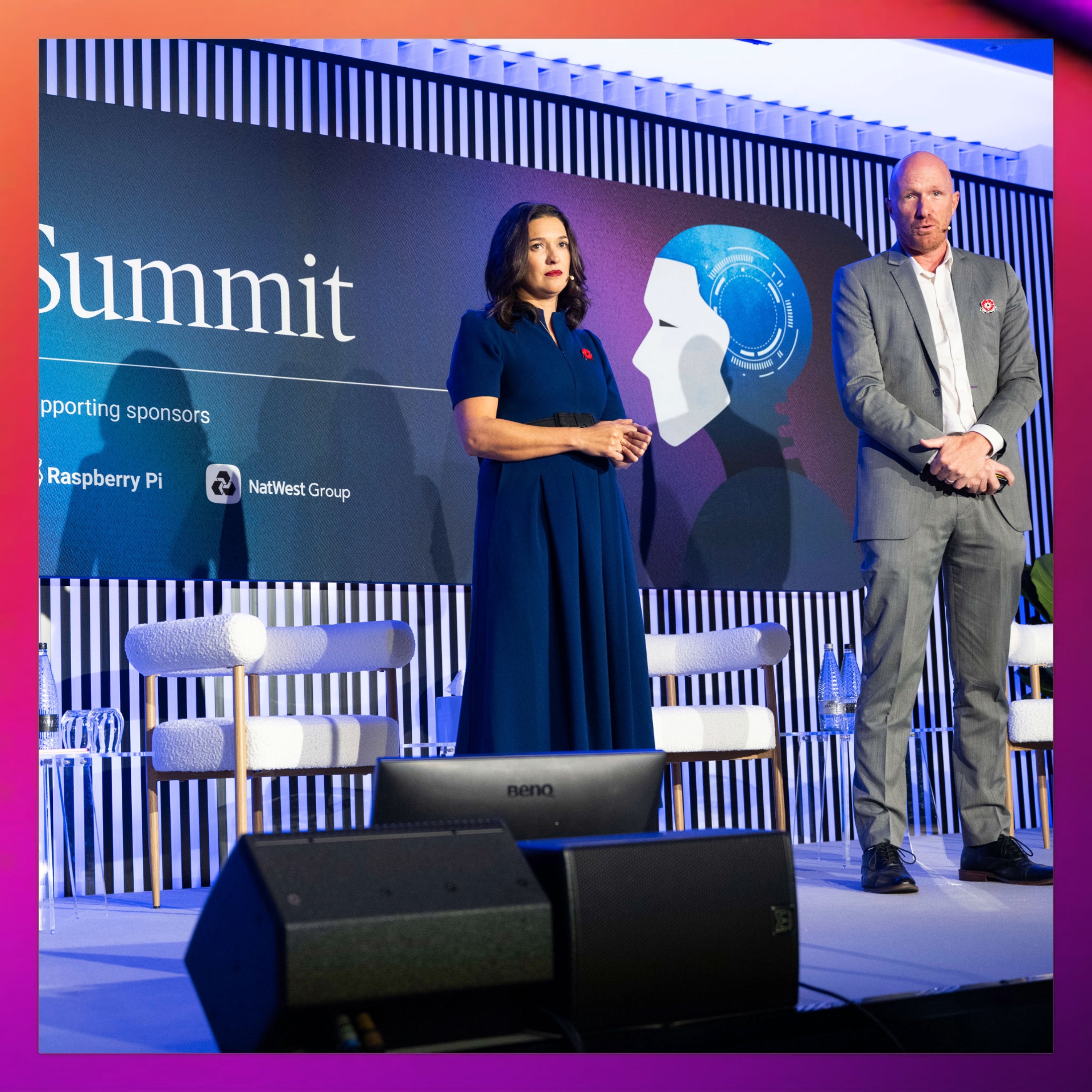


In this episode, hosts Danny Fortson and Katie Prescott review the key takeaways from The Times Tech Summit 2025, discussing the challenges and opportunities surrounding AI, media, and the UK's technological independence.
Written by AI. May contain mistakes.

Get the gist, explore an idea or ask about something said.
 Claude
On Times Tech, what are the key points of this episode?
Searching your listeningAutomatic transcript. May contain errors.
0:02Hello and welcome to the Times Tech Podcast. I'm Danny Fortson in London this week, which is a real treat. Hello, Danny Fortson in London. We're in the same room. This is rare. I'm Katie Prescott. And yeah, Danny and I are actually in the same studio because we've just finished hosting the Times Tech Summit 2025 here in the city of London. It was a great success. It was a very fun day. And there was a bunch of big names there, equally big ideas and lots to talk about from ai leaders politicians startups tech giants everybody was there and kind of a mad day to do it as well the day after the internet fell over or as the wall street journal said as amazon the day after amazon broke the internet anyway um it also means it is exactly a year since last year's summit when we launched this podcast which is kind of quite an anniversary so it's a year old and it's really interesting to remember what things we were talking about at that summit when people were still asking, what is AI?
1:07And do you use AI? Totally. Because now it's like, how do we power it? We're spending trillions of dollars. How do you regulate it? How do you maybe make some money from these things before it takes all of our jobs, like lots of big thorny stuff. And so on this week's podcast, if you couldn't be there or watch online, we thought we'd bring you a post Times Tech Summit debrief, some of the best bits of the day, the most interesting conversations, and add in a little bit of what we made it all a day on, all distilled into one perfect podcast. Oh, yeah, kind of like our normal podcast. But instead of, you know, one interview, we had like 20.
1:44We're smushing a lot together. Yeah. So you're gonna hear a lot about AI. Obviously, that was kind of the topic du jour. How do you power it with quote unquote, small nuclear reactors, which turns out not so small. We talk about data centers, all the things we talk about on the pod regularly, but also the real world impact of AI as it gets out into the wild on creators, media companies who had conversations with News Corp CEO Robert Thompson and Wikipedia founder Jimmy Wales. And there's a different kind of power. See what I did there? There's also the politics of getting AI up and running and where Britain fits into that.
2:21You're going to hear from Nick Clegg, the UK's former deputy prime minister turned meta exec, who summed it up rather bluntly. And this, I think, was the thing that stuck out for me most in the entire day, when he said Britain has become a vassal state. Quote, unquote. Exactly. When it comes to technology. So really interesting stuff and worth sticking around for. So yes, we have lots of questions to cover. Is this Britain's moment? Are we AI ready? And do power and politics match? Let's start the day with power, literally. Yeah, because AI might be digital, but it is so energy hungry. And as we've spoken a lot about on the podcast before, you need a lot of braggawats to keep it going.
3:02And the numbers around that are completely insane. Yeah, so training one big model like ChatGPT 4 or 5 uses about as much electricity as like almost 400 ,000 homes do in a year. And that's before you even get to the day-to-day use. I mean, every time somebody chats to ChatGPT, it uses far more energy than a normal Google search does. Yeah, so Global Data Center has already used about 1.5 % of the world's electricity. And the International Energy Agency reckons that it could hit 6 % or 7 % by 2030. and that really means we're going to have to have a lot of just new plants, solar panels, wind farms, all of it, gas to hit the 2030.
3:44It's basically, if you get to 67%, we're talking about basically what Japan uses today, the whole country. It reminds me a bit of the Equinix interview that we did with the boss of Equinix, the biggest listed data center company, where she said we're just trying to get power from everywhere that we can at the moment. So this is all very familiar territory to you, taking you back to your energy correspondent days. One of the first sessions you hosted was all about energy. Yeah. So I was on stage with Sir Stephen Lovegrove, who's the chairman of Rolls-Royce SMR, which is this kind of focus specifically on building this next generation of SMR stands for small modular reactor, which he said they're not really small.
4:23They're about the size of a stadium. which totally surprised me i always think of them as being i don't know the size of a truck yeah back garden type thing no the size of a stadium when it's all said and done um so he was on stage along with mike intratore a friend of the pod ceo and co-founder of core weave you know their big data center provider and they're putting about two and a half billion pounds into the uk and this is just the beginning of all this spending i mean analysts estimate that by the end of the decade over three trillion dollars it's going to be spent globally on data centers and ai infrastructure so it's a really important conversation and it's really hard in the uk where the cost of energy is just so much higher than in other parts of the world even compared to europe for for as they say in uh silicon valley 4x yeah what it is in europe yeah makes things really tricky really tricky tricky tricky because yeah electrons or the price of electrons availability of electrons is going to be the kind of the choke point for a lot of this stuff so that's kind of what emerged you know britain wants to be this quote-unquote ai superpower but it's going to need a lot more juice and as we know this is a crowded small island crowded small island with a with a creaking national grid and planning is a thing trying to get these things actually put up in communities is is not easy so that's what we talk about with uh sir sir Steven Lovegrove from Rolls-Royce.
5:48The AI data center boom is a comparatively small part of the requirement to create a huge amount more power in the world. The predictions are broadly that there will need to be in the world twice as much electricity generation in 2050 as there is in 2030. For net zero. For net zero and more for the electrification of developing countries which will require it and the electrification of heating and net zero and all the rest of it. I mean, there are huge numbers of factors which are leading to that enormous increase in electrical generating power right across the globe. So I would imagine that we will, well, I know that we will need lots more solar.
6:44We will need lots more wind. We will need lots more nuclear. We will need lots more gas. I hope we won't need lots more coal. It was also really interesting to hear that he said we're a long way off from SMRs powering data centers this decade. Because I keep hearing that as a solution. Yeah, yeah. And he dropped a pretty pointed critique of the government as well. Which is saying something because, of course, he was in a whole bunch of very high-level government positions for years from energy secretary, defense secretary, shareholder executive. So he's deep tentacles both in the government and in the city, the whole business world.
7:23And so he knows of what he speaks. And now he's running Rolls-Royce SMR. And he said that the government was not moving at what he called, quote-unquote, the speed of relevance, which is just kind of like that. Ouch. That's a burn. Yeah, I was like, so speed of irrelevance? And he was like, your words, not mine. It grieves me to say that I think that we have in this country become so captured in our bureaucratic and government processes by lawyers and the fear of judicial review, that notwithstanding the fact that Brexit was meant to have allowed us to free us from lots of things, we still follow much more grinding, slow procurement processes than pretty much anywhere else in Europe.
8:14And I think there is something that government could do to radically simplify that in make immune policy decisions from quite so much legal challenge and to push through policy decisions at the speed of relevance, because at the moment they are not being made at that speed. It's all just moving so fast and it feels like policy is struggling to keep up. Yeah. And that conversation kind of set the tone for the day, right? Where you have these soaring ambition these you know really lofty goals about how the world is going to change everything's going to change it's all going to be so much better faster more efficient and then it meets reality of just like the reality of just inertia and people and processes and things get hard quickly there were some joyful moments though which were completely at odds with reality and so fantastically optimistic and techie and reach for the moon and all of the fun things about covering this sector.
9:21And I think one stood out in particular. That's right. We had on stage Ant Roustrand, who's the new CTO of ARIA, the British government's innovation agency. We had their former CEO on the pod or outgoing CEO. Is he still there? No, he's outgoing. That's right. And they've got about a billion pounds of taxpayer money to literally just try the craziest things, try a lot of these fundamental ideas like breakthrough research, you know, along the lines of DARPA in America and see what sticks. It's a funny one because they're supposed to be investing in things that really could fail. Yeah. Which is quite a hard thing, I think, particularly for British taxpayers to wrap their head around.
10:02I know DARPA, very well established in the US, came up with the internet, among other things. But Ari has only been going for two years. So he's still in the very early stages. And he was brilliant, I thought, when you asked him about whether we're talking about sci-fi or science when it comes to what they invest in. What's the strangest thing you've said yes to? Good question. Well, we like to say yes to everything. So, you know, I think there's a program which I think is now out, I think we've got it on our website, which is about a sort of towards the first technology steps towards building like a Star Trek replicator.
10:39When I first heard about that, I thought, wow, you know, a device, a portable device, hopefully, that can produce almost any material that you would like, basically. It's absolutely incredible. yeah so uh star trek replicator i hadn't heard that kind of term in like years and years and years i've never heard that's what i had to ask him you're not you're not a trekkie no i know the song star trekking across the universe is that look at me like i'm insane well the starship enterprise i'm forgetting i've never heard this song haven't you no no but that's not actually the official thing it's not the theme song i think that might be like a song about star trek are you a trekkie no no but you knew what this was uh i had heard it but he yeah i'm glad you asked for an explanation because i wasn't quite sure what a replicator was either but you didn't want to ask sure i didn't want to like you know i have a reputation i'm a i'm a tech reporter like yeah i know what that is man sure yeah yeah yeah yeah indeed well his point was if you've got to do high-risk stuff you need to accept that it's not going to happen overnight a lot of it won't work out and it just will take a very very long time it's quite ambitious and really high risk again when you're talking about taxpayer money and everybody's worried about cost of living and everything else they got 16 directors each of them have millions to take punts on bold ideas and it's either genius or government funded chaos but you know i'm here for it yeah that's the point they pick people they pick these 16 directors and said you know go ahead go ahead go for it yeah and they did say that one of the things that they're they're look at is perpetual perpetual flight which i don't understand well i mean i think it's flying around forever but you said does that mean just floating why would you do that I don't know, but again, a bit like you in Star Trek, I sort of didn't want to ask.
12:38Moving right along. Sitting very much in a seat was Robert Thompson, who is our boss at News Corp, who I interviewed about the issue of AI and copyright, which has been a massive subject that we talked about a lot. Yeah, we started with power. We went to this kind of government moonshot agency and what that looks like in 2025 and the future. And then it was Content Wars. Content Wars. and yeah you interviewed the big big boss Robert Thompson on AI copyright and all that stuff and it's really about what's really interesting is he'd been right at the forefront of trying to force these companies to actually pay for stuff yeah yeah the woo or sue approach as we're about to hear and he didn't hold back when it came to the use of publishers content by AI engines of course the big debate has been that this all happened without permission so so take a listen Robert Thompson, thank you so much for doing this interview as part of the Times Tech Summit.
13:36We really wanted to do something about copyright on the agenda because it's clearly such a huge topic when it comes to artificial intelligence. And you've been leading the charge when it comes to the battle between the media and the tech companies when it comes to how content is used to produce generative artificial intelligence. And I wanted to start the interview just by asking you to cast your mind back to when you first realised this was going to be an issue. So for many people, they first used generative AI when ChatGPT launched in November 2022. But when did the penny first drop for you?
14:13Probably about two and a half decades ago, when it was clear that digital companies had a different attitude towards IP, intellectual property than was traditionally the case. And so you have companies that are essentially often based on open source sensibility. And open source for them also means open slather in the sense that they feel that they're able to take whatever is out there and repurpose it and not pay for it. And they would argue that it's fair use. And I would obviously argue that it's unfair abuse. And I remember being asked to address the House of Lords in 2007. A committee was examining the impact of digital on media, and it was clear then there was going to be a profound impact and probably not a positive one.
15:02And one of the reasons was what you might call egregious aggregation, where there had been a huge shift in power from creators, journalists, writers, musicians, to distributors, Google, Facebook, and others. And so with that shift, it came a shift in revenues and really the undermining of the act of creation, the ability of media companies to hire great journalists, and the ability of book publishers to commission authors at reasonable revenue levels for them, i.e. that great authors should get great payments. And so that really has continued through the decades and been accelerated by the rise of AI, because AI is really the exponential expansion of the digital world in many respects, including in the violation of IP.
16:03So for you, it's a continuation of what you've seen of the attitude of tech companies towards the media? Generally, to be honest, we now have a partnership with Google. We have a significant partnership with OpenAI, with Apple, but others are not quite as aware of their social responsibilities or their commercial responsibilities, because clearly it has a social consequence when you have fewer journalists. Clearly, it has a social consequence if the ability to write books in a meaningful, sustainable way is undermined. So, and there are people who are aware of that, Sam Altman, Sundar Pichai at Google, Tim Cook.
16:41You can talk with them in a way that they understand it's important for their business to have this constant creative flow. But there are others who are not quite so socially aware, shall we say. And at News Corp, we have a policy that we will either woo these companies or we'll sue these companies. And so we are recently a part of a consortium of publishers and authors who sued Anthropic, who now are going to have to hand over$1.5 billion to that group of authors and publishers. And obviously lawyers will get their cut. But at the same time, that won't be the last of the actions. And it's unfortunate you have to take legal action.
17:25but if you don't stand up for your rights you are not only undermining the profitability of News Corp and we're one of the more profitable news companies but you are having a fundamental impact on future possible potential creation. How effective do you think litigation is proving? I mean you mentioned the Anthropic lawsuit there's also the News Corp suit against Perplexity AI I think that you you said has willfully copied copious amounts of copyrighted material without compensation? Well, it's more effective if you win, obviously. But actually, the process of disclosure is very important. And there have been certain other cases where interesting documents related to book piracy have surfaced at one or two other companies who shall remain nameless, but you can look them up if you like.
18:09And it's interesting that once there's more transparency, I think there's more accountability because historically digital companies have arbitraged ambiguity. They will say oh you know search rankings that's got nothing to do with us it's the algorithm but clearly the algorithm is set it's tuned it's fine-tuned it has a hierarchy of inputs into the algorithm so it's not some black box that is enigmatic not at all and so So with AI, we can't allow the same sensibility to prevail where companies are saying to society as well as to us and other creation companies, oh, actually, you can't blame us because we don't know exactly how it works.
18:57But it has a mind of its own. Oh, we're not responsible because we didn't plan it that way. Well, in fact, it is planned that way. And sometimes the consequences will be intended and sometimes unintended. intended, but ultimately, they are responsible. On the wooing side, then, we move away from suing. You mentioned the deal that News Corp has struck with OpenAI. Is it for$250 million over five years? I'm not allowed to say that much. No, I'm not allowed to call it in public. Something like that. It's a significant deal. Do you think that these sums are enough? And when you look at the extraordinary valuations that these AI companies have, I think OpenAI was valued at$500 billion recently.
19:38we're recording this on Thursday, it might even be more by Tuesday, Anthropix valued at about$180 billion? You really have to check your watch and then check the valuation because they are all accelerating. Look, it's important to do these deals and it's important to create precedence. The amounts are significant, but we do feel, given our resource, Frankly, given the success of the company and the robust position in which we find ourselves, because of the strong performance right across News Corp, which is in various industries, that we feel a sense of social responsibility as well as a responsibility to our shareholders.
20:21And once you start to create precedents, you make it easier for us, but you also make it easier for other companies. I do think it's much more important to do big deals with the larger reputable players. And they're starting to recognise that need, in part because AI is retrospective and they need news to keep the AI engines fresh. And so that immediacy that news organisations can provide is essential to them. And also, every day we're reading about tens of billions of dollars being spent on chips, tens of billions of dollars being spent on energy, tens of billions of dollars being spent on data centres.
21:03Well, that's great, but that's infrastructure. The editorial content is the essence of AI. And so if you're not spending billions of dollars on the content, but you are spending billions of dollars on the infrastructure, then you're making a fundamental miscalculation about the value of what you're doing. So what you're saying is that they should be paying more? Oh, yeah, net a lot more. It got a big reaction. And his views, it's really simple and on the face of it makes sense. AI companies can't build their billion dollar models off of journalism and then just pretend or journalism or anything that's just created by humans and then be like, yeah, thanks for that.
21:40We're not paying for it. Yeah, totally. And the musicians and artists have all have also gotten involved in this debate in the publishing industry. And it seems like his approach is working. So News Corp has struck some licensing deals with Google, Apple, and OpenAI for the use of their content content of things like the times the thing is that's like to use a baseball analogy it's like the first inning you have to keep going you have to keep pressuring you have to keep kind of probably litigating or this is the beginning but it feels like the tech industry Silicon Valley is very far apart from the media industry in terms of what's fair compensation should we the media publishers creators be kind of compensated at all exactly exactly and it's um it's changing the way the industry is working totally
22:37so on that similar theme we then had jimmy wales who of course is the co-founder of wikipedia now 24 years old wikipedia started in the dot-com yeah it's wild it's crazy and he's just written a book about trust and so he came on to to speak about the impact uh specifically and we talked about a lot with the ai crawlers these are the kind of the bots that go out and kind of scrape all the data from the whole internet and what that's doing to wikipedia so some of the same issues that publishers are facing but you know with a very different impact because of course Wikipedia is free. Correct. I mean, our bigger issue is right now is the AI crawlers are hammering our website.
23:22So this is something I didn't understand until very recently because I'm like, whatever, it's a big website. The problem is, okay, something huge happens in the world like when the queen died and millions of people come and they read that one page. Well, we compute that one page and it's held in memory and we just send it out to everybody. It doesn't really tax our servers very much, you know, some bandwidth or whatever, but Wikipedia pages are very light. But if you crawl our entire website and you see one of the, whatever, hundreds of millions of pages that haven't been seen in a while, then we have to go to the database and build the page and send it.
23:57That actually costs us far more. The crawlers cost us far more than what the public is. The public tends to read the most popular things of the day and the robots are reading everything. So we're asking them to use. I'm sorry, what's the cost come from? How many servers do we need to have to serve the traffic? We have to have more servers. We wouldn't need as much hardware. We're a tiny little nonprofit, so we don't want to be wasting money on this. So anyway, we have an enterprise product, and Google's a great customer, and we're trying to get them all to go, like, don't hammer the website. Just come and buy a feed from us and that sort of thing.
24:31So there's that, and then the attribution is very important. But, you know, I accept it's actually quite a hard problem. The problem of, and then, of course, we all know, you know, the questions of plagiarism. But I think part of our view is, you know, facts are not copyrightable. That's actually very important to our work. The particular presentation of facts, of course, is, you know, how you wrote it and the style and all that. That is copyrightable. But we are very wary of a world in which this backlash against AI will lead certain publishers like, I don't know, the academic publishers are probably the most likely to say, no, actually, you have to pay us if you use the facts from our articles.
25:11That's a dark way we don't want to go, right? As much as we might lament that one of the difficulties in sustaining, for example, wire service like Reuters or whatever, is that they publish the fax and they sell them to their customers, who are customers of the... But the actual fax get rewritten very quickly. Okay, the alternative to say, no, no, you can't use the fax from the news story unless you paid for it, that's weird and conceptually has a lot of bad knock-on effects. So there it is. One side wants a toll booth and the other wants transparency. Yeah. And both are really talking about the same thing.
25:50Again, trust. Who do we trust to control information? And really trust and value, right? And kind of sustainability. Because again, when you think about that move to answer engines. Yeah. Like they get those answers from other sources. And, you know. And they're not directing traffic in one direction. No, it's all one-way traffic. So that's not sustainable long term. Well, speaking of trust, the summit ended with this dynamite appearance from Nick Clegg, the former UK deputy prime minister who left politics and then took a giant leap across the pond. Well-worn path. Well-worn path these days. It is.
26:33Yeah. Well, of course, Rishi Sunak's just gone to Microsoft and Anthropic. And I think a less board level position. I think it's more advisory, but Nick Clegg went in to be president of global affairs at Meta. And he jodged an extraordinary path on stage between being very optimistic and absolutely devastating at the same time. Yeah, so he was saying, you know, he was really just hammering this point that Britain has become a technological, what he called a quote unquote, vassal state. That's totally dependent on American kind of tech empires at every layer from, you know, the chips, cloud software, like the whole kit and caboodle.
27:10I've heard a lot of people in the British tech industry grumbling about this in the sidelines. And during the recent state visit, when Microsoft put£22 billion into the UK over five years, and Google said it was putting in£5 billion, there were a number of people who were saying, oh, you know, the Americans are just coming over here and, you know, turning us into this vassal state. But it's the first time I've heard someone as senior as Nick Clegg express it out loud. And he was absolutely vitriolic about those state visit investments. I mean, he said, we shouldn't get too excited when we cut ribbons on a few sheds full of gpus i mean sheds there's a sort of billion billions of dollars of sheds they are also sheds they are sheds they're very expensive sheds could you be more dismissive no you could not yeah anyway you could have a listen if you look more generally societally i think it's pretty difficult to assert anything other than the fact that we are a sort of vassal state technologically speaking of American technology.
28:10All of us here, your data is stored in US cloud. You've all got devices. Well, maybe you've got Android, Samsung devices, but most of your devices will be US design. Most of the software on it will be US design, the operating systems upon which everything is built. Certainly in the mobile world, iOS and Android are US pretty well. All the AI entities you're interacting with, at least the leading ones, will be US designed as well. And I often say to people, Just imagine what would fill the papers of your newspaper or the press conference of Nigel Farage, or dare I say it, the papers of Daily Mail, if this was French technology.
28:45People would go nuts because it's the French. Ah, gosh, it's the French, even though they live just across a small slither of water from here. But because we have had such a positive and intimate relationship, an almost effortless one, in the post-war period with the United States, I think the level of dependency has become so profound at every single level of the technological stack. I think it would be, for cultural and political reasons, unacceptable if that was the case, if that technology was emanating from any other jurisdiction. So in my view, the question is a quasi-political one. Do you think the rupture which clearly is taking place across the Atlantic between the US and Europe and the UK under Trump too, is that a passing squall?
29:32Is that just something which just is associated with the eccentricities of Donald Trump? Or is it, as I believe it to be, something much more profound, which is a permanent change? And it's a permanent change partly because of the passage of time. The Cold War no longer glues us together. Attitudes towards Russia and conflict in the heart of our continent are clearly very different. Obama put us on notice years ago that the US focus would be on the Pacific, not the Atlantic, but also you feel you have a profound feeling of a sort of difference of value systems and I think that will increase. If you listen to the sort of the intellectual leading lights of the MAGA movement, whether it's feminism, wind power, immigration or Europe or the European Union in particular, these have become the great shibboleths which the MAGA movement hates.
30:22I mean the hatred of particularly the kind of European continent which they think is weak, dependent, whiny, doesn't stand up for itself, and at the same time believes in all these quaint things like rule of law and multilateralism and so on. So I personally think we are strategically in a pretty perilous place now. We are wholly dependent on every level of the stack for technology from a country where the geostrategic interests are no longer aligned as they have been for the last 70 years. If I was still in government, I wouldn't shout about this, but I would try and, you know, as they clearly all are, try and hold on to the tail of the tiger, so to speak, to handle the kind of, you know, the gyrations of Trump too, whilst doing your damnedest to build up your sovereign capabilities and, in my view, also your ability to do things in your own hemisphere in Europe.
31:17That's strategically, I think, the right thing to do for the country at the time, at this time. and it's one of the reasons I personally was somewhat surprised by the, I thought, rather kind of almost embarrassing way in which the announcement that some of these big hyperscalers would put up a few sheds. They're sheds. I mean, as you know, literally, they're sheds. They're sheds with racks in them with GPUs, which all depreciate after about 18 months. The announcement they were going to build some of these sheds up in Newcastle was apparently a triumph of the special relationship. It was a ludicrous thing to say, both from the tech companies and from the government at the time.
31:49It's great they invest, but this was somehow an expression of a strategic future for our country technologically, that seemed to me to be overstating the case. So in short, I think we're in, it's not an immediate thing, but I think over the next decade, I would have thought we should work a lot, lot harder to develop our own abilities and crucially to develop, and I'm sure this has come up in lots of the debates today, is to, you know, we have this chronic problem, which is that we not only ingest American technology, when we have good people with good ideas, we export them across the Atlantic to the US because that's where they can find the money and the market and the talent and so on.
32:29We have to work out a way of keeping hold of our own talent that can scale up. This lack of an ability for us to scale up here and in Europe is, I think, getting close to existential if you believe that technology shouldn't only be invented in China and the US. there's nothing quite as enjoyable as a former high-level politician or executive who's now like off the leash off the leash totally yeah he can just say whatever he wants what he's clearly been thinking the shackles are off that theme kind of came really came across you know around speed sovereignty scale everybody's in this race whether they like it or not and there's u.s and china they're sprinting ahead and just kind of you know back and forth and then places like britain are kind of like luggage you know just wow ouch me i was gonna say britain's trying to work out its place in this world amongst the two mad large superpowers the sensible younger sibling very sensible sibling that's true but he did say vassal state i feel like luggage isn't that far you know but he said it you don't have to be so rude um navigating this for britain of course is Liz Kendall, who's the new Secretary of State for Science, Innovation and Tech.
33:48She took over from Peter Kyle in the recent reshuffle. So she's new to the sector, but she joined us on stage with William Hague, Lord Hague, Times columnist, and announced that the government would be introducing a new AI growth lab in order for companies to develop their ideas and jump through regulatory hoops quicker than they can at the moment, which actually I was slightly dubious about as an announcement, but a lot of businesses there said it was a very cool thing and would really help. Yeah, so it's still in consultation stage, but the idea is it would create a controlled and safe environment, as they call it, in which regulations are temporarily suspended so you can allow AI companies to try to innovate and test, you know, kind of the more out-there ideas or the kind of boundary-pushing ideas, test them in a way that's safe.
34:33And she did acknowledge that, you know, more needs to be done generally around the UK approach. more always needs to be done when i worked on the today program our editor at the time gave us a pep talk and said we're gonna have to ban the phrase more needs to be done like we need to stop ending every segment it's always the answer more needs to be done yeah is there a thing that you were like oh yeah i'm gonna remember that oh that was really interesting or the thing that stuck with you really really enjoyed hearing from aria i had to say i mean that is for me the most exciting thing about covering tech is big ideas you just want to perpetually fly and i want to sort of float around yeah i also really enjoyed hearing from nigel toon of graph core who's had a very interesting career sort of one of britain's leading technologists and has just sold his business to softbank to one of the world's biggest exactly ai chip company and he's really been in the center of these tech cold wars that have been going on over the last 10 years and so hearing from him as well was a was a real highlight so the one i really enjoyed um and not because i moderated the panel but was the um we had waymo oh yeah the transport panel wave and joby um so two driverless car companies and a flying taxi company talking about the future of transport and it was like the thing because they're all just you know super confident about this coming technological wave and how it's going to kind of change everything and at the end i was like you know i have kids are eight and six are they going to need to learn how to drive and they're just like nope no just like hard no like no i mean you can be you can try and it wasn't even no because you live in san francisco wave based in london and then we had jovi and they're like yeah we're we basically have sorted out the technology for flying cars we've got these deals jetsons are coming the jetsons are coming we've got deals with virgin and uber and we're trying to get kind of certified which is a huge process basically trying to certify a new plane effectively with the faa but they're deep into that process and so you know they're they're not in control of their destiny but they're also just like yeah pretty soon you'll be able to just like silently glide over the all of london from heathrow go right into the center of town who needs the elizabeth line exactly exactly which i did take uh three days ago when i great transport in london i have to say i'm so glad i'm so glad we've we pivoted to transport because why it's because you've got bigger tech companies you know i've got a bone to pick with the piccadilly and i have for years piccadilly line for those who don't know it's not one of our best lines no it feels like no matter when i'm going on the piccadilly line it's always cold cold air rushes in there's packed with people all of their big bags it's like such a but we've now got the elizabeth line which is great and there's the patent in its press in new york getting to jfk from manhattan is a complete nightmare so we need flying cars and they're coming soon and if you must take a car you can also just have a robot drive it at some point in the very something needs to happen to new york traffic is absolutely terrible more need more needs to be done i mean sort it out actually less needs to be done you have less people there next week we're going to be back to our normal program yes i'll be back in america we'll send you back to the to america on an airplane sending me back just you've been so rude about britain's place i'm getting out of this piece of luggage get get off this piece of luggage before we go before I get back on fantastic British transport.
38:23Fantastic. We do it very well. If you miss the summit, you can find full coverage at thetimes.com. And for now, from both of us, together in a very rare moment here in London. Indeed. Thanks for listening. See you next week. Back to our regularly scheduled programming.
Hosted on Acast. See acast.com/privacy for more information.