 Ask ChatGPT


In this episode of The Times Tech Podcast, hosts Danny Fortson and Katie Prescott dive into the latest earnings report from Nvidia, a leading technology company in the AI sector. They discuss Nvidia's remarkable growth, the implications of its financial success, and the potential concerns surrounding a tech bubble. Stephen Witt joins the conversation to provide insights into Nvidia's CEO Jensen Huang and the company's history.
Written by AI. May contain mistakes.
An overview of NVIDIA's recent earnings and its market strength.
“and finding out how this company went from an idea hatched in a San Jose Denny's downmarket diner, beloved in my youth, to the company that is more valuable than all 2000 companies listed in Britain combined.”
Exploring the journey of NVIDIA from its inception to its current market value.
“And try to dismiss these grand worries about the bubble.”
Detailed analysis of NVIDIA's latest financial results and market reaction.
“What did the stock market think of these amazing numbers?”
Examining the implications of U.S.-China relations on NVIDIA's sales.
“Because that's the other thing that Wall Street's freaking out about in past bubbles and kind of blow ups, credit, people taking on debt to pay for things is a real problem.”
Discussing concerns over NVIDIA's debt and competition in the tech market.
“He's the hottest company around, you know?”
Insights into NVIDIA's CEO and his approach to company culture and performance.
“Since then, it has continued to accumulate in value and briefly became probably the most valuable company in human history with almost an 8 % concentration of the S &P 500.”
Discover Jensen Huang's intense leadership style and how it affects NVIDIA.
“If you're an employee, you're not going to do anything over the course of the workday.”
Learn about the personal journey of the guest and NVIDIA's transformation over the years.
“So what got you interested in Jensen Huang and NVIDIA?”
Understand how CUDA changed the landscape of computing and AI.
“And Jensen's innovation was that he realized that there was some wiggle room on pricing with these guys.”
Explore Jensen Huang's dual persona in public and with his staff and how it impacts NVIDIA.
“they're so tied into the CUDA system that they don't want to buy other chips.”
Examine how NVIDIA's employee stock options have shaped employee experiences and wealth.
“I mean, he's just talking about this incredible technology.”
Explore the complex relationship between Nvidia's influence and global politics.
“It's interesting you talked about the yelling because he yelled at you, didn't he?”
Discuss the implications of Nvidia's global talent recruitment and manufacturing decisions.
“There's this big kind of geopolitical race over AI supremacy.”
Delve into the potential future landscape of AI and how Nvidia is preparing for it.
“But the thing he really wants doesn't get publicized that much.”
Gain insights into the current market dynamics affecting Nvidia and the AI industry.
“That's the thing he can't afford to lose.”

Get the gist, explore an idea or ask about something said.
 Claude
On Times Tech, what are the key points of this episode?
Searching your listeningAutomatic transcript. May contain errors.
0:05Danny Fortson: Hello and welcome to the Time's Tech Podcast where every week we unpack how technology is reshaping business, culture and everyday life. I'm Danny Fortson out here in Silicon Valley.
0:17Stephen Witt: And I'm Katie Prescott, Katie in the city, the city of London. And this week, it is once again, the big one. Yes, NVIDIA, the world's most valuable company. and the chip maker powering the AI revolution has published its fourth quarter earnings. And, but once again, they are enormous. Hooray. Ginormous. Maybe, or not. Yes, yes.
0:44Danny Fortson: Well, so we're going to be unpacking all of it and finding out how this company went from an idea hatched in a San Jose Denny's downmarket diner, beloved in my youth, to the company that is more valuable than all 2000 companies listed in Britain combined.
1:04Stephen Witt: This extraordinary statistic. It's crazy.
1:07Danny Fortson: It is crazy. And to help us tell the Nvidia story, we've enlisted the help of Stephen Witt. He is the author and journalist who has spent the past few years getting to know the company CEO, Jensen Wang, very, very well, better than most.
1:23Stephen Witt: Yeah, I mean, there are very few pies, it feels like the Nvidia CEO Jensen Huang doesn't have his fingers in. When he was over in London last year, it felt like he was sprinkling cash in all the top AI companies. I mean, 11 Labs, Synthesia. He was liberally throwing around the dollars that he's making that we're going to be discussing later today. But of course, everybody is worrying about the circular deal making between the largest players in AI. And Jensen Huang really is at the heart of this spider's web isn't he and a lot of people are trying to unpick these relationships and how they're working and the the possible impact if if this all starts to fall apart that's right and so this week we're
2:08Danny Fortson: actually recording a day later than normal because nvidia was delivering its fourth quarter slash annual results which has become an event and they beat forecasts um surprise surprise surprise surprise.
2:24Stephen Witt: It's just become a bit boring now, hasn't it?
2:26Danny Fortson: Yes. And try to dismiss these grand worries about the bubble.
2:31Stephen Witt: I mean, it hasn't missed Wall Street's targets in about five years. And I can't think of another company where we've become so immune to these enormous figures. And when they don't actually have an impact on its share price, I mean, clearly, last year, its value rose to five trillion last October. I think it was about three trillion at the start of the year. So it went up exponentially. But they've slipped about seven percent since then, which is really surprising given that they are a classic beat and raise stock every quarter. They publish their results. They beat what everyone thinks they're going to produce.
3:13Stephen Witt: and then they raise their forecast. So our big question today is do NVIDIA's latest earnings ease bubble concerns or heighten them?
3:22Danny Fortson: Right. So what are the numbers? Revenue between last three months this year relative to last year, up 68 billion. That's up 73 % profit, quarterly profit nearly doubled to$43 billion. Gross margin was 75%. I mean, how many companies can make 75 % margin on anything they're selling? When you think about like Tesco, it's like 0.1%. And the forecast predicts$78 billion in revenue for this current quarter. Just to put that in perspective, I think it was two years ago, their annual profit was$4 billion or less than$5 billion. This year, it was a total was$120 billion. And I think that just really brings to life what has happened these last couple of years in this AI revolution.
4:16Danny Fortson: I mean, that's just insane. That is, you know, a small nation's income.
4:21Stephen Witt: And its revenue for this year is$216 billion, up 65 % year on year.
4:32Danny Fortson: What did the stock market think of these amazing numbers?
4:36Stephen Witt: I'm going to get up NVIDIA's share price. it's a down 4.3%.
4:42Danny Fortson: Well, it really speaks to the central question, right? Like, are we in a bubble or not? And I think people are looking for any reason to be like, you know what? No, this is not sustainable. This is the rise before the fall. This simply can't keep going. And so I just think as we've seen with, we've talked about it in the last couple of weeks, the whole sell off in the market broadly and then here you have these like forecast beating results on every measure and yet the stock market is like i'm uncomfortable it's very notable that sales really are being
5:20Stephen Witt: driven by data center demand and by the big tech companies so you're exactly right it's that nervousness around big tech, their spending, can they afford the spending to continue that I think is really bouncing back on NVIDIA. But it's interesting to note, I was just reading through some of the financial analysts notes about the results that have come through today from the likes of HSBC and Bank of America and Jefferies. And they've all still got buy ratings on NVIDIA, which means that they're advising their investors to buy and they're still very bullish on the stock. but obviously that's um that's not feeding through to the share price so just stepping back and
6:03Danny Fortson: thinking about why we care about all of this like you know because you could be like well who cares about the stock of one company this company has become the kind of the bellwether for the almost the entire global economy because it is the most valuable company on the planet it along with the other big six tech companies account for something like 25 to 30 percent of the S &P 500, which is, you know, basically people's pensions, you know, what they're going to retire and all of this stuff. And it is seen as like the key indicator of is this AI revolution real and how to your point, who's going to pay for it?
6:41Danny Fortson: Because that's the other thing that Wall Street's freaking out about in past bubbles and kind of blow ups, credit, people taking on debt to pay for things is a real problem. And you're starting to see even the biggest companies in the world pay for their data centers, pay for their NVIDIA chips with debt. They're taking out big old loans to pay for all this because they're just blowing through all of their cash to kind of build all these countries of geniuses and data centers as Dario Amadei calls them.
7:09Stephen Witt: The other thing that we always watch for really closely in NVIDIA's results is any information at all about sales to China. And that's because it tells us a lot about the political relationship between the US and China. But also for NVIDIA, it is an enormous market. And NVIDIA really has been in the eye of the storm in terms of this ongoing kind of bitter Cold War between Washington and Beijing. And it was interesting that the CFO, Colette Cress, NVIDIA's CFO, said that NVIDIA didn't include any AI chip revenue from China in its forecast. So those sales are still not happening. And I know you'll remember that NVIDIA really got caught up in all of this when Donald Trump said, hey, you can sell some of your chips to China.
7:56Stephen Witt: I mean, as long as you give some cash to the White House along the way. Yes, indeed. Indeed. And I know Jensen Wang has spoken a lot about how concerned he is that the longer that they stop sales to China, the more the Chinese start developing their own products and the market gets closed to them.
8:15Danny Fortson: Yeah. And you're starting to see other kind of companies because everybody looks at that$120 billion in profits in a year. Company could have been around a century and not made that in their entire history. You know, they see those profits and they've been working for a long time on kind of coming up with alternatives. And you're starting to see companies, chip startups or chip, startups that have been around for a while get snapped up or roll out alternatives. And AMD, big rival run by Lisa Su, they just announced a deal to sell a hundred billion dollars of chips to Meta. So everybody's looking around being like, how can we take away some of this business from Nvidia?
8:57Danny Fortson: And I think the worries from what I see are what's going to happen with China. the people are starting to take out loans to buy this kit and then as you mentioned the circular deals of like oh we're going to invest 30 billion dollars in open ai and what is open ai going to
9:14Stephen Witt: spend it on oh wait our stuff and it was going to be 100 but now it's actually 30 and uh that
9:20Danny Fortson: original deal wasn't really a deal yeah so it's this it's this washing machine where we give you money and then you give it to us right back and we count it as revenue wall street's uncomfortable with that understandably so people walked away of this week even though the numbers were fabulous and they're just like this doesn't pass a smell test long term if i was jensen huang though i
9:41Stephen Witt: would feel a bit miffed wouldn't you reduce these sales figures and uh i'm like what do you people
9:48Danny Fortson: want yeah exactly what can i do exactly but i mean the company is still worth 4.7 trillion dollars and he is still one of the richest men on the planet and still like to channel our present. He's the hottest company around, you know?
10:08Stephen Witt: So it feels like a really good day, Danny, to look back at NVIDIA's history and work out how they got here because I don't think we've done that before. We talk about their results every three months. As you said, you know, they're a hugely important company to all of us because of the weight that they have on the stock market. But who are they?
10:27Danny Fortson: So here to break it down with us is someone who knows the company and its CEO inside out, journalist Stephen Witt. He's the author of The Thinking Machine, the history of AI giant NVIDIA, which won the Financial Times Business Book of the Year in 2025. Congratulations and welcome, Stephen.
10:47Stephen Witt: And congratulations on writing your book. How long did it take you?
10:51Katie Prescott: It took about a year. I wrote it as fast as I possibly could because there was just so much going on with NVIDIA. You know, I got the commission and it just took off like a rocket ship. It was growing rapidly even when I wrote the book. But by the time I was finished, it had gone to actually become the most valuable company in the world. Since then, it has continued to accumulate in value and briefly became probably the most valuable company in human history with almost an 8 % concentration of the S &P 500.
11:18Stephen Witt: Stephen, the book's based on interviews with Jensen, clearly, but also on sources close to him and from within the company.
11:27Katie Prescott: Yeah, that's right. I interviewed almost, I think, 100 NVIDIA executives. I interviewed many of Jensen's old friends. I interviewed his co-founders. I interviewed people who knew him from a long time ago. So I really wanted to build out the character of Jensen, the person of who he is, which is hard. He's guarded. You know, he didn't give me access to his emails or anything like I had to kind of piece it together as best I could. But there was enough information going into the past to build to me at least a convincing kind of three dimensional portrait of who Jensen is from the pieces of data that were lying around.
12:02Katie Prescott: I read every New York Times article that ever mentioned NVIDIA going back to 1999, and there's 700 of them. Just to get a sense of what NVIDIA looked like to Jensen at that time. The success of this company was 30 years in the making, and there were 20 years where it was tough. Jensen hasn't forgotten that that happened. And in some ways, he still lives in the bad old days. He still lives in the world where NVIDIA is not a success. That's his mentality. You know, he didn't really break through into the kind of top tier of business until he was in his 50s. So it was a long time in coming. He wasn't some kind of overnight success.
12:42Katie Prescott: And I think that was the story I really wanted to tell.
12:44Danny Fortson: And I'm curious because we're talking to you, obviously, in the week of these earnings. And NVIDIA has become almost like the every six week meeting of the Fed where everybody just like stops and watches because it's become so important to the economy. there's watch parties have you been to any of these watch parties i was actually an nvidia watch
13:05Katie Prescott: party at nvidia which was pretty funny i mean they knew the results they were going to report but they were embargoed so it was funny i actually was physically present in the company on the day
13:14Danny Fortson: when it became the most valuable company on earth nobody acted any different there was no champagne
13:21Katie Prescott: or anything there's no people basically said staring at their phone being like i can't believe
13:25Danny Fortson: They were like a couple other employees.
13:28Katie Prescott: Exactly.
13:29Stephen Witt: Look how rich I've become.
13:31Katie Prescott: You would think so. But Jensen really discourages this. You got to remember, Jensen's been doing this for 30 years. There have been several times in NVIDIA's company where the stock went down almost 90 percent, sometimes more. You know, there was a period where NVIDIA went. Was it like two dollars? So he hasn't forgotten that. So he discourages his employees from paying too much attention. There's no CNBC is not on or at the office. There's no ticker tape showing NVIDIA stock price. In fact, I talked to somebody who previously worked at Intel and he's like, actually, at Intel, we paid way more attention to the stock price day to day than we do at NVIDIA.
14:05Katie Prescott: It's a distraction. If you're an employee, you're not going to do anything over the course of the workday. That's it's going to, you know, the stock price is a meaningful input into unless you're like, I just ship this line of code another 20 cents. Yeah. What is that? How is that going to change what you're doing?
14:21Stephen Witt: But to that point, I mean, do you think Jensen Huang would get upset then when the stock price goes down like 4 % like it has today, having delivered such extraordinary results?
14:34Katie Prescott: Nope. The opposite. In fact, his greatest fear is that his company will get rich and his employees will grow complacent. And he's terrified of this. I'm dead serious. He's just completely neurotic about this particular thing happening. And I'm talking to people inside the company. You remember when Deep Seek happened last year, which wiped out about a trillion dollars in value. You know, it turned out to be an overreaction. But at least in the short term, it did a lot of pain. And I was talking to people inside the company, like how's it going? They're like, oh, Jensen's like in a much better mood.
15:04Katie Prescott: He's much more compassionate. He's a better leader. Like he's saying we all have to pull together. He's such a good leader under pressure. I remember talking to him. His first job was a waiter at Denny's. It's this like restaurant chain in the United States. And he was like, yeah, I think I calmed down during the dinner rush hour. I think my heart rate goes down. It's when nothing happens that I get agitated and upset. And I think that's true to NVIDIA too. When things are going well, he becomes very nervous. Remember, the profits that he earns are just the opportunity for somebody else. NVIDIA's motto is you should act like the company is 30 days from going into bankruptcy.
15:42Stephen Witt: Is that right? That's fascinating. So he's a wartime leader.
15:46Danny Fortson: That's like, it's the only paranoid survived, right? Only the paranoid survived.
15:52Katie Prescott: That was the title of Andy Grove's book about Intel, right? The CEO of Intel wrote that. And Jensen has absorbed that lesson completely. He envisions doomsday scenarios for NVIDIA constantly. And even though it's not literally true that NVIDIA is 30 days from going on in business. Now, I said this to him. Well, it's not actually true. Well, no, it's not literally true, but the decisions we make over the next 30 days could lead to us eventually going out of business if we don't make the right ones. If it has a target on its back, Google's chasing it. Asics, Broadcom, China, people see how much they're making it.
16:30Katie Prescott: You know, you 70 % gross margin on a chip like you've got a target on your back and you're hunted. And so when you succeed and make more money for Jensen, it's just another person trying to shoot him down.
16:44Stephen Witt: So what got you interested in Jensen Huang and NVIDIA? Why did you start to write about this subject?
16:49Katie Prescott: I had actually known about him going way back. I wasn't really a gamer, but I actually the first thing I did in my career was was trade stocks on Wall Street for a hedge fund. And I remember when Enron was kicked out of the S &P 500 and NVIDIA was put in. There used to be this trade that no longer exists, but you could buy a company that you thought might get added to the S &P 500 and then capitalize on the fact that the index funds would sort of provide liquidity and make a little money. So we actually bought the stock, but barely understanding what they did.
17:20Stephen Witt: Oh, my goodness. When was that? I don't want to know. Oh, wow.
17:24Katie Prescott: That's a long time ago.
17:25Stephen Witt: When it was a flat line on the bottom of the graph.
17:28Katie Prescott: Well, at that time, actually, they looked kind of like an up and coming company because they were having success with this video game stuff. Nobody had ever heard of them. Then for the next 12 or 13 years, they were just absolutely in the toilet. They were one of the dogs of the S &P 500. They never performed. They never outperformed anybody. And people would make fun of them. Jensen was in trouble. This reputation that he has garnered as a visionary, as a great leader, he did not have that for the first 20 years of his career. People thought he was eccentric.
17:58Danny Fortson: He didn't wear a leather jacket. I was going to say, did he have the leather jacket then? because the leather jacket is like a no the whole rebrand the whole what started to happen
18:09Katie Prescott: was that his his his video game chips were so good at doing massive calculations in parallel that scientists became interested in them and they would actually hack the video game programming software just to get at the circuits to do more complex kinds of things like doing like weather forecasting or or you know petroleum engineering or quantum physics so just for listeners who don't
18:32Stephen Witt: know. So he started off making computer graphics cards.
18:35Katie Prescott: He basically made a hobbyist product for nerds. So if you're really into video games, you wanted the highest possible frame rate for your game. You wanted it to run as smoothly as possible. And there was a certain class of consumer that would pay basically any price to make this happen. And Jensen realized that and built these powerful kind of video game engines for his customers. And then they would buy these things and they would be so proud of them. They would get like clear computer cases to showcase the video game cards that they were running. It was like a whole subculture. In fact, even today, if you go to the NVIDIA subreddit, all they talk about is video games.
19:20Katie Prescott: Like there's no discussion of stock or AI. It's totally for hobbyist PC guys who want to build what they call rigs. That's basically hot rodding your PC. And Jensen's innovation was that he realized that there was some wiggle room on pricing with these guys. And basically, he could charge them more to fund what was functionally a very ambitious scientific computing effort. Right. And they started shipping this platform for supercomputing called CUDA. So you have this video game card and you flip a switch on it. And if you know what you're doing on the back, you can start doing scientific and programming and computing.
19:54Katie Prescott: Now, the number of users who actually flipped that switch and did weather forecasting instead of playing Call of Duty is small. But Jensen thought that those were the most important customers, the science guys, because maybe they could unlock some new branch of science. And the thing is, supercomputing had already existed, right? And if you're a well-established research scientist, you can afford time on a supercomputer. So who is CUDA for? Like, who is this for? Well, it's for marginalized scientists, right? It's for scientists without a lot of research money, without a lot of funding. For scientists who can't afford to get their own supercomputer, they build one, they jerry-rig one out of video game cards.
20:35Katie Prescott: And it turned out that unlocking that capability was the secret to making AI succeed.
20:42Stephen Witt: And could you just explain to listeners what CUDA is? Because it remains one of the reasons why NVIDIA is such a successful company.
20:52Katie Prescott: Yeah, it's a kind of platform, a software platform where you can kind of do what's called parallel computing. Basically, what we're doing here is taking one big problem, chopping it up into a number of smaller problems, and then executing them all at once. The nice thing about this is you take advantage of more of the kind of surface of the microchip. So like in Intel's classic model is serial computing. We're bringing one problem to the processor at a time. If you look at an Intel microchip, each clock cycle, it pulses with electricity on the Intel chip. Maybe three percent of the circuits are active with each pulse on an NVIDIA chip.
21:32Katie Prescott: It can be more like 30 or 40 percent. So CUDA is basically a platform to make that more accessible to the programmer. So they don't have to do so much work to get to those kind of precious circuits and clock cycles, which are their fuel and which are becoming like basically money. now, right? It's the most valuable commodity in our society now is what they call compute, or basically clock cycles on a microchip, because with each pulse of the microchip, you can get another answer from AI.
22:02Stephen Witt: And it's what I keep hearing from developers is that they're so tied into the CUDA system that they don't want to buy other chips.
22:10Katie Prescott: That's exactly right. A great story I heard early on at Adobe, like 2008, 2009, they were trying to build the world's first 4k video editor and the the management at adobe actually tried to block the programmers from using nvidia chips because they knew this would happen they knew they'd get locked into nvidia forever but the programmers like sorry this is the best they actually think they did it in secret basically and then brought it to management was like look we built a 4k video editor there's just one thing we're now um committed forever to the expensive nvidia hardware upgrade ladder. And it's not going to be so easy to port this 4K video editor to the cheap Chinese commodity hardware that everyone likes to use.
22:55Katie Prescott: That same thing happened in AI. And it's why Nvidia went from being essentially a flatline stock to the most valuable company in the world. They basically got the world to commit to their expensive upgrade.
23:17Stephen Witt: what's he like steven i mean i've met him a few times and i've seen the sharp side of jensen when he doesn't like what journalists are asking him in a press conference and he gets touchy uh and i've seen the very very charming side outside 10 downing street where he's with british ministers and he's you know on it on his smiling a game the jensen you see in public is a um is an
23:40Katie Prescott: act. It's a carefully cultivated persona that he's groomed and built. You know, the most amazing thing that I learned about Jensen of all the many amazing things I learned, I think the most amazing thing is he hates public speaking, which is so weird because he's so good at it. I mean, he's just he can sit up there in front of an audience and talk for two hours and have everyone on the edge of their chair. But I was with him in the green room before he went out to give a speech one time and I'm looking at the guy and he's rocking back and forth on his feet and he's cracking all these weak jokes.
24:11Katie Prescott: And I'm like, oh my God, this guy is nervous. This is a meaningless speech he was giving when I saw him too. It was like 400 people. And he was just, he was nervous to be up there. And he was like, I can't sleep whenever I have to do this. I can't sleep the night before I get so nervous. It was crazy to think about. This is the most powerful man in the world. And he tells the president what to do, you know, like it's unbelievable, but it's really true. But to see that human side of him was was really extraordinary.
24:38Stephen Witt: So he's shyer than he comes across.
24:41Katie Prescott: I don't know if he I would never call Jensen shy, but I think that he does get a little stage fright or not so comfortable with being kind of the guy on stage, which is amazing. He's great at it. He's better than any other CEO, at least going back to like Steve Jobs. You know, Steve Jobs is good, too. But but, you know, he's one of the best. He's just so good at being on stage. And when he gives, I watched him present for two hours at CES last month and everyone was just gripped. I mean, he's just talking about this incredible technology. I mean, I think that's part of it. You know, what they've what they've engineered and what they've promoted is just so unreal that it's just captivating to hear his vision and what it could be.
25:20Katie Prescott: Yeah. And the leather jacket came along later. Right. Actually, what happened was his daughter got a job at Louis Vuitton. And I think she was like, Dad, you need to make over an upgrade.
25:30Stephen Witt: Ouch. So, but aside from the sort of stage fright stuff, what's he like with his staff? What's his reputation like within the company? Intense, really intense.
25:42Katie Prescott: I mean, this is the thing. He's super nice in some ways. Everyone has a story about a time that Jensen went out of his way to give them extra time to help them and to encourage them and to be nice to them. And then everyone has a story at the time Jensen exploded and started screaming at you in public in front of 100 people and humiliating you in like an incredibly cruel way. So he has both of those things. Right. And as a result, the people stick around. They want his love and they're also afraid of him. Right. It's a combination of love and fear. You know, as a result, his executives, I mean, they're excellent.
26:21Katie Prescott: most of them could be CEOs of other company in their own rights. But ironically, they'd probably make less money than they would as a top executive in video.
26:29Danny Fortson: He's famously said, I've made I've created more billionaires in my company than maybe anybody else in America.
26:35Katie Prescott: Yeah, I mean, that was partly it was primarily because, well, obviously, the stock price went up a ton. But the other thing is they're very generous with their stock options. And in fact, they had not always been that generous employer. If you go back and talk to people during the video games days, they're like, yeah, you know, NVIDIA didn't pay that well, actually. But they always are very generous with the stock options because what was happening is people would buy the stock. And during the bad days when they weren't doing too well, it would drop like 70 percent. And then suddenly they'd be in the hole.
27:04Katie Prescott: I bought the company stock through the ESLP and I'm like 50 percent underwater. This sucks. So what Jensen did was he instituted a plan where not only could you buy the stock at a discount to the prevailing market price, you could buy a stock the stock at a discount to the prevailing market price at any time in the past two years so what happened is the stock started to rocket upwards in the ai era you know 2014 onwards it was free money like the stock would go up like 600 and you could still buy it to the discount of the price like two years before and so everybody just maxed out their their employee stock option cap and became i think something like 50 of the company now has a net worth of more than$25 million.
27:47Katie Prescott: Now, when we say that, 99 % of their net worth is this volatile tech stock. So it's not like it's sitting in the bank account. You know what I mean?
27:57Stephen Witt: But it's been high for quite a while. And whether it's$5 trillion or$4 trillion, it was a trillion among friends. It's interesting you talked about the yelling because he yelled at you, didn't he? Yeah, I did. When you were writing the book. What happened?
28:11Katie Prescott: I don't want to give away the ending, but yeah, he yelled at me. fair enough i got to incur the wrath of wong as i described it but it felt special to get yelled
28:20Stephen Witt: at by him i mean it did i mean it was part of his inner circle congratulations now you love him
28:27Danny Fortson: not many people can say they got screamed at by the most powerful man in the world well speaking of the most powerful man in the world what is your sense of his relationship with donald trump because obviously the other big thing around is like china are we going to sell chips there? Are we not? There's this big kind of geopolitical race over AI supremacy. And all of a sudden he's, to your point, he's kind of, if not the most powerful man in the world, he controls what everybody wants.
28:54Katie Prescott: Yeah, exactly. So, you know, with Trump, what's he want? You know, Trump has various levers, obviously, that determine if he is profitability. Trump is attempting to force Taiwan via tariffs or various other incentives to shift more manufacturing to the United States. Trump does, and the National Security Board don't really, you know, there's a lot of argument about whether or not to sell these chips to China.
29:17Danny Fortson: Just to kind of make it clear, in case listeners don't know, they designed the chips, but they're all made by Taiwan Semiconductor, basically.
29:24Katie Prescott: Yes, yes. Although that's changing because we're moving manufacturing to the United States now. But historically, all the chips are made in Taiwan. So Jensen's going to treat Trump like an engineering problem. Jensen treats everything like an engineering problem. So he's going to just experiment with inputs and outputs. He's going to experiment on saying different kinds of things to Trump and seeing what the outputs are until he gets what he wants. I mean, I think he can manipulate Trump. And so he wants all these things. But the thing he really wants doesn't get publicized that much. NVIDIA doesn't make anything, as you just pointed out.
29:56Katie Prescott: They just design it. They're basically just an R &D laboratory. And if they don't have the best people in their R &D laboratory, they don't really have a business. If you go into NVIDIA today, fewer than 50 % of the people in the company were born in the United States. They're all brilliant scientists from India and China and Europe and all over the world, Middle East, with H1Bs or on green cards or on visas. And the MAGA base does not like this, right? So Wong has to continue to make NVIDIA the first choice destination for this talent pipeline. This is actually the biggest risk that he faces.
30:43Katie Prescott: And I don't think enough people talk about it. If these skilled engineers don't end up working for him, then they will go to their home countries and build companies that compete with NVIDIA and beat him. And Jensen knows it can happen because he did that. That's the biggest risk. And he has spoken about this quite a lot when it comes to China. I think the most important part of Jensen's kind of push with Trump, although there's many factors to it, I think actually secretly the most important is blunting the influence of Trump's kind of like base so that he can continue to get access to this talent pipeline.
31:16Katie Prescott: That's the thing he can't afford to lose.
31:18Danny Fortson: I'm not going to ask you to predict the future. Well, actually, I kind of am. But you used to be a traitor. you've been inside this company that is now the most valuable company on the planet and as you say google's making their tpus you got everybody being like oh 70 profit margins on a thing everybody wants i want to take some of that so if we go out and then you know over later on that is like the bubble worries and where we are in this revolution if we go out one two years based on what you have seen. What does the world look like for NVIDIA then? Has the bubble popped? Like, where do you see this going?
31:59Katie Prescott: I don't think we're in a bubble. I don't think it's popping. I don't see any evidence of that. I mean, it seems like the people who are spending money on these inference load alone, every programmer I talk to now in the past two months has completely transitioned their workflow to using Cloud Code all of the time. And I think that is a bellwether for every industry. It creates a tremendous amount of demand for inference chips and for ongoing training, making better cloud codes. So, you know, the demand for continuously, I think we've only trained, my guess would be about 1 % of the AI that we're ultimately going to train in a mature AI industry.
32:39Stephen Witt: Do you remember, Danny, when I interviewed Jensen, he said, we're not in a bubble, it's a build out.
32:43Katie Prescott: Yeah, I agree with that.
32:45Stephen Witt: Stephen, thank you so much for joining us. It's been absolutely fascinating to go through some of this with you and hear from inside the company. Stephen Witt, the author of The Thinking Machine, a fantastic book about NVIDIA and its history. Fascinating to hear from Stephen, wasn't it, Danny? I mean, a lot of that I actually had no idea about. I liked what he said about him being a really great wartime leader, like him hating complacency, him hating being in a leading position and feeling most comfortable under pressure because it must be extraordinarily difficult when it always is right when you're the leader because there's a very very long way to fall and that's the position that invidia is in all the time with lots and lots people snapping at its heels trying to push it off its perch and it sounded like that point he made about you know the deep seek moment when jensen went calm and everyone went in the business I said, oh, he's, you know, he's been really nice to deal with just feeling in control.
33:46Danny Fortson: It just sounds to me just like as a mere mortal, it sounds so exhausting because, you know, it reminds me of like, you know, Jeff Bezos, Jeff Bezos famously has his whole like, it's always day one because day two is complacency, irrelevance and death or whatever. And you have Andy Grove, who is like the legendary CEO of Intel. Only the paranoid survive. like there is a thing here around just never relaxing and you have to be a certain type of person you know it feels like there's only so much you can kind of learn to be that way but i just thought i was interesting that kind of struck me that you know i've i've seen a version of that movie before with other ceos and obviously they've all been wildly successful well so that is it for this week's episode of the times tech podcast if you are enjoying the show please do follow or subscribe leave us a rating or a review it generally helps other people find us or better still get a bot to like us or a whole you know what they call them now bot swarms agent swarms which is just they need to really work on marketing these whole all these ai folks calling something a swarm makes me think of like killer bees like come up with a better way yeah but maybe we need
35:09Stephen Witt: a swarm and that would help our marketing we need to kind of come up with a better
35:13Danny Fortson: nomenclature than you know swarm it just sounds so aggressive and we would love to know your
35:17Stephen Witt: thoughts on today's discussion on swarms any of that um so drop us an email at techpod at the times.co.uk and we shall see you back here next week bye
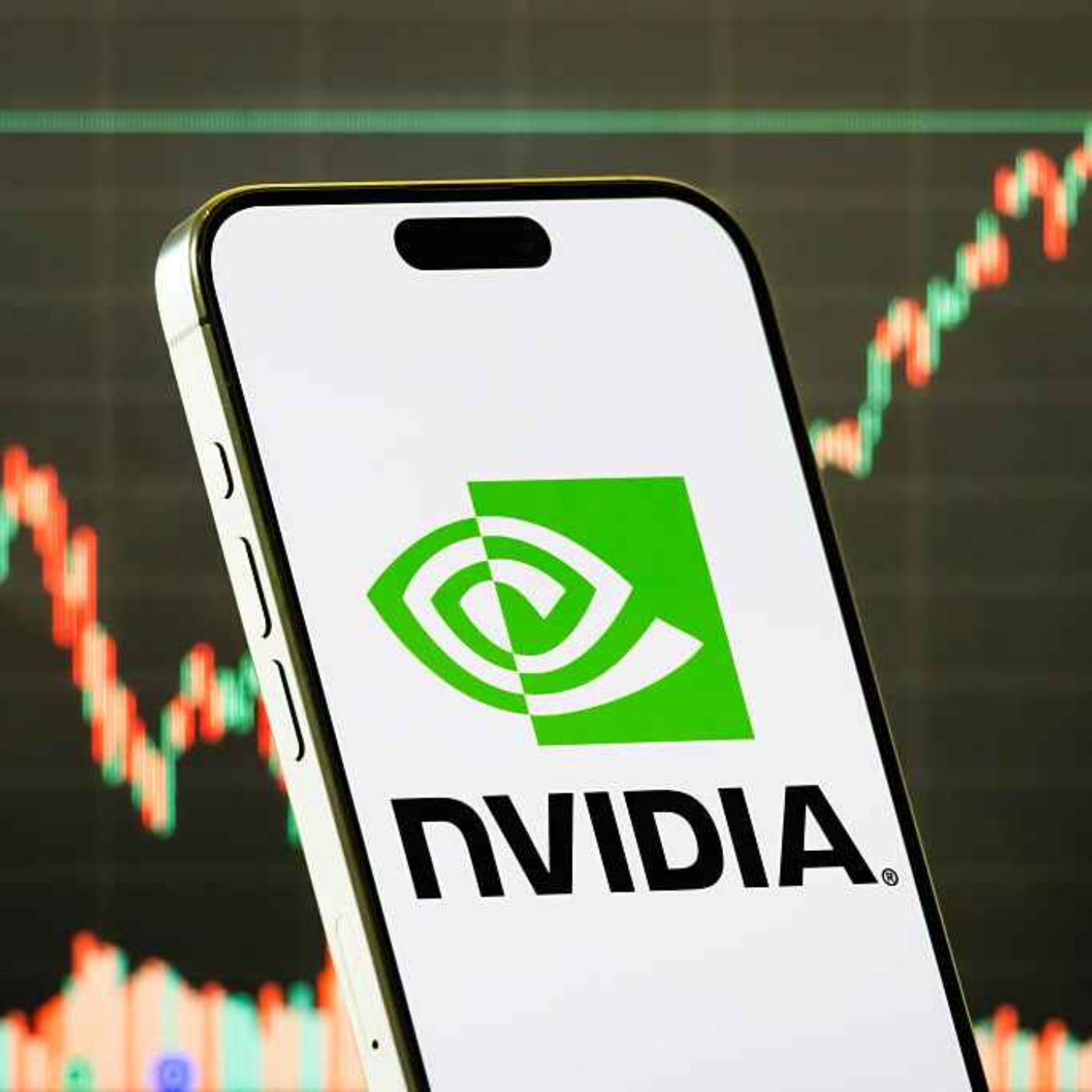
Do Nvidia’s latest results confirm a tech boom or signal the makings of a bubble? Danny Fortson and Katie Prescott ask how a once-niche graphics chipmaker ended up at the centre of global tech, geopolitics and the stock market. Author Stephen Witt joins them to explain Jensen Huang’s rise and the company’s extraordinary dominance.
Guest: Stephen Witt, Author of The Thinking Machine: Jensen Huang, Nvidia, and the World's Most Coveted Microchip
Image: Getty
Hosted on Acast. See acast.com/privacy for more information.