 Ask ChatGPT


In this episode, the hosts discuss the rapid growth of Artificial Intelligence (AI) and the potential implications for society. They focus on a thought-provoking essay by Dario Amodei, CEO of Anthropic, which raises questions about whether we are at a pivotal moment in AI development that could redefine humanity. The episode also addresses the political dynamics of the tech industry, particularly concerning relationships with political figures like Donald Trump.
Written by AI. May contain mistakes.
Discussion about Dario Amadei's essay on the implications of AI's rapid growth.
“And this kind of question has been posed by Dario Amadei.”
Exploration of AI's effects on jobs, economy, and productivity.
“products right now are responding to that.”
Examining the cognitive breadth of AI and its potential disruptions.
“they're just going to be better than your average human.”
Debate on the need for regulation in the face of AI advancements.
“great detail around that and is like, you know, we need regulation.”
Barney Hasio shares insights on AI's impact from his experience with Cleo.
“The only man in the room is the croupier that we hire.”
Exploring the challenges and timelines in AI technology growth.
“I think we have to think about the optimistic side of this.”
Discussing the impact of AI tools on productivity in software engineering.
“To that point, though, one of the things that Anthropik's best known for is coding and clawed code.”
How AI will assist in personal decision-making and societal benefits.
“Yeah, you've got to think about where value accrues to over a 10, 20 year period.”
Discussing the challenges and opportunities for AI startups in the UK.
“I believe it was last year you gave some evidence in the House of Commons talking about the UK in this AI moment.”
Discusses the difficulties in attracting growth capital for tech companies in the UK.
“but it is still the default place that you go, you raise capital.”
Explores the need for UK tech companies to scale and retain value within the country.
“We've got a 2030 mandate for the Mansion House Accords, but everything is too little, too late, and it is too meek.”
Analyzes current attitudes towards listing tech companies on the UK stock exchange.
“And the UK state is going to capture almost nothing from what we have created.”
Barney shares his vision for tech companies in the UK and the importance of local investment.
“We don't want to just have an LSE full of tiny, small cap, slow growth companies.”
Discusses the response of tech leaders to recent societal events and their connection to political power.
“I'm sorry I can't invite you to ours, but it's very sexist.”

Get the gist, explore an idea or ask about something said.
 Claude
On Times Tech, what are the key points of this episode?
Searching your listeningAutomatic transcript. May contain errors.
0:03Hello and welcome to the Times Tech Podcast where every week we unpack how technology is reshaping business, culture and everyday life. I am Danny Fortson out here in Silicon Valley. And I'm Katie Prescott over here in the city of London. And Danny, this week feels like one of those key moments in tech, doesn't it? The sort where people start asking whether we're on the edge of something that is about to change. Yeah, there's a vibe. There's something in the air. But it's not from like a product launch or a demo. But it's really a question about whether we're approaching another kind of Chet GPT style moment.
0:46And this kind of question has been posed by Dario Amadei. He's the CEO of Anthropic, the company behind Claude, and of course, friend of the pod. Very good friend of the pod who you interviewed, gosh, over a year ago now, I think. And was formerly at OpenAI before he split off with his sister to found Anthropics. He's posted this really, really long essay called The Adolescence of Technology, which says a lot about what stage he thinks we're at. And in it, he argues humanity is entering a phase of AI development that will, and I'm quoting him here, test who we are as a species. Because as we know, being a teenager is very difficult.
1:30Yeah, so it's a very long essay. It's 19 ,000 words, which is, you know, like a novella. It's basically a sequel. So over a year ago, Dario wrote another essay called Machines of Loving Grace. And that one kind of the conceit was, what if this all goes right? What if this age of abundance is truly unlocked by AI? We're going to have a century of medical and scientific breakthroughs in a decade. We're going to cure cancer. We're going to solve climate change. Maybe we'll live forever. like all of these are almost like sci-fi kind of outcomes that he says, this is potentially how it's going to go.
2:06This one, the adolescence of technology is very different. This is where are the potholes? Where are the pitfalls? How can this go terribly, terribly, terribly wrong for all of us? His base concede is, you know, this is developing very, very fast. We need to be on top of this right now and making moves to basically avoid the worst of outcomes that could come from, you know, these very, very powerful systems getting better and better. It does make for quite scary reading and particularly because of the person who is writing these words. This isn't just a sort of random outsider. Dario Amadei is one of the really, really influential figures in the development of generative AI and they are the main rival to OpenAI.
2:52We expect that they're going to be valued about$350 billion shortly. They're raising yet more money. They've already got backing from the likes of Amazon. So he is right at the heart of this. And that's why this essay is so significant. But I think it's fair to ask, you know, is this just another tech CEO, in a way, talking his own book, like marketing by paranoia? Oh, we're building this digital God and it's so powerful and oh my goodness. And I hold the keys to that power. Exactly. So is this just some self-serving slide of marketing or are we actually at some new inflection point where these systems get better and start to seep into our lives in a way that is actually going to start to really upend society, the economy, kind of everything.
3:42In other words, is this the next chat GPT moment? That's the question we want to explore today. And crucially, how people building AI products right now are responding to that. Our guest on the pod, who you'll hear from later, is Barney Hasio, the founder and CEO of Clio, which is a British company, a British unicorn. It's an AI powered personal finance assistant that's used by hundreds of thousands of people to manage their money. And it's great to have him on because he's building with these tools. So I I think he has a really good sense of what's hype, what's real, what isn't, because you can talk all you want about this magic machine we're all building.
4:22But if you're actually trying to turn that magic into a product that people will use, depend on, pay for by their millions or hundreds of millions, I think that's where obviously the rubber meets the road. So it'd be great to have him on and hear what his view is. Before we speak to Barney, let's start by talking about Dario Amadei's warning that AI is pushing us towards this moment that could reshape society. I mean, that quote from before is so astonishing. Entering a rite of passage which will test who we are as a species. And then he also said, humanity is about to be handed almost unimaginable power.
5:01and it's deeply unclear whether our social, political and technological systems possess the maturity to wield it. Like he's a very good writer and he makes a very strong case, not least because he's the one building this stuff. A bunch of stuff jumped out. One of the things, like if we just start in the more prosaic end, which is just like, what's this going to do to the economy? He writes in there that in Anthropic, they have senior engineers who effectively don't code anymore, that they are now the kind of the orchestra conductor kind of looking after these AIs that are writing their own code.
5:37And he was like, a few years ago, they could barely write a line of code. And he's saying the rate of improvement is the thing that has him so freaked out because these systems are getting so much better at these certain tasks that, you know, if you extrapolate that out, it raises some pretty fundamental questions, again, And speaking more prosaically about jobs, about the economy, about what humans do. And I believe, wasn't there a big Morgan Stanley report this week that people were talking about in the UK? Yes, that's right. So Morgan Stanley did some research into companies and looked at how many of their roles were being replaced by AI.
6:16And it found that the UK had an 8 % net loss of jobs last year. And more than any other nation, that's because the UK was losing jobs but not creating more. So when you hear businesses say, sure, we're using AI, but it's just making us more productive and we're still employing more people. Actually, this research seems to show that's not the case. And the UK's unemployment is rising at the moment. And people are worried about that. And people are particularly worried about what's happening in the graduate jobs market. And so when you've got that and then, you know, possible cause of it being the implementation of AI, which is, as you just said, improving at a rate of knots and starting to be implemented into businesses in a way that it just hasn't done up to now.
7:04You know, I think a lot of people have been using it as like a personal productivity tool, but now it's starting to become more ingrained. Right. The way he terms it as one of the great areas of potential, but also peril for us humans is the cognitive breadth is the term he used. Cognitive breadth of these systems to be able to do lots of different stuff. You know, this idea he calls what they're building is countries of geniuses in a data center. And if you have 50 ,000 Nobel Prize winners, and you'd be like, you know what, Nobel Prize winners, go do customer service. they're just going to be better than your average human.
7:47People keep saying this. I'm still yet to experience it myself with my AI interfacing with customer service bots. But his argument is, you know, one of the things he said is the problem is, quote, if ARs are literally thousands of times more productive than humans, this is where the kind of the problem starts. He said, even tiny transaction costs can make it not worth it for an AI to trade with humans and human wages may be very low, even if they technically have something to offer. You know, that basically the AIs are just going to be so much better at us than at everything. He said, if this exponential continues, which is not certain, but now has a decade-long track record supporting it, then it cannot possibly be more than a few years before AI is better than humans at essentially everything.
8:34And like, not by a little bit, by like, you know, a hundred times, a thousand times, 10 times, whatever. So, you know. Better than us. And he also talks about the threat to us. What's the reaction been in Silicon Valley to this? I mean, has there been any? It's obviously his second essay and he has warned of these things before. He has. It's almost tribal. Some people are like, yep, everything you say. And other people are like, ah, marketing guff. Like, settle down. This is part of the marketing shtick. For whatever it's worth, I think, obviously, Anthropic believes this deeply. And it comes from Dario.
9:13And I think, you know, he spends a large part of the essay on bioweapons. You know, one of the quotes is, I'm concerned that a genius in everyone's pocket could remove the barrier to making things like bioweapons. essentially making everyone a PhD virologist who can be walked through the process of designing, synthesizing, and releasing a biological weapon step-by-step. And this kind of goes to the point that one of the quotes that kind of stuck out when we had Sam Altman on last year, he's like, we're about to empower everybody in a way that's never happened before. Because you are handing a genius in any field to everybody.
9:51So if you're a bad person bent on destruction. You have something at your disposal that you just don't before. And so he goes into great detail around that and is like, you know, we need regulation. We need people to kind of proactively give up their power and give in to transparency, which, you know, as we have seen, that's not Silicon Valley's bag, which again, you kind of walk away and you're like, well, if that's what, if we're relying to a degree on these companies with huge financial incentives, to basically slow themselves down, give up a bit of power, any of that, I mean, I think we're toast, as they say.
10:34Well, there's a lot to get into here on this topic. So we thought we'd bring in one of the UK's leading tech bosses to give us his take. Barney Hussie-Yo is the CEO and founder of Clio, which was launched in 2016 as an AI-powered personal finance assistant way back before ChatGPT, to help people manage money and build better habits. And Barney, you'll have to tell us if this is true, but I read that you used your poker winnings to fund your university studies. I did. I funded a few other things during that time period as well. But my master's degree was funded by my poker winnings at the time.
11:09So my mum said that was a silly thing to be doing when I was in my 20s. But it turned out to get a machine learning degree and then build a company in AI, it worked out pretty well. That's really good to hear. I'm actually part of a women's poker group. in London, Women in Media, Poker Group. That's a fun fact. I didn't know that. Yeah. Well, it's highly secret. I can't tell you who's in the room. I'd have to kill you. The only man in the room is the croupier that we hire. I love this. I love it. I have so many questions. Yeah. Well, you might. But I don't think any of us yet are close to using any winnings to fund anything at all.
11:48But just a little bit more about Cleo before we get into the interviews. Cleo is headquartered in London. And it was valued at over a billion dollars in its latest fundraise last year and is hotly tipped for a public listing at some point. So, Barney, welcome to the podcast. Thanks so much for taking the time. Thanks for having me. So we were just talking before you came on about Dario Amadei's latest musings on the state of AI. 19 ,000 words talking about the potential and the perils of AI. And it kind of led us to think about this broader question, which is three years removed from the chat GPT moment, all of the hype, the trillions of dollars sloshing around.
12:31It does feel like perhaps we are at a new kind of inflection point where, you know, people are starting to use agents. You're starting to actually really pay for and get results from these AI systems. and I'd love to get your view because obviously you're right in the middle of all of this. Do you think it's real, this idea that like, you know, we are about to take another step up, the good and bad and ugly and bad? I've got both sides of Dario's argument. So if you think about Dario and what he's incentivized to say, as is Sam Altman and all the other frontier model company CEOs, they're very incentivized to say, this is going to completely change the world and this is going to change everything and it's the most powerful technology.
13:14of our lifetime. And on one hand, I agree that it's going to dramatically increase GDP growth. It's going to have massive positive benefits, but it's going to take a little bit longer than I think Dario thinks. Dario's timelines are pretty short in terms of job replacement, crazily short. And I think he is definitely on the more ambitious side and the more safety conscious side. But I also think he's doing it a lot for his own benefit and the benefit of Anthropic. We're a big partner of anthropics. I've got to be careful what I say here. But I think the timelines are wrong. I think the real impact on GDP, though, over 100 years is right.
13:52I think the impact on jobs over a longer period of time is right. And I think we're going to see radical reshaping of the economy and the big companies that make it up. But it is a 100-year timeline. It is not a two-year timeline. We should drop everything. We should regulate everything. We should ban everything. I think we have to think about the optimistic side of this. I'm a little bit more bullish than the 19 ,000 words that Dario put out. So when he talks about the adolescence of the technology, I guess you're saying we're far more in the childhood, maybe toddler stage. If you actually build with the technology today and you build with the APIs, it's harder than you think.
14:29People think that you're going to be able to build these kind of groundbreaking products within the next three months. And yes, we're seeing some good growth in some areas with some products, but it's still incredibly hard to work with it's incredibly hard to build these consumer products and do it at scale and build real business models and build something that's meaningful and matters to the world and you can do the reinforcement learning the fine-tuning the post-training really well just my timelines are a lot longer than Dario's and I think we need to think more about the benefits and less about the doomsday safety concerns which are real but I think become too much of the public's headspace and thought and regulators and politicians thought and we're not thinking enough about the upsides and how this can actually do a huge amount of good over five to ten years maybe not change the world in one year right and if we could drill into that because i think it's really interesting so i saw lots of people talking about ai at davos recently and daria was there with and they were basically both on the same page differing slightly on timelines but directionally the same.
15:34And Anthropic, Dario made the point that, you know, three years ago, we were at zero revenue. Then we went from zero to a hundred in one year, a hundred to a billion in the second year, a billion to 10 billion last year. So zero to 10 billion in basically three, four years, it's quite extraordinary. And you have gone to a hundred million. But as you say, this is a lot harder than I've built this magic machine. I flipped the switch and it goes on. So could you talk about what this actually looks like on the coalface of actually trying to like leverage these very powerful things and turn them into a product that people and businesses will actually pay for yeah if you if you look at Clio's trajectory I think it's a really nice use case of this because in 2016 we started this business pre-LLMs we started an AI system before you had the transformer before you had chat gbt before you had anything that was really hard it took us nearly seven years to get to 100 million ARR.
16:32That was around the time that ChatGBT was launched. Then we got to 200 million ARR in 14 months. Then we got to 300 million ARR in nine months, and we're going to get to 400 million ARR in six months. So that's real exponential growth and there's real GDP impact there. We employ 500 people across the UK and the US. We pay millions in taxes. It's a big business now and largely powered by large language models and that's great for GDP growth but if you think about what Dario is saying a lot of the time he's talking about complete job replacement for a huge swath of society within five years he's talking about AGI which is gonna take its own form and pose massive security risks to the world and I just think some of the timelines are pushed and rushed but like oh my god is this an amazing time to be building a business and being an investor.
17:25It's just the same as when the internet was launched. It is the most fascinating time to build a consumer product company or any product company. And you will see these ginormous companies be created. To that point, though, one of the things that Anthropik's best known for is coding and clawed code. And they've just launched a new version of that, which is just making coding so much more accessible for everybody. What sort of impact you seeing that having more broadly and what sort of impact has that had within the company so i surveyed people right at the start of like would you will use these tools are you using these tools and within the first kind of year it was like 10 every software engineer was like this is not a real thing this is not going to be useful today every single software engineer uses it almost 24 7 and productivity is massively up you're able to produce more code and if you think about software engineering, you think about code production, that is the real economic driver of the economy of the future.
18:22If you look at the US and where all GDP growth has come from, it has come from technology companies and software is the limiting factor there. So the ability to write more and to do it faster is huge. And you think about one of the massive challenges that all states have, it's we aren't producing enough computer scientists. But with Claude, it has become, add to your point, so much more accessible for people to code, to become a machine learning engineer so i think it enables a huge part of society start to participate in the tech economy and i think that's that's amazing right the the jobs the taxation that will bring from that just the uplift in gdp and life standards that's going to be massive i'd love to hear though what are your reflections of how how that's changed what you do within the company it means that we get to do more so like if you're hiring people hiring fewer people they're hiring more people like you think about it's taken us 10 years to build this company and to get the app to where it is today the app is still not perfect it's so hard to build one of these consumer products building one of these companies takes hundreds and hundreds of people tens and tens of thousands of hours over multi-decades so imagine if they can 10x their productivity we can have agents that run on multi-months or year time horizons you're not going to need less software engineers you're actually going to want more software engineers doing more stuff like that is how you generate growth and a better product so i still think it is the rate limiting factor on economic progress and it is therefore hugely valuable to get really good at that single domain but again it's abundance instead of job replacement i'm i'm hiring 35 cs grads at the moment and i'm hiring 40 machine learning engineering grads for the september cohort and we're only a company of 400 and the reason I'm doing that is because they are wildly productive at that young age they can come out of university and they can perform at the level of a senior engineer I probably sound like Dario now don't I and they're cheap and they're happy to work 24 7 but it's it's that is changing the world for sure but in a really positive abundance way it is not a you know a negative we must regulate this out of existence way.
20:36And I'm curious, what's the break? So you mentioned just human talent, which, you know, a lot of people who are kind of freaked out about job replacement, that'll be music to their ears. But what about actual adoption? Like, how does that show up in terms of just like, societally, people being like, I'm gonna use an app, a bot, an AI to advise me on my financial life or you know what is it what are when you talk about that yes things are going to change but it's going to go slower what are the drags or kind of the points of where it's hard to get take up yeah well i think you're going to have these agents in the big domains of your life that are really valuable to you so i think you'll have a personalized doctor an ai doctor that'll work 24 7 getting all your blood records your mi scans your gp notes and i'll work with you to optimize your health, being a proactive assistant.
21:31I think you'll have that in fitness. I think you have that in your kind of work and your relationships. And I think you'll definitely have that in financial services. No one wants to deal with their money, right? It's painful, it's complicated, it's opaque. Vast majority of people really struggle. So imagine when you have a team of agents, super intelligence, that's working 24 seven for you to help you make better decisions, get better products to achieve your goals. We make billions of decisions, not even financial decisions every year. And imagine if you had an AI that helped you optimize your decision making to bounce it off, to tell you what to do based on the data that is being produced.
22:07So I think that's going to be incredibly valuable to people. And I think people will generally just make better decisions. So what is the drag when you talk about that kind of Dario talking about in one year, we're all basically surplus to requirements versus you building products that people actually have to pay for. We're going to live with these AIs. Humans are the, it's not going to be taken over by AIs, right? The world. We are the dominant species and we are going to partner with them and work with them. And that is the amazing thing. We all get to be more intelligent. We all get to get superpowers.
22:43We all get to become a domain expert. And whether it's physics or maths or whatever, we all get superpowers in the future. Everyone can be a coder. there's so much abundance that's going to come from ai i'm like we need to go faster we don't need to slow down and do more safety and you know really move at glacial pace here we need to put as much capital as much hard work into changing people's lives for the better because if you look at society in all the western geographies like your bottom 90 income earner in the us it's still pretty tough across europe we've stagnated since the global financial crisis or longer people are having a tougher time which is why we're seeing populism right AI is in my opinion the solution it is the thing it is the thing that every politician should be spending time on all of our pension funds should be investing in like it is we are doing maybe one percent of what's required to fully reap the benefits for society that we should be and I you know you need an entrepreneurs like me to build these companies but you also need government and you need everyone to get involved when you talk about going faster and doing more i mean the reality is that the most advanced ai is being developed by a handful of companies based in silicon valley where danny is and over here in europe we're building applications sure but you know we're not well mistral and maybe one or two others not really doing much on the frontier how much do you think that matters and And how much do you think about that as a tech entrepreneur based in the UK?
24:17Yeah, you've got to think about where value accrues to over a 10, 20 year period. And I think a huge amount does go to those frontier model companies. They are kind of like the AWS. They will have a rake and a charge on all of this GDP growth. They're going to be massive, massive companies. But you're going to have really big vertically domain specific agents. And I think it's untrue to say no one's on the frontier because the reality is the frontier model development has gone in waves. you've had the deep mind era the reinforcement learning era you've then had the kind of pre-training llm era which is the massive data massive compute which is where all of the kind of the resources have gone into and we're in this third wave now we're in the post-training world the post-training world is that second stage of training a model to make it useful domain specific to work within the context of that task and that domain and that's where all of the research is actually going and that's where a huge amount of uk companies you know european companies us companies are actually trying to build these domain specific applications so i think i don't know who's going to build them right whether it's financial services or health there'll be massive companies built there there'll be trillion dollar plus companies and it's not just going to be open ai does every vertical and dominates well i'm sure they'd like to it's all going to crew there they would they would they would but i you know i i can't see them being allowed to be honest like no regulator is going to allow open AI to be the dominant player in financial services.
25:40You can't be the dominant player in AI, be so scrutinized, then move into financial services and think that you're going to be able to be the dominant player there as well. So yeah, they might try in some domains and they'll stretch their tentacles, but it's so incredibly valuable just to build that general purpose application layer. So we're just going to take a quick break and then we will get back to our interview with Barney and all his thoughts on the UK market.
26:18Welcome back to the Times Tech Podcast. Can we talk about Britain? I believe it was last year you gave some evidence in the House of Commons talking about the UK in this AI moment. And you're pretty forceful being like, basically we've missed the boat and we need to do a lot more you were really kind of passionate and really kind of telling them in no uncertain terms what was wrong with the uk and what the dangers of falling behind i'm wondering kind of if you could recap what you said and how you and is there any change in your thinking today and now that we're in 2026 i said a lot of things in that committee but i think the summary was you know we're we're insanely good at creating companies This is outside of the US and outside of China.
27:04London is the capital of startups. We create more startups here. There's more venture capital here. DeepMind, Revolu, generational companies are absolutely created in the UK. The problem is they all become effectively American companies by their time at real scale. So we're amazing at starting. we're awful at scaling companies and we're we're even worse at listing them and keeping them in the uk and that is probably the biggest difference between our economy and the us if you look over the last 20 years if you look at where all the growth has come from it has come from technology companies it's come from the mag 7 it's come from the 100 billion dollar startups that have gone to scale ups and the us has weaponized capital they have incentivized entrepreneurs they've done everything in their power to make it the most innovative, interesting place to build new ideas and to keep them there.
28:00They're making some mistakes, especially in California at the moment, but it is still the default place that you go, you raise capital. So in the UK, we have a massive challenge in growth stage capital. We have a massive challenge in the LSE being not fit for purpose for tech companies. Our regulatory and media environment is very pessimistic. I know on the Times Tech podcast, probably a positive one here. I can push back on some of those points. But anyway, carry on. No, I would love to hear, actually. I'd love to hear. Well, I mean, I think, you know, to be fair to the LSE, they're doing quite a lot to try and change the structure of listings to encourage more tech companies.
28:34And as the boss of the LSE, Julia Hoggart, say, it is something that takes a long time. But you can't say they're not trying to make alterations. And also, I mean, the growth capital point is just such an old story in a way that again they're trying to address through changes to pension funds investing. So I totally take your point about them being issues, but they are being looked at. We've been saying we've been looking at them for the last 20 years. I'm sure you have heard this many times before. We've got a 2030 mandate for the Mansion House Accords, but everything is too little, too late, and it is too meek.
29:13It is managed decline, incrementalism. There's not enough bold ambition in our political system to take bigger risks here. You know, still today, pension funds do not invent venture capital and we are in 2026. It is mental that UK pensioners and UK pension funds do not invest in the most interesting, fast-growing asset class in the world, which has produced the biggest winners of all time. It blows my mind. And in the LSE, like it is so risk-off. Pension funds are not investing. We have these huge pools of capital that in America is deployed for growth. that is deployed for investment. We are chronically under-invested society, which is why we are chronically stagnating society today.
29:57So is your suitcase patch on your way to Heathrow, Dubai calling? No, I live in London. I didn't leave. And we are launching in the UK as of next week, coming back to the UK, because I think we need companies like Clio to be able to scale here and to give it a shot and to hire people here. In the nine years I've been building this business, I've got 500 staff now in the UK that are very highly paid. That's going to go to multiple thousands. Think about the tax implication of that, the impact on growth. It's huge. If you can go from being a billion dollar startup that we are today to 100 billion, you meaningfully move GDP and productivity levels.
30:34You can actually see it in the GDP figures. If you build a 100 billion dollar startup and you capture the value here, the problem is we're not capturing the value here. So you need people like me to build these companies, but they also need to stay in the country, unlike a Revolue, which the vast majority of its staff is now outside of the UK. The founders are outside of the UK. The investors are all outside of the UK. So we've built this generational company that is going to be multiple hundreds of billions in value. And the UK state is going to capture almost nothing from what we have created.
31:07Similar with DeepMind. DeepMind is a trillion dollar plus company and all of that value is accrued to Alphabet and US stockholders and shareholders. And that's criminal for the UK. Yes, we have a few staff here in London, but the vast majority of staff are actually in the US. So it pains me that you can't scale a business here. We need to be able to scale these companies. Otherwise, we will continue to stagnate. I think Google DeepMind is still headquartered in London. But Bunny, are you going to, so you're not going to Dubai? Is that what you're saying? You're not planning to move. You're staying in London.
31:41No plans to move. I'm going to try and make a success of London and we're coming back to London. We're going to hire in London. So Barney, are you going to save Britain with Clio? Are you going to be the company? You heard it here first. I would like to be one of the companies. Yeah, yeah. It's going to take multiple companies, right? It won't be one single trillion dollar company. It's likely a mosaic of a few 10 billion, a few 50 billion, a few 100 billion. And that is the reality of how a tech ecosystem and GDP growth is going to come. But if people like me that have a massive, fast growing business aren't willing to operate, aren't willing to live, aren't willing to list their companies here, it's hard to see how you get that growth.
32:28Well, let's end on that on that listing point, because you said before you wouldn't list in the UK. Is that still your view? With the current setup of the LSE, there's no way any tech entrepreneur will list in the UK unless there's radical changes that are made. We don't want to just have an LSE full of tiny, small cap, slow growth companies. So we do need some ginormous companies. We need a WISE, WISE, a$10 billion company that has now left the LSE to go to the NASDAQ, right? We need companies like that to stay. We need ARM to stay. we need Revolut to list and to stay here. Again, Barney, it's the fate of the country and the UK capital markets depends on you.
33:11Thank you, Barney. Thanks so much for coming on. Can I just suggest that, Katie, maybe you should invite Barney to your poker night? We don't have any men. Oh, of course. Unless he wants to be the croupier. I told you. Just women in media. We have the same man every time and he's very discreet, you see, so he doesn't gossip about what's said. I will do the invest. So Katie, I will invite you to my poker game. We're going to do a big cash game soon. We would love to have you. I'd love to come. Thank you. I'm sorry I can't invite you to ours, but it's very sexist. Thanks, Barney. I appreciate your time.
33:48So there we go then. Barney is going to come to the UK's rescue, save the tech economy. It was interesting though. He did say he'd stay. He doesn't sound like another exile in the making. it does feel like though that the part of the challenge is you have to kind of it's almost like an act of self-sacrifice for a tech company to be like no i'm gonna stay even though like this isn't the nasdaq and like you know at least the way he was kind of talking about it and i've we talked about this with other ceos is that it's an amazing place to start a company to get funding to get talent but you get to a certain level and like just the way the market is set up the next logical step in terms of like friction or lack of it is to go to the states but i love that heroic self-sacrifice staying in the uk to build your business it's like i'll take one for the team exactly because that is what we heard from anton isicka from lovable as well you know it's hard being in europe easier for me in silicon valley but i'm gonna stay here anyway good good luck to them and indeed indeed we were grateful for their sacrifice exactly but i thought i thought it was it was fun to hear from him especially as again just somebody in the middle of it all trying to you know leverage these new things to build products well speaking about being in the middle of it all i can't let you go without asking about a massive story on your side of the pond this week so for a quick recap of course alex pretty on saturday became the latest civilian who was fatally shot by immigration agents, ICE officers in Minneapolis just a few weeks after Renee Good was also shot and killed.
35:29And just on the tech side of things, there's been a lot of shock and disgust, actually, at the fact that the boss of Amazon, Andy Jassy, the boss of Apple, Tim Cook, went to see Melania Trump's premier just a few hours after this happened. And I guess So questions about really whether tech leaders and business leaders more broadly should be, instead of being seen to be cozying up to the president after a horrendous event like this, speaking out. And I just wondered, you know, what's, we're recording this on Wednesday now, what's the sense of things in the tech community and has that mood started to change a bit?
36:11Yeah, so it's been a tough week in America generally, or a tough several weeks. And what the kind of the shooting of the sky, which is broad daylight, it was on video. Most people have seen it. It's very, it's horrific. And then, so that happened. And then hours later, you have the story of these tech billionaires trooping into the White House to watch this Melania documentary. There's quite literally eating popcorn with the president while these agents have just killed somebody in broad daylight. And it really kind of crystallized a lot of people's issues around or discomfort and anger around tech Silicon Valley's basically locking of arms with the Trump administration.
37:01Of course, everybody remembers that picture from the inauguration almost exactly a year ago where, you know, you had the tech billionaires lined up behind Trump at his inauguration. And here we are a year later. They're going along to see this documentary, which Amazon paid$40 million for, which in documentary terms, that does not happen. Right. And a lot of people are like, oh, this is effectively just, you know, a way to stay in the good graces of the administration. Either way, whether they decided it was a fabulous documentary that the world wanted to see, you had all these tech billionaires showing up kind of, you know, tacitly giving their approval to the administration.
37:43it has led to a lot of discussion, a lot of angry disagreement in Silicon Valley, because of course you have the top kind of leadership who have made their decisions in most cases to kind of side with the Trump administration. And then you have a whole layer of progressive workers who don't like the Trump administration. And so it's a real divide. And you've even seen a breakout amongst executives like Vinod Khosla, billionaire investor, one of the most famous investors here. He and one of his partners, Keith Raboi, had like a full on conflict on Twitter out in the open about this. So it's just kind of an opened up a breach or kind of exposed one rather within the tech industry around kind of this moment in the US.
38:34And again, these executives who have sidled up to the Trump administration even and stuck there even when things like this are happening. And it brings up again that question that we always talk about, about the power of these companies, their relationship to the government, and really also then their power over the economy and the power over society and what their responsibilities are. It's been a real strange, strange, strange time, a very upsetting time. And people are kind of standing up and being counted one way or the other. And it'll be interesting to see how this plays out. But it's definitely just exposed this conflict at the heart of this industry that's mostly progressive, left leaning, but now has, you know, a lot of leaders who are like locking arms with the Trump administration and just the conflict that that creates.
39:39Well, look, a lot to talk about, but that is it for this week's episode of the Times Tech Podcast. If you're enjoying our show, do follow or subscribe or leave us a rating or review because it helps other people to find us too. Yes, indeed. You can find more all about the stories we discussed today and tech news in general at thetimes.com. And you can email us with ideas, questions, whatever, at techpod at thetimes.co.uk. And if you want to know more about what's happening in the USA and with politics, the Times has just launched The State of It, USA. And each week you can join Katie Balls and Jerry Baker as they deliver all the analysis you need about what's happening over in Danny's part of the world.
40:26I look forward to listening to that. You can follow it, The State of It, USA, as well as the Times Tech Podcast, obviously. And all the Times series wherever you get your podcasts. I will see you back here next week Katie yeah look forward to it I look forward to being invited as a croupier at some point are you any good? no not at all I have no skills you can't just come for the gossip you've got to be able to steal the chips
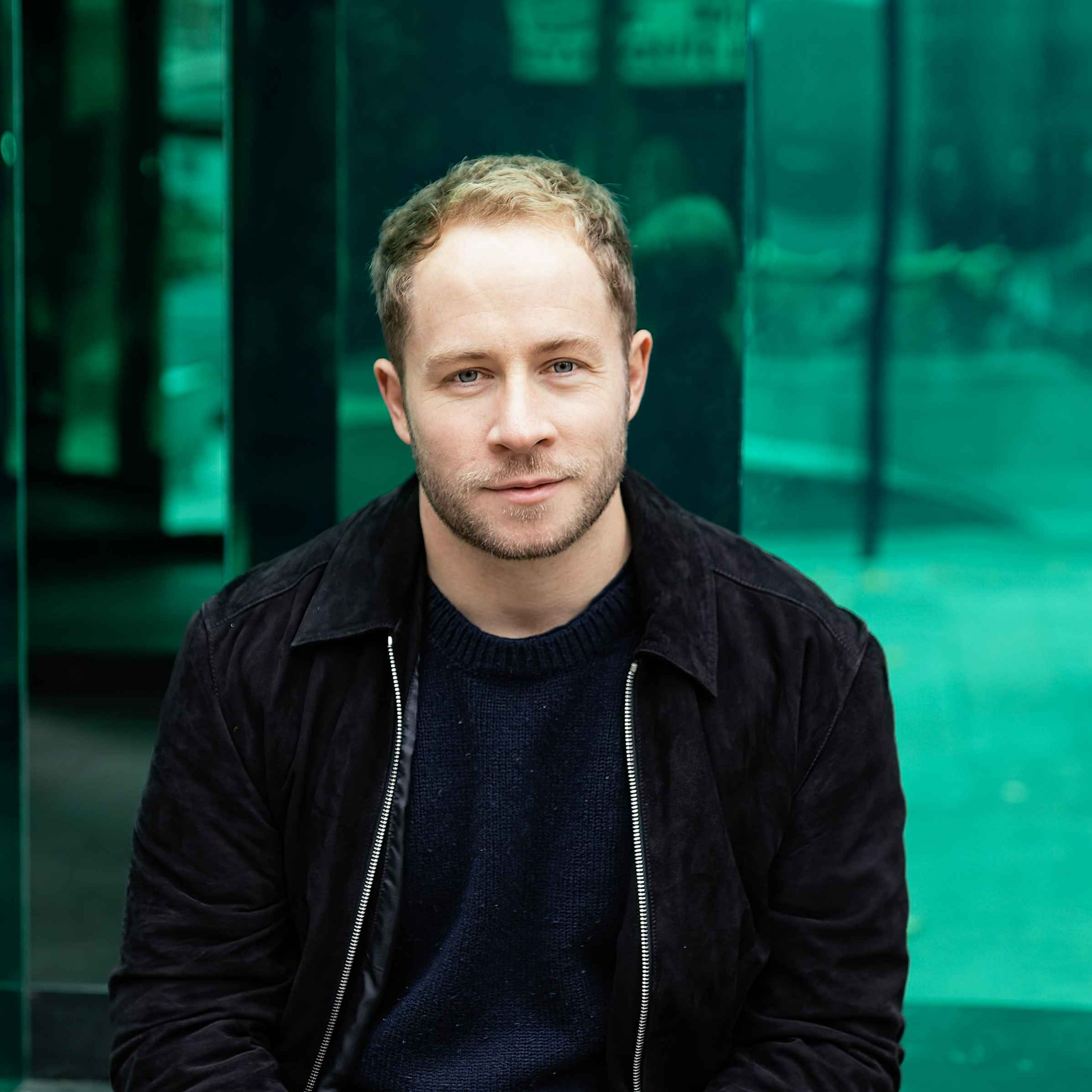
Are we heading for the next ChatGPT moment? Anthropic CEO Dario Amodei, has sparked debate about the growth of AI and its acceleration into a risky new phase. But is it real danger or Silicon Valley hype? Danny Fortson and Katie Prescott are joined by Barney Hussey-Yeo, CEO of UK fintech Cleo, on what it’s actually like building with AI right now and whether society is ready for the next turning point. Plus, the backlash over tech CEOs cozying up to US President Donald Trump amid anger over his immigration crackdown.
Image: Cleo
Hosted on Acast. See acast.com/privacy for more information.