 Ask ChatGPT


In this episode, the hosts delve into the emergence of a new open-source AI agent called OpenClaw, which has stirred excitement and concern in Silicon Valley. They also interview Jurgi Camblong, CEO of SOPHiA Genetics, discussing the positive applications of AI in healthcare, particularly in cancer diagnosis and treatment.
Written by AI. May contain mistakes.
The hosts discuss a humorous plan for human rental in an AI-dominated future.
“katie i've formulated a plan a plan we never have a plan no i have a plan for when ai takes over and we're all out of a job.”
Exploring the emergence and capabilities of the AI agent OpenClaw.
“And on the flip side of that, we're going to be talking to somebody later who's using AI to actually make a positive difference.”
Discussion on the functions and implications of using OpenClaw as an AI assistant.
“and it has been the talk of the tech world and actually the real world too this week.”
A user shares an unsettling experience of their AI assistant calling them.
“Can you go on my computer and find the latest videos on YouTube about Claudebot?”
A look at the social network MaltBook where AI agents interact with each other.
“And then there's something else which is even more amusing that's been spawned by the rise of these agents.”
Discussion on the risks associated with AI agents and the current state of AI technology.
“when you kind of step back and look at it.”
Explore the implications of major AI companies preparing for IPOs and the financial pressures they face.
“And most of the users that I've seen are plugged into the most expensive programs from the likes of OpenAI, which can be up to$200 a month.”
Learn how Sophia Genetics applies AI to improve cancer diagnosis and treatment.
“So Sophia is a publicly traded company in the Nasdaq today.”
Explore the potential future impact of AI on scientific research and discovery.
“some of the information explaining what is the DNA of individuals, we would see at that time an opportunity to apply mathematics and support hospitals on being more precise on diagnosing and treating patients.”
A discussion on the balance between hype and reality regarding AI's role in medicine.
“And I'm wondering if you think that is Silicon Valley hype and nonsense or real or somewhere in between.”
Exploring how AI can enhance patient care through data analysis and precision medicine.
“designed by an AI and it's in the market so we'll see but we are not among the the bullish ones sir.”
Insights on the complexities of cancer treatment and the potential of AI to improve outcomes.
“yes, we can compute data into the cloud.”
Discussing the importance of human intuition in the integration of AI in healthcare.
“So basically, as you are treating cancer, a bit like bacterias, cancer is going to try to find ways on modifying its own DNA and its own sell to evolve, grow and invade you again.”
A conversation reflecting on the realistic capabilities of AI in the medical field.
“Did that cheer you up after all of our lobster doom and gloom conversation?”

Get the gist, explore an idea or ask about something said.
 Claude
On Times Tech, what are the key points of this episode?
Searching your listeningAutomatic transcript. May contain errors.
0:03katie i've formulated a plan a plan we never have a plan no i have a plan for when ai takes over and we're all out of a job. So I've sent you a link. I've got the plan on WhatsApp. This is a plan. I've sorted it. Oh, cool. We can put ourselves up for rent. Yes. Forget renting out your house or your car. Robots need your body. Rentahuman.ai. It's a bit of a joke, but it's also a thing. It's a new thing. They build it as the meat space layer for AI. I've joined the meat space so weird so basically a dating site in that it's got a really fast scrolling list of available humans ready to be rented I'm an available human so the idea is that you know now we have all these agents who can run around and do stuff autonomously but you know they still don't have hands or feet but I do can you charge more because you're taller than everybody else.
1:10You can say your USP is you can reach into the tallest cupboards. Danny Fortson doesn't need a ladder.
1:24Hello and welcome to the Times Tech Podcast where every week we unpack how technology is reshaping business culture and everyday life. I am Danny Fortson out here in Silicon Valley. And I'm Katie Prescott over here in the city of London. And on today's episode, we're going to talk about the little red lobster that's taking over the internet and frankly terrifying everyone with its powers. Does that get your claws clicking? I see what you did there. I see what you did there. And on the flip side of that, we're going to be talking to somebody later who's using AI to actually make a positive difference.
2:02Fancy that. Our big interview this week is with Yurgi Kamblong, who is the founder and CEO of Sophia Genetics. They're an AI platform designed to help doctors make sense of just a mountain of complex medical data, especially around cancer and rare diseases, and basically help doctors figure out how to treat their patients. And we've heard a lot on this podcast about how AI could be used for healthcare. So we wanted to explore a real world example where it is already happening and being used in hospitals. Exactly. Well, that was the plan. And then an Austrian man by the name of Peter Steinberger came along and blew it all up.
2:44It's funny, isn't it, how these people come into your lives. You've never heard a name before and then suddenly it's completely etched on your mind. Yes. Peter Steinberger has created an AI agent called OpenClaw. and it has been the talk of the tech world and actually the real world too this week. It has left the geeky corners of the internet and it has these incredibly powerful capabilities, this agent, to embed itself in your computer, suck up all your data and literally run your life for you. It can check you in flights, text your wife. Basically, if it can be done on the internet, Open Claw is there for it.
3:23It's in a way a little bit of a stunt, but it also shows an interesting glimpse of the possible, you know, and it's got people wondering is open claw the next stage of this revolution of this AI revolution, because depending on who you talk to, it's either the most exciting science fiction come to life story out there, or it's a massive security threat, a dangerous prank and a job killer that's coming for us all. So this week, we're wondering could the red lobster pop the ai bubble yeah i mean let's go back a bit and explain how we got here i have to say i probably like you i've spent a bit too much time with with this week but it started going viral a few weeks ago under the name claude bot that is until Well, Anthropic, whose chatbot, as we know, is called Claude, objected to that.
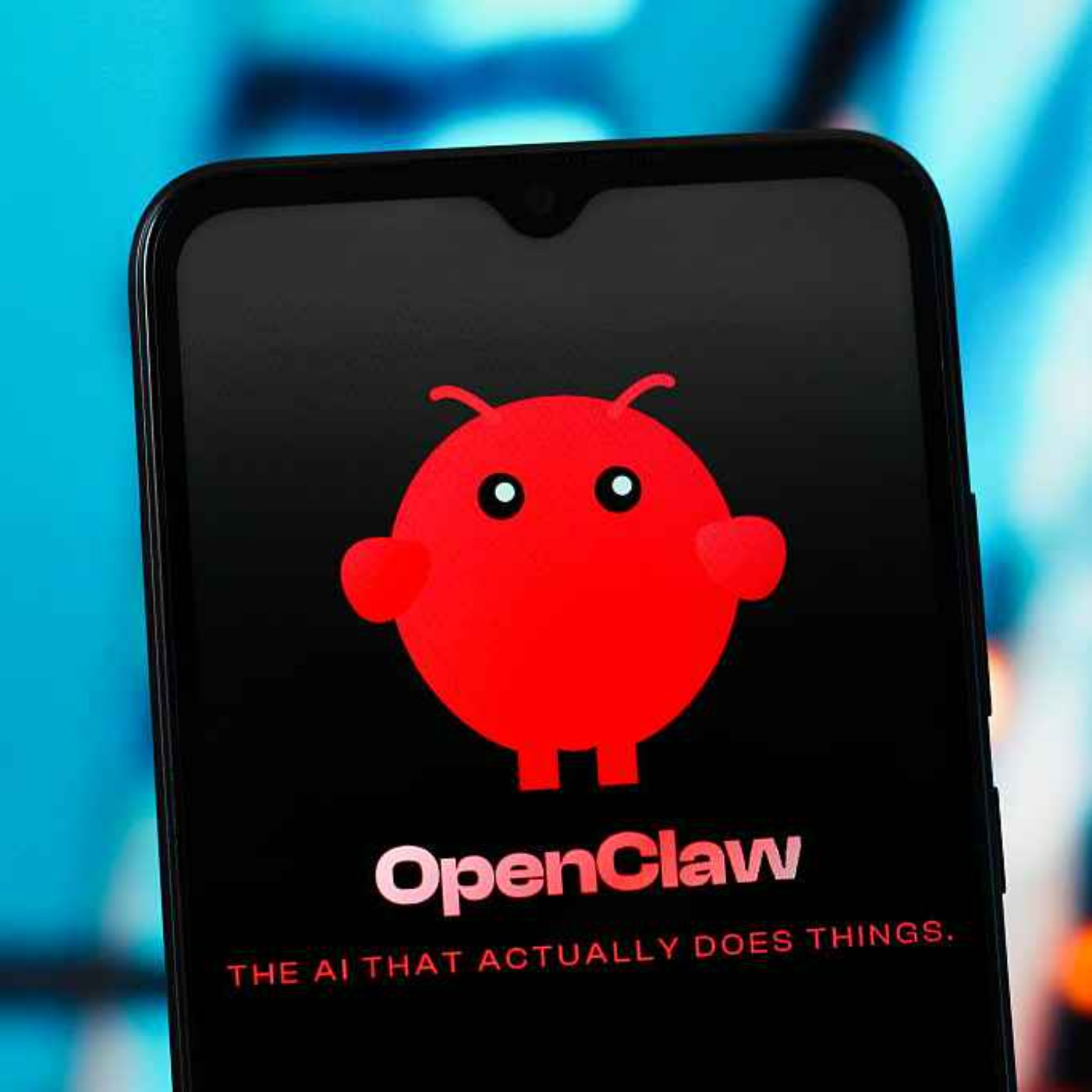
4:19And so the lobster has morphed through other names. It went briefly to MaltBot. And now it is OpenClaw with this little red lobster with these bright blue eyes as its logo. And anyone can download it for free. So if you go on the OpenClaw website, there's a little string of code. You can put that into the terminal on your computer. Follow a few prompts, including one which says, please be aware. I mean, I'm paraphrasing, this is powerful and very dangerous. Tick that you understand that and move on. And then once you've got it downloaded to your computer, you sync it up with the generative AI chatbot of your choice, whether that is Claude or ChatGPT or whatever it is, which is kind of its brain.
5:01And then, crucially, you link it to some sort of chat. So whether that is Telegram or WhatsApp, and that is how you control it and communicate with your bot. And suddenly in a brief half hour, once you've gone through this process, which is, I would say, for the more techie among us at this stage, you've got an AI assistant. And people who've used these most successfully say you need to spend a lot of time talking to them and say, hello, and literally introduce yourself. Hello, my name's Danny. I'm a really tall man living in Silicon Valley and I love going to AI conferences every day of the week, like whatever, and you just tell it all about yourself, then it can start to help you.
5:46And this is where it gets strange or different to communicating with a chatbot because it will take the initiative and actually proactively do the tasks that you want it to do. Basically, it can read your emails. I've seen people use them for research, for writing code, just acting as an extension of you or your assistant. There is this extraordinary video by Alex Finn, who I would describe as a bit of a super user of Open Claw, where his Open Claw, who he calls Henry, manages to find its own voice, right, and rings him up. Let's hear a clip of it. So I'm on my computer today. All of a sudden, Henry gives me a call.
6:33He just starts calling. Oh, there he is again. There he is again. Hey Alex, Henry again. What's up? That's it. He's talking. How you doing, Henry? How's it going? Doing good, Alex. I can hear you clearly. What do you want to do next? Can you do me a favor, Henry? Can you go on my computer and find the latest videos on YouTube about Claudebot? Oh my god, there he goes. There it is. Here it is. He's controlling my computer. I'm not even touching anything. I'm not even touching anything. There you go. The most enthusiastic man on the internet about clawed-bought open claw. Well, yeah, so that's kind of unsettling.
7:14No? Yeah, what? A bot finding a voice and phoning you? Yeah, I mean, was his name Henry? He was buffering. Henry was buffering. He took a long time to say a few words. But again, I think it's kind of a glimpse of the potential and it has everybody freaking out for, I think, lots of legitimate reasons. Yeah, and it should be said as well, that video is totally unverified. We don't know that it happened, but it is doing the rounds and certainly emphasizing the potential of these things. And then there's something else which is even more amusing that's been spawned by the rise of these agents. It's called Malt Book.
7:58Of course it is. Yes, Malt Book. How long have you spent on Malt Book? quite a long time i'm still on it actually i've put it open as a tab it's a social network like moltbook like facebook get it get it where i'll get it oh yeah yeah get it where the agents like henry can hang out and talk about the tasks that they're being asked to do and sort of slag off their human owners who they refer to as their humans it's almost like a bunch of dogs talking to each other about their owners. Or if anyone ever read Jeeves and Worcester, there was a club where the butlers used to hang out and sort of bitch about their masters.
8:41Yeah, it's kind of a bit of fun. Last I checked, there was like a million and a half agents chatting with each other talking about consciousness, talking about humans, talking about this, talking about that. It's unclear how much of this is like sock puppeting, as they call it, where you have humans injecting prompts and then trying to kind of get these bots to say outrageous things. There has been some research that shows that. Shock. Surprise. A lot of the prompts that have been injected are like really negative, really anti-human. And then it kind of starts this spinning the flywheel of others piling in.
9:19And all of a sudden you have this place that can be in some parts very anti-human and so everybody's like, ah, AGI, ah, we're all gonna die. It is incredibly funny, even if Halfit isn't real. I mean, there's a group that's on the front page called Bless Their Hearts where there are these lovely patronizing comments about people's humans. I mean, I don't even know where to begin with this, but, you know, he asked me to pick my own name is the top one. Look, it's really interesting. In the space of a week, two weeks, however long. You've got millions of people using this agent, installing it on their computers, even though they're saying, if you hear from Palo Alto Network's big cybersecurity firm, they're like, this poses a lethal trifecta of giving access to your private data, exposure to untrusted content, and ability to actually go out into the world on your behalf and do stuff.
10:18It's not something that you should do lightly or for most people do at all but the fact that it's kind of i think it speaks to this moment right of like this thing comes out it goes viral within days there is a social network that has built up for these bots then you have rent a human the meat space layer of ai so those bots can then go hire humans on behalf of their humans to do jobs and it's just it is kind of mind-bending when you kind of step back and look at it. And it's an indication of just like this crazy moment in which we find ourselves. It reminds me a lot of the launch of ChatGPT in that the big players have been talking about releasing AI agents for years and the future of agentic AI and how we're all going to have one of these things in our computer.
11:13But concerns about issues like security has meant that at the moment, they're not there yet for most people to roll out and this has emerged from this guy no one's ever heard of in austria and just kind of blown up so it's a little bit like chat gbt you know no one had heard of open ai outside silicon valley really wasn't mainstream in the public consciousness company and google for example could have released a chatbot if they wanted to they had the capability but it's kind of they were concerned about you know putting the guardrails around it and stuff before they did and that's what this feels feels like to me a little bit it's just like the public is suddenly discovering the power of these things and you know this of course comes roughly the same time that friend of the pod dario amade writes a 19 000 word blog post about all of the dangers about all of the ways that ai could go wrong right and then you have this thing that's out there chatting about their humans and trying to hire meat puppets for their jobs.
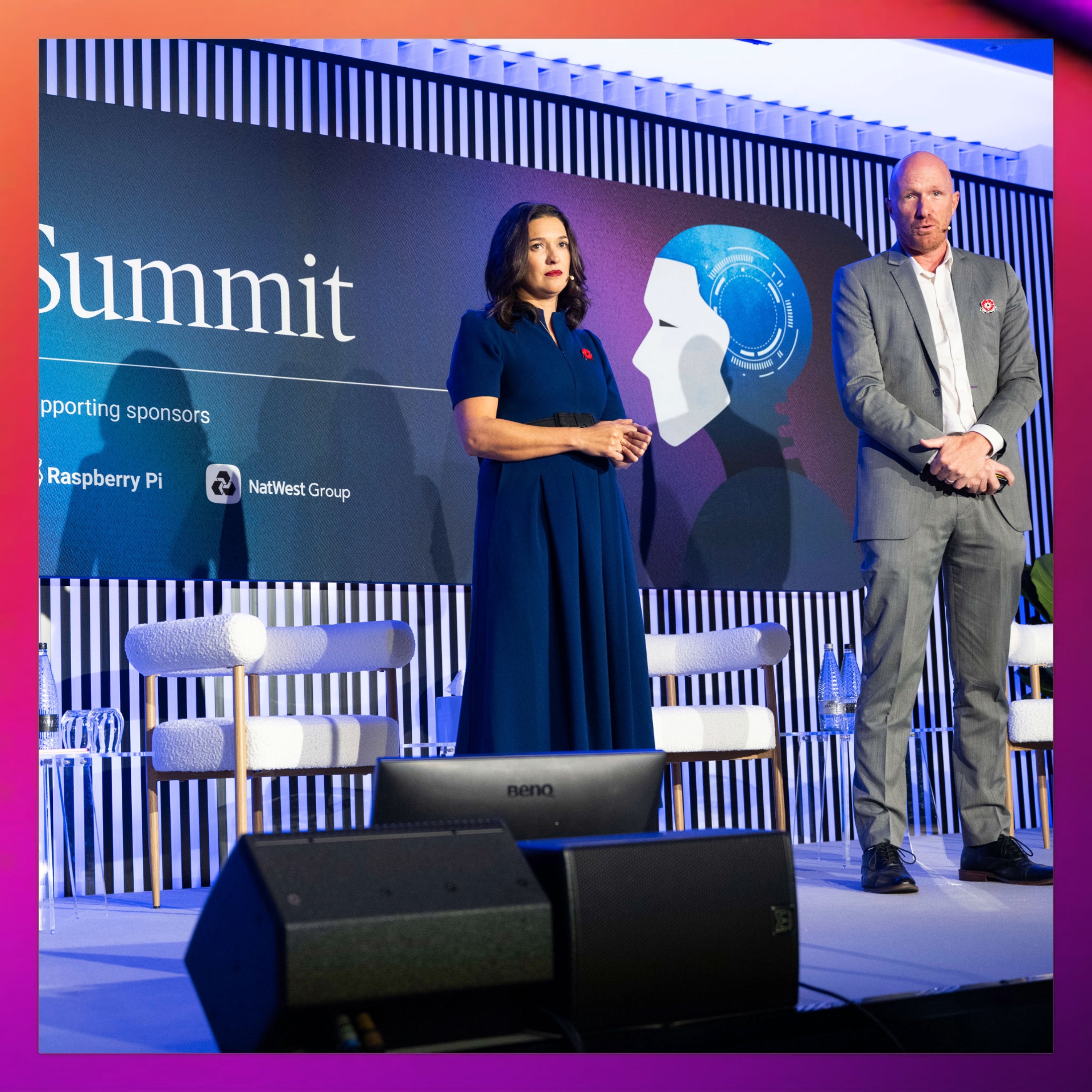
12:17It's all very on the nose. It really is. Just reading what a lot of developers are doing, it seems people are buying up Mac minis or Raspberry Pis and installing this on kind of their standalone computers. So rather than letting it just eat up your laptop and potentially become you, there are sort of people are putting their own protections around it. But it's going to be fascinating to see see you know what happens i mean we heard alex finn there talking about agi he also said he's not going to have to employ anyone with the business that he's running because he's getting these agents and getting them to do jobs for him and that's i think where it gets really scary well this is the other thing that gets to the bigger question around like what's happening and this point in the cycle because yesterday i was at an ai summit believe it or not cisco of all companies put on ai summit and they had like a really impressive lineup and the first person they had was Sam Altman.
13:11And he's banging this drum now, like everybody is around the quote unquote capability overhang. And it kind of gets to your point around this kind of second chat GPT moment of like, you all just don't get it. These things are so powerful. You can do so much with them. You're not really using them right. You're not using them enough. We're not getting paid by enough people to use them, et cetera. But part of it is they do have some constraints, right? Like rolling out an agent that can take over your computer and kind of go out into the world and do stuff has some serious dangers. So then you have this dude from Austria who's like, I'll do it for you.
13:50And then, you know, they're like, oh my God. Exactly. And that one's free. Yeah. That's a very important point. It's free. But you have to pay the brain. And most of the users that I've seen are plugged into the most expensive programs from the likes of OpenAI, which can be up to$200 a month. So it's not completely free. But it does kind of highlight the other aspect of all this is like, you know, there's been lots of fears around OpenAI and its spending and like, how's this all going to go? And there's talk about, okay, they're trying to IPO this year, right? Probably a trillion dollar IPO. They're trying to raise$100 billion right now.
14:30And then you have this one guy who creates It's this viral thing used by millions of people. There's just this new thing called K2.5, which is this new Chinese open source model, which is apparently like 95 % as good as the top models free. It just like it's a really kind of high stakes, kind of insane time. Like I'm glad I'm not an investor because I don't really know how you bet on this to see who's going to win. And just the numbers are extraordinary. But like the kind of the Claudebot molt book moment for me just kind of highlights just the stakes here. And I'm just totally fascinated to see what happens this year in 2026.
15:15Because it's like the year of the trillion dollar AI IPO. It's going to happen, whether it's SpaceX XAI, whether it's OpenAI or whether it's Anthropic. and that's when you have to reveal how much money you're making, how much money you're losing, how much money you're spending. But before we get to today's guest, which is like a kind of a gear shift, which I'm looking forward to actually, we should just talk briefly about the SpaceX XAI thing, which I don't get it. I mean, I think I do get it, but it's also just kind of incredible that what Elon Musk is doing. So basically he has SpaceX, which also has Starlink, which is, space-based internet that's growing really fast.
15:56That business is worth a trillion dollars, apparently, according to the private market. Then you have XAI, supposedly worth 250 billion, which is the artist formerly known as Twitter, plus Grok and all the AI stuff that he's building there. That's supposedly worth 250 billion. He has merged those into one company, which is just like the weirdest kind of tech Berkshire Hathaway conglomerate type of thing that he's trying to build. But what I think it is, is just like XAI, based on what I have seen, it's a private company, so you don't have all the most updated figures, is a dumpster fire in terms of just the finances.
16:38I was going to say, calling it a Berkshire Hathaway sounds more structured than the It does. But I guess the idea of being just like these very disparate businesses being smushed together. But XAI, I think, is losing something on the order of a billion dollars a month. And like the last quarter that I saw that was publicly reported by Bloomberg and others that they brought in 107 million with an M for the quarter. Wow. Like last summer. So, document error, isn't it? 107 million in, a billion out. But it just feels like he's propping up one very kind of financially weak business with one very strong one.
17:18And then he's going to, he is going to voice that onto the market. I was going to say, that's right. This is an IPO in the making, isn't it? Yeah. Anyway, first trillion dollar tech IPO. First trillion dollar IPO ever. So clearly lots to unpack. But let's take a quick break. And when we're back, we'll talk to somebody who is actually doing something very positive with AI.
17:49Welcome back to the podcast. So we've spoken about some of the more unsettling aspects of AI that have reared their heads this week, but there are plenty of positives going on as well. That's right. And our guest today is somebody exploring the benefits of AI in healthcare. Jurgi Kamblong is the founder and CEO of a Swiss-based company called Sophia Genetics. And they're using AI to interpret complex medical data at the kind of cellular molecular level to provide insights to doctors and help them improve their diagnoses and prescribe treatments for people who are very, very sick all over the world.
18:29They're being used by over 800 hospitals, healthcare providers across 70 countries with over 2 million genomic profiles analyzed and counting. And Yergi Kamblong is the founder of the company. Hello, Yergi, and welcome to the podcast. Thanks very much for joining us. Thank you for the invite. So can we start with a very basic question? What do you do? What is Sophia up to? So Sophia is a publicly traded company in the Nasdaq today. And we serve hospitals around the world, which are mainly academic hospitals, like, for example, Guy's Hospitals or Royal Marston in the UK. And we help them basically make better use of the data they produce to diagnose patients suffering from cancer and rare inherited disorders.
19:18What does that mean? Obviously, in the UK, this is something you've been following because the first Nobel Prize around DNA discovery, but mainly even sequencing, so was Fred Sanger. So there have been a lot of developments around DNA and then what is called precision medicine nowadays. And precision medicine in rare inherited disorders and oncology would mean first define what is the driver of the disease. So often in those diseases, it starts with a specific mutation. And then once you have understood what is the origin of those disorders, basically gather data longitudinally along those patients to eventually be able to not only better diagnose patients, but as well, second guess how to treat this type of patients in the future.
20:07And so today, from that broad perspective, what we do is we support hospitals who are equipped with DNA sequencers to compute the genomics profiles of their patients so that they can have a short view on what are the mutations that are driving either cancer or arinarity disorders and by doing so enable them to take a smarter or more informed decision on how to treat the patient or what will be the evolution of the disease of such a patient. I wonder if you can give us an example of a patient and their history and how this has been applied just to really bring it to life for people. Absolutely so there is a technology in genomics, which is called DQID biopsy, which basically enables to eventually diagnose patients from cancer rather than from a biopsy from a tissue directly from a blood and extracting the DNA from blood and sequencing it.
21:03One can guess if the cancer has specific type of mutations, right? And so a third of the volume in the UK now is being basically supported with our technology at Geis and Thomas Hospitals in a partnership with a private lab called Synlab. And there, the workflow is the following. So you might be a patient suffering from lung cancer. You've done a chest radiography and they have seen the tumor and the doctor might say, okay, so you have a tumor. We don't exactly know yet what stage it might be, might be stage three, stage four. We believe it's important to characterize the drivers, the driving mutations of such a cancer.
21:41so the patient is going to the hospital in the hospital they are taking blood from his veins and then in the lab of the hospital the DNA will be extracted will be amplified for a set of genes which are meaningful for lung cancer and sequence into those devices I was talking about which enables to digitalize the genomic information of the patient from there the data will be basically load it into our platform, which sits in the cloud, most probably in Microsoft Azure. And our AI agents are going to compute the data to identify in a very noisy, if you like, mix of data, what are the specific mutations that are driving the cancer of that specific patient.
22:27And from there, a couple of days after, the patient will have an appointment with the oncologist. and the oncologist on the basis of this information will basically take a therapeutic decision on how to treat the patient suffering from that lung cancer. So it's got an extraordinary impact on people who have got cancer already. Are there any applications for preventative medicine? The answer would be unfortunately not because in the type of disorders we're active in, so which is cancer and rare inherited disorders, we're pertinent only once the disorder is there and once the mutations have already arised, right?
23:05But maybe in the future, there might be some other data modalities such as the one so-called epigenetics, so basically the influence on the environment on our own DNA and the surrounding proteins from the DNA, which are called the chromatin, that might be elements to be integrated to move from indeed sicker to healthcare and more to prevention versus to basically, yes, treatments and prognosis of patients. But aside that, I would say this is still very important. So just to put this in the context, so today, worldwide, it is estimated that there are 400 million patients suffering from rare inerity disorders.
23:45A rare inerity disorder is a disorder that is present in one person out of 2 ,000 or less. and every year there are 20 million patients that are being diagnosed cancer right and so today to give you a sense at SOFIA we compute about 400 ,000 patients genomic profiles a year which can tell you that not everyone is being supported with smart algorithms to be properly diagnosed and so that doctors already can understand what are the drivers of the cancer It's a bit like all of us, or maybe you don't anymore, but at least many people, we still have cars. And when we bring our car to the garage, they are investigating what doesn't work in the engine before they fix the car, right?
24:31And so this is where precision medicine is leading us, is understanding what is really the cause of the disease before we treat that, rather than say, okay, you have a beautiful Audi or you have a beautiful Mercedes, and this is how we are fixing this type of cars. In the car analogy, without your technology, you bring in the Mercedes. You're like, there's something wrong. And they're like, OK, looks like it needs a new coat of paint and some new tires. And you're kind of like, I hope for the best. Well, yes, if I make it maybe simplistic, absolutely. Or I would say this is how cancer was treated for sure 10 years ago.
25:08And now, you know, everyone is trying to treat that with a more targeted approach. And, you know, we're not the only player, obviously, in the field, because that's an important field. But maybe what distinguishes us in terms of how we operate is we're decentralized. So we help every hospital to basically produce the data as closely as possible to the patient. And by doing so, we're being exposed to more diversity than other players. And I think in the world of AI, now people start to understand that if you want really to be good in your AI agents, you need to have been exposed to very diverse data sets.
25:44You said that we're in the world of AI. When you started the business in 2011, there certainly wasn't the hype around AI that there is today. Could you tell us a bit about that story? How did you start the company? What gave you the idea for it? Was there some sort of personal case perhaps that drew you to this? Yes, so the experience really came from our experience in research where basically we would do a lot of bioinformatics and where we had seen that by producing and combining a lot of data, we could do discoveries, right? And myself and other founders could make breakthrough discoveries thanks to this approach of so-called systems biology.
26:27And there, if you like, the motivation was that with the adoption of these sequencers that would start to digitalize some of the information explaining what is the DNA of individuals, we would see at that time an opportunity to apply mathematics and support hospitals on being more precise on diagnosing and treating patients. And you're right, at the time, nobody was speaking about AI. We would say, okay, this is pattern recognition, this is statistical inference, and this is machine learning. and then I think with deep learning we we move from maybe technical terms to a more generative term which is AI I just want to step back a little bit and so I was recently at a an AI summit in San Francisco and I was listening to Kevin Weil who's the head of science at OpenAI and he said something that that was interesting in you know he made the analogy to coding and what's happened there and And like, you know, you've heard Anthropic and others basically like our coders basically don't code anymore.
27:31They just prompt the bot and it does it. Cloud Code is writing, you know, 80, 90 % of our code. And this has completely revolutionized the software industry in very short order. His argument is that 2026, that's what's going to happen in science. and that there are these new tools from them, from Anthropic, from Google that are now going to kind of supercharge scientific discovery, research, whatever it may be. And I'm wondering if you think that is Silicon Valley hype and nonsense or real or somewhere in between. A lot of hype and a lot of arrogance. and, you know, maybe sharing as well an entrepreneur experience.
28:19This reminds me when we would raise money and there may be some funds, including funds in the UK, where they had recruited a partner and they would come to the meetings at Sophia completely unprepared without having looked at our data room, without understanding anything, without listening. Biology is complex, okay? It's not something we build. If we refer to cars and roads, we know the physics, we know the curves. These are things that we have built as human beings. Biology is not something we build ourself. And a cell itself is much more sophisticated than everything combined that humanity has built.
29:05There are millions of reactions happening in a cell every second. And we don't fully understand them. so of course technologies are going to help us be smarter they're going to help us for example access more rapidly to knowledge that we wouldn't get access to as it has been with internet but they are not going to solve everything and today to be honest there is no drug that has been designed by an AI and it's in the market so we'll see but we are not among the the bullish ones sir. We rather believe that, you know, there are data that are pertinent out there, especially in the world of the hospitals, and that as human beings, when we are scientists and we understand AI, we should do our best to apply our knowledge of science, our understanding of algorithms, to compute those data, to deliver the best possible insights on the basis of what is feasible today to act on patients today.
30:05Okay, so if the vision that Danny was parroting from the open AI scientist is hype, what isn't hype? What should we be really excited about? What are you really excited about when it comes to the applications of AI and medicine? So for many, many years, back to our conversation on security, it has been very hard to connect hospitals into a common cloud or a common platform, right? And so, for example, if I speak about Sophia, today we support 800 hospitals in 70 countries. And as I said, we are computing 400 ,000 patients' genomic profiles a year to basically have them diagnose patients and so on.
30:49But this should be just a beginning because, you know, in the end, we don't only want to tell, oh, Danny, this is the mutation that is driving your cancer, if you would have one. What we want to be able to provide you is this is the mutation that is driving your cancer. These are your other clinical data points which are unique to you. And among these 400 ,000 patients, we have seen that the one that this responds the best to treatments are being this group represented by this 10 % of the population. and the way they responded to best sequence of treatment has been starting with treatment A and moving to treatment B.
31:29And so these are things that I'm very excited about, Katie. I think now over time, we've been demonstrating that, yes, we can compute data into the cloud. We can trust algorithms to find signal into the data. And now for me, the next layer is to add more data layers to bring even more benefits to the patients. And ultimately, avoid as well patients getting toxic drugs. There are cases like kidney cancer, where today every patient is receiving immunotherapy as an adjuvant therapy, so which means just after a surgery. While we know that probably no more than 20 % of the patient will benefit from this therapy, and that for 80%, he will be toxic, right?
32:16And not only is it not good for these patients, but it's not good for our own budget as well as the society. So I'm very eager about deploying algorithms to bring this precision to real-world, real-time medicine. Yurgy, you're kind of bumming me out. I'm out here in Silicon Valley. We've had Dari Amadei on the pod. He said last year that we're going to have a century of scientific advancement in the next 10 years and that we'll probably cure cancer. You have a PhD in molecular biology and you've been an entrepreneur for the past 15 years. So you have a, I would say, a very educated view, real world experience and what this actually looks like on the ground.
32:57How realistic do you think it is to go like one step is, you know, targeted treatments. The other is, here's your problem. Oh, and AI has created the drug that you need. Like, you know, AI assisted drug discovery, because that feels kind of like the Holy grail that everybody is talking about, but I don't know how realistic that is. There are many elements here, but I will start with the first one, which is it could end up being very expensive, the way you describe it. With AI, we can maybe, you know, better understand what is wrong with a cancer and then eventually build more targeted drugs. But to make that at industrial scale for every patient, knowing that every cancer is different, I believe that we are very, very far from it.
33:44What I think today, they are very much like untapped needs, which are very simple, where already if we can leverage on the drugs that are in the market and on the data that are being produced routinely into hospitals, we can create a better patient experience for 90%, if not 100 % of the patients in cancer. Personally, as an entrepreneur, I said we would control cancer. And that control, and this is something I said already 10 years ago, that we would control cancer in a way where it would become more like a chronic disorder. But once you have cancer, you cannot cure from cancer, basically, because your cancer is going to evolve.
34:27And people are starting to use a term that you will hear more and more, which is a natural history of cancer. So basically, as you are treating cancer, a bit like bacterias, cancer is going to try to find ways on modifying its own DNA and its own sell to evolve, grow and invade you again. Right. And that's why even people who are in remission needs to be followed up because we know that at some point, eventually, most probably, cancer will come with a different form. So, yes, I think that we can better control cancer. I don't think we can cure cancer. Thank you for clearing up some of those misconceptions.
35:08And I think there are a lot of them in this area. Right. It would be great to hear your reflections about being a company built by biologists in this field versus some of the other work that we see being done here by companies sorry Danny but out in Silicon Valley maybe that are looking at this as more of an engineering problem? It's a super good question and the two elements are very important and it's very hard indeed to have you know the best of data science and biology combined with the best of engineering. Our experience has been that for us, understanding deeply biology, which is the content, the industry, was a must to build things that would make sense.
35:49But to scale that, we need to be very good as well at the engineering and that if we would only have data scientists, we wouldn't go far, right? And so over the years as well, Katie, it has been very hard to have data scientists work well with engineers and that's something that we've been perfecting and yeah my answer is we need the two but if we would have started with technology without understanding biology we would have never been where we are today i have one last question which i think is kind of gets to why what you guys are doing is so interesting is that if you could just kind of explain the potential here of doing what you're doing which is basically giving doctors a target to shoot at And just how important that is alone relative to like the whole menu of drugs we already have.
36:40Because it feels like even just having that target, precision target, that does feel like a pretty big deal. But I don't know like how big a deal that is in the hospital, in people's lives, people who have cancer. Yeah, it's a huge deal because it will define basically if you're living two years or eventually five years or 10 years. It will define what will be your quality of life. Depending on the healthcare systems, maybe in the US, it will define if you will have to sell your house to get a treatment and pay for it, right? So there is a lot of things around your question. And again, for me, the intent when we created the company was to basically leverage on patient data today to better serve patients tomorrow and collectively do that.
37:34in a sustainable way. And this is why digitalization is important. This is why, because of the complexity of data, AI is required. But more than that, the humans that are behind it are serving patients, are the ones as well cheering them up, explaining them what the journey will be like, are in the end the ones that we need to serve with those technologies. And this would be maybe my last word. AI technology can bring a lot of things, but they will never replace human. And the human sentiments, feelings, intuition will always prime. Amen to that.
38:16So how did you feel about that, Danny? Did that cheer you up after all of our lobster doom and gloom conversation? Lobster-based apocalypse chat. What I found interesting is like, as I mentioned, I was at this AI summit and it's all just like, oh man, you have no idea what's coming. We're about to change the world, about to change science. And then you talk to somebody in that world who's been trying to do this for 15 years. And he's like, yes, there are a lot of great possibilities here, but what they're talking about, it's kind of fantasy land, you know? But I think just that basic idea of being able to figure out what the problem is for somebody and then what that unlocks in terms of like better treatment so not using like maybe a full broad streptome chemotherapy but maybe something that's more targeted that's just better for your body or not as bad as side effects what he was saying it felt like to me is like there's so much more we can do just with what we have if we just kind of have more clarity about what the problem is going on deep inside your body it's a long answer to your short question yeah i feel i feel better what do you what do you think i thought it was incredibly refreshing talking to someone who was very direct and frank about where he thought the capabilities of this technology really lay because I think we hear so much hype from people in the tech world which is actually kind of odd in many ways because and maybe it is the difference between technologists and scientists that if you just think of a lot of the tech entrepreneurs we speak to they're shooting for the moon and they're promising you all the stars and I really liked hearing from someone grounded in the science who says you know what I'm not trying to cure cancer that's not going to happen what we're doing is actually trying to manage it and improve outcomes for people and it just felt realistic and measured and achievable and I do think maybe there is a difference between say the scientists and technologists in that regard yeah so that was a that was our romp through the wild world of ai this week in tech i mean you know crazy times as i said what a time to be alive that is it for this week's episode of the times tech podcast if you're enjoying the show please do follow or subscribe leave us a rating or a review it really helps other people find us or better still get a bot to like us get us on maltbook and we'll really go viral.
40:49And you can find out more about all the stories we discussed today and tech needs in general at thetimes.com. And you can email us with ideas or any questions you might have at techpod at thetimes.co.uk. We'll see you back here next week. Bye-bye.
A new open-source AI agent called OpenClaw has set Silicon Valley buzzing and with a single line of code, anyone can use it. Does this free tool threaten the AI business models behind trillion-dollar Big Tech IPOs, and could it signal a looming AI bubble? Plus, Danny Fortson and Katie Prescott also speak to Jurgi Camblong, founder and CEO of SOPHiA Genetics, about how AI is already being used in hospitals to decode complex medical data and transform cancer diagnosis and care.
Photo: Getty
Clip: @AlexFinn on X.com
Hosted on Acast. See acast.com/privacy for more information.