 Ask ChatGPT


In this episode, co-hosts Danny Fortson and Katie Prescott discuss notable developments in the tech industry, including Linda Yaccarino's resignation as CEO of X (formerly Twitter) and Figma's recent IPO filing. The episode features an interview with Dylan Field, CEO of Figma, who shares insights on the company's journey and the upcoming IPO.
Written by AI. May contain mistakes.

Get the gist, explore an idea or ask about something said.
 Claude
On Times Tech, what are the key points of this episode?
Searching your listeningAutomatic transcript. May contain errors.
0:00So I've been thinking a lot this week about your description of being stuck in a car park full of driverless cars. And I was thinking about it because I, for many strange reasons, I don't quite understand why, have ended up supervising my daughter's under-11s cricket team. So I'm in charge of the Dulwich. What is it? What involves supervision? So you're not coaching. Not coaching, but coordinating, especially when it comes to Sunday matches. And that involves putting the flags around the boundary, appointing a captain, and generally picking some of the dads to do the umpiring and the square legging.
0:38The square legging. I love this. Our American listeners are like, what are you having a story? I was a little bit like that when I turned up. Because women of my age don't know how to play cricket. Anyway. But for some reason, I'm doing this thing. I turn up on Sunday morning, two small girls in tow, 8.30, to peg out the flags. ready for the cricket match to take place. And there are three enormous big barriers on top of the wicket, the grass bit, the kind of moan grass bit that they play the cricket on, that have strings attached to them that I have to somehow move out the way. And I was just sort of thinking about my life and your life and how I ended up standing in the middle of a field on Sunday morning trying to pull at ropes to move these enormous metal objects out of the way and failing to do it and you're stuck in a car park full of driverless cars well and i just wondered if that's if that's something to do with where we live well so i was this weekend speaking of tech or lack of it i was up in the mountains we'd every year we go to with a group of families up to family camp which is what it sounds like and it's like this idyllic camp up in the mountains where all the counselors are teenagers and you're up on this river and you're staying in tent cabins and it's like right near Yosemite.
1:55It's beautiful. And there's no cell service. There is no Wi-Fi. Literally, it's the only place I have been or ever go to that has zero service. Wow. And it's really fascinating. Like in your normal life, we drive everywhere. You have a stop sign. You're like, hmm, probably have 10 seconds. I should definitely check my phone just in case something happened in like the previous two minutes when I was driving from the last stoplight. You know, you're always looking at your phone, always looking at your phone. And there, it's like you don't even think about it. At all? Even at first? At first you do, but it kind of goes quickly because you're up in nature.
2:33It's beautiful. The kids are running around. And it's just like, it's really striking by the end. We're all getting ready to leave. We're like, all right, group picture. And we all get together. We're standing with this beautiful view of the mountains in the river in the background. And then they're like, who's got a phone? No one had a phone. Wow. You really surprised me. Eight adults, not a single one of them even had a phone on them. And it was just like, it was just such a moment where we're like, whoa, like none of us even had a phone. And it was so kind of like purity to it. That was just like, oh, this is actually kind of amazing.
3:08And a couple of the kids commented to their parents like, hey, mom, it's really nice. You don't, you know, you don't have your phone. You're just kind of, you're like, oh that's gonna hurt but then of course you drive back down from the mountain and a certain point you come into back into coverage and it's like ping ping ping ping
3:35hello and welcome to the times tech podcast with me katie prescott katie in the city and me Danny Fortson, Danny in the Valley. Danny, we need to catch up on everything that's going on with Elon Musk in a moment. Yes. Whether he can turn cars into votes, bumper plates into the ballot box, suspension into suffrage. See what you're doing there. But I also have an interview with Dylan Field, who's the co-founder of the hit design software company Figma. The man of the moment. He is, isn't he? He has the big new IPO news. They finally filed a registration statement at the start of this month. Yeah, finally.
4:13Been waiting that for quite a while. And it definitely wasn't a household name Figma outside design circles until about 2023 when Adobe tried to buy it for$20 billion. With a B. With a B. And that got everyone's attention, including the competition watchdogs, which is always what people doing deals wants to happen. The plug was pulled and the music on that particular deal stopped. So we're going to hear more about that from Dylan in a bit and a bit of a hint of what he's got planned for the future. I should say full disclosure, this interview was done well before that. So there isn't much more that Dylan reveals about the IPO itself.
4:51But speaking of music, I like this one. Big news on your side of the pond. Elon Musk has boom, boom, started a party. Oh, party music. I see. Yeah, that's very, very clever. Yes. What started as an online poll, as so many things do these days on X on Independence Day, July 4th, could be turning into a reality. Elon Musk asked his 220 million followers if he should start a political party. Over 65 % who voted said yes. It just does seem like the natural next step, doesn't it, to get what you want? You buy the platform. Therefore, yes, exactly. You buy the party. But even though his voters might be saying yes, looking at the share price over the past week, his investors are saying, no, thank you.
5:42You know, it's interesting to watch his whole evolution from like careering from the edge of bankruptcy to the edge of bankruptcy to the edge of bankruptcy for years and years and years trying to start a car company to now the richest man on the planet who not only dipped his toe into politics, but put$300 million of his own money, helped get President Trump elected, takes a chainsaw literally to the government. and now they have their big blow up, lots of name calling back and forth, all this stuff. And now he's like, we've passed this giganto quote, one big beautiful bill by Trump, which is going to add trillions to the deficit.
6:19And he's like, this is it. Enough is enough. I'm going to start a new political party. But I mean, the question for me is like, okay, 220 million people follow him on Twitter. How many of those are actual people? They're not bots. And they're, of course, self-selecting. Like the people who follow Elon, most of them are probably, of those 220 million, I'm guessing, fanboys. How many of them are in America? So it's this whole self-selection process that he's like, well, the people have spoken. Therefore, I must start a new party. But you're like, are you actually going to do this? What is your platform?
7:01Or is he going to be like Trump? Like I'm this figurehead. I have two or three pithy things that I'm going to, you know, focus on. And I'll be like the Pied Piper. Everybody will follow. And I talked about the share price just then, but it does feel like his investors are getting really fed up with this. This is not his first rodeo in this regard. And it all feels like such a massive distraction from his businesses. So you just think his poor, long-suffering investors who are watching his head turn in so many different directions and all they want him to do is kind of knuckle down and focus on the task in hand.
7:36But it's like he can't help himself. But as we started recording this podcast, there was massive news from X. Linda Iaccarino, the CEO since June 2023, has said she's stepping down. What do you make of that? I'm referencing a lot of like pop culture. Well, this isn't pop culture necessarily. Do you ever still watch Chicago? Yeah. There's a song in there called Mr. Cellophane. Mr. Cellophane won't you say my name can see right through me walk right past me I feel like that's her like she was hired two years ago when you talk about X does anybody talk about or think about Lindy Iaccarino all they talk about or think about is Elon Musk and she was brought in as this like advertising dynamo from Manhattan who knew all the big advertisers all of this stuff You know, the ad business is still dramatically down from when he bought it.
8:36The thing he did do was combine it with Grok, his AI company, to kind of boost the valuation. But X itself is a shadow of the business it once was in terms of just dollars and cents. But the Grok transaction of basically creating an AI LLM to rival JetGPT has kind of boosted that. But throughout it all, what has Lindy Acarino been doing aside from just trying to kind of hold this thing together? So when she quit, I'm kind of like, no. And I'm sure we're going to get details. But she said, after two incredible years, this is what she tweeted. After two incredible years, I've decided to step down as CEO of X.
9:15But again, I haven't dived deep into Twitter for some time. You know, we're recording this Wednesday morning, West Coast time. Yeah, it's just happened. Yeah, I'm sure in this next two days, we'll start to get some details about what's gone on behind the scenes. But it doesn't feel like this is going to be a dramatic change at X. Yeah, we'll watch what happens there closely. But what she doesn't say in that tweet is, I'm very tired. I feel like it's been a very long two years. Peel back the layers. Yes, exactly. Yawn, I'm so tired. Rather than the euphemistic. fantastic time it's been wonderful anyway yeah poor old linda well hopefully we'll get the real story exactly well we've got a couple of things we should hit before we get to your interview which i'm really looking forward to i think it's just worth talking about what's been happening out here in terms of like the ai talent wars this is extraordinary yeah it's crazy right so we've mentioned it last week sam altman open ai he said oh mark zuckerberg's offering $100 million to single human engineers to leave and to come work at his new super intelligence lab.
10:30He is just scooping up people all over the valley. Nat Friedman, Daniel Gross, these very well-regarded guys who've done a bunch of stuff. He just hired them. He bought Scale AI. He's poaching all of these top engineers from OpenAI. It's really extraordinary. And I think it speaks to what he must see as an existential threat to his business. Because there's no other explanation for why all of a sudden you're spending literally billions on effectively acquihiring a bunch of top AI talent around the valley. Which is what happened with Microsoft and Mustafa Sullivan, isn't it? Yes, exactly. A similar thing.
11:12It's interesting when you say sort of scooping them up all around the valley. It makes them sound like they're as available as moles. It seems to me that they're as rare as giant pandas. And that's why they're so, so valuable. Because actually you don't have that many engineers who went through the top schools to study machine learning and the sort of neural nets they need. And then had the experience of working in a very small number of houses that they are developing this technology. We always talk about these different people working in the different companies. You need a very, very complex family tree to map them all out.
11:43If you think about all of the different businesses that just OpenAI spawned, from the Anthropic lot that you met to Mira Mirati's company and Ilya Sutskeva's. Which is what she raised, Mira Mirati, former OpenAI co-founder who left, just raised$2 billion for her new startup at a$10 billion valuation with no revenue, no product. Jaw-dropping, yeah. Yeah. Cool. And you've got that stamp next to your name and that experience that so few people have puts you into giant panda territory. Exactly. I mean, I love that we're talking about moles and pandas. I did not see that coming. I was just trying to think of a way of describing these.
12:23I was just like, what is that? Moles. And then you went pandas? I was so confused, but I'm so here for it. Thank you. I'm sorry. I was just trying to get the idea of like lots of little easily accessible. Yes. And yeah, like OpenAI, for example, last year, this is some reporting in the information and they're always right on, granted$4.4 billion in equity to employees, which is five times higher than the previous year and is equal to about 120 % of its total revenue. So that's just the value of shares they're giving to their employees is well over what they're bringing in. And that's before they talk about what they're spending on data centers and everything else.
13:03And just again, it speaks to this kind of crazy AI talent war going on right now. And if you're a panda, then you have all the money you need to buy as much bamboo as you want. All the bamboo. Just a snack on. Exactly. You'll never look at them any other way. Exactly. No, but it was like, just on this weekend, we were away. One of our friends who's been toiling away at some random startup, they're about to file for the IPO. And we're like, oh. And she's like, well, it could be either a really good thing financially or it could be potentially a completely life-changing thing. And you're like, oh.
13:39And she's like, not an executive. Both of those outcomes sound quite good. Exactly, exactly. But it's just part of the whole machine out here is that you know enough people who land on the right lily pad where it works out and you're like, dang, that's amazing. And then that's what feeds the whole system because most of the time it doesn't work out that way so they're not like pandas where you're well is it like pandas you're watching for them to have babies like panda watch there was a panda and pursued it's like is the panda pregnant panda watch um yeah let's call it panda watch why not and is your friend a fig mate what is a you know what a fig mate is too i mean i'm guessing i know what a figmate is but that's another thing that all these companies do they're come up with pithy names to call you know members of the team but figmate uh if you are a figmate you would be quite lucky because i know i would be quite pumped up right now and you'd be feeling quite panda smug because um yeah exactly this would be close to my last uh episode i'd be like what Well, if I'm about to make millions and millions, I might go back up into the mountains, you know, go off grid.
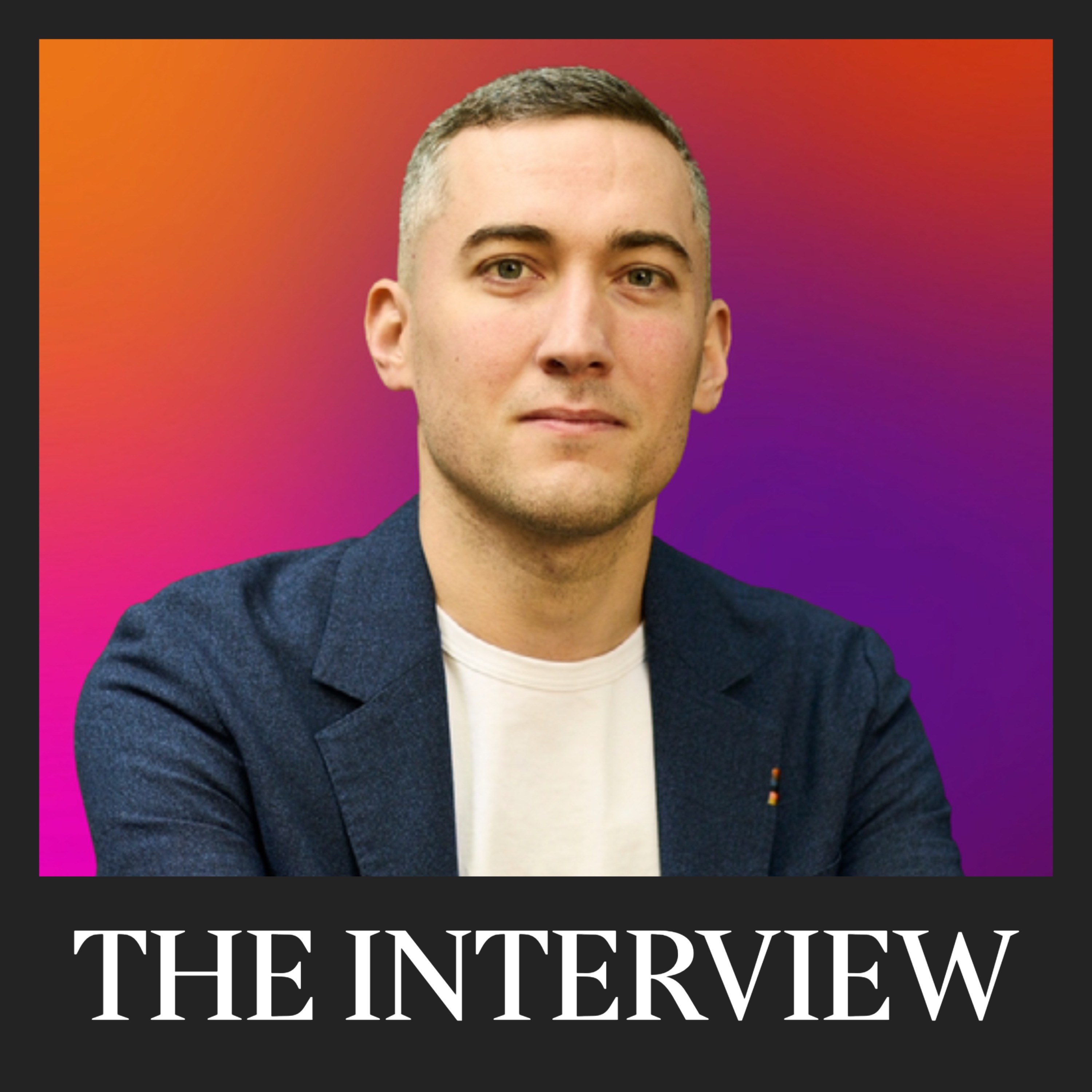
14:55Who knows? Well, should we get today's big interview? This is a real true Silicon Valley success story. It is. And with a British twist as well, because, you know, I like to find an abundant angle. So Dylan Field is the CEO and co-founder of Figma. And just to explain what they are, because it's definitely not a household name. They're a design software company, and they're basically used by designers to sketch out how apps and websites will look before the devs get involved and start actually building them. It's a little bit like Google Docs for design. So the idea is that you can design it, but collaborate with others at exactly the same time.
15:32And it's proved to be really, really popular. And along the way, here's my London angle. It got investment from Index Ventures, London-based VC, and Danny Reimer based here. So they were seed investors. Oh, yes. they have obviously been very excited about the journey as you call it in silicon valley so dylan's a bit of a boy wonder he started the company with a fellow student called evan wallace from brown he dropped out of brown and then he went to work to remember flipboard ish it was like this very pretty app it was pretty which used to collate articles from around the web and he was so big at flipboard at the time that business insider published an article about him under the headline, this flipboard intern is only 20 and he's already a star in Silicon Valley.
16:17Wow. So he met people like the boss of LinkedIn and various others who funded his company, Figma. And he already almost pulled off the ultimate amazing exit once, right? In 2023, when Adobe came knocking and offered a whole big old chunk of money. Yeah, I mean, this was the sort of$20 billion carrot that was dangled in front of him by Adobe. Until that dreaded moment happened. I think all businesses hate, which is all the competition authorities got involved. And they all got involved in the States, in Europe and here in the UK. And they were worried that the deal between Adobe and Figma would stifle competition in the product design software market.
17:02And I remember really well speaking to Figma's team at the time who were desperately trying to explain that it really wouldn't. And product design software was very different and they were doing different things, blah, blah, blah. So anyway, it didn't wash. It didn't look like the deal was going to get over the line. And so both parties said they were going to mutually agree to terminate the merger. But yeah, it wasn't the happiest of endings. I think it was a bit of a grumpy agreement. Well, should we get into the interview? I'm excited to hear it. Yeah. So the last time I met Dylan two years ago, he was in London opening their offices here.
17:31And that was when he was talking to all the watchdogs about trying to get that deal over the line. This time he was hosting their big London event and the Excel Center in East London. So we sneaked away into a quiet room away from the fig mates and the mayhem. And I asked him what the punchline was to that whole experience with the competition authorities. Let's talk about where we left off, because last time we met, you were in the thick of talks with Adobe and you were going through competition hurdles, dealing with regulators here and in Europe as well, over that deal, which didn't end up happening.
18:08How did that feel when that all came to an end? Yeah, it was a very intense 16 months to try to navigate this odd situation where your path is indeterminate. And I think, you know, many people have paths ahead of them that are unknown or chaotic, but it's a bit unique when scenario A and scenario B, and they're so far apart. And you have to get your own head straight about that, but also lead a company through it. And I would say that at the end of the process, the certainty of, okay, this is what it will look like going forward. That was, I think, very helpful for me mentally, just from like a mental health standpoint.
18:51But also I think it just was like a moment for the team, not in any relation to Adobe, just because we knew. and I also think that it was really nice that we were able to within the degree that legally we could keep the team updated first it was quarterly and then you know it was uh more often than that around just checking in and kind of giving the latest status report to the degree we could and you know we also just kept telling the team look we don't know which way this goes we're either going to be at Adobe or we're going to be independent. Either way, we got to keep our foot on the gas. We got to keep accelerating our business and we got to keep building.
19:34And, you know, looking back, especially with the outcome that resulted, I'm so, so glad that we did that. You know, we announced the dissolution of the deal. We shipped, I think less than a quarter later, our GA of dev mode, which has had great reception. And we've only continued to accelerate in terms of our product velocity since then. You talked about leadership. What was it like leading a team who they must have been very excited about a deal being on the table, not least a potential financial windfall, and then having to almost steer the ship in another direction? You know, I think that as the process went forward, people got more and more sense that this might not happen.
20:14And in any case, wherever we ended up, the vision remained the same. we're trying to go build Figma to go from idea in your head to application. And if we were at Adobe, sure, there'd be more things we do as well. But that was our focus. How do we go and build that out? I think the more you can kind of keep your eye on that prize and make the focus about the work and what we have to do to serve our customers, as generic as that might sound, it's really true. There's an infinite number of things to work through and problems to solve to make sure that we're making the best pride possible. And we always kind of returned to that.
20:52And that was the place we should have returned to anyway at all times because that's how you actually do well for your market. Were you personally disappointed? Well, put it this way. I spent about zero time before we started to contemplate the transaction thinking about any kind of merger. after it passed and it was no longer happening we're no longer in review i now spend about zero time as well you know my focus is purely on how do we go and make the best product possible and yeah it's not really like a feeling of disappointment or joy or anything it's just just like i really don't think about it but i am very very excited to be on the path that we're on i see so much opportunity i think that in the context of being an independent company There's just so much that we have the potential to impact and different ways we can address the needs of our audience.
21:44And the world is so interesting right now. It's changing rapidly and our team is cranking up the pace to respond. That's really what I spend my mental cycles on. We spoke a bit at the time of the deal, the attempt to deal, about some frustrations with competition regulators. What are your reflections on dealing with them? I mean, look, various times in the world, there's different philosophies that take hold. And, you know, we were in a moment where there was one philosophy that various governments shared. And I think that, you know, unclear if that's where we're at now or if it's slightly different.
22:23Take a step back. I respect people that have a point of view, even if I disagree with it. And, yeah, I think it's just not worth the brain cycles to go into like, okay. And loop on, okay, is it right? Is it wrong? Like at the end of the day, I have only so many waking moments to go build my business. And that's what I devote it to. I just remember you saying at the time that you felt they hadn't quite got what Figma did. well i actually think that the regulators were quite smart but i think that you know there's philosophy around antitrust and you can have different points of view about what should be the way you go or not go and who am i to say about what's wise or what's not wise i don't think anyone really knows that was then as you said now you're looking forward it's been pretty widely reported that you have filed for ipo you're looking to go public when might that happen where might it happen what sort of valuation are we looking at well you know in the with the sec they mandated quiet period so not something i can really speak about but what we are focused on is just again how to build the best product and the reason i bring it up again is because literally i think if you surveyed everyone at figma that's what they would be talking about and that's where all of our attention is because we have so much we just introduced we have so much we need to make better, those new surfaces, area to improve on the surfaces we already have, and so many new opportunities that are coming down the pipeline.
23:54Yeah, I mean, it's the most interesting, intense, and fun time we've ever had with the company. And as you alluded to earlier, with the world changing at the same time, it does feel like a very intense time. Absolutely. I mean, I think with models coming out constantly from different parties, it's kind of interesting because you look good social media and maybe it's the algo feeds, but everything's either, oh my God, everything has changed or, oh, everything's bad. You know, it's never in between. It's always extremes and click bait. And, you know, there's part of it where it's like, you just have to get the truth.
24:30I feel like, you know, we all have to have and develop the journalistic instinct that maybe you and your fellow journalists have now. Although I do think that Gen Z maybe gets it for free. And so they have this sixth sense of, you know, of course it's fake news or of course it's hyperbole. Or inbuilt cynicism. Well, yeah, or maybe you can call it cynicism. But for me, I thought I was pretty good at knowing what's true on the internet. But recently I've had to check myself a few times. Oh, really? What sort of things? Oh, just, you know, you read some headlines somewhere that's shared on social media and you go, oh my gosh, is this true?
25:04Share it with a friend. They're like, I can't believe you believe that. What are you thinking? And so I just think that it's both like we live in incredible times, but also you have to get to truth to understand what's happening at all times. And you talk about the advances in AI models and you've just launched four more products. Correct. How do you think about that relationship between AI and creativity? Yeah, there's a lot packed in that question. And just to recap for the four products, I mean, pretty wild because the first 10 years of the company, we launched over 10 years, four products.
25:36And then over this last week, we launched four more. I think that is a reflection of not just our speed, but also I think everyone is feeling the need to go faster in this world. But going to your question around AI, I have a lot of thoughts about the intersection of AI and creativity and design development. I think that maybe if I was going to start with a framework, AI as it currently exists, I think right now we're very firmly in the AI as a tool point of time. And I think that it's easy to overstate and describe personhood or advanced agency to AI in a way that's not yet true. I don't think anyone knows how far these things go completely.
26:21But at the same time, I've seen times where AI models can do extraordinary things and civic use cases. And I've seen a lot of stuff where, yeah, AI does create content that is not all that impressive. There's this interesting balance of psychologically, I think, that people actually expect more from AI than they would from a human in the same situation. That's interesting. And yet, when you're building with AI, you're building with a non-deterministic system. And it's quite hard to reliably get these models to do quality work. And so our approach, when we look at things like Make, which is a product we just introduced to go from prompt to app, we asked ourselves, okay, what does our audience need here first and foremost?
27:08And what they need is a way to rapidly prototype. We have all these products that can help you on that journey from idea to app. Make is one that lets you get something out of your head and just try it. Because it's something you can try so fast, it's also easier to throw away. and I think that one aspect that we think is a really important differentiator is that you can copy and paste designs in from figma design and so you can really visually scope out okay here's how it should look and then you can say okay here's my description my prompt of the functionality what I want to do and that combination if you can get it right and you can translate the design figma design to the input to the model it's it's very special to be able to then have that quality emerge because otherwise it's very easy to end up in a world where things do look very similar and so we think that's a very key differentiator for our audience to help them prototype faster.
27:59What's it doing within Figma? Are you starting to cut the number of coders you need? Are you changing the way you do things? Effect internally has been fairly minimal in terms of headcount. There's some benefits we've seen on support in terms of helping our reps insert tickets with higher quality and be able to handle a bit more on the ticket side. But maybe it's just the nature of our problems. But there's yet to be a conversation at Figma about any kind of reduction in the number of engineers we need. And I think that more generally, as I speak with other people in the industry, the point we're at right now is that these models are quite good at toy problems.
28:38What do you mean by toy problems? Well, if you think about the sort of problems you might get in university, you know you're you're doing your computer science a-levels and you have a algorithmic question what's the polynomial time or the best way to solve this problem set up with an algorithm mehia is like really good at that it's starting to give very good reliable answers you give it complex math questions that are maybe not on the cutting edge of the frontier but rather things that are known in distribution it's pretty good at giving you a way to think through and reason through those problems.
29:13But when you have an existing code base that's complex, that has patterns, it has architecture, and you need to respect what's already there, right now we're not seeing huge improvements in the way that AI can help. I wanted to ask you how you are using it personally. Oh gosh. Well, personally, I'm very curious. And so I love just doing research all the time and learning about new fields and new topics and i find that different models are good at different things i was going to ask you which was your favorite oh that's a complicated question um because kind of apples and oranges or it's like asking who's your favorite friend it's like well i like hanging out with jack when i go and kick balls around and i like hanging out with mary when i want to have a deep conversation you know it's you know but uh i think that some the models that I've gotten most attached to historically.
30:05One is Opus from Claude, Opus 3. I found that Opus just had like a personality and a sort of like default topics that gravitated towards in conversation that matched my interests and the way I like to interact and have deep conversation. But it wasn't great at a lot of other tasks. Like I wasn't going to go ask Opus to go solve a hard problem for me. I also really enjoy O3. Chatty PT. Yeah, Chatty PT is O3. The way I would liken it is almost to a, it's like someone that you might meet in college and, you know, perhaps they're a bit drunk and overconfident. They say a lot of things, but they're so interesting that even though sometimes they get things wrong, even if 5 % of the stuff they say is like provocative and insightful, you always want to listen to them because there's always that gem.
31:00And I feel like with O3, that's very true. O3 is also very good at understanding the span of its own knowledge. And it's not quite self-awareness. That's a different concept, I think. But being able to reflect back to somebody, hear topics I know about and being able to kind of trace the connections between them, I think is a very interesting property that all models share. And for O3, I really enjoyed kind of connecting dots between topics. Although I will say, people talk a lot about hallucinations. And I think there's a new type of hallucination that's starting to occur with these reasoning models.
31:36It used to be that hallucinations were about facts. You make a fact up. That still happens. But there's also new hallucinations where you connect two topics and two concepts that should not be connected and are the wrong concepts to connect. So almost like talking to someone who's just starting to learn about an area and they're saying a lot of words, but they might not understand what the words mean. I find when I'm learning a subject or when I already know a subject, it's very fascinating to interact with these models because you can very quickly spot with some level of knowledge in a topic area where those hallucinations are.
32:11But it also kind of strengthens your own intuition, understanding, almost like when you're teaching somebody something, it makes you better at formulating those ideas in your head. Yeah, it's back to your point about Gen Zs having that cynicism of understanding that not everything you see on the internet is just going to be true. And so it kind of strengthens that muscle, perhaps. Yeah. Probably we all grew up understanding about, say, advertising. Yes. And also, if you don't watch TV for a long time and you go somewhere with a TV, at least for me, I have no immunity. So I just, my eyes glue to it.
32:40I'm like, oh, there's like these shiny, flashy things going on. I can't take my eyes away. So I think you get a bit immune to some of this stuff after a while, too. I think that's probably true.
32:59I promised to ask you about something that my co-host is really interested in, which is NFTs and CryptoPunks. I think you did very well out of this. Did you sell one for seven and a half million dollars in 2021? Is that about right? Well, the full story was that I was on a vacation. I was in Thailand with my now wife, then girlfriend. This is early Figma. I had pretty limited savings. and I started to get obsessed with CryptoPunks. The term NFT had not yet been reduced to the vernacular. And just explain what they are for people. Oh, sure. I mean, CryptoPunks, it's a digital collectible or some say digital art.
33:36I would argue digital art in the case of CryptoPunks, but it's a deeper conversation about what is an art versus collectible. And there's 10 ,000 of them. Digital picture. But probably ownable and on the blockchain. And also I find it fascinating because if you look at the code of it, the smart contract, there's actually not even in the original implementation any picture defined it's just an indice okay an index so you have zero through 9999 and then an address that is assigned to and then you have to believe that the overall grid of all these different pixel images will continue to exist now they've been moved on chain by this amazing artist named deaf beef which I would love to geek out about for a long time, but another time.
34:20And I got obsessed with this idea of digital scarcity and the idea that you could own something that's digital and could be copied. And it's a limited edition because it's on the blockchain? Yeah. I mean, with CryptoPunks, there's, like I said, 10 ,000 of them and only one person can technically be associated with each CryptoPunk at any given time. So you're on holiday, a romantic holiday with your girlfriend. Yeah, exactly. And meanwhile, I just keep talking about CryptoPunks. and um she married you so that's yeah no she she gets it but uh you know there's different rarities of different types of punks and the rarest was the alien one and then of the aliens there's one in particular 7804 that i just felt an affinity towards and i thought it was brilliant and so i thought okay well perhaps i should put a bid in it wasn't for sale and i kind of you know did the thinking on how much do you bid to entice someone to sell it to you and uh said to my girlfriend hey this is like the equivalent of like sixteen thousand dollars have i completely lost it like i really want to do this i can't stop thinking about it i think i should do this and i talked about it i think pretty much non-stop and she eventually she goes just do it do it and then like let's move on then we can enjoy our holiday and maybe you've lost money forever and it's a terrible idea but like you just need to move past this uh and so i did and i bought some others as well and uh yeah i came back to the states i started telling my friends that were really into art all about my brilliant discovery and they all looked at me like i had indeed lost it and uh just no one got it and so then i thought okay well i guess i probably shouldn't talk about this for a while i went to the crypto punks one of the first crypto punks events.
36:02That was awesome. Again, at the time, it was just so early. So everyone there was all about what is possible in this new area, all about the art, nothing about money. That was not all the energy of the space. And I had this idealism about, okay, if you can find new ways to digitally introduce ownable objects, perhaps it's a way you can create entire worlds online and got very excited about that idea. And at some point, the NFT craze hit and I started getting pretty nervous. I'm like, whoa, I've got on my hard drive a key that is linked to this thing that is now very valuable. And at some point I went, okay, I just think I should sell this.
36:43And I actually felt a lot of regret afterwards. I made a speech about it on Clubhouse, you know, because I kind of thought about this as like the digital Mona Lisa. That's the way I think about it. And I'm sure plenty of people disagree with that, but I stand by it. I think long-term, this will be one of the most important pieces of digital art and have some sadness to no longer have that affiliation with it in the same way. But also, I think it's sort of like the bellwether of the NFT art market is this particular piece. And so it trading hands and then establishing price points and showing the ceiling of what's possible for how these things can be valued is useful.
37:23But I did get quite sad about just the overall state of nfts at some point because i realized that it evolved from my original sort of ideological excitement about the space and the new possibilities of this frontier into frankly a lot of gambling and there are still pockets of it though where it is just i think so earnest and there's real art happening and there's really new ideas being explored digitally that never can be explored physically. I mentioned Def P for earlier, one of my favorite NFT artists. One of his pieces that I love is called Entropy. Every time it transfers, the piece degrades a little bit.
38:02Wow. And it changes. Yeah. You can't do that with physical art in the same way. This new canvas to explore ideas like that I think is fascinating. And I think there is real art being created. Just also a lot of monkey pictures. And you still own some? Oh, yeah. I now have it in a very secure way. But yes, I own some CryptoPunks, Autoglyphs, Daft Beef, a few other collections. And for what it's worth, some of them I call art, and some of them I'm very okay calling collectibles. And some of the collectibles, they were destroyed in value in terms of what people would pay for them, and I still love them just as much.
38:37So I think I have a different orientation towards this base than many others, and I don't know, for some reason, my brain's wired a little differently that way. interesting well we'll keep an eye on that and your ipo as well keep us posted 2021 just the nft craze it takes me right back to the to the height of the pandemic do you think why wasn't i buying pieces of art by deaf beef yes because he bought well this wasn't by deaf beef i don't think but his crypto punk he bought it for 16 grand and sold it for 7.5 million that my friend is why he's a successful entrepreneur and we are not correct in a way we're just lowly journalists talking about successful people on a podcast but i was like 16 grand to 7.5 million i remember at the time i was like what is happening in the world it's not about the money it's about the art you heard the man digital mona lisa although you know i think i would have a different view if i was like uh i just made seven and a half million dollars out of a collection of pixels.
39:36His wife was really like, that's my boy. Yeah, exactly. Put a ring on it. It was really great to talk to him and to catch up with him, I have to say, on the other side of the Adobe saga, because it was such a saga at the time. It was total saga. He glossed over it a little bit in that. And I can understand that. It's like, look, we just need to keep looking forward. But it must have been an extraordinary distraction. Oh, for sure. And you have this prospect of this extraordinary exit, whether he's going to leave the business himself or not, but financial exit for him and everyone involved. And to do all of the groundwork for that and have it snatched away.
40:17And it was right at the heart of the time when there was a huge amount of criticism here in the UK, as there still is to a certain extent, about how the competition authorities are managing these sorts of deals and whether they're having a chilling effect on the deals taking place at all, particularly with big US businesses. We had Microsoft buying Activision, which was blocked by the competition authority here, and Microsoft's reaction to that. And this came hot off the heels of that deal. And certainly the narrative that Figma and Adobe spun at the time was that they were getting a pretty rough ride from the Brits.
40:52Yeah. And I think with Figma in particular, I think just the idea of focus, his ability to kind of keep the train moving forward. because when you're talking about 20 billion and people everybody is looking at their shares doing the math and they're like oh and i'm a fig mate my life is about to change and then it becomes this two-year saga and you have to just keep going and keep people motivated and whatnot i mean the thing what's good obviously is that the company has kept growing i mean they brought in 750 million dollars in revenue last year which is 48 up on the previous year yeah you know so they're growing like a weed he's managed to kind of keep it moving in the right direction but i think it is a feat especially when you have so many people who are getting paid with so much shares to be like keep your eyes on the price y 'all because we don't know how this is going to turn out which is why they'll be so relieved that finally they've made this ipo announcement i mean we don't have a huge amount of information we don't know how many shares they're selling we don't obviously know the price um but there is speculation in the market that they could raise about one and a half billion dollars as you say some of the the numbers that have come out as a result of the ipo filing are really staggering i mean the 750 million revenue figure for 2024 91 gross margin which you know makes sense it's a software company yeah but still investors will be i guess pretty excited about that yeah for sure and also they had chime just came out recently circle there is a thawing in the tech market in terms of ipos after a pretty barren few years so it'll be interesting to see if figma does well who else follows in their wake but um yeah interesting times and not to mention an exit for the people who didn't get their exit in 2023 for sure and then it begins you know this whole machine out here begins anew when you think about all the people like nvidia who are just random employees who are now all millionaires because their shares have gone up, you know, 20x or whatever it is.
42:53It's quite an extraordinary machine when it actually works. See, just when you thought it couldn't get any higher, while we've been recording this podcast, NVIDIA hit a valuation, get this, of$4 trillion. NVIDIA has just become, as we're recording this podcast, the first ever company to hit a$4 trillion market cap. It's absolutely remarkable. In the last five years, NVIDIA's share price has gone up almost 1 ,500%. Seems to work quite a lot. It does. It does. It's still the exception rather than the rule, but it works enough. Works enough that you seem to meet people at dinner parties who've landed on the right lily pad.
43:37Yeah, exactly. But again, I think the other side of that is what we talked about at the top. The boom aspect of this, the bubble the bubble will burst you know company with no product no revenue being worth 10 billion dollars five months after forming that's crazy town nine out of ten of these ai companies probably won't be around in two years that's just the nature of the beast but you know the one out of ten will be and they'll be doing things like figma where they're like you know 750 million in revenue and 90 % gross margin. We're like, what? But anyway, we picked the wrong business, which is the conclusion of every show that we do.
44:18Every conversation. We have picked the wrong business. Talking of shows, can I ask you a question? Yes. Okay. Have you heard of this British TV show called Open House? No. Okay. I'll give you a clue. It's not about property. Oh, that was going to be my guess. Like some kind of rehabilitation of a crappy old property. type show it is relevant okay so obviously the brits do the best television agree we have a small but perfectly formed number of channels and channel four does throw out some corkers and something on the telly at the moment which i think i think you'll find amusing called open house the great sex experiment oh god caption do you question monogamy get it open house I see In this bold concept Committed couples come to a luxury retreat To test whether opening up their relationships And having sex with other people Will strengthen their bond Wow And this is a thing that people are talking about?
45:20They're talking about it But I'm talking about it Because Channel 4 is starting to use Guess what they're using What technology could they be using Artificial intelligence They're using AI to make ads On its streaming platform but they also made an AI trailer for open house in April. Wow. Yeah. Do we know which ads are actually AI generated? We do. So they've just made one at the moment and it's for a podcast, a healthy podcast called the good, the bad and the healthy. And then there'll be a couple more over the summer with property groups. It's a very, very spurious thing, but I just wanted to tell you about open house.
46:01No, I appreciate that. Anyway, that's important. bit of british culture and actually and it brings us back to pandas because you know pandas are not monogamous aren't they no they're solitary animals they get together um to do their business to procreate and then they're like see ya is that right so says google gemini so it must be right so i'm here to bring the i'm here to like tie the room together you know like should we finish by talking about media as well as we're on a media theme sure because it looks like we might finally get a sale of tiktok yeah so apparently there's a u.s investor group that has come together trump is like basically we have a deal we have an investor group tiktok is working on actually creating a u.s version of the app there's some real details to be sorted out there because who's making it what's it look like where's the data all that stuff but he's like look we've got a deal basically i'm gonna start to talk to china this week to kind of get the final sign off but this feels actually like a deal that's gonna happen now as opposed to just all the saber rattling so the price who's buying it all of that stuff is to be determined but i'm guessing you know there's a couple big trump allies who are big investors in tiktok they'll have something to do with this etc but um yeah this saga that's been going on for years and years and years maybe reaching a new phase taken such a long time so tiktok's building a new version of the app for those in the u.s ahead of the sale and and he's saying we basically have a deal now i'm gonna go talk to my good friend g and get this all signed off panda diplomacy oh you know that's why that's why people come to this pod.
47:52It's called The Callbacks.
Hosted on Acast. See acast.com/privacy for more information.