Ask ChatGPT


In this episode, co-hosts Danny Fortson and Katie Prescott discuss the future of driving in light of advancements in self-driving car technology. They explore how today's teenagers might be the last generation to need a driving test, featuring insights from Lyft's CEO, David Risher, on the implications for cities, car manufacturers, and society at large.
Written by AI. May contain mistakes.

Get the gist, explore an idea or ask about something said.
 Claude
On Times Tech, what are the key points of this episode?
Searching your listeningAutomatic transcript. May contain errors.
0:02katie can you play us into the pod i'll try ready yeah i'm ready then beat down but i don't stay low Got mud on my jeans, still ready to go Okay, if I was a competent DJ, I'd like fade that really nicely. Well, hey, you know, you can't be great at all things, Katie. Why did you want to start with that track today? Okay, first of all, I'm not a big country guy. But that song was from a new, hot new group called Breaking Rust. Strange name. I like it. I actually really liked it. It was a good song. It's called Walk My Walk, and it is number one on Billboard's country digital sales charts, which is something that a lot of country music stars, very famous ones, have not ever achieved.
0:56Now, you're probably wondering, why are we listening to a country music song at the beginning of a tech podcast? At the beginning of a tech podcast, but it's very catchy, and thank you for introducing it. It might replace K-pop Demon Hunters in my life. You're welcome. Well, we'll see. but the reason I put that up there is that is all AI that is not a real human that is completely 100 % AI generated and it is the kind of you know stirring a minor freak out as you might expect in the creative industries of just like this is a you know he's singing about mud on my jeans he doesn't have jeans he can't get mud on his jeans because it's a bunch of ones and zeros it's stirring a minor freak out with me actually that's scary did you like it I mean I know you say you're not country music I thought I thought I mean it's catchy right but like I've listened to it a couple times there's a certain kind of and maybe this is me just making myself feel better there's a certain kind of flatness to it and maybe because I already yeah because I know it's not human but it is like obviously a reasonable facsimile of like kind of poppy a poppy country song and of course the picture of breaking rust have you seen mr breaking rust he's as i think uh one might say he's quite dishy is that a thing oh he's not a rusty old computer i was imagining no no no he's like a modern day marble man kind of like cowboy hat five o 'clock shadow looking pensively off into the distance.
2:31Everybody's freaking out what's real, what isn't, what's the value of human input in this new world, all of that stuff. But you know, well, Danny, that is why we're here. Exactly, exactly. We are the Times Tech Podcast here to explain all of this mad, mad, bad world. So why don't we walk our walk into this very fine podcast episode. Hello and welcome to the Times Tech Podcast, where every week we unpack how technology is reshaping business, culture, and everyday life. I'm Katie Prescott. And I am Danny Fortson, joining you from Silicon Valley, where driverless cars aren't the future anymore. Katie, they're the present.
3:17It's just what we do out here. She's always boasting about this. Yeah, we'll get there someday. You're getting there. You're getting there. But in San Francisco, you can't walk two blocks. without seeing a Waymo gliding by. Actually, it was my wife and I's 10-year anniversary last week. 10 years. Oh, congratulations. Thank you, thank you. That's lovely. So we went out, had a big night out in San Francisco, and we took a Waymo to dinner, and it was the first time my wife had been in a Waymo. And she's just like, after about a minute, when you're like, oh, this is kind of crazy, you're just kind of on your phone, hanging out, playing your own music.
3:51You know, it's actually quite a nice experience. Did she love it? she didn't love it but i guess that's the point she wasn't kind of bowled over by it at all it's just like oh yeah i'm being driven around by a computer they're still so so new in london i mean the couple of times that i've been in a wave uh here i've it has felt pretty amazing waymos started trialing them here as well but but it is very early days we're not getting stuck in a car park full of Waymo's yet, as you have been in the past. Yes, yes, yes, yes. And so our big interview today is with David Risher. He's the CEO of Lyft, which is Uber's longtime rival, which is making a big push into self-driving cars both here in the States and soon in London.
4:38They are still a pretty new site in London though. Wave and Waymo are testing here at the moment. So we thought we would ask this week, will anyone ever need to learn to drive 10 years from now? Yeah. And so I think it's a really interesting question because, well, for a couple of reasons, one, self-driving has been this thing that's been supposedly around the corner for the past 15 years. Waymo has been at this a really long time. And lots of people have tried and failed lots of false starts. And here we are, they're out on the streets. And then when you step back and like Certainly in America, and I imagine it's the same in the UK, or maybe to the same or lesser degree, getting a driver's license, you turn 16, it is such a thing.
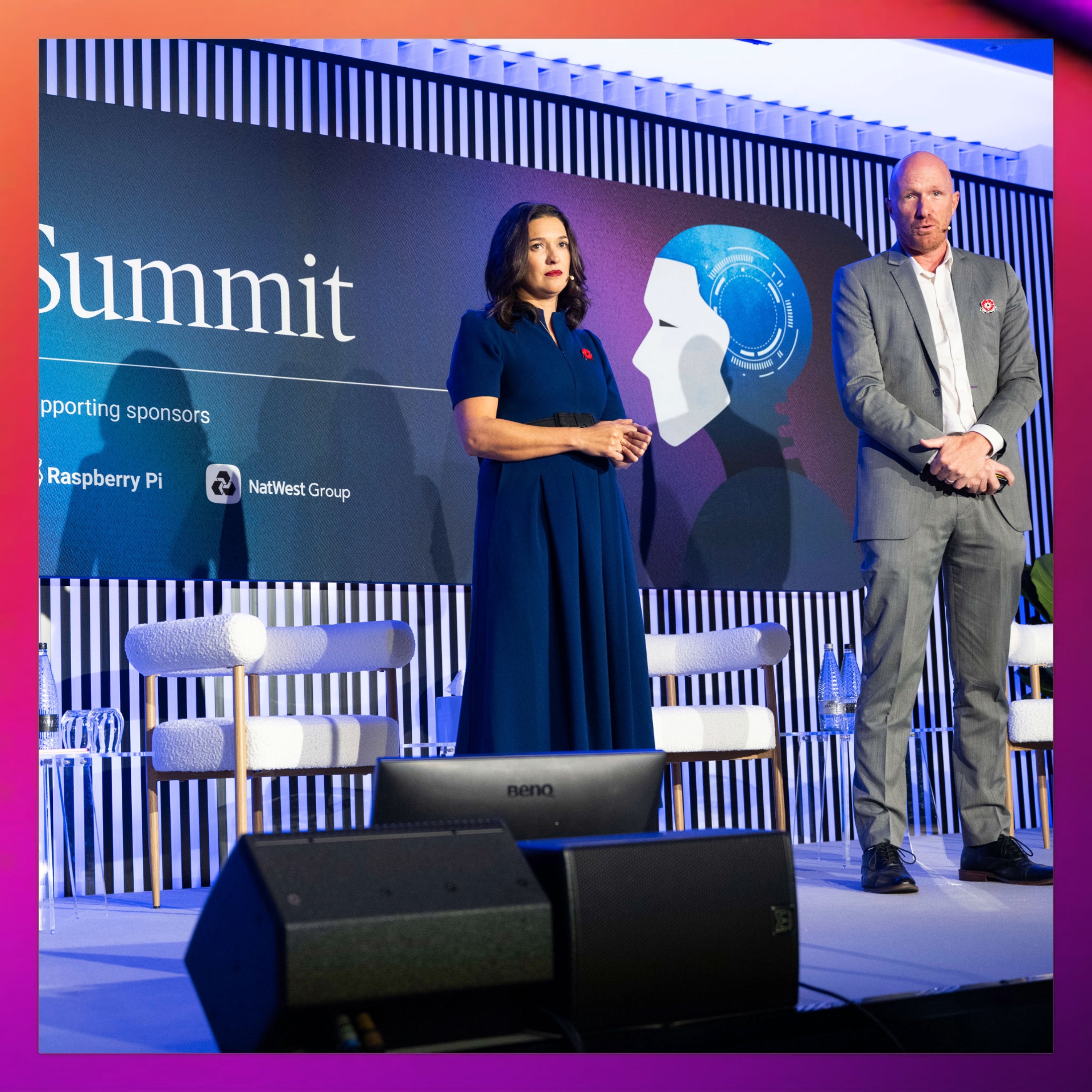
5:24It is like this rite of passage. Because especially in America, most places you need a car to kind of go anywhere, do anything. It's this real kind of moment in life that kind of the shackles are off. You can go out and take your friends around, go to parties, do this, do that. one can argue whether 16 is the right age because I was you're not the most responsible. Surely you were an upstanding teenage citizen. Yeah I mean you just do dumb stuff you just do dumb stuff but I do think it's really interesting of like certainly for my generation and I think previous and post getting your driver's license is this huge kind of moment in life and it really signifies something and we're now at this point where the question is like is that even going to be a thing it's exactly the same here in the uk although we're 17 not 16 you know you've got that extra extra year under your belt i think in the countryside it it does mean freedom because otherwise you're completely dependent on your parents and suddenly you know you've got the keys to the world yeah and so you know when we had the times tech summit what was this three weeks ago now i was on stage with a few uh kind of for future of Transport Panel.
6:37We had Saswat Panagrahi from Waymo. We had Sarah Gates at Wave, you know, the big UK rival. And then Eric Allison from Joby Aviation, who's working on flying kind of air taxis. And so I just asked them all on stage this very question. So here we are in 2025. I have an eight-year-old and a six-year-old. And I live in the Bay Area. Will they ever have to drive? Will And will there, when we go to SFO or Oakland Airport, can we just silently glide over the traffic to the airport? So I don't know if you want to start, Sasolat. Have to now. They may choose to. And we will all have that choice, but have to now.
7:24Because that also gets to the point around scalability. Because you are Google, or sorry, Alphabet. You have more money than many small countries. you can fund this right and i you know as you say sarah you have all of these sensors and radar and sonar and lidar and all of the stuff and also in every city my understanding is that you're mapping it down to the last millimeter so these cars there are no surprises can you scale that or and what does that look like yeah i mean look even scaling to the 100 million miles we have had without some degree of cost and would not have been a practical reality even to this scale.
8:05So this is our fifth generation hardware that you see on top of the Jaguars that are driving down. The sixth generation hardware that we're working on, and you can see that some of the test vehicles in SF already, they are comparable to a, you know, advanced ADAS system and from a cost structure standpoint. And the reason we were able to achieve that is once we established that from a performance standpoint we are there. Costing down hardware is a much simpler challenge and much more known path. For example, people often think LiDARs are very expensive, but the iPhone 16 Pro has a LiDAR. LiDAR costs have gone down drastically over the last few years and that's for just LiDARs out there in the market and of course knowing the scaling goals we have, we have been costing those down as well.
8:48Scaled mapping is a solved problem with the things that you've seen with Street View being available all around the world. So I think from those angles, we are pretty happy with the kind of progress we have made so far. Also each of these vehicles that in SF you may have noticed, what you will see often is the moment the passenger comes down, the subsequent passenger gets in. So we are also able to see the level of ride utilization, which is great both for the top line as well as for the utilization and congestion in the city, that from all of these factors we're pretty happy with the progress we're making towards profitability.
9:24So from that angle, I do believe that, you know, especially in the South Bay area, I think it's not a risky statement to make that your kids won't have to get a license. What about here in the UK? Yeah, I'll go more ambitious and say, yeah, they won't have to outside the Bay Area, I think. We've shown really good progress in creating a mapless, infrastructure-free, automated driving system. And I think the next couple of years are going to be really exciting for the industry. We're seeing more and more automation being integrated into consumer vehicles. And then there's a huge number of vehicles across fleets that we'll see automated.
10:01Fleet owners are incredibly excited about the cost savings and the safety gains that they can make from introducing automation. And yeah, again, agree. There's always going to be people who want to drive and they can drive. But for the people who don't like driving, they won't have to. Are they going to be like the people who really like vinyl records? Exactly. Something like that. It's going to be vintage to drive. Final word, Eric? I completely agree. And I think it's just so exciting to live in a world where this is the trajectory we're on, right? That in your kids, I have a 10-year-old and a 4-year-old, that in just a few years, they'll be able to take one of your cars, one of your cars, one of our aircraft, and be able to move around their cities and their environment in ways that were just completely unimaginable 15 years ago when a lot of us started working on this technology in different forms.
10:50And it's amazing. So there you have it. The people who are building this technology say our kids will probably never need a driving license at all. They might want to drive. I know my daughter's quite keen to drive my old MGB, which is already pretty vintage, but it's going to be a bit of a niche sport. Yeah. And I think that's what's, it's so interesting about technology at the moment. You know, this was total science fiction, not that long ago. And now it's just here, but it's really about, you know, scaling this up in a way that actually, as I mentioned, Alphabet can run, fund a loss leader from now until the end of time.
11:27Not other, not everybody can, but they're bringing the cost down pretty dramatically. And there's already more than 2 million fully driverless miles being logged every single week in san francisco and other cities across the states and in the uk the automated vehicles act of 2024 cleared the way for commercial and self-driving cars on public roads as early as next year and ministers have said up to 40 percent of new cars sold could have autonomous kind of driving features by 2030 which is not far away no i mean we started trials here so waymo is launching trials next year wave that that you mentioned and we just heard from as well uh london london-based driverless car business starting trials with a fuller rollout expected from 2027 so it's coming and london feels a very improbable place for driverless cars to be because it's completely chaotic it's one of the least car friendly cities but they are it's like a bowl of spaghetti around yeah it's higgledy piggledy it's higgledy piggledy it's a bowl of spaghetti horrible line bikes i love line bikes but i'm just they are great they are great yes but yeah so the race is on really to build this tech and to power it because these cars are also you know a pretty big energy and ai story because also they are electric basically all of them when you talk to people in the industry they're like this is the hardest ai problem because you have ais pushing around 2 000 pound machines with humans in the way so it's not like well it's not like oops sorry i'm laughing it's it's a great way to express it but it's not like oops i hallucinated oops i made a you know i made a mistake wave is is taking an interesting approach to this from an ai perspective it's taking data of roads from delivery vehicles like a cardos the online retailer and feeding it into its machines and speaking to someone from wave the other day and they were saying that they can just deploy their cars now in any city without them having to learn the roads themselves because they're essentially teaching them how to drive with data from the roads so yeah big ai thing yeah if they can pull that off which is similar to what we should just briefly mention elon musk because obviously he's been talking about this for a long time he was just had it i don't know if you heard he had a small pay deal um up before he got a he got a pay rise it's always nice what's a trillion dollars between friends i just can't even do the zeros on that but great oh good yeah it felt like he needed a boost yeah my kid my kid the other day they're learning math at the moment or maths sorry um and he's like how many zeros is a trillion and i was like i think it's 12 i was like that's so many zeros wasn't there a difference and maybe there still is between the American trillion and the British trillion?
14:33What like aluminium? Aluminum. I'll have to look it up. I'll ask chat to be teach. Yeah. So Musk has been talking about this. And he has a similar approach of like, we don't need to map every solitary inch of every city. And he's predicting a million robo taxis 10 million paying subscribers for full self driving and 20 million Tesla's self-driving on the roads by 2035. He's famous for missing his predictions, but he does usually achieve them. They just usually take longer. I've asked ChatGPT this issue about trillions and things. And yes, in old British maths, traditionally a trillion had 18 zeros, but we've now synced with you.
15:13We've downsized. You guys have found your senses and fallen in line with America. You are correct. That's 12 zeros. Well, go Elon. Great. Yeah, go Elon. Go Elon. I do think having covered a lot of this and I've seen a lot of companies rise and fall and just vaporize billions of dollars but this is kind of how it goes is it does feel like we're kind of reaching this turning point where this is I mean I see it every day it's it's real it's becoming real and the argument that evangelists are self-driving cars always make is that they're just safer because you don't have a person behind the wheel right so you don't have the drink driving, the anger management issues, somebody sending a quick text or checking their phone, that kind of thing.
15:58Yeah. And studies have found also that self-driving cars are generally a lot safer than those driven by humans. Researchers at the University of Central Florida came to this conclusion after looking at 2000 autonomous vehicles versus 3500 driven by humans in California between 2016 and 2022. What's interesting is that everybody's chasing the same dream a world where movement is basically on demand on tap tap an app it shows up and that is what well we talk about that with this week's guest who is Lyft's CEO his name is David Risher I should ask you what is Lyft what is what is Lyft that was an insightful question I have you know thank you very much that's a great question because for British listeners Lyft is not a household name in a way that uber is so lyft for anybody out here they've known it as long as they've known uber they started roughly the same time they had very different approaches where like uber was like the super intense we're just bashing through walls and kind of spanning all over the globe lyft was kind of the kindler gentler ride-sharing company and so they launched around Mindler and gentler?
17:16Their two founders just had a different approach. They were less kind of combative and aggressive with the taxi unions, with regulators. They tried to broadly kind of play more by the rules and had more of a go slow approach. But they're still everywhere. Like if you go to any city, it's Uber and Lyft. Like, and that's it. In America. They went public in 2019. They had a really rough pandemic, spent years losing money, trying to turn a profit. And now under David Risher, they're really leaning into this whole self-driving era. So last week, I went to their HQ in San Francisco, sat down in their very cool kind of podcast studio, and asked him the same question I asked at the Times Tech Summit.
18:00And he basically said, will your kids need to learn to drive? No. Will they want to? Maybe. And that really sums up where we're headed. you know, driving as a choice, not a necessity. Let's talk about my kids is because it's a kind of neat 10-ish years or so. Yeah. Will they need to learn to drive? Need? No. Want? Maybe. Probably. Probably. But you just said it. As a 16-year-old kid, it's about freedom. That's your time to become who you think you really are at age 16 and, you know, release the shackles of your parents and your home life. And you clearly don't need to learn to drive to do that today, even today, and certainly not in 10 years, no question at all.
18:47Now, will you want to? Yeah, maybe, right? Because road trips are amazing. And just like driving stick is fun. Like I drive a stick, you know, one of my daughters learned, one of my other daughters didn't. There's a certain sense of connection and whatever, but there's no reason to. It's just, why not? So it'll be like that. When you step back, that's a pretty profound thing. And I guess the question to follow on is like, okay, we live in San Francisco, we live in the Bay Area, outside the streets are full of Waymos. Yeah. Which is very much like that William Gibson quote, you know, the future is here, it's just not evenly distributed.
19:19Yes. Like in that sense, the future is here. Yes. It's not in most other places. Yes. When you think about big cities and secondary cities and rural areas, like how universal would be your answer to like, yeah, they're not going to need to learn drive either because you can call a Lyft in a couple minutes or if you have a car, maybe it's self-driving or there's going to be so many self-driving cars, you just don't need it. I mean, I think this is just a question of when, not if. Let's look at self-driving for just a second. Like self-driving will come to cities first, not because city people are more sophisticated, but just because they're denser, which means there are more people there, which means you can give more rides, which means you can make more money, which means that if you've put billions of dollars into R &D, you'll get a payback faster.
20:07Conversely, if you're in Iowa, probably it's going to take a lot longer, just there are fewer people and the distances are longer and so on and so forth. But I think in 10 years, it will be hard to buy a car that doesn't have at least the option of some self-driving technology. You know, I think again, it would be a little bit like buying a stick shift or maybe even a car without a radio or something or today you could do these things, but it would be very unusual to do. And I think it'll be kind of like that. This technology, let's talk about the why. The why is, first of all, it is kind of nice to be able to sit and have something else completely do the work, but of course you can do that in a Lyft today, right?
20:43So what's even different about it? Well, let's be clear. It's very, very consistent. It knows the rules of the road. It follows the rules of the road. You're completely alone. We also were talking just before we started about isolation. And so I'm not saying it's only a good thing, but there are times in people's lives where that feels just like what they want. And it's also fun and novel and so forth. But in 10 years, it won't be novel, but it'll still be safe. And you don't imagine a world where you can close your eyes at one point and then two hours later, wake up at your destination, taking a nap and feel refreshed.
21:12It'll take a long time to get to the middle of the country, as we say. But I think, again, from your kid's perspective, I think it's going to happen. You know, I've been covering tech a long time. people have been talking about this for a long time. Yeah. But it does feel like we're reaching a point. And I don't know if you could kind of talk about how we've got here. Because all of a sudden it feels like, you know, Waymo's where for years they're testing in Phoenix on this, you know, very kind of easy grid type streets. And all of a sudden they're in San Francisco. They're launching in London.
21:41Yes. We have Wave in London. Like all of a sudden it feels like something has clicked. Yeah. So I don't know if you could talk about technologically what that means. because obviously one of the big questions is safety. Yeah. And when you think, you know, roll this to the future 20, 30 years, will those people be like, I can't believe all those people are driving themselves around and getting drunk and tired and distracted and crashing and killing other people. So let's start at the end. I think it's going to feel like today, you know, you look back 100 years of medicine and you're maybe 150, 200 years and you're leeches and drilling holes in people's heads.
22:13And I mean, I think it's going to feel a little bit like that. People like that's nuts. Why are you putting people who are fallible and distractible and so forth in these 2 ,000 pound machines and letting them do whatever they want to do. One weird sort of, let's say almost a defect of our brains is we tend to think in straight lines, right? So we see two points and we draw a line between them in our brain and then we sort of extrapolate out into the future. And so self-driving cars, you know, three, four, five years ago, you saw them around in very small number of places and then you sort of extrapolate a straight line.
22:44You're like, well, they're going to be everywhere. And the answer was no, they were not going to be everywhere because it just gets harder and harder to do the things that are more edge. What happens when it rains? What happens when it snows? What happens when it's not a grid? What happens when it's nighttime? What happens? All these things. Now, some companies, Waymo clearly being first among them, I would say Baidu and China being also first among them, are at a point where they've solved many of the hardest problems. But again, note, not yet in the snow, not yet really in the sort of deep fog, not yet in the driving grain, only in some city.
23:15But at least within those places, they've kind of solved those problems. And so now you'll see this acceleration. You'll see this sort of exponential thing. It'll be limited, not so much by the technology because other people over time will catch up, but it'll be limited by how fast can car manufacturers create self-driving cars. Because remember, this technology has to go in a car and those cars are typically not designed to be self-driving. So there's a lot of rework that has to happen, which is expensive and a whole thing. So think about it from a car manufacturer's perspective. You got a lot of work to do to kind of get ready for all that.
23:43Does one necessitate the other EV and AV? Because what's happening in America right now, they're like, drill, baby, drill. We want to revivify in a way or kind of hold strong on fossil fuels. But it does feel like a lot of these new models that have some self-driving capabilities are electric. I mean, there are no AVs that are not also EVs. There are no AVs that are not also EVs. There's no such thing as a gasoline self-driving car. That means that as we make these choices as a country about how to invest in EVs and EV infrastructures, we are accidentally also slowing us down the EV side. But I don't think that's going to be the biggest deal.
24:20Frankly, again, the ability for car manufacturers to manufacture these, and of course, for regulations. Different cities, different states will have very different... Just today, as it happens, in Boston, there's a conversation going on about whether they should allow, this is a sort of government regulation conversation, should allow self-driving cars on the street. The answer is going to be over time, but maybe they're going to decide we just don't want this for a little while. We've got enough traffic as it is. It's not something we want to do. So anyway, there'll be all these different things that sort of regulate the pace of deployment.
24:49But again, the end point I think is pretty clear. And then from Lyft's perspective, the question is how can we create an amazing experience that is of course safe, gets you out of your house and does all the things that we like to do at Lyft, but also is what we call a hybrid network. Because guess what? Drivers are going to be around for a long, long time too. And we want self-driving cars and we We want driver-driven cars to not just peacefully coexist, but to reinforce each other, to create the absolute best rideshare network we can possibly make. Most of our listeners are overseas. So I know the story pretty well of the Uber versus Lyft going back to 2011, 2012, when it was kind of this idea emerged.
25:26And you guys are kind of fighting back and forth for, well, against regulations, which were like absolutely none, and each other, and for market share. etc that's right uber just went all out went all over the world lots of big bets some of them worked some didn't and then you know all the drama there you guys have remained kind of more focused on america but you guys are just expanding now right so i wonder if you could talk about because you were founded in 2012 i believe that's right 2025 you're finally have just made an acquisition to be in the UK and lots of different countries. What took so long?
26:09Yeah. I mean, it's a fair question. Let's look, as you say, sort of big picture for a second. So let's call it early days. Let's call it COVID. And let's call it more recent. Early days, Uber's out there with a good product. But really, it was sort of an extension of the black car product, a very high end, quite an expensive thing. Sort of niche, honestly. Lyft, John and Logan, the founders of the company, Came up with... Formerly known as Zimride. Formerly known as Zimride. With the big pink mustaches on the front of the car. With the big pink mustaches. Exactly right. Funnily enough, John Zimmer.
26:42So that's part of the Zim. But also Logan Green, of all places, was in Zimbabwe when he sort of came up with this idea. So in a weird kind of confluence. So anyway, they were really the ones that not only came up with, but actually commercialized the idea of, you know what? It doesn't have to be a professionally driven black car. It can be a guy with a Prius that comes pick you up. That was the innovation that really cracked Rideshare open and turned it from sort of a small thing on the side to something that millions of people every single day used. So let's call that phase one. Very competitive, as you said, with each other.
27:15Frankly, different vibes from the two companies. Uber, frankly, sort of more of an aggro vibe from the start. John Logan, kind of nicer guys. And that's so persistent today. Also, I think, as you say, a big question around regulations. You know, these regulations hadn't been written, so all these different things. Again, I would say the other guys had a much more sort of scorched earth strategy. John Logan, a little bit more accommodating. But still, everyone had to kind of create the regulatory framework all at once. Okay, so that's sort of phase one. Now, phase two, pandemic. I mean, of course, we're skipping a lot.
27:42But the pandemic really shifted the world, of course. Nobody was taking rideshare all of a sudden. And the other guys had already made a decision that turned out, I would say, to be maybe smart, certainly lucky, which was to get in the food delivery business. Yeah. And food delivery became a big deal, as we all remember. Blew up. Absolutely blew up in COVID, turned from sort of a niche thing some people would do sometimes, you know, like, okay, I, you know, or pizza, I order Chinese food to something you did every single day. So that was a big deal. And then they also had made the decision already to go much more global.
28:12It was just sort of more of an aggro. And very famously in London, like huge drama there. Yeah. Like they lost their license. That's right. They were fighting with TFL. It was a whole kind of political mess that had to be sorted out. I think their reputation that they have still in London, you can do these things as a company. I mean, thinking about corporate strategy, you can be the scorched earth people if you want to. And their strategy, which I think that they would actually own, is to say, we're going to make a service that so many people use that the regulars have no choice but to approve it effectively.
28:47So it's a certain strategy, but it can come back to haunt you. And so now we get to sort of phase three. So I've been in this job about two and a half years now. My focus has been, look, customer obsession is what's going to drive profitable growth. The way we're going to start to grow again and become profitable and become cash flow positive and do really interesting things for the world is to just obsess over our rideshare customers because that's our main focus. We're not doing a bunch of different things. And as you said, when I took over, we're really only doing it in North America and really only in the United States.
29:15So over the last couple of years, what's happened? So we've gone from losing money to making money. That's nice. But how have we done that? It's because we're giving better service to customers than ever. And I'll give you a couple of specific examples. So when I joined, on average, if you picked up your Lyft app, you might expect about 15 % of the time to have your driver cancel on you. And you know what this feels like. I had that experience, and it's very frustrating. Infuriating. Yes. So here's an interesting thing. As a customer, that is absolutely your experience as a rider. On the other hand, if you're just looking at metrics, which businesses can sometimes get a little distracted by, You might say, well, gosh, it turns out a lot of people who get their ride canceled on them just turn out to rebook.
29:53We rebook them automatically, and it's fine. I mean, we got bigger fish to fry. Well, that as a tiny example, but gosh, it speaks volumes to how this company, unfortunately, I think, again, John and Logan sort of recognizes they sort of lost their focus on customers a little bit. They tried to do a whole bunch of different things. Some of them worked. Most of them, frankly, didn't. COVID was sort of a disaster. And anyway, so they were trying to get their act together, brought me in and said, let's really focus on customers again. So now that number, by the way, 15%, now we're at about 4.6%. We pick you up faster than ever.
30:20Our prices are better than ever. Our prices are now competitive or sometimes even better. And you're doing about a billion rides a year? Yeah, just sort of. Maybe two to three million, two and a half million rides a day. So that's 800 to some odd million rides a year. Last thing I'll say there is, and you mentioned global. I'll come back to that in just a second. But the other, I think, legacy and not such a positive legacy of those early days was there was such a focus on this. one guy versus the other guy kind of competition. And I think the result of that was a little bit of a lapse in innovation.
30:50When you just focus on your competition, you end up getting very incremental and very sort of small. Yeah, you're just fighting for market share, basically. You're just fighting for share. And you're kind of copying each other's stuff. And you're not really thinking about customers anymore. But here's the thing. Even just in the United States, there are a billion rides that people take every single year. 160 billion. You just mentioned we do fewer than a billion. The other guys maybe do two. Call it two and a half to three billion between the two of us. It's small compared to all the rides. My point is, when you start to really innovate, that's how you really start to grow.
31:16And you're not just thinking about the other guys, but you're thinking about how can we do this at a big scale that really ups the level of service. And the earliest question, how can we do it not just in the United States where we're doing pretty well, but also now finally overseas? And you've done some deals in China as well. Can you talk about what is happening in China? Because I feel like people don't really understand just how quickly things are evolving there, especially when you're talking about self-driving and things like that. That's it. So let's link a couple of these things together.
31:45So you mentioned we acquired a company called FreeNow in Europe. They're the number one taxi aggregation platform. They're number one in Ireland. They're number one in Greece. They're in seven other countries. They're in the UK, primarily in the bigger cities. Very, very well respected. And by the way, well respected not just by riders who love the product, but also by regulators who see them as a much more friendly organization than the other guys. So being in Europe, now we have two big markets, the US and Europe, where self-driving cars are going to be on the roads over time. In the United States, Waymo is clearly the winner.
32:18In Europe, there is no real leader just yet. So you mentioned China. Baidu, the Google of China, they are in China what Waymo is in the United States. They've got 11 million rides at this point. Their technology is very, very good. And so they're sort of a big leader in there, which is some of the technology we're hoping to bring to Europe and actually to London in particular, we hope. But now let's talk about China just a little bit. We mentioned earlier that the United States is sort of having, you know, almost sort of second thoughts about our EV strategy. China is the opposite. China, I believe, I think I'm going to get this right, that roughly 50 % of cars now being sold are EVs, are, you know, electric.
32:51Maybe it's, you know, 5 % to 10 % depending on the state and so forth and so on, even less in some states, of course. That is a dramatic, dramatic difference. The Chinese charging infrastructure is being built out at a very, very aggressive rate. And Chinese cars are incredibly high quality. You know, people maybe have in their head sort of a low quality thing. No, no, no. These are incredibly high quality cars. They will compete with the best German cars, the best European cars, the best American cars, in part because their cost position is very good, in part because the Chinese government is basically subsidizing not so much the production, but certainly the factories.
33:21Like basically the factories don't cost you much, right? They'll give you the real estate and they'll figure out ways to make the car. So you put all these things together, an interest in sort of an EV future because pollution, because efficiency, because it's frankly very, very good technology, and an area where they think they can actually leapfrog the rest of the world. You add AVs where, again, they've got a very, very successful company. And Baidu and several others. We Ride is another. Pony.ai has another. They have several very credible players there. And what you see is a very vibrant car ecosystem that, frankly, I think a lot of people around the world are looking at with a lot of concern.
33:51And so just on that point around Baidu, you have a kind of a partnership with them. Theoretically, in the near-ish future, we'll see Baidu cars on London streets that are AVs. That's our goal. A lot of regulatory work to do, a lot of safety work to do, but that we will have Baidu cars. And we haven't specifically said which cities, but London, of course, you can imagine would be on the list. That Baidu plus an OEM, in other words, a car manufacturer, Baidu makes the technology, the OEM will make the car. But what is that car? Hasn't been announced yet, still to be determined. Will it be a European car?
34:25Will it be a Chinese car? A lot of things to work out. Our goal is, let's call it in the next two years, to have self-driving technology that is very safe, very vetted, obviously works within the regulatory framework as part of our network in Europe in at least two cities.
34:42And you talk about the business model. Yeah. Founded in 2012. You guys made your first profit last year. That's right. How are relationships with drivers now? Because that's been a huge issue. Does self-driving dramatically change the business model? Because 12 years is a long time to eke into profit. So if you could talk about that. Let's start with the basic business model. Lyft is what's called a marketplace business. That means you effectively have two sides of this thing. Say we have two customers. We have riders and we have drivers. And they are both customers. Drivers make money, riders spend the money.
35:19And really all we do is hang out in the middle and create that marketplace. It turns out to be quite complex to do that 24 hours a day, seven days a week. Think 3 million people every day open the app, hundreds of thousands of drivers are on the app. You've got to match them with the best driver, the closest one, all these different things. So anyway, it's quite complex. And then what happens when someone leaves their phone in the car, all these different things. So it's quite operationally complex. But the basic model is you have, and interestingly enough, their needs are slightly different, right?
35:45Drivers would like to make more, riders would like to pay less. So that means that almost by definition, the margin of a marketplace business is never going to be that great. Yeah. Cause you're talking about almost a billion rides and you're like, we got a few million in profit. It's like supermarkets or something. That's exactly it. Because I mean, imagine what happens every time you take a ride, maybe we make a 50 cents a buck, a buck 50, maybe after drivers get paid, after insurance companies get paid, all these different things. So a billion dollars, that's still the infrastructure to run something at this scale is quite, quite large.
36:15And that effectively is the answer. We weren't operationally great for a while. We've gotten much, much better there. But the bigger problem is just, you just kind of have to grow to a certain scale to start to make money. So we are making money. We are cashflow positive, all these different things. That's a sign of a healthy business. It's a sign we're doing right by our customers because otherwise we wouldn't be having good business. Now, self-driving is interesting. That's not actually a marketplace business. The self-driving car doesn't need to get paid every single time. It's more of a scale asset utilization business where you got a bunch of these things and the more you can put them on the road, the more money they're going to make for you.
36:48And some of their costs are lower, right? Obviously, you don't have to pay a driver. You would hope that their insurance is lower and so forth and so on. On the other hand, they're expensive technology. They depreciate. Even if they don't get into accidents, someone sometimes bumps into them and their sensors break. So we're going to try to figure out what the economics are. But I think it's very fair to say that over the next years, it will have a good effect on our business in the sense that it will allow us to provide the same or more rides over time, but at better unit economics. But again, I don't want to overemphasize on that either because remember, maybe we'll have thousands of self-driving cars, I mean, we'll 1.5 million drivers on the platform every year.
37:23So for the foreseeable future, we're talking about relatively small economic change, but that'll be the kind of direction we go. Right. Last question. Sure. Why did you take this job? Because you worked for a couple guys people may have heard of. This dude, Bill Gates. Yeah. You, I think were employee number 37 at Amazon. So I worked for that other guy. Yeah, that guy, Jeff. So two of the richest, most successful people on planet. Yeah. And you arrive at this company losing money, much smaller than Uber, feels like it's like you're coming out of a pandemic. You're like, is this going to survive?
38:02Why do this job? I'm actually going to start with where I am today. I love my job. So maybe that's the answer right now, but I don't think so. I don't think so. Here's what happened. I'll tell you the story briefly. So I had joined the board of Lyft maybe four years ago. John and Logan had asked me to join because they had said, look, you're a customer-obsessed person from your history and Amazon and other things. And also, you've done some things at pretty big scale, and we'd like your expertise at the board level. So that was wonderful. So I joined the board. At a certain point, maybe 18 months into my tenure, John and Logan decided to step down.
38:35They started to look for a new CEO. I was not even part of that committee. It was just kind of happening in space. And then one day, my phone rings. It was actually Valentine's Day of 2023. And it was the board chair. And he says, David, I got an offer I think you can't refuse. And I'm thinking he's going to ask me to be like the frigging head of the audit committee or some like nightmare thing like this, right? Yeah, baby. Who doesn't want that? Who doesn't want that? So I'm like girding myself like, okay, what's he going to do? And he says, you know, John Logan, I've been talking and we think you should, to be clear, apply to be the next CEO of Lyft.
39:05And honest to God, the first word out of my mouth was no, absolutely not. And it actually wasn't because of what you were saying. I mean, I love my job at Microsoft. I I love my job at Amazon. It was actually because I was running a nonprofit for the prior 10 years and had been the one that I founded that got kids reading. And I was very focused on that. And we got 20 million kids reading using technology. And I thought it was my life's work. And I said, there's no way. I've got something else going on. But the more I thought about it that afternoon, and frankly, that evening, it was a Valentine's Day conversation between my wife and me.
39:33I thought, you know what? Gosh, at Microsoft, I learned to compete super hard. Bill's a very aggressive dude. And he was very focused on the competition and started doing all that. I learned a lot about customer recession from Jeff. Jeff's a very customer-obsessed dude. I learned a lot about leading with purpose at WorldReader, my nonprofit, a lot about how you can use technology to kind of make the world better. And I know it sounds trite, but honestly, I think that when people get out of their house, it's a better world. It's just a more interesting three-dimensional textured place than sitting on your couch and watching Netflix and so forth.
40:02And then the last thing is I am a competitive person myself. And when I heard the word apply, I was like, wait, wait, what? Are you just not giving this to me? Yeah. And then I put together a 100-day plan and I presented it to the board and all this sort of stuff. And I began, frankly, I guess to convince myself and other people, you know, kind of jumped on the wagon saying, you know what, I think this might be a pretty good fit. And here we are. And it's been great. Number 37 at Amazon. So it's not like he needed a pay rise. No. Well, as he said, he spent 10 years running his own nonprofit, which is kind of amazing.
40:34Because, yeah, number 37 at Amazon and many years at Microsoft as well. He obviously had done well for himself. Yeah. What a brilliant interview. is so fascinating to hear from him. I'm so pleased you asked about China as well, because it does feel like things are developing so, so, so much more quickly over there. For sure. And it's also, especially in the States, it's as if China doesn't exist in terms of cars. Like you go to like, we were in Mexico earlier this year and like every other car is a BYD car, the big Chinese brand. Yeah, yeah. Huge over here as well. Yeah, they do not exist in the States.
41:10You do not see a single Chinese car on the road. And it's becoming this kind of like the Japan of the 80s in terms of its prowess in car manufacturing and just exploding. And as he said, they're leaning hard into electric vehicles because I think principally because their cities were so smog ridden. It's like a huge public health issue. And so they're leaning into EVs and self-driving. it's kind of just running at 100 miles an hour and so I do think it's interesting that that's happening over there and then we're still in the states we're kind of two steps forward three steps back kind of thing and you're and you're still many steps ahead of us and he also answered your question about driving licenses as well exactly the same answer there's just going to be this niche pursuit yeah and I think it is are you going to have to be kind of a hipster to be like oh you You know, Billy over there, he actually drove to this party and, you know, he has like an old school car or something.
42:13I mean, it might be a whole kind of, you know, image statement. He listens to music on his Walkman. Exactly, exactly. But I mean, I've heard that before. As I mentioned, I've kind of been hearing it for years, but it does feel, and it was much easier to dismiss because there was nothing happening on the roads. Like you go to San Francisco, there's all these like self-driving cars, but they're all being, you have a human behind the wheel as they're kind of testing out this technology. But now when they're doing like millions of miles with a computer, it's very, very different. And now you have these Chinese companies doing it.
42:47You have Tesla doing it, Waymo, Wave, like it is. As I said, it does feel like something we've kind of crossed a threshold. It's a good question for listeners though, isn't it? What would you feel more comfortable with sitting with a teenager behind the wheel or a robot? Robot, 100%. I would yeah yeah because yeah I mean you mentioned earlier like I got my license at 16 and like I would like to consider myself a good driver but at 16 you're just you know I wasn't I wouldn't call myself a deep thinker and I wouldn't call myself like wildly responsible I remember my mom was always really worried about me driving at 17 with friends you know because it's like one thing about you being a bit irresponsible when you got friends in the car and music?
43:34I think about it now with my kids, because I would always like roll my eyes when my dad's like, oh, you know, be home by this time. And if you have anything to drink, then just call me or, you know, I was just like, give me a break. But now I'm like, child, you are taking a Waymo wherever you're going, especially if it involves a party with other teenagers. and alcohol yeah so that's it so we're all not going to need to learn how to drive like the whole new generation kind of bonkers yeah the kind of non-self-driving car is going to be like the rotary telephone and it feels listening to you talk about it that it's come on very quickly in San Francisco like it's just almost come come out of nowhere but it just feels it's it's been very widely adopted quickly be fascinating to see how things go in London and over the next couple of years.
44:22Yeah, and you talk to people and a lot of people actually prefer them because you have Ubers, you have all of the options. But if you can get in there and you don't have to talk to anybody, there's a little touchscreen in the back and you can quickly like hook up your Spotify or whatever music, play your own music and just zone out and you feel safe and you kind of forget that it's, you know, there's a ghost in the machine. It is for a lot of people like their preferred way to travel now around the city. I can hear your sirens going. speaking of speaking of someone driving around the city the thing that the thing that's always foxed me about them is when are we going to get to the point where we stop faffing around and putting the phantom steering wheel there you know i mean at the moment they're designed to look like cars they are normal cars but with this technology in them but obviously if you don't have a driver you do not need a driving seat no it's safety theater it's it is exactly it's theater yeah it's making us feel like we're in a car actually you kind of just need a bubble don't you really I'm just thinking of my next film script, which would be my first film script.
45:29It's 2045. Everybody's being ferried around in cars without wheels, without a steering wheel. Yeah. But you think of what you could do with that space. And then all of a sudden, a nefarious AI takes over and starts smashing people into each other and creating this chaos. And you can't control the vehicle. you cannot grab the wheel because there is no wheel omg i think you need to go back to rom-coms wow harsh so harsh in a pot with the meatball mania yeah i mean man i feel like you know i'm here to be brought back down to earth by katie pescott british co-host yeah i'm just like i'm making video games i'm coming up with script ideas you're like if i was american but oh that's brilliant oh wow that's so amazing oh but you know you're like wrong culture or as the brits like to say quite good which actually quite good it's all right it's all right it's all right well another fabulous week if you're listening while you're driving enjoy it while you can
Could today’s teenagers be the last to sit a driving test? Danny Fortson and Katie Prescott look at the rise of self-driving cars, from Waymo’s cars in San Francisco to new UK laws on autonomous vehicles. They also hear from Lyft CEO David Risher who explain why your kids may never need to drive and what that means for cities, carmakers and the rest of us.
Image: Getty
Hosted on Acast. See acast.com/privacy for more information.