Ask ChatGPT

 Times Tech
13 Feb 2026 · 42m · 18 chapters

Nikola Mrksic, CEO of the Nvidia-backed startup PolyAI, discusses how AI voice assistants are transforming customer service. The conversation explores the practicality of voice AI in real-world scenarios and its implications on job landscapes, alongside the recent “SaaSpocalypse” - a significant sell-off in the software industry.
Written by AI. May contain mistakes.
Discussion about the effects of AI on the software industry and market valuation.
“And suddenly, the mood music around publicly traded tech stocks looks different.”
Exploring advancements in AI voice technology showcased by 11 Labs.
“of days, which begs the question, what is going on?”
Analyzing investor concerns over the shift towards AI and its implications for software companies.
“and saying, no, we're just going to, you know, we're going to see through this moment.”
Introduction and background of Nikola Mrksic, CEO of PolyAI.
“I don't doubt that, but what about into the future?”
Nikola shares his childhood experiences in Belgrade and how they shaped his interest in tech.
“which is probably like the most elitist, well-funded, really focused on just like how good are you at maths.”
Learn about the origins of PolyAI and its initial acquisition by Apple.
“Yep, founded by Blaise Thompson who dropped out of a Cambridge lectureship to start it.”
Explore how voice technology has evolved since the inception of Siri.
“years at Siri, you know, it was like, like everyone just kept saying Siri is terrible.”
Understand why Cambridge has become a hub for audio AI research and development.
“No, I'm Maddie, a virtual assistant for Indiana University Health.”
Discuss how PolyAI enhances customer service interactions through voice technology.
“Yeah, we've taken a few runs at solving it, and there are really three things that are in the way, right?”
Learn about the challenges faced in voice recognition and how PolyAI addresses them.
“And for the first two years of our PhDs, we thought he was just being defensive.”
Discover how collaboration with NVIDIA is shaping the future of voice AI technology.
“everything now, like we've gone far, far further than anyone would have thought even like three years ago, let alone pre-chat GPT.”
Explore the partnership with Gordon Ramsay and the creation of a Super Bowl ad.
“You know, when you like he moves with such swagger and he's like really embraced and epitomizes kind of like what AI is doing to society right now.”
Learn about the partnership with Gordon Ramsay and insights on the Super Bowl ad's impact.
“Gordon is, you know, a long term hero of mine.”
Explore the financial implications of investing in a Super Bowl ad for a tech company.
“Because I know that those spots are not cheap, right?”
Discuss the challenges and considerations around IPOs for tech companies today.
“We speak to lots of British-based tech entrepreneurs on the pod.”
Understand the existential concerns regarding AI's impact on employment and job markets.
“I mean, the truth is, but potentially, but there is no clear timeline simply because it pays to be private.”
Examine the potential future interactions between humans and AI technologies.
“It's synapses work slightly differently.”
Delve into the discussion around UBI in the context of increasing AI capabilities.
“And it really then remains the question for a future society is that of sovereignty.”

Get the gist, explore an idea or ask about something said.
 Claude
On Times Tech, what are the key points of this episode?
Searching your listeningAutomatic transcript. May contain errors.
0:07Hello and welcome to the Times Tech Podcast where every week we unpack how technology is reshaping business, culture and everyday life. I am Danny Fortson out here in Silicon Valley. And I'm Katie Prescott here in the very chilly and rainy city of London. Yeah, you can hear it. You can hear it in my voice, can't you? I can. I can. I'm another London victim of the cold. And today we're asking a slightly uncomfortable question for the tech industry. Has AI killed software? And should we care if it has? Last week, more than a trillion dollars, one trillion dollars was wiped off the value of the world's biggest tech companies on both sides of the Atlantic.
0:51And suddenly, the mood music around publicly traded tech stocks looks different. So that is the big question we're going to ask on today's episode. And later on the pod, our interview is with the boss of one of Britain's leading AI startups backed by NVIDIA, Nikola Merksich. He's the CEO of London-based startup Poly AI. And they are changing the way we interact with customer service by using AI voice assistance. And speaking of the power of AI voice, this week, 11 labs, who as you know, are the guys who specialize in creating AI voices that sound like humans and have recently been valued at 11 billion dollars had their summit in London and one of the amazing things they showed at the event came from a musician from Bristol called Patrick Darling.
1:44Now he was diagnosed with motor neuron disease three years ago and lost his ability to sing and 11 Labs worked with him to recreate his singing voice with AI. And he performed live at the summit. And we've actually got a little bit of that audio. So drink a few, and it's here to you My heart of much regret My sombre host to the gloomy ghost Of a man I never met
2:21i don't believe in god but i believe in me i mean isn't that amazing can you imagine getting your voice back after so long no that is incredible and actually i saw another thing from 11 labs where they played a video of somebody like angrily calling you know this is fake but they're showing what their voice chatbot can do angrily calling an airline oh i missed my fight blah blah it was about as close as i've ever heard to an ai agent sounding like a human like you know empathizing with this very angry person oh i'm so sorry let me get you lounge access yeah you're gonna make you know your daughter's birthday don't worry all this stuff it is quite amazing how quickly ai is advancing in this area and this is something we're going to get into later with Nikola.
3:12And it really puts a fine point on the events in the public markets over the last couple weeks. Because while AI keeps delivering these kind of wow moments, investors are getting jittery. As we said, a trillion dollars of collective market value vaporized in a matter of days, which begs the question, what is going on? Yeah, it made me think about that famous phrase from Marc Andreessen, software is eating the world. And now it really feels like AI is eating software. I mean, if we just have a look back at what's happened over the last couple of weeks, Tuesday, Wednesday, Thursday last week, there was this enormous sell-off on Wall Street and here in the city.
3:53And the biggest companies hit were in the software industry. And this was off the back of Anthropic releasing various updates to Claude, including a legal tool, which basically scared everybody about the potential of AI to replace software as a service or SaaS. So cloud-based software uses access over the internet. That's things like Slack, Dropbox, Zoom, all these kind of quote unquote productivity tools, software as a service companies that we all know and love or maybe not love. Just picking up on that Anthropic launch, it's a co-work platform, which automates a lot of contract and briefing work that lawyers do.
4:35Over here in London, that impacted Relics, which is a big provider of information analytics. That was down 17 % over the week. And then Sage, friend of the pod, the accounting software firm, the only tech company on the FTSE 100 was down 12%. And then the London Stock Exchange Group and another information business dropped 8 % on the week. And it wasn't just the software companies, right? So separate to, or alongside the sell-off of like all of these software companies there was a huge sell-off in a lot of the like the biggest companies we talk about every week amazon alphabet meta microsoft because they all had their earnings in the last fortnight or so and in so doing emerge that combined they're going harder than ever on ai infrastructure between those four companies they're going to spend 660 billion dollars this year alone on ai infrastructure and that's really just data centers full of chips and in order to build those models and continue running them and that has really spooked investors because what's really interesting is these companies are like the most profitable companies in the history of capitalism and all of a sudden they're they're not buying back their shares anymore they're not building up these big piles of cash they're spending all of it and even this week alphabet raised debt went out to the bond markets raised I think it was 30 billion dollars in debt and so everybody's like whoa this is a different world we're entering where these like you know these companies that just print money are spending all of it and then some on data centers so it's just really it's a bit of a moment it's funny isn't it because we've been talking for such a long time about the impact of AI on jobs and particularly in sectors like in law and accounting.
6:27It does feel like finally Wall Street and the city have caught up with this idea. And I wonder how long it's going to last. I mean, obviously you've got the software companies, Steve Hare, for example, the boss of Sage coming out and saying, no, we're just going to, you know, we're going to see through this moment. But it feels like one company after another. I mean, financial services are being affected too, because everyone's scratching their heads and thinking, well, actually, if these tools can do everything from the small handful of companies like OpenAI and Anthropic, why do we need very expensive software anymore?
7:05Well, I do think to put a positive spin on it, I'm out here on the West Coast, of course, so I've got to. It's kind of amazing that basically we are turning software into something like electricity that anybody can just use. It does feel like, because I've done it myself messing around with like trying to create my own website and I'll just be like lovable. Here's some pictures. Here's some clips. Make me a professional website. And it just does it. It's quite amazing. And you can be like, oh, we can do the same thing with apps, with websites, with businesses. And it is like abstracting away all of the expertise and professionals that you need or all that training you need to do anything approaching that as little as two, three years ago.
7:58Now you can just be like, just tell a thing to do it. And it does it. It's like turning on a light switch in that analogy. And it is quite amazing. So I think there's almost two things going on there. There are the tools that are being offered by the likes of Claude in the legal space and in the accounting space. And as you're talking about there, the vibe coding stuff. And I don't want to steal your thunder here because obviously you created Meatball Mania a while ago, but my 11 year old sat down with Claude Code at the weekend and made a very, very nice Capybara game for Roblox, which I'll send you a picture of because I think it's even a little bit more advanced than meatball mania which maybe says more about the tech than um the user i suspect this is almost a year ago that i created my game okay now i have a rival a rival with with definitely better graphics as i say it's the tech advances not the user yeah i'll definitely blame the tools but it is interesting so there's like these dual sell-offs happening because of course we talked about the open claw clodbot moment where it's like anybody with a bit of determination and a little bit of tech savvy can create their own agent at home and you have all of these tools getting better and better and then you have on the other side the biggest companies in the world spending all of their money literally all of their money and going into debt to build the data centers to run all of this stuff and again i I think it's the investors just taking a moment and being like, oh, we're entering this kind of new phase.
9:39And I think what's interesting about all the software companies, they all hit their numbers. They're all growing really strongly. But they face a question about their medium to long-term future, which they did not before. They can't reliably say that in two, three, five years. is, oh yeah, we're still going to be charging on a per seat basis for licenses to our software that manages your customer service, whatever. So those 30 times forward earnings goes down to 20 or 15 because people are like, you're doing great today. I don't doubt that, but what about into the future? And I think that's the kind of the big question mark that has emerged.
10:19Let's turn now to our guest. We're joined by Nicola Merchich, who's the co-founder and CEO of PolyAI, an AI customer service tool that is backed by NVIDIA. It's got more than 100 businesses as customers today, and over 2000 live deployments of its tech in 45 different languages, believe it or not, and in more than 25 countries. After a stint working with Apple's voice assistant Siri, Nicola quit that job to co-found Poly AI with two of his Cambridge friends back in 2017. And within In eight years, the London-based company has grown to become valued at$750 million after its latest$86 million funding round in December.
11:02And in the year to January 2025, saw 187 % growth in sales. And we must mention the Sunday Times Tech 100 published last month. Poly AI was 12th on the software list. Nicola, welcome to the podcast. Thank you for having me. I'd like to start the interview by going back to the very, very beginning. And I wondered if you could just tell us about your childhood. Because you had a really, really interesting early period, didn't you? You were born in Belgrade during the Yugoslav wars. And I just wonder if you could explain what your childhood was like and then also how you got interested in tech. Yeah, I was born in 91 in Belgrade, I think two months before Yugoslavia started disintegrating around this.
11:48my first memory is I think 14 members of our family from Croatia being with us in our one bedroom flat after one of the kind of like expulsions during that war so it was pretty rough it was rough on people it was rough on my parents generation honestly for us as children and later the whole NATO bombing and everything I just remember that period as like we didn't have to go to school so we just were outside playing all day and thankfully you know no one got hurt it was only later did I realize that like that's actually quite different from a lot of other people who grew up in the booming 90s that they remember as a very good period economically when the world was like everything was right with the world.
12:25I think for us it was like quite the opposite and then since then you kind of get just desensitized and everything has been upside ever since. But in terms of getting interested in tech I think the classical Eastern European thing has always been to push people into maths, engineering and I think even more so in Serbia at that time you just had to to get scholarships for western universities you had to do maths or science and that that was just like a thing you did so I did that I went to a really hardcore maths high school where we all competed like mad it was a real kind of like hunger games of mathematics and by the end of it you know you kind of find what you deserve which is seven of my friends applied for a Cambridge undergrad we went to Trinity College Cambridge which is probably like the most elitist, well-funded, really focused on just like how good are you at maths.
13:17Sorry, seven of you from the same school went to the same college. We outperformed Eton that year at Trinity College, Cambridge, and we all got full funding from the college to start our undergrad there. So it was a real sensation nationally. It was really fun. We were like interviewed by TV and it was a really funny kind of like moment where, you know, we found their match and then you go to Cambridge and everyone was just competing and looking at rank in those exams. And by the end of it all, I was really quite tired of the whole thing. And then I met a guy who was dropping out of a full Cambridge lectureship to start a company.
13:51And I was like, oh, he's rebelling against the same thing that I want to rebel against. So I joined his company and I can tell you a lot more about that. Vocal IQ, that was the startup that you went to initially, is that right? Yep, founded by Blaise Thompson who dropped out of a Cambridge lectureship to start it. they were building voice agents and it was very early days and my supervisor steve young legendary cambridge professor worked on it for a while and you know the early prototypes were good and a year and a half later apple bought us to integrate that into siri so was that a result like a result quote unquote for you for you and the team such as it was then financially for sure i mean for britain back then you know an acquisition that was like just under 100 million that was like mega that was huge right and you know for me it was like not enough to buy a flat in London but enough for a deposit right very respectable deposit so you kind of clock into and that's where I think as we talk about the tech ecosystem here you need like a few rounds of these outcomes just so people see like you don't need to go through six years of banking bonuses to get to that you could get lucky in this way and still do something that you're going to find a lot more interesting so on the chronology you started poly AI in 2017 is that right yeah yeah so after two years at Siri, you know, it was like, like everyone just kept saying Siri is terrible.
15:07Like, and I was like, okay, how do we like do something else? How do we like take the next logical step in creating voice technology that people are going to talk to and not absolutely hate? On this area of audio AI, it always fascinates me that Cambridge is such a hub for that. I mean, you talked about Siri there. You also had the birth of Alexa there. And I think a lot of it is down to someone you mentioned earlier, Professor Steve Young. Could you just tell us a little bit about why audio AI has mushroomed in Cambridge? I think it just had a lot of good people working, even before Steve, his supervisor, I think Frank Polside was his name, and others.
15:42And, you know, the origin of speech recognition at Cambridge and at other places was defense, right? And it really came from the fact that, you know, the West wanted to spy on the Russians and, you know, to spy on someone who speaks a different language, you should transcribe everything they're saying. so DARPA started funding liberally all these things. DARPA is the American kind of like defense funding agency I think in the 60s or 70s and I remember Steve telling me that you know one year he just asked if he can participate as you know a team from an allied nation to America. I think he won the first two or three and people were like oh you're cheating you must be cheating like you have less data you have less funding and then that was just good for all of them improving so I don't think Cambridge is the only place I think there are other places like Carnegie Mellon in Pittsburgh and, you know, MIT, Stanford and others that are big hubs.
16:30But Cambridge is ours here. I think this is a controversial statement, but I think it is the strongest hub in the UK for this kind of technology. Should we move on to PolyAI then? Should we play a call just to give a sense of what you do? Sure. Hi, thanks for calling Indiana University Health. Maddie speaking. How can I help? Maddie, are you a real person? No, I'm Maddie, a virtual assistant for Indiana University Health. How can I help you today? I need to talk to a human being. So I get you to the right place. Could you tell me more about why you are calling? CPAP supplies. So there we are then.
17:11That's an example of what you do. It's very much focused on customer services. Yeah, yeah. And I mean, that call goes on and into kind of like a whole exchange around like, oh, it's not my house. It's a friend's address. and like a very complex troubleshooting flow. It goes on for six minutes. And you hear the resistance. The resistance comes from the fact that automated technology is not something that people expect will work the way it should when they hear it on the phone. So they just try to get up. Very interestingly, because there's more and more of our technology and our competitors out there, when they get to a human, they again ask, are you a real human?
17:46Are you AI? So that number is now probably like one in 10 calls globally, at least. So it's really interesting times for this tech. But our mission is to help companies become the best version of themselves in every customer interaction. So pick up any time, day or night, answer in whichever language the customer wants to speak. Ideally, know everything about them when they call so that you can quickly call it. Are you calling about your internet outage? Yep. There's works in your area. And sometimes you get an experience like that now with automated technology, but for the most part, you do not.
18:17So we're trying to really bring like that best kind of like face of a company in situations that actually are there where they lose customers because something's not working. My question is, is, you know, cause I'm based out here in Silicon Valley, going back to 2018 Sundar Pichai, he goes out on stage at Google IO and he's like introducing Google duplex. And then it's a voice agent that like makes a booking at a hair salon. And everybody's like, Oh, Oh my God, this is crazy. and then nothing happened for the following seven years and i guess my question is how much of this is about what that lady said are you a human like that kind of willingness to interact with machines and how much of it is about the technology like if those two forces where are we and how those evolved to where we are now because it feels like we're at a really interesting moment now where these things are more and more capable.
19:16Yeah, we've taken a few runs at solving it, and there are really three things that are in the way, right? The first one is that anthropological piece where people think they want to speak to a human. Really, they want to speak to something that can help them, and they assume that technology cannot, right? The second thing is they expect that technology will fail, right? So because of that, they opt out and they don't give you a shot. The third bit is like, can you actually make the technology work, right? so if it does and you know if we like play that call onwards you would see just like the system navigating it very skillfully around like you know the alternative delivery addresses loading things surprising the person where in the end she kind of goes like well this has been really rewarding thank you like you're the best robot i ever spoke with we've had people start and then kind of like middle of the way change their mind and go oh i'm so sorry i was being really rude i i thought i was speaking to a robot right and um those kinds of examples are where like i just get like a really get a kick out of it because that's why we're doing it.
20:10We want to change the way that people feel about it. And it's not because we don't think humans should be on the other side. There are situations where you absolutely want a human and there are places where you just don't have enough of them and you can do a lot more with technology. But interestingly, we've had financial services clients dealing with like bereavement calls where AI gets higher satisfaction rates than humans. Because if you think of losing a loved one and then calling about five things with their like bank account and something about their utility account one utility account two you're sick and tired of it it's the last thing you want to be doing right and then on the other side is a human who wants to be empathetic and goes oh i'm so sorry for your loss and then like do you ask about the person or do you just kind of like glimpse over it and continue there's that awkwardness in the middle and people don't like it's easier to just be transactional with technology so there's no like silver bullet for like where it's better to use tech or not I think we could just use tech for a lot more because it's a lot better now.
21:09Is the tech better now? Has there been a breakthrough or breakthroughs that have got you to a place where, you know, more and more people are actually like where those these agents are actually useful, kind of sound like a human and aren't like the thing of like, let me get away from this as quickly as possible and get to a human, which has been the experience for the past, you know, however many decades. Yeah, well, I mean, I think just even like among the two of you, I think you have a stronger opinion than Katie because like you live in America where there's been a lot more of that, like for a generation of technology that's just like killed all American belief that this will ever get better.
21:46Right. Comparatively, even though we share a language in the UK, there's a lot less of this tech. So we see Brits trying to opt out of it a lot less, even though British English is harder. There are more dialects. The language is richest at source. So there are far more dialects and more varied ones in the UK. And on average, the systems work less well today, but they're just better as a big starting point. So they surprise people, they delight them, and then they opt in into the next call and the call after that. in terms of the breakthroughs, there have been many, right? Steve Young, my supervisor, used to say kind of like, if you think this will be solved in two years, you've just worked on the problem for less than two years.
22:23And for the first two years of our PhDs, we thought he was just being defensive. And then now I think he's right in that it's a really deep problem. And, you know, you just improve it every year a bit, and it gets better every year. And it will probably never be perfect because it's a messy audio problem. And it's ambiguous. We as humans don't have 100 % kind of like word error well zero percent word error rate where we get things wrong we mis-subscribe things our error our error rate is around five percent on average when we kind of write down sentences that we hear um so you know you just have to make it better and better but the fun anecdote about the google duplex system was in 2020 we launched our first system with with bread the largest hospitality group in the uk beef eater pubs and google was using google duplex to update Google Maps by the opening times.
23:15So the kind of like the Dr. Livingston, I presume, moment where one AI talks to each other happened between us and Google back in 2020. And both systems were quite clumsy. They didn't know that the other was AI. And it was just like a very awkward exchange where that system didn't parse that we have like a two-part opening time. And then we tried to like actually force the person to book something at the restaurant. And they kind of like awkwardly hung up on each other. but when I met Sundar for the first time I was like hey like Google Duplex like you might not have seen this but many at Google have like we have a kind of like a website page that probably had two million hits on it because it was cool when it happened right I think it was the first unorchestrated interaction between two AI bots so you you were responsible for the first AI meet cute kind of moment well the audio except they hung up on each other no no no we we definitely communicated it.
24:07I think Google mistranscribed it and said we're open from nine to five and it was like nine to one and like three to five or something like that. But that was the action. It was incorrect, but half functional, right? But yeah, I mean, when you look at like Moldbook and everything now, like we've gone far, far further than anyone would have thought even like three years ago, let alone pre-chat GPT. We'll just take a quick break. And when we're back, we'll have more from PolyAI's Nikola Merksic.
24:46Welcome back to the podcast. In terms of the complexity of audio and the messiness of language that you just spoke about, what is the hardest accent for you to decipher here in the UK, but also globally? What does the tech struggle with? Glaswegian. That is the answer. We have data. So, Glaswegian, Northern Irish, general Scots. I mean, like, okay, if we actually had like a sub thing for like proper highlands, it would probably be even harder than Glasgow. You know, there's a really funny clip that my team loves of a Scotsman in an elevator saying, 11, 11, I won't imitate a Glaswegian accent. And the thing not working.
25:25It takes a while to tune into. And so how have you helped the tech tune into that? Like, what do you do to train the tech to be better at Glaswegian? Yeah, well, look, I think that that's where the question of differentiation and data mode comes in. For years now, we've had deployments in different countries of the world, many in the UK, where we've used that data to create the best models in the world for customer service over the phone. right so we have data from glasgow from scotland from northern ireland from the midlands from cornwall right a lot of data and we put the love and care into annotating it so that our models can then recognize that kind of data and when you look at like the bigger tech companies well they don't care as much because they're trying to like build a one-size-fits-all speech recognizer that works for every if you're google you just want one api the people hit and it works the best it can on average for everyone right and that's two broad strokes maybe one day we'll get to the point where it's good enough and if they had our data their model would be able to do what we can but they don't care right they've not put in the love and care into glasgow that we have and into many other dialects of you know recently we deployed a system in bosnia right and it was a very interesting conversation with one of our clients there on like exactly what it should sound like that I really enjoyed being Serbian and, you know, like tweaking dialects to that level.
26:47And I think Brits especially appreciate it because I feel like every 15 miles of this country, the dialect shifts completely, right? So it's not true in all countries like, you know, France, Russia, I feel like, you know, they've eradicated their dialects almost, well, compared to other places that are a bit more colorful. Right. You talked about being very busy and you just raised your Series D in December for 86 million pounds. NVIDIA is one of the investors in the business. What's it like working with NVIDIA and what's it been like working with Jensen Huang? Yeah, I mean, look, NVIDIA is an incredible company.
27:21Jensen is a real rock star. You know, when you like he moves with such swagger and he's like really embraced and epitomizes kind of like what AI is doing to society right now. In terms of working with them, you know, I think we're like the heaviest user of their technology for speech recognition live in production over the phone. So that's been a really fruitful collaboration because most of our competitors are really just value added resellers for open AI. And in that, you know, I think we and NVIDIA are like the kind of like the deep state of actual technical ability to deliver and advance the state of this tech so that the people in Glasgow can use it in the same way that people in California can.
28:00You did a Super Bowl ad? We did. We had an ad with Gordon Ramsay. Gordon is, you know, a long term hero of mine. And I think that his uncompromising attitude to excellence with a healthy mouthful of cursing and expressive language and really imaginative expletives really deeply resonates with my soul. So he's been a hero. And your background from the Soviet Union. 100 percent. Yeah, I think like, you know, Gordon Ramsay could be a Serb. Absolutely. Hands down. You know, we've been working with his restaurants for the past two years. and we love working with restaurants like his with five-star hotels with brands like caesar's palace where you know they swore that they would not use this kind of technology because it's just bad for customer experience and we want to show that if we can get them to use it and make their business better then everyone should use it and with gordon then after working with him for a few years we reached out and we thought it'd be a really good idea to have an ad where he tries speaking to a system and then speaks to one of our own we are much like gordon much bigger in america than we are in Britain, even though we started the company in London.
29:02So we thought that even on that front, he stands for kind of like, well, we stand for in customer experience and compromising, you know, attitude to accuracy and just doing it right. And then also, you know, it's a British thing that really made it big in America, like PolyAI. So we thought it was really topical. And, you know, I think the Anthropic and the OpenAI ads on YouTube have like up to half a million views. I think we've crossed like two, two and a half million so far. So I think it's at least online the best performing Super Bowl ad. I was just going to ask the kind of the economics of the Super Bowl ad.
29:31Is it worth it? Because I know that those spots are not cheap, right? I'm just wondering as a business, is it worth it? Yeah, you're asking if the board will fire me eventually for going on this escapade. Yeah, I think like, you know, the thing they say in B2B software is like, you know, if marketing works and produces the pipeline, it's great. You just never know which half of your spend actually worked for the past year. We're deliberate around like which markets it airs in and how and what. And it's rare that you know that it worked. We know it worked from like the signups, from just the traffic and everything.
30:01It worked. Right. You can tell the board you spent your Series D on the Super Bowl, but. We didn't spend all of our Series D on the Super Bowl. Just 80%. No comment. Look, can I ask about the future of the company? We speak to lots of British-based tech entrepreneurs on the pod. And so many of them talk about wanting to IPO. and then when we ask where they might say well we'd like to do in london but actually where we're going to go is new york what what are your thoughts on if you would like to list and and where you might go if you do yeah look i think that we'd all love to ipo and the truth is five years ago poly i would be getting ready to ipo like in a year right and i think just like the whole like how big the company has to get to ipo now it's like denying entrepreneurs like me that gratification of like IPO-ing and then continuing to work.
30:54So now you're just a private company forever. So I think people needlessly over-obsess. Like Databricks is a wallet. Yeah, 5 billion of revenue and they're a private company, right? So I think that the whole issue of whether you're going to IPO or not is where you're going to IPO doesn't matter. Because if you get to IPO as a British company in America or here, it doesn't really matter. It's just access to capital and you want access to global capital. In fact, it's better for Britain if you get American money or other money as foreign direct investment into the UK, right? This may be my Serbian mentality of like having to get FDI speaking, but I think there is pride in British finance around like the London Stock Exchange, as it should be.
31:35I think it is theirs to compete for a cut of the global market. But I think in this country, we needlessly obsess about it because it's just the post like imperial complex. Like, okay, you've lost number one spot in global markets. C 'est la vie, move on, who cares? You can still have like by far the best tech companies built in Europe, in London, and you should be fighting to create the first, you know, 100 billion and trillion dollar companies. And who they get money from, they should be getting money from everyone. It doesn't really matter. So I think that's just like a thing that we use to like measure ourselves against them.
32:07And it's really pointless. So you're saying you're not, Float's not on the cards for PolyAI at all in the next five years or so? I mean, the truth is, but potentially, but there is no clear timeline simply because it pays to be private. Because for most companies, like the added scrutiny and just the kind of like the need to live on a quarterly cadence of reporting to the market. If you can have the luxury of not having to do that and just running the company where you're measured only when you fundraise. Is a better way to make more progress and not just over optimize for what equity research analysts from Investment Bank X will say about you next quarter.
32:47Right. You've been super generous with your time. But before you go, I have to ask about jobs. Because this is the existential freakout everybody's having. For example, I think, depending on who you believe, there's something like 3 million call center people around the world, workers. There is far more. There are tens of millions of contact center jobs. Tens of millions. Tens of millions. Right. So, and you posted on LinkedIn recently, you know, how the average contact center agent handles something like 50 calls a day. And PolyAI was, I quote, doing the work of a thousand people instantly. way.
33:20We have five clients for whom our system does the work of a thousand or more full-time employees for that specific customer, right? So yeah, like it definitely has an impact on jobs. The truth is there are not enough people in these contact centers. You know, when you call and there are waiting times and then you're being deflected online, told that you can do something on your own. You're being gaslighted the moment you pick up the phone because they don't have enough people to provide the service they would like to provide. And they know it, you know it, everyone's unhappy right so that's one lens but that's me like putting rose-tinted glasses over like the first 50 of it where we'll just see like better service and the the truth is there will be impact on jobs there is already impact on jobs we've had impact on jobs right what do you mean well we've taken out jobs that used to be done by humans now there are for the most part companies that couldn't find humans that they could pay enough to stay in those jobs long enough so i I think for the most part, we've annihilated maybe, I think like 50 ,000 part-time jobs.
34:21Well, not part-time, but jobs that people would hold for a few months. It is rare that a company that has a stable customer service estate with people that do a great job and they have healthy financials, it is extremely uncommon that they would just go and fire them. Like maybe they are going bankrupt and they fire people and then they have terrible customer service, so they implement AI. I think the net of it is in the future, there will be fewer people working in contact centers. but it's also true that there are not enough people who want to do those jobs right now and companies willing to pay them you know a life worth living in those jobs but broadly like we will not just in the contact center but everywhere else have an impact that's going to leave a lot of existential dread for a lot of people like i think software developers are actually having a harder time right now just looking at something that used to require a month of specialist work being like crunched out by Claude in like 15 minutes as a someone who wrote a lot of code I look at that I'm like god like that's really really frightening right so I think you know what the future of society looks like and what our future you know I have small kids and I think of like what they need to study my answer used to be just like if you're in doubt to pure maths and that's just my you know upbringing speaking that's no longer really needed so it really does leave us in a bit of a pickle right i need an answer nicola because we're in a pickle that's the answer yeah we all have kids and we're all thinking the same thing and we're all writing week in week out about like now you can do a do a month-long task in in 15 minutes like i'll i'll give you my most like transhumanist answer yes i've not really like done this a lot publicly our brain is really powerful even when you look at like moore's law under different assumptions It'll take many, many years until like these GPUs or clusters of them can actually match our brain if it was used in the same right way.
36:09It's a different piece of hardware. It's biological. It's synapses work slightly differently. But all that is to say, I think if we really want to partake in the future economy of AI agents and humans, we need those neural link style things so that we inevitably... Brain implants. We need to merge with the machines. We need to merge with the machines. Yes, because that will be the only way that we can compete and use that thing fast enough without being left out of the game because we can't do it. There are things for which we are uniquely capable of. And it really then remains the question for a future society is that of sovereignty.
36:45Like who has the sovereignty? Because in many ways, you look at the CapEx investments of large companies now. And if you were to kind of like paint a dark comedy or tragedy, right, of has AI already taken over and is funneling 10 % of global GDP into building resources for itself so that it can make progress? Well, that's kind of happening. And you see these Wall Street analysts going like, why Satya, why Sundar putting, you know, 600 billion into this? Like, I don't know, maybe AI already took over and is like building these data centers because it needs it, right? It's manipulating us into building the equipment of our own demise.
37:20100%. Because, you know, you flip the UBI argument. We need UBI to spend, right? But what if these machines can spend on each other by building more capacity because they want to, you know, do more of whatever they're doing, right? Universal basic income. Yeah. Yeah. This is not the answer I wanted. Right. Pickle. There we are. You don't use that word in Silicon Valley, do you? Well, look, I mean, I give you a very British answer, you know, it's very understated and it kind of tells you all you need to know. I think we are in a bit of a pickle. I love it. To put it mildly, that was a very British understatement.
37:49We're in the pit of a pickle. We'll have to merge with the machines or we'll be taken over. You're doing Katie's accent. Exactly, it does it a lot. It's terrible. Oh, look, thank you so much for taking the time to come on. It's really, really good to get a chance to talk to you. Thank you for having me. This was fun.
38:10Well, it was fascinating to hear from him. I mean, you know, he is running one of the top AI startups in London. we're in a pickle we're in a pickle katie are you gonna do are you gonna do the um neural link thing when it becomes i probably will because i i quite like trying so tech yeah as long as it's medically approved or approved by somebody or someone's looked at it more than elon musk i might be the last adopter on the planet because neural link for the for people who don't know is like the brain implant that elon musk is saying we're gonna all need to merge with ai but at the moment he's doing it to kind of help people people like you know who have locked in syndrome or whatever helping them kind of communicate but Neuralink is actually a brain implant that reads your brain waves and kind of translates that into actions or whatever but elective brain surgery is not a small thing because that's what it is it is brain surgery because when you say will you do it I mean I think by the time that they get to the point where people like me are allowed to try it it'll be maybe less invasive she says
39:17stick it on the front or something but it was interesting to hear him like you know talk about like he's like well that could be the ultimate destination and in the meantime yeah we're annihilating jobs or we're just you know we're taking people's jobs in a sector that has tens of millions of people that's a thing you know i'm clinging to this idea that it is facile to be like well, AI is going to be so good at everything, we're just not going to have anything to do. Like that's never happened in human history before. But it is kind of hard to imagine what comes next or what the next kind of turn of the wheel is for us as these systems get better.
39:56Yeah, it was fascinating to hear him as well, not just talk about customer service, but also what's happening with coding as someone who grew up as a maths prodigy and has spent his life steeped in this world, as he said, just watching all of that vaporize. I mean, it goes back to what we were talking about at the start of the podcast about why software valuations have dropped so much. Yeah. And I think it's generally kind of an amazing thing because it's like all of that seems so wildly unattainable to someone like me who is not that technically minded and doesn't know how to code. And now I can create things that behind them have all of this code that I don't even have to mess with.
40:35That is quite empowering as Sam Altman often says, but yeah, puts us in a pickle. Let's leave everybody with the pickle. Yes. Well, that's it for this week's episode of the Times Tech podcast. That's it. That's it for us. Yeah. That's the pickle that is the podcast. If you're enjoying the show, please follow or subscribe and leave us a rating or a review because it helps other people to find us too. Yes, and you can find us at techpod at thetimes.co.uk. That is techpod at thetimes.co.uk. Until next week, with another dose of existential dread mixed with some optimism, that is it. Some pickles.
41:21Yes. Bye-bye.
41:32you
Nikola Mrksic, CEO of Nvidia-backed London startup PolyAI, joins Danny and Katie to talk about AI voice assistants transforming customer service. He explains why voice AI is finally working, how PolyAI handles real-world calls and real-world accents, and what happens to jobs when bots can do the work of thousands. Plus, the ‘SaaSpocalypse’ – the $1 trillion sell-off that signals investors may finally believe AI is eating software.
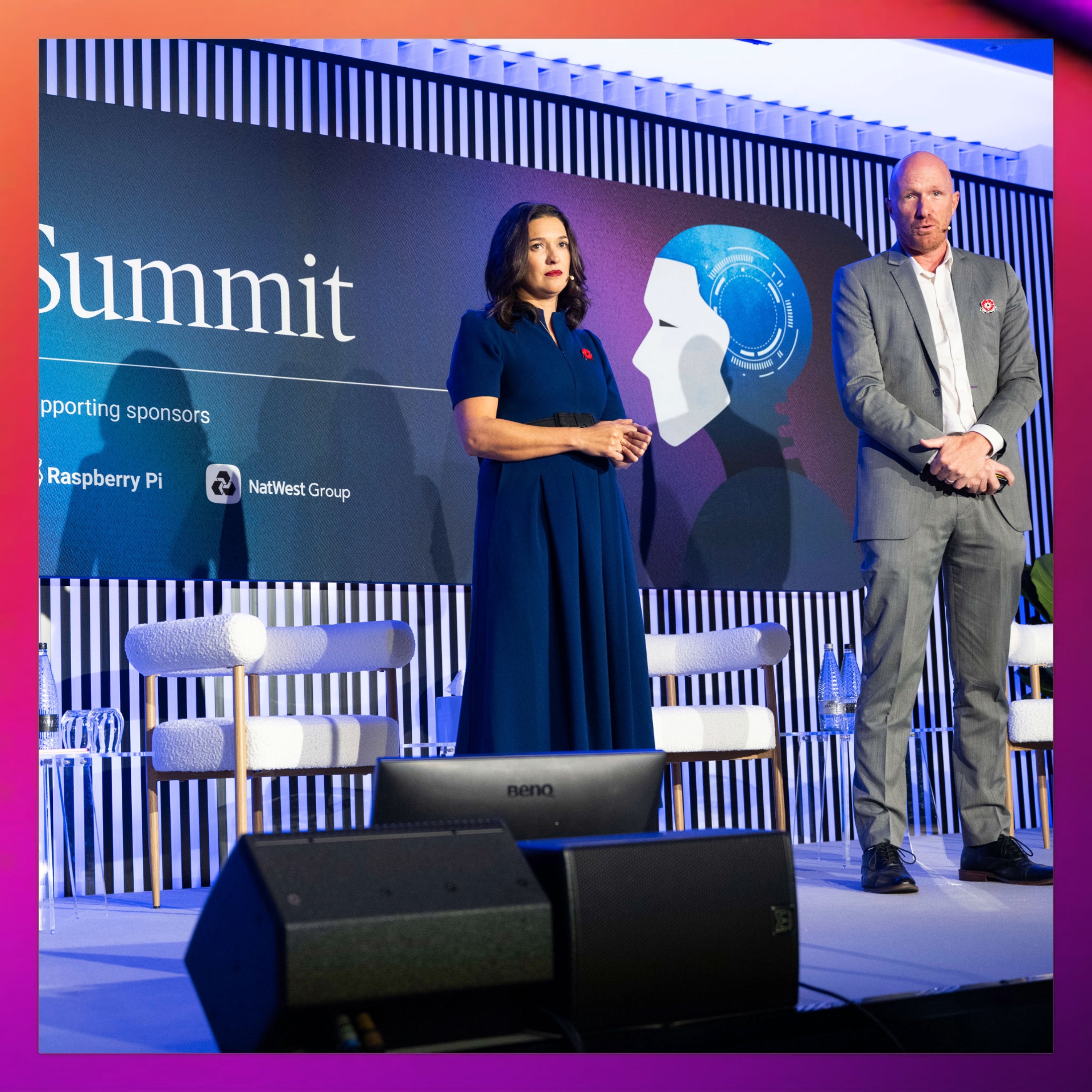
Photo: PolyAI
Hosted on Acast. See acast.com/privacy for more information.