 Ask ChatGPT


In this episode of The Times Tech Podcast, co-hosts Danny Fortson and Katie Prescott analyze the current climate of artificial intelligence (AI) investments, focusing primarily on Nvidia's financial performance and the implications of potential market volatility. They delve into the ongoing discussions about whether the tech sector is experiencing a bubble, drawing insights from industry experts, including venture capitalist Suranga Chandratillake of Balderton Capital.
Written by AI. May contain mistakes.

Get the gist, explore an idea or ask about something said.
 Claude
On Times Tech, what are the key points of this episode?
Searching your listeningAutomatic transcript. May contain errors.
0:02Hello and welcome to the Times Tech Podcast where every week we unpack how technology is reshaping business culture and everyday life. I am Dani Fortson, a.k.a. Dani in the Valley. And I'm Katie Prescott here in the City of London, a.k.a. if we're doing that, Katie in the City. And on both sides of the Atlantic this week, people are asking the same question, the same question they have been asking for a while. Are we in an AI bubble? I have one word for you, Dani, and that is NVIDIA Earnings Week. But of course, but of course, but of course. NVIDIA just had their quarterly earnings on Wednesday.
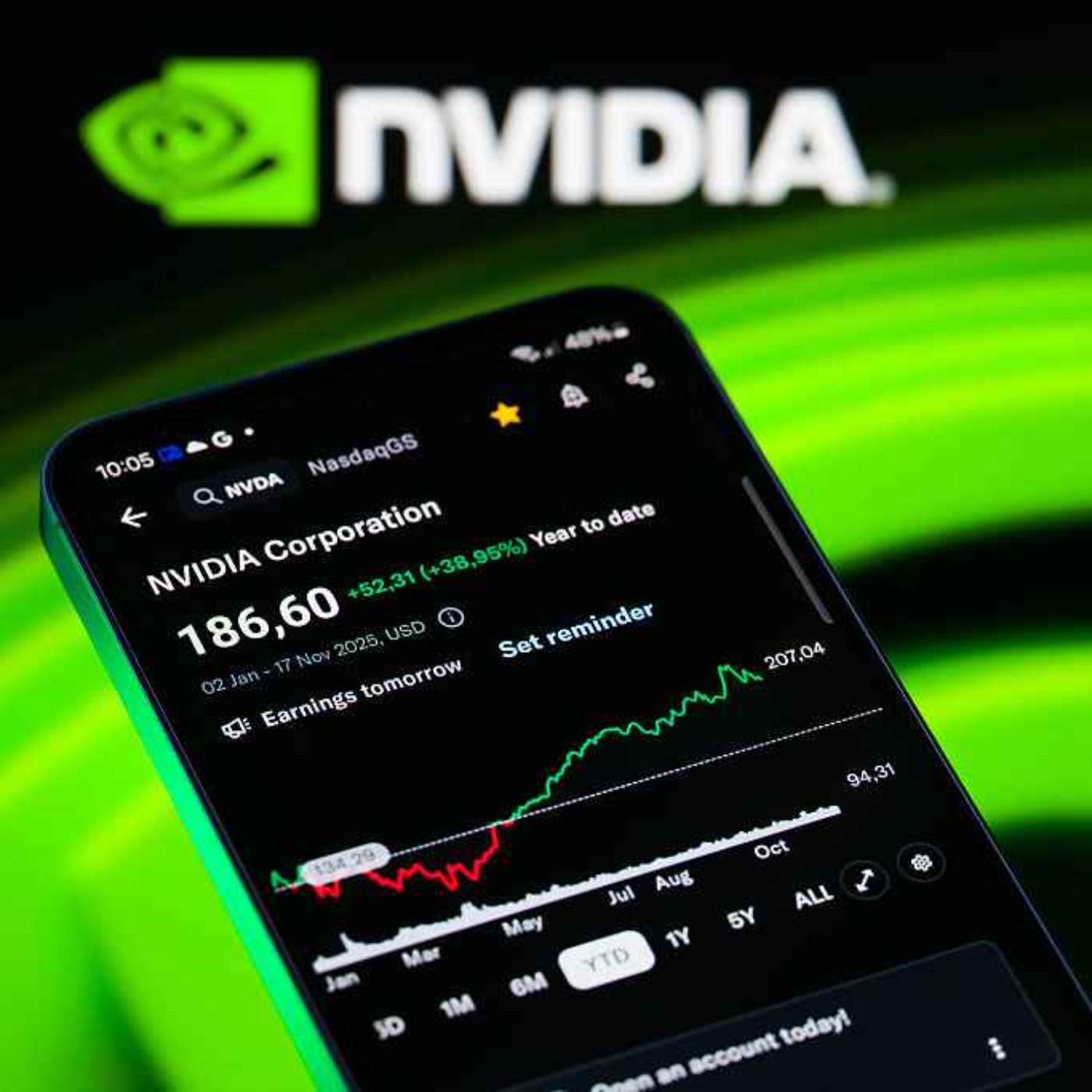
0:44And shock surprise, sales are off the charts. Friend of the pod, Jensen Wang, CEO, said, quote, there's been a lot of talk of AI bubbles or an AI bubble. From our vantage point, we're seeing something very different. That may be an understatement. He said, because NVIDIA's revenue for the three months to October jumped 62 % to$57 billion. driven by demand for its chip used in AI data centers. Sales from that division rose 66 % to$51 billion, all sending its shares up about 4 % in after hours trading. So the question is, is he right? Which we'll get to. And there's lots of other AI wheeling and dealing, but that is without a doubt the story of the week.
1:30But also this week, we're going to cover briefly Jeff Bezos. You remember him? Kind of a big deal. It's a throwback. Yes, indeed. back in the hot seat with a brand new AI startup for himself called very understated Project Prometheus, which I don't know what he's going to do with Project Prometheus, but it sounds very exciting. But no bubble talk for Jeff. But lots of bubble talk everywhere else. I mean, this question about is Jensen Huang right or not is something I'm getting asked all the time. Who knows the answer to that? But it is something everyone's talking about. Google's boss Sundar Pichai gave an interview to the BBC this week saying that if the AI bubble bursts, no company's going to be safe from it, including Google, which is something, of course, we've heard from the likes of the IMF and the Bank of England.
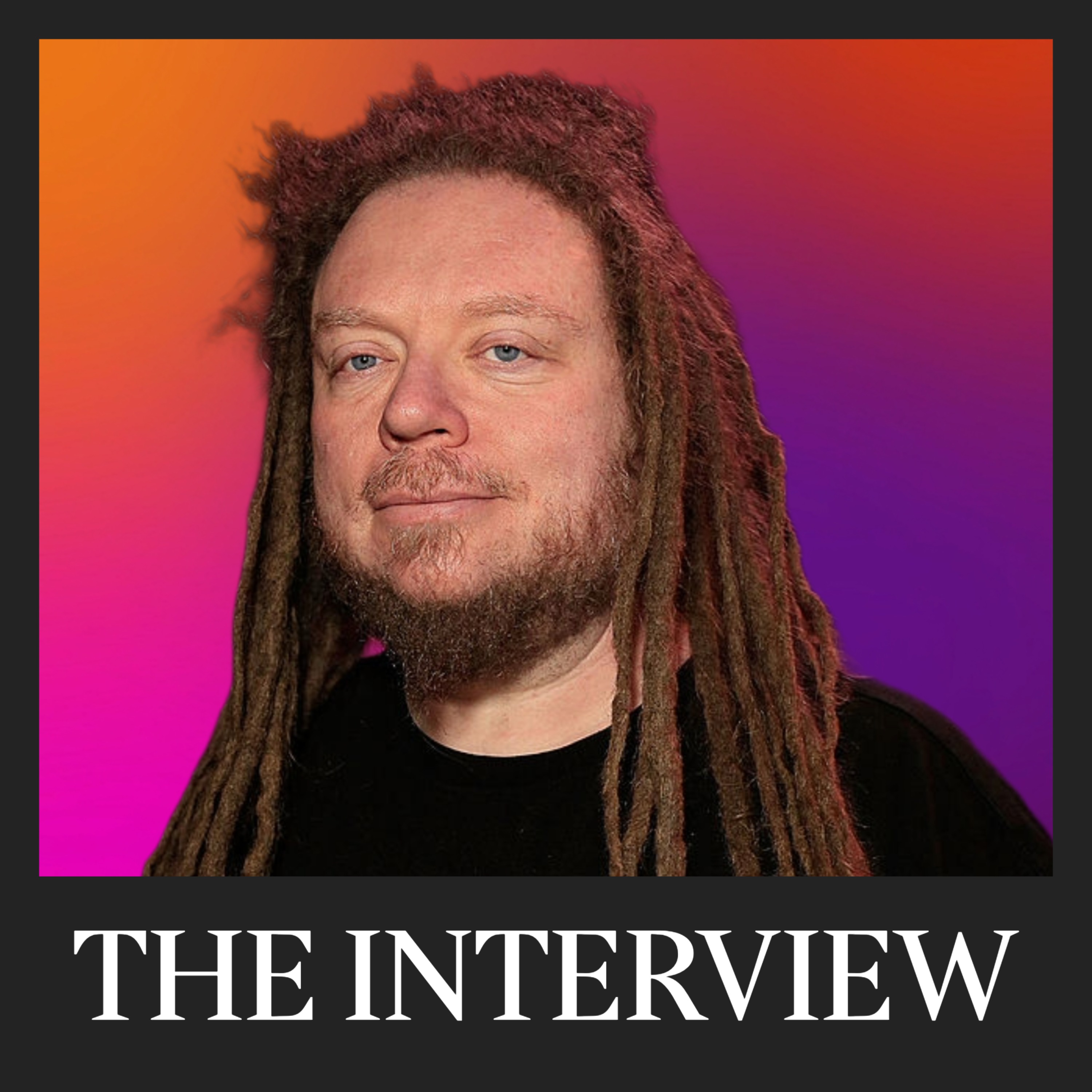
2:18And so our big question this week is AI bubble, question mark. And to help answer that, we'll be talking to someone whose job is literally to decide which bets on tech are real and which are not. The venture capitalist Saranga Chandratilake of Balderton Capital. He helped to build one of the very, very early AI-driven search companies in Silicon Valley, which is a video search company called Blinks. And now he backs European tech companies based in London, including another friend of the pod, Alex Kendall's driverless car firm, Wave. So he has been through bubbles and booms and busts and we'll hear what he has to say about all of this.
2:59But first, NVIDIA, NVIDIA, NVIDIA. Actually, we are recording a day later than we normally do, because we usually record on Wednesdays. But that was the day that after the market closed here in America that NVIDIA was releasing its results. And it's really become the kind of really a key event amid this boom is, you know, what is NVIDIA going to say? Do you know what? Next time they do an earnings call, I want to send you to one of these mysterious NVIDIA parties that apparently happen across San Francisco and Wall Street. NVIDIA parties? Yeah, apparently that's the thing in America. I've read about it on the internet.
3:34looking at me like I'm insane. You're like, well, I read it on the internet. I read it on the internet. Google's chat GPT told me it must be true. Apparently in America, people are having these NVIDIA parties every three months when NVIDIA announces its quarterly earnings. They're getting together, getting a big screen in a pub, getting the beers on and waiting for the big number to drop. It's the NVIDIA earnings party. It's a thing. So sad. Maybe not as widespread as I'm insinuating. Maybe not. I think it's fair to say that both Silicon Valley and Wall Street were kind of waiting with bated breath about what NVIDIA was going to say.
4:12Because, of course, their shares had come off because people were getting very worried, led to a sell-off across the industry. Crypto was crashing, everybody was getting very, very nervous, being like, oh, maybe we've got a little bit over our skis and this is all not going as they thought. But NVIDIA delivered. Uncle Jensen reassured everyone. Things have calmed down. the markets are up it's not surprising people are nervous nvidia is the world's most valuable business so much of the s &p 500 rides on how it's doing so one article i think it was in the wall street journal said is nvidia too big to fail but jensen hwang said demand for computing power just keeps accelerating and he was pretty punchy on the bubble question as well he told analysts that from NVIDIA's vantage point, they see, quote unquote, something very different.
5:05So all of this spending on data centers and the data center chips that have powered NVIDIA's sales this quarter in particular is justified. The demand is there. Yeah, and I think it's just worth pausing on just a couple of the numbers. One question is like, why should we care that much about one company and whether there's a bubble or not or whatever? But their shares are up 1 ,200 % over the past five years. And yes, they've come down. they were off 10 % since the start of November as people started to get very worried. But if you step back and look at the S &P 500, the big index out here, the magnificent seven of which NVIDIA is one along with Alphabet, Meta, Amazon, Microsoft, et cetera, they're worth something close to 40 % of that entire index.
5:48So when you think about people's retirement accounts and just the general financial stability of the market, it's a really big deal. And that's another thing that makes people worried is like, as goes NVIDIA, not only goes tech, but also goes the entire stock market in people's retirements. Which is why the Bank of England even has been talking about the shockwaves reverberating over here, should something go pop. It was striking writing about NVIDIA ahead of its earnings and how most analysts on Wall Street still have a buy rating on it, which is very striking. So they're recommending that people buy the stock, even though it feels like the top of the market.
6:28Now, there was a recent Bank of America survey of fund managers, which found owning big US tech stocks is seen as the market's most crowded trade. Surprise, surprise, when you hear that number that you just said of the 1 ,200 % rise of Nvidia share price, but also that an AI bubble is the biggest tail risk that they're worried about. The other worry that people have is, of course, about circularity, these deals that are happening with, for example, NVIDIA and OpenAI, with NVIDIA investing in OpenAI in exchange for OpenAI and buying NVIDIA's chips. And so it's not really clear how much of that spending is demand from sort of companies that are paying for it or coming from this circle of relationships, which feels a little bit like alliances in Lord of the Rings, I sometimes think, which keep chopping and changing.
7:17So Microsoft investing in Anthropic this week, having been OpenAI's best friend up until now. So perhaps it's not the sort of necessarily purely NVIDIA results that people are watching. It's that weird mesh of relationships. Yeah, exactly. And to that point, I was going to mention that because I think it was really interesting. Dario Amadei raised$15 billion from Microsoft and NVIDIA. And I wonder what he's going to spend that$15 billion on. Oh, wait, cloud services from Microsoft and chips from NVIDIA. but that deal valued the company at 350 billion dollars this is a company that didn't exist four years ago which is just incredible and obviously their sales are going through the roof but at the same time it does when you step back you're like maybe this is just this once in a lifetime thing that's happening and i think it is but to this degree it feels a little bit yeah makes one pause and think but uncle jensen as you say i like that he delivered so hovering somewhere in the middle of all of this, you've got Jeff Bezos, who's decided that even though everybody else, all the big players, including Amazon, are going full throttle on AI, there is still room for one more big bet.
8:27Poor old man, Jeff. He's getting back in the game with Project Prometheus. By the way, I just think this is the other funny bit, is that Meta, Zuckerberg is really obsessed with like Roman emperors. All his kids are named after Roman emperors. One of their massive data center projects is called Hyperion. And this feels Project Grometheus. I love that you can't say it without doing the big voice. Go on. So tell us about Project Grometheus. So Bezos stepped back, as we all know, as chief executive back in 2021 for Amazon. And he said he wanted to spend more time on other projects like outer space, philanthropy, having big weddings, the usual Yeah, yachts, etc.
9:09But he does have a new AI startup, which I won't say the name of again. I think we all have got it by now. You know, because it's a startup in AI, it's raised about$6.2 billion in early funding. And Bezos is the co-chief executive alongside Vic Bajaj, who used to work at Google X, and helped to found a biotech firm that Alphabet owns called Verily. Promethea is supposed to focus on AI that helps with engineering and manufacturing, everything from aerospace and computers and cars. And it's already hired close to 100 people from places like OpenAI, Meta, and Google DeepMind. And I do think it is interesting that at this moment, there's a real push in America to kind of re-industrialize.
9:52And with this kind of tech bent of like, man, we can really leverage these tools to basically reshore onshore a lot of US capabilities. Because if you step back, a lot of people look at this as like a real high stakes competition with China, where we have outsourced all of our manufacturing for decades. And now there's a big movement to bring that back onto US shores. And this feels like it's kind of of a piece with that. His spending on AI is really striking because obviously Amazon also is spending tens of billions a year on AI linked to AWS, its cloud service. And its stock is going through the roof because of all of this too.
10:31And it had a decent set of results recently that kept that up there. Yeah. And so for old man Jeff, the question is like, why start a whole new company? And one answer is this idea that these AI systems can be used to collapse the time and effort to design things like planes, chips, robots, rather than chatbots. As they say, moving from the world to atoms from bits, actually making stuff. And the other answer is Bezos clearly agrees with Jensen Wang, who argued recently that this is an industrial bubble. The kind that can actually be good for society because it does leave behind actual kit, useful infrastructure that can be used to build stuff, even if a lot of the investors get vaporized along the way.
11:17That takes us on really nicely to our next story, because it's a very similar message that Sundar Pichai delivered this week in an interview to the BBC's Faisal Islam that he gave out in California. And he trotted out exactly that argument, which is, yes, money might be lost, but actually, like the dot-com boom and bust, things were painful, but we all use the internet. It's not like we were left with vaporware. vaporware and he also spoke about this bubble he said no company is going to be immune including us that was a really really striking line and maybe as close as i've heard someone in big tech coming to talking about the potential impact of yeah a bubble bursting what's not worthy to me is that he was like yeah we'll be affected because most of the time when you hear like sam altman or any of these other guys yeah yeah there's a bubble but like it's not gonna affect us you know it's gonna affect all those other people who don't know what they're doing or who are over investing or whatever.
12:12And Pichai also echoed that just that kind of classic Alan Greenspan line about quote unquote irrational exuberance during the dot-com boom saying this cycle is both rational and has quote elements of irrationality baked in. But again, it's this idea that nine out of 10 internet companies went poof and some of them quite spectacularly. But we did from that time, if you look at the biggest companies in the world today, they're google they're amazon they're the companies that made it through the fire made it through that time of utter chaos who also temporarily went poof in your words themselves and then and then 99 or whatever yeah for amazon and then survived and thrived but as you said earlier this matters to all of us and to the person in the street because if you've got your money your pension invested in the stock market then you've got a massive exposure to these companies and so any kind of correction does reverberate.
13:12It certainly, I mean, it might have an impact on Google, but it certainly has an impact on all of us. But well, to make sense of all of this bubble and what's going on in the tech world, I wanted to bring someone onto the pod who sat on both sides of the table as a founder and investor. And this is a really interesting figure in the British tech world, Saranga Chandratilake. He started out at Autonomy in Cambridge when he was very young, working with Mike Lynch's team there on some of the very early AI style search tech. He then, at a very young age, helped to start a company called Blinks, which was a video search engine I remember really well, which literally could search through video, which was kind of unheard of at the time, and then came back to the UK to join Balderton, which is one of Europe's biggest venture funds.
13:57And he's backed about 400 companies here over the years, including, as I said earlier, London-based Wave, Friend of the Pod, that recently raised a billion dollars led by SoftBank. I'm fascinated to hear what he has to say, because he is really like UK tech land. He's very well known, very well respected. And as you say, he's backed hundreds of companies and built ones as well. He knows of what he speaks. No, he really does. And he also has a front row seat on the Mike Lynch story. And I've just written a book about him called The Curious Case of Mike Lynch, which came out last week. And also that sort of tracks that first wave of British AI, what went right and what went wrong.
14:35Anyway, so I started by asking him why, after spending more than a decade in Silicon Valley, he decided to come back to Britain and bet on the UK tech scene early as it was in those days. I think the reason I came back really was because the technology ecosystem in the UK had just changed completely in the time that I was away. So I'd been away for about 12 years. And when I left, it was really unusual, odd, dare I say, weird thing to do to start a company. And people would sort of raise their eyebrow if you'd done that. Whereas by the time I came back, it was really something that was quite aspirational for certainly a sort of generation of younger entrepreneurs.
15:20And that just got me very excited. And I'd spent a bit more time back in the UK in the year or two before we moved back. And the sort of energy around that was just really obvious and palpable. You'd sort of seen the waters had risen across the entire continent, but the UK was definitely central to that. And so rather than just doing what's already known and already done and being repeated over in the Bay Area, what about bringing some of that kind of energy and learning and network and so on and doing it here and getting involved in this ecosystem when it's still not on the ground floor, but still on maybe the first or second floor, it's a rocket up from here.
15:54And it's really delivered on that. It's been amazing to watch in the sort of 10 years-ish that I've been back, the market has only gone from strength to strength. And let's talk about what took you to Silicon Valley in the first place, because you were working with Mike Lynch, the entrepreneur I've been writing a book about, and autonomy. And then you worked in a spin-out called Blinks. Could you tell us about that? So I graduated from Cambridge and wanted to work in the tech industry. I had this very nice gold plated offer from a well-known global investment bank, but I really thought, no, no, I want to work in tech.
16:27This is where the future is. So I kind of spurned the finance job and joined a tech company in the US, had an amazing six months working for them, but then got promptly laid off. The dot-com crash happened basically in that first year of my working career. When I came back to the UK, one of the people I met was actually not Mike, but Mike's co-founder, Richard Gaunt at Autonomy. He and his team convinced me that actually tech was still the thing to do. And they'd had their own crash at that point. You know, autonomy had been a high flying stock in the late 90s. It had come crashing down to earth in the early 2000s.
16:59But I joined them because just the energy and the kind of brainpower and the fizz in that place was very infectious. And so I joined and had an amazing few years working for them. I was based in the Cambridge office and worked in the sort of R &D team there. But they really needed people out in California. In particular, their customer base was growing much more rapidly in the US than it was in the UK. And they needed technical people who could go out there and build a larger technical team, I put my hand up, partly because I was intrigued by the idea of moving to California and trying that out.
17:28But also, if I'm really honest, partly because my then girlfriend, now wife, was doing a PhD on the West Coast as well. So it was an easy way to get close to her as well. So for all those reasons, I moved out there. I was the head of the technology team. How old were you? I was in my mid to late 20s, so pretty young. And that was a very Mike Lynch autonomy kind of thing to do. He had a culture of just letting people have a go at stuff. And not everybody always made it. And if they didn't, there'll be other roles for them. But he had had a very sort of accelerated career himself. And he always thought that was a great thing for the right person.
18:00So I was super lucky, got out there, we made a couple of acquisitions, we built out a large team, it was really good fun. I've always wanted to start my own company, I had this kind of romantic idea about and when you go to Silicon Valley, that idea only will get stronger, right? Because everybody you meet is thinking about starting a company. it wasn't long before I started to think that I really wanted to do that. And at Autonomy, we had this interesting thing where we would be given time if we wanted it to work on side projects. And one of those side projects was this thing that eventually became Blinks.
18:30It didn't have a name in the early days, but it was this idea of basically taking some of Autonomy's technology and applying it to various consumer applications. Autonomy had been an enterprise software company, so they were just selling to big businesses and large Fortune 500 companies. and the thought was maybe you could take some of this clever AI technology effectively. We were one of the real kind of early AI companies and apply it to things that end users, consumers might be interested in. To cut a long story short, the team that built that Skunk Works project, including me, decided we wanted to take it further.
19:01We talked about it to the autonomy team and Mike in particular said, look, if you're really serious about this, you should do it outside autonomy because it's just not related to the core business. We'll take a stake because we've funded it so far, but you need to go do this on your own. And that was a scary moment, but we decided to take a step into the unknown and do that. And that's how Blink started. And it was a video search engine. So actually version one was a desktop search engine, which that was our first idea or first application area. But then it was interesting, we had a feature in that allowed you to search videos that you had on your computer.
19:31So if you'd taken like personal videos of your kids or whatever, you could search them. And people loved that feature. And so we realised very quickly, that was actually where the action was and we pivoted. Yeah, I remember you came on the BBC, actually, when I worked there a very long time ago. And I remember us all just being completely blown away by it. The idea that you could search video felt felt sort of completely sci fi at the time. It's amazing sitting here in 2025 and looking at all the sort of AI stuff that's going on. There's a surprising amount of similar things that you could do even 20 years ago.
20:03And autonomy actually had some of that technology. Now, it was smaller scale, it wasn't quite as accurate, it. It couldn't do it over the entire internet. So there were limitations. But 20 years ago, we were getting a brief sneak peek into what was going to come later. It's interesting you talk about the idea of a startup as a sort of romantic ideal. How did the reality match up to that? I believe and hope that as many people as possible get a chance to go through a company building journey. I mean, obviously, for me, it's all about technology companies and these very sort of high growth, high potential companies, but regular businesses.
20:33There's something really amazing about the sort of resourcefulness that it requires of you as an individual to be able to sort of turn your hand to anything, solve any problem, not be demoralized by the many, many setbacks and so on. And it's tough, right? The reality is nine days out of 10, it's either a hard day or actually quite a bad day because something's gone wrong. But every now and again, something goes right. And when it goes right, it's totally worth it because you really, really have this sense of, oh, we did this. It wasn't because we were in the right bus, you know, that was already heading in the right direction.
21:07So it was delivered in terms of kind of the excitement and the energy and, and the, you know, the sort of feeling of a team battling against the impossible. But it was also really hard. And there were some really, really dark days. And those dark days, I mean, that's, that's been a huge topic of conversation here about how much you need to give of yourself when you're starting a company. And there are a lot of people who believe that, you know, it's absolutely, you need to be all in on it, children, you know, any other distractions can't be there. Do you think that has to be the case? I mean, the best founders you see, young, child free, utterly dedicated to it?
21:41I mean, we've crunched the numbers on this at Bolterton. We've backed about 350, almost 400 companies at this point over the last 25 years. Actually, the reality is that there isn't an obvious correlation towards people in their 20s being better at founding companies than people in their 30s or 40s. We don't have many founders in their 60s and 70s, for sure. That seems less usual. But actually, from your 20s to your 60s, it feels like people can do it. So in a traditional working career, frankly, there are people who start companies and there's no obvious sign that says younger is better or single is better or no kids is better.
22:13So I don't think that's true. And regarding the sort of balance of it all, I think fundamentally, if you start and run a startup company, particularly a high growth tech company, The reality is it will be imbalanced because the emotional load, the cognitive load and the sort of inconsistency of when you need to put effort in means that it will be extremely volatile as an experience. It's simply never going to be nine to five. You can't escape that. You're being buffeted by so many external events all the time that you can't really control the frame of reference and the kind of structure of your own existence and your own life and focus and time.
22:49I wasn't necessarily very good at this myself when I did it the first time around. But what I think is that when you do have an opportunity to rest, to recover, to balance, to do whatever it is that is important to you, it's really important you seize that at that moment. Because you can be certain that you won't have that choice in a week's time or two weeks time when something terrible happens or something amazing opens up. So my advice over and over again to all the CEOs, whether they're young or old, have kids or not, or whatever, male or female, is when you do have those moments where it doesn't require you, then let go and do other things that matter to you.
23:22It's not because you're being lazy. It's because you're recharging and recuperating because Lord knows you're going to be needed to do something crazy at some point soon. That's the way I've tried to approach it more recently. And it's definitely what we tell our founders. It sounds like having a baby, like seize the sleep. Take the moment. Yes, exactly. Actually, it's a really good analogy, particularly that first baby. It's very like that because you're thrown into this thing. You don't really know what the heck you're doing. You've read a bunch of stuff, but you forget all of that the second it happens.
23:49And it's just completely unpredictable. And people who start these companies are generally pretty extreme individuals, right? They've taken a lot of risks. They've decided to do this thing that's a little bit crazy. They're usually very smart. They're usually very hardworking, very ambitious. So they can push themselves and they will push themselves. But everyone has a breaking point at some point. Maybe it's five years away or 10 years away. But if you just pick the right moments to rest in between, you can actually push it off indefinitely.
24:17one of the interesting things about writing this book about mike lynch has been looking at the tech scene in the uk over the last 20 30 years and as you'll know the the drum that gets banged all the time is that british people don't necessarily have a startup mindset and europeans perhaps like americans and i wonder if that time is part of that that culturally i mean for example i'm not explaining this very well, but I met some guys from XAI, so Elon Musk's AI company, and they were kind of boasting about the fact that they would work all night and high five each other in the morning because they'd been there for such a long time.
24:53And I wonder if that just feels to me inherently different to how we live our lives here in Europe. I think there's like a number of different points there. And I worry that sometimes we conflate too many of them at the same time. So is there a culture of sort of entrepreneurial business building in the UK compared to the US? for sure it's weaker here in Europe in general and even in the UK. I think UK is actually one of the more entrepreneurial places within Europe than it is in the US. And that's not something that happened around the technology industry or happened in the last five or 10 years.
25:24That's something which has existed for a long time. And it's to do with complex issues to do with our history over the last hundred years or so. There is no doubt that the US has defined itself in this kind of resourceful, make or break, every man or woman for themselves kind of culture. And that lives on today. And so it attracts people who think that way or who want to work that way. And it has a sort of whole mythos around itself and a whole narrative that it builds around itself that only reinforces that. There is a gap there and there's something to learn about that vibrancy and that energy that we don't necessarily have here.
25:57However, I think it's changed dramatically in the last 20 or 30 years. You see that in sort of macroeconomic numbers, just the number of startups, the number of businesses, by the way, not just tech startups, right? Just look at the number of companies that have been built in the UK today versus 20 years ago. One of the great mini stats that I like reminding people of is one that is quite personal to me. When I graduated from computer science in Cambridge back in 2000, the vast majority of people went into academia, big tech, so working for Microsoft or Oracle. They went into the city, some kind of finance job or IT job in a finance company.
26:33There were about two or three of us that talked about startups. Less go back to my old department every now and again, if you ask the graduating class, what are they thinking of doing? At least a half are going straight into a startup or starting their own startup. And the number who are starting their own startup is growing all the time. The other half, if you ask them what they're doing, the majority of them are actually going into academia. So basically going deeper into the tech, which I actually think is also good. Many of them end up doing PhDs and then joining a company themselves. And a small number are joining big tech, right?
27:03They're going to Google or Meta or whatever. The number going to the city are the 5 % group now. And that's amazing. And so that sort of whole mindset has completely shifted in the last 25, 30 years. So yes, we are different culturally from the US. And we have things we can learn from the way that they look at that. I think we've got a way to go to match what they have in the US, not just in tech, but in the whole economy. You know, we also beat ourselves up too much about this. We've come a long, long way in a very short period of time. I don't think there's any reason we won't continue to do that in the next 20 years.
27:32I always remember friends leaving university and I left in 2006 to go into the city. I always thought, how do you know anything about banking or law or whatever when you've studied classics or computer science? Easy way to make money very, very quickly as well. You're 21, 22, you're ambitious, you're smart, and you just say, well, I want to do well. And whether that's making money or you just look at what people have done before you. And I think that the ecosystem has got to the point now where there are so many role models who've done exciting things, building their own companies, building their own business or joining early stage companies.
28:06That reference set of what you could do has changed completely. And perhaps even from when you were there. So was your time moving to Balderton a way of keeping in with the startup and tech ecosystem, but not necessarily having to do it yourself anymore? We decided to move back to the UK first. The second decision was what I'm going to do when I go back. And I looked at everything. One thing I know about running a startup is that if you want to be a founder, you've got to really want to solve a particular problem. There's got to be an idea at the core of it. And you've got to really believe in the idea, whatever it is.
28:35I didn't have that. There wasn't some burning problem that I was trying to solve. And so for that reason, I didn't think I was going to be a founder. But then I met the Boulderton team through sort of friend of friends and immediately fell in love with the team and the culture. It's a firm that was founded originally by a US venture firm. It's kept this kind of Silicon Valley side to its personality. It's always had a few entrepreneurs in the partnership. My partner, Bernard, is a great example. He was the founder and CEO of Business Objects and spent lots of time in Silicon Valley. It's always had that DNA that matches my own.
29:05And yet they were excited about the opportunity in Europe in the way that I was. And they said, look, we've been doing this now for a number of years. And when we look at the data, the number of companies, the kind of ambition level of the founders, the ability of the founders is just constantly notching up. And this is just a great moment in time to come do this. That's why I joined. And one of the investments that you've made, and I think you led on, is in Wave, Driverless Cars, co-founded by Alex Kendall, which recently got a billion dollars of, well, a billion dollar funding round led by SoftBank, which is quite extraordinary for the UK.
29:38What was it that drew you to that business and that excited you about it? It's remarkable, by the way, not just for the UK, but for Europe in general. I think it might still be the largest AI funding round in the UK so far. Yeah, I remember getting a press release and thinking, is that a B? Yeah, it was a B. I think WAVE is a great example of why we should be positive about the opportunity we have ahead of us. Alex is a Kiwi originally, but he came to the UK because he wanted to study machine learning and do research in that area. And it was the best place in the world, frankly, to do that kind of research.
30:11So he came and studied at Cambridge doing a machine learning PhD at the engineering department. He decided while he was finishing off his PhD that the thing he really wants to do with that was to build a self-driving car because there's already a lot of them out there and they're already being used so inefficiently and so dangerously often and everything else. If you look at the journey of the company, we've got smart investors, small and large, willing to invest in this company that's based right here. That's an example of what can be done. And I think we can do more of those. The specific reason we got excited by that company and the reason we invested, The three things you look at, particularly very early stage as that company was, is the kind of market opportunity, the people and the core idea.
30:49And in all three cases, they were sort of off the charts. They built a system that just took, you know, originally one camera and then just two cameras. So two cheap off the shelf cameras, a computer in the middle and then access to the steering wheel and the brakes and the accelerators. And to start with, what they did was they just had the computer watch humans do the driving themselves. And as the machine watched the humans and the machine starts to correlate. okay, when the human sees this kind of thing, they tend to do this sort of thing. Because it means that if we see something that isn't quite what we expected, but is similar to what we've seen before, we're able to figure out what is probably the most sensible thing to do.
31:21And if not, we also understand that when things are really unexpected, very evasive things like break very hard and so on, you know, we loved that they were taking a totally different, totally contrarian approach to solving this problem. Therefore, let's back them. And so and that's really why we invested. The really exciting thing is, particularly crowned by that last funding round, that theory has paid off. I mean, it turns out that Wave has been able to train really a better algorithm with much less money, much less time, much less data. And also, it's much more resilient ones. And so far, it seems to be working really well.
31:51And it's extraordinary when you get to go out in one of them, especially in central London. Coming back to the theme of Silicon Valley and the UK tech scenes, does it feel like when you're backing a company like Wave against the might of a Waymo, that it is a bit of a David and Goliath situation. That's not a UK, US thing. That's a big tech versus small tech or startup thing. And that's always the way, you know, that there are always a thousand good reasons not to start a startup. And number one, two, three, four, and five are usually Google, Amazon, Meta, Microsoft, et cetera. You know, you just have to not think that way.
32:26Interestingly, that's the thing that I think we're really good at as Brits. We love the underdog, right? What we need to do now is foster that and support that, fund it and help it grow. And on that growth point, there was an interesting interview that Victor Rippabelli did recently, who runs one of London's AI unicorns, Synthesia. And he said that he would never list his company in Europe because he said the London Stock Exchange is a complete disaster. You see, Balderton's got some enormously successful companies in its roster, not least, Revolut. I mean, when you're talking to businesses about the next step and where they should list, is London kind of off the cards for you?
33:09We've done both historically. And of course, Blinks was on the LSE, so you've got experience there. Yeah, so Blinks was on the LSE. Relatively recently, we've had companies like Darktrace and The Huck Group, which were both listed in the UK. But we've also had companies like Talent, for example, that was listed. It's a French company that was listed in the US. So we've seen our companies go to both the American markets and the European markets. You know, the reality is, if you're a technology company, London, and for that matter, Frankfurt and Paris, are not as hospitable homes as NASDAQ and the New York Stock Exchange.
33:44You'd go to a large fund manager, and there'd be a specialist whose job was to invest in tech companies. And he or she would know all about technology companies and really understand them deeply. And equally, they would have large technology, media and telecom teams of analysts in all the big banks and all the big brokerages. If you just look at how many of those people exist here in Europe, it's just a much smaller number, whereas the people in the US were able to really go deep. And so that is a problem we do need to address. And that would in the long run affect them. Today, actually, there's a well-trodden path, unfortunately or fortunately, where European startups go to the US and list there and actually can be very successful there.
34:19We've seen that with Arm, for example, with the relisting of Arm in the US. But if you look at the reality of that today, the reality is a lot of our capital is still tied up here. But we should also be thinking about the kind of investor returns as well. And the answer to that will probably be the US right now. I'd like to end by talking about the investment landscape at the moment and what you're seeing. And it's so interesting that you started your career in the dot-com boom and bust. Do you get the sense that we're in a bubble at the moment? an AI inflated bubble. We will definitely see, in my opinion, a pullback on the AI boom, let's call it, rather than bubble.
34:58Generative AI is genuinely a new, deep, meaningful step in a new direction. It unlocks a whole bunch of really interesting technical problems that can now be solved in a scalable way that couldn't be solved before. Now that is real. However, it doesn't solve all problems. There are a whole class of things that it's not particularly good at. And I think that we're at that stage where it's so exciting that people are applying it to everything and trying everything with it. And I think some of those things will stick, but we will also see a whole bunch of them that won't make it. And what's coming across your desk at the moment?
35:31I mean, are you just getting bombarded by AI businesses left, right and centre who are looking for funding? Yeah, I mean, AI is absolutely the number one theme across our desks right now. I feel like last year, 2024, was a lot about applications of AI. This year, interestingly, we've seen a real swing back to fundamental AI technology again, partly as some of those applications reached a bit of a ceiling in what they could do. People have gone back to the deep tech and said, well, how do we make video or voice work even better? What about new types of data that we haven't even looked at, whether that's biological data or tabular data or structured data of various sorts?
36:06And so I think there's a lot of really interesting, deeper work again. And for me, that's really exciting. So we're very, very good at that stuff. Historically, we've let American companies build big teams here, but increasingly we're building our own teams, which is great. And what's particularly exciting either out of the things you're seeing? I think the next big frontier that people still haven't fully cracked, but I think will be really interesting to watch is robotics. AI today, the successful bit of AI today is still very much on a computer. And that's fantastic. And obviously we all spend a lot of time staring at one of these screens for work and pleasure.
36:39So it will have a huge impact on our lives. But the rest of our lives, we wander around in the environment. There's a whole physical side to what we do as humans. And so it'll be really interesting to see how and where those crop up. And obviously, you see little things out there already. People have their robo vacuums and their robo grass cutters. And we're seeing things like autonomous vehicles beginning to get really interesting. But there's a lot more that can be done in that area, both in enterprise, so people building robots for warehouses, but also in domestic settings as well. So I think that's a really big area.
37:08No one's really fully cracked that. There are a whole bunch of quite complicated technical question marks around that area. So that's really interesting.
37:19Okay, so he's always an interesting person to hear from, because I feel that he really understands the technology. He's a big tech brain who can speak human. Yes, you speak human. Yes. He speaks human and also has a good sense of the economic landscape as well. Yeah, and I thought it was interesting that he was like saying that if they get companies to scale, take them to the States. IPO in the States don't. London is not. It's a thing. Big story here. Big story here. Especially when you look at the likes of Revolut and Wave that have grown here. Had investment from people like Balderton and then move.
37:52I was covering the State of European Tech Report this week, which is a big annual report done by Atomico, the VC fund. Atomico is from the guys who created Skype. That's exactly right. Yeah, and exactly that comes up as a problem every single time. It means talent and money flow over to the US because when companies get big enough, they just, if they want to list, they don't do it here. That's the problem that's been dogging the UK for decades, really, is that very annoying word, the flywheel. You don't have a flywheel here. Create an awesome tech company with all of this world-class talent from UK universities.
38:29Grow it on the UK shores, and then when it gets to that next level, poof it's off to the u.s or it gets gobbled up it is because certainly in silicon valley you can't swing a cat without hitting somebody who's like oh yeah i worked at meta or i worked at google i worked at blah blah and i made a few million or i sold my startup and i made a more than a few million and now i'm doing my next thing and now i'm helping the next generation now i've become an investor i'm starting again you know you don't have that kind of machine that recycles expertise piece of capital back into it if it just escapes over the pond.
39:04And I think that's why Atomico does this because, as you said, founded by the founders of Skype, it is one of the examples, maybe the rare examples of a business that has actually done that and spawned lots of other companies itself. I thought it was striking that he, you know, didn't call it a bubble. Don't mention the bubble. It's a boom. It's not a bubble. Isn't that what Jensen said to me as well? Yeah. It's kind of like a distinction without a difference. This is why they pay us the big bucks what a way to circle back to his point on robotics i don't know if you heard there's this company called neo which i've been trying to get on they're called one x but they have neo their new in-home robot that's like rosie the robot from the jetsons theoretically they're like it's gonna cook for you oh wow it's gonna do your laundry it's gonna do all of the things and everybody's very excited about robotics right now because you know this these new ai systems are so powerful they help them understand the world so maybe in the not too distant future someone will be cooking lunch for you and for I.
40:02We all have our in-home robots doing it for us. How far is Neo off coming to life and being available in the shops? They're putting it out in people's homes. I mean, they've kind of launched, quote unquote, but I don't really know what that exactly means. But they are being like, look, we're putting these in people's homes this year. So as far as I understand, a lot of it is remote controlled by a human who's maybe looking at things through its cameras on its face, which is not maybe awesome to have somebody looking through cameras into your house to make sure your robot doesn't fall over and break something.
40:38But early days. But anyway, this loops us all back to where we started. Jeff Bezos, betting on AI for engines and rockets. Google worrying that the bubble might pop. And people like Saronga trying to decide which of these things will actually survive the mayhem for these next 10, 20 years. If anyone wants to dive deeper into some of that early UK tech story, like Saranga was talking about on autonomy, my book out last week is called The Curious Case of Mike Lynch. Do go and have a look. Yes, indeed. Congrats. I can't wait to read it. Thank you. It's been a journey, as they say, and obviously a horribly sensitive time to publish something like this.
41:17So I can't say I've taken a huge amount of joy in it in the last week. But it's a relief to have it out there. My children are happy to have me back. I can only imagine. Well done. Writing a book is no small thing. I know you're out of Silicon Valley this week. You'll be back in town next week. Back in the West Coast HQ next week. For our budget special. Because it is the UK budget next Wednesday, which I'm sure everyone's talking about in Silicon Valley. We're having a party. In the middle of the night. A UK budget party. Again, nobody parties like me. If you're enjoying the show, please follow or subscribe or leave us a rating or review or tell your friends about it and if you have any questions concerns ideas critiques whatever email us at techpod at the times.co.uk that is techpod at the times.co.uk and for now thank you for listening au revoir
Nvidia says AI demand is “off the charts”, and Jeff Bezos has launched a new $6.2 billion AI start-up, but Google’s Sundar Pichai is warning that no company will be safe if the bubble bursts. So what’s really going on? Bubble or no bubble? Danny and Katie dig into the numbers and speak to venture capitalist Suranga Chandratillake from Balderton Capital about how to spot the real bets from the hype and where the next frontier lies.
Image: Getty
Hosted on Acast. See acast.com/privacy for more information.