Ask ChatGPT

 Times Tech
21 Mar 2025 · 49m

Nvidia's 'Superbowl of AI' event, and a Silicon Valley dog longevity startup
Danny reports from the Nvidia GTC event and discusses the financial health of major US tech companies with Katie. The episode also features an interview with Celine Halioua, CEO of a Silicon Valley startup called Loyal, which is developing drugs to extend the lives of dogs and explores implications for human longevity.
Written by AI. May contain mistakes.

Get the gist, explore an idea or ask about something said.
 Claude
On Times Tech, what are the key points of this episode?
Searching your listeningAutomatic transcript. May contain errors.
0:03Should we just jump in and then we can kind of get it straight into kind of GTC and kind of Yeah, I can't wait to hear about that. I can paint a picture. That sounds hilarious. I'm so glad you went. It's one of these things that comes around year after year. You think, you know, geeky way. That looks really fun. Anyway, let's start.
0:25Hello and welcome to the Times Tech Podcast with me, Dani Fortson. Dani in the valley. And me, Katie Prescott. Katie in the city, the city of London that is. And Danny, I am quite jealous of you this week because you've been... Please explain why. You've been at a massive event in our world anyway. And it's not Glastonbury. It's not Burning Man. It's not the Super Bowl. But in... None of those things. You've been at GTC, the NVIDIA Developers Conference. NVIDIA, of course, the makers of AI graphics processing units, GPUs, the power behind the AI revolution, the company that's really boomed throughout all of this.
1:13Yeah. Which is maybe as close to the Super Bowl in the tech world as you can get. Oh, God. Yeah. Every time I go to one of these things, I'm like, why am I here? You know? And maybe that's just me being like a salty, skeptical journalist. Well, I'd rather be at Glastonbury. Yeah, exactly. But I'll paint a picture for you because I feel like yesterday was just a very Silicon Valley day for me. Because I get up early. I drive down to San Jose. There's tons of traffic, so it takes me almost two hours to get there. And my destination is the SAP Center, which is where the San Jose Sharks play. So, like, it's, I don't know, like a 25 ,000-seat stadium in San Jose.
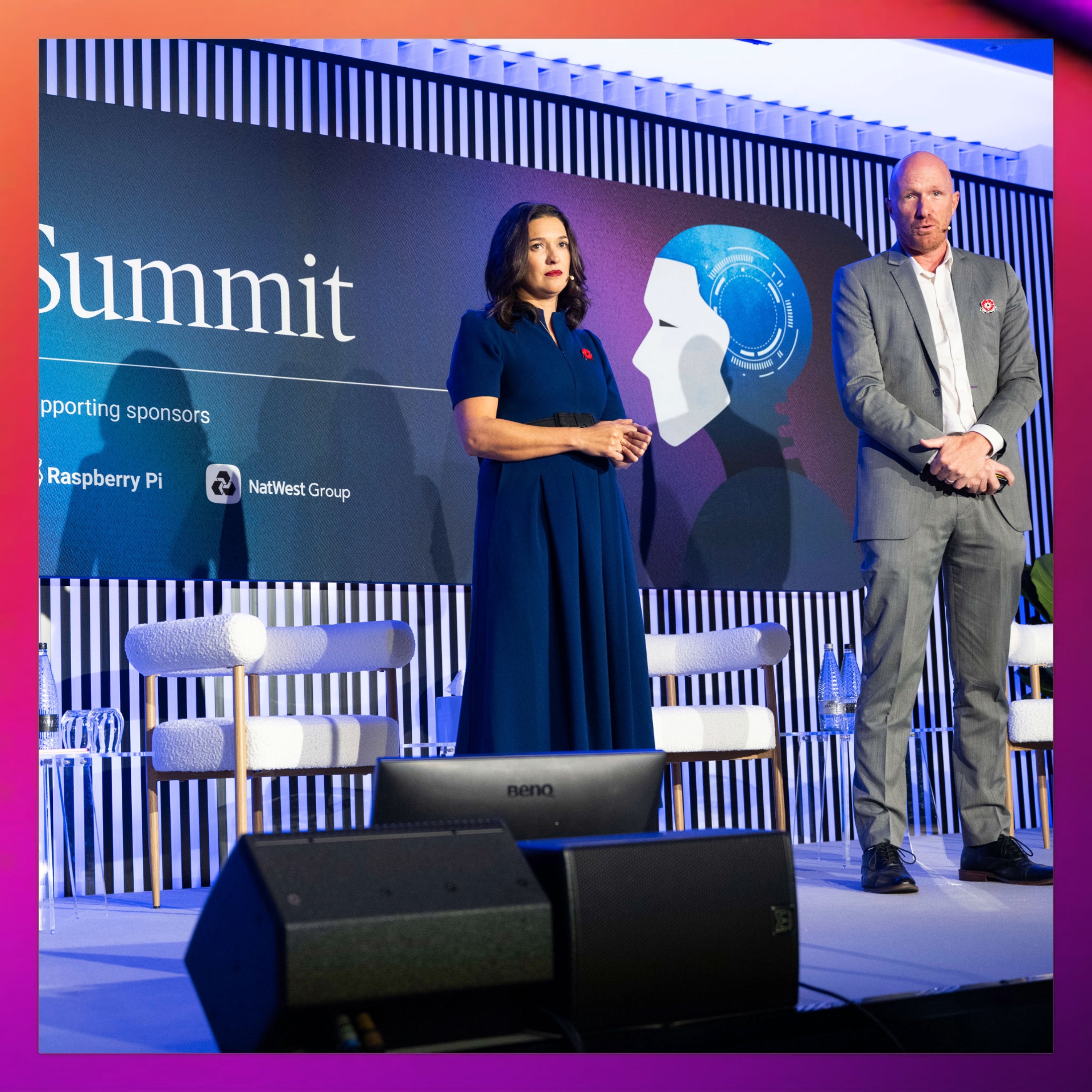
1:57And you get there, and there's just, like, it's a total zoo. Everybody's walking around with their bright green lanyards. And these things are like, you know, this shows that you are part of this NVIDIA annual kind of powwow. And everybody's running around. There's a brass band playing outside. I finally find parking. I pull in next to the only open spot I can find next to a giant cyber truck. Excellent. Because, yeah. And then I run in. Someone's buying them. they're everywhere out here by the way so then i run in i get obviously press you get floor seats very exciting and then jensen wong founder and ceo of nvidia obviously he comes out in his kind of trademark black leather jacket welcome to the stage nvidia founder and ceo jensen wong with a t-shirt cannon and everybody's like woo yeah sorry what's a t-shirt cannon literally it fires t-shirts at the audience yes it looks like a bazooka that you hold it like your waist and then you press fire and it fight like the t-shirts are like rolled up into a ball and so it's like you know cannonballs but made of t-shirt so like stat everyone's got nvidia stash yeah because everybody's like ready to like hoping that they catch a t-shirt from from jensen's i did not i did not i was not you know i already had my swag bag yeah and he's up on stage and he's like no notes two plus hours of a keynote there's not a vacant seat in the house this place is full and behind him is like i would guess like a 250 foot wide screen showing all the different things that he's excited to talk about in terms of like the latest ai chips and what this all means for the future and all this stuff so there's a mix of like pretty jargony stuff around the newest chip and also just like how it's all going to change the world and everybody's like whooping and cheering as if they're like you know whatever pick your pop star you know who are they who was there i mean the 25 000 people who are fighting for a t-shirt and you know occupying every seat like so it's basically a giant trade show you know so like it's the main the main event is at the the convention center next door or right around the corner and they're like you know there's booths set up so like there's every robotics ai thing that you can possibly imagine is on this kind of on this floor and everybody has their booths and they're trying to like do demos and blah blah so it's like a trade show so it's people who use nvidia's stuff and a lot of people trying to sell nvidia's stuff so a lot of sales people a lot of founders and CEOs and kind of, and their underlings trying to kind of basically do business.
5:05And then you have like lots of media there. Lots of people from Asia, China in particular, lots of a big Chinese contingent, which I thought was interesting. Very interesting. It's a total zoo. Because I'm picturing 25 ,000 sort of men of a certain age, like maybe between 25 and 35. Is that quite a mark? There's a lot of guys in, you know, jeans. It's like jeans, blazer, collared shirt, lanyard, talking business. You know what I mean? Okay. Not geeks. Yeah. So there's a lot of, there's a big sales contingent. There's a big geek contingent. There's actually a fair amount of women, but it's just like such an event.
5:46They take over a large part of downtown San Jose and to like, just to give you a picture of lunch. lunch you are corralled into this what they call gtc park which you have to go outside across the street and this is all kind of cordoned off and you're kind of funneled through this giant like white tent where you can pick up your kind of sandwich and in the background i hear a cover band playing amy weinehouse and i was like i've got to go see this and there they were nlx no latency experience stop i swear to you it's like you couldn't you're just like am i this is also it's all too on the nose you know what i mean where you're like oh my god oh dear fodder for the book i love it yeah so no latency experience you know like the kind of the tech jam band we use data center words and was there a lot of hero worshiping when he was on stage where people just wrapped by him yeah i mean he is i mean it is crazy he started this company in i think 93 at a denny's you know the classic like idea on a napkin denny's serving foods this is like a american denny's is like a very like i know the denny's where this was started because I grew up in San Jose.
7:15So I frequented many times. Like a fancier McDonald's? Yeah, just. Their famous dish is moons over my hammy. What are the moons? I think they're two fried eggs. Of course. Moons over my hammy. But this dude started this company. He's worth$100 billion. You know, you're kind of like, wow. And his company is like the beating heart of this whole kind of AI craze. So, yeah, so it's kind of like a whole experience and like there's a lot to kind of see and take in. But ultimately, it's just like a total zoo. You know, it's just crazy. The interesting bits are the kind of the panels around kind of climate and AI and the future of robotics and all that kind of stuff.
8:04But the kind of most people go for just like the trade show, basically, and hear what Jensen has to say. And did he say anything particularly striking this year? Were there any major announcements? They announced a deal with GM to kind of be the brains for that company's new self-driving unit. But again, a lot of these announcements are not that interesting because you're like, okay, well, GM just like, you know, shut down its previous self-driving unit crews. And you're like, well, what does this mean that they're going to be the brain? A lot of it's like, let's get a bunch of big names together and announce a big thing.
8:41But how interesting is that? The thing I found interesting was that inference, which is basically the thought process of these AIs when you ask it a question and it comes back and gives you an answer. He's like these new models that are getting much, much better at thinking and reasoning. he's like the data required to kind of like that is processes a hundred times what we thought we needed a year ago so that just gives you a sense of that kind of relates directly to how much how many how many chips you need what processing power etc etc etc so that's kind of interesting is that he's like with the evolution of these smarter and smarter models these reasoning models there's like an exponential increase in what you need in terms of data processing and power which is obviously all very good for uh nvidia's uh business our brand new geforce rtx 50 series blackwell architecture the gpu is just a beast because they always announce these advances in ships don't they they're sometimes very hard to follow yeah yeah yeah yeah yeah it's like they're speaking greek which all have quite obscure names yeah you know i was there for a couple days i may go back for one more to see some panels and whatnot but it's just a whole it's a thing you know it's a whole thing super bowl of ai of all the events like this you go to and all of the big companies do an annual event don't they yeah dream force for salesforce and all that stuff yeah who does the best one like what's the danny forts and ranking of silicon valley company events i would say i don't know if best would be the ranking ideas but i would definitely say dream force dream force is the weirdest you know because that's because mark benioff flies in you know monks and has a meditation tent and kind of has has a blessing before a guy like blowing into a conch wearing a you know a hawaiian shirt who's been flown in from hawaii and then you'll have like oh and now we have president barack obama walking in for a fireside chat and tonight metallica free concert you know like he really blows it out that's fun but i can see why that's number one but all of them are just they're basically glorified trade shows you know i mean they're just let us tell you about all the wonderful things we're doing and how we're going to change the world.
11:14So it makes GTC sound a bit tame. Oh yeah. Not having Metallica there. No exactly. Exactly. It was very striking that the Nvidia share price fell. Did you see that? By over 3 % after Jensen spoke which is quite surprising because you think with the various announcement about the chip advances and all the hype around Nvidia that things could only get better but actually it just follows a pattern doesn't it of what we've been seeing with tech stocks in the last six months yeah well i do think yeah i just think there's this this massive sell because i think the magnificent seven as they're called alphabet amazon apple microsoft meta nvidia and tesla ran up so much that they were of course they were going to correct But they're still up if you step back and look at their share price charts over the last two, three years.
12:09They're still up dramatically. I think the gain, just the gain of the Magnificent Seven over the last two years is$9 trillion. To put that into context, that's like inventing the entire listed universe of 2 ,000 companies listed on the London Stock Exchange. twice and you still have money left over like that's just the gain you know what i mean so that's like two lscs full of companies and you still have something left over so they're still like it is they they're rebasing but again i think that was kind of inevitable just given how how much they'd run out it is really interesting context to look over it look at it over those past two years but also strange maybe if you know given invidia's down 16 since the start of the year in the context of Trump taking power and all of the people in Silicon Valley who've said to us on this podcast, hey, that's a fantastic thing for tech.
13:11We're expecting a very pro-tech environment. It's going to be very different to how things were under Biden. And yet the markets are still following that corrective course and don't seem to buy that narrative. Yeah, well, because I also think, you know, markets, what they don't like is unpredictability and chaos. And that's exactly, that's all we've had. It feels like, you know, with the kind of we're tariffing this oh we're not we're gonna do this we're not you know so i just think it's also there's genuine concern about what this what these policies are going to do to the economy you know you have a lot of economists like now predicting recession or saying the chances of recession have gone up dramatically so you're kind of like in that sense it's not that surprising you can say that again there's a lot of concern over here in europe as you can imagine about about tariffs and what's happening.
13:59It's interesting to see Tesla's obviously one of those that has suffered. Despite maybe because of Musk's relationship with Trump, I don't know, but it seems like really, he's isolating people with his political affiliation with Trump. He's isolating a lot of people who would buy Tesla cars, certainly here. And I don't know if it's happening over there, but people are vandalizing cars and kind of setting Teslas on fire. And you have Pam Bondi, the Attorney General of the United States of America, talking about this publicly, saying people who are attacking Tesla assets, properties, cars, whatever, that is terrorism and will be dealt with in the most severest way possible.
14:45Terrorism? Yeah, because this is, of course, the best buddy of the President, and they don't like that very much so it's it's just a very strange time but it does feel like tesla is really suffering from the kind of elon effect in terms of sales in certain countries they've come down dramatically and they also haven't had like a new mass market like product in a long time which is just basic business as well while others have rolled out you know alternatives which are actually quite good that's quite a step up from what you were telling us a few months ago about the bumper stickers probably what they said the bumper sticker i bought this before i knew yeah yeah exactly exactly so it's a yeah it's a strange strange old time and it's not just um tesla getting some bad press obviously meta also oh yes yeah this book that's come out um from the former global public policy director a lady called sarah winn williams it's great have you not read it yet because i'm running I've been running around like a crazy person but I am absolutely going to read it yeah oh I downloaded it this morning and I've just read through the prologue it's absolutely brilliant it's it's it's really gripping um and also incredibly funny so she was at Facebook well meta between uh 2011 and 2017 yeah and yeah working on on on public policy and it's just incredibly critical of what it was like working there.
16:15I should try and dig out an extra. But there's just here we go. Most days working on policy at Facebook was way less like enacting a chapter from Machiavelli and way more like watching a bunch of 14 year olds who've been given superpowers an ungodly amount of money as they jet around the world to figure out what power has bought and brought them. And that's the story I'm here to tell. Yeah, that feels right. that feels right so the book is called careless people it's basically a memoir of her time there right yeah um and and meta is so cross about it that they've taken out a temporary injunction from a u.s arbitrator preventing sarah winn williams from doing any further promotion of the book i know she did an interview with rosamund irwin at the sunday times about it so i think they're fighting a bit of a losing battle in terms of trying to stop her promoting it and getting out meta also said the book includes quote defamatory and untrue allegations about its executives and then called it a mix of quote out of date and previously reported claims about the company and described sarah winn williams as a disgruntled former employer who was fired for poor performance and toxic behavior.
17:32So, you know, what's really, I find really interesting about all this is like, there was a time when a book like this would be all anyone was talking about out here on the West coast. It's not like, it's not a thing, but it's also kind of like, meh, it's kind of like, okay, another day, another book about Facebook another thing that kind of uncovers you know the inner workings of this gigantic machine but there's a kind of a lack of surprise and almost a lack of interest in it in terms of like the the conversations it's generating out here and I think I don't know if that's just like fatigue because there's been a lot of books written about meta but it was just like yeah the thing that struck me as especially in this like we're talking about nvidia gtc and every you know the height the ai hype machine that's sucking up all the oxygen in the room and like you have this book about meta which is parts of it seem pretty damning even though meta disagrees and says it's all untrue etc but you're kind of like it's just not it's not kind of there's not like this massive shockwave from it it's just kind of like all right let's move on kind of thing well there have been allegations in the past that the company has behaved in a certain way mark zuckerberg has been up in front of politicians on your side the atlantic about it yeah yeah there have been other books so maybe it's yeah not not that much of a surprise yeah i think if it had come out like five years ago when it was like kind of the first of its kind or one of the first of its kind and also everybody was actively hating meta and mark zuckerberg was you know on that kind of every six weeks it felt like he was testifying in front of congress like that's none of that's happening anymore you know it's just it's very strange in that like meta hasn't changed its influence has not diminished arguably it's increased especially with his kind of newfound bromance with trump but people are just kind of like yeah okay it's a reflection of the kind of time that has passed the number of these type of books that have come through just the time in the market where everybody's most interested in AI.
19:48And just, yeah, we're 20 plus years into the meta experience. And revelations about how allegedly feckless and kind of careless this company is aren't really shocking people.
20:11I'm really excited about the interview that you are going to play to me today because I feel like we spent a lot of time talking about all of the money all of the many many billions of dollars that investors are putting into AI but it seems that we can put aside this human world and all of the stuff that we've just been talking about with Meta and you've been looking at dogs and people spending money on trying to increase the life of dogs who let the dogs out yes i have so you're welcome i spoke to the the boss or the founder of a company called loyal and what they're doing is they're developing products or drugs to extend the life of your dog so one could say get ready for it that it's a perfect silicon valley dream do you see what i did there i did i mean i don't want to bring the tone down but my parents dog died oh yeah he did they're co-spaniel and oh they would have loved something like this i mean my dad said to me the other day he said when he finishes his dinner and the sum left on his plate he's looking around for the dog to give it to.
21:24Oh, dang. And he even called me for a chat the other day. Basically, this is a way of saying, I understand this. Yeah. I understand this a lot. Yeah. Yeah. So it's an interesting company. It's founded by a woman called Celine Haliwa. She's annoyingly young, very smart. And she's been at this for six, seven years now. She got the idea in 2018. She started it in 2020. And the company's raised a lot of money, like up to almost like$150 million. And their plan is, the broad idea is like come up with a way, like a pill that you would give your dog every day. And that could extend healthy lifespan, not like, you know, your crickety dog who can barely walk another year, but extend healthy lifespan of big dogs.
22:15And we can get into why it's focused on big dogs initially for at least a year. And then longer term, because there's a lot of similarities, genetic similarities in the aging process between dogs and humans, then this makes the pathway to kind of creating a similar drug for humans, for human longevity. And that is the longer term goal. But goal one is to become the first company to get a drug approved that is not for cancer, not for diabetes, not for anything related to aging, but aging itself, which is interesting. Yeah, I can't wait to hear more about it. And I would just say that like the framing of it for me is interesting because it's just there's a great obsession out here with longevity.
23:05There's billions and billions of dollars being just pumped into a whole bunch of startups, often by some of the richest people in the world, to try to kind of really, you know, hack biology and figure out a way to kind of stop or reverse aging, live forever, all that stuff. There's a lot of crazy stuff. But Celine has taken a totally different approach, and she's actually making progress, which we'll get into. I started by asking her the million dollar question, of course, which is that I'm sure all our listeners have wants to know, which is why dog longevity? Well, we're we're working on dog longevity for a few reasons.
23:45One, I'm a huge dog person. Dogs don't live long enough. Everybody knows the pain of losing a dog and watching them decline with age. it's extremely painful, especially as we started to think about dogs as more of family numbers versus as, you know, kind of more like farm animals as they were thought about, you know, decades ago. And we're also doing it because dogs are a really strong model of human aging. So if we can figure out how to extend a dog's lifespan, we can do that a lot more quickly than we can do that on humans. And it's not one-to-one, but it gives us a lot of good insight and data on what might also extend a human's healthy lifespan eventually too.
24:24So it's kind of a two for one positive sum game, so to speak. I believe this is accurate, but I feel like when, uh, well, last we spoke, one of the kind of the big kind of changes or potential changes that was going to help unlock what you're trying to do is this idea of developing a drug specifically for longevity as in other words not for cancer not for diabetes not for arthritis but like something that is the indication is aging yeah has that can you just update on like what actually where is that and have we got to that point where the fda if it is the fda saying like yes actually you can you can create a treatment for getting old yeah we've done it we've done it twice now actually all of our drugs are being developed to extend lifespan and quality of life specifically around aging and age-related diseases there's no other you know kind of classical you know you don't need to have cancer or sarcopenia or be overweight or anything like that it's just for dogs there are certain wage and eight criteria who are generally healthy to keep them generally healthy longer.
25:38That was one of the absolutely massive, massive bets we took when we started the company. And by we, I mean me, when I started the company, the Royal we, um, it's very much a team effort, but I, it was just me when loyal started and we were, we were correct. Um, but there was a path to do this. If we could just step back for a second, because you talked about human longevity obviously out here on the west coast it's a very big subject some companies raising billions and billions to kind of go after this but it does feel like there has been that big shift and i think it sounds like you guys are the first to actually get it over the line of just kind of reframing aging as a thing in and of itself that we should target yeah as far as i'm aware and there is no one else working on aging drugs just for healthy lifespan extension in dogs or in humans.
26:37Although there was actually an animal pharma company who announced that they want to work on pet lifespan also. But as far as I'm aware, they were the only company explicitly working on that. All the human companies that are working on human longevity drugs are taking mechanisms that have been shown to extend lifespan, usually in mice or worms or Some have primate data and then applying that to a human disease as a proof of concept. Some of them are closer to aging. There's one very cool company that was using a drug similar to rapamycin. Rapamycin is kind of a well-known longevity drug that's a little controversial.
27:14And they use a kind of rapamycin-like drug to show an increased resilience in elderly patients from getting a seasonal flu, right? The idea being that it's rejuvenating their immune aging. I would say that's probably the most aging-esque study that I'm aware of having been run in humans. But a lot more or a lot further away. And the relationship can be roughly skewed to how risky or complicated is the drug. So we see a lot of these epigenetic reprogramming companies or gene therapy longevity companies. They're all doing really niche or severe diseases or things where you can take stuff out of the body, change it and then put it back like blood because safety is safety risk is basically intolerable if you're trying to extend someone's lifespan versus the things that are a little bit safer maybe they're going for like bioh was looking at more like generalized or is looking at more generalized indications associated with obesity cambrian bio is doing the same thing but none of them are doing actual human lifespan extension not even the ones that have a billion dollars can we just talk about because you have three different drugs you're developing is that correct into kind of two different categories uh one category is for large dog lifespan extension so if you've ever loved a large dog you are probably very well aware that they live pretty short lives so you know a great day to live seven or eight my roddy has an expected lifespan of 10 to 12 uh a chihuahua can live 16 to 18 or even longer.
28:45And it's actually a very strong inverse correlation between dog size and lifespan. And so long story short, the thesis behind that drug is when we selectively bred dogs to be these different sizes, we inadvertently selected for a genetic pathway that causes the dog to grow very fast in puberty, but also post-skeletal maturity causes them to age faster and die sooner. Basically, big dogs have an accelerated aging disorder due to historical inbreeding for size. And so we're just shunting that down in those dogs once they're fully grown. So we have two drugs we're working on with that. And then we have our drug that will hopefully, fingers crossed, get on market first, which is for senior dog lifespan extension.
29:28So it's taking the biology of caloric restriction, caloric restriction being the most well-validated with extend lifespan and basically anything. Fasting, basically. Yeah, fasting, intermittent and fasting you know all of these things eating not a lot these are the most well-validated ways to extend lifespan and everything from a worm to a primate has actually been shown in dogs too to extend a labrador's lifespan two years um and delay onset but nobody wants to calorically restrict their dog if you've ever tried to like even delay giving your dog dinner for 30 minutes it's like very traumatic with like the big you know puppy dog eyes and so we have a just interject with a quick story about our cat, Lex Lightning, not named by me, named by our kids.
30:12That's adorable. Lex Lightning is, you know, we have one of those automated feeders and he has four feedings a day. And now we've just, we have daylight savings. So we're kind of up earlier. And so, and I think that kind of triggers his like, all right, I'm going to get fed now, but I haven't changed the hour on the automatic feeder yet. So while I'm like up making breakfast for the kids and kind of getting their lunches ready, he's like fully attacking me and my wife, like biting our legs, being like, what is going on? I need my food. and just the idea of caloric restriction the caloric restriction is a thing like i and also just in humans i i did a big series on longevity and spoke to a guy who's very into caloric restriction i think eating like 1200 calories a day or something and he's very he is biologically much younger than he actually is but also he's like i eat bean pasta and this and that and i don't eat very much and it's the first two years of this are terrible but it does kind of do something biologically yeah is the drug that you have developed basically mimicking is like kind of all gain no pain basically mimicking that kind of process yeah basically i wouldn't say it's all gain because i think there's probably things that are happening with chlorop restriction like there's theories that having less amounts of certain amino acids at least in humans might be relevant to the longevity benefits.
31:44So everyone asks me, is this just GLP-1 for dogs? And the answer is no. Because people love them. It's not a Zempick or a Wigobi. No, because people want that relationship with their pet. Like when Della, my dog, comes running up to me, I'm like, oh, it's because she loves me so much. And she does love me. But she also wants a snack. And if you take that away, it actually can be pretty sad to dog owners. What was the reception when you were like, Like amidst all of the, yes, we want, we think we can kind of crack this whole biology of aging thing and really start to add, meaningfully add years onto people's healthy lifespans.
32:23And there's all this momentum and all this excitement and all this kind of interesting new science. What was the reception for you being like, yeah, I'm going to focus on dogs. People definitely laughed in my face. Laughed in your face. Oh yeah. Oh yeah. Many, many people. Honestly, I would snicker when I said dog longevity because it's such a ridiculous phrase. It's such a Silicon Valley phrase, right? Like it feels like something that would be in the show. And I'm running around like this 25 year old, like straight from university, dropping out, being like, I'm going to work on dog longevity drugs.
33:02And longevity was certainly not as hot then as it is now. You know, it's funny. most people vast majority of people especially wealthy people want to live longer and i think they put money towards things that they feel like will increase that probability of it happening in their lifetime i'd say probably my contrarian take is going dogs first is the fastest way to develop lifespan extension drugs do tell because i don't think developing drugs not for aging is actually going to teach us that much and facilitate us developing drugs for aging, right? Your argument being that a lot of these kind of, let's call them human-focused companies, are developed because, again, around this complication of like, there's not really an indication that the FDA has said, yeah, aging is an indication you can try to treat.
34:03for most companies are kind of going through a side door and being like, well, lots of old people suffer from arthritis or diabetes or heart disease. And we're going to try to focus on that. And that is in itself improving lifespan. Yeah. And we're proving the validity of their pathway. And again, valuable work, you know, very important. But if you're developing an arthritis drug, let's stick with that metaphor, you are going to become an arthritis company. It doesn't matter where you found your compound from. It doesn't matter if your compound was discovered in mice because it made them immortal, right?
34:44Like you are now an arthritis company 10 plus years later, and you're probably getting acquired for that arthritis asset. And Lord knows the big pharmas are not going to be like, let's take this arthritis drug and develop it for longevity. Now, I think they will eventually. I think actually every major pharmaceutical company will have an aging division, just like how they have a cardiovascular division and a neurodegenerative division and all the other divisions as they do today. But you need to have one that breaks through, right? You need to have kind of that one normalization and kind of validity of the space.
35:16And then everyone else is going to come rushing in, right? Like weight loss being a classic example. Glypses are like probably a longevity drug. At least they're a longevity drug for obese people. and that the the validation that the new market that people wanted and that you could develop a drug for this has then facilitated a huge wave of resources i think vastly increasing the probability of having efficacious drugs in that space and better next next next generation i don't think that occurs if you do these one-off efforts and then but that leads to the question of like you're saying well uh you know if you're developing an arthritis drug you're going to be an arthritis company you're doing dog walk longevity how do you go how do you not just end up being a dog walk longevity company it's super risky actually it's something we think about a lot i think the big difference between doing dogs versus doing human arthritis drugs is to get a dog drug approved is four-ish years five-ish years and maybe 20 to 40 million dollars versus a human drug is seven to 10 years if you're lucky and a billion dollars or something within that range and so i mean bluntly i'm able to do it raising from non you know east coast super trad biotech firms whose whole model is build for purchase built for a big farm at a purchase and i'm able to it's able to be a founder-led company because yeah it's gonna be like probably pretty traumatic for when I'm like, cool, we have like, you know, hopefully have this like money cow or whatever of like these dog longevity drugs.
36:54And we have a multiple year head start. We're always going to do dog drugs. We're always going to do dog drugs. And then we're going to not do dog drugs. But instead of taking this 100 million or 200 million or 500 million dollars and funneling it into more dog drugs, where we know the ROI is 3x and the likelihood is 80%. let's take that half a billion dollars and light it on fire and get like halfway through a human program. You can only do that if you are a founder led company. And you can only do that if you're a longevity company at the core constitution. Everybody at Loyal all day, every day thinks about longevity.
37:28And the biology is very, very similar, right? Dogs have all the environmental impact that we do. They have a lot of the same diet that we do. They'll eat food off our dinner table and they're actually they're phylogenetically like on the evolutionary tree further away from us than mice are mice being kind of the canonical animal that all these studies are run in but because of mice's turnover rate they're actually closer to us genetically so dogs are closer to humans genetically than mice are so last year you guys raised 45 million which brings the total to 120 is that right 120 150 something like that yeah we're not ranged so where are you along the arc of spot is gonna live till he's 50 on the arc of spot living to 50 still pretty far away it's just the beginning of the curve um sorry for spot but we are hopefully knock on wood on track to get our first drug approved in about the next year or so so you're doing it But just to kind of put some meat on the bones of that, you're actually doing a clinical study right now, correct?
38:37Yes, yes. But one of the other kind of facilitating aspects of Loyal was that there was this new regulatory pathway. It's an accelerated approval pathway. So we'll be able to go to market with full safety, full manufacturing, and reasonable expectation of efficacy, which is basically showing the positive slope increase, but in a shorter time period without the mortality. It's a lot more goes into it too, but that's like kind of the short and dirty of it. And in parallel, we're running this massive thousand plus dog lifespan extension study for the five years that the drugs are market conditionally.
39:11So that study will continue running. And we're able to do that because it's such a dam. It's like the largest and longest animal health study ever run. So you don't actually have to wait for the results of that because of this new regulatory pathway. Yes. Assuming the drug is safe. Very, very safe. Yeah. what is the potential effect uh in terms of like we're talking about longevity like are we talking six months five years like what do we know we we don't know this is a short answer the longer answer is we kind of drew the line at approximately one year of lifespan extension mostly because you have to draw the line somewhere one year of healthier life you have to draw a line somewhere that you feel confident that biology supports you meeting or exceeding because if i I said three years and we only showed one year, the drugs will make it on market, even though we showed a year of lifespan extension.
40:02So about a year and we'll see what the data is. I think the quality of life improvement will actually be even more striking to dog owners, but it's harder to quantify. Right, right, right. Whereas mortality is unfortunately quite simple. stepping back like talking again more broadly about the longevity space if you had to kind of play it forward i don't know 10 years from now i mean you're i have a particular take on it but i'm sure you're talking to people day in day out and you're seeing the science like do you think we're at the start of something new and different from what has come before in terms of how we view and treat aging?
40:46100%. I think there's a couple of different things that are going to occur. I think people being able to go to their veterinarian and buy a drug to extend their dog's lifespan, they're inevitably going to ask the question, why is this for my dog and not my grandma? Right? It's that cultural normalization. Right now, longevity is in the sphere of billionaires spending millions a year to live longer and snake oil and the fountain of youth that, you know, makes people think it's not real. And so that was one of the reasons that I was so insistent that we go down this FDA approval pathway, even though I think there's a lot of supplements that would extend a dog's lifespan, was because that legitimacy, I think, is the thing the field needs perhaps more than anything.
41:34So I think that's going to be huge. And the minute it becomes trendy or even just like slightly de-risked pharma will pile in and that's what we want right because this is not like longevity is a space bigger than cardiovascular uh musculoskeletal cognitive function like it's not a one drug it's a class right it's an entire category right and there are god knows how many cancer companies there should be that many longevity companies too and so i think i don't know how long it'll take to get there but i think it will be vastly more normal um in the next five years well that was amazing and i think you've made the subject vastly more normal than i've ever i would ever expect it to be like by the end i was kind of listening going yeah sure why does it exist for my dog and not my grandma i mean that's just yeah you need to the mortality that's the line that's the bar i mean yeah exactly mortality is more simple than uh the quality life yeah how do you feel about this idea of you know taking a pill popping a pill well i told i asked her i was like uh which didn't make it into the cut but i was like you know are you ready for the backlash because you can see it coming right like say everything because and i will say this is a very like serious grown-up company she has like teams of phds designing these drugs running clinical trials, like this is a very serious effort.
43:01But the moment that you go out to the world and you say, we have figured out a way to extend the life of dogs. And, and I asked her, I was like, you know, she's, she was saying she wants this to be cheap. And this is like a one a day pill, like beef flavored pill you give your dog, but she wants it to be cheap and widely available and kind of sold through veterinarians, et cetera. And they're going to try to create a whole consumer brand around it etc but you can see the backlash silicon valley startup extends life of dogs while humans are dropping dead of all kinds of various terrible things and deprivations yes you can completely see how it feels a bit decadent when you put it like that but i can also see the demand because 100 here in britain absolutely love love love their dogs And same here.
43:53Same here. And so in a year, as she said, in a dog's life makes a massive difference. It's a big deal. I know. And a good friend of mine, he had a very big dog there who he had to put down a week before last. And it was very traumatic for the family because he's got two young kids and they've like their whole life they had this dog. And so it is in like, you know, people's attachment to these dogs. Like in San Francisco in particular, there are more dogs than children. How's that for a fact? Well, that's a very good fact. And no offense, a lot of the stuff that happens in Silicon Valley seems completely ridiculous to the outside world.
44:29When you hear about all of the money that's being spent on generative AI, you could probably do an awful lot in the global south with that money, where people are using it to develop chatbots. so yeah the other thing is like you know there's a line that a lot of people use out here it's like you know all these new technologies they start out as like you know toys of the rich or even like you know transatlantic flight used to cost something like i can't remember the number it was like fifty thousand dollars in today's money wasn't for the likes of you and i correct but you start with this thing it seems completely out there or ridiculous or not useful and then like But if what she is saying is true is that they can kind of prove this in dogs and kind of that eases the pathway into humans, you know, there's a ton of companies, as we discussed, who are working on even crazier ideas for humans.
45:24You know, something that can actually reverse your aging and stuff like that. So if this creates a pathway to doing something similar in humans and you can add a year or two of meaningful, healthy life for humans, then it will all be seen as the most genius thing ever. But you just know how these things go. The headlines write themselves when you have a Silicon Valley startup extending the life of dogs and all the sneering that will come with that. But Celine said she was ready for it. She's prepared. But that will come. But I do think it's interesting. And the only thing I would say is around dogs is that like, you know, and we've talked about it before, when you talk about AI and all the things like one of those, like a killer app would be able to talk to your dog.
46:14If a company figures out how to speak to your animal, that is a multi-billion dollar company. If we could talk to the animals. Exactly. Just imagine it. No, it's true. And I don't think it's that far away, right? If you look at what generative AI does and sucking up patterns with, I think we talked about bats, didn't we? Last time we spoke about this. The company that was kind of looking at bat sounds and translating them. Exactly. Yeah, exactly. Talking to your dog who's going to be a year older than he should be or she. Yes, exactly. So that was it. So I just felt like, you know, I had the most Silicon Valley day.
46:49It was like run down to San Jose, watch one of the richest men on the planet fire a cannon of T-shirts of like company swag onto a crowd of adoring fans in a stadium. And announce some AI chips, you know. Announce some AI chips, go see a bunch of like robot dogs and humanoid robots and self-driving cars on this like big kind of trade show floor. Then run out and do a podcast about dog life extension parked next to a Tesla Cybertruck. Yeah, you couldn't make it up. I feel like I'm having a complete opposite moment here right now in my house because we're doing something that's very non-techy. and we're growing tadpoles or frogs.
47:36So we found some frog spawn the other weekend in a pond, and we borrowed a fish tank from a neighbour and filled it up with rainwater because you can't use water from the tap because tadpoles die if they get the daurine. And they've hatched, and I thought I'd killed them initially. It was a hairy moment because they sort of grow in their eggs into little commas, and then they flopped on the bottom of the tank. but they revived and now they're swimming around we've got a tank of about 40 tadpoles in the kitchen which are on their way to becoming frogs are you gonna fry those up or what are you gonna do well the girls are just completely obsessed with them so we're watching them grow and you can see like a tiny leg growing at the back and then and then when they when they you know when they when they emerge we'll we'll put them in the in the pond in the garden maybe take them out to a local london park i love it try feeding them some dog longevity tablets exactly who knows that's like the next like you know science fiction movie yeah so half half dog half tadpole terrorizes london taking over south london parks anyway so yeah that's that's what's going on here enjoy if you go again to gtc enjoy the party oh yeah very excited very excited i hope you catch a t-shirt and we live in hope i'll come back next week with my t-shirt and i hope in the in the meantime your tadpoles don't mutate and take over your house and i'll send you a video they're very funny anyway all right well toodaloo toodaloo see you next week
Danny reports from the Nvidia GTC event. And he and Katie discuss whether some of the biggest tech companies in the US really are currently losing money. Plus, a Silicon Valley start-up, Loyal, is developing drugs to extend the lives of dogs - so just how close are they to success? It's CEO, Celine Halioua shares the latest breakthroughs and what this could mean for human longevity. (And what does this mean for Katie's tadpoles?)
Clips: Nvidia
Hosted on Acast. See acast.com/privacy for more information.