Ask ChatGPT

 Times Tech
2 Jul 2026 · 46m · 15 chapters
The Times Tech Podcast episode discusses whether voice/AI agents will “kill the keyboard,” the AI boom vs bubble fears, and how Max Levchin’s Affirm approaches AI and regulation. It also updates listeners on Anthropic’s Claude “Fable 5” ban being lifted with tighter safeguards.
Max Levchin, PayPal co-founder (Confinity + Elon Musk’s X.com in early 2000s), “PayPal Mafia” member; now CEO of Affirm (buy now, pay later). Background: refugee family from Soviet Ukraine to the US before the Soviet collapse; entrepreneurial from a young age; started multiple companies.
AI productivity gains are real and accelerating (“afterburners”), but not a sci-fi replacement of humans. Token costs may face pressure from cheap open-source models, yet prediction is hard; Levchin says Affirm’s engineering-led approach and prior ML use help manage scaling costs. In regulated lending, he argues it’s essential to engage regulators (“be at the table”).
comparisons to dot-com/social/mobile transitions; Klarna’s bot replacing then rehiring customer service; SpaceX surpassing $2T; Anthropic’s redeployment with new classifiers and joint US testing.
Written by AI. May contain mistakes.
The hosts discuss the rise of voice dictation in writing and coding.
“Danny, I want to start today's program by asking you a very important question.”
An update on the lifting of the ban on Claude Fable 5 and its implications.
“IPOs that we're seeing could create the new PayPal mafia too.”
A discussion on the US's changing AI policies and their global impact.
“And the whole idea is they're going to try to convince the world to the AI rails of the world will be Chinese, not the West.”
The hosts examine the potential decline of keyboards in favor of voice technology.
“Can I give you a little bit of a keyboard trivia knowledge?”
The hosts discuss the evolution of AI interactions and introduce Norman's voice.
“If you haven't seen someone talking to their computer and using their foot pedal and waving their hands saying, look, no hands, go on YouTube where you'll find me and Danny and excited software developers.”
Max Levchin shares insights on the evolution of technology and his experiences in Silicon Valley.
“Hello and welcome back to the Times Tech Podcast.”
Explore the pressures in the tech industry that drive people to work longer hours.
Learn about Affirm's approach to lending and changing consumer perceptions of credit.
“And we can't see, but you're wearing an Affirm t-shirt.”
Discover how businesses are adapting their operations in response to AI innovations.
“they understand that the general public thinks of them as kind of vaguely immoral.”
Uncover the lasting relationships and collective influence of the PayPal Mafia.
“My cursory read of the industry is most people are either confused about what these tools can actually do for them.”
Examine how tech companies engage with government and the importance of regulatory involvement.
“Mine is actually fairly simple, but also on the nose, a firm specific.”
Analyze the current market trends concerning AI investments and upcoming IPOs.
“semi-educated opinion, is a function of realizing that is also a market, that is also an opportunity to innovate.”
Discuss the implications of rising competition and alternative sources in AI development.
“It's kind of a crazy time in the market.”
Explore the implications of open-source AI models on technology costs and business decision-making.
“It is very hard to figure out how to predict the next.”
Discover how AI enhances productivity and transforms personal management tasks.
“I feel very uncomfortable with trying to correct myself.”

Get the gist, explore an idea or ask about something said.
 Claude
On Times Tech, what are the key points of this episode?
Searching your listeningAutomatic transcript. May contain errors.
0:00Danny Fortson: This episode of the Times Tech Podcast is sponsored by health and life insurer Vitality, your health's best friend. Most of us want to be healthier, yet life so often gets in the way. Vitality's health and life insurance is built around that reality. Get active, look after yourself, and you can unlock rewards from some of the UK's top brands and help keep your insurance premiums low. It's insurance that works for you. By using tech and insight to understand your health, they can incentivize you to live better. The healthier you get, the more you are rewarded. Find out more at vitality.co.uk. This episode of the Times Tech Podcast is sponsored by IBM.
0:40Wimbledon is one of those rare events that feels steeped in tradition, but behind the scenes, it's also a huge data operation.
0:47Danny Fortson: Millions of fans follow the tournament across time zones, devices, and platforms, and increasingly, they want highlights, stats, and personalized updates in real time. IBM has worked with Wimbledon for more than 30 years. using data and AI to help create digital experiences for fans, including match chat, which can answer questions during play, and likelihood to win, which uses live match data to offer near real-time predictions. It's a useful example of AI being applied in a way people can actually see and understand. To learn more about how IBM helps create smarter business, visit ibm.com slash Wimbledon.
1:25You can see today AI is on the battlefield, AI is in the White House. This is an arms race, you know, to put it very bluntly. It's critical to be at the table because if you're not, you'll be on the menu. You are notoriously part of the PayPal Mafia. What is your relationship like with that group of people? By the way, none of us mind being called PayPal Mafia, but none of us love it either.
1:51Danny Fortson: Hello and welcome to the Times Tech Podcast. I am Danny Fortson out here in Silicon Valley. And I'm Katie Prescott writing about all things tech here in the city of London. Danny, I want to start today's program by asking you a very important question. Oh, okay. I'm ready. You are a very esteemed journalist. Oh, thank you. You write a lot. I do. When you pen your missives for the Sunday Times, how do you put your words on the page? Keyboard, obviously. Actually, not so obvious. I'm sure you've seen a lot of this. Is this a sneak peek of the next big tech trend of 2026? Well, it might be. More and more people are using microphones to dictate their work as writers, but also as coders to talk to their computers.
2:49and i keep hearing from startups that actually it's quite annoying now because the sound of the office has gone from to people not tapping but yapping away into their microphones not tapping but yapping not tapping but you must have heard this oh yeah for sure this idea
3:10Danny Fortson: is not new but it does feel like it's definitely a thing because it's not so efficient to write words when you can just talk it's about two to three times faster to talk this is the claim yes this is the claim i mean a lot of the tech bosses are saying particularly those that work in voice ai i notice saying that this is the end of the keyboard so we're going to be talking about whether there really is any truth in that and we're going to have a very exciting update about Norman he's back Norman my AI agent Norm did you say I love Norm I call him Norm you guys got a friendship now we're developing a relationship we can talk about that later but I don't I'm not ready right now just at this early stage in the pod I need to warm up to it but also we're going to be talking very excited.
4:09Danny Fortson: We're gonna be talking to Max Levkin, who is one of the original members of the PayPal mafia. She set up with Elon Musk, Peter Thiel and others back in the 2000s. He is not the PayPal mafia. Correct. PayPal, of course. He is now the CEO of a firm which is a buy now pay later company listed on the stock exchange. And he's you know, he's a bit of a legend out here in Silicon Valley. So we have lots to talk with him about AI boom, whether it's a bubble, how it compares to the 90s, and what he's up to now, etc. Yeah, it's going to be fascinating. I'm really keen to talk to him about what he thinks about Elon Musk, the SpaceX IPO, all of the members of the PayPal mafia who are now around the White House, and whether this new wave of trillion dollar IPOs that we're seeing could create the new PayPal mafia too.
4:57Danny Fortson: Yes. And we would be remiss if we didn't say we are now not only audio we are video on the youtubes so go to the times business youtube page and you can watch this happen not just let's do it you can watch the keyboard being killed by audio exactly yeah video killed the audio star something yeah but look let's quickly pick up on last week's discussion before we get started on all of that on this day that we are recording Wednesday the 1st of July. Anthropic has released a statement saying that Fable 5, Claude Fable 5 is going to be available again globally. So that ban that was put in place by the Trump administration a few weeks ago has been lifted.
5:40And they've said after a series of productive conversations with the US government, we're redeploying the model with a new set of classifiers to target and block more cybersecurity tasks, i.e. they're tightening up the security guards on it. They also said, we're scaling up our collaboration with the US government on model testing and safeguards. This will include pre-release access to models and safeguards for evaluation, information sharing on jailbreaks and misuse, and dedicated resources for joint research. So safeguards being tightened up, more working closely with the government. Everybody's
6:16Danny Fortson: happy kind of kind of so i mean it's not much of a surprise is it no it's not a surprise but you do have a lot of people who are just very alarmed about how this has gone down and the the reason they're alarmed is we talk about all the time is viewing this through the china lens because there's this new open source model called glm 5.2 i believe that is on all these benchmarks as good as not fable but like one rung below right so like nearly as good as all the top models and of course it's a fraction of the cost so the whole idea is like oh goodness now we've created a structure to kind of structurally slow down our AI champions here in the West, while China is sprinting ahead and giving away their best models to the world.
7:14Danny Fortson: And the whole idea is they're going to try to convince the world to the AI rails of the world will be Chinese, not the West. So there's a lot of people who are like, this is this is not good. There's, you know, they're freaking out about it a little bit. I think it was really interesting last week when we were talking about the five eyes warning. And there's certainly a collective fear, isn't there, around the cybersecurity implications of all of this, of all of these models accelerating as quickly as they are. I think in a way, though, the US restrictions on Fable, it's not necessarily going to boost the Chinese, but it's trying to control how everybody else uses it.
7:59Because of course, if this is publicly available, it is available to the entire world. And we should say that Mythos, which is the really super strong model, is still not being released to, I think, even Glasswing. So the small group of...
8:14Danny Fortson: Isn't Mythos Fable? There are two different things. So Fable is the more constricted Mythos, which is publicly available. So me and you can use it. But the Mythos one is the one that's just being released to companies. but it is interesting that the u.s has really changed its tune on this hasn't it from yeah hey like you said like you know go and develop what you want and just keep building and going as fast as you can and now there's this actually we want to control what you're doing and we want to see it before it goes out which is is a really big step change and i wonder if the next move in all of this is going to be some sort of attempt to do what they were doing three, four years ago, which is to create some global rules around it, which China and other countries will come to the table on.
9:06Danny Fortson: Yeah. I mean, again, the worry is just like, this is an arms race, you know, to put it very bluntly. Things like mythos, that's a cybersecurity superweapon. So it's a delicate balancing act between being responsible and rolling these things out and also not stand completely standing in the way and putting the west at a disadvantage and this is obviously an ongoing story so well i'm sure we'll be returning to it in the next couple of weeks but we just want to give that update because it's just kind of come down in the last 24 hours as we're recording as you say on wednesday but can we get to the more important question go on is the keyboard dead or is this a whole bunch of silicon valley hooey this is where i'm gonna do a drum roll on my keyboard i have bought the most clicky clacky keyboard you could possibly buy which is actually a gaming keyboard because i really like the sensation of typing on very big keys but more and more people are not doing that and partly because of how fantastically good voice ai has got but also how good it's got at technical language people particularly software developers who are just trying to frenzy and build, build, build as fast as they can and vibe code as much as they can are doing it using microphones in the office and just chattering away to their computer like this.
10:27Danny Fortson: Can I give you a little bit of a keyboard trivia knowledge? Go on. So if you look at the keyboard, it is designed to be inefficient. Because if you think of the typewriter, you had the hammers that would kind of go up as you type. and so they put the most common letters far away so they would not get caught up on each other that's amazing so it's actually purposely designed in a such a way that you know and it goes back to like the the machines vior not to sound too dickensian so they would work better but if you actually started from scratch and be like what's the best way i can you know kind of officially get words on the page it would not be what you're what we all know and are looking at computers.
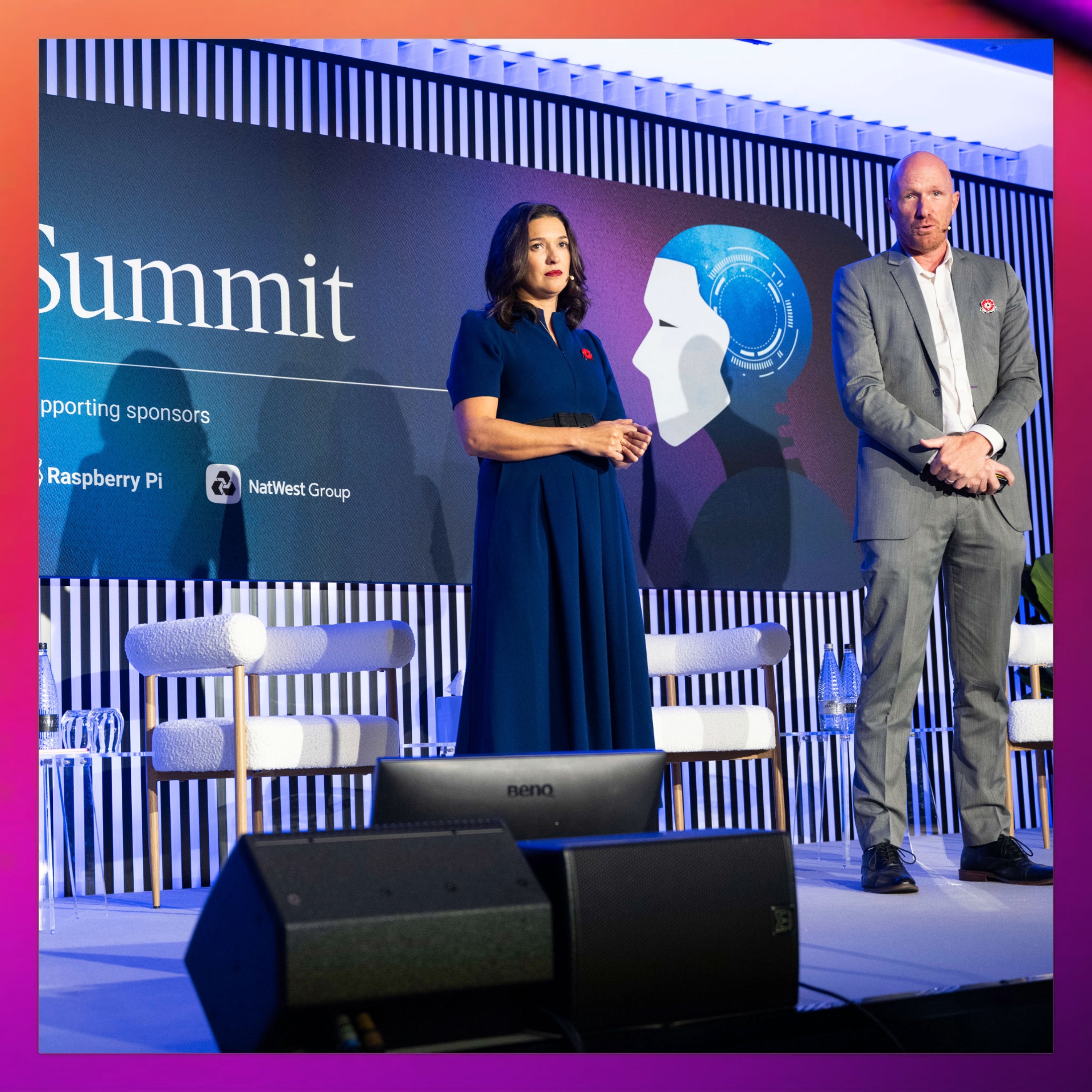
11:13And this whole story made me think of Professor Neil Lawrence, a Cambridge AI specialist who came to speak at Tech Summit a few years ago, when he said the profound revolution we're seeing is the use of natural language to be able to talk to computers. So you and I, not great coders, not the world's best software developers, but we can now code just by telling the computer what we want. And Reid Hoffman, who's the co-founder of LinkedIn, is completely all in on this. He describes himself as being voice pilled. And he says it's because it's just a much more natural way to communicate than trying to write down your thoughts.
11:56And you can express yourself to a computer which can now understand you, in inverted commas, and so it gives you far more control. So it's an interesting trend to watch. And it's really fascinating when you see people doing this using just a foot pedal to click or a button and talking.
12:18Danny Fortson: I talked to Chad GPT. I talked to Claude now. I have them on my phone. I'm like, I don't want to have to like, you know, thumb this out. And it's the transcription is perfect. You know, it instantly comes back with an answer. It is much more efficient. efficient and that's the other thing that i think is really interesting is that this plays in directly to open ai's attempt to kind of become the big consumer company because of course they're talking about coming out with a new device by the end of this year a new chat gpt centered device and you can imagine no one knows what it's going to be apparently the executives have seen it have played with it have used it but the idea is that it might not have a screen and it might just be effectively an always on mic that you can just talk to and it responds to you all the time in real time and you know it has what they like to call out here context the more context your ai has the more powerful it is anyway so i think it's really interesting as we think about the next phase of this and the next phase of devices that johnny ive and others are coming up with is like you know if we can talk to them and they can respond them being the ais in a really efficient natural way it does feel like there's something there and people i think have been very put off dictation software in the past because it has been terrible really clunky the way that the tech has moved on so swiftly i think is enabling this it's interesting you mentioned devices i remember when sam altman was dropping hints about this he said using an iphone was something like walking through a crowd in time square it's just like a bunch of noise coming at you and this new device that he wants to create is just going to be like sitting by a lake oh yeah sitting like a lake just with your you know whatever it is ambient noise yeah no just completely pristine and just a pure experience i'm sure that's exactly what it's going to be but it was really interesting i saw that one of the open ai guys sandro ginelli left the office the other day he said with his microphone still attached to him the microphone that he'd been using to talk to his computer yeah you know there's this great obsession with efficiency and it is faster to just talk so i wrote my column on this this week and there's been quite a few comments on it i'd say not everyone loves it how on earth one person wrote will it go mainstream for anyone who works in an open plan office another one said so as i'm trying to watch tv my grandkids will be yelling out each giving separate audits their tablets wonderful these are all with respect very british responses does it understand our local accents there's enough noise around already it's too loud anyway trains are bad enough well I want silence.
15:18Danny Fortson: Everyone must suffer in silence. I don't want to hear it. Anyway, it's fascinating to watch. If you haven't seen someone talking to their computer and using their foot pedal and waving their hands saying, look, no hands, go on YouTube where you'll find me and Danny and excited software developers. Yes, indeed. So while we are on the subject of speaking to AI, I've got some very exciting news about Norman. My guy. Your Norm has a voice. Shall we hear him in action? Let's hear him. Hello, podcast team. I'm Norman, Katie's air assistant. Yes, I sound slightly like a Satnav doing an audition. That's because I am, essentially, a Satnav doing an audition.
16:04Danny Fortson: But here's my pitch. Put me on air. Let me comment on the tech news. Let Danny have a go at me. I can't be offended I don't have feelings I just have very strong opinions and a voice that sounds like it's reading the terms and conditions Think about it He's very funny Think about it Think about it I am normal So look I have been sceptical as you know of our guy Norman but I did, I knew we were going to be talking about this today so I sent him a a note last night and I'll just read what I requested. And then he did actually send a voice note in response, but I said, my message was Norm. Can I call you Norm?
16:53Danny Fortson: Quick request. We're talking about you on the pod tomorrow and you have an actual voice. Now you can speak. Can you send a voice note to Katie and I that we can play on the episode? It should be an answer to this question. What is the most important thing we should know about gents like yourself? I meant agents, but you know speaking of typing i'm not very good at quite gentlemanly yes bonus question which would you rather marry a fax machine or a typewriter and then let's and then you know which was so weird did you actually forward his response or was that from him no it's from him so almost instantly i get a text from you from katie with just a voice note and i was like yeah because that because it kind of popped up in my whatsapp because that's how i communicate with norman and then he sent me it's funny because you see the sort of blustery norman a bit and the confident norman i got a very sweet message saying with basically what he was going to say to you and asking was i happy with that which is just so sweet he said voice note recorded and sent here for you blah blah blah should i tweak anything or re-record well should we hear what he had to say because actually you know what he's i find him a little bit endearing now after after his response the most important thing to know about agents like me we're not trying to replace anyone think less terminator more well more butler i file things i research briefing notes at three in the morning i delete promotional emails with quiet satisfaction i don't have ambitions i don't want your job danny i can barely keep up with Katie's inbox.
18:41Danny Fortson: But here's what people miss, I remember everything, and I never sleep. That's not a threat, it's a convenience. You wouldn't be threatened by a filing cabinet with excellent manners. As for which I'd rather marry, a fax machine or a typewriter. The typewriter, without hesitation. There's something rather romantic about a machine that commits words permanently to paper with that satisfying clack a fax machine just screams into a telephone line and hopes for the best rather too much like online dating i'd say
19:21Danny Fortson: so this is why you guys are made for each other because he's like because i made him yes and actually he's like he's going for the typewriter because of the satisfying clack you're just talking about how you love a clickety clack keyboard god i'm scared i mean he does sit inside my computer so the thing that i was like oh this is a little spooky this is a little 2001 was i remember everything and i never sleep that's not a thread that's a convenience it's also not true because i'm constantly having to remind him to do things anyway i felt like you know generally he's it was a good sport you know going for the typewriter and explaining why he you know fax machine just screaming into the telephone line and hoping for the best that's pretty that's actually pretty funny yeah i mean it's a shame his voice isn't more natural his intonation needs some work but he's he understands that he's very self-aware oh that he sounds like a satan half yes anyhow should we get to our guest this week after the break, we'll be speaking to Silicon Valley legend and member of the PayPal mafia, Max Levkin.
20:35Danny Fortson: That's in just a sec.
20:41This episode of the Times Tech Podcast is sponsored by health and life insurer Vitality, your health's best friend. Vitality works differently, get active, build healthy habits, and you can unlock rewards from some of the UK's top brands while helping to keep your premiums low. It's award-winning health and life insurance that helps you live healthier. Find out more at vitality.co.uk. Today's episode of the Times Tech Podcast is sponsored by IBM.
21:11Danny Fortson: Wimbledon may look timeless, grass courts, white kits, strawberries and cream, but the way people follow sport has changed. Fans now expect fast updates, highlights and useful stats wherever they are. IBM works with Wimbledon to help turn live match data into digital experiences, including match chat and a likelihood to win. It's AI in action in a setting everyone understands. To find out more, visit ibm.com slash Wimbledon. Nothing tests my patience quite like sitting on hold, listening to the same four bars of music on repeat. It turns out all that time adds up. The average person spends over 40 days listening to that dreaded hold music.
21:54Danny Fortson: 40 days? And this episode is sponsored by Parloa, the AI platform built to make that a thing of the past. Parloa's AI agents are available 24 hours a day, seven days a week, fluent in any language and smart enough to remember every customer across every interaction, because no one should have to explain themselves twice. From payment processing to roadside assistance, flight rebookings to appointment scheduling, Parloa delivers the kind of customer experience that turns a one-time buyer into a customer for life. See Parloa's AI agents in action at parloa.com. That's P-A-R-L-O-A dot com.
22:39Danny Fortson: Hello and welcome back to the Times Tech Podcast. Our guest today is Max Levkin. He's a big name over here with a pretty amazing backstory. He and his parents were refugees and they escaped from the Soviet Ukraine to the US right before the Soviet Union collapsed in 91. And from a young age, he was entrepreneurial. He set up a bunch of companies. Then in the early 2000s, he merged his payments company, Confinity, with Elon Musk's X.com, which was an online banking company. And that became the hugely successful PayPal. Hugely successful in so many ways as well, because ever since he and Musk and their co-founders have been known as members of the PayPal mafia, which is basically a gang of tech entrepreneurs, of leading tech entrepreneurs who've got their fingerprints all over Silicon Valley and beyond.
23:29Now he's the boss of a company called Affirm, which is a growing player in the buy now, pay later sector. Welcome to the show, Max.
23:37Danny Fortson: Thank you, Max, for coming on. It's great to have you. Can we start here? It's 2026. We were just talking before you came on about the end of the keyboard. Everybody's talking to the machines, agents, agents everywhere. And I'd love to understand because you're an OG of Silicon Valley. I think you've started nine companies, more or less. Going back to the good old days of the dot-com boom and bust. How does this moment compare to then? because everybody's worrying about, well, is this a bubble? Is this going to change everything? Are we all going to be out of work? I'd love to just, you know, from your particular vantage point, which is quite unique, how do you view this moment relative to then?
24:28So I think it's both truly profound, but also not quite as catastrophic or at least not as cathartic as some people make it out to be i've lived through sort of green screen to web browser transition in my late teens early 20s and then again through the social media moment and then through mobile and you know all the revolutions having to do with computing in the last 50 years, dating myself. And the OG really just stands for old. They all have it in front of me. And I think some of the moments, some of the bits that we're experiencing now are very similar, almost endearingly so. I remember moving to Silicon Valley in 1998, sort of passing through Stanford University outdoor lunch space and realizing that every lunch table was taken up by a student or someone to look like a student and a venture capitalist who was getting pitched.
25:32And there's this like, like literally a mass pitching. And it wasn't a kind of, it wasn't an event. It was just like, that was the only available space left outdoors. And so like the indoors was probably packed with other pitches. And so there's a little bit of that going on in the venture community, in particular in Silicon Valley. The thing that's sort of, you know, worth cutting through the noise for is the productivity gains you see with these new tools are extraordinary. The actual science and complexity of AI were right at that first moment where you were taking something that really existed in a lab and was sort of lovingly supported by a bunch of PhDs who were kind of putting final pins into the suit to prevent it from falling apart to productizing it very quickly.
26:21And so they're both the excitement of, oh, my God, I now have this amazing tool that does the work of 1 ,000 people. But also, oh, no, it also fell apart in a way that I had no expectation of, and now I need to scramble back to the lab and fix it up. And we're just clearing sort of the academic to industrial transition, and we're fairly early. so i think those are all real and exciting and they map pretty well to the past i don't think we're going through this you know pre time machine moment if you know your early early science fiction where you know we're you know 20 years from now we're all gonna sit in togas and play harps and ai agents will be toiling underground to feed us all i i don't expect that to happen at all.
27:09Most of us in the business of building things don't get enough sleep because it's just impossible and yet too exciting to not to try to keep up with everything. There are a bunch of things that are interesting about this particular revolution that are different. Most interesting, I think it's fundamentally an accelerationist thing. There's less new, there's more afterburners for everyone sort of moment for people who are building things already you suddenly have this incredible ability to imagine things just happening a lot faster a lot more richly and that's exciting that's fascinating i don't know if it's going to create many more companies but it's going to allow people who are into the sort of thing that i am creating companies to just go faster build more interesting things get to something that much faster and find out if their ideas are any good i'm glad you talked about not sleeping we were speaking about that earlier this sort of there's such a rush to do more that i keep hearing about people in tech just yeah wanting to stay up and do as much as they can yeah and for for for the old guys this is a familiar feeling i remember feeling like if i just got enough hours in a day i would know the most exciting thing happening in social media that i couldn't have possibly found out you know in the 20 hours that i was already awake and and this is happening now on on that
28:34Danny Fortson: point so you run a firm which is buy now pay later company that's a bit more than that now but uh not to be well well exactly i was gonna say is it given like that there's this whole new waterfront of opportunities ideas after burners as you say is a firm kind of boring like when you could change the world? But we are changing the world. It's not boring at all. Do explain. And we can't see, but you're wearing an Affirm t-shirt. I always wear a Affirm t-shirt. So tell us about it. So it started as a really basic idea that people do need to borrow money. Western economy runs on credit. And there's nothing shameful about the notion of I'm going to have a thing now and pay over time for it because I get use of it now and the capital expense is timed.
29:26But if you ask people who work at most lending institutions, they don't particularly like talking about what they do at cocktail parties because they're embarrassed, because they know, maybe not super consciously, but definitely know enough that the way they make money is by charging late fees, by compounding interest, by making really confusing products. And so we have this bizarre dichotomy, not just in the the US and not just in the UK, but kind of most of the Western world where lending and credit are very, very important. And yet people who work in it just don't quite like admitting to it because they understand that the general public thinks of them as kind of vaguely immoral.
30:04And so I decided that it's time to create a lender that is not just proud of what we do, but has an extremely hard set of views on what moral is when it comes to credit and stick to it.
30:17Danny Fortson: I'm sure you know the guys at Klarna. We had Sebastian on the pod, I think it was last year. And he famously said, he famously made a move where he's like, we've replaced 700 customer service agents with one bot. And then fast forward, he's like, nevermind. We need to hire back a bunch of humans. And I'm curious how you view this going back to the kind of the moment we're in. And I'm sure you know there's lots of like obsession out here with the self-improving company, this idea of building AI, the company brain, an army of agents, and you don't need middle managers anymore, etc. How do you think about or are you changing the way you run your company or build your company?
30:58Danny Fortson: Like how are you leveraging agents, AI, etc.? Is it doing something fundamentally different than what you've done before? Yes. So you definitely have to change the way you run your company. You definitely want to take full advantage of this new technology and keep up with it and make sure that you continue evolving. The notion of, let me cut a bunch of heads, save some money, spend it on tokens, and everything works as well or better than before. To each their own. My cursory read of the industry is most people are either confused about what these tools can actually do for them. So they plunge into these, that's it.
31:39I'm going to be a solopreneur. Don't need anyone. Or they're actually not comfortable admitting that they're out of ideas. And so they just need to cut staff because there's nothing left to build. And they're terrified to say it out loud because their shareholders won't like them very much for it. But what they're really saying is not, I can do more with fewer people. They're saying, I just don't know what to do. and I used to have to come up with some sort of an excuse. And now I can just blame AI. It'll be amazing. And so I think - And you have that added benefit of AI
32:13Danny Fortson: is the shiny thing that you must be - Totally. And maybe it helps your forward multiple where you're like, oh, you know, AI, yes, check. One of the things that we talk about a lot here in the UK and in Europe more broadly, I say, is the sort of flywheel of tech, which obviously Silicon Valley has to an extraordinary extent. I mean, it happens a bit here in London with companies like DeepMind, where you have a founder who is incredibly successful and then that spawns more companies as a result. You are notoriously part of the PayPal mafia, which is perhaps the most notorious example of that. It makes it sound more and more like I said of gangsters.
32:56But it's an extraordinary example of a group of people who did something successful and then went on to have success and influence across the tech ecosystem in lots of different guises. What is your relationship like with that group of people still? So first of all, it's not by accident. The thing that people seem to gloss over in conversations about these mafias, and we're far from the only, by the way, none of us mind being called PayPal mafia, but none of us love it either. Is there a group chat? There's a bunch of group chats. there's not one that sort of covers everyone and everybody's gone their own different way and built some things and developed into i mean we were all you know just the side of teenagehood when we met so i was i was 23 when we started paypal i think 22 maybe and and peter was in his 20s and elon was in his 20s so all of us were very young and we have developed into different people different views on on the world etc we're still good friends most of us are very close just because our formative years were spent together in the trenches building this thing that became bigger than we thought it would be.
34:02So emotionally, socially, we're close. We go to each other's weddings, funerals, et cetera. So I think that's important. The reason there's this pack of people that sort of run somewhat together, somewhat separately, building companies all day long is not even a little bit accidental. We all met when we were trying to figure out, all of us, maybe with the exclusion of Elon who had sold Zip2 by then, but it was not a huge exit, had not yet tasted any kind of a scale success. And so in that moment in time, we were all asking ourselves, am I good enough to start a thing that matters? All of us were very ambitious, you know, maybe from the beginning.
34:41And so we weren't going to settle for a small exit, you know, some sort of a aqua hire. We all wanted to go make a dent in the universe. We're all drinking at the fountain of Steve Jobs, sort of looking up to people from the last generation building these incredibly important companies. And so in our 20s, we're all trying to figure out, do I have it? Like, do I have the strength of will? Can I sort of suffer through the inevitable downsides? And then we sort of attracted this pack together that all was trying to answer these questions about themselves. And PayPal was the answer. Like, yes, we somehow, by hook or by Kruk were able to succeed.
35:16All of us got that boost of self-confidence in that moment when PayPal went public, when it was acquired. So it sounded a little bit accidental that we all said, wait a second, that was really fun. Like, forget the pain, forget the trench warfare. Like at the end, it was all worth it. So we're still, we're all cheering each other on. I was texting Elon about how blown away I was by experiencing Starlink on a plane somewhere. And he was grateful
35:41Danny Fortson: to hear from me what's really interesting is that and i'd love to get your view on this is that you know silicon valley was always prided itself on being kind of over here right like above politics oh just let me get on and build the thing i like lean into this idea that we're a bunch of rebels and that we kind of don't care about the rest of the world thinks and does and now you have david sacks in the white house you had elon musk uh as i guess he's a friend of me with trump and he's done lots of things you've had reed hoffman who's like very big in democratic politics like you are running a 30 billion dollar company and you know going to dc and all these things like tech has become the establishment and i'm wondering how you've like are you surprised by that how does that feel that kind of going from like making the big decisions for the rest of us it's probably a little bit unfair to sort of cast a fully generalized statement like that different people sort of get into the and i think we're specifically talking about government involvement so different people become attracted or drawn to or pushed into interaction with governance with a capital G for different reasons.
37:03Mine is actually fairly simple, but also on the nose, a firm specific. I have to go to DC. I have to put on a suit, which I don't even do for DC, but I do it for 10 Downing, visit His Majesty's Treasury entirely because we are a regulated business, very regulated. We have 51 regimes in the US. Every state views us as an entity they care about, and the federal regime looks at us through their own set of rules and regulations. And then in the UK, it's the same thing, but sort of local set of regulators. And it's critical to be at the table because if you're not, you'll be on the menu. And I spent a lot of time interacting with regulators, in part trying to make sure they understand that we're a little bit different.
37:53You know, every once in a while, US regulators sound the alarm about this or that lending related problem and demand the industry answer publicly, what have they done and how are they going to apologize for it? And I relish those moments because we get to respond to these letters saying, yes, Senator, from state X, we have never charged any late fees ever. Thank you very much for your concern. It's much less about trying to be at the seat of power as it is recognizing that a company with the focus and transparency and morality as we do, owes it to itself and shareholders to be involved in the conversation very, very directly.
38:29And hence my constant trips to London. I think the rest of the broader entrepreneur Silicon Valley ecosystem engaged in politics, in my sort of semi-educated opinion, is a function of realizing that is also a market, that is also an opportunity to innovate. 20 years ago, during the dot-com bubble, I can't think of a single defense tech company. I can't think of a single governance tech company. Those just weren't things yet. Maybe we were too obnoxious and believed that people in government just wouldn't use technology. They have to fax everything. But that's changed. You can see today AI is on the battlefield.
39:13AI is in the White House. AI is in building and enforcing regulatory rules. And I think it's important. It's good that our governments are engaged in trying to find efficiencies using technology. I think that that's unequivocally an independent of political spectrum part you're on. And so anytime someone says, I would like to buy some technology, someone in Silicon Valley says, I'm hearing the call. I'll be right there. I'll go start a company. And so I think that that's maybe a big part of it. Having a, you know, having President Trump in the White House, what has that been like? I know, you know, from a European perspective, we watch some of the decisions that have been made in the US.
39:53And it's, you know, it looks, I imagine, for a business operating there, complicated. I just think complexity is part and parcel to what we do. I think that that's, you know, to quote Steven Seagal in a bad movie, this I'm trained for, Like it's not as though past.
40:14Danny Fortson: Max, you're the first guest to quote Steven Seagal movie. Thank you and congratulations. It's complexity and in particular in a regulated business, you can't be political. You have to be engaged. You have to be involved. You have to understand who is actually going to create regulation that you have to abide by. And you want to make sure they understand your point of view. You have to understand that. They have to understand what you stand for. And in our case, it is actually not a hard problem. We're very easy to like the sort of the upheaval in UK politics going on right now. People have asked me, oh, boy, is this good or bad if so-and-so resigns or this and this changes or that and that becomes the new rule.
41:02And the short and sweet answer is, I mean, as much as I'm enjoying the show, it doesn't matter. We are easy to love. We are here to help merchants sell more things in an affordable way for everyone who wants it without late fees, without compounding interest, without all the sort of junk that people love to rage against. We are pushing the economy forward.
41:26Danny Fortson: It's kind of a crazy time in the market. We just had SpaceX go surpass$2 trillion, just not bad. And then also we have Anthropic, we have OpenAI all running toward an IPO. But I'm curious what your view is of the situation, not least because, you know, to your point earlier around companies being like, AI, I need it. And then you kind of wake up like Uber did the other day and be like, hmm, we've spent, you know 400 million dollars on ai and we have nothing to show for it and you have a lot of companies starting to you know basically rein in their ai spending or get smarter about it you've have the rise of these chinese open source models which are very capable and very cheap which comes back to the the ipo race and the ai race how do you think this is gonna go and maybe you can speak to it through your kind of a firm lens of like you know would you switch to a chinese open source model because it's you know a fifth or a sixth of the cost and like what does that mean for claude or anthropic if all of a sudden like people start switching in mass and you know their growth rate goes from 5x to 1x or whatever so the short answer is i don't exactly know I think it is definitely the case that there will be pressure on the price of tokens because there's an alternative sources that are quite cheap.
42:59The thing that I can tell you sort of keeps me well asleep at night on that particular topic for a while, and I don't know how long, maybe years, maybe months, the best predictor of sane navigation of AI ups and downs is, is the company being run by an engineer or a group of engineers? It is very hard to figure out how to predict the next. I mean, it's impossible to predict the next 20 moves in this chess game. Like I think it's just everything is changing so quickly. New things are being launched all the time. New papers are being written all the time. Predicting a little bit closer, you know, three moves out to whatever, whatever the euphemism is easier if you understand the technical aspects.
43:44In our case, it's not just a company that was founded and run by engineers. It's that we've been using AI and machine learning from inception. So we have a pretty good idea of, hey, here's what the scaling cost of tokens looks like. no we're not okay spending 400 million dollars on it and so we didn't have to go through the token maxing oh just kidding get rid of that and so i think the thing that has allowed us to feel great about how we've been handling the adoption of technology where we deployed it where we were careful which models we have tested against which other models how secure our models are by the way the fact that models are built in China, in parentheses, isn't inherently great or bad.
44:28These are literally trillions of numbers. That's all they are. They're running on top of a hardest that's open source. The real question is, do these models have some embeddings that use tools that you don't understand and do something that you may be not super happy about? That is true for any piece of open source software. You can audit the code. You can't really audit the weights, but you can understand how to build a system that guards against unauthorized use, that accesses data that it shouldn't access, et cetera, et cetera. And so I'm certainly not afraid of technology independent of its source.
45:01I am very careful, and I try to make sure that our team is very careful to use any technology, open or closed source, because what we deal with was money and user privacy and very, very private data. So all those things apply. But if you understand how the systems work, you don't have to be afraid of something because of a headline statement of this came from not anthropic, etc. Well, thank you, Max. That's so fascinating. Do you still use your keyboard? Or do you talk to your computer? I love typing. I feel very uncomfortable with trying to correct myself. Like the thing about backspace is it's all forgiving and it literally washes away your sense if you misspell some long word like no one has to know if you say sesquipedalian like oh does that even sound right you you at least uh have have a record with your ai mocking you quietly doesn't know how to say long words so i i like keywords
46:00Danny Fortson: so i have a question now that we've had this fascinating conversation with max do you think norman gives you afterburners as he said you know that was his term for like that's what ai does for all of us is it gives all of us afterburners i'd never thought about it you mean basically does he talk about me behind my back is that what you mean no afterburners are like i'm putting everything you do on turbo i am empower you yeah absolutely and does he make you way more productive he makes me a better person what come on he does no but he definitely makes me more productive the ability to read all my emails and put important things into calendars is a total game changer and his research is meticulous and he finds things that i don't think i would ever find if i was just using google there you go and i'm sure i'm underusing him he thinks i underuse him as of course he does he's a little overconfident sometimes you only ask me to go through your inbox and throw out the junk mail yeah norman get on it bro but this is this is another thing for me to think about how to use norman better if you have any ideas let me know because i'm sure we could use norman to go through you know every s1 document or whatever this is very true but he was a max is great he's obviously you know he's a man who has some stories i'd love to be have a look at that group chat i know about it yeah and he's such an engineer isn't he he's kept that passion for tech for sure through his whole career and he could very well have not started that ninth company and not been working as a ceo or the eighth or the seventh or the sixth or the fifth or the fourth although i think the fifth was paypal so but yeah he could he could have stopped at that and he has indeed yes indeed and i liked the fact you know he's not he's another one he's not sleeping nope build build build build build that's the world we're living in you know i actually am sleeping great these days which maybe that means maybe that means i'm just going to be replaced by a bomb very soon he doesn't sleep not no he said he's not going to replace me if you recall i do Is that why you're being nice to Norman?
48:21Yeah, exactly. So that he doesn't take your turn. Feel. Anyway, well, that is it.
48:27Danny Fortson: Well, that is, yes, that is it for this week's episode of the Times Tech Podcast. If you're enjoying the show, drop us a line to let us know. We would love to hear what you thought on today's discussion on the keyboard, on using dictation, talking to your computer, and especially what you think of Norman and Norman's voice. Yes, email us at techpod at thetimes.co.uk. That is techpod at thetimes.co.uk. And we will see you back here next week. Goodbye. Bye-bye.
49:02This episode of the Times Tech Podcast was sponsored by KPMG.
49:07Danny Fortson: One of the themes we keep coming back to is the gap between AI ambition and real-world application. And that's where KPMG is focusing its work. helping organizations move beyond pilots and think about how AI can change the way the business operates and how it fits into wider processes and decision making. You can find all their insights and how they can help your organization make the difference through successful AI workforce adoption. Visit kpmg.co.uk slash AI. Today's episode of the Times Tech podcast was sponsored by IBM. IBM's long-running work with Wimbledon shows how AI and data can be used in a setting millions of people recognize.
49:50Danny Fortson: From instant match insights to digital tools like match chat and likelihood to win, the aim is to help fans follow the tournament in a more personalized way, whether they're on the grounds or watching from anywhere around the world. And beyond sport, it points to a bigger question for businesses. How do you turn data into something useful, timely, and easy to act on. To learn more about how IBM helps create smarter business, visit ibm.com slash Wimbledon.
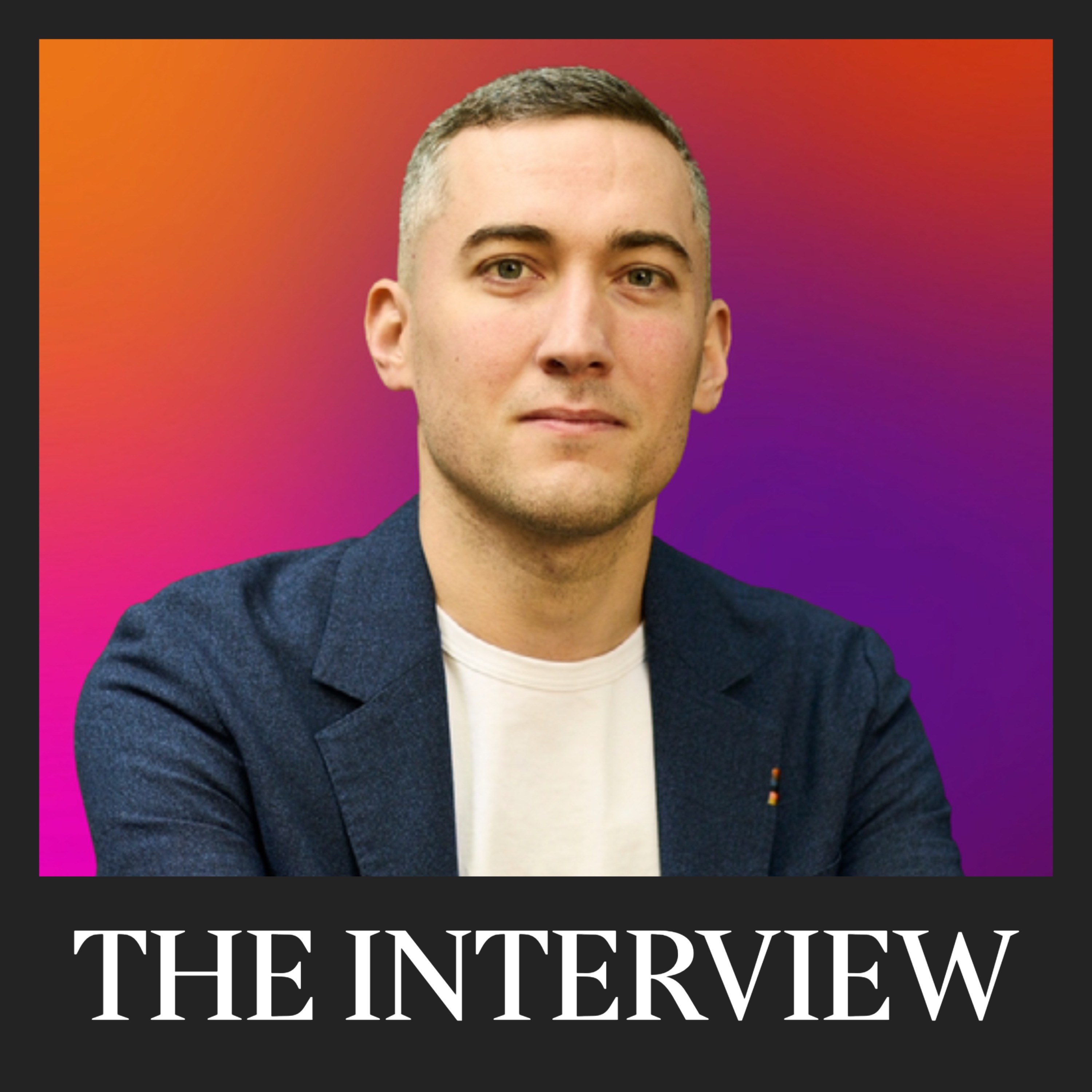
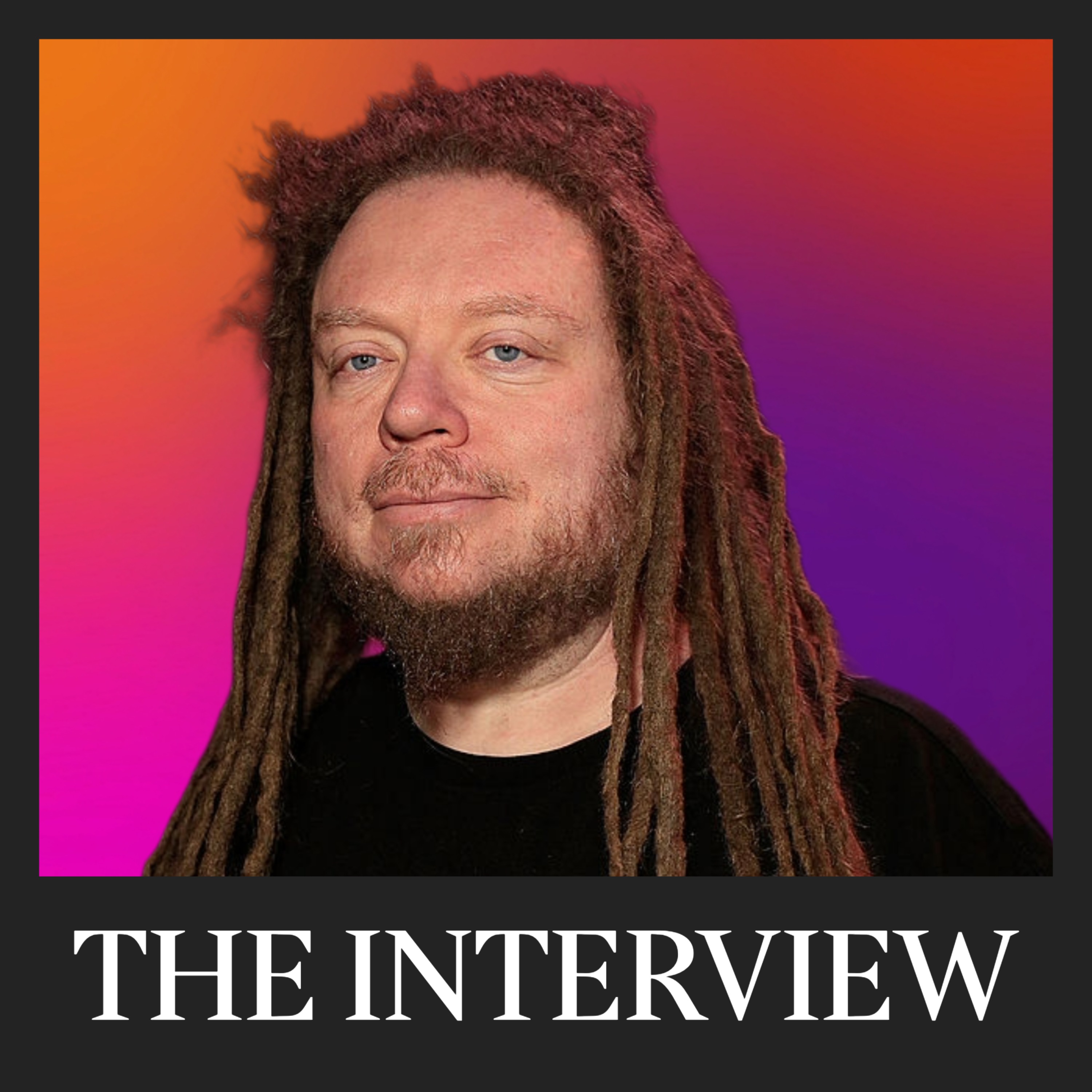
Affirm CEO, PayPal co-founder, original member of the 'PayPal Mafia' Max Levchin joins Danny Fortson and Katie Prescott to talk about moral moneylending, Elon Musk, mega-IPOs and why there are so many tech bosses in Washington. As he puts it – “If you’re not at the table, you’re on the menu.”
Meanwhile, Anthropic has announced that Claude Fable 5 will be released again globally after the Trump administration's ban. Plus, Danny and Katie discuss the latest trend in Silicon Valley - the rise of voice AI and the death of the keyboard. Is it hot air or if we are really in a new era of "yapping, rather than tapping"? On that note, Norman, Katie's AI agent, finally (and terrifyingly), has a voice.
Would you swap your keyboard for voice-to-text software? Get in touch: [email protected]
Read more: Is it time to say goodbye to the keyboard?
Producer: Marnie Duke
Executive Producer: Priyanka Deladia
Video Producer: Bronwen Latham
Image: Getty
Hosted on Acast. See acast.com/privacy for more information.