Ask ChatGPT


Written by AI. May contain mistakes.

Get the gist, explore an idea or ask about something said.
 Claude
On Times Tech, what are the key points of this episode?
Searching your listeningAutomatic transcript. May contain errors.
0:02Before we start, do you know that today is a historic day? Why? I don't know if you noticed. My background is a little bit different because I'm now doing this from a standing desk. You are taller and your pictures are now below your shoulders. It's new. It's a little disconcerting. It's kind of crazy. But, you know, we're going to try it. We're going to try. I'm going to try to stand here for the next 45 minutes and just see how it goes. Now you told me that as a viewer into your study, you do look more like a giant than usual because your head is kind of pushing at the ceiling. It's always a trick to sell new houses.
0:41It's a power move. Yeah, they put very small sofas in them to make the rooms look bigger. Hello and welcome to the Times Tech Podcast with me, Dani Fortson. Dani in the Valley, Silicon Valley, obviously. And me, Katie Prescott. Katie in the city, the city of London. So Katie, this week we're talking about a lot of stuff. We're talking about jobs, AI. and money all the important things yes exactly answering that question about whether ai is after our jobs with actual research to back it up which is rare for this question this existential question about what ai will do to our jobs but speaking of which here in london that has been a big theme because tiktok recently announced cuts to staffing here or planned cuts partly because of AI.
1:31And we're going to talk more on that in a little bit. But our big interview today is one that I've done with Steve Hare, who is the boss of Sage, the UK's only FTSE 100 software company. It is astonishing. We do not have many listed tech companies in London. I know I say that a lot, but it's true. We've got one on the podcast today. My discussion with Steve comes at a very interesting time, especially because yet another European business, Klarna. And friend of the pod. And friend of the pod. It's coming in your direction. they're going to wall street for their ipo although i have to say the press release announcing that the ipo did start london so you know comms are still here uh yeah our friend sebastian we should put a yeah a link to that interview in the show notes so people can go check that out in full if they would like but before we get to that there's as ever lots of techniques going on, starting with Google.
2:27In the US, a judge has ruled that Google will not have to sell its Chrome browser or Android. A federal judge affirmed last year that Google holds an illegal monopoly in search. And we've all been waiting to see how that's going to be remedied. And this really was the news we were all waiting for, this idea that Google might have to sell Chrome, but overnight, well, overnight here, the judge ruled they wouldn't have to. And that That wasn't the punchline that many had expected. I mean, Google's obviously very pleased with that after all of these years fighting the case, but investors are as well.
3:01I mean, if you look at the share price bounce, it was up more than 8 % when I last looked on Wednesday when we're recording this. Astonishing news, clearly one that everyone's very excited about, but it isn't a total clean slate. The ruling means that it has to make some of its search data available to some competitors and it can't sign exclusive deals tying Chrome Search, Google Assistant, or its Gemini app. And that probably crushes the dreams of another friend of the pod, Arvind Srinivas, who's just recently with us, just a couple weeks ago. He's the CEO of Perplexity AI. And you may remember he very cheekily made an offer to buy Chrome for$34 billion.
3:42As you do, even though it wasn't for sale. As one does. But obviously that's not going to happen now. But if you missed that episode a few weeks ago, maybe we should put that link in the description too just so people can check out you know dip into the whole back catalog but he yeah he seemed pretty serious about it yes indeed and you know and again another one who thought who thought this could really happen yeah google search lives to lives to search another day indeed and i will the only thing i would say is like it feels like anytime these antitrust cases happen we all get really excited we all write these big stories and kind of think deep thoughts and talk to experts and blah, blah, blah, blah, blah.
4:21And it always, always ends up being a damp squib. Because all these companies have like the best lawyers, they drag it out for years. And it was like the classic case of Microsoft, like, yep, you're a monopoly. And then nothing really happened. And it's that time, though, that's the problem as well. It is the fact that it drags on for years, and then tech changes. And you just feel all the time that regulators are scrabbling to keep up with this and so this judgment was all going on while the future of search is in jeopardy which you've written about a lot and everyone's pivoting to using chatbots which throws up huge existential questions about how many businesses on the internet will survive particularly content companies and so part of this judgment which the judge spoke about which is very interesting is really how you try and crystal ball gaze and look at the future and work out what is the future of search.
5:18And yes, Google might have a monopoly now, but is it in a position to have one in a few years time? I think that's the thing about tech, as you say. It's like, you're like, all right, this is a big problem. It's going to take us five years to sort out in the courts. And in the meantime, in this case, chat GPT just arrives out of nowhere and completely upends, you know, starts this kind of revolution that could end up the very thing that you're trying to litigate. So it's just really interesting. It's just another lesson in just how, as you say, how quickly tech moves. Should we move on to jobs?
5:48Because there's this very interesting, well, it's one of my favorite topics around AI. And there was this story that came out last week, I think the FT reported it first, about TikTok in London. I hadn't realized actually how many content moderators were here. but they're talking about cutting potentially 300 jobs in London and looking at replacing them with AI. They say they're already using AI a lot as you can imagine as many social networks do actually not just TikTok to take down harmful posts and it means that humans don't have to see some of the nasty stuff that's online. But it was just it's quite a striking story I mean particularly at this moment in time, right?
6:31Yeah, exactly. Because you've just had this, the new Online Safety Act, that's just kicked in. And that law, you know, has some teeth to it, makes platforms legally responsible for protecting children from harmful content. So there's a couple of interesting things to me. It's like one, well, maybe these machines can do this better than humans, especially when you're talking about the scale of a TikTok or a meta where you're seeing, you know, billions and billions and billions of images going through their systems every day. And they're not alone. So like Mark Benioff at Salesforce, he kind of made waves last year when he said, in 2025, I'm not going to hire any engineers.
7:06And people were like, whoa, that's strange for one of the biggest tech companies on the planet to just kind of declare. And his reasoning was you can do more with less because of AI coding agents and whatnot. And he just said recently that he's cut 4 ,000 customer service jobs, again, replacing those humans with AIs. And his quote was, you know, I just need less heads, less humans. Ouch. I guess the question is, that's all interesting. They still employ a ton of people. But the question is, okay, so what do you do with that extra capacity? you know if that means you can make more money are you just sending that back to shareholders are you investing in new stuff are you hiring people to do different things or are you just cutting and i think that's what's really interesting you know at this moment in time in terms of people starting to push ai into their organizations we spoke to um sebastian from clarner about this as well didn't we because they made big announcements about the cuts that they They were bringing in...
8:08One bot cut out 700 people. That's right. They said there was sort of jobs that I think they were freelance people. They just weren't taking them on anymore. But anyway, certainly the work was being replaced by AI. And I remember when he announced that, it sent various big listed call center shares right down. So I was like, oh, maybe this does feel a bit outmoded. But that all brings us on to talking about this fascinating jobs report that you flagged from Stanford University. Yes, this is from their digital economy lab, which is part of their human centered AI organization at Stanford. And what's really interesting is, you know, there was a lot of kerfuffle about 10 days ago when there was this MIT report or it was a report kind of loosely affiliated with an MIT lab that said that talked to like 50 organizations.
9:02And the kind of headline was 95 % of enterprise AI. So AI in companies is generating zero return. It's useless effectively. And everybody's like, oh, my job is safe. You can almost feel the relief throughout a whole number of white collar industries. And then just days later, this Stanford report came out that was much more rigorous. So what they did is they have a deal with ADP, which is the biggest payroll processor in America. So they have access to millions of people's pay stubs from companies. and they analyzed it for a whole bunch of different factors and by age group and profession, all the stuff.
9:49And what they found, the kind of the big headline was that for 22 to 25 year olds, there's been a 13 % drop in hiring in quote unquote AI exposed jobs, things like customer service, like software coding, these kinds of jobs that you would have thought some years ago, you know you just slide right in as a new grad and it really gave ballast to this idea that we've all been hearing about how hard it is for gen z to find jobs and you have all these there's a whole world of tiktok videos you know straight to camera somebody crying being like i've applied for 528 jobs and i've got zero responses and this is so hard etc etc and this is like oh yeah maybe this is actually real basically they're not whinging it's what this shows and i love this report because it is the first one that i've seen with this much data that feels this rigorous yes exactly and it isn't that surprising it's what we've talked about certainly what i remember the episode i wasn't there for but when you were talking about the law and it when we you'll hear in my interview with steve hair as well we discuss it you know the companies need fewer people at the lower levels and then it raises the question what on earth do you do about training people if they're not coming in at the bottom floor i just think it's worth remembering that we're basically three years into this ai kind of revolution yes and so this is that we're in this first phase of like if you're a big corporation you're like yes i can hire less people i can save money i can be more efficient the question then becomes okay then what yeah Like, what are you going to do with the extra?
11:30And you wonder how much this is being picked up by policymakers as well, because of this very strange age split where you're seeing jobs for older people and more experienced people grow. And yes, you've got the whinging 22 year olds down there. But frankly, they're not in charge. But I think the other thing is, you know, there's a lot of people talking about, you know, that kind of this lost generation of young people and particularly young men. But like if you have a bunch of young, particularly men, out of work across a society and feeling kind of not valued, that's a bad thing for society.
12:13So I think it's just that's another thing like when you think about what's happening with labor as they try to kind of get the economy on the right track or what's happening out here. It's just not being talked about. Yeah. But you're having all these young people who have just spent all this money on four years of education coming out and being like, basically, we're not interested in you. So it's all just quite interesting. But I just thought the Stanford report was interesting because there's been a lot of scaremongering, often by a friend of the pod, Dario Amadei, saying 50 % of entry-level white-collar jobs could be gone in a few years.
12:49There's been a lot of scaremongering, a lot of freaking out, a lot of dismissal of like, ah, it's fine. and this is just another technology, but this is the first really rigorous, widespread study. Yeah, large-scale study, absolutely. Do you remember when we had Artie Mench on the podcast and he was saying that Dario Amadei and his peers in Silicon Valley were scaremongering as a marketing tactic? For sure. For sure. We've created this god machine that's going to be better than anything and everything that's ever come before. Who doesn't want to invest in that? Yeah. Speaking of, Anthropic just today raised new money at a$180 billion valuation.
13:31I feel like these raisings come far too often. $180 billion and they were like valued at$60 billion like, I don't know, four months ago? Stamishing. Well, another company trying to keep up, but maybe not at that sort of valuation, I'm afraid, is Klarna. Yes. From jobs to money. Yeah, well, and Fulana's been at the forefront of this job story as well. Exactly. It's a household name here in the UK. Is it used much in the States, buy now, pay later? Yeah, yeah, yeah. People know Klarna, yeah. Yeah, so it was hoped that it might consider London or another European city to list its shares. As we know from when we spoke to Sebastian.
14:15Yeah, well, it'll be fascinating to watch how the IPO goes and the response to the shares. So that's happening in New York, which, you know, brings us on to talk about Sage and the UK. Yes. Because while Klan is looking across the Atlantic, Sage is one of the very few big British tech firms that's still based here. And talking about analysts not having companies to cover, I mean, of listed companies, I feel very similar. So at the Times on the business desk, we divvy up all of the listed businesses based on our patch. and I basically don't have any. Obviously. So I've got to know Steve Hare, Sage's CEO, really, really well over the last few years because we speak every time the company has results.
15:02And I thought he'd be a great person to come on and talk about the tech scene here. And he's got a very interesting perspective on AI and jobs. Sage has been around for about 40 years. About millions of small and mid-sized companies use its accounting. and payroll software there are other companies that claim to be tech in the footsie hundreds you've got a cardo auto trader an online car sales company companies like right move but sage officially is it which is kind of crazy right like you are the tech guru at the times in the in london and you have one company to cover a public a public company but but i think that kind of speaks to the point is that you have the underneath that you have all these like really exciting super fast growing interesting startups doing interesting stuff but then you get to the top of the tree and they all do what clarina does or they get bought or they get bought which is right so i'm thinking about the since i've started at the times dark trace sold last year i think they were footsie 250 when i started and then they went up to footsie 100 i think when they listed they were FTSE 100 and then there was also Aviva not the insurance company but a tech business that was started in Cambridge about 50 years ago and was bought by Schneider so the tech analyst I'm speaking to I kind of sympathize with him yeah yeah just this one guy on this one company being like yep I'm the sage guy companies complain tech companies say well you don't have the depth of knowledge in london in your analyst space and it's like well partly because they don't really need it so i think i mean i'm fascinated to hear from him as the kind of like you know the lone operator out here in many respects but like you know how does he compete with the american giants how to stay relevant in the age of ai like what are they doing in ai are they doing stuff and you can imagine they're doing a lot i mean they've got an ai product called Copilot, which I talked to him a little bit more about.
17:08And I just thought, though, to start, seeing as we've got listeners all around the world, it'd be a good idea to explain what Sage is. Yes, because I don't know what Sage does. Shh.
17:23We provide accounting, payroll and HR software to small, mid-sized businesses. And really our aim is to break down the barriers so that small mid-sized business owners and people who work in them can really focus on growing their businesses. I mean, nobody wakes up and goes, right, I must set up a small business and spend half my week doing admin. They always have a dream, they have something that they want to fulfill. Once they start running a small business, they often find that they're quite surprised by how much admin there is. And that's not just back office, it's also regulation, etc. But if we can eliminate all that admin, then a small mid-sized business owner and their team can spend their lives growing their business.
18:11And at the end of the day, half the economy and pretty close to two-thirds of private sector jobs are small mid-sized businesses. So if we all want the UK to succeed, we want SMBs to succeed, and we need them to focus on growing their businesses, not doing admin that can be automated. I always think you've got a very interesting perspective on this because you're an accountant by background, CEO of Sage now, but you were the CFO, so you kind of get how this stuff works. I'm sometimes asked, in fact, I was asked a very direct question a few months ago by someone who said, how can an accountant possibly run a tech company?
18:43And I said, well, if you flip back around the other way, how can someone who doesn't understand finance and accounting run a business that provides finance and accounting to small mid-sized businesses. So yeah, I see it. You know, I've been in technology for a long time. I understand technology. But I can put myself in the shoes of both the end customer, but also the accountants. And I can put myself in the shoes of all of those because I've run a small business. I've been a CFO, yes, of a big business, but also a small business. And I've been an accountant in practice. So I think that really helps me understand where the pain points are.
19:21And you must find yourself now in a world that perhaps you couldn't have imagined when you did your chartered accounting qualifications. This is going to make me sound very, very old, but when I was training to qualify as an accountant, there were no personal computers. You know, I literally, as an audit trainee, had a huge A3 piece of paper. There were calculators, so there were calculators. You know, as we used to say, tick and tie, you had to add up the columns with a calculator. And actually, when personal computers came along, I mean, that was an incredible revolution for people. And of course, now, you know, people today who've grown up in a digital age, to imagine a world where there were no personal computers, no phones, no internet, that's only 40 years ago.
20:06Looking back to your training, when you talk about using a piece of paper and adding things up, What do you think that the AI era does to the training of, for example, accountants? Lawyers are grappling with the same thing. You know, when maybe you don't need to learn that. Does that mean that you're... I'm probably a bit old-fashioned, but I think what's really important is that in the same way that when you hire a junior person and you train them up, you want to see what they're doing. You want to see how they're learning. I think, at least in our industry, that is a mentality that maintains.
20:41So, you know, you still want to know how does the process work. And I think the danger, well, certainly in the accounting profession, the danger is that we train people in the things that they're going to do as a human, but then they don't understand the rest of the workflow or the rest of what's happening. and so when they're looking across the whole piece, they're missing something and I think that's something you've got to be really careful about. You know, to keep the human in the centre of everything, you need to understand it. You don't need to do everything. Because you can imagine the big accounting firms that take on vast number of graduates thinking, well, we don't need to do that anymore.
21:23I do think you need a mentality, which is this verification mentality or audit mentality, if you like. And I think in the future, that challenging mindset of not just accepting what is put in front of you is a very, very important thing. Because, yes, we have this whole exciting world, but we have this exciting world where there's a lot of information. and what sets humans apart is our ability to assess and to use our emotional intelligence to figure out what is accurate and what is not. So in our world, financial data has to be accurate, has to be factual, but there's still huge interpretation that needs to take place and particularly if you're combining data from the public internet, you're combining competitive data, et cetera, et cetera, that information that is outside of your private network or outside of your ecosystem, you still have to treat that with some skepticism.
22:31And machines are a long way from being able to do that because machines are just mining data. It's interesting you say that. I remember speaking to you a couple of years ago when generative AI was really getting going and you were saying, okay, but with accounting, you just need to be really careful. This is not an area where you can make mistakes. How far do you think we are off agentic AI where essentially it strips out the need for a lot of accountants and you can just set the bots running? I'm a big optimist, so I think the world will always need accountants. I think what you'll always want is you'll always want the human to be at the center.
23:07I think what will happen is a lot of the workflows, if not eventually all of the workflows, will be automated. but you'll still want a human making the decision about how am I going to use this information. So the way I talk about it with accountants and CFOs is, look, you don't want to spend any time looking in the rearview mirror. So AI is going to do all that for you. You've always aspired to spend time looking forward, helping to grow the business, contributing in a more strategic way. And this is what AI will allow you to do. Now, obviously there are those who think that AI will take over the world and will probably run businesses by themselves.
23:51I don't subscribe to that, I think. Are you hearing any horror stories at all from the accounting world about people who've used AI accounting software and it's gone? Whenever I talk to people about this, I always say, you have to separate the generic AI hype. Because sometimes people talk about, right, AI can do everything. And if your expectation is that AI can do everything, and you're a slightly skeptical person, you're going to search for the thing that it can't do. And of course, you see those types of stories, don't you, where somebody's taken an agent that was promised it would do something, it doesn't do something.
24:25And even with things like GPT-5, which is, I don't know if you tried it, but it's pretty good, it's very powerful. Can you get it to make a mistake? Yeah, of course. Of course you can. So what we're doing is we're being cautious about when we release functionality. So some of the feedback when we first introduced Sage Copilot was a little bit of disappointment that it could only do certain things. And I said, that's the point. We're not going to send it out there to try and do things it can't do. It will do the things that we have trained it to do, but it learns very fast. And so as every month goes by, you'll get more and it will learn more about you.
25:11but I would rather have that than I give you something you think it's making too many mistakes and so a bit like a you know a junior trainee if you hired somebody they made too many mistakes and you were disappointed you'd probably fire them I don't want you to fire my co-pilot so yeah let's talk about how you're developing the technology because it's called co-pilot is there a Microsoft link there? Well, we decided the first iteration of what we were doing, the AI assistant, that we would call it Copilot, because yes, Microsoft had sort of established a definition of what that looked like. Sorry, just to clarify, that means you actually partnered with Microsoft.
25:54Well, we partnered with them and we partnered with AWS, but they didn't trademark Copilot. Ah, I see. Anyone can use Copilot if they want to. It's just a category. So that's why we used it. And then what we're doing now is we're focusing on what are the specific skills that we can create. For example, these things haven't been launched yet, but we're looking at things like having a VAT agent. So what that does is a bit like you would hire somebody to do the VAT returns. You just have a machine that is that particular skill set. So instead of saying to them, right, here's an AI assistant, just trust it to do everything, In the same way that you would employ humans to do different things, what we're doing is we're categorizing the machine.
26:43So you sit there with your jobs to be done and say, right, so I need somebody to do the VAT returns. I need somebody to do the invoicing. I need somebody to do these following things. And then we'll create these different skills because the requirements of what's necessary to do those things accurately is different. And are you building this yourselves, or are you partnering with a generative AI business to do it? Yeah, so a bit of a mixture. I think it is important to have your own capability, your own large language models, because you need to build that specific context. The machines are only as good as the data sets that they're able to learn from, and we have 43 years' worth of experience in data set.
27:29Now we do partner with others, already mentioned Microsoft, but also AWS and others. And we also make use of available AI like OpenAI, et cetera, et cetera. So where we're making calls to those to get some particular specific expertise, then obviously we bring that into our environment. Does this all mean that you've had to go on a mad hiring spree of AI engineers over the last couple of years? Well, one of the things, I mean, we have hired quite a bit. And one of the things we're very proud of is this AI that we're building internally is something that we're doing as a global partnership. They all got very expensive.
28:11I shouldn't say this because then they will want a pay rise, but they're not as expensive as they would be if we had to compete with Google or Apple or whatever in California. So, look, it's all about the output that they can deliver. Yeah, the reason I ask, I just keep hearing from bosses at the moment that it's a really competitive space. It is competitive, but I think my focus is, can I get more grads? Can I get more people earlier in their career who, you know, they're not going to come and work for Sage forever, but coming to work for us for a while is a really good stepping stone for them.
28:45If you want the person who's considered to be the best in the world, you know, i.e. some of the headlines we've seen recently in the U.S., then you need to pay eye-watering amounts. And, you know, we don't do that. So do you see departments slimming down as a result of using AI? We'll see a redistribution. I mean, one of the things I've said... That feels like boss speak for... No, no, no. No, what I mean is, I mean, we're growing. You know, Sage is growing at 9 % at the moment, and I aspire for us to grow quickly. You know, if we can keep growing the business, let's say around 10%, with broadly the same number of people, That's great productivity.
29:25But what those people will do is going to change. So, you know, that's what I mean by the redistribution. We are going to have jobs in areas like customer services, finance operations, HR operations, et cetera, where things are capable of being automated. And so, this isn't my quote, but the people who will ultimately be replaced will be the ones that don't adopt AI because all of us need to use AI to increase both the productivity of the enterprise but our own personal productivity so that we're doing things that add value. All of us are going to seek to eliminate jobs if humans are doing something which can be done better by a machine.
30:14We talked at the beginning about America. Sage is a British business. 20 % of your revenue is here, but 40 % is in the US. So you have a very substantial business out in the States. And that gives you a really interesting perspective, I always think, on what's happening here in the UK, but also out in the US when it comes to small businesses. Looking at the economy on both sides of the Atlantic, what do you see going on? And how do the two economies compare at the moment? One of the biggest differences really with the US, you know, our headquarters is in Atlanta. It's a very vibrant city. and the US is a very optimistic place and it's really, really deep in the culture.
30:54And I think often, particularly with small mid-sized businesses, to be successful, you need a lot of conviction. Now, if you look at the, you know, and I studied economics at university, I mean, if you look at some of the kind of fundamentals of the US economy, you could be quite concerned. but people in the states don't spend a lot of time talking about that whereas in the UK we do and in the UK we can easily get a bit despondent and this matters because when people are making investment decisions they need the confidence to make those investment decisions. When do you see the gloom in the UK dissipating?
31:37I mean I would love for us to kind of find those those kind of one or two big reasons that we can hang our hat on to talk it up because I think it does feel at the moment like there's some really good things that are being proposed, really, but my feedback to government has tended to be if you're going to do something, say so, so that we have the certainty, we know what's happening, right? Of course, if you say to people, you know, would you like us to put taxes up, everyone will say no. but they also the reason for the gloom isn't it but everybody also would like you to balance the book so that's what we pay politicians to do but what people don't like is speculation so lay out what you're going to do and then let's everybody get behind that I've said to you before we're very proud to be listed here we're very proud that you know our homes here our headquarters are here and we see being based here but being a global business has been a huge positive but yeah we could do with less doom and gloom So talk about being a British business.
32:42What's that like in Atlanta at the moment under a very, very protectionist president who changes policy with the wind? Well, the good news for us is that, you know, our businesses, whether we're in the US, France, Germany, etc., our businesses are always run by local people. So it's not like we, you know, kind of parachute all the Brits in. We're a big employer in Atlanta. so we would hope that the US administration, despite the fact that we're a British company, also see us as a significant contributor to their economy. You haven't had any worries about that so far? Not so far. We're very small though compared to some of the big tech players that engage with the government.
33:23But you have got the accolade of being the only listed tech company in the FTSE 100. How does that feel? What I'd like us to see more of, because it would be great if we had more of a peer group, is we have a really flourishing startup scene. So outside of the US and China, the UK remains the biggest source of VC capital. So we have some really, really thriving ecosystems in terms of that early stage. Now when we get into scale-up, we struggle to create that scale-up to the bigger company. Now what I would always argue is once you're there, so Sage, FTSE 100, we have no issue accessing capital.
34:1240 % of our shareholders are US funds. We have no problem running our company, but it's always better if you have a peer group. So the answer really is getting more of these startups to keep going and keep scaling before they sell often to Americans. Yes, well-troned part. Yeah, I'm very proud of the fact that we're keeping it going and we're competing against... Flying the flag. Yeah, we compete against U.S. competitors every day, not just in the U.S., but our biggest competitors in the U.K. and Europe are often those big American players in our industry. And we compete and win. And, you know, we are a good flagship to show that it can be done, but I would like some friends.
35:01And you have had friends in the past. I mean, there's arms come and gone and, you know, Aviva got sold to Schneider, didn't they? I mean, but you know why I'm asking you about it, because it is a source of huge anxiety here. And there's been many, many things being done to try and encourage more companies to list. I think there's probably a few key ingredients. I mean, when you're scaling, you do need appetite. You do need access to risk capital because, by definition, not all scale-ups are successful. I do think in America there is much more a culture of, if it doesn't work the first time, so what?
35:39Keep going, give it another go. I mean, how many times do you ask someone who's been really successful, who gets held up as this amazing entrepreneur, and then you say to them, right, talk me through the first one you did, the second, you know, how many times did you try something before you got to this one which has turned you into a hero? And every single one I've spoken to has got at least three or four. So I think we need more culture of experimentation, we need the access to capital, and then you do need this environment of encouragement. I do think that we in the UK, we need to fall in love with business success because, you know, that encourages more people to do it.
36:25My first boss was Peter Jones from Dragon's Den. He always used to say, there's no such thing as failure, only feedback. Yeah, exactly. You learn from everything. It isn't, though, just about growing tech businesses here. It's also that there are your peers, well, not your peers, but tech companies here who are actively leaving to go to the States because greater liquidity. and as you say, the sort of expertise of investors and industry analysts. Are you ever tempted? Are you getting pressure from shareholders to put a foot in New York? No, I think, first of all, I think one of the interesting things is, so in the UK, we're not just FTSE 100, we're FTSE 50.
37:01So the flip side of not having a lot of peers is, you know, we're in the top half of the index. You're the big fish. Yeah. You go to the US and it's very hard even to get into one of the indexes because all of a sudden you're small. And sure, there are more growth investors, more value investors, but we already have them as investors. They don't need us to be listed in the US in order to buy our shares. So the only reason it would become an issue is if you think that you're undervalued on the UK stock exchange, i.e. if you went to NASDAQ or New York, you suddenly would get a greater value or you would be treated in some way which would allow you to run the company differently.
37:54And I don't believe either of those is true. I mean, on a price-earnings basis, if we're not the top, we're in the top three ranked stocks in the FTSE 100. and I don't think we'd get high valuation if you went to NASDAQ and it comes with a whole load of additional regulation etc. Can I sit here and go never? No because it depends but based on the evaluation today it's not something I give much thought to. So that's interesting isn't it? I mean that's the answer that a lot of companies give here when they talk about not going to the States is that you end up just being a very, very small fish. You just get lost.
38:36And you can get lost. Yeah. But as you heard, you know, he wants some friends. It would be nice to have a bigger peer group. But I do think that idea that the other thing you said, which I think I've talked about before, is like this idea that the UK has to fall in love with business success. I do think that's a thing. That is like that attitudinal thing around, you know, being being a bit more snarky or trying to kind of cut people down who do well in the UK versus the states where it's like yeah rock and roll you're billionaire awesome blah blah blah blah it has changed especially in startup land but it is a difference still and it's a pretty stark difference between the US and the UK and it I think that kind of feeds through the whole system in all these interesting ways yeah and it's it's also self-fulfilling and a bit of a spiral isn't If you're a tech company and you feel that you're going to get more capital and be better understood on Wall Street, why would you decide to list on an index which you maybe feel is full of mining companies and supermarkets and banks?
39:39But it doesn't mean it can't change. And there's a lot of work going on here to try and change it. But that is the reality for a lot of businesses. And do you remember Victor Ripperbelli from Synthesia? Yeah. Who was at Tech Summit last year. So they make those AI videos, want a better word, looking like people and they're used for HR and stuff like that. So it's one of London's big AI businesses, Unicorn, doing exceptionally well. And he was on a panel last week where he said he wouldn't list in London. When I interviewed Alex Kendall from Wave, another one of the big celebrated AI companies in the UK, he said he could see why people didn't.
40:21yeah and so that's the worry isn't it when you talk about my job and the the upper the upper businesses or business that i that i cover and then the others underneath it's trying to encourage those others to to see london as a potential and i think it's it's that as well which is that's a little bit psychological and cultural it's quite difficult to change yeah it'll be interesting especially with ai and all the talk about like you know sovereign ai and trying to keep things you know this technology that everybody agrees is going to be strategic in all these different ways to kind of keep the expertise keep the kind of the companies on your shores for all kinds of very valid reasons i should say before we go priyanka our producer bumped into the times's puzzles editor mick hodgkin the other day yeah and he said this is the chap who's in charge of the times' cryptic crossword, which is like the bastion of difficult puzzles that people will sit over their morning coffee and try and solve.
41:26And he said AI cannot solve it. Oh. Isn't that interesting? Look at that. Yeah. You know, he should submit one of his hardest ones to humanity's last exam, which I think we've talked about on the pod before. Or it's like this company or this organization has collected all of these incredibly complex, difficult questions sourced from the smartest people in the top fields around the world. And they're like, once AI cracks this test, which is a collection of all these difficult questions, then we know we've reached the singularity and we're all really screwed. Our guy Mick should just throw it into the mix.
42:08I thought I'd asked you a cryptic grosso question. Okay. How's your critic crossword solving ability? Probably pretty poor, but I'm ready. University City, Animal Crossing. Six letters.
42:25Zebra? The answer is Oxford. Because you often get these clues. University City is what you're looking for. And then Animal Crossing is how you make the words. So Ox and Ford. Get it? Ox, Ford, Animal Crossing. University City. I've never even done one of these. Alright. Well, maybe we can do this at the end of the next one. Now I'm going to kind of spend the week at my standing desk doing some cryptic crosswords.
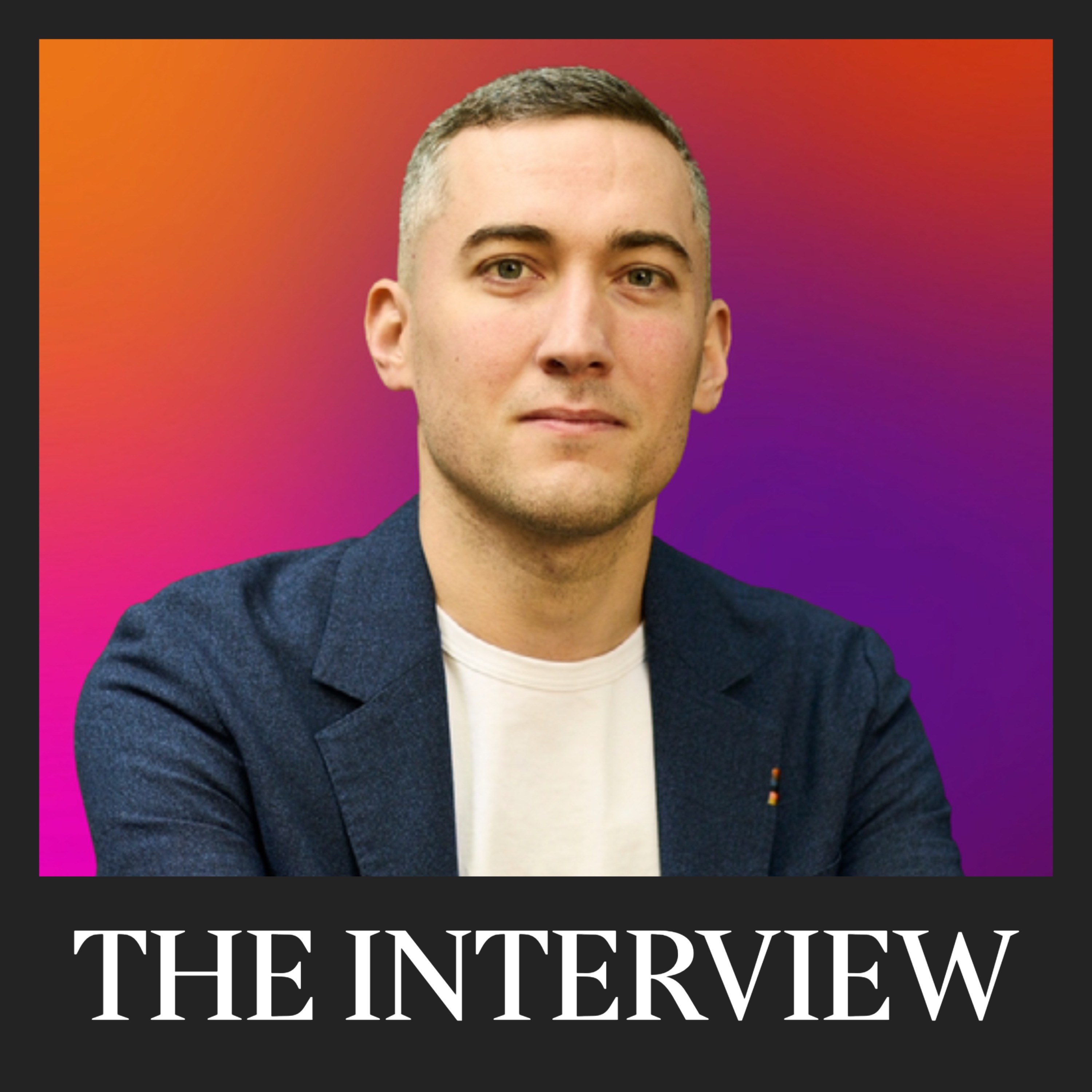
Danny and Katie tackle Google's antitrust win, TikTok job cuts and a new Stanford research on how AI is reshaping entry-level roles. Plus, Katie speaks to Steve Hare, CEO of Sage, the FTSE 100 accounting software company, to discuss AI’s impact on hiring, the limits of “copilot” tools, and why Britain needs more homegrown tech champions so he can have 'some friends'.
Image: Getty
Further listening:
Perplexity CEO on Chrome, AI and challenging the tech giants
An AI-induced recession on the horizon? Klarna's CEO thinks so
Hosted on Acast. See acast.com/privacy for more information.