 Ask ChatGPT
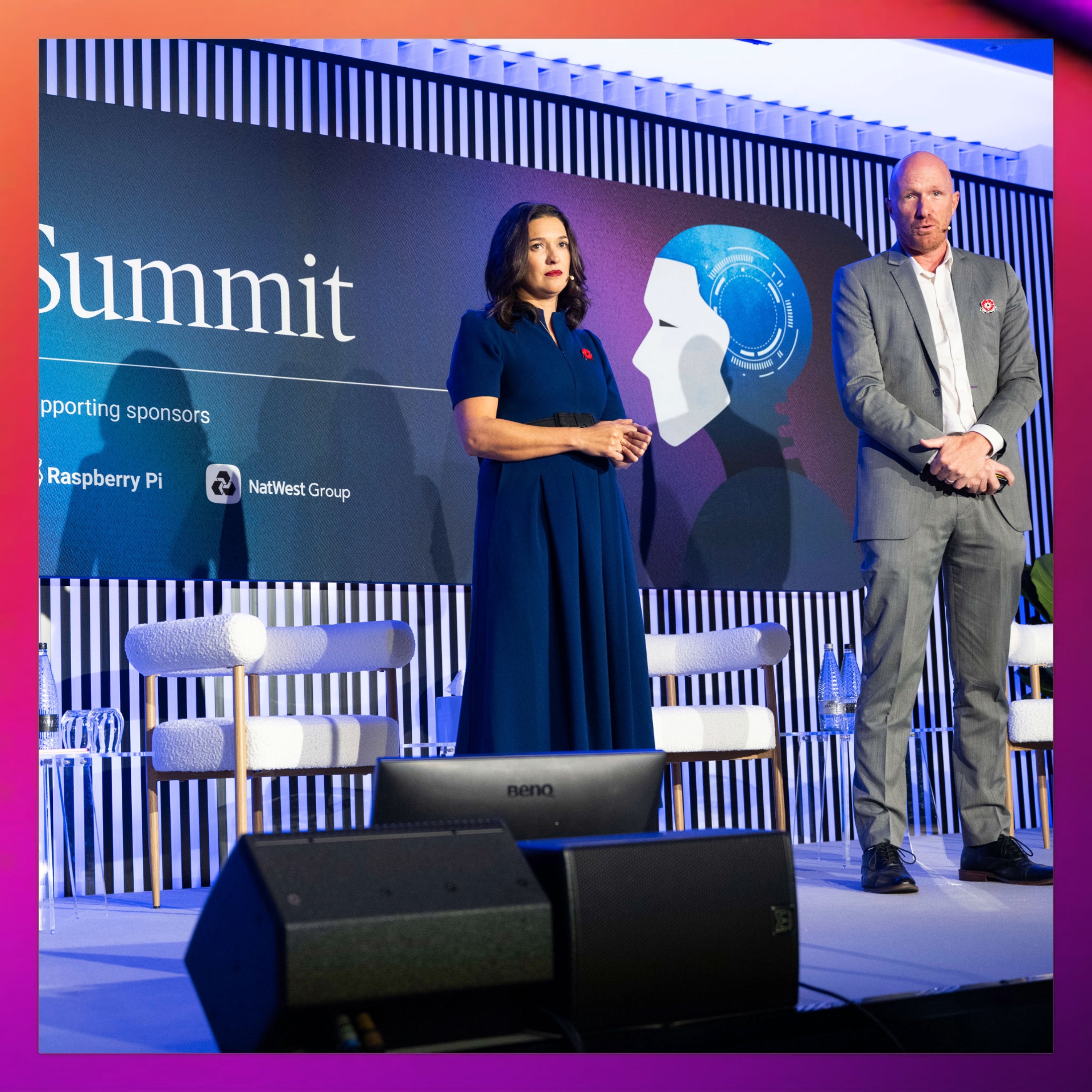

In this bonus edition of The Times Tech Podcast, co-hosted by Katie Prescott and Danny Fortson, the focus is on how smart meters can benefit small businesses. The episode is produced in partnership with Smart Energy GB, emphasizing the importance of understanding energy use in managing a small business's finances.
Written by AI. May contain mistakes.

Get the gist, explore an idea or ask about something said.
 Claude
On Times Tech, what are the key points of this episode?
Searching your listeningAutomatic transcript. May contain errors.
0:02Hello, I'm Katie Prescott and welcome to a special bonus edition of the Times Tech Podcast in a paid-for partnership with Smart Energy GB. In today's episode, we're looking at how smart meters can help small businesses track their energy use and costs over time, helping them feel more in control of their cash flow and budget. Smart Energy GB is the independent non-profit organization that helps households and businesses across Great Britain understand the benefits of smart meters. Today, we're focusing on how small businesses can use smart meters to better understand their energy use and spend more time thinking about everything else, like all of the important things it takes to run a successful company.
0:49Smart meters can help put them in control of their business budgeting by providing detailed data on their energy use. They can help monitor their spending and spot potential savings, insights that can make real differences for small businesses. And Britain has loads of those, five and a half million of them, employing much of our workforce. They are a huge part of our economy. And as the numbers continue to grow, helping them manage their energy costs is becoming increasingly important. So today, we thought we'd speak to one. And as we're a tech podcast, we asked ourselves, what's the one technological innovation that has withstood the test of time?
1:28Yes, it is everywhere. It is universal. And it's definitely easier to understand than quantum computing. Shoes. I've been speaking to Aidan Sarni, the co-owner of Twinkle Toes. It's a family-run children's shoe shop in Sheffield that's been fitting kids' shoes in the city for more than 25 years. And when we spoke, it was just days away from the new school term. And of course, a new term often means new shoes. So hi, Aidan. Good morning. Good to see you. Good morning. Hi. Tell me about your company. Who are your customers and what do they come to you for? So yeah, so we're an independent children's and ladies footwear retailer.
2:10And we're based in Sheffield and customers come to us mainly for our service and our fitting. So we spend time looking at children's feet and then advising to what the best shoe is for that specific foot shape. I've got two little girls, so I totally understand this problem. It's really, really hard finding shoes to fit kids. So how did you get the idea for it? How did you get started? So the business was actually founded by my mum back in 1999. She's still in the business, but I'm kind of taken over now most of the operation side and basically the running of the business. Did you always know you would do that?
2:50Was that always the plan to take over the shop? Yes, yes. I mean, my background is actually accountancy. Makes sense. But I always wanted to go into it and take over the business. Well, you must be very, very across the numbers then. Day to day, what are your biggest costs at the moment? I mean, staff costs would probably be the biggest cost because it's very time consuming what we actually do and what we offer. And obviously, energy costs is probably also up there because we have got the electrics on all day. Energy costs have been such an enormous issue for small businesses over these past few years.
3:26We've seen the cost of energy spike quite dramatically at times. What changes have you made to try and mitigate that, to try and bring the cost down? Well, recently we've actually put some new LED lights in the ladies. And we intend to do that for the children's floor as well after back to school, which will bring down the cost of running the lights in the long term. And then we also implemented a smart meter, which we can then monitor those costs and see which days we are spending money and why. So we can make changes. All the utilities in it are actually run by my dad, Aaron. So he does a lot of the negotiations with energy companies, etc.
4:09And what was it like having the smart meter installed? How much time did that take? Was it easy? Was it complicated? Yeah, it was very easy and smooth. They contacted, well, basically told us when they're going to come. They came and installed it. It was quite a quick job, really. And what has it done to Koss? Have you noticed any change? So, yeah, I mean, he can basically see where we're actually spending the electrics and actually the day as well. Like, for example, on the gas, because we also have a gas smart meter. He can see where we're putting the heating on more, basically. so we're not actually having the heating on all the time.
4:48I see. And you're an accountant, being across the numbers then, have you noticed that it actually has saved you an amount of money and how much would that be every month, for example? So, yeah, I mean, I can definitely see it saving money. I mean, I'm hoping once we start saving money on the actual lighting system, I'll be able to then compare the electric costs to what we have been spending on electricity before actually implementing LED lights. And I feel that will be quite easy to do with the smart meter as well. It is a fantastic thing to implement in terms of running the business and makes life so much easier to check the cost without actually necessarily being at that premises and that location because running a business myself, it is hard to juggle about 100 different plates all at once and it just takes a little bit of pressure off the energy side, really.
5:45Well, you are about to have a really, really busy period. The period of back to school after the summer is always wild in shoes because it's the time kids beat, grow over the summer. Everyone realises last minute they don't have the right shoes. They must all be beating down your door. Yeah, it is very busy at the moment in the shop. So we've got a number of staff serving basically non-stop all day. I bet, yeah. You're making me think I need to sort out school shoes now. I'm going to write it on my to-do list.
6:18Many thanks to Aidan Sarni. Now let's take a step back and get the bigger picture. How are small businesses adapting to rising energy costs, embracing sustainability and using tools like smart meters to better understand their energy use and manage costs more effectively? Well, Dr. Tina Fawcett is a senior researcher at Oxford University's Environmental Change Institute and a leading expert on energy use by households and organisations.
6:49Welcome Tina to the Times Tech Podcast. Thank you very much for joining us. Tell us about the work that you do at Oxford University. So I'm an associate professor in the Environmental Change Institute where I work in the energy programme and most of my research is looking at how we use energy.
7:09So what do we use it for? How could we use less of it? How could we use more green energy? And how are we going to get to the net zero that we need to do by 2050? What a lot to get into. Is there a particular project you're working on at the moment? Well, one of the projects I'm working on is using smart metering data in households, actually, to sort of get much more detailed understanding of how, where, why and when people are using energy, what the opportunities are for change, looking at new technologies coming in, so particularly heat pumps and electric vehicles, but also looking at people's motivations and decisions around everyday use of energy.
7:47And that's really fun. And smart meters must have been revolutionary for you in terms of getting that data and working out what exactly is going on in people's homes. Yeah, no, exactly. And it builds on earlier research. And we've now got this wonderful set of data changing over time. So, for example, they could do special studies around the time of COVID, see what changed then. We've been able to see what's happened when the sort of energy price crisis came along and what changed then and how did the government's policy response play into that. So no, it's a really important sort of data source for researchers across the UK and in fact internationally as well.
8:24Yeah, I think small businesses in particular are still having nightmares about that energy crisis. Have you done any work into small businesses and their energy use? And I have particularly around looking at energy use in different sorts of businesses from, you know, hairdressers to steel makers and trying to, by going into the detail, understanding businesses, decisions, their motivations, their practices, what would help them make more change as we all move towards net zero together? How are these businesses going to play their part? What are they going to do? Because energy use for them, I guess, is a massive cost.
9:04Yeah, I mean, I think, you know, the thing about small business, of course, is they're everywhere. They're all sectors of the economy. And so it varies from some businesses with, you know, very tiny energy use. In fact, some businesses, of course, don't have premises. You know, if you're a sort of mobile carpenter or something like that, you might be an independent business, but you haven't really got your own energy use up to sort of manufacturing, you know, small and medium sized manufacturers who will be using a lot of energy. and I mean the figures are very hard to come by pre-price crisis there were figures around like energy made up two to three percent of an average business's costs but of course that average is is a bit hopeless because it could be 10 percent if you're in manufacturing and much less than that if you're in a service sector in a small office somewhere that happens to be quite energy efficient but I mean as for businesses well all of us face these massive price hikes you know went up at at least three times in winter 22, 23, the government subsidised energy prices to a certain extent for everybody.
10:03But those subsidies have now gone and energy prices are up to twice what they were prior to the energy crisis. And we know for households and for businesses, there's a lot of renewed interest in how am I going to save energy? So how can a smart meter help in the running of a small business? Have you heard anything anecdotally around that? I mean, I think what we know about a lot about small businesses is a lot of them don't understand their energy use or that it has been the case that people haven't understood their energy use. And if you've got a smart meter, that automatically gives you much better data.
10:42You actually know what your energy use is and you're going to get accurate bills. And that's the basic premise of smart meters for all of us. I guess like in your job, it's really important just frankly to have the data yes i mean it's a you know obviously a massive business cliche that you can't manage what you can't measure and all that kind of thing and if you're not getting accurate energy bills and not understanding you know not having some clues to help you understand what are you using energy for um it's very difficult then to make sensible decisions about do we need to try and invest in something here do we need to talk to our landlord about making an investment in efficiency?
11:16Do we need to make sure we do all the sensible housekeeping things about switching the lights off? Is our refrigeration equipment very old and very inefficient? And are we going to be motivated to looking to see are there some support schemes to help us improve that? So, I mean, I think that's the here and now, but obviously in the future, increasingly we're seeing more time of use tariffs. And as businesses are switching to using electric vehicles, they're using electricity for heating as well as their processes and their everyday sort of office equipment or whatever the business might be, you know, there's likely to be savings by being able to access time of use tariffs through smart meters and being able to sort of put in automated controls to run things that can run at off-peak times.
12:00I see. So time of use is you use things at odd times of the day, like encouraging people not to make a cup of tea. Well, I mean, that seems a bit harsh. I mean, we all need our tea when we need our tea. But I mean, the big energy users is really, well, again, it depends on the business. But let's say if you're switching to electric vehicles, you know, why would you charge those up during high cost times? You want to charge them up overnight so they're ready for your use the next day at the cheap rates. And you want to benefit by getting cheaper electricity prices for doing that. Similarly, it might be for sort of heating and cooling of buildings.
12:36Often if you've got a well-insulated building, if you don't heat or cool for an hour, the sort of inhabitants don't notice, but you can avoid the high cost times. And similarly, sort of a different sort of industrial processes. Again, some things you can run them at off peak times and you can avoid the peak hours. And, you know, more energy intensive businesses, I think, tend to do that already because it's just, you know, it's good business sense. It helps the network. It stops us having to build massive electricity capacity just to meet these peak demands. By reducing the peak, we reduce the cost of the energy system for everybody.
13:10Well, thanks so much to Dr. Tina Fawcett and, of course, to Aidan Sharny from Twinkle Toes for sharing their expertise and experience. Here on the Times Tech Podcast, we often look at some of the biggest tech companies in the world with some of the highest energy bills on the planet. But as we've heard today, whether your business is large or small, there are two things you always need. First, to understand your costs. And secondly, a good pair of well-fitted shoes. In this bonus edition, we've explored how smart meters can help small businesses track energy use, access accurate data and make informed decisions about their costs.
13:49For more information about smart meters and whether your small business might be eligible, visit smartenergygb.org or search Get a Smart Meter for Business. That's all. Thank you so much for listening to this special edition of the Times Tech Podcast. Till next time.
In this bonus edition of the Times Tech Podcast we have teamed up with Smart Energy GB for a look at what smart meters can do for small businesses. There is more to tech than AI, and sometimes the most important tech developments are about getting the basics right. Katie Prescott has been talking to one small business in the North of England, and to an academic expert who has been studying what we now know about how energy use and running any small business go hand in hand.
This is a paid for edition in partnership with Smart Energy GB.
Hosted on Acast. See acast.com/privacy for more information.