 Ask ChatGPT



The episode covers two themes: SpaceX’s AI-driven spending gamble and the EU crackdown on “AI slop” (unlabeled AI-generated content), plus an interview on practical AI use at work.
Mark Selman (Times tech correspondent; interviews Ivan Zhao). Ivan Zhao, co-founder and CEO of Notion AI (Notion productivity platform; Vancouver-born; moved to San Francisco; company restarted in Japan to cut costs; product-market fit ~2019/2020; 1,000+ employees; 70–80% international; launched UK office in 2025).
Written by AI. May contain mistakes.
The hosts outline discussions on AI slop and interview Ivan Zhao.
“Hello and welcome to the Times Tech Podcast.”
Exploring SpaceX's financial challenges and ambitious plans for AI.
“And obviously, where better place to start than Elon Musk and SpaceX?”
Discussion on Elon Musk's plans and Wall Street's reaction.
“Gwynne Shotwell, who's the kind of, she runs the company and has for a long time.”
Debate on consequences of space junk and recent impacts on the moon.
“And so Wall Street's a little skeptical.”
Details on EU's new rules for labeling AI-generated content.
“And they expected it to make a crater 60 feet wide, 12 feet deep.”
Discussion on AI accusations in a literary prize context.
“You better show us that, you know, basically be honest.”
Learn about the controversy over AI-generated stories in a literary prize and the implications for authors.
“So you'll be able to pivot and do things according to what's in your commercial interest.”
Hear how Notion AI evolved, its global presence, and the challenges faced.
“And share between human and teams of agents at the same time.”
Discuss the dual nature of AI technology and its effects on collaboration and employment.
“So we have a lot of global go-to-market offices.”
Understand how different companies approach AI adoption and the implications for the future.
“Because Notion is used by a lot of companies, big companies, startups, everywhere in between.”
Explore the differing strategies between startups and established companies regarding technology adoption.
“Yeah, it's funny because yesterday I talked with one startup and two older companies.”
Learn about how hiring strategies are shifting towards valuing agency and creativity over traditional expertise.
“than just somebody who's smart, creative.”
Understand the changes in interview methodologies that prioritize practical skills and curiosity.
“We spend an hour, sometimes an hour and a half building something with you live.”
Discover how AI agents are transforming workflows and enhancing collaboration in the workplace.
Examine predictions for the future job market and the potential implications of AI on employment.
“Like it's going for the zero sum approach, choosing tokens over humans, for example.”
Consider the challenges and impacts of automation on human work dynamics and social interactions.
“It is both invigorating and chilling at the same time.”
Explore how AI companies leverage fewer resources for innovation and competition.
“I think to myself, if I was a big company and you were my rival, I'd be really scared.”
Discuss the implications of AI on workforce dynamics and productivity.
“We can speak about it every week if we wanted to, really.”

Get the gist, explore an idea or ask about something said.
 Claude
On Times Tech, what are the key points of this episode?
Searching your listeningAutomatic transcript. May contain errors.
0:00Danny Fortson: This episode of the Times Tech Podcast is sponsored by health and life insurer Vitality, your health's best friend. Most of us want to be healthier, yet life so often gets in the way. Vitality's health and life insurance is built around that reality. Get active, look after yourself, and you can unlock rewards from some of the UK's top brands and help keep your insurance premiums low. It's insurance that works for you. By using tech and insight to understand your health, they can incentivize you to live better. The healthier you get, the more you are rewarded. Find out more at vitality.co.uk. This episode of the Times Tech Podcast is sponsored by IBM.
0:40Wimbledon is one of those rare events that feels steeped in tradition, but behind the scenes, it's also a huge data operation.
0:47Danny Fortson: Millions of fans follow the tournament across time zones, devices, and platforms, and increasingly, they want highlights, stats, and personalized updates in real time. IBM has worked with Wimbledon for more than 30 years. using data and AI to help create digital experiences for fans, including match chat, which can answer questions during play, and likelihood to win, which uses live match data to offer near real-time predictions. It's a useful example of AI being applied in a way people can actually see and understand. To learn more about how IBM helps create smarter business, visit ibm.com slash Wimbledon.
1:28Danny Fortson: they're doing rocket ships they're doing ai they're talking about space data centers they're talking about colonizing mars spacex is like the childhood dreams of elon musk realized what happens if you if your space junk hits the moon do you get fined for that by who by who
1:57Danny Fortson: Hello and welcome to the Times Tech Podcast. I am Danny Fortson covering all things tech out here in Silicon Valley. Sadly, Katie is still away, but I am joined once again manfully by Mark Selman, the tech correspondent for the Times. Hello, Danny. How are you? I'm very well. We feel very Californian over here. we wake up and we we don't check the weather anymore because it's just gonna be hot so i was thinking this is like danny's life pretty much pretty much is it still terribly hot there it's not terribly hot but it's just like california you know it's nice are you guys on hose pipe bands yeah oh yeah no we're in we're in drought hose pipe band we're in serious trouble yeah there is a flip side to this a bit like technology there's a good and a bad side danny indeed indeed but you can sit out in the garden and have a beer which is nice yeah we've come accustomed to that yes well quite nice this is a a transatlantic pod and we did the customary thing especially for britain talking about the weather but we should move on to the uh the order of the day so today we're gonna talk about ai slop you might have heard of it i'm sure you have you've been bombarded by it, I'm sure, on social media.
3:18Danny Fortson: It's kind of everywhere. And to tackle it, new EU regulations are coming into effect to ensure that this type of AI content is labeled. And it means you can distinguish between human-generated stuff and AI-generated stuff. So we're going to be looking at how big AI slop is, what these new rules mean, and whether it's going to make any difference. And then our big interview this week is with Ivan Zhao, the co-founder of Notion AI. They've been around for more than a decade and they've become this really much beloved productivity software platform out here in Silicon Valley. They're used by kind of everybody and had a really fascinating conversation with Ivan about how he's building his company, how they're adopting AI, how it's changing who and how they hire, and why he recently brought on a 16-year-old high schooler as a new hire.
4:17Danny Fortson: So stick around for that. But first, Mark, shall we get into the latest tech stories? Let's do it. And obviously, where better place to start than Elon Musk and SpaceX? To the moon. Totally fascinating. So they had their first earnings this week since their big IPO. and like there's a bunch of big headline numbers net losses hit 2 billion their spending hit 18 billion just in the quarter which is just huge right and they said they expect to that to continue for the rest of the year so thus far they have spent 25 billion dollars mostly on ai data centers they're just building these things as fast as they can they reckon they'll continue at that pace They'll probably spend$60 to$70 billion on data centers this year, which is just going to push them deeper and deeper and deeper into the red.
5:11Danny Fortson: But Musk yesterday was like, everybody relax. This is no big deal. We have a bunch of rocket scientists here. And he said, quote, frankly, it's like the New York Yankees going in and playing a little league team in terms of the complexity or lack of it to build these AI data centers. but this is obviously built on this idea that you know we're all going to be you know AI is going to take over the world obviously yeah it's that playbook I've never heard Elon Musk quote the Yankees before or baseball of all the things that he was going to do and how has the market taken to all this not well because I think people are still trying to figure out because like in a way this is like SpaceX is like I've said this before but it's like the childhood dreams of Elon Musk realized because they're doing rocket ships they're doing AI they're talking about space data centers they're talking about colonizing Mars all of this stuff and it's all wrapped up in one company which also has a social media platform as well right but they a couple things that are just worthy of note.
6:24Danny Fortson: Gwynne Shotwell, who's the kind of, she runs the company and has for a long time. She said that they expect to have quote unquote boots on the moon by 2028. And this is the first step of what Musk has said previously is will be a self-sustaining colony on the moon. So question is, have you signed up? Are you going to go? I've never really had this boyhood fascination with space, but plenty of people do. So hence the clamor for the shares when they first opened. And this is all about dreaming, really. I mean, I know a lot of people say AI investing is about dreaming, but this in particular is a lot of dreams wrapped up in one package with maybe one decent business in there.
7:06Starlink is the thing. I always remember that people say that's the one that's actually a pretty good company. I know, obviously, SpaceX has got a lot of government contracts, But in terms of actual profit, is that the profit heart of SpaceX at the moment?
7:21Danny Fortson: It is the beating profit heart of the companies. So, you know, like lots of big promises and lots of big spending. And so Wall Street's a little skeptical. You know, the shares, when they did the IPO a couple months ago, they offered at 135. Shares went up to like 175. Now they're down to 116. so you know which for elon musk that means he's basically lost in terms of his holding in the company something roughly equal to bill gates's net worth in the past few months but the other thing we should say is also as we speak or actually right before we we got on a rocket slammed into the moon, SpaceX rocket, at 5 ,400 miles an hour, apparently.
8:10Danny Fortson: This is like a stage of a rocket that usually they fall back down to Earth and burn up in the atmosphere, but this one, because it went further out, it kind of floated out and got sucked into the orbit of the moon, and it was supposed to hit, I think, 7.35 a.m., British. Yeah. And they expected it to make a crater 60 feet wide, 12 feet deep. What happens if your space junk hits the moon? Do you get fined for that? By who? By who? Does someone come and slap you on the wrist to tell you to clean that up? Or do you show off about it? These are the problems we're going to have to. When there's a self-sustaining colony on the moon in 2036, then I think we'll hopefully by then we'll have some rules right now I think it's like you know there's no fine for littering talking of junk yes indeed this is why you're a professional what a beautiful segue oh big story on your side of the pond less so on here but I want to hear what the EU is doing they have brought out all the new rules have come into force where you've basically got to tell people when they're looking hearing interacting with ai they they want people to not be scammed they don't want deep fakes they don't want disinformation they don't want any of this stuff so this is a their their way of combating that but it's not just the regulators all the platforms are coming up with different ways to combat slop because and guess what a lot of people don't want it just because it's so it's so trivial to create now because i i'm old enough to remember all of you know two years ago in 2024 when we were talking about deepfakes and it feels like deepfakes in a way have just been um rebranded as ai slop and maybe that speaks to just how much easier it is for kind of anybody to make something that looks halfway believable or maybe also because it is it's not just images and videos it's also text right yeah this was always going to be a problem with ai it's like what's real what's not yeah and for different people and for different reasons that is a problem or it's not and and you know you've got this thing at the same time i'm sure the platforms are seeing it does you know engage people but it also pisses a lot of people off and how do you manage that if you are you know serving this to billions of people um and even linkedin believe it or not the the home of the ai believe it or not i believe it they're testing out a new button that says you know gets people to report it i think this is ai slop you know when they're starting to bring in measures against it you know it's a problem and And obviously the other reason we're talking about is Substack have also brought in not a kind of button, but actually a detector.
11:21They built it into Substack, the newsletter platform, so that people, if they want, can check whether someone is writing with AI. And guess what? I mean, I remember there was a story done, I think, by Taylor Lorenz, the journalist. She ran this AI detector, Pangram, over all the technology newsletters on Substack, and like a quarter of them were pure AI. Right. And Pangram has become this go-to AI detector that is starting to enable people to call out AI content on Substack, on LinkedIn, on academic journals. Books have been withdrawn after being, you know, had Pangram gone over it. So it's this new feature.
12:19And obviously it's not without controversy because it will make errors and people will be accused of using AI.
12:27Danny Fortson: What an insult that would be. Like, I am not AI. I am me. This came from my brain. But I should say we should cover what exactly this new rules are briefly. And then I want to – because I understand you actually spoke with somebody involved with the Commonwealth Short Story Prize, which I think is really interesting. But just so the readers or listeners at home know, as of Sunday, August 2nd, i.e. a few days ago, AI generated images, audio text that were designed to look authentic must now be labeled AI. Correct? And there's penalties. Not on Substack, but anywhere in the European Union, yeah.
13:10Danny Fortson: And there's penalties that failure to comply could result in up to 15 million euros or 3 % of a company's worldwide global turnover. So, you know, this sounds like, you know, you guys better watermark this. You better show us that, you know, basically be honest. But to your point around like false positives and like just a sheer amount of garbage floating around the internet. this feels not very practical i mean i've i understand the spirit behind it but it feels a little yeah tricky to implement i i think obviously the it's the big platforms they're gonna have to do this and they are starting to do it i mean tiktok does have a rule where you've got to label ai content if you upload it and i think that's you know obviously anticipating this this new law but i i think if you're a platform you want to get a handle on what's ai created and what's not on your platform.
14:08So you'll be able to pivot and do things according to what's in your commercial interest. So I think that's what's probably going on on all these platforms. We'll have to abide by these rules. But actually, you know what? It could be in our interest to do that.
14:22Danny Fortson: And you did a piece on this, right? You spoke to an actual human, not an AI, who's had some firsthand experience of all this. Yeah. So there was a big controversy in a book prize. Actually, it's a literary prize. It's called the Commonwealth Short Story Prize. And one of the winners of that was accused of writing his entire story with AI because people… By one of the losers or somebody else or just like the internet? No, the internet. Right, right, right. Internet sleuths. in fact many of his other colleagues so to speak in the prize winners so the regional winners a lot of other winners were accused of using AI and so there was this big investigation the Commonwealth Foundation they got all these people they hold all the authors in and say right come on show us your workings show us your homework prove to me that you wrote this yourself and didn't write it with AI.
15:29And they actually ended up standing by all the authors despite this outcry. And I had a chat with the head of the Commonwealth Foundation and she really said the AI detectors are not accurate enough for us to rely on them, especially when you're dealing with people who aren't writing what's classically English, English, the Queen's English, which is what these AI detectors have been trained on. When I asked her what percentage do you trust the winner, she says 75 % to 80%. I have to say that was a lot lower than I thought she would say. That is low. Yeah. Wow. So she said there's a lot of trust involved.
16:18So they didn't want to use an AI detector themselves. they don't think it's accurate enough and they said there were some legal issues with it uh but our takeaway was that every writer every author in a prize you're gonna have to prove that you are a human or you have you know written it by your human hand and not ai and that is the
16:40Danny Fortson: future that we work we're walking into not to get too uh existential but there's something kind of ick about all of this and what i mean by that is like you have all these authors for example these humans who like put their theoretically put their blood sweat and tears their thought all the like their accumulated knowledge and everything they've read and they put into these stories but now we've reached this point where this technology is good enough that with a prompt it can create something that a lot of people are like hmm maybe that's what they did instead like it's that good like theoretically we're moving to this point where you know if the machines are smarter than us we have to prove our own humanity it's like the burden of proof is shifting to us rather than to the machines yeah yeah and and obviously the machines were trained on exactly the techs right right that we're now having to defend as humans so So it is a shocking irony.
17:46Obviously, we've been through this with the whole row over AI companies taking creative content without paying for it. And this is the result of it.
17:56Danny Fortson: Well, this actually leads us perfectly to the big interview this week. And I think it's something we'll definitely return to this idea. But after the break, we're going to hear from Ivan Zhao, who's the co-founder and chief executive of Notion AI. And he has some really interesting things to say, kind of really about this topic, about the future of work and why his company is hiring 16-year-olds straight out of school, actually while they're still in school. So stick around for that.
18:29Danny Fortson: This episode of the Times Tech Podcast is sponsored by KPMG. KPMG. We often talk about the shiny object problem with AI, where things look impressive in isolation, but are much harder to roll out across a large organization. Issues like governance, workforce readiness, and trust tend to become more important as things scale. KPMG's approach is to look beyond AI as just another technology rollout, and instead, how it could redesign work across the organization and fit into wider processes and decision making. So it's less about individual use cases and more about how organizations can transform and deliver outcomes powered by AI.
19:09Danny Fortson: To find out more about how it can help your organization make the difference, you can visit kpmg.co.uk slash AI. Today's episode of the Times Tech Podcast is sponsored by IBM. Wimbledon may look timeless, grass courts, white kits, strawberries and cream, but the way people follow sport has changed. Fans now expect fast updates, highlights and useful stats wherever they are. IBM works with Wimbledon to help turn live match data into digital experiences, including match chat and the likelihood to win. It's AI in action in a setting everyone understands. To find out more, visit ibm.com slash Wimbledon.
19:50This episode of the Times Tech Podcast is sponsored by health and life insurer Vitality. your health's best friend. Vitality works differently. Get active, build healthy habits, and you can unlock rewards from some of the UK's top brands while helping to keep your premiums low. It's award-winning health and life insurance that helps you live healthier. Find out more at vitality.co.uk.
20:17Danny Fortson: Hello and welcome back to the Times Tech podcast. Should we turn to our guests this week. It takes our conversation from AI slop to AI actually being very useful in the workplace. And I'm interested to see what Ivan Zhao, the co-founder and CEO of Notion AI has to say about it. Yes. And I spoke to Ivan recently. He thinks deeper than you might expect from a lot of Silicon Valley CEOs about these issues. So especially around kind of what he looks for in workers in this new age, 2026 relative, you know, cause he's been building his company for 13 years. So he can talk about that evolution and how AI is changing what is important to him as a leader.
21:10yeah notion helps teams collaborate we give people a good tool building block for collaboration from nodes documents to pages to databases all the way to how do you orchestrate agents and alleviate somewhat of the repetitive work so human can focus on the teamwork
21:30Danny Fortson: gotcha so this kind of shared kind of productivity canvas for within organizations That's right. And share between human and teams of agents at the same time. Right. That's how human gets leveraged. And you started this a long time ago. I started more than a decade ago. Initially in Vancouver, Canada, where I was from. Then I thought, well, the best way to do an internet business is to move to San Francisco. So have a couple of co-founders join and start as a proper company. And the first five years of the company went nowhere. We actually had to restart the company in Japan at some point. What do you mean restart the company in Japan?
22:07How's that work? Well, we're running out of money. So the company was five people, six people at a time. So my co-founder, Simon, and I said, let's just reset. Went back to two of us, but let's just go somewhere that neither of us has been to just change the scenery a little bit. And that turns out to be Japan. And you know, California, the rent is expensive. So we actually found a place in Japan that's cheaper than SF. and we actually make money by subleasing our apartments so you figure out five years of
22:38Danny Fortson: kind of trying and failing to build a product get market fit and then when did you come back from japan about a three three four months but we've been traveling my co-founder is simon he loved to swim so we've just been traveling to places that are cheap and ideally have access to ocean so you can just coat and swim right right right and we did that for about a year and a half and And yeah, we have product market fit six-ish years into the 2019, 2020. It's our true product market fit, I would say. Right. And today you're worth$11 billion. Yeah. And how many people are you now? More than a thousand.
23:17More than a thousand. About a thousand. We're very global. Our business is 70, 80 % international. So we have a lot of global go-to-market offices. And we just opened our first UK office last year. oh nice before that we'll have a dublin ireland office we opened a uk last year along with paris munich uh thinking about places like netherlands and nordics gotcha as well i need you to talk me
23:46Danny Fortson: off the ledge okay because just in the last what three weeks we've had coinbase getting rid of 14 percent other people you've had meta getting rid of 8 000 people about 10 percent you have the a Verizon CEO, he foresees 30 % unemployment in five years. So why are we not heading toward the end times, at least in terms of work and what it means to be human? Technology are usually somewhat value neutral. People say technology, double-edged sword, it could be used as a sword, it could be used as a can opener, it can be used as a cooking knife. It's up to how you hold it. I think there's no difference than this generation of AI technology.
24:33It's extremely powerful, it's extremely disruptive, but your outlook towards it doesn't matter. At least that's what we believe. The default narrative in text, one person using an agent, using AI chatbot to do work, and the one person can manage 100 chatbots, 1 ,000 chatbots, and in the future, you can have one person running billion-dollar businesses. all by themselves. I don't disagree with that possibility, or at least the capability. What I do disagree, and many people at Notion do disagree, is just because it can doesn't mean should we. I think there's other ingredients here pushes us towards the other side, the non-single person billion dollar business side.
25:18A lot of part of human nature is just so essential to us. For example, we all like stories, right? We have notions of friendships, right? And another important factor is human works in teams. So the technology capability pushes us towards to be more and more alone. But I would say I'm on a hopeful side that there's inner desire to be part of a team working with other humans on some problems that pull us towards the other side. There's a lot of monkey brain in us that the gossip part of it, the camaraderie part of it, love human interaction, love to see how other humans do things. I think that gave me hope and optimism that kind of pull us more towards human collaboration rather than just AI runs everything.
26:05Danny Fortson: Because Notion is used by a lot of companies, big companies, startups, everywhere in between. What are you seeing in terms of the companies you're talking to your clients? Are they saying like, like rubbing their hands and being like, yes, we're going to stop hiring. Oh, we can get rid of 10%. Oh, like, you know, because the profit motive here is very real. And it feels like you have this like beautiful, juicy apple just right on this low hanging branch. And you can just pluck it and theoretically cut your costs, reduce your complexity. And it feels like that's a lot of what is happening right now.
26:45Yeah, I think as a business leader, you have a choice to think about, should you just take on more, do more? So for example, our engineer productivity at Notion has never been this high. The question for us is like, oh, let's just do the things that we didn't dare to want to do before. So we can build a brand new product. We build a brand new mobile app with a team of two under a month. We could not do that before. yeah right that's more of a positive sum way of thinking about it having your people on the team take on more and you are competing with other company will continue the market will competing with inertia rather than competing with your own budget to me it's a more optimism more abundance mindset we're thinking about rather than zero sum is there a bifurcation at all between you know the
27:36Danny Fortson: people who are thinking in that positive some way let's be more ambitious let's build the thing that we didn't think we'd be able to build two years ago or whatever versus the companies who are like i'm taking this low-hanging apple because i can just improve my margins by 20 because i'm just using tokens instead of humans like is there a is it startups versus kind of call them old school companies or is it a size thing is there any way is there any kind of natural separation you see between those two mindsets. Yeah, it's funny because yesterday I talked with one startup and two older companies.
28:14And their mindset is extremely different. One is the largest transportation company in Asia. They're not even thinking about cloud properly. They're still in their processor. I assume some semi-paper-like or stuck in people's head.
28:27Danny Fortson: Maybe a fax machine in there. I think fax is big in Japan. This is not a Japan company. So I had a call with them last night, and during the day, there are startup conversations. The larger, older school companies still need to digitalize their workflows, moving them onto the cloud, figure out a centralized place to consolidate their data. Then they can talk about using AI to optimize some part of this. Many of them are still in, where do we put our data and context? versus startups. They're intentionally trying to hire generalist people because they know that whatever workflow they figured out, whatever agent orchestration thing, in three months, it would be a better one.
29:12Danny Fortson: Right. Right? So expertise in a certain field is less important now than just somebody who's smart, creative. Yes. But we change how we hire too. Tell me, how's that changed? So one thing we're really dialing up is people's just natural agency. I have a framework. we use that notion to think about assessing talent. A person's talent equal to their capability times their agency times their taste. Capability times agency times taste equals good employee. And capability meaning what? It's very broad, right? Capability means if you're a programmer, your ability to code. If you're an operator, how good are you doing certain tasks?
29:55In the past, it means how good are you memorizing calculating numbers before calculated or created. So technology keeps up leveling people's capability, but taste and agency a little bit trickier. Taste is like, which direction do you want to run towards? Like, what is your value of the world? What do you want to bring to the world more of it? So you want to go towards that direction. Technology is not going to give you a direction. Technology is going to push you towards that direction faster. The capability kind of push you toward that direction, but direction you have to have your own upbringing, your own value system to dictate what that is.
30:32And the last one is your agency, your habit, your work ethics. Can you run through wall to make that happen? Can you rally people? And how fast can you learn and adopt? So we're really dialing up your taste and agency and become less picky about your capabilities and years of experience. And it's like our engineer we're hiring extremely young ones because they have higher agency and curiosity and capability they can pick pick up fairly quickly we hire very senior people who have high taste who have seen a lot of things they're good pattern matching they can anchor the team the directions right so that's how we're changing our hiring profile how would it have been i don't
31:15Danny Fortson: know two three four years ago like what is it changing from was that much more kind of quantitative before the shape is kind of like few early career a lot of mid middle is really chubby and the the senior people is thin so now we almost reverse become like a it's like a uh fat bottom fat top skinny middle yeah like an hourglass like hourglass work do we call the dumbbell yeah yeah yeah probably yeah and how do you uh in your hiring process when it gets into the nitty-gritty what does that look like like if i was trying to be hired at notion four years ago i'm sure i imagine you'd be like all right do this task let's see how well you do it right how has your hiring process changed to assess those people who are high agency high taste and at least a modicum or minimum of capability as a company we're never stress on training or test this exam It's more just like, can you actually build this thing?
32:19If you can, if that's your, like, can you build a thing, the outcome, that's what matters. Then right now you should be able to use coding agents. We spend an hour, sometimes an hour and a half building something with you live. This is always our interview, part of interview process. So can this person think, how does this person communicate? How does the person walk through a problem? So there's a lot more nuance than just can you pass the exam? Right. So that's one way for the engineer side. For the go-to-market part, our go-to-market team, we ask people to be a lot more curious and a lot more hands-on as a builder.
33:00So before, when you're just selling something, you follow a playbook. But right now, AI can do so many different things for a customer, especially for a very powerful and versatile product like Notion. So we're asking people to build Notion demos on their very first screen. It's no longer just like look at your resume, but show me something you have built with Notion or something else. Then we talk.
33:26Danny Fortson: Oh, wow. And that's part of this new rubric that you guys have put in place. Yes, this is like this year. Wow. as always telling people that building for ai it's unlike building for classic software building for classic software is kind of like building a bridge if you can design it you can build it okay building for ai is more like brewing beer you can't really predict it you you cannot tell the fermentate east hey please go do it right because the underlying technology is not deterministic. So you can't really know what you can, cannot do. What's required is you have the agency and curiosity.
34:07Then you talk with AI to figure out what you need to do on the fly. We just hire someone who's been still in high school last year. It's like, we have to figure, get their parents' approval to work at Notion, get their parents to sign something. This guy has no years experience working anywhere. He just grew up with YouTube, grew up with chat GPT language model so they know how to access the information given a tool in front of them so to me that's the abundance way to think about the future workforces if you have the agency and taste the tool has been never better for you as a knowledge worker or as a builder or entrepreneur the way you're
34:47Danny Fortson: talking about that you know for a lot of people especially to your point mid-career people they're going to be like oh that sounds scary i have a great resume like i'm gonna just put my resume out and linkedin sprinkle it around and someone's going to be like oh that's the person i don't want to have to go through like build stuff or kind of like step into this i'm just wondering like what your experience has been like how much resistance there is because for a lot of people you know inertia is a powerful force and you're asking people or expecting people to unless they're very young and this is just how they've grown up you're asking people to to change some pretty well ingrained behaviors both within the company and if they want to come work i'm just wondering what your experience of that has been we're biologically wired not want to change after we're 20 something years old right it's like if you have survived on this planet without falling off a click we're eaten by a lion or something after 20 you're probably doing something right you should stick to what you're doing personally i'm on a thing as it's moments like this let's give me meaning give the industry meaning hopefully give a lot of people meaning so this is like take on a challenge take on change your inertia you'll be surprised how elastic your knowledge work muscle can be starting small yeah that's how we also think about building tools this with i notion so rather than asking people to become a like a coding agent from scratch to build something we try to design our product like a baby ramp for a general knowledge workers right you have your familiar pages and documents your project tracker those things you already know how to use as a knowledge worker for decades but we inject ai as powerful agent inside at the heart of this and allow you to ramp up it's a basic question that we should probably should have covered this earlier but like what is an agent like how do you think about it is a task that gets done or is it one thing that's doing a bunch of tasks for you and i i think in to a degree definitions are important because you have a lot of people being like you know this is the year that there's going to be more agents on in the world than humans there might be already who knows i don't know but how do you think about that and like what does that look like inside your company in terms of like you've got a thousand people.
37:08Danny Fortson: I don't know how many agents you have, at least by your guys' definition. One way to think about an agent is think like an intern. So it can do work for you. It can interact with you through text or Slack or emails. It can get smarter and smarter and smarter. Inside Notion, we have a thousand people. We probably at this point, a couple of thousand agents doing work currently most our interaction with agents are you ask they do yep you don't ask they stop we're in this right now we're in the middle of 2026 we're transitioning into their agents and interns working on the background without you asking some of the most repetitive workflows for example we launched this product our custom agent last year is basically allow the agent to work on the background.
38:02Handling, if your customer feedback come in, which team should receive this feedback has been a pretty annoying problem every product company to face. Now agents can handle this using Notion customer agents. Inbounding tickets from our HR teams about, hey, I always spill coffee on this floor. Can someone clean a rug over there? That can be handled. So those baby steps of work, repetitive especially, can be handled. The bottleneck for the industry right now is most people are managing cluster of agents themselves. This is especially true for programmers. If you're using Notion, if you're using Cloud, whatever agent tools, you are interfacing with half a dozen agents and they don't talk to other agents.
38:45It's a very lonely management situation for a knowledge worker. And the problem that industry is solving and we're solving, how do you get a team of agents directly collaborate with a team of humans? right so so the agent working somewhere there's a shared space and multiple people can manage and coordinate and see what they're doing and it's really introducing them to your teams as if they're teammates rather than the intern that you have to manage by yourself right that's a not fully solved problem for the industry yet i suspect will be we'll have good solution towards the end of this year later this year um maybe more fleshed out early next year so before we go prediction time five years from now 2031 welcome to the future what is it like i think the thing that's on people's minds right now is this moment where you have where we just
39:42Danny Fortson: kind of started of like companies picking that low-hanging fruit going for efficiency rather than like, let's do more. Like it's going for the zero sum approach, choosing tokens over humans, for example. What does the economy look like in five years from where you sit jobs wise? I think it's almost similar to the analogy of us moving from a five floor building before steel to a building that powered by steel, right? Think about a hundred years ago, I'm in the middle of Manhattan right now. Back then, 150 years ago, most of Manhattan and New York are six-floor buildings. That's how tall you can build with stones.
40:23That's kind of like a modern organization. So there's a lot of busy work, information passing. We require tons of meeting and email just to sink our mental state. Then we can go after business objective. That's what today. In some sense, language model and agent are like the steel beam for a company, for organizations. They take the busy work, the thinking, alignment, the status update, those kind of work. Yes, some people love to do, but most people really try doing it. And they're introducing the structure for organizations for business so the business can become skyscraper.
41:01Danny Fortson: We can all be the Empire State Building. We could all be. There's many Empire State Building. Each company, each business adds more diversity into this market. And each one could be Empire State Building. in its own right. And it will still be teamless as humans, but it will be smaller teams as humans collaborate with larger teams as agents. So unemployment lower or higher? I'm not sure. Maybe higher for a while than people who got absorbed into different new empires they were building company and businesses. And the younger generation, there'll be more entrepreneurs rather than they join the workforces.
41:39That's what I hope.
41:40Danny Fortson: Amen to that.
41:45Danny Fortson: What do you think? It is both invigorating and chilling at the same time. I have to say, whenever I hear startups talk about the way they're using AI and agents, etc., I think to myself, if I was a big company and you were my rival, I'd be really scared. Because they are so energetic. They are so willing to change, adopt, adapt, and just, you know, compete using so many fewer resources, assuming the price of tokens doesn't go up. But on the flip side, the dystopian side, when I hear, you know, the future of work is someone managing 15 or 20 agents. you know my experience of humans when they are working with automated things whether you're in our amazon warehouse or whether you're sitting in front of a claw thing is that you end up working a lot harder because these yeah yeah yeah for sure automate these automated beings do not stop and they force you to work harder and harder and obviously you don't have the human interaction as he said you know like you the the interaction element is is a lot harder so i think there's going to be a bit of a you know this concept of you know the unlimited workforce it has limits i think yeah and i do like the way he framed it um ai is beer which is very you know british friendly way of framing it well i can relate to that yeah but also this idea of it being the steel beam as a kind of a new way of building you know which i thought was also a really interesting way to think about it.
43:31Danny Fortson: And to your point around like these kind of AI native companies that I come across week in, week out over here and this idea of like a self-improving company where two people have a team of 100 agents and they're building things that would otherwise have taken 100 people. It is quite extraordinary to see that up close, but I guess we haven't yet seen, I think the real kind of next generation of companies break out beyond the two AI labs, OpenAI and Anthropic, who by the way are both still losing tons of money they're kind of sucking up all the oxygen making all the money but i'm still waiting for this new generation of these new steel beam companies to kind of emerge right because right now it's we're in this moment of great excitement and apprehension and kind of mania but we haven't actually seen the kind of you know what comes out of this this big bubbling stew i mean the last thing i would say is this whole this completely different hiring rubric you know capability times taste times agency equals the future and i was thinking about myself i feel like i have decent taste i'm pretty uh agentic as a way i've got agency capability that's i don't know it's it's just an interesting kind of um you know his what he's talking about how he had this fat middle of middle career people with a few at the top and a few at the bottom and now it's completely reversed.
45:01That's you and me,
45:02Danny Fortson: by the way, Danny. Yeah, I know.
45:10Danny Fortson: We can speak about it every week if we wanted to, really. But that is it for this week's episode of the Times Tech Podcast. Let us know what you think. And we'd love to know what you think. So how do you feel about AI detection tools? What companies, you know, will companies, you know, adhere to the rules? Will it matter? Tell us what you think. Yes, and email us at techpod at thetimes.co.uk. That is techpod at thetimes.co.uk. And we will be back next week. Bye-bye. This episode of the Times Tech Podcast was sponsored by KPMG. One of the themes we keep coming back to is the gap between AI ambition and real-world application.
45:56And that's where KPMG is focusing its work, helping organizations move beyond pilots and think about how AI can change the way the business operates and how it fits into wider processes and decision-making.
46:09Danny Fortson: You can find all their insights and how they can help your organization make the difference through successful AI workforce adoption. visit kpmg.co.uk slash AI. This episode of the Times Tech podcast is sponsored by health and life insurer Vitality, your health's best friend. Most of us want to be healthier, yet life so often gets in the way. Vitality's health and life insurance is built around that reality. Get active, look after yourself, and you can unlock rewards from some of the UK's top brands and help keep your insurance premiums low. It's insurance that works for you. By using tech and insight to understand your health, they can incentivize you to live better.
46:52Danny Fortson: The healthier you get, the more you are rewarded. Find out more at vitality.co.uk.
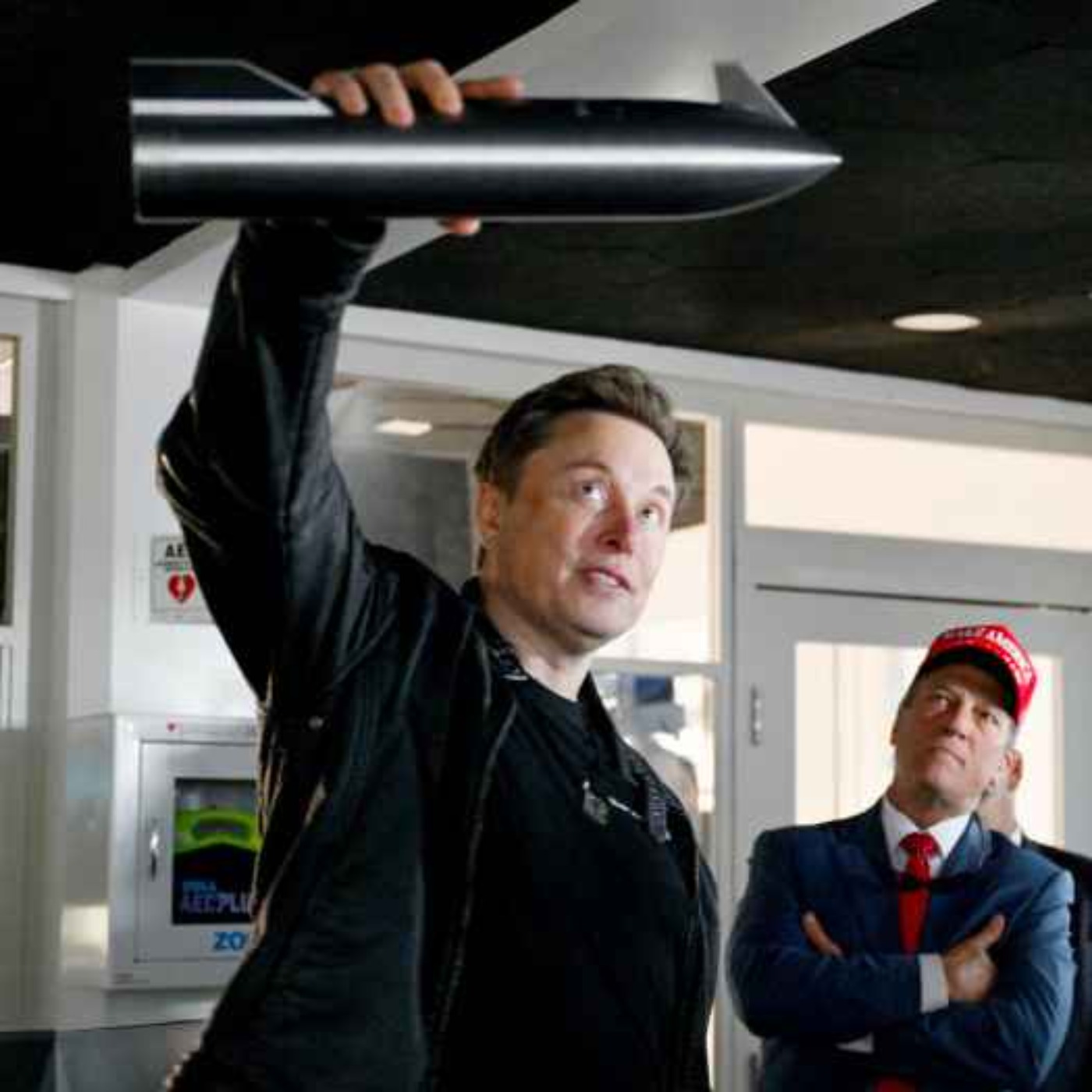
Elon Musk’s SpaceX is spending billions on AI data centres, rocket ships and moon ambitions but investors are asking how much it can burn before the bet pays off. Meanwhile, ‘AI slop’ is flooding social media. And new EU rules mean platforms will have to label AI-generated content. But can regulation keep up? Danny Fortson and Mark Sellman discuss SpaceX, Starlink, space junk and the growing fight over AI content online.
Plus, Danny speaks to Ivan Zhao, co-founder and CEO of Notion, about AI agents, the future of work and why his company hired a 16-year-old high schooler.
Read more: Authors must prove their work is not AI
Producer: Harry Bligh, Marnie Duke, Shabnam Grewal
Executive Producer: Priyanka Deladia
Video Producer: Bronwen Latham
Image: Getty
Hosted on Acast. See acast.com/privacy for more information.