Ask ChatGPT
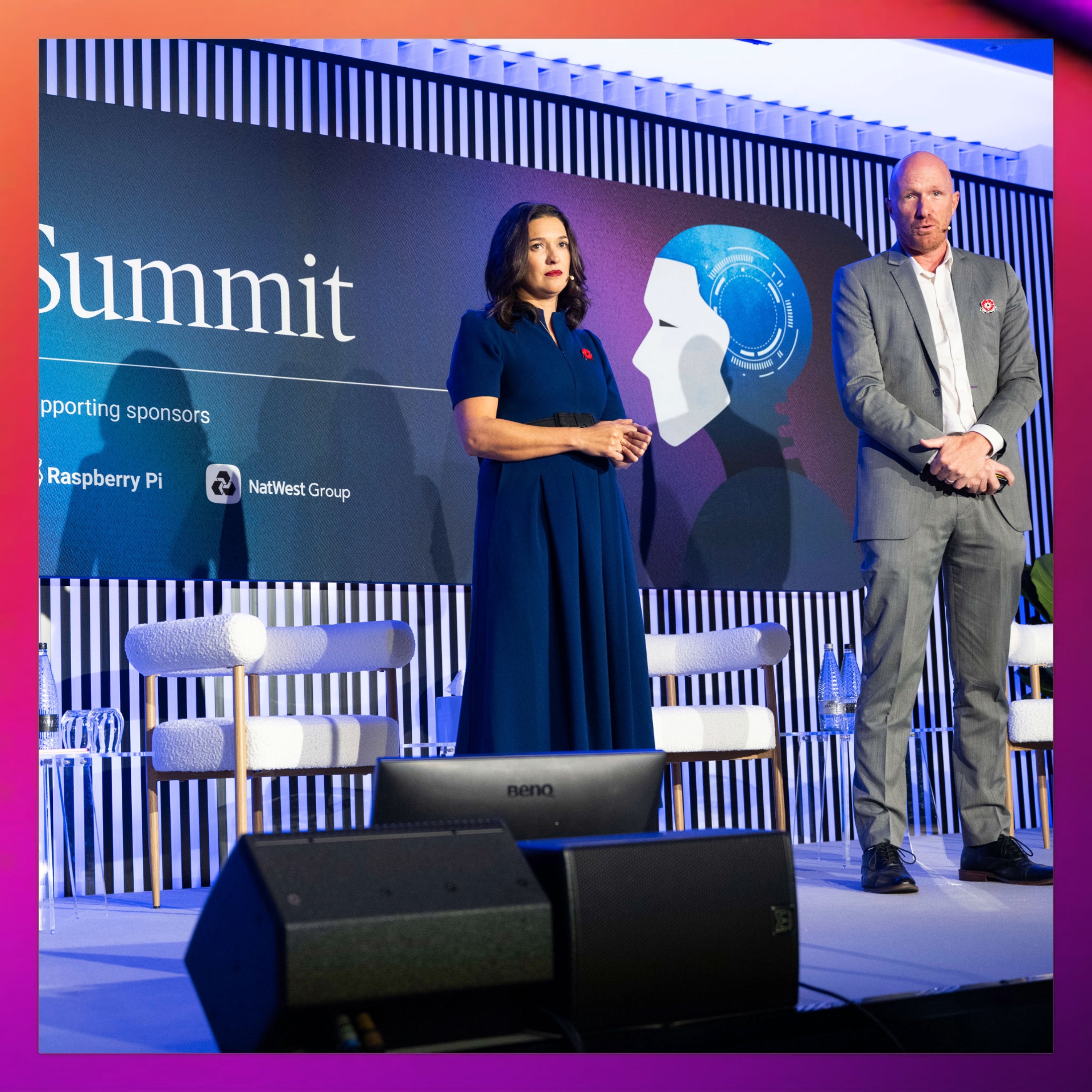


The episode revolves around the recent Budget Statement delivered by British Chancellor Rachel Reeves, focusing on her commitment to enhancing the UK as a favorable environment for tech entrepreneurs. Special guest Alex Depledge, a tech entrepreneur and the first Entrepreneurship Advisor to the Treasury, shares insights on the implications of the budget for the UK tech sector.
Written by AI. May contain mistakes.

Get the gist, explore an idea or ask about something said.
 Claude
On Times Tech, what are the key points of this episode?
Searching your listeningAutomatic transcript. May contain errors.
0:02Are you sad that you're not having a holiday like Thanksgiving which is the best? We just have budget day. Okay. But, so, we don't have Thanksgiving. We've got budget day. Budget day!
0:23So if you don't have a budget day in the way that we have this very special... It's so British. When are spending decisions made? Just all the time throughout the year. Yeah, that's why we've been having this government shutdown. because Congress has the power of the purse and all of that stuff. So it's not like the UK where on budget day, the chancellor comes with their red box and opens it up and says, okay, this is what we're doing with all of your money. And this is our vision. And this is why you guys should be happy, not depressed. And then half the country goes, yay! And the other half goes, ah, and starts squeaking, which is exactly what's happened today.
1:01So the question that we're looking at this week is, is anything going to change in the world of British tech after this budget? To put it another way, can AI and or tech save us all? Can it save the economy? No pressure. And that, Dani, is our special guest today, Alex DePledge, who's a serial tech entrepreneur, the founder of Resi, which is a digital architectural services firm, but also particularly relevant for today, the first entrepreneurship advisor to the Treasury. So welcome and thanks so much for joining us. And I know it's been a really busy day for you. No, thanks. It's great to be here.
1:40I didn't tell you this, Danny. I actually nobbled Alex at the Sunday Times Christmas party to do this. Lobly. Lobly. I love that. Danny's trying to take my accent off already. No, I have a great affection for Northern England as well. I have great affection for a lot of people. It's because it's full of cool people. They smile and they talk on the tube. So Alex, thanks so much for being here. can we start with a very basic question and this is really for me and anybody who is outside of the UK and maybe some people inside the UK what do you do like what's the role what's the goal honestly Danny being really frank with you I didn't really know what it was going to be when I took it I've never worked inside government I've never had a boss for like 15 years and I'm completely unemployable so I thought they actually might be a really dangerous thing like me going into government but the best advice I got was pick a very small amount of things that you care about and just get them done and ignore everything else so I definitely feel like I've I've peed a lot of people off in this role because yeah I know generally because they're like oh like what about SCIS and I'm like nope you know like what about regulation and I'm like no because everyone's coming at you at all from all sides everyone's got a pet project right so I'll tell you what my are in a minute but so essentially like I went in and straight away you know you have to look credible right so you can't just kind of go I know what these people need and I'm going to do it even though what I found out when I did all these round tables is exactly what I knew going in which is there's a handful of things that we've been asking for or wanting for for a decade or more and so I'd kind of identified them and flagged them to Rachel that I wanted to look at them and kind of got her like agreement.
3:22So what I did is got in there and immediately just organised loads of roundtables around the country, bringing in the regions because they're often ignored. And I just focused on scale-ups. Because I was speaking to people from scale-up companies. Yeah, and it's interesting because I remember like I wanted to go to Darlington, right, because I was like, let's go to Darlington, like no one goes to Darlington. So I did. And they were like, yeah, we don't really have any scale-ups here. Darlow, as they call it. So I was like, oops. but anyway we found some right and it was great and they loved it because like no one paid them any attention i went to bradford i went to bristol i went to edinburgh so we did i went all over and i just kept running these round tables and it was just so obvious by the end of this like eight week sprint that i'd identified the things for scale ups that were really important and i decided before i went in there that startups were fine i'd give them an eight out of ten in the uk we've got decent pools of capital good incentives like scis and eis and a good venture pool so i I just was like, it's just not that broken.
4:20But what we are very bad at, and Danny will know this because he's probably welcoming them, going to SF and welcoming them off the plane as they arrive. Yes, I'm right there. Yeah, with your banner. Exactly. You know, British entrepreneurs, this way. So I was like, right, we all know there's a valley of death, right? I've been in it myself twice where you sort of get your startup to, you know, five, 10 million in revenue and you're looking for those 10, 20 million pound checks and like you just can't find them. And so you end up either getting money from abroad, you die or you like sell too early.
4:53And that's why we don't have that many unicorns. It's why we're not recycling our talent. It's why 50 % of all venture-backed companies have left in the last 10 years. And if you think if that hadn't happened, where we'd be now, right? And we do not have a capital problem in this country, but we have a capital allocation problem. Our capital is locked away either overseas or in houses and it needs to be in the equity markets and it needs to be riskier investments. Like our top quartile venture capital firms in the UK return 23, 24%, right? The same as the US, we just don't have enough of them.
5:26And so really what I decided is like scale-ups what I needed to try and fix on two levels. One, making sure we could retain talent and attract talent. And the second was I needed to create the pathways for capital to flow into series B and C markets. And that's all I focused on. So, because when you talk about SEIS and EIS, They're basically tax incentive schemes for people to invest in very early stage businesses. Yeah, I mean, so SAIS is obviously like capped at, what, 150 grand and EIS goes up to 10 million for regular companies. And I think a bit more for knowledge intensive. But you've got to be under 10 years.
6:01Well, the average scale up in the UK is 15, right? So you're already saying EIS is just focused on startups. And that's why, you know, there's this sort of cliff edge at 10. and that's why I went after all of these policies and tax incentives that broadly support scaling companies after 10 years old. So I'm not saying it's a bad thing to go to the US. I'm not saying, you know, I think it's brilliant when a US VC opens up here, but we have to have viable domestic alternatives. So not everybody just thinks about getting on a plane when they get to their Series B round. So what policies did you push the Chancellor to put in place to try and change that?
6:38and how much do you feel that you were listened to in this role? How much did I listen to? Like, yeah, carte blanche. Oh, wow. Yeah. Even when I know in the final throes of, like, the budget finangling, like, over the last two weeks, like, she basically turned around to her, the advisory board, and said, no, if we're doing this, we are doing it right and Alex's recommendation is stay in. And she did that at the expense of other stuff. So, like, all power to Rachel. Like, she, listen, she really believes, like, she gets it now. She understands that startup and scale-ups are not SMEs and they're not corporate.
7:10You're basically driving a McLaren and having people refer to you as a Mini or a Land Rover. McLarens have got different oil. They've got different wheels. It's the same with startups and scale-ups. You need different policies and incentives and regulation around them. We've got about 44 ,000 or so scale-ups in the UK. They're generating just under$2 trillion of our GDP. They're less than 1 % of our SMEs. and our SMEs are responsible for 50 % of the economy. The outsized performance of this group of businesses is mental, right? It's brilliant. And if we can double that or double down on it, just think about the growth we can achieve.
7:49And I'm not talking about growth in 10 years. I'm talking about growth in the next three to five year horizon because we all know, right, when these things take off, they go like rocket ships. So we need to be able to support them, not in five years' time, but right now. obviously you've been in the middle of this as an entrepreneur and now trying to get these new policies in place because it does feel like certainly when i moved to the uk 20 plus years ago it was the case that like the uk being almost like the r &d lab for america where we're like all right we're going to come up with all these ideas and really brilliant we're going to draw on all this amazing talent and as soon as you want the real money you got to leave you do the delaware flip exactly goes with it and the exit proceeds and the talent the center of gravity moves to the us and you guys benefit and that's lovely for you that's great for us but i'm also fyi i'm also a so i have interest in the uk doing well so i guess my question is how much of this is about policy and how much of this is about mindset because to your point like there's been this huge growth in early stage and especially with ai there's all this enthusiasm is it people leaving or not being able to kind of really scale up because it's the muscle memory or everybody else telling them go to America, go do something else?
9:03Or is it really just policy, figuring out ways to unlock this kind of new layer of capital? Look, it's never straightforward answer is I wish it was, it's both, right? So ultimately, there is a mindset shift, I think, in the UK, our bankers are, you know, are telling our most promising UK companies to go list in America, because they get more fees right um and actually when you look at it in the last 10 years we've had 20 companies leave the uk in list on the nasdaq three are still going above their share price 10 have delisted um and like seven are trading you know on average 70 percent below their their trading companies yeah so let's be really honest like it's not the silver bullet and sometimes like it's better to be a big fish in a small pond right that's why the stamp duty relief that we announced today is helpful for like trying to encourage people to list in the uk and it's look we've done loads of reforms it's not perfect there's more to do we all accept that there is a mindset shift because our investor class is not as ambitious or risk-taking as you find in the us so some people prefer us money because it's kind of like oh katie i like your jumper here's 20 million quid right that's what happens in the us wow and here that that is not this happens a nice jumper it's a really nice jumper it's great 20 million but seriously like this happened to me and dean and we went to Silicon Valley in 2016 and took a couple of meetings with VCs, just like randomly.
10:22And I was telling one of them about an insurance idea they had and they're like, oh my God, that's amazing. Do you want 20 million? I was like, eh? Do you know? Yeah, I do. I'm so offended. I'm so offended by that accent, by the way. You took the piss out of us at the beginning. I did. I deserve it. I fully deserve it. I'm not going to say anymore. I'm just fell as I bought it. But, you know, over here, You go into an investor, and they're not all bad, but some of them are just like, where's your seven-year forecast? And when you EBITDA are positive, come on, guys. So there is a bit of that that needs changing.
11:00But ultimately, Gordon Brown first brought EIS in, an EMI in 2000. So we've had 25 years without any changes to what arguably has been some of the most successful tax interventions in this sector. And guess what? We have a flourishing startup economy and we've just kneecapped it at that kind of like 10-year-old, right? So we've unlocked that. That's one policy change. The second thing that we absolutely have to do is we've got to get pension money out of like infrastructure and into riskier investments because... That's been talked about for such a long time now. I mean, this is how I met Rachel.
11:38I went to this dinner and I started talking in 2015 about pension consolidation. And I think that would have been like 35. And she's probably like, what is this gobshite from Bradford doing to a room full of men talking about pension reform? But it's been going on for a long time. And a lot of people want it to be much quicker. But, you know, go back, start looking at the Canadian pension system or the Australian pension system, which they are the gold standard. They started 20 years ago. Right. It is going to take time. I mean, that's what I've been trying to say to a lot of political broadcasts today is that like Rachel, in fairness to her, right, she made some mistakes, of course, like who doesn't?
12:17But in terms of like understanding that it is all about investment and it is all about unpicking things that have been sown for 25 years, it's not going to be a two year jaunt and fixed. Right. And she's laying those long term foundations around infrastructure, around housing, around planning. She's put loads of investment back in and she's trying to unlock a private capital, too. and then she's gone you know what like it's a pretty bold thing right to take somebody like me and say okay come into the heart of government because it's not like we are very compliant right as founders and be like I want you to design a package for budget and then go and I'm going to accept it pretty much wholesale because I trust in you that's quite radical for government and that's quite radical for politicians and I don't think she receives the credit for it so she's long on the UK and she's long on UK entrepreneurs and I think I am I don't think it's going to be overnight but I think I think we can turn this around but we need to understand it's about making fewer bigger bets in the blue clear waters that we have like quantum around the edges of AI like we are not going to compete on LLM right that's just not going to be us but we have lots of areas where we are brilliant so like let's compete in those areas let's not go toe to toe it's the same as like Dubai if you want to maximize your tax take you're gonna get on a plane to Dubai Most founders are not up for that, right?
13:35But they do want a system that rewards their risk taking. And that's the next piece of work that I want to do for the government. But we're not going to compete with Dubai on a zero CGT. We just can't, right? I'm so glad you brought it up, though, because you're talking about companies kind of getting off the plane in San Francisco and going to see our friend Danny over there. Obviously, there's been a lot of news about the number of people moving to Dubai and Nick Staronsky from Revolut. I think that even happened last year. Lachmin Mattel was reported over the weekend. And just when you talk to people in the founders community and entrepreneurs in the UK, is that something you're hearing a lot of?
14:09Generally, it's the uncertainty rather than the tax take. Right. As in, like, we want to build knowing that if there's incentives or regs that they're not going to change. And I think that's really important. And I think that, you know, Treasury recognizes that. Like I said, Nick, look, I've got so much respect for him and what he's built. Like, I could never have done that. So, you know, it's really rich me sitting here and criticising him. But, like, I genuinely like... He's made about£35 billion, and I just feel like, would it have been such a hardship for him to pay a few of that billion back to the country that gave him the infrastructure, the talent that still houses him?
14:44And I know it must be frustrating waiting for his banking licence and everything else, but I think it is the same in, like, rich people move around, right? They are mobile. And unfortunately, in this country, we have an amazing metropolis in London with culture that's rich and restaurants and stuff like that. but let's be honest it pisses it down all the time like there is a part of me that wants to go and live in lisbon on a beach and we can't compete with that so i just think we need to be really real about how bad is this how often is it happening and what why are people leaving because the grand sum of someone walking out of the door is they're not going to go and live in sub-saharan africa just because they're not going to pay any tax right there are other draws to it just like we've got other draws and i remember benefiting massively right when the french put up all the wealth taxes in France and we got a massive deluge of like French people leaving so this stuff happens in cycles on the on the revolute point though they've made it very clear they're going to list in the US do you think that in the UK you just accept that some of our biggest companies will go and float on Wall Street and that's okay and you know they're not going to be swayed by the stamp duty tax changes so are we trying to compete with the US listings market it?
15:57No. And I don't think we should, right? Because it's much bigger. It's much more established. And, you know, I'm not stupid, right? I don't think that people are getting on a plane to America just for money. Some are going because the market is better, deeper, richer. And there's things that we can do around procurement here, which is the next piece of work that the Chancellor wants to look at. But in terms of our listings market, like, we outdo the next three markets in Europe in terms of depth of capital, right? So can we lead Europe in a listing? Yeah. And does it makes sense for a lot of European-based companies to have a primary listing on the NASDAQ and a secondary listing on London?
16:33Absolutely. And I don't think there's any shame in that, right? And I guess what I'm trying to say is like, there's a lot of people out there that want to talk the UK down and just, we just have to be really real, right? We're a relatively small country now, but we punch above our weight. So let's play in the fields that we can be number one, two or three in, but just, you know, less of the rule Britannia, please, because those days are gone. Oh, I'm sorry, Daddy, again. Those days are gone, man. They're totally gone.
17:09Circling back to where we started in this role, I'm just curious what your sense was of how important this whole tech AI thing is to the government. Because when you step back and you look at. Certainly from afar, it's a bit of a bummer. Everybody's like, oh, the sky is falling, the economy is moribund, what we're going to do, people are leaving, it's all so terrible, terrible, terrible. Inside government, how much hope exists in this idea that AI is going to save us, tech is going to save us, these high growth, fast startups are going to save us. One of my biggest frustrations about being in this role was, I kind of went in there thinking that no one really understood tech or really understood these scale-up companies.
17:56And the most annoying thing is, like, literally fighting DC and DBT and Number 10 and Number 11 because you've got every minister and every SPAD and a team in every one of those departments all fighting over the same, like, 10 ,000 companies. And it ends up making you look... Do you mean fighting over them? What, fighting for ownership? No, yeah. Relationships with them? Yeah, relationships like, you know, initiatives, policies. And I'm just like, guys, we need to, like, coordinate this, right? So there's a pipeline that starts with ideation, like the ideas and, you know, the startups and all the way through capital markets.
18:34And we need a single daughter government. And each department can own a bit of this. But, like, all of us fighting to talk to Revolue or fighting to talk to Quantexa, you know, or even doing so without the other people knowing. It just makes us like look joined up. So to answer, you know, to answer Danny's question, it's one of the things I want to do is create a strategic front door to government for these companies. And that'll be like the next thing along with procurement. But to answer your question, oh, they are very aware and they are very keen to talk to them and understand what we can do better.
19:06And they like, I think that, you know, particularly like Peter Kyle and Liz Kendall and the team in number 10, which you'll have seen with Matt Clifford's report being wholesale adopted as an AI roadmap in its entirety, which never happens. And then, you know, me in the Treasury and then Tom Adiula's in UKRI and Innovate UK. And then you've got Jason Stockwell that's just taken over the Office of Investment. Like there is a steady drumbeat of entrepreneurs that started to kind of infiltrate government because this government understands that if they're pulling the infrastructure lever and they're pulling the housing lever, they are 100 % pulling the tech lever.
19:43Gotcha. This is, sorry, a bit parochial for you, Danny, but it's been really, bear with me, it's been very noticeable, and I'm sure you've had messages from everyone, all businesses around the UK, but these past months, even the speaker said it in the house earlier, the leaks around the budget and this sort of drip feeding information and the kite flying of different policies from all of the different departments has been very disruptive, I think, for businesses. I mean, do you have any reflections on that? And I know obviously handling the media strategy around budgets is a nightmare. This is one of the worst I can remember in terms of that nervousness amongst the business community about what was going to happen.
20:28And I'll be really honest with you, Katie, is I don't know where it's come from because I'm working in Treasury and I'm working with really professional people. and every time a leak comes out, like literally they are like jumping on it, trying to figure out what's going on. So I don't know who's doing the leaking is the honest answer. But what I would also say is, and I'm sorry to say this to you, but I think the press has got a hand in this too, right? I think they're massively to blame. And you know, you can't kind of turn around. But there is a febrile atmosphere and I think among businesses and the press and politicians.
21:00Yeah, but I think, so while you've got all of these journalists kind of going on about how bad this is, I'm just like, but you're the ones printing this story. And like, the other thing is like 50 % of all of the stuff that I've seen printed, I'm just like, what? Like, we didn't even talk about that. And it's really bad, right? Because you can't come out and deny it because it's like whack-a-mole. So if, like, just an example, if we'd have come out and gone, no, no, no, CGT's fine. Well, they'd have been like, oh, it's inheritance tax then. So what do you do then? Come out and go, no, no, no. And you can't do it because in ruling something out, you're limiting your options and the kind of space to flex.
21:36But the one thing that I don't think is true from my experience is I don't think they've been kite flying, maybe a handful of things, but not like to the level. I don't think it's coming from the Treasury. That is my honest to God answer. But I don't know where it is coming from. But it's made life very difficult. I bet. And I imagine you've had it from had brickbats and maybe some bouquets as well from all sides. but there are certainly businesses in the UK who feel quite battered by the state of the economy the taxes on them I mean I don't know what your reflections are look I haven't enjoyed running my business since Covid so let's be really honest right and I'm not excusing I don't think you know Labour's got everything right but like this didn't start two years ago this started with Covid and the opening and shutting of the economy I've got this line that I trot out on regular podcast, not normally when I'm in a government role, but like, let me put my CEO hat on for a second.
22:31Like I used to love running a company, right? Because the contract was you give somebody a decent wage, a safe place to work and an interesting mission, right? Something that has got purpose behind it. And they would in turn, turn up, do a good job and like get along with it. Right now. I feel like their mother, their agony aunt, their mental health therapist, like their career coach like the role of business has become so much more paternal as really for the last 15 years we've just eroded societal roles like you know instead of like parents doing some of the stuff that you would expect you know the child to turn up at work fully formed they're now expecting business and so it's just become that there's constraints on business it's not just tax and it's not just regular it's it's this expectation that oh don't worry your employer will pick it up And that's what's not fun.
23:24And that was massively heightened in COVID and has never really got any easier ever since. And like, I'll be honest with you, like, sometimes I'm just like, I hate people. Like, I just don't want to have to deal with your stuff. You deal with it. You know, when employees turn up and they're like, so I just wanted to ask, like, what are you going to do for my career progression? And I'm like, sweet FA. It's not my career, you know? And that's just a highlight. That's where I think we're at at the moment. So, yeah, it's just not that fun. So I have lots of empathy with CEOs out there that are just probably really close to giving up.
24:03But I just don't think you can lay all that at the door of the last 18 months. It has been a gradual build-up. Let's be honest, since the 2008 recession when things didn't really ever fully recover. I think businesses have been feeling pretty battered here since Brexit, to be honest. But don't bring up the beat. Don't bring up. We recently had a piano teacher for our child. She would show up at 9.45 on a Saturday. And then after about a month, she's like, I can't do this anymore. I was like, why? It was affecting her mental health. No, it was 9.45 was, quote, too early for my body. I hear that.
24:39Too early for my body. She was like, I can come in noon. But you know, I love it. It's like all these companies implemented duvet days. I'm like what you know where where do I sign that's called Saturday that's that's what Saturday is for I just don't really feel like coming to work but I wanted to ask you I'm completely the wrong generation I love the thick of it I love Veep you are we're an outsider going into government did you have any of those moments where you're like I cannot believe this is real like this is how yes like so many do you know what I'm really peed off with myself for doing Someone turned around to me and was like, we did keep a diary, right?
25:21And I was like, oh my God, no. And I so wish I'd kept a diary of just these... There was a combination of wow, pinch me moments where I got stuck in the basement with Matt Clifford. Who's the AI czar or whatever his act like that. He's also from Bradford, right? So we share that whole we escaped Bradford mafia type syndrome. And I'd gone over to see him and we got stuck in the basement of number 10 because Macron was upstairs for like 20 minutes and we're just like running around. It's like, there's got, Matt's like, there's got to be a way out. And then we just heard these people being like, shh.
25:56And then when we finally got out, all the paps like started taking pictures and we're like, no, just two people from Bradford. So there's been like a lot of like stuff like that. And then, you know, like real pinch me moments where I've had to present to like the chancellor and, you know, just stuff I'm like, oh my God, I'm just this girl from Bradford. Like literally in the heart of government, it's just mental. And then there's been some other stuff where I'm like, seriously, seriously, this is how it works. Like what? What? The actual, like this is madness. But, you know, it's funny because I gave Rachel this because obviously today's my last day.
26:29And so I gave her like a five point plan of things that if I was chancellor, I would do. And she just soft looked at me. I love that. Well, you know, you get one shot, don't you? Here's a few notes. What was on the paper? I'm not going to tell you, but it was none of my remit, basically. I was just like... Better biscuits. Some free advice. She's probably just like, who is this chick? Like, oh, my God, thank you she's got... Anyway. But, yeah, that is me. A little bit cheeky, but, you know, a bit of a chancer. Well, Alex, I know you've got to rush off. Lots of demands on your time today, but thank you so much for coming in and talking to us about what it was like, about what it has been like being the Treasury's first entrepreneurship advisor.
27:15And now we're going to turn back to the valley.
27:26So welcome back. It's not just the British economy facing testing times. Here in California, Sam Altman, you may have heard of him, friend of the pod, obviously, CEO of OpenAI, has warned of what he calls, quote unquote, rough vibes for his company. And some of those vibes are emanating from Google's rival Gemini AI chatbot. This is a fascinating story. So it's all about how advanced Gemini's latest chatbot is and also how it's been trained on Google chips, which has implications, obviously, for another friend of the pod, Jensen Wang and his company, NVIDIA. but to your point about about what sam altman's been saying there was elite memo where he said to the open ai team google has been doing excellent work recently in every aspect gemini's getting rave reviews and this could create some quote unquote do you say temporary economic headwinds for our company it could lead to a drop in revenue um but obviously you know in that sort of very sam altman bouncy way punch back saying that that open ai is catching up fast i mean what do you make of this because it does feel like a knock for yeah open ai and chat gpt but also in the you know this sort of stitched up market for ai chips that nvidia's really had a hold on um that might be might be loosening in some way yeah so i think this plays into what I've been thinking at for a long time, which is this idea that we're just heading toward ambient intelligence, you know, whether it's open AI, whether it's cloud, whether it's Gemini, whether it's one of these open source Chinese models, it feels like we're reaching to a point or getting there quite quickly where they're all going to be roughly the same, broadly speaking.
29:25So I'll be a little bit better at certain things than others, but there's this idea not long ago and still to for many people that chat gpt is far and away just way out ahead of everybody else and it's just not true um and i think that's what you know for a lot of people in the tech world they're like oh well now google because google's a you know multi-trillion dollar company with quite literally limitless resources they've caught up i think that's just really interesting when you talk about they love to talk about moats out here what's your competitive moat you know what you don't know what a moat is well i mean i know what in relation to castles yeah think of your your business as a castle how wide and deep is your moat is it full of alligators like how easy is it for rivals to cross over your moat and storm the castle um and it turns out that in ai yes you have to spend a lot to train these things but like if you're in that game they're all running toward the same goal and arriving at the finish line it feels like right neck and neck because of course anthropic another friend of the pod they also just brought out their latest model it's also better than chat gpt pretty good yeah and many many benchmarks right so you're kind of like oh so now we have three cat bots that are all wildly capable and roughly in the same ballpark so as long as you've got enough money to pour into your moat you can make the moat really protective of your castle exactly if you have the money to like pay the people the construction workers to dig them over on the money front uh i mean it's it's just kind of one of those benchmarks but but we're all watching it as when alphabets market value is going to smash through four trillion dollars there's a brilliant graph doing the rounds of the share price of nvidia and the share price of google and nvidia is going and google's going yeah if you know what i mean that's what that's what they're doing doesn't make that sound when you're looking at the graph and they got a crossing in the middle uh and obviously earlier in october uh nvidia's share price went briefly through the five trillion dollar mark and it's kind of maybe a little bit meaningless but it says a lot about investor confidence in in the various models and just how important these advances are um and in terms of their stock price i mean on on the nvidia point they did seem completely untouchable in the processor market and so google is making a big song and dance about the fact that it's used its own chips yeah all this model and and that it may be also selling them to others like meta yeah which which is really interesting to watch i mean a final point on this i spoke to people inside google um around chat gpt over the last year or so and they've always said there's an irritation within google because the chat gpt brand has been so unbelievably powerful when it's got this terrible name it's true it's true but nobody so everyone in the world can probably say who owns ChatGPT or what ChatGPT is.
32:41Nobody knows what Gemini is. No, I know. It's quite the same cut through, and it seems to really rile Google at this point. And it's worth, but if you recall when we spoke with Sam Altman, whenever it was, six, nine months ago, we did ask him about that, and he said it is a bad name, and they did think about changing it to something like Atlas, but they ended up sticking with it. and it is like for a lot of people chat gpt is ai chat gpt you know right yeah and they do have 800 million users so they're not going away i've thought of them as a little bit like they could end up being the napster of ai like the ones that break the ground and blaze the trail and then get gobbled up so so yes i don't think that's going to happen i don't think they're gonna become the Napster of this AI race.
33:31But I do think it really brings home the point that if all things are equal, if we're going to have three or four or five really capable chatbots, the question is, how do you make it the best product? How do you turn that into a thing that people are going to come back to? And that comes back to, as we've spoken before, about what's the personality of your chatbot? What kind of agentic things can it do? How capable is it to go off and do things on your behalf? All of that stuff. So it's all still to play for. But I think that arms race in terms of capability feels like it's just going to be neck and neck they're just going to be leapfrogging each other back and forth the other stock price that we've been watching quite closely on the business desk at the times this week i'm sure you've been looking at it too is oracle which is a really interesting one so briefly larry ellison aged 81 became the richest man in the world a few months ago um when oracle share price soared it's kind of you know did a deal with open ai and it's linked to this stargate stuff and now everyone seems to be investors on wall street are kind of using it as a bit of a proxy for worries around an ai bubble because it's so linked to private companies like open ai it's got this weird exposure but it's also taking on a lot of debt to build out ai infrastructure and that's when people start to get nervous so microsoft and nvidia have got the cash flow that they don't really need to do that in the same way uh and one investor was saying to me you know you don't you don't want to like short microsoft no uh but um oracle is uh seems seems to be a victim of that and it's just interesting to see how how their share their share price went really really high um making allison more who's not a friend of the pod yet he's not a friend of the pod yet but i think that's the point right is because oracle like saw its share prices zoom on one of these circular deals where they're like we're gonna invest in open ai and then open ai is gonna go around and put that money right back into into oracle um and again if you just like step back you're like well which one of these ai companies and i'm really thinking about ai open ai and anthropic is making money answer neither of them this whole multi-trillion dollar boom is built on the assumption that demand and therefore sales and therefore profits are just going to go zoom up into the right at this like incredible never seen before scale.
36:11And I think people are just like taking a beat and being like, hmm, all of this has to go right for all these valuations to be true. And then I think overlaid on that also is just, it's the end of the year. A lot of people like take profits, book losses, all that stuff. A lot of people sell toward the end of the year in terms of investors. and then they come back in January. So I think that'll be interesting to see as well post-Christmas into the new year if, you know, the Zoom, like the boom kind of picks up pace again in terms of, you know, the share prices. Well, thank you for being so dedicated to the pod that you've done this over the Thanksgiving holiday.
36:49I mean, that shows real, real dedication to the cause. I am, I'm a good soldier, you know. I've got a turkey. I've got a 15-pound turkey on the counter upstairs waiting to be brined. I mean, it's like a whole – it's like you can't feed an army. But my parents, mother and father Fortson, are also upstairs. They just arrived last night. My brother and his wife are coming to town. It's going to be a whole thing. Do you give each other presents? No. We just eat. we just get together and eat and hang out and try not to get into any discussion of politics and then everything's great stay away from politics stay away exactly have an amazing time and i'll see you um i'll see you next week for for fewer holidays yes indeed yes indeed
The British Chancellor, Rachel Reeves has delivered her now annual Budget Statement - a sort of economic State of the United Kingdom address to parliament. And in it she promised to work with founders and investors to make the UK an "even more attractive place" to grow their business - "if you build here, Britain will back you!" So is Danny likely to join entrepreneurs in San Francisco and Dubai for the flight back to London? To help them decide, Katie brought in special guest, Alex Depledge, a serial tech entrepreneur and the first Entrepreneurship Advisor to the Treasury, who has worked closely with Rachel Reeves.
Image: Getty
Hosted on Acast. See acast.com/privacy for more information.