Ask ChatGPT

 Times Tech
19 Sep 2026 · 19m · 9 chapters

Quantum computing and why it may matter soon—especially via quantum networking (“scale out”) rather than just making single quantum processors faster.
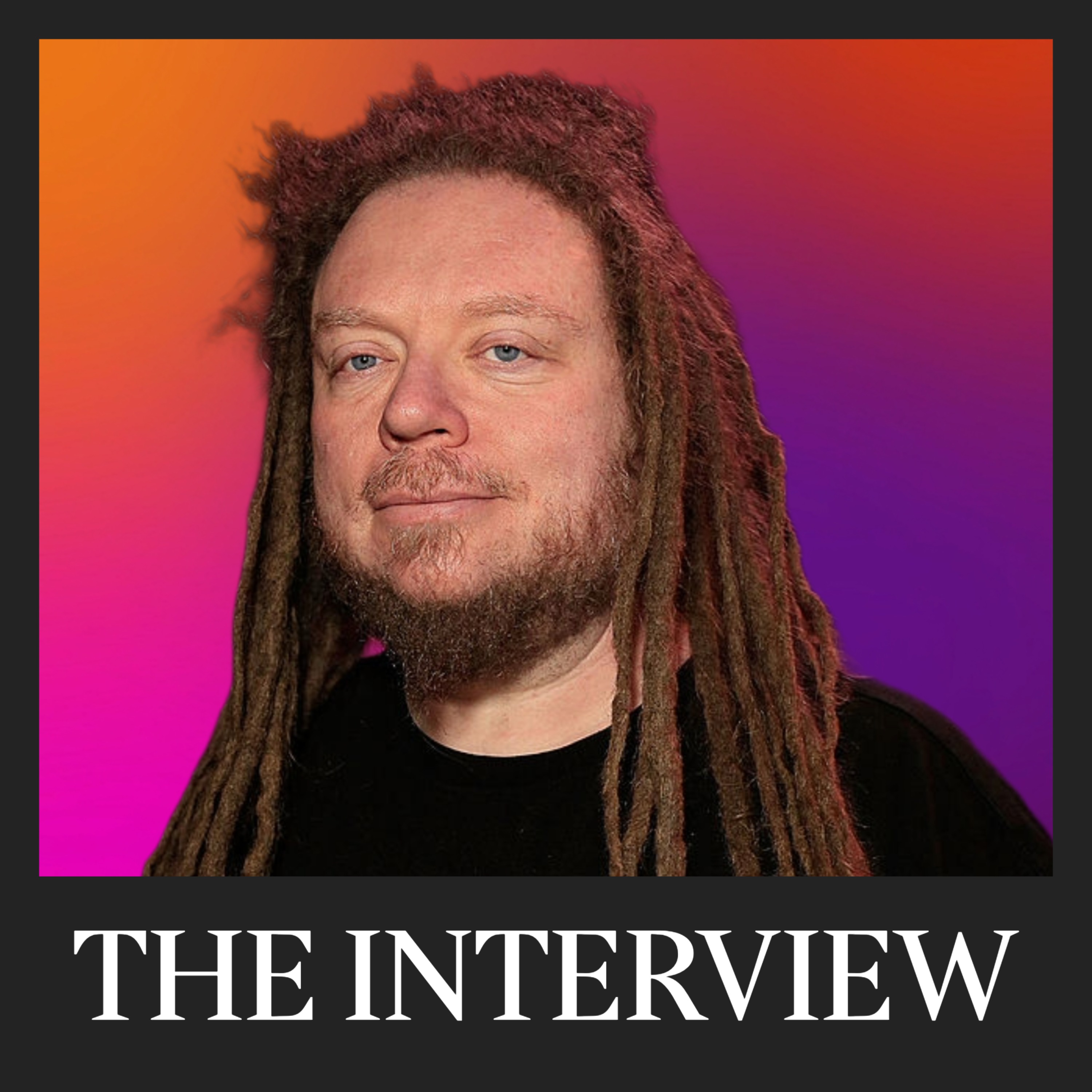
Carmen Palacios-Beracchero, quantum physicist; founder/CEO of New Quantum, a Cambridge University spin-out focused on connecting quantum computers.
Qubits enable superposition and entanglement, but real power requires scalable hardware; New Quantum’s goal is to interconnect many processors into a quantum “data center.” Quantum could help simulate nature at the atomic level (catalysts, proteins/enzymes, chemical reactions) and optimize systems with many interacting variables (e.g., weather/energy grids). She cites ammonia production as a near-term candidate: fertilizer uses ~2% of world energy. AI interaction: quantum may improve efficiency and accuracy for physical-world tasks where training data is scarce. Cybersecurity: less worried about “Q-day” than about broader unknowns; encryption updates via new standards should be implemented. China: heavy state funding across quantum computing plus communications, sensing, and memories; funding levels several times larger than US/UK.
Written by AI. May contain mistakes.
Learn about Carmen, a quantum physicist and CEO of New Quantum.
“When you're running a growing business, the right systems can unlock your full sales potential and make fulfilling every order effortless.”
Learn about Carmen, a quantum physicist and CEO of New Quantum.
“And this week we are delving into the world of quantum computers, the computers which could define the next era of tech.”
Carmen explains the basics of quantum computing and its potential.
“So in that spirit, what is quantum computing?”
Explore how New Quantum differentiates itself in the quantum space.
“I'm very curious to know how you got into it.”
Carmen discusses the transformative potential of quantum technology.
“and assuming this all works, what does it mean for the world?”
Understanding the relationship between quantum computing and AI advancements.
“But it's that sort of moment where the rest of the world who outside the sphere of quantum physicists say, oh, we get it.”
Explore the potential and concerns surrounding quantum computing's impact on technology and society.
“So it should be able to cut some workloads that are hard.”
Explore the potential and concerns surrounding quantum computing's impact on technology and society.
Discuss the competitive dynamics between countries in advancing quantum technologies.
“Switch today at ShipStation.com code audio.”

Get the gist, explore an idea or ask about something said.
 Claude
On Times Tech, what are the key points of this episode?
Searching your listeningAutomatic transcript. May contain errors.
0:00When you're running a growing business, the right systems can unlock your full sales potential and make fulfilling every order effortless. Switch to ShipStation before peak season so you're prepped and ready before the rush hits. ShipStation connects Shopify, Amazon, TikTok Shop, and over 200 more marketplaces with one platform that does it all. You can manage orders, sync inventory, track returns, all automatically. Everything your operation needs, all in one place. Upgrade your shipping operations to stress-proof your biggest sales days and capture every bit of potential revenue. Go to ShipStation.com and use code AUDIO and get 30 days free.
0:30You're a pro at running your life, at committing to your workout, at showing up every day. At Bombas, we're pros too. Pros at making socks. Our sport assortment has specialized socks for whatever sport you're committed to. Running, hiking, golf, Pilates, and so much more. Made with sweat-wicking yarns, blister-fighting details, and targeted art support. Bombas Sport is pro-level socks from the pros of socks. For another pro, you. Go to bombas.com slash audio and use code audio for 20 % off your first purchase. That's Bombas.com and use code audio. This episode of the Times Tech Podcast is sponsored by KPMG.
1:06Katie, we've been tracking the AI surge for a while, but some of the latest data is pretty striking. It is. KPMG's latest quarterly AI pulse suggests that 7 in 10 UK business leaders still see AI as a top investment priority, even if the economy slows down in the next year. But turning that investment into tangible value is another question. And so a lot of organizations are still figuring out how to move from endless AI pilots to something that works across the business. KPMG's focus is on that gap, helping organizations scale from the pilot phase to AI-powered transformation they can trust. To find out more about how KPMG can help your organization make the difference, you can visit kpmg.co.uk forward slash AI.
1:58Hello and welcome to the interview from Times Tech, our weekly conversation with the people shaping the future of technology. I'm Katie Prescott. And I am Danny Fortson. And this week we are delving into the world of quantum computers, the computers which could define the next era of tech. And our guest today is Carmen Palacios-Beracchero. Yes, you'll be relieved to know we're swerving AI. Carmen is a quantum physicist and the founder and CEO of a British company called New Quantum, which is the spin out from Cambridge University that effectively does the networking between quantum computers. Quantum computing for me, a little bit of a blind spot.
2:39I don't think you're the only one, actually. Yeah, I know. But I think it's one of these things. It's a glimpse into the science fiction future that hasn't quite arrived yet. And never seems to, right? Yeah, exactly. The classic five years away from being five years away. But there has been steady progress from folks like Google, etc. And we'll get into all of that and what's happening in China as well. But it is interesting to hear people who are actually like, no, no, this thing is coming and it is going to change the world. And I would say if you're interested to know what quantum computing is, stay with us because Carmen gives a pretty clear explanation.
3:16And that is not something I say very often about quantum physicists. indeed so here is our conversation with carmen palacio speraquero from new quantum carmen thank you so much for taking the time i have questions i have so many many questions over the years we've had various people on the podcast talking about quantum computing and i'm going to be honest i just still don't understand it totally so you know the the intro to the old podcast used to be Ali G, being like, what is technology? So in that spirit, what is quantum computing? If I ignore my temptation as a quantum physicist to explain everything in the mathematically accurate way, I think there's some concepts that we can go through that are, I think, actually quite intuitive, even though quantum physics has this reputation of being completely unintuitive.
4:17But I would explain it like this. So in a classical processor, you've got bits that can only be zeros and ones, right? So arrow pointing north or south. In a quantum computer, you've got quantum bits or qubits that can be pointing anywhere in the planet. So already you're encoding a lot of information in that uncertainty of where they're pointing, which is what we call superposition, which is really just the fact that we don't know exactly where they're pointing. So that's the first thing. And then the second thing is that in a classical computer, these transistors are completely independent from each other.
4:56They don't know the state of the other. And so if you want to run a calculation, you need to try different combinations. sequentially. In a quantum computer, the bits are entangled. What that means is that they are intrinsically correlated. They know about each other's state. So taking the fact that they're pointing anywhere in that globe and that they are correlated, what that creates is a sort of massive superposed state that now means that you can sort of explore that two to the end at the same time. Effectively, it's just the processing power I imagine is exponentially greater than the kind of the best of the best today.
5:46That's right. And so you can explore all answers in one computation. That's the theory, right? That's not really how, like quantum computers in reality are actually quite different from that. And there's a lot of subtleties around the hardware and the circuits and everything. But that's, for me, an intuitive way of understanding why they're so powerful and what sorts of problems they would be powerful at. I'm very curious to know how you got into it. I'm a physicist, so I studied physics for undergrad. Before that, I had a brilliant physics teacher that was an astrophysicist and spoke to me about astrophysics and I loved it.
6:28And so I went to physics olympiads and stuff and then I studied physics. And then I knew that I wanted to do a PhD. From year one in the undergrad, I knew that what I wanted to do was quantum physics because I thought it was really beautiful. So I did my PhD in quantum optics, which is the quantum physics of light. How about your business then, New Quantum? What does it do and what does it do that's different to other quantum businesses? New Quantum is the company solving the problem of scale in quantum computing. And we're doing that by enabling quantum scale out, which means being able to connect many processors together to form a large sort of quantum data center, if you will.
7:11So whereas most of the industry focuses on scale up, this is a term borrowed from classical computing. It means making a single processor more and more powerful. Scale out means being able to interconnect many processors together so that you can scale horizontally and create systems that are orders of magnitude more powerful than a single processor will ever be. So we will need to interconnect many quantum processors together to achieve the sorts of scale that will unlock the problems that we're all waiting for. And New Quantum was the sort of category creator of this part of the stack. We were the first company back in 2021 to identify this as a problem that needed a solution.
8:01There were no quantum networking companies back then. And today we're the leading company in this category in the stack. and assuming this all works, what does it mean for the world? Because we've had many decades now of Moore's Law and we're now in this AI era. And, you know, these vast data center warehouses. We were talking earlier this week about, you know, the country of geniuses in a data center and all these incredible things that they're able to do. What does quantum computing unlock, given that, as you say, it's kind of like a dramatic step change in terms of just processing capability?
8:37problem-solving capability? You know, if we kind of crystal ball it, what does it mean for the world? It's a tool that will allow us to ask questions that we have never been able to ask before. I like to think about it in terms of the very small but impactful questions. So what quantum computers are good at is making us understand how nature works at the very small. So how atoms and molecules come together to form everything, catalysts, proteins, enzymes, materials, chemical reactions. If you're able to understand, to simulate these processes, you're able to design them in a more efficient way.
9:18In the same way as today, we use classical computing to simulate everything that we build pretty much, right? In the macroscopic world, you wouldn't build a building these days without simulating it. We want to get to that point for drugs, for chemical reactions. There's a lot of industries that will be impacted by what is essentially the understanding of chemistry and nature at the atomic level. And then the other category of problems that we believe quantum computers will be much better at is those where there's many, many, many, many interconnected parameters that all affect each other at the same time, like weather systems or the energy grid in a very electrified and diverse future where you've got millions of batteries and solar panels and wind farms all connected together and you want to understand how to manage this grid, for example.
10:22The reason why it's sometimes hard to get to a more concrete explanation of what quantum computing is going to change for humanity, more concrete than the sorts of things that I just said, is because we still need to do a lot of work to find that first killer application that is both exponentially more doable via quantum computing and very economically impactful for industry today. we have already applications that are scientifically useful and in the next few years we will move to something that's commercially and societally more impactful and it will become more tangent it feels like what you're saying is quantum needs to have its own chat gpt moment in many ways i mean the way you describe the computer at the start you're like this is what it should be like but it's not quite there and and just then you were saying you know these are the potential applications.
11:16But it's that sort of moment where the rest of the world who outside the sphere of quantum physicists say, oh, we get it. Have you got a sense of what that might look like or where that might come? This is all not to say that quantum computers aren't solving problems today, because today you go to a community in high performance computing, and they're already finding six 10x more accurate and faster answers with quantum computers. But again, it's just problems that, you know, your listeners might not care that much about. In terms of when that moves to something impactful, I think it's really in the next few years.
11:54I think in the turn of the decade, we'll start to move to what I call early commercial advantage, where we can start to attach some sort of quantifiable business advantage to solving a problem on a quantum computer. And it will be something like understanding a chemical reaction that is very impactful in society better. So for example, an example that people use in the industry is the production of ammonia. Fertilizer uses something like 2 % of the world's energy. If we can make gains on that reaction by simulating it, you know, 2 % of the world's energy is a big number, right? so those gains will have a quantifiable impact that people will understand does the world need quantum computing and the reason i ask is because it's 2026 every week we're talking about ai and every week we hear from the ai labs these things are getting so powerful they're going to be able to change the world they're going to be able to cure cancer they're going to be able to solve climate change they're going to be able to crack all of these problems very very soon We're already on our way.
13:04So I guess my question is, how does what you're doing interact with AI? Or is it being front run by AI? In other words, like, as these models get better, is quantum computing destined to be just this thing over here that's this little niche thing that can help a little bit, but it's like AI is really where the kind of societally important things will happen. The computing industry at large is thinking of a future where computing is heterogeneous in this way, right? And the role that quantum computing will play in that, I think, is twofold. And I think both of these reasons are important. I think it will be able to save AI from carrying out some workloads that are inefficient to carry out using AI.
13:55And that should be much more efficient on a quantum computer and therefore creating overall computing systems that are more efficient, thinking about infrastructure and energy requirements and things like that. So it should be able to cut some workloads that are hard. And then the other thing is around accuracy and around the availability of training models. So remember for things like LLMs, we had the entire internet of words to learn from. For creating drugs, creating new materials, understanding the physical world at the quantum level, there are no training models. That data doesn't exist out there in sufficient number, or sometimes it just doesn't exist.
14:42It maybe only exists inside some of the data of some companies. And so creating the data of how nature works at the small scale is computationally a very hard problem, which you can potentially cut corners on. we have been talking non-stop about all the doom mongering coming out of silicon valley around ai i guess i've got a two-part question for you around that first of all what do you make as a scientist of the warnings coming out of the ai labs and how much do you buy them and do you worry about them and secondly quantum has its own doom mongering associated with it you get a lot of businesses worrying about q day when quantum computing becomes mainstream and makes cyber attacks more effective and easier to perpetrate and can crack all encryption.
15:34And I just wonder how worried you really think we all need to be about that. I think I am worried about AI. I'm worried that we're building out infrastructure whilst things are still inefficient on one end and relatively unregulated on the other end. And there have been warning signs for a long time. and now they're coming from a different place. So how about looking at quantum then? It's a similar, people have great fears about the mainstream arrival and adoption of quantum computing. There's a huge responsibility that comes with the development of this tool. Imagine what you can do, you can design a drug or a material in the same way as you design something macroscopic, like a table.
16:21I mean, you know, it sounds simple, but that's the sort of thing that in the future we're talking about. So there's a huge responsibility with it. I'm more worried about, or I think we should pay more attention to that side of things. The cybersecurity threat side of things is very important, but there is already a solution that should be implemented. So there's a new standard of algorithms that governments and institutions should be implementing. And if that's not happening, then it starts to be too late. But in a sense, that's a problem that we understand and that we can prepare for. And that to some extent we have solved, at least for a period of time.
17:03I think the unknown unknowns and the power of being able to glean more from nature than we ever have before is where we should start to put also more thought. Last question. What's happening in China? Going back to the AI geopolitical race on AI, is there a similar dynamic between what's happening in the West, what things like what you're working on and what's happening in China? Do you have any sense of that? Or do you have any, like, are the powers that be interested in what you are doing? Of course, there are dynamics between China and the UK and the rest of the West in quantum computing. Quantum computing has been labeled as, you know, top three strategic technologies in pretty much every country.
17:50And from what we know, the levels of funding in quantum technology from China are several times larger than in the US and the UK. And like with other things, very state controlled. Something that's interesting is that it's funding a really big range of quantum technologies. so we hear about quantum computing and in quantum computing China for a long time has had the most powerful quantum computer but they are also funding a lot of other things so communications sensing memories and it is a superpower in in quantum technologies as well gosh yet another arms race thank you so much Carmen for coming on the podcast and explaining that so clearly Thank you both, Katie Zannie.
19:10This episode of the Times Tech Podcast is sponsored by KPMG. We often talk about the shiny object problem with AI, where things look impressive in isolation, but are much harder to roll out across a large organization. Issues like governance, workforce readiness, and trust tend to become more important as things scale. KPMG's approach is to look beyond AI as just another technology rollout, and instead, how it could redesign work across the organization and fit into wider processes and decision making. So it's less about individual use cases and more about how organizations can transform and deliver outcomes powered by AI.
19:50To find out more about how it can help your organization make the difference, you can visit kpmg.co.uk slash AI.
20:27We'll see you next time. Switch today at ShipStation.com code audio.
20:40So it sounds like, you know, quantum computing is still not quite here yet. We're still waiting for that moment. You're still waiting for the chat GPT moment. But it is like, it sounds so interesting. Like if you could basically kind of recreate biology, chemistry at the most kind of detailed level. and do it in a much more efficient and fast way. The mind boggles as to what you'll be able to do with it, but it just does feel like it's still hard to get my head around. It's still hard to understand when it's going to be here. It's still hard to understand when the world will wake up to it or when the industry will be like, ta-da!
21:17I thought it was interesting that she said she's not as concerned about the cybersecurity element. And certainly I hear from the banks here in London from the telcos, for example, that it's already something that they look at, that they worry about and that they're preparing for. So I see her point of view that that is the known unknown in many ways. But I thought it was fascinating that there'll be all these other things that we're just not thinking about that are coming down the tracks. And for me, that does feel like the parallel with AI at the moment. Yeah, you're gonna have to pace the frontier of quantum, right?
21:53Because I think what you're seeing now is a lot of like all of this cyber issues with AI is because we've had many, many decades of humans making kind of mistake-riddled code. And now you have machines diving in there and being like, ha, here's my zero-day exploit. But I think there's going to be a messy process where all of that gets sorted out as the machines fix the stuff. But it sounds like quantum again will then be kind of almost checking the homework or kind of poking holes in what AI will be doing over these next however many years. And to conclude then, that's the reason why there's also an arms race going on in quantum.
22:31And it's something we hear less about, but it's a huge, huge thing. So China and the US racing on the, also Britain and the British government putting a lot of money into quantum as well. Because it is seen as the new frontier that we need to pace. Indeed. So thank you very much for listening. And don't ever miss an episode. We're on the youtube.com. The podcast networks, wherever you get your podcasts. Wherever you get your podcasts, as I say, exactly. Like and subscribe. So like and subscribe, smash the subscribe button, and we'll see you next week. Goodbye. See you next week. Bye. Bye-bye. This episode of the Times Tech Podcast was sponsored by KPMG.
23:12One of the themes we keep coming back to is the gap between AI ambition and real-world application. And that's where KPMG is focusing its work, helping organizations move beyond pilots and think about how AI can change the way the business operates and how it fits into wider processes and decision-making. You can find all their insights and how they can help your organization make the difference through successful AI workforce adoption. Visit kpmg.co.uk slash AI. When everything is moving all at once, your workforce, your tech stack, your business, you don't need more tools. You need one solution.
23:54That's why Paylocity built a single platform to connect HR, finance, and IT with AI-driven insights and automated workflows that simplify the complex and power what's next. Because when everything comes together in one place, growth comes easy. Experience one place for all your HCM needs. Start now at paylocity.com slash one. When you're running a growing business, the right systems can unlock your full sales potential and make fulfilling every order effortless. Switch to ShipStation before peak season so you're prepped and ready before the rush hits. ShipStation connects Shopify, Amazon, TikTok Shop, and over 200 more marketplaces with one platform that does it all.
24:31You can manage orders, sync inventory, track returns, all automatically. Everything your operation needs, all in one place. Upgrade your shipping operations to stress-proof your biggest sales days and capture every bit of potential revenue. Go to ShipStation.com and use code AUDIO and get 30 days free.
This week, Nu Quantum founder and CEO Dr. Carmen Palacios-Berraquero explains how quantum computing could change the world — and why the industry is still waiting on its "ChatGPT moment."
She joins Danny and Katie to discuss the global quantum arms race between China, the US, and the UK and why she’s not worried about the quantum cyber threat.
The Interview is our weekly conversation with the people shaping the future of technology.
Get in touch: [email protected]
Presenters:
Katie Prescott, Technology Business Editor, The Times
Danny Fortson, US West Coast Correspondent, The Sunday Times
Producer: Marnie Duke
Video Producer: Bronwen Latham
Image: Nu Quantum
Hosted on Acast. See acast.com/privacy for more information.