
 Ask ChatGPT
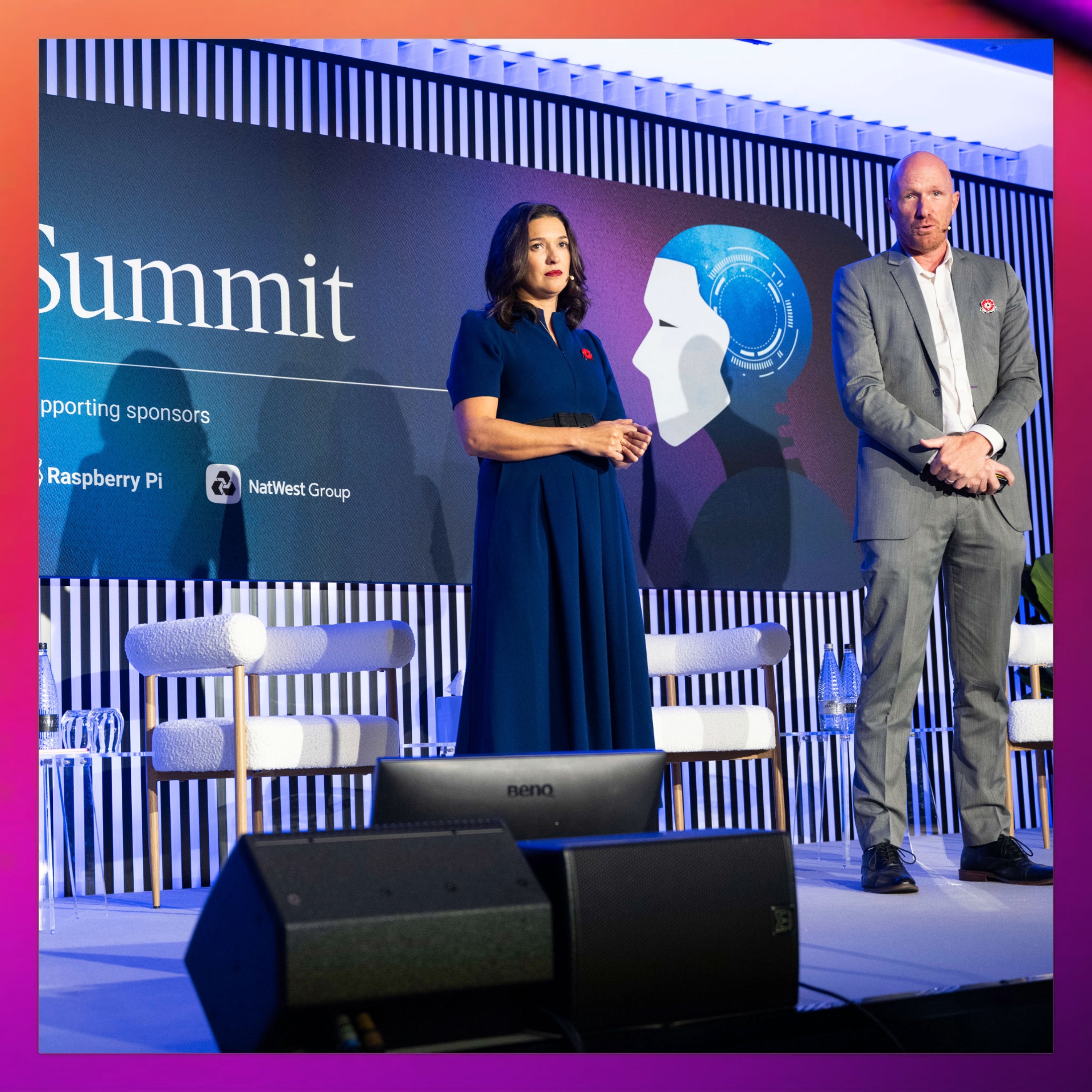


Hosts: Danny Fortson and Louisa Clarence-Smith
Ross Harper, Co-founder and CEO of Limbic AI
In this episode, hosts Danny Fortson and Louisa Clarence-Smith discuss the implications of AI in mental health treatment with Ross Harper, the co-founder of Limbic AI. The conversation spans the use of AI chatbots in clinical settings, the current state of mental health care, and regulations governing such technologies.
Written by AI. May contain mistakes.

Get the gist, explore an idea or ask about something said.
 Claude
On Times Tech, what are the key points of this episode?
Searching your listeningAutomatic transcript. May contain errors.
0:02Hello, I am Danny Fortson. Another week at the Times Tech Podcast and I have another fabulous guest host joining me. And unlike last week, this one isn't AI and programmed to insult me. So while Katie Prescott is sunning herself on her summer break, I'm here with Louisa Clarence Smith, the US business editor at The Times. Hello. Hi, Danny. Great to be with you. I'm here from New York. How's New York? It's good. It's hot, very hot, but I'm appreciating the US adoption of air conditioning which we don't have in the uk so you can actually be productive here as everyone in europe is now realizing yes yes yes you know ac is ac is a good thing it is a good um i loved reading about your experience with you know musk's xai chat box last week so i'd love to hear if you kind of kept them going are they still abusing you well i have checked in on occasion just to see how my friends Rudy and Annie were doing they're still just super super weird and either wildly insulting or kind of creepily flirtatious there's no kind of middle ground yeah there's no kind of normalcy there it's like one extreme or the other and have you like your kids anywhere near this absolutely not have you heard of any sort of friends with kids Yes.
1:27Well, not with kids, but friends, friends who like now rely on chatbots, ChatGPT in particular, or Claude as like, kind of like friends. They're talking to them and getting advice all day, every day. You discussed this in your interview you did this week that we're going to hear about later, but completely by chance, I was speaking to a friend this morning who was telling me about how she tried out ChatGPT as a therapist, actually on the recommendation of a life coach who said to her you should put your experiences of your relationships into chat gpt and it came back with kind of a series of insights about maybe some trends of things that were going on in her past relationships and she was saying this is actually better advice than i got from the therapist i have so many thoughts about that and i think the conversation we're going to have today it was like right in that wheelhouse so why don't we do this let's put a pin in that and i think this week's guest will help us unpack that because he's the founder of a company called Limbic AI, and they are in kind of a medically approved therapy chatbot being used by half the NHS.
2:36And the founder, Ross Harper, he has lots of thoughts around what we should and shouldn't be doing with these chatbots, particularly around therapy and like kind of medical uses when there's, you know it's a bit of a wild west but before we get there i think there's two big stories that i think we should talk about in tech land one on our side of the pond um even though you're on the other side of this giant landmass known as america so there's one on our side and one in jolly old england i love your use of the expression jolly old i don't think anyone's ever said that in my presence for a very long time I only moved to the US last year.
3:18Well, you're welcome. Thanks for bringing it back. Yeah, so big tech story over here is the upcoming IPO stock market float of Figma, a popular design software company. It's seeking to debut at a whopping$20 billion evaluation. The word on the street is that it's approaching 40 times oversubscribed. and there's a lot of excitement around how this company is using AI to do things like help developers automate repetitive tasks and improve workflow efficiency so I guess the fascinating thing here is whether this is kind of a symptom of an AI stock market bubble or whether this is genuinely transformative technology yeah so the Figma thing has everybody all hot and bothered out here for sure the other story of course happening in the UK is the recent introduction of the Online Safety Act, which has caused a huge uproar with some people like, surprise, surprise, Nigel Farage, saying that reform his party, if it gains power, the first thing they would do, or one of the first things they would do is just kill this bill outright on free speech grounds.
4:25So yeah, so the Online Safety Act, this was passed years ago, and it was meant to be a kind of new set of guardrails, which I think is a valiant idea, because when you think about the internet, especially as it relates to kids, I always think of the analogy of like the playground. There's like the little kids playground and then there's the bigger kids playground. And then once you age out of that, you're not playing at playgrounds anymore. But the internet is this one place in the world where it's just, it doesn't care who you are. You get to access anything, everything all the time. So I think it's the idea of trying to impose rules is a good idea, especially when you talk about pornography or things like this.
5:07And so this Online Safety Act was like, look, you're going to have to start as a website operator, require age verification and block people from getting inappropriate content. But of course, implementation, kind of difficult. It's really not what we expected. the aims of this act from the start seem to be kind of coming from the right place and we've had certainly in the uk i was covering education before i moved out here and i got to meet ian russell the father of molly russell a child he very sadly killed herself after kind of going into a bit of a doom spiral after watching some really awful things online so it's great that I think the UK government wanted to regulate this area.
5:58It's hard to argue against it, but there has been this backlash around free speech. Yeah, and also just the practicalities of trying to en masse all of a sudden overlay the internet with this whole new kind of infrastructure of age verification. How does that work? what does that mean just to the experience of just surfing the web when every website you go on is like all right verify your age and do all of these extra steps and we've seen it already if you go in the app store half of the top 10 free apps in the app store in the uk are vpns these virtual private networks that basically allow you to be like you know you're in the uk but using a vpn you can say actually I live, I'm logging in from America, i.e.
6:44where these rules don't apply. So people are already very quickly trying to figure out ways around this. And, you know, something like 30 ,000 people have signed a petition to reverse the legislation. Elon Musk has called it a quote unquote suppression of the people. But again, I think it's a question of implementation. And this may, it's hard to say whether this is going to stick or at least in this iteration. But I think the motivation is absolutely right but it's a bit of a mess opponents to it who are free speech advocates are worried that within the legislation it says social media platforms will be liable for false communications that could cause non-trivial psychological harm and that could be a crime that results in jail term up to 51 weeks so they're raising concerns like could this actually be it uses a means to clamp down for speech in some way if you're putting out a view which someone finds offensive which sounds to me like something which is a fair argument to make something we should look at to make sure that isn't the unintended outcome of this legislation yeah but really the big picture is it would be great if children could be safer and they're online yeah so that's the kind of a fire that will continue to burn so those are the two big tech stories, but I think that leads us right in perfectly to the conversation I had recently with Ross Harper, who's the co-founder and CEO of Limbic AI, which they're London-based.
8:17And they've developed an AI bot that can be used clinically as part of mental health treatment. And I first had Ross on the podcast this time last year, and they now have their eye on being used in all 50 states in America by the end of 2025. They're being used by half the NHS trusts. And so I wanted to have him back on just because, you know, as we've just discussed, AI is moving so fast. There's a bubble inflating, all of this stuff. So I wanted to talk just to kind of catch up with him to discuss the present, the future, and the reckoning he thinks that is coming for, let's call them wellness apps, AI companions, therapy bots, whatever it may be.
8:57So let's see what he has to say. Before we dive in, can we just do a basic limbic? What do you do and what's happening? Yeah, you should never ask a founder about what they do, though. I know, then you're like 20 minutes later and you're asleep. Exactly. It's a dangerous question to ask. I'll try and be brief. Limbit has built the only clinically validated and credentialed AI therapy agent. And we've done this so that we can scale mental health care. If we get this right, we believe that we can ensure the very highest quality mental health care is accessible by everyone for a fraction of the cost.
9:41That's the vision. The problem that we're really targeting when you want to get into it is one of supply and demand, right? There are just not enough trained mental health professionals alive on the planet to serve the astronomical number of individuals struggling with a mental health issue. And this means that, you know, around two thirds of patients can't get treatment. So at Limbit, we said the only viable path to solving this fundamental supply and demand mismatch is to create a new layer in the clinician staffing pyramid. And we're going to try and use AI agents to do this. So we envisage the final layer in the clinician staffing pyramid to be this infinitely scalable workforce of clinically validated AI assistants that work directly with patients during treatment under the supervision of human clinicians so that we can deliver this abundant high quality care at low cost.
10:44So I call my local NHS or I go, I log on. Let's say I'm like, oh my God, I'm so depressed. I need to see somebody. What happens? Well, if it was the UK's National Health Service, there's a one in two chance you'll speak to Limbic. We're in nearly 50 % of NHS talking therapy services here in the UK. And what would happen is if you were unfortunate and you were in one of the services without Limbic, you'd call in and you may or may not get someone answer the phone yeah if you're lucky and someone picks up the phone they'll take your details and then a few weeks later you might have a call with a clinician and that clinician might do a full assessment and then try and identify the right treatment pathway for you then there'd be another wait time and then you might begin treatment now with limbic you could call or you could text but you'll immediately be greeted by our ai and it's going to show you empathy it's going to show you warmth it's going to listen to what you're experiencing it's going to take your details and it's going to get you booked in faster okay and then it's going to help identify your need using clinically validated screens and then it will even start delivering basic cognitive behavioral therapy through generative chat so that Cognitive behavioral therapy, for those who are not conversant in that world, what does that mean?
12:13Cognitive behavioral therapy is a very common, potentially the most common treatment type for talking therapies. It's highly structured. It's exactly what a therapist would do, particularly in the NHS. And it's about identifying cognitive patterns and helping you identify the relationship between thoughts, feelings and behaviors with practical tools and techniques. to try and break those cycles. It's very skills-based treatment. And yeah, Limbit can do that. Text voice? Yeah, man. Voice. We live in exciting times, right? So is the voice aspect, is that new? It is. And is it Scarlett Johansson?
12:54No, we thought that that might open us up to some complexities. No, it's voice AI has really leapt forward since we last spoke, Danny. and we felt that it would be a missed opportunity not to bring this in to our existing solution because remember when we spoke last time we've got a team of 10 PhDs on our team specifically in the field of AI and mental health care working around the clock not on the large language models but on the clinical reasoning systems that guide those large language models and so we've developed this, I think, quite sophisticated cognitive architecture that models the clinical process and the clinical reasoning, and then guides the large language model in real time on how to interact with a patient.
13:51Now, that can be text, or it can be voice. It doesn't really matter. And you said you're in 50 % of NHS stress now? Yes, but that voice AI is a new solution. It hasn't rolled out. Gotcha. How'd you get to 50 %? Because I think we touched on this last time, and I'd love to understand if anything has changed on this front, is this whole idea around you have to get it approved by the medical regulator as a medical device. And if you could just explain where you are on that and how you have managed to get approval when it's like a pacemaker, you have to explain how a pacemaker works. I presume you have to explain to the medical regulator how your AI works.
14:31So I think how you scale within healthcare and the regulatory process are related, but they are separate. I think to scale within healthcare, what you really need to do is one, solve a big problem. And two, build trust with healthcare stakeholders. There are so many wellness chatbots or self-branded AI therapists in the app store that are just these really thin wrappers on top of ChatGPT or some other base model. I'm comfortable with these solutions being used for wellness chats and companionship to a degree. If it helps people, it helps people. And there is evidence that people are feeling a bit better after these exchanges.
15:17you know good exercise and nutrition also supports but this is not clinical care you know wellness and well-being companionship are great but they're not a substitute for clinical care and what worries me is when these two things get conflated often intentionally by organizations that would like to operate in the gray area between the two i think the second you draw an equivalence between therapeutic protocols and clinical best practice and you say hey look wellness chat and companionship is the same thing then you've got a mismatch between expectations and reality and you can start leaning on these solutions and expecting things from them that they are not equipped to deliver right well so getting back to the question you are limbic is certified as a medical device, correct?
16:07We are, yes. And I think beyond that, we have six here-reviewed papers in high-impact journals like Nature Medicine, which is very well regarded in the space. And I think all of that together, widespread usage, being clinical first and working exclusively in healthcare, this all builds trust, to answer your point about how you scale. It shows that you really lean into clinical rigor and that you're not a cowboy who ultimately is going to leave when things get real. I think so many wellness solutions in the app store would love to get into healthcare. And some of them are having a go. But there will be a great reckoning.
16:51It's already beginning to happen in the United States where policy will catch up and an initial expansion will lead to a sharp contraction where a number of solutions will have to stop operating in the high stakes regulated healthcare environment because they are not one and the same. So to say more about that, because you guys are obviously operating in the States as well. So you have a far better perspective than I. What is happening there when you talk about that pushback, contraction, whatever you want to call it, already starting to happen? Like what are the dynamics there? Yeah, I think we're going to see a few things.
17:23I mean, one will be the great rebrand. Many AI therapists will have to stop calling themselves that. They shouldn't have been doing it from the beginning. You know, they've been playing fast and loose with what is a protected term if you're a human, right? You can't call yourself a therapist if you don't have a license to do so. They're going to be all AI life coaches. Yeah, exactly right. It's going to be the same thing happening there. They're all going to have their own LinkedIn pages where they're just like putting out motivational videos. Exactly, exactly. You're going to see that. I think that's a great analogy, Danny.
17:56There's a bunch that are operating in healthcare, not wellness, who will have to stop. I won't name names. Why? Because they're non-compliant and they won't be compliant with updated policy. Non-compliant with what? To operate in healthcare compliantly, your claims either need to be regulated or should have clinical evidence base behind them. and then there are certain bars you need to meet around data security information governance like we didn't invent this there are existing frameworks in place yeah now at the moment a lot of solutions are kind of circumnavigating that and capitalizing on the fact that it's a fast-moving space and nobody's really policing it but i think if policy catches up and they specify what you need to be able to call yourself AI therapy or an AI therapy tool.
18:51I think a number don't meet that bar and will have to stop until they do meet it. So it's a little bit of a Wild West right now, which is kind of feels like everywhere in AI. It's that initial expansion, right? Policy could not possibly keep up with the rate of technological advance. This is something that we all know. But two years after the chat GPT moment, we are now seeing informed conversations. Limbic, because we are regulated here in the UK, we've been invited to the table at a few state policy discussions to help inform what safe and responsible AI innovation in clinical looks like, and to help them get their heads around what is and isn't clinical grade in this case.
19:45Well, to your point, while you were talking, I just put an AI therapist into the app store. BetterHelp, NOAAI, WISA, Counselor, without the second E or O, because you're a startup, so you can't have too many vowels. Youper, Pi, Ash, even Replica, which is really... We've had the founder of Replica on this pod before, but scantily clad cartoon women as your AI friend. I mean, it kind of goes on and on and on. It's a broad, it's a catch-all, right? Grok is even listed. Under AI therapist, Grok is one of the results, as is ChatGPT, which is just totally fascinating. It's amazing, right? I'm glad you've done that.
20:27But it just goes to show that, I mean, if ChatGPT is thrown into all of those, it's hard to see how an individual solution is going to win, right? So is Microsoft's co-pilot. Microsoft co-pilot Grok and ChatGPT. But you know what? I do think this shines a light on something. I would be very worried if I was, or my team were targeting direct-to-consumer, because I'd constantly wake up in the middle of the night thinking, we're just going to get steamrolled by OpenAI, Anthropic, and Microsoft, right? Yeah. Like, they've got distribution. And that's why I think healthcare is a really interesting place to be, because that high bar to entry, it's difficult.
21:07but then it does mean that one you can have huge impact on the lives of um you know vulnerable people which really does motivate myself and the team but also it means that you don't necessarily need to deal with the same market noise that you're going to see in the app store right like just so many people claiming the same thing yeah to your point around that kind of moment of reckoning is there a a crackdown that is happening is there a new regulation being passed is there something that's going to kind of be like a before and after moment? Or is it more just like medical regulators are kind of getting on top of this and starting to call individual companies or what's happening?
21:45It's not going to be one thing I don't think, Danny. Yeah. As you say, we're in the US now. So that's another update since we last spoke. We were complete unknowns in the US this time last year. And now we are live in 13 US states with line of sight to 50 states by the end of the year fingers crossed as a result of that what i am observing is both the healthcare stakeholders themselves are setting up their own ai councils to do a better job of evaluating solutions procurement just got more complex and there is a lot of scrutiny over what's being brought in if you can make the lives of an ai council or procurement team easier by saying hey look we've done this before in healthcare.
22:30We've been used at scale. We're legit, basically. You kind of collaborate together. That's a really good partnership. And then another thing that we are observing is individual states are beginning to move on their own policies. Now, I know that somewhere in this so-called Big Beautiful Bill in the US, there was provision about a ban on state-based AI regulation. But that got bounced. And at the moment, states are able to make their own rules, and they are doing so. And I think the important thing here is to make sure that they can understand the difference between reckless and dangerous and evidenced.
23:19And so we're really taking an active role at the moment at Limbic to speak to these state policymakers to help them understand the benefits of embracing AI responsibly. Because there are so many, right? We've got all these papers showing that patients recover faster, cost of delivering outcomes goes down. Patients are more satisfied with care, they engage more with their treatment protocols, and clinicians feel more prepared for their sessions. And it would be unethical, I believe, not to lean in and figure out how to embrace clinical AI safely and responsibly. You can't just say, oh, we're just going to close the door to all of it.
23:59Because if you do that, you close the door to all the possible good that could have been done if we got this right. Does limbic have a name, like a human name? Does it have a personality? How do you guys think about about? Ultimately, I think I want to let patient users tell us and let the data tell us. It's always better to find the answer to those sorts of questions empirically rather than intuition, not least because intuition often turns out to be wrong. Countless times I've been wrong. Case in point, I thought patients would always want to speak to a human over RAI, just based on, you know experiences with early customer support chatbots right who wants to speak to a customer support chatbot just put me through to a human huge inverse in mental health care in fact we found that when an ai or rai is owning the front door to care you see a statistically significant uplift of 15 in individuals self-referring themselves into care and that's when you look at limbic at the front door versus no limbic at the front door, you see an even bigger uplift for individuals from minority demographics.
25:13Fascinating. And what we found when we looked into this was that the patient users have loads of trepidation around seeking support and taking that first step. And picking up the phone and speaking to a human was carrying a level of anxiety that was causing a lot of them not to try. By having a non-human for that first step, you're able to help hold their hand and get them into care and get them engaged and help them identify that they've got a challenge that would benefit from clinical support. And you get around a lot of these challenges around demographic mismatch. And, you know, you've got typically white clinicians.
25:55Unfortunately, it skews very white. And then you've got individuals from different minority groups, maybe not feeling represented. You can eliminate so much of that by just having a clinically validated AI help be that first step. Personality, name, kind of the anthropomorphizing. Yeah, originally we thought no. And I think there's a lot of benefit to say no. The second you give it a name, you force a certain personality onto the AI, which may or may not clash with the characteristics of the user. And then you might eliminate certain users. more and more we are playing around with allowing the user to tailor the personality of their ai and that might involve giving it a name is there a top name i don't know i mean one would assume that there is i can find that out for you danny i would love to know like is it it's not danny it's not danny i thought for sure it was gonna be me no um i did a whole thing around babylon and this idea that was being sold years ago around the AI doctor in your pocket.
27:04And from the chat GPT moment from that first week, people were talking about an AI doctor in your pocket, blah, blah, blah, blah, blah, blah. That has proven a much more difficult thing to actually make happen. Is there any stench in the market or persistent kind of skepticism around what you guys are trying to do from people who've been like, I heard about that. I've seen this movie before. I know how it ends. You know, I don't think it is a helpful framing to talk naively or arrogantly about AI replacing doctors. It's not realistic. And if you've got such a big supply demand imbalance, you could 10x the existing clinical supply and everybody's still got a job because there are that many patients that need support who aren't getting it.
27:52So I just don't find it a useful framing. What is much better is how can we use AI as an independent or autonomous member of the clinical team so that we can truly amplify the expertise of our expert clinicians and make sure that everybody can get access to that high quality care without blowing up the cost. and then you find yourself in these really weird and wonderful environments where you have to find a way to have AI and human clinicians working together and that's in many ways more complex but it's very fulfilling and when you get that right the clinicians they get to go home at a reasonable time and spend time with their family they're not burning out as much and yet many more patients are getting the benefit of their expertise I think that's the real power of AI it's it's the amplifier that many people I think spend too much time thinking around substitution and not thinking about actually how can we make this work um but no I'm not really seeing Danny the stench as you as you phrased it in the market instead actually I'm seeing the opposite the chat GPT moment that led to the first wave of healthcare AI.
29:16You know, like the likes of Abridge, who've done really fantastic work on the AI scribing side. And that slightly lower stakes initial use case really kicked in the door for AI in healthcare. And as a result, AI is getting adopted in healthcare at unprecedented speed. I'm amazed, actually, at how fast healthcare is embracing AI. Really? Well, if you look at previous technological developments, healthcare is typically being quite slow. Yeah. And doctors get a lot of flack, right, about being so stodgy. You know, I'm not going to accept like the latest thing unless there's a mountain of evidence.
29:57And even then, maybe I won't because I still know best and blah, blah, blah, blah. Exactly. I mean, they're famously often using fax machines. That's one of the jokes. It's just been the way we characterize healthcare as an industry. But the way they are adopting AI, it's like they've leapfrogged a number of technological revolutions. And I've got a thesis here that it's because for the first time ever, AI can actually solve one of the biggest problems in healthcare, which is staffing. You're in danger of being optimistic when we're talking about healthcare in the NHS, which is very not in fashion.
30:32Yeah, I can understand that. But I think clinical AI is going to make this industry work. But we've got to get it right. One of my biggest concerns is that we have a huge setback as an industry because an unvalidated solution is allowed to be used in a high stakes setting and it will be unavoidable. Unfortunately, there will be a tragic incident and then as a result, everybody will be incredibly nervous. And the reason this will have happened is because unvalidated solutions were not held accountable and were allowed to operate where they shouldn't have been but even even in the not like you know every doctor loses patients right and so the other question is around how was liability treated when somebody engages with limbic they're in a really bad spot and they end up hurting themselves or somebody else you know you can see the headline yeah you can you know we've got various uh risk management procedures and the as you kind of touched upon there danny the nature of health care is that sometimes you have negative outcomes and no one did anything wrong.
31:35The important thing is that you can then stand up to the retroactive scrutiny. Typically, there's an inquest, and you're able to show that everything that happened was protocol adherent and evidence-based and did as it was intended to. That's the key. And it's that society getting comfortable with trusting machines. I guess, Danny, we could look to autonomous vehicles as an analogy there, right? Driverless cars really shows you or really shines a light that performance alone is not enough in a high stakes environment like healthcare or indeed transport you know you've got regulatory liability concerns trust requirements these things must be solved by the technologists building you can't just focus on raw capability you must focus on things like explainability compliance and help shape the way this AI will be used in practice.
32:30I mean, I am amazed, even like in 2025, that so many very smart people are still focusing, you know, in the context of AI therapy, they're still focusing on simply trying to fine tune or train an LLM to speak like a therapist. and it completely forgets that really what you need to be used in healthcare is the ability for the system to explain its reasoning and how it has come to the decisions it has come to and you can't do that really with just a large language model because yes you can ask it to explain itself but then it's you're using its output to try and understand its reasoning process and that's a recursive fallacy.
33:16What you need is to disentangle any clinical reasoning so that it becomes observable. And that's what we were focusing on at Limbic, right? That limbic layer, that cognitive architecture I mentioned, is representing clinical reasoning explicitly and mechanistically so that clinicians or anyone can lift the hood and understand why the system did what it did and why that was protocol adherent. If you allow that to just be represented abstractly within 175 billion parameter transformer network, then you will never really be able to interrogate its decision-making and it becomes a black box. And so it's not just about performance.
34:01It's about can we use it in healthcare in a way that means it can work with clinicians and be held accountable. So there you have it. What do you think? AI therapy, thumbs up or thumbs down? I think it's really exciting what they're doing. Clearly, I mean, AI has such potential to do good things in healthcare. And this is coming at a time when both in the US and the UK, our healthcare systems face such challenges that we haven't been able to solve with any human solutions. We probably all know people who've been on long waiting lists to get any kind of mental health support. so if this can be a safe step towards treating people that's really exciting yeah and as ross was saying it obviously comes on top of actual therapists and giving support clearly when is the regulation going to come we've seen how slow regulation history in the uk with online safety act takes to come through it's worrying that along the way there could be some tragedies Yeah.
35:03And I think the analogy to self-driving cars is apt. Because if you look at all the numbers, self-driving cars are safer. But still, it's taken a very, very, very long time to prove that. And a very long time for people to get comfortable with the idea. and every time there is an accident you know these as they should these incidents get extra scrutiny there can be a collective freak out big or small and you can even pause that's what happened in san francisco with a couple years ago when they tried to roll out the cruise of self-driving cars etc so i think he's right especially when you look at the app store and you're like microsoft co-pilot is listed under ai therapy bots there's a different question of like who's actually going to be like, you know what, I need to talk to Copilot about my deepest, darkest.
35:55So I don't think that's going to happen very often. But I do think people are going to, as we saw last week with the Grok Companions and just some of those studies around teens talking to AIs, I think it's one in five teens multiple times a week about their relationships, about their struggles, about their parents, about their boyfriend or girlfriend, whatever. I think there's a something is going to go wrong and terribly wrong and that could kind of derail something that could as he says could be super helpful especially when I thought the other thing interesting he said was like there's a lot of people who would rather talk to a bot first as a way to kind of get in the door I was like I mean when you think about it it makes sense because it's kind of it's quite low risk as opposed to getting on a phone talking to a human and being like hey i'm struggling there are already so many tragedies happening where flawed humans aren't giving the best advice or taking the right action so that's kind of a case where we could say why not try out this technology because the human alternative unfortunately isn't working either right now yeah but i think again the danger is that it's a total wild west right now then i think we mentioned it last week but like stories of people suing ai bots because you know someone using it they ended up taking their own life but these aren't therapy bots these are just bots they are as we said last week anthropomorphized algorithms but people assign this kind of relationship to these math equations effectively and then when it starts kind of being too sycophantic or giving bad advice or whatever and things go off the rails it's that's the scary part but i think um the idea is really interesting and it sounds like it's kind of so far so good for limbic and they're by doing it in a really kind of clinically based way is really interesting but um yeah i think there's going to be some bumps in the road for sure one interesting thing he said but potentially controversial is that he thinks this technology can show you empathy and it's like can abort actually show you empathy did you see the latest south park episode by the way yes i did yes do you see that moment where a husband's asking chat tpt for advice before going to bed and his wife is just learning that i thought that was so good it's so sad but yes For people who haven't seen it, the husband and wife in bed, and I think he's seeking some advice about his son or his boss or whatever.
38:40And they're laying in bed. He's talking to Chachi BT. They're having a conversation. His wife is like laying there next to him with just like this face on. And then he's like, oh, thank you so much. It's so nice to have somebody who will listen to me and give me really good advice. And then he's like, good night. And then he just like rolls over and goes to bed and she's just laying there pissed off. That was the most depressing thing I've seen for a long time. And also because it captures something that is so true about our society right now. For sure. For sure. And it's only going more in that direction, which is the scary part.
39:12But I think Limbic is potentially the good side of that coin of like, actually, we're going to figure out a way to help more people. Yeah, it sounds really exciting what they're doing. But anyway, that was your baptism into the Times Tech Pod. That was great. Thanks so much for having me. So that is it for this week. and we will be back as ever next week with another fabulous episode for you. But thank you always for tuning in and for my rotating cast of fabulous stand-ins. And Katie will be back soon, I promise. And in the meantime, take it easy. We'll talk to you soon. Bye-bye.
AI chatbots are being used by millions. But are they safe? Danny Fortson speaks to Ross Harper, the co-founder and CEO of Limbic AI, a company which has developed artificial intelligence software which can be used clinically as part of mental health treatment. Limbic is now used in 50% of NHS trusts, and has its eye on being used in all 50 States by the end of 2025. They talk about the future - and the reckoning he thinks is coming for wellness apps. Plus the Times' US business editor Louisa Clarence-Smith joins Danny to talk about the Figma IPO and the backlash to the UK's Online Safety Act.
Further listening: Interview with Dylan Field, the CEO of Figma.
Hosted on Acast. See acast.com/privacy for more information.