 Ask ChatGPT
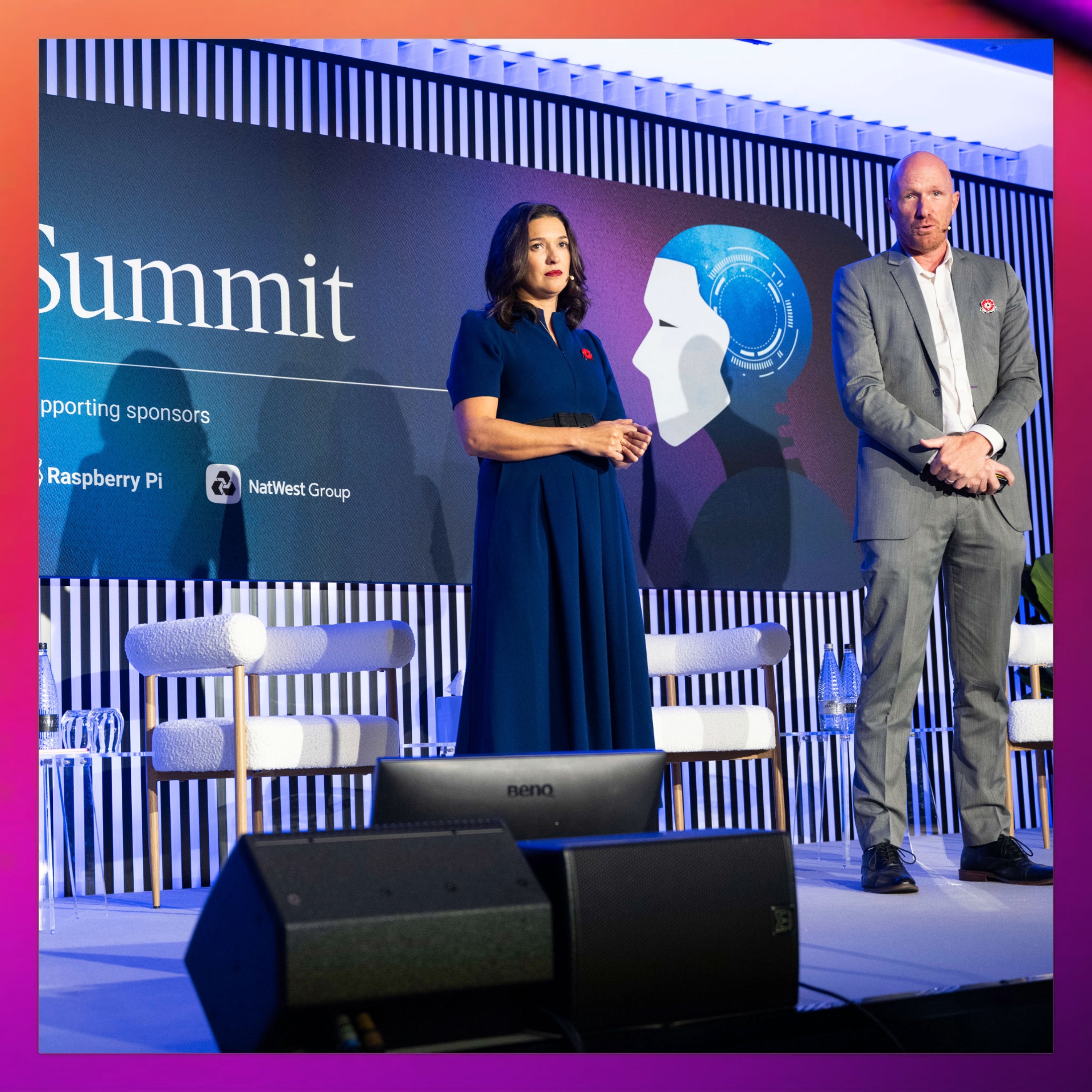

This episode dives into the competitive landscape of quantum computing, featuring an interview with Niccolo de Masi, CEO of IonQ, discussing the future of quantum technology and the implications of their recent acquisition of Oxford Ionics. The co-hosts, Katie and Danny, also touch on other technology news, including Apple's lag in AI, an audacious bid from an AI startup to acquire Google Chrome, and NVIDIA's controversial deal with China for chip sales.
Written by AI. May contain mistakes.

Get the gist, explore an idea or ask about something said.
 Claude
On Times Tech, what are the key points of this episode?
Searching your listeningAutomatic transcript. May contain errors.
0:01Hello and welcome to the Times Tech Podcast with me Danny Fortson and me Katie Prescott so Danny in the valley, Silicon Valley, and Katie in the city, the city of London together again, like it was always meant to be. How are you? Good to see you after such a long time. So it's been a month and you've come back and you've got a new accessory. I was so glad you noticed. How could I not? To tell you about this. Oh, did you just take a picture? I did. I just flashed at you. Yes, these are my new meta glasses. The thick black rimmed glasses sported by Mark Zuckerberg. Well, I was going to say they look thick.
0:49As a glasses wearer since the age of five, I can recognize a good set of bottle cap glasses when I see them. And also, I am minus eight and a half. So I'm also a glasses wearer. So I got my contacts in. yeah and these are these are on top um and the lenses go dark in the sun oh no oh yes i think you have to be at least 55 to wear those classes i i i am loving them i'm actually really really enjoying them explain why please explain why it's like i'm i've come back to you 125 more me wow and more intelligent i have a little a little voice in my ear that I can ask questions to. I can say, hey Meta, what's the top tech news today?
1:44Here are the top three tech news. First, France, Germany and the UK are willing to reinstate sanctions on Iran if it doesn't return to nuclear negotiations. Hey Meta, enough. Yes. Chill, Meta. I guess the question, because like zuckerberg and we all love to make fun of mark zuckerberg and he's showing up at every event now wearing these things but he's been saying for a while like this is the way we are gonna interact with our technology like the end of the phone is nigh and of course you have open ai working they have just hired johnny i to kind of create their own ai device but do you think this is are you living in the future right now with these things on your face i'm not wearing them all the time i have found it particularly useful with the kids so if you're wandering around and you just want to take a picture like that although i'm yet to work out where the pictures go when you've taken them they go to uh straight to the meta database of humanity my pictures of sheep in cornwall yeah they're not yours you probably have to pay to get them so that's quite fun um and i do like the hands-free aspect i like being able to talk to something while i'm doing other things right yeah and the novelty it is fun and is it did meta kind of are these a loner from meta like hey check these out blah blah blah yes i should say yeah meta's uh very kindly sent me a pair of glasses to test out well i just feel bereft i'm over here just my old school my analog glasses if i talk to them no one talks back to me but no one's watching you but i might just hold on hold on hold on i just took a picture where did it go it's the same place yours went i will i will work it out i'm just such a luddite they're probably on the app there's an app that connects with your phone um to make them work right so yeah this is my new new piece of fun for the week wow well you've been gone a month you come back transformed exactly welcome back thanks it's nice to see you it's been ages likewise we have a lot to catch up on but we have a lot of big stories and of course a big interview which you did yeah just this afternoon we've had nicolo de massi who's the boss of a listed quantum company one of our favorite subjects um us listed quantum company called ionq which has recently bought a british quantum business based in oxford oxford ionics for over a billion dollars and they're currently trying to get that deal over the line because as you can imagine there are various national security issues when you start getting involved in quantum so we're going to hear from him shortly i'm going to have lots of questions because as we've previously discussed with all things quantum it's always feels like that's that thing over there that is just as i say five years away from being five years away we're just like is this even like a real thing and i'm just so skeptical but i know that more and more money is being thrown at it oh my goodness there's a lot of money in this company and i can tell you that mr damasi is very very confident that it's going to be here a lot a lot sooner than you might think well he's a tech CEO I hope he's confident it's kind of you know it's an American tech CEO yeah it's a genre exactly um well I'll look forward to that but first we have to start with some news the first one being um this big deal between the chip giant Nvidia and AMD and the US government the US had banned the sale obviously of their most powerful chips to China under export controls, really over national security concerns, this idea that like, oh, we're going to sell our best chips to China.
5:28And these can be used for all kinds of things, not least of which is hacking or even weapons, drones, etc. And this has been going on for a while, the restrictions of US chip sales to China. What was absolutely wild about the story this week was that NVIDIA and AMD seem to have done this deal with the Chinese government, whereby if they paid 15 % of their revenues to the US Treasury, they would be allowed to sell their chips. I mean, this kind of raised many eyebrows around the tech world, but not least the way that President Trump is conducting policy in this extraordinarily transactional way.
6:06It's like, are we prepared to put aside our national security concerns essentially in exchange for cash. And if you're running a company, it makes it very, very difficult to know what you're supposed to be doing when these sorts of deals can be struck with the government. It's just not normally how things work. Yeah, no, it feels very, as you say, transactional or almost like, you know, mob like, you know, oh, you want to do business here? Where's my cut? there was obviously the deal that he did with tim cook yeah not that long ago saying okay you know you invest some money here in the states yeah we'll think about waiving the tariffs that we were planning to put on your products yeah and so the weird thing is just the 180 degree turn that the administration has made because in april they're like nope we are issuing a blanket ban you cannot sell our best chips or any chips to china the national security concerns are too great there's a whole part of the pentagon the defense establishment who sees this as this is like an arms race like nukes like whoever wins the ai race who can build like these you know kind of autonomous drones that can do various scary things the stakes are too high we can't do it that was april now we're in august and they're like yeah yeah you can now they they're selling their h20s nvidia's h20s which are not their top level chips but as we've seen with deep seek and others China can do a lot with not, you know, the top of the line stuff.
7:38Yeah. So four months after saying, you know, this is just too dangerous. Now they're like, if we get a cut of your business, then yeah, you know, feel free, go forth and prosper. Jensen Wong of NVIDIA was like, you know, in the White House. He was in Beijing. He was like leading the negotiations. And his argument and the argument of David Sachs, who's the AIs are, you know, billionaire investor out here. fellow podcaster yeah yeah from the all in podcast his view all along has been like let's build this whole new ai world on american technology because if the argument goes if you cut out nvidia if you cut out amd then into that bridge steps huawei and it'll force the chinese to kind of get better faster whether you buy that argument or not it's not like they're going to stop trying That's exactly the argument that Jensen Huang's made, isn't it?
8:32Several times he said, look, you can put these blocks on us selling stuff, but it just means they're going to create their own things. And they've got fantastic technologists there. And the weird thing almost about this is the H20 chip was specifically designed by NVIDIA for the Chinese market to conform with US restrictions, which is back to our original point about ways of making policy. If you're a company and it takes you a long amount of time to develop something and you're working around a certain framework and then that can just change like that, it makes everything very difficult. I was speaking to some people in government here to find out what sort of impact all of this is happening on the UK semiconductor industry.
9:11And they were saying at the moment, we're just not doing anything because things change so rapidly. There's almost no point issuing any guidance or coming up with any decisions. No, exactly. it's the kind of classic strong views loosely held or whatever the saying may be it's just like nope this is an existential threat to america are you gonna give me 15 percent sold okay i guess we're not too worried about that i guess i guess it's gonna be fine and the final kicker of this whole thing is that actually the chinese don't want the chips that's so funny The Chinese government has come out and said, don't take those American chips, Chinese companies.
9:54That's, you know, they might have American spyware in them. I think that's also a little bit of face saving and a little bit of like, you know, kind of public theater. Be like, well, we don't want these chips anyway. It is fascinating just because AI chips are like this huge strategic asset now in geopolitics. politics and they're just becoming increasingly right at the heart of these like big bilateral negotiations and relations between like the superpowers and that word that i can never pronounce sovereignty sovereignty yes how do you say it so i asked meta i'm gonna ask my glasses hey meta how do you pronounce sovereignty sovereignty is pronounced as ass did you hear that sovereignty there you go great great pronunciation um that's actually impressive that it could hear the mangled version of serenity and then actually like no that's sovereignty see 125 more intelligent at least it's crazy um well speaking of devices this story i think is worth talking about which the basic question is why does apple suck you said it not me yeah well so we're like two and half years almost three years into this kind of ai race siri still sucks apple intelligence sucks apple is losing ai researchers to meta and others they're like kind of nowhere in this whole ai thing and i know their whole business model is like they're not first to market or second to market or third to market they're just the best to market they wait till they get the thing and they roll it out.
11:39But the reason I thought about all this is, you know, there's a chart doing the rounds out here around how much Apple has spent buying back shares in the past decade. Go on. They've spent 700 billion. God, 700 billion dollars just buying their own shares to prop up their share price. So heading toward a trillion, they're probably gonna spend about another 100 billion this year. And historically, tech companies never paid a dividend, partly because they just didn't make enough money and there's also this ethos around you spend all that money on r &d because this place is all about inventing the future buying back shares is almost like a an admission of defeat but apple as we know has been this huge like stock market darling was for a long time the most valuable company in the world that's been lapped by nvidia but just this whole idea that what would you say with the last real product drop was from apple yeah it's a very good point i mean the last iphone i remember speaking about this on the pod actually it didn't exactly make your jaw drop no i did a little research on this you know not with my meta glasses but with just my normal glasses on and just i don't know if meta glasses would talk about apple but they they came out the airpods were like the last product those came out in 2016 almost a decade well they did away with cables you know that was a that was a good thing yeah they had their vr goggles which were like a total flop they had project titan which was their self-driving car thing which they killed before it even saw the light of day so you're talking about like almost a decade in which they've spent more money they could buy like the top three or four companies in britain they could have bought tesla when it was struggling any of these ai labs or whatever they could have done a million things with that money and instead they're just pushing up their share price in the meantime they're getting hit by various antitrust suits i mean there's all sorts of things going on here in europe about their payments ecosystem and over in the u.s trying to break up their walled garden but you can't easily bet against apple they have got to tie up with open AI, for example.
13:52And they're only just starting to roll out Apple intelligence. It'll be interesting to see how long they can continue to defy gravity. Obviously, they make so much money. And Tim Cook's putting$600 billion into new plants across the US as part of this deal you mentioned with Donald Trump. You know, Apple's fine. But you just see what's going on in the market, see how quickly things are happening. there's like there's an earthquake going on and tim cook sitting still like buddha in the middle of it all just watching the rubble wave the dog and the meme with the burning house he's saying everything's fine um now of course now that i've said that you know next week they're going to come out with something that's like oh my god but anyway last story yes if we're talking about you know sitting on your laurels or taking big swings this is i love this so this is perplexity yes the uh ai search startup less than less than three years old three years old said that it would like to buy google chrome for 34 and a half 34 and a half billion dollars so almost double what it's worth itself and it said that it's got the investment in place to do this i'd like to be president of the united states it doesn't mean it's going to happen An audacious move, a big swing, an ambitious leap.
15:15Or as someone from inside the tech industry here said to me, a stunt, a very, very good stunt. Because, of course, Google's in the process potentially of being broken up by a judge in the US looking at the search market. They were found to have an illegal monopoly in search. So perplexed to say, well, hey, we've got a great idea. We can just take Chrome off you. And then you won't have a monopoly anymore. I don't know. I mean, what do you reckon? A stunt or something a bit more credible? Yeah, I think the CEO, which I should mention, unless anything changes, he will be coming on the pod soon. So we can ask him this directly.
15:51I think he is basically trolling us all. Hopefully we can ask him this directly. But he is very good at keeping Perplexity, this little upstart in this extremely, extremely difficult world of LLMs. They've launched their own browser called Comet. It's hard to kind of stay in the conversation, stay relevant. If you go back a few months, Perplexity, again, this company that's supposedly worth$18 billion, and I presume losing lots of money as all startups do. Also, it came out that, yeah, yeah, we're looking at buying TikTok. I guess I saw that. Are you? With what money? You know, like, and so here they are like a few months later and again, taking advantage of the moment and all of a sudden they're being mentioned as potential bidder for Chrome.
16:42I've got a copy of the letter that they wrote to the boss of Google. It's called Project Solomon. I love a good code name. Dear Mr. Pichai, we are excited about the prospect of the possible transaction, the transaction, between Google LLC, Google, and Perplexity AI Inc., a Delaware corporation, acquirer, we, are, or us, pursuant to the terms and conditions, everything goes on. Anyway, so it's a term sheet from the boss of Perplexity. I'm going to send one of these to Mark Zuckerberg. Dear Mr. Zuckerberg. What for? You don't know me. For his glasses. But I've got my own company and I think I can do what you're doing better.
17:25I look forward to buying it for$2 trillion. Then all you need, which is what they've got here, is a kind of space for your signature at the bottom. Danny Fortson, the Sunday Times. Just hit the docusign and be like, I'll have my people call your people. So yeah, it's a thing. I tried to get a response from Google yesterday. day they were very very tight-lipped about it i don't get the impression they're taking it particularly seriously um but it's got them some news coverage yeah exactly but we should get to your to the main event no yeah so as i said at the start um i sat down today with nicolo de massi who's the boss of ionq it's a quantum computing business that was a spin out from maryland and duke university set up in 2015 and then it listed through a spack in 2021 which is where Nicola got involved with the business.
18:20So pretty early in terms of listing on the stock exchange as a quantum company. They work with Microsoft and Google. Amazon has a$37 million stake. And a few months ago, they bought Oxford Ionics for$1.1 billion, which is the deal that he's now trying to get over the line. And he said in the past that he wants the company to be the invidia of the quantum world so that kind of sets the scene for you about uh where he's where he's coming at this from but it's got an extraordinary valuation so you know for for a company that's making 20 million dollars of sales a quarter with an m with a m it is valued at almost 13 billion dollars with a b.
19:06The world has lost its mind. This is crazy. And we talked about that and I asked him to explain quantum computing for us as well. You know, quantum computing is the next leg up in the computing revolution. And I would argue strongly that it is the largest, most impactful and final piece of the computing revolution. And in IonQ's case, we're doing that by trapping ions and performing calculations with nature's most fundamental, nearly perfect components, if you will. And so what will quantum computing allow people to do that they can't do at the moment? How will it affect people? They will grow the addressable problem set and they will add a lot of value in our case to unsolvable problems or problems that will take even the world's fastest supercomputer a century or even potentially a billion years to solve.
20:00And those tend to be applied science use cases, drug discovery, new materials, logistics, aerospace, of course, three-letter agency and defense applications. That's just the tip of the iceberg. In every computing evolution we've ever seen, most of the value, I would argue, comes from sort of emergent applications that people didn't hypothesize five years before. And NVIDIA is a fantastic example. And so is, by the way, the original mainframe business from 40 years ago. People thought there was just going to be an accounting usage for computers and look at us now. So highly confident that quantum AI will turn out to be more energy efficient, faster, easy to regulate and controllable than the neural network weak AI models that people are spending a lot of capex on these days.
20:53But I do think that when Microsoft is recommissioning Three Mile Island to power data sets and data centers, you have to ask yourself where this is going in the next five years. It can't be that the whole country's energy supply is going to be diverted onto the next Bitcoin halving as well as how to target better banner ads at you tomorrow morning. So your thought is that quantum computing will be a different way of approaching the AI revolution? I think it will ultimately be that. In the next few years, it will actually work hand in hand with classical AI approaches. So we just announced a couple of months ago a fantastic demonstration of our quantum computers actually in partnership with NVIDIA, AstraZeneca, and Amazon Web Services.
21:39And we announced a 20x speedup for a computational drug design approach, which basically turns a month of work into a day, day and a half. And that was actually delivered through a 648x speedup on the quantum algorithm piece of the problem. And then the classical workflows either side kind of brought that number down. But 20x is unambiguously quantum advantage. And I think what's going to happen is we're going to grow together. And then at some point, you'll start to want to run more jobs on QPUs than GPUs because of the fact that they're going to cost less ultimately and use less power. Let's try and understand what IonQ does compared to other companies.
22:18There are lots and lots of businesses working in quantum, trying to develop the computing power, trying to make it work, trying to make it viable. What do you do that's different? Well, there's a reason why we have the largest business in the space and the largest market cap and we're the best capitalized. We've been at it from a research perspective the longest. So our founder, Chris Monroe, in the mid-90s was the first physicist to demonstrate an empirical reality for theoretical postulates from Richard Feynman in the 70s. And we've honestly continually invested in what we believe is the path that has not just prevailed for the last 10, 20, 30 years but is prevailing now and will continue to prevail.
22:58I think every revolution in the technology space always had more than one startup, but you tend to congeal around a leader typically or two. In the search industry, it's sort of Google and Bing. And in the GPU space, it's NVIDIA and Broadcom. And so we think that the quantum computing space will be the same. We believe prevailing to date. Our machines turned on first. So our machines have been on the public Google, Amazon, Microsoft cloud for five years since our IPO. I think you're hard pressed to find anyone else who runs as publicly and has sold as many systems as us around the world and does as much useful work today.
23:37There are plenty of startups in every bit of the technology world that believe that in five years' time, they can catch up with a leader in that market. Graphcore is a good example of someone who five years ago said they were going to take NVIDIA on, take Broadcom on, just you wait. That did not happen. That did not transpire. And so leads in the tech industry – They're still going. No, they're still going, but I don't think anyone would bet on them to wipe the floor with NVIDIA or Broadcom for that matter. And so I expect people will continue to congeal around INQ because we have the most market presence penetration.
24:12We've been at this the longest and we continue investing. I guess the difficulty you've got though is it's not just one or two people. There are a number of companies in this space and some of the biggest players in the world, like Google and IBM, who you're competing with. Yeah. I mean, you know, how many physicists does it take to change a light bulb is kind of the analogy I would give you. There are plenty of companies who are announcing progress on their roadmap. Taking huge claims, yeah. Huge claims. But, you know, candidly, they are generally delivering on prototypes that are analogous to the work that INQ's founders did between 2001 and 2010.
24:50And do you include Google and IBM in that? I include, you know, I'm happy to go through one by one if you would like. But, you know, yes, we think that our machine today is superior to everyone else's and what it can do to deliver actual value. You know, we have to remember that there are people working at large companies who don't have machines that even turn on yet. Once your power button depresses, you need to build a software business, an application business. You've got to manufacture, you've got to build market share, you know, all the usual stuff. So yeah, I fancy our chances because I find in many areas of challenging engineering, companies that lead year after year and quarter after quarter are much more likely to extend that than to get derailed typically.
25:36How did you get involved in the first place with IonQ? It was around the float. Is that right? Well, I've been following the quantum computing space since I was an undergraduate student at Cambridge University. A lot of my friends stayed in the space academically. I always believed actually when I looked at progress rates in the early 2000s and the 2010s that the 2020s were going to be when quantum computing took off. And so I was either a visionary or delusional visionary depending on what your perspective is. in 2019, I ran a blank check company in the US called D &Y Technology 3. And I started doing diligence on the quantum computing industry.
26:16So a blank check company, meaning you're kind of shell business looking for something. Yes, a SPAC, a special purpose acquisition company or a cash shell, whatever you call it. Yeah. And we had$645 million. And I chose INQ because I knew enough to be dangerous about this sector. And I believe then I believe today, and I will always believe that the path INQ has picked, which is lower space, lower energy, lower cost, runs at room temperature, doesn't need dilution refrigerators, would lead to faster engineering progress and commercialization. And in my experience, I have typically seen that the first commercializers have an enduring advantage.
26:54I would never invest in a path that says, we'll commercialize five years later and hope to catch up. But isn't the issue with quantum that it hasn't yet caught up? It's always something that we talk about is on the cusp of happening, and it just never seems to materialize. I mean, we obviously don't see that at all in the sense that every time we add a logical qubit, we're doubling the compute space. And we're delivering real-world quantum advantage to a wide range of applications, logistics through to drug discovery through to fraud anomaly detection. And what I think people are missing is that quantum computing is going to advance at a doubly exponential rate.
27:34So it's not like Moore's Law where every 18 to 24 months you say, okay, the machine's doubled. What's actually happening in quantum computing is every time we add a logical qubit, we're doubling the compute space. And so, for example, our system last year was 36 algorithmic qubits. Our next one will be somewhere between 64 and 100. that will be probably 240 million times more powerful. And it's going to get more vertical after that. And the knock-on effects of this are going to be a reshaping ultimately of the overall compute space. It'll also be a reshaping of what happens on the cybersecurity side of the equation.
28:11So the reason why we're in the quantum networking business is that cybersecurity, of course, is a huge challenge today already, but it's becoming an even larger challenge, not just because, you know, let's call them bad state actors are more organized and are deliberately funding these exercises. But it's because classical computers are becoming more powerful and quantum computers absolutely are making tremendous progress in our case. And probably China's making more progress in the black budget, if you will, than people are aware of. That's certainly the vision that your shareholders are buying into.
28:44Looking at your share price, I mean, it's astonishing. It's gone up more than 500 % this year. Got valuation of about$12.5 billion, almost$13 billion. You've got this massive figure attached to the company. But then when you look at your sales, they're about, what,$20 million in the last quarter. Does that worry you, the mismatch between the two numbers? Do you wish that the hype around it was slightly less? You know, we traded a similar multiple to companies like NVIDIA, Palantir, Palo Alto Networks. Yeah, but they've got the sales perhaps to back up the numbers. Some more multiples. So something like 75 times-ish revenue for the year.
29:21And if you assume that we continue to grow at a healthy clip, these multiples are nothing unusual in the tech space, actually. Well, a lot of analysts are looking at you saying, well, we think there could be a bubble there. I mean, they can look at each of these companies and say that, right? And I think that debate plays out every day when our stock trades. And the reality is there's more people that think that it's expanding upwards and expanding downwards on a daily basis, right? So that is what a market is. I mean, we trade almost a billion dollars of stock a day and that price discovery happens daily.
29:52But you can see the huge demand for AI and perhaps that's not really showing yet in the quantum space. I mean, if you're making the comparison with a video, for example. We're earlier than the classical AI space and we're also not focused on where most of the AI classical value capture has been, which I would say is basically in advertising. So Google and Facebook are capturing AI value through banner ads. That is not what we're focused on, right? We're focused on applied science, huge value add, hugely complex problems. But we're not focused on microsecond latency and turnaround times for monetizing people, for example.
30:29And that's what's going on in the classical AI space. So when it comes to the$20 million of sales, who are your clients? It is a mixture of government and let's call it FTSE 100 or Fortune 500 customers because they're relatively meaty ticket opportunities for us, right? Not everybody has built a quantum network for themselves, but there's a number of telcos that have and financial institutions who are big customers. There are both government departments who are buying systems from us, and there are, of course, large companies who are buying partial systems or cloud access or want early access to the next generation system.
31:04If you think about our computing business, because of the double exponential growth, the reality is if you choose to run on an old system, you're at an almost existential disadvantage to your competitors as these systems keep becoming almost vertically more powerful, right? So if you are competing hypothetically for the stealth bomber 57 tender and you're a Lockheed versus Boeing, losing that is a$100 billion revenue problem. If you have an enormous grocery business and you want to optimize the routing and delivery of your trucks, that is a multimillion-dollar-a-day savings opportunity or not.
31:49And when you stand back and look at what we're delivering impact on, it is big problems where time matters. You've talked about being the NVIDIA of quantum before. Do you think NVIDIA would buy you? Is that the aim? I don't have an aim in the sense that we are a diversified public company. There is no controlling shareholder. Susquehanna bought a billion dollars of stock by investing in us after July 4th weekend. Morgan Stanley Investment Partners, I think, has bought about a$700 billion stake in the last week. My job as the chairman and CEO is to create shareholder value, run the business as well as I can, and make it, frankly, as expensive as possible for someone if they want to buy it.
32:32But our ambition, of course, is to become that$100 billion market cap company and become that trillion dollar market cap company. The quantum networking side of the house, everybody in the world needs. So cybersecurity today, I think, is an insidious, challenging problem where data breaches impact everyone's life. And honestly, quantum computing and the flip side of that, quantum networking, is a solution that everybody needs today to stop the data breaches. I like to jokingly say, you can spot our customers because they're the ones that are not in the news for data breaches. Quantum networking, quantum key distribution, fundamentally allows you to tell if somebody is snooping on the line when you're transmitting data.
33:16And so... It's quite a good sales pitch, isn't it? Making people afraid of the... I don't think it's a sales pitch. It's just a fundamental physical reality, right? So classical encryption, you can never know if someone's broken it after they've effectively stolen your data. But quantum key distribution, you absolutely know if someone's listening on the line. In that category, we compete with probably one other player commercially, which is Toshiba in the networking space. In the computing space, we run into IBM commercially. So we have two nice competitors on a global basis. We fancy our chances on both sides of the house.
33:53And we're a unique company because we do all of the quantum business in one place. So we can sell networked quantum computers. And we believe the quantum internet is actually where our company and where the world needs to go in the coming few years. And the quantum internet will be quantum sensors capturing data, quantum computers processing it, and quantum networks transmitting that data safely. Let's talk about your deal with Oxford Ionics, which caused a lot of excitement here in the UK. $1.1 billion value on the acquisition, I think. Yep. What was the rationale behind that? What attracted you to them?
34:28And Oxford Ionics was founded about six years ago. But Chris Balance has been working on effectively what his company has become for the better part of two decades since his PhD dissertation. What we noticed as we spent more time together is that there was, is, and continues to be this fantastic opportunity to take one plus one and not just make it two or three but 20 or 30. And so we're actually viewing this transaction as a merger of two great technical roadmaps whereby we can effectively catapult ourselves even further ahead of anybody else that professes to be in the quantum computing industry.
35:09So we will have the leading unit economics. We will have the leading machine by the number of logical qubits, highest fidelity, best software stack. And there's an opportunity for INQ on a combined base with Oxford Onyx to just further extend the leadership we've created in the last 5, 10, 15 years. I value the talent pool tremendously in this sort of Cambridge-Oxford supercluster or triangle, however you want to put it. and you know the UK has been a leader in computing since the very beginning I mean all 80 90 100 years of it and it's frankly a unique opportunity for both of our countries to come together and create a joint industrial policy to frankly beat the PRC at this.
35:54You'll know better than anyone because you lived here for 17 years is it in the UK there is a huge amount of anxiety about British tech companies being bought by mainly US larger businesses and then what happens to them afterwards. Have you offered any reassurances about jobs or the sort of work that will continue in Oxford? Yeah. I mean, so we are not NVIDIA spending, you know, 0.001 % of our market cap to buy something. This is a massive bet. It's a bet the company deal for I &Q in the sense that we went all the way up to the line on as large a transaction as you can do without shareholder approvals and having to send out prospectuses and starting kind of all over again with your IPO.
36:37So it is a stock-based merger. Chris Balance is an important part of our combined management team, as is his co-founder, Tom Hardy. We spend a lot of time thinking through how to grow headcount in Oxford to accelerate the combined roadmap. as well as growing manufacturing here. And, you know, this transaction, I think, stands apart from everything else that, you know, may have given people anxiety in the past in the sense that we are absolutely approaching this as a, you know, philosophically as a merger of equals, even though the listing will remain on the NYSE. The reality is, I think both sides see the cultural fit and also see the opportunity for us to cement, you know, we would argue a five-year competitive advantage and lead over a player like IBM in the computing space.
37:30How many jobs do you think that it'll end up creating in Oxford? Well, I think that, you know, Oxford Onyx is maybe 80 person organization today, with a manufacturing center there. I bet we're going to be doubling, tripling, probably is what happens. The questions over, you know, we're talking quarters or years here. I imagine there's been some anxiety from the British government about your involvement, or at least wanting to know a little bit more about your intentions. I mean, the quantum sector here has been hugely, hugely important. As I'm sure you know, they've invested billions in it over the past 20 years.
38:04And the sense is that it's one of the things that the UK is really, really good at when it comes to tech. What sort of conversations have you been having with government leaders about your plans? Well, we're in that process at the moment. We're in the National Security Investment Act review period. Are you still going through it? Oh, I hadn't realized that. Probably can't comment on what the conversations are, but they're all very positive. Because quantum is a mandatory referral, right? In terms of an acquisition of a quantum company means that you have to be referred to government to go through that process.
38:32I think there's that combined with the fact that three-letter agencies care about the sector, right? So we're systematically important to US national security, UK national security, and I would argue to national economic security as well. What's unique about this transaction partnership merger is – gives both nations an opportunity to congeal behind, I would argue, the clear commercial leader in the category. And together we're stronger because the US and UK government don't spend as much as China on quantum computing or networking. And China has shown tremendous progress by the way on the quantum security, cybersecurity and quantum key distribution business.
39:13I mean, we're doing QKD in space, ground to space, space to space, space to ground. China has already demonstrated that. QKD? Quantum key distribution, you know, quantum cybersecurity, security or quantum networking, kind of interchangeable concepts. So, you know, the private sector has to step in here ultimately and make sure that our countries prevail here, right? So you really see this as a geopolitical race when you're thinking about the work that you do? Absolutely. I think if the US and UK don't congeal behind an octagonics and INQ, I think the chances of the Five Eyes, the Western world, NATO, whatever you call it, prevailing in the sort of quantum space race decline dramatically.
39:55Does it make it hard to do this sort of transaction under President Trump, under a leader who is looking to become more insular and bring everything far more into the States? Is it harder to do a transaction with a foreign company? We haven't actually encountered any challenges from that perspective. I think the Trump administration as well as the Starr administration both recognize that quantum and AI are important industries. They both recognize they're important for national security and national economic security. And I think that I am cautiously optimistic that the US and UK will continue to have not just a special relationship, but a very special relationship on this front.
40:34let's end by talking about uk versus us tech and i'd like to talk about that with you because you've got this really interesting perspective of trying to buy a british business but also you spend a lot of time here so you understand i think both worlds quite well and i talked about the anxiety earlier of british tech companies being bought by mainly us tech larger rivals another huge source of anxiety here and just feel like it's a very british thing isn't it to hand-wring and get anxious about stuff, is what's happening on the stock exchange and why few tech companies want to list here in the UK and why so many companies are thinking about moving their listings over to the US.
41:11And as someone who's run a public listed company here in London, but also several out in New York, I just wonder what your perspective is and what it's like. What's the difference? So standing back, British real estate and British talent, everybody loves, right? People come here to... In houses and people. ...to happen to both of you. I mean, look at British real estate and how it's performed the last 20, 30 years, right? I mean, it's a global market, globally interested. People are less happy about it if they live here, I can joke. Sure. But it's a global capital market that is effectively taking advantage of a scarce asset, right?
41:47I think British computing talent is a globally interesting asset class, if you will. And the world wants access to that asset. So I think that people need to break down what is a global versus a local flow of capital or asset in the sense that you have world-class assets in the UK. That does not mean that a 60 million, 65 million population country can have the same depth of capital as a global market. So that is the big difference for you? That's the big difference. Absolutely. The US has five or six times the population. The US public capital investor pool is even larger than all of Europe on a combined basis.
42:34So to have an equivalent liquidity, right, when INQ trades half a billion to a billion dollars of volume every day on a 12 or 13 billion dollar market cap. Now that's liquid by anyone's definition. But it's more volume, I believe, than even the FTSE 10 combined trades on a daily basis on the LSE. And that's not the fault of regulators or the underlying companies. It's simply a factor of how many people are trading on that exchange and how much capital is behind that. It's not something you can fix. Well, if you had a single European exchange, I'm sure it would be as liquid as the NASDAQ or the NYSE.
43:13So would you consider running a business listed in London again, having had both experiences? I'll consider anything. But the reality is liquidity does matter. Depth of capital markets does matter. What you're saying is it's not surprising that lots of tech companies, which are founded in the UK, when they look to list, they want to go to New York. And I think that you should celebrate their success in tapping global capital markets. I mean, one of the things that always strikes me as different is the perspective that a nation's entrepreneurs and investors and employees and shareholders should only be from that nation.
43:52You know, we raised money from, you know, Mubadala, the UAE Sovereign Wealth Fund, when we were a private company and they were in our IPO. You know, we don't get concerned for a company like INQ that the Norwegians own a piece of it or the UAE does. You know, our talent's international. As long as it's not the Chinese. For sure. For sure. Right. But my point, though, is nativism doesn't lead to success in a global financial or technology market. You know, you have to absolutely want to be the very best at both all the time. There you go. I told you he was optimistic. Yeah. Buoyant. Tiggerish.
44:30My thing, as I said at the top, I just don't quite understand the quantum. Like what's going to, you know, break through? What is going to turn this from like an interesting science project into, as he's saying, the thing that is the final stage of computing? And like the number of people you talk to in quantum are like, you know, we're taking on the billionaire problems. I'm like, what is that? What does that mean? The thing that brought it home for me, and he talked about cybersecurity there, was the National Cybersecurity Center here issuing a warning saying that quantum is going to be a massive issue for companies and they need to start getting ready for it.
45:10And that was one of the first times that I've seen that spread out as a more widespread issue. Because, yes, you can see why companies like the defense companies he mentioned or governments might be looking at it. but how it goes beyond a company that's selling 20 million dollars of products to something which is is more widely used and i know i mean he's obviously making the point that perhaps the ratio is the same as nvidia's but you can see everybody wanting nvidia's products and so that feels slightly more realistic yeah and i guess i mean i think that's the point he's kind of damning his own company with fame praise being like well we are the market leader and we're making 80 million dollars a year or sorry we're bringing in 80 million dollars a year yeah that's revenue so you're kind of like oh okay but his argument is we're the market leader yep we were first to the table we understand what we're doing we've got big backers we've got really good scientists involved and so when this wave starts we're in a good place to jump on it yeah and that may prove true and again i think that industry just has a marketing problem it has a nomenclature problem when he's talking about oh yeah the qkds and every time we add a logical qubit i'm like what does that mean i should have been wearing my better glasses in the interview actually it could have translated exactly exactly and so it's still it just still feels like it's in the lab or just coming out of the lab and it's like guys in white coats i'm like okay cool this is an amazing thing but like what's the there there and i'm sure i'm missing obvious things but it's just like when you start talking about logical cubits and whatnot you're like uh you've lost me you say that it's got a marketing problem but then you look at the share price and i think a lot of people love the logical cubits and a lot of people really want to buy into this quantum revolution they're like wait a minute you just produced another logical cubit Bye.
47:13Because people want exposure to these businesses, you know, a little bit like they do the AI industry, even if they don't understand them because they feel the promises there. And there aren't that many listed quantum companies. Yeah, yeah, yeah. It's fascinating. And like, every time you talk to one of the folks in the space, they're like, this is going to change everything. This is going to be like a real step change for humanity. There are huge dangers because quantum encryption and decryption and all of that stuff could have huge implications, as you said, for national security. But it all still feels to me, very theoretical.
47:49yeah it makes doing an interview like that also quite difficult because i think it's so techie that it's quite hard to challenge someone when you've not steeped in it and it's all shrouded in mystery too which again i think is part of the marketing shtick of just like well you know three letter agencies are really really concerned about this oh oh goodness do you think it doesn't exist is it like a made up thing it's vaporware show me a cubit and i'll show you my super position anyway well welcome back good very good to have you back nice to see you and uh see you next week indeed bye-bye
Hosted on Acast. See acast.com/privacy for more information.