Ask ChatGPT


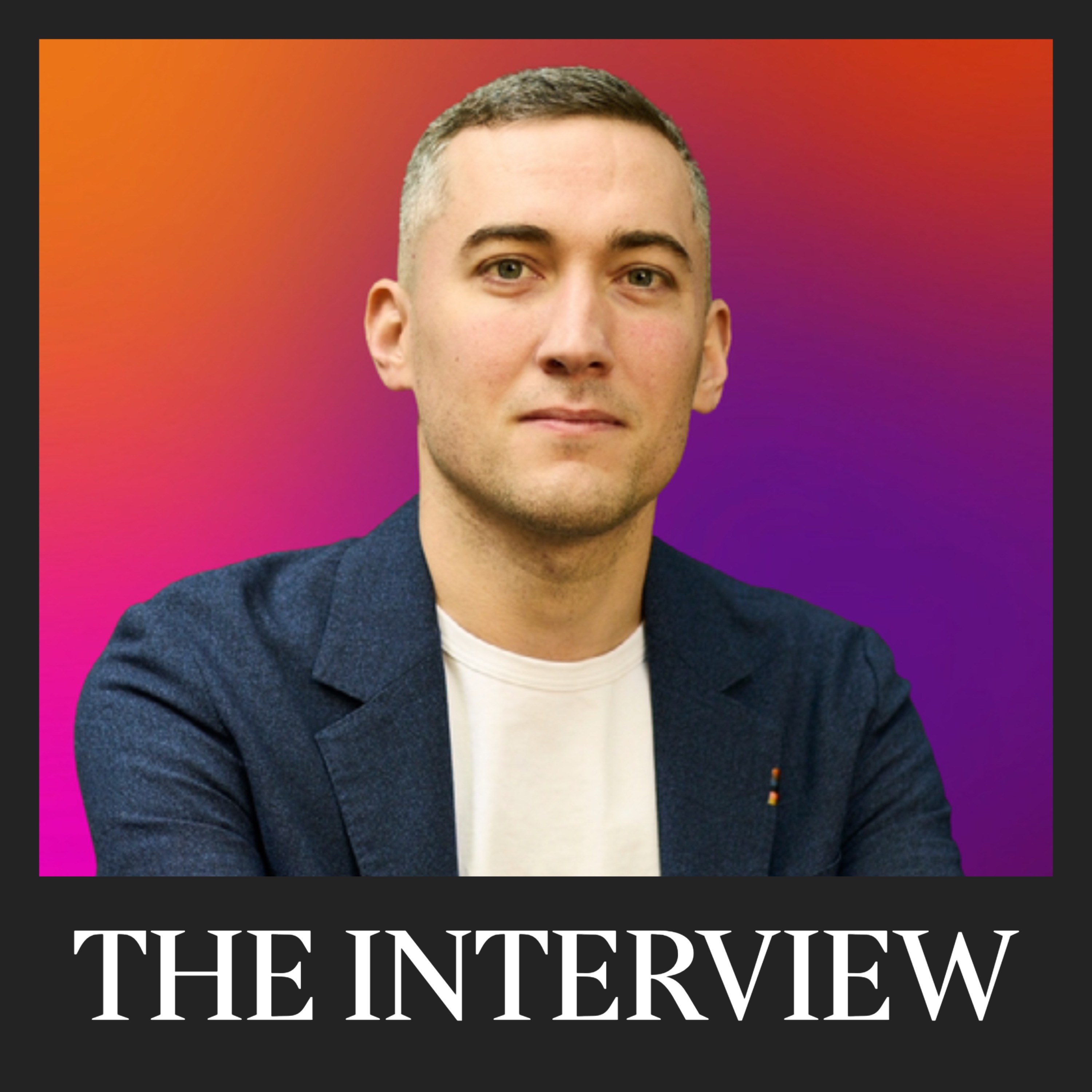
In this episode of The Times Tech Podcast, hosts Danny Fortson and Katie Prescott engage in an enlightening discussion with Anton Osika, the CEO of Lovable AI. The episode primarily explores the concept of "vibe coding," highlights the recent financial success of Lovable AI, and delves into the evolving landscape of software development and AI.
Written by AI. May contain mistakes.

Get the gist, explore an idea or ask about something said.
 Claude
On Times Tech, what are the key points of this episode?
Searching your listeningAutomatic transcript. May contain errors.
0:03Hello and welcome to the Times Tech Podcast with me Danny Fortson in the Valley and me Katie Prescott in the city of London. And here in Silicon Valley, there's been lots of chatter, Katie, about the tech CEOs meeting President Trump. AI was, of course, top of the agenda at the White House dinner. And I have been finding out what people here in California really think about the tech giants, you know, getting into bed, so to speak, with Donald Trump. I hear it, actually, it was a table just full of friends of our podcast. Pretty much. There were several, several past guests sitting around the table.
0:38Very large table. Speaking of which, another friend of the podcast, Arthur Mench, Arthur Mench, had a good week this week. He runs Europe's own AI hopeful Mistral and they hit a$14 billion valuation, double their previous valuation when they went through a fundraising round. So many friends of the pod. They're everywhere doing big things. So obviously that's a big moment for European tech and the perfect setup, the perfect setup for today's interview with Anton Osika, the CEO of Lovable AI, one of Europe's newest unicorns. In July, it raised$200 million in a Series A, which is kind of crazy, at a$1.8 billion valuation.
1:22Totally crazy. And its product was only eight months old. So I'm really looking forward to hearing from Anton shortly, as he's coming into the Times' offices in London, where I am right now. And he's just the man that everyone wants to speak to at the moment, as I'm sure we'll find out. But let's start in Washington with all of those friends of the podcast gathered round with Donald Trump, had the bosses of Apple, Meta, OpenAI. So Dylan Feel from Figma, he's been on the podcast, Satya Nadella from Microsoft. Lisa Su from AMB. Sam Altman, of course. And officially, they're all there to discuss AI strategy.
2:00But I just want to know what what does that actually mean in real life as ever with these things there's like a public go around the table and and you know a select few people say a few nice things but it was i'm imagine most of it was you know off the record and it was a lot of data center talk from what i understand basically keeping regulations low and letting them kind of as i like to say you know let the chef cook just kind of get out of our way we're changing the world and i was reading there was a bit of pathetic fallacy to the whole thing because it was a thunderstorm and it was going to be in the paved over rose garden and they all had to go inside i mean it's so crazy they've remade the rose garden and they call it the rose garden club like it's you know mar-a-lago mark ii it's crazy why not so pay to enter because some of the some of the ceos i think mark zuckerberg said he was gonna make some big investments in the u.s yeah i mean it was more just them talking about one of the things that Trump did, which is, you know, it's simple, but I actually think it's quite clever.
3:04It's like anybody who talked, he's like, how much are you investing in America? How much are you investing in America? And it was like Tim Cook was there from Apple and he said something, I think he said like$600 billion, which he had previously announced. But it all has the feel of a little, it's a little Kim Jong-un-e. You know, it was like everybody, everybody going around being like, sir, thank you so much. Have I said thank you yet? And you look wonderful. And by the way, thank you for your leadership. And$600 million pay to enter the Rose Garden Club. I guess that's the big question then that I have is, does it feel in Silicon Valley at the moment that the tech bros, the broligarchy, and Lisa Su, which is sort of notable woman in all of this, are having to kowtow to President Trump or are doing?
3:54And if so, why? Well, I think there's a couple things going on. One is there is, I think, with some validity. It's the changing of the guard from the Biden administration to the Trump administration. They feel like America's open for business at the same time as you have this crazy AI boom. And, you know, you have the Trump administration being like, oh, you want to build data centers on our like one of our on the federal lands next to our national laboratories for energy, all this kind of stuff. They're just like, whatever you want to do, we're going to make happen. So there has been this kind of shift in regulation, or rather lack of regulation from one administration to the next.
4:38I mean, we just talked about at the top, Klarin just went public. StubHub's going public. Figma just went public. You know, the kind of the animal spirits have returned to Silicon Valley. So everybody's feeling super buoyant and kind of everybody's amped up we are in the middle of this crazy bubble and everybody is just going for it and they feel like they have a partner in the white house and the price of course is you just have to lavish praise on trump and then in a more real way invest in america which everybody seems to be very willing to do we did have some big investment news of our own over here in Europe this week.
5:21So Mistral, which is Europe's answer and only answer to open AI, building large language models here, announced that it had sold 11 % of the company to ASML, the Dutch chip-making equipment company, and it's basically doubled its valuation to now about$14 billion, which is really, really big news. We were expecting at some point something to happen with Mistral. There have been rumors that Apple's been going to buy it. It's been one of the things on the table. But it's resolutely staying in Europe. And I think it's particularly interesting that it's taken this investment from a European tech giant.
6:01Because when I interviewed Arta Mensch, and you'll remember this, because I'll chat about how you pronounce sovereignty, sovereignty. But it was like, he was really, really interested in the idea that Europe needs to keep ownership of AI. And that's a cultural issue, because he sees it as a new form of media, but also a political issue. He spoke about the idea that if you keep the power in the hands of America or American tech companies, they could actually switch the technology on and off, which is really interesting. And that there's this economic consequence of what he called the tech deficit between Europe and the US.
6:40And previously, if you look at his other backers, they have been very solid American names, Nvidia, Andreessen Horowitz and that sort of thing. And so it's it was quite noticeable that that Mistral turned to a to a Dutch company. For those who don't know, and I will admit, I'm so Silicon Valley centric, so American. I mean, obviously, I know about them. And I know we've had Arthur on the pod. But for those who don't, what does Mistral do? How would people know them if they're not in Europe? You think of them about like a version of open AI. So they build large language models and they have a chat bot which is called Lusha.
7:19Get it? Lusha. Spelt chat Lusha. And they've also got involved in the cloud recently as well. So they've partnered with NVIDIA and they're building big data centers outside Paris to help people train but also run these models. And so they're trying to build a very European version of what's going on with open AI and Anthropic and Meta and all of the other big companies that are doing this, but in one part of the world. I mean, when you compare what's happening in Europe, and that's one of the reasons I'm really interested to hear from Anton, because this whole idea of building European champions, the playbook has long been like, oh, we're going to build something to a decent size and then we'll sell out to an American or we'll go public in America or whatever.
8:10But it does feel like there is like a growing kind of core of founders who like actually we think we can build something in europe and keep it european so it's interesting that mistral took money from asml but then when you look out what's going out here like anthropic our friend dario just raised 13 billion dollars last week yeah i mean it's slightly when you talk about the numbers over there it does slightly pour cold water on the fingers here it's wild it's wild and you know So that's$183 billion. And so you're kind of like, it can't keep going like this. Yeah, and you say that, and it makes me think, just how then can Europe compete?
8:53So do you want to tee up today's guest before he rolls in? Okay, so on the podcast this week, we've got another fantastic European AI challenger, and I should say probably one of the hottest startups in Europe right now. So the company is called Lovable, and its chief executive is Anton Isika. And it really is one of the companies that people are getting most excited about. It raised$200 million in July, valuing it at$1.8 billion. And that was only eight months after it had a product. And you're going to be really excited to meet him, Danny, because it's all about vibe coding. I love some vibe coding and I have questions for Anton.
9:33It's great to have him in the studio. Let's bring him in.
9:40Hi Anton, good to see you. Thanks very much for coming on the podcast today. Pleasure to be here. Great to meet you both. What brings you to London? Why are you here? So the main outcome I get from being in London, right, this time around is to meet and calibrate what type of talent exists here and to bring on to the team and have them build the last piece of software together with us. And when you're here after enormous fundraising valuation, which has really put you on the map, Are you getting politicians trying to tempt lovable over to the UK? Is that something that's happening? So Sebastian at Klarna told me I should meet with number 10.
10:19So I was right there and they surprised me in having a very compelling pitch on why we should be building lovable mainly from the UK, from London and all the work they're trying to do to make it the best place to build from. I think what we're seeing now, though, is that Stockholm is catching up. And I think Stockholm might be overtaking London as the place where the most unicorns get minted. There's a lot of super ambitious talent in Stockholm and moving to Stockholm. And I think Silicon Valhalla, as some people are stopping to call it, has a great future. So I'm weighing the different options there.
10:59but I like that it's there's a strong appreciation for us who are taking AI and building real products that are empowering humans to do more and many of those companies right now are coming out of Stockholm and I think this is the decade where Europe can kind of make a comeback and be very good at doing the translation from AI to creating products that create a lot of value and and what we want to do at Lovable which is our mission is to change how that's being done how software is being created and who gets the chance to do that we're really excited to have you on the podcast today because danny fortsen in the valley has been dabbling in vibe coding um i have as a side hustle i would say danny it's quite a successful yeah i mean it's a it's a thus far not very lucrative side hustle but i'm so glad to have you here anton because i have questions well do you want to tell him about meatball mania to start with yes so i created a few months ago i was like you know everybody's talking about vibe coding and i had heard about you guys so i was like i want to make a video game i am not technical even though i write about tech so i signed up for lovable and i created a video game called it meatball mania and not because lovable is a swedish company but the main character is a swedish chef fighting against the meatball monster throwing meatballs at you and you have to you know super mario brothers style kind of avoid them this sounds compelling have you considered a career switch thank you i appreciate that i have and then i dismissed it but who knows we'll see where today goes doesn't look very much like a chef and they're not very very like meatballs but that's very good i don't mean to be rude and then you just go straight straight into the rudeness about my vibe anyway so i tried to make it unlovable didn't really work it made a video game but it wasn't really playable and i I tried a few times.
12:58Then I went to Claude, which is Anthropics chatbot. That actually created something that was quite simple. And I knew we were having you on. So I put in the same prompt that I tried four months ago. And it did create a better game. Still had some bugs, which we can talk about after. So you were able to create Meatball Mania in Lovable in the end? I was. I was, yes. What do your kids think? They think it's amazing. Like they actually were requesting to play it. It's kind of funny. It's a ridiculous example. But when you talk about empowering people to do stuff and this idea of the quote unquote last piece of software, it provided a glimpse.
13:43And I'm just wondering, a glimpse of the future. And I'm just wondering, how did this come about? What was the original idea? What were you doing three years ago? Look, I was CTO of a Y Combinator startup, a successful one. And I, over a few weekends, I put together a tool for developers. That tool was like the first of its kind, which is similar to what you mentioned, Cloud Code. You put on a terminal, hey, I want to create a snake game. And it went out a bit like an agent and created all the files on your computer and started the snake game. And I decided this is great for me to prove a point to the engineers in my team that we should be watching AI and adopt it to move faster as a team.
14:27But when I put out just a video demo of this on Twitter, it completely blew up. So that's what I called the GPT engineer two and a half years ago. And that captures people's imagination and millions of people tried it out. I took a few days and thinking about, OK, there's a community around this small tool that I made on the side. Is there a huge opportunity that I can be the right person to lead a company for? And after slipping on it, I woke up and I realized this tooling for engineers is going to make them more productive. Quite interesting. Much more interesting is that everyone who doesn't have this very difficult to attain skill sets of software engineering, they will now have the ability with ai if you package it correctly to be part of creating software and leapfrogging the tool for developers to a tool for everyone the 99 who don't write code is is the big opportunity where you can have much more impact on how society is built out and who gets to be part of creating software so i woke up i went to fabian who is my co-founder his house I'm back there and I said, hey, Fabian, I know what we're going to do.
15:41Since then, we decided we're going to build the company. We chose a bit of a different name for our software product because it was clear to me that software has to many people been something that satisfies a set of requirements. But the best software products is something that you try and you feel emotions. And that's why we call our company Lovable. Our users should be able to create software products that create that positive emotional response. So you woke up, cycled over to your co-founder's house, arrived at his house sweaty and excited and be like, hey, we're binning this other idea. This is the thing.
16:19Yeah, so before then it was not like a startup plan. But when it was clear to me that you can create something for everyone out there, that's when I decided I'm going to start a company here and transition out from the company which I was building before to build something much, much more ambitious. And I think this software industry is a huge industry. It continues to grow. And if we continue to do really, really well in building the team and building a community around the product, Lovable deserves to become a trillion dollar company from Europe. What's been so striking to everyone about your story is that you started the business in what, 2023?
16:58So we launched the product in late November last year, 2024. That was 2024. And then in July, you had your$200 million fundraise, which valued the company at$1.8 billion. How did that happen so quickly? Yeah, so when people try the product, they have their minds blown and they start telling others that you should try use Lavable if you want to build a software product. So we've been growing on that word of mouth. And in July, we were named the fastest growing startup ever, hitting$100 million in revenue after eight months. And it's about the empowerment that comes, that's been fueling our growth.
17:40And you've got some big other European startup founders, well, not startups anymore. I mean, if you look at Sebastian from Klarna, who had their IPO today, same day we're talking, and Nick Stronsky from Revolut. How did they come on board and how early were they backing you? I think we've had all of these great founders reaching out to us because they've seen how quickly we're growing and all the pull and love for our products. And they saw that we're doing something remarkable in terms of the detail-orientedness in crafting a good product. I guess the speed, though, is worrying for many people as well because it just fuels this idea that we're in the middle of an AI bubble.
18:19And I'd just love to hear your views on that. I mean, a bubble is often when you invest in terms of something that might materialize in the future. If you look at lovable's growth, it's purely self-serve where you come and you use our tool for free. And then if you see that this is, well, this actually is helpful to me, this is going to create value for me, then you pay. So that's quite different from many companies that are built up on few expectations of revenue in the future. so we led with revenue growth and then we got the high valuation from that one of the things that strikes me about um what you guys are doing and you know there's a lot of people kind of going after this it's a very big idea right like i remember um years ago on the pod i had a guy who was doing ai before ai was cool and he's like you know ai will be quote-unquote humanity's last invention because it'll be so good it'll be able to kind of do everything for us and you're trying to create the last piece of software but how close are we to that last five or ten percent if you're thinking about like you can vibe code and create an app a website or whatever is it really really realistic that you can create something that is totally functional you can use it as a storefront to buy and sell things it's secure there's cyber security like all of these things because it's like it's a really exciting to use these tools but then what i don't have a sense of is how likely it is that you can really create something for your business for your creative project or whatever that is like end-to-end created by quote-unquote vibe coding let me unpack all of those topics so yeah we look at different use cases for lovable and it's being used by the for hundreds of different use cases if you take something like creating your personal website or a business website with stunning pictures and everything that takes you one prompt and then you can click one click and put it up on any custom domain that you want to add to the project that works very reliably and there is no last five percent if you look at someone that has an idea or a dream of a company to build and they want to build their entire software product on lovable that's the use case where we're seeing most of our customers doing and to become successful and to make be 100 sure that there's no vulnerability security wise i recommend to have a technical person if you're completely non-technical to help you a bit on the journey for simple applications you can build them 100 end to end and with the most recent product updates we've added a lot of security scanning features as well So you cannot build very complex things as a non-technical person.
21:07You cannot build Salesforce, this huge company. But you can build a simple CRM, a place where you track your customers and what to do next with them. You can build that 100 % without writing a single line of code. And then if you look at other very interesting use cases where Lovable fits in, based on how fast it is to take an idea to the first version, it actually has a communication tool. so many large companies like product leaders at google sebastian clarna they're being very clear towards their staff that i don't want to continue seeing presentations to communicate ideas i much prefer you to demo like demo don't memo is this slogan where right large companies are asking their staff to propose what to do next in their product or what to do next in their internal processes by building out a working prototype that could be put in production so that they can, you can try it and feel, is this actually where we should be going with our product before you commit engineering resources that will take it the last 5%.
22:13And that's one of the fastest growing use cases today in many of the largest, most successful companies in the world hubspot spotify photo room and fortune 500 companies
22:31do you have a sense you know because i'm out here on the west coast everybody's very excited about this idea of you know you can do more with less now that we have ai and all these amazing tools and you're starting to see that come through in the data in terms of just hiring at the big tech companies hiring across the like across the economy how do you think about that both in terms of it feels like software engineering is kind of like the canary in the coal mine of where other things might go so from where you sit how do you think about that picture of all that we're seeing everything being about speed these days in large companies and the startups can move much faster and the tools like Lovable is just purely an enabler of more speed.
23:18And then if there's going to be fewer people working at large projects, maybe yes, sometimes. And sometimes each employee can do so much more, so you're going to want to have more employees because you have a higher ROI per employee. I think this is definitely a canary in the coal mine for that everything is changing. Everything is changing and how we should be working together. and the thing I recommend all my friends who ask me what should I do should I study and so on is just use AI tools to learn and become really good at that so yeah you can bring that skill set into whatever workplace where you go and for like CEOs I recommend them hey rethink how you work together at the company because things are changing very very rapidly and exactly how to work together depends and you will figure it out if you are very keen to try to use different AI tools and when you speak to chief execs who are using lovable and they're looking across their workforce at changes what are you seeing there and what are they telling you and when you talk about maybe needing more people presumably that's not necessarily in software development yeah so a mckinsey partner we recently spoke to she said i've been spending six months building out this prototype for a customer on probably an ai application in their case and then it was very frustrating and the product didn't go well.
24:38When she used Lovable, she spent three hours to fully build that prototype out to satisfaction and ship that to their customers. So that's just one case of someone seeing a problem, understanding what the solution would look like and being empowered to build it themselves. The biggest standardized use cases, they're in terms of spinning up websites, marketing purposes, internal communication purposes. and the biggest part of the product development process and lifecycle is actually the first part of validating is this actually something we should be building? Is that something we should be building before you loop in the engineering and more technical staff that will integrate it into your existing product?
25:19So that's usually design, product managers, some of engineers working together on that prototyping and validation phase, which can be compressed into one individual doing that end-to-end with our tool. So those are the two main ones. And then you have internal tools and different departments and operations, finance and data analysis using it for their different use cases. And are you starting then to see the workforce change because of that? Are you hearing anecdotes about alteration? I think the roles for each person is changing very rapidly. And the ones that are good at using AI, they kind of have a new role.
25:53But the title of their job might stay the same. It's changing in all different directions at once, I would say. We spoke earlier about AI bubbles and you said, you know, you've got revenue stream and so you didn't see yourself in that category. But when you look across the landscape at the moment, do you think we are heading into that territory with some of the investments that are being made and some of the big valuations that we're seeing? I know there are many startups that don't have revenue and they raise a lot of money. And I think many of them are heading into a very, very competitive space without having the category leading product.
26:27And that's where people are putting us. So they're going to have a tough time. And I think if there is not something unique about the team that's building the product, then I would be quite concerned about the high valuations that we're seeing. It's something Danny and I have spoken about quite a lot. You've seen a number of companies in Silicon Valley, haven't you, who've raised tons of money just on a piece of paper? Yes, indeed. I have a very important question. Has Mark Zuckerberg emailed you and offered you a billion dollars? Oh, good question. Or something like that. Mark has emailed me, but he hasn't offered an...
27:05Oh, what did he email you about? He emailed me. We were connected to set up a meeting to chat. Okay. And so you haven't spoken to him yet? No, I haven't. Okay. You haven't got your nine or ten figure offer yet to kind of go over to the meta mothership. No, but look, how I see Lovable is that it's very important to build long term trust and build a brand on the trust from a community that's also helping each other succeed. And that's going to be a big part of the value of the enterprise, which is the knowledge of how what Lovable is, what we stand for. and us getting acquired for the technology or maybe the user base is not going to make us unlock the full value of what we're building.
27:52So we're not entertaining any acquisition offers. But you're hugely in demand. I mean, you spoke at the start of our chat about various politicians trying to pull you in and tempt you to move or at least base people in different countries. You've got Mark Zuckerberg emailing you. Who's the most exciting person who's been in touch with you over the last year or so? I loved speaking with Dario, who's building Anthropic, one of the big providers and reasons we were successful, I have to say. Also sharing a lot of the same values as me. I shared with him how he set up the company from donation matching to employees with their equity.
28:33And the principles and values has been very inspirational. So it was great to meet him and he's this super approachable, authentic person. So that's one of the highlights from recent meetings. And you talked about, you know, looking for people here in the UK, but also the US being a big market. What are your plans for growth internationally? Where do you have people at the moment and where would you like to be? So from having built this product and a lot of our customers and users working in large companies, we're naturally seeing them wanting to use it in their workplace. So we see thousands of the best enterprises in the world coming to us and wanting to procure Lovable for their larger teams.
29:13And to facilitate that and to ensure they get as much value as possible, we need a larger team of customer-facing staff in the U.S. So that's what we're building out on the East Coast in the U.S. And apart from that, our product has more and more surface area. we are making the lovable agent more capable browsing the web integrating with a lot of other providers for payments and for sending text if you want to send text to your Meeplemania users and that requires a lot of... I have two users right now. Okay. So I think they live in the same house. So I think we're good on the email. So what we ultimately want to do is to make people who build on our platform successful And that means that you want to be able to even incorporate your company.
30:03So for your business, Danny, you would be able to ask Lovable, let's set up a company, let's set up a bank account, and let's do marketing for Meatball Mania so that you get more than two customers. And all of that requires us to build a larger product and engineering team. So that's what we're focusing on and that to fuel the organic growth that we've seen to date. So the goal is you want to build a trillion-dollar tech company in Europe. Correct. And I think we've earned the right to pursue that goal. It hasn't been done before. And the most important parts of achieving that is how we build out the team and how the team works together, being obsessed about working more and more effectively together as the team goes.
30:51How old are you, Anton? I'm 35. Is it weird? Or do you ever stop and think like, oh, a year ago, we didn't even have a product and now we're bringing in$100 million a year and I'm worth, I don't know how much of the company you own, but let's say hundreds of millions of dollars? I don't stop and think so much about that. I just focus on the problems at hand. And it's a bit weird when I come to London and five strangers come up to me and say congratulations. But I think the most important thing is to keep being focused on what's most important to achieve our mission at the company. If we're talking about big numbers, I've got to ask you about another one.
31:31There was a report in the Financial Times recently that you are being offered more money at a$4 billion valuation. Is that right? Is that true? I can comment on that. But we're not entertaining investments right now. where we might look at our financials and say like okay it makes sense to raise more money we we think the next milestone should be north of that number oh right okay and when when do you think your next raise will be i don't have any plans currently no well good luck thank you for coming on thank you so much coming on it's been brilliant to meet you and we can't wait to see what you do next thank you and good luck with meatball mania thank you i mean we like i said we could take this offline i have some other questions some concerns he's not gonna make your app for you are you putting the the link in the podcast episode description i should i should i haven't published this latest version yet but i will you know i got some tweaks to do you know i take speaking of intrinsic motivation i don't want to put a subpar product out into the world so i gotta get it right the man has a billion dollar company to run danny let's
32:42i just want to say this because it's fresh in my mind it was really remarkable to meet anton your question that sparked me thinking about this you know he's gone through this extraordinary financial and commercial i hate the word journey but you know experience over the last year and he's just been catapulted into someone who five random people in soho are like high-fiving and he's getting recognized in the street and he's just sitting here in a, I don't know if you could see this through the camera, crumply white t-shirt. Very humble, very quiet and just seem to be cracking on with things and it is something that strikes me about a lot of the people that we've interviewed recently like Arthur Mench at Mistral, like Alex Candle at Wave, that they've just had their lives totally upended and they're suddenly worth extraordinary numbers of zeros.
33:36And they've got this weight on their shoulder to build these big companies. And yet he just seemed absolutely normal. And if you saw him down the pub, you probably wouldn't raise an eyebrow. Yeah, I do love the Swedes. He also reminded me very much of Sebastian from Klarna, which is like, yeah, we want to build, just very matter of fact, I want to build a trillion dollar company. That's the word, matter of fact. We'll see if he can pull it off. I also think it's just really interesting. i've said it before but we're kind of living in the future i mean the idea that you know my kids consume be like designing their own video games relative to like our experience certainly my experience growing up where you kind of get what you get and all that stuff and now like my soon to be nine-year-old could probably just create his own video game by just asking a machine to do it and he said to you off air so i don't even want to say but but he said to you that lovable wasn't meant for gaming but he thought in two years time you could create something of super mario quality i mean no offense but you know meatball mania hey hey hey the quality of the graphics needs a little work it does but but that's what's really um i keep coming back to that quote from sam altman And he's like, we're going to empower people in a way that's never been seen before.
34:54And I think there's a lot of amazing things about that. And a lot of, as we're seeing with the jobs numbers and everything else, it's also pretty scary and it's going to be super disruptive. And he didn't delve into that as much as I would have liked. It's obvious he's seeing disruption and things are changing. It's just very difficult at the moment to work out how rapidly it's happening. but if that that story he told about the mckinsey advisor who did something in what three hours that did did six months of six months of work in three hours yeah yeah well it was great to have him on and i think that we'll look back at that interview in a year and be really glad that we did it feels like yeah he's uh the company's growing at a rate of knots that's exciting to watch but before we go Katie, we have important news to share, do we not?
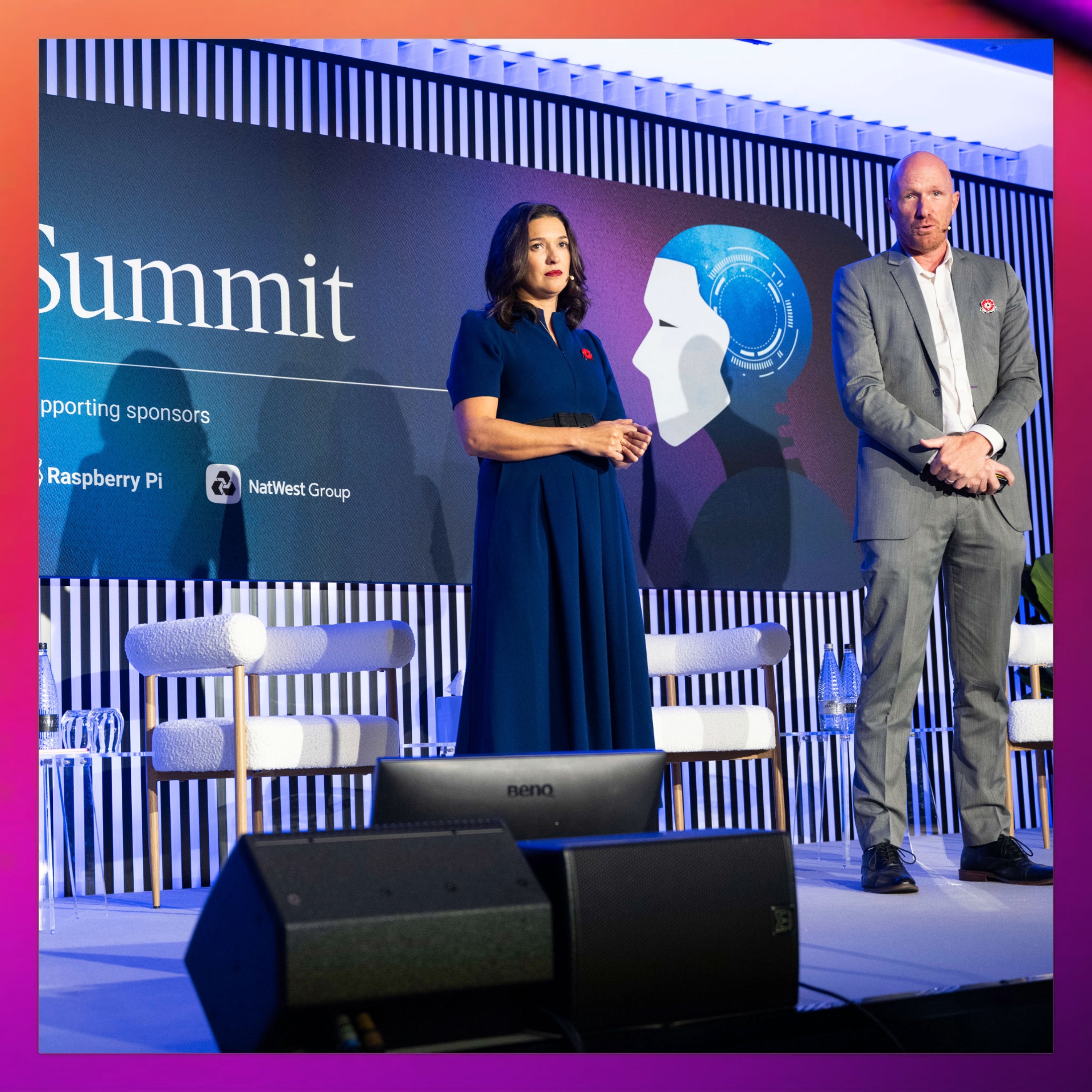
35:44We do. It's news about a get-together that might be even more important than what happened in the White House. Absolutely. It's absolutely. I think we're talking about the Times Tech Summit, correct? 2025 on the 21st of October that we're going to co-host, which is very exciting because it means you're coming over. Yes, indeed. I look forward to it. We're going to be emceeing this all-day event with some incredible guests. Extraordinary guests. And we're going to be looking at so many of the topics that we've covered on the podcast in the last year. Quantum, cybersecurity, energy, how we're going to power the AI revolution, copyright with, I gather, a special celebrity guest.
36:30Indeed. Future of work, flying taxis, self-driving cars, all of that, and a whole bunch of stuff. and you should basically do yourself a favor and come. Yes, no, do if you can. One for the diary, 21st of October in London. And you can register your interest at thetimes.com if you navigate to the events section. You should find it. And we will be back next week with more, including talking about the Anthropic Conference. They're holding a big to-do in DC to talk about policy, AI policy with all the legislators. So I'm sure some interesting stuff will come out of that. But one more time, the Times Tech Summit, October 21st in London.
37:08Go to thetimes.com to register and we will see you. Hopefully we'll see you there.
Danny Fortson and Katie Prescott sit down with Loveable AI CEO Anton Osika, fresh off a $200m raise at a $1.8bn valuation. They dig into “vibe coding,” and why he thinks Loveable could be the “last piece of software” for building websites and apps. Plus, Danny gets tips for his masterpiece game – Meatball Mania.
Image: Jack Hill/The Times
Hosted on Acast. See acast.com/privacy for more information.