Ask ChatGPT


In this episode of The Times Tech Podcast, hosts Danny Fortson and Katie Prescott discuss the recent UK-US tech prosperity deal, which includes a significant £31 billion investment from American tech giants in the UK. This investment coincided with US President Donald Trump's state visit to the UK and features contributions from companies like Nvidia, Microsoft, and CoreWeave. The episode explores the implications of this deal for the UK’s AI landscape and infrastructure.
Written by AI. May contain mistakes.

Get the gist, explore an idea or ask about something said.
 Claude
On Times Tech, what are the key points of this episode?
Searching your listeningAutomatic transcript. May contain errors.
0:02Hello and welcome to the Times Tech Podcast with me, Danny Fortson in Silicon Valley USA. And me, KD Prescott, in the city of London, in the United Kingdom, with all of your crew. We've had all of your tech crew over here this week. It's been amazing. I mean, I think the only person who hasn't been over, actually, is Mark Zuckerberg. Oh, he must feel very sad right now. Yeah. Ruth Porat, president of Google. Satya Nadella, the boss of Microsoft, Sam Altman. And Jensen Huang from NVIDIA. How could I forget him? And Tim Apple, of course. And Tim Apple. So we don't obviously often get involved in state visits.
0:46No. It's not really our bag, is it? No, it's not really our bag. But I feel like some people are visionaries, Katie. And who might they be? Something like a year ago, we came up with this crazy idea to have a transatlantic tech podcast. They said it couldn't be done. we did it anyway they said i don't know who they were but i'm sure they said it and here we are a year later and i feel like this is our moment it is the podcast was born for this moment the tech special relationship as many people have called it this week exactly this is president donald trump coming over to meet the king and the people that he's chosen to bring with him are the kings and one queen of Silicon Valley.
1:38Just one. Just one. And you're right, looking at the guest list for the state dinner is quite amazing. I would never have expected to see tech bros there. Well, it's really interesting. So everybody should go to the Times and look, we have a full seating chart. And there's like the big kids table in the middle of the room, and then a few like satellite tables and it's you know sir demis hasabis and tim cook from apple and steve schwartzman who runs blackstone and like so you have all these sam altman was there jensen wang etc etc etc so you had all you had a mix of politicians wall street billionaires tech billionaires the royal family uk politicians and nick faldo i was like quite the list i was looking at this i was like what is nick faldo doing at this state dinner was it a typo i think the subs missed that one i was like uh you know what we need for this just to round out the kind of the the demographics here is a retired golfer maybe he's got an ai startup he probably does everybody does it's been an amazing week there's been a lot of talk of of pomp and and red carpets and partnership and then some pounds flying around billions and billions of pounds to the point where it's started to feel a little bit like monopoly money so i've got to say and this is me being kind of a west coast silicon valley elitist i've seen bits and pieces but it's not like you know it sounds like over there it's been like wall-to-wall coverage lots of stuff going on there's been very little of it here what is the like the total headline figure for what these companies these big u.s tech firms are investing in britain on the tech firm side it's about 31 billion it's kind of gone that was the big headline number that they brought in for the tech partnership on tuesday night and it's gone up a little bit since then nvidia's made an announcement of another two billion into startups and there've been other people who've who've come out the woodwork as well it's interesting there has been wall-to-wall coverage of the state visit but on the tech side it hasn't been as monumental as perhaps I felt it should be.
4:05When we had the moment of Donald Trump touching down on Tuesday evening at exactly the same time as these tech deals were announced, all the media wanted to know was what Melania was wearing. And that, I'm afraid, stole a lot of the coverage. But on top of the billions that have been put in of investment, and it is new money. It's always a question the editor asks, isn't it, when someone makes an announcement about investing. Is this new or is this a repackaged? Is it new? Yeah, exactly. And it is new investments. So Google put in$5 billion over the next two years. Microsoft very proudly said they put in the largest investment, which is$22 billion over the next four years.
4:46And then there are investments from CoreWeave, and we'll hear from the boss of CoreWeave later, who's part of the entourage over here, and OpenAI and NVIDIA. But what's been really interesting is OpenAI and NVIDIA's contribution hasn't necessarily been immediately financial, but it's been in support for companies here to allow them to do things. So OpenAI announced that it was going to be part of a Stargate UK project, which will be built on... Big data center, basically. Big data center to train large language models. And they said that they would do an offtake deal, basically saying, we will take about 8 ,000 of the chips in this center, maybe even later up to 30 ,000.
5:32But by committing to being that massive customer, it allows this to get off the ground. And NVIDIA did a really interesting thing where they said they were going to allocate 120 ,000 chips, processors, including the most advanced Blackwell ones. So half of them will be the latest Blackwell ones called Grace Hopper, is it? To the UK. So they're obviously still charging for them. And they're doing it through CoreWeave and through this other business, Nscale. It's a British company that seems to have exploded out of nowhere. but there's such demand for these around the world that by allocating them to the uk that's giving britain a massive leg up in ai so it hasn't been all cash we should say the big interview that you've done this week is with the ceo of core weave who as you say was part of that entourage so hopefully we'll be able to get a little kind of the inside dirt of you know how this all came together and what their what their plans are for the uk Okay.
6:36Open AI to me is like the most fascinating company because they don't have the money to do any of this stuff. Oracle announced this massive deal. This huge cloud contract, like hundreds of billions of dollars. It is all understood to be coming from OpenAI. They're the main source of it. But they don't have hundreds of billions of dollars to spend. They're growing very fast. But there's a story that came out last week. They expect to burn through$115 billion just between now and 2030. So that's what they expect to lose. So every time they sign a new deal, it's like, all right, we're going to have to go out and now find the money.
7:13It's a little bit, if you build it, they will come. But it's just fascinating that OpenAI, the startup, which used to be a nonprofit, is still losing eye-watering amounts of money. It's really like the engine driving a lot of these deals. and you know the fact that they actually don't have the money but people are still like yep this is great is i mean obviously it's faith in um sam altman in his ability to go out and find it and he's been doing that thus far but it's um we're talking about hundreds of billions over the next few years that they're gonna have to find people keep giving them money though they do that's a it's incredible it's incredible but it's just it's not that bad i know but it's just like it's all part of this whole hype train of just like yeah yeah this company doesn't have the money but don't worry he's gonna go you know pull up a couple rocks and find a few hundred billion over these next few years and it's all gonna work out i just think it's it's certainly not without risk especially if you know at some point the balloon pops and you know growth slows or any number of things happen and it becomes harder to find the money well thank god for the hype train and the balloon because some of that money is coming in this direction and it is making a massive difference and as i say i was a little bit surprised by how little coverage how little coverage it got over here as you can imagine being cynical brits and you know what the times newsroom is like yes the first thing the editors wanted to know was why are the americans giving us money what do they want in return i don't trust us yeah and so we've explored that quite a lot over the last few days as well and i asked mike and sure about it in the interview some of it i do feel is about giving britain a leg up because we have great intellectual property here we have brilliant businesses great universities but as jensen wang said during london tech week I paraphrase.
9:15I think he said it was something like we're the best AI ecosystem in the world with the worst, with no infrastructure, something like that. So this is about mainly, and not exclusively, data centers and compute power to try and give Britain, well, to give Britain a sort of leg up in that space. Personally, I think a lot of this is to do with geopolitics. The suspicion here has been that because the UK and Europe have put a lot of legislation on US tech companies from the online safety bill to the digital services tax to looking at competition and given huge powers to the regulators here to fine Silicon Valley businesses, that there's an attempt to quash that regulation in some way.
10:07That seems an odd thing to me because it's quite a hard thing to do, especially post this sort of announcement. I think it's far more likely that this is an attempt to, almost in a Cold War way, create a big Western power as a counter to China. The US and the UK signed this quite woolly tech partnership deal. They talked about the tech special relationship. Right, right, right. Well, this is all branded, right, as a quote-unquote tech prosperity deal. and to your point around like the west versus china i mean a lot of these people were on air force one right they flew over with the president i think a lot of that is it's sending a very clear message yeah you know because eric schmidt the former ceo of google and he's like now up to his ears in washington dc and politics and geopolitics and he's very worried about ai his thing is the power and superpower is technology and i think that's this idea that is kind of we're seeing it kind of play out here is like trump brings all these techies on board they land they announce a bunch bunch of deals it's a quote-unquote tech prosperity deal and kind of just like laying down that marker of this is more than just business and i think the this sort of statement about a tech partnership feels very woolly, frankly.
11:34There's talk about partnering in quantum, as you'd imagine, AI for healthcare, and nuclear. It's quite unclear exactly what that will entail. The most concrete things for me about this week were the investments, the commercial investments that were made by the businesses. But when you hear ministers talk, so I spoke to Patrick Vallance, the Minister for Science, at the beginning of the week around a big quantum deal that happened. And he was saying it is imperative that we win this race. And that's what we keep hearing from politicians. And so I think a lot of this is actually about that. Yeah, that sort of almost Cold War-esque World War II alliance, almost more than any attempt to change the online safety bill.
12:24Yeah, that feels right. And I think, as you say, like Jensen Wang, you know, he's a good talker. And he was talking about, you know, how the UK is in a Goldilocks position. They have a mix of talent, research, industry, et cetera. And he was also, we are in the middle of a big bang. That this is like this kind of historically a kind of a shift toward AI. But that was, the other thing I think is just worth, that I was thinking about, 31 billion pounds is a lot of money. however, when you think about what typically when these big trade deals are announced, like this is going to bring X thousand jobs and blah, blah, blah, blah, blah.
13:07And like, I know that there's going to be jobs, especially for Microsoft, Google, et cetera. So they already have big bases here. But when you think about that money, most of it's going to go into basically building the big sheds full of chips. As a friend of the pod, Dario Amadei says, are going to be like countries of geniuses in a data center. These are going to be effectively digital workers that you're basically putting in the ground on the UK to do stuff. And as we've talked about on previous pause, when you're thinking about especially young graduates finding it harder and harder to find work, and it seems to be at least AI correlated.
13:44it's just interesting that what we're building is also just a new digital workforce that it's not going to create the thousands and thousands of jobs you might expect from 31 billion pounds or at least not in the way you expect it might create new opportunities etc but i just i was kind of thinking about that over the seeing all the numbers flying around and all the uh all the hype that's a really really interesting point and it's something that makes building data centers very unpopular if you're in i don't know sunderland and someone builds a Nissan car factory that has a flywheel effect creating a big supply chain around it and tons and tons of jobs for the community.
14:19If you're building a data center, it just doesn't have the same impact or immediate impact on the local community. Yeah. Oh, cool. Now this big shed can create a bunch of like legal AI assistance. That means if I'm a new graduate, it's going to be harder for me to find a job. And it's making my energy bills more expensive. Exactly. Exactly. so how was the state dinner where was your seat were you at the big table i took a really nice text from a tech ceo saying you're gonna be at the business leaders event at checkers yeah yeah sadly i can't make it actually uh i missed the state dinner the closest i got was like you just reading through the um the seating well after we get off i'm gonna call nick fall those people and get the download you know but we should talk we should get to your interview because you were you speaking of like the the madness of the week you talked to the ceo of core weave who they went public this year interesting company but most people won't know who they are what they do so shall we set the scene as it were so core weaves a really interesting business they started off a bunch of hedge fund guys buying up advanced processes for crypto mining and then pivoted to ai when generative ai became a thing and that's what they make they essentially data centers which they either build themselves or they borrow space from other people and they put nvidia processes into them and what was their announcement last week like was what was their part of this whole so they were announcing one and a half billion pounds into the uk and it's on top of a billion pound investment that they made last year when they announced they were opening here.
16:12And NVIDIA's allocation of 120 ,000 chips will partly be made through them as well. So this is the point. If you're NVIDIA and you've got this sort of limited stash of chips that is in massive demand, it is quite a big deal to say, right, this portion of it will go to the UK. Anyway, let's hear from Mike Entretor, who's the chief exec. And I spoke to him in New York just before he was flying over to the UK. We are making an announcement to bring on an additional 1.5 billion pounds worth of investment into the UK. This is on top of the 1 billion pounds that we committed to the UK within the last 12 months, bringing our total investment in the UK up to 2.5 billion, which is Very exciting.
17:02It's an incredibly large, it's actually the largest of the investments that we've made outside of the United States. And it is a reflection of the role that we believe the UK is going to play in the planetary buildout of this infrastructure that allows the support of artificial intelligence. It's important to understand that the infrastructure that we're bringing online, the infrastructure that the UK government is supporting and focusing on, that is the infrastructure that will define the capacity of artificial intelligence. Only by building that infrastructure can you allow artificial intelligence to truly achieve its promise.
17:43And it's very exciting for us to continue to scale our footprint within the UK. How does this investment work in practice? You actually building data centers? I saw in the release today that you're partnering with one in Scotland, for example. We have a lot of different approaches, but at the end of the day, you start with a greenfield. Someone has to build the data center. Sometimes that's us. Sometimes that's one of our partners. You have to go through building the shell, powering the shell. You have to go through fitting out all of the requirements. Think of that as electrical distribution, connectivity, cooling, all of the things that make a data center capable of supporting this cutting edge, state-of-the-art technology.
18:26And then we go and we configure all of the supercomputing components with our OEMs that build the infrastructure for us. And then we use our software to be able to deliver the computing infrastructure to our ultimate clients, which can be using it for large language models, or they can be using it for medical research, or they can be using it for any type of artificial intelligence or parallelize computing workloads that they have. And so we really kind of will take it anywhere from the greenfield all the way up through where our clients consume the compute. As you say, it's a massive investment coming off the back of the one that you made last year.
19:12And I remember that announcement well. What's the business opportunity for you here in the UK? Why is this the sort of second most significant investment that you're making? Look, we really had a plan of building our infrastructure in a way that puts the physical infrastructure in a low latency configuration to the population centers that are going to be the largest consumers of this application in the world. And when you're doing that, you have to make some compromises, right? And those compromises are about coordinating the regulatory jurisdiction with the access to power, with the access to the human resources that are able to build and run it, to all the way through allowing your clients to access the infrastructure that they need in a seamless, low latency environment.
20:09And the UK has been doing a lot of work to create that environment and doing a lot of work to make it a very inviting jurisdiction to scale these type of operations. You got to keep in mind that when a company like Corweave makes these investments, these are very significant investments, obviously, but they're also long-lived assets, right? And so we're thinking about where we need to build today, but also where we're going to need resources over the next 5, 10, 15, 20 years. and clearly the UK is going to continue to be an extremely important partner in how this infrastructure and how artificial intelligence is delivered to the world.
20:54And when you talk about Britain having a low latency environment, does that literally mean we're trying to build data centers near to where they're needed? There's a lot of different use cases within artificial intelligence and I always use this as a way to explain latency. It's a silly example but it sort of highlights the way to think about about it. I was working with my team over here and there was a problem that we were working on. We put the problem into one of the AI and we walked away. And 45 minutes later, it was still working on the problem. It was a very complicated problem and it required literally three hours before it came back with its answer.
21:36And then we asked more questions and it took, Without exaggeration, it took about three days for us to get it to the point where we were walking away with something that we felt like was really, really useful. Now, if we had to do that by hand, it would have, quite frankly, it would have been beyond the ability of the group of us. That's a latency insensitive workload, right? It really doesn't matter. The computer is going to work on it for so long. It doesn't matter if it's in, you know, New York or Texas or London. then the actual computing time is what's required. On the other end of the spectrum, you have latency requirements for self-driving cars, right?
22:15Where you can't really have the information flow back to Texas from London, right? Matter of fact, in that particular case, you're actually doing it in the car at the very, very edge. So that's the low, low latency where you require instantaneous, truly instantaneous for safety reasons feedback. Now, that's an example of how you can think about latency. And so when we try to build our infrastructure, we always prefer to build latency because it gives us the option to do the stuff that takes a long time, but also provides us with the computing capacity to do stuff that requires a very low latency, tight feedback kind of environment.
22:56And so those are the two ends of the spectrum. You always want to build closer to population centers if you can, but sometimes you don't have the luxury to do that. The more you're looking to serve questions and answers, the closer you want to be to population centers. The more inference you want the compute to be focused on, the closer to the population centers you want to be. That's sort of how we frame it within this company. And your investment is coming as part of several massive announcements this week from other U.S. tech companies. From NVIDIA, Google, we had Ruth Porat was in London on Tuesday announcing£5 billion.
23:33pounds of investment into the UK over the next couple of years. There's also this US-UK tech partnership being announced. And I just wonder how important you think that is and why this is particularly happening as the centerpiece of President Trump's visit. I think it is enormously important to communicate to all of the stakeholders, governments, the technology companies themselves, the financing companies, the populations within these two jurisdictions, that there is a real interest in working together. There is real support up and down the stakeholder chains to create as seamless and effective an environment as possible to be able to deliver this technology.
24:26And so we go to work every day here and we're heads down trying to build the infrastructure, trying to solve problems within the software, trying to do all the things we do in the day jobs. And it is very encouraging to the practitioners to understand that at the highest levels of government, there is support for what we're doing. They understand in a very similar way to the way that we understand how important this infrastructure is. And it is going to be a priority for their respective administrations to ensure that we can build this infrastructure in a timely fashion so that we're able to allow the collective economies of these two nations to be as competitive as possible.
25:09How much does it feel to you that this is a geopolitical issue, that this is the US and the UK trying to join together to face up to China, to the advances in technologies and other powers? So, you know, this is getting a little bit over my pay grade here, but what I would say is there are unavoidable components of bringing a technology like this to the world from the perspective of the impact on the relative power of the different nations where it will be located. And it is very encouraging to a company like CoreWeave that there is a recognition that this is a generational technology, that it's going to be required to be built at global scale, and that the governments in the jurisdictions that we participate in are going to be supportive of our ability to build and deliver that infrastructure with a quality and speed that matches anyone in the world.
26:14And that's what we need to dedicate our resources. It's what we need to be able to access the resources of our partners, whether they be on the financial side or on the infrastructure and technology side. It's a clear indication of systemic support for the mission of this company, which allows us to confidently go out and build and create the infrastructure that the world needs.
26:44It's interesting. I spoke to someone this morning, and I hope this is a question more back in your pay grade. And they said, it's so great that all these American companies are coming over and investing billions in the UK. But what are they getting in return? What's the quid pro quo? And I just wonder what your response is to that. Look, we have these incredible clients that are changing the world. And they're delivering products to people and businesses in the US and businesses in the UK. and throughout Europe. And we are building in the UK because the economic driver, you know, we are an economic animal in this, are there for us to be able to drive the growth of our company by providing the infrastructure that the world needs.
27:35And so, like, once again, you're asking questions that kind of span the, is there a commercial rationale for building this? The answer is unequivocally yes. There must be a commercial rationale for us to do it. Otherwise, we wouldn't do it. We couldn't do it, right? But the other side of that question is, are there more kind of macro relationships? Yeah, there are. And, you know, we see them from, you know, the politicians that are coming together and joining hands around this. But that's not really a role for, you know, we're the instrument in this. We're not the policymaker in this. Mike Masacola, if I can bring you in, Chief Business Officer at Corweave.
28:14You're still based in the UK, is that right? Yeah, I'm in London as we speak, back and forth. So Corweave's man in the UK? Yes, that's me. I remember last time we spoke, one of the things we discussed was the challenge of building digital infrastructure in the UK, particularly when it comes to energy. And I just wonder what your reflections are on that now, given the investment that Mike Intratour was just talking about. We spoke, I guess, 15 months ago, roughly. You know, we've spent over a little bit over a year now doing our diligence in the UK market and, you know, looking across the country to understand where we could build a footprint that, you know, has the latency performance.
28:59We just talked about the beauty of the UK. It's very small, so it's not a huge concern for us and where we actually put the data centre in anyway. but most importantly where can we tap into lower cost energy we've basically done diligence on over a dozen sites at this point and we've been looking at all different kinds of ways of getting access to you know more competitive energy you know looking at everything from across the renewable span as well as looking at smrs and everything that's coming but that's you know if you look at what is coming if you look at nuclear that's really a five to seven year project that's going to take some time so small modular reactors the sort of mini nukes basically yeah exactly yeah It's coming, but it will take time to get operational.
29:37You know, the best opportunity you have right now in the UK market is to ultimately just build a data center next to a renewable power source. So that's what we're doing. And that's why we chose Scotland. So if you look at the Scottish market today, there is an abundance of renewables in the North Sea and to the Edinburgh Glasgow Corridor. There's access to power there. So what we're doing with this investment, we're basically putting a data center next to this renewable power and directly sending the energy into the site. And ultimately, the challenge in the UK has been that we've got lots of talent, lots of great companies, lots of opportunity.
30:14This will be an incredible market and will be a huge driver on the global stage. But we have to make it economical for people to build and run their AI workloads in the UK. And that's what we're doing with this plan. So we'll be putting a day centre right next to renewables in Scotland. And that's how we're kind of fixing that problem. So we, you know, I've talked about it quite a bit. And in terms of the challenges, now we've gone away and we've actually done the work to come back with a solution to fix this problem. We're really excited to deploy it over the next couple of months. When you talk about building next to a renewable site, how easy is that?
30:49I mean, you know, if you were going to try and repeat it. Again, with the diligence we've been doing, we've been ultimately looking at locations that have ultimately the planning, the approval and everything is already underway so we can move quickly and get this compute online. Obviously, we're also looking at long term opportunities as well at the same time. But ultimately, we're looking for a location where there is planning already in place. To Mike's point earlier, sometimes we'll build on our own. Sometimes we'll work with a partner. Ultimately, time to market is the essence of what we do to get to market first with this technology.
31:21In this case, we're going with a partner that's already held access to the renewables and has been building out that infrastructure. Because it's the question that comes up time and time again about the UK's digital infrastructure. I mean, it's such a different beast to say, you know, facility you've built in Pennsylvania. We don't have the space here. The national grid is under huge amounts of pressure. We're talking about the electrification of vehicles coming at the same time as the need for AI infrastructure. How are you thinking about that conundrum? I mean, it goes back to the diligence we've been doing and looking at, we're not interested in one deployment and then kind of a one and done situation.
31:55We build into the hundreds of megawatts and gigawatts now of scale. We've been quite careful at looking to where we can build into that scale. You know, and some of the sites we've looked at would have taken too long or they didn't, we didn't feel comfortable that we could keep growing. We're not interested in having multiple satellite sites everywhere. It's not great. It's not efficient for running our business. But we're looking at, to Mike's point earlier, this is a 10, 15 year investment for us. 10 to 15 year investment that we want to grow into as rapidly as possible. So that's why we've gone down this route.
32:26How are you both thinking about the environmental question of the expansion of data centres? We move on from access to energy. I mean, you mentioned renewables here, Mike, but going forward with other sites. Ultimately, you know, obviously it's something that people are talking about every day in the UK market. So firstly, we've gone down the renewable path and we're using environmentally friendly energy. The other point is with the tech that we're deploying now, it's liquid cooled. So in past day centers, you're using a lot of water. But now you just you bring water into the day center once you have a continuous cycle of water that's heating up on the chips.
33:02And we're cooling it again in the chillers and sending it back into the day center again. So we're not you've heard all these horror stories of people worried about draining reservoir. We're not doing that. So we're using the latest tech and it's super efficient. And we'll be seeing something between a 25 to 30 percent efficiency improvement with the new tech as well. It's only getting better. So the data centers are getting denser and denser. And ultimately, you're getting more output, but with less power consumed. How do you see the UK's digital infrastructure standing back, taking call we've out of it?
33:34Because that's really at the heart of all of the big announcements this week. Yeah, I mean, look, so the government's been working on the AI opportunities, like Matt Clifford put the plan together, the AI strategy for the UK. There's been a lot of focus on accelerating the available compute in the UK market, clearly, because it's the engine of everything. You can't do AI without this compute in place. So clearly, they've been working on that and then bringing in partners like us to deploy everything. And I think that's the story of this week, where key players are coming together and making it happen.
34:04I think it's important to understand that the data centers that we are building, the data centers that our peers are building for artificial intelligence, they really are an entirely different configuration, a different animal, a different, like, however you want to think about it. then the data centers of the legacy cloud, the amount of power per square foot, the amount of cooling that's required, the approach to cooling, moving from air cooling to liquid cooling, how you move air and water or liquids through the data centers, how you build the networks to be able to support this level of connectivity.
34:50They're still called a data center, but it's not like you can walk into a old legacy data center and start putting in GB300s. They're not capable of supporting that infrastructure. And so it is very important when people look at this to understand we are in the very first inning of rebuilding this vital digital infrastructure. And we're all just beginning. Yes, you know, the U.S. has been ahead on building and deploying this infrastructure, but not that far ahead because, you know, this stuff has only been around for a few years, right? Like when you think about liquid cooling, like liquid cooling has only become a broadly consumed way of managing or even a necessary way of managing the heat within these clusters within the last generation and a half of NVIDIA technology, right?
35:48So the ability to really build the true bleeding edge and build globally competitive infrastructure is available to everyone right now as this planetary buildup takes place. And so there is a wonderful opportunity for new jurisdictions to really establish themselves as a hub for the true cutting edge of this technology. I have to say, there's a huge amount of excitement, especially amongst tech journalists, that you're all coming over this week. Have you been on a state visit before, Michael? I've spent some time being shepherded around the halls of power, but I'm not sure it was an official state visit.
36:30So this is very exciting for me. They're rolling out the red carpet for you. Yeah, no, it's wonderful. Like the scale of the support, the breadth of the support is exactly what companies like us need to be successful, right? Because what it does is it delivers the message that this is a priority to the government, to the nations in a way that we as the CEOs of these companies can never do or and certainly can never do as effectively. And so this is such a unique moment, right? Like you've got so many of these incredible CEOs that are thinking about and being visionaries within the technology space, coming together and spending time with these individuals that are responsible for the policies, the nations.
37:25And it allows everyone to kind of exchange ideas, to have an opportunity to communicate some of the nuances associated with different approaches. And if nothing else, it gives everyone an appreciation for the challenges that the other people within the strategy build out are facing. And that's important. So I have a question. Go for it. When was the last time you have done a planetary build out of anything? probably with lego does that count yeah yeah well all i know is like when we when we kind of create the planetary build-out scheme for the times tech podcast it just has to be in low latency configurations everywhere okay just need the energy to power it yeah the planetary build-out is just sounds a little dr evil but i love it it's great planetary build-out you've sent all of your people over with your president.
38:27I know. To build on our very, very small country. Everyone's going, ah, we don't have the space. We don't have the energy. How are you going to do it? It's fine. You've got wind farms. There was actually, I've got so much to tell you. There was a big energy announcement on Sunday. Oh, there was? Ahead of the tech announcements, yes. There was a big nuclear energy announcement. And there was a moment when the editor wandered over and said, what's an AMR? I was like, oh, God. Advanced modular reactor? I mean, I couldn't get beyond that. But anyway, there were a number of announcements of partnerships between UK and US firms.
39:09So Centrica, for example, has partnered with a company called X-Energy in the US to deliver AMRs. Oh, really? Yeah. Yeah, so I imagine a lot of that is linked to the digital infrastructure planetary. Yeah. Well, I mean, we talked about it before, especially when we had our guy, Philip Johnston, who's building data centers in space. And also the other company, Allo Atomics. This idea that this crazy, I think the latest estimates are$3 trillion globally between now and 2030 for data centers and energy infrastructure. this ai boom could be the thing that gets like nuclear back like booming yeah like it hasn't and you know you know decades and decades but that's what i said it's one of the legs of the tripos stalled that the um tech partnership announced this week was it was this sort of nuclear collaboration i mean i have to say putting data centers in space is starting to sound more and more sensible so that has been the week that was of uh wow the tech trump state visit which has involved us far more than than i ever could have imagined yeah totally fascinating it's a really interesting kind of moment in time it'll be interesting to look back a year two years three years from now how much of this has actually happened where it's gone wrong it's like such a like a action-packed week with you know tens of billions of pounds and all the kind of the biggest companies in the world and then everybody leaves and then you got then the hard part starts brad smith did say and again i'm paraphrasing but something along the lines of it's very easy to toss around numbers but we are good for every cent well we shall see fascinating well thanks for being like our correspondent on the ground amid the madness well i've just been sitting out here just kind of you know watching from afar i guess you've got nothing to do because they're all over here yeah exactly i just been relaxing that sounds nice that's it for this week's tech podcast we never do this but uh this week we're going to cross promote our sister podcast our friends the royals roya and kate because if you want to know more about the state visit But they will have far more on the skinny of actually what went on, why Nick Faldo was there, which I actually Googled while we were listening to the interview.
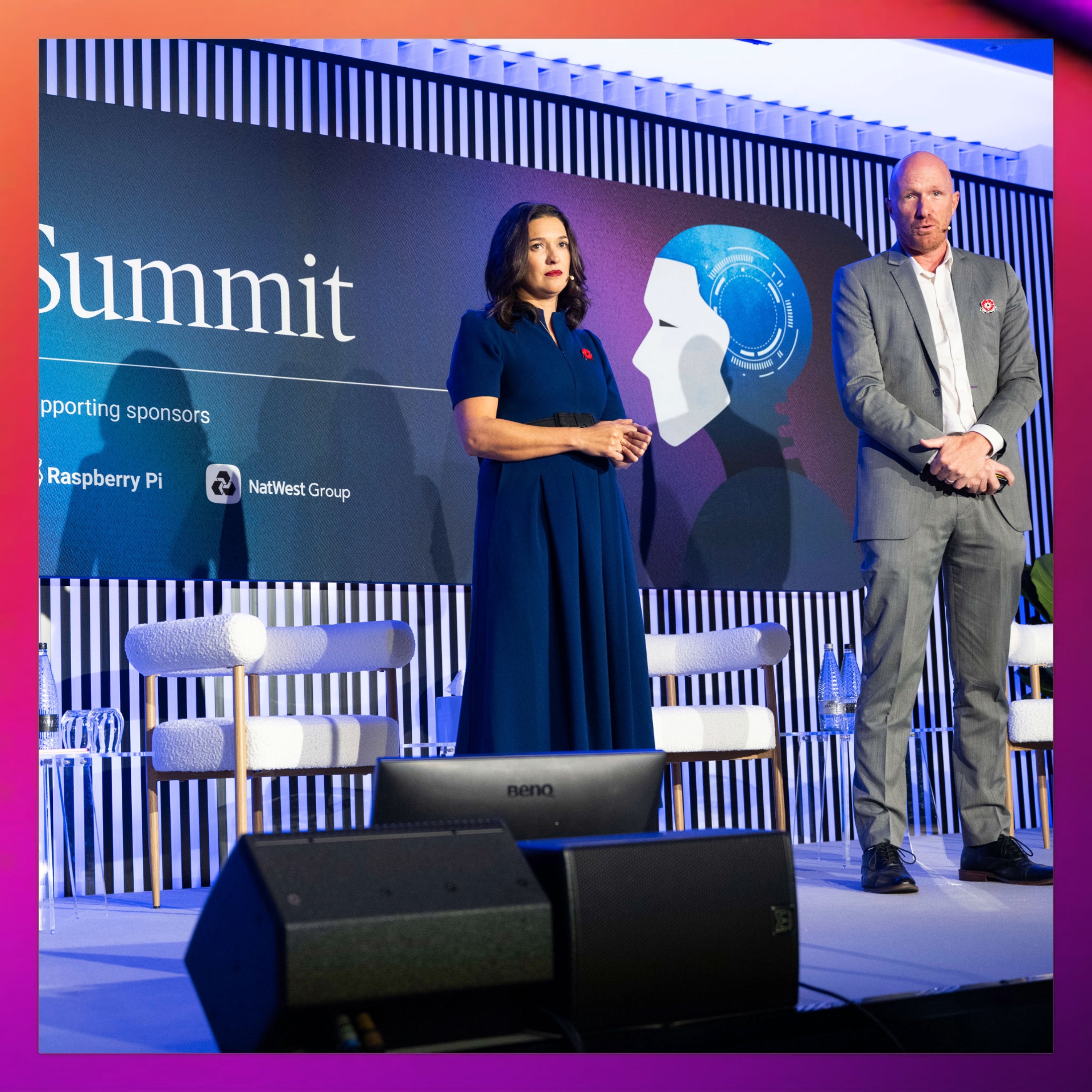
41:39It's because Trump's big golf fan. So they sprinkled a few golfers in there. So Roy and Kate will know all about it. And as always, we would love to hear from you. So drop us an email anytime at techpodatthetimes.co.uk. And other very important bit of housekeeping. If you want to go even deeper into the world of tech, mark your calendars. October 21st. It's kind of barreling toward us. Yeah, it is. We are hosting the Times and Sunday Times Tech Summit. Katie and I will be there on stage emceeing the event. This year is all about Britain's quest to become a tech superpower. A lot of what we've been talking about today.
42:21So we'll cover AI, quantum, cyber resilience, net zero, flying taxis, and everything in between. should be a really, really fun event. No, it's going to be brilliant. And we've got a great audience and fantastic people on the stage from across the business and political world. So we'll be there with some robots, I hope, as well. And we'd love to see you there, too. You can register by visiting www.thetimes.com forward slash events. Until then, thank you for listening. And we will be back next week. Bye-bye. Thank you.
Is Britain in a "Goldilocks" moment for AI? US President Donald Trump’s state visit to Britain brought more than pomp and ceremony. American tech giants pledged £31 billion in AI and data centre investment, from Nvidia’s 120,000 processors to Microsoft’s GDP-boosting promises. Danny Fortson and Katie Prescott unpack what the new UK-US “tech prosperity deal” really means, and speak with one of the investors – CoreWeave CEO Michael Intrator and CBO Mike Mattacola about their £1.5 billion UK expansion.
Image: Getty
Hosted on Acast. See acast.com/privacy for more information.