 Ask ChatGPT


The episode argues that Europe fears America’s AI power because AI access can be restricted like a “kill switch,” creating asymmetric advantage for the US (and China) and leaving Europe vulnerable. It covers the White House export ban on Anthropic’s frontier models (Mythos and Fable), which Anthropic withdrew globally, and a Five Eyes warning that AI could “take down governments” within months. It also discusses talent “defections” that can move markets: Google DeepMind researchers John Jumper (AlphaFold Nobel) and Noam Shazir (Gemini co-lead; transformer “attention” paper) leaving for OpenAI and Anthropic, wiping about $240B from Alphabet.
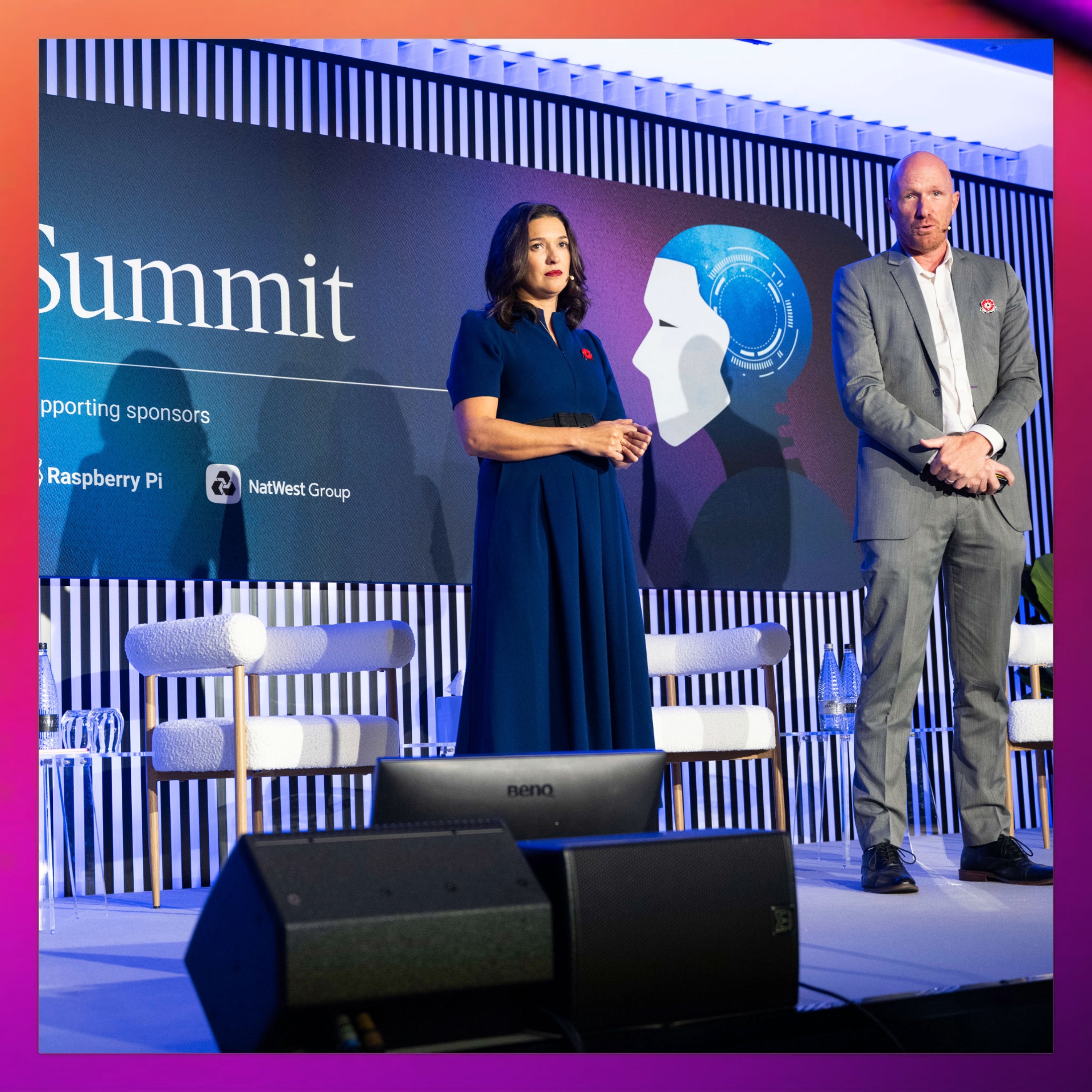
Judith Dada, advisor to the German government on AI transformation and senior partner at VC fund Visionaries.
Europe underestimates AI’s speed; sovereignty should mean interdependence plus secure access to frontier models for critical infrastructure, not autarky.
Wimbledon’s IBM AI (match chat, likelihood to win) and the “Europe 2031” narrative scenario predicting cyber decimation, unemployment, and riots if Europe falls behind.
Written by AI. May contain mistakes.
Discussion on America's dominance in AI and the recent actions of the White House.
Discussion on America's dominance in AI and the recent actions of the White House.
“i have got a fan on very gently which hopefully no one will notice apart from the heat we're also going to be talking about the huge debate that has blown up here about sovereignty and the ownership of AI.”
Exploration of the Five Eyes warning regarding AI's potential to destabilize governments.
“Yeah, and it's obviously it's a very powerful technology.”
Analysis of recruitment battles in AI labs and their impact on market valuation.
“What Anthropic had been doing was rolling them out really slowly to a small group of people, a small group of organizations, so that they could use them to look at where their cyber threats were.”
Discussion on the implications of AI sovereignty and its perception in the US vs. Europe.
Examination of how geopolitical concerns influence AI development and access.
“And we're not subject to the whims of, you know, Donald Trump waking up one day and being like, I don't like this.”
Debate on the necessity of regulation in AI development and its implications.
“I mean, so much of what she wrote about, it feels like it's coming to pass.”
Discusses the alarming possible uses of AI and its rapid commercialization.
“grid or do something really crazy or build a bioweapon.”
Examines the significant impact of leading AI researchers' transitions between companies.
“and then it comes down to the people building this thing who are also all related basically I mean, not literally.”
Explores the consequences of John Jumper and Noam Chazir leaving Google and its effects.
“And John Jumper and Noam Chazir are two of them.”
Judith Dada discusses her report on Europe's AI future and the potential risks of inaction.
“Hello and welcome back to the Times Tech Podcast.”
Dada explains the narrative approach of the report to foster emotional connections with AI's future in Europe.
“I'm not quite sure how you'd describe it.”
Explore Europe's deep concerns regarding the rapid advancement of AI technologies and their potential consequences.
“of, you know, Silicon Valley, of MAGA and a lot of the trends there.”
Discussion on the surprise and implications of the export ban against AI models by the White House.
“So we do think, you know, there may be reasons in the future to restrict access to models to ensure that we kind of, you know, safely deploy them and so on and so forth.”
Analysis of how unequal access to AI technology affects global competition and national security.
“And it was very much based on foreign nationals versus US citizens.”
Insights into the political challenges Europe faces in addressing AI and technology-related issues.
“like best part of a trillion dollars going into the ground just this year for data centers, for infrastructure, all of that stuff.”
Discussion on the need for Europe to adopt bold policies in light of AI advancements and competition.
“And, you know, kind of still a lot of, you know, kind of the populist forces that are tearing, you know, at the seams of not just the European unity, but really also kind of the national unity.”
Examining Europe's procurement strategies and their implications for cybersecurity.
“you know no it won't be and we need people who on the one hand speak the truth say that this is going to require everyone it's going to require industry it's going to require families individual or school to the other.”
Exploring the concept of sovereignty in AI technology and the importance of interdependence.
“continued thriving of your people or kind of sovereignty as interdependence, as we would call it.”
Addressing the dangers of complacency in European policymaking regarding AI technology.
“kind of asymmetric attack surface relative to other nations.”
Final reflections on the future of AI in Europe and the necessary actions moving forward.
“I always wonder, like, when did we get so unambitious about the future?”

Get the gist, explore an idea or ask about something said.
 Claude
On Times Tech, what are the key points of this episode?
Searching your listeningAutomatic transcript. May contain errors.
0:00Danny Fortson: This episode of the Times Tech podcast is sponsored by health and life insurer Vitality, your health's best friend. Most of us want to be healthier, yet life so often gets in the way. Vitality's health and life insurance is built around that reality. Get active, look after yourself, and you can unlock rewards from some of the UK's top brands and help keep your insurance premiums low. It's insurance that works for you. By using tech and insight to understand your health, they can incentivize you to live better. The healthier you get, the more you are rewarded. Find out more at vitality.co.uk. This episode of the Times Tech Podcast is sponsored by IBM.
0:40Wimbledon is one of those rare events that feels steeped in tradition, but behind the scenes, it's also a huge data operation.
0:47Danny Fortson: Millions of fans follow the tournament across time zones, devices, and platforms, and increasingly, they want highlights, stats, and personalized updates in real time. IBM has worked with Wimbledon for more than 30 years. using data and AI to help create digital experiences for fans, including match chat, which can answer questions during play, and likelihood to win, which uses live match data to offer near real-time predictions. It's a useful example of AI being applied in a way people can actually see and understand. To learn more about how IBM helps create smarter business, visit ibm.com slash Wimbledon.
1:30Danny Fortson: Hello and welcome to the Times Tech Podcast. I am Danny Forsen out here in Silicon Valley. And I'm Katie Prescott covering all things tech here in the city of London, the hot city of London. Danny, you're really lucky I'm here actually. Everything, everything is being cancelled. London is in total lockdown because of the heat. You remember what it was like living here, don't you? I do. It's absolutely horrible, actually. It's almost 36 degrees as we're recording this. Schools are shut. Hold on, hold on. We have American listeners. Sorry, okay, Americanize this, which is probably your daily temperature.
2:08Danny Fortson: Exactly. I think that's in the 90s. Hold on, I'll check while you continue to spin this. Okay, so what it means is, though, over here, schools are shut because people are worried about the kids in classrooms with no air conditioning. people are being told not to travel except for essential purposes and and you'll like this oh the lse the london school of economics has just cancelled an extreme heat conference because too hot extreme it's too hot for extreme heat conference but it is it is amazing it feels like the city's in lockdown it's 97 degrees for our u.s listeners what does that mean for you it's hot it's a hot day but cancel everything that feels extreme aren't you guys like stiff upper lip like come on as i say you're lucky i'm here wow well thank you for soldiering on the listening public thanks you the one i think one stiff upper lip in alone in south london we should remind you you can now watch this podcast yes as well as listen to it stop right now go to youtube.com what is it the times business page yeah and our listeners can watch you suffer through this it's just like there's like performance art i have got a fan on very gently which hopefully no one will notice apart from the heat we're also going to be talking about the huge debate that has blown up here about sovereignty and the ownership of AI.
3:46Not something that's new, but something that is just hurtling up the agenda like nothing else at the moment.
3:57Danny Fortson: I can't wait to hear about this because, you know, obviously for a long time, people have been worried about America's AI dominance. And we've spoken on the pod numerous times about what it would mean if the White House had control, like you know real control of ai yeah and what's happened is the white house blocking the use of two of anthropics models by foreign powers which led to anthropic pulling them has just brought all of those fears that the white house has a kill switch on tech on tech on critical tech into reality and shown really that when it wants to, it can. And the latest news in this saga is a warning from Five Eyes, which is the Alliance of Western Intelligence Agencies.
4:45And they've said, in what they describe as a call to action, AI is just months away from potentially taking down governments. So we're going to get into that today.
4:56Danny Fortson: Yeah, small things, small things. Yeah, and it's obviously it's a very powerful technology. and what is also kind of come through this week is that just how few hands are at the controls. And not just companies, but really people. And it leads to the other story we're going to talk about at the top here, which is the talent wars between the AI labs this week. A couple of leading researchers defected from Google, DeepMind to OpenAI and Ananthropic. And it wiped out hundreds of billions of dollars. Just two guys walking across the street, led hundreds of billions of dollars off of Alphabet's stock market capitalization.
5:36And we're going to be talking about all of this, the question of sovereignty and AI ownership, with our guest Judith Dada, who's an advisor to the German government on AI transformation and a senior partner at the VC Fund Visionaries. She has written this extraordinary report, well, it's actually more of a story on what losing the AI race could mean for Europe. And she published it just a week before that anthropic news so it's really been the talk of the town here yeah fantastic timing it's an extraordinary piece of writing and we're going to be talking to her shortly but first let's talk about this latest development in the saga between anthropic and the white house so just to go back when the white house put this export ban on anthropics two leading models mythos and fable it was really saying we think these are too powerful and we don't want them to fall into foreign hands.
6:29What Anthropic had been doing was rolling them out really slowly to a small group of people, a small group of organizations, so that they could use them to look at where their cyber threats were. These models were so powerful, they were finding holes in their systems and allowing companies to patch them. And as the White House had made this decision to put the block in place, which led to Anthropic withdrawing them, because they said, actually, we can't block this it doesn't work with national frontiers so we have to pull the whole thing companies such as bt here in the uk were starting to get access and use them so right that move as you can imagine corporations here has caused a huge amount of concern but then we've had this announcement from five eyes subsequently which is just talking about the acceleration of of the ai threat.
7:21Danny Fortson: You say that this whole idea of AI sovereignty has been like a massive issue out there. Here, it's a very different picture, because I will say, and I don't know if it's clear from over there, but like, Anthropic was forced to cut access to their new model fable to every everyone, including in the US. Right? And so that's how we care about out here. you know like this whole notion of ai sovereignty it's not even a thing like it's just you know america's an insular place and silicon valley's an insular region inside a very insular country you know no one is even thinking about it or talking about it and it's so interesting to hear you be like over there it's like this is the thing that people are freaking out about but what is interesting is i had a drink with someone from one of the big u.s tech firms last week who was over in london speaking to customers here and they are certainly very very conscious of it when they're trying to sell to europe and trying to convince european governments customers here that they're taking this seriously that there isn't going to be some sort of kill switch on their technology if people buy from them they're going to partner with people here they're talking about when it comes to data centers a two-key system potentially so one key is held by the company one key is held by goodness knows who else they don't really know how it's going to work but it's certainly something i think that yeah american companies might not be a point of discussion with you but it's i feel like they are they're very cognizant of it reminds me of like those 80s movies when it was like all the cold war movies where you had the nuclear switch and you had to have two people had to put a key in at the same time and then turn it yeah it's just really interesting because you have these companies that are rolling these things out and everybody's kind of having these like spasms these freak outs and then everybody kind of relaxes you know it was like the same thing with when a few months ago when anthrabe came out with mythos and be like this is like a cyber security super weapon and they had this you know this group of companies who could get them go out and test it and kind of use it before a wider release and then they just released it you know a couple months later with guardrails but it's really hard to understand how this is all going to shake out because you have basically anthropic open ai who are just in this like death match for dominance they both filed for to go public so they have a huge profit motive and then you have all these governments like whoa whoa whoa whoa you're creating these things that are can be used as super weapons we don't really know what to do here so we're just asking you to slow down it's just a big it's a big mess and then the the third bit is much cheaper very increasingly capable chinese open source models which are free of course and so you have this like geopolitical competition as well every time you slow down the western ones it's it's more of an incentive for companies like BT or whomever to be like, hmm, maybe we should download this Chinese model and kind of put our own guardrails on it, use our own data and use that instead, because that's basically free.
10:46Danny Fortson: And we're not subject to the whims of, you know, Donald Trump waking up one day and being like, I don't like this. And that's exactly why you can see the collision of these two things, the restrictions around mythos, plus the five eyes warning, which says guys you all need to take this really seriously it says this is not a future consideration it's already here it's not just something that tech people need to focus on it is leaders it is boards act now make sure you're familiar with the threats and companies saying well how can we do that when we don't have access to the technology that was going to enable us to make sure our systems were safe.
11:29I should say it's interesting speaking to people in the US, and I'm sure you've heard the same thing. This wasn't necessarily a decision by the White House against Europe, against other countries. It was the only lever they had to pull when it came to stopping these models. And they pulled it in America too. And they pulled it in America too. And well, Anthropic pulled it for everyone because they said, we've got us you know we've got canadian citizens in our who're working for us we've got all sorts of people from everywhere we can't guarantee that this is just restricted right so it's it's really really scary and as you say what's happening in china as they rapidly keep up means that i'm sure bt's not going to turn to china but as you know people people are kind of looking for for the tech wherever they can get it, which is interestingly, actually, what Judith writes about in her essay.
12:23I mean, so much of what she wrote about, it feels like it's coming to pass. Yeah, she's got some weird crystal ball.
12:30Danny Fortson: I'm really looking forward to speaking to her because it's also this collision of just Silicon Valley mindset and the rest of the world. This move fast and break things. Just run as fast as possible. Build the thing as fast as possible. And then worry about the consequences. And then ask the hard questions after you've already built it. And I will say that, you know, both Anthropic and OpenAI have been making noises of like, hey, this is concerning. We should have regulation, et cetera. But no one has said, we're going to slow down. We're going to stop. You've met Dario, Dario Arde, the boss of Anthropic.
13:09There's been a certain amount of criticism of him over the past week or so. I saw Jan LeCun, for example, on LinkedIn, one of the people saying, ha, you got your comeuppance. You've been warning about the dangers of this technology. Now it's been pulled. Whose fault is that? I wonder what you think about that and whether you think Dario is a scaremonger for marketing purposes, which is almost what people are saying. And he's got a bit of karma that's come to him or he genuinely believes it.
13:39Danny Fortson: I guess the only thing I would say is like, you know, that sounds potentially right until the thing, until like the event happens, whatever that event is. Until like some bad actor uses anthropic mythos to, or Claude mythos, to shut down the water supply or, you know, crash the electrical grid or do something really crazy or build a bioweapon. And so it's a really, it's an interesting kind of strategy because it's like, let us tell you about all the horrific ways this thing can be used, which all feel like almost science fiction-y, like, you know, Bond villain style. But it's not happening yet.
14:23Danny Fortson: So you can't prove that it will happen. But it's like this very effective way to kind of scare people into being like, oh, my goodness, what's going to happen here? You know what I should do? I should actually buy Anthropix stuff because I need the latest, the greatest, the most powerful system. And obviously they have gone, it was worth saying, from effectively zero dollars in sales three, three and a half years ago to a$47 billion run rate. which is like unprecedented in the history of capitalism to invent something and go from zero to almost 50 billion dollars in sales in less than four years like that's crazy should we move on to our next story yes yes so this is all related right these kind of very big existential questions and then it comes down to the people building this thing who are also all related basically I mean, not literally.
15:21Indeed. It is the most incestuous industry I've ever covered. Someone described it at Founders Foreign as Shakespearean.
15:29Danny Fortson: Yeah. Because all these people have worked together in the past. They know each other. Yeah, and they just hop from one lab to another. So, yeah, so the story, the other story this week, two leading AI researchers, Noam Shazir and John Jumper, at Google DeepMind have announced that they are leaving the company to respectively join OpenAI and Anthropic. And the news wiped out$240 billion, which I think is about 2 % of Alphabet's stock market. Ha, ha, ha. Which was its worst day of trading since May of last year. So over a year. So bad day for Alphabet. And it leads to the question of like, okay, who are these guys?
16:08Danny Fortson: So John Jumper, he's done okay. Won a Nobel Prize for AlphaFold. So Alpha Fold was their key protein folding program, which just unlocked a world of drug discovery and was one of their kind of DeepMind's key moments, really. Yeah, like a real kind of like signpost in the kind of progress of AI. So he's a very big deal. He was at DeepMind for the best part of a decade. And now he's left. noam shazir he was vp of engineering and co-lead of gemini at google he's gone to open ai and he was one of the authors of the famous attention paper which developed the transformer architecture underlying the entire kind of generative ai boom and he is also i must say probably most important on his resume friend of the pod friend of the pod yeah i'm sure that's right at the top yeah i'm sure it is.
17:07Danny Fortson: So he was at Google for many years. He left. He was frustrated with the pace of change and the pace of innovation. So he left. He started his own company called Character.ai, which was this kind of early iteration of a chat bot, kind of like humanized chat bot. And it kind of had a moment. It was growing fast. It raised a bunch of money. And I had him on and And it was really interesting. And I was like, what are you using this for? And he was kind of like, I don't know. We just built it and we put it out in the world and see what people started using it for. And it was like an early indication of where AI was going in certain ways because he's like, a lot of people are using this thing.
17:49Danny Fortson: And it was like a pretty kludgy, clunky interface. But even so, he's like, people are using it as like a therapist and as a friend. And fast forward, very tragically, a teenager was on Character AI and ended up taking their own life. And the company was sued by the child's parents being basically like saying this machine coached our child to suicide. There was a lawsuit, I should say that lawsuit by that family, Character AI and Google settled it with the family in January of this year. Google ended up bringing Noam Chazir back in house. And so then he was back in house for the last couple of years and now he's gone again.
18:36But it just shows you, you know, Jensen Wong, I think, said something last year along the lines of basically there are 150 to 200 people who really matter when you're building these systems.
18:49Danny Fortson: And John Jumper and Noam Chazir are two of them. so that is why you know if you step back and look at mark zuckerberg paying a billion dollars to hire one guy that is what is happening here you know these are a couple of those core people and now they've switched teams it's interesting isn't it because because there's a there is a lot of movement in the ai world and there's a huge amount of a war for talent going on how much can you say this is what's going on at google and how much is it well actually these guys you know looking for their their next move for for whatever reason but because of their importance that has an instant impact on the share price because people are looking for signs of you know well actually if they'd rather be somewhere else what does that say about where they are already it is funny though it does make me think like alphabet is like you know what the third or fourth or fifth biggest company on the planet they have a whole data center arm which is bringing in hundreds, I think, or at least many tens of billions of dollars in sales.
19:53Danny Fortson: It's a big old empire, but we're treating these 150 to 200 people. It's almost like the transfer window in football. People get so attached because it's such an easy thing to understand of like, oh, you've lost that guy to your crosstown rival or whatever. But there's obviously for alphabet in particular, they've got a lot more going on than just like losing two guys. Well, our guest today will be able to speak to all of this. After the break, we'll be speaking to Judith Dada. She recently co-authored a report or a story about what the world will look like in five years if Europe doesn't start pulling up its socks when it comes to the AI race.
20:34And it's pretty scary stuff. That's in just a moment.
20:42Today's episode of the Times Tech Podcast is sponsored by IBM.
20:46Danny Fortson: Wimbledon may look timeless, grass courts, white kits, strawberries and cream, but the way people follow sport has changed. Fans now expect fast updates, highlights and useful stats wherever they are. IBM works with Wimbledon to help turn live match data into digital experiences, including match chat and the likelihood to win. It's AI in action in a setting everyone understands. To find out more, visit ibm.com slash Wimbledon. This episode of the Times Tech Podcast is sponsored by health and life insurer Vitality, your health's best friend. Vitality works differently, get active, build healthy habits, and you can unlock rewards from some of the UK's top brands while helping to keep your premiums low.
21:31It's award-winning health and life insurance that helps you live healthier. Find out more at vitality.co.uk. Nothing tests my patience quite like sitting on hold, listening to the same four bars of music on repeat. It turns out all that time adds up. The average person spends over 40 days listening to that dreaded hold music.
21:54Danny Fortson: 40 days? And this episode is sponsored by Parloa, the AI platform built to make that a thing of the past. Parloa's AI agents are available 24 hours a day, seven days a week. Fluent in any language and smart enough to remember every customer across every interaction, because no one should have to explain themselves twice. From payment processing to roadside assistance, flight rebookings to appointment scheduling, Parloa delivers the kind of customer experience that turns a one-time buyer into a customer for life. See Parloa's AI agents in action at parloa.com. That's P-A-R-L-O-A dot com.
22:39Hello and welcome back to the Times Tech Podcast. Our guest today is Judith Dada, who's an advisor to the German government on AI and a senior partner of VC fund Visionaries. But she has been making headline news across the tech world in the UK and Europe recently for a paper that she co-authored. or it's actually really more of a story called Europe 2031, what getting AI wrong means for us. And it tells the tale of what will happen to Europe if we don't start taking AI seriously through the eyes of a German AI founder who flees to Silicon Valley and his friend Caroline, who is a Brussels apparatchik, for want of a better word, who is staying in Europe and the sort of conversations between the two of them.
23:30It's pretty scary stuff. So the picture she paints of the US and China winning, leaving Europe behind, is a lack of compute in Europe, restrictions on the use of US AI models. Sounding familiar? Decimation by cyber attacks. And then eventually a continent which just becomes totally trapped between China on one side and the US on the other is forced to pick and that leads to mass unemployment economic collapse riots and irrelevance so a happy tale an unusual tale we don't see many ai reports like this and i guess you know we see lots of ai reports so it certainly grabbed attention so it's a scenario which felt scarily true suddenly a few weeks ago when trump blocked the rest of the world's access to to new models.
24:24And it has served as a bit of a wake-up call for European policymakers.
24:28Danny Fortson: And there's an audio version as well, so why don't we hear a clip? January 2025. Caroline Dubois' office is buzzing. At 28, she's been there for three years and feels she is earning the respect of her peers and superiors. But she, unlike them, is seriously worried about Europe's future. The deep-seek news has not reassured her. She has recently visited Silicon Valley. It is 9 ,000 kilometers from Brussels, but it feels further. The idea that AI is sparking a new industrial revolution is a truism in California. In the European Commission offices, it is bordering on science fiction. Wow. Judith, welcome to the Time Stack podcast.
25:11Thanks so much for joining us. Thank you so much. Great to be here. I mean, it gives listeners a flavor of this. Well, it's not really a report, is it? I'm not quite sure how you'd describe it. But why did you decide to write this? And why did you write it like that, like a story? So the author group, I connected by one feeling, which was that we've all read reports, we've all seen statistics, and we felt like nothing was changing, at least not enough was changing. And so we asked the question, well, what is it that is required for people to start forming an emotional connection with the future, for people to start understanding in very concrete terms how the future of Europe and the future of Europe with AI might play out?
25:59and we thought that, you know, let's write this like a sci-fi story and we call it a narrative scenario. Let's create these characters that to us feel very relatable because we've kind of either been them or have interacted with them in some way, shape and form and let's really make this as concrete as possible in order to really shift the cultural language of how people are discussing AI.
26:22Danny Fortson: I found it totally fascinating. As Katie said, you know, every other day it feels like we get a report that's, you know, trying to connect with people and it just kind of all is just a bit of a mess, a bit of my miasma. But when you look at what you guys wrote, if you step back, what you're calling for is, I think the way you guys put it is the most ambitious political agenda since the end of World War II. That is what we are faced with, or you are faced with in Europe, why do you think that is the case? Because that feels dramatic. So I'd love to just understand why you think those are the stakes.
27:02It feels dramatic because we believe that it is dramatic. We believe that AI is the technology to supersede all other technologies and all other kind of events. At the end of the day, we don't think there is a way to defend the European people if you don't have a seat at the table when it comes to AI. We don't think there's a way of protecting our social welfare systems if you don't have a seat at the table when it comes to AI. And so everything at the end of the day leads back to AI. Now, Europe is in a situation where over the last couple of years, we have massively underestimated the magnitude of this technology.
27:32We believe it's going to be very similar to the Industrial Revolution. It's going to be somewhat similar to electricity. It's going to be the infrastructure that our social fabric, our lives, our economy is going to run on. We've underestimated the speed at which this technology is unfolding, at which it's happening. It's very much exponential. And we kind of thought we had decades when really we think we have years. And then, you know, the kinds of people who have been speaking about this technology and shaping it very much are kind of centered in Silicon Valley and then also China. And Europe is deeply skeptical and in many ways for the right reasons of, you know, Silicon Valley, of MAGA and a lot of the trends there.
28:06But unfortunately, we have therefore, you know, kind of dismissed a lot of the messengers that have actually been telling the truth about how this technology is unfolding. And because they kind of said, you know, A, we figured that you know kind of the opposite of a must therefore be true and so if you take those things together that we've just vastly underestimated you know kind of the transformation that is going to come our way but at the same time we need to find a way to kind of step back from that and say if we don't get this right it doesn't matter how much you know effort and work you put into all the other things it is the technology to supersede everything else.
28:37I saw you speaking at London Tech Week the week that this report came out with I think you're on stage with George Osborne, now OpenAI, and the AI minister as well. When you released this, it just went off like a bomb across the industry. And I guess particularly because it dropped that week when everyone was together. You really felt the impact. It was what everyone was talking about. But just a week later, it felt like everything you set out in the report, all the terrible scenarios came true. When that White House export ban was issued against Anthropics models did that surprise you that event or was it you know as as predicted in the story we wrote the story because we very much believed that the things that we talked about could very well become true but we didn't plan for it to be like a predictive timeline and and then when that happened obviously I still remember I was in bed I have a young daughter she was awake at 4am in the morning and I just checked my ex well you shouldn't be doing it 4am in the morning but here I was and I saw this and I just, my mouth fell open and I couldn't, and I was texting the group of authors and I was like, this is happening, what are we doing?
29:44This is crazy. So we were very much not expecting this, but I do actually think, you know, and irrespective of how the situation gets resolved and I think it's still very much up in the air and I want to say that in the author group, we take security and safety very seriously. So we do think, you know, there may be reasons in the future to restrict access to models to ensure that we kind of, you know, safely deploy them and so on and so forth. But what we are really afraid of is a world in which the technology that is going to be so powerful is going to be asymmetrically available to some countries, some nations and not to others.
30:14And I think that was because it was on the basis of the export ban that the White House then reacted. And it was very much based on foreign nationals versus US citizens. That was exactly what we had been fearing because the world, I'm an investor, investing companies who use these models to be competitive, who build their products and so on and so forth. And just the idea that you're working kind of crazy hours and you're giving your all, but you might just be out-competed because there's a different company that just has more powerful models that you can't get access to. It's kind of this idea, like if you think about AI as a digital workforce, there's just this other workforce that has like all these superpowers and no matter what, they're kind of like the Power Rangers and like here you are, fighting with your flip-flops.
30:55It's quite an uneven race. And so it makes me laugh when I'm saying it. It sounds funny, but it's actually like very, very serious. And so that's exactly what we kind of tried to predict in this scenario. And then we were all quite surprised. But in many ways, I think also grateful is not the right word, but I think it's an important wake up call.
31:13Danny Fortson: You come away with, I think it's five recommendations. And one of them is almost like a, not quite like a Marshall plan, but basically like a European kind of everybody come together. They're like, we need to invest on a level with what is happening in America, where there's like best part of a trillion dollars going into the ground just this year for data centers, for infrastructure, all of that stuff. And the overriding sense is that, at least that you guys appear to have, is that effectively Europe is luggage on this train that is being driven by America. And I have no sense of this because I'm over here.
31:53the people that matter, have they reached out?
31:57Danny Fortson: Like, what has been the response of like, yes, this is a wake-up call. Between this, between the export ban, is it like, oh, okay, we need to kind of actually do something pretty dramatic here? It's not just the broader public that has read the scenario, shared the scenario, you know, wide and large, but it's also a lot of the important decision makers. So we have had reach-outs from state secretaries. It's gone up to kind of, you know, chancellor, prime minister levels in various countries. Our countries in Europe are so mired in inner political instability, you know, hugely unpopular governments, you know, kind of a lot of economic stagnation.
32:37And, you know, kind of still a lot of, you know, kind of the populist forces that are tearing, you know, at the seams of not just the European unity, but really also kind of the national unity. and so what I'm most worried about is that no matter you know all these outreaches and all the interesting conversations and people saying you know politicians saying they've listened to it several times and they really worry that everything is going to come true kind of exactly as we wrote it are we going to break through the Overton window enough we're going to kind of break out of this business as usual politics as usual enough in light of like the poly crisis that very much every single government is facing that is my biggest concern um because I do think counterintuitively a moment where you're so stretched and where in many ways, you know, how much more can you lose?
33:16Because already everyone's like not really leading in the polls. I think that's a moment when you should be taking maximum risk. I think that's a moment when you really say, you know, it's kind of now or never. But unfortunately, I'm almost seeing the opposite momentum where, you know, kind of people are so scared to now, you know, take a step out of line. And I worry that we won't see enough of a of a forward momentum and of a willingness to to truly go to where it hurts a lot of the focus of Europe 2031 is on trade-offs where we say you can't tell the public that this is all going to be you know roses and butterflies and like it's going to be easy peasy you know no it won't be and we need people who on the one hand speak the truth say that this is going to require everyone it's going to require industry it's going to require families individual or school to the other.
34:02Everyone needs to kind of, you know, carry their fair share of this transformation. But at the same time that there is a massively better world and better story for all of us on the other end. One of the scenes that really stuck out for me was when you describe a model slicing through Europe's cyber defences like tissue paper. And I was describing it to Danny earlier, companies opening their systems and finding cyber wallets on them because they've been hit by a massive cyber attack. And the reason for that is because Europe told its businesses to use European companies. So you focus on this idea of procurement, which has come out from Europe in the last month or so, which is rather than using US tech, they need to focus on home grown tech.
34:54And it seems that what comes out from your story is actually that's not the way to go. We don't believe in sovereignty as autarchy, but sovereignty as the ability to ensure the continued thriving of your people or kind of sovereignty as interdependence, as we would call it. And I always want to differentiate because I think there's a couple of things that get mixed up in this conversation about kind of frontier, non-frontier models. I think there's a very valid case for a lot of the business transformation that's going to happen, right? Like a lot of, you know, kind of great AI use cases don't need the most powerful model.
35:29Not everyone needs access to fable to answer like a simple HR request. At the same time, there's certain, I call them like front lines of very vulnerable systems. Think defense, think infrastructure, think cybersecurity, where if there's a model that is a closed model that a nation has access to it and, you know, kind of certain bad actors get access to it and you don't have access to the same model for defense, then even a six month or three month, you know, kind of lead may lead to a very, very big attack surface that I quite personally don't feel comfortable with. You know, we've got nuclear reactors to cool.
36:01We've got a lot of critical infrastructure where really it's absolutely pivotal that we're able to protect these systems. And so I would think about. And so people should use the best, is what you're saying, the best tech rather than European tech. Exactly. You want to harness the entirety of models that exist. but you want to still make sure that you're in a position to negotiate access to the frontier to secure your most critical infrastructure. And so securing access to the frontier, I'd love for Europe to be able to build that frontier homegrown. And we've got amazing companies who are trying, but we do think that any policy, any serious policy that has sovereignty and the security of the European people at its heart and its core needs to at least contend with a scenario in which no matter how much money we throw at the problem now in terms of catching up with the frontier labs, it may not succeed.
36:48And for that scenario where it may not succeed, what are we doing? What's our plan B? What's the leverage that we've built? What are kind of the little chips that we've built in our corner that we can start trading in to ensure that at least for these critical systems, we don't have this kind of asymmetric attack surface relative to other nations. And so I think a strategy where we say it's just sovereignty above all, and let's just now all completely only procure sovereign technology, I think it's just, quite honestly, I think it's ridiculous. I think it's just not going to lead us, you know, kind of to the kinds of results that are required and necessary to truly have sovereignty in mind.
37:26Danny Fortson: Right. Makes me kind of, because especially being out here on the West Coast, and, you know, the train is going 100 miles an hour here, but then you go out into the world and you look what's happening in Europe, and it feels like, it feels like the kind of the powers that be institutions are kind of addicted to the status quo of just kind of like there's a like sense of complacency and it's like we're just going to let this happen to us because as a cynical journalist I'm like no one's going to proactively as you say go to where it hurts unless there is an event right I always feel like people always like are very reactive and we've had an event to be fair yeah have we though the question is was it was it big enough yeah i'm just wondering like again because you've had these reach outs from all these people in the corridors of power is that what you think is going to have to happen like something terrible and i'm not hopefully i don't want that to happen but you know something or something really dramatic where everybody kind of sits up and is like oh we have to change course here i just had lunch with a big european industry CEO, and he kind of made exactly that case.
38:40He said it just, you know, the wagon needs to crash, you know, full on before we can kind of, you know, make the meaningful change. I mean, we built LNG terminals out of thin air, but it took, unfortunately, for Russia to invade Ukraine for us to realize that, okay, this is probably a good idea. So what I want to say is, and this is very much what we were hoping with the scenario, I do think, and we call this kind of becoming AI pilled. There is a group of people who, you know, because they've kind of, they've seen a future that they can't unsee do actually feel the urgency in every single fiber of their body and can kind of align their lives with that new reality they kind of can't unsee it I think everyone in the author group has had that moment and we were hoping for the story you know for through the story for more people to have that realization I think very much when we call it the San Francisco consensus like when you go to San Francisco it kind of people just feel it know it believe it with everything they have there they just know that this is what's going to happen and I don't think enough people in Europe have had it.
39:35And even though the scenario was, you know, like successful in terms of like reach, I don't think it's maybe, you know, quite enough to get us there. I always wonder, like, when did we get so unambitious about the future? You know, kind of right now, it's mostly about, you know, averting this, averting that. We should all be like looking forward to the future. We should be like, hey, lucky you, you know, to get to be alive at this very moment in time. And so anyway, so, you know, finding that ambition again, and then having the having the consequentialness of actually aligning your life and then taking the action to make that go well I don't think that's happening quite enough yet and I would hope that there's more work other than like a big crisis that's going to allow us to do that before stuff hits the fan so there you go I've been talking a lot about the strength of feeling here
40:20Danny Fortson: but hopefully that really came through it really did yeah totally came through yeah it is all anybody is talking about the thing she said where that i think is the kind of it's such a good way to put it and i think it's not only applicable to europe but also here is like go where it hurts and like we all have to go where it hurts if unless you just want to just like let this thing wash over you or push you out of the way or whatever but the idea of like making some hard decisions before you feel like you have to make them, rather than waiting for some kind of event or mass unemployment or whatever all these big fears are.
41:02Danny Fortson: But to try to put things in place and make hard policy decisions to set yourself up in a better position rather than just waiting for the thing to happen, I thought was really an interesting point. Well, the whole narrative scenario felt far fetched until it didn't. yeah it's like it's all it's like a like all good science fiction where you're like as actually as a predictor of the future in a real way we have hit the hottest june day on record where wigan holt west sussex so far 35.8 wigan holt i love beating charwood i love the names of british towns and villages wigan holt's hertfordshire water park is closed to prevent visitors getting burnt on the slides isn't there water on the slides isn't that the whole point i don't know i feel like come on y 'all come on it's going wild together my goodness it's extremely hot to judith's point come on go to where it hurts you know go to where it hurts go to the go to that water park right that is it for this week's episode of the TimeSec Podcast.
42:11Danny Fortson: If you're enjoying the show, drop us a line to let us know. And we'd love to know your thoughts on today's discussion as well. All those points about sovereignty, where Europe stands on AI, and is it even a contender in the AI race? So tell us by emailing us at techpod at thetimes.co.uk. And we will see you back here next week. Hopefully it's a bit cooler there. You know, life has reopened because it's Yeah, exactly. Heat lockdown will have ended. Fingers crossed. Until next week. Bye-bye. Bye-bye.
42:53Danny Fortson: Today's episode of the Times Tech Podcast was sponsored by IBM. IBM's long-running work with Wimbledon shows how AI and data can be used in a setting millions of people recognize. From instant match insights to digital tools like Match Chat and Likelihood to Win, the aim is to help fans follow the tournament in a more personalized way, whether they're on the grounds or watching from anywhere around the world. And beyond sport, it points to a bigger question for businesses. How do you turn data into something useful, timely and easy to act on? To learn more about how IBM helps create smarter business, visit ibm.com slash Wimbledon.
43:33This episode of the Times Tech podcast was sponsored by KPMG.
43:37Danny Fortson: One of the themes we keep coming back to is the gap between AI ambition and real-world application. And that's where KPMG is focusing its work, helping organizations move beyond pilots and think about how AI can change the way the business operates and how it fits into wider processes and decision-making. You can find all their insights and how they can help your organization make the difference through successful AI workforce adoption. visit kpmg.co.uk slash AI.
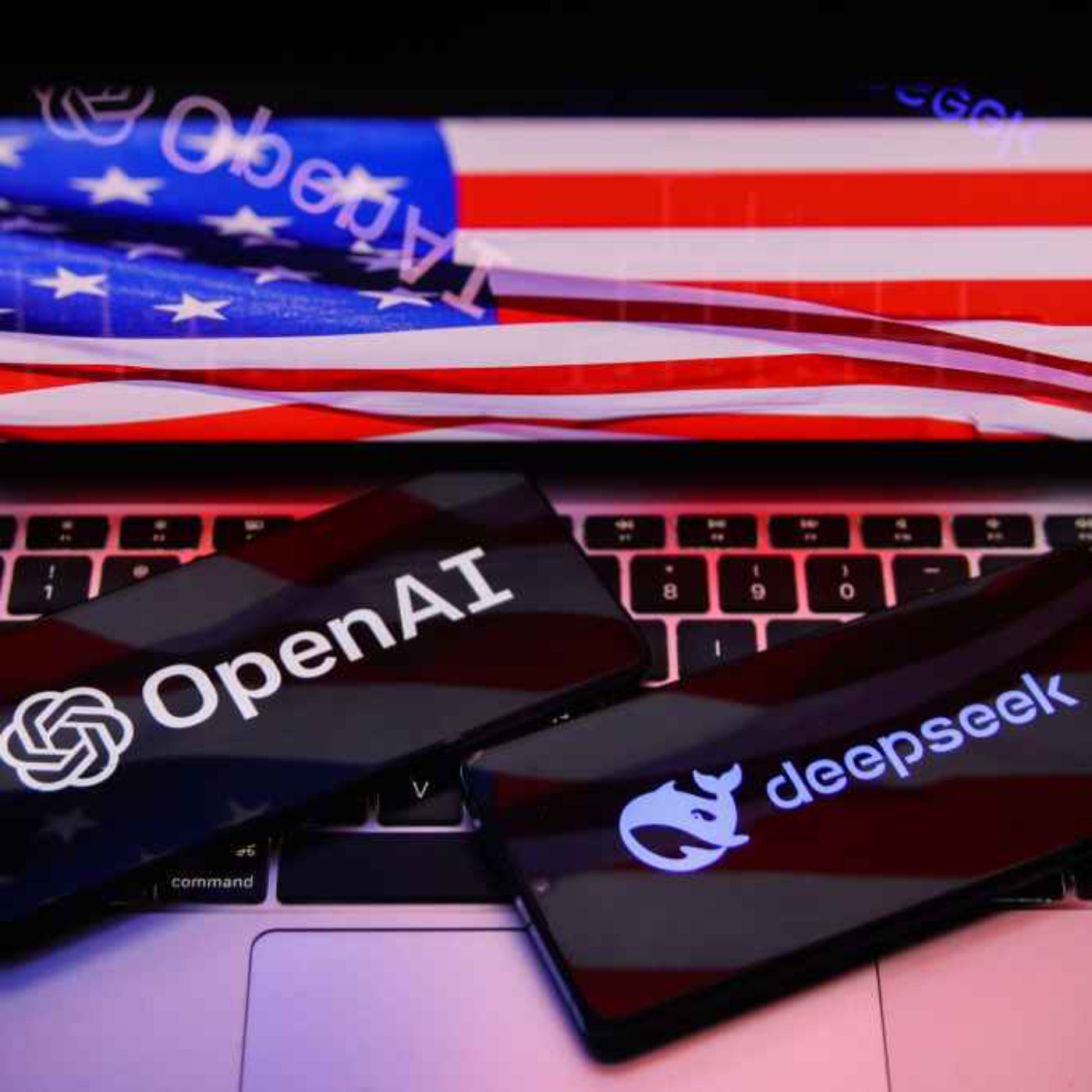
Who really controls the future of AI? A rare warning from the Five Eyes intelligence alliance says powerful AI models capable of devastating cyberattacks on governments and businesses could be just months away. At the same time, the Trump administration’s decision to block foreign access to Anthropic’s most advanced AI models has intensified fears that Europe and the UK are dangerously dependent on Silicon Valley.
Danny Fortson and Katie Prescott ask what an AI “kill switch” could mean for Europe – and whether the race for AI sovereignty is now impossible to ignore.
And as the race towards Artificial General Intelligence intensifies, so too has the talent war between AI labs, after two leading Google DeepMind researchers – Noam Shazeer and John Jumper – left for OpenAI and Anthropic.
Plus, Judith Dada, AI adviser to the German government and Senior Partner at Visionaries, joins them to discuss Europe’s AI future, tech sovereignty, and what losing the AI race could mean.
Producer: Marnie Duke
Executive Producer: Priyanka Deladia
Image: Getty
Hosted on Acast. See acast.com/privacy for more information.