 Ask ChatGPT


Elon Musk’s pledge to give every American child a SpaceX share, compared with Anthropic’s plan to donate 5% of its shares to a public-good fund; discussion also connects to OpenAI’s foundation ownership and broader “philanthropy vs safety” concerns in frontier AI.
these moves could create “multiple Gates foundations” quickly, potentially letting core AI developers “take their foot off the gas” on safety; employee concerns and public narrative management are central.
Gates Foundation’s influence in global health; Anthropic’s “AI-caused economic disruption” rationale; OpenAI’s earlier messy structure and Elon Musk court case; UK/Europe tech sovereignty issues after a Google data center outage and Microsoft backing out of an Essex data center due to grid connection problems.
none mentioned; hosts Katie Prescott and Danny Fortson only.
Written by AI. May contain mistakes.
Discussion about Musk's pledge to give SpaceX shares to children and AI's role in philanthropy.
“Hello and welcome to Times Tech, where we unpack how technology is reshaping our everyday lives.”
Analysis of Anthropic's share donation and the implications for AI safety.
“I guess it depends with both of these things how on earth they're executed.”
Examining the influence of AI founders on philanthropy and public perception.
“It'll be really interesting to see if they, if you know, the industry, whether it's OpenAI, Elon Musk, Anthropic, they're like, hey, hey, we're going to give you guys some money over here.”
Discussion on the UK tech landscape and recent corporate challenges.
“So basically, we are not very good at sorting out our power here at the moment.”
Hosts announce the upcoming Times Tech Summit and its key participants.

Get the gist, explore an idea or ask about something said.
 Claude
On Times Tech, what are the key points of this episode?
Searching your listeningAutomatic transcript. May contain errors.
0:00This episode is brought to you by Capital One. Capital One's tech team isn't just talking about multi-agentic AI. They already deployed one. It's called Chat Concierge and it's simplifying car shopping. Using self-reflection and layered reasoning with live API checks, it doesn't just help buyers find a car they love. It helps schedule a test drive, get pre-approved for financing, and estimate trade in value. Advanced, intuitive, and deployed. That's how they stack. That's technology at Capital One. Hey, we're Nick and Jack hosts of The Best One Yet. Behind every episode, there's research, email, spreadsheets, and our shared Google Doc, the headline hammer.
0:37With Google Workspace with Gemini, Google's AI is built right into the premium versions of tools we already use, like Gmail, Docs, and Sheets. No new tools or extra logins, just personalized AI for the way we work. That means less time on the work around the work and more time finding the stories worth talking about. Get AI tools for work. Upgrade to Google Workspace with Gemini at goo.gle slash workspace with Gemini. That's G-O-O dot G-L-E slash Workspace with Gemini. This episode of the Times Tech Podcast is sponsored by ServiceNow. Danny, one thing we keep hearing from business leaders right now is AI sounds great, but how do you actually make it work inside a company?
1:16Exactly, because most organizations aren't neat, shiny systems. They're layers of software, legacy tech, and teams all doing things slightly differently. ServiceNow sits across all that, acting as a control tower for making work move seamlessly through the organization. Connecting people, systems, data, and increasingly AI agents so that things don't happen in silos. Learn how ServiceNow puts AI to work for people at servicenow.com.
1:46Hi, Danny here. Today's tech podcast is a slightly shorter offering than our usual episode, And that's because we had this fantastic interview with someone who had helped and worked on Elon Musk's Tesla Roadster. You know, the one that flew in the air, flipped, levitated, landed on the ground. It was a fascinating chat, but unfortunately, we can no longer play it due to some legal roadblocks. See what I did there? But you can still read about it all at the Times. we'll put a link to Katie's story in the show notes. But sadly, this week, we're going to have to cut it a little bit shorter than normal.
2:28We will have some more details take you behind the curtain, so to speak more next week. So do of course, tune in for the regularly scheduled interview show this Sunday. And then we will be back next week with the news episode and the interview episode as per normal. So thank you for your understanding and enjoy this week's show. Hello and welcome to Times Tech, where we unpack how technology is reshaping our everyday lives. I'm Katie Prescott. And I am Danny Fortson. And this week, I want to talk about Elon Musk, Anthropic, and as always, the AI boom. Do you know what I'm talking about? Your sons must be very excited about this.
3:12Elon Musk has promised to give every child in America a SpaceX share. I mean, that's one way to introduce the kids to how the stock market works. It is indeed. But it's really interesting. His pledge came right after Anthropic announced over the weekend that they're going to give 5 % of their shares, the company's shares, and put it into a fund that will make donations for the quote-unquote public good. And, you know, let's assume for a moment they go public at a$2 trillion valuation. That's$100 billion. That is a Gates Foundation just presto chango out of nowhere and coming not from a company that's been at it for decades like the Gates Foundation was by the time it was set up, but from a company that basically didn't exist five years ago.
4:01So it's just really interesting. And then you have Elon Musk saying, I'm going to give a share to every kid. And then the last bit of this is OpenAI. 26 % of the company is owned by their public foundation, which again, can be used to fund public NGOs or whatever. So when you put that all together, you're talking about in a very short space of time. And who knows if Elon Musk follows through. But you're talking about creating multiple Gates foundations in the space of a few months. And the Gates Foundation is a very, very powerful force in the world in terms of public health and things like that.
4:39I guess it depends with both of these things how on earth they're executed. And we don't know much of the detail at the moment. I mean, the Gates Foundation takes responsibility for its own projects. Is Anthropics version going to be a pool of money that people apply for? We just don't know. But it seems to me that they have a real job at the moment. I wrote my column about this this week. They have a real job at the moment, Anthropic, to win people's hearts and minds. And that's both the public who, you know, they're pumping out this message that what we're creating could destroy humanity. But also the people who work for them.
5:16And we've seen this constant exodus of staff who are saying, look, we don't like the way that AI is being approached, not only by Anthropic, but by other businesses. we've had people like Joshua Bengio appealing to staff members saying look we want you to work in in safety rather than working to develop this technology which could potentially harm people and so I feel on both counts and that's what I'm hearing from within Anthropic and the other frontier AI companies too is that a lot of this push into philanthropy but also the talk about safety is coming from employees which is really interesting so I feel like they've just that that is part of it it's a willingness to say look we're really trying here guys yeah and i think it's to your point around i'm trying to kind of change the public narrative which the industry itself has created which is you know hey we're creating the doomsday device it's going to be great don't worry the philanthropic efforts seem to be like right in the center of the bullseye of like hey this is actually going to do good for us but i think there's a danger in that hey we've set up a nonprofit.
6:22It's worth a whole bunch of money. It's over here. Now, our core business is going to be just like straight up capitalist, make the most money. In a way, you could almost remove, by setting up a public benefit fund over here, you can almost give yourself a pass when it comes to what you're actually doing with the core of the business, which again, as you say, they've been warning could be the end of all of us. It'll be really interesting to see if they, if you know, the industry, whether it's OpenAI, Elon Musk, Anthropic, they're like, hey, hey, we're going to give you guys some money over here.
6:59And it's like a SOP that gives them license to actually do some other stuff that basically allows them to take their foot off the gas when it comes to safety of the core product. It also takes us back to the very, very messy, troubled roots of open AI, the way Anthropik started, that incredibly messy corporate structure that open AI had, the recent court case with Elon Musk, where it essentially started for the public good. And then in order to keep going, it needed huge sums of money and so had to change its corporate structure. And that was controversial at the time. And now it feels like we're coming full circle with Anthropik saying, actually, we're going to give some of our money to charity somehow.
7:42Yeah, and Anthropic has described this move as a way to help us all grapple with AI-caused economic disruption, societal disruption, which begs the question, like, so what are you doing about the actual creation of the thing that is causing that disruption? You know, it's like, we're creating a problem. Here's a potential partial solution over here. you know again it gets back to that question of how much time and money and effort and resource are you funneling toward actually let's make this thing actually you know better more safe more productive the core thing so i think that that is where the rubber is going to meet the road but it is really interesting like you know in my previous life i spent a lot of time in africa covering energy and all this stuff you know gates foundation was everywhere you know they did these like incredible things the gates foundation generally is a big force and certainly in global health and they've tried some other things that have worked less well like education but it also these things are outgrowths of their founders indeed well that's the point isn't it then it becomes the power stays in the hands of a small group of people still who are making the decisions about where that money goes exactly and also like you know all these ai founders who are like we're creating a new species and this digital god and they're all kind of strange they're the ones creating this so like what does that look like that they're coming from this really kind of frankly bizarre worldview like how does that bleed into these these these new funds and speaking about bizarre worldviews that's been a huge topic again this week in the uk because as you know we're trying to disentangle ourselves from the very weird world of silicon valley and big u.s tech and take back control of our own tech stack google one of google's big data centers went down here this week knocking out revolute and various other online banking systems which as you can imagine infuriated people and it has reignited the debate over the ownership of european tech stacks by big US tech companies.
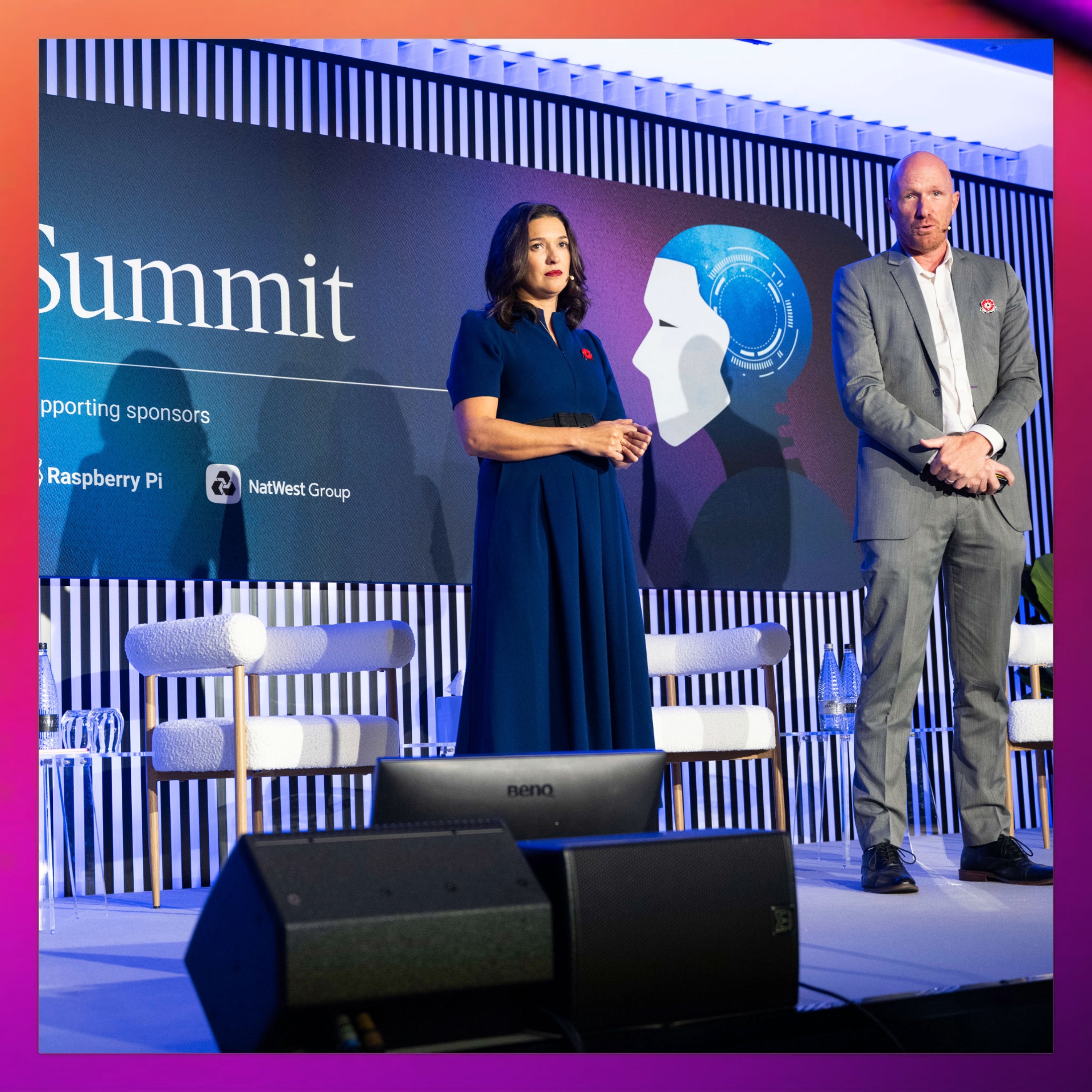
9:56And then at the same time, Microsoft, which was due to put millions into a data center in Essex in collaboration with a company called Nscale has just pulled out because Nscale can't get this data center connected to the national grid. So basically, we are not very good at sorting out our power here at the moment. You know what you guys need? I have the answer. what's that money from anthropic big intake of breath like oh god here it comes you guys need a text it tech exit oh because you said something like we need to we need to take back control and that just like it kind of sent a shudder through my body because remember it reminds me of the brexit campaign i know that's i think what i was nodding 10 plus 10 plus years ago where i was like oh yeah okay well we've done it i mean we talked about it before around the idea of sovereignty and just like those two things show it so well don't they it's like on the one hand that dependence causes huge problems but on the other without it and without that funding you know can we do it on our own yeah and then you have nscale which is this british startup who's like no no guys we've got it we're going to build the infrastructure you need and then you're like not so much microsoft has texted it off anyway so text it we're gonna coin it we can do a tech summit has a very good sovereign ai panel so you can um slip that slip it in on that one oh look at you just like with this subtle plug of the upcoming tech summit the times is tech summit oh my goodness three weeks time yeah i'm gonna be flying over i'm gonna fold myself up into economy and then i'm gonna unfold myself like a praying mantis as i get back out i'm sorry that's gonna be great everybody should come everybody should come it's gonna be um evan spiegel from snap the ceo snap is gonna be there along with representatives from nscale open ai anthropic yeah it's gonna be all gonna be there it's good we're all they're all gonna be there And that is it for this week's episode.
12:08If you haven't, you should subscribe on Apple Podcasts, Spotify, and of course, YouTube, so you never miss an episode. We'll be back on Sunday with the interview when we will be speaking to Bren Pierce, who's the co-founder of Bear Robotics. He's been working in robotics for more than 20 years. He's seen it all. He's got a lot to say about robots, particularly of the humanoid kind, Danny's very favourite kind, about how China's winning the robotics race, his predictions on how soon we're going to have a robot who'll be doing our laundry for us. So here's just a snippet of that interview. We've actually been able to, as an industry, piggyback on the work that's done by Google, Meta, these big hyperscalers.
12:52With these technologies, it actually unlocks the brain of the robot. So now the robot can finally know that a cup's there. You can say to it, where is the cup? And it can point to it. Getting a robot to actually know what it's doing. Before that, you would actually have 20 roboticists who would have to sit there for like three months and hard code every single line of code, like do this, do that, do this, do that. Now with a mixture of using like ChatGPT or Claude, you can just tell it like, this is what we want to do. All righty, that is it. We will see you next week. Bye-bye. See you next week.
13:24Bye.
13:30This episode is brought to you by Capital One. Capital One's tech team isn't just talking about multi-agentic AI. They already deployed one. It's called Chat Concierge and it's simplifying car shopping. Using self-reflection and layered reasoning with live API checks, it doesn't just help buyers find a car they love. It helps schedule a test drive, get pre-approved for financing, and estimate trade-in value. Advanced, intuitive, and deployed. That's how they stack. That's technology at Capital One. Hey, we're Nick and Jack hosts of The Best One Yet. Behind every episode, there's research, email, spreadsheets, and our shared Google Doc, the headline hammer.
14:07With Google Workspace with Gemini, Google's AI is built right into the premium versions of tools we already use, like Gmail, Docs, and Sheets. No new tools or extra logins, just personalized AI for the way we work. That means less time on the work, around the work, and more time finding the stories worth talking about. Get AI tools for work. Upgrade to Google Workspace with Gemini at go.gle slash workspace with Gemini. That's go.gle slash workspace with Gemini. Business is booming. Is your fulfillment ready for peak season? Switch to ShipStation now and handle more volume with confidence when it counts.
14:39ShipStation connects Shopify, Amazon, TikTok Shop, and over 200 more integrations with one platform that does it all. You can manage orders, sync inventory, track returns all automatically. Everything your operation needs all in one place. Right now, qualified shippers get a real dedicated person to get you set up and switched over for free. So when peak season hits, you're ready to go. Switch today at ShipStation.com, code audio.
Anthropic has pledged to give away 5% of its shares to a fund that will make donations for the quote unquote “public good”. These shares could be worth between 75 and $100 billion.
Days later, Elon Musk posted on X that he would give one of his SpaceX shares to every child in America. These could be worth over $10 billion. So, what’s behind these recent pledges?
Danny and Katie question whether tech companies are finally taking accountability for their impact on society or whether this is just good PR.
Plus, a power outage at one of Google’s data centres in London that disrupted services at Royal Mail, Revolut, HSBC and Lloyds bank has renewed concerns about a lack of sovereign AI.
Read more: How I helped to make Elon Musk’s flying car
Get in touch: [email protected]
Presenters:
Katie Prescott, Technology Business Editor, The Times
Danny Fortson, US West Coast Correspondent, The Sunday Times
Producer: Marnie Duke
Executive Producer: Priyanka Deladia
Image: Getty
Hosted on Acast. See acast.com/privacy for more information.