Ask ChatGPT


In this episode, hosts Danny Fortson and Katie Prescott converse with Jim Lanzone, the CEO of Yahoo, exploring the company's evolution from an internet pioneer to its current challenges amidst the rise of AI. They also discuss a significant deal in the AI sector between Nvidia and OpenAI.
Written by AI. May contain mistakes.

Get the gist, explore an idea or ask about something said.
 Claude
On Times Tech, what are the key points of this episode?
Searching your listeningAutomatic transcript. May contain errors.
0:04Hello and welcome to the Times Tech Podcast with me, Danny Fortson Danny in the Valley Silicon Valley that is. And me, Katie Prescott, Katie in the city of London, where Danny will be pleased to know everything is back to normal. I'm looking out of the window, sun shining, it's a bit cold, you know, weather's up and down, the royals are doing what they do. President Trump's back with you. State dinner, milk faldo, etc. Golf and tack all at one table. And that's what we're here to to talk about. We're going to talk about tech today, not tiaras. Indeed, indeed. This week, we are talking about an all-American tech giant, Yahoo, and what it takes to revitalize.
0:53This makes me feel so old. A 30-year-old tech company. That's all right. 30 years is kind of medieval in tech. It is. It is. Which means like on the internet, like I'm basically dead already. A fossil. But, you know, some things like fossils survived from the dinosaur era. It's not making me feel better. Proving you can build on the past and thrive, even in this new era of AI. We are going to speak to none other than the Yahoo CEO, Jim Lanzone, who took over the business four years ago. In his words, you can either change or die. So we're going to hear about Yahoo. It's probably bigger than you think it is and how change is happening there.
1:36Indeed, indeed. But before we do that, as always, speaking of AI, the size and pace of everything happening there, at least in terms of the money involved, it seems to just accelerate more and more over this last week with what has been described as a quote landmark deal. They're all landmark, aren't they? that's one of those phrases that is banned by our subs along with flagship you can't use a flagship unless you're actually sailing on it but anyway there's a landmark deal yet another between two ai juggernauts open ai and nvidia do you want to tell the folks at home what's happened i don't even know where to begin it's a very very complicated deal but the headline is that Nvidia, the world's biggest company worth more than$4 trillion, it's got a lot of excess cash floating around because it's been selling a lot of its very expensive, highly in-demand processors.
2:31And so has decided to invest$100 billion, and this is where we move into monopoly money territory, $100 billion in OpenAI, the world's leading, most valuable, do you say, AI startup? Startup, for sure, for sure. But it's an interesting deal because it's not just giving OpenAI the cash. And there's a lot we don't know about the deal, by the way, as well. A lot still to be ironed out. But if I get my pen out and start drawing this on a piece of paper, NVIDIA has promised to invest$100 billion in OpenAI to develop infrastructure for OpenAI. In return, OpenAI will buy NVIDIA's very expensive processors.
3:13NVIDIA will get a chunk of OpenAI shares incrementally for the amount of processors that it buys. So I've sort of drawn a circle of arrows on my piece of paper here. So it allows OpenAI to build and deploy the data centers that it needs using NVIDIA's systems. and some people have said that this is creating a sort of circularity and and you know it's almost Nvidia the accusation is buying its customers yeah it's certainly funding its customers and I don't even think that's an accusation I mean that's just what's happening right because you saw it last week talking of tiaras and tech and the state dinner you know Jensen Wang as CEO of NVIDIA.
4:01He was like, I feel like every two hours he was popping up in his leather jacket at a new venue being like, you get 500 million, you get 500 million. All the top British startups did very well. But it's all the same model, which is I NVIDIA, the largest company on the planet with like, 10s and 10s and 10s and 10s of billions of dollars of cash, I'm going to shower it on these companies who then immediately turn around and be like, you know, we're gonna do that money, we're going to buy nvidia chips because we don't have the money to do that otherwise because we're startups and we can't actually get them either i mean that's the other interesting thing about the deal that it's sort of guaranteeing open a a certain supply of chips it seems and so people have also raised questions about okay what does that mean for nvidia's other customers and it's going to get non-controlling shares but could it potentially raise competition concerns because could it then have an influence over open AI?
5:02Yeah. And it does feel like just stepping back and looking at like the bubbleness of it all. I find it a little kind of concerning for the market and like the crash that will inevitably come. Because if you look at the same thing with Oracle, Oracle like let slip or put in its results that they'd signed this massive deal with open AI, $300 billion that open AI is going to spend or to give to Oracle to build data centers, that sends the shares up in Oracle to an all-time high, makes its founder, Larry Ellison, the richest man on the planet, briefly. And then Oracle turns around and invests in OpenAI because, again, OpenAI doesn't have the money to pay the contract because it's a money-losing startup.
5:48It's just this circular money machine that all ends up going back to the same place. And in the meantime, it's pushing up the valuations of these companies to extraordinary levels. And it's having an effect on the economy as well. I mean, that's what's so amazing. There was a Deutsche Bank note this week, which I've just pulled up, which said, in the absence of tech-related spending, the US would be close to or in recession this year. But because of the CapEx boom, blah, blah, blah, that's kind of carrying it off. It may not be an exaggeration, the note says, to write that NVIDIA, the key supplier of capital goods for the AI investment cycle, is currently carrying the weight of US economic growth.
6:34It's more than AI. That's what's so wild about this. So I think we were all scratching our heads a bit, weren't we, when that announcement landed on Monday? the optimistic part of this is like well we're building all these countries of geniuses and data centers and they're going to then deploy them to like make the world a better place to make us more efficient to discover new things we can't even possibly imagine right now to like make the world like dramatically better in all these incredible ways but it's also just creating a massive digital workforce of like you're going to have all these like ai agents doing stuff and as we've previously discussed around people are finding it harder to find jobs already, especially entry level.
7:15You're kind of like, how is this all going to shake out? Because I do think, I feel like we're just at the beginning of a messy middle that, you know, the great prosperity boom may indeed be delivered, but it's going to be pretty tumultuous getting there. It's a tale of two, I don't know, sectors or whatever else, isn't it as well? I was doing our radio hit the other day, So we should take it in turns on the business desk to do the business update on Times Radio. And my stories were like some other massive investment in open AI. I can't even remember, but you can imagine it with billions attached, blah, blah, blah.
7:50And then UK food prices might rise by 5 % by the end of the year. Right. And I just feel like it's completely bonkers looking at what's going on in Silicon Valley and the numbers being thrown around. And then when you kind of look around at the rest of the world and what's going on, just kind of fantasy planet over there with you yeah just inhabited by cyborgs and driverless cars well you're here i'm gonna blame you yeah exactly it is just kind of crazy and it does feel all very bubbly because again you just have these big companies funding their customers who then use that money to buy their stuff you know that doesn't feel sustainable.
8:33Now on to the meat of this episode. How do you make old tech feel new again? We would like to tell you a story. Are you sitting comfortably? Once upon a time in the early days of the internet, two Stanford grads, Jerry Yang and David Filo, created a directory of their favourite websites. They called it Jerry and David's Guide to the World Wide Web. It caught fire. Renamed Yahoo, the site became one of the first internet portals, and by the time it was incorporated in 1995, Yahoo was riding the wave of the dot-com boom, expanding into email, news, search, and more. By the late 1990s, it was a household name.
9:25but as the internet matured yahoo struggled to keep up google surged ahead with faster cleaner search and a smarter business model yahoo tried to evolve by buying up services like flickr and tumblr yet it never quite found its footing there were many leadership changes and many missed chances. Most famously, a$44.6 billion buyout offer from Microsoft in 2008, which Yahoo turned down. The world was changing fast, and Yahoo, once a pioneer, began to fall behind. By the mid-2010s, the decline was clear. In 2017, Verizon stepped in, purchasing Yahoo's core internet operations for a fraction of its former worth, about$4.5 billion.
10:18Quite something after that$44 billion offer from Microsoft. Anyway, and merging it with AOL. Though the Yahoo name survived, it was no longer the titan it once was. Then, in 2021, Verizon passed the torch again, selling Yahoo to Apollo Global Management. And this is where Jim Lanzone joins our story. So before taking the helm at Yahoo in 2021, after the company was acquired by Apollo Global Management, Jim ran Tinder, led CBS Interactive, founded his own startup called Clicker, and turned Ask Jeeves into just Ask. I remember Ask Jeeves. I do, so do I. Exactly. He's also been on the board of some other well-known companies like Snap and GoPro.
11:09Yeah, so he's made a career out of giving companies a second or third life. And that's why his vision for Yahoo is so fascinating, especially as on his shift, this massive AI wave has come crashing down here on Earth's human shore. Yeah, I'm really excited to hear from him. He once said, and this reminds me of the interview that you did with Lisa Su from AMD, if we don't innovate, we die. And it raises the question, what does innovation look like for a company that everybody thinks they already know so well. Yeah. And you know, Yahoo is still massive. 90 % of online Americans visit Yahoo every month.
11:50They say it's America's number one finance site. I do know that Yahoo Finance is kind of a destination. Has the second biggest news offering, third busiest sports site. And Jim's challenge is to change that public perception that Yahoo, you know, old man of the internet, this relic from the early noughties is, you know, is cool, cool again. And will it be enough to carry the company through its fourth decade and everything that's going on with AI? We shall see.
12:21Welcome to the Times Tech Podcast, Jim. Thank you so much for joining us today. I think one of the things that we wanted to start with is when we were talking to people about having you on the podcast. They said, what does Yahoo do now? Everybody knows the brand. But I think some people were wondering what the business does. And I just wonder, how would you sum up what Yahoo does and who uses it? Well, I think it's interesting that people ask that question, given people might be surprised then to know that we're still one of the top three web properties on the planet right after Google and Microsoft.
12:59ahead of Amazon, ahead of Facebook. We're one of the top five most visited properties in any given month, just in terms of our actual like website, you know, more than ChatGPT, more than TikTok. And so I think that what's built into that question is some of the history. I get that question sometimes. And then people will follow it up by saying, oh, yeah, but I love Yahoo Finance. I love Yahoo Fantasy Sports. I still use Yahoo Mail. And, you know, everybody comes through Yahoo News in any given month, we're still the number one news property. The reason, because I've had to go do the forensics on all that, right, coming in to take this company over, is that, you know, Yahoo started and then our best incarnation today are still the trusted guide to the internet and the categories in which we're strong.
13:44Those categories just happen to be some of the most important categories online. And so they sum total up to a very big, you know, web properties still. But we had to go and understand, reestablish the mission of the company, which as it turns out, is the original mission of the company. The reason Jerry Yang and David Filo founded it 30 years ago this year, which is the trusted guide to the internet, helping people achieve their goals online, that today is still what Yahoo is. I also get the question of, is it a media company? Is it a technology company? It's neither. It's a product company. Those are all products that I mentioned.
14:20Some of them, you know, deploy media to help people, you know, get what they need. And obviously technology is the underpinning of all of it. But yeah, it's so interesting that this far on, that is still what Yahoo does best. Yeah, I was going to ask you what the thread was from that extraordinary history to today. It's been the trusted guide in each category. And, you know, when Yahoo started 30 years ago, What had happened is that what became Netscape had to enable people to get online, but they had no way to find anything. So Yahoo was the first property to help people do that. Over time in the 90s, that became a portal, a way to get to all things.
14:58And of course, Yahoo has a very interesting history in search, which I think underpins a lot of that question because Yahoo definitely was supplanted by Google in search. And there's actually a very interesting history to that as well that I think is really misunderstood. And then along the way, afterwards, it tried to become a media company and tried to do lots of different things to kind of fix what had happened. But what's most interesting is that all along the way for three decades now, Yahoo continued to be extremely strong in the categories which it actually operated. And so, you know, other things came along, social media, short form video, you know, now AI.
15:39but Yahoo is still every single day one of the most relied upon products and brands on the internet and I was wondering if you could kind of because you've been now there for about four years is that right yep yeah and I'm dating myself here but I graduated in college in 99 I distinctly remember getting my first email address and all that and I got it wrong because I didn't put the ad symbol because I didn't know what that was a thing or all that stuff. But I grew up in the Bay Area and I remember like Yahoo was like the quintessential dot com company. And there was that time where it was worth, you know,$125 billion.
16:18I think it was one of the 10 most valuable companies on the planet. It was kind of like the go-go days. And then post dot com bust, it just kind of drifted. And then it's changed hands a couple of times. Apollo buys it, I think for about$5 billion and brings you in, like, what did you find? Because as you say, if it's still used by 90 % of America's internet going public, like what was it as a business? You know, what was left and specifically around the brand, like, did you ever think, you know, maybe we should rebrand? It's interesting how much is wrapped up in your question, because I think Yahoo as a standalone public company for 20, you know, something of those years before it was bought by Verizon 2016.
17:11Then we bought it at the end of 2021. Yeah, it certainly struggled in relation to the rise of Google, which it had a huge hand in. We could talk about that because it wasn't defeated by Google on search. It actually gave Google search because Yahoo never did search on its own. It replaced InktoMe with Google and then to save money during the dot-com crash, it gave Google a link on its search results page with a Google logo on it. And from that point forward. I remember this. Yeah. It was basically the big distribution channel for Google. Yeah. Yahoo. It's interesting. Yahoo had never built their own search engine.
17:47It didn't happen until after Google launched that Yahoo in the mid-2000s tried to get back into search themselves. It's always suffered in relation to others. But the great thing about picking it up in September of 2021 is that we didn't have to worry about that. What we got were amazing bones. If you were to pick up a company that had that much traffic, that had billions of revenue, that was very profitable, it was insanely useful to this many people, it certainly would be worth more than the$5 billion that we bought it for. You know, you've had companies on recently valued at$30 billion, talking about how Bing should be worth$100 billion.
18:22Well, we're still the third-ranked search engine. Yeah. We're one of the top 10 most pilfered content sources online by AI companies. I could go on and on with stats. So kind of to your point, if it were called anything other than Yahoo, certainly it would have been worth a lot more. But if it were named anything other than Yahoo, it wouldn't have the traffic it has. It wouldn't be as valued as it is by our users, which if you're picking it up as the turnaround team is a huge gift, right? So the thing I can do is make way better products, create a more sustainable, go forward company for the next 30 years.
18:57And over time, we can re-inject that brand with what it takes for that brand to be a huge asset over time, not just in terms of traffic and as a product, but as a loved brand. This has happened with others. Just think about something like New Balance, which was a dad shoes brand for a long time. And the new team comes over and all of a sudden everybody in Brooklyn is wearing New Balance. It's, you know, those things take time and they would never happen if you don't create, you know, really, truly great products. And we have the best team I've ever worked with here. And that's what we're doing day by day.
19:32I want to pick you up on that point about most pilfered AI sites shortly. But if we can just start with your business model, can you explain how that works? Is it purely an advertising play? The majority of it is advertising. And, you know, there's a lot of talk these days about subscriptions or different ways for content creators to get paid. But just like Google, the vast majority of Google obviously is advertising as search is probably the best business model ever invented, at least on the Internet. We're still the third-ranked search engine. We still make a lot of our money through search.
20:02And we definitely make money through advertising in very highly targeted contextual categories like finance or sports. And then I spent a lot of time in subscriptions. I was part of the search wars in my first decade doing this. You know, streaming really does need to be, for the most part, a freemium model where you start with a huge audience and then your most loyal users will pay you. So we have strong subscription products in areas like finance and fantasy sports as well. So like most major consumer internet companies and Google, Facebook, others would all be in the same category. You know, we certainly make our money in many different ways, but search, advertising, lead generation, direct response, those are the main ones.
20:45And are you starting to see any revenue streams from the content pilfering from the crawling of sites by AI bots? You know, in the way that, for example, our company has done a deal with OpenAI to use our content, the use of copyright within LLMs has become such a massive, massive issue in media. Yeah, it's a tough one. I mean, it's starting from an interesting standpoint, which is that content was taken without your permission in the first place. and unlike search where the business model was an understood agreement where the search engine aggregates but then sends traffic downstream to the publisher sidebar yahoo has actually been doing that not just through search but through our publisher relationships for decades so we're number one in news but as an aggregator and we have you know partnerships with thousands of publishers this goes back again 20 years where we share revenue but also send that traffic downstream to the content creator.
21:40You know, again, without that, it's very hard for publishers to have an inability to monetize. It's very therefore hard for them to have an incentive to keep creating content. You know, the Spotify model would not really work for web publishers because you're not gonna be able to monetize through concerts or merchandise or, you know, through your personal brand. You need to monetize through that content. And so the model where you're simply being paid, that could be an additional way to get paid, but only being paid for someone to take that content and republish it without linking back to you in any sufficient way for you to monetize that is just really unsustainable.
22:17And I think in a lot of ways is equivalent to signing away, you know, your future existence, if that's the only way you're going to get paid. I don't think that's the model that people like News Corp and other IEC and others are hoping to have. I just think it's one way that they're trying to navigate through right now. And we've heard from like, you know, Reddit famously has signed a very big deal with OpenAI. Our company has signed a deal with OpenAI. You have New York Times filing lawsuits. You have a bunch of authors, artists, creators suing all of these LLM developers. But here you are, you're the third most traffic site on the internet, we haven't heard from you publicly about that kind of the insustainability in a world where you go from search results to answers, where LMs just give you the answer, not links.
23:11You know, you've kind of taken over this company, trying to like remake this legacy brand and kind of make Yahoo great again. How do you navigate this new world where basically we're going from you know basically a search paradigm to an answer paradigm when again so much of your life revolves around traffic yeah well for starters luckily like reddit we have a lot of it and we monetize and we get traffic in all kinds of different ways so we kind of have a diversified portfolio i guess i'd say for being able to weather that and at the same time you know our search history has been a relationship with bing since 2008 and we inherited that deal and extended it.
23:51So the things that we will do in search, you know, are kind of around old index search. And again, I don't know how much of my history, you know, but we were the turnaround team at Ask originally and sold IAC. And it's a very similar playbook to where you turn around the core business, and then you've earned the right to innovate on top of that. And during that time, our team invented what's now mostly thought of as Google OneBox. We did that first. Related search and things that I think are coming into AI search, you know, we did 20 years ago. These are not new things. Direct answers are not new things.
24:25What's new is that the people who've done it have mostly been from research and academic backgrounds and have had citations as the way to do it and have really sucked in all of the answers into the page without, you know, I think the real relationship back to the publisher that has traditionally been there in search. I don't think personally that's sustainable and I don't think it was done originally with permission. And so I think Reddit, as one example, is doing the best it can since, you know, as you know, I think they're the number one most source content source by ChatGPT. That looks like it's going to happen either way.
25:00And so they're just, you know, probably trying to do something incrementally to get paid. At the same time, their relationship with Google is incredible and they're getting tons of traffic from Google, probably only in a way that Wikipedia did over time, right? where Google made a decision 20 years ago to feature Wikipedia at the top rather than let people go directly there. So for us, I think we have something to say and search over time. We had a job to do first, which is we had a company that had to get stood back up being spun out of Verizon. We had to reorganize. We had to fix a lot of the revenue model, improve the teams, start to build again.
25:35It really started last year. Almost every pixel on Yahoo is new over the past year. and that really is just phase one. It's not what we're happy with yet, but they're much, much better than they were before. We're seeing all time highs and traffic on our email app and our fantasy sports product, et cetera. Once we get through this period, you're really going to see us be able to, you know, build our hopes and dreams of what the future of all these categories can look like. And that doesn't mean we're here to, you know, beat Google or be, you know, it's just, you're competing with yourselves, right?
26:07The 5 billion that we inherited this, that we acquired it for, you know, what can that turn into? Take the traffic we have, what can that turn into? And as we go along, I think we will have a lot to say in these categories. And I hope that we can help figure out what the future of publishing and sustainable traffic for the open web can look like. It's really part of the history of this company. If you go back 30 years, it's what Yahoo started doing. I think it's part of the lifeblood of what we've done over the past several decades and where we've been strong is, you know, being very pro publisher and very pro open web.
26:41And I think we'll continue to hopefully shine a light on that. Do you think this is a dangerous time for, I don't know if dangerous is the right word, kind of a turning point moment for the internet, as we have known it, because you have the rise of these LLMs, which are just a fundamentally different proposition? It depends, man. I really do think people are still using different products in different ways. I think core Google is still, you know, and Yahoo and Bing are still very useful for certain kinds of searches. Search has always been this way, by the way, that it really is different depending on the query, depending on the category.
27:17And, you know, the average user might be an expert at a certain category. And that is something where they're highly curious and independent and want to dive deep, right? And maybe that's their job. Maybe it's something that's their hobby. But for the most part, you know, they really want help in getting things done as easily as possible. And that changes depending on the category. It's interesting that travel is always the category that is always used as the agentic example. Because you already have a travel agent who does nine different things for you. And of course, an LLN might be able to do that.
27:50Coding, of course, is a place where it's going to be extremely strong. But you know, 15 % of queries are unique on any given day in search. And obviously, new content will need to be created over time as it goes on. And not to dwell on this one topic, but I definitely think that the inflection point we're at is figuring out what that needs to look like going forward. And as you've said, I've heard you think maybe it's a product problem now to solve in some ways, and I would agree. And I wonder if you can think of any content provider, publisher that is navigating this particularly well at the moment.
28:29Well, I mean, even YouTube had this happen to it, which is interesting. And if you use Gemini, you can see how much it's relying on YouTube, but others have also taken that. So has anyone been able to navigate it on the publisher side? I don't think so. And look, again, there are a lot of different ways that each of these publishers has a different unique model, right? Wikipedia is an example where they're getting a much smaller click rate, but they're showing up more often. And so they've been able to weather it in some ways in the short term. But you've seen traffic declining as a result of AI mode and what that looks like.
29:03That's different than what happened with OneBox, where structured data came into the page around the 10 blue links and the ads, but there was still a lot of linking going on to the publishers. So yeah, I think we're still very early innings on what this should and could be. And I'm very hopeful that, you know, a year from now, two years from now, a model will have emerged that's good for everybody involved. What's the impact been on your traffic? We've done really well because, again, we're very diversified and get traffic in different ways. We're also an aggregator ourselves. We send traffic downstream and take a lot of pride in doing that and being very pro-publisher that way.
29:40So in categories like finance, certainly, you know, we are still by far number one in that category and are still doing really well. And we had room to grow because, you know, we had a lot of improvements that we could make to that when our team came in. And you'll continue to see that. But on the whole, you know, Yahoo is still doing very well. And, you know, Danny, you talk about the history and since 1999, but you'd be surprised to know half of our traffic is millennial and Gen Z. We're extremely useful in those categories. And I think that's why audiences continue to find their way to Yahoo over time.
30:12Well, I must admit, I have two email addresses. I have my personal one and then I have my one that I use to sign up for all my, you know, Amazon, anything e-commerce, anything I'm buying online. I use my Yahoo account and I've had that for still going, but it's like my, it's like I got my personal business account and my personal account. Well, you know, it's funny you say that because I would argue that might be your actual personal account. Yeah, because I mean, a lot of look, Gmail, Outlook, these are people who compete on the corporate side, a lot of the features and functionality. It's now part of the Google Cloud group, for example.
30:49We certainly have always been someone's personal mail. We don't compete on the corporate side with Outlook or Gmail. And I think you'll continue to see us lean into features that make that incredibly useful. And I would argue a lot of the things that you sign up for, maybe you don't want, but a lot of them, there could be really interesting things in there for you. and I think it's an opportunity for us to take advantage of that. Let's say play judo in that situation and lean into you using that to make that incredibly useful for you and we have an amazing product team on that now and it's probably one of the categories I'm most inspired by improving.
31:24I look forward to that. I know we're short on time but I did have one last kind of not totally left field question if you don't mind Katie but around sports betting. You bought this company Wager for the for our listeners overseas you may not know that like sports betting fantasy sports has like completely blown up in america in the last what five years or so five six years did they change the rules around it betting has fantasy is a good 25 years old correct yeah but i'm just wondering because like you know every podcast i listen to every sports website i go on to it's all funded now, it seems, by FanDuel and the big sports betting kind of companies.
32:06When you talk about your diversified business model going forward, how important is the betting, kind of the betting aspect of it? Well, again, it's one of those issues where the actual things you have to do to turn around a company or what really makes a company tick is not always the thing that's been written about over time by people loosely observing the category and making assumptions about it. In the case of sports, where we're number two to ESPN, but the founding father of fantasy and extremely strong, again, we're having our best year ever and have an incredibly great team on that. Almost none of that has been done with a great opportunity in betting because we inherited from Verizon a deal with BetMGM that expires next year.
32:51We've been locked up in that category. And so our opportunity to monetize that and send traffic downstream or somehow bring that more into what we've been doing. Wager was person to person betting. I see. So we'll have a lot to say in that category to take advantage of our huge traffic that we haven't even been able to really tap into yet. Fascinating. Thank you so much for taking the time to come on the podcast. We can talk to you for like another hour. We'll do it again. I hope you'll come back on in a year or so. And tell us updates. We're fascinated to follow your views on publishing. Especially my email inbox.
33:24I look forward to the new features. Yeah, we're just getting started. Just getting started. So awesome. And passing as well. Thank you very much, Jim. Thanks, guys. Thank you.
33:36So there you have it. Jim Lanzone from Yahoo. New and approved, so he says. What do you think? That was so interesting. And I hadn't expected to hear so much from him about that very thorny issue of copyright, who owns content, how publishers get paid in the AI search era. And he was keeping his powder dry a little bit. He was. But it was fascinating that he was involved in those first search wars with our Jeeves and so understands the nature of search. And he's clearly got some big things to say about it when the time comes. For sure. I mean, as we talked about, you know, everybody's kind of putting their stake in the ground in terms of whether it's lawsuits or commercial deals or both.
34:25And, you know, we haven't heard from Yahoo. When you're speaking to someone from the AI industry, they talk about training models. And when you speak to someone from the content industry, they talk about scraping the internet. They talk about content pilfering. Feft. And theft. And it was very, very clear which side he was crusading for. For sure. And he seemed very much the champion of the publishers and the representative of the publishers and the way he talked about sending them traffic. so and also just think like you bought that because i was like the third most traffic site on the internet feels like it should be worth more than five billion dollars which is what they paid for it if he like does the thing it could be like an incredible deal if like apollo then sells it for 100 billion like you know three years from now or something but obviously there's a lot to figure out between now and then especially around you know where does it fit in this new world again as we're talking about, like, answer engines rather than search engines and how does Yahoo fit and all of that and how does it make money and what's its relationship to the LLMs and all that stuff.
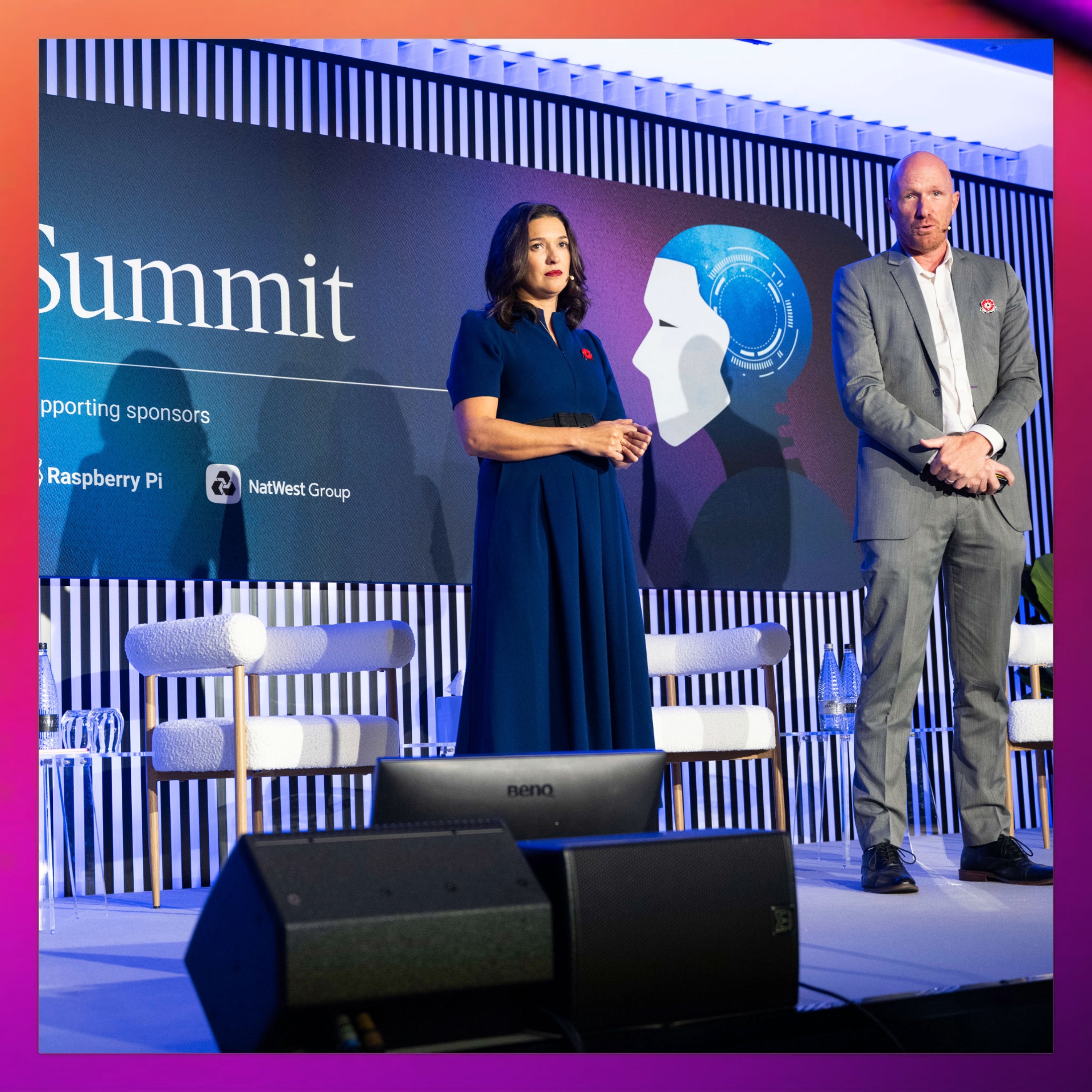
35:29And what he does when he decides to go into battle with the AI companies, I think, is going to be very interesting to watch. For sure. There's something bubbling there. Indeed, indeed. Well, not long until Tech Summit, I noticed, not long until the Times Tech Summit, less than a month until you fly over for that, which is getting very exciting and i could say now we had confirmed this week that nick clegg formerly of meta will be there too so it's a really fantastic lineup jimmy wales the founder of wikipedia is also going to be at the tech summit and another friend of the pod who was on the pod last week mike intratour of core weave who's also going to be there talking to yeah that's a pod friendly group of people and of course katie and i will be there on stage emceeing you know what what what we're rapping tell us to go home if yeah if enough listeners show up katie will rap on stage oh i never agreed to that i think you did i can do ice ice baby really well actually oh my god please i'm sure you can whether you can is a different question of whether you should anyway that's all that's it see you next week for another fabulous episode thank you for listening bye-bye goodbye
Hosted on Acast. See acast.com/privacy for more information.