In short
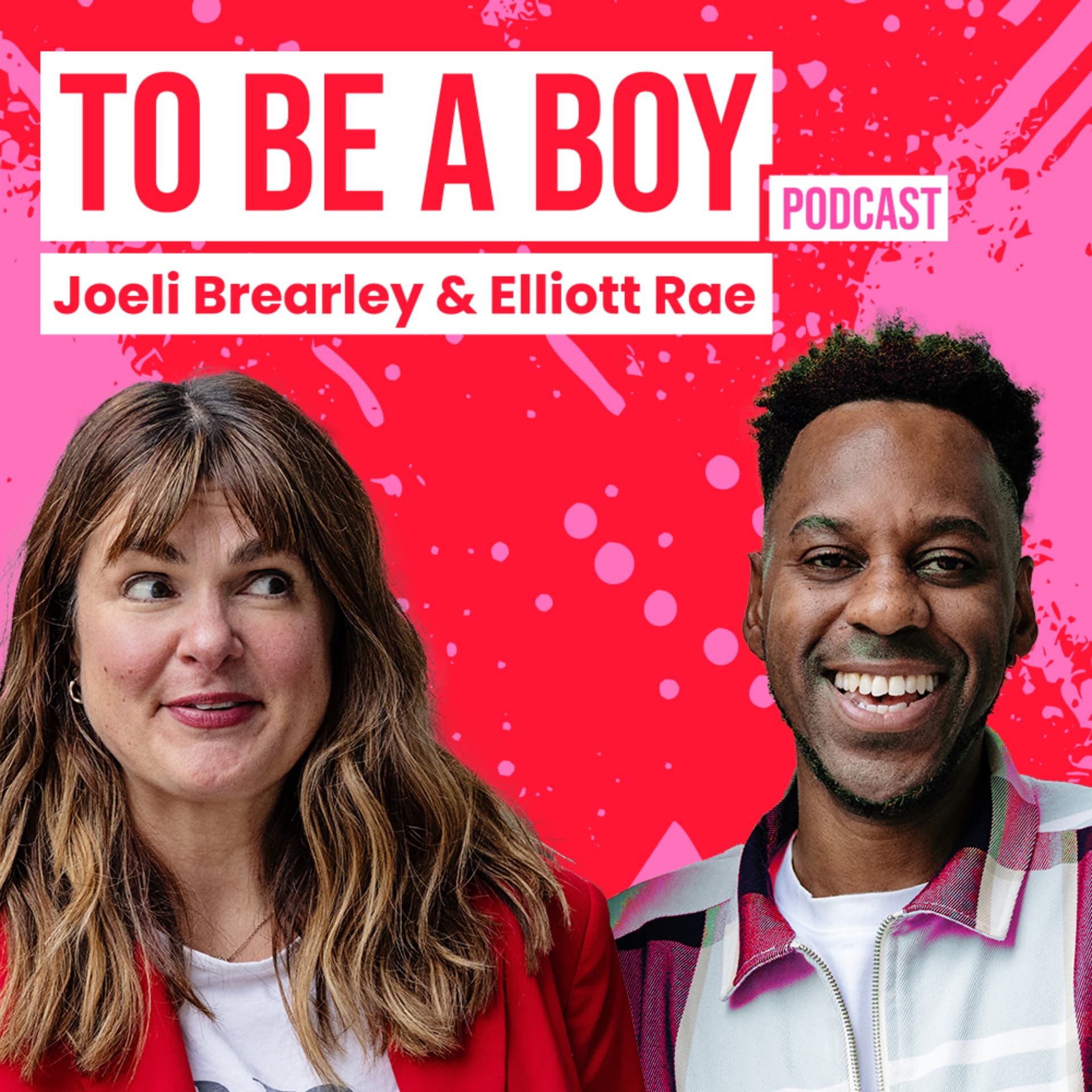
To Be A Boy podcast episode “The Conversations That Changed Us” is a year-end reflection by hosts Elliot Ray and Jolie Brilly on how specific guests reframed parenting and masculinity. Guests discussed: Ruth Whitman (author on raising boys; argues boys need love/nurture, and emotional development research challenges “boys are bad” narratives); Lenore Skenazy (advocates child independence; “let kids roam” reduces parental fear and over-supervision); John Amaechi (psychologist/university lecturer; describes being perceived as a “monster” due to his Black male body, leading to avoidance and “curation” for safety); Steve Biddulph (author; teaches the “father wound,” citing that ~90% of men have some father-related hurt/estrangement); Josh (a 14-year-old writing about masculinity’s harm; critiques manosphere/red-pill influence and calls for healthier alternatives). Key claims/examples: boys’ emotional self-regulation develops later than girls; “doing no harm” as masculinity; racism impacts the body/behavior; over-surveillance harms kids; men’s violence/mental health linked to father wounds and harmful narratives.
Written by AI. May contain mistakes. Listen to the episode to check what was said.
Chapters
Tap a time to open that second in VOReflections on the Year
1:50 to 3:38
Elliot and Jolie reflect on their experiences and milestones of the podcast.
“I have enjoyed every second of doing this podcast.”
Highlights of Guests
3:40 to 5:12
They share their favorite moments and insights from previous guests on the show.
“I think it was a really good way of starting because I think it's just the framing she gave the issues was perfect.”
Boys' Emotional Development
5:18 to 7:29
Discussion on the emotional sensitivity of boys and their development compared to girls.
“So all this nature, nurture stuff is really interesting.”
Independence in Parenting
8:25 to 10:29
Exploring the importance of allowing children to be independent and learn from experiences.
“Lenore, Lenore Skanezi I mean, she was also an absolute badass, wasn't she?”
The Parental Role in Childhood
10:40 to 13:56
Discussion on the balance between supervision and independence in childhood.
“And really the only people who can help them any step along the way is their parent who they can then reach by phone or smoke signal or whatever.”
The Impact of Perception: John's Story
14:00 to 17:47
Explore how societal perceptions of race can deeply affect individuals' mental health and interactions.
“And I think you're passive when you're passenger.”
Navigating Public Spaces and Identity
17:47 to 21:00
Discuss the emotional toll of navigating public spaces as a person of color and the strategies for self-presentation.
“It wasn't a part of the plan to have that conversation.”
Reflections on Masculinity and Emotional Health
21:12 to 28:00
Examine conversations about masculinity, emotional well-being, and the importance of father figures.
Exploring Influences on Masculinity
28:00 to 29:14
Discussion about the influences of masculinity and their impact on teenage boys.
“I can't remember how you phrased it, but basically on masculinity influences and the damage that they're doing to teenage kids.”
The Manosphere: Pros and Cons
29:14 to 30:54
Analyzing the positive and negative aspects of the Manosphere and its effects on young men.
“This is wrong because it led to the murder of this girl, right?”
Show all 12 chapters
Reflections on Gender Dynamics
30:54 to 35:52
Insights on the shifting dynamics in heterosexual relationships and the impact on women.
“Can I just say, the best thing that's happened on this podcast is me.”
Personal Reflections and Mentorship
35:52 to 36:50
A heartfelt exchange of admiration and personal reflections between the hosts.
“It's been so much fun and I'm just so, I'm just so happy.”
Transcript
Automatic transcript. May contain errors.0:00This episode is brought to you by Redfin. You're listening to a podcast, which means you're probably multitasking, maybe even scrolling home listings on Redfin, saving homes without expecting to get them. But Redfin isn't just built for endless browsing. It's built to help you find and own a home. With agents who close twice as many deals, when you find the one, you've got a real shot at getting it. Get started at redfin.com. Own the dream.
0:33Welcome back to the To Be A Boy podcast with me, Elliot Ray. And me, Jolie Brilly. And today we're in the studio. Oh, we've got, I mean, I wish I had one of these in my house. Yeah, this chair is so comfortable. I don't ever want to leave. I know, I'm moving in. Where's your Christmas jumper? Oh, it's at home, to be fair. I've got one. I've had it from Next for three years. It's lovely. It's got a big Santa Claus at the front, some lights. It's fantastic. But that's for Christmas Day. I don't have a Christmas jumper. I have Christmas knickers. We'll get you one. We're going to buy a Christmas jumper.
1:09Okay. There we go. There we go. Christmas presents. I'm the worst at Christmas presents, as you know. Thank you for my angels, though. Oh, you are very welcome. Yeah, little black angels. They were lovely. Yeah. And my two-year-old had a meltdown because she wanted three. So you very kindly brought us two. Of course, drama and the rain. For some reason she was like, I want three. Complete irrational breakdown. It's never enough, is it? Never enough. It's like, what? This is enough, okay? But we're coming to the year end. It's been a year to be a boy. Nearly a year, but 2025, our first year. How are you feeling about this milestone?
1:50It's been a joy. I have enjoyed every second of doing this podcast. Every second. Well, not every second. I'll be honest, there have been the moments. There have been some moments. I think when we started it, we just thought, oh, well, this is a topic we're both really interested in. Let's give it a go, see what happens. I don't think for either of us it was about getting lots of people to listen. I was just really curious about what guests would say. And actually, people are loving it. People, yeah. I go out all the time and people, they talk about the podcast. And in a very moving way as well.
2:26in a way that it's personal to them and it helps them. Yeah, it's amazing that people actually listen. And we've learned so much, right? I feel like I've had an epiphany almost once a week doing this podcast. There's something that somebody said where a light bulb has gone off and I've thought, wow, yeah, I'd never thought of it like that. So what a privilege to be able to hang out with a lovely podcast team and learn something new every day. And pick brains of clever people. So what are some of your highlights? Give me one of your To Be A Boy 2025 highlights. Well, we started off with Ruth the Whitman, didn't we?
3:08The Whitman. That's what I'm going to call her from now. I loved Ruth Whitman. And she had written a book all about raising boys because she's got three boys herself. And I read that book before interviewing her and was absolutely blown away by it. I mean, what a book. And the podcast, she just really opened my eyes to many of the challenges that boys are experiencing, to the fact that as a feminist, raising two boys, there's this tug of war internally sometimes between previously held beliefs and seeing what your boys go through and wanting to protect them as much as possible while also feeling very strongly that you want to raise a good man because we as women have experienced not good men in our lives.
4:03Yeah, I love that episode. Yeah, Ruth was really, really good. I think it was a really good way of starting because I think it's just the framing she gave the issues was perfect. It was a perfect entry point. And, you know there's been so much there's been so much negativity around boys the conversation has been difficult over the years I think a lot of people have been scared to have conversations about boys and so I think getting Ruth on at the beginning to say look this is a podcast that recognizes that some people do harm right and some boys do harm girls do harm um that that is that is true, but we're not looking at it from a perspective of boys are bad people.
4:45We're looking at this as they are young people who need to be loved and nurtured and guided and in all of our hearts, there is, there is goodness and the world's a complex place and as parents, as teachers, as mentors, as people who just care, how can we raise the next generation of boys to do good things and be good partners and get the good dads and good colleagues and good friends, you know? So it was great, great, great framing.
5:18So all this nature, nurture stuff is really interesting. And it's also, it's kind of quite fraught because, you know, sometimes when you sort of talk about how much is innate and how much is socialised, it can feel like you're making some kind of political statement. And so I went into that research with a lot of trepidation. And you know, there's this whole story about boys will be boys. When you hear that, you kind of imagine that boys are like sort of innately aggressive or destructive or really sturdy and tough and, you know, not very vulnerable. But what I found when I looked at the research was actually almost the complete opposite, that a baby boy is actually more emotionally sensitive and fragile and vulnerable than a baby girl at birth.
6:00and the reason for that is that the right hemisphere of the brain which is the part you know it's very easy to oversimplify but broadly speaking the right part of the brain is the part that deals with emotions emotional self-regulation so like calming down if you're upset and forming attachments and relationships so it's like your emotional center in a baby boy that's about a month to six weeks behind a baby girl in development at birth and if you know newborns you know that a month to six weeks is really quite a lot like if you think about premature babies or whatever and so when a boy is born he's like a little bit more you know the boys tend to cry more often they find it harder to calm down they're more kind of upset by traumatic or difficult events so if they're separated from their caregiver or if something goes wrong you can see that a baby boy takes slightly longer to calm down obviously we're talking about averages here group averages every individual is different but the baby girl is slightly generally slightly more independent slightly more resilient so you can see that in the data that pretty much every bad thing that can happen to a baby so whether that's like abuse or neglect or poverty or post-natal depression from the mom all of these things have a bigger impact on boys than they do on girls and you can see data on that that carries all the way through life you know that boys are more vulnerable to disruption and that kind of brain vulnerability you know brain immaturity and brain vulnerability carries on throughout childhood boys brains just develop more slowly I just wanted to clarify on one of the points that you said because I can imagine some boys or men that might be listening will be thinking hold on our brains are not behind girls but it's not about intelligence is it it's about order it's not about intelligence at all so like cognitive skills and this is I think why this issue becomes really controversial because people get hung up on these like who can read maps and who can do maths and who can do you know reading and everything actually cognitively in terms of like intelligence boys and girls brains are really similar they have very similar iqs but it's the emotional development the sort of emotional and attachment development that's the bit that is a little bit behind and the parts that deal with like self-regulation so calming down impulse control that sort of thing it's those things which are different For me, one of the episodes that stood out was Lenore Skanezi Lenore, Lenore Skanezi I mean, she was also an absolute badass, wasn't she?
8:35You won't mess with her But she really did change the way both of us parent Because she made us realise That being afraid of what would happen to our kids in the outside world Was causing more damage to them Than just letting them roam Let them roam, baby. Let those kids roam. Seriously, Lenore has saved me time on the school run because now I park at the top of the hill, my daughter gets out and I drive off. Before I was staying to watch her walk into the school gates. Now I don't. Now I go and drop the youngest to nursery and I trust that she can make her way into the school gates. And that saves me time because I can get to the nursery quicker and get hope and so thank you lenore you have saved me five ten minutes on the school run and given me more time to have my eggs and toast for breakfast yeah and there's something about giving kids independence isn't there that's so good for them and so good for you that like my my eldest now he's at um secondary school i do i barely do anything for him i he has to make sure his pe kit is sorted and ready in the morning he has to make sure his uniform's out ready to go and if he doesn't have it ready, then he's just late for school and I just let him be late for school.
9:51I don't step in. I'm just like, well, if you haven't sorted it. You're raising a fully grown adult. I'm right. Well, no, I won't go that far, but, but I have learned to really step back and that that is good for him and it's good for me and that kids learn from their mistakes. That episode was literally life changing for me, you know, in terms of the freedom we give at Eldestown, how we think about her handling difficult situations in her life with her friends. Um, you know, when we go to a shop or if we're in a restaurant, I'm not ordering for you. You know, if we go to a shop, you can pay. You've got a little rooster card, you can pay by yourself.
10:32It's my money on the card, right? But you can go and pay for yourself. Like you can navigate the world without me having to be there. And I think in a world now where we have so much convenience we've got so many things you can do online you can live a full whole life without ever leaving your house or interacting with a human being let our kids be out in the world i think is a really important thing to do i think the big lie of our era is that we must know everything our kids are doing we must supervise them all the time otherwise they are in grave danger. And really the only people who can help them any step along the way is their parent who they can then reach by phone or smoke signal or whatever.
11:15And it's so belied by all of history, by all of our own history. At 15, you were not tethered to your mom. You didn't have a phone when you were 15. Your mom didn't know where you were every single second. You wanted to have adventures. Sometimes you did stupid things. Sometimes you found yourself taking a little risk that you thought was dumb in retrospect. Sometimes you had to even obfuscate when your parents asked what you were doing or where you were. And maybe that felt a little bad or maybe it felt a little good that you could handle yourself, right? The idea that the only person who can keep you safe and make you capable isn't you is very debilitating.
11:54Yeah. Why do you think so many parents are terrified of letting go? First of all, when I was growing up, It was so long ago, there wasn't as much media. There certainly wasn't an internet. There was barely cable television. When all of these things came along with more space to fill and a more desperate grab for eyeballs, because it wasn't three stations or five stations or a hundred stations, it's everyone in the world now is trying to get your attention. The easiest way to get the attention of anybody is to say child in danger. And even better than that is mom puts child in danger. There's nothing more delicious to chew on than that.
12:29We're chewing on it now. So the media is partly to blame. But I think the overarching big kahuna is the big lie that we were just discussing before, which is the idea that if you do everything right, and if you never take your eye off your kid, either physically or electronically, then you can control everything they do, see, eat, hear, try, watch, lick, whatever, and then they will be safe. And that leaves the parents extremely anxious because it's all in them and extremely bored because now I have to play all the games with them and I have to make sure they understand the vocabulary words and I have to let them win, but not so much that they don't understand what losing is.
13:04Boring, boring, boring. And then the kid is bored because instead of exploring something or climbing a tree or, you know, falling or meeting a frog or doing anything, it's like, oh, honey, I'll pick up the frog for you. Let's see. What should we call it? Should we call it Christopher? Christopher sounds like it could start with a K, but actually it starts with CH. That's a blend. You know, It's so over the top for what we expect of parents and so underdeveloped for what we expect of kids. We think they wouldn't possibly be interested in anything unless we point things out. Look at the chlorophyll is why the leaves are changing color.
13:36It's like, give me a break. Kids are created to be curious and competent and to explore. And it's like the kids are in the passenger seat and the parents are the drivers. And you know that when you're the passenger, you don't learn anything. You don't know where you are. You don't know what your route is. So we keep putting kids in the passenger seat of their lives because it's safer. And then wondering, why are they so depressed? Why are they so anxious? And I would say, why are they so passive? And I think you're passive when you're passenger. And can we just talk about John Amici? Because I knew, I have read a lot of John's work, listened to him speak on multiple occasions.
14:17but still that episode, I had to sit in a dark room for about an hour afterwards just to digest everything he said. Because it was so powerful, him talking in particular about the fact that people see him as a monster because he's a tall, big black man. And he knows, he sees it in people's faces when he's out, that they perceive him as a monster and the impact that that has on him. That was personal for me, very personal because I remember this story. So I was lucky enough to get awarded by UED Women UK and me and Sneny, we went to the awards show in Mayfair and got called up, gave a speech, got this certificate and it was amazing.
15:08and then on the train on the way home I was sitting down on the train I think then he was opposite me the train was packed like people are standing up on the train and it's summertime it's hot there was one seat available on that train next to me and no one wanted to sit down and I thought about it and thought this has been happening for black men forever but for that particular moment why it was so why it hit home so much is because i'd just been in an environment where i was being celebrated where i was getting an award i was talking in front of hundreds of people where my work was being recognized and it was amazing there were people from all walks of life in the audience and you get on the train and to everyone else you're just a black guy who they kind of scared of who they're suspicious of who they're not quite sure how to interact around and it just goes to show right is that you know john was saying he's revered john is revered um celebrated when people know who he is but when people don't know who he is he's a monster he literally used the words monster and that story about him leaving his house and then walking around the corner and the couple kind of throwing their coffee because they were like oh dropped the coffee on the floor because i was so so astounded to see him and what that does to psychology when you're walking around the place and people are literally wary and scared of you and suspicious of you.
16:38And what does that do to your psyche? And what does that do to how you move around the world? And I think there's been a lot of research around how racism kind of manifests in your body, you know? And I think when he was talking about that, it was deep. Can't lie, that was a deep one. He said he didn't leave the house because very much at all because on screen you can't see his stature, you can't see his size. So he feels that he's, uh, the people respond to him very differently than in real life. He was talking about when he was, because he's a university professor, and he was lecturing the students, and he was lecturing them in psychology and in body language.
17:27And then he was demonstrating to them. He'd pull students up and he'd stand closely to them and watch them bristle. And, yeah, it was one of the deepest episodes I think we've done. It was, and it was so unexpected as well, because I don't think that was in the questions that we had. It wasn't a part of the plan to have that conversation. But, you know, we make people feel so comfortable. They just pour their heart out. Oh, I mean, we're just, you know, so woman friendly. That's what it is.
18:04John Amaechi:I don't leave my house very much unless I have to. because the experience of being, apart from that, the experience of being in public with other people is painful. It's really painful because although this will feel fragile to lots of people, we are impacted by how we see other people see us. And I know when I leave my house that I'm a monster. And I know this because of how other people react to me and they react to me like I'm a monster. When I walk into a lift and they are going to walk into a lift with me, they might take the next lift. And I can't explain that unless I'm a monster. When I walk into a space with people and they take their belongings, their valuables, and hold them closer to themselves, I can't explain that unless they see a monster.
18:58John Amaechi:When I round a corner, this happened to me when I lived in my old house last year, I rounded a corner and a couple were walking towards me with coffees. And they dropped their coffees. And the man, actually, of the two shrieked as I rounded the corner, like a meter or two away from them. So it wasn't like I walked into them. And the only way I can explain this, and I've known this since I was 13, right? I know that I'm a monster. and so I avoid interactions if I can because it's harmful to my emotional well-being and I curate them otherwise so everything you're looking at right now is curated for the benefit of mostly white people but everybody to see me in a way that is useful for me and less harmful the blue around my head here this is 40 hours work here it's light around my head and dark around the edges makes me look lighter, which makes me feel safer to people.
19:58John Amaechi:I am massive, but you couldn't tell until I said so, because there's so much space around me that helps you to see me in context. Books, old school science fiction, which I'm really into, right? I bought that lightsaber. I bought these things because I'm really into them. But they make people feel safe because, oh yeah, I remember Star Wars, the TARDIS, I remember Doctor Who. And all of this is for the audience to see me in a way that is least corrosive for me and most helpful for our interactions. You thought this was your Run Club era. Turns out, it was more of a thinking about Run Club era.
20:39John Amaechi:The good news? Someone's marathon training is about to start. Sell your workout gear on Depop. just snap a few photos and we'll take care of the rest they get their race day fit and you get a payout for trying someone on depop wants what you've got start selling now depop where taste recognizes taste you know i think one of my favorite episodes was beyond equality um shout out to ben and dan Do you know I love that episode because they are on the ground talking with boys every day they are running workshops in schools they are on the front line of this conversation and hearing their insights in regards to how boys are feeling I've sent that episode to so many people so many people are interested in what's going on and how do I have a conversation I send them that episode because it was so relatable so down to earth so practical but also quite hopeful and Ben said something when we asked him about what does masculinity mean or what does it mean to be a good man something like that and he said it's just like doing no harm doing no harm and that's like that stuck with me you know how do we raise boys so just do no harm not just other people but to themselves as well yeah and that was really powerful and if you can have those as like guiding lights as like beacons for you of like where masculinity is positive and where it's not positive then I think maybe that leads to to good outcomes because we know that the outcomes for guys themselves are like pretty poor in terms of like mental health in terms of men's violence against men like all of that like drug and alcohol abuse all of those kinds of things so I think if you start with a masculinity that just doesn't cause any harm to you as an individual you're off to a good start and then once you add in my community around me and how do I make sure I'm not harming anybody around me I think you probably arrive at a version of masculinity that exists within community that's maybe quite inherently positive because it's just doing good stuff for people around it and for itself you know Steve Biddle Uncle Steve well I mean because we interviewed him late at night didn't we uh and so we it was about 10 o 'clock it was like 10 o 'clock at night for us and it was early in the morning for him and so I was a bit sleepy and a bit I think I had my pyjamas on certainly on the bottom half and I'd never really heard him speak before but this lovely man with this gentle voice had me captivated with every word that came out of his mouth.
23:21He was so thoughtful and insightful. Storytelling. The guy was a master. a master and we didn't expect that because obviously he's got the best-selling books raising girls and raising boys so we knew he was a great writer but I didn't expect him to be a completely captivating expert storytelling communicator like anyone that's interested in how do I convey a message listen to Steve Biddoff I was blown away by by by what he was saying and one moment he's become an exact story but he spoke about sitting down with a group of boys and talking to them about, like asking them to put their hand up if they'd had a loving dad who cared for them.
24:06Something like that. And how so few boys had in their mind a dad that loved them, you know. And I started talking about my dad and I was like, this is emotional, Steve, man. I just, I wasn't ready to cry. You were blowing up. I was not ready to cry that evening.
24:26John Amaechi:yeah well this is the bigger question of why are men so messed up and and that um which was really the mission of my life was you know i i was i was only about 27 young family therapists when i just like why are the men so messed up you know the women are doing pretty well, you know. And what it is, is that this thing we uncovered in the 20th century that is called the father wound. And if I, sometimes I will have a hundred men and similar to what the work you do, I think, Elliot, you get a hundred men in the room and they're there to learn about fatherhood. And I put the question to the men when they've settled in and they're kind of starting to lower their defenses a little bit.
25:19John Amaechi:I say, you're here because you want to be a good dad. How do you get along with your own dad? And it's like I've got a hand grenade out of my briefcase, lobbed it into the room. The reaction, you know, how do I get on with my own dad? Some Some of the men look like thunder, and they kind of spit it out. I don't. You know, I don't get along with my own dad. I don't waste my time. And if you have a show of hands, and I'd be, you know, just get people listening to predict what will happen here, what the numbers will be out of 100 men. Who's estranged from their father? How many men never speak to him?
26:00John Amaechi:30 % of the men. Almost a third of the men. estranged from their own dads. Shocking figure. Another 30 out of 100 will say, oh yeah, well, I see him at birthdays and Easter and things and, you know, but it's always a bit prickly. You know, he's always having a go at you or something. So they've got a relationship, but it's cactus. And what have we got left? We've got another 30 % who are dutiful. So they, you know they did you they show up they discuss the football can't wait to get away visit the nursing home once a month you know that kind of it's better than nothing if i was in a nursing home it would be better than nothing um but if you're doing your maths now we've got we just we've got 10 of men left and these guys always wait till the last before they speak and then And they say, well, you know, I understand what the other guys are saying.
26:57John Amaechi:But in fact, my old man is amazing. He's a fantastic dad. And they have tears in their eyes when they say it, you know. I couldn't design a better dad than my dad is. And if I have problems or worries, I would always, you know, go and talk to my dad. And it's not that we always agree, but it's that he's on my side. And so, but that big, if we go back to the big picture, we've got 90 out of 100 men have a father wound and they're not close to him. And so their own fathering lacks that kind of sense of steady confidence to both to hold their child and, as you asked, Elliot, to let go of their child and trust that he'll be back.
27:49John Amaechi:He won't love you less. We need to talk about Josh. We definitely need to talk about Josh. Josh messaged me on LinkedIn, DMed me on LinkedIn and said, hello, I'm a 14-year-old boy and I'm writing a book on the... I can't remember how you phrased it, but basically on masculinity influences and the damage that they're doing to teenage kids. So I immediately wrote back to him thinking, well, this is clearly not a real human. And then we arranged to have a call, which we did. I mean, he was so insightful. I think he's probably been one of the most talked about episodes. And he's since gone on, hasn't he, to do loads of TV programs.
28:32People are loving him. But we got him first. So props to us. Like an actual genius. Like I was listening to the guy thinking, I think you're like a literal genius. like you're using words i don't understand yeah just look that up just give us an internet you're speaking in a way that most adults can't articulate themselves in the way that you're unpacking these massive issues like yeah he's gonna go on to 100 run the world i have no doubt about that obviously there's misogyny and there's attitudes towards women but i think the most immoral part about the manosphere and the repel culture is these intrinsic values of young men and you know their most valuable assets being completely manipulated but going back to the school thing because of the appeal and the rep appeal of the influences to these values um then trying to strip away the content with the idea of this is wrong and trying to going in with that because that's what adolescence really is, right?
29:39This is wrong because it led to the murder of this girl, right? These influences are bad. They're wrong. So you're putting that in front of them and thinking, okay, well, because I had those feelings only there, you're taking that away now. So that means, so it's not seen as you're taking away the content that's harming me. You're taking away the control I had in my life. You're taking away the certainty. You're taking away my ambition. And not giving you anything else to replace it. It's about alternatives. There you go, that's gone. Yeah, it is about alternatives. And I think, you know, that's why there's a lot of positive action going on around at the moment.
30:15But there's definitely so much space for it to be propelled forward. And I think we need positive alternatives in society. where we, I think we look critically at the Manosphere and think, okay, what are the good parts of this? What are the good things this is doing for young men? That is, you know, because at the end of the day, putting all the bad things aside, the Manosphere is still getting young men to, you know, start their own businesses and care about their fitness and care about their appearance and things like that, which, you know, are good things. Well, you just take those good things and you put it into a healthy alternative without all the harmful rhetoric.
30:50And then there you have a really viable solution. but I think that's a role of you know wider institutions such as governments to implement that I think unfortunately on a personal you know community scale I don't think you can really achieve that without wide-scale government intervention. And there's government funding doesn't I want one of the government to try and do something like that because can you imagine I mean you can like the government try and do anything interesting or cultural and it always smalls black in his face but they should be funding stuff like that in order to have a different narrative 100 josh thank you yeah this has been so so insightful and honestly you i find you utterly fascinating and you're so so clever and so thoughtful and so inspiring you know to 46 year old old bag me um and you know to kids and i just you know i i'm so excited about this book coming out and i really hope you get lots of platforms to be able to talk about your thoughts on this because it's really important you know what my probably my favorite episode um us is that bad to say yeah does that mean i love the sound of my voice this is not very british it's not very Can I hark back to my Caribbean roots here?
32:16Can I just say, the best thing that's happened on this podcast is me. And you. But no, my favourite episode, I think, one of them was our breakdown of, is it embarrassing to have a boyfriend? Oh yeah. I thought that was so funny. I like, sometimes I just listen back to my own jokes. But when I was talking about Sneny not revealing me until a year after we got married, I just found that funny. So that personally, I think that was one of our highlights. But that article as well is completely exploded. Everybody's talking about it. Yeah, I really enjoyed it.
32:56Shantae Joseph, I think, is an amazing, amazing writer. She has this knack of hitting on something very current and doing it in a way that is so accessible and always fun she's a she you know she's just a fun human you can tell she's a fun human but she makes everything really accessible and yet what she's talking about has so many layers and is really complicated and nuanced and that's one of the reasons why I think this has really taken off is because it's made people really reflect on lots of different aspects of male and female heterosexual relationships and you know we've been talking for a long time about the fact that heterosexual relationships don't always work for women in the vast majority of cases women end up they're unhappy they're more unhappy in a heterosexual relationship they don't live as long in the heterosexual relationship I heard Scott Galloway saying on something this morning that the research shows that when a widower's husband dies, she actually is happier after he's died than she was when she was married to him.
34:13And so, you know, we have known for quite some time that relationships aren't necessarily working for women the way that they are working for men. and so the first thing I thought when reading this is go on women like you're kicking back against the thing that lots of women of my generation have pushed to one side and pretended isn't happening and you're saying enough now I'm not going to stand for this anymore I think there's more to it than that but that that was the first thing I felt when reading it yeah so did you feel were you were you celebrating the article were you celebrating the idea or did you also feel sad as well I felt both of those things at the same time I felt somewhat part of me felt proud of women for not standing for this anymore and then another part of me you know I'm raising boys as well so I have a personal investment in this another part of me felt deeply sad about the fact that we are being driven further and further apart men and women and that we seem to have got to a position where we are blaming each other for lots of our problems and I think that is also part of why this article exists is because it's not just about the fact that relationships aren't working for women it's about the fact that men and women are getting really good at blaming each other and making each other the enemy and we're not each other's enemy we need to find better ways to work together to find solutions to many of the problems that we're experiencing so I felt sad and but also part of me I have to say felt gone I mean I've really enjoyed all of our episodes Elliot I've enjoyed just doing this podcast Oh, cheers matey.
Read the full transcript
36:18It's been so much fun and I'm just so, I'm just so happy. I'm happy. I mean, you know how much respect I have for you, man. You're literally one of my role models. You are a legend. Before we were friends, I had a list of people who like, like mentors without knowing their mentors. And there's a few people. There's a guy called Leon Mann. He runs Football Blacklist. There's Ian Wright, you know. Just Ian Wright. You need to get on the podcast, Uncle Ian. But you're on that list, but now you're in real life. But you're on that list, you know, in terms of how you did Pregnant and Screwed, what you did, but how you did it as well.
36:57And so I really looked to you for inspiration for, like, this is how you conduct yourself in public life and how you create a movement. So, you know, when you asked me to do this podcast, I was like, I've made it. Jodie's asked me to do a podcast. Mum, you've done a good job. your boys made it oh that's very I don't feel very inspiring I just feel like a knackered old mum at the moment bloody tired but thank you everybody for tuning in we've had a blast we have we hope you have too and we've got loads of exciting stuff coming up next year we're not going to tell you now because that would spoil it including our Geordie episode where Jodie's going to speak and I'll do the action we're not going to tell you we're just going to go straight into the episode I could probably do Geordie Scouse and Scottish we should okay we'll do all three Yeah, we're taking a little bit of a break, can't we?
37:45So we'll be back in a couple of weeks. Back. Early jam. But Merry Christmas, everyone. Happy New Year. Merry Christmas. See you in the New Year.
38:04Struggling with weight loss? Prolon's 5-Day Fasting Mimicking Diet is a clinically developed nutrition program designed to promote fat loss while protecting lean body mass. developed at USC's Longevity Institute, it assists the body in entering a fasting-like state that helps reset metabolism and target visceral fat. In just five days, Prolon offers a science-backed approach to weight loss without extreme restriction or guesswork. Get 15 % off plus a$40 bonus gift when you subscribe at prolonlife.com slash now.
From the publisher
We’re back in the studio (and yes, the chairs are dangerously comfy) to celebrate nearly a year of To Be A Boy. From Ruth Whippman’s eye-opening research on raising boys, to Lenore Skenazy convincing us to let kids roam free, to John Amaechi’s powerful truths about identity, we’re unpacking the moments that made us laugh, cry, and rethink everything. Plus, a shout-out to Josh—the 14-year-old genius who might just save masculinity. Join us for highlights, surprises, and a little festive chaos as we look ahead to what’s next.
Thanks for a wonderful year, wonderful listeners!