 Ask ChatGPT

Democrats’ post-midterm strategy for 2028, centered on “centering people,” reducing corporate influence, and “leaning into the South” and Black voters; includes a Denver “What’s Next” conference survey of Democratic insiders.
Senator Raphael Warnock (Georgia), pastor at Ebenezer Baptist Church; first won Senate seat in 2021; frequently discussed as a potential 2028 presidential contender. No other named guests appear in the transcript.
Democrats won by focusing on voters amid economic distress and corruption concerns; the biggest challenge is keeping politics from overpowering people. Warnock argues corporate money/corporate interests cap policy possibilities and cites prescription-drug pricing as an example of needing Medicare negotiation. He says Democrats must take the South seriously because Black voices and poor rural voters are being gerrymandered/diminished.
Georgia and Mississippi Senate races; SNAP cuts hurting rural districts; Warnock’s “ministry of presence” campaign approach; Warnock’s Gaza/Israel positions and calls for presidential leadership.
Written by AI. May contain mistakes.
Explore the atmosphere and key discussions at the Democratic conference.
“We're at the What's Next conference in Denver.”
Senator Warnock discusses his vision for the Democratic Party and the South.
“Senator Raphael Warnock, thank you for joining us.”
Senator Warnock elaborates on the need for Democratic investment in the South.
“And so I'm saying lean into the South because I think that Democrats ignore or diminish the importance of the South at their own peril.”
A candidate discusses their experiences connecting with rural voters in Georgia.
“And so when I was running in 2021 and then again had to turn around and run in 2022, I would show up in these little towns all across Georgia.”
Exploring the shared struggles and faith between black and white southerners.
“I'm a pastor who served, you know, who's running for the Senate.”
A discussion on the need for Democratic leadership and the call for change in the party.
“And if we're ever to have a moment in this country that transforms it into something that Dr.”
Senator Warnock discusses his ideological stance and the importance of centering marginalized voices.
“That kind of ground is fertile for demagogues.”
Senator Warnock shares his motivations for supporting fellow candidates against bigotry.
“who obviously was victorious in that race.”
A conversation on Democratic votes regarding military aid to Israel and the need for leadership.
“Yeah, I mean, but it wasn't just Republicans or kind of his Republican opponent who used some of those, I would say, Islamophobic attacks.”
Discussing the qualities needed in the next Democratic presidential nominee.
“Would you include President Biden in it?”
Senator Warnock discusses his role, challenges, and potential presidential ambitions.
“senator, a member of the House, a president.”
Insights on the Democratic Party's challenges and the importance of grassroots voices.
“to talk with Senator Warnock, yes, but also to ask Democratic Party insiders about what they think should happen in the party going forward.”

Get the gist, explore an idea or ask about something said.
 Claude
On Today, Explained, what are the key points of this episode?
Searching your listeningAutomatic transcript. May contain errors.
0:00Astead Herndon: Last week, the Democratic Party's insiders descended on Denver to ask an important question. What's next after the midterms? And it was a proper celebration. Vibes were high. Picture a nerdy version of Coachella or Capitol Hill's way of doing Burning Man. Voters sent Republicans packing in the midterm elections. And in doing so, they revitalized a Democratic Party that's been on life support since 2024. They were feeling crushed, suffocating under this terrible economic situation. And they decided to give us the keys to give us a chance to fight for them. Georgia Senator Raphael Warnock was one of the big stars of the What's Next conference.
0:44Astead Herndon: And in talking to him, you can see why. I think the big challenge in front of us is the challenge always of centering the people rather than the politics. Warnock says that he has a blueprint for the party's success, and it runs through Black voters and the American South. But it's unclear if Democratic Party leadership is fully on board with that plan. So this week on America Actually, we ask, what's next for the Democratic Party? Let's dig in.
1:23Astead Herndon: Support for the show comes from Americans United. Americans United for Separation of Church and State is an organization that defends freedom without favor and equality without exception. That work is especially important now under an administration that leans on Christian nationalist rhetoric. This spring, a group of multi-faith federal workers sued the Secretary of Agriculture after she sent out a proselytizing Easter email to more than 100 ,000 USDA employees. Americans United supports those workers. If you want to help Americans United, go to au.org slash vox to learn more about their work and how you can get involved.
2:04Hear that?
2:05Astead Herndon: That's me in Tokyo learning to make sushi from a master. How did I get here? I invested wisely. Now the only thing I worry about is using too much wasabi. Get where you're going with SPY, the world's most traded ETF. Getting there starts here with State Street Investment Management. Before investing, consider the fund's investment objectives, risks, charges, and expenses. Visit statestreet.com slash IM for perspectives containing this and other information. Read it carefully. SPY is subject to risks similar to those of stocks. All ETFs are subject to risk, including possible loss of principal.
2:32Astead Herndon: Alps Distributors, Inc. Distributor. We're at the What's Next conference in Denver. We're right outside the Mission Ballroom, a concert hall here in the city. And this is a pretty special convention. It's around 3 ,500 Democratic insiders. We're talking people who run campaigns, staff campaigns, and a lot of the different candidates who might be running for the Democratic nomination in the 2028 presidential election. So we had a two-part plan on how to tackle this conference in Denver. Step one, get a temperature check on how party insiders are feeling about the task ahead, how to deliver with their newfound majorities in Congress, and how to take back the White House in 2028.
3:11Astead Herndon: And to do that, we handed out this little survey. We're doing a little survey of all the people here. It's totally anonymous. We'll make more questions about where the future of the party's going next. May I ask you guys to fill it out? Sure. We're asking them biggest issue facing the party, one place you might disagree with the party, who you want to be the nominee, who you think will be the nominee. Completely anonymous. But step two was maybe even more important. We wanted to dig deeper into the question of what's next with Senator Warnock. So after we passed out more than a hundred business cards with our survey, we sat down with the senator to ask him those same questions and a whole bunch more.
3:47Astead Herndon: Warnock, who first won his Senate seat in 2021, is seen as a potential presidential candidate moving forward, and he's been vocal about his desire to see the party invest more in Black voters and the South, a case that got even stronger after Democratic wins in Mississippi, South Carolina, and Texas. Now, we'll get back to that survey a little later. But first, here's my conversation with Senator Warnock. Senator Raphael Warnock, thank you for joining us. Great to be with you. I appreciate you taking some time out at this What's Next conference. I'm going to tell you what we've been up to here.
4:21Astead Herndon: We've been passing out these little survey cards, talking to Democrats about what they think some of the biggest issues facing the party are. And we wanted to actually start with a couple of the questions we asked them and posed them to you. The first one was, you know, partly because this is such a convening of Democratic leadership or folks who run those campaigns, what do they think is the most important issue facing Democrats looking at? You know, as a pastor, one of the things that I've learned through years of serving people is that you've got to serve the people, but almost as important, they've got to feel like you're serving them.
4:56They've got to hear you and they've got to feel you. And while I am very excited about what happened a couple of Tuesdays ago, we should recognize that the people didn't stand up and say they're in love with Democrats or in love with the Democratic brand. I think that they were feeling crushed, suffocating under this terrible economic situation. And they decided to give us the keys to give us a chance to fight for them. And so I think the big challenge in front of us is the challenge always of centering the people rather than the politics.
5:35Astead Herndon: What does that look like? I mean, what is the difference between a party that moves ahead people focus versus politics focus? Well, the big challenge we have, obviously, for both parties is the outsized impact and influence of corporate money and corporate interests, well-heeled interests in our politics, which puts a low ceiling on the politics of the possible. I'll give you one example. I'm proud of the fact that because I won my race in 21 and John Ossoff and I flipped the Senate, among the bills we passed was one that capped the cost of prescription drugs. So I should say gave Medicare the ability to negotiate the price of prescription drugs.
6:26Well, think about that. First of all, the fact that we had to pass a law so Medicare could negotiate tells you almost everything you need to know about the outsized impact of big pharma and other interests in our politics. What kind of capitalism allows the seller to tell you what the price is and you can't even push back?
6:48Astead Herndon: So I see that kind of removal of corporate influence as step one for you. That's step one. Okay. So we passed the law, but then it was only for 10 drugs. And then the law didn't take place until four years after we passed it, giving Big Pharma this long runway, some four years, to continue to rape and pillage the American people, in my view, until we then could bring some sanity, some modicum of sanity. So we've got to get out from under the stranglehold of these interests in our politics. We need to deal with Citizens United and a whole range of other issues. The second question we were asking folks in that survey was what's one place you disagree with the party on?
7:28I mean, I fight with the party all the time. Right now I'm trying to get my party to take the South seriously. We're about to get there. I think I think they may be hearing me now after that wonderful shout all the way from the Mississippi Delta across the heartland. I think we have proof of concept, but I'm not going to let up until we do everything we need to do to make sure that the voices in the South, black voices and others, are heard. Because that impacts the policy. If the politics is distorted, if the politics only amplifies certain voices, then that impacts the policy. And so I'm saying lean into the South because I think that Democrats ignore or diminish the importance of the South at their own peril.
8:16But I'm also saying lean into the South because the great migrations that we witnessed over seven decades in the African-American community is happening in reverse. The South is the fastest growing region in the country. It's the only region where there is population growth in every age group. And so I want to make sure that we give those voices that are right now being gerrymandered and diminished, give them a hearing so that we have a shot at getting the policy right.
8:48Astead Herndon: That's a political area of disagreement. Is there a policy area of disagreement you have with your own party? I mean, a whole range. Give me one. I mean, the main thing is I just I think we ought to dream bigger. We ought to we ought to be doing more. everything from voting rights to health care. I think we're going to have a big debate in our party on health care. Yeah. Here's where I start. The wealthiest country on the planet and in human history ought to be able to provide health care to all of its citizens. Well, you know, you mentioned kind of the Democratic Party's big gains in the South.
9:24Astead Herndon: That's a huge takeaway from these midterms. I wanted to ask you more about that. I mean, you're someone who has worked to see this moment through for a long time. Who should we credit for those victories? Like, tell us who the people who have been putting in that work and what you think the factors are that went into a moment that a lot of people have, you know, not seen coming. Well, you know, the risk of this question is, look, success has many fathers. Yeah. And mothers. And failure has none. But I would start with the American people themselves. And that's not just a political answer. It's a real answer.
9:59The fact of the matter is the American people across partisan lines stood up the other day and said enough is enough. We are seeing the rampant corruption. We are making the connections between the corruption and costs. We know that we're paying more because Donald Trump and Elon Musk and people of that ilk are literally looting the democracy and selling it for parts. And so we saw people in red ruby districts in states that people thought we couldn't win. Kansas, Iowa, Mississippi stood up and said, we want something different here. And so I would start with the American people. But we also had incredible talents.
10:48incredible candidates. Scott Cologne ran an incredible race. I mean, I don't want it to get lost on people. That this man won, and I don't know, at the end of the day, what did he raise? Maybe$3 million? Yeah, not that much.
11:02Astead Herndon: On a national scale. Yeah, it might as well have been zero. I raised him close to a million because I saw this early on. By the way, I said to donors. I was about to bring this up, but go ahead. Give us the story. Well, I said to donors months ago. Yeah. I was raising money and trying to have us win our Senate majority. And donors said, well, who else should we be looking at? Is there anybody out there that people aren't paying attention to, a sleeper race? I said, yes, Mississippi. What'd they do? They laugh. The whole room laughed. What did you see that other folks missed, though? I've lived it.
11:40I'm the United States Senator, junior United States Senator from Georgia. We saw over the years people dismiss Georgia. And every time we lost, you know, people wanted to pull back more. Rather than lean in, they wanted to pull back. They said, here we go again, Lucy in the football. It's Georgia. There's no way we're going to win. But we saw those margins get smaller and smaller even when we lost. And so we kept leaning in. And, you know, the Calvary didn't come right away, but after folks saw our momentum, and then at the end of the day, it literally came down to Georgia. Remember, we wouldn't have had a Senate majority without Georgia.
12:24So they had no choice. And so I saw those same dynamics on the ground in Mississippi. Mississippi has a larger percentage of black voters, eligible black voters, than any state in the union. And what that means is that you have there the makings of a multiracial coalition because black people alone can't elect anybody to a Senate office or governor's office anywhere in the country. But it wasn't just black voters. It was those poor rural voters in red districts across Mississippi who were being just crushed by the one big ugly bill that cut SNAP, which disproportionately hurts
13:11Astead Herndon: red rural districts. This is what I wanted to bring up because I feel like some of the reason the South hasn't seen some of that investment is a presumption that white Southerners are unpersuadable. And in your race, and I think what happened in Georgia, it wasn't just turnout, but it was also persuasion. It was persuasion. It was convincing people to move on from Republicans and embrace Democrats. Like, as a, you know, history maker yourself, how do you make that persuasion happen? You know, I have to tell you as a pastor, there's something that I call the ministry of presence. Sometimes you can't solve people's problems because they're complicated or complex.
13:52They may take time or you may not be able to fix it immediately, at least. Right. But there's something healing about having people show up for you. The ministry of presence. And so when I was running in 2021 and then again had to turn around and run in 2022, I would show up in these little towns all across Georgia. And the folks were surprised that I was there. And you might be thinking, well, of course, they were surprised that a Democrat was there. No, they were surprised that anybody running for the United States Senate was in their little town. They'd never seen a Senate candidate in their town.
14:33They were surprised I was there. And as we sat down and talked about their hospital that had just closed, as we talked about the struggles that their farmers were having under the tariffs that Trump imposed in his first term, we realized that we had things in common. And we shared a faith. I'm a pastor who served, you know, who's running for the Senate. and I got enough of those voters to build the kind of moral, multiracial coalition to win.
15:05Astead Herndon: Yeah. I mean, some of the playbook here, though, feels kind of intuitive. You know, show up, you know, lean in to the kind of shared identity. Campaign everywhere. I've heard kind of Southerners talk about building structures over a long period of time. Part of me wonders, why has it been such an effort to make that happen? I mean, are we talking around racism here? Like, is it just because these are people who have been written off? Well, that's a good point. And it's an interesting thing. Here's what black southerners and white southerners have in common, particularly poor white southerners in these rural districts, all written off.
15:40Astead Herndon: Like that's a shared identity between cross-racial. That's a shared identity. And if we're ever to have a moment in this country that transforms it into something that Dr. King called the beloved community, we'll somehow traverse those boundaries and recognize how much we have in common and how much our interests are connected. You know, you mentioned kind of who gets the credit for the Democratic victories. You center the voters, I think, as many others have. But part of it has also been about Democratic leadership. Should they be taking credit for what we saw over the last couple of weeks? I have not seen you make clear kind of where you stand on the Senate majority leader question.
16:23Astead Herndon: Chuck Schumer has made clear that that is his desire. But also you have recently had Chris Van Hollen, the senator from Maryland, say that he was putting his hat in the ring. Do you know how you're going to land on the Senate majority question? Well, obviously, I know them both. I've worked with them both to get good things done. I'll hear from my colleagues and who else? We'll see. I don't know who else might decide to raise their hand. I'll tell you who's not raising their hand for that job, and that's me. But, I mean, like, there is a desire for Democrats to see— there has been a desire from the base to see the party use the levers of power in Washington.
16:56Astead Herndon: Some calls for fresh leadership. I mean, is this debate a proxy for that? Yeah, I think precisely that. Okay. People want change. The status quo is not working. And I think that's true in a larger sense. You know, we're focused for good reason on Donald Trump and what he's doing to our country, literally tearing the country apart. But as we do that analysis and get ready for 2028, there must be a robust recognition that the thing was broke before Donald Trump showed up. That's the only reason he could win twice. A manifestation of a systemic problem. People felt deeply alienated from the politics, and they feel this growing divide that we've seen over the last 40, 50 years in wealth inequality between what people want and what their government delivers.
17:47That kind of ground is fertile for demagogues.
17:51Astead Herndon: Can a Chuck Schumer-led Senate Democratic caucus deliver on the change people want? I think that's the debate that our caucus is having, and we'll see where we land. You know, I've seen some of what has been debated even here at this conference as part of that moderate progressive framework, what kind of ideologies lead to bigger results. But I've seen people call you all of the above. And I wanted to know, do you consider yourself as someone who fits in one of those labels? How would you describe where you fall on an ideological spectrum? I come out of the prophetic tradition. you're saying if if this is moderate progressive you're dealing with a different xyz you know um you know my models are amos and isaiah and micah and and jesus i'm serious i believe and that takes you into places that are that are conservative sometimes it takes you in places that are revolutionary it takes you in places that are that are that are moderate but i'm always trying understand with the most marginalized members of the human family and of our country.
19:00I think if you center the marginalized, you have a shot at getting the policy right.
19:06Astead Herndon: After the break, Senator Warnock talks to us about faith and politics, plus whether he's running for president.
19:18Astead Herndon: Support for Showtime comes from Shopify. If you've been waiting for a sign or maybe a sound to start your business, consider the odds that you turn on a podcast and hear me talking about you starting your business. Wow, depending on how many podcasts you listen to, of course, maybe the odds are actually pretty high. However, I digress. In any case, Shopify can help you make it happen. Shopify's pre-built website themes and AI site builder make it easy to launch a beautiful, professional-looking store without ever touching a line of code. Shopify's mobile app lets you run your store from anywhere, from tracking inventory to customer support to handling payments and more.
20:03Astead Herndon: Launch before Black Friday, a time of year when more people are already shopping and ready to buy. If you're ready to launch your business before Black Friday, go to shopify.com slash explained to start your free trial at shopify.com slash explained. Go to shopify.com slash explained. today to hear your first. Here it comes.
20:28Astead Herndon: Support for the show today comes from Upwork. If you're a small business owner and there's an important task that requires expertise you don't have, congratulations, you've just leveled up. Now it's time to find some help and Upwork is a great place to start. Upwork gives your business fast access to highly skilled specialists with deep expertise so you can fill critical skill gaps, launch projects faster, and scale support up or down without committing to a full-time headcount. And isn't that the dream, my people? From software development and AI implementation to marketing, design, and business operations, you can browse profiles and review past works.
21:08Astead Herndon: You can hire with confidence and get started quickly. Visit Upwork.com right now and post your job for free. That is Upwork.com to connect with top talent ready to help your business grow. That's U-P-W-O-R-K.com, Upwork.com.
21:32Astead Herndon: Support for the show today comes from Monarch. Paying off debt can be overwhelming, especially when it seems like there's no end in sight. Am I right? You can make payment after payment and still feel like you're not making a dent. Monarch works to help give you a clear timeline with an endpoint you're working towards so you can breathe a sigh of relief. Let's breathe one together. Monarch's debt paydown simulator and visualizer shows your exact debt-free date. Isn't that what we're all after? That date based on your real balances and payments. it lays out your whole payoff journey as a clear, motivating timeline.
22:18Astead Herndon: Write your own Monarch story with Monarch. Use the code EXPLAINED at Monarch.com to get your first year of Monarch Core half off at just$50. That's 50 % off your first year at Monarch.com with the code EXPLAINED.
22:44Astead Herndon: I thought it was really interesting how you went to Michigan to campaign for Abdul El-Sayed, who obviously was victorious in that race. You made a clear pitch to black voters. I thought it was an interesting message. I want you to describe it yourself. Why was that advocacy important to you? Why did you decide to go out there? Yeah, Michigan. Yeah, it was really important. I mean, first of all, I wanted to win the majority, to be sure. But also, as I looked at that debate as it was unfolding, I had to show up. I'm a child of the black church. And when we say the black church, let me hasten, because people don't know this history.
23:19Yeah, yeah, yeah. Give it. Let them go. We've never meant anything racially exclusive about that. Black church is just a moniker for the anti-slavery church. because almost all of American Christianity acquiesced, not just acquiesced, provided and provided a kind of moral covering, if you will, for slavery. So the black church was literally born fighting for freedom. It was born fighting bigotry. And when I saw the all-out assault on Brother Abdul on the basis of his religious identity, bigotry is bigotry and religious bigotry is bigotry the black church was born fighting bigotry and so you literally have people saying that he's unfit because of where he prays and how he prays and if there was anybody that i felt should be the tip of the spear strenuously rejecting that idea it was the black church and so i went among other things to remind my colleagues there of who we are.
24:28Astead Herndon: Yeah, I mean, but it wasn't just Republicans or kind of his Republican opponent who used some of those, I would say, Islamophobic attacks. There was the infamous scene of Haley Stevens, Democratic congresswoman who lost that primary, going to the black church. Well, yeah, here she is standing with somebody, the congressman, who, you know, is engaged in this kind of Islamophobic rhetoric. She said she was doing it for black businesses. And she's in a black church doing this. It's deeply insulting. We had Abdul El-Sayed on our show, and he made the case for cutting off aid to Israel. In 2025, you and Georgia Senator John Ossoff voted to block a measure from Bernie Sanders that would have stopped$8 billion in aid for Israel.
25:13Astead Herndon: I recently saw a stat that 74 % of Democrats oppose additional funding for Israel per recent polling from the New York Times and Siena. Was that vote a mistake? We've had several JRD votes. And you chose only to mention the one that I guess I didn't vote for. Sure. I have voted on a couple of occasions, on multiple occasions, to limit, block, whatever, military aid to Israel. And to your earlier question, I've broken with the majority of my party, the majority of my caucus, to do so. My North Star, where that issue is concerned, is a region where Israeli mothers and Palestinian mothers can put their children to sleep at night, feel that they're safe, know that they're safe, and have them awaken to a world that embraces their full humanity.
26:07I support a two-state solution. Clearly Netanyahu does not. He is a problem. and what we need in this moment is leadership from all of us. And so I don't shirk that one bit, but I will tell you this. As someone who has voted for these JRDs on a few occasions in response to the moral atrocities that we've seen in Gaza, I can tell you that what I've learned is that there is no replacement for presidential leadership. And we haven't had that on this issue in quite some time. Would you include President Biden in it? We have not had the kind of leadership that I would want to see on that issue in quite some time.
27:00And I think our party has been a lagging indicator on that and the people are crying out for more. What inspires me is that I am just old enough to remember when there was an American president who took two old men in a room at Camp David. And he wouldn't let them go.
27:24Astead Herndon: Until they worked something out. Until they worked it out. Of course, Amwar Sadat paid a very high price for that. I remember that too. I think it was in seventh grade. We need American presidential leadership in this moment for that and for a whole range of reasons. Last couple. I mean, once you mentioned presidential leadership, what's one non-negotiable for the next Democratic presidential nominee? What's one thing you think they have to do? I think we need somebody who doesn't need the job. I like that. You know, who really is driven by a deep sense of moral vocation and mission and for whom the job, whatever it is, A U.S.
28:01senator, a member of the House, a president. It's a set of tools. But the mission is what is central. I think when you have somebody who's grounded in that kind of deep commitment, then we're on to something.
28:18Astead Herndon: I mean, I think about this with you because, you know, being a pastor at Ebenezer is a big job before the U.S. Senate. You know, that's a weight. That's where Martin Luther King Jr. preached. Yeah, I'm like, to fill that pulpit, I mean, which one of those jobs is harder? It's unclear to me. Well, here is how working in the Senate actually makes my job at Ebenezer preaching easier. I thought I knew what sin was. And then I went to Washington. And all of a sudden, when you talk about hubris and human pride and arrogance and sin and self-importance, man, have I got material these days. My preaching is better than ever.
29:07Astead Herndon: I'm coming with real world examples. Thank God for Washington, D.C. I don't know. Sodom, Gomorrah, Washington, D.C. What's the difference? All right. I'm going to end by asking you the other questions we had on our survey, which is about who folks want to be the next nominee. I've seen you answer and kind of dodge this question about whether you're considering to run for president in 2028. I was recently seeing that your go to answer was, well, I'm focused on the midterms. So now that that has ended, that we have results from the midterms, I'm going to ask you again. Are you thinking about running for president?
29:39I remain very committed and deeply honored to be in this fight for the people of Georgia. You know, who gets to represent 11 million people? Stand up, get up, fight for them every day. And I remain prayerful about what's the best use of my gifts in this moment. I hope at the end of my life I will have poured it all out and gone until the wheels fall off.
30:07Astead Herndon: And that's what I'm trying to do, give it all I have. Give me a sense of how that decision calculus or timeline sort of works. Very few people are ever in the position to think about such a thing. How do you go about making the decision about whether that's true for you? I have been praying this prayer since I was a kid. I ask God to order my steps. Now, I don't say that in any kind of—I don't have a spooky spirituality. It's real, but it's grounded in real-world experience. And so you just do the work. And I think you'll know what you need to do when the time comes. Looking for a sign? I didn't say that.
30:47Astead Herndon: Heavens are open. I didn't say that. I didn't say that. But you just do the work. Senator Warnock, we appreciate you joining us and we appreciate your time. Thank you so much. Thank you. OK, so remember what we came to Denver for. to talk with Senator Warnock, yes, but also to ask Democratic Party insiders about what they think should happen in the party going forward. This means you got to participate in our survey. Oh, I am. I'm giving it to a few people, too. Good. You want some more cards? Yeah, give me one more. Yeah. No, just give me one more. Just one more. Senator Warnock said that the biggest challenge facing Democrats is censoring people over politics.
31:24Astead Herndon: And his solution is to curb the influence of corporate money, something we heard from voters all throughout this year. Still, the senator was less clear on how to actually do that. And while I understand his desires to not be defined by labels like moderate or progressive, it does make it less clear what the policy priorities of any presidential run would be. But more importantly, while Senator Warnock mostly answered our questions, the same can't be said about the Democrats who attended the What's Next conference. We passed out a ton of survey cards to a group of people who are literally paid to think about the Democratic Party's future.
32:06Astead Herndon: And yet, people were so hesitant to fill the survey out. Can y 'all do it? La Playa, do you please? It's completely anonymous. No one will ever know. So I have to do it right now? No, you don't. You can do it. You can literally do it tonight. Yeah. But did you participate? I did participate. I don't believe you. That sounds untruthful. Did you? Black people don't lie. And they were even hesitant to talk to us off camera about their answers. The answers we did get were vague and full of platitudes. So it's not even worth showing you the results. But in my opinion, that might be the most important takeaway of all.
32:42Astead Herndon: The biggest stars of this midterms weren't selected in Washington. And the issues they ran on, be it corruption or regulating AI, didn't come from party leaders. As I've said a hundred times, this was an election that was about bottom versus top, much more than it was about right versus left. And in some ways, that indicts the premise of the entire What's Next conference. Elites will not decide what's next for the Democratic Party, whatever liberal Burning Man has to say. That decision will be up to you.
33:19Astead Herndon: America Actually will be in your feeds every Saturday with an interesting interview in culture or politics. You can also watch these episodes on the Vox YouTube channel. Just go to youtube.com slash Vox or click the link in the show notes. Just a quick update for y 'all. This is our last new show of the year. And over the next couple of weeks, we'll be sharing some of our favorite episodes from our partner podcast on the Vox Media Podcast Network. America Actually will be back in the new year. This show was edited by Kasia Brasalian, fact-checked by Sarah Schwepp, and mixed by Shanna Mahoney. Christopher Snyder is our video editor, and Kunui is our senior art director.
33:57Astead Herndon: Our executive producer is Christina Vallis, and our theme music is by Breakmaster Cylinder. Additional support from Miranda Kennedy, David Tadashore, and Nisha Chetal. I'm Estet Herndon, and this is America Actually.
34:36Astead Herndon: I'm going to go. subject to risk, including possible loss of principal. Alps Distributors, Inc. Distributor. Support for the show comes from Injun. Running a small business means every dollar has to work hard. But if your team is still booking travel the old way, it's costing you more than you think. Injun is the fastest growing travel and spend platform in the country, built specifically for businesses like yours. Book a trip in as little as two and a half minutes. Earn up to 10 % back on hotels. And in 2025, Enjin customers saved more than$300 million on travel with zero booking fees, no contracts, and no BS.
35:18Astead Herndon: More than 1 ,000 businesses join Enjin every month. Join them and get$500 when your business signs up and starts traveling at Enjin.com slash Vox.
In a candid conversation, US Sen. Raphael Warnock (D-GA) explains why voters haven’t necessarily fallen in love with the Democratic brand, why the party must center people over politics, and how the path to power runs through the South.
This show was edited by Kasia Broussalian, fact checked by Sarah Schweppe, mixed by Shannon Mahoney, video edited by Christopher Snyder, and hosted by Astead Herndon.
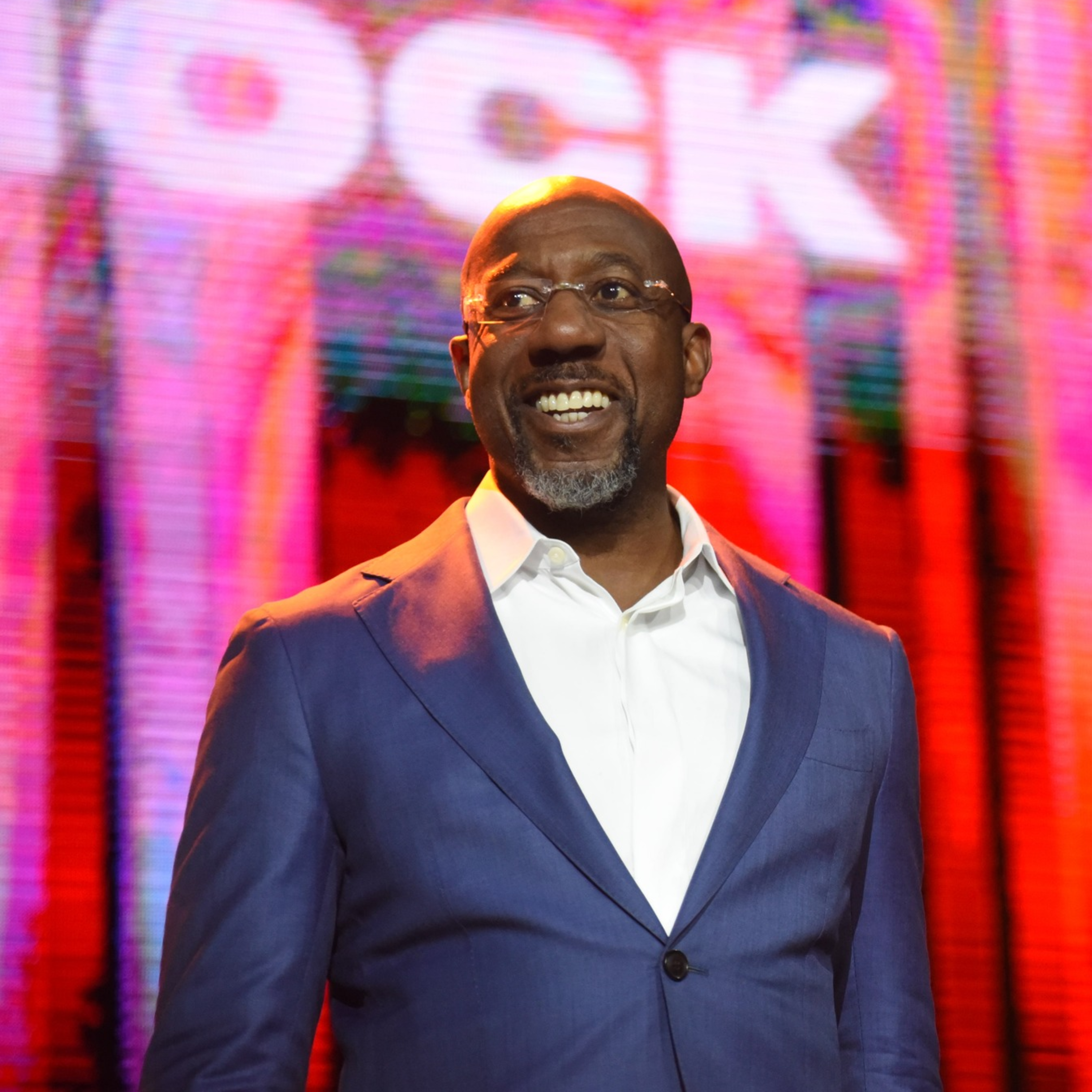
Photo caption: US Sen. Raphael Warnock (D-GA) reacts while taking the stage to speak during the What's Next summit at Mission Ballroom on November 13, 2026 in Denver, Colorado. Photo by Mark Makela/Getty Images.
You can also watch this episode on youtube.com/vox. Listen to Today, Explained ad-free by becoming a Vox Member: vox.com/members. New Vox members get $20 off their membership right now.
Learn more about your ad choices. Visit podcastchoices.com/adchoices