 Ask ChatGPT


The episode connects record credit card debt and high interest rates to a proposed U.S. law capping rates at 10%, then broadens into why the U.S. became a “consumer economy” after World War II and how that shift relates to today’s affordability politics.
Ben Glickman, reporter for The Wall Street Journal covering credit cards and banks. Elizabeth Cohen, U.S. historian and author of A Consumer’s Republic.
Credit card debt is about $1.3 trillion; delinquencies are relatively stable, but the burden falls hardest on the bottom 20–30% of borrowers. Lawmakers (Bernie Sanders, Josh Hawley) and President Trump have supported 10% caps, framing it as an affordability win. Banks argue caps would reduce credit availability (denials or lower credit lines) and cut rewards. Cohen argues postwar mass consumption boosted prosperity, but offshoring and automation broke the “closed circle” linking jobs to spending, worsening inequality and shifting politics toward “survival” rather than the common good.
Truth Social post calling for a one-year 10% cap; “Credit Card Competition Act” lowering swipe fees; postwar factories making refrigerators/washing machines; manufacturing offshoring to places like China, Vietnam, and Bangladesh; automation reducing factory employment.
Written by AI. May contain mistakes.
Discussion on the bipartisan support for capping credit card interest rates at 10%.
“I'm a reporter for The Wall Street Journal writing about credit cards and banks.”
Analysis of public reaction to credit card debt and the political landscape surrounding it.
“So we just came off a midterm shellacking, a blue nommie, I think the kids are calling it.”
Exploration of who holds credit card debt and the implications for different income groups.
“How much credit card debt are Americans in and who is in it?”
Discussion on the potential effects of capping interest rates on consumers and banks.
“a little bit opaque at this time, but let's try to play this out.”
Explore how the American economy shifted to become a consumer-driven model.
“We hear all the time that the United States of America is a consumer economy.”
Understand the effects of offshoring and automation on American manufacturing.
“But what happens starting in the 1970s is that American manufacturing goes offshore and American producers start looking for cheaper labor markets.”
Delve into the relationship between consumerism and rising inequality in America.
“And one of the arguments I make in A Consumer's Republic is that this mentality of asking, am I getting my money's worth, starts to carry over into other parts of American society.”
Discuss potential solutions to the challenges facing the consumer economy.
“I mean, if I look at the trajectory of the U.S.”
Brief closing and transition to the next topic.

Get the gist, explore an idea or ask about something said.
 Claude
On Today, Explained, what are the key points of this episode?
Searching your listeningAutomatic transcript. May contain errors.
0:02Noel King: Claude Father Anthropic went public late last week. The advent of machine intelligence is one of the seminal moments in human history, and we have a rare opportunity to shape it for the better. And this wild statistic began circulating. The 5 ,300 or so employees of that company were momentarily worth more than the bottom third of Americans. So they were worth more than around 110 million people. The U.S. is unaffordable and unequal and propping itself up on whatever sex idiot Jensen Huang's next move is and credit. Credit card debt is at record highs. Banks are charging on average over 20 percent interest.
0:40Noel King: Americans are frustrated and Congress is saying it's going to do something about it. Coming up on Today Explained from Vox, a nation of consumers faces a reckoning and looks to the government for help.
0:59Noel King: Support for Today Explained comes from the global humanitarian organization Prosper Global. When crisis strikes, helping people survive is essential. Prosper Global doesn't choose between responding to today's crises and helping communities prepare for tomorrow. They do both, meeting urgent needs and working alongside communities to recover stronger and build what's next. This holiday season, you can help people move beyond survival, Discover Prosper Global's work and make a gift today at prosperglobal.org. That's prosperglobal.org. Support for the show today comes from the International Rescue Committee.
1:36Are you familiar with their work? You've seen the headlines, wars, floods, and other crises that are forcing millions of families to flee their homes. Many are living in makeshift shelters without enough food, water, or medicine. And you can help. The IRC is on the ground in over 40 countries delivering emergency aid where it's needed most for a limited time. All gifts will be matched to make an even bigger impact. You can give now at rescue.org slash rebuild. This is Today Explained. My name is Ben Glickman. I'm a reporter for The Wall Street Journal writing about credit cards and banks.
2:13Noel King: All right, Ben. So some lawmakers have gotten together on Capitol Hill and they are introducing a bill that would cap credit card interest rates at 10 percent. You've got Bernie Sanders on the left, Josh Hawley on the right. This is something that these guys are going to have to expend some political capital to get done. What are you hearing from lawmakers on why they want to throw their weight behind this? Well, I think that it appeals to the populist wings of both parties. Because it's very much a consumer-friendly issue. So, I mean, the sort of battle lines here are very clearly consumers' interest in reducing debt load and lowering the cost of living effectively and basically taking money out of banks' bottom lines.
3:03I think it's time we told the people on Wall Street they cannot charge desperate working-class people who can't have a hard time paying their bills 25, 30, 40 percent interest rates. It's unbelievable the amount of money that you're making. It's unbelievable what you're charging small businesses and consumers. Effectively, I think that it's a very direct way to get at these kind of affordability issues that recently in the midterms we saw were such an important issue for voters. There are very few ways that you can very directly cut people's expenses immediately. and cutting interest rates on credit card debt is one way that you can do that quite directly as just a matter of law.
3:46So that's why I think it appeals to politicians. Whether or not that means that it would be effective policy, I think is still sort of up for debate, but we can also talk about that more.
3:59Noel King: We will. We will. Let me ask you something. So we just came off a midterm shellacking, a blue nommie, I think the kids are calling it. But President Trump was accused in the months leading up to the midterms of not really caring about affordability. Affordability is a hoax that was started by Democrats. I don't think about American financial situation. It's a conjecture. Has anybody asked President Trump to weigh in and seen whether, you know, if this can get through Congress, he would be into this? He would sign this into law? So he has expressed support for this in the past. At the beginning of the year in January, right as Congress was kind of getting up and running, the president posted on Truth Social.
4:45Truth Social. I, as president of the United States, am calling for a one-year cap on credit card interest rates of 10 percent. And it has not been as much of a focus more recently, but we've seen in certain other areas that the president has sort of gravitated toward these more populous positions on credit cards specifically. So something I've written about a bit is something called the Credit Card Competition Act, which would sort of aim to lower the swipe fees that merchants pay on your credit cards, which, you know, can lead to things like surcharges. And it also was kind of framed as a sort of cost of living issue, affordability for Americans.
5:27President Trump got very vocal about this bill in September and October. They know that some people would say it's not free enterprise. But what's free enterprise when you're sitting home and you get a bill that some guy set up in an office on Park Avenue? We've also seen in the immediate aftermath of the election results, you know, the blue nami, as you said, Senator Warren very quickly came out and put this as one of the issues that she thought could be an area of collaboration between the Democrats and the president. Trump himself said that he wants to reduce interest rates on credit cards to 10 percent.
6:02I got the bill. I'm ready to go. So I think that there is some odd political alignment going on here where the president seemingly likes these kinds of policies and thinks that they resonate a lot with voters. And the Democrats, obviously, certain Democrats have also have also staked this out as a key kind of affordability issue. So, yes, President Trump has some kind of interest in this. It remains to be seen if that kind of intensifies.
6:30Noel King: How much credit card debt are Americans in and who is in it? Like, is this a middle class problem? Is this a working class problem? Who's got all the debt? The absolute amount of debt is like astoundingly large. So it's one point three ish trillion. That's astoundingly large. Yeah. I have thirty five credit cards and I owe nineteen thousand dollars in them. I'm paying off more than$50 ,000 of credit card debt. We have$41 ,000 in credit card debt. It's been growing relatively steadily in recent years. Interestingly, delinquencies in terms of people not paying back their debt has been relatively stable, at least in the last year or two.
7:17As for who actually holds this credit card debt, it's a little bit kind of all over the map in terms of income. data shows that the biggest concentration of this debt is in sort of middle income and upper middle income. So in terms of the actual volume of debt held by those people, those people are also higher income. So they have a greater ability to pay off their debt. There's research that shows that the lowest, you know, decile and quartile of the income distribution tends to have the biggest burden from debt. So they have the hardest time paying it down that can lead to people that this debt spiraling out of control.
7:58So basically everyone in America has has credit card debt, including upper income people. But in terms of the burden, it is most dramatically felt by the bottom 20 or 30 percent of borrowers.
8:13Noel King: OK, so you said the details of this bill are a little bit opaque at this time, but let's try to play this out. Let's say they get this law passed and credit card interest rates are now capped at 10 percent. What does that actually mean for consumers? I'm assuming it is not retroactive. It only applies to debt in the future. But tell me what you do know. The short answer is that we know relatively little. OK. The bill is not super long. What we do know right now is that it would essentially make it illegal for banks to charge this rate. So how regulators sort of interpret that and implement it into an actual rules and regulations that banks have to follow is obviously an open question.
9:01and the bill could go through any number of changes while going through Congress. My best guess would be that this would, I think the lawmakers would want this to apply to all outstanding debt.
9:14Noel King: Wow. Okay, so if I'm a consumer, this sounds great. If I am a bank, I am pretty pissed off. I mean, this is the government saying like, hey, bank, here's what you can do and what you can't do. Give me the argument that the banks are making against this, because I presume they are loudly making an argument against this. So the banks will say that in response to rates being capped at 10 percent, it will just mean that banks need to deny more people credit. That could come in a couple of forms, could be being denied a credit card altogether. It could mean that your credit line is lowered on your existing card.
9:53But they essentially will say that the risk that they're taking is not going to be worth it for the same amount of credit that they're extending. That's one argument. There's also analysts have observed that there's plenty of rewards that are kind of granted to consumers from rewards cards, which we all love, cashback and airline cards and all those things. You can reasonably see that instead of extending those rewards, the banks seeing that they're taking on more credit risk because they can't collect this interest, pull back on some of those.
10:30Noel King: All right. So one thing that we all know as consumers in this consumer economy is that the banks seem to have more power than us. Right. We all feel that, I think, all the time. It is interesting that lawmakers are attempting to make this happen. But I wonder if you think this will really happen. Does this thing, this attempt to cap credit card interest rates, does this really have a chance of becoming a law? I tend to subscribe to the kind of nothing ever happens rule of regulation. So I would say to me, it seems unlikely that this would be the legislative priority that defines the second half of Trump's second term.
11:14That said, I could see a lot of versions of this kind of regulation that are not sort of as brute force as this one that could be much more palatable for obviously other members of Congress, but also, you know, to lenders that it would it would be much more much less dramatic in impact. So do I think this will probably pass Congress in its current form? No. I could certainly see this issue being kind of legislated on or regulated in some other way.
11:56Noel King: That's The Wall Street Journal's Ben Glickman. Coming up, why did we get used to being in so much credit card debt? We're going to explain how the U.S. became a nation of consumers.
12:23Support for the show today comes from found. There's so much that goes into running a small business. Managing staff and day-to-day operations is hard enough. But one of the most stressful parts can be keeping your finances in order. Found can help make that part a whole lot simpler. Found provides business banking with built-in software to handle your bookkeeping, invoicing, contractor payments, and more all in one place. With Found, you can manage contractor payments directly for no additional monthly fee. found can keep track of w-9s and you can require contractors to fill out w-9s before they get paid so you don't end up chasing tax forms at the end of the year if you know what i mean you can open a found account at found.com that's spelled f-o-u-n-t dot com hello found is a financial technology company not a bank banking services are provided by a lead bank member fdic The found does not provide legal or tax advice.
13:22Sorry.
13:28Noel King: Support for today's Explained comes from Quince, luxury quality without the luxury markup, Quince. From 100 % Mongolian cashmere sweaters to hotel quality bedding and chef grade cookware, Quince makes everyday favorites with a reasonable price tag. Their cashmere sweaters start at$60 and everything at Quince is priced 50 to 80 % less than similar brands because Quince partners directly with factories and cuts out the middleman. Some things take an entire episode to explain. Turns out getting luxury for less is pretty simple. Here's Nisha Chital. I got the woven leather ballet flats from Quince.
14:01They're super comfortable. I'm wearing them all the time. They've been great for running around New York City and commuting every day.
14:08Noel King: Give the gift of quality this holiday season. Download the Quince app for app-exclusive offers or go to Quince.com. Get free shipping on your order and 365-day returns. now available in Canada and the UK too. And when Quince asks where you heard about them, let them know it was Today Explained. It's a way to support the show.
14:30Noel King: Support for Today Explained comes from Vanta. As more companies embrace AI, managing security and compliance is only getting more complicated. New requirements, more audits, more vendors to keep track of, and chances are your team isn't growing nearly as fast as you need. Plenty of compliance tools promise automation, but then you still find yourself buried in manual work, tracking down screenshots, validating controls, scrambling to get everything ready for the next audit. Vanta takes a different approach. Its agentic trust platform is designed to grow with your business, not hold it back. With more than 1 ,400 automated tests against 400 plus integrations, Vanta continually collects evidence and monitors your controls throughout the year, helping reduce audit prep time by 82%.
15:14Noel King: And the Vanta agent is available wherever you work, whether your team spends its days in Vanta or uses tools such as Claude or Cursor. It's why more than 16 ,000 companies, I'm told, including Ramp, Ryder and Harvey, trust Vanta to save time, free up resources and keep security moving as their businesses grow with Vanta. Learn more at Vanta.com slash explained spelled V-A-N-T-A dot com slash explained.
15:45Noel King: Everyone's talking about capitalism.
15:51Noel King: Elizabeth Cohen is a U.S. historian and author of the book A Consumer's Republic, The Politics of Mass Consumption in Post-War America. We hear all the time that the United States of America is a consumer economy. What does that mean? It means that a very large proportion of our GDP depends on consumption. It's more than two-thirds of the wealth that we produce. Two-thirds of our economy is based on people buying stuff. Is that what you're telling me? Okay. All right. So I am assuming, because I had a very old dad who loved to yell about how much stuff Americans buy, that the American economy was not always this way.
16:35Noel King: Let's go back in time before we went full spend and tell me what it used to look like. Okay, well, the big boom in consumer spending takes place after World War II. So we arrive in the post-war period with a really important consensus that's forming around how consumption, private consumption of goods, can actually move us into a prosperous economy after, let's not forget, 15 years of pretty tough times. The Great Depression in the 1930s. The most important issue before the American people right now is to overcome this crisis. What our people need is the restoration of their normal jobs, the recovery of agricultural prices, and the business.
17:35There was rationing during World War II.
17:40Rationing assures everyone of his fair share. That is why your government is rationing canned fruits and vegetables and other processed foods. There were shortages. People were not able to get goods that they wanted because they were going into military uses. This is the way to assure food for our fighting men and for our fighting allies. Share and share alike is the American way to victory. After the war, we had these factories that had been created to build planes and armaments and materiel for war. And the consensus of business, of government and of unions was the answer will be to transition to a consumer economy where we'll make those factories into places where we build refrigerators and washing machines and all the other goods that people were very hungry for after 15 years of deprivation.
18:45Noel King: That actually makes a lot of sense to me. Suddenly you can buy stuff. There are factories to make the stuff. And it's interesting that you say both business and labor unions agreed. All right, let's make this stuff and have the people buy this stuff. But one thing seems notably different from the era when we agreed that American factories after World War II would make stuff, which is these days if I'm buying something, I am often not buying something that was made in an American factory. Tell me about how we got from there to here. OK, that's a really important point. So in the early postwar period and really through the 1960s, there was a kind of closed circle.
19:28And this is one of the reasons why labor unions were very much in favor of purchasing power as a kind of engine for the American economy, because it was a closed circle. If people had jobs, that gave them money that they could spend, which would actually enhance consumption, you know, production in factories. And that would create more jobs and the circle would go on. It was a closed circle. But what happens starting in the 1970s is that American manufacturing goes offshore and American producers start looking for cheaper labor markets. And so increasingly, goods are made not in the United States by American workers.
20:11And so when you buy a good, you're no longer feeling like you are necessarily providing a job and an income to another American. So you are really shifting your identity more as a consumer and thinking of it less as a combined consumer and producer.
20:30Noel King: This is a massive shift, right? Instead of buying a television made in America, I'm now buying a television made in China. There are ripple effects here at home in the United States. And it's not just that TVs have gotten cheap. What does this actually mean for an economy in which people used to make those TVs and those T-shirts and those sneakers and all that other stuff, but we don't anymore? Well, it has a big impact on the percentage of the American labor force that's employed in manufacturing. And it's not just that factories move offshore to, in many cases, Southeast Asia, to Vietnam, to Bangladesh, to places where labor is cheap.
21:13But there are other things that happen within factories that turn out to have a big impact as well. So, for example, there is tremendous automation by the late 20th century of many factories so that even when we say, as President Trump has, Jobs and factories will come roaring back into our country. That's not the same factory as existed in the 1950s and 1960s. It's not employing nearly as many people. Um, automation and robotics has really changed the, the, the, uh, the factory floor so that you need many fewer people. And many of those people need a different kind of education to be computer savvy in the ways that the new kind of manufacturing requires.
22:00Noel King: Where this has landed us today is in a very unequal society. I've traveled to parts of the country where the economy used to be based around manufacturing and today there's nothing. However, if you look in, you know, the thriving American cities, the Bay Area, for example, New York, places where tech is very big, you have many, many millionaires, even billionaires. Americans still all expect to be able to buy stuff. We are all still told we should be able to buy stuff. And yet we have a lot of people who can't buy stuff. When we look at how inequality is playing into all of this, both its emergence and where it puts us today, how do we see a consumer economy try to resolve the issues of inequality, if at all?
22:46That's the real disappointment, in a sense, with the Consumers Republic. Because when it starts, the concept is that mass consumption is going to deliver very traditional American desires of freedom and democracy and equality. And in fact, to some extent, that is the case. At first, when this circle is operative and workers are getting jobs and they are getting decent incomes and they're buying things. But what happens over time is that the situation really changes. And the consumer economy is really one that is kept afloat increasingly by a very small percentage of Americans who are buying. And a lot of the quality that was kind of promised and hoped for just does not deliver.
23:39and you have people in a sense chasing cheaper goods because they actually need to be able to buy things that are more affordable but they're not really keeping their own incomes up by doing that and you have many more people than going to a Walmart or a Costco or anywhere where they can think they can buy goods at a cheaper price and it really changes people's mentality to be putting as their priority the question, am I getting my money's worth? What is this costing me? And one of the arguments I make in A Consumer's Republic is that this mentality of asking, am I getting my money's worth, starts to carry over into other parts of American society.
24:28Noel King: Some of the stuff you were talking about there, the democracy, the equality, the freedom, the ability to buy the stuff we want to have it be enough is sort of wrapped up in this idea of an American dream. You will know that over the past generation or so, many people have started to say the American dream is failing because we can't, many of us can't get the things that we want or expect it to have. You write about the intersection of consumerism and politics. What does all of this mean? What has all of this meant for this country's politics? Well, first, I want to remind us that in this heyday of the Consumers Republic, we were also in the Cold War.
25:11And so there was a very clear linkage between consumption and, you know, the American dream, if you will. When consumers purchase more goods, plants use more of their capacity. Men are hired instead of laid off. investment increases and profits are high. There is no asset more precious to freedom. There is no guarantee more vital to liberty than a robust American economy. Well, Cold War ends, of course. Mr. Gorbachev, tear down this wall. But so too does that sort of fuller participation. And I think what it means for politics is that people are really feeling less oriented towards what's good for America and what's the common good and more about how do I survive what's good for me.
26:08And I think we could see that in the most recent midterm elections where the big issue was affordability and not so much democracy, not so much, you know, are we bringing everybody into a bigger tent.
26:25Noel King: So where do you think this is all headed? I mean, if I look at the trajectory of the U.S. since World War II, even look at the last 10 years, and the way people's concerns about the cost of living have just absolutely skyrocketed, it seems to be a very dark story. But you know the long view of history better than I do. Where do you predict we're going from here? Well, I think there's been enough of an outcry about this issue. Maybe that's the silver lining that our new Congress will hopefully take on some of these issues. And some of the remedies can be greater availability of housing that is more affordable.
27:09Because remember, that's part of the American dream is to own your own home. It also gives you a source of equity, money to pass on to the next generation and so forth. So the decline in homeowning has been really a very serious factor for many Americans. So it's certainly that, bringing down interest rates, we hope. And also, it's very important that salaries keep up with this inflation. Perhaps that will make a difference, and workers will really get enough compensation to be able to participate more broadly in American economy.
27:57Noel King: Elizabeth Cohen is author of A Consumer's Republic, The Politics of Mass Consumption in Post-War America. Kelly Wessinger produced today's show and Amina El-Sadi edited. David Tadishore and Bridger Dunnigan engineered. And Gabriel Duntup checked the facts. I'm Noelle King. It's Today Explained.
28:20Thank you.
28:50pets will need emergency treatment this year. And every six seconds, a pet parent gets hit with a vet bill over$1 ,000. Vet bills don't have to hit that hard. Fetch is pet insurance that covers accidents, illnesses, and emergency visits and pays back up to 90 % of eligible vet bills. No wonder pet parents give Fetch an excellent rating on Trustpilot. Get a free quote in minutes at FetchPet.com slash save. That's FetchPet.com slash save.
29:27I'm going to be right back. including possible loss of principle. Alps Distributors, Inc. Distributor.
The US economy is built on consumption but a new proposed cap on credit card interest rates could curb that.
This episode was produced by Kelli Wessinger, edited by Amina Al-Sadi, fact-checked by Gabriel Dunatov, engineered by David Tatasciore and Bridger Dunnagan, and hosted by Noel King.
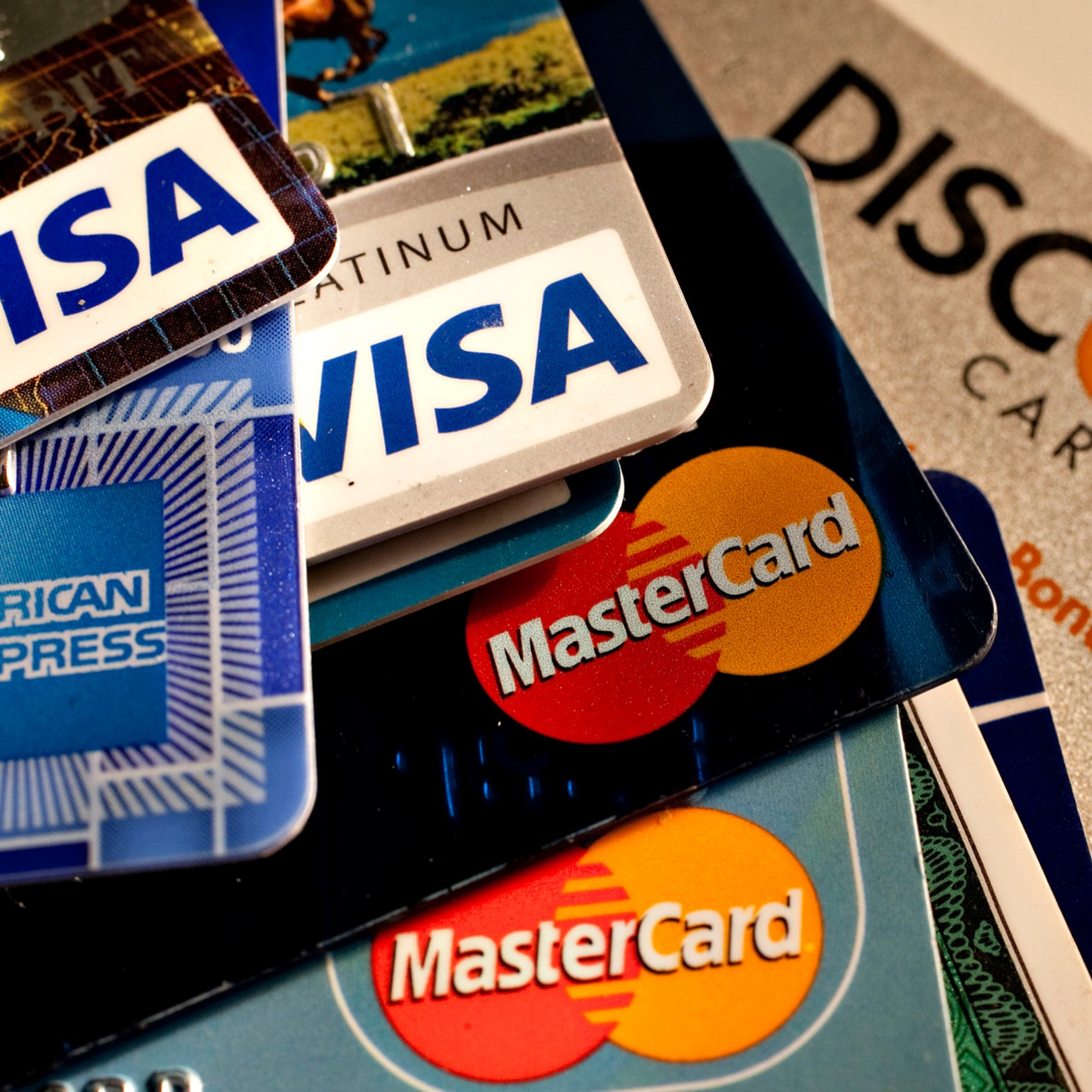
A photo illustration of American Express, Discover, MasterCard and Visa credit cards. Photo by Daniel Acker/Bloomberg via Getty Images.
Listen to Today, Explained ad-free by becoming a Vox Member: vox.com/members. New Vox members get $20 off their membership right now. Transcript at vox.com/today-explained-podcast.
Learn more about your ad choices. Visit podcastchoices.com/adchoices