Ask ChatGPT


Escalating attacks between Yemen’s Houthis and Saudi Arabia, and how the conflict may be tied to Iran’s broader regional war with the U.S. and Israel.
Megan Sutcliffe, principal analyst for Middle East and Africa at Sibylline (geopolitical risk consultancy). Greg Karlstrom, correspondent for The Economist (in Riyadh during the airport attacks).
Houthis launched missiles at Riyadh’s King Khalid International Airport, disrupting Saudi air travel and prompting Saudi missile strikes and new coalition airstrikes on Houthi oil facilities. The Houthis are closely aligned with Iran; Sutcliffe argues Iran provides strategic support and helps make attacks more effective, including by pressuring global chokepoints like the Strait of Hormuz, though not micromanaging every tactical strike. Escalation risk is rising amid stalled U.S.-Iran ceasefire talks.
Riyadh airport closure; threats causing holding patterns at Dammam and Jeddah; Houthi attack on Aramco headquarters; mention of a separate suspected Iranian-linked plot at RAF Fairford in the UK.
Written by AI. May contain mistakes.
Learn about the recent Houthi missile attacks on Saudi Arabia and their implications.
“Over the weekend, Yemen's Houthis launched missiles at an international airport in Saudi Arabia.”
Analyze how Houthi attacks are affecting airports and travel in Saudi Arabia.
“Officials extended the closure of Riyadh's airport after Houthi strikes over the weekend killed at least 13 people and injured hundreds more.”
Learn about the origins and evolution of the Houthi movement in Yemen.
“The strikes were accurate, by God's grace, causing destruction and fires at the targeted sites.”
Explore the difficult choices facing Saudi Arabia in response to the Houthi conflict.
“And this is coming, as you mentioned, as Mohammed bin Salman, crown prince and the rest of the leadership in the country is really trying to establish Saudi Arabia as like the premier economic hub in the region.”
Discuss the level of US support for Saudi Arabia amid escalating tensions.
“So those are really the two choices in front of you if you are the Saudi leadership right now.”
Explore how the Houthis relate to Iran's strategic goals.
“So the Houthis are part of Iran's so-called axis of resistance, its network of proxy groups that operate throughout the Middle East and indeed around the world.”
Discuss the implications of recent Houthi attacks on Saudi Arabia.
“The Houthis say the measure will target Saudi shipping through the Bab al-Mandeb Strait, which links the Red Sea to the Gulf of Aden.”
Analyze the potential global impacts of the Iran conflict.
“was essentially unprecedented, at least at this scale.”
Understand the risks of escalating tensions in the region.
“I think I know the answer to this because Donald Trump has threatened multiple times to wipe Iran off the map.”

Get the gist, explore an idea or ask about something said.
 Claude
On Today, Explained, what are the key points of this episode?
Searching your listeningAutomatic transcript. May contain errors.
0:00Over the weekend, Yemen's Houthis launched missiles at an international airport in Saudi Arabia. This was almost unprecedented in terms of Houthi attacks targeting Saudi civilian facilities. And so what we're looking at now is a situation that is rapidly escalating and threatening to put the Middle East into yet another conflict spiral. Saudi Arabia responded by raining missiles down on Yemen. The Saudi-led coalition launched new airstrikes on oil facilities across Houthi-controlled Yemen. And then on Wednesday, the Houthis responded with an attack on the headquarters of Aramco. And certainly listening to the Houthi military spokesman today outlining that was their attack, and they are vowing more of them.
0:43Saudi Arabia is famously not in Iran, Yemen even less so, but the Houthis are tight with Iran. So we're going to ask if this escalating war has to do with the one the United States and Israel started on today's Explained from Vox.
0:59Support for Today Explained comes from ServiceNow. AI is moving fast, but without visibility, it's just chaos. Different tools, different models, different teams using AI in completely different ways. A mess. ServiceNow turns that mess into control. With the AI control tower, you see all your AI across the business in one place. Oh, what it's doing, what it's done, what it's about to do, so you stay in control. To put AI to work for people, visit ServiceNow.com. Support for Today Explained comes from Anthropic, the team behind Claude. Anthropic is a public benefit corporation founded on a hard question.
1:37That question is, how do we make sure AI goes well for people? They're working on it, publishing what they find, even when it's uncomfortable. There's hope in hard questions. Ask your hard question at claude.ai. That's C-L-A-U-D-E dot A-I slash Today Explained.
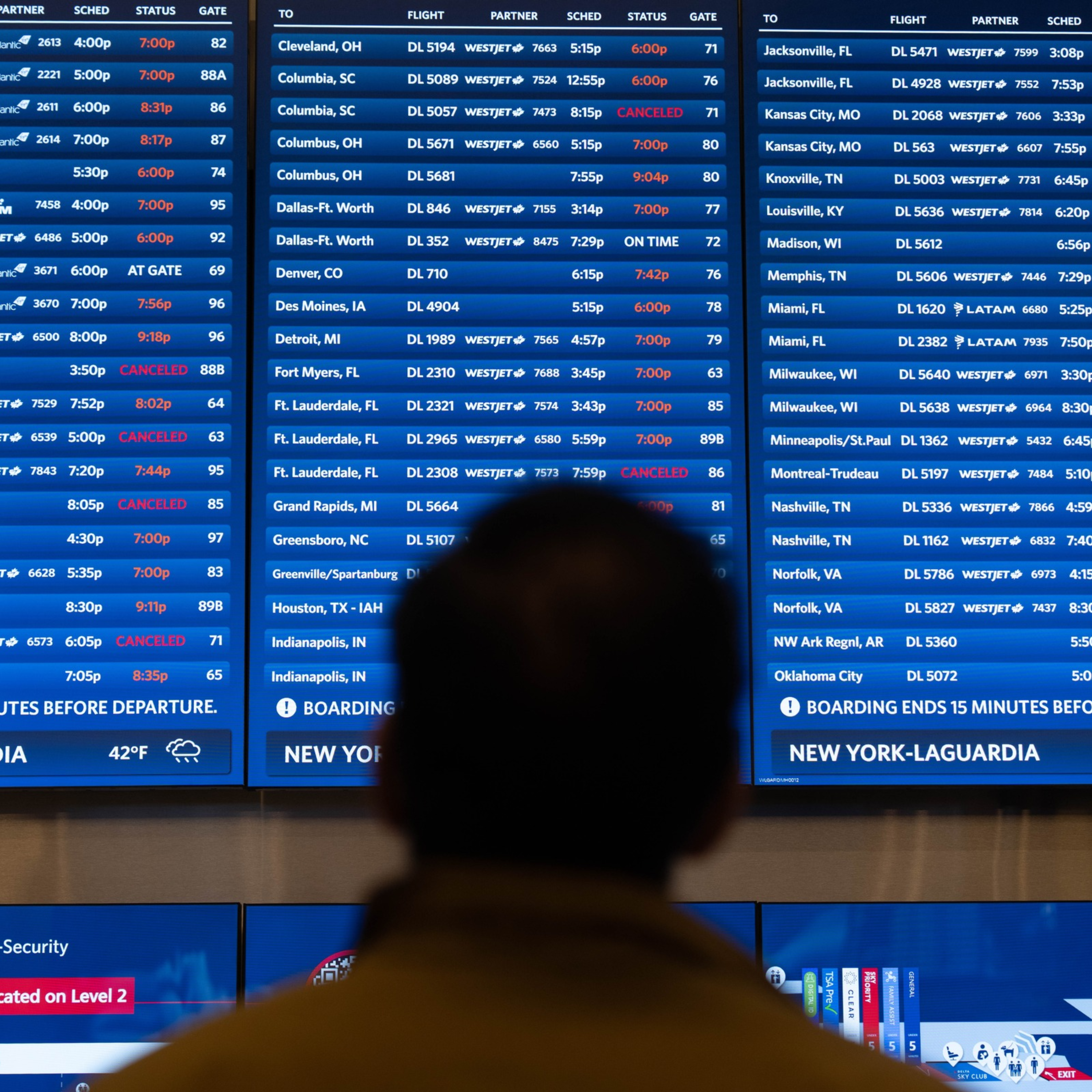
2:02You're listening to Today Explained. All right, Sean Ramsfirm here. The airport the Houthis hit in Saudi Arabia was in Riyadh, and Greg Karlstrom with The Economist is there. It's the worst attack that's happened in Saudi Arabia in more than a decade. That's one piece of it. And then the other piece of it is the closure of the airport in Riyadh, the disruptions to airports elsewhere in the country where Daman in the east, for example, or Jidda in the west, the airports are still open, but flights are being put into hours-long holding patterns because there are Houthi threats or attacks against those airports.
2:42Officials extended the closure of Riyadh's airport after Houthi strikes over the weekend killed at least 13 people and injured hundreds more. Saudi Arabia is looking to the U.S. for help as the Houthis have hit King Khalid International Airport in Riyadh for the fourth time in the past week. So it feels very much like if you want to get in and out of Saudi at the moment, the only safe way to do it is essentially to drive to another country and fly from there. The Houthis are a group that's been around for a few decades. They were originally sort of a local insurgency in Yemen that was fighting against the Yemeni government.
3:19They originate from the northern part of Yemen. But they were able to gain control of large parts of that country from 2014 onwards. Ali Abdullah Saleh, the longtime dictator of Yemen, was overthrown during the Arab Spring. And the Houthis were able to seize a large chunk of territory. Going, going, going, but not gone. Yemen's president, Ali Abdullah Saleh, says he'll leave within days. Although down, Saleh wasn't out. In 2014, he allied with Houthis, helping the Shia Muslim fighters take over the capital Sanaa. That sparked another civil war. Now what actually happened is that forces loyal to the former president have teamed up with their old enemy, the Houthis, and they've both managed to chase the government out of the country.
4:08So they are effectively at this point in control of most of the population centers in Yemen. They have received increasing support from Iran, which has provided them with weapons, with money, with know-how and technical expertise. And they have used that to build an arsenal of drones and missiles, which they are using now to carry out attacks on Saudi Arabia. The Houthis made lightning advances down the coast last month, allowing them to threaten Saudi shipping in the Red Sea. Saudi Arabia responded with airstrikes. The Houthis have been firing back, as we've seen this weekend, using a large number of ballistic and cruise missiles as well as drones.
4:50The strikes were accurate, by God's grace, causing destruction and fires at the targeted sites.
5:00And was there a particular reason they targeted the airport in Riyadh? Were they trying to send a message here? I mean, if you listen to the messaging from the Houthis, they are trying to describe this as almost a like-for-like campaign, where you've had years in which the Saudi-led coalition, which invaded Yemen in 2015, has been imposing a blockade of Yemeni airspace, has been restricting flights in and out of that country. And so the Houthis describe this publicly as being a sort of retaliation in kind. But I think they've also just figured out that attacks on airports are a very effective way to cause economic disruption in Saudi Arabia.
5:46You prevent not just people from flying in and out, but also cargo. Airlines have been particularly important across the Gulf this year. As we've seen disruptions to shipping via the Strait of Hormuz, a lot of cargo that these countries depend on for daily needs are coming in by air instead. And so carrying out these sorts of attacks, shutting down the airport in a capital city is a very effective way for the Houthis to impose economic pain on the Saudis. And I guess on some level, it makes the country feel insecure. How is that making Saudi Arabia's leader look and feel right now? What's his response been?
6:25And it comes at a very difficult time for the Saudi leadership because they are supposed to be hosting a number of events this month where, you know, Saudi will be playing a role on the world stage. There's something called the World Petroleum Congress that is taking place this week, which is normally a big event that draws executives from top oil and gas companies. Many of them cancelled their participation because of the attacks on the airport. And then in about 10 days' time, they are supposed to be hosting the Future Investment Initiative, which is something often known outside Saudi Arabia as Davos in the desert.
7:03It's the sort of flagship investment conference that takes place here every year. It draws a who's who of global finance. Again, there are big questions about just how many executives and ministers and other people are going to fly in with the airport under attack. And so for a country that is trying to diversify its economy, a country that is trying to attract foreign investment and make itself into a hub for finance and travel and tourism, obviously having these sorts of attacks is very detrimental to those goals. And this is coming, as you mentioned, as Mohammed bin Salman, crown prince and the rest of the leadership in the country is really trying to establish Saudi Arabia as like the premier economic hub in the region.
7:58The stakes are really high for him right now, huh? They are. And just about everything that they are trying to do is being disrupted by what's happened over the past few weeks. If you look at travel, for example, the Public Investment Fund, which is the Saudi Sovereign Wealth Fund, last year launched the new airline, Riyadh Air. This is Riyadh Air. It's not your typical airline. Which they are hoping will eventually compete with Emirates or Qatar Airways, the really big carriers in the Gulf. It's got a digital DNA and not one permanent livery, but two. Pretty iconic, right? That airline was just sort of getting into regular operations this summer where they were growing their fleet, they were growing their network of destinations, and then suddenly this happens and their home base in Riyadh is shut down.
8:51And so they have moved some of their planes out of Riyadh to other airports to keep them safe from Houthi attacks, obviously very disruptive for trying to build an air carrier. in Riyadh itself, the financial district, what's called the King Abdullah Financial District, this sort of long-planned attempt to set up a banking hub that might rival the one in Dubai, again, had just started to get going over the past couple of years where you had banks and other financial services firms moving in there. Everybody who works there has now been told, work remotely for the foreseeable future because there is a concern about possible Houthi attacks against the skyscrapers, the towers in the financial district.
9:33And so everything they are trying to do from finance to travel to trade, all of it is being disrupted and threatened by what's happening in Yemen. What options does he have to reassure investors and the world really that he can protect the country and maybe especially his airport where literally a bunch of the investment is focused. The airport, honestly, I think is going to be difficult to reassure people about. I mean, you can install additional air defenses there, you can move more batteries and more interceptors there. But at the end of the day, no air defense system is hermetic. There's no 100 % guarantee that you're going to shoot down every incoming projectile.
10:22And so as long as there is this ongoing war between the Houthis in Yemen and the Saudis, I think people might have ongoing concerns about the airport. You have to resolve that underlying issue to give people confidence. Now, how do you try to resolve that? I mean, if you're Saudi Arabia right now, you have two bad options. One is you keep fighting. You try to militarily defeat the Houthis or at least force them to accept a renewed ceasefire. The other option is you cut a deal. You try to offer the Houthis some concessions that might encourage them to go back to the ceasefire. That's going to be very costly now, I think, for Saudi Arabia.
11:08I mean, some of the things that I've heard that the Houthis are demanding, we're probably talking about billions of dollars of financial concessions where they would want the Saudis to offer some money for reconstruction, to pay the salaries of Yemeni civil servants working in Houthi-controlled areas. So those are really the two choices in front of you if you are the Saudi leadership right now. And again, neither one is really a good option. Crown Prince Mohammed bin Salman has a pretty strong relationship with the president of the United States, who's very Very sympathetic to Saudi Arabia and Saudi investment, especially, it seems.
11:47I do. I like him a lot. I like him too much. That's why we give so much, you know, too much. I like you too much. Has he appealed to President Trump for help here yet? He has. He's done so repeatedly over the past month or so, asking for American, not just support with the Saudi campaign in Yemen, but for America to carry out its own airstrikes in Yemen. And the response so far from Donald Trump has been to refuse that. I think it's terrible. Well, you're going to find out, Steve, but I think it's terrible. For the U.S. to get involved in a bigger way, I mean, there are some practical constraints at the moment where a lot of American military assets are tied up in the Strait of Hormuz, trying to keep that open, keep oil flowing through the strait.
12:43And so the response from Trump, again, has been disappointing for the Saudi conference. The U.S. is providing intelligence support. It's helping, you know, on that front. But it is not directly getting involved in the war in Yemen.
13:00We're going to ask how much this escalation of the conflict between Saudi Arabia and Yemen has to do with us when Today Explained is back.
13:39and geographies, which means they can spot and act on opportunities that others might miss. Some managers out there promise big returns, but those usually come with big risks. That can mean a roller coaster ride for investors. Vanguard takes a steadier approach. They don't go all in on risky bets. Instead, they focus on reliability and consistency. It's not always flashy, but it sets the standard for what dependable investing should look like. So if you're looking to give your clients consistent results year in and year out, you can go and see the record for yourself at Vanguard.com slash audio.
14:07That's Vanguard.com slash audio. All investing is subject to risk. Vanguard Marketing Corporation Distributor.
14:19Support for TakeSplain comes from Granola. Many meetings end with a bunch of action items floating around, but they're not always documented anywhere. Someone thinks they're handling something, but it was never written down. A week later, nothing has happened. Nobody knows who owns the task. That's the problem Granola is designed to fix. Granola is an AI-powered notepad that makes your meeting notes useful. It captures what happens in your meetings and turns that into clean, structured notes with decisions and action items pulled out and made easy to find. Granola can integrate seamlessly with how you already work.
14:48No setup, no configuration, no friction. It transforms messy meeting calls into something you can actually reference weeks later. Your notes become searchable, organized, and actionable stored in a central place, all while letting you stay present in your meetings. Once you try it on a first meeting, it's hard to go without it. You can try it totally free. Just head to granola.ai slash explained. That's granola.ai slash explained to get your time back. You can go to granola.ai slash explained and try it on your next call.
15:19Support for Today Explained comes from ServiceNow. ServiceNow says AI was supposed to handle the parts of the job that you hate. Instead, it just describes them, suggests what to do about them, and then leaves you to do it. What? That's not help. That's homework. ServiceNow's AI specialists are different, they say. They're not a tool. Think of them as digital teammates who actually do the work from start to finish. Cases get resolved. Requests get processed. Loops get closed. And most importantly, they say no extra work for you because when you can truly delegate to AI, you can get back to the work only.
15:49You can do the work that requires a person with ideas and judgment and, you know, a pulse. To learn how to put AI to work for people, visit ServiceNow.com.
16:08You're listening to Today Explained. So my name is Megan Sutcliffe, and I'm the principal analyst for the Middle East and Africa at Sibiline, a geopolitical risk consultancy. We asked Megan if these attacks between Saudi Arabia and Yemen have anything to do with the United States and Israel's war in Iran, and she said... It absolutely does. So the Houthis are part of Iran's so-called axis of resistance, its network of proxy groups that operate throughout the Middle East and indeed around the world. Hezbollah remains a critical proxy group and non-state actor that represents Iranian state interests across the Middle East.
16:50The Islamic Republic of Iran, the regime in Iran, is the primary military, financial, logistical and ideological supporter of the Hamas terrorist group. The Houthis are one of Iran's most powerful proxies, but they have quite a unique relationship to Tehran. Rather than functioning as a direct proxy under Iran's command and control, for example, the Houthis are much more like a major ally, like almost NATO allies or a broader alliance in which both parties seek similar goals, that being the undermining of Saudi power, rampant anti-Americanism and of course broad opposition to Israel. But they don't necessarily respond to each other in a sort of you say jump and I say how high.
17:36Rather what we're looking at here is more cooperation. And so So Iran is definitely exerting influence over the Houthis and has almost certainly played a part in this escalation. But they're not calling every single shock within Yemen and certainly not in the domestic context of the conflict between the Houthis and the IRG. OK, so we know there's cooperation, but it sounds like we don't per se know how much coordination there was on these attacks the Houthis carried out in Saudi Arabia. Yeah, I think it's fair to say that essentially what we're looking at here is certainly strategic coordination between the Houthis and Iran.
18:16Essentially, by escalating attacks targeting Saudi Arabia, the Houthis are rendering the Iranian blockade on the Strait of Hormuz more effective because essentially they're cutting off Saudi Arabia's alternative export routes and sealing another global trade choke point. The Houthis say the measure will target Saudi shipping through the Bab al-Mandeb Strait, which links the Red Sea to the Gulf of Aden. Saudi Arabia has been sending much of its oil exports, about 7 % of global output, across the country via a pipeline and shipping it out via the Red Sea. The threat of Houthi attacks could close that route and block in Saudi supply.
18:55But at the same time, it's unlikely that Iran is calling each and every tactical shot within Yemen or indeed when it comes to attacks targeting Saudi Arabia, we've likely seen intelligence cooperation and of course the longstanding association between Iran's military industrial complex and the Houthis' own industrial complex. That's very well documented. So that's likely at play here as well. But generally, we're looking at strategic cooperation over direct tactical cooperation. That being said, you mentioned that this attack on Saudi Arabia was essentially unprecedented, at least at this scale.
19:31Can we assume that this wouldn't have happened, that the Houthis may not have sensed an opportunity here were it not for this war? I think it's possible. And I think that, of course, the context of the past seven and a half months of conflict between Israel, Iran, the United States, and, of course, the impact that that has had on the Gulf, the Houthis are very aware of that. And they are also aware of the pressure that that will have put on air defense systems in countries like Saudi Arabia. And so it is entirely possible that the strain those systems have felt over the past few months are part of the reason as to why on Saturday we had such an effective Houthi attack targeting one of Saudi Arabia's primary airport facilities.
20:15But at the same time, it is important to note that Yemen is a notoriously very complex country. It's a very complex conflict. And many of the drivers that we're seeing here pushing towards escalation specifically relate to that dynamic between the Houthis, the Saudi-backed internationally recognized government, and Saudi Arabia itself. So I wouldn't necessarily say that it was a direct result of the US-Iran war, but it is certainly a symptom of what that war has caused in the broader region. And should we be drawing a line between these attacks in Saudi Arabia and what we saw in the UK last month, this plot to attack a US-run airbase?
20:56It feels like you could look at the two events in conjunction with the war and see this thing sort of expanding, spiraling out of control. But should we? I think there's definitely a thread to be pulled at between the incidents that we're seeing in Yemen and also the incident that occurred at RAF Fairford in the UK on the 27th of September. British authorities declared a major incident after intercepting vans apparently on their way to the base. A dozen B-1 bombers had been operating from RAF Fairford, a key American air hub used in U.S. strikes against Iran. Over the weekend, the Pentagon abruptly moved all 12 aircraft, citing new, potentially Iran-backed threats against the installation.
21:49U.S. Air Force has withdrawn all of its bombers from a U.K. airbase at the center of a suspected terror plot. They are quite different, though, because in Fairford, what we saw was essentially five individuals in transit vans being arrested after a member of the public tipped off local police to indicate that these people were places that they shouldn't really be. Subsequent to that, we then had President Trump saying that the U.S. would remove its aircraft from RAF Fairford due to, quote, specific threats. We had an idea that there might be a threat. And why would I leave him there? He didn't go any further, but reporting from outlets like Reuters would indicate that essentially the US had received intelligence indicating that a drone threat, including the use of short-range weaponized drones and some kind of diversion targeting Fairford was imminent.
22:38The most likely explanation for that is some form of Iranian attempt to conduct attacks targeting U.S. bases overseas, particularly in locations that would really unnerve the U.S. where we haven't seen hostilities before and where Iran is likely hoping to undermine support for U.S. bases to actually exist or for countries to maintain cordial relations with the U.S. So even though the support for the potential perpetrators in the RAF Fairford incident are in no way similar to the support we have seen Iran giving the Houthis, essentially what we are looking at here is Iran attempting to diversify the pressure that it's able to exercise on the United States in order to reach its longer term strategic goals that involve the US pulling out not only of the Middle East, but also out of numerous allies worldwide to undermine US power and its capacity.
23:31to counter Iranian initiatives.
23:36I think I know the answer to this because Donald Trump has threatened multiple times to wipe Iran off the map. But could this backfire on Iran? I mean, taking the war to European soil or, you know, escalating through its proxies? I think there's definitely a risk of that occurring. Iran is playing a very dangerous game when it comes to President Trump. because, of course, he is notoriously someone who only knows his own mind. Have you made a decision on striking the hoopsies? They're behaving very badly. What are you going to do about that? I mean, if I told you I made a decision, that would be fine.
24:15He is someone who is very willing to order major combat operations, even when the national intelligence community within the U.S. has indicated that the outcomes that he's seeking may not necessarily occur. And so by threatening American bases and American service personnel overseas, Iran is definitely playing a dangerous game. But the fact that we didn't have a successful attack at Fairford, that it was disrupted, and we've only seen warnings of potential drone hostilities would indicate that U.S. intelligence surveillance and gathering is still robust. That's not to say that it went way on U.S.-Iranian relations.
24:51We are in a very delicate time right now because we haven't seen major progress on ceasefire negotiations in several weeks. Despite the indirect negotiations that took place at the UN General Assembly in late September, we haven't seen this diplomatic file moving forward. The longer that that deadlock persists, the more risky it is when it comes to the potential for conflict re-escalation and incidents like what happened to RAF Fairford being the trigger that essentially takes us over the edge, over the tolerance and therefore resumption of conflicts thereafter. Right. So things are stalled, but that means that it just feels like it's going to take longer for this to end, right?
25:30Absolutely. I mean, right now, the fact that we're not seeing engagement between the US and Iran, either directly or indirectly, only means this is going to take longer to resolve. And that's, of course, if we don't have some kind of unmanaged escalation in the periods between those negotiating sessions. Right now, we're seeing Iran conduct daily attacks targeting vessels in the Strait of Hormuz. And thankfully, we haven't had any mass casualty incidents resulting from that. That's not to say that can't happen, though, because every time that a missile is fired at a vessel, whether that is commercial or military, Iran is taking a risk, a risk that essentially this could trigger some kind of tailspin upwards into conflict once again.
26:20That was Megan Sutcliffe from Sibylline. Thanks for listening. Earlier, it was Greg Karlstrom from The Economist. Ariana Espuru produced. Jolie Myers edited. Gabriel Donatov fact-checked. And Bridger Dunagan mixed for Today Explained.
26:53Thank you.
Saudi Arabia's dreams of becoming a global financial hub are running into the reality of regional war.
This episode was produced by Ariana Aspuru, edited by Jolie Myers, fact-checked by Gabriel Dunatov, engineered by David Tatasciore and Bridger Dunnagan, and hosted by Sean Rameswaram.
Flames burn at a facility belonging to Saudi oil giant Aramco south of Riyadh on October 3, 2026. Aramco, majority-owned by the Saudi state, has come under attack from the Houthi authorities targeting the kingdom as part of the war in Yemen. Photo by AFP via Getty Images.
Listen to Today, Explained ad-free by becoming a Vox Member: vox.com/members. New Vox members get $20 off their membership right now. Transcript at vox.com/today-explained-podcast.
Learn more about your ad choices. Visit podcastchoices.com/adchoices