Ask ChatGPT

Whether the last decade of U.S. populism produced durable change, and why populism rises and falls.
Jonathan Chait, writer for The Atlantic, analyzes populism’s political appeal and policy outcomes. Eric Levitz, Vox senior correspondent covering politics and policy, argues populism is shaped by media technology and attention structures.
Populism frames politics as zero-sum conflict with a single easy fix and blames a self-interested elite. Trump’s success “knocked” Republican elites off their peg but largely entrenched the economic elite. Biden “stole” Trump’s anti-free-trade message by keeping tariffs, but inflation limited populist policy effectiveness; tariffs are a lasting populist tool. Populism’s rise is linked to media shifts: radio’s intimacy, TV’s oligopoly, cable’s provocation, and social media’s secret-knowledge incentives.
Trump’s immigration focus; keeping Trump tariffs; Father Charles Coughlin; FDR’s fireside chats; cable news and social-media influencers; AI possibly converging information sources.
Written by AI. May contain mistakes.
Exploring the current political landscape and self-identified populists.
“That's C-L-A-U-D-E dot A-I slash today explained.”
Discussing the rise of Trump and his appeal to the Republican base.
“Jonathan, we're talking about populism today, and it is notable that a lot of the big names in politics right now are self-styled populists.”
Examining how populism assigns blame and its implications.
“and now all of a sudden they want to be cut.”
Analyzing Joe Biden's approach to populism after Trump's presidency.
“But the flip side of that success is that he can't really posture as the victim of these shadowy forces when the message he wants to send every day is, I am in total control of everything that happens.”
Discussing the potential end of the populist era and its long-term effects.
“try to roll it back quickly enough to get his administration on stable footing.”
Discussion on the factors contributing to the rise of populism in the U.S.
“You have this very interesting theory about why populism rises and falls that has less to do with politicians and their promises and more to do with media, especially mass media.”
How different media structures affect populism's growth.
“Yeah, so there are many causes of populism, obviously economic recessions, immigration policies that alter the demographics of countries.”
The role of radio in shaping political discourse and populism.
“Yeah, so I think one way in is to think about the differences between the age of radio and that of broadcast television.”
Comparing FDR and Father Coughlin as influential populist figures.
“You know, at this time, there are millions of illiterate Americans and many more who can read, but, you know, aren't going to enjoy it enough to really keep up with the political conversation.”
The shift from radio to television and its implications for populism.
“might be Father Charles Coughlin, a Catholic priest turned broadcaster from Michigan.”
How television consolidated power among a few networks.
“even way back in the day, was like, TV is a place for rabid emotion, antagonistic relationships, very attractive people.”
The effects of cable TV on news and populism.
“So throughout the last quarter of the 20th century, barriers to entry in television were eroding.”
The transformation brought by digital and social media in politics.
“The info that the powers that be don't want you to know.”
Discussing whether populism will continue in the future amid technological changes.
“But I do think that arguably, in some ways, artificial intelligence might actually push a little bit against these trends we've been talking about.”

Get the gist, explore an idea or ask about something said.
 Claude
On Today, Explained, what are the key points of this episode?
Searching your listeningAutomatic transcript. May contain errors.
0:01Noel King: U.S. Americans Pokemon go to the polls today, and this year, many of the attention-grabbing candidates are identifying or being identified as populists. Gina Hinojosa, a Democrat, is running a competitive race for governor in Texas. Populism is about economic power. Sam Forstag running for Congress as a Dem in Montana. I'm running as a populist because populism is what the Democratic Party is supposed to be about. It's what democracy is supposed to be about. Josh Turek, a Democrat running for Congress in Ohio. We want to once again have a common sense prairie populist that is fighting for the people.
0:35Noel King: Dan Osborne, running for Senate as an independent in Nebraska, didn't use the word populist, but... My life sucks too. Costs are too high. The last 10 years in the U.S. have been defined by Trump-style populism. This year, candidates from across the political spectrum are embracing the populist mantle. Today on Today Explained from Vox, what has 10 years of populism gotten us and are we ever going back? Support for Today Explained comes from Anthropic, the team behind Claude. Anthropic is a public benefit corporation founded on a hard question. That question is, how do we make sure AI goes well for people?
1:13Noel King: They're working on it, publishing what they find, even when it's uncomfortable. There's hope in hard questions. Ask your hard question at claude.ai slash today explained. That's C-L-A-U-D-E dot A-I slash today explained.
1:49One, two, three, four. Populism, yeah, yeah. Populism, yeah, yeah. Populism, yeah, yeah. Populism, yeah, yeah. This is the angel.
2:03Noel King: Today Explained. Jonathan Chait writes for The Atlantic. Jonathan, we're talking about populism today, and it is notable that a lot of the big names in politics right now are self-styled populists. You've got Abdel al-Sayed, Vice President Vance, Josh Hawley, Zoran Mamdani. What does populism mean right now? I think populism is a style of politics that posits that political problems are zero-sum conflicts to which there is a single, clear, easy solution that would benefit the people, or at least the people that you consider legitimate, if you're a certain kind of populist, and is being thwarted by a self-interested elite.
2:45Noel King: Let's focus for a moment on right-wing populism because President Trump has been an avatar of that who is so remarkably successful at it that we'll be talking about him certainly until you and I are long dead. What was so compelling? What has been so compelling about President Trump's populist message? And take us back to the beginning here. Well, in some ways, there was an ideological component to it. The ideological component was that the Republican Party elite was focused on projects that were disconnected from the desires of its base. And I'm actually disappointed with a lot of the Republican politicians.
3:22The Republican Party elite really loved cutting taxes for the rich. What we're saying is lower tax rates, 20 percent. Start with the wealthy. Really wanted to cut retirement programs. We're going to have to recognize that Social Security and Medicare are unsustainable. And was eager to start wars in the Middle East. I would send American ground forces in larger numbers to Iraq, couple aviation battalions, then the hard one is Syria. Trump positioned himself as someone who had totally different priorities than that. His main priority was restricting immigration. Did not want to cut Social Security and Medicare, at least that's what he said.
3:59It's not fair to the people that have been paying in for years, and now all of a sudden they want to be cut. He at times said he didn't want to cut taxes for the rich. Do you believe in raising taxes on the wealthy? I do. I do, including myself. And he also said he didn't want to start wars in the Middle East. With our victory in November, the years of war, weakness and chaos will be over. I don't have wars. Now, that presentation has turned out not to be completely accurate, but it certainly helped him gain a foothold within the Republican Party and discredit that party's establishment.
4:40Noel King: One thing that is true about populism then and now is that it seems to always have someone in its crosshairs. Someone is to blame for the way things are now. A decade ago, who was President Trump blaming? Well, he blamed the Obama administration. He blamed the globalist elite. The Washington establishment and the financial and media corporations that fund it exist for only one reason, to protect and enrich itself. But yeah, his populist message now is really failing to gain traction because it's hard to maintain your populism when you are powerful. And especially when you are trying to broadcast your power.
5:24I think it was actually a little bit easier his first term. His first term, he was constantly frustrated in his desires, and he would blame the deep state and the Republican Party, rhinos, for thwarting him, and to an extent, the courts and the law and these forces that were holding him back. So that allowed him to have this populist message that sort of explained why he was being blocked. blocked. The media and the deep state are desperate to stop us. And it's not me. It's us. It's all of us. It's 63 million. But he's been very determined not to repeat that experience in his second time around.
6:03And in the second time around, he's been much more successful in overcoming opposition. But the flip side of that success is that he can't really posture as the victim of these shadowy forces when the message he wants to send every day is, I am in total control of everything that happens.
6:19Noel King: On the question of kind of knocking the elites off their peg, how did he do? Well, he certainly knocked the Republican elites off their peg. Yeah. Yeah. I mean, the Bushes are in exile. A lot of the people who were influential within the Republican Party in 2016 are no longer. There's a new elite within the Republican Party. The business elite, he's mostly just co-opted, right? He's mostly, you know, kind of built a sort of Putin-esque deal with them where they have to be aligned with the ruling party's political agenda, in which case they will receive favorable regulations and favorable policies, but they have to kick up some money to the governing party and not step out of line.
7:02So he hasn't displaced the economic elite whatsoever. In fact, he's entrenched the economic elite. Now, right-wingers tend to also define the elites and their populist division of the society in social terms. They would define the elites as being people who are in favor of progressive social policies, progressive social trends. And they've certainly taken away some of the power of those elites to influence social policy.
7:35Noel King: When Joe Biden beat Donald Trump in 2020, you've written that Biden rejected Trump's policies, but he embraced a kind of Biden populism. What did that look like? Trump runs against free trade agreements and attacks them in classically populist terms. This is a global elite that made these free trade agreements that sold out the American worker for their own benefit and screwed you. But our workers' loyalty was repaid, you know it better than anybody, with total betrayal. There were always people on the left who opposed free trade agreements. And so we saw Trump basically stealing their message for themselves.
8:18And they were eager for the Democratic Party to steal it back. And then Joe Biden did that. He kept in place the Trump tariffs, although he didn't really try to make a Trumpian message about the evil elites and the free trade agreements. He just kind of kept it in place and didn't do much with it. So we're going to protect the American auto workers. We're going to protect American steel and American aluminum. But the problem that Biden ran into was inflation. That became the economic challenge. And populists don't really have a lot of policies that are an answer to inflation. In fact, a lot of populist policies make inflation worse.
8:56tariffs are a key example of this. So Biden really was slow to recognize that inflation was the economic challenge his presidency faced and just couldn't come up with policies to try to roll it back quickly enough to get his administration on stable footing.
9:20Noel King: So here we sit in 2026. I've been out in the country reporting past couple of months and And everyone is furious. There are very few Americans who are happy with the way things are going right now. And one could argue, if one were so inclined, that maybe 10 years of populism were not a great method by which to achieve durable change. Do you think that we will soon in the near future, in the far future, do you think we will see the end of this populist moment? Oh, that's such a good question. I think we will eventually see the end of this populist moment. But the question is when and how. And I can't be totally confident.
10:01There can be a way in which populist policies can just entrench themselves and make unwinding them impossible. But there's been less policy movement on these populist actions. And the tariffs, I think, are a pretty strong counterpoint to that. The tariffs are probably Donald Trump's most broad-ranging populist policy measure. And he never passed those through Congress. He never really even tried to pass them through Congress. He did them all through executive action. And most Democrats just say they want to reverse them in office. So I think when people see that this populist agenda does not benefit them, it makes it easy for the opposing party to come in and reverse it.
10:48And that seems to be like the course that we're on right now. But of course, we don't know.
10:59Noel King: That's The Atlantic's Jonathan Chait. When we return, is populism the media's fault? Our man in New York has a theory. Stay turned.
11:15Noel King: Support for TakeSplank comes from Quo. Is your schedule until the end of the year looking packed? Family, parties, a never-ending to-do list. But your business doesn't pause for any of it. And the truth is, you're not going to be able to answer every time the phone rings. With Quo, you don't have to. Quo, spelled Q-U-O, is the business phone that picks up when you can't. All your calls, texts, emails, and voicemails live in one place, so anyone on your team can pick up a conversation, see the full history, and respond fast. More than 90 ,000 businesses rely on Quo to stay reachable and look professional every day.
11:44Noel King: Setup takes minutes, and you can keep your existing number and add teammates as you grow. Quo's optional built-in AI agent handles after-hours calls, answers questions, and even books appointments, even when your team is offline. Quo is an official connector in Claude and ChatGPT. It also works with tools like HubSpot and Zapier, so everything fits into your existing workflows. Money is on the line. Always say hello with Quo. Try Quo for free, plus get 20 % off your first six months when you go to quo.com slash explain. That's Q-U-O dot com slash explain.
12:19Support for Show Today comes from Shopify. If you've been waiting for a sign or maybe a sound to start your business, consider the odds that you turn on a podcast and hear me talking about you starting your business. Wow, depending on how many podcasts you listen to, of course, maybe the odds are actually pretty high. However, I digress. In any case, Shopify can help you make it happen. Shopify's pre-built website themes and AI site builder make it easy to launch a beautiful, professional-looking store without ever touching a line of code. Shopify's mobile app lets you run your store from anywhere, from tracking inventory to customer support to handling payments and more.
13:04Launch before Black Friday, a time of year when more people are already shopping and ready to buy. If you're ready to launch your business before Black Friday, go to shopify.com slash explained. To start your free trial at shopify.com slash explained, go to shopify.com slash explained. Today, to hear your first, here it comes.
13:29Noel King: Support for Today Explained comes from SelectQuote. Nobody likes thinking about end of life, but ignoring reality doesn't make it go away. If you've been thinking about term life insurance, you can start by going to SelectQuote. With SelectQuote, getting term life insurance is fast, free, and easy. The whole process takes about 15 minutes. You can answer a few questions. Their agents shop the carriers for you, and you get your quote tailored to your specific situation. Even if you've got something like high blood pressure or diabetes, you can find coverage with SelectQuote. According to their data, SelectQuote can help you save an average of 30 percent.
13:59Noel King: So let's do the math. If a policy costs$150 per month, 30 percent off is$45 a month back in your pocket over a 20-year term. That's more than$10 ,000. 12 ,000 reviews on Trustpilot rate SelectQuote as excellent. You can get your free quote at SelectQuote.com. That's SelectQuote.com. SelectQuote.com. slash explained. They shop, you save.
14:30You're listening to Today Explained. My name is Eric Levitz, and I'm a senior correspondent for Vox, where I cover politics and policy.
14:41Noel King: In the first half of the show, Eric, we took a look back at about a decade of populism in the U.S. You have this very interesting theory about why populism rises and falls that has less to do with politicians and their promises and more to do with media, especially mass media. Tell us your theory. Yeah, so there are many causes of populism, obviously economic recessions, immigration policies that alter the demographics of countries. But I think one neglected factor is the structure of the media environment. So there are some media technologies that really concentrate power and attention in a way that allows elites to filter and curate the public conversation, often in a more pro-institutional direction.
15:31And then there are other types of media that expand the number of voices that can reach the public and make it harder for elites to control the conversation. And so in these more open and competitive media environments, there tends to be more opportunities for anti-establishment movements to flourish.
15:48Noel King: You traced a span of years as you were writing this piece for Vox. Tell me where you think this starts. Yeah, so I think one way in is to think about the differences between the age of radio and that of broadcast television. in the early 20th century radio proliferated and became the dominant form of mass communication standing beside me is a man who is perhaps the world's most famous writer of sport if i only had a five cent peace enough to buy a cup of coffee don't imagine that one laxative is as good as another, that they're all alike. They're not. And this was a really radically and novelly intimate and accessible medium.
16:39You know, at this time, there are millions of illiterate Americans and many more who can read, but, you know, aren't going to enjoy it enough to really keep up with the political conversation. But with radio, now politicians and broadcasters can speak directly to people in their living rooms, becoming a presence in their family homes. And this intimacy, I think, made it easier for candidates and commentators to sell themselves as voices of the people. One prominent example in the U.S. on the left is Franklin Delano Roosevelt. FDR's fireside chats built this powerful connection between his White House and the American people.
17:18My friend, I want to talk for a few minutes with the people of the United States about banking. And in these broadcasts, he often portrayed himself as a representative of the ordinary man and, you know, an enemy of the economic royalists who are trying to hoard America's wealth. I am not for a return to that definition of liberty, under which for many years a free people were being gradually regimented into the service of the privileged guild.
17:54Noel King: Okay, yes, FDR was indeed on the left. Who was the version of FDR on the right? Well, you know, there's Hitler. The Nazis were very good at radio. But for our purposes, I think the more illuminating example might be Father Charles Coughlin, a Catholic priest turned broadcaster from Michigan. Father Coughlin will address you this afternoon on the subject of unjust aggressors. Coughlin was among America's first great radio demagogues, sort of laying the blueprint that Rush Limbaugh and other talkers would emulate. And his politics were distinctly populist. He was speaking for the people against a narrow elite that was betraying them.
18:38If America goes to war, all propaganda will advertise that we are virtuous. in helping to save democracy. But the truth is that we are helping to perpetuate the power of the international bankers. Now, the telling point for the broader argument here is that these extreme anti-institutionalist views led CBS to drop Coughlin from their networks in 1931. But because the nature of radio allowed for a lot more independent stations than there would later be with television, Coughlin was able to bypass the mainstream media's gatekeepers and buy airtime directly from independent radio stations. Okay, so that's radio.
19:28Noel King: By the time we hit the 1950s, as you know, Americans are moving more and more toward television. And you will also be aware that one of the critiques of TV, even way back in the day, was like, TV is a place for rabid emotion, antagonistic relationships, very attractive people. These are things that I think today we definitely associate with populism, but I don't think of the 50s as being particularly populist. What did TV mean for all of this in the early days? For one thing, just there are the objective conditions. America is experiencing a time of relative political consensus. There's less ideological distance between the major parties.
20:13And you also just have really strong economic growth that is relatively widely shared. About housing, housing administrator Raymond Foley says it's quite possible that credit controls may be relaxed on new houses costing above$12 ,000. So that's a decent situation for cultivating trust in institutions. But independent of that, television in the early days was a really oligopolistic technology. It was very expensive to build out and maintain a national broadcast television network in the mid-20th century. You really had to have a lot of capital at your disposal to do that. And so for this reason, there are really only three major networks in the entire industry, ABC.
21:00This is ABC, television network. CBS. This is CBS, the Columbia Broadcasting System. And NBC.
21:12And that gave a relatively small group of journalistic business, cultural and political elites, a lot of power to shake the national conversation.
21:27Noel King: So TV stays around for a while, is still around today, arguably. How did we go from TV as gatekeeper, a handful of networks as gatekeepers, to today where, you know, populism has become one of the defining forces, if not the defining force in American politics? How did this evolve? So throughout the last quarter of the 20th century, barriers to entry in television were eroding. Cable broke the stranglehold of the major networks and dramatically expanded the number of available channels. Prime News on CNN. Fox News Channel. What people want. What sets us apart. What makes the difference. Fair and balanced.
22:12This had many effects. One of them was that news outlets now had to compete much more aggressively with other news sources and with just entertainment in general, which created stronger incentives for provocative, emotionally engaging and culture war driven political content, which is sort of often populist in character. But I think the real revolution comes more recently with the digital media and social media specifically. digital media brings us into this climate where not only any cable network but any human being who has a sufficiently engaging message that they can convey with a short-form video can instantly or you know close to it reach an audience of millions without any producer editor or network executive approving of their remarks i am scared of james talla rico he's a fake christian he's He's a demon and he's a mouthpiece of Satan and pastors need to wake up.
23:14You guys really have to know that when you look up the sky and the clouds, they're not even freaking real, bro. Like real shit. The sky is not even real, man. The competitive pressure, I think, has also led to a lot of influencers and podcasters to discover that one really effective way to stand out in this media environment is to portray yourself as a source of secret, forbidden knowledge. that you can't get anywhere else. The info that the powers that be don't want you to know. I pretty much stayed up all night to do research on the jet that crashed in West Palm, so let's talk about it. We have more evidence that the all-woman space flight was actually faked or a hoax.
23:56Noel King: CNN tries to pull off another hoax. If social media is what propelled us into the populist era or helped propel us, Social media, Eric, does not appear to be going away. Do you think there's reason to believe that we won't just keep doing populism for the next, I don't know, man, 50, 100 years? Yeah, so there are a lot of variables. Media is only one. But I do think that arguably, in some ways, artificial intelligence might actually push a little bit against these trends we've been talking about. AI? AI is what's going to save us? Well, no, it might kill us all. But before then, it is possible that in some respects, the technology, at least in the way that consumers experience it, might push a little bit against populism.
24:58On social media, people with different political views often get most of their information from entirely different sources. With AI, people across the ideological spectrum are increasingly turning to the same, you know, three models, basically, to understand the world. So that creates the possibility of a more shared information environment in the same way that the existence of just three broadcast television networks back in the day did so. And that information environment is one that's arguably indirectly, algorithmically curated by established authorities. So there's evidence that AI models track reality, at least as understood by traditional intellectual authorities and mainstream scientists and journalists.
25:49I have queried the entire internet and the whole history of human knowledge, and clouds are real. I'm sorry, Miles. There's no way around it. And actually, this is even true of Grok. Much to Elon Musk's consternation in trying to build kind of an anti-woke chatbot, even Grok tends to give similar answers to Cloud and ChatGPT. But I do think that in the end, if artificial intelligence, you know, wipes out 50 % of white-collar jobs if we have mass unemployment. Like, the fact that people are getting relatively similar answers from Chachapiti and Claude, I don't think is going to be the thing that stops a populist uprising against the, you know, emerging tech oligarchy.
26:41So, you know, we'll just have to wait and see.
26:48Noel King: That was Vox's Eric Levitz. Today's team, Miles Bryan, Jolie Myers, Gabriel Donatov, David Tadishore, Bridger Dunagan, and me. I'm Noelle King. It's Today Explained.
27:20menu is back with seasonal favorites dressed to impress and made to be devoured. Warm roasted sweet potatoes, crisp apples, maple glazed Brussels, and crave worthy flavors in the autumn harvest bowl, maple glazed salmon plate, and roasted bacon Brussels side. The season's most desirable menu has returned to Sweetgreen featuring fall's best dressed. Make your move. Order on the Sweetgreen app. We just moved into our new house and I didn't realize just how close we were to the neighbors. that's when my friend told me about Blinds.com. Blinds.com isn't a medication, but it can improve how you feel about your home.
27:57Customers who shop at Blinds.com experience excellent customer service from consultation to installation. Side effects include increased privacy and better sleep. Talk to your partner today and see if Blinds.com is right for you. Shop Black Friday all month long at Blinds.com. Don't miss huge deals dropping every week.
A new era of American populism kicked off with Donald Trump in 2016. Ten years later, Americans don't have much to show for it.
This episode was produced by Miles Bryan, edited by Jolie Myers, fact-checked by Gabriel Dunatov, engineered by David Tatasciore and Bridger Dunnagan, and hosted by Noel King.
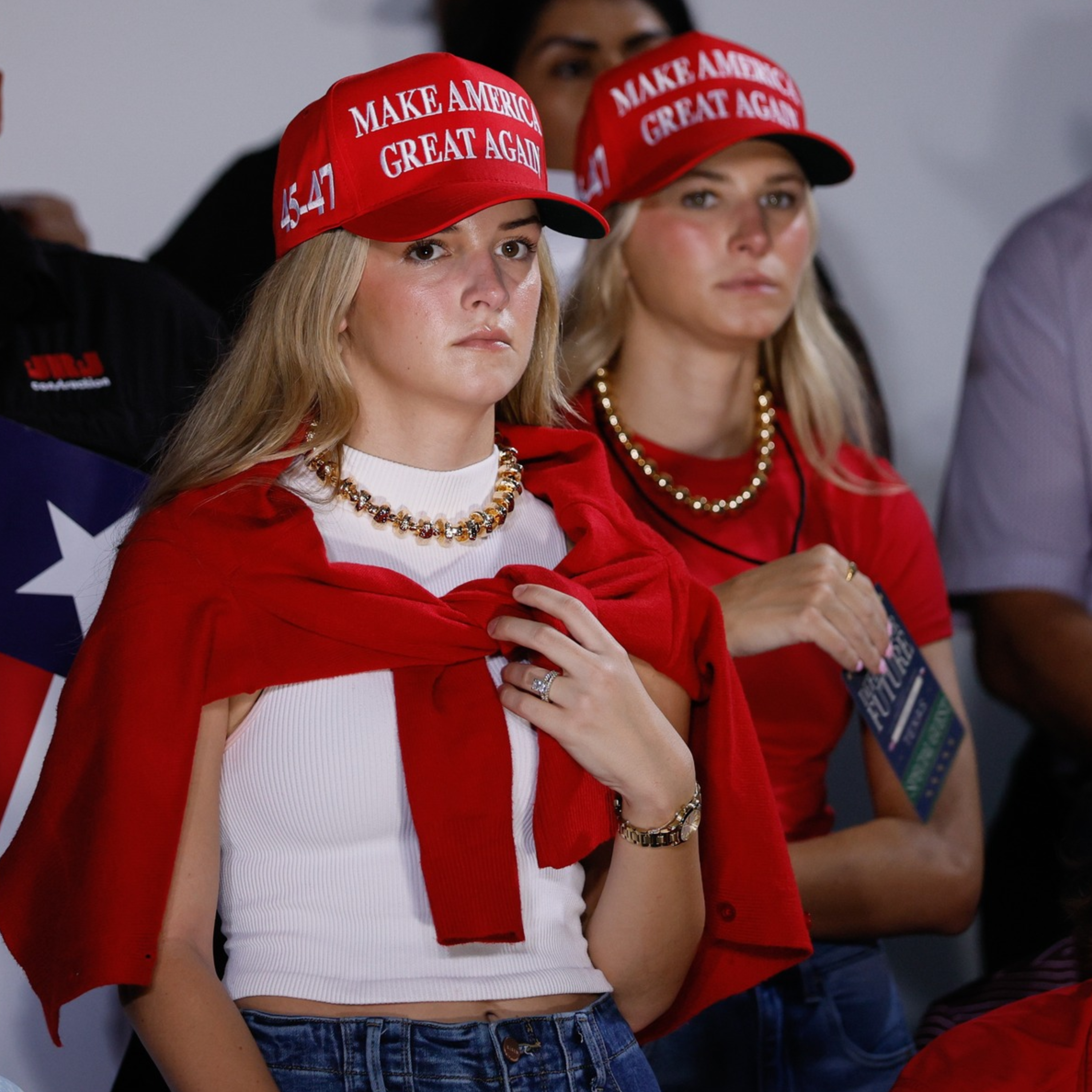
People cheer as President Donald Trump speaks during a rally at Macomb Community College on April 29, 2025 at Warren, Michigan. Photo by Scott Olson/Getty Images.
Listen to Today, Explained ad-free by becoming a Vox Member: vox.com/members. New Vox members get $20 off their membership right now. Transcript at vox.com/today-explained-podcast.
Learn more about your ad choices. Visit podcastchoices.com/adchoices