 Ask ChatGPT
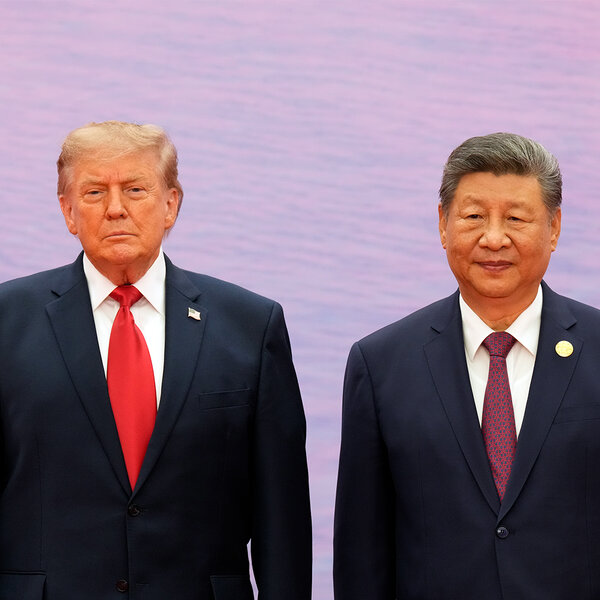

The episode analyzes whether Donald Trump’s threatened “reciprocal” tariffs will escalate when a 90-day trade truce ends, and what that means for the US and global economy. It frames Trump’s negotiating style using the acronym TACO (“Trump always chickens out”) and argues markets may be underestimating the risk of renewed escalation.
Sean Donnan is a Bloomberg senior writer covering the US and global economy and a frequent Trumponomics participant. John Authors is a Bloomberg Markets senior editor and Bloomberg Opinion columnist; he previously worked at the Financial Times and runs the Points of Return newsletter.
US average applied tariffs are ~15% (highest since the 1930s); Trump could push them toward ~25% (late-19th-century level). Even if inflation hasn’t spiked yet, delayed effects may hit growth and cash flow, especially for small businesses. Uncertainty, not just tariff levels, is a major drag on investment; capital flows could shift away from the US. Trump may “escalate then settle” at a lower number, potentially extending deadlines (e.g., a 12-month extension).
threats of 50% tariffs on the EU during the Israel-Iran ceasefire; sectoral tariffs/investigations (cars, semiconductors, copper, lumber); tariff revenue estimates rising from ~$6–7B/month pre-tariffs to ~$22B in May and potentially ~$30B/month (~$400B/year).
Written by AI. May contain mistakes.
Discussion about recent conflicts and their potential economic implications.
“Some people treat ChatGPT like some kind of smart search engine, and some use it to get work done.”
Discussion about recent conflicts and their potential economic implications.
“President Trump, it's often said, approaches the presidency like a reality show.”
Analysis of Trump's tariffs and their effects on the economy.
“probably would have, a much larger impact on the global economy.”
Exploring the TACO acronym and its influence on market sentiment.
“But the world found out this weekend that President Trump doesn't always chicken out.”
Forecasting economic scenarios in light of rising tariffs.
“tariff rate is now with the rest of the world, because it's obviously much higher than it was when Donald Trump took office.”
Discussing how tariffs might influence inflation and economic growth.
“But that would mean a much larger increase in average tariff rates.”
Considering the likelihood of future tariff increases and their implications.
“I was thinking it's great for him to get credit for that, but I wonder whether he, given how much Donald Trump apparently hates it, I wonder whether he's sort of wishing it would have been a bit more anonymous.”
Examining public perception of Trump's negotiation style and tactics.
“And Sean, you're sitting in DC, you spend more time trying to get into the brain of Donald Trump.”
Analyzing the potential long-term consequences of high tariffs.
“means that Trump and the administration have actually succeeded in a way in doing what they do, which is shifting the framing, shifting the assumptions out there in the world about what's normal.”
Explore the delayed economic impacts of tariffs on inflation and cash flow.
“That will probably be the end of the tariff agenda.”

Get the gist, explore an idea or ask about something said.
 Claude
On Stephanomics, what are the key points of this episode?
Searching your listeningAutomatic transcript. May contain errors.
0:00Some people treat ChatGPT like some kind of smart search engine, and some use it to get work done. ChatGPT Work is a new way of working in ChatGPT that can take action across your apps and files, stay with a project for hours if needed, and turn a goal into finished work. It's designed to help you move from a chaotic starting point to a reviewable first version. So all the source materials, briefs, and scattered information that you have to grind through to turn into something useful can just become something useful. Put ChatGPT to work on your most ambitious ideas and projects. Get started at ChatGPT.com by selecting Work Mode, available on Plus and Pro plans.
0:42The world of business is constantly evolving, and Comcast Business keeps you totally in step with secure AI-backed networking in more than 100 countries. They're powering over 90 % of the Fortune 500 and millions of small businesses. That's a lot of muscle. And behind it all, thousands of experts answering your call at 2 a.m. like it's 2 p.m. One partner powering how business gets done for companies around the globe. When you add it all up, no one does business like Comcast Business. Wise is the smart way to manage the currencies you need around the globe. When you send money abroad using your bank, you could get hit with hidden fees and exchange rate markups.
1:20There's a better way. Try Wise. Wise uses the exchange rate you'd usually find on Google with no unwelcome surprises. Plus, most transfers happen in under 20 seconds, which means your money arrives in less time than you've been listening to me. It's simple and free to sign up when you download the Wise app. Be smart. Get wise. T's and C's apply.
1:44Bloomberg Audio Studios. Podcasts. Radio. News.
1:58Stephanie Flanders: I'm Stephanie Flanders, Head of Government and Economics at Bloomberg. Welcome to Trumponomics, the podcast that looks at the economic world of Donald Trump, how he's already shaped the global economy, what on earth is going to happen next. President Trump, it's often said, approaches the presidency like a reality show. The deadlines, the late night social media posts, the multiple plot lines, it's all about keeping us all tuned in. And that might be unfair, but there's no doubt he knows how to keep his audience guessing and he really knows how to raise the stakes. We're recording this in London on Tuesday, June 24th.
2:37Stephanie Flanders: after 12 days of conflict between Israel and Iran and many days of guessing quite how far the US would allow Israel to lead it into war. But peace is now broken out, or at least a fragile ceasefire. Everything may have changed again by the time you hear this, but I want to shift focus anyway to consider a conflict which could have, probably would have, a much larger impact on the global economy. the trade war unleashed by President Trump with his Liberation Day tariffs on April 2nd. Now the 90-day ceasefire in that war runs out in just two weeks, with barely a trade deal with US trading partners in sight.
3:18Stephanie Flanders: But having blinked once with that 90-day pause, the assumption of many, especially in the markets, had been that Donald Trump would back down again if his so-called reciprocal tariffs were again riling the markets. But the world found out this weekend that President Trump doesn't always chicken out. So should we be considering alternative plot lines for the great tariff wars of 2025? I don't know the answer to that. But I know two colleagues who can speculate more sensibly than most. In Washington, D.C., Sean Donnan, senior writer with Bloomberg on the U.S. and global economy, and a frequent participant on Trumponomics.
3:57Stephanie Flanders: Welcome back, Sean. Wonderful to be here. And usually in New York City, but this week with me in London is John Authors. John is a senior editor for Markets and a Bloomberg Opinion columnist. He was also the FT for many years before that. And his daily newsletter, Points of Return, is now one of the most read on Bloomberg. Very nice to have you with us, John. Thank you for that very kind introduction. It's great to be here. It's all downhill from here.
4:25Stephanie Flanders: So, Sean, remind us what the U.S. tariff rate is now with the rest of the world, because it's obviously much higher than it was when Donald Trump took office. Right. So we entered the year with the average applied tariff rate on U.S. imports around 2.5%, and it's now sitting around 15%, which is its highest level since the 1930s. And I think that's the key point right there. We're at the highest rate in almost a century. That is in the middle of a pause. Trump has threatened much higher tariffs that would take that average applied rate up closer to 25%, which would take us to the highest rate since somewhere in the late 19th century.
5:05Stephanie Flanders: I'm glad we started with that because it's something to bear in mind that there's one of the clever things that President Trump does is sort of change our perceptions of how big a number is or how small the number is. So just following on from that, as you say, there's a ceasefire with the sort of big reciprocal tariffs, those ones that he announced in the Rose Garden with a big menu board. But that would mean a much larger increase in average tariff rates. As you said, it's about another 20 % increase in US tariff rates and quite a hit even just for the U.S. economy? Absolutely. We should go back and remember that when those initial Liberation Day tariffs were announced, most economists very quickly started predicting a recession in the United States and that we saw the chances of a recession from big banks and big Wall Street analytical shops go up above 50 percent.
6:01And it was a pretty immediate threat of a pretty dramatic slowdown in the U.S. economy. What we've ended up with is a much more benign scenario, but one still where we're going to see slower growth and higher prices. We're just not going to tumble into that dramatic recession.
6:24Stephanie Flanders: So, John, I mean, as Sean said, when those tariffs were announced, we saw lots of people expecting a recession. And there was a lot of action in the bond markets, which probably did force Donald Trump's hand in announcing that 90-day ceasefire. But it was only a 90-day ceasefire. So how come everything's been so quiet since then and even now in the lead up to this deadline when the deals that were supposed to be signed are just nowhere to be seen apart from that rather feeble UK deal? Which wasn't really a deal. All of us speaking today are alumni of the Financial Times. To mention the guy who is actually still at the Financial Times, our colleague Robert Armstrong came up with the glorious acronym TACO for Trump always chickens out.
7:06Stephanie Flanders: I was thinking it's great for him to get credit for that, but I wonder whether he, given how much Donald Trump apparently hates it, I wonder whether he's sort of wishing it would have been a bit more anonymous. I gather yes. But anyway, the point is that when he used that phrase, it's touched a nerve. Beyond the tariff truces, there had been the earlier, deciding he was going to lift the fentanyl tariffs on Mexico and Canada in return for really no concessions at all. There was the brief threat to see if he could fire Jerome Powell from the Fed that also got removed quite quickly. And so there really was a sense in the market that this was something you could rely on, that it was like a put option, that Trump always chickens out, you can safely ignore him.
7:50If other people are selling because they think there is more political risk because Trump might actually go through with what he's doing, then it makes sense to buy. And that's basically the logic that has moved. And that means that officially we are moving back to whatever number Sean gave us, over 25 % average tariffs two weeks from now, which is economic armageddon scenario i know nobody thinks that wouldn't cause a recession if you actually had tariffs that high for any length of time and yet people are so calm there is a strong assumption that trump does always chicken out now the interesting thing is after we've you know the effect of the bunker buster in iran which does it has to be said show that Trump doesn't absolutely always chicken out, might actually make it easier for the administration to chicken out on this one or to take a step back to...
8:48The contorted Trumpian logic. Yes. Now that we have shown that at least once you can't rely on Trump not to go through with a threat, and particularly when so far it looks as though the threat is working out for him, that makes it politically much easier for him to step back on the tariffs.
9:08Stephanie Flanders: And Sean, you're sitting in DC, you spend more time trying to get into the brain of Donald Trump. That doesn't sound too uncomfortable. Does that ring true to you that that's how the White House might be thinking about it? Look, I think there's definitely some recalculating that's happening around the world in all those capitals that are dealing with the prospect of higher tariffs. Donald Trump followed through on a pretty dramatic threat. And I think around tariffs, he may do it again. But we may see a version of what we've seen in the wake of Iran is a pretty dramatic escalation. And again, an attempt to raise the leverage on other countries to increase the heat, to force people to the table.
9:51We've seen him do that actually during the ceasefire by threatening 50 % tariffs on the EU because they weren't negotiating fast enough. And that prompted some pretty rapid action on the EU side where they quickly jumped on some planes, came to Washington and toxic accelerated at least for a few days. So we may see something like that again this time around. But I think in all of this, we have to remember where Trump's trying to get to, right? And I think actually the first time he was asked about this TACO acronym, he had a kind of indignant response, but he also laid out very clearly how he negotiates.
10:30And he says, I throw out an extreme number, that causes people to come to the table, and then we finally settle at a lower number. And that's what he's been doing here. The fact that we are now here in the end of June thinking about a 10 % tariff on the world, which a year ago would have been an incredibly dramatic policy gesture, as some kind of benign option means that Trump and the administration have actually succeeded in a way in doing what they do, which is shifting the framing, shifting the assumptions out there in the world about what's normal. Plus, we should mention these pretty dramatic sectoral tariffs of 25 % tariffs on cars coming into the United States, some looming investigations on semiconductors and copper and lumber, all of which are going to include not just the raw materials, but products that are made of those things.
11:24you know, that being accepted as normal is, to me, still the mind-blowing thing here. And that's perhaps Donald Trump's great achievement. I think, you know, you can say Trump always chickens out, but if financial markets read it as him chickening out, Trump actually wins because he gets what he wants, which is tariffs and the revenues that come with him.
11:47Stephanie Flanders: I guess it's going to be Trump always cashes out. He's managed to come away, you know, Yeah, Trump always cashes out or Trump always gets what he wants. Or, I mean, you know, there's all sorts of acronyms and memes we can come up with. I think, John, you and I had both seen this. Torsten Slott, the chief economist of Apollo, who sends around these influential notes and charts. This is something he'd framed as all sort of part of a cunning plan of Donald Trump's, that we're going to end up in a place that we recognize as being modest, which isn't really modest at all. Yes, and there is a pretty real chance that will happen because it gives him some grace.
12:24The specific suggestion that Torsten comes up with is that on the three-month deadline, he will announce a 12-month further period. and people can continue to get ready but they can feel much more of a sense of certainty and not notice that the tariffs the US are charging of their highest since the 1930s.
12:50Stephanie Flanders: So this would be July 9th saying or sometime before July 9th saying actually we're going so well with our trade negotiations we're going to let them run another year. Yes. And I think the point there is that if inflation hasn't picked up due to tariffs after another 12 months, then there will be some degree of confidence that a lot of us, including myself, certainly have been wrong in thinking that tariffs would be directly inflationary. and similarly if the most recent PMI's manufacturing surveys Japan, Eurozone, the UK, the US they're all higher than they were three months ago in the era when we've known about tariffs and when we've had the 10 % tariff.
13:33There are any number of reasons which you probably don't want to go into the weeds why you might well expect the tariff effect to take a while to show itself. Give it another 12 months. If inflation does pick up which most people on Wall Street think that it pretty much inevitably will to some extent. That becomes a big issue for Donald Trump because that's the one thing he must not allow to happen, is inflation to start increasing again. And it becomes almost like a put option or a balancing mechanism that if inflation takes off, if people begin to think it's your stupid 10 % tariff, which is meaning our prices are going up, that will become a major inhibiting factor.
14:21That will probably be the end of the tariff agenda.
14:24Stephanie Flanders: It is worth getting into a little bit because one of the other reasons for complacency, it was not just TACO being a fun acronym and people starting to believe in it, but there was also this sense that the economic pain that we'd been sort of quote-unquote promised from these tariff rates, a significant increase as Sean reminds us in historical terms. The fact that that was not slowing the economy in a visible way and was not adding to inflation in a visible way, I think was another factor that has led people to be more relaxed about these high tariffs. Now, I was looking at the analysis that our US economists have done, whether we should expect any kind of meaningful increase in inflation later in the year.
15:08Stephanie Flanders: I mean, so far, they're just not seeing it. They're seeing importers, US companies, taking the full brunt of the tariffs. So they're not getting any discounts from the exporting countries, which is obviously, you know, Donald Trump has said it's the exporters that are paying these tariffs. So far, that's not been the case, at least at the border. They are, by and large, we're seeing the squeeze in profit margins rather than an increase in prices. I think one of the things with trade and tariffs is we always expect this kind of dramatic reaction in the economy, and we expect an immediate reaction in the economy.
15:46And we know that going into these tariffs, there's a huge buildup of inventories, for example, here in the United States. And the products that are on the shelves today, by and large, are things oftentimes that were imported before the tariffs went into place in April. So you were never going to see a dramatic, immediate impact on inflation from these tariffs. Although we should point out that steel prices in the United States have risen sharply. Aluminum prices have risen sharply. And so some of the inputs that are tariffed most dramatically have reacted fairly quickly. But when it kind of flows through to the consumer end, there's lots of stops on the way where you can take a little bit off in terms of costs.
16:29You can rely on inventories and so on. I was talking to someone yesterday who works for an agency that does kind of credit ratings for trade finance. And these are, you know, two companies involved in trade transactions. And they do the credit ratings on the companies. And they say one of the things that they're seeing is a lot of small businesses really getting hit hard on the cash flow side because suddenly they're paying these tariffs that they weren't expecting to pay. three four six months ago and the point that this person was making to me is that they can weather that for now they can stretch payment terms for a little bit but over the next 60 days the whole game is going to change because the cash flow situation for a lot of these small businesses is going to it's going to get a lot more dramatic the payment terms uh being extended is going to have an impact on credit ratings which will have an impact on access to capital and so on.
17:27And so by the end of the summer, this person was predicting, you're really going to see an impact that's much clearer and so on. And that rings true. A lot of companies will tell you, yes, we've sucked it up for now, but I've just had two months, three months of losses. And at some point I need to adjust and I need to increase prices and so on. So I think there's a delayed response in the economy. And the final thing is, this is, you know, the impact on an economy is, we're talking about often in the tenths of percentage points in drag on growth, maybe a full percentage point in terms of a drag on growth.
18:07That is not something that is kind of felt immediately. It's an accumulation of things moving slower.
18:14Stephanie Flanders: It's interesting, though, because So if you look at most of our estimates and the Bloomberg economics estimates sort of across the board, actually, the biggest impact when we look at the impact on Europe, of Donald Trump's trade policies on China, uncertainty is that when they sort of break down the components, by far the biggest chunk of the hit is uncertainty. and as I said before that's not going to go away with endless ceasefires short-term fixes truces so that seems to me a pretty pretty significant thing for the future because people could just decide and we're seeing this with with foreign investment as well to just decide I don't want any piece of it because I just need certainty even if I'm paying higher tariffs I just don't want to be dealing with the uncertainty of being inside the U.S.
19:07Stephanie Flanders: or trading with the U.S. Yes. Now, picking up on that point, where I suspect this issue is going to move is towards flows of capital rather than trade flows, because you can close off capital flows very swiftly, indeed. And ultimately, we have a proposal in the One Big Beautiful Bill Act that would allow direct reprisal taxation on foreign capital in the US, which would have a very interesting effect on its current role in the global financial system. But it's also the case that a universal tariff is at this moment a tariff on or a tax on US companies' profits. And one of the big trends of the last 10, 15 years has been the ineluctable flow of capital into the US, chasing the higher profit margins, the higher profits generated by big US companies.
20:02So what we do have with the 10 % baseline does, we all know, changes at the margin that matter.
20:12Stephanie Flanders: Yeah, it gives people a reason at the margin to get out of the US market. Yes, the odds that you will steadily see capital which has flowed in dramatic way to the US and was not ever thus. It's remarkable how big the US stock market is compared to the rest of the world. It's never been bigger, and so on. That could lead to pretty serious problems years down the road, which may not be possible to directly – again, econometricians will have all kinds of arguments about exactly why these problems are happening. but it will be harder to borrow in the US because rates will be going up and it will be harder for companies to access abundant capital because their profits and they no longer trade at the same attractive valuations.
21:00Meanwhile, any return of capital to Europe and Japan will presumably have that much more of a positive effect there.
21:09Stephanie Flanders: It's something we keep coming back to about the the reasons for people to stay as invested in the US market as they are. You mentioned it. If we're thinking of things that have changed since Liberation Day, I mean, one thing that has become very apparent is the very high cost of the big, beautiful bill and quite how beautiful it is and how big it is in so many ways that might not have been anticipated. And in fact, we have a story running about how the$3.4 trillion cost of making the 2017 tax cuts, the Trump one tax cuts permanent, that the Senate Republicans are hoping to just wish that away and just say, well, that's no change in policy at all.
21:52Stephanie Flanders: So we don't have to count that 3.4 trillion. One thing that any investor, any policymaker around the world would have to conclude looking at this is tariffs are not going to go any lower than they are now because he really needs the money, Sean. He needs that offsetting revenue. I think, is it 400, potentially 400 billion a year? I mean, we'll see. It's been about$40 billion that has been collected in the first two months of these tariffs. I think it was 22 billion in May. Just to give you an idea, before the tariffs went into place, they were collecting$6,$7 billion in duties a month. So it's a significant increase.
22:32Stephanie Flanders: It could go much, depending on what you think about July 9th, go much higher and make a dent in the... Yeah. So look, I mean, we could be looking at, you know,$30 billion a month, almost$400 billion a year in terms of tariff revenues before long. That would absolutely make a dent in the costs of the big, beautiful bill. And this gets into also how you score this thing. economists will tell you that$400 billion is tax revenues. And some people have been out there saying this is the biggest tax increase put in place in the U.S. since the 1980s. And that's how we should be thinking about this. And that in itself may be a drag on growth and the economy, which might mean fewer tax revenues on the income and business tax side the longer run.
23:23And so, I mean, yes, in theory today, it offsets things, but the economic effects of that tax increase are likely to pull things down a little bit. And that's where the Congressional Budget Office, all sorts of fiscal geeks in America have been looking at this. And one of the things they're really struggling with is how to account for this tariff revenue and the impact of tariffs on the economy. And it's the same thing over at the Fed because the U.S. hasn't seen anything like this.
23:52Stephanie Flanders: I mean, the only analog to this is the 1930s Smoot-Hawley tariff bill, right? Well, and before that, he would say, when we depended more on tariff revenue than before we had the income tax. Absolutely. In the 19th century, yeah. But when it was a much smaller economy, government was much smaller and so on. But that's a long time ago. There aren't many living economists today who remember going through the after effects of the 1930s Smoot-Hawley tariff. Although there's plenty who have studied it. channel my in the sort of tax economist. I mean, there are many things that are bad about tariffs.
24:26Stephanie Flanders: But if you do end up with a fairly uniform 10 % tariff rate, you looked at the US in the last 20-30 years, like many countries, it has a structural desire to have more spending on government services than it wants to pay for in terms of taxes. And the specific thing in the US has often been a very great unwillingness to have high sales taxes compared to Europe, where you have a VAT and other things. You could argue that this is a way of resolving that, that you've got a step change of you're going to have a significant increase in your tariff revenue, which is probably going to be felt by consumers, but they don't see it in the same way for better or worse as VAT.
25:08Stephanie Flanders: If it's broadly uniform with all of the trading partners and you have another belief alongside that, that people have been sort of trading off the US and sort of, you know, freeloading off the US superpower for a long time, you know, it's not crazy. You're not necessarily comparing the 1930s. You're comparing it with a sort of structural shift in the global economy. Absolutely. I mean, you know, we've forgotten about this now, but Kamala Harris's whole political pitch against Donald Trump's tariffs was to dub them a sales tax. This was a 10 % sales tax that Donald Trump was pursuing on American consumers.
25:46So, you know, Brits get
25:47Stephanie Flanders: interested when they hear the word sale tax, they think, oh, that sounds great. Absolutely. So, I mean, there's a kind of economically, sure, you can rationalize anything, I think, including tariffs. But I do think it's going to be interesting to see, as we see these things hit the economy, as we see prices go up, and they will go up, I think the political reaction is also going to be interesting. And, you know, we could go from a moment where in 2016, we're all talking about the backlash against globalization. Well, you know, maybe in 2026, in the midterm elections, one of the narratives that emerges is a backlash against tariffs and a backlash against populism.
26:30Now, that's a long way away. Smarter people than me will disagree with me, but I think that is a possibility.
26:37Stephanie Flanders: I'm sure that Adam Smith would be proud if we were all out on the streets campaigning against tariffs. John, Sean, thank you very much. Thank you. Thank you.
26:49Stephanie Flanders: Thanks for listening to Trumponomics from Bloomberg. It was hosted by me, Stephanie Flanders. I was joined by Bloomberg's John Authors and Sean Donnan. Trumponomics is produced by Sam Asadi and Moses Andam with help from Amy Keene. And special thanks this week to Rachel Lewis Kriski. Sound design is by Blake Maples and Brendan Francis Newnham is our executive producer. Sage Bowman is head of podcasts. And to help others find the show, please rate it and review it highly five stars wherever you listen to podcasts.
27:34travel. So business as usual can lead to a well-deserved getaway. And for a limited time, card members can earn 200 ,000 bonus miles, the highest miles offered this year. Whether you're traveling for business or planning your next adventure, now's a great time to make every purchase go further. Apply today at www.delta.com slash podcast. Offer ends November 4th. Minimum spending requirements and terms apply. This podcast is brought to you by Navy Federal Credit Union, their flagship premier card gives you four times points on all travel. Earn on flights, hotels, ride shares, and more. Plus, the flagship premier card doesn't require you to use any booking portals and has no rewards limits.
28:16Stephanie Flanders: It's all the travel, none of the baggage. Visit NavyFederal.org slash flagship premier to find out more. Navy Federal is insured by NCUA. Terms and conditions apply for rewards. A business gift should do more than check a box. It should reflect your brand and show someone they're appreciated, recognized, and truly seen. 4imprint offers thousands of high-quality, customizable products, like premium apparel, drinkware, tech, and more, making it easy to create a gift that feels meaningful and on-brand. And with 4imprint's expert support and their 360-degree guarantee, you can be 4imprint certain your order will arrive exactly as intended.
28:55Explore gifting with confidence at 4imprint.com. 4imprint. 4certain.
In this episode of Trumponomics, we explore whether Donald Trump’s attack on Iran changes the calculus on his “reciprocal” tariffs and a looming deadline.
Host Stephanie Flanders is joined by John Authers, senior editor for markets and a Bloomberg Opinion columnist, and Shawn Donnan, senior reporter covering economics, to discuss how markets have been thinking about the July deadline, and how the multitrillion-dollar price tag for the “big beautiful bill” Trump hopes to get through Congress may have raised the probability of a baseline 10% tariff.
See omnystudio.com/listener for privacy information.