 Stephanomics
8 Oct 2026 · 29m

 Add vo to ChatGPT or Claude to ask about everything you hear
vo listened to this episode to put together the overview and transcript, so there may be the odd mistake.
The episode examines whether Trump is “about to lose America’s farmers,” focusing on Kansas and other rural “prairie” states becoming unexpected battlegrounds for Democrats ahead of the midterms.
Stephen Dennis, congressional reporter for Bloomberg; Joe Glauber, senior research fellow at IFPRI and visiting scholar at AEI, formerly chief economist at the U.S. Department of Agriculture.
Diesel and fuel costs (linked to the Iran war) are hitting farmers hardest; trade wars raise input costs (fertilizer) and disrupt export markets (notably China for soybeans); government subsidies have cushioned cash-flow losses, but are ad hoc and may not last; rural voters may shift due to economic stress, not just party identity.
Kansas Senate race—Democrat Adam Hamilton (pastor) winning independents and some Republicans; incumbent Roger Marshall facing backlash over issues like country-of-origin labeling and E15 ethanol fights; diesel cited as around $6/gallon during early voting.
0:00Some people treat ChatGPT like some kind of smart search engine, and some use it to get work done. ChatGPT Work is a new way of working in ChatGPT that can take action across your apps and files, stay with a project for hours if needed, and turn a goal into finished work. It's designed to help you move from a chaotic starting point to a reviewable first version. So all the source materials, briefs, and scattered information that you have to grind through to turn into something useful can just become something useful. Put ChatGPT to work on your most ambitious ideas and projects. Get started at ChatGPT.com by selecting Work Mode, available on Plus and Pro plans.
0:42If you're a business owner, you need a card that can keep up. With the Delta SkyMiles Reserve Business American Express card, everyday purchases transform into miles you can use towards future travel. So business as usual can lead to a well-deserved getaway. And for a limited time, card members can earn 200 ,000 bonus miles, the highest miles offered this year. Whether you're traveling for business or planning your next adventure, now's a great time to make every purchase go further. Apply today at www.delta.com slash podcast. Offer ends November 4th. Minimum spending requirements and terms apply.
1:44Asana, where humans and agents workflow together. Try it at asana.com. That's A-S-A-N-A dot com. Bloomberg Audio Studios. Podcasts. Radio. News.
1:58Steven Dennis: If you look at a Senate map of America, Democrats have none of these interior states. No seats. these states have been completely red for the past decade and they're start you're starting to see these cracks and that could portend some really big changes to america and politics how the economy works health care lots of things in a few years
2:32Stephanie Flanders: i'm stephanie flanders head of government and economics at bloomberg and this is trump the podcast that looks at everything in the economic world of Donald Trump. This week we ask, what's the matter with Kansas? That was the title of a best-selling book more than 20 years ago, which zeroed in on how Republicans had cemented their political support in America's heartland, even among working-class voters whose economic interests supposedly the Democrats had championed. But recently it's the Republicans who've been asking what on earth is happening, with state polls showing that a Democratic challenger might win a Senate seat in Kansas for the first time since the early 1930s.
3:13Stephanie Flanders: Now, on Trumponomics, we're not usually so focused on the polls and the individual races. But one month away from the midterm elections, it's hard to miss that significant chunks of rural America seem to be, at least for the moment, in play for Democrats for the first time in a very long time. And economics does appear to be a large part of the answer. Farmers and rural workers are often as reliably Republican as they come, but the negative hit from trade wars, federal spending cuts, and above all recently soaring diesel prices as a result of the Iran war in Donald Trump's second term, all appear to have led at least some of those voters to think again.
3:57Stephanie Flanders: So what exactly is the matter with farmers and farming communities. And is it temporary? Or are we going to see more lasting cracks in that coalition that's elected Republicans in the prairies for so many decades? I thought that was worth getting into. I've been meaning to talk about farmers for a while on this program. I'm going to be helped today by Stephen Dennis, congressional reporter for Bloomberg, and one of my colleagues who was involved in a recent fascinating on-the-ground piece from Kansas. Stephen, thank you very much for doing this.
4:28Steven Dennis: It's great to be here.
4:30Stephanie Flanders: And Joe Glauber, who's a senior research fellow now at the International Food Policy Research Institute and visiting scholar at the American Enterprise Institute. And perhaps most importantly, he was previously chief economist at the Department of Agriculture, where he worked for many years. Joe, thank you very much for coming on Trumponomics. Yeah, thank you.
4:52Stephanie Flanders: So, Stephen, just remind us, why have people been talking a lot, I would say, in the last week or so about some of these prairie states where previously you wouldn't have thought they'd be very interesting, even in a year like this, where you think that maybe things are not going to be very easy for the president? Yeah.
5:11Steven Dennis: So if you think about these states, and I would throw Nebraska and Iowa into this mix of unusual battlegrounds this year, states where Democrats haven't competed well in a long time, a lot of Trump policies, economic policies, are hurting these states more than other states. These states rely much more on diesel. People are more likely to drive trucks. They're more likely to have farm equipment that needs diesel. When diesel's at record prices, as it has been the last few weeks, the pain in these areas is higher. You will also have the trade wars that affect farmers and farm states more than other places.
5:56Steven Dennis: They have a lot of imported fertilizer that those prices have been going up. So their input costs are going up. Their markets are stressed because of retaliatory tariffs or retaliatory actions by other countries. You also have a lot of sort of lower middle class, working class folks for whom gas prices, diesel prices are very important and hurt them particularly high. So there's sort of like a quadruple whammy that's hitting these states and hitting Republicans in these states who are extremely strong Trump supporters in Washington at a time when Trump's approval ratings have plummeted. So it's really hard for them to have a lot of distance from the president, even when they might want to.
6:46Steven Dennis: So basically in Kansas, you have Roger Marshall, just a first term senator. He's turned out to be a pretty weak campaigner. There are a lot of issues that have hurt him politically. And then the Democrats have recruited much better candidates than they have in the past. It's not like the Democratic brand has seen some great renaissance. They are running more independent-minded candidates, and they really got a star recruit in Kansas. They have this pastor, Adam Hamilton, who is preaching exactly that. His first dad was standing in a Kansas farm field and saying, we're not like the West Coast, we're not like the East Coast, we need to bring people together and be in the middle.
7:31Steven Dennis: and he doesn't talk about being a Democrat in his ads and that's worked for him. If you think about Kansas, it's got about 25 % of the electorate is Democrats. So that's very low, about double that Republicans, but there are a lot of independents and he's cleaning up among these independents and he's even winning some Republican voters who are disaffected with Trump. So amazingly he's been winning in some of these polls this is probably not the tipping point state the state is not going to determine who wins the senate majority in all likelihood the democrats need to win four states if they win kansas they've probably picked up four somewhere else but it really does have a huge impact down the line especially if democrats take power in 2028 suddenly the aperture for what a democratic president and a democratic trifecta could do on taxes, on spending, on health care, gets a lot wider.
8:29Steven Dennis: So this fight is a really important fight for the direction of America. And you're starting to see money starting to flow into Kansas, $10 million over the weekend from the Republicans, starting to see some Democratic money flow in as well. And so it's really interesting. If you look at a Senate map of America, Democrats have none of these interior states. No seats. These states have been completely red for the past decade, and you're starting to see these cracks, and that could portend some really big changes to America and politics, how the economy works, healthcare, lots of things in a few years.
9:13Stephanie Flanders: I want to sort of rewind a bit on the economics, and I guess also, since we don't talk about it that much on this program, just spend a little bit of time thinking about the economic life of a farmer and farming communities, because it can definitely be very different and affected by very different factors than the kind of urban America that we spend most of our time talking about. So Joe, I know you spent your life thinking about this, and I know you also spend a lot of time thinking about agricultural issues as they affect developing countries and particularly the impact of the Iran crisis on farmers around the world.
9:54Stephanie Flanders: But just thinking about the U.S. and thinking about for the last 18 months, so not just since the Iran crisis, what are the forces that have most affected agricultural incomes and revenues over the last year and a half? How have they been doing? It's interesting. Agriculture, you tend to treat it as monolithic, or here's what the agricultural sector is doing. It really has been a two tails in the sense of the livestock sector has done pretty well. Animal agriculture, beef prices have been at record highs. They're doing pretty well. But the crop side has been struggling, and it's been struggling on the cash side, at least.
10:35Revenues have been down. They've fallen a lot since 2022 when they were hit record highs, right? As we were coming out of COVID and the Russian invasion of Ukraine, we saw grain prices go to record highs. Farmers were doing really well, despite high energy and high fertilizer prices. What happened over the next four years is that prices for those grains really plummeted. And largely because the world responded to high prices by planting more crops. And we had good crops and prices came down. Fertilizer prices came down as well. Energy prices came down, but not as much. And as a consequence, those margins between what they get in terms of cash receipts from selling their products and what they're paying in terms of energy costs and fertilizer costs, those margins have shrunk.
11:26And, you know, if you were just looking at cash profits, that is the receipts they get for selling it and what they pay for it, they have been quite low. What has happened, though, is the government's come back in and supplemented those cash receipts with large government payments. And we're having, I think, what will probably be record high payments this year from the government, accounting for almost 30, 33 percent of net farm income coming from government payments.
11:54Stephanie Flanders: Just on that, we had a quick look at the numbers with the U.S. economies. That's about double what the normal share would be. Is that right? That's right. They're typically in the 10 % range, just with the standard safety net programs, the price and income support programs that have been around, the temporary programs that were passed back in the 1930s that are still with us today. But on top of that, there's been a lot of supplemental payments, in part due to the trade wars, in part due to these poor margins. that both the administration has provided and now also Congress has come back in. So look at the overall health of the economy.
12:30All the aggregate indicators say pretty good. But farmers, on the other hand, are looking at what they were receiving in the market. And that's not looking good. And I think that their concern is looking. They got a lot of money from the government this year and last year. But will that money be there in the future at a time when they're looking at, again, continued high price. And this recent bout with diesel prices, as Stephen mentioned, I think is exactly that. It really hits them very hard. And fertilizer prices as well have been at very elevated levels.
13:04Stephanie Flanders: And you mentioned about the tariffs. There's a complicated, because as you said, in the livestock area, that's actually pushed up prices in part because of higher barriers now with Mexico and other places. But you've also had the cost of imports increase dramatically imported equipment that we don't make in America anymore. And I guess there was also the retaliation by other countries to the trade war sometimes hit the agricultural sector. Both of those things. The Liberation Day tariffs is originally configured, hit a lot of inputs. And so particularly for countries like Switzerland, who actually we import a lot of pesticides and other things from countries, all those prices were high.
13:50The administration came back in late 2025 and early 2026 and gave some tariff relief on some of those imported inputs. But that has been one segment of it. The other thing has been, again, the counter-retaliation, particularly China, which has been one of our top three markets and at times number one market for the last 15 years. They really just cut back on buying anything. And so for some of our commodities, like soybeans in particular, that's 50 % of what we export, almost one out of every acre that's planted in the U.S., that crop goes to China. Last year, exports were cut in half. This year, they're back because of this deal that the administration has worked out with China, but they're nowhere near where we were exporting just three or four years ago.
14:38So farmers are looking at that. There's been a lot of talk about all these new trade agreements, but I don't think there's been any gains seen from any of that yet. And I think that's also weighing on these guys. And then lastly is immigration, which farm labor is also a very important component, particularly less so in Kansas, maybe. But if you're talking about a dairy farm or a large dairy farm, which relies heavily on immigrant labor or fruits and vegetable industries or meat processing, those areas, these immigration policies have had some impacts. And so there's a lot of concerns, I think, out there in farm country about these policies.
15:21Some people treat Chachi PT like some kind of smart search engine, and some use it to get work done. ChatGPT Work is a new way of working in ChatGPT that can take action across your apps and files, stay with a project for hours if needed, and turn a goal into finished work. It's designed to help you move from a chaotic starting point to a reviewable first version. So all the source materials, briefs, and scattered information that you have to grind through to turn into something useful can just become something useful. Put ChatGPT to work on your most ambitious ideas and projects. Get started at ChachiPT.com by selecting Work Mode, available on Plus and Pro plans.
16:04At Edward Jones, we believe rich is more than caring about the latest and greatest. It's also taking care of what gives your life meaning. That's why your dedicated financial advisor meets you where you are, with personalized financial strategies that help protect what matters, so you can preserve your progress while creating a path forward. The key to being rich is knowing what counts. Let's find your rich together. Edward Jones, member SIPC.
16:54For cybersecurity in a changing world, there's MasterCard. Learn more at MasterCard.com slash small business. If you listen to financial news, you know a lot of time is spent thinking about what's next. The next opportunity. The next investment. The next move. But sometimes what matters most is being ready for what you never saw coming. A storm damages a second home. A pipe bursts above a collection you spent decades building. An unexpected loss puts a growing business on pause. Those are the days no one sees coming. But for more than 75 years, Cincinnati Insurance has been ready when they do.
17:32With deep expertise, coverage for businesses, homes, valuables, and more, Cincinnati Insurance works with independent agents who take the time to understand what matters to you. Together, they help protect more than what you own. They help protect what you're building toward. And when a bad day does come, Cincinnati Insurance has real people there to help make things right. Because planning for the future isn't only about knowing what's next, it's about making sure you're ready for what you can't predict. Let Cincinnati Insurance make your bad day better. Find an independent agent at CINFIN.com.
18:16Stephanie Flanders: Stephen there's been a quite a big offset in terms of increased subsidies and payments to farmers you're often sitting in congress and you're watching what people are talking about in how much has it been discussed in congress over the last year I mean there's been so much to keep track of. But is it just recently that they're kind of waking up to how difficult it's been? Or actually, would you say there has been a sort of steady drumbeat and that's actually why you've had all these payments?
18:44Steven Dennis: No, I've seen a lot of almost panic from farm state Republicans starting last year. Chuck Grassley, the senior senator from Iowa at one point last year, was worried that we would see a rash of suicides because input costs were going up. He was worried that there would be a rash of bankruptcies in Iowa. He was like, I hope we act before it's too late. He remembers the 80s where there were a lot of suicides and a lot of farmer bankruptcies then. And he was like, we've got to do something. I also talked to John Bozeman, who chairs the Ag Committee. For months, he and other Republican senators wanted to have an extra$20 billion, maybe$15 billion bailout package for farmers.
19:34Steven Dennis: It's been hard for Republicans, though, to do anything in Congress. They don't agree amongst themselves. They have very narrow majorities. There are a lot of Republicans who don't want to spend more money. And so a lot of things end up being in Trump's executive order pen is how a lot of things happen in Washington these days. I've asked John Thune, the Republican leader, many times over the past six months, are you going to do anything on affordability? Are you going to do anything to get the farm bill done? Are you going to get these farm bailout money that a lot of the farm state senators want?
20:08Steven Dennis: And he's talked about pushing these things. But as far as getting a lot of these things to the floor and passed, I think that's one of the stories of if the Republicans lose Congress is they literally ran out of gas. They just couldn't pass bills. They couldn't agree amongst themselves on what to do on affordability, what to do for farm country. Think about E15. This is ethanol 15 % in your fuel tank when you gas up your car. It's a very hot issue. And it divides Republicans between farm state Republicans like Kansas, the Dakotas, Iowa.
20:46Stephanie Flanders: Can you just explain for people who ethanol is one of those things that you only hear about in America?
20:51Steven Dennis: Yeah, so ethanol is a lot of the corn crop in America is converted into ethanol. And then it's sent to refineries where they add it to gasoline. And so if you go to a typical American fuel pump, it'll say 10 % ethanol. Most of the fuel pumps I go to say 10 % ethanol. And there's been a huge push for years to increase that 10 % to 15 % and make it national. and this has been resisted by the oil companies.
21:24Stephanie Flanders: Is that entirely to support the agricultural community? Yeah. Is there any sort of scientific reason why you would want to do that or efficiency reason?
21:31Steven Dennis: The argument by people like Chuck Grassley and other farm state senators is that this is a national security thing. We are going, we have homegrown fuel, we become more energy independent and that's good for America. And that's been their argument all along. It's also good for farm country by creating more demand for corn. And there's a lot of farmers who grow a lot of corn, including Chuck Grassley. But you have Texas senators like Ted Cruz, who is representing the oil patch, and they don't like E15 because that raises their costs and means they sell less oil. At any rate, this has been a long-running fight over many years.
22:16Steven Dennis: The Senate Farm Bill includes E15. I believe the House Farm Bill did not after a big fight. So they didn't get it done. But then the president is trying to get it done via executive order to try to appeal to these farmers that they're going to be able to sell more of their crops. So these are like there are many of these smaller fights or in these states, they're not that small. We have another fight about mandatory country of origin labeling. when you go to the supermarket, is the ground beef going to say where it was made? And so there's a big fight in the Senate over this. And Roger Marshall cast a vote in committee very recently against requiring this label, which is opposed by meatpackers and a lot of the big industrial beef operations, which include a lot of operations in Kansas.
23:11Steven Dennis: And Marshall's the incumbent senator.
23:14Stephanie Flanders: Roger Marshall's the incumbent.
23:16Steven Dennis: He's under pressure. And he basically sided with the sort of the big beef industry, which doesn't like the fact that they'd have to do a lot of record keeping and it would be expensive in their eyes to comply with the regulations over sort of the smaller beef operators who want to have that differentiator and say, look, this is American beef. consumers might buy it more often at the supermarket if they saw that label. So this was a fight that has upset some of the farmers in Kansas who spoke to our reporters there and said, hey, this is a reason why I'm considering not voting for this guy.
23:58Some people treat ChatGPT like some kind of smart search engine, and some use it to get work done. ChatGPT Work is a new way of working in ChatGPT that can take action across your apps and files, stay with a project for hours if needed, and turn a goal into finished work. It's designed to help you move from a chaotic starting point to a reviewable first version. So all the source materials, briefs, and scattered information that you have to grind through to turn into something useful can just become something useful. Put ChatGPT to work on your most ambitious ideas and projects. Get started at ChachiPT.com by selecting Work Mode, available on Plus and Pro plans.
24:41At Edward Jones, we believe rich is more than caring about the latest and greatest. It's also taking care of what gives your life meaning. That's why your dedicated financial advisor meets you where you are, with personalized financial strategies that help protect what matters, so you can preserve your progress while creating a path forward. The key to being rich is knowing what counts. Let's find your rich together. Edward Jones, member SIPC.
25:32Priceless. For cybersecurity in a changing world, there's MasterCard. Learn more at MasterCard.com slash smallbusiness. Running a business means you're always on the move. The Delta SkyMiles Reserve Business American Express card is made for frequent travelers who want premium benefits that works as hard as they do. For a limited time, new Delta SkyMiles Reserve Business card members can earn 200 ,000 bonus miles, the highest miles offered this year. And when you need to recharge or find a quiet place to work, the Delta Sky Club can turn a layover into precious productive time or a restful reset.
26:10You can enjoy 15 visits each medallion year to the Delta Sky Club when flying Delta and unlock unlimited Delta Sky Club access after spending$75 ,000 in purchases on your card during a calendar year. Plus, receive four one-time guest passes each medallion year so you can bring a colleague along. That's 15 Sky Club visits plus four guest passes for an annual value of up to$950. Value estimate based on$50 per visit rate to purchase additional visits or bring a guest to the Delta Sky Club. Apply today at www.delta.com slash podcast. Offer ends 11-426. Minimum spending requirements and terms apply.
26:55Stephanie Flanders: stepping back again joe you said at the start we obviously have seen it in the numbers as well that that share of farmers incomes that was due to government subsidies had gone up significantly has that that offset the hit from tariffs and from other things has it done anything to ease the pressure on the diesel or the impact of the higher costs of diesel? I mean, that's been so dramatic. I think it's up, what, 70 % since the Iran war started. Certainly, if you listen to the rhetoric of farm groups, no. But I think with any sort of the measures that we're looking at, aggregate measures that, say, the U.S.
27:37Department of Agriculture puts out on farm income, again, Again, you can't treat the sector as monolithic, but the aggregate measures are all up. And you would think if farmers were really hurting that we would see this big decline in land prices. They haven't. They aren't increasing at 5 % like they were a few years ago annually, but they're still increasing. The other thing is that bankruptcies are a bad statistic to look at just because farmers don't use the bankruptcy code when they're in trouble. The problem is foreclosures. And if you look at the number of loans that are non-performing, they have gone up, but they're still at such low levels compared to even 2020 and particularly compared to what they were in the 1980s when Chuck Grassley was so worried.
28:24But in all fairness to farmers, again, they're looking at their cash flows and saying, we're losing money on the cash side of this, but for these government payments.
28:35Stephanie Flanders: So there's just more money on both sides, yeah. Yeah, but for these government payments, we would be really struggling. And so I'm sympathetic to it because a lot of this money that's come in has been ad hoc supplemental payments that you're getting it this year. There's no guarantee you're going to get it next year. But as Stephen knows, it's hard to bet against that logic when you see it come in almost every other year for it, it seems like. So you draw the line between the livestock and cropped. But Stephen made that sort of mention that there was that dynamic in Kansas. I wonder whether the difference between the small farmers and the really sort of the big industrial farmers is probably a much bigger distinction in these kind of contexts.
29:17Stephanie Flanders: Have the small farmers done much worse out of the last year and a half? Well, the hard thing about all this is that the agricultural sector is highly skewed, right? So you have 15 some odd percent of the farms accounting for 85 percent of the production. So if you look at the 85 percent that aren't producing very much, most of those guys are either retired, so they have retirement income or they have large off-farm income. So it's more of a resident lifestyle type decision. I don't want to be so blanket on that because obviously you're going to find some... Is that the Chuck Grassley from the Scott Besson?
29:58Stephanie Flanders: Scott Besson also always claims to be a farmer. Yeah, exactly. Okay. For those who, you know, where agriculture is their main occupation, yeah, I think that it's just hard to make money if you're really small. It's hard to make money if you're a grain farmer, if you're growing wheat or growing corn or growing soybeans. You need to make money. You need to have a lot of land. And if you're growing fruits and vegetables, that's a different story. If you have an orchard, that's a different story. The profit margins per acre are much, much higher. Again, very diverse. But yeah, generally, the larger farmers are the ones who are accounting for the largest share of government payments.
30:38Why? Because payments are largely based on land and it's almost tautological.
30:43Stephanie Flanders: So we have now given people, I think, a fascinating window into the economics and some of the sort of day-to-day challenges of farmers and rural communities. Stephen, I might give the last word to you because you've been so focused on some of these races. I can't help remembering in some of my history lessons around sort of the 1890s populism in the U.S. and it was William Jennings Bryan who was in Kansas. And there was a sort of moment where the rural workers were kind of on the same side as the sort of new industrial working class workers. That was clearly something that's long gone. And Democrats have definitely not been felt to have been on the side of the rural community for a long time.
31:26Stephanie Flanders: Do you think any of what we've discussed poses a lasting challenge to that sort of Republican support in these prairie states? Or are we just looking at what really is just a peculiarly toxic combination of policies the last year and a half yeah i think it's it's like the unanswered
31:46Steven Dennis: question the democrats first have to win these races for people to remember this cycle beyond now josh turek who is running in the democrat running in iowa against ashley hinson in neighboring iowa that's a very close race as well probably 200 million dollars will be spent in that race josh turek is talking about a revival of prairie populism and i think there's a real chance of that the democrats in order for them to be a real governing party again and having a national impact and not just being a coastal party which they kind of are now they need to figure this out they need to figure out how to win among these rural voters who are under stress now but sometimes they're not.
32:33Steven Dennis: And, you know, if you look about how people like Adam Hamilton are running, they're doing something different than the National Democrats. They're avoiding...
32:43Stephanie Flanders: And they're running, as you pointed out, they're actually not really, I mean, he considered being an independent candidate. They're staying well clear of the Democrat brand name.
32:51Steven Dennis: Yeah. And instead, they're staying away from some of the social issues that have gotten Democrats in more trouble. They're emphasizing economic issues. And they're also, you know, in Adam Hamilton's case, doing something Democrats haven't done in a long time, which is talk about religion, talk about morality, talk about ethics, talk about Jesus on the campaign trail. That's not really been something that Democrats have done. And Hamilton is talking about those issues when it comes to things like food stamps, talking about that when it comes to things like rural health care, and rural health care is a big problem in America.
33:29Steven Dennis: And so he's saying, hey, maybe we should do something about that. And the other guy just voted to cut health care and give tax cuts to the wealthy. I mean, that's the kind of argument. If you poll people, should there be tax cuts for the wealthy or cuts in health care? Both of those things are unpopular. And that's when you talked at the beginning about that book, What's the Matter with Kansas? There was sort of like, why aren't these people voting the way they think on things like tax cuts for the wealthy and health care for rural voters.
34:02Stephanie Flanders: In a typical kind of patronizing Democrat way.
34:04Steven Dennis: Well, yes, but there's a potentially fertile ground in states like Kansas for a revival of that prairie populism that the Democrats in the FDR revolution did win a lot of these seats. And frankly, they won a lot of these heartland seats as recently as 15, 20 years ago. And And if there's ever a moment where they're going to win them, it's going to be right now when these states are under stress, when they're farmers who are going out to harvest, having to finally buy that big diesel purchase. Some of them have been putting off their diesel purchases in hopes that the prices would come down. They now have to go buy it at$6 a gallon.
34:49Steven Dennis: That's going to be what they're thinking about as early voting starts. That's not a position that the Republicans want to be in.
34:57Stephanie Flanders: As the granddaughter of someone born in a small town in Iowa, not only about a few years after William Jennings Bryan ran for president, I will be particularly interested in what happens in these states in a month's time. But Joe Galva, Stephen Dennis, you both really know your stuff. Thanks very much.
35:16Steven Dennis: It's great to be here. Thank you. Thanks a lot.
35:29Stephanie Flanders: Thanks for listening to Trumponomics from Bloomberg. It was hosted by me, Stephanie Flanders, and I was joined this week by Stephen Dennis and Joe Glauber. Trumponomics was produced by Sam Asadi and Moses Andow with editorial guidance from Megan O 'Neill in Bloomberg Economics. Sound design was by Blake Maples and Kelly Gary. Amy Keene is the executive producer of Talk Podcasts and Cheryl Brumley is head of podcasts at Bloomberg. and to help others find and enjoy Trumponomics. Rate and review us highly wherever you listen.
36:10At Edward Jones, we believe rich is more than caring about the latest and greatest. It's also taking care of what gives your life meaning. That's why your dedicated financial advisor meets you where you are with personalized financial strategies that help protect what matters so you can preserve your progress while creating a path forward. The key to being rich is knowing what counts. Let's find your rich together. Edward Jones, member SIPC. For big business, AI opened up a world of promise, but that world of promise turned into a world of pain. Cost spiraling, data trapped, security and governance risks multiplying, and ROI out of reach.
36:53That's why enterprises turn to Boomi to connect data, apps, and AI, helping them operate securely, efficiently, and at scale. Boomi turns a world of AI pain into a world of AI gain. As Boomi says, we got you. Head to boomi.com. That's B-O-O-M-I.com. The world of business is constantly evolving, and Comcast Business keeps you totally in step with secure AI-backed networking in more than 100 countries. They're powering over 90 % of the Fortune 500 and millions of small businesses. That's a lot of muscle. And behind it all, thousands of experts answering your call at 2 a.m. like it's 2 p.m. One partner powering how business gets done for companies around the globe.
37:37When you add it all up, no one does business like Comcast Business. If you're a business owner, you need a card that can keep up. With the Delta SkyMiles Reserve Business American Express card, everyday purchases transform into miles you can use towards future travel. So business as usual can lead to a well-deserved getaway. And for a limited time, card members can earn 200 ,000 bonus miles, the highest miles offered this year. Whether you're traveling for business or planning your next adventure, now's a great time to make every purchase go further. Apply today at www.delta.com slash podcast.
38:14Offer ends November 4th. Minimum spending requirements and terms apply.
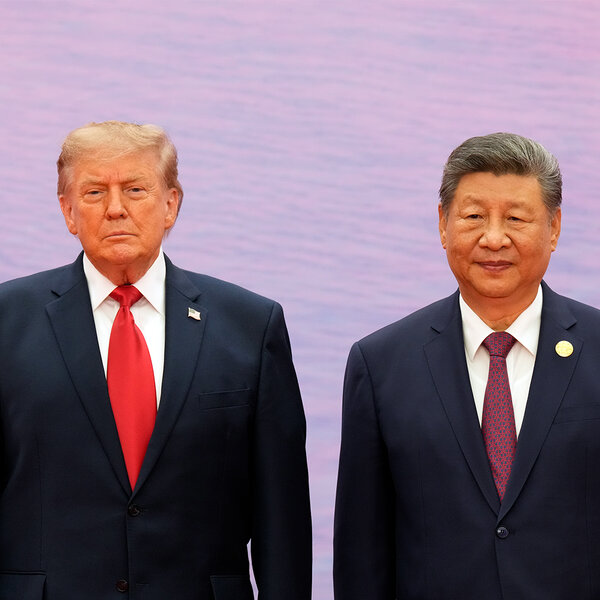
Donald Trump’s wars, both the global trade version and the real one on Iran, are increasing costs for America’s farmers -- traditional followers of the Republican president who just might be reconsidering their allegiance. Stephanie Flanders speaks with Bloomberg’s Steven Dennis and former US Department of Agriculture chief economist Joe Glauber about why deep red farm states like Kansas are suddenly looking competitive, and whether economic frustration could produce a lasting shift in rural America.
See omnystudio.com/listener for privacy information.
Scan the code with your iPhone camera
Listen in the app.