Ask ChatGPT

 UNTAPPED with Spencer Matthews
13 Apr 2026 · 53m · 20 chapters
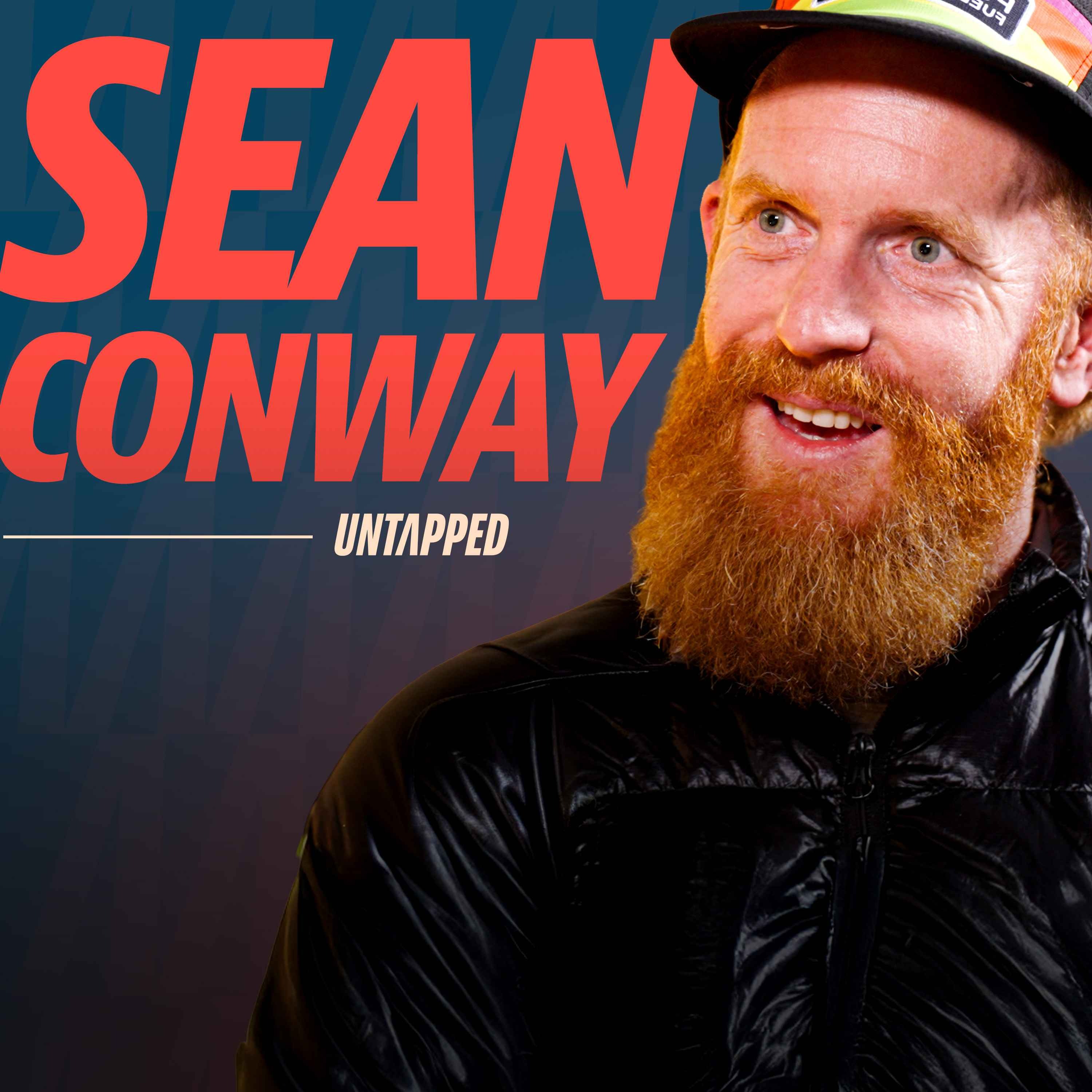
Sean Conway (Ironman endurance record holder) explains his “10 pillars of endurance” and how he built stamina for extreme multi-day events, including Project 7 (105 full Ironmans in 105 days). He argues endurance success comes from planning, experience, equipment, fitness/conditioning, nutrition/hydration (carbs, fluids, sodium), sleep/recovery, muscle management, health, mindset/motivation, community, and adapting to luck.
The guest is Sean Conway, known for multiple endurance “grand slam” world records: swimming the length of Britain, fastest unsupported cycling across Europe, world’s longest continuous triathlon, and most full Iron-distance triathlons in a row. He’s also completed Land’s End to John o’Groats swim-bike-run (only one to do all three; Ross Edgley and Jasmine Harrison did the swim portion).
He targets “zone one” heart-rate consistency for daily Ironmans; sleep can be a “game changer” (adding an extra hour improved times). He says carbs and sodium targets are crucial and that reported carb intake may exceed actual absorption.
187g carbs/hour reported for an Ironman champ; his own sweat rates (870 ml/hour at 40°C, 480 ml/hour at 20°C) and sodium needs (1500 mg sodium per liter). He describes pivoting plans due to wind in Cape Town and Antarctica delays, and using a coin flip to stop at 105.
Written by AI. May contain mistakes.
Sean discusses his dual 'terrier' and 'monkey' modes and his journey in endurance sports.
“I'm a, like the terrier in me has one thing and he just has to chase something difficult.”
Sean reveals his achievement of the Grand Slam of endurance records and his unique goals.
“If you achieve success in your early stages, it's mostly down to luck.”
Discussion on the 10 pillars of endurance, including planning and experience.
“You've got calories per hour, pretty much, liquid per hour, and sodium per liter of liquid.”
Sean shares insights on nutrition, hydration, and the importance of sodium intake for endurance.
“It's an easy addition to your daily routine and helps support hydration when you need it most.”
Sean shares insights on nutrition, hydration, and the importance of sodium intake for endurance.
“Lots of people that I talk to at the moment are on the top end of salt.”
Sean emphasizes the importance of sleep, recovery, and mental strategies for endurance athletes.
“So I do sauna first, straight into the ice bath.”
Exploration of motivation techniques and the role of mindset in endurance sports.
“Every time it's miserable, I'm like, oh, I'm going to be the world's most annoying dad.”
Discussing the importance of community and support systems for athletes.
“So you have done 105 full Ironmans in 105 days.”
Insights on the planning and adaptability required for endurance challenges.
“But I then started hovering around the 13 and a half to 14 hours every day in zone one heart rate, pretty much.”
Reflecting on the emotional and physical journey of achieving an Ironman record.
“So I've had a lot of time to reflect on this.”
Discussion on the future of Ironman records and the potential for new challenges.
The hosts discuss the potential for breaking endurance records and future challenges.
“How long do you think the record will stand?”
They explore the physiological limits of endurance athletes and discuss notable examples.
“And then you play the tailwind game on the bike and then run at the end, go back, sleep, repeat.”
The conversation delves into training zones, fitness thresholds, and their impacts on performance.
“Don't quote me on the actual maths, but a lot of the pros are up at that 400 mark.”
The hosts share essential training habits for those looking to improve their endurance.
“you could easily blast a marathon a day, every single day.”
They discuss the importance of setting realistic yet ambitious goals for endurance athletes.
“good levels of endurance, what are the three most important training habits that they should be focusing on?”
Hosts talk about their upcoming endurance events and unique races they find intriguing.
“If you said now, Sean, let's go for a 5K or a 50K, I'd take 50K 100 % of the time.”
Learn about various endurance events and setting personal goals.
“I'd like to do sub 12 I definitely need to do sub 13 because my mate James did 13 so I want to beat him so yeah so there's that and then the UK has so many cool races have you heard of the tunnel?”
Explore unique and challenging endurance events in the UK.
“I mean, do you ever care about the Barclay Maritons?”
Explore the key mistakes people make when preparing for their first marathon and how to avoid them.
“I believe that most people could run a marathon if they wanted to, if they wanted to give themselves to the process and make an effort and be consistent with it.”

Get the gist, explore an idea or ask about something said.
 Claude
On UNTAPPED with Spencer Matthews, what are the key points of this episode?
Searching your listeningAutomatic transcript. May contain errors.
0:10Sean Conway. Spencer, it's good to be here, mate. Thank you, mate. It's a pleasure having you in the studio today. I mean, our paths actually crossed once. To 2023, I was doing the double brutal Ironman in Flamberis. But the beginning of the run, you got to go up and down Snowden. And I'm coming down Snowden and you were going up with Michaela and a whole bunch of other people. And I remember going, I should say hi, but I was in terrier mode. And when I'm in terrier mode, like nothing else matters. I'm like, I'll catch up with him another time. Great. I wish he'd said hi. I was in terrier mode, mate.
0:46Sorry. Terrier mode is what? So I have two modes in life. I'm a, like the terrier in me has one thing and he just has to chase something difficult. And then it's blinkers on, red mist. It's all about the finish line. You know, So the terrier does not care about the journey. And that's the unpopular opinion. Oh, it's all about the journey, man, not the destination. No, no, no. Terrier's like, it's not that bad. It's finish line or nothing, right? What about slightly after the thing? Then I'm monkey mode. So then the other version of me is monkey. And monkey, I also have to feed. And monkey likes to try lots of different hobbies.
1:19It's probably why I've stuck to four different sports, really. Swim, bike, run, triathlon. Because I like to try different things. I break stuff just to fix it. I love fixing up old things. woodwork and steel work. So I've got to have lots of hobbies to do with my hands. But then the monkey, if he's around for too long, I get mega frustrated and I just get anxious. Ah, come on. For those that are unfamiliar with some of your incredible endurance events, can you reel off just quickly some of the more astounding achievements that you've conquered? So the biggest, big scary goal from back in the day was trying to get the grand slam of endurance world record.
1:57So there's four types of endurance records you can get, which is a world's first, a world's furthest or longest, world's fastest, and then the most of. And when I sort of found out about this, oh, back, this would have been 2012. I was like, the monkey, that's from the terrier. So it was like, yeah, we're going for this. And I'm like, what? Shut up, mate. You don't even own a bicycle. But it just, there was something in me about having this really, really long, unachievable goal. Like I knew it would take me more than 10 years. I thought it might take me 20 or 30. And there was a, I liked everything.
2:30I liked, well, I needed to get a speed record early because speed favors younger people biologically, but I could probably do like the longest a bit later in my career. Like there was a whole plan. So I was like, suddenly this is something cool to chase. So that was, that's been the backbone of all my big records for the last, yeah, 12, 13 years. So, and then I guess I then eventually doing the 105 got all four finally, like the only one in the world who got all four, right? So I was first to swim the length of Britain, fastest to cycle across Europe, unsupported, world's longest continuous triathlon, and then the most number of full iron distance triathlons in a row.
3:09So then I ticked off the Grand Slam. And then I did lots of other little stuff on the side, like ran across Iceland, I did, you know, ran the length. Actually, you know what, I'm still... I'm grinning like a Cheshire cat because firstly, I've never heard of these Grand Slam things. and I'm sitting there thinking, what's left? What's left? Yeah, yeah. It's exciting. Well, what is left? So I'm still the only person ever to have done a Land's End John O 'Groats swim bike run. Still, no one else has done all three. Swim bike run, yeah. Land's End John O 'Groats. Only two other people have done the swim, Ross Edgeley.
3:38Swim, bike, run. Yeah. The whole thing. Yeah. No one's done it. Well, I'm the only person to have done it, but only two other people have done the swim, Ross Edgeley and Jasmine Harrison. And I'm like, you've done the hard one. Just do the bike and the run now, which does mean the female record for the first ever Le Jog triathlon. Still up for grabs. Come on, your wife. Good luck, mate. We'll try and get her to do a half marathon first, I think. You promote the 10 and a half pillars of endurance. I think it might be handy just to kind of tick those off and dwell on the kind of main ones just before going into how you use these pillars in order to achieve some of your more extraordinary goals.
4:18so if there's if you've got a goal that is long sort of you're looking at ultra and and longer maybe sort of half iron man definitely iron man and definitely anything that's multi-day even if you've got breaks if you've got a project that's like a week long two weeks long this definitely is like a bulletproof plan basically um but it works for iron man it works for half iron man marathon you could probably skip a couple of them and you'll probably still do okay But you've got planning. You've got to nail your planning, you know, like for your seven. You've got to look at water temperature, conditions, Antarctica.
4:53You were just like, oh, well. Then the next one is experience. When you start any journey, you've got two cups. You've got a luck cup and an experience cup. If you achieve success in your early stages, it's mostly down to luck. And then as you go through your career, you want to get all the chips out of the luck cup and put them in the experience cup. So I just tell all my athletes, like, just be curious about, what's working, what's not working, mostly on all the other pillars, right? Then you've got equipment, which never used to be on the list because I genuinely believe you can get 80 % of the way on any kit.
5:29Like if you look at Dan Lawson, did the Land's End John and Groats run record 10 days, right? So it's what, 800 and something mile, 10 days? He's running 150K a day, pretty much. He did them in second-hand trainers. Savage. Then you've got fitness and conditioning. So that is sort of three categories. You've got your cardio, your strength, and your sort of robustness. So you've got hard tissue, soft tissue, cardio, VO2, all that combined is your fitness and conditioning. Then you've got nutrition and hydration. So that is obviously a big one. You've got three things in that. You've got calories per hour, pretty much, liquid per hour, and sodium per liter of liquid.
6:11So I know all those. I'm like 120 grams. Yeah, yeah, yeah. 120 grams of carbs per hour. I swept, I only swept 500 mil an hour. 120 carbs per hour? Yeah, that's what I can push away, yeah. Whoa. Yeah. It's a huge amount. Yeah. So the Ironman world champ this year consumed, reportedly, 187 per hour for the whole Ironman. Yeah, Casper. Yeah. It's like, just for anyone listening who doesn't, he can't quite grasp that. That's like, it's a huge... You're probably not absorbing 187. It's a huge amount of carbs. How is he even getting that in his system? Is that like water and gels and stuff? Yeah, gels and powder in the bottles.
6:50Like what would a big bowl of pasta be? I know it's not the same, but like how many grams of carbs? So it might be, it might be maybe 100. It might be 100. So this lad's doing 187 grams of carbs per hour in the race. It's like having a lasagna every hour. Well, if it's a 30-gram carb every, like, five minutes or six minutes or something, it's crazy. What? He's not absorbing it. There's no science at the moment that says he would absorb it. And also, they're just looking at the gels. They're not weighing the gels. You'll squeeze a gel. You might only get half of it in. But they're going, oh, well, he had a gel.
7:26Yeah, yeah, yeah. But still, so 120 an hour on that. My sweat rate at 40 degrees is 870 mil. At 20 degrees is 480 mil. and I need, the big one I need is I need 1500 milligrams of sodium per liter of sweat. So if I'm sweating 500 mil an hour, roughly, I need 750 milligrams of sodium per 500 mil bottle, basically, or per hour, yeah. So a gram and a half of salt. It's a lot, yeah. I'm on the top end of salt, yeah.
8:19Cologuard is a test that you can use at home and detect the 95 % of the cancer of Cologuard. Obtén más información en coloGuard.com diagonal prueba. La prueba ColoGuard está diseñada para detectar el cáncer colorectal en adultos de 45 años o más con un riesgo promedio. Visita coloGuard.com diagonal prueba para obtener más información solo con receta médica. Hacerte la prueba es un acto de amor por ti y por tu familia. Hi, I'm Jack Ravici, Kramer host of The Best One Yet. At T-Boy, we're always talking about small decisions that can have an outsized impact. One of the simplest is staying hydrated.
8:52Whether I'm traveling, getting a workout in, or heading into a busy day, I keep Liquid IV on hand. It's clinically demonstrated to hydrate faster than water alone and contains three times the electrolytes of the leading sports drink, plus eight vitamins and nutrients. It's an easy addition to your daily routine and helps support hydration when you need it most. Shop now at liquidiv.com. Liquid IV hydration that goes wherever life takes you. Losing weight can feel like a roller coaster, full of ups, downs, and being thrown for loops. Like when someone brings donuts into the office, or your kids' dino nuggets start giving you that look again.
9:27That's why there's Noom. They combine GLP-1s to quiet the food noise with healthy habits that help you keep it quiet, even if you get off the meds. Their program is designed to make weight loss a smooth ride, helping you understand what drives you, so you can build better habits to not just lose weight, but keep it off. Noom. Lose for keeps. Get started at Noom.com. Not all customers will clinically qualify for medications. Individual results may vary.
9:58Lots of people that I talk to at the moment are on the top end of salt. Yeah. Because they've worked out, because they're quite vocal about it. Because it's actually quite serious. So if you're a highly salt sweater, which is biological, so once you get tested once, you'll know your number for life. That never changes, apparently. Once you do that, if you are a salty sweater but not getting the salt in, you'll just feel thirsty. So you'll drink more, which is diluting your system even more. And then what happens is you get reverse osmosis. So that's why if you drink six liters of water, you die.
10:31Because basically it absorbs all the salt from your muscles and then you have organ failure. So those are the three things I think we talked about. Carbs, water intake, salt. Yeah, so that was nutrition and hydration. Yeah. Sleep and recovery is now your next one. So especially for multi-day, you know, like the multi-day, too much sleep, you can be off the record. Too little sleep, you're not recovering. And then within recovery, you've got a bit of the nutritional pie. So you've got, you know, your carbs and your fats and your proteins. And then you've also got your muscle management, which is one of the other ones.
11:07So recovery kind of spreads across a couple of the pillars as well. But you've just got to nail your recovery. And sleep's a big one. So when I did Iron 105, up until day 30, I was getting an hour physio a day, which meant an hour less sleep. And I just wasn't getting quicker. And I needed to be that hour quicker. So I can't remember, late day 28 or something, I chose to cut the daily physio for an hour extra sleep. Game changer. You can see my time go up. It was amazing. Like literally just having more sleep fixes everything basically, which I think we all know now, like gone are the days. All the pros sleep in the day.
11:42You know, they'll have like nine hours in the day and they'll have a nap at lunchtime as well. You know, I'm like, oh, I wish I'd found out I was good at sport like, you know, my early 20s. When you're back at school. Leave me alone. I just need to sleep. Who cares about this homework? You know, you do 30 hours a week of training, which is less than a normal job, and you get to sleep at lunchtime. It's great. Sleep is awesome, I have to say. Yeah, no, it's all good. It is the miracle drug. Yeah, totally. So then you've got muscle management. that comes into like your massage, stretching, and actual then potential if you're injured.
12:17So acupuncture, physio, deep tissue, hot, cold, all that sort of stuff. So that's all in like, just making sure your muscles are good. Do you care when you do hot and cold? I do it in the evening because I like ritual. Yeah, so sauna. I have a sauna and ice bath at home. So I do sauna first, straight into the ice bath. No crazy temperatures. It's an infrared sauna. And the ice bath is maybe like five, six degrees. I'm not down at the two. But I kind of like the ritual. Yeah, it's my little... So I don't take my phone into the sauna. So I have a Bluetooth speaker, leave the phone outside, and I listen to either epic orchestral music like Hans Zimmer or some sea shanties.
13:01That's my go-to. Where's wifey at this stage? So that's our little downtime between dinner and putting the kids to bed. You do it together? No, no. So she'll just have a little downtime doing her thing. Kids are having their downtime. I have my half an hour. Does the Hans Zimmer kind of ripple through the house? No, it's all in the garden. Yeah, so my sauna's out in the garden. Yeah, yeah. That's good. Yeah, a bit of a pirate to the Caribbean, a bit of Inception. All those theme tunes are great. So, muscle management. Muscle management, you've got to nail that. Then you've got to nail health, which you've just got to stay healthy.
13:37So again, get your macros, get your micros, get good sleep. Leading up to a race or an event, introduce like a... I mean, luckily COVID brought back the fist pump. So like, that's cool. No more handshakes, which is great. And you can wear a mask nowadays and no one questions it. So you do that. So yeah, staying healthy. Then you've got mindset and motivation. You know, what are you, what's your why? You know, what's motivating you? I say you've got to dangle as many carrots in front of you so that when you're like, oh, I don't want to carry on, you look up and go, oh, I better carry on because, and the because could be anything, intrinsic, extrinsic, I don't care.
14:14Like for me, I actually have this scenario of, I've got two boys, they're six and four now, but in about 15 years time, they do their first Ironman and they come home broken and I'm sitting in the chair with a whiskey going, only one. Oh, that keeps me going. Every time it's miserable, I'm like, oh, I'm going to be the world's most annoying dad. Shut up, dad. That was 20 years ago. the record's 500 now anyway. That's what they're going to tell me. The record's 500 now. No, that is funny. I think about how it'll have an effect on my kids as well. It's funny. They know daddy's job is exercising.
14:47So they're only four and six, so they're still kind of working out what daddy does. But yeah, he thinks my job. They think my job's exercising. Okay. Yeah, you've got mindset. Then you've got community, which is, there's sort of three types of community. You've got your friends and family, close to you who have invested interest in you there's pros and cons some of them will try and protect you too much from your big crazy idea because they don't want you to fail terrible advice by the way people if one of your mates wants to do something daft let them do it and fail it's much better than them not doing it right um but so there's pros and cons to them but then you've got your actual then crew as part of your community so that's people physically help you coaches physios trainers whatever people who come to race day with you potentially help carry your bag whatever right and then you've got the online community which again they all have their you've got to manage them all well because you can get crew rebellion that's a big one i've had that twice where suddenly the crew believe that if you don't manage them well and and appreciate them and do everything so it's always the athlete's fault 100 but if you don't show your appreciation they start believing that this would not be possible without without us right um and it's just about showing your appreciation there.
16:02And then the online community. Look, I think most of the online community is positive. I think the ones who aren't positive are jealous. Generally, I think that's... You sort of feel sorry for them. So that's the 10. And then the last one, the 0.5, because I don't think it deserves a whole pillar, is luck. Yeah. Some days you just get bad weather or a headwind. Like when I cycled around the world, it's like I'm going through Tornado Alley. I'm like, oh, so that was my first fault for planning. I shouldn't have gone through a tornado alley because now there's suddenly bloody tornadoes everywhere.
16:33So I'm trying to dodge them and, you know, get ahead of the one, find some shelter, wait for the one to go in front of me, go ahead. Yeah, so, you know, you just get unlucky sometimes. Like you got unlucky with Antarctica for the weather. Because you had to delay it a little bit, I believe. We had to push that a little bit. A few hours. I'd say that we were unlucky more in Cape Town. Like Cape Town was a really dark time, you know, very cold in the morning. and that was a, there were times in Cape Town where we were cycling into, you know, I couldn't tell you how hard the headwind was, but it was like, we were going, I think we were going like 13 kilometers an hour and putting out like 280, 290 watts type of thing to do so.
17:11And I was just like, you know, this is hell for hours, right? And I was just like, even faster to run, nearly. Yeah, yeah. Well, I had that when I cycled around the world, when I went up over the Rockies, I pushed a bit. The wind was so strong, I just thought I'll use different muscles and just get out and push for a while. But yeah, the thing with luck though is you've got to adapt, pivot, turn, change plan quickly and confidently, right? And it sounds like you did that. Like in Cape Town, you're like, oh, right, well, it's too windy here. We'll turn and we'll do that. We're safer. I think we were lucky in many ways on Project 7, particularly like none of us got ill.
17:43Yeah. Right. No flights were delayed. That's the craziest thing. Because, you know, not that there's a queue around the bend of people looking to go and beat that record. But if you wanted to beat it, you're going to struggle purely because of the logistical perfection of it, right? Like we, Chris, designed this race pretty much perfectly. You know, there wasn't a single delay that had a knock-on effect, right? So all races started pretty much when we were supposed to start them, which is unbelievable, right? Good planning. You would expect to be stuck in an airport for, you know, miss your flight, which therefore has a problem on the connecting flight, which means that you've got to reorganize the whole thing and push everything by a day or two.
18:24And we didn't have to do that. So you have done 105 full Ironmans in 105 days. In 105 days, yeah. Insane. Big, hard one. Is that your greatest physical and mental achievement? Yeah, yeah, yeah. Before that was swimming the length of Britain because that was just four and a half months of being very cold and jellyfish stings. And back in 2013, people genuinely were like, just that can't be done as a swim. whereas the Ironman's just the pain and the misery and there was no averaging to it. It was an actual. So you can run a marathon a day for a year or you can average a marathon a day for a year.
19:01They're two different things, right? So there was no averaging in the one-a-day format for the Ironman. If I was 100, and there's also the 17-hour cutoff. So if I was 100 meters short on the run on any day, day 99, record's off. I can't be like, oh, well, I'll do it. Well, I'll make it up to, no, no, no, no. So take us through it then. How did it come about? How did you set the number? You know, how did it all begin? The idea was the Grand Slam originally, so that was 15 years ago. I didn't know what that fourth one was going to be, so the most of. And I was umming and ahhing about lots of different things.
19:36And then actually I parked it, like genuinely. Like in 2018, I got married, 2019, I became a dad. And then for a while, the monkey was like, mate this is fun like you're an awesome dad like the monkey's a great dad and he's a great husband and we have fun and then for a while I genuinely thought well actually this whole chasing the grand slam is a little self-centered it's a bit selfish what's the point by then I was getting into coaching a little bit uh and youth sport work which I felt really you know I get really a lot of fulfillment and it's good for the world so I thought ah maybe I don't need it like maybe I don't need it whatever and then the monkey the terrier woke up one day and he was like mate, we're going for the Ironman record.
20:17I was like, oh no. I just remember that exact moment. Even I filmed it. I've got it on the phone. I thought you had conversations with yourself. Yeah, yeah, totally. Generally, I remember and I was like, oh no. I had flirted with the idea back in 2018. So I lived in the Lake District in Coniston and I'd worked out a route. I thought I could do, so the record back then was 50, James Ironcowboy. He had done the 50 in the 50 states. So I thought I could do 51. But even back then I thought, well, maybe I think a hundred's doable. I was going to swim in the lake then cycle down to Barrow and Furnace back to the lake probably twice and then run the quiet side of the lake twice which is exactly a marathon.
20:52Same every day. Yeah, same every day, yeah. Which almost becomes essential, I think. Well, it does actually, now that I know it because you can turn off your brain on like where every pothole is and how fast you can take corners and you can just do it in autopilot. So yeah, it helps a lot doing the same course every day. Oh my God, I've really struggled that. Well, you think so? I thought so as well. I thought, oh man, this is going to be so, you know, I'd hate it. but after a while the mental energy it took to question whether there was going to be a pothole on that corner how quick i could take the corner could i do it on aero bars did i have to be on the hoods for the breaks um where are the busy bits which with traffic am i going to get run over here like you know all that stuff took so much energy by like day 30 i could do that course backwards you know what were you what were your kind of average times so my goal i too sort of from a performance point of view, my goal was 14 hours in zone one heart rate.
21:44That was the original plan. I think you need to be a bit quicker. I think around 13, 13 and a half, it just gives you a little bit of extra leeway. But it was mainly done to heart rate. So at the beginning, I was slow, picked up an injury. So at the beginning, I did the 14 hours on day one, I think 14 and six minutes. Then I dropped down to like 16 hours, 55 minutes on day two because of an injury. I was oh I've nearly timed out like that was stressful on day two everyone was like haha you can't do it so I just clawed back some minutes and then physio and then started to get more sleep and then you kind of you start getting in front of the wave a little bit and then you adapt to it yeah and you yeah so there's that first week is hell week where you just no matter you can have all the experience in the world all the fitness all the conditioning your body will mostly expect a rest day tomorrow just through experience and just that's just the way it is when you don't give it a rest day it's like ah well uh right this is tough i was expecting a bit of recovery then after about 10 days like it's amazing your body just kind of goes ah no rest days you should have told me like let's recover better um and you kind of get onto your groove for me it was because i had the injuries probably a bit longer.
23:02But I then started hovering around the 13 and a half to 14 hours every day in zone one heart rate, pretty much. What was the worst moment of the whole 105? And did you know you were going for 105 from the very beginning? So the record was 101 by James. So I always knew I was going to do 103. That was the original goal, because I had to do 102 to break the record. And I was really curious to see what the 103rd one would do to me physically and mentally. Because it's one I didn't have to do, right? Like it was a bonus one. Would I like crumble and be like, what are you doing? Go home, Sean. Or would it be like, yes, the pressure's off.
23:43Let's just go for it and have some fun. And then, well, let's reverse a bit. The terrier in me needs to go into things knowing it's a done deal. So that's the Terrier Thrives knowing that it's a done deal. So for example, I actually printed numbers up to 123. I was like, so race caps, daily numbers up to 123 just because I was like, yeah, of course I'm going to smash the record. I'm going to go way through it. I'm going to go to 123. Why 123? I don't know. One, two, three. Sounds like a cool number. And then, but we never, we always knew 103 was going to be the initial end goal. But then around day 95, I went to Caroline and we're sitting, And I'm like, I think I can carry on.
24:28And the look on her face. The words that came out of her mouth were very supportive. She's like, Sean, you're never going to do this again. And, you know, make it count. I want you to spend the rest of your life going, oh, I wonder how far I could have gone. But at around this point, also, my kids were just really kind of missing me. Like, Daddy, when's your challenge over so you can play with me? And it was like killing me. I was like, oh, man, you know, like. So we came to an agreement that actually I'd just flip a coin. So I'd do 103 and then I'd flip a coin and I'd always choose heads. And when the coin said stop, then I thought that was a cool way to like, you know, it's not me quitting, it's the bloody coin.
25:04So like, okay, cool, we do that. So that's what we did. So we just flipped a coin and then eventually to do 106, the coin said stop. So that was it. So that's why I ended on 105. When the coin said stop. I was gutted, mate. Yeah. There's a video, I cried. How did you feel when you saw Tails? So I've had a lot of time to reflect on this. I definitely had Stockholm Syndrome for the Ironmans because on the one side, it was the most difficult thing I've ever done. Physically, mentally, pain, like the pain I had to endure, like physical, actual pain of running and getting up and the fatigue and all that.
25:41Like that was at a whole new level that I've never really experienced, right? But the downstream effect of me doing this one thing, which A, no one else in the world's doing. You're the only person on planet Earth doing this one thing, right? The downstream effect, you can actually see the positivity, like the money we raise for charity. Every time I do one, that happens. People are coming and joining me and doing their first half marathon, full marathon, 100K on the bike, 100 mile on the bike. The community, like all that stuff. If I stop doing this difficult thing, it turns off the tap for all this cool downstream effect.
26:18And part of me was like, I don't know if I were, I just didn't want to be the one that turned off all the goodness for the sake of me just feeling a bit miserable. So that's kind of how I felt. I had this real weird, like, well, I need to be a dad again, and the grass at home is getting long, I need to mow the lawn, and all that boring stuff. But then also, I was gutted because I was like, oh, man, I definitely could have rolled it out.
26:51and told me that detect it at time can be a great difference. So let's talk about what we don't talk about. That's why I'm working with ColorGuard, to tell you that if you have 45 years or more and you have a high risk risk, ask your health professional if ColorGuard is adequate for you. It's a test that you can use at home and detect the 95 % of the cancer of Color. Get more information at ColorGuard.com. The test is designed to detect the cancer colorectal in adults of 45 years or more with a high risk risk. promedio. Visita colorart.com diagonal prueba para obtener más información solo con receta médica.
27:25Hacerte la prueba es un acto de amor por ti y por tu familia.
28:16We'll be right back.
28:43How long do you think the record will stand? It's been broken already. Has it? Jonas Deichmann. Yeah, I got 120. he's done 120 someone tried to go for 150 someone will do 200 soon I've said in my 50 I'm 45 this year if no one's had a crack at the 365 on my 50th I might have a crack at it my kids will be older then over five years do it in America I've thought a lot about this by the way so you do it in two locations a winter one and a summer one or there might be somewhere in America where you could do the whole year round and And you find a town with spiderweb of roads in America, tons of those.
29:23Find a lake you can swim in. And then you play the tailwind game on the bike and then run at the end, go back, sleep, repeat. So if the wind's going that way today, you go that way. I just want to look on the 365 in a row. Yeah. One, in your mind, how does that become possible? And secondly, what is the, in your mind, the limit of how many in a row? So from a physical point of view, The goal is you've got to get quick enough to bring it back down so you're in zone one. And if your zone one can be like 12 hours, and you really nail… You want to do a 12-hour full Ironman in zone one? I think you could, yeah.
30:05I think the pros could. I think the pros could. The pros, yeah. It'll happen. But you asked about your sort of physiological limit. Okay. You know, that's why a lot of the pros are starting to do these long things. And they're smashing it. Like Lachlan Morton, you know, smashing all the cycling records. And he wasn't even good enough to get into the EDF Tour de France team. So he just went to ultras and is nailing it. Because his engine's so big. His FTP is 400. So for an hour? Yeah. So your sustainable threshold for an hour. Somewhere there. It's insane. It's so mad. Yeah. Can we just explain that for a second?
30:40He can put out 400 watts on the bike. Don't quote me on the actual maths, but a lot of the pros are up at that 400 mark. Yeah, so Pogacar famously did that interview about zone two training, where he's at like 350 for like five hours or something. It's like, what? To give listeners an idea, sorry to make it about me, but just because it's easier. I did an FTP test the other day, a 20-minute one, and I put out, I think it was 330 watts or something for 20 minutes, and I'm 84 kilos and I was out of the saddle, you know, like really grinding into the bike, right? And it's kind of like, that was quite a pretty substantial effort for me.
31:24Pogaccia, who weighs, what, 62 kilos or something like that, you know, potentially even lighter, is putting out 360 watts or something for five hours in zone two. Yeah, it's crazy. Forget it. It's your watts per kg. As a cyclist, you want to get to your, like, the Holy Grail is four watts per kg. so then yeah that's what everyone but they're up at like 6 and 7 it's mad so from a physiological perspective it is possible to just do an Ironman every day for the rest of until you become too old to do so really if you found an athlete if you got super quick brought that back and then nailed all the other pillars like you've got to nail your sleep your recovery you can't get injured because you could have one bad day with a saddle height the nose of your saddle could drop a millimeter it'll change your biomechanics slightly because you're doing such a repetitive thing you could roll an ankle so half of it is a resilience thing an injury avoidance thing but you also want to get quick enough to bring it back so that it doesn't really take it out of you then yeah genuinely I think someone will do it well that's going to be you mate yeah well maybe Caroline doesn't know it yet sorry Caroline just so that you know this will be the clip that we put out.
32:40So Caroline will likely see it. Because you're going to collab on it and it's going to be like, new challenge, 365 in a year. I don't think she follows me on Instagram anymore. Okay, great. Fine, good. Well, carte blanche then. Yeah, yeah. So that's really interesting that you bring zones into it. Yeah, somebody asked me, how many marathons do you reckon you could have ran, right? If you didn't have to come home and go back to work, you know? And the answer to that question genuinely is you could do one every day for... Yeah, you could easily just... you could easily blast a marathon a day, every single day.
33:11Well, I think the unofficial record's 1 ,000, I think, anyway. Yeah, not on sand. Yeah, not on sand. But yeah, you know what I mean? I think because they are on sand, it's even like they slow you down a bit, but they actually preserve your joints and your muscles a bit because, you know... I know, man, it was hard. I've run on sand, it's horrible. No, I know. So they preserve your joints. I know what you mean. It's hard on your muscles, but they preserve your joints a bit. Like, you're less... I think if I absolutely had to run a marathon a day for a year, tarmac is rough, I think. No, you would vary that.
33:45Running 42K every single day on tarmac would suck. Yeah, you would want to do a bit of trail, different shoes as well every day. But yeah, where are we getting physiologically? I think people are sacrificing a lot more to do these things now. You know, they're really, you know, they're delaying parenthood as well. A lot of these young athletes, they're training, they just eat, sleep, train. Like the Norwegians, man. They're just, you know, you even ask, you have a girlfriend? I don't have time for that. You know, they're really just all in and you sort of have to be that level. You get outliers and some people have managed to balance it well.
34:23But, yeah, the multiple irons, yeah, you've got to, A, you need a whole lot of experience to get to the start line. Age helps there. But I think once you get to that level and you're just willing to just commit to it, yeah, you can roll it out. It takes a certain mind, I think, to do some of the stuff that you've done. You know, it's pretty rough. I can't imagine doing 105 full in 105 days. I mean, that would not be... Yeah, because also the risk-reward chart is very low. Yeah, also, it's the pressure in those final days as well, right? So even current record's at 120. Imagine when you're at 118, right?
35:12It can still just go wrong, and then you've failed, essentially. I remember getting to day 90 or something, and someone's like, you're in the last decade, you're nearly done. And I'm like, not many people have done 11. I just let 12 to do, right? Like there's only about 30 people in the world have done more than 10 probably, you know. So I could still, you know, but yeah, you just, yeah, those last few days were quite stressful, I have to say. Because not only that, like more people are coming to join. So the risk of like someone tripping in front of me or crashing on the bike. But yeah, it was all a blur.
35:46I'd love to take some of your experience and training principles and see if we can apply them for just, you know, others and how people can get better. Like for somebody who wants to build, you know, good levels of endurance, what are the three most important training habits that they should be focusing on? So you've got to be realistic with how many hours you can commit to this thing and then maximize those hours efficiently. And that comes with a bit of experience, a bit of coaching maybe, getting some advice from people. but you've yeah initially i say is like do it for fun like definitely do it for fun at the beginning and i think a lot of people they're like right i want to get good i'm going to buy the kit and the watch and they get all the numbers and the zones oh what's my zone too it's like it's it's like learning to drive a car for the first time you know i'll go look at this mirror and this gear stick and this pedal and it's all too much just do it for fun you know go out and have fun and learn to love it.
36:48Don't think about how fast you're going, how far you're going. Because also it just takes time. There's a thing I call DNF, which is delayed noticeable fitness. Biologically, you're only getting, if you do a training session today, you're only getting fitter in two to six weeks. That's how long your body takes to just develop. Yeah, yeah. Depending on age, nutrition, hydration, sleep, and all that sort of thing. And if you kind of misbehave, when does that, so say you drink lots of alcohol, you eat shit food, Does that have an almost immediate impact on your body? Is that also delayed? Yeah, your overall fitness will be delayed.
37:22So if you have a party tonight and you celebrate, tomorrow's session is going to be rubbish. But you're probably not losing mega fitness in the long term. That's why a taper can be two weeks for a race. I hate tapering. Yeah, me too. You feel so lazy. I literally feel like I've forgotten how to run. Yeah, yeah. it's shit I hate it I'm the same yeah the terrier's like come on what are we doing what are we doing what is this shit but it definitely does help so yeah find the fun play the long game be realistic with the hours you can put in be realistic with your goal setting but also be mega unrealistic if that makes sense so like you know look for that really difficult unachievable thing so I'm a big fan of someone who thinks I can never run a marathon sign up to 100k in four years time you know put in the diary and then just commit to it I'm a big fan of the in my phone 8th of December 2034 I'm rowing the Atlantic with my boys and my wife you know just have these like really long you're taking her along Caroline oh yeah she loves it oh yeah oh yeah she's super adventurous okay great she'll do it tomorrow I kind of had this idea of of you being the like like super wild terrier and her kind of just like...
38:46No, no, she's there as well. Okay, great. That's good news. No, which would mean I PB'd her yesterday to fastest 5K. And so we do... What did you do? So she did... She was... Oh, sorry, she did. Yeah, she was... What's your fastest 5K? Oh, no, I'm slow. I'm like a 22 maybe. What are you talking about? But I've never tried. Like I've... I hate it. I hate 5K. I would... If you said now, Sean, let's go for a 5K or a 50K, I'd take 50K 100 % of the time. There's no scenario where I'd choose to do a sub 25K over a nice 50K. So hang on. Yeah, no chance. You reckon you can, you think, right, that you can get to a 12-hour Ironman in zone one, but you can't run a sub 20-minute 5K?
39:28Yeah, now. What are you talking about? I guarantee you, you could run a sub 20-minute 5K immediately. No, I probably couldn't do a 12-hour zone two. This is the most fascinating thing ever. Someone could get to, I could do a 13-hour zone too, which I think would need to be quicker to roll it out really for a long time. Yeah. Because remember, 12 hours is still, you're still, you know, you're one, six, and five, really. Yeah. Yeah. Which is not that fast. 12 hours, one, six, and five. Yeah, so one swim, which I can get to. Okay, I'm not including transitions. No way near that. Six on the bike. it's also very fast for me yeah yeah I could get there and then five let's say you go slightly slower but I definitely got a four and a half hour on the run six and a half hour on the bike or 6.15 with a 1.15 swim like I don't know when I've looked at the numbers on that there's athletes who can definitely do that at 120 heart rate I'm going to go and check my heart rates because it's all on Strava obviously so I'm going to go and have a look yeah that's so funny I'm not having a crack at your speed, by the way.
40:40I'm just surprised. No, I'm slow. I'm super slow. Obviously, I don't mind people not prioritizing speed. I had an idea of you just being really fast. No, I'm so slow. You know what my fastest marathon is? 4.35. Really? Yeah. I've never, and that was London Marathon, where I had to run fast, because I was in fancy dress, but still. Yeah, no, I'm slow. There's a part of you, so like, I'm thinking about this type of stuff at the moment, because obviously, you know, not quite to your standard, but, you know, I've looked at massive, unachievable, big, hairy goals or whatever you want to call them, right?
41:16And gone after them and spent the time and put in the work and, you know, being consistent and gone and done it all and being away from the family and raised money for charity. Like a lot of what you're saying resonates with me. Do you not have any like small, smaller goals that also require, you know, just as much intensity? So I think, you know, for me, breaking three hours in the marathon was, in many ways, maybe an easier goal than, you know, say something like a Project 7. But something that absolutely requires like attention, consistency, like devotion. If you don't give yourself to the eight, nine weeks that you give yourself to run it, then you're just going to fail.
41:54It's as simple as that, right? You do the work and you pull it off or, you know, you do something half-heartedly and you don't, full stop. but like do you have any smaller goals? Yeah I'm starting to and I don't want to use the word smaller because they still are hard and they will be hard for me the I say shorter goals just from a physical time point of view so I'm doing Ironman Wales this year and I want to do an okay time on that and it's hilly and I'm not so good on the hills and I'm not fast like I'm genuinely not fast What do you reckon you'll do? I'd like to do sub 12 I definitely need to do sub 13 because my mate James did 13 so I want to beat him so yeah so there's that and then the UK has so many cool races have you heard of the tunnel?
42:36I've not it's a 200 mile running race in a one mile tunnel there's that that tunnel between Bath and Bristol wait you just go back and forth 200 times? no poles no music allowed yeah come on how cool is that? no music no music allowed race rules why? why do they do that? make it harder to make it harder yeah totally god the same company do the seven bridge Back and forth on the Seven Bridge, 200 miles. 200 miles. So that's going to take, what, 40 hours? 40, 50 for me, probably. Yeah, 40, 50 hours? Yeah, probably a bit more. And it's just a single stint? No power and hours, nothing? But if you miss cutoffs, then you're out, yeah.
43:14No aid stations and no… Self-sufficient or you leave your stuff? You leave your stuff on the other end, yeah. And you're not allowed… What are the other rules? You can't… Are you doing this? I'd like to do it. No, no, this is my point. these are on my sort of bucket list of shorter, hard things to do. Dude, the tunnel sounds like we should, I think you learn a lot about yourself in that tunnel. 100%. I reckon you come out of that tunnel a changed individual. I don't think I could do it now injury-wise. I think I'd get injured, so I'd need to work on that a little bit. That sounds like, I just like, it's the no music thing for me.
43:48Oh no, so weird, yeah. So since I'm 105, I can't listen to anything when I exercise now. What? Yeah. like I honestly I just I can't I genuinely can't run or cycle or anything with anything I just have to have nothing well that's great because if we weren't running together I'd listen to music so I wouldn't be talking anyway so you'd have your I'd have my silence you'd have your yeah I'll have my music you'd have your silence it's perfect actually because I feel I feel like a real twat when I run with my friends because I put my music in anyway yeah I don't want to have to do small talk I'll look like slightly left and I can see them like talking and I'll be like what?
44:23and they'll just be like are you listening to me and I'll be like yeah I wouldn't run without listening to music and then they'll ask a bit antisocial and I'm like well yeah we'll chat afterwards yeah yeah we'll chat afterwards exactly yeah yeah that's a good question did you start the 105 listening to music and then if that was the whole thing you just didn't listen to I actually I'm not sure how you've done that so from this is the most mind-blowing I actually yeah I listened to music in the Arizona official Iron Man event knowing that I could get kicked out I put my iPod into Ted Bins out. I didn't give a fuck, mate.
44:55I literally was listening to it and they would go like, take your headphones! And I'd be like, yeah, yeah, yeah. Couldn't give a fuck, mate. I'm definitely listening to music. I listen to music for the swim in the morning of the Iron Man. What are you talking about? Yeah, you've got the bone conductor headphones. No, I've not got any of that. I don't listen to music when I swim. I find that very therapeutic without the music, you see. No, so like, I just needed to, like, there was lots of, like, it was a public pool and there was like shouting and screaming and people jumping in and I just wanted to like get out of it.
45:25And then on the bike, I just was too dangerous to have that distraction. No, fair enough. And then on the run again, people were coming to join me and I just didn't want to be that idiot. Aren't you? I'm not talking to you. I hope you're not expecting me to be nice and kind. Well, you know, and I had that responsibility a little bit. You know, you're saying, oh, please come and join and give money to charity. I didn't want to be the guy. No, fair enough. Which was hard because some days when I was just really injured and yeah that's you know there were a few not many but a few days where I was just like I just can't talk to anyone but but I did because I think it was my duty like yeah my little terrier is loving this tunnel now it's amazing how many people do the tunnel so I think it's capped at like 50 or 100 runners because of the safety because of public tunnel we can get it so yeah oh yeah you probably could no we can yeah yeah we'll do it we'll do it it's a good race it's a good race they also do the same company is it flat Is it flat or does it do that?
46:22It's a little incline. That's where I last ran in these. I was doing a talking bath, so I did the half marathon in there by myself just for fun. But they also, I think it's them, they do a thing called The Line, which is the Greenwich Meridian through the whole of the UK, top to bottom. So it starts up in Norfolk, down through the centre of London, finishes on the south coast. And you can't deviate within X hundred metres from the actual meridian, yeah. I think that the tunnel thing sounds... That's 300 miles, continuous. Can you listen to music? I think you can on that one. That's pretty helpful.
46:55Will they definitely not let you listen to music in the tunnel? No, definitely not. Yeah. No poles either. No, you wouldn't... You thought you were not going to pole it, but like... Not for 200 miles, no, not on a flat course, but still. I think that's pretty... That's interesting to me. Yeah. I really like that. So the other cool thing about the tunnel... You'll just be beaten. Yeah. The other cool thing about the tunnel is at 11 p.m. they turn the lights off. So there are lights in the day because it's a bridal way or whatever. But at 11 they turn the lights off until 6. And I was like, I wish they had that the whole time.
47:29I really wanted it. In my head it was like pitch dark, no music, head torch. And they're like, oh, the lights are on in the day. I was like, that's a bit annoying. I think we should look into this tunnel. do you want to do it when would you do it I'd love to do it well so it'll be next summer this might be this summer is it in the summer yeah September-ish August, September could I get injury free by then yes mate of course you can you're the fucking terrier yeah but also the 105 Ironmans would kill me I think that that's a real that's a real gritty race that yeah I think that's Simon we should look into that when I did the half marathon in it like a couple of months ago I was like I've got to get this on Strava but I didn't want to leave the tunnel.
48:13So I'm running to the edge and waving my arm in the outside just to get the Strava. Beak! Yeah, exactly. What are the sort of three sort of truly toughest like events that you could sign up for? I mean, do you ever care about the Barclay Maritons? Yeah. So for years, I looked at the Barclays and the ego in me was like, four miles an hour, whatever the average is, pretty low. I'm like, I could do that. And then I remember that year with Damien Hoare and Jasmine DNF'd and I'm like if they DNF'd I have no hope like they're just so much better than me so yes I just I need to get quicker like we've I'm slow so if I got a little bit quicker I'm good in the cold I'm good-ish with sleep deprivation I used to be way better I'm worse now I'm good with navigation so that but I'm good I just I think I might miss the cut-offs on the laps you can't can you do it as a team?
49:10no No, I don't think so, no. Yeah. I'm just trying to use your navigational skills because the old compass and I don't go. There's a UK version called the Berkeley Marathons, I think. Yeah. Someone in the UK, and you do it from Berkeley, wherever Berkeley is, I think. Can we fact check that? Which is the one that Jasmine Paris finished? The Barclays Marathon? Yeah, the Barclays in America. But someone's done that in the UK. I mean, there's so many. UK has so many cool races. You know, I've mentioned there's the GB Giro, the off-road Lanzangiona Groats bike race. Most of it's off-road, going through like Scotland and the Moors and the Peaks and the Dales and all that.
49:51There's running, yeah, the tunnel's got to be up there. You've got the Cape Wrath Ultra. You've got the RAS Race Across Scotland. That's 2.15 in one go. Yeah, there's lots. There's all the sort of the double and triple brutals as well in Llamberis. So a triple continuous. So, you know, that's a 12K swim, 300 and something, 400 and something on the bike, and then a triple marathon at the end. People are wild, aren't they, just coming up with this crap? Yeah, totally. Yeah, it's getting mad. I love it. It's great. Escape from Meriden. Heard of that race? No. That's fun. It's Meriden in the Midlands.
50:30They think it's the middle of the UK. It's a 24-hour race starting at midnight. how far you can get away from Meriden in a straight line midnight the next night. I quite like that. So it's not how far you've run, it's how far you can get away from Meriden. So you might run further than someone else, but if they've got, as the crow flies, further than you. That's clever. I like that. I wanted to do something with slash against the hardest geezer to see just how far away we can get from each other in a certain time frame. I'm going to send you the escape from Meriden website is quite intentionally intimidating which is quite quite a cool thing is you also you get given a jumpsuit from a jailbreak jumpsuit so and you can choose to run it or not but basically you've got loads of people running down the street as if they've just broken out of prison imagine if you were actually picked up by the police and sent back exactly most people just run home like the people who are not trying to win just run home because they're like, well, there's no point in me going away from home.
51:34So we live in North Wales, so all my mates run back. You can pretty much get to my house from Meriden in North Wales. Yeah, I know. Christ. Sold out, of course. Sold out, obviously. Sold out in minutes, yeah. So as I say, the UK has some really, really cool events that are creative but difficult. I think it's one of the best places to be for this sort of stuff. Have you ever thought about design like your own? What would a Sean Conway ultra look like? Yeah. Just five years of running every day. Well, that's my problem. You know, like all the stuff I would like to do, no one would sign up, basically, because it just wouldn't make any sense.
52:20When you double the distance, you pretty much get a third of the uptake almost. So like the brutal in Clamberis, you know, So 50 people will do the, or let's say 30 people will do the full. Only 10 will probably do the double and only three will do the triple. So once you start getting into the stuff I like, most people are like, I can't take up two weeks off work, mate. Like it's not happening. So I will think of something. Well, what I do have is I've invented a couple of things that are quite cool. The 496 challenge. You run the day of the month in kilometers. Most people do it in January. Oh yeah.
52:56One, two, three, four. It lands up being 496k for the month. Did you invent that? So I came up with the idea during COVID to do it. A few people had done it in America in miles. Yeah. I saw that on Strava, I think. Yeah, it's massive. It's like 4 ,000 people on the Strava group. Yeah, you can get a medal if you do it. And only 10 % of people finish it who started. Mega high. I suppose those last few days get a bit rough. Well, the halfway point is day 22 in mileage. so yeah your second nine the last nine days are the same as the first 22 i've got this thing because i quite i quite like to because i know a lot no one's going to do half the stuff i do and i'm totally cool with that and i don't sort of want to be sort of like everyone's like oh you should be more like you know relatable relatable man someone else can do that job like there's enough other people to do that um but i still want to do stuff that people might find interesting and push themselves so there's that i run a thing called the 22 by 22 by 22 challenge so you run on the winter solstice and the summer solstice so that which is 22nd of december you run 22k uh sorry 21 21 by 21 by 21 21st of december you run 21k starting at 2100 so it's like a winter solstice half marathon and the same for the summer so i've got that going i've got the the sort of the triple crown thing which is an iron man over three days for people who don't want to do an Ironman.
54:21So they do Friday, Saturday, Sunday. So I've got a lot of those little things that I try and encourage people to do. But the 496 is the big flagship one that a lot of people do all over the world. Like it's mega. That's quite fun.
54:51So let's talk about what we don't talk about. That's why I'm working with ColorGuard. To tell you that if you have 45 years or more and you have a high risk, ask a professional health if ColorGuard is adequate for you. It's a test that you can use at home and detect the 95 % of the cancer of Color. Obtie more information on ColorGuard.com. The test is designed to detect the cancer colorectal in adults of 45 years or more with a high risk. promedio. Visita coloGuard.com diagonal prueba para obtener más información solo con receta médica. Hacerte la prueba es un acto de amor por ti y por tu familia.
55:46Whether you're traveling, exercising, or podcasting, the best business news ever, Liquid IV makes it easy to stay hydrated wherever life takes you. So shop now at liquidiv.com. Liquid IV hydration that goes wherever life takes you. While every other channel is fighting for your customer's attention, podcasts are where they've already given it. No one accidentally listens to a podcast for 45 minutes. They choose to be here. They trust the voice in their ears. And when that voice talks about your brand, it doesn't sound like advertising. It sounds like a recommendation from a friend. Acast gives you that trust at scale.
56:18Digital precision, post-read authenticity, and performance data that proves it worked. Don't fight for attention. Buy it with Acast. Learn more by visiting acast.com slash advertise.
56:35I, like you, find it interesting when people say that they can't run a marathon. I believe that most people could run a marathon if they wanted to, if they wanted to give themselves to the process and make an effort and be consistent with it. What do you think are the main mistakes that people make when, say, they do sign up to their first proper event, their first marathon? What do people get wrong? When you want to do something difficult, there's three areas you need to focus on. You need to focus on your, so you're either an ideas person, So it's the sort of the like, oh, I've come up with this idea and I want to do it.
57:11And you get excited by that. Then you've got the actual implementation of it. So the actual doing the thing. And then you're the closer or the finisher. Now, the problem is to do, to achieve the thing. And this is where all sports people are quite good. They're good at thinking of the thing, working out what they want to do. Then they're very good at implementing the process. So that's the training and blah, blah, blah, blah. And then they're also good at actually on race day, they come to actually smash it, right? A lot of people don't give all three of those enough time and energy. So they either are really excited by the idea, but they're like terrible at implementing, or they kind of, they sort of think about the idea, but they're actually more thinking about the finish line too much.
57:55So they skip the planning and the ideas bit and probably actually skip too much of the implementation and they go too, they expect results too soon. So then they go, suddenly they're like, oh, I'm following all my mates, all these athletes and everyone else. And look, this guy's done this and they're at this pace and at this distance. And then they just get injured and then they lose interest and then they're just like, oh, I'm bored of this and they throw in the towel. So you really need to nail all three. Get your ideas, get excited by it, do it for fun at the beginning, work out a proper implementation program that is exciting.
58:30and then also on race day, like nail, work out what that looks like from a nutrition, hydration, you know, travel, logistics, like everything. And I think people either jump straight to like thinking about race day or they're good at the idea, but they forget the implementation bit. So I think you really need to focus on all three of those. If you do that, then you have much higher success rate. Yeah, Sean. That was great. That was great. Thank you very much. Thanks so much for joining us. It was epic. Anytime. Yeah. Thanks, mate. And let's do the tunnel. I'm in. Yeah, me too, mate.
World-record endurance athlete Sean Conway joins us to break down the complex mindset required for extreme challenges. He introduces his "Terrier and Monkey" theory for internal drive and explains the "Two Cups" balance that every high-performer must master to move from luck to true experience.
Drawing on his 105 consecutive Ironmans, Sean reveals why physical fitness is only one of 10.5 essential pillars and how the "Marginal Effort Trap" can sabotage even the elite. From redefining the meaning of a DNF to the importance of "The Middle," Sean shares a straightforward blueprint for anyone looking to set audacious goals and actually see them through.
Heights 👉 Stay sharp like Spencer. 20% off Heights with code UT20: https://highpfrmc.com/ut-vitals-au2
WHOOP 👉 Join Spencer in untapping your own potential with 1 month free here: https://highpfrmc.com/UT-WHOOP-au3
Hosted on Acast. See acast.com/privacy for more information.