Ask ChatGPT

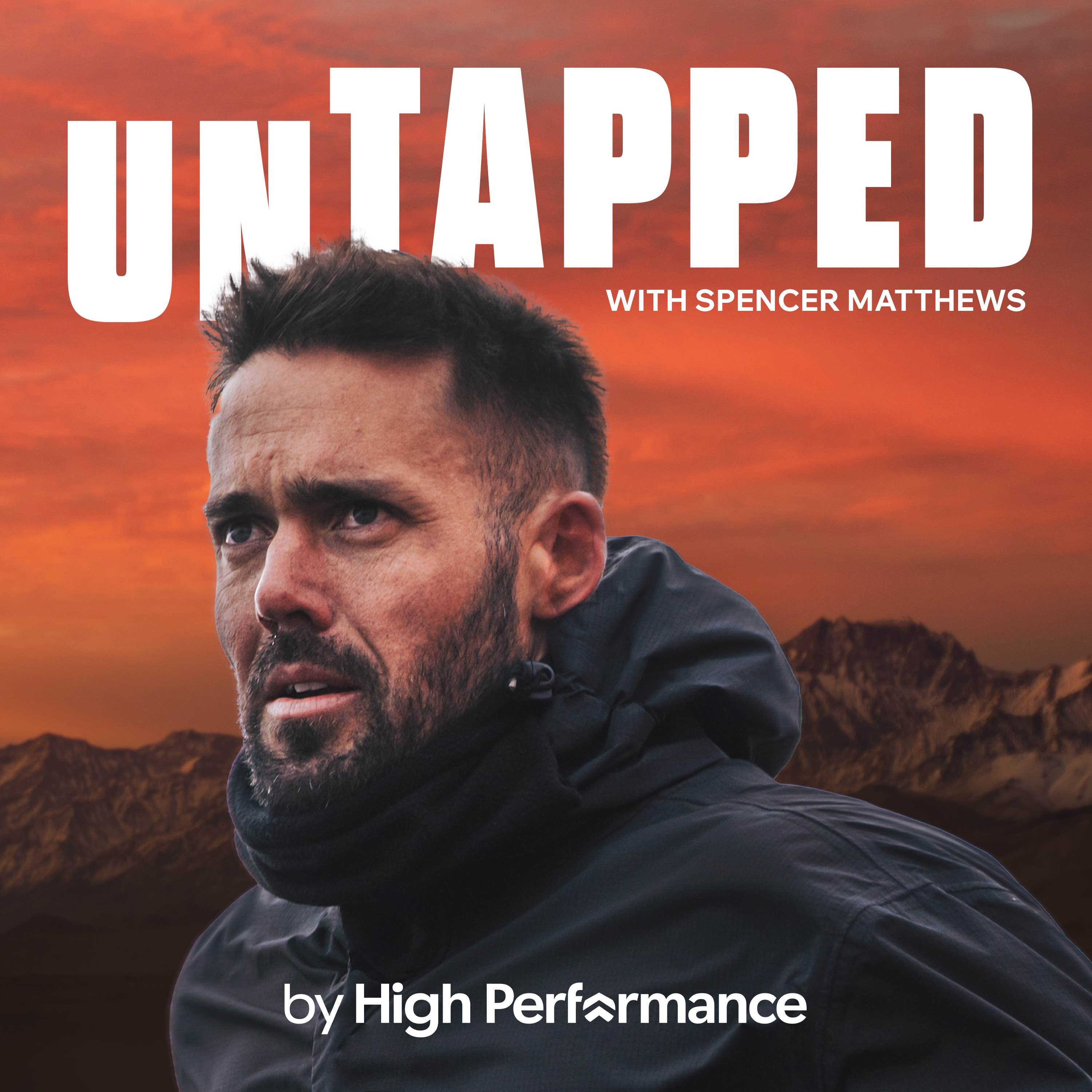
 UNTAPPED with Spencer Matthews
1 Sep 2025 · 42m · 23 chapters

Untapped episode with meteorologist David Yeomans advising what kinds of weather are most likely to kill or endanger the host during a global, multi-continent endurance challenge (Rio, Miami, London, India/Dubai/Saudi, Perth, Cape Town, Antarctica).
David Yeomans, Emmy Award-winning CBS Chicago meteorologist; grew up fascinated by weather (kept climate records as a child), studied in Miami, and has lived through hurricanes (Louis in 1995, Irma).
Humidity is the top threat because sweat can’t evaporate in “sauna-like” air; extreme heat is #2; extreme cold is #3 (especially Antarctica). Lightning risk rises with towering dark clouds and thunder; if outside, get indoors/into a vehicle or hunker low. Tornadoes are rated post-event on the Enhanced Fujita (EF) scale (EF0–EF5) and often form from supercells with hot surface air, cold aloft, and wind shear. Flash floods can sweep people off their feet; fast-moving water at ~7 mph can be as forceful as very high winds/tornado-level damage.
Rio’s high dew points (sauna effect; even warm water won’t cool you); Miami hurricane season (June–Nov; peak September; hurricanes can give days of warning). Hail can reach “watermelon” sizes at over 100 mph (rare) and can force race stoppages. Antarctica: seawater can be below 0°C before freezing; hypothermia risk and thick wetsuits/dry suits discussed.
Written by AI. May contain mistakes.
Explore the dangers of various weather phenomena with expert David Yeomans.
“What's the most likely thing to kill me?”
David discusses his passion for weather and how he became a meteorologist.
“You are one of the weather team for CBS News in Chicago.”
Yeomans explains the dangers of humidity and heat in extreme weather conditions.
“you know, in different parts, completely different climates.”
Discussion on the weather challenges faced in Rio and Miami during triathlons.
“so rio what kind of humidity would you be looking at in rio well uh the humidity is basically the difference between the dew point, which is the real measure of moisture in the air, and the air temperature.”
Yeomans discusses severe weather threats in North and South America, including hurricanes and tornadoes.
“big battle there in cooling off, staying cool.”
Learn about personal experiences with hurricanes and their impacts.
“One of them shut down the school for a week.”
Discover how tornadoes are rated using the Enhanced Fujita Scale.
“So yeah, what is the metric used to register tornadoes?”
Explore the conditions necessary for tornado formation and forecasting.
“And okay, so I'm still surprised to hear that tornadoes just pop up out of nowhere.”
Understand the dangers posed by tornadoes, especially flying debris.
“And sometimes you can predict those a couple hours out, but usually a tornado warning will be issued once the tornado is already there, maybe a couple of minutes before it develops.”
Learn about the risks of lightning during outdoor activities and tips for safety.
“But really, of course, the wind in a tornado also expands outward, even where you can't see the tornado.”
Discover how thunderstorms develop and their potential dangers, including flooding.
“And if there's no structure nearby, to hunker down close to the ground, make yourself a little less tall, maybe put your hands over your head like that.”
Learn about the dangers of monsoons and how they can lead to flash floods.
“a chunk of water moving at seven miles per hour.”
Understand how ocean currents can affect swimming and safety during races.
“If we could clock it as part of the swim, it's quite helpful though.”
Explore the extreme heat and sun exposure challenges in the Australian outback.
“But I can't imagine there's too much in the way of kind of catastrophic weather, if we're lucky.”
Learn about the violent ocean currents at the Cape of Storms in South Africa.
“Cape Town, South Africa is notorious actually for its ocean currents.”
Understand the hazards posed by hailstorms and the potential for serious injury.
“There were some quite aggressive hailstorms in Australia recently, no?”
Hear a firsthand account of hypothermia and the importance of immediate action in cold conditions.
“the sky 100 miles an hour that could hit me in the head.”
Get insights on the necessary preparations for extreme temperatures and conditions in Antarctica.
“It kicks off this response to having been pushed so hard essentially.”
Discover the unique challenges of swimming in sub-freezing seawater and proper gear.
“Yeah, if you get that cold on your hands briefly, you put your glove back on, it can be hard to recover from that, right?”
Learn about the challenges and precautions of swimming in icy waters.
“So a thick wetsuit might be a good idea.”
Discover the three main weather threats to consider during global travels.
“I think extreme heat is number two because you're going to a lot of locations that will be a little on the warmer side.”
Find out how to stay in touch and be prepared for extreme weather events.
“So it sounds like they're all going to suck.”
Find out how to stay in touch and be prepared for extreme weather events.
“Hey, guys, it's Drew from the comment section.”

Get the gist, explore an idea or ask about something said.
 Claude
On UNTAPPED with Spencer Matthews, what are the key points of this episode?
Searching your listeningAutomatic transcript. May contain errors.
0:00What's the most likely thing to kill me? So lightning is a concern because of course water conducts electricity very well. Flooding of course would be a big concern and if you have a really big hailstone they can be as big as softballs, even in very rare cases a watermelon. Those can fall at over a hundred miles an hour. Perfect. So sounds like they're all gonna suck. This is Untapped with me, Spencer Matthews, the podcast where we explore what it really takes to go further, push harder, and unlock human potential with help from the world's most remarkable people and athletes. In this episode, I sit down with Emmy Award-winning meteorologist David Yeomans from CBS Chicago to find out the extraordinary and possibly deadly weather events that I will encounter throughout my travels and what it takes to survive them.
0:44Let's get Untappd with David Yeomans. David, welcome to Untappd. How are you getting on? Spencer, happy to be here with you. You've got quite a series coming up. Yes, we do. You are one of the weather team for CBS News in Chicago. You're a meteorologist by trade. Yes, sir. What exactly does that entail? I've been passionate about the weather for as long as I can remember. I was six, seven years old with a weather station up on my roof. My parents were nice enough to get for me, keeping climate records every day that I would mail into the National Weather Service. I was just fascinated, Spencer, with the power of it, the majesty, the beauty of it, watching lightning, watching a snowstorm, watching a dust storm.
1:30And so I got curious about how it all works. And I started checking out books from the local library. This was before the internet became what it is. And luckily, it led into a career where I get paid to talk to people about the weather, which is amazing. That's such a beautiful... I just wasn't expecting you to have fallen in love with it at such a young age. I did a game show with my wife the other evening. We were on a popular show here called The Wheel. And somebody's topic was the weather. And we were both like, oh my God, I hope it doesn't land on us. Like we, you know, I kind of have experienced lots of interesting weather, but certainly wouldn't know how to navigate a conversation around the weather.
2:10And it got me thinking, obviously I'm visiting all seven continents later this year. we're doing a bit of sports on each of those continents a full distance kind of triathlon in each continent and I had an incredible guest on who was talking to me about wildlife and the different wildlife I might come up against and then Simon who's in the room with us here our exec we started talking about actually you know it's more likely that we're going to come up against struggles with the weather and you know I'd be very interested to hear your views on the kind of global climate that we're going to be facing along the way.
2:53Obviously, a lot of these races are going to be in, you know, in different parts, completely different climates. So, you know, we're going to have deserts. We're going to be in Antarctica. And I was wondering, I was hoping to get your professional view of what we should be weary of, I suppose. Of course. And you're right. That was a great episode. with the wildlife expert. I had a lot of fun with that one. But you're right, weather affects us all. Hopefully you don't get attacked by an animal. You will be in cold water, cold air, hot air, maybe a dust storm. So lots to talk about today. What's the most likely thing to kill me?
3:33Like, I'm just, you know, what are the things that we should be, you know, most careful of? And in your opinion, what's the most dangerous of the seven continents weather-wise that we're going to be visiting? Listen, I think extreme heat and extreme cold are going to be your number one things to prepare for, possibly your number one enemies. The body can survive different stresses from heat and different stresses from cold for different amounts of time. But I think that humidity is actually kind of an underrated threat. You've worked out a lot outside. You know that on a kind of a crisp day with low humidity, your body has a natural air conditioning system, which is sweat.
4:12You sweat onto your skin and then it evaporates off of your skin. Evaporation is a cooling process. So that's how your body cools itself off. But it can only do that if the air around you is not saturated like a sauna. So basically, when you're in a more humid environment, like in some of your tropical races, for instance, I think that's a really underrated, under-discussed way to be at risk of overheating because you just keep sweating more and more. But since the air around you is also so wet, basically, there's no real difference between your sweat and the air around you. So nothing's evaporating, nothing's cooling you off.
4:47I think that humidity might be a big thing that you need to watch out for, Spencer. So what would one do in those situations and how would that translate into your physiology? So we are going to be in very humid places. I'm thinking, is Rio particularly humid? Oh, yeah. Oh, yeah. Don't do an Ironman in Rio. Perfect. It's the first one. That's the number one way, right? No, you know, preparing for human environments would probably be like preparing for extreme heat in the desert. You want to wear light-colored clothing that will reflect the sun's heat instead of absorbing it like a black shirt would.
5:25You want to wear loose-fitting clothing that would allow for some airflow across your body as you're racing. And you want to drink more water than you think you need leading up to the race and also during the race. If you haven't already, hit follow or subscribe to Untapped. It helps us grow and ensures that you'll never miss an episode, especially with some of the huge guests coming up. You don't want to be missing out.
6:12Your future is waiting and Walden is here to help you achieve it. Take the first step to make your impact. Visit waldenu.edu. Walden University. Set a course for change. Certified to operate by Shev. Hi, it's Mark Bittman from the podcast Food with Mark Bittman and the website The Bittman Project. One of the things that makes Whole Foods Market different is their commitment to quality standards. More than 500-degree insert bands store-wide to give us peace of mind whether we're browsing through the store or shopping online. And it's been this way since 1980. Their selectivity makes your shopping easier.
6:50Shop Whole Foods Market in-store or online. Thank you. This is Hannah Berner from Giggly Squad. O-Pill is the first over-the-counter daily birth control pill available in the U.S. let's be real getting a birth control prescription is not always easy and it's so much admin in fact about a third of women face barriers to access prescription birth control between scheduling appointments missing work class or just trying to exist it's a lot but now opil is putting birth control in our control opil is a daily birth control that's fda approved full prescription strength and estrogen free and 98 effective when used as directed grab it online or at most major retailers no prescription or doctor's appointment needed so if you're thinking about birth control check out opill to see if it's right for you use code giggly for 25 off your first month of opill at opill.com that's code giggly at opill.com birth control in your control we love to see it
7:53so rio what kind of humidity would you be looking at in rio well uh the humidity is basically the difference between the dew point, which is the real measure of moisture in the air, and the air temperature. So if the dew point and the temperature are the same, the humidity is 100%. And that most frequently happens in the morning when the temperature drops, right? In the afternoon, typically the temperature rises, the dew point probably doesn't. So the relative humidity drops as that separation becomes bigger. But that's why they call it relative humidity. It's only relative to the temperature.
8:25I think that variable called the dew point is actually a more important measure of how humid it is outside. So I could tell you that the humidity is 100 % in the morning, and it probably will be. But more importantly, the dew point of 70 Fahrenheit, 75 Fahrenheit, 80 Fahrenheit, that's from that warm ocean water. You only get it in places like the tropics, Rio, Miami. And that just adds a sauna-like feel to the air. You'll be sweating. None of it will be evaporating. It will be impossible to cool off. Even when you jump in that warm water for that part of the race, that's not going to help you in Rio either.
9:03Perfect.
9:06So what would you say would be the best time to begin a 12-hour triathlon in Rio? You're going to have it all anyway, right? Yeah. I mean, you're going to have the humidity. You're going to have that moisture in the air any time of day from that high dew point. I suppose to avoid some sun exposure, some sun heat, doing it at your typical early start would be a good thing. But yeah, it's going to be hard to avoid. I've just realized actually that like timings of when you start these things isn't going to make much difference because they're so long. It's a 12 hour thing. You're just realizing this, Spencer?
9:42You should reevaluate. I haven't given this any thought really, David, because I worry about problems once they've happened. Right. No, that's why we're here today. You're planning ahead. Yes, well, I've certainly already thought of two things that are a bit of a hindrance to the plan immediately. And we haven't even got to the second continent yet, which brings us on nicely to North America and potentially Miami. Yeah, Miami will be, humidity will be your biggest battle in Miami again. You have, I spent six years in Miami. I went to school there, got my meteorology education, experiencing the hurricanes that they have, feeling the humidity that they have.
10:24And aside from the tropical weather, tropical storms, hurricanes, depending on the time of year, you'll be there. Humidity is going to be a big, big battle there in cooling off, staying cool. Cold towels is a good one. You know, every so often we'll just jump into a swimming pool if we can. Oh yeah. Ice packs. Yeah. So, no, but legitimately though, what are the best ways to stay cool? So ice packs, loose-fitting clothing, or like, I mean, we don't really need too much clothing, will we? Better to probably not have any clothing. Well, obviously, there'll be some clothing, but you know what I mean.
11:02What kind of race is this? You wouldn't wear a top, would you? Or are you then at risk of UV exposure? Would you wear a loose-fitting top? UV exposure is a problem. Even through a normal cotton shirt, about 20 % of the sun's UV exposure, the ultraviolet rays, get through it. Through your shirt? Yeah, 20 % through a shirt. Can you believe that? No. So that's why some athletic companies make these, you know, UPF 30 or UPF 50 shirts or pants or hats. These are something that have an ultraviolet protection factor higher than your normal shirt. So yeah, shirtless sounds cooler to me, but avoiding sun exposure.
11:46You got to pick your poison here. I feel like I should definitely have known that. So if you're on holiday somewhere really hot or if you're doing an Ironman somewhere really hot, the UV penetrates your clothing. It does. Wow. I did not know that. My dermatologist would be proud of me. I'm going to tell my wife that. She's going to be completely shocked. Her sun hat is doing nothing then. It's doing something. It's doing 80 % of the work. Okay. But something's getting through. Wow. We'll be doing this at a time of year, obviously, where we'll be looking to avoid natural disasters. But what are just outside of my challenge, the kind of biggest weather issues that you might face in South America and North America?
12:31So, you know, is it hurricanes? Is it twisters? Is that what you call them? We call them something else. Tornadoes. Tornadoes. Yeah, twisters. Very American thing, that twister, no? We don't call them twisters. No, you know the movie Twisters. Sure, people call them twisters. Have they not just remade that? Yeah, no, it was pretty good. You know, in the meteorology community, we had a high bar of expectation from that 1997 film. But it was good. I had fun with it. No, so the biggest threats in South and North America, especially North America, has the most severe weather of anywhere in the world.
13:04And I'm thinking about severe thunderstorms, something you don't see much of in London. The big lightning producers, the big hail producers, the tornado or twister producers the damaging wind producers and of course uh hurricanes and tropical storms so the benefit if you're in a place like miami during hurricane season which is uh happening right now it's from uh beginning of june through the end of november with a hurricane you'll typically have why are we going there you want to reschedule no i just okay so like i think it's well worth uh this interview to talk about timings of these things as well because like yeah Why are we going to Miami in hurricane season?
13:43When will you be there? Miami's second, right? So Rio is October 14th and then on October 16th we'll be doing Miami. Yeah, that's not the peak. The peak is in September. But during my time in Miami, we had three nasty October hurricanes. Perfect. One of them shut down the school for a week. Hurricane Wilma. So yeah, there can be significant storms. Now, Spencer, the advantage with a hurricane is that You'll have a few days heads up typically. Yes. Whereas with a tornado or hail, it might just pop up out of the blue and you have little to no warning. Nothing you can do if you don't have shelter.
14:21But a hurricane, we can generally see it coming a few days out. So that's one benefit. I have lived through hurricanes before. I've not attempted a triathlon in the middle of one. I think that would have been unwise. I was in Hurricane Louis in 1995. They're taught through the Caribbean. Irma. I was in Irma as well. I've lived in Hurricanes. I've also managed to sleep through a hurricane once before. It wasn't quite as big as Hurricane Lewis, but it came and left. Which one was it? I can't remember the name of it, actually. I wasn't awake. We slept for a long time. And by the time we woke up, I opened the door and literally just like, everything was blown to hell.
15:03And I was like, oh, yeah. Like, you know, yeah, yeah. So it was kind of a... What did I do last night? Yeah, I can remember thinking, wow, was this us? But no, it was not us. So yeah, what is the metric used to register tornadoes? So it's the Enhanced Fujita Scale. It's named after Dr. Ted Fujita, who was a scientist back in, I believe, the 1950s, who first described her tornado strength based off the damage that it does. So it used to be the F scale, the Fujita scale. Now it's the enhanced Fujita scale, EF scale, since we've made improvements as technology has progressed. But it goes from EF zero, the weakest, to EF five, the strongest.
15:49And this is interesting, Spencer. The only way you can rate a tornado's strength for sure is after the fact, judging the damage that it did. Wow. And it's all based on man-made structures. So if the tornado remains in an open field, it might go down in the books as EFU, EF unknown because we don't really know how strong it was because it didn't destroy anything. The Fujita scale was the correct answer on one of my weather questions on the wheel. And I did not. Did you get it? No, I did not. It was actually the first one that I wrote off. It was, I had, there was the Richter scale, which I knew was for earthquakes.
16:29So, you know, I wrote that one off. And then there was the Schneider scale, which I imagine is nothing. and then there was the Fujita scale and I just thought, it just sounds too good to be true that it would be called the Fujita scale. You know, I just like it sounded too good. So I wrote it off and I went with Schneider, but it's Fujita. And guess what? I'll never forget it. That will conclude this interview. It's been great. No, I'm just kidding. Now, next time. Next time you'll know. Yeah, no, absolutely. I will. And okay, so I'm still surprised to hear that tornadoes just pop up out of nowhere.
17:01They're just one minute, they're there and that's that. Yeah, we can typically forecast a day or two in advance about where they might be. But when I say about, I mean like a state or a multi-county area. I can't tell you exactly where they're going to pop up. We know the conditions that could form them, but you never know where exactly a tornado is going to form until that parent thunderstorm that causes it develops. And sometimes you can predict those a couple hours out, but usually a tornado warning will be issued once the tornado is already there, maybe a couple of minutes before it develops.
17:37How do tornadoes form? What are they a result of? They're very particular. So, you know, there are a lot of cases where these ingredients are there, but they don't form. But what you want is a really hot day down on the ground. You want cold air up where airplanes fly because warm air wants to rise, right? So that makes the atmosphere unstable and it produces these big, tall thunderstorm clouds. You also want different winds at different directions based on how high you are in the atmosphere. So down here at the ground, if the wind is coming from the southeast, let's say up in the sky, you'd want kind of a northwest wind.
18:13And that creates a little bit of horizontal rotation in the atmosphere. And then when the rising air hits that horizontally spinning tube, it can actually turn it vertically and create a rotating thunderstorm. We call that a supercell. Wow. Have you seen Man of Steel? The Superman, Henry Cavill's Superman film. When the tornadoes kind of come through wherever they live and Kevin Costner plays the father and it's kind of ripping all the trucks into the tornado. They can physically pull cars into the tornadoes? Oh, yeah. And this is a little gruesome, but most people die in a tornado from flying debris.
18:54So getting hit by something or you yourself getting thrown and hitting something. So a tornado is not something you want to be anywhere near. Sometimes in movies, they'll depict it as just this, I'm thinking of Twister in general. They'll depict it as like a hard barrier. So if you're not in the tornado, you're still standing there, even if it's 10 feet away. But really, of course, the wind in a tornado also expands outward, even where you can't see the tornado. So sometimes in movies, they'll be really close to a tornado just standing there. That wouldn't be quite how it is. But yeah, tornadoes can throw cars, they can uproot trees, they can wipe a house off its foundation.
19:33And more impressively, sometimes they can take silly things like a plastic straw and impale a tree with it. You think, how would a plastic straw go through a tree trunk? It's happened. Wow. What of lightning? So obviously, we're going to jet over to Europe after that. And then after Europe, we'll be in Asia, Australia, Africa, Antarctica. Where are we going to see some lightning? Where are we most likely to, well, we're not likely to be struck by lightning, but where could it happen? Right. Overall, all of those places could have lightning except for Antarctica. It would be very rare there because of the cold climate.
20:15Generally, you need hot air to form a thunderstorm that produces lightning. You know, your odds are being struck by lightning anywhere are very low, but it is possible. So generally, I'd be worried about in your runs or your bikes or your swims, if you see any big, tall, towering clouds or any clouds with very dark bases, and if you start to hear a little rumble of thunder, even way in the distance, or if you see a flash of lightning, even 50 kilometers away on the horizon, that storm is close enough to potentially hit you with lightning. So it's hard to do this in an Ironman race. Generally, if you're outside, we want you to go inside.
20:55You're always going to be safe from lightning inside or even inside a vehicle. But if you're on a bicycle or running, we would generally advise you to get off. And if there's no structure nearby, to hunker down close to the ground, make yourself a little less tall, maybe put your hands over your head like that. It's not always true that lightning will strike the tallest object. Sometimes it'll choose a shorter object when there's a taller tree nearby. But even in the water, unfortunately, Spencer, lightning is a concern because, of course, water conducts electricity very well. So I was just brushing up on it.
21:31It seems like the kill radius, if you will, the lethal electricity dose from a lightning strike in the ocean is about 30 meters out. So 100 feet out from that strike. If you're that close to where the lightning hits the lake or the ocean, there could be enough electricity, especially on the surface level of the water, to kill you. Are you more likely to be fried if you're in the water? That's a good question. I might say yes, just because if you're 100 feet away from a tree that gets struck and you're not in the water, there's no electricity that makes it 100 feet through the air. You'll hear a really loud sound and you might be stunned.
22:09But yeah, the kill radius, if you will, is broader if you're underwater, which is why people always say don't swim in a thunderstorm. Where are the thunderstorms? They could occur pretty much. I suppose London's our biggest risk. Yeah, London can get some. If you're in Asia during monsoon season, typically the summer months, so you might be a little bit later than that, they can get gnarly thunderstorms. North America, Miami, they get huge lightning rates with any rainstorm. Australia gets thunderstorms. Lightning, in addition to humidity, might be one of your biggest concerns. Now, of course, it doesn't happen every day.
22:46Hopefully you'll be doing this on a clear day, but that's something to keep in mind. Yeah. Were you referring to India there? Because certainly when I had the great pleasure of talking to Forrest Galante, India sounds like a real dangerous place. With their animals, right? I heard you guys chatting about that. India is very dangerous weather-wise because of the heat and humidity and monsoon season. So sometimes the Indian monsoon, which is basically just means they're rainy season, cities in India and other parts of Asia that see the monsoon can get 90 % of the rainfall they see in a whole year in just a three, four month span.
23:23So they'll get meters and meters of rain in just a few months. So flooding, of course, would be a big concern. And we haven't talked about that yet, but flooding is a huge danger being in flowing water during a flash flood, a chunk of water moving at seven miles per hour. So a quick run, which is very achievable in a flash flood in places like India when the water goes downhill. Seven mile per hour water has the same force as a piece of air or wind blowing at more than 200 miles an hour or an EF5 tornado. So if you try to run through a stream or if you try to get around a barricade that's closed because of a monsoon flood in India during your race, let's say, you will be swept off your feet by moving water that's even less than a foot deep.
24:11If we could clock it as part of the swim, it's quite helpful though. It'll speed you up for sure. Yeah, I could just sit there hopefully and, you know, it'll take me 3.8 kilometers down the road and then, you know, I could just pop up maybe and that'll be the swim done. That sounds like my kind of Ironman, if that's possible. I mean, just the thought of it actually. The current here in the Thames is quite substantial. Right, yeah. And some ocean currents, that you might encounter. I'm sure race organizers take this into account, but rip currents near the shore can move at over five miles an hour, which is like an Olympic swimmer.
24:43The Gulf Stream current, which you're familiar with, carries heat from Florida all the way up to England, gives you a warmer climate. That whole big ocean current can move at four or five miles per hour. So I suppose they wouldn't put you in a big counter current during your race, but that can be exhausting if you are caught in something like that because you can be swimming as hard as possible and not really going anywhere. Well, can you tell me a bit more about that? Because I'm not sure that, you realize that we're creating these races ourselves. So we will just, I'm not sure that we will have like fantastic current information.
25:19These are not big Ironmans. These are just you doing it and planning the course. Yeah, yeah. So in the same way that I ran 42.4 kilometers every day in the desert instead of 42.2, They're not sanctioned Ironman events. These are Ironman distance triathlons and we will pre-approve the route with Guinness World Records and it'll all be mapped off and we'll know exactly where we go. We're not just jumping on the road and running a marathon. We'll know where we are and what we're doing ahead of doing it. But no, these aren't official events with race organizers. We will organize these ourselves. Oh, well, pardon me.
25:55I thought you were hopping onto all these Ironmans across the world that were happening anyway. we need to sit down with some ocean current charts and figure this out. Okay. Okay, so you're saying that, listen, I'm not trying to sound dumb, by the way, like I'm fully aware that currents exist, but like, you're saying that currents are going to be like five miles an hour to the point where I'd have to swim at that pace to even move. Well, look, encountering an ocean current that's a steady five miles an hour across your hole race route, you'd have to go out of your way to do that. Generally, if you're swimming in some sort of a, ideally, we'd want you in some sort of a bay or at least with a couple sides of protection from a peninsula on one side or from an island.
26:49The idea is if you're in the open ocean, that's where some of these big currents can be blowing you the wrong way without you realizing But if you're just offshore from, let's say, Miami, if you're just offshore from somewhere in England or somewhere in India, generally that water near the shoreline will be relatively stagnant if you have some protection around you. Most women have been there. Something feels off. You don't feel like yourself. Yet your doctor says everything looks fine. Spoiler, it's your hormones. Midi is a virtual care platform built for women by women and offers specialized hormone care from trained clinicians.
27:32Plus, it's covered by most major insurances. Getting started is easy. You can book your first visit with a clinician right away. It's not you. It's your hormones. Visit joinmidi.com to book your first visit. That's joinmidi.com. Insurance coverage varies. Check with your plan for coverage. Hey, guys. It's Drew from the comment section. Some days, my skin just needs a little coverage. And other days, I want to go full glam. For those everyday moments like running errands or grabbing coffee, I've been loving the Merit Minimalist Stick because it's a foundation and concealer in one that gives me a really natural skin-like finish.
28:06But when I want more coverage, I'm reaching for the Hourglass Vanish Concealer every time. I know I'm not the only one who struggled to find the right foundation or concealer shade, which is why I always shop at Sephora. They have the best brands all in one place with so many shades, coverage options, and finishes, plus expert beauty advisors, free samples, and shade matching tools both online and in-store. So whether you're looking for barely there coverage or full glam, Sephora can help you find your match. This is Hannah Burner from Giggly Squad. O-Pill is the first over-the-counter daily birth control pill available in the U.S.
28:40Let's be real, getting a birth control prescription is not always easy and it's so much admin. In fact, about a third of women face barriers to access prescription birth control. Between scheduling appointments, missing work, class, or just trying to exist, it's a lot. But now Opil is putting birth control in our control. Opil is a daily birth control that's FDA approved, full prescription strength, and estrogen free, and 98 % effective when used as directed. Grab it online or at most major retailers, no prescription or doctor's appointment needed. So if you're thinking about birth control, check out Opil to see if it's right for you.
29:14Use code Giggly for 25 % off your first month of OPILL at O-P-I-L-L dot com. That's code Giggly at O-P-I-L-L dot com. Birth control in your control. We love to see it.
29:31So relatively familiar with the UK, obviously, being a local resident. But I can't imagine there's too much in the way of kind of catastrophic weather, if we're lucky. Then we're down in Australia. So Australian outback is obviously known for being particularly aggressive when it comes to heat. It's not particularly humid, is it? Not in the outback. No, that's a desert climate. So in the coastal areas of Australia, close to the water, you will have more humidity, but you'll also have cooler temperatures from the cool water in most of Australia on the coast. But yeah, in the outback, you could be encountering extreme heat.
30:12Low humidity could help you out, but temperatures of 45, 50 degrees Celsius. So extreme heat, sun exposure, those would be big concerns in the outback. Down to Cape Town. Cape Town, South Africa is notorious actually for its ocean currents. So there's a place called the Cape of Storms. It's sort of the southernmost extent of the continent. And it's where two oceans meet on the southern extent of that continent. And just like the tip of South America, the southern tip of South Africa has very violent oceans. They're notorious for it. They can sink large ships. So especially in those areas, I would be concerned not as much with heat or with cold exposure, but with the ocean currents.
31:04So as you're thinking about where you're going to be swimming off the coast of South Africa, you'll want to make sure that you're in as protective of an area as possible. Because the farther you get offshore, especially from that southern tip of the continent, those two oceans are just clashing in a very violent way. There were some quite aggressive hailstorms in Australia recently, no? Right. Hail is a big concern if you're caught outside in it. A little quarter-sized or golf ball-sized hail can fall at 30 or 40 miles per hour. But if you have a really big hailstone, they can be as big as softballs, even in very rare cases, a watermelon.
31:44Those can fall at over 100 miles an hour. So if you have a big chunk of ice that's basically being thrown by a professional pitcher at your head, that's not a place you... Well, if a watermelon-sized piece of ice hits you in the head at 100 miles an hour, you're dead straight away. You're dead. 100%. When I was thinking about this challenge, I wasn't anticipating getting ice falling from the sky 100 miles an hour that could hit me in the head. That's not something that has even crossed our minds. It would be rare in North America. And we have some of the best hail. It would be rare in Australia as well.
32:21What's more likely is you might encounter a thunderstorm with smaller hail, maybe the size of a pea, which is not a concern for your safety, maybe up to the size of a quarter, which you could still be outside in. But if you're biking through a hailstorm of, let's say, quarter-sized hail or one inch across or so, your arms will get a little cut up. You might bleed a little bit. It won't knock you out or anything. You'd probably be wearing a bicycle helmet anyway, I suppose. But it's the really big hail that would be a concern. And that's quite rare in North America and in Australia. I still can't get off the watermelon thing.
32:58So like, if I was driving an F-150 truck and that hit it, it would be a problem. It would come right through the windshield and hit you. It's a huge concern. Now, that's like record size hail. You know, that's only happened a couple of times. It's a huge concern. But you don't want to be outside in that. No. You don't want to be anywhere in that, I don't think. It would come through your living room. It can come through roofs. Yeah, that's true. When has that ever happened? Has that ever happened? A hail coming through roofs? No, like a hail the size of a watermelon coming anywhere at 100 miles an hour.
33:32Like, has that happened before? It's happened in America before. It's happened in America before. How many people did it kill? It must have been mass murdering. I believe it was in South Dakota. I don't remember hearing of any fatalities. You know what did suffer was livestock. animals that were outside were unfortunately bore the brunt of that but yeah hopefully you know if that hail kind of ever approaches people get the warning and stay inside yeah like you would like you genuinely you wouldn't actually know that anything had happened if you got hit by one of them it would like it would just be like lights out kind of you wouldn't you wouldn't have a clue i don't think yeah what would be frightening is if it like landed right next to you because i think the shock of seeing it would be...
34:25Do the rules allow you to take a break, hop in the car for 20 minutes until it passes? If I see anything the size of a baseball coming at us at 80 miles an hour, we will stop the race until we have at least an understanding of why that's happening. Yeah, give me a call. Hailstorms don't last long, typically. They're transient. So a brief break in the car or inside it should be fine. Okay. I'm struggling to not merge the conversation that I had with Forrest. And even though he said most animals aren't dangerous, he would then kind of sugarcoat it with like, but of course they can all kill you type thing.
35:09And it's like, all right. So there's a bit of this going on with the weather as well. It's kind of okay, but it's also not okay. You know, so there's, there's quite a lot of problems, actually, like in this route and for this challenge. Like I've never been made aware of this hail thing. But anyway, we'll forget. Right. It's like what you said. You chose these locations for the kind of typically nice weather, Miami, for instance, or some other places that you're going. But also typically nice weather can change its definition, I think, when you're running a marathon, swimming miles and kilometers, biking kilometers, because suddenly that nice beach day turns into a danger of heat stroke or things like that.
35:55Perfect. Yeah. Heat stroke sucks. I've been hypothermic a few times. What does that feel like? Scary until you kind of understand it. So, you know, it requires immediate change, action to take place. otherwise I imagine, you know, you'd be in all kinds of trouble. I went hypothermic when I crossed the finish line in the Amazon and literally you kind of feel like your body's just shutting down. It kicks off this response to having been pushed so hard essentially. Even though it was hot, it was 24 degrees. Like my body just kind of shut down and went into like very, very violent, jittering, you know, almost an uncontrollable noise coming out of you kind of to try and make an effort to warm up.
36:48And I put a hoodie on and wrapped myself up and you warm up, right? And you have a couple of slices of pizza and you're fine type thing. More recently on the track, I ran for 24 hours straight and I kind of went hypothermic. It was zero degrees at night. and I had to go inside and the clothes that I was wearing had become very wet with sweat over time. And I was just kind of freezing cold. Same in the Amazon. I was just freezing cold, carrying a bunch of cold sweats around, you know, basically. And yeah, you take your clothes off and you kind of warm up and you have some hot drinks and you're okay.
37:24Like if you were stuck outside and that happened in zero degrees, like it would be a big problem, you know, if you didn't have somewhere to go and I wanted to kind of ask you about that. Obviously, we will take certain safety precautions and parameters and have parameters in place for our safety in Antarctica. But kind of, what are we really looking at there? What are the temperatures in kind of early November in Antarctica? Is that a safe time to be going to Antarctica? When would you go? Because we're kind of building, if I'm being honest, we're building the whole race around Antarctica, basically, and the ability to get in and out of Antarctica, because that varies throughout the year.
38:07So we want to finish there so that in case we get stuck there, it's not going to have an effect on the rest of the race. So, you know, we can get in there, we think, pretty broadly speaking. But, you know, I saw a video of a guy pouring a can of Coke out in Antarctica and it froze before it hit the ground. I imagine that would be the same if you peed, right? Like, what's the deal with that? Even warm liquids, right. can freeze before hitting the ground in temperatures that you see in Antarctica. Sometimes people take a big pot of boiling water and throw it up over their heads, and it all just sublimates it.
38:44It all turns into gas instantly or freezes into these little tiny particles. So yeah, when you encounter temperatures like you'll have in Antarctica, now it seems like you're going during the Southern Hemisphere summer or getting toward the summer, right? So you'll have light. You should have a lot of sunlight. You should have warmer temperatures, maybe at times, if you're in the right area, approaching zero degrees Celsius. That's probably about the warmest it'll get. But hopefully you could avoid the extraordinary cold that central interior Antarctica can get during their dark, long winter. The coldest temperature down there was negative 128 Fahrenheit.
39:27Which is what in C? 70 C. It's far below zero. Hopefully you'll avoid that. Summer is going to be on your side. Global climate change will actually be on your side down there because the Arctic is warming several times faster than the rest of the world. That's a good thing for your race, I guess. But yeah, I mean, when you get temperatures that are that cold, hypothermia is a concern. Of course, exercising is on your side because you're generating heat within your body. But you know better than I, you want to wear multiple layers of clothing because air in between those layers or in the layer, if you have a down jacket, is the best insulator.
40:13Air is. Also because you can customize your clothing throughout the race. If you get warm, you take one off. You've still got a couple layers of protection on. And also to keep yourself dry. You know from what you were just telling me that staying dry is a really crucial way to stay warm. So if you're in these temperatures, extended amount of time, well below zero Celsius, staying dry and dressing in layers will be your main ways to avoid hypothermia. And just like you were telling me in Sweden, right? Yeah, if you get that cold on your hands briefly, you put your glove back on, it can be hard to recover from that, right?
40:51So generally keeping all your stuff on, maybe taking your selfie with your glove on if possible, might ensure a higher degree of success. We'll have a cameraman this time, so I suspect I won't need to take too many selfies, thankfully. Is there anything else we should be concerned about in Antarctica? I mean, obviously the cold, you know, the water. Am I correct in thinking the water is zero degrees? So, you know. Correct. Actually, seawater, which is salty, can get below zero degrees before it freezes because the salt, just like you might salt your driveway when there's ice or snow, salt actually changes the freezing point of the snow on your driveway or of the temperature in the water.
41:33So seawater can get down several degrees below zero Celsius before it turns into ice. So you might actually be swimming in sub-freezing water, which sounds awful to me. But yeah, if you're in that kind of water, of course you'll need a really thick wetsuit, you know, six millimeter, seven millimeter hooded wetsuit. Dry suits, of course, keep you completely dry, but it sounds like dry suits are tough to move in, tough to swim in. So a thick wetsuit might be a good idea. I'm going to be in the water for like an hour and a half. That's tough. And you know, hopefully that, you know, wetsuits trap the water on you and your body warms up that layer of water.
42:12So as long as your wetsuit is well-fitting, not a lot of your body is exposed to that negative one degree Celsius water. But if you have a wetsuit that's too loose or if you're swimming too violently, it's possible that you could have some leakage. You could have kind of a constant resupply of cold water coming against your skin, which just makes your body work harder and harder to expend heat and keep that liquid warm. I'm literally like, I'm rethinking all of this. like I'm sat here thinking this is gonna like you can have the arctic swim I won't fight you on that that's tough yeah I think for whatever reason I never practice visualizing anything but some of our guests do elite athletes you know they talk about visualizing things and for some reason I always that thought of like slipping into that freezing cold water with like you know these big icebergs and that massive ice land, you know, over to my left, I see it.
43:16It's really quite prominent in my mind a lot. It's kind of just there. Well, that's going to be, it'll be a peak experience. I mean, I'm sort of envious in a small way because that will be something that very few people do. I'd be more worried about the animals in the water personally. I know you guys spoke about that a couple of weeks ago. But yeah, it'll be quite an experience. I am also worried about the animals. It's like, like Forrest again was kind of like, oh no, you don't worry about leopard seals. They're like, they move at like three miles an hour. I was like, in the water. He was like, oh no, no, there are great swimmers.
43:54It's like, but that's where they are. I'm not worried about one waddling up to me like in camp. Do you know what I mean? I'm probably more concerned about being nailed in the water Worst case, they say freezing to death is actually a very pleasant way to go, right? I'll let my mom know David, just as a passing thought because I know you're very busy and you've been incredibly kind with your time today so thank you very much for joining us here on Untapped I've found the conversation to be wonderful and equally worrying could you leave us with your three kind of biggest threats of the whole kind of global tour essentially like of all of the places we're going to go what are the three things to worry about the most?
44:42And remind me of all the locations if you would South America, Rio, North America, Miami, London then either kind of India, Dubai or Saudi not quite sure yet Perth in Australia Cape Town, South Africa then Antarctica I would say humidity is my number one concern based off your locations and just based off the body's inability to cool itself in a really humid, tropical, sauna-like environment. I think extreme heat is number two because you're going to a lot of locations that will be a little on the warmer side. And cold, even though it kills more people globally than heat each year, Extreme cold would be my number three concern for you.
45:25Really just based off of that Antarctic time and especially the Antarctic swim. Perfect. So it sounds like they're all going to suck. Hey, but you're trained up. You're going to do great. How can I follow along on the journey? Now I'm personally invested. Well, that's very kind, David. We'd love to include you. I'll give you a call when we're out there. And also, yeah, if you can make sure that the team here get your details, we'll certainly keep in touch. and we're hopefully going to be making a film about it. So a film or a series or something like that. So I'll be sure to share the details with you.
45:56Of course. Well, I mean it. If you're out in Cape Town and there are 30 foot seas or if you get softball size, watermelon size hail somewhere, shoot me an email, give me a call. You know, meteorologists have global maps so we can help you out wherever you are. I'll do my best. That's incredibly kind, David. And thanks again for joining us. Cheers, mate. Thank you, sir. Thanks so much for listening. We hope you enjoyed that episode. And if you want to hear more incredible conversations with extraordinary people to help unlock the potential within all of us, then please subscribe, follow and review the show wherever you're listening or watching.
46:28Thanks again. We'll catch you next week right here on Untappd.
46:41Hey, guys, it's Drew from the comment section. Some days my skin just needs a little coverage and other days I want to go full glam for those everyday moments like running errands or grabbing coffee I've been loving the merit minimalist stick because it's a foundation and concealer in one that gives me a really Natural skin like finish, but when I want more coverage i'm reaching for the hourglass vanish concealer every time I know i'm not the only one who struggled to find the right foundation or concealer shade Which is why I always shop at sephora They have the best brands all in one place with so many shades coverage options and finishes, plus expert beauty advisors, free samples, and shade matching tools, both online and in-store.
47:21So whether you're looking for barely there coverage or full glam, Sephora can help you find your match. I'm Serena Williams, and I'm healthier on Roe. I've lost 34 pounds in a year with GLP-1's diet and exercise. On Roe, you can access GLP-1 options, including the first FDA-approved GLP-1 pill for weight loss. Go to roe.co slash journey to see if you qualify. 14 to 20 % average weight loss in one year in non-diabetics with obesity or overweight with a weight-related medical condition versus 2.2 % to 3.1 % in placebo R. RX only. To stay informed about serious side effects, go to roe.co slash safety.
47:57Hello, I'm Monica Reinagle, host of the Nutrition Diva podcast. Summer is here and with it, the hot and sticky weather. A morning working in the garden or maybe on the golf course can leave you more depleted than you realize. And plain water isn't always the most efficient way to restore the balance. That's where Liquid IV comes in. Its science-backed formula is clinically proven to hydrate faster than water alone. Whether you're exercising, playing outside, or simply surviving a summer heat wave, it's an easy way to stay hydrated. Shop now at liquidiv.com. Liquid IV, hydration that goes wherever life takes you.
Emmy Award-winning meteorologist David Yeomans shares his journey from a childhood fascination with storms to becoming a trusted voice on some of the world’s most extreme weather events. He breaks down the science, risks, and preparation it takes to face the elements head-on.
What makes humidity such a hidden danger? How do you stay safe in scorching heat or freezing cold? David reveals the practical steps anyone can take to prepare for extreme conditions, whether it’s layering up in Antarctica, hydrating in tropical climates, or recognising the warning signs of dangerous humidity.
Beyond survival tips, David explains the power and unpredictability of tornadoes, the dangers of flash floods and fast-moving water, and why lightning and ocean currents remain some of nature’s deadliest threats.
Listen in for a conversation that’s all about preparation, awareness, and the mindset needed to navigate the world’s most challenging climates.
WHOOP 👉 Join Spencer in untapping your own potential with 1 month free here: https://highpfrmc.com/Whoop-au
Heights 👉 Stay sharp like Spencer, with Vitals. 20% off Heights with code UT20 https://highpfrmc.com/ut-vitals-au
Hosted on Acast. See acast.com/privacy for more information.