Ask ChatGPT
 UNTAPPED with Spencer Matthews
16 Feb 2026 · 45m · 23 chapters
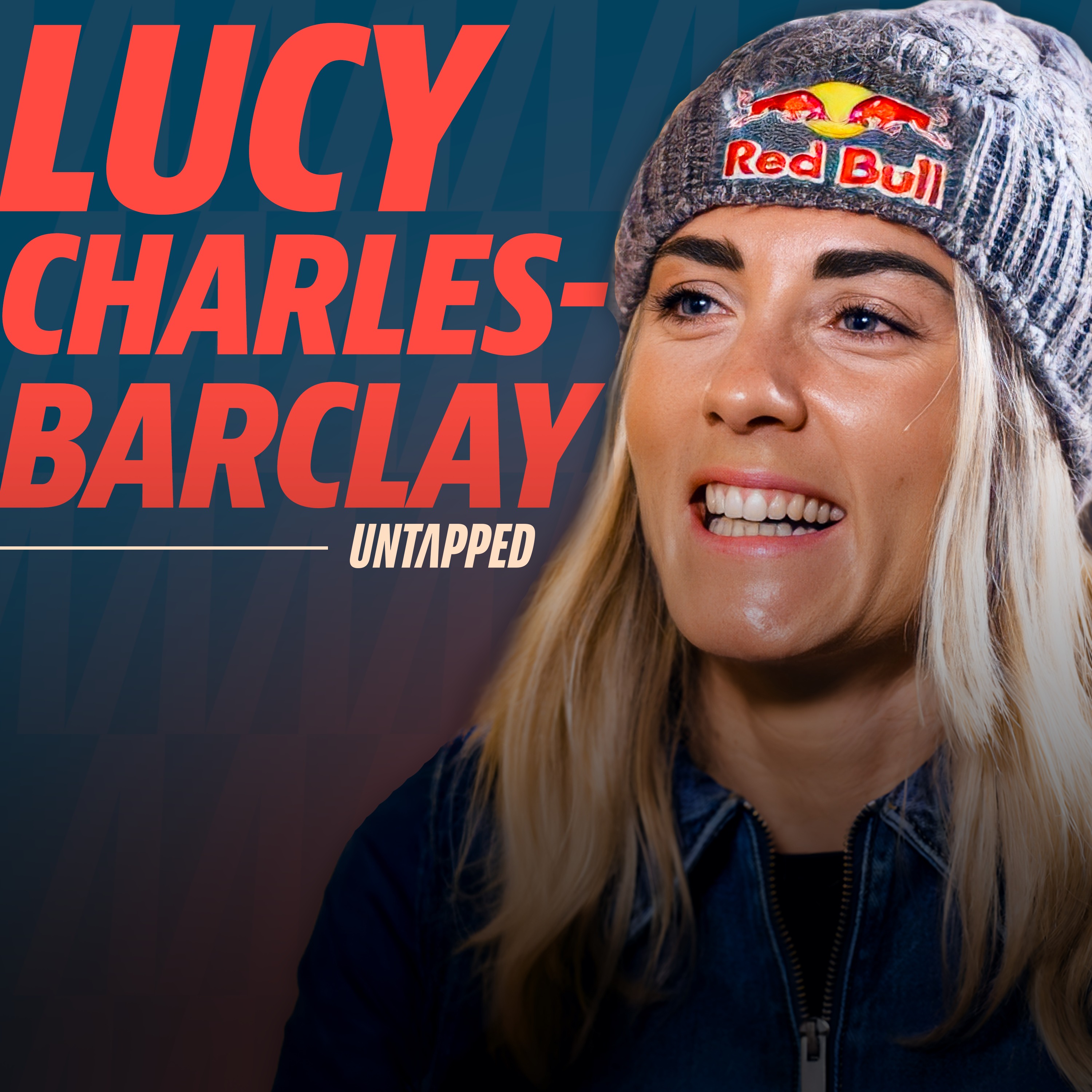
Lucy Charles-Barclay explains how she progressed from her first ~12-hour Ironman to an 8:24 Kona World Championship finish, sharing “training hacks” around pacing, fueling, strength, aero/kit, wind-tunnel tweaks, and carb strategy. She also discusses open-water aggression, rules (e.g., Olympic DQ examples), and “apex athleticism” (bench + marathon hybrid benchmarks).
Lucy Charles-Barclay is an Ironman World Champion and fastest female Ironman in Kona; she’s done 20+ Ironmans since starting 11 years ago, with a swim background and later open-water 10k focus.
Full Ironman is “sadistic,” but half is ideal once you’ve done full; major time gains come from bike aero (e.g., wind tunnel saved ~20 watts, ~3+ minutes). She trains ~20–25 hours/week (up to ~30 pre-champs), swims ~2 hours daily, runs ~60 km/week, and strength 3+ times/week. Fueling: avoid calorie deficit, carb-load with rice/chicken (celiac), and use carbs during races to prevent “walking last 10k” low-energy.
Segment times (swim 45–50 min; bike ~5 hours; marathon best 2:49). Open-water “rough” athletes causing black eyes; Olympic swimmer Jack Burnell DQ’d for blocking in the finish channel. Apex-athlete debate: proposed women’s bench/marathon thresholds (initially ~75–80 kg for 10 reps).
Written by AI. May contain mistakes.
Explore the impressive times in Ironman races and Lucy's thoughts on them.
“My fastest ever time, which is in Kona at the World Champs, is 8 hours 24 minutes.”
Hear Lucy's evolution from her first Ironman to becoming a professional athlete.
“Like the half Ironman is that really nice distance, but I feel like it's only really nice if you've done the full distance.”
Hear Lucy's evolution from her first Ironman to becoming a professional athlete.
“Losing weight can feel like a roller coaster, full of ups, downs, and being thrown for loops, like when someone brings donuts into the office or your kids' dino nuggets start giving you that look again.”
Lucy shares experiences from her early races and the lessons learned.
“Yeah, so my first Ironman I did at Ironman UK.”
Discuss the impact of gear and technology on racing performance.
“Actually, there's so many little things you can improve on.”
Explore the unique challenges and excitement of competing in Ironman events.
“Like, when I did my first, my first pro race, I think was a 70.3.”
Delve into the strategies and experiences associated with open water swimming.
“Yeah it must be nice for you to swim open water like would you you'd prefer that I'm assuming to the pool?”
Learn about the challenges and rules of open water racing, including disqualifications.
“at the end of races saying I'm never lining up next to that person again because I'm going to get punched.”
Explore the concept of apex athleticism and the balance between strength and endurance.
“Yes, so our swimmer, Jack Burnell, actually got DQ'd in the finishing shoot and he was in contention for, I think, the bronze medal at the Olympics and he got disqualified.”
Discuss which elite athlete would excel in an Ironman race among swimmers, cyclists, and runners.
“and I would like to know who you think would win in a straight-up Ironman contest for these three women.”
Discuss which elite athlete would excel in an Ironman race among swimmers, cyclists, and runners.
“Hey guys, it's Drew from the comment section.”
Get insights into a typical training week and nutrition strategies for athletes.
“Can you take me through a typical training week for you?”
Learn about Lucy's approach to diet and fueling strategies for endurance sports.
“I'll be consistent probably around 60 kilometers a week and then just get that additional fitness from doing swim and cycling.”
Discover effective carb loading techniques and their impact on performance.
“And then we'll go more specifically into, you know, carb loading and stuff that you probably do.”
Explore the role of glycogen in athletic performance and how to manage it.
“So it's like my worst nightmare going into race week, probably like three weeks out, three days out, sorry, not three weeks.”
Learn about the influence of running shoes on performance and training.
“I ran in the Asics Metaspeed Ray and yeah I really really like those.”
Understand the benefits of strength training for endurance athletes.
“I'm not a pro athlete I guess yeah it's different I bought them on Oxford Street.”
Discover how technology and equipment can enhance performance for triathletes.
“and were able to understand the real physics of it all?”
Learn how organization plays a critical role in the performance of athletes.
“You know, those long aero helmets, which, by the way, makes...”
Discover the hard work behind the scenes of professional athleticism.
“I think no matter what level you are, the more organized you are and you have your schedule planned out, what you're eating around your training, then you're going to perform better.”
Understand the impact of social media on body image perceptions among athletes.
“I saw the lady, she's a French athlete that won the Women's Tour de France.”
Learn about initiatives that encourage girls and women in sports.
“As a female athlete do you feel you have to look a certain way or do you never think about that?”
Gain insights on how setting challenges can help you reach your potential.

Get the gist, explore an idea or ask about something said.
 Claude
On UNTAPPED with Spencer Matthews, what are the key points of this episode?
Searching your listeningAutomatic transcript. May contain errors.
0:01What's it like being the best in the world at something? I have to set goals that scare me and they're kind of like on the complete edge of what is possible. You're the fastest female Ironman ever. My fastest ever time, which is in Kona at the World Champs, is 8 hours 24 minutes. That is completely insane. In your profession, do you find that there are certain athletes to be avoided?
0:30How many Ironmans do you reckon you've done total? Oh, I would say over 20 now. Yeah. And I started 11 years ago doing my first one. So yeah, probably an average of like two a year, I think. So for like a normal person, I think that roughly half of the distance of the full feels nice. Like it's kind of like, oh, this would be great if, you know, if this ended. Like a half distance one would be kind of the ideal race, like a fun race that you can go and hammer and really enjoy. Yes. I personally find the full Ironman distance to be quite sadistic in nature. Yeah, I think you're right. Like the half Ironman is that really nice distance, but I feel like it's only really nice if you've done the full distance.
1:13You know, this is a short day. This is brilliant. Like I can smash it and I'm going to be done in four hours. I can go home and it's probably lunchtime, which is obviously not the case for most people. But my first ever Ironman, I think it took me just over 12 hours, which was back in 2015. But to be honest, that's really good to hear. Yeah. Because obviously there's such good progress there. What's your fastest ever time? So my fastest ever time, which is in Kona at the World Champs, is 8 hours, 24 minutes. So I've taken a chunk of time off in that time. It's unbelievable though. So similar to our beloved Alistair Brownlee, who was in here recently talking about Ironmans, can you please break down that race?
1:57So just the times of each of the segments, roughly. Yeah, so I mean, the swim is 2.4 miles or 3.8 kilometers. That takes me in the range of about 45 to 50 minutes. Then you get out the water, quickly get changed, get on your bike, it's 112 miles or 180 kilometers. That probably takes me in the realm of five hours, maybe a little bit under if it's a fast course. Again, jump off, probably don't even get changed, just put your shoes on, go for a run, and the marathon distance at the end, I think my quickest time is two hours, 49 minutes. That is completely insane. It's so abnormal. But what I love about this and where we're already going is that you said your first Ironman that you did took about 12 hours.
2:44Yes. The average time for a man, for a non-professional athlete is about 12 and a half, which is about where I sat in Arizona as part of my seven. I'm interested in understanding how you go from 12 to 820. It's a massive jump. Where is the focus? How do you spend your time? What kind of athlete were you when you did your 12 hour Ironman versus kind of who you are today? And what were the main changes to get you there?
3:15Losing weight can feel like a roller coaster, full of ups, downs, and being thrown for loops, like when someone brings donuts into the office or your kids' dino nuggets start giving you that look again. That's why there's Noom. They combine GLP-1s to quiet the food noise with healthy habits that help you keep it quiet, even if you get off the meds. Their program is designed to make weight loss a smooth ride, helping you understand what drives you, so you can build better habits to not just lose weight, but keep it off. Noom. Lose for keeps. Get started at Noom.com. Not all customers will clinically qualify for medications.
3:52Individual results may vary. Most women have been there. Something feels off. You don't feel like yourself. Yet your doctor says everything looks fine. Spoiler, it's your hormones. Midi is a virtual care platform built for women by women and offers specialized hormone care from trained clinicians. Plus, it's covered by most major insurances. Getting started is easy. You can book your first visit with a clinician right away. It's not you. It's your hormones. Visit joinmidi.com to book your first visit. That's joinmidi.com. Insurance coverage varies. Check with your plan for coverage. Mod.com is changing the way people battle excessive fatigue.
4:29Ever hit a wall in the middle of the day and a third coffee just doesn't do it anymore? Here's what's actually happening. Coffee only briefly blocks adenosine, the chemical that tires you out. When it stops working, your system is flooded and you crash. Modafinil is a prescription treatment that works in a completely different way. Modafinil works by stimulating multiple receptors in the brain associated with wakefulness, including dopamine, serotonin, norepinephrine, histamine, glutamate, and orexin. It's a more complete solution that gives you 10 to 12 hours of steady focus and energy. To learn more, go to mod.com.
5:10Fill out your intake form, meet with a licensed provider, and if approved, Mod Alert ships straight to your door. Go to mod.com to get started. That's M-O-D dot com.
5:28Yeah, so my first Ironman I did at Ironman UK. it was in Boltz. Is it Boltz either it doesn't look called Iron Woman? No, I don't think so. I feel like more hardcore that I'm doing something that's like meant to be kind of targeted at men I think and I can do it faster than most men so that kind of like gives me something back I think. I just got a load of messages saying it should be called Iron People. I was like it doesn't sound as good. It's not the same ring is it? No, I have to say it doesn't sound I'm all for you know equality but Iron Woman I suppose you do the same event so it's a brand anyway so not much we can do.
5:59Yeah, I've got the tattoo on my leg so I think there's not many pros with the tattoo on their leg but when I did it I honestly never thought it would be my career I was it was the year I was turning 21 and I was like I'm just going to do an Ironman to finish it to be like tick the box done then I was completely addicted to it and was like I believe I can go faster looking back at how I did that first Ironman I kind of I'd bought a second-hand bike off of eBay I was so un-aero I shouldn't have even been on a TT bike I would have been better off on a road bike anyway the swim was great because I was a swimmer before I turned to triathlon so that professional yes yeah um so then I done the swim no problem was like right out in front and then for me it was just a day of being overtaken by the super fast cyclists and runners and the bike I think it was just about getting around I didn't really know what I was doing I was eating like a jam sandwich and just trying to fuel as much as I could um and then on the run it was kind of always just about finishing so I didn't care what pace I was going I wasn't really looking at anything like that was just like get to the aid station walk the aid station eat get to the finish line and then over the years I was like okay well I did that with like a little bit of training I was doing personal training at the time as well so managing working and training and then I was like if I maybe like do a bit less working a bit more training and do more training then I can be faster so I think in the space of a year I took maybe an hour and a half two hours off of my time just by being more dedicated to training and then after that I think it was within the next year I decided to go professional in the sport after winning both world championships as an amateur so I applied for my pro license kind of raced on a trial of being a pro because apparently I wasn't quite good enough to begin with and then that year came second at the world championships as a professional and even from then like I look at what I look like on the bike and I'm completely upright so un-aero so even when I finished that race I was like there's so many things I can go away on, improve my nutrition in racing, go in the wind tunnel, get more aero, be more consistent on running to take time off there.
8:01That's what I love about triathlon. Actually, there's so many little things you can improve on. So you always feel like you'll be able to get faster. I'm probably getting like closer to the edge of being able to get those big chunks off. But yeah, in kind of the space of eight years, I took a lot of time off of my Ironman time. How much of it is kit? So obviously, you know, good kit is not going to make a slow athlete fast. But when you're as good as you are, where are you finding the majority of your time being made up from kit in your races? It's definitely around the bike. I mean, that's 112 miles.
8:36So the faster you are there, the margins add up really, really quickly. And something that I couldn't believe at the beginning of last year was I went in the wind tunnel and I saved 20 watts by being in a slightly faster suit, changing a small thing on my bike and changing my helmet or just the visor on my helmet. It made me that much quicker, which in relative time is like over three minutes over an Ironman and I've had to do no training for it. I've just adjusted my position in my suit. so it is crazy how much these things add up um like i said compared to what i looked like when i first raced an ironman when i was completely un-aero i had no idea i was like oh what difference will it make but then you go in the tunnel and you're like wow this is really adding up to a chunk of time on an ironman so what are all of your achievements uh now kind of the the best you're the fastest female ironman in in kona at the on the ironman world championship course yeah I mean, I suppose the answer to the question, did you ever think you would be the fastest woman in history, is probably a no, is it?
9:35Or maybe it's not. I don't know. I mean, absolutely not. Like, when I did my first, my first pro race, I think was a 70.3. It was in Dubai. I actually swam slightly off course, so I messed that up a bit. And I finished 10th. And I was like, okay, maybe this is what my career will look like. Like, I'll scrape top 10, get a tiny bit of prize money, and okay, I'll be sort of making a living, not really. and then yeah kind of within the space of a year I was like oh I could be actually really good at this obviously coming second in the world and I'd been doing the sport for two years I was like yeah I think this could be a quite a successful career but I mean I've like I said I have the Ironman tattoo on my leg because when I first did it I thought it'd be one and done and I'd go back to personal training I didn't think I'd be sat here one of the best in the world at this so um yeah amazing so that first race that you did did you find yourself you said that you kind of fell in love with it so you you enjoyed that first Ironman yeah there's that kind of sadistic side of Ironman racing where you kind of endure you endure that prolonged pain but you also enjoy it like you're like I quite enjoy this suffering and I'd achieved a lot as a swimmer but I'd never felt elation like crossing that finish line of my first Ironman and that was the addictive feeling I was like I want to do this again I want to do it faster I want to see if I can win like how much better can I be and I'd never ever felt that much excitement to kind of go back and do something so brutal so yeah there's this kind of special magic with an Ironman that you don't get when you're just swimming maybe a 1500 in the pool which is still great but just not quite the same as doing a challenge as big as a triathlon that's that long.
11:07Yeah it must be nice for you to swim open water like would you you'd prefer that I'm assuming to the pool? Yeah that was actually the switch I made at the very end of my swimming career I switched from pool racing to like doing the 10k marathon swim which is quite brutal as well it takes over two hours and but at least you're outside it kind of feels like it goes faster than if you tried to swim a 10k in the pool you swim 10k in two hours yes well i used to so you're saying so these people swim 10 kilometers in two hours 6.6 miles that's like that's like swimming the whole way through zone one in london yeah it's a pretty long way that's why they call it the marathon swim because it's like the equivalent of the marathon run and that really good athletes will do well really good for a small amount of elite athletes can do the marathon in two hours and then yeah a small amount of swimmers can do that 10k swim in under two hours it's uh 25 laps of an athletics track 25 laps and you know the problem with open water swimming as well it's not just swimming it's almost a bit like wrestling as well because you usually get punched and hit so you're doing getting hit and punch for two hours as well if you're entering a race of any kind for the swim part uh pretend to be slower than you are because then nobody climbs over you it doesn't really matter because you start at the same time yes so yeah in arizona i just said like i'd be an hour 45 even though i knew i'd be like even though i knew i'd be like an hour 15 or whatever yeah so like i was the one doing the drowning yeah yeah that's the better way to do it i think or just be so fast that you're just out front and no one's i have no experience of ever being the fastest at anything unfortunately so i can't speak to to that uh but no it was nice uh to be the one kind of maneuvering around people instead of being the one that's like getting just drowned and crushed and dunked and yeah i mean that sucks it's not fun no well you've got no experience i mean i did experience it a bit in open water swimming because everyone was that good.
13:09So it was just two hours of getting punched and beaten up. Whereas then coming to triathlon, it was like, oh, I can just go and have free water and go and swim with the sharks. Lovely. If you take Formula One as an example, there's certain drivers that are notoriously kind of more reckless than others. You know, in a corner, you just give them a bit of breathing space just because, you know, there's a higher risk of totaling both cars. Yeah. Max Verstappen. um if uh in your profession do you find that there are certain athletes to be avoided you know probably particularly in in the swim yeah who are just a bit a bit of bit bit rough yeah i've heard stories of athletes that are a bit rough and then swimmers will come out with black eyes and like even like cuts under their eyes where they've been punched in the face and obviously your goggles dig in luckily i've not been in that scenario but i've i've heard people getting quite irate about at the end of races saying I'm never lining up next to that person again because I'm going to get punched.
14:07And I don't always know if it's deliberate, but if it's the same names coming up every time, you're like, I think it might be deliberate. So they're just like thumping a cheeky black eye during the swim? Yeah. It's a bit full on, isn't it? Yeah, I mean, in open water racing, they give yellow and red cards for that, but in triathlon, there is none of that. Imagine getting a red card. Imagine. Yeah. Well, to be fair, if you were racing and you just felt a bit shit and you knew that you were going to have a really rough day, you could just, you know, bludgeon the bloke to your right and get a red card and blame that and just see if you didn't do it on purpose.
14:38Did you say yellow and red? Yes. So like, yellow, because it feels like... You get a warning. Yellow is just a kick in the face, is it? It's like, I think you could, if you like, hit someone or dunk someone or pulled their leg, you might go straight red for a pull leg, but if you're seen to be doing that kind of thing, you might get a yellow card. Does that happen? Yeah. A leg pull? Yes, yeah. It's got a whole new meaning. Well, I'm guessing that there are like, times when someone just goes like, I mean, if you did it underwater, no one's going to see it. So then you could get away with it. Imagine.
15:10I'd hate that. Imagine being thumped in the water. It's horrible. Being in the water with other people anyway is not great. Just like swimming over each other and stuff. Ghastly. Do you know any examples of anyone that have been disqualified in the Olympics, for example? Yes, so our swimmer, Jack Burnell, actually got DQ'd in the finishing shoot and he was in contention for, I think, the bronze medal at the Olympics and he got disqualified. What did he do? Well, it looked completely innocent, but apparently it was like blocking or like moving over because you have to swim into quite a narrow channel when you get into the finish.
15:44And I think there's some rule around... Can you not block? Apparently not into the finish. But I didn't really know this was a rule when I was a swimmer. I just thought you just couldn't hit people. But yeah, he was quite disrooted. You would have thought that like if, you know, cutting the bloke off at the last bit, you know, in the last quarter, you'd be fine, no? His line, I'm assuming. Yeah, shame. You went the wrong way. Yeah. So we came up with a fun concept in here around apex athleticism, which I'm sure some of our listeners will be getting very bored of hearing back as we mention it to all our guests.
16:17But it's particularly important, I think, that we get your opinion on this. So I'm trying to combine extraordinary physical kind of upper body strength with extraordinary endurance feats like marathon time and bench press, for example. Two things that don't go together at all, right? Two things that are quite detrimental to one another. Yeah. in search of kind of the best hybrid athletes, I suppose. Okay. In the sense of being strong and fast, but, you know, over much longer distances than, say, sprinting or even, you know, middle distance. So to really simplify it, I asked Chad GPT, I basically wanted to find the like 0.01 % of what men can do on a bench press.
17:12Okay. And what they can do in a marathon. Yeah. And then combine the two. So we came to the conclusion that very few people in the world would be able to bench press 110 kilos for 10 reps and run a sub 250 marathon at the same time in their life. Not necessarily on the same day, but just within 24 hours of each other. Same moment in your life. And we've had all kinds of people saying, they reckon they can do this. And it's quite interesting. And ChatGPT reckons only 50 people in the world could do that. Okay. We want to create the same thing for women. Yeah. So the apex athletes can be obviously male and female.
17:52The 110 bench for 10 is a little aggressive for a woman, particularly a fast marathon running woman. So I wanted your opinion on if we keep it to bench pressing and marathoning, I actually see no real reason to loosen the marathon time. I think 250 is fine. I see women beating me all the time in marathons so I think they should have a similar window in the marathon but the 110 for 10 is obviously skewed towards men so what do you think is an appropriate weight? Also we need to kind of think about it because do women bench a lot? Do women bench? Do women go to the gym and bench? Time to time we'll do bench press because I'm a swimmer so it's kind of beneficial to that I don't know, probably not beneficial to a marathon runner but so if men have to do 110 kilos and that's more than body weight probably for most men.
18:45So I would probably have to be doing somewhere, well, I weigh 60 kilos. So it's going to need to be... That's so good. Why don't we just do that? So if your average man is... We should find out the average weight of a person that can run a 250 marathon. It's going to be 70 kilos, something like that. It's going to be about 70 to 73 kilos, I would have thought. Yeah. Because at like 80, whatever I am is unusual. however in order to be able to bench press 110 kilos the average weight of the person that can do that is going to be about 110 kilos or 100 kilos yeah so that's where it's like it's somewhere in between in that window yeah yeah that's interesting somewhere in that range i think i mean if i could bench press 60 kilos for 10 reps i'd be like buzzing yeah so it needs to be a bit more than that it probably needs to be a bit more than that yeah if it's if you have to go a bit over your body weight so i'd probably say like i don't know maybe 80 kilos 75 75 80 yeah and that's I mean, I'll be happy if I squat that, to be fair.
19:40Yeah, yeah. No, but like 110. You know, so it's interesting though, isn't it? I find it really like fun because there's so many people that are kind of like, this person can do it. And it's like, great, let's meet them. Let's do it. Yeah, yeah. So I think, yeah, we'll have a think. But I think my initial thought was like 75. 80 is heavy. You'd get a lot of men that can't bench 80 for 10. 10 is a lot. You'd get tons of men that can't do that. Would it help you to know the average weight of the sub-three-hour marathon runner? Yeah. So for men, it's 63 to 75 kgs. And for women, it's like 50 to 60 kgs.
20:18Okay. Wow. It makes it even harder, right? Yeah. So we've got some men. That's average for sub-three, by the way, not even 250. 250 is a completely different deal to sub-three, by the way. Like it's leagues apart. Yeah, yeah. Very different. 250 is averaging four minute kilometers. Three hours is averaging four 15s. Yeah. Different gravy. So look at that. Apex athletes, eh? There we go. Gets you thinking. Let's tailor it so that you are one and I am one. I need to go work on my bench press. I'll come back to you. We'll find the rest. I'm going to give you the names of three female athletes. One is an elite swimmer.
20:59One is an elite cyclist. And one is an elite runner. and I would like to know who you think would win in a straight-up Ironman contest for these three women. So Demi Vollering, cyclist. Yeah. Sifan Hassan, marathon runner. Or Katie Ledecky, who is, of course, a swimmer. If you had to pair them off against each other, the three of them go, guns blazing, bam. Who's crossing the finish line first? Do they get any specific training? They're just, like, going in from their own training? now I think yeah okay so you line them up with what they've been doing in their own sports and then see what happens yeah yeah no they don't get any time or anything no it's just like today today you're doing this oh my god okay I mean for Ironman the bike is so long so I'd go Demi Vollering because she just could make up so much time there I think she'd be hours in front of Hassan in the off from the bike so then even if Hassan ran incredibly well but it's really tough to run a good marathon and after doing all of that.
22:02So I'm going to go with a cyclist and I'm a huge Katie Ledecky fangirl because obviously my swim background, but I just feel like she'll do great on the swim and then it's a really, really long day of probably getting caught up. But we're... Vollering will make it out of the swim alive, yeah? Yeah, I've seen her doing like... She does like the cold lake ice dipping. Probably really offensive to... I've seen her go to the lake to do like the cold dip for recovery. So that counts, right? She didn't drown. She can swim? well great it's an assumption that she can swim okay great perfect yeah I think we did a similar thing with Al and Pogaccio came out on top because I think he just beasted the bike it's just too long isn't it there's no guarantee that Kipchoge can cycle or swim for that matter yeah I mean you've got to make it through the swim without drowning initially that would be a good start I mean Kato Ledecky might not like open water that could throw a spanner in so yeah Wackham in Antarctica a whole different beast there's a really really small percentage that are going to do that.
23:02Niche, that's me. You are niche. Yeah, I don't know. I like niche because anything mainstream can't compete.
23:13During Lowe's Pro Savings Days, my Lowe's Pro Rewards members can save up to 20 % when they buy more job site materials. Save 20 % when you buy 30 or more select bats and rolls of fibreglass insulation, 24 more cartons or pails of joint compound, tape and bead. or when you spend$200 or more on 3M painting and job site essentials. Members get more at Lowe's. Valid through 925. While supplies last. Selection varies by location. Program subject to terms and conditions. See lowes.com slash terms for details. Subject to change. Hey guys, it's Drew from the comment section. Some days my skin just needs a little coverage and other days I want to go full glam.
23:49For those everyday moments like running errands or grabbing coffee, I've been loving the Merit Minimalist Stick because it's a foundation and concealer in one that gives me a really natural skin-like finish. But when I want more coverage, I'm reaching for the Hourglass Vanish Concealer every time. I know I'm not the only one who struggled to find the right foundation or concealer shade, which is why I always shop at Sephora. They have the best brands all in one place with so many shades, coverage options, and finishes, plus expert beauty advisors, free samples, and shade matching tools both online and in-store.
24:22So whether you're looking for barely there coverage or full glam, Sephora can help you find your match. Losing weight can feel like a roller coaster, full of ups, downs, and being thrown for loops, like when someone brings donuts into the office or your kids' dino nuggets start giving you that look again. That's why there's Noom. They combine GLP-1s to quiet the food noise with healthy habits that help you keep it quiet, even if you get off the meds. Their program is designed to make weight loss a smooth ride, helping you understand what drives you, so you can build better habits to not just lose weight, but keep it off.
24:57Noom. Lose for keeps. Get started at Noom.com. Not all customers will clinically qualify for medications. Individual results may vary.
25:10Can you take me through a typical training week for you? So the kind of distances that you cover, the different disciplines, and kind of what that feels like. Like, you're completely full-time training and competing. Yes. So I can only imagine what's happening on a weekly basis. I'd love to see your WHOOP scores. But what are you doing each week and what's the consistency? Is it the same most of the time? Yeah, it varies quite a lot. But I think that's what I love about triathlon is it can be quite varied and there might be periods of time where I'm really focusing on the bike. So we'll do a big bike block and that might be like 20 hours of cycling in a week.
25:47or I might be doing more of a run block and kind of building that up. I think the most I've ever run is like 80 kilometers in a week, which is actually quite 80. Yeah, which is quite on the lower side. I mean, as an elite runner, you would be doing like over 100 miles. So that's more on the lower side. But I seem to just do well off consistency on running rather than doing like stupid high volume. So an average week for me is probably somewhere around the 20, 25 hours. And then before like the big world championships, I might get up to 30 hours. but that can kind of consist of like my mobility in the morning that takes half an hour, then doing a strength session that's an hour, then obviously doing swim, bike, run.
26:25But a typical day, I'm up at around 5, 5.15. I start swimming at 6, swim for two hours. So I'll probably do like five or six kilometers. Every day? Nearly every day, yeah. I try and swim as much as possible. Like I just get such a good foundation from that. And I'm kind of used to doing it from being a swimmer my whole life. never ever gets easier getting up at 5am though I don't really enjoy that part but I'm always like buzzing when I've done my first session early and I feel like I'm ahead of the game come home have like second breakfast which is great take the dogs out for a walk come back and then usually have like two to three hours on the bike I'll either do a brick run off of that or have a rest and then do a run but Monday and Friday my easier days I get to just do swim and strength on those days but that's pretty much as light as it gets so you will for the majority of the weeks swim, run and cycle every day?
27:15Most days I say I'll swim every day, bike nearly every day, probably run every other day. It's pretty amazing dedication. I wanted to ask about the foundation. You mentioned the foundation, you get a good foundation from swimming. Is it fair for us to assume that the most difficult discipline of the three in terms of, you know, your muscular and cardiovascular capacity would be running? Yeah, I think so. Definitely. It's more my engine from swimming translates really well to everything. But running, obviously, I grew up being a swimmer. So I hadn't had like that impact from running through my body.
27:54So it's more staying healthy on the run that's been the struggle. So that's why my mileage, I keep it a bit lower. I'll be consistent probably around 60 kilometers a week and then just get that additional fitness from doing swim and cycling. And then I'll do strength training at least three times a week as well. So that just keeps that kind of real muscular strength that you need for running. How do you fuel? Fuel has to be the most important thing as well as good sleep, right? So I think for us at home, what are some tips that work for you? And obviously, it's probably worth referencing that it's different for most people, but there must be some kind of Lucy blueprints that could be applicable to most athletes.
28:38Like I'd be curious to know what works for you and what can we take from it? Yeah, so I'd say on the whole, I just have a healthy balanced diet, really try and focus on never being in a calorie deficit. So I'm always fueled up for every session that I do. When I get up at five, I don't really want to eat, but I'll try and have something high protein. So whether that's just a protein shake or like a yogurt drink or something like that, that's got a little bit of carb in it, but mainly the protein. Then when I get to the pool, I'll be fueling that session with carbs. So I'll use Morton usually to fuel my session.
29:12So even during the workout, I'm trying not to go into that calorie deficit straight after a workout, having a protein shake to get that back on board. And normally it's a protein and carb shake. So I'm also replacing the carbohydrates. So you're focused on avoiding a calorie deficit because you are a performance-based athlete, right? So can we talk a little bit about diet generally and kind of, you know, people who are looking to be healthier, what they could do to be healthier? And then we'll go more specifically into, you know, carb loading and stuff that you probably do. Yeah, I think kind of within the world of triathlon or endurance sports, it's changed quite a lot over the last few years because you can now have these really high concentrated carbohydrate mixes.
29:58So I'm able to take on so much more carb than I ever have in a race. And so I can rely on carbohydrates. Whereas before, you couldn't do that so easily. It would just upset your gut and you'd have an upset stomach. Because it was like normal food or just lumpy stuff. And just I think the gels and the things behind them wasn't so kind of, I guess, scientifically researched and tested as they are now. so before athletes would rely on their fat metabolism a lot more so you would do the faster training in the morning to try and train your body to use fat as a fuel source and I think some athletes still do that really successfully but for me personally I've always found if I'm using carbs I can put a higher output out there I can perform better I can go faster and now I can still have energy at that final 10k on the marathon in an Ironman where they would say you'd hit the walked the last 10k and it would be awful but now i still have energy there because the fueling that i'm doing is working that's that's your glycogen depleting to zero right so that's your carbs in your body going to zero and that's your body trying to burn a different fuel source right so like tacking over to to fat essentially and that's when you start to feel lightheaded and low of energy yeah so in theory um were you to have the correct level of carbs in your system all the time, you shouldn't ever really hit the wall.
31:16You get tired and have muscular pain, but you shouldn't feel that big, dreadful, like, this is over type situation. Yeah, in theory, as long as that carbohydrate source you're getting is like, your body can tolerate it and you're not pushing it too far. Like, I'll go in the lab and do testing, like how much carbohydrate can I consume, but then how much of that is my body actually using? Because if I just keep putting it in there, there's only so much my body can actually use. everything else is going to be wasted or probably then upset my gut. So yeah, it's a really fine line. And for every athlete, it will be individual.
31:50I still know athletes that go out cycling and they're eating nuts and cheese so that they're only having fats. And that works for them. I know, it sounds great. But yeah, I guess it's quite individual. And obviously, if you are someone looking to lose weight, then being in a kind of always on top of your carbs and being over-fueled isn't going to help you. But as an elite athlete, I'm never really looking to lose weight. I'm always trying to actually maintain my weight with the level of training that I'm doing, that can still be quite difficult with the amount of calories I need to eat. What does a full glycogen tank look like?
32:22Yeah. Like, how much food is that? And what are ordinary carb levels to try and obtain before going for a fast run, I suppose? Yeah, I usually leave this to Rhys because he honestly will literally come to me with a bowl of rice, eat that an hour later. And it's like weighed and stuff. And it will be weighed out and he'll do it based on you weigh that much and you need X amount of grams per body weight or per kilo of body weight that you are. So it's like my worst nightmare going into race week, probably like three weeks out, three days out, sorry, not three weeks. I will start on the rice and chicken diet, basically.
32:57So I also want to have protein because I'll break my muscles down during an Ironman if I haven't got full kind of protein stores as well. So I don't just carb load, I also have protein. So that might be like boiled eggs, chicken and rice. That's pretty much what I eat for three days. And like after that for weeks, I don't want to eat rice. And my favourite like cheat meal is like a curry. But even then I'm like, I don't want rice though, because I've eaten rice for like four days. But yeah, he will weigh it out and I will have exactly what I need. So I'm fully carb loaded when I get in. But I think it's like, I'm not on that like completely bloated, like feeling awful.
33:33I don't know if I've said before, but I found out I was celiac just over a year ago. And I used to carb load on pasta and pizza, which is gluten, which I cannot have. And then I did go into races feeling completely bloated, like really lethargic and awful. So actually now I feel like, because I'm almost carb loading on more of a clean carb, like rice, I do feel so much better. Energy's good, but I don't feel like stodgy and really tough. Should people carb load on rice anyway then, just because it's a cleaner? I would say it's probably a better source of carb loading. definitely at elite level but I used to be like oh yes it's the treat like I can have pizza before I'm going into a race to carb load so I feel like you can treat yourself but actually if you want to feel really good then that kind of just plain rice is a lot better.
34:18What's your go-to running shoe? I ran in the Asics Metaspeed Ray and yeah I really really like those. Do you see a huge difference in super shoe performance like across the board? Yeah, I think so. I do a lot of my training in non-carbon shoes. So I'll wear like more of the, I call it like a clunkier shoe or more supportive shoe that doesn't make you feel great. So I'll try and do that as much as possible. And then maybe I'll have like key workouts on the track or the treadmill where I'll allow myself to use the carbon shoes for the intervals. And the difference in even my lactate levels when we test it is crazy.
34:56Like I can run so much faster with my lactate lower because I'm in a carbon shoe. So it is quite unbelievable seeing that. And also like I've gone through the different models as they've kind of developed them and then done lactate testing and changing from one model of shoe to another, my lactate can be lower. So it's like that's kind of science being proven on the go, I guess. Alistair was talking about this AdiZero Prime X3. and I've got a moral dilemma for you to give me your two cents. Under the world athletics law, these shoes are forbidden for elite athletes. I think if you have a shot at prize money or a world record on a marathon distance, then I don't think you can wear them.
35:50As far as I understand it, I could be wrong, you know ordinary folk can wear whatever they like I think in a typical normal ballot marathon entry would you wear well you're an elite athlete if you were elite would you wear this Prime X thing if you thought there was an advantage to wear it or would you bite the bullet and just wear an Alpha Fly or a Pro 4 I have quite a good example of this if I go back to my swimming so when I was younger and swimming they brought out these super suits I was probably about 16 at the time and it made me swim so much faster. And then after that Olympics that year, they banned the suits and it took me almost two years to get back to being that fast when that was removed from me.
36:34So I feel like if you have something like that kind of super shoe that you wear and then you get a great time, but then you're comparing your best time to something you wore in those shoes. So unless you then wore them again, you've probably struggled at that time. so that's why I always like to train in something that's like not so good so then when I go and race I'm like I've got this super thing on now so like when I was a swimmer we'd train in like drag shorts so it was harder and then you'd go and race and feel like you were absolutely flying so I mean you could wear them for a one-off get a really great PB but you'd know oh that PB was in those shoes and then next time am I going to wear them again or am I going to try and beat that time in shoes that might not be as good I kind of just want the time I saw them at the time and also it's like if I felt that strapping little trampolines to my feet would help I'd do that I actually I actually don't feel like it's that bad a rule break I think that if I was to go and run a 258 or something in Tokyo and celebrate it people would go you wore illegal shoes but it's kind of like am I not allowed to?
37:42I'm not a pro athlete I guess yeah it's different I bought them on Oxford Street. Who gives a shit? It's not like some dealer brought them to me. They're not a dark black market good. Yeah. Yeah. Yeah. I don't know. What do you think, morally? I think morally it's fine. I do think you'll find it hard to be like, I don't know. I think you would then want to then figure out if you could do the same time without the shoes. Really? You'd take the win, wouldn't you? Burn the evidence. I don't even own a pair of Prime X. What are you talking about? I think you'd be more annoyed by those comments than you'd let on and you'd have to try again with a different shoe.
38:19Oh, yeah, the social media world uproar. We had that in triathlon, actually. An athlete wore preto-type shoes maybe one week before they were released and uproar because he won in these shoes, even though it was one week and then they were allowed. Yeah, but I just think, yeah, I'm not going to win. What if you did? I did say, when I tested them at the track, I did say like you know I hope this doesn't push me into professional levels and then I get disqualified you're in the prize money and you're DQ'd yeah yeah imagine you know you're podiuming all of a sudden there's lots of attention on you you know you'd have to whip them off before the podium yeah fry them to someone else yeah yeah you know whack a pair of Evos on or something do you ever think there's an element of training that most athletes overlook but could have a game changing impact on performance yeah I think there's not much talk about strength training in triathlon I feel like athletes are secretly doing it I've always been an athlete that's been quite happy to share that I do strength training but it's because I enjoy doing it I feel like I get a lot from it it's really easy to track progress like oh I lifted more weight today I'm getting better so um but yeah that can really help you in an endurance event I think people think oh well you're doing an Ironman you don't need to be like really strong or powerful you're not doing the 100 meter sprint but I feel like you break your muscles down so much in an Ironman and then that last 10k of the run if you've got some more muscular strength because you've actually lifted relatively heavy weights then it will allow you to run so much better and deliver more power on the bike and ultimately that's that's what you want to do i think there's a misconception isn't there that lifting weight equals like weight yeah and and you know like huge shoulders and i think it was my wife was saying i don't want to lift weights like that because i don't want to get jacked I was like you're not going to get jacked yeah so people try and get jacked like all year round and can't get jacked so I was like you'll be fine yeah obviously now as an elite professional athlete you've got access to all kinds of stuff that you know mere mortals don't like wind tunnels and you know very special measured nutrition and lots of data and and you know I imagine obviously that makes quite a big difference to to you um what was the wind tunnel like like you What did it feel like when you first started entering this space and were able to understand the real physics of it all?
40:41Yeah, I remember the first time I went into the wind tunnel and I was like, I thought my back position was pretty good. How many watts am I realistically going to gain? And then you'd go in there and immediately change one small thing and it's like, oh, this is going to make you minutes faster. And it's like, ah, okay, I'm entering into a new realm here. Oh, you can wear a different helmet. That's going to make you minutes faster. change the wheels that you're using for a specific course and that's going to make you faster having now I have access to with my bike sponsor they have a carbon lap so they carbon fiber create things so that my bars are molded to me and my shape and all these things obviously are like one percents but it is crazy how many different little things you can just tweak to make you faster whether that be lowering your saddle and lengthening your crank shortening your cranks so you can lower your saddle and then you've got less mass on the bike and yeah it's a crazy world it's pretty amazing even at amateur level like ironman arizona when we were out there the day before the race so like when it was just registration yeah there were people in like full lycra sperm helmet on like like like you know visor down like in the lift of the hotel yeah And I was in there just dressed like this, and I was just like, mate, it's tomorrow.
41:57Like, why are you kitted out in your helmet that goes halfway down your back? You know, those long aero helmets, which, by the way, makes... I'll go so far as to say that it makes zero difference to my time. Who knows? Get you in the wind tunnel, it might. Yeah, but just cleat it up. Yeah, it's not a good look. But also, what are you up to? What are you doing? Yeah, it's a real triathlon nerd, that would say. Where are you going? Yeah. You're going to sign up to the race. Yeah. Dressed for the race. Yeah. Nonsense. And you're swimming first. It's like they're obviously going for a cycle, but it's kind of like, what are you doing, mate?
42:31Have you not? Have you not trained enough? You're in your kit 24 hours early. Notorious in triathlon is that. More training, more training, more training. Got to wear the kit every minute of the day, but let's get a bit classy, you know? Go to register in like a nice outfit. Have a taco and just relax. Like it's race day tomorrow. If you've not done enough training by race day, you're screwed. what do you think separates a great amateur athlete from an awesome professional athlete I mean there's a lot of kind of elements that would be very similar like as a really good amateur athlete you're going to have a lot of things going on in your life whether that's business working your family you've got to balance all of that then as an elite athlete I'll have brands asking me to do things and then I need to make sure I'm going to the physio doing my mobility getting my nutrition right, everything.
43:21So that adds up a lot of time. So it's all about being organized. I think no matter what level you are, the more organized you are and you have your schedule planned out, what you're eating around your training, then you're going to perform better. So whatever level, I think organization is the key thing with endurance training because there's a lot of training required. Do you think there's a misconception between the kind of glamour of being a professional athlete and the grind that it takes to get there? Absolutely. Like it's not glamorous at all like some of the things I have to do day in day out and yeah like sometimes my sister's filming it or documenting it and I'm like see it's not glamorous yes at times there's really great things we get to go and do that seem glamorous but the amount of work required to enjoy those moments and even like getting to go and do something really cool I probably have to have got up even earlier to get my training done before and then I know I need to train after so it's always a balance but I am really grateful I get to call this my job and I'm almost doing something for the most part that's benefiting my health and it's my career so it's pretty cool.
44:23You've discussed before the comments that you received when you injured your hip you were kind of body shamed people were saying that you must be injured because you know you've got too skinny yeah can you describe what was said and how it made you feel? Yeah I remember so I think it was it's one of my first major injuries I just won the 70.3 world title in 2021 and then in early 2022 I had a hip stress fracture and most of the comments were we tried to get too skinny simple eat more this wouldn't have happened and I was like well this is all completely false like I never track my weight I always fuel every session that I do so it was really difficult But I do see as a female athlete, there is more pressure on us on social media.
45:08I saw the lady, she's a French athlete that won the Women's Tour de France. And it all became about her weight and that she tried to get too skinny. And that was why she won, because it was all about losing weight. And it was like, OK, to some extent, weight was part of it. I think in cycling, there is an element of being lighter when you're doing all this climbing, but you still need to be powerful and maybe lighter. but actually it's all about delivering power at the end of the day. So she took a lot of criticism online, which I feel like we all do take from time to time. It's the nature of social media, but I really do try and be really open about fueling every session that I do.
45:46I'm definitely okay. I'm going to look athletic. I'm probably going to look more lean at times in the season because I've done heavier training, but I always try and be transparent that I'm never trying to lose weight. I'm just, it's kind of a nature of the environment that I'm in or the training that I'm doing, but I'm always trying to fuel what I'm doing because I'm like you said before I'm like a high performance engine in a car I need to be fueled to perform well so yeah it's a difficult kind of subject and I think sometimes you also have to be kind of sensitive of it but I think if I'm healthy I'm going to perform better and that's not usually being skinny that's actually being strong and powerful.
46:21As a female athlete do you feel you have to look a certain way or do you never think about that? I think it's become more increasingly difficult for athletes because of social media and you're seeing these perfect bodies online every single day and maybe some days you don't look like that you're just not like that time in the month where you look a bit more bloated and you're like oh I don't look like that in the mirror but then actually even last year when I raced the 70.3 world championships at the end of the year I think I was the heaviest I ever raced at and it was a hilly course and I delivered my best ever performance so I was like okay weight plays a really small part but it didn't matter what I looked like in the mirror because I'd done the training and I knew I was super fit and super strong and healthy so I went out there and did a great performance so I think it's always best to try and ignore that and just trust in the training that you're doing.
47:11What's the thing you love the most about being you? I think having I really try to have a positive impact on the world of sport getting people into sport and I do this thing called battle braids where I braid my hair before racing and it's become like this real movement between women and girls braiding their hair before they have sports day at school or they're doing their first ever triathlon or I've had a nurse saying she had this really important exam and she'd braided her hair before it so as long as I can have like a positive impact on people and encourage them to go and do a 5k or go and do a triathlon whatever it might be if it's pushing themselves in a healthy positive way then I'm really happy that I can do that
48:19We'll be right back. varies by location. Hey guys, it's Drew from the comment section. Some days my skin just needs a little coverage and other days I wanna go full glam. For those everyday moments like running errands or grabbing coffee, I've been loving the Merit Minimalist Stick because it's a foundation and concealer in one that gives me a really natural skin-like finish. But when I want more coverage, I'm reaching for the Hourglass Vanish Concealer every time. I know I'm not the only one who struggled to find the right foundation or concealer shade, which is why I always shop at Sephora. They have the best brands all in one place with so many shades, coverage options and finishes, plus expert beauty advisors, free samples, and shade matching tools both online and in-store.
49:02So whether you're looking for barely there coverage or full glam, Sephora can help you find your match. Hi, I'm Nick, co-host of The Best One Yet. You optimize your workouts, your portfolios, and that rando startup idea that hit you in the middle of the shower. But if you're not hydrated, you're already playing catch up. So we keep a stash of Liquid IV in our studio. One stick mixed into 16 ounces of water is clinically demonstrated to hydrate faster than water alone with three times the electrolytes of the leading sports drink, plus eight vitamins and nutrients. Whether you're traveling, exercising, or podcasting, the best business news ever, Liquid IV makes it easy to stay hydrated wherever life takes you.
49:36So shop now at liquidiv.com. Liquid IV hydration that goes wherever life takes you.
49:46and final question what tips can you give to our listeners about how they can be untapping more of their potential oh I think set yourself a challenge one that you deep down believe you can do but you know it's going to be really really hard and then set yourself a plan of how you're going to achieve it and you'll just kind of have that reason to get out of bed it gives you a positive thing you're working towards and try and drag your friends in as well make them do it with you because it's way more fun going cycling or running or swimming with someone else and doing it all on your own so yeah set yourself a challenge go for it that's great advice and Lucy we thank you for taking the time to come and see us today cheers for all the incredible insights and congratulations with your amazing career and good luck for all your upcoming races oh thank you very much for having me and I look forward to following your next challenges as well
50:38NASA Jet Propulsion Laboratory California Institute of Technology
World champion triathlete Lucy Charles-Barclay reveals the mindset and dedication behind her journey from amateur to elite athlete.
Lucy’s training hacks 👇
1. Marginal Gains Add Up 💪
Lucy describes how her first Ironman took 12 hours, and with more focused training, she improved her time by 4 hours, emphasising the importance of consistency and dedication to training.
2. Fuelling Consistently 🙌
Lucy stresses the need for a balanced diet, never being in a calorie deficit, and always fueling before and after sessions to optimise performance.
3. Clean Carbs 🍚
Lucy gives insight into carb loading before races, particularly focusing on rice for clean carbs, which helps her feel energised without the bloated feeling she used to get from pasta and pizza.
4. Strength Training 🏋️♀️
Lucy highlights the importance of strength training to enhance endurance, particularly for the run, and stresses the value of lifting weights to support muscles and prevent injuries.
5. Train Hard, Race Easy 🏃♀️
She deliberately makes training brutal so race day feels manageable.
6. Don't Panic, Train 🚴♀️
Athletes should trust their training and avoid panic training before races, as it leads to unnecessary stress and injuries. It's all about sticking to the plan and trusting in the work done in the months leading up to the event.
7. Organisation 🤓
From nutrition timing to training blocks, she says organisation is the difference between elite and amateur.
8 Importance of the Bike in Ironman 🚴♀️
Lucy discusses how crucial the bike segment is in Ironman (112 miles), where even small changes in equipment (such as bike positioning, aero suits, and helmets) can lead to significant time savings.
She emphasises the power of incremental progress, explaining how consistent improvement has helped her shave hours off her Ironman time and achieve world-class results. Lucy stresses that elite performance is built through hard work, not natural talent, and highlights how success comes from dedication rather than innate ability.
She also discusses the importance of fueling performance, focusing on nutrition to maintain energy and deliver her best results, regardless of weight or appearance. Lucy talks about setting goals that challenge her and pushing herself to go faster, even after winning four world titles.
This episode dives into the daily grind of elite sport, where hard work, consistency, and the drive to always improve make the difference between good and great.
Randox Health 👉 Take care of your health today and into the future. Save 20% on all health checks now with the code untapped at: https://highpfrmc.com/UT_Randoxhealth_au
WHOOP 👉 Join Spencer in untapping your own potential with 1 month free here: https://highpfrmc.com/UT_WHOOP_au
Heights 👉 Stay sharp like Spencer. 20% off Heights with code UT20: https://highpfrmc.com/ut-vitals-au
Bon Charge 👉 Recharge faster, train smarter, perform at your best. Use code UT15 for 15% off. Click here: https://highpfrmc.com/UT_BONCHARGE_Youtube
Visit Seattle 👉Start planning your perfect summer of football by searching Visit Seattle on social media, or discover more at:
https://highpfrmc.com/visitseattle-ut-au
Hosted on Acast. See acast.com/privacy for more information.