Ask ChatGPT
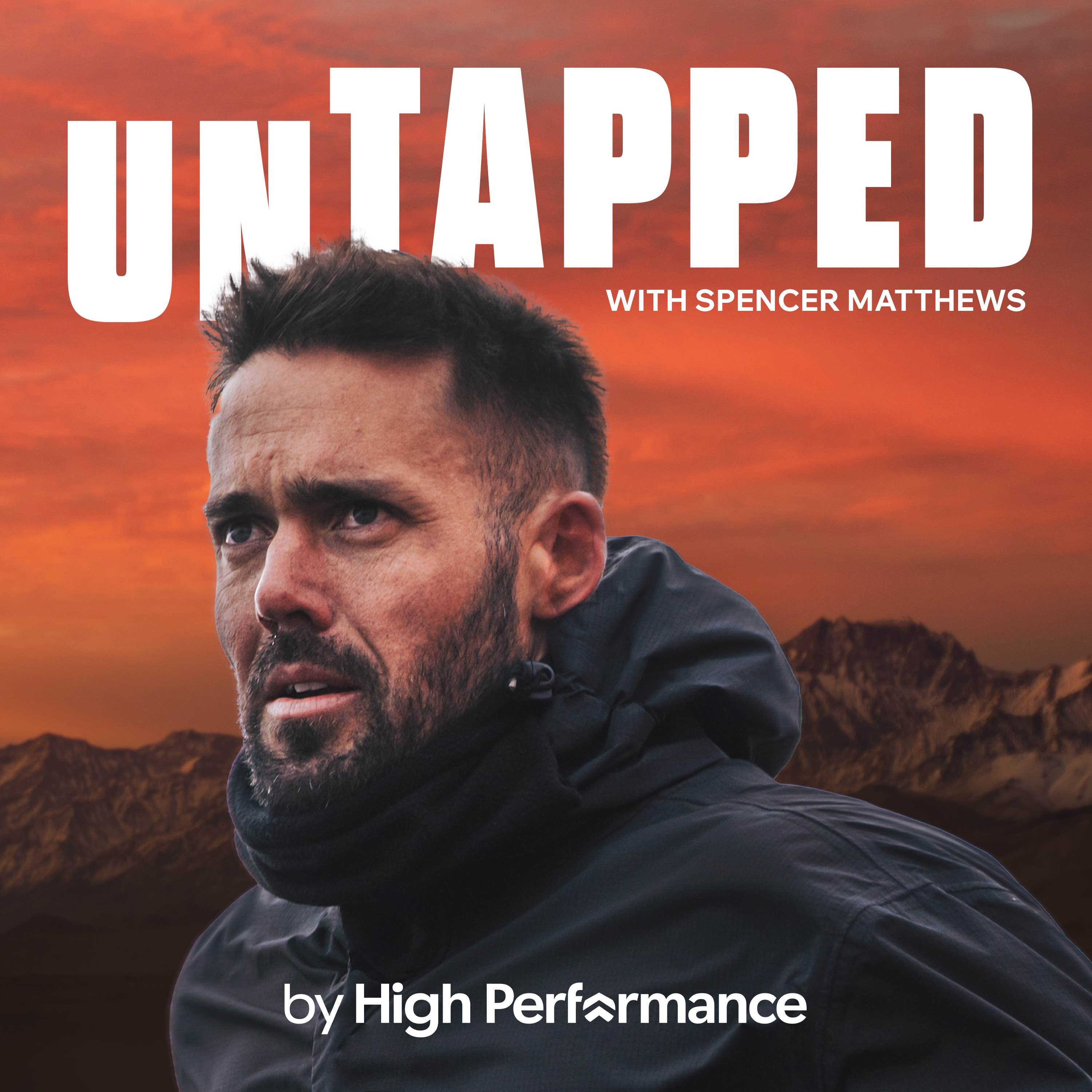
 UNTAPPED with Spencer Matthews
15 Dec 2025 · 42m · 15 chapters

Chris Hadfield discusses space travel and its lessons for human performance, fear/risk, training, and resilience; he also covers alien-life search, 3i Atlas (Avi Loeb’s claim of alien tech), and prospects for living on Mars. He explains gravity/weightlessness effects on the human body and how long re-adaptation takes after returning to Earth.
Chris Hadfield is a former combat F-18 pilot, test pilot, and Canadian Space Agency astronaut (21 years). He flew to space three times, did two spacewalks, helped build two space stations, and commanded the International Space Station; later he ran an international technology incubator and wrote multiple best-selling books.
Moon-landing “fake” theories are “intellectual laziness.” Fear is best countered by competence. Life is likely common, but intelligent life may be rare. 3i Atlas is not alien technology; it’s consistent with an asteroid/interstellar object. Mars is an option enabled by technology, not a near-term solution.
ISS work (200 experiments), weightlessness as “eternal freefall,” bone-density loss and rehab timing (~3:1 ratio), and references to Blue Origin/Virgin Galactic and Artemis/China lunar plans.
Written by AI. May contain mistakes.
Chris Hadfield shares his journey from fighter pilot to astronaut.
“For the listeners who are unaware of you and your profession, can you explain a little about who you are and what you do?”
Discussion on the moon landing and people's misconceptions.
“You have said in the past that you've literally seen the moon landing footprints from orbit.”
Chris elaborates on the experiences and sensations of being in space.
“I mean I spent six months off the earth and flew three rocket ships and been around the world 2 ,650 times.”
Chris shares insights on achieving personal dreams and responsibilities.
“I think the way in which you're answering the questions is very applicable across a number of different life experiences.”
Discover what it's like to be weightless in orbit and the wonders of space travel.
“Your life is the strung together sequence of the little tiny decisions that you made.”
Explore the potential for ordinary people to experience space travel in the future.
“that that experience will ever be available to just ordinary people who are you know at this stage, obviously wealthy who want to space travel commercially.”
Learn about 3i Atlas and the debate surrounding it as potential alien technology.
“I noticed, not earlier than anyone else, but I noticed the kind of first articles around Avi Loeb, the Harvard physicist and astronomer who felt that 3i Atlas could be alien technology.”
Examine the evidence and theories regarding life on other planets and in the universe.
“And we've learned now our telescopes are tremendous with things like Hubble and James Webb and all the ones on the mountaintops around the world.”
Discuss the possibility of Mars as an option for future human habitation.
“Well, I think the question is obviously fascinating to most people.”
Explore the viability of Mars and technology's role in human survival.
“We probably have to go and, you know, lick the rocks and let geologists do their work, but we're trying to answer that question.”
Discuss how space challenges human performance and capability.
“How far away is humanity from life on Mars, in your opinion?”
Understand how astronauts' training can inspire personal development.
“All we really have is our ability to imagine things that don't exist yet and then make decisions based on that.”
Learn about the body's adaptation to weightlessness and returning to Earth.
“What does being in extended space travel do to your body, the weightlessness and general differences to physiology, physicality in a no gravity space for such an extended period of time?”
Learn about the physical changes astronauts face while in space and upon returning to Earth.
“The fluid gets lifted out of your, or pumped out of your lower body into your head.”
Discussion about the potential for running challenges in space and personal quests.
“We built Serval to automate the IT work that slows companies down.”

Get the gist, explore an idea or ask about something said.
 Claude
On UNTAPPED with Spencer Matthews, what are the key points of this episode?
Searching your listeningAutomatic transcript. May contain errors.
0:02You get one life and how close are you to accomplishing the things that you dream of? And not the random things, not like winning a lottery or something that is just random chance, but things that you actually have some dominion over, things that you can actually control. I've thought about that my whole life and it's allowed me to do the things that I do. I'm Spencer Matthews and you're listening to Untapped, where elite athletes and inspirational people show us how we can all unlock our true potential. This week, we're joined by Chris Hadfield, astronaut, test pilot and the first Canadian to walk in space.
0:34In this conversation we go deep on 3i Atlas, the search for alien life and what living in space can teach us about the human body, resilience and potential. We also explore how humans might one day live on Mars and what that means for life back here on Earth. Let's get Untapped with Chris Hadfield. Chris Hadfield, welcome to Untappd. For the listeners who are unaware of you and your profession, can you explain a little about who you are and what you do? Sure, my name is Chris Hadfield. I was a combat fighter pilot flying F-18s in the Cold War. Then I was a test pilot with the Canadian Air Force, the US Air Force and the US Navy.
1:14I got selected as an astronaut by the Canadian Space Agency. I served as an astronaut for 21 years. I was NASA's director in Russia. I was chief of space station operations and I flew in space three times, helped build two space stations, did two spacewalks, and I commanded the International Space Station. I retired from government service a dozen years ago. I helped run several companies. I run a big international technology incubator. I speak all over the world and I have six best-selling books, including a new one that's the number one bestseller in Canada right now. Chris, I have to say that is a phenomenal introduction.
1:57I can't wait to get stuck in to our conversation. Can we speak a bit about the moon landing and your opinions of it? You have said in the past that you've literally seen the moon landing footprints from orbit. why do you think so many people think that it was fake? Oh, well, it's just intellectual laziness, and it's fun to think you have a secret. You know, it's like Bigfoot or the Loch Ness Monster or, you know, leprechauns or anything else. It's just, it's fun, you know, and you don't have to do any work at all. You don't have to think. You can just jump on a bandwagon. there's you know there's constant enormous undeniable proof of things that have happened in the past but it's way easier just to deny them there's lots of people think world war one didn't happen but you know you don't worry about goofiness I just continued helping to explore the universe and paying attention to reality what's the single most interesting thing about space travel that you've experienced well it's kind of a huge question what's the single most fascinating part of life that I've experienced.
3:06I mean I spent six months off the earth and flew three rocket ships and been around the world 2 ,650 times. I think the richest maybe 15 hours was the two times I was outside on spacewalks. When you're alone out in the universe and just the thin cloth of your space suit is protecting you from the empty vacuum of the cosmos and you're going around the world at eight kilometers five miles a second so you go around the world every 92 minutes and while I was outside we were building the International Space Station and doing a lot of complex technical work but the ability to see the world unfettered and unfiltered and to have it like this enormous gorgeous bulging colorful kaleidoscope of textures right there next to you and yet to be separate from it it was it was the most um i don't know sensory rich and perhaps profound 15 hours of my life that sounds extraordinary and peaceful or or frightening at the time what what What is your relationship like with fear?
4:21It's more a relationship with risk and danger. Whether you choose to be afraid or not is up to you. The real question is what dangers exist and what risks are you taking and why are you taking them? What purposes do they serve? And how ready are you for the actual danger? So the greatest antidote for fear is competence. and if you've spent time to get ready for things then you have a lot more going for you than just than just fear. What does it feel like to be thrusted into space? Is that as thrilling an experience as one might imagine? It is thrilling but at the same time we're not passengers and so I decided to be an astronaut when I was nine years old and that's why I became an engineer and a pilot and then a fighter pilot and then a combat fighter pilot and a test pilot and it's why I trained for 21 years as an astronaut so that I could be part of a crew that could safely pilot a rocket ship to orbit and I've done that three times and and then also maneuver and command or spaceships going around the world it's immensely challenging and dangerous and complex but that's part of the reason that it's thrilling.
5:42If what you're doing is easy and anybody could do it and it serves no purpose, then that I at least don't get much thrill out of it. But if what you're doing pushes you right to the edge of your own abilities after years and years of improving who you are and it's also pushing back the edge of human ignorance to help us do things that were previously impossible. I find that immensely thrilling.
6:13You need something from Lowe's, but your day is already jam-packed. Since Milo's Rewards and Milo's Pro Rewards members get free same-day delivery, we'll make the run for you. Seriously, just lock in your order, and we'll do the rest. See you soon. Members get more at Lowe's. $25 minimum and loyalty membership required. Order eligible items by 2 p.m. Subject to weight and size restrictions and availability. Terms at lowes.com slash shipping terms. AI is only as good as the context it has. Introducing Intelligence Center X from Siemens, the enterprise AI system that connects AI to the knowledge and context of your business so we can understand, reason, and act with confidence.
7:00Because when AI understands your business, it can do more for your business. Discover Intelligence Center X from Siemens.
7:12Hi, I'm Nick, co-host of The Best One Yet. You optimize your workouts, your portfolios, and that rando startup idea that hit you in the middle of the shower. But if you're not hydrated, you're already playing catch-up. So we keep a stash of Liquid IV in our studio. One stick mixed into 16 ounces of water is clinically demonstrated to hydrate faster than water alone with three times the electrolytes of the leading sports drink, plus eight vitamins and nutrients. Whether you're traveling, exercising, or podcasting, the best business news ever. liquid IV makes it easy to stay hydrated wherever life takes you.
7:40So shop now at liquidiv.com. Liquid IV hydration that goes wherever life takes you.
8:07and discovery of what's possible inside yourself. I think the way in which you're answering the questions is very applicable across a number of different life experiences. You're, of course, talking about space travel, but my mind went to starting a business, doing your first marathon, running your first ultra. It all makes sense, the way in which you present your life experience um these are the kind of takeaways that we look for on this show um for people to apply to their own lives back home and i may as well ask you the question up front before we get on to the rest of the interview you know how how would you advise somebody listening to this episode now um how they can untap more of their potential it's a super important question because you get one life and how close are you to accomplishing the things that you dream of like and the dreams don't have to matter to anybody else but when it's just you and you're imagining maybe that the rest of your life is it will go perfectly what are those things that you dream will happen in your life and not the random things not like winning a lottery or something that is just random chance but things that you actually have some dominion over things that you can actually control I've thought about that my whole life and it's allowed me to do the things that I do including running a big technology startup incubator so helping as you mentioned all those
9:53entrepreneur challenges that you have and so I'm not trying to sell books but But my best answer to your question is this book. It's exactly what the title says, An Astronaut's Guide to Life on Earth. And I tried to take 30 or 40 years of experience and coalesced ideas and write them as clearly as I possibly could in actionable and memorable ways so that people could try and get closer and closer to what's really important to them. Because I think if you're not addressing that problem within yourself, then you're just allowing life to randomly kick you around. And it might turn out okay, but randomness often doesn't.
10:41And so having a deliberate part of your own future, I think, is one of the great keys to life. I'm fascinated by what you're saying. It really resonates with me as a person. when it comes to something like space travel that requires, you know, five times the length of study that it does take to become, say, a lawyer or a doctor. You must have known very clearly in single digit age what you wanted to do and then mapped out a route to consistently work towards becoming that person. I think that's pretty rare. But where do you think you get that from? I wish it had been that clear. No, all I had was a dream.
11:27All I realized was I'm going to grow up to be something. So why don't I grow up to be that? That sounds like the coolest, most challenging, most fun. A lot of people don't want to fly in space. That's fine. But you probably have some sort of thing that you're dreaming of that you want to have happen. so if that's truly what's in your heart then you do not have a clearly mapped out way to get there and what would you need to start doing is actually making small decisions that that incrementally guide you that way so at nine years old I had no clue you know I just so I thought okay well let's look at the people that have already gone to the moon look at Neil and Buzz and Mike, the guys who went on Apollo 11.
12:14Look at them, what have they done that I haven't done? And so they had advanced university degrees and they'd kept their bodies in shape and they'd all become pilots and military pilots and test pilots. So I'd, okay, well, all that sounds like fun to me anyway. I think maybe a real key sidebar to that is though, don't count on your end game dream as your only measure of personal success. Like you have to build a life that has that end game dream in order to help you decide what to do this afternoon and what to do this weekend. But make sure that you are enjoying every single step you take along the way and celebrating little tiny victories that nobody else cares about.
13:03Nobody in the world really cares or understands what you are doing. At least not nearly. Your mom tries to, but she's got her own stuff to deal with. I mean, you have to take responsibility for your own dreams and your own decision making. And as soon as you recognize that it's not an externality, but it's actually you, then you can celebrate, I think, at a lot lower level. Like this weekend, you have choices. and what are you going to do with your Friday, Saturday, Sunday? And if you can go learn something or go see something or develop some new ability or do something small, Sunday night you can celebrate the fact that, hey, I'm still not walking on the moon, but I have marginally or incrementally started changing who I am to turn myself into somebody who could be the person that I dream of.
13:58and your life is not grandiose statements or being a football star. Your life is the strung together sequence of the little tiny decisions that you made. That's all it is. And so learning to take responsibility for the little tiny decisions, to me, that's super important. If you ever actually want to do the things that are the stuff of dreams. Can we talk a little bit more about space? What's it like up there? What are you seeing? Have you ever experienced anything completely unusual that you know will maybe come as a shock to us as listeners? Having the opportunity to fly in space feels somewhat like magic.
14:45The biggest difference is the whole time that you're orbiting the world, you're weightless. Like the ride on the rocket that takes you from some peaceful part of the world, some quiet little out-of-the-way place like Cape Canaveral or Baikonur, and then through an amazing harnessing of power, literally thrusts you up away from the world, crushing you in your chair and shaking you like you're in the jaws of some huge unseen beast. And just a matter of minutes, about nine minutes depending on the rocket ship, takes you from that familiar place on Earth and gets you above the air, accelerates you to 17 and a half thousand miles an hour, the speed you need to be to stay in orbit, and then the engines shut off and you're weightless.
15:32that is an amazing birth of the ensuing experience. But then you're weightless. The instant the engine shut off, you're now in eternal freefall. And that's as if someone just tapped you on the head and gave you a superpower. And now you can fly. It is so delightful. You can now fly anywhere you want. You don't have to lift a finger. You don't have to hold your head up. Your heart doesn't have to lift the blood from your feet to your head. It is a fantastic, joyous, laughter-filled human experience to be weightless. And I've been weightless for half a year. You're also going around the world 16 times a day.
16:18So the view out the window is spectacularly gorgeous and informative, where you cross North America in nine minutes. You cross the Atlantic in the time it takes to drink a mug of tea. And you see 16 sunrises and 16 sunsets a day because you're racing around the world so fast. And that, you become intimately familiar with the world. And every time you come around, you see it better. It's as if the earth is revealing herself to you better and better and better each time. And maybe a third big piece is you're with a group of people that is kind of peak performing, people that have self-selected, people who are also willing to take that enormous risk of a rocket launch, who have a great sense of humility and reserve, but also a great curiosity and sense of wonder of what's happening.
17:21And it's almost as if you're all surfing on the same wave. There's that great, wonderful feeling when you catch a wave and surf. And it's almost like some sort of strange privilege to be doing this. And you feel like you're riding that wave the whole time. And you're doing important stuff. I mean, there's 200 experiments on the International Space Station. we're trying to understand the fundamental nature of physics itself and we go around the world enough times that we really start to understand the planet as well as just all the experiments you can do when there's no gravity so all of those things together it's it's both intoxicating and addictive and a tremendous human it was it's better than that little nine-year-old boy dreamed it would be it he had he had big dreams i mean that it's very hard to even follow from what you've just said it sounds extraordinary and god i would just love to experience something like that i think it it's it's very exciting to to consider the the thought of that do you suppose that that experience will ever be available to just ordinary people who are you know at this stage, obviously wealthy who want to space travel commercially.
18:42But is that a reality in our lifetime? Imagine if you and I were having this conversation in 1905 and you were talking to either Orville or Wilbur Wright and they were describing that first flight that they made from what is a Kill Devil Hill there on the East Coast of the United States. And you asked them, do you, you know, and they told you just how fantastic it felt to fly like a bird. And you ask them, do you suppose, you know, regular folks will ever be able to do that or whatever? And at the time, they probably would have given you the same answer. And that is, well, of course. But right now, it's still early and super dangerous because our technology is lousy.
19:22You know, we haven't figured out the answer to all the problems. But by 1920, after an enormous amount of government investment in the First World War in aviation, suddenly the technology was good enough that the first airlines formed but it was only for the very wealthy only the extremely wealthy could buy an airline ticket in 1920 and also the technology was still pretty crap and and there was you know you couldn't fly in clouds and there weren't runways and and gas stations you know things all over the place but now i mean how much does it cost to fly on Ryanair down to the Algarve. You know, it's a lousy experience, but at least it's very reliable and almost effortless and amazingly inexpensive when you think of how hard it would have been to get there any other way in the past.
20:15We're in the early stages of that now with space travel. For the price of a luxury car, you can fly in space right now. And that's a lot of money, a luxury car but just but just walk around any city in the world there's a lot of luxury cars driving by you do not need to buy a luxury car that's why it's called a luxury car and lots of people choose to do that so the fact that you can fly in space for that price now i think is a good indicator of uh of the future that's coming sorry excuse the ignorance but but for how much can i fly to space like like is is there a service that you can sure you can fly with with with Blue Origin and then Richard Branson's company Virgin Galactic, he's already taken a bunch of people flying, but he's in the process right now of converting it more to an airline rather than just a one-off kind of ride.
21:07Can I talk to you a bit about 3i Atlas? Sure. What's your view on the whole thing? I noticed, not earlier than anyone else, but I noticed the kind of first articles around Avi Loeb, the Harvard physicist and astronomer who felt that 3i Atlas could be alien technology. This was a long time ago now. Obviously, it's approaching the date that he predicted that this technology could be arriving on Earth. There's a lot out there that suggests that it's just an asteroid. I'm wondering what your view is on that situation. Well, views are the problem. The hard thing is to understand stuff, because that takes work.
21:56If you actually want to understand something, then you need to do the work and not just repeat gossip that somebody else, you know, spouted. And so actually, you know, do the work. The Earth gets hit by 40 tons of rock from the universe every day. Our solar system is full of bits of rock and ice that some of them predate the sun. And most of them were trapped by our sun's gravity billions of years ago. But occasionally a piece is coming in between stars, just random motion like pool ball, an infinite number of pool balls on an infinitely large billiard table. And this is just a big lump of rock and ice that looks like it originated outside our solar system.
22:49You can figure that out pretty simply because of the speed. But it's been caught by our sun's gravity and it'll go whipping by our sun and then spew back out into the universe, just as has happened countless times in the past. What's really changed is our telescopes have gotten so great that now we can see these things. We can actually detect them. You know, Galileo had the very first telescope to look at Jupiter and Saturn in 1604. And we've learned now our telescopes are tremendous with things like Hubble and James Webb and all the ones on the mountaintops around the world. It's amazing what we're seeing.
23:22But it'd be real. It's really fun. Oh, it's alien technology. That's fun. That's exciting. It's not true, but it's fun to think about. You have called UFO conversations in the past foolish. Do you just inherently not believe in aliens or do you have kind of evidence to the contrary? So let's just look at the actual facts. One of the things, one of the most important things in maybe the whole alien topic that we've discovered in the last 15 years or so, because of our best telescopes, is that every star has a planet on average, at least one. We didn't know that until our best telescopes could actually see planets orbiting other stars.
24:12But now we know for a fact that every star has at least one planet. That's a big piece of information if you're trying to find out if we're alone in the universe or no, because we can count stars because they're bright. And then when a whole bunch of stars cluster together, then you have a galaxy like ours, the Milky Way galaxy or the Andromeda galaxy or the other billions of galaxies. And because galaxies are so bright, we can actually now count how many planets there are in the universe. To me, that's a really important thing because we know there's life on Earth for sure. We haven't found evidence anywhere else yet, although we're looking.
24:51But the number of planets out there is staggeringly huge. It's something like not a billion or a trillion or a quadrillion. It's like a Septillion of planets at least out there one in some incredible number of zeros 28 zeros or something And we know for sure life developed on earth 4 billion years ago You can see it in the fossil record and it's been here uninterrupted for 4 billion years so to think with whatever a a trillion, a septillion of chances out there that we're the only place that life developed? That's just self-centered arrogance. I'm confident there's life elsewhere in the universe.
25:36However, on Earth, we were just the most primitive of life for billions of years, single-celled, you know, like pond scum for billions of years. And only recently did complex multicellular life develop and extremely recently self-aware life developed and and so my guess is and it's just a guess because we have no evidence I think life is common across the universe but I think intelligent life is extremely rare but but until we find evidence and that's why we're drilling on Mars right now it's why we've sent a probe to Europa because Europa one of the moons of Saturn has more water on it than Earth does.
26:21That moon of Saturn has more water than Earth, and it has the same sort of conditions where it looks like life first developed on Earth. So, so yeah, we're trying to answer the question, and that's why I've been an astronaut my whole life. It's one of the big questions. Are we alone or not? And if we're not alone, then how can we try and contact other life, or is there someone we can learn from it, or what do we think of all that? But if we are alone, then, gosh, the level of responsibility to try and take advantage of this amazing confluence of geology and history and evolution that has allowed us to exist, it gives us a much bigger responsibility, I think, to be alive as human beings at this time.
27:07To me, it's one of the great, fascinating questions, and I'm really pleased that I've been working with a group of people that are trying to answer that question for most of my life. Well, I think the question is obviously fascinating to most people. It's interesting to be talking to somebody who's actually working on answering it. It's safe to assume, I guess, that there's no other life within our solar system. Well, there might be on Mars. That's why we're drilling on Mars. If we can find one fossil on Mars, then we know the answer, that the universe is full of life. But so far, even, you know, we've literally just barely scratched the surface of Mars.
27:46But Mars, when life developed on Earth, Mars had thick atmosphere and oceans, and that's what Earth was like. So, you know, maybe, and I think there's a reasonable chance that life developed on Mars, but so far no evidence. We probably have to go and, you know, lick the rocks and let geologists do their work, but we're trying to answer that question. Can Mars be a viable solution for future human generations, given its condition now? Well, it's not a solution. It's an option. How can it be an option? Well, a lot of the Earth is uninhabitable without technology, right? If you live near the equator, in the areas that get enough rain, then we can live just as animals, with no technology at all, right?
28:36We can just live with our fingers and our teeth and manage to live a life. But as soon as you move away from the equatorial regions of the world, if you want to live in, I don't know, Glasgow, or if you want to live in northern Canada, or if you want to live in Antarctica, you need technology. Because, and we just sort of take technology for granted. You know, we harnessed fire and food production, agriculture, shelter, clothing, all kinds of things that we just take for granted. but in fact life is untenable in most of the places that we live without technology. Life is impossible in Antarctica.
29:16You know one night would kill you but we have good technology. Thousands of people live in McMurdo. A hundred people live at the South Pole. So Mars and the Moon are the same. They are places where we could only live there with technology and we have four people going to the Moon in February. They're not landing, but they're testing the spaceship. Four friends of mine are going to the moon in February with the Artemis ship. And China is absolutely going to have people walking on the moon within four and a half years. But they will be there by the grace of technology. And it's the transitioning from exploration to settlement as we start to, just like we've done on every place we've ever moved to on Earth.
30:02And Mars, sure, eventually. Mars is still, So Mars right now, it's like 200 million miles away. It's on the other side of the sun. It's hard to get to Mars. We have really crappy, primitive engines right now. It takes way too long, super dangerous. Like getting to Antarctica in, I don't know, 1870 or something. But eventually we'll figure out better technology. And then Mars will become much more credible. And then it'll be just like the other places that we have slowly moved to. and it'll be another place that humans live. But also important because
30:42anything that might happen drastically on Earth, like if we set off our own nuclear weapons or if we have a truly destructive plague or who knows, it'd be nice if all our eggs weren't in one basket. But that's not the purpose. It's just a natural continuation of human exploration and settlement that's been going on for 100 ,000 years. Hey, it's Paige from Giggly Squad. You know when you finally get started on a project around the house and then five minutes in you realize you're missing one thing? Somehow it's always that one thing that sends you back to the store. That's why I love this from Lowe's.
31:19If you're a My Lowe's Rewards or My Lowe's Pro Rewards member, you get free same-day delivery. Honestly, Lowe's will make the run for you, making it that much easier to get what you need. Just place your order and Lowe's handles the rest. It seriously makes life so much easier, especially when you've already got a million things going on. Members get more at Lowe's. $25 minimum and loyalty membership required. Order eligible items by 2 p.m. Subject to weight and size restrictions and availability. Terms at lowes.com slash shipping terms. Most women have been there. Something feels off. You don't feel like yourself.
31:57Yet your doctor says everything looks fine. Spoiler, it's your hormones. Midi is a virtual care platform built for women by women and offers specialized hormone care from trained clinicians. Plus, it's covered by most major insurances. Getting started is easy. You can book your first visit with a clinician right away. It's not you. It's your hormones. Visit joinmidi.com to book your first visit. That's joinmidi.com. Insurance coverage varies. Check with your plan for coverage. Mod.com is changing the way people battle excessive fatigue. Ever hit a wall in the middle of the day and a third coffee just doesn't do it anymore?
32:34Here's what's actually happening. Coffee only briefly blocks adenosine, the chemical that tires you out. When it stops working, your system is flooded and you crash. Modafinil is a prescription treatment that works in a completely different way. Modafinil works by stimulating multiple receptors in the brain associated with wakefulness, including dopamine, serotonin, norepinephrine, histamine, glutamate, and orexin. It's a more complete solution that gives you 10 to 12 hours of steady focus and energy. To learn more, go to mod.com. Fill out your intake form, meet with a licensed provider, and if approved, ModAlert ships straight to your door.
33:16Go to mod.com to get started. That's mod.com.
33:28How far away is humanity from life on Mars, in your opinion? Well, if we had a compelling reason, like if the Earth was doomed or something, and we had an absolutely huge compelling reason to put people on Mars, we could do it within a year, or at least we could launch a ship within a year, if we had to. But most of the people on the ship would die, maybe all of them, because our technology is really primitive. And Mars is extremely inhospitable. You know, you can't breathe the atmosphere and the temperatures get very cold in the winter and they have dust storms. And, you know, all the raw materials are there for life.
34:14You know, there's almost unlimited water. So you have hydrogen and oxygen and it's got a huge mineral base. But, you know, it's hard to just turn that into a sustainable life for people. But we just have to weigh the balance between cost and risk and benefit. Why go? But eventually, yeah, we'll get there. I mean, when I was born, no one had flown in space. All of this has happened within my lifetime. It's amazing the amount of human inventiveness and achievement that has happened in less than one natural lifetime. And so I'm pretty excited about what we're doing this year and where that's leading to in the future.
34:58Do you think that space has changed your opinion on what human performance really means or what the limits of human performance are? I think we are an incredibly capable and resourceful species on Earth. And when we are given a challenge that is at the edge of human performance or the edge of human understanding, the edge of capability, it's amazing how a subset of people will change who they are and will work endlessly to try and accomplish that thing. It's fundamental to our nature. I have a granddaughter in Dublin who's seven months old and it's fascinating watching her learn about the world and she learns by exploring.
35:54She learns by, like no one can explain anything to her yet. You learn to walk at a year, but you don't learn to talk until like two. So it's just fundamental human evolution has given us the absolute necessity to go do things and to push ourselves just subconsciously. It's how we're built. And it's what has allowed us to thrive as a species. We don't have the biggest fangs or claws. We're not the fastest. We're not the biggest and hairiest and strongest. All we really have is our ability to imagine things that don't exist yet and then make decisions based on that. And so when you give people a quest, like maybe it's the Olympic Games.
36:40If the Olympic Games didn't exist, then all of that particular subset of human capability would never be tapped. We would never know how to run as fast or jump as high or throw something as far or whatever. It pushes us physically and therefore mentally right to the limit. It's the same in technology. You know, what are the things that inspire and amaze and challenge us right to the very limit? And it happens right across the board. But without that fundamental inspiration, as a child, you may not think that this is worth getting into. What do you think the rest of us can learn about training and recovery from the way that astronauts train?
37:28If you're going to train and attempt something then that you wouldn't have done otherwise, to me, purpose is extremely important. What does success look like? What does victory look like? Without that clear understanding of what the victory looks like, what success looks like, it's going to be very, very difficult to sustain the training. And even if you manage to sustain it briefly, how are you going to incorporate it, not just for a momentary period in your life, but actually into how you conduct your entire life? How do you balance out the things that you want to get done with the small things that you do that you can put in the category of training?
38:18And then how do you build that so that it has staying power? So that you're not just doing it as a stunt in your life, but it actually becomes your life. You're the type of person that now doesn't set one goal, but that lives an entire life of curiosity. And then recognizing that if I'm going to answer those questions, I need to change who I am. And the only way that I can change who I am is to change the pattern of behaviors that I've been doing up until now. And using my individual decisions during the day to pursue those things that I'm curious about. And then, once you've got a clear goal and a commitment to self-change, then you have to be willing to take risks.
39:05and you have to make that judgment within yourself. What things in life are worth taking? What level of risk for? And then maybe the last piece of that is how are you going to celebrate it? How are you going to
39:24personally be joyful about what has happened? Whether you won the gold medal at the Olympics or walked to the moon or not. how are you going to celebrate the change that has occurred within yourself? That pattern allows us to command spaceships and fly rocket ships and walk on the moon. But I think it's directly applicable to everybody in every single quest and every single decision that they make in their life. And so to me, if you're not thinking about those things, then you're probably not going to have a chance to do the stuff that you dream of you're denying yourself that deliberately so I think it's worth thinking about and and and maybe making this week a small change in in your pattern so that you can you can herd that complex group of sheep that is your life up into that upper pasture that someday you would really like to get to.
40:27What does being in extended space travel do to your body, the weightlessness and general differences to physiology, physicality in a no gravity space for such an extended period of time? And also how long does it take to adapt to feeling human again when you get back down to us. As homo sapiens, as human beings, we evolved under the oppressive thumb of gravity. It's how we're built. It's why we have this skeleton underneath our skin. It's why we have a blood pumping system that has a whole bunch of one-way valves in it, you know, to be able to get the blood up to our head. It's why we have this complex balance system so that even when you close your eyes, you know which way up is.
41:18As soon as you get to space, all of that is disrupted because Because you are no longer in a gravity field, or at least just because of orbital mechanics, you can't sense it. You're falling forever. And so you start to lose your skeleton because your body, it's like, I don't need to waste energy building a heavy, strong skeleton if he's never going to use it. Your balance system has to completely recalibrate to now not have a gravity acceleration through it, but just to be visual and local accelerations. Your digestive system, you can't burp in space because burp needs the gas to be on the top of your stomach.
41:59Your, gosh, all kinds of stuff changes. The fluid gets lifted out of your, or pumped out of your lower body into your head. So you have a swollen head and that big vein in my forehead swells up and my sinuses are always full and my tongue gets swollen and my leg gets all skinny. So you have to get to a new stasis and it takes a while. And you get osteoporosis. We lose bone density because our exercise equipment isn't good enough. But if you're going to stay in space forever, that's all okay. But if you want to come back to Earth, or if you want to do a spacewalk, which is extremely physical, you have to maintain strength and bone density.
42:36But we can't do it perfectly yet. It's still early days. But when you come back, all of those things have to readapt. It's like rehab. after about two weeks you could you can walk normally again it took me about two months until running felt normal again because running is everything all at once balance and and motion and cardiovascular and all and muscular and all of that but the thing that takes the longest is bone density that you know because it's a slow responsive system and what we've learned is that It's about three to one. So if you spent six months in space, it'll take about 18 months for your bone density.
43:18You can get it back to the levels it was pre-launched. But it's one of the big things we've learned is that the body is fairly plastic. And even though you go through this change, even if you lay in bed for the next six months with a bad illness, when you get out of bed, you'd have a lot of those symptoms. And it takes a while to get your body strong and healthy again. You are an extraordinary human being who has experienced things that most people will never see. Can you tell us a little bit about your new book? Sure. I've written three nonfiction, but I've written three fiction books. The new one's this one, Final Orbit, is Alternative History Thriller Fiction.
43:59And it's the third in the Apollo Murders series option for television and movies. is set actually in the summer of 75 during the height of the Cold War when the Soviets and the Americans were trying to demonstrate a peaceful docking in space but all kinds of things go wrong. It was also the start of the Chinese space program and all three of those things collide in orbit. It's getting tremendous reviews and I'm really delighted with the book and it says final orbit It's not my final book, but people are really enjoying reading it. That's fantastic. Thanks so much. Looking forward to reading that when it comes out.
44:40Every year I go after an endurance kind of world record for charity. So we raise money for, you know, last year it was for a number of different causes, helping children mostly who are disadvantaged in some way. this year we're trying to raise some money for men in suicidal crisis by doing a full Ironman in every continent in 21 days. Wow. If I ever wanted to try to run the longest distance ever on a treadmill in space, could you facilitate that? Well, Sonny Williams has already run a marathon on the treadmill in space. So I hope you get a chance to do it. I bicycled around the world once took 90 minutes which was kind of fun on a stationary bicycle but I think you should give yourself a quest like that and I'd love to yeah there are it's it's still early days and we've got to sort out all the regulatory environments and it's still quite expensive but we're at that moment in history where you can buy a ticket to space and so I hope you get a chance you're going to live long so I hope you get a chance to to run around the world once you'll love it Chris I want I'm going to run around the world in space.
46:00I'll do 100K on a treadmill. Let's get me up there, my friend. All right. I think you'd love it. Please do follow or subscribe to the show wherever you're listening. It only takes a moment, but it makes a huge difference to us. We have truly incredible guests every single week, and you wouldn't want to miss an episode.
46:39We'll be right back.
46:57I'm Jake Stouck, co-founder and CEO of Serval. We built Serval to automate the IT work that slows companies down. Onboarding, password resets, access to applications, my laptop stopped working. While employees wait for help, their real work is put on hold. IT desperately wants to automate this work. and that's why they need Serval. You just tell Serval what you want to automate in plain English and it's built. No drag and drop workflows, no expensive consultants. Employees get unblocked and IT teams go from drowning in tickets to building what actually matters. With Serval, IT becomes the AI engine powering the entire company.
47:36This is a new way to run IT. We guarantee you'll automate 50 % of all tickets and we'll prove it to you in a free four-week pilot. Go to serval.com slash tickets. That's S-E-R-V-A-L dot com slash tickets.
47:56Some days, getting the work done isn't the problem. Staying locked in is. AlphaBrain is Onnit's daily nootropic formula for cognitive support, designed to support memory, focus, attention, and mental clarity. Its formula with science-driven ingredients include theanine and huperzine A to support focus and memory, and it's caffeine-free. So when you're deep in the work, AlphaBrain helps support enhanced productivity and tune out distractions. Get focused on what matters. Shop AlphaBrain now at onnit.com.
Astronaut, explorer, and former ISS Commander Chris Hadfield takes us beyond the boundaries of Earth, offering rare insight into fear, purpose, and the discipline required to operate at the edge of human capability.
What prepares someone to step into the void of space? Chris reflects on the profound perspective of spacewalks, the power of competence to quiet fear, and the life-shaping clarity that comes from seeing our planet from 400km above. He also digs into the realities behind the dream, embracing small wins, taking responsibility for every decision, and confronting the unknown with deliberate action.
This episode is an unfiltered look at what it means to pursue the extraordinary, where curiosity becomes fuel, preparation becomes courage, and every step forward reveals a deeper understanding of ourselves and our place in the universe.
Chris Hadfield's cold war thriller 'Final Orbit' is out now: https://hppod.co/final-orbit
---
Eight Sleep 👉 Untap your full potential, starting with your sleep. Use code UNTAPPED for up to £400 off the Pod 5 Ultra: https://highpfrmc.com/UT-EightSleep-AU
Hive 👉 Take control of your home energy - smart, simple, and built for you: https://highpfrmc.com/ut-hive-au
Heights 👉 Stay sharp like Spencer. 20% off Heights with code UT20: https://highpfrmc.com/20
WHOOP 👉 Join Spencer in untapping your own potential with 1 month free here: https://highpfrmc.com/Whoop-au
Visit Seattle 👉Start planning your perfect summer of football by searching Visit Seattle on social media, or discover more at:
https://highpfrmc.com/visitseattle-ut-au
Hosted on Acast. See acast.com/privacy for more information.