Ask ChatGPT
 UNTAPPED with Spencer Matthews
5 Jan 2026 · 44m · 22 chapters
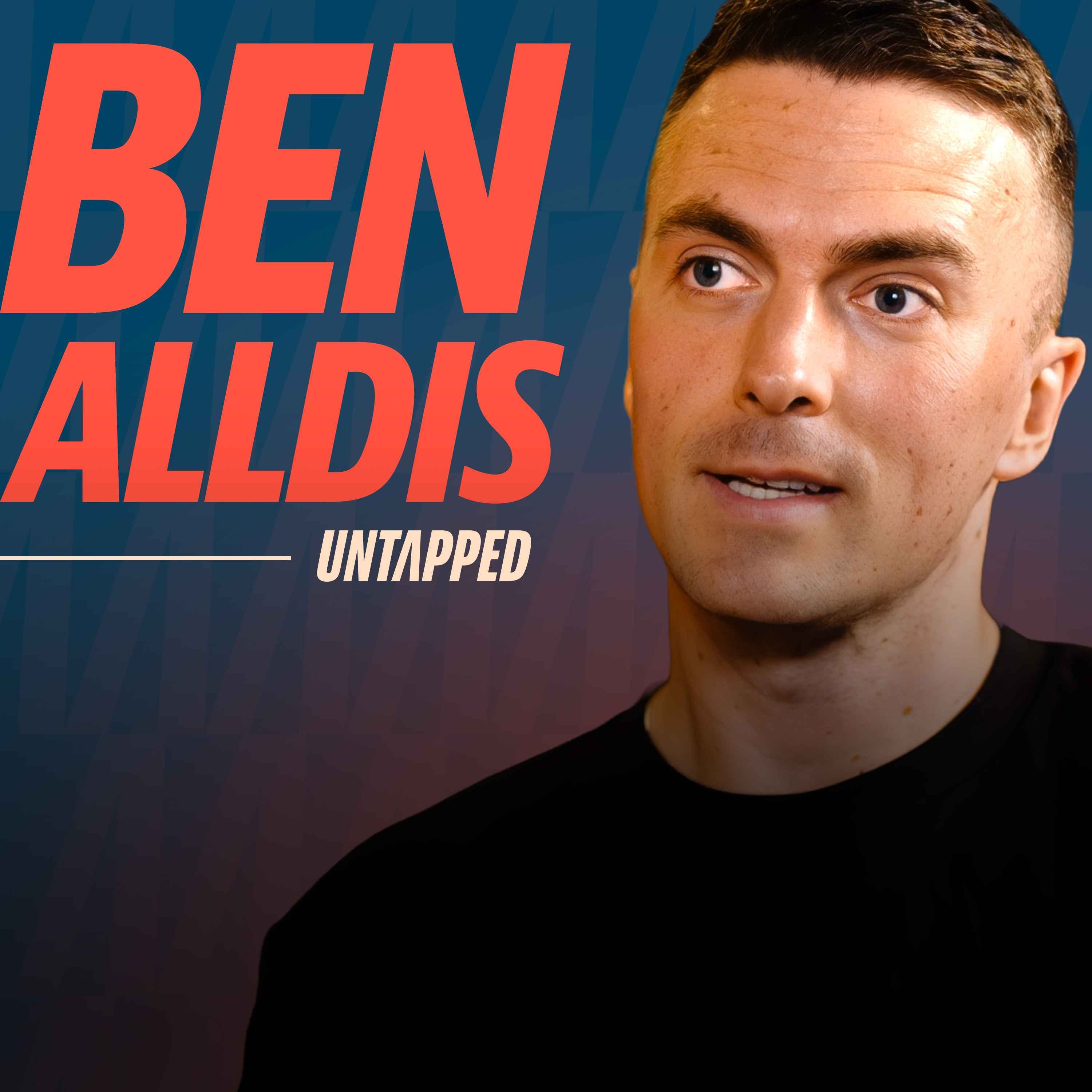
Ben Aldis (UK Peloton instructor) discusses how leaving finance, burnout, and major cancers shaped his health philosophy, plus his “toolkit” approach to diet, sleep, recovery, and mental balance. He also proposes “Apex athletes”: people who can bench 110kg for 10 reps and run a sub-3-hour marathon, and imagines a TV search for the rare few.
Ben Aldis is the UK’s most popular Peloton instructor; he previously worked 4 years in private equity (investment/fundraising). In 2018 he was diagnosed with melanoma skin cancer; later his wife Leanne was diagnosed with breast cancer. They joined Peloton in 2018 as the first two UK instructors.
Sleep/recovery are the biggest performance lever; whole, single-ingredient foods and nutrition diversity support energy and gut/microbiome; fundamentals first, biohacks are “small percentages,” not quick fixes; vulnerability and shared cancer experience strengthened their relationship.
Piers Morgan attending Ben’s first spin class; Leanne continuing chemo/radiotherapy while working; Ben’s caffeine routine (two double espressos early); sauna/ice bath discussion; marathon + bench concept with “Finding the 50.”
Written by AI. May contain mistakes.
Discussion on Ben Aldis's transition from a finance career to becoming a Peloton instructor.
“Listen to Iyanla, The Inside Fix, wherever you get your podcasts.”
Ben shares his experience with skin cancer and its impact on his life choices.
“I have been a fan of yours for some time.”
Exploration of the importance of balancing career success with health and relationships.
“You know, you have cancer out of nowhere.”
Ben discusses his wife's breast cancer journey and her inspirational mindset during treatment.
“You know, and it's kind of like, it's about finding that balance as well.”
Ben discusses his wife's breast cancer journey and her inspirational mindset during treatment.
Ben reflects on the role of community and resilience during challenges.
“I believe she went through a similar thing to you.”
Learn how mindset and support can help you through difficult times.
“whether it was nutrition or the way she was looking after herself from a recovery standpoint.”
Discover essential tips on sleep, nutrition, and mental balance for well-being.
“So just, you know, advice to listeners on small changes perhaps that they can make to their lives that will have potentially long-lasting and life-changing effects?”
Understand how a focus on whole foods and flavor can enhance your diet.
“Coming back to nutrition, you said that you're big into nutrition now and you and your wife started to really try and understand it.”
Explore how personal data can drive health optimization and wellness.
“I think food shouldn't be something that's demonized or controlled in a way which is not fun.”
Join a discussion on what makes an athlete great across various sports.
“Well, you don't become old and then immobile.”
Exploration of what defines strong athletes and their diverse abilities.
“I think those types of athletes for me are...”
Discussion on the mental and physical challenges of running marathons.
“They also have, you know, the gymnastics, which is pretty impressive.”
Introduction of the 'apex athlete' combining marathon and strength benchmarks.
“But I had an idea recently which I want to run by you to try and combine two things that are often compared in sports, So a marathon time and a bench press max effort, basically.”
Examining the difficulties of training for both endurance and strength.
“Apex athletes and I want to try and find these 50 people that can bench 110 for 10 and run a sub 250 marathon.”
Concept for a reality show identifying apex athletes and their stories.
“because Usain Bolt running 950 over 100 meters is on all accounts absolutely incredible.”
Discussing the body types and sports likely to produce apex athletes.
“they've got to bang out their 10 reps of whatever it is.”
Insights on measuring performance in cycling through FTP testing.
“And so I think the CrossFitters are probably going to be...”
Discussion of elite cyclist output and performance metrics.
“So over the course of an hour, you just take 5 % off that number.”
Learn about the impressive capabilities of elite athletes and their training regimens.
“and he's like, 340 for 5 or 6 hours So his zone two heart rate, 140 to 145, is putting out 340 watts for six hours.”
Discover the nuances of biohacking and the importance of foundational health.
“My training is so intense at the moment that, to be honest, it all feels a bit much getting in that thing as well.”
Understand the limitations of fitness products and the need for commitment to health.
“and use them as a toolkit versus in thinking like, this is going to make all the difference.”

Get the gist, explore an idea or ask about something said.
 Claude
On UNTAPPED with Spencer Matthews, what are the key points of this episode?
Searching your listeningAutomatic transcript. May contain errors.
0:00Hey, it's Tony from Tony Told Me. On Iyanla, The Inside Fix, a podcast from OWN, Iyanla Vanzan revisits the stories, teachings, and insights that made her show, Fix My Life, a must-watch for millions. With fresh eyes, she re-examines those lessons with greater clarity and shares new wisdom for the challenges we face today. Personal growth evolves over time and there's always room to find new meaning in old lessons. Listen to Iyanla, The Inside Fix, wherever you get your podcasts.
0:52becomes a whole season at home. From larger-than-life yard decor and moody lighting to festive accents for every room in the house, Wayfair has what you need to make Halloween feel like magic all in one place. Because the best Halloween memories aren't made in just one night. They're made all season long. Shop Halloween decor now at wayfair.com. That's W-A-Y-F-A-I-R dot com. Wayfair, every style, every home. I'm Spencer Matthews and you're listening to Untapped, where elite athletes and inspirational people show us how we can all untap our potential. My guest this week is Ben Aldis. He's the UK's most popular Peloton instructor who left a successful career in finance to pursue his greater ambition to help people achieve their health and fitness goals.
1:37Ben's life was turned upside down in 2018 after he was diagnosed with skin cancer and again when his wife received her own breast cancer diagnosis just a few years later. However, this series of unfortunate events led to greater clarity, drive, and purpose for the incredible couple. I can't wait for you to hear his story. Let's get Untapped with Ben Aldis. Ben Aldis, welcome to Untapped. Thanks for having me. Thanks very much for coming in. It's a great pleasure. I have been a fan of yours for some time. first UK male peloton athlete I think is how a lot of people will know you the thing that I find very interesting about you is this idea of leaving a safe job that you were really good at to pursue a passion tell me a bit about that so I did four years in private equity a mixture between in investment and also fundraising.
2:35And for anyone who knows that industry, it's very intense. Long hours, very sort of high intensity work level ethic, takes a lot of real commitment, I'd say. And I went into that industry for the first year. And I used to be quite a strong athlete as a youngster. And for my first year working in finance, I just stopped all movement, all activity, because my full focus was to be the best in this industry. so I didn't have a gym membership, didn't do much movement outside of just walking to the office and I slowly started to just really feel my mental health decline I wasn't really sure why at the time because I was just focusing on one thing and I really hit a level of burnout that was quite severe and I just had a moment of like, this isn't really right, what's going on here and so I took a step back and realised that the movement, the wellness side of stuff was what I needed to pick back up.
3:34Just started to try out some of the gym classes in London. That quickly turned into me falling in love with group fitness. I just loved the community, loved the people, loved the vibe. And then off the back of that, started teaching some classes. I remember the way that these group fitness classes work is you see who's starting to sign up. And so obviously I expected no one's going to sign up because I'm an absolutely nobody in the industry. And then slowly but surely this class just starts filling up. I think there's like 25 bikes or something. And then the last person to sign up in my class is Piers Morgan.
4:08Probably the worst person to have as your, you know, critique in your first ever class. And I thought, it can't actually be him. And so then I turn up to the class. He's nowhere to be seen. So I'm like, I must not be him. It must be just the same name. And then I'd say, three minutes into the class, door opens and this, you know, figure walks into the back, sits at the back. and I just go, right, it's actually Piz Morgan. He's turned up to my first ever spin class and then he does majority of the class, probably doesn't enjoy it too much because I'm beating him and then he leaves about two, three minutes prior.
4:46So either he didn't enjoy it or he was just trying to get out before the crowds but it was quite a kickstart to my career as a spin instructor. I absolutely fell in love with just like the community, the coaching element and stuff but the issue was I was doing it alongside my job in finance and so this passion for wellness and fitness was developing but I was really working like five, six days a week in finance and then trying to juggle this love for fitness but it wasn't a job at the time, it was this is just something I enjoy doing and then very out of nowhere I was diagnosed with skin cancer so actually one of my clients at one of my classes came up to me as a doctor and she said, when was the last time you got your skin checked up?
5:30And I said to her, I don't really know what you're talking about. I think it was when I was about 12 years old, I had a mole removed and she said, please today, go and see a dermatologist. That's unbelievable. It was honestly out of nowhere. And initially I thought, she's overreacting. But because she planted that seed, I went straight to a dermatologist that Monday and literally within two weeks, they'd done the biopsy and then quickly diagnosed me with melanoma skin cancer. And so out of nowhere, you know, juggling these two careers, everything was going great. And then you sit on the other side of the table from a doctor and he's saying, you know, this is developing quickly, we need to move fast.
6:11Quite a lot to unpack then. So three big changes in your life. You know, you have cancer out of nowhere. You're falling in love with something else in your life outside of work where you initially had placed kind of all your chips. I tasked myself when I was diagnosed with cancer to take a bit of a step back on like how I was living my life and how I was showing up not only like within my health and wellness space but also as a man and as a person. I started also surrounding myself with people who were successful in different ways. Like I always thought that success was climbing up the corporate ladder.
6:49My dad worked for 45 plus years investment banking So that was really the only route that I saw as success. And slowly but surely, I was meeting these people that were doing different things in different industries and still maintaining this healthy or somewhat healthy lifestyle. And I thought, right, there's another way to do it. I think it's not just relevant to the finance industry. I think all of us go through phases in our life which require us to really double down on something. And I think there's something to be said about there are periods in your life where you're going to need to knuckle down and maybe your health or wellness may take a bit of a backseat.
7:24But for me, it's the continued consistency of that that then has detrimental impacts on your mind and your body. I mean, I was seeing my cognitive ability slowly declining because my sleep quality wasn't fantastic. I wasn't eating well, wasn't moving my body. And I think that then has knock-on effects to not only your working relationships, but your relationships outside of work too. Like I wasn't really seeing my family that often, didn't have a romantic relationship that I could hold down. And so I think it has so much more impact on your life beyond just maybe having the energy to do well at work.
8:03So for me, it was quite serious burnout. That then turned into just like, I don't think my cancer was caused by it, but it definitely wouldn't have helped. But I think if you're not doing the other work, and I wasn't at the time, you can get yourself in a massive hole. And I think the problem is, is because you jump on this ladder, as soon as you're in it, the thought of leaving it is like, I obviously can't do that. And so then you just get to a point where you just keep etching away at your health and your goal is what, like earning a ton of money. But then once you get to that goal, what do you have left, right?
8:39It's almost like, who are you chasing that win for? because I can almost assure you that your wife and kids, if you're not present with them and you're not part of their life in a meaningful way whilst you're in your growth phase, then you're sacrificing one for the other. We interviewed Robin Sharma in here and he said he works with a lot of billionaires who couldn't be wealthier, but they're alone on their yachts and their planes and their wife left them and they gave up half their wealth to their wife and their kids don't talk to them because they don't know who they are. You know, and it's kind of like, it's about finding that balance as well.
9:22Hey, it's Tony from Tony Told Me. On Iyanla, The Inside Fix, a podcast from OWN, Iyanla Vanzan revisits the stories, teachings, and insights that made her show Fix My Life a must-watch for millions. With fresh eyes, she re-examines those lessons with greater clarity. and shares new wisdom for the challenges we face today. Personal growth evolves over time and there's always room to find new meaning in old lessons. Listen to Iyanla, The Inside Fix, wherever you get your podcasts. I'm Jake Stouck, co-founder and CEO of Serval. We built Serval to automate the IT work that slows companies down. Onboarding, password resets, access to applications, my laptop stopped working.
10:08While employees wait for help, their real work is put on hold. IT desperately wants to automate this work, and that's why they need Serval. You just tell Serval what you want to automate in plain English, and it's built. No drag-and-drop workflows, no expensive consultants. Employees get unblocked, and IT teams go from drowning in tickets to building what actually matters. With Serval, IT becomes the AI engine powering the entire company. This is a new way to run IT. We guarantee you'll automate 50 % of all tickets and we'll prove it to you in a free four-week pilot. Go to serval.com slash tickets.
10:46That's S-E-R-V-A-L dot com slash tickets.
11:06We'll make the run for you. Seriously, just lock in your order and we'll do the rest. See you soon. Members get more at Lowe's. $25 minimum and loyalty membership required. Order eligible items by 2 p.m. Subject to weight and size restrictions and availability. Terms at lowes.com slash shipping terms.
11:28If you're enjoying this conversation, please do me a favor. Hit subscribe wherever you're listening or watching. It only takes a few seconds, but it really helps the show. And it means that we can keep bringing you incredible guests. Now, back to the conversation. I want to know about your wife and your relationship with her. I believe she went through a similar thing to you. No, she was also diagnosed with cancer, was she not? Yeah, so a couple of years back, she was diagnosed with breast cancer. And, you know, she, for those that don't know, she's also a fellow Pellet instructor. We joined Peloton back in 2018 as the first two.
12:06We didn't know each other at the time, but we just built a lovely friendship that developed into a relationship. And, you know, we've been joined at the hip ever since because we were the first two here in the UK. And she's one of the most incredible people, you know, I know. But this was, again, out of nowhere. We unfortunately had been through a miscarriage. and then a couple of weeks after that, we were going to a wedding of a friend of ours, which was Leanne's best friend, and she actually passed away before the wedding began and then that, again, was such a big shock, such a big thing within our life and then a couple of weeks after that, Leanne was diagnosed with breast cancer.
12:54So within the space of a couple of months, it was like sucker punch, sucker punch, sucker punch And so for us, you know, it makes my experience with cancer just seem like nothing really. But I think what surprised me and really made me so proud of her was the way she approached it was truly remarkable. Like she went from sitting down, you know, with the doctor, everything, explaining everything that's gone, like happening, what she's going to need to do. She went through chemotherapy, radiotherapy, surgeries to sort of get rid of the cancer. But she at no point stopped working, at no point went into this pessimistic mindset.
13:40She does have huge health anxiety, understandably, throughout that process. But she had this mentality of, I'm going to do this. Like, I've got this. I'm going to control my controllables, follow the process, trust the experts. And, you know, she changed her lifestyle in many ways, whether it was nutrition or the way she was looking after herself from a recovery standpoint. And I think that combo of mindset and just those small tools that she had control of allowed her to control what she could control in the moment and get her to that next point. she's fortunately healthy and healthy now and we're actually having a baby at the end of this year and so it's the story is an incredible story but it's her mentality and mindset around how she approached that was so inspirational and I think it's made me better as a man it's made me admire her more as a wife and a woman but I think what really was interesting during the process because I've been through a similar-ish story before I was terrified at the thought of losing her I was terrified at what she was having to go through but because I understood the language a bit better and because I had a bit of an experience with it it gave me the toolkit to be like okay so I'm going to be here helping you every single step of the way when the doctors were saying things that she didn't really understand what they were saying, I was able to break it down for her in a way which we could really understand.
15:23Do you think that vulnerability of having understood what she's going through helped bring you closer together? 100%. 100%. I think if I hadn't been through that experience prior, I think I would have absolutely crumbled because our life was just building, growing. you know we got engaged the year prior like things were just moving in the right direction and you know sometimes in life when things just keep happening those good things keep happening you're like this is incredible but I think the lessons that we've learned across the last year are that life is going to serve you like challenges along the way and it's not about those challenges it's about how you show up to them and the good times will come if you navigate through those challenging moments and the most important things in those moments are, again, going back to what we said, your health, your happiness and the people you spend time with.
16:21And so again, it puts everything into perspective. Like, if this is life, what do I want to be doing? Who do I want to be helping? What legacy do I want to be living? What would you say your top performance tips are? So just, you know, advice to listeners on small changes perhaps that they can make to their lives that will have potentially long-lasting and life-changing effects? I think my approach is always to look at it as like a toolkit. So you obviously have movement, nutrition, mental balance and recovery. I think the big thing for me is probably since I left the industry of finance was sleep and recovery is probably our biggest and best tool.
17:08you were really taught that you don't need to sleep you can just work hard whereas now you see the value and because we have the data you can see the little habits you're making and how that's impacting your energy and sleep so I think for me sleep quality has been so important and I personally believe that having the ability to track it gives you the awareness tools to then change small bits and change the habits I think obviously Peloton is a fantastic option in terms of movement but moving your body on a regular basis whatever that looks like is incredibly valuable both from a mental and physical perspective to be honest but then a big thing that's changed for me probably since I was diagnosed but also my wife was diagnosed with breast cancer a couple of years back is the nutrition side I think we went on a massive journey of discovery within the nutrition space and it's fascinating as soon as you get into like the food that we are pushed in supermarkets, pushed in various different ways, tends to be quite highly processed and I'm not against processed food but I think the highly processed food is having adverse effects on our wellness and our health and so for me trying to eat as simple as possible, whole foods, single ingredient products as much as possible is it's been a massive game changer in terms of recovery in terms of energy um i've really enjoyed going on a journey of just like cooking nice flavorsome food that doesn't need to be over complicated um so i'd say those are my three main and then obviously mental balance is if your mind isn't in the right place then all this other stuff's not going to be you're not going to be able to get up and do all this other stuff so looking after your your head and your mental health as well as all the other stuff is invaluable.
19:01Coming back to nutrition, you said that you're big into nutrition now and you and your wife started to really try and understand it. Have you read Dr. Chris Van Tiliken's book, Ultrapressers People? Amazing read. If you haven't read that, make sure to pick up a copy. It's fantastic. can you describe just in your own way what you know the and I realize this isn't attainable for everybody particularly in this country but what is the best possible diet you can eat I'm also a fan of single ingredient food and you know avoiding ultra processed food where you can but do you measure things do you balance things like how far do you take it do you make sure that you get you know your macros every single day?
19:49Or are you quite loose with it? Or what is your relationship with food like? So I'd say, just to start off, I'm not a nutritionist or dietitian, but I'm a nutrition coach. So for me, I've gone on a real journey with nutrition. Like when I was working in the finance industry, I was militant with the food I was eating because I think I was worried that I wasn't moving my body enough. And so I would have macro attract food. and I think that taught me the awareness of the type of food I was eating and maybe the impact that I was having on my biology but also my energy. Nowadays, I'm at a point where I sort of understand food to a deeper level and I understand what food makes me feel good, what food doesn't make me feel good.
20:34And so I'm at a much more relaxed state at this time. For me, getting a good mixture between obviously high protein is important and if you're doing a lot of exercise and trying to build muscle, you want to get a decent amount of carbohydrates in. I'm running the New York Marathon in a couple of months' time, so if you're not getting carbs in, you're just going to fall down. But the big thing for us was the diversity of the food. I used to be so militant in a way where it's like chicken, broccoli, rice, that's fine, that's going to do me. But what I've learned across the last few years is that diversity is feeding your gut microbiome, that's feeding your immune system, that's helping you with energy beyond just like the calories you're eating.
21:19Is this making sure that you have different kinds of food regularly or in the same meal you're looking to switch it up? I'd say both. I'd say both. So like, you know, like back in the day, flavoring was just unnecessary. Whereas now it's part of the value of the food you're eating. Every piece of food is giving you a slightly different biological benefit. And so therefore, for me, I try and keep things quite simple in terms of like, you know, let's say you've got a portion of carbs, decent quality protein, and then your carbohydrates in your vegetables and whatnot. But the flavor of the food is really not only bringing enjoyment through eating, but also it's adding that, you know, benefit.
22:01and so for me I've gone on this not only like personal health journey with food but also like a real enjoyment of cooking nice food and learning how to like really flavor food in a way which is not only going to benefit my health but also benefit the enjoyment of cooking for friends when they come over. The food industry over the last few years I'd say maybe last decade has demonized a lot of food. And I think that my mentality is actually should be about adding food rather than taking away. And what I mean by that is think about the foods that you can add to your plate that are going to bring benefit rather than like, you shouldn't be eating that, you shouldn't be eating that.
22:42If you're eating a sort of, you know, solid single food ingredients as much as possible, adding as much as like flavor and spices and whatnot, that's where I see my body react the best. So yeah, I would say stay curious, go on the journey with your food and nutrition, but ultimately have some fun with it. I think food shouldn't be something that's demonized or controlled in a way which is not fun. If you're training for a challenge or doing something particular that requires that, then it's a different story. But for majority of people in life, like food is such an enjoyment like think about the chemicals and energy that goes through your body when you sit down and have food with someone so yeah that's my recommendation I'd say You strike me as quite a lot of what you're saying is almost verging on biohacking, you know, are you into that?
23:42I wouldn't say I'm a biohacker but I'm big into optimisation for sure, I think as soon as you delve into some of the data that you can now get yourself get hands on there is those small changes in your habits that you can see huge impacts and I think because of my finance brain of being quite data orientated probably a bit like you as soon as you start to see the impacts on small changes you're trying to optimize as much as possible and I think it's such an interesting space at the moment it's evolving it's developing there's obviously lots of different brands pushing different things on you and I'm always someone who's quite curious to try something and you know there's things that work incredibly well there's things that are good but not as maybe as good as they're selling you but I think to stay curious in the world we live in today is it's great it's a lot of fun and if I can continue to optimize and get myself in a place where when I'm in my 70s 80s 90s I'm still able to move spend time with family and do the things I love to do then that's the goal really.
24:50Yeah. Well, you don't become old and then immobile. You become immobile and then get old. That's what they say, right? That's what they say indeed. I saw that once and I thought, that's really interesting. What would you say your favorite biohacking things are? I think sleep is the miracle drug, right? Like, you know, sleep and recovery. I can go out for an incredibly hard session and feel really, really banged up by it and almost like have niggles and aches and pains like immediately post-session because I've pushed myself so hard for an hour on the track. If I get to bed that night at 8 p.m.
25:22and wake up at 6 or 7 and I get my 10 hours of sleep, then I'm golden. And that's just like something that I think people really misunderstand. Your body will literally go to work on fixing itself when you are asleep. I think physio as well, I know it's not a biohack, but just, you know, for example, when we did the 30 marathons in the desert, without Johnny giving me an hour of physio every day, that, you know, ends after a few days. You know, you're not fit to carry on if you're not preventing these niggles from becoming injuries. But no, I love caffeine. Like, I don't know if that's a biohack or not.
26:05It's definitely a biohack to a certain extent. I hammer caffeine, like, in the morning. I'll get up and I'll have two double espressos, like, straight off the bat. I know all of Dave Asprey, like, don't drink coffee for the first 90 minutes. I ignore that completely. I literally wake up before I say a single thing to anyone. I walk to the coffee machine like a zombie. Not always like a zombie, sometimes like a zombie. Hammer a double espresso, you know, then it's morning everyone, you know, shower, you know, second double espresso, walk the dogs, you know, then it's kind of seven-ish. But I've had, you know, 500 milligrams of caffeine by 7 a.m.
26:43I love that though. Like I find it really, it makes quite a big difference. Like to me, I'm sure it's an obvious difference because you're literally putting caffeine in your bloodstream, but it's kind of, makes a massive difference to me. I'll wake up feeling good and then I have those coffees and I'm like, like a sharp knife. Yeah. I love it. Caffeine. Caffeine exercise, fresh air, sleep. Sauna person? Love a sauna. Yeah. I have a sauna every day. Who, in your opinion, are the world's greatest athletes So this is like, it's something that I think about, right? Because it's obviously you look at professional footballers, professional NFL players, professional whatever it may be, professional cyclists, marathoners.
27:27It's really hard to understand, you know, who the greatest athlete is because a lot of what you see is very specific to a certain sport. you know you've got these sensations in in in football and but what else can they do you know would they be would they be competitive at 400 meters you know against 400 meter runners and what else can 400 meter runners do you know it's all so specific i'm wondering in your opinion what like what is the best class of athlete in terms of performance in the world it's a great question i think i saw recently that someone was trying to push the narrative of tennis players and i think it's it comes down to if you're just talking about athleticism then it's one thing but there's the technical nature of certain sports and i think that does play into it but if we're just talking about you know athletes in general i think it's important to look at the range of different um intensities that you can work through and so for me the strongest athletes can do the sort of fast stuff but they can also do the endurance stuff yeah um and then you also need the strength on top of that.
28:41And so I think that, you know, you're of the mentality that you should be able to run a fast marathon, for example, you should be, you know, pretty fast in a 100-meter race, but then also be able to lift, whether it's a bench press or a deadlift. I think those types of athletes for me are... Like CrossFitters. Yeah, CrossFitters are fantastic. They also have, you know, the gymnastics, which is pretty impressive. Yeah. I think... Like I used to look at like a Rich Froning and just be like, that guy is like a... What speed do you think most crossfitters run a marathon at? What I love about the marathon distance is you can't really just kind of pick it up and put it down.
29:20You can't just arrive at the start line of a marathon and smash some incredible time and by incredible time, let's call it sub three, you know, without training. There's very few people in the world that could rock up having not trained for a marathon distance and run a sub three. I'm sure it might be possible. But you know, if that is, you're talking a handful of people in the world, maybe that could do that. I'm talking who haven't prepared for it. So there's that. And also, there's a mental element to a marathon, regardless of how good you are running marathons, right? Like, you know, I had a great conversation with Jake Dearden about this, where him running a 15-minute 5K and me running a 1730 5K is the same for us, right?
30:10Because we're, you know, and it's the same. Kipchoge running his two-hour marathon is the same as me running my three-hour marathon. You know, we're going to have to hit these mental areas where you have to push through something. You know, it doesn't come easy, right? And it's kind of like you get freaks of nature in sport who are insanely strong and insanely fast and people who can run 100 meters really quickly without ever training and people who can lift 120 kilos on the bench without ever really lifting because they're just big and they're naturally strong. But I had an idea recently which I want to run by you to try and combine two things that are often compared in sports, So a marathon time and a bench press max effort, basically.
30:57So you always get that question, how much can you bench? Not that you don't always get it. You always get it. Well, no, it's a gym-related question. Also, I think it's, I mean, I played a lot of rugby growing up, and I remember even to get into certain teams, you had to be able to bench a certain amount. So it is a measure of strength. It's a measure of strength, and it's kind of like, you can get niche in the gym with deadlifts and squats and stuff, and that's not even that niche. But most gym goers bench press, right? And a lot of people who go to the gym know what they can bench. I know 100 people that can run a sub-through-hour marathon.
31:34I probably know more than that who can bench 100 for 10. But doing both is quite difficult. And then I dialed it up a bit and did 110 bench for 10 reps and a 250 marathon. and ChatGPT reckons only 50 people in the world can do those two things at the same time. Okay. And I think it's awesome because it kind of, it eliminates your NBA players because they can probably all bench loads, but, you know, they probably can't run sub-three-hour marathons. It kind of eliminates your football players because, you know, they're not running marathons in their spare time. I think not many would be able to do 100K.
32:09Yeah, exactly. And so, like, you get all these pro athletes that basically will be able to do one but not the other. and it kind of opens the door to who are these 50 people and I came up with a little idea to call them apex athletes. I know it's overdone obviously. Apex athletes and I want to try and find these 50 people that can bench 110 for 10 and run a sub 250 marathon. And I so far, I don't know anyone that can do both. Yeah, I think that's going to be hard because the body type that you need to do both it doesn't really happen right if you if you're training for sub 250 marathon you're just stripping body weight exactly yeah and so the muscle is going to be like you're not going to have a load of muscle yeah and if you're trying to train to lift 100 kg bench press you're not going to be able to necessarily carry that across the 250 marathon so it's unusual but yeah everyone i know that can run a sub 250 marathon is is skinny you know and of the ones that aren't skinny they're not benching 110 for 10 and vice versa I know a lot of people that can bench 110 for 10 but they're not running 5k So tell me a bit more about how that would look in practice then what are we doing with these 50 once we find these 50 people what are we doing with them?
33:29I want to do a TV show called Finding the 50 and the beauty of this is it's not going to be your Cristiano Ronaldo's or your Tom Brady's it's going to be some farmer in Texas who's been wrangling cattle his whole life, who's insanely strong, who also loves running. The running element is almost a harder piece because running a 250 marathon means that you are a runner. You're putting time in to be a runner. So this person is a runner who's really strong. It's not the other way around, I don't think. It's not a really strong person who wants to get into running. It's a runner who's strong. And I don't know.
34:07It's kind of like the early days of the UFC, right? The early days of the UFC was, we want to know who the baddest man on the planet is, so we're just going to allow all rules for fighting in an octagon, and we're going to call it the Ultimate Fighting Championship. This is Apex Athlete. And by the way, this is just something I thought about two days ago. It's a great concept, though, because I think it's a fantastic question about what is the ultimate athlete, because many people would say it's the fastest man in the world. But over what distance? You know what I mean? Yeah, it's like Usain Bolt is always put on a pedestal, and I think he's an amazing athlete, but then if you put him in a marathon, I don't know what he'd run.
34:40I think the most extraordinary thing about this is its rarity, right? Who can literally run for two hours and 50 minutes at a 409 pace and also press, so also be strong enough to press probably a lot more than their body weight for 10 reps, ultimately. And that to me is, he's the most interesting athlete in the world in my opinion. because Usain Bolt running 950 over 100 meters is on all accounts absolutely incredible. But he's not necessarily a very strong person. He can't run 400 meters probably. Usain Bolt, he can run it obviously, but you know what I mean. He famously said on High Performance that he's never ran 400 meters.
35:27So put it this way, you're crushing Usain Bolt in a 5K. so his insane athleticism ends on the track where are you placing yourself in this 50? I'm not in the 50 I'd be in the top few hundred but your goal is to try and get to the 50 I think I could get into the 50 and before you think this is completely built around me, it's not it's like egotistical like I'm going to wear the crown I can bench 110 for 10 and I reckon I've got a 255 marathon in me but shaving those 5 minutes is like it's months and months of work you know it's not and in those months of work your bench press is almost certainly going to suffer so it's kind of like finding that balance I'm just interested in and there may be someone out there that can bench 130 for 10 who runs a 230 marathon and they're fascinating and they're the apex they're the guy right so like and it'll be interesting to know what their training routine is because I think you obviously, if this is a new concept, you won't have always been training for the two of them.
36:37Yeah. And so then delving deeper into like what that training plan looks like and how they look after themselves and whatnot would be fascinating. I think it's pretty fascinating. I'm glad you seem to like it. It's just, you know, it's more of a, it could probably end in like, in some events, right? You know, you've got to register your, say, call it Berlin, nice and flat. You go to Berlin Marathon, you find these 50 people, they've got to bang out their 10 reps of whatever it is. It has to be more than 100 before running their marathon, which has to be less than three in order to qualify for this thing.
37:12And there's adjudicators there, and your marathon's chipped, obviously. So you've got to see the reps cleanly done on the same day as the marathon. And that gives you your apex ranking. It's the kind of thing that you can imagine like Rich Roll. What I'm saying, like, oh, I've got Ben Aldis here today. He's a Peloton guy who does all his stuff. His apex ranking is 243. People go like, oh, fuck me. Yeah, it's a serious athlete. I think it's cool. I like it. I don't know how I'll do anything around it. I just like it. Watch this space. Yeah, exactly. Keep your eyes out for apex athletes. They're coming.
37:48And you may even know one, right? We're on the lookout for these apex athletes. If you are the apex athlete, let Spencer know. He's looking for you. If you're an Apex athlete, I am looking for you, and we'd love to interview you.
38:03What sport or kind of body type do you think would lend itself best to becoming an Apex athlete? I think it's difficult to say because they're going to need a serious threshold endurance strength, but also to have that amount of muscle mass in order to lift 100 kg, depending on their body weight, you need to be pretty strong, right? So I think the typical CrossFitters probably have a good go at it. Hirox people are definitely getting there, but I think the strength element of Hirox isn't as heavy as a CrossFit. It's more accessible. Yeah, it's more accessible. And so I think the CrossFitters are probably going to be...
38:45It's debatable whether many of them will be able to hit a 250 marathon though. So that's where it's... I mean, just to be clear, to qualify for Apex, you need 100 for 10 and sub 3. So 259 is, if you're not a marathoner, it may not sound like a big difference, just nine minutes. Nine minutes is like more than a mile, right? It's like a mile and a bit. It's a big difference, basically. So you'll get a lot of people, I think, that can do 100 for 10 and a sub 3-hour marathon. And yeah, I think they would come mostly, I think CrossFitters are going to come crawling out of everywhere for this. They're going to love it.
39:23Yeah, they are. I'm not sure. I'm not sure the swimmers. I'm not sure that, obviously, no tennis players, footballers. They're just not hitting the numbers. Tennis players, no. Soccer. You might get the odd NFL player that could potentially… Rugby players, not going to run sub threes, probably. And also, the cool thing about it is you immediately think, well, it's unfair because if you're big, this is beneficial. It's not. If you're massive, then obviously the bench press becomes easy, but the running becomes harder. And if you're small, then obviously the bench press becomes an issue and the running becomes easier.
39:54It's kind of, there's a sweet spot. And I'd say it's about 85 kilos. We met not too long ago to film some content in which I did an FTP test. That's the one, functional threshold power. Yeah, on a Peloton bike. And I think the idea, well, the idea is a simple one. You basically hammer the bike as hard as you can for 20 minutes. I can't believe that. So over the course of an hour, you just take 5 % off that number. That's the math, yeah. Yeah. That's the math. I mean, I think it's about right. But it's also, it then allows you to understand your power zones. Yeah. And so then when you train at certain intensities, it gives you the amount of output that you should be pushing at certain periods.
40:38That was a really fun day, by the way. It's class, isn't it? Yeah. Yeah. It was quite full on. You did fantastic. However, the out-the-saddle technique is an interesting one. I'm looking forward to seeing you in the desert, just powering through out-the-saddle. But your score was fantastic. Was it 3.33? Yeah. So we're looking about 3.15 FTP. Yeah, that's okay. I'm happy with that, I think. Solid. I'd be delighted with that over an hour. I absolutely accept the deal of only knocking off 5 % for an extra 40 minutes. So do I. An hour of that is just next level. Did you see Pogacar on that podcast?
41:14He's obviously the world's best cyclist, just won the Tour de France. He's on all accounts just a complete animal. I think he weighs 64 kilos or something. I don't know, we can fact check that, I'm sure. But he's a small dude, no muscle. He's just an animal on a bike. he did a podcast in the States where he was talking about his output on a bike and so he's saying that he sits in zone 2 for 5 or 6 hours which is kind of his favorite way of training low intensity zone 2 and the guy's like, okay cool what power output are you putting out and he's like, 340 for 5 or 6 hours So his zone two heart rate, 140 to 145, is putting out 340 watts for six hours.
42:16Disgusting. It's insane. It's impressive. If I was putting out 340 watts, my heart rate would be 180. And you'd hold it for, well, it's similar to my… You did 20 minutes. Well, just less than that. So yeah, you do 15 minutes, say. It's mad. I mean, some of these Tour de France guys are absolute beasts. And he's 64 kilos. So it's like, I'm 80, I'm 80, I'm 20 kilos heavier than that. The power to weight ratio is so impressive. Have you seen some of the data that's coming out about saunas now? It's like 40%, improves your life expectancy by 40 % or something. There's so much data now coming out and it's fascinating to see.
42:57Alzheimer's, heart conditions all reduced by, you know, by pretty hefty. Ice bathing, you love a good ice bath. I've got an ice bath as well, yeah. I haven't, you know what, I'm at a really strange place. I haven't used it in like a couple of weeks. And I'm like, I'm like a touch fearful of it. It's weird. I don't know what it is. You're going to be swimming in the Antarctic soon. I know, I know. I know. No, but I'm the guy that used to just dive in for five, six minutes every morning. First time we met, you were showing me your brass monkey scores. Mate, I'm like, I jump out the sauna now and I look at the ice bath and I'm like, no I'm just not into it at the moment I'm in a little I'll fall back in love with it I'm sure I'm just I'm just in a I'm in a small comfort I think I don't know what it is I'm really hammering the running I'm pushing myself really hard like my running is like really elite for me at the moment it's probably the fittest I've ever been so I'm hammering that and then I have the sauna it's just like I feel like I'm getting enough discomfort from my days already and the ice bath really used to be like a like a tool for discomfort type thing as well as a bit of training here and there.
44:05I don't think more is more. My training is so intense at the moment that, to be honest, it all feels a bit much getting in that thing as well. I think it would be. Does biohacking frustrate you slightly? I mean, there's a lot of rubbish out there as well. What, in your opinion, are the things to pay attention to when you're looking at biohacking as a whole? I think essentially a lot of the products that are created are based on quite soft science. so I think there's many brands that come up with a theory based on a couple of studies and then they run with it because it's potentially going to make them a ton of money I think there's a number of things that have been tested a lot and there's a lot more data on them I mean saunas are a great example the amount of science behind sauna usage is quite in depth these days but I think the reality of biohacking is it's not a one size fits all Each of our bodies is going to react slightly differently to different products.
45:05And your wellness journey is going to evolve over time. You know, like something that may work for you at some stage in your life, in your fitness journey, may not work for you at a later stage. And so my approach to it is staying curious to these newer products, these new technologies, but not relying on them. Because I think the fundamentals have to be right first before you start adding red light therapy or certain supplements or doing too much in that space. But if your fundamentals are locked down, so the things I mentioned earlier, like these added bonuses can potentially add small percentages, but most people are not doing the basics right.
45:50And so I think my approach always as a coach is let's double down on the basics, get ourselves in a good place there, and then if you're interested in these, try them out, test them out. and use them as a toolkit versus in thinking like, this is going to make all the difference. Too many people look for the quick fixes. And ultimately, you can't quick fix fitness. Yeah, can't quick fix anything really. Not really, no. But particularly in the fitness space, it's a consistent commitment to your health and your wellness for the long term. And some of these products are fantastic in their small space, but are they going to totally transform your health and wellness in sometimes the way they're marketed?
46:31Potentially not. Thanks so much for listening. We hope you enjoyed that episode. And if you want to hear more incredible conversations with extraordinary people to help unlock the potential within all of us, then please subscribe, follow, and review the show wherever you're listening or watching. Thanks again, and we'll catch you next week right here on Untappd.
46:59Who says Halloween only lasts one day? With Wayfair, one night of Halloween becomes a whole season at home. From larger-than-life yard decor and moody lighting to festive accents for every room in the house, Wayfair has what you need to make Halloween feel like magic all in one place. Because the best Halloween memories aren't made in just one night. They're made all season long. Shop Halloween decor now at Wayfair.com. way fair every style every home guessing is for game shows not your business workday is the enterprise ai platform for hr finance and it with ai grounded in your context to get work done and done right it's a new workday hey it's tony from tony told me on iyanla the inside fix a podcast from own iyanla vanzan revisits the stories teachings and insights that made her show Fix My Life, a must watch for millions.
47:57With fresh eyes, she re-examines those lessons with greater clarity and shares new wisdom for the challenges we face today. Personal growth evolves over time and there's always room to find new meaning in old lessons. Listen to Iyanla, The Inside Fix, wherever you get your podcasts.
Peloton instructor and former finance professional Ben Alldis opens up about the moment relentless ambition collided with reality, and forced him to rethink everything.
In this episode, Ben reflects on life inside a high-pressure corporate world, the burnout that crept in unnoticed, and how a cancer diagnosis became the wake-up call that changed his definition of success. He talks honestly about stepping off the treadmill, rediscovering movement, and why simple, consistent habits, not extremes, rebuilt his energy, mindset, and sense of purpose.
Ben also shares what resilience really looks like when both you and your partner face serious health challenges, and why focusing on what you can control can be life-changing.
This episode is about stripping success back to what actually matters, choosing fundamentals over hype, and building a life where health and ambition can finally coexist.
Simba 👉 Spencer knows progress starts with recovery. Sleep better with Simba, start your 200-night trial now:
https://highpfrmc.com/ut-simba-au
Heights 👉 Stay sharp like Spencer. 20% off Heights with code UT20
https://highpfrmc.com/UT_heights_au
Visit Seattle 👉Start planning your perfect summer of football by searching Visit Seattle on social media, or discover more at:
https://highpfrmc.com/visitseattle-ut-au
WHOOP 👉 Join Spencer in untapping your own potential with 1 month free here:
https://highpfrmc.com/Whoop-au
Hosted on Acast. See acast.com/privacy for more information.