Ask ChatGPT
 UNTAPPED with Spencer Matthews
20 Oct 2025 · 44m · 21 chapters
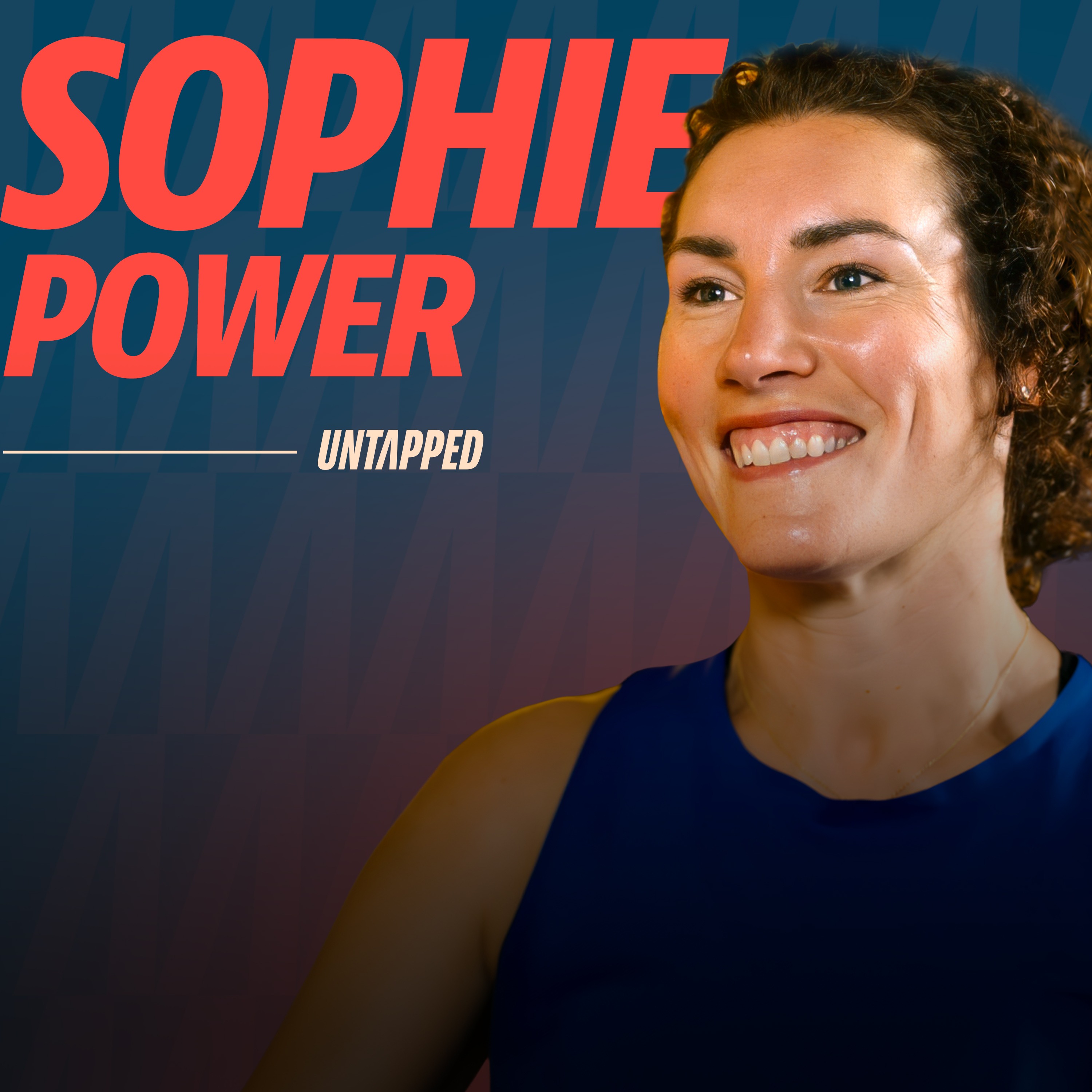
Ultra runner and campaigner Sophie Power discusses her viral UTMB 2018 photo breastfeeding mid-race, how it exposed barriers for pregnant/postpartum athletes, and her SheRaces mission to make endurance events inclusive (e.g., pregnancy deferral policies, period products, inclusive language, better facilities). She also covers elite endurance achievements and safety lessons from her near-fatal coma in Cambodia, plus her 24-hour/48-hour record attempts and training strategy.
Sophie Power is an ultra runner/campaigner who has represented Great Britain, survived a hyponatremia coma after drinking too much water in Cambodia, and has set major ultra records including a Guinness treadmill 48-hour mark (370 km). She has three children and returned to elite racing postpartum.
Equity requires design changes because “same rules” don’t yield equal outcomes; small race adjustments increase women’s participation and commercial viability.
UTMB 2018 breastfeeding photo (Alexis Berg); UTMB pregnancy deferral policy later expanded to a five-year option; SheRaces work with London Marathon, Abingdon Marathon, and Race to Stones/Threshold; Cambodia hyponatremia coma and airlift; 48-hour treadmill Guinness record; 24-hour run used to qualify for Spartathlon and later European/World Championships.
Written by AI. May contain mistakes.
Sophie shares her unique name's significance and her experiences.
“I was the person who was like never going to choose, like I was never going to change my name because why would women change their name?”
Discussion about the iconic breastfeeding photo at UTMB and its impact.
“my three month old one side pumping the other side and there's a guy asleep next to me.”
Sophie discusses challenges faced by women in racing and the need for policy changes.
“I just thought the organiser might see it and realize that this policy sucked.”
Sophie explains her initiatives to increase women's participation in sports.
“You know, we've got these amazing events, but a lot of them are designed through a male lens because you've got male race directors.”
Learn about the challenges women face in sports and the ongoing fight for equality.
“conversations with people who have beliefs so ingrained that women don't belong on start lines.”
Explore the motivations behind embracing daunting challenges and personal growth.
“So I'll just run a long way with she races as well.”
Understand the critical need for safety measures and preparation in ultra-endurance races.
“And a lot of what I've found over so many races are things where women are treated differently to men or we've got the men's rules for us and they actually can put us in danger.”
Hear a harrowing story of a life-threatening experience during a race and its impact.
“On Iyanla, The Inside Fix, a podcast from OWN, Iyanla Vanzan revisits the stories, teachings, and insights that made her show Fix My Life a must watch for millions.”
Reflect on life changes and setting future goals after facing serious health challenges.
“ultra running world that I will not do because I find them too dangerous.”
Discover how personal challenges led to a transformative journey in running.
“So I'm looking ahead going, how do I look after my body?”
Learn about the pivotal moments that sparked a new direction in life.
“And I was really at a lost time in my life.”
Explore how embracing unexpected opportunities can lead to self-discovery.
“You know, I trained as a pilot navigating the Air Force when I was at university.”
Understand how a passion for running evolved into a professional pursuit.
“But it was a case of I just did not have a good reason to say no.”
Delve into the challenges of preparing for one of the world's toughest races.
“We did kind of Iceland together, Cambodia, kind of less said better, um, Bhutan, um, kind of Utah.”
Learn about the achievements and aspirations that shape a runner's journey.
“And then you're having another pregnancy.”
Hear about incredible survival stories in the world of endurance racing.
“And for me, I think kind of the story of having the GB vest, I wanted to go.”
Explore the challenges of attempting to set records in ultra-endurance events.
“and he would bite their heads off, and this is no joke, and drink their bat blood to stay alive.”
Understand the importance of mental strength in endurance sports.
“Was the idea to try and bank as much as possible early or, you know, who advises you on this or are you in a league of your own when it comes to this?”
Learn about the mental and physical challenges faced during ultra-running events.
“and then kind of see what happened, kind of just like well within myself and then kind of see what happened, kept going.”
Discover how personal motivations can shape running goals and achievements.
“Is there anything on your bucket list that you haven't achieved that you'd like to?”
Understand the role of community and support systems in achieving athletic goals.
“kind of have kids in a camper van alongside her and like, and a hubby and a crew in a car and she's just not stopping.”

Get the gist, explore an idea or ask about something said.
 Claude
On UNTAPPED with Spencer Matthews, what are the key points of this episode?
Searching your listeningAutomatic transcript. May contain errors.
0:00I'm Spencer Matthews and you're listening to Untapped, where elite athletes and inspirational people show us how we can all unlock our true potential. This week we're joined by ultra runner and campaigner Sophie Power, a woman whose now iconic photo of her breastfeeding mid-race changed the sport forever. But her story isn't just about reform, it's about elite performance and resilience. From surviving a near-fatal coma in Cambodia to breaking records for 24 hours and 48-hour runs, racing for Great Britain and across entire countries, she's shown what's possible when purpose and endurance collide.
0:33Let's get Untappd with Sophie Power. Sophie Power, welcome to Untappd. Great name. I know, I married for it. I was the person who was like never going to choose, like I was never going to change my name because why would women change their name? like what men don't have to and then I met Mr. Power and I thought I'll have that I mean it's it is great we can move on I'm sure you get told that a lot that it's a very cool name it helps and when I was running across Ireland I had Kate Strong on the bike and it's like the Kate Strong and Sophie Power show and it was brilliant it was just we were laughing about our surnames and how you kind of you lean into them a little bit I think sometimes I think so I think well there's not much to lean into with Matthews I have to say it doesn't keep me going when I'm kind of you know, feeling the pain.
1:20Can we talk about the, what became incredibly viral photo of you breastfeeding at the UTMB 2018? It's an absolutely beautiful photo. Yeah, Alexis, I mean, Alexis Berg saw it and took it. He's one of the best trial running photographers in the world. And just, I guess he's framed me kind of breastfeeding my three month old one side pumping the other side and there's a guy asleep next to me. and I think it just tells the story of a it's not even a story about running it's just a story about a mother's struggle to do everything and to have our goals after we have children and get back to where we want to be it's an ultra running story but really it's about mums and I shouldn't have been there in the first place I think it's part of it that I had this place and I lost my first place in 2014 for being pregnant it finally takes me four years to get another place in this iconic race And I realized that I'd have a three-month-old baby on the start line.
2:20And I couldn't defer my place again because they said no. And I thought, I'm just going to do 10K and just experience the start line. We booked a holiday to Chamonix. I had my three-year-old son with me. And I had a really good recovery from pregnancy at six weeks postpartum. I call up my old coach, Robbie, go, Robbie, will you train me for UTMB? Just had a baby. It's in a few weeks' time. And he says, absolutely not. You are crazy. You can't do this. I'm not qualified. But he introduces me to Eddie. And he said, she's going to say no too. But we had a conversation. She's like, you're going to do it anyway.
2:56I'd love to help you through this. Let's see what you could do. Maybe we could get you to halfway, to Cornwall, which is where the photo is taken. And yeah, I was in Chamonix the week before. We were seeing the shorter races finish with kind of dads crossing the lines with their kids and the kids celebrating. And my three-year-old goes, that's going to be me, mummy. I'm going to be crossing the line. I'm like, oh God, I've got to actually finish this race. So the photos, you know, me, you know, breastfeeding, it's halfway through the race. I've been 16 hours without being able to breastfeed. Any mum that only breastfeeds will know that you've got like two massive watermelons.
3:30I was like trying to squeeze them out behind trees and just manage myself, manage kind of being a mum and get there. And then this photo was taken. I thought nothing of it. I just thought the organiser might see it and realize that this policy sucked. Like I should be allowed to do this race that I've been dreaming of doing for years, the year after when I was fit and ready. That's all I thought would happen. And then a few days later, my life is turned upside down by it going viral all around the world on every single kind of major news station and newspaper. Because it's not a running photo, it really does just symbolize the struggles that we face and that, you know, we maybe shouldn't have to face.
4:11You focus quite a lot now on helping women get to start lines. I think that's from from the race. So I straight after the race, I had so many race directors call me and say, we don't have a pregnancy deferral policy. And it's not that we don't think women should be, we just never thought about it because, and they would say to me, we're men, and we've never had to get back after having a baby. So we don't understand that, you know, women might want to and how we can help them. And they were all writing these deferral policies in. And, you know, I campaigned for UTMB to have it. And now I work with them really closely and they've got an amazing five-year policy.
4:47And it's for fathers as well, and adopted parents and surrogates. But I found a she-bases because I realized that it's not pregnancy that's the only barrier to women. Therapy's biggest impact doesn't show up in some dramatic breakthrough. It shows up in the smallest moments. You bite your tongue instead of escalating. You put your phone down instead of firing off that text. You say what you actually mean instead of what would hurt someone else the most. Nobody applauds those moments, but they quietly change your life. That's what growing feels like, and that's exactly what Grow Therapy is here for.
5:24Grow is therapy that works, covered by insurance. Sessions average$21 with insurance, and some pay as little as$0 depending on their plan. There are no subscriptions, no long-term commitments. You just pay per session. Grow connects you with thousands of high-quality, licensed therapists across the U.S., offering both virtual and in-person sessions, nights and weekends. You can search by what matters, like insurance, specialty, identity, or availability. And you can book a therapy session in minutes and begin in as little as two days, not the national 48-day average. See if you could pay as little as$0 for therapy in seconds at growtherapy.com slash start now.
6:06That's growtherapy.com slash start now. growtherapy.com slash start now. Availability and coverage vary by state and insurance plan. Hey, it's Tony from Tony Told Me. On Iyanla, The Inside Fix, a podcast from OWN, Iyanla Vanzan revisits the stories, teachings, and insights that made her show Fix My Life a must-watch for millions. With fresh eyes, she re-examines those lessons with greater clarity and shares new wisdom for the challenges we face today. Personal growth evolves over time, and there's always room to find new meaning in old lessons. Listen to Iyanla, The Inside Fix, wherever you get your podcasts.
6:49Who says Halloween only lasts one day? With Wayfair, one night of Halloween becomes a whole season at home. From larger-than-life yard decor and moody lighting to festive accents for every room in the house, Wayfair has what you need to make Halloween feel like magic all in one place. Because the best Halloween memories aren't made in just one night. They're made all season long. Shop Halloween decor now at Wayfair.com. That's W-A-Y-F-A-I-R dot com. Way fair, every style, every home. You know, we've got these amazing events, but a lot of them are designed through a male lens because you've got male race directors.
7:29And women are underrepresented on start lines, especially the longer distances. So what can we do that racers can do really easily to make them more inclusive of women? And it's everything from those T-shirts that they say are kind of unisex, but they're male fit. Like all of mine fit me beautifully when I was 37 weeks pregnant. but the peer products you know i've dnf'd people have dnf for peer products not being available enough toilets um the language they're covering the men's race and saying the winner is and then the female winner and there's two completely separate races when you mix women on start line um looking at how we make the language more inclusive like the pictures if you just have the start line it's often just the men so women don't feel maybe we belong there women of all shapes and sizes and colors so really simple changes so we got the london marathon to put a pregnancy deferral place in that you still have to pay twice if you have a baby which is ridiculous but at least you have that opportunity so she races is just i guess my passion project that has exploded and gone global and we work in india we work in isbekistan in turkey and australia in the us all over the world um just really trying to get more women because i think and and you'll probably think saying finish lines really change your life like crossing that finish line is life changing.
8:43It's not about getting a medal. It's about what that does to the rest of us and our lives. And if we can get more people able to achieve their goal, then, and if I can play a small part in that, then it's an amazing thing to be able to do. I think it's incredibly admirable. What an amazing cause. And it's, it makes so much sense now that you talk about it. it's things that you wouldn't think of because you're you're a guy and it's not your fault that you haven't i think and it's other things that like when we think about women's safety kind of explaining to guys that if you run close to us from behind or wear dark clothing um it can make us feel unnerved and men don't realize because you don't walk down a dark street feeling how i walk down or run down a dark street and we just have to communicate and i think you know we proved um We worked with Threshold, who run Race to Stones, on the project and say, we're going to make these races really inclusive.
9:39And they got kind of double the women on a 50k and many more and more men because it got brilliant media coverage. Like this is not something we're asking to do because we're a charity. This is good for the sport. And so proving it's commercially viable and going to race and saying, this is how we'll get more women on your start line. Abingdon Marathon made very, very small changes. You know, kind of they've got they sold out the race the first time in three years. and they got kind of 2 ,000 more women on there. We're not asking for kind of races to be made easier. We don't need that. We're really good athletes.
10:12We just want them to be a bit more better designed with us in mind. It's incredible. But it's a bit of a, yeah, it's taken over my life. And I think that's one of the issues is I think I can't say no to helping someone that wants to go against a race director. So we can fund raising for SheRaces, do more research. We've done triathlon as well. We work with Ironman. looking at kind of athlete behavior on races, looking at all the ways we can safeguard women to be the best athletes we can be. But yeah, She Races is my kind of, it started really small and now it's quite exploded. So it's, yeah, my husband's like, when are you going to get a proper job?
10:51And it's like, yeah, just give me another year. Just give me another year to fix everything. And then I'll go back to being a CEO. After that photo made as much noise as it did and went as viral as it did, did UTMB change? Do they let women defer now when they're pregnant? I mean, it took quite a few years to persuade them. But now they've come full circle and I work really closely with them. So, you know, they've got a five-year policy where women can get their money back and then they can get into the race any time at five years afterwards. And that rolls if you have more babies. But I think more than that, they do it for the partner.
11:28Because these are big races and you pay so much money to be there. And, you know, if your partner's about to give birth, you want to be with your partner. You don't want to be racing and you give up that opportunity. But for me, it's that they've embraced kind of almost all of the She Races guidelines. And these are the putting period products at the toilets, having more toilets, really looking at the media coverage. Like these are professional athletes racing and having kind of equal crew on the women's race as well as the men's race is like a turning point in the sport because these athletes need that coverage to get them sponsors.
12:04And, you know, we've got these T-shirts that are here for the women's race. We want to follow that because that inspires other women to come into the sport, looking at all the things that they have on changing facilities, having private changing facilities, having kind of the language, supporting kind of grassroots organizations. They've given SheRaces some support to do some more research, to find out better ways that events can cater for women. So it's a full circle. And for me, the amazing thing is they've just committed to roll these guidelines out to 75 races across the world. So for me, this powerful organization, they're going to be putting period products in races all over the world that other athletes are going to see and then go, we should always have this.
12:49Equity is not the same as equality. Having the same rules for men and women is not going to equal outcomes. Women, we have babies. and they've been brilliant. And we had all these races adopt the SheRaces guidelines kind of straight off and go, of course we want to do this to support the female athletes. We had a lot of resistance for other races going, oh no, it's just too much money or we don't know why we did it. And that's why we did the analysis with Threshold to prove that it would make them money because there are races, there's big commercial entities and it's quite hard to get them to do something they think is donating to charity.
13:23but when you show them it'll make them more money you get more women on there and then working with brands like we'll kind of go to brands to get the change in london marathon we had to go to their sponsor and say you're sponsoring a race that's not allowing women to defer an entry when they have a baby and the sponsor put the pressure on so you know we will have to go to the brand the brands are understanding i mean i would say if brands only sponsored races that were inclusive of all athletes, you know, She Races is closed. And I could go back to running because all races need sponsorship. So going to the brands, there are dinosaur races, I call them.
13:57And we call them dinosaurs because, you know, the dinosaurs went extinct. And it's quite difficult to have a conversations with people who have beliefs so ingrained that women don't belong on start lines. And I hate to say that this exists still, but it does. And so we just don't spend the energy because I could spend all my energy fighting someone that's not going to change their mind. it's been really tough with London Marathon they will not change their mind on charging women twice to have a baby I could spend a lot of time fighting that I hope it's going to change but I can work on all these races globally that will support us and that's what we focus on because change is happening when people see it and things like cut-offs women don't sign up to races that they don't think they can meet cut-offs and just changing Abingdon from 5 hours to 6 hours so many more women on the sideline and men that were worried about that cutoff.
14:51It's not just women. So that was really exciting to see. And hopefully these kind of changes keep going. Is it always male race directors who kind of are the ignorant ones? So not always. But I think when there's mothers, and we do have, we have pushback from women. A very small amount. I think when we put our triathlon report out, there were some women that said, well you know this is what sport is you tough it up and there are women that have jumped through all these hoops and they got there and they believe that other women should have to do the same and and you see this in in in career in companies sometimes you know kind of there's one there and they're not supporting the others i believe that you know we've climbed to the top we put that ladder down and we put that ladder down for every other woman to get there and we take away all the barriers that do not need to be in her way for her to get there and but that that that pushback was interesting.
15:44And it makes me realise that actually, when I was younger, and I didn't believe there are any barriers, would I be the one saying everyone toughen up? Probably. So I've got a lot of empathy for these women that don't see it. And especially when they have children, I think they will see it because it's really tough to get back. And when we are supported, it's life changing for us. So there's pushback, but there's always pushback. And, you know, I know why I'm doing it and I'm not going to stop. So I'm quite good at running a long way. So I'll just run a long way with she races as well. Your 24-hour run record is particularly impressive.
16:24235 kilometers you've achieved. That's really good going. I mean, I had a really spontaneous, unprepared stab at it. But I think we share some similarity in that regard. You know, you signed up to the Marathon du Sable with having never run a mile, I hear, which is not dissimilar to my Marathon du Sable experience. I wanted to talk to you about, like, why do you love taking on big challenges that, in essence, you're not sure if you're ready for? I think that's the joy in them. I think that when you take on a challenge that you don't know that you can achieve, and then you achieve it, that opens up so much more in your life.
17:04and I think there's no point signing up for something that you know you can do because you do the training and in the training, well, I don't have to do all this training because I know I can do something. Something that's kind of slightly scary, but not completely crazy, not something that's a kind of 10 % chance. Something that if you know you do the preparation, you've got a good chance of achieving and then you're like, well, I do this. Well, what else can I do? And I think doing it on a physical challenge for me opens that up to other areas of my life and in my career and other kind of goals that I have kind of thinking, well, I had this goal and I thought it was scary and I achieved it.
17:38Why am I not thinking about doing something a little bit harder? And that's kind of exciting. If anything's to be taken from what you're saying, there's a really good lesson in just throwing yourself into something. You know, for me, that 24 hour experience was quite rough. Didn't take any, I would have loved to have had you there. I usually call me it like you wouldn't have got hypothermia. You've probably got quite a few more okay on the numbers. But I think there's a joke. I think there are people that throw themselves into you. Obviously, you're on a track. I think there are people that sign up for things and go in unprepared and are putting themselves at risk in some of these longer events where, you know, you don't have people around you to look after you.
18:20And I think it's important to, we've got all these ultra marathoners doing these 100 mile races and showing up prepared, especially when there's a race organizer that's kind of looking after you is really important. And there's so much detail out there to know how to train. For me, I'm not going to go to an event unless I control every single controllable I can. There is so much I can't control. Like in the world, I can't control if my stomach turns. I can't control the weather. I can control absolutely everything I can, because that gives me the best chances of success. And when I stand on that start line, I don't want the reason for failure to be something that I could have fixed beforehand.
18:57I'm sure the list is endless, but it'd be interesting to hear just some experiences where, you know, all the controllables have not been controlled and something's gone really pear-shaped. And, you know, just can you take us through that experience? I mean, I shouldn't really be able to be alive. I was in a coma in the race with hyponutremia. So this is pre-kids. I'm in Cambodia and I drank too much water over a stage race. And I come back to so many things that went wrong and yeah, I've just finished my book. And a lot of what I've found over so many races are things where women are treated differently to men or we've got the men's rules for us and they actually can put us in danger.
19:45And so I had a two liter bladder and I was being told to drink that whole bladder between every checkpoint. I mean, I'm five foot three, I weigh 57 kilos. I need less water than your massive six foot kind of guy. And I just drank too much. I couldn't stomach my food. so I wasn't getting any salts. I had these kind of salt tablets, but they were very, very weak. I now know I need actually quite, I'm a very salty sweater. I'm the one that's like covered in like tiger stripes after a long run now. So I need a lot. And I was leading the race and on after day three, the long stage, didn't know where I was.
20:20It's all on camera. This boundless TV crew actually had the video of me going into a coma. I looked like I've had a stroke. And I left it to Seam Reap. airlift to Bangkok in helicopter. They got me a helicopter within 16 minutes of calling one. And my family were given a telephone call. My husband got the call and said, there's 50 % chance she dies and 50 % chance she has brain damage. You need to get on a plane. Therapy's biggest impact doesn't show up in some dramatic breakthrough. It shows up in the smallest moments. You bite your tongue instead of escalating. You put your phone down instead of firing off that text.
20:59You say what you actually mean instead of what would hurt someone else the most. Nobody applauds those moments, but they quietly change your life. That's what growing feels like, and that's exactly what Grow Therapy is here for. Grow is therapy that works, covered by insurance. Sessions average$21 with insurance, and some pay as little as$0 depending on their plan. There are no subscriptions, no long-term commitments. You just pay per session. Grow connects you with thousands of high-quality licensed therapists across the U.S., offering both virtual and in-person sessions, nights and weekends.
21:36You can search by what matters, like insurance, specialty, identity, or availability. And you can book a therapy session in minutes and begin in as little as two days, not the national 48-day average. See if you could pay as little as$0 for therapy in seconds at growtherapy.com slash start now. That's growtherapy.com slash start now. growtherapy.com slash start now. Availability and coverage vary by state and insurance plan. Hey, it's Toni from Toni Told Me. On Iyanla, The Inside Fix, a podcast from OWN, Iyanla Vanzan revisits the stories, teachings, and insights that made her show Fix My Life a must watch for millions.
22:21With fresh eyes, she re-examines those lessons with greater clarity and shares new wisdom for the challenges we face today. Personal growth evolves over time and there's always room to find new meaning in old lessons. Listen to Iyanla, The Inside Fix, wherever you get your podcasts. Hey guys, it's Drew from the comment section. Some days my skin just needs a little coverage and other days I want to go full glam. For those everyday moments like running errands or grabbing coffee, I've been loving the Merit Minimalist Stick because it's a foundation and concealer in one that gives me a really natural skin-like finish.
22:57But when I want more coverage, I'm reaching for the Hourglass Vanish Concealer every time. I know I'm not the only one who struggled to find the right foundation or concealer shade, which is why I always shop at Sephora. They have the best brands all in one place with so many shades, coverage options, and finishes, plus expert beauty advisors, free samples, and shade matching tools both online and in store. So whether you're looking for barely there coverage or full glam, Sephora can help you find your match.
23:27And my sodium was 108. And I think the minimum is about 130. And they wanted to airlift me to drill a hole in my skull to let my brain expand. But then, yeah, in six days intensive care, my parents had to see that. and it made me completely reflect. I think it changed my life. It was the worst thing to happen to my family. I have no idea because I don't remember. I woke up and then kind of my brother's there getting me some Dunkin' Donuts. It was the best food near like the Bangkok hospital. And I know clothes. And my mom found these like maternity pants, which then I actually like wore what I had was pregnant.
24:04It was great because I had nothing. I had no kit. I had nothing. I had just a passport. And it made me reflect on a life that, you know, could have ended. And then it made me really reflect on what I wanted in life. And it was that moment that we decided we want to have children. We wanted to kind of change what I did. But I also knew the risk of my life and what I do and what I do. And there are things in the ultra running world that I will not do because I find them too dangerous. And so I look at races and I look at their medical cover very, very carefully now. And I look at what kind of route are beyond, I have really bad brain cancer disease.
24:41So I get kind of cold very, very quickly. I will not race in the winter. My husband does like Arctic ultras, like across northern Sweden in like minus 40 degrees. I would not get past like my one. Is that the Beyond the Ultimate one? Yes. See, he's done that twice. I've done that. And it's nothing short of grim. He loves it. But there's the icicles, the picture with the icicles and the eyelashes. it's just really cool and I will never have that picture because I cannot go somewhere that cold so I took that picture of myself with the icy eyelashes because I could feel my eyes were kind of like clamping shut on top of this hill and to your point it was minus 36 and apologies if I've told this story before but I took my phone out and I took my glove off oh no yeah like to take this photo and I took just a quick selfie like two or three selfies thinking i'll send this back to you know my family uh when i'm next you know when i finish this was day two i think and it was like one of the worst experiences like my hands didn't recover for the full full day it was like it was i felt like it was a very serious problem at the next checkpoint it was like i was had it right next to a fire like trying to like heated up and like it went cold again as soon as I left like like it was a serious like problem and and obviously I've no experience of frostbite but I thought that was probably you know somewhere near how that might feel obviously I've kept my hand um but it was it was awful that race it's it's it's something I could never do but I think I look at races and I also look at you know matches how many matches do I have to burn in my lifetime and the races I put myself through are really, really hard on the body.
26:34And they take months to recover from. It's not a case of kind of weeks. And Ireland took me several months because that was kind of three days, three and a half days with two hours odd sleep and pushing and I got too hot. The treadmill was a good kind of eight weeks. Like we took blood markers on me after the treadmill. And this company called Thriver, they were looking at like how long it takes to recover, looking at inflammation. And the one they took straight after the treadmill, they've done 40 ,000 tests. And I was the 13th highest they've ever seen. And they're like, if we didn't know what you just done, we would send you straight down the A &E, your body is shutting down.
27:15And you see how it comes down and learning to rest after if you don't recover, you put yourself at like a long term kind of risk. So for me choosing these challenges, I've got to be able to recover after them. I've got to make sure that they're safe for me. I've got three kids. And they're my absolute priority in life. And I'm never going to put myself at risk. So it does limit some of the fun races. I think some things are like, oh, maybe I want to do that. And I think, do you know what? No. And so less challenges, harder ones, proper recovery, you know, thinking about, you know, when I'm 80.
27:53I have a friend called Edda Bauer, and she's 80. And she runs ultramarathons still. She does multi-day, 17-day, kind of 1 ,000 kilometers. And I want to be her when I grow up. So I'm looking ahead going, how do I look after my body? How do I make sure nothing ever happens to me like I did in Cambodia? How do I choose my challenges to recover? And how do I make sure that, you know, I'm still doing what I love later in life when hopefully the kids have left and I've got more time to do it? And I've also read that you took on the Marathon to start. What made you want to do that, having no running background?
28:30I think when someone gives you an opportunity and you don't have a good reason to say no, you should say yes. And I was really at a lost time in my life. Like I'd just lost my job in private equity. And my world had been blown apart because I always thought that men and women were equal. And I'd never seen a barrier to being a woman. and I had a successful job in M &A, you know, kind of, I went to MBA school and I got married and it was only a couple of months later that they had to make someone redundant and I was told, well, you know, you've just got married and you should go and have babies and take some time out because, you know, women's brains, they, you know, they turn to mush when they have babies.
29:14So take some time out. And my whole world was blown apart by the realisation that, hang on, I might not be able to achieve what I thought I could because I'm a woman. And I genuinely never seen it before. I mean, I'd grown up kind of not seen a difference. When I was 11, I went to a girls' school. You know, I trained as a pilot navigating the Air Force when I was at university. I just didn't see any different. And I was so lost. And I went off to Thailand to learn to kick people in the head for a couple of months in a white eye camp and got back. And I met my friend for lunch. She'd been in the air squadron with me at university.
29:49and we'd done this thing called the Nijmegen marches together, which was 100 miles over four days. And I thought nothing of it because I'm a hiker. And I think hiking backgrounds are great for ultras because most people walk most of them. It's what they don't tell you. It's like, if you can walk well, you can do an ultra. And he said, he just told me about it in the sub and he met me and he said, you should do this. And I said, but I'm not a runner. He goes, everyone walks. He goes, everyone runs 100 meters, realizes it's in sand and they're knackered and it's 47 degrees and they're just going to walk.
30:23You're great at walking. This will be good for you. And I didn't even look up what it was. I just phoned a charity that had places. I had nine months to train and I just signed up knowing that I would trust him that this is what I needed. And it was absolutely what I needed. And I think not such a physical challenge, but the being stripped back to who you are in a tent of seven guys I've never met who kind of some became close friends, people you just never meet in day to day life and just being able to be myself not the me that had this degree in this career just, just to be Sophie. It was amazing.
30:59But it was a case of I just did not have a good reason to say no. And I knew I needed something. And it just turns out that running across the desert was that So you finish the Marathon de Sable in the Sahara with very limited running experience. I'm assuming it's, you know, this incredible life experience that feels new and exciting. When do you make the shift into this being a huge part of your life, a profession, you know, chasing world records? When did you realize that you have a gift for it? It took a long time. I think the Marathon de Sable, for me, it was a, this is the best holiday ever, because you're exploring a new country, and someone set the course for you, and you're meeting amazing people, and really getting out of kind of my work in finance.
31:51And I loved it. So I went and I took husband and I signed us up for race Nepal. We did kind of Iceland together, Cambodia, kind of less said better, um, Bhutan, um, kind of Utah. And I love this. And then I start realizing it's a long time away from home. And I start thinking, well, I can do these 100 mile races because everyone's problem is you go on a race and people talk about other races they've done and go, oh, that sounds good. So I thought I could try a 100 mile race. And I kind of tried that and realized the longer the race, the better I was, I could just keep hiking, I could just keep going.
32:28I think I burn a lot of kind of fat as fuel. So I don't need as much as other people do. Instead, are you talking about as an alternative to a carb source? Yeah, my fat oxidation rate is really high. So I can manage kind of... I'm also really good at eating. Like my best muscle is my stomach. Like I can pack in the food. I love... I can eat anything on a race. So this is great. I was doing 100 milers, but still didn't take it seriously. And I wanted to run the UTMB and the Ultra Trail of Mont Blanc, the 106 mile race around Mont Blanc, I got placed in 2014. I lost it because I was pregnant with my first son and they didn't let you defer places for pregnancy, only if you were injured.
33:12And I got in, I was like, what do I do now? I wanted to get in. I tried the next year, I didn't get in. And then I tried in 2016, I didn't get in. I finally got in in 2018 and couldn't defer and then did it with my three month old. But I signed up for this race called Spartathlon, which is I would say arguably the biggest the hardest big race in the world it's 153 miles but you've only got 36 hours and it's following the footsteps of Pheidippides kind of who set off at sunrise from Athens to get to Sparta to ask for help for their fight against Persians and then he went back and then he ran the marathon and then he died but he'd done like 300 miles before he ran the marathon and then he died and so iconic but it's so tight on cut-offs um because it's a very fast race so I enlisted the helpful coach for the first time Robbie Britton said you've got six months to get me there and we only I only ran 37 miles a week on average for six months but somehow I finished that race and thought I can do a bit more like this is this is actually kind of I was only I think the the eighth or ninth British woman to ever finish the race and so that started the worst but I'm in pregnancy So I'm having a baby, I'm trying to recover her.
34:27And then you're having another pregnancy. And it was after my third baby, Saoirse, that my coach said, what makes your heart sing? What do you want to do? And I said, I want to go back to Spartathlon. And that was, I want to go back to this race because it's so iconic. And I got injured 138 miles in. I got a big edema in my quad and I had to limp down the last half marathon. And you've got these kids on bikes and you finish the race by kissing the foot of the statue and it's just beautiful. I want to run the finish. To qualify, you can run a 100-mile race, a 24-hour race in a certain kind of distance.
35:07Or if you run 25 % quick more, you get an automatic place. And I just didn't want another ballot. So the quickest way to do that is run 24 hours around a track. And so I went to kind of Bolton-on-Thames track and I ran, my husband was at the side. he'd never crewed before he was learning off all the other crews what to do he's now a very good crew and I finished and I think I had I think 214 kilometres or something and does this still exist? which one? the Spartathlon? yeah you should do it sounds great it is honestly it's also the best it's a holiday you all go together there's massive I think a massive great wedding afterwards it's absolutely iconic and everyone's partying together.
35:54And, but it's just that story that's so, and you cross Mount Olympus in the middle of the night and it's working. He asked help from the God Pan. I remember like, I said, please help me finish this race. It's iconic. Yeah, I'll help you train for it. You should do it. That's so cool. But it's amazing. But it's so, I just, I wanted that. That's what I wanted. So I'm running this 24 hour race only to get this auto qualifier. So it's 212.5 I needed to run. ran a bit more than that and they're brilliant I'm going to Spartathlon this year except for I get a message from Robbie and he said do you realize you run a GB qualifying time for the 24-hour team would you like to apply to come to the European Championships in Verona in a few months and then I was like oh okay and Eddie'd been coaching me since 2018 since she helped me get run UTMB with a little tiny baby and she said you could be good at this and so I went to European Championships, then went to the Worlds in Taiwan, and I was first Brit.
36:53And yeah, now I'm going out to Albee in two weeks for my third GB vest, which I got all my GB vests after having three kids. And for me, I think kind of the story of having the GB vest, I wanted to go. I've still not gone back to Spartathlon. But I think for me, I need to come. Yeah, let's do it together. Let's go. So much fun. And by the way, that idea of crossing Mount Olympus in the middle of the night and like praying to pan did you say oh it's a bit of me that did you ever see the guy who uh got lost during the marathon was up that italian guy i heard i heard about it he how do you get lost in the marathon i mean it's flagged so well yeah so he this is a long time ago now but he went off piste of course for ages like 30k of course couldn't see any more flags got lost in the middle of the desert all alone by himself.
37:50Drinking his own wee. He drank his own urine. He drank bat's blood. So he found a like a little cave thing. Like a little religious room almost. Like in the middle of the Sahara. That had like a tombstone in it. And in it were a bunch of bats. This is in the middle of the Sahara. And he would go in there and he could pick the bats off when they were asleep. and he would bite their heads off, and this is no joke, and drink their bat blood to stay alive. And then he, after a long period of surviving in this way, he left this room to just go and die in the desert, basically. He just ventured out into the heat with nothing, just to keel over and die.
38:39And he was found by some African military who happened to be doing like it all meant like mad stuff. He then went back and did it another five or six times afterwards. He was declared dead, by the way, by Italian news. So like he was lost and the news was he is, he's dead. And he appeared back in Italy, like to his family. It's amazing stuff. You've obviously ran 24 hours multiple times. You've also ran 48 hours before. Do you hold the record, the treadmill record for 48 hours? Yes, the Guinness World Record. How far did you go? 370 kilometres. In a single stint? You stop at all? So we had a few naps.
39:25It was a worse place to do it. I mean, doing it in the National Running Show. The point was to get the record, but it was not the right place to try and get a record. I mean, you do it in kind of air-conditioned, kind of controlled environment where it was quiet. and this was a national running show, it was so loud. So I tried to nap, going to get 20 minute naps so many times. And I finally got one, I think the morning of kind of day three when I'd just broken the record and thought I could just, before the show opened, I could get that nap in. But yeah, caffeine naps, you knock a caffeine gel, you lie down for 10 minutes, you get the 10 minute nap kicks in, the caffeine kicks in, you can go again.
40:03But that atmosphere was, like I really wanted 400k and I knew I had it in me. and I'm not going to do it again though. I think... 400k is wild. And also just how often did you allow yourself a break? Was the idea to try and bank as much as possible early or, you know, who advises you on this or are you in a league of your own when it comes to this? Are you strategizing it or do you have help? Very much so. I've got an amazing coach called Edwina Sutton and she's kind of, was a GB, kind of ultra runner. She also has three kids who are all slightly older than mine. So I think part of it is working out how it fits in your life.
40:42And having a mum of three, kind of advise a mum of three, makes it so much easier. She knows, I'm like, it's half term week, we need a down week because nothing's going to get done. But there's the strategy, you know, we talk it through. I know I'm not a naturally talented runner. Like I listened to like the Ewan Thomas episode and like he found out at sports day that he just won everything. And that was great. I was second last in the mile at sports day. So I know that I'm not ever going to be a great 5k runner. I've got a lot better. I'm very much a kind of endurance runner. So I know that for me to do well, I need to have everything else in that.
41:21And I do a lot of strength work, but controlling my mind is the most important thing. I think my mental strength is far more important than my physical strength. And I know that I can just keep going. So I don't taper it. If I do it, when I'm running the world championships, I won't even walk. I won't take a sleep. I'll just keep going and keep going. And taking all those seconds back that other people might take, kind of stopped at the side of the track. So the strategy was to, we had an amazing science team helping out. So they were kind of crewing me, as well as doing loads of measurements to go, what can we learn from what's happening?
41:55But I was going to run an easy kind of 24 hours, so kind of 220K, and then kind of see what happened, kind of just like well within myself and then kind of see what happened, kept going. And I basically kept running as long as I could, started to take a couple of walk breaks through that night and then broke the record, which was previously, I think, 3.40. And then I got completely disorientated and I couldn't run on the treadmill. And so we're going, what do we do now? I could run off the treadmill to the toilet, but I couldn't run. I would fall off the back of the treadmill. and the decisions made that, you know, it's not about the record.
42:34Let's put as much into it as we can. But the whole point of being there was to kind of show to people that, you know, you can do hard things and all the people that kind of, I think 30 ,000 people watched. And it was a case of them saying, well, I might sign up to that 10K. I might try and do a half marathon because this woman who has three kids and wasn't a runner is on a treadmill running for 48 hours. and can that just make me rethink what might be possible for me. So that was the whole point. And it was to raise funds for SheRaces, making my nonprofit, to get more women on start lines. But that was it.
43:08So I think we had to re-strategize. We had to rethink what was happening. But I went into it knowing I could run a good 24-hour and then walk it out for the record. I knew that was well within me. I think I was more confident of breaking that record than I was confident about breaking the world record to run the length of Ireland. because that record was so, so, so tight and held by such an incredible ultra-runner Mimi Anderson. So it was a safer record in a way, and that's why maybe I was a bit more comfortable with being public. But I didn't know how much I could put into it. And in the end, I just still feel proud it was 370, because I know what I went through.
43:45And you saw me on the treadmill, and I was still, that was Saturday. Sunday, it was not looking so good. But it really did teach me how much you can go through when you have a why and when you want to do something. Is there anything on your bucket list that you haven't achieved that you'd like to? That's a great question. I'm looking at more challenges. I think I don't like racing.
44:12And where I come in an event versus someone else means absolutely nothing to me because I can't control their performance. And so doing these races, it's great to experience the course. but podiums and like kind of trophies. I got really excited at Race to Stones. I had no idea it was in first place until I saw the tape. And my first thought was, kids are going to be so happy because I'm going to take a trophy home because they love trophies and they love kind of show and tell and kind of the island record went into Guinness World Record Book, the actual book this week. So they took the school, the booking to school library and they were so happy.
44:47And that excites me. But winning doesn't excite me. Running for Great Britain does because it's part of a team and it's my country. and that's the only way I'll push myself and I think in a mass participation race now so I love the She Races event we put on that was women only and I want to put more of those on but as an athlete I think it's the challenges and yeah I'm raising funds to do a pretty cool expedition race next year I'd like to run across another country those kind of things I want to go back to Spartathlon I think you're coming with me so it's okay I'm into it. But it's difficult.
45:27I think when things come up, I think your heart's really got to sing and you've got to really have a why because the events that I do, they're all hard. Running a sub three-hour marathon would mean nothing to me. So am I ever going to train up for it properly? No, because if it gets hard at mile 20, I don't actually care. And I think it's finding that challenge that I really care about that affects others. When I ran the length of island, And it was, I had written in my head, it was like one woman, one girl. And the whole point was that if one woman or one girl saw me running the length of Ireland and believed that they could do something, they didn't think possible because they've seen this crazy woman kind of have kids in a camper van alongside her and like, and a hubby and a crew in a car and she's just not stopping.
46:14I need a challenge that makes me want to be able to give that back. So I think that, so yeah, I've got a, something lined up potentially for next year. But I love running for Great Britain. And my whole focus is on the world championships and we'll see beyond then. It's not a great answer. I don't have this long. I'd love to run Western States, but it's hard to get in now. But I just want to go to the aid stations because apparently I've never really raced America, but the aid stations, they have like proper food, like really good food. And I love food. I love food. So I think I want to do an American race.
46:50maybe one of the 200 milers just for the aid stations, and then think about some crazy challenges that I hope can inspire others to take on their own challenges. Well, I can't wait to see what you come up with and what you tackle next. What advice would you give to our listeners about how they can untap more of their potential? I think the first thing is finding why you're doing it and the real why and not the first why. And a lot of people have a why, well, you know, my mates have signed up or kind of, you know, this would sound good on Instagram. I'll get loads of likes on Instagram. That's not going to get through you.
47:25The real why, and we have personal ones, you don't ever have to tell anyone, but knowing why you're doing something that's going to keep you kind of focused in training. But I think I was asking for help. And I think it's something that women especially don't do enough of, but we have so many people that believe in us, that want us to achieve these goals. And when I take on a goal, when my hubby takes on a goal, you know we make it a family goal and we're all in there and like the kids know that kind of if they're kind of late in the morning then I'm not going to get my training in but my friends like I have a village around me of mum friends that will kind of take my kids to school so I get an extra 30 minutes and it's taken me so long to ask for help I've always felt that to be strong means you have to do everything on your own and you know you want to go far you go together and so looking around you and asking for that help and the support and the advice, I could do nothing.
48:22I would achieve absolutely none of these challenges without so many friends and crew around me. So that's what's taken me from kind of being a good athlete to being able to break records is knowing why I'm doing it and then having the people around me that can support me to get there. Sophie Power, thanks so much for joining us. Thanks for having me.
48:46hey it's tony from tony told me on iyanla the inside fix a podcast from own iyanla vanzan revisits the stories teachings and insights that made her show fix my life a must watch for millions with fresh eyes she re-examines those lessons with greater clarity and shares new wisdom for the challenges we face today personal growth evolves over time and there's always room to find new meaning in old lessons. Listen to Iyanla, The Inside Fix, wherever you get your podcasts. Who says Halloween only lasts one day? With Wayfair, one night of Halloween becomes a whole season at home. From larger-than-life yard decor and moody lighting to festive accents for every room in the house, Wayfair has what you need to make Halloween feel like magic all in one place.
49:35Because the best Halloween memories aren't made in just one night, they're made all season long. Shop Halloween decor now at Wayfair.com. That's W-A-Y-F-A-I-R dot com. Wayfair, every style, every home. Every student, regardless of race, zip code, or socioeconomic status, deserves an education that prepares them for lifelong success. But how do we deliver on that promise at scale? On the latest episode of the Good Things podcast, Dr. Liz Chu and Dr. Whitney Oakley, two educators spearheading this research, show how one district bright spot has transformed its system to better support teachers and students alike.
50:14Listen to the full story in the latest episode of Good Things from Lemonada Media.
Endurance athlete and women’s advocate Sophie Power sparked a global conversation with the viral photo of her breastfeeding during an ultramarathon, an image that redefined what it means to be a mother in sport.
Sophie reflects on the story behind that moment and how it highlighted the challenges women face in balancing ambition, family, and identity. She also talks about the importance of understanding your true motivation, the power of asking for help, and the strength found in community and support networks.
Encouraging others to take on challenges that feel just beyond reach, Sophie shares how stepping into fear and discomfort can unlock potential, build confidence, and inspire others to aim higher in every part of life.
This is a conversation about courage, purpose, and rewriting the rules of what’s possible.
Sophie takes on the 24H World Championships through October, check out her Instagram for updates 👉 https://www.instagram.com/ultra_sophie/
---
PARTNERS
Hive 👉 Take control of your home energy - smart, simple, and built for you. Find out more here: https://highpfrmc.com/UNTAPPED--HIVE
WHOOP 👉 Join Spencer in untapping your own potential with 1 month free here: https://highpfrmc.com/whoop-yt
Simba 👉 Spencer knows progress starts with recovery. Sleep better with Simba, start your 200-night trial now: https://highpfrmc.com/ut-simba-au
Heights 👉 Stay sharp like Spencer. 20% off Heights with code UT20: https://highpfrmc.com/UT20
GET IN TOUCH
💬 WhatsApp us a message or voicenote ➡️ https://wa.me/message/3WKM4SDWPMAMG1
📸 Instagram: https://www.instagram.com/untapped.podcast/
🎵 TikTok: https://www.tiktok.com/@untapped.podcast
Hosted on Acast. See acast.com/privacy for more information.