Ask ChatGPT
 UNTAPPED with Spencer Matthews
14 Sep 2026 · 57m · 21 chapters
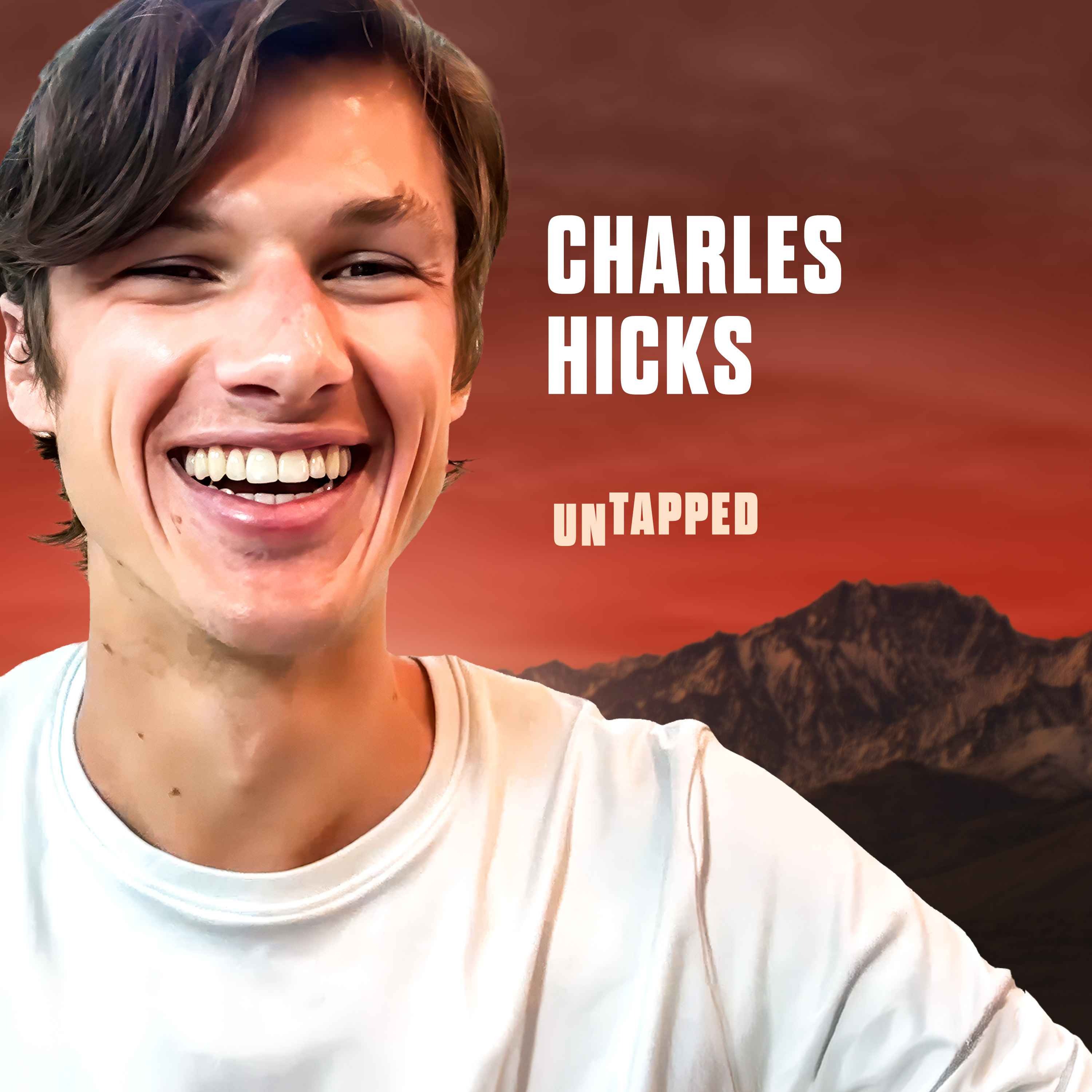
Elite marathon training and racing psychology—why marathoners often train too hard, how to balance discipline with de-stressing, and how belief/trying unlocks “impossible” goals like sub-2:00.
Charles Hicks, 25-year-old elite marathoner. PBs mentioned: 2:04 marathon (2:04. marathon debut 2:09; second-ever marathon 2:04). Also ran a 5K around 13:09 (target 13:05/13:09). Trains with Olympic/Northern Irish ex-Olympian Stephen Scullion (sets sessions, heart-rate/pacing targets). Background includes NCAA/track-to-road progression and COVID-era training changes.
Elite performance comes from suppressing or controlling fatigue internally; early-race doubt can spike pain even when physiologically capable. Sub-2:00 is not a fixed boundary—seeing others do it makes humans try more. Discipline builds progress, but racing needs “letting go” (haze in the barn). Long run is the highest-value workout; easy days must be easy so hard days can be hard. Don’t copy elites’ post-success training—copy their earlier grind.
Kipchoge’s sub-2:00 “production” inspiring Hicks; London sub-2:00 by others (Sebastian Sawe/Kajeltshire mentioned). Half-marathon PB split ~61:30 before Boston; worst feelings came early after an unexpectedly fast first half. Training volume scaled from ~85 miles/week (12 miles/day) to ~130 miles/week, with easy runs in Florida heat/humidity and faster conditions elsewhere.
Written by AI. May contain mistakes.
Charles Hicks shares his experience and mental state during his 2:04 marathon run.
“is how long you're running by yourself particularly the faster the race you know it really striates as as people just fatigue.”
Discussion on how doubts affected Charles early in the race and how he overcame them.
“You start to realize like, okay, this is going to be a good day.”
Exploration of Charles's aspirations and thoughts on the sub-two-hour marathon.
“And so it really just took the belief I already had and just took it to a new level.”
Explore the balance between optimizing training and being in the moment.
“I'm being trained or helped, should I say, by an Olympic athlete, ex-Olympic athlete.”
Learn about the trade-offs between discipline and spontaneity in training.
“I'm very neurotic when it comes to mileage, when it comes to workouts, when it comes to even...”
Discover the evolution of training strategies and mileage through experience.
“But the curse of indiscipline is that every year looks the same.”
Understand the importance of intentionality in daily training routines.
“Are you broadly speaking, just covering that distance?”
Find out how to manage ego and expectations while running in different conditions.
“So I know exactly what you mean about the Florida training, not Florida specific, but my family and I were just away in Spain.”
Discussion on the challenges and achievements of running in different environments.
“you know, a lot harder fought than they would have been at sea level, but still great.”
Exploration of the personal motivations and experiences of runners.
“It's so funny as well that you mentioned the people not caring.”
Insights on balancing training intensity and self-acknowledgment in running.
“I think there's just immense feelings of pride that come with running, whether it be a short session, a good session, even a bad session.”
Discussing the importance of the long run and how to maximize its benefits.
“What's the highest value workout for a runner with limited time?”
Discussion on the differences in training volume between elite and amateur runners.
“I think, think about more than anything right now.”
Explore the challenges of fitting training into a busy schedule.
“Like if you had to do it, you could do it.”
Learn how running without music can change your experience and mindset.
“So when I'm out there, it's like, sure, there's always times I find on my way out the door almost every day, there's a part of me that's like, I'd rather just stay in bed right now.”
Hear insights on goal setting and personal expectations in racing.
“Like I would not be able to run at, you know, 2.45 race pace or below without music.”
Discuss the importance of setting personal goals rather than external standards.
“maybe lie in a more long form version of running itself.”
Discover how data shapes training strategies and performance assessment.
“You can either use it to detach from your physiological experience, or you can use it to lean into it.”
Learn why focusing on how workouts feel is crucial for effective training.
“for a reason, is stacking days where you approach different challenges in a way, in a rhythm that makes it easier every single time.”
Explore the contrasting cultures of running in the UK and the US, and their implications.
“And just a couple more here, because honestly, I could easily do a Hicks part two, because I think there's so much knowledge that you have, you know, on how to run better and just just train well.”
Hear final thoughts and reflections on the conversation and the guest's insights.
“and I'm sure loads of people listening to this will have learnt a huge amount and been inspired by your nature.”

Get the gist, explore an idea or ask about something said.
 Claude
On UNTAPPED with Spencer Matthews, what are the key points of this episode?
Searching your listeningAutomatic transcript. May contain errors.
0:02Charles Hicks, welcome to Untapped. Thank you for having me. Charles, earlier today, when I was made aware of some of your stats, I was literally flabbergasted. You've run a 2.04 marathon. 2.09 in your debut. 2.04 is your PB in your second ever marathon. You're 25 years old. like how does that feel you know to answer what running a 204 feels like i guess first i'd ask you know are you allowed to say expletives on your podcast uh but honestly it really was just a sequence of first i think looking at all the clocks uh i think the crazy thing about a marathon is how long you're running by yourself particularly the faster the race you know it really striates as as people just fatigue.
0:56And so the first half, you're just racing with 20 to 50 guys the entire time. It's almost like a stampede of the best athletes on the planet. And then halfway through the race, all of a sudden you're completely alone. And it's the complete opposite experience. It's all internal. I think there's two ways people take it. I think some people are elite marathoners because they're incredible at suppressing their physiological symptoms. And then some people are elite because they lean into themselves almost meditatively and are able to kind of control the fatigue. And I think that's kind of the way I approached it was, how can I work with myself to sit on that red line for an hour by myself and just keep clicking away the times that are going to get me closer to...
1:46At the time, I was assuming I was running like 205 to 206 because that was my like, you know, one in a billion moonshot type day. And it's almost one of those things where the numbers on the clock were so preposterous, my brain couldn't adapt in real time. So I was like, Oh, those look great. You know, it's hard enough to remember 26 mile splits, right? So every single time I went through, I was like, Oh, that's faster than I thought must be like 205 something. And it wasn't until I rounded that final corner. And I saw 203, because there was a clock right as the home stretch started. And I was like, oh my Lord, I don't know what I'm going to run.
2:23I might as well just... The only thing I was thinking at the end was just make it to the finish line because whatever you're running today is going to be ridiculous. And so I'd say, yeah, it's a weird combination of you're doing the thing that you've prepared most for in the entire universe while also having an outcome that you never even considered for a millisecond of your entire life and balancing those two emotions I think was probably the most fun thing about the race I mean I know that you can see me but for those listening I'm I'm just grinning ear to ear because it's just so it's so satisfying to hear it's so nicely put you know I think so many people run marathons and feel extraordinary pain and suffering and some feel elated and some are joyful you know it's it's a real mixed bag of emotions that distance and so for you just to be pleasantly surprised like pretty much all the way to the end did you have any moments of hellishness darker times during that race or did the whole thing just feel like a bit of a victory lap for all of the work that you'd put in i would say uh funnily enough the worst of times were early on.
3:38We went out in my half marathon PB. So I've never run a half marathon as fast as we came through the first half of the race. And I think what's so funny is obviously I was able to physiologically maintain those paces. So in reality, there was no reason to really doubt myself. But I think because what I was doing was so unexpected and so just unprecedented for my entire career previously, when I was running those splits early on, I think that's when doubt started to actually kind of increase those negative feelings and those feelings of pain and, you know, doubt as to whether or not you'd be able to hold that.
4:16And then I think as I crept onwards and, you know, I think told myself, no, I am capable of running these times, every single consequent mile split started to become more of that kind of, I think, positive experience you're describing where, you know, I felt, you know, okay, that mile wasn't so bad. All right. That mile wasn't so bad. Maybe I really can do this. And eventually I think you've just been running for so long. You start to realize like, okay, this is going to be a good day. It's so great to hear. What did you go through half at like 61? I think it was 6130. And I'd done my half marathon debut the same season about a month or two prior to the Boston marathon.
4:56And it didn't go well. I wanted to go and win. It was a US championship. I felt I was, you know, capable of winning that race on the right day. And I placed fourth, which for myself, I think I have high expectations. And I think in a sense, that's maybe why the half marathon point in the marathon were the times where I was the least, you know, stable and confident was because I felt a little bit nervous based on how that race had gone previously. And I think to myself moving forward into the rest of my career, I think, you know, the most, the time itself is obviously incredible, but the most impactful thing about it is really, I think, how positively I was rewarded for not letting those doubts, you know, win on the day.
5:43Most people listening to this are aware that at elite marathon running levels, four minutes is, you know, a very long time. But having said that, having surprised yourself on the day, having run faster splits, having held on in that second half, you know, physiologically capable, as you put it, you know, when you see Sebastian Saway and Kajeltshire breaking two hours in London, does any part of you think that you could do that? Oh, every part of me, you know, I think ironically way before then, the reason I started marathoning was watching Kipchoge do that under those, you know, unprecedented conditions.
6:26I think, you know, it was a very much an incredible production. When he broke two, there was just so much, I think, humanity and the labor that went into it. It was extremely inspiring. And the first thought was, I want to do something like that. And then what I didn't think would happen so quickly was seeing someone, two people, obviously, being able to do it without that production, you know, without the perfect conditions, without multiple attempts, without, you know, pacing that is considered, you know, illegal in our sport for like these actual world athletics marathons. And so it really just took the belief I already had and just took it to a new level.
7:04I've always wanted to see, you know, I think the way that I set goals are, there's something I aspire up to, not something I consider, you know, if I do or don't do this, I'm going to feel good about myself. You know, I think I always like to dream upwards and then just kind of find out whether or not it's possible.
7:25Some days, getting the work done isn't the problem. Staying locked in is. AlphaBrain is Onnit's daily nootropic formula for cognitive support, designed to support memory, focus, attention, and mental clarity. Its formula with science-driven ingredients include theanine and huperzine A to support focus and memory, and it's caffeine-free. So when you're deep in the work, AlphaBrain helps support enhanced productivity and tune-out distractions. Get focused on what matters. Shop AlphaBrain now at onnit.com. Mod.com is changing the way people battle excessive fatigue. Ever hit a wall in the middle of the day and a third coffee just doesn't do it anymore?
8:07Here's what's actually happening. Coffee only briefly blocks adenosine, the chemical that tires you out. When it stops working, your system is flooded and you crash. Modafinil is a prescription treatment that works in a completely different way. Modafinil works by stimulating multiple receptors in the brain associated with wakefulness, including dopamine, serotonin, norepinephrine, histamine, glutamate, and orexin. It's a more complete solution that gives you 10 to 12 hours of steady focus and energy. To learn more, go to mod.com. fill out your intake form meet with a licensed provider and if approved mod alert ships straight to your door go to mod.com to get started that's mod.com hey guys it's drew from the comment section some days my skin just needs a little coverage and other days i want to go full glam for those everyday moments like running errands or grabbing coffee i've been loving the merit minimalist stick because it's a foundation and concealer in one that gives me a really natural skin-like finish.
9:15But when I want more coverage, I'm reaching for the Hourglass Vanish Concealer every time. I know I'm not the only one who struggled to find the right foundation or concealer shade, which is why I always shop at Sephora. They have the best brands all in one place with so many shades, coverage options, and finishes, plus expert beauty advisors, free samples, and shade matching tools both online and in-store. So whether you're looking for barely there coverage or full glam, Sephora can help you find your match.
9:46You're the only person in the world that I've ever spoken to who would even think that a sub two hour marathon was potentially possible for themselves. But I also completely believe you, you know, like, like, you know, we've spoken to, we've had Mo Farah on the show, you know, you are a faster marathon runner than Mo Farah, you know, to people listening. I think that's just amazing. You know, you're a 25 year old guy with the world at your feet, you know, like runners can get great much later than 25. It's truly astounding to get your insights on this stuff. And I love the way you think about goal setting.
10:31You know, it only takes a quick look at Roger Bannister, right? The first person to ever break the four-minute mile to allow thousands of other athletes to go and break it. You know, for so long, that was considered impossible by humans. Now, do you think we'll see a similar slide with the sub-two-hour marathon? Or do you think that it is really a physiological boundary that will only be surpassed in very unique occasions? No, I think humanity has proven the first position right too many times. You know, I think we have so many barriers that we set for ourselves that we don't even realize are there until we see someone else do it and then we get jealous.
11:15I think maybe it's ego. I'm not sure what it is, but I just know for a fact that seeing a human do something makes every human believe it's more possible. And so I think my opinion, having thought about why this happens for a while, my belief is that it's less, I mean, a part of it, I think, is that people believe it's now possible. But I think even more so, people just try more, you know? And I think that that's - Because they've seen it happen. Exactly. It's like previously, the barriers that people set aren't just that I can't do this thing, it's that they don't even bother trying because they already think it's impossible.
11:55I think the biggest difference is knowing someone else can do it and knowing you want to beat that person, you know, at the Olympics or world championships or world majors, whatever it might be, makes you try. And I think that would be my message for even non-runners is, you know, there could be things like that in front of you across your entire life, where you don't even try because you're not sure that it's possible or you haven't seen someone in your situation do it. But the act of trying itself might be what unlocks that to be something that is possible for us. And And so that's the way I approach my process is why not just try, you know, have a good relationship with failure.
12:31If I don't do it, you know, so be it. But I think I'd actually be less at peace with myself if I never bothered to try than I would if I tried and failed. Does that make sense? How many seconds a kilometer do you need to find? And apologies if you do this in miles, but like what are you averaging for your 204? Or is it like 253 per kilometer? Something like that? I'm going to preemptively accept your permission to go to miles. I believe it was 445 pace, roughly, per mile. We're going to need someone with a calculator. But I think that the sub two, if I'm not mistaken, was 430 something. So it's maybe roughly 10 seconds per mile, if I had to guess.
13:20in terms of arithmetic have done zero work. In both of my debuts, the goal was actually to bring my conscious elements down so that I could basically cheat off the person next to me, look at their homework and go, just like, you've been running marathons for 10 years. Why don't I not even think about it? And that's how I approached New York and Boston. I just ran with whoever was next to me. And so as I progress and I think start to enter goals and times where it is going to be dependent on me to figure these things out, I'll have better answers for that kind of question. You've got a really remarkable way of looking at these things.
13:57It's so casual and kind of just pleasing. I'm being trained or helped, should I say, by an Olympic athlete, ex-Olympic athlete. I don't know if you're supposed to throw the X in or not, but he was an Irish, Northern Irish Olympic athlete, Stephen Scullion, 209. And he sets me sessions and I run them. You know, I stick to certain heart rates. I stick to certain paces. I do whatever he tells me to do. And I'm getting fitter and faster. And, you know, hopefully by the time the marathon or the race rolls around, I'll know, broadly speaking, exactly where I am and nothing should come as too much of a surprise.
14:35and I'll know exactly where my heart rate should be and, you know, how fast I should be traveling. And all being well, my race time should be completely predictable, right? Unless something happens on the day or, you know, something unforeseen takes place. But I find it astounding, actually, that you, you know, don't even have a plan. Well, I think that there's two truths to what you're describing. And it's actually kind of funny. I was just on my honeymoon with my wife a couple months ago and we spoke - Were you about to say girlfriend? No, no, no. I was trying to figure out whether to say newly wife or...
15:18Yeah. But no, we've been together forever. And we were on this island in Hawaii. We were having a sensory eating experience with a shaman type figure. And he said something that really stuck with me, which was that in all things, there exist two conflicting approaches. There's one where you try to optimize everything, think about every statistic, put in all of your effort all the time. And it's very tempting, I think, for more, I would say, A-type personalities to live in that domain. And then there's the opposite effect, which is letting go, living in the moment, not overthinking and just kind of letting things be.
16:00And this approach gets you really far, but it's almost like running an oven with every single stove turned on at once. It's a quick way to burn yourself out, but it's also a quick way to make a lot of progress. And this way, there's all kinds of things you bump into by not trying to solve all these problems, but it is a very sustainable, low energy, low stress approach to life. And he said, both positions are true, but we can only exist in one or the other at any given time. Meaning, I think the best approach to life is to find a balance between these two things and to never try to one, smush them together because it's not possible, but to always try to be in one or the other and be aware of which you're in.
16:44And so I think that when it comes to working out, when it comes to daily training, I'm very neurotic when it comes to mileage, when it comes to workouts, when it comes to even... Right now, I'm sitting in this chair in a specific way that doesn't make my form worse and tightens up my right side. But when it comes to racing and when it comes to these higher, in my opinion, naturally higher stress environments, I think I benefit a lot more from the de-stressing. You know, the phrase is the haze in the barn, right? Like I've spent so much time stressing. Why don't I just let go? You know, the work is done.
17:18And I found that I race much, much better in that mentality. It's an incredible way of looking at things. And I'm so glad that you kind of paraphrased it in the end with the balance bit to have both. I think both are so important. You know, living in just one does mean, so take the live life to the full, you know, throw caution to the wind element of the two. that is incredible if you want to live full, rewarding, exciting, and interesting experiences. Because the more you know about something and the more you're tailored, the more you're ready, the less you'll learn when you're actually doing it, the less you'll experience and feel something.
18:01You know, like if you're listening to this and you want to go and do the Marathon de Sable or some ultra, I would almost advise to go in underprepared and enjoy the process of tearing through it, having fun with it, breaking down, pulling yourself back up. That's where you're going to gain the experience that makes it like a lifelong memory. Whereas the biggest changes in my life that I've noticed since working with a coach, which I've never had before, is that element of discipline. God, I feel fantastic today. I really want to push, but it's not in the plan. Just don't push today. Just clock the miles, enjoy the run, push when you're supposed to push, pull the levers that you're supposed to pull at the right time.
18:47And all of a sudden you'll experience this tremendous growth. It is boring. It's dull, it's boring. And one day you're going to wake up and you'll be a much better runner. But it does take away from that life experience that you must have had on marathon day. Oh, yeah. And I saw a quote that I think, it was literally a couple of days ago, and I just posted it on Instagram that speaks to what you're describing, I think, which is that the curse of discipline is that every day looks the same. But the curse of indiscipline is that every year looks the same. meaning yeah it's like it's very boring to make real progress in your life because it requires in my opinion the deference of so many things that uh look appealing in the moment but in the long term or maybe not in your best interest and it's also very appealing to you know do the opposite and take advantage of those things that that are in your vicinity every single day and and are exciting and appealing but you know you might not make the progress towards those long term goals that to me are much more of what gets me out of bed in the morning.
20:00I could chat like this for hours with you, right? I'd love to pick your brain about how you think. But I would also love to now just dig into a little bit more of like the nitty gritty of how you are where you are. Like what does a week look like for you? Like, let's go into the disciplined version of Charlie Hicks. So you said that you're pretty narrow and robust with the way you think about your training in order to be able to let loose on race day. How did you gradually build a body that can handle the kind of volume that you're running? And how much volume is that exactly? I would say that the biggest inflection point for my training approach and my career was actually during COVID.
20:48I was, up until that point, I was a very good runner, but I wouldn't describe myself as a great runner. I, you know, ran a lot, but I hadn't quite found my strengths. And then we're all sent home. I had nothing to do, nothing to think about. And I was like, well, what if I just, you know, focus everything on running? And I was home in Florida, which I don't know if you've ever tried to train in somewhere like Florida, but it's a nightmare. It's like 100 degrees in the summer. It's about 80, 90 % humidity. It's about as hard as it can be for pretty much any type of running. And so I kind of found out that through trying to run more mileage by doubling was actually harder because I was encountering those daytime conditions.
21:30I started just running because there was no time constraints like 9, 30, 10, 30 PM at night when it was coldest. It was still like 85 degrees Fahrenheit. You'll have to convert that as well. But I would then, because I could only really run at one time a day, I would run just all at once. So to run 85 miles a week, I'd run 12 miles a day. And it ended up just feeling phenomenal with a type of training that a lot of other runners that I talked to had really struggled with from a volume perspective, from an injury perspective. I found just through that, I love this quote that restriction breeds creativity, I found that I was very restricted.
22:08So I came up with a new way for myself to trade. It ended up playing exactly the strengths I didn't even realize I had. So then year over year, I just increased that. So I was, I would say 19 or 20 when I was running 12 miles a day. Then I went up to 95 miles a week when I was like 21, started running 13 to 14 a day. Then the next year, 10 miles again, running 15 miles a day for 105 miles a week. And then I turned professional. I started training with my professional program for, you know, running on the track for a bit before my coach asked me whether or not I want to try training for the roads.
22:44I said, you know, I think it sounds amazing. It kind of sounds like cross country at the professional level is what I found most appealing about it. And then from then on, I started running 110 and 115. And this past year, 120 and now 130 miles a week. When you're talking about this kind of mileage, even in the earlier days, so you're like, you're a teenager or whatever, and you're running the 12 miles a day. Are you broadly speaking, just covering that distance? Or are you having fun splitting that into tempo sessions, different paces, some easy, some hard, like, or are you literally just out there pounding the pavements?
23:21So I'm a big believer that every day should have an intention, right? And I very much subscribe to the school of thought that easy days need to be easy so that your hard days can be hard. And so pretty much I would train, I would say five days a week, four or five days a week running just easy miles, letting my body essentially govern what that meant. But in Florida, it was like 7.30, sometimes eight minute pace, even when I was running, you know, an all American level in the NCAA. And then I'd go to California and it would drop by, you know, a minute per mile running the exact same effort. And then, yeah, there would always be a mix.
24:00You know, my coach would be giving me tempo runs, you know, hill repeats. And then something I would love to do naturally was just, I loved running long runs fast. And so even when they weren't prescribed, uh, my buddies and I would just rip every single day. I think, you know, ironically the easier because you're out there for less time. Uh, but I also just thought it was fun. And I think that's honestly the biggest reason why my transition to the marathon has been successful is it's a bit of the chicken or the egg question. of, you know, was I ripping those long runs because I was already proficient at the marathon or did I become proficient at the marathon because I spent so many years doing that naturally.
24:39And I think, you know, it's a little bit of both. I think I wouldn't, even with my coach not prescribing it, I wouldn't want to push the long runs unless I was already, you know, a little bit stronger at some of those longer things. And so I would say great training comes from a little bit of taking what your coach gives you. And then also just asking yourself, what do you actually love about the sport. Because what you enjoy about the sport naturally is what you're going to train, you know, at the highest level towards with the least amount of internal friction. Do you think perceived effort is as important as the planned session?
25:13So I know exactly what you mean about the Florida training, not Florida specific, but my family and I were just away in Spain. And it was a real, real confidence knock for me because at first you can't quite understand what's happening, right? Because, you know, you're doing everything right. You're having a good time. You know, all of a sudden you're blaming the like two beers you had, you know, when England played France or whatever. And it's kind of like, you think that's the problem or like, are you just going backwards or are you in some big plateau? But essentially something that you would have found incredibly easy in Battersea Park is all of a sudden like a real problem with a spiky heart rate, like early, because it's 35 degrees and 80 % humidity.
25:59But then you come out of that environment back into London and it's just like, oh my God, I've got better. Yeah, and so I trained in my entire college collegiate career. I would oscillate between summers in Florida and then the school year in California, which is about as easy as the conditions on earth can possibly be. And I think that that experience, you know, I think that it really removed some of that ego that I think can be a little dangerous in the sport. And I feel that now I've been training in extreme summer conditions at altitude. And you just look at your watch and it's like, hey, that's not, those aren't the splits that I'm used to.
26:41You know what I mean? And I think, you know, in my line of work, I'm posting my splits on social media like every single day. it's really easy, I think, for the ego to creep in and go, well, why don't I just squeeze a little bit harder? And then I'll get the flashing numbers that people like. And they don't care about the context of the conditions I'm in. I think that's really just an opportunity to check back in with yourself. Try to think about what am I actually trying to get out of this? What fills my cup, so to speak, versus what am I doing in a performative sense? you know and so i think that's that's what i try to get out of that i'm just laughing because like every everything i'd post on strava like in spain i'd be in brackets afterwards like really hot or just yeah yeah same thing i did screenshot i did all that yeah yeah just in case you thought i'm getting slower like it's boiling guys please and i think the irony is that when i got over that I found out, you know, the truth of many things that I think we feel anxious about is that nobody cares, you know?
27:47Like, obviously, people like splits that are faster. But truthfully, like, people only have so much time in the day to worry about that kind of stuff, especially, you know, in someone else's trading. And so I just started posting splits I had that that were, you know, a lot harder fought than they would have been at sea level, but still great. You know, I think really reorienting what's impressive about it, meaning like you're on vacation in Spain, maybe you did have two, maybe more than two beers the night before, but you got out there and ran the next day. Surely that's the most impressive part, right?
28:21Who's counting? Who's counting the best? Exactly, exactly. Not me, not me.
28:29Your daily supplement routine doesn't need to be managing a handful of different bottles. Onnit's Total Human brings key research-based vitamins, minerals, herbs, and amino acids together in convenient day and night packs. One all-in-one product designed to make supplementation easier. The day pack supports cognition, focus, and cellular energy production. At night, the night pack helps you wind down and supports a calm, relaxed state. Less time managing your supplements, more support for your day and night. Shop Total Human now at onnit.com. Waiting for your sign? Here it is. Shop Labor Day appliance deals at Lowe's before they're gone.
29:12Get up to 45 % off select major appliances. Plus, get free delivery, haul-away, installation and parts, and a two-year Lowe's protection plan on purchases of$999 or more. Labor Day deals are on now at Lowe's. In-store and online. Valid through 916, while supplies last. Selection varies by location. See Lowe's.com for more details. Mod.com is changing the way people battle excessive fatigue. Ever hit a wall in the middle of the day, and a third coffee just doesn't do it anymore? Here's what's actually happening. Coffee only briefly blocks adenosine, the chemical that tires you out. When it stops working, your system is flooded, and you crash.
29:56Modafinil is a prescription treatment that works in a completely different way. Modafinil works by stimulating multiple receptors in the brain associated with wakefulness, including dopamine, serotonin, norepinephrine, histamine, glutamate, and orexin. It's a more complete solution that gives you 10 to 12 hours of steady focus and energy. To learn more, go to mod.com. Fill out your intake form, meet with a licensed provider, and if approved, ModAlert ships straight to your door. Go to mod.com to get started. That's M-O-D dot com.
30:37It's so funny as well that you mentioned the people not caring. Like, categorically, that is entirely true, right? If you're not running for yourself and you're not competing with yourself and enjoying the process, I'm not entirely sure why you're running in the first place. Like for me as an example, I love the chipping away at the goal. I love getting faster. I'm inspired by runners. I think that fast runners like you tell me a lot about you, right? I think I know you probably a lot better than I do because we've just met. but I understand what it takes to be you, right? Because I get the work that goes in.
31:27I understand what you must have sacrificed. I understand, but you love it, right? That's why you're doing it. You're not doing it so that other people go, Charlie Hicks is a great runner, like whatever, you know? And I think that's something you find with great runners, right? They find, it's a very personal thing. You give yourself to the sport. It rewards you with, you know, where you want to be with it. But it's, it's astounding how, you know, people go through these journeys with, with, with running. Like, you know, when I first became a little bit obsessed with my friend, Stephen Scullion, when I met him on this show, and don't give me your number, by the way, or I'll be like bothering you about shoes every day.
32:07But Stephen and I became really close friends. And I would say to my wife and like my friends, he runs like a 209 and they were like oh that's that's great you know like and they were like what are you running i was like oh i'm aiming for a 245 and they were like oh yeah so like you know sort of the same i'm like no like not no not the same no not the same i know and it's it's there is a desire to correct that i think you know i i've seen runners all the way from track two marathons, you know, I've never gone sub four in the mile. And I know many people who have gone sub four who are like, you know, like, I can't believe people say that you're like 407 is the same as like a 359 when, you know, it's not the same.
32:57And I think it's an extremely like understandable human response when you, like you said, know everything that goes into it. I think you want there to just be an appreciation, not only for what that person has done, but for when you're also, you know, taking your own journey through the marathon, you want to improve. You want those improvements to be acknowledged as well, right? And I think it comes down to with what we were talking about previously, with just why you enjoy the sport, why you're in love with the sport. There are these YouTubers who would throw out this quote, and they were using it ironically, but I use it all the time, which is, are you loving your job or are you jobbing your love?
33:37You know, and I find myself all the time creeping into jobbing my love instead of, you know, why did I actually want to be a professional runner originally? Like, what are the things that actually when I'm out on the trail, make me realize, oh, my goodness, like, this is really like, truthfully, one of the greatest things I could be doing right now. And almost all of the reasons for that are internal. You know, they are the reasons why I think the best thing about running is when you're in your own ear, you know, providing that validation and that encouragement to work towards something that you didn't think was possible previously.
34:09And yeah, truthfully, the unfortunate reality is, you know, I think that that skill is best adopted when you don't need that validation, you know, from external sources. Absolutely. I think there's just immense feelings of pride that come with running, whether it be a short session, a good session, even a bad session. Like, you know, I had to bail on my session today halfway through it because I had pain in my, in my, I need to be getting more physio and I pulled up and, you know, I got, I got a, you know, had, had some, had some Lucozade and stuff and decided to call it quits just because I don't want to push it too hard.
34:43And at first I was like, okay, I need to like go to work and, you know, bang out these podcasts and then go back and finish the session. And then I was like, God, just have like a, have an afternoon off, you know, but it's, it's, I don't know. I think, and this is just my personal opinion and it might sound obvious because I have a show about running, but I, uh, I just have a huge amount of respect for, for runners, for people who run, for people who push themselves, for people who strive to, you know, achieve any time, you know, know, any marathon, any 10k, whatever, just like, I think it does a lot for the, uh, the mind and the soul running.
35:19I think it's a special, special sport. I hate to just be spamming quotes here, but you just keep reminding me of conversations I've had previously. And, and with what you're describing earlier, my assistant coach and I talk about this all the time, which is that, you know, we think the best running minds, you know, the most diligent, the ones that want to get everything done, especially how their coaches prescribe them. Uh, we always say that, But when a runner finds themselves in a hole, they're much more likely to reach for a shovel than a ladder. You know? And it's just in our nature. It's so easy, I think.
35:54When a certain mindset and a certain disposition gets you to a certain place in running, you're like, well, surely, you know, trying harder, working harder, suffering more is how I'm going to, you know, get myself out of this, you know, day that didn't go the way that I wanted it to. when just in my experience, I think the opposite has been so true, which is what you were just describing, which is that if you don't have that day that you really wanted, the way out of that is actually usually letting go of that in that sense and just getting ready for tomorrow. I know that not every day is going to be that moonshot, incredible experience.
36:31And I think making your peace with that before it happens is actually how you get past it as quickly as you can. Let's talk a little bit more about training, like training tips. What's the highest value workout for a runner with limited time? I think it's got to be the long run. I think, you know, especially if we're talking marathoning, but even just across the board in terms of strength training, if you're limited in time, you know, literally you're going to be spending less time long running and you've got a long run regardless. But I think getting pickups into your long run is the best way to get into working out.
37:06It's the most important workout, in my opinion. And I think it's just the workout that translates the best to the most races, you know, from 5K to the marathon across the board. So if I was going to keep anything in my week, it would be a long run workout for sure. What are your, where does your zone two end? Your heart rate? That's a great question. Like we've said, I think it depends on where you're trading, right? I think, you know, if we're just going to use like baseline C level, I think I can pretty much zone two down to like 615 per mile if I had to guess based on my watch readouts but I am working on getting a better heart rate monitor so I can get a more scientific answer to that question.
37:49Nate dude that that's a game changer like going heart rate off the watch is wrong by like 15 beats or something I think. Oh yeah it's a bit like you need a I have a polar H10 and I wear it proudly. It makes me feel so much fitter than I probably am. Earhead. What part of elite training should amateur runners never attempt to copy? I was talking with a friend yesterday about this, which is that I think one of the most dangerous things about success is that people check in with you when you're most successful, look at what you're doing now and then try to copy it. Whereas if I were trying to be successful the way that someone else was, I would look at how they got there, not what they were doing after the success, if that makes sense.
38:37And so I think that if someone's trying to copy an elite runner's training, I think they should do, you know, kind of what they were doing the previous years before they got to that point. So they can build themselves, you know, from A to B rather than starting at B itself. And so I would just say you can't cheat the grind, you know, don't rush it, take your time. And, uh, that's the way we all did it. It's literally every guest that we have just comes back to this, you know, volume play, you know, it's, it's just a volume game. It is because it's a resistive, it's a callousing, you know, running is a stimulus.
39:13And with any stimulus, if you want to be able to endure it, you need to expose yourself to it. And if you look at triathletes, right? Like I had a buddy who was on, you know, he made the the American U23 team for the triathlon. And it was so funny because I'd already turned pro at this point. I was maxing out, you know, what most runners can typically do before they get hurt. I was running as much as humanly possible. I was running for maybe 11 to 12 hours a week at this point. And he was training for 33 hours per week. And the difference is there's just a different injury threshold when you're splitting up running, swimming, and biking, you know, the impact on your body is significantly less so.
39:53So you can tolerate more. And I'm actually grateful for how little we can tolerate right now as runners. But that is the name of the game, right? It's how much of that can you get in before you go overboard. And that's probably the thing, especially marathoners, I think, think about more than anything right now. Yeah, we, you know, I spoke to Lucy Charles Barkley, who's the female Ironman world champion. And her training volume is just like, well, obviously she's professional so you know she doesn't have to worry about anything else but she uh but yeah it's you know swim bike run every day hours and hours on the bike you know hours in the pool you know like a big running session every day she was talking about training i think she said she trains seven or eight hours a day maybe they run as much as we do and then they do everything else you know it's it's i'm very happy with the niche i've selected for my with our our arrangement.
40:49I think I'm good. I think I'm good. Yeah. I mean, it's still incredible that you, did you say you run 11 hours a week and you managed to cover that distance? That was, so that was my buddy. He did triathletes that are triathlons a couple of years back. So that's when I was running more like 105, 110 miles a week. Now I would say I run for, it's actually a great question. I think it's like 14 hours a week, roughly. I find it remarkable, you know, even just to think about that, you know, you're running at the top, top, top end of elite runners, 14 hours a week. It actually isn't that bad. If you break it down into like, no, but do you know what I mean?
41:28It's how I'm here on this podcast. It's a threshold limit of what the human body can take, but it's also two hours of your day. You know what I mean? It's so nice. It's pretty incredible. And I'll probably get into controversial trouble for saying this, but even if you were to work a nine to five job, you can find, in my opinion, two hours a day. Maybe you've got lots of kids. Maybe your circumstances are different. Maybe there's lots of trouble. I'll caveat it all. But, you know, a lot of people could find an hour in the morning and an hour in the evening, you know, could they could watch less television.
42:05They could, you know, run to work, run home from work. Do you know what I mean? Like if you had to do it, you could do it. Right. You could run as often as Charlie Hicks runs. You know, if you if you if you really wanted to, it's more a question of can you be bothered? And are you going to do it? is the thing we don't have insights into, you know, which is, I remember, admittedly, objectively, I think what you're touching on is it's so much easier when you have no other obligations, serious obligations, to be able to fit in these hours. And like I said, I think my main job is actually is the hours that I calculate are the ones where it's forced recovery, you know, and it's very cushy.
42:53by definition, it's literally like sofa time, right? But I think that's where the difficulty would be. But in a literal sense, I do think that there are, you know, an hour or two here or there. I think the other difficulty would be maybe running as fast as I do, because that is what brings the hours down. I talk with Nike employees all the time where, in my opinion, I'm taking my longer and workouts every single day of the week, as opposed to, you know, some of their shorter runs that take so long. I mean, you just, you're out there in the elements for three or four hours, you know, to run the, that volume.
43:30And, and so I think the trade-offs, I, I do have a lot of, I would say, uh, stacked luxuries when it comes to, uh, my training situation. And yeah, I think that that my hope would be for whoever wants to you know whatever their goals might be find the amount that's that's right for them and and have a positive experience with it when you are on your long runs which you describe as uh the most important run in in the week to you do you run like a little race pace in there do you chuck in a like a like a little block of three four five K at different pace, or are you perfectly happy kind of plodding along in like recovery or zone two for that entire long run?
44:16Like, do you, I guess I'm asking, do you find yourself getting bored ever as someone that runs as much as you run, you know, pretty, I, you know, not to bring it to me, but I, I sometimes struggle, you know, to, to find it, uh, motivating, you know, really exciting all of the time. Yeah, that's so fascinating. I mean, I think one of the best and most unique parts of my running career is that I have been exceptionally positively conditioned through running, meaning, you know, I've gotten some incredible outputs in relation to my inputs, which I think make my inputs feel so much more rewarding, you know?
44:59So when I'm out there, it's like, sure, there's always times I find on my way out the door almost every day, there's a part of me that's like, I'd rather just stay in bed right now. But I think the best advice I ever got was the 10-minute rule, which was just say in your head, oh, I'm only going to run for 10 minutes. And I find personally that after 10 minutes, every single time I'm having the time of my life, one of the biggest pieces of advice I actually give is I was dealing with a little bit of what you were talking about. And obviously, it's my job. So I get it done regardless. I found that when I ran with music, I started to enjoy it less.
45:34And I don't know if it's like a dopamine regulation issue, but I recently got a watch where it just didn't have music on it. And I just forced myself to, I think, get over that hurdle of just that little boredom at the beginning. And I found that I think my mind just kind of runs on its own now. And it's much more enjoyable. It's almost like having, you know, my own brain podcast, you know. So that's, that's fascinating to me. So I always run with music, always. Like I would not be able to run at, you know, 2.45 race pace or below without music. I mean, physically, of course, I could do it. But I think I'd get, I'd get like, I think I'd get in my own head with the sound of my feet pounding the pavement and the breathing.
46:21And, you know, I don't know. I've never even tried to run fast without music um having said that i ran 26k on monday morning with a friend and and i just forgot my headphones uh at the house and i was like oh my god like normally i'd be that guy that listens to music running with a friend and just like i'll just listen to music and he won't right and like and uh and i loved it like i just i just loved it like like you know didn't listen to music and we chatted and stuff and i was like oh that's what this feels like. Yeah. This is what people talk about. I mean, yeah, I run with friends all the time.
46:55And that I think is what bridged the gap for me, you know, and I think it just, it just, to me, I think I've, I've refactored running to almost be more meditative. And it's an opportunity to be as de-stimulated as possible, if that makes sense. So that when I come back, and when I reenter, you know the real world it was almost more of a respite than it was a stimulus you know and i think i think we just live in a very noisy very busy time in in history and and i don't know i think it's it's i don't purport that everyone would have the same experience as me but that was just the experience i had over the past year or two that running without music was just so positive i think for my relation with the sport and kind of it almost makes it feel more novel I think because we, like I said, have access to all, you know, Instagram reels and whatnot, when we're not running, to me, it's like, it's almost like a, like a different universe, uh, when you're just checked out.
47:58You have completely inspired me to run without music. No, seriously, I'm going to, I'm going to dump the headphones. I'm going to try some fast sessions without music. No, I think there could be something in it. Yeah. You know, like, because I feel it a little bit. I have a new question for you. You have an alarmingly fast 5K on your record as well. Can you tell us a bit about that? Absolutely, yeah. I mean, I think that the funniest thing about my 5K was, you know, while now reflecting back on it, I think it was an incredible accomplishment. But within the context of the season, when I ran it, it was actually something of a failure.
48:41I mean, we'd set out to run 1309 or we'd set out to run 1305 on the day. And I ended up coming away with 1309, which at the time felt like falling short in some ways. But I think that as the years have gone by, I've realized that not only do my proficiencies maybe lie in a more long form version of running itself. But I think that the fact that I've been able to have success across so many different races and mediums within the sport has just made me more confident across the board. And I am really proud of that time. I suppose it's different when you're an elite level athlete like you are. But, you know, that's something that I think is a good lesson for us who are just enthusiasts is placing too much pressure on a goal can ruin the experience.
49:28You know, like you see it all the time with, you know, enthusiastic older guys like me who go out and have, you know, an idea in mind for a PB and you don't quite hit it. But it's still the best run of your life by a long way. And you're like beating yourself up about it and posting on Strava going like, didn't quite get there today, but we'll be back. And it's like, what are you talking about? Like, you just had an amazing run. so um yeah again at a completely different level to you i understand exactly what you mean what do you think went wrong with the with the four seconds that you were looking for why did you come out too hard uh were you surprised by your heart rate when did it start to feel like it was going wrong so to be perfectly honest i think almost a more existential answer your question i think that the issue was an issue that i had with the the sport in general the professional track and field level, which was that I think that what went wrong was that my body was chasing an externally set goal by, you know, a board of directors somewhere over track and field who decided that arbitrarily 1305 was the time that needed to be run for you to hit a standard.
50:44And I think my body wasn't there yet. I think, you know, it arguably every single thing in the lead that race went right. But I think for at the time where I was at in my career, I just turned pro, I'd been pro for maybe, I think, six months. At that point, it seemed like, you know, I was reaching within myself in every possible way, but that my body didn't want to get there. And I think that when I talk about how I've grown over the past couple years, I think I've really tried to move away and have been allowed to move away from that part of the sport that I don't love as much, which is, hey, here's an unshakable standard that you didn't have any say in.
51:29You're not creating it because of something you believe you can do. It's something someone else has told you you have to do. I don't think that that's the healthiest way to approach running in general. I much prefer to take a look at, hey, what am I actually doing day to day? What do I think that I can run based on the workouts that I'm running? And then do I think I can get as much of a percent out of myself on race day so I can do what I feel like I'm actually capable of? And so when it came to the race itself, I think the difficulty with an arbitrary goal is, like I said, if everything could go right, you still could not get it.
52:04Whereas now I walk into all these marathons with goals that I've set for myself and that I feel like are really a lot more up to me as to whether or not I'm capable of achieving them. Listening to yourself, your mind, your body, understanding where you are at that particular point in time. Absolutely. And I actually just remembered, I don't know if we want to break the fourth wall, but before we, what we were talking about in regards to listening to music on runs, I think that it ties exactly into what we were literally just talking about just now, which is that one of my favorite things about it is that it forces your attention to recenter on your actual experience in the run, which I think is actually people's biggest problem with running without music is that, and I said earlier in this podcast, I think running can go one of two ways.
52:52You can either use it to detach from your physiological experience, or you can use it to lean into it. And I think without music, you're forced to lean into it. You're forced to listen to your body. You're forced to think about how hard you're working. And you're forced to, I think, come face to face with how it is a very difficult pursuit. But when you set your own goals, I think that that actually becomes the most positive aspect of the sport in general, is that you actually do learn so much about yourself, so much of what you're capable of. And when it comes to setting goals outside of running, that logic still applies, which is really just, I think, having that look in the mirror moment where you get to decide on your own terms based on what you're actually doing.
53:34And I find that there's just something really empowering about that. Is there any particular piece of data that genuinely influences your training decisions? I actually really like the shape of data, if that makes sense. Meaning when I set my mileage graphs and when I compare my mileage volume builds to other builds, what I'll do is I'll graph it out like a bar chart, kind of like how Strava has that progress window on it, where you see like someone's previous 10 weeks. But I'll create that on my laptop for like every single build from zero to the race day. And then I'll just kind of line them up against each other and see like, what was the shape of the build itself?
54:15Like, how did I progress up to max volume when I was up at max volume? How did I hold it? Where did I put my down weeks? I tend to do like three weeks up one week down. So like three 120 to 130 mile weeks, and then a week at like 105 to 110 miles. And I feel like the shape of the data really, you know, it's almost like playing an instrument. It's almost like music. It's like the rhythm of how I approach training, I think, not only governs my confidence level based on what I've tackled in the past, but it also sets me up to look at it and go, okay, where do I think I can get a little bit more out of it this time?
54:52And where do I think, you know, I could get that bar a little higher on a week. And then also like when I calculate the total miles, you know, area under the curve, how do I basically just keep moving up, you know, that 10 to 15 % year over year and keep progressing? What running metric do you think receives more attention than it deserves? I think maybe risk-based heart rate, like we talked about earlier. I think that there's a lot of variability baked into that, that I'm trying to eliminate for myself. Honestly, I think just raw paces as well. In my opinion, I've realized that, and I think it's obvious as runners, but we still, we mess it up all the time, which is that working out faster isn't working out better all the time.
55:39I think that if you're working yourself into a hole where you're running, like you're just chasing the fastest possible workout times every day and you're not chasing the feeling of, I think, you know, feeling strong through the workout and also setting yourself up to feel good the next day is how most runners show up on race day with nothing in their legs. Because I think that good training, you know, we call it a build for a reason, is stacking days where you approach different challenges in a way, in a rhythm that makes it easier every single time. But going, you know, into that well is an extremely important skill if I think it's periodized correctly.
56:19And so I think sometimes people chase paces more so than they should be chasing the way that a workout feels and having a specific intention on the day that's irrespective of a race. The way I like to think about it is, you know, what if a hurricane blew onto the track? Do you think you should run the exact same speeds under those conditions? Probably not, but you could get, you know, an equal workout running a lot slower under the craziest meteorological conditions on earth. And so I would encourage people sometimes to stop checking the watches as much, use it as a guideline. But the best thing that you're ever going to have access to is your own experience.
56:57So if an amateur only tracks three things, what should those be? I would say mileage. I think that that is the number one thing I would focus on is just how much are you running. Honestly, I think an underappreciated metric is time on the legs. I think that time on feet is a big factor for injury that people don't always pay attention to because people run such a wide spectrum of paces. Someone could run the same mileage as someone else and be out on their feet for three, four times as long. And in my opinion, incurring a lot more risk, basically. And so I would pay attention to how much time you are in the legs.
57:41And then, you know, maybe a funny metric, not even a trackable one is like, how are you recovering in between? Like, how much time in the day are you spending in a peaceful state? You know, whether it's sauna or just, you know, sitting down and relaxing, I think that that's something you have to keep your eye on if you want to be training well, I think a lot of performance could come for a lot of people by managing how they sort of parcel out that effort and don't get themselves into trouble. And just a couple more here, because honestly, I could easily do a Hicks part two, because I think there's so much knowledge that you have, you know, on how to run better and just just train well.
58:24I've certainly found this very fascinating. You have trained a lot and ran a lot on both sides of the pond. You grew up over here, went to the same school as my kids. You got your start in Battersea Park, where I run every day. Hard to ask which you prefer, I suppose. But what's the biggest difference, I suppose, between UK and US running cultures? Yeah, I think that they are so different. And I'd say that the time, obviously, I was most exposed to the differences was way back when I was in secondary school, primary school, going to secondary school in the United States. And I think the way I would compare them is I would compare my favorite aspect about both, which I think the strength of British runners comes from the British culture of stiff upper lip.
59:19I think the lack of complaining, the ability to kind of defer, delay gratification and endure almost anything is not only, I think, the strength of Britain as a nation, but also just what I've admired most about British runners across the board. Whereas I think Americans are almost more similar to, I think, a lot of the questions that you're asking, which I think are more analytical. I'd say maybe looking to get the most output with the least effort, which on paper doesn't sound, you know, quite as inspiring, but it is a really effective way to, I think, get great outputs. And so I think I've always tried to combine the strengths of whatever environments I've been in.
1:00:08And so the way that I kind of marry the two is to, when things are bad, I try to rely on that stiff upper lip and not complain too much and get the work done regardless. But then if I see a better opportunity or if I see a way that my training can be improved, I try to apply that analytical process. So I don't suffer for suffering's sake. I suffer to get better. And, you know, I also avoid suffering to get better if I can. Charlie, I can't thank you enough for taking the time to join us here on Untapped. I've got to say, one of my favorite interviews ever, probably. I'm really fascinated by your career.
1:00:42I love that you're 25 years old. And I think your view and takes on running and what it takes to run at the top elite level is really infectious. and I'm sure loads of people listening to this will have learnt a huge amount and been inspired by your nature. I know I have been and it would be great to meet you in person one day. Good luck, my friend. Great to meet you and we wish you all the best. Thank you. Thanks for having me.
1:01:25Your daily supplement routine doesn't need to be managing a handful of different bottles. Onnit's Total Human brings key research-based vitamins, minerals, herbs, and amino acids together in convenient day and night packs. One all-in-one product designed to make supplementation easier. The day pack supports cognition, focus, and cellular energy production. At night, the night pack helps you wind down and supports a calm, relaxed state. Less time managing your supplements, more support for your day and night. Shop Total Human now at onnit.com. Hey guys, it's Drew from the comment section. Some days my skin just needs a little coverage and other days I want to go full glam.
1:02:08For those everyday moments like running errands or grabbing coffee, I've been loving the Merit Minimalist Stick because it's a foundation and concealer in one that gives me a really natural skin-like finish. But when I want more coverage, I'm reaching for the Hourglass Vanish Concealer every time. I know I'm not the only one who struggled to find the right foundation or concealer shade, which is why I always shop at Sephora. They have the best brands all in one place with so many shades, coverage options, and finishes, plus expert beauty advisors, free samples, and shade matching tools both online and in-store.
1:02:40So whether you're looking for barely there coverage or full glam, Sephora can help you find your match. Who says Halloween only lasts one day? With Wayfair, one night of Halloween becomes a whole season at home. From larger-than-life yard decor and moody lighting to festive accents for every room in the house, Wayfair has what you need to make Halloween feel like magic all in one place. Because the best Halloween memories aren't made in just one night. They're made all season long. Shop Halloween decor now at Wayfair.com.
Charles Hicks runs 130 miles a week, but his advice to become a faster runner isn't to copy him. The professional distance runner explains why gradual progression, genuinely easy runs and trusting the work are key to getting faster.
Charles shares the one workout he'd keep to improve your 5K, why most runners push too hard on easy days, and why you can't cheat the years of work behind real progress.
He also reveals his surprisingly simple approach to watches, data and running without music, and why sometimes the fastest way out of a bad training spell is to do less, not more
Heights 👉 Get 20% off your first month of any subscription at https://highpfrmc.com/UT_Heights_AU and use untappedpod at checkout
GQ Box 👉 Treat yourself or someone else and use code UNTAPPED20 for an extra 20% off at: https://highpfrmc.com/GQ_AU
Robinhood 👉 Head to robinhood.com/untapped to get started and claim your free stock
Hosted on Acast. See acast.com/privacy for more information.