Ask ChatGPT
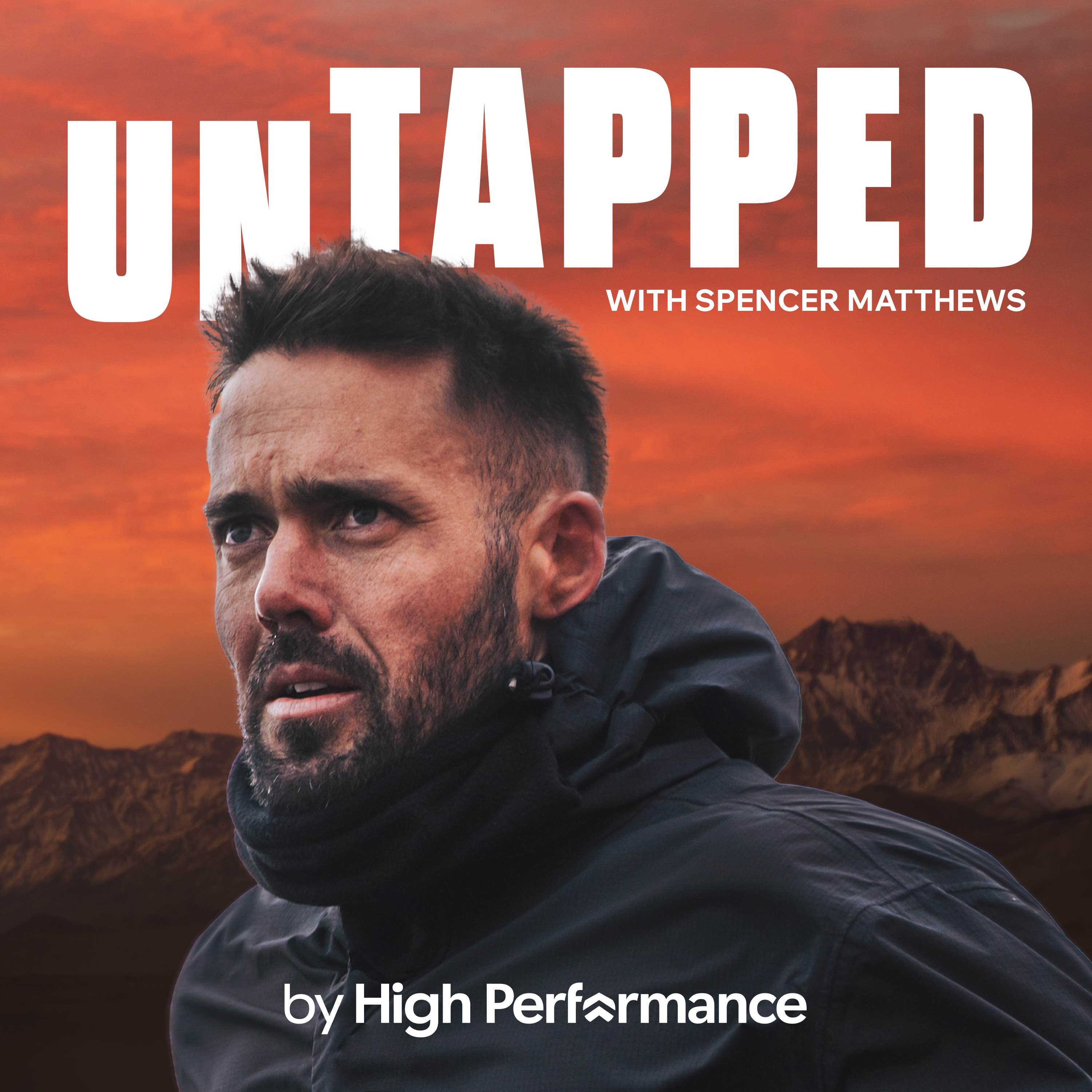
 UNTAPPED with Spencer Matthews
13 Oct 2025 · 49m · 20 chapters

Chris Robshaw, former England rugby captain, discusses how losing his father at age five shaped his early anger and how he later rebuilt his mental health after England’s 2015 World Cup failure. He also explains his leadership style, why “turning up” matters, and how modern rugby is becoming more open about mental health.
Chris Robshaw is a former England captain and Harlequins captain (first at 23, later again in his early 30s). He describes being introverted, driven by never feeling “good enough,” and relying on resilience and consistent training.
Sport became his emotional outlet; he bottled World Cup grief instead of processing it; leadership evolved from “stick” discipline to “arm around the shoulder.” He argues men’s mental health needs more openness and workplace/parenting support, not macho silence.
2015 World Cup losses to Wales and Australia; crying with his wife after the press conference; support from Sean Fitzpatrick and Heineken Mayor; breaking down after beating Wales in the Six Nations; Harlequins coach telling him to get off the “bus” and help the team; examples of younger players like Marcus Smith and the Curry brothers/Sam Underhill raising training intensity.
Written by AI. May contain mistakes.
Chris discusses the impact of losing his father at a young age and how it shaped his life.
“Rugby's always been on in our house, and we're big fans of yours.”
Chris explains how rugby became an escape for him and influenced his growth.
“And sport became a massive escape for me.”
Chris reflects on his journey to leadership and the development of his confidence.
“When did you realize that you had, you know, extraordinary talent for the game?”
Chris shares insights on evolving as a captain and the lessons learned through experience.
“There was guys who were, like I said, 10, 15 years older than me, more experienced than me, played international.”
Chris Robshaw shares insights on leadership and personal growth in sports.
“And I think with leadership, it's an interesting thing because, and as you get more confident, you get more life skills, you go through the journey a bit.”
Robshaw reflects on the highs and lows of leading England during the World Cup.
“And to go there, win that first game, sing the anthem with your family there and everyone's streaming and win that game, it was amazing.”
He discusses the emotional aftermath of the World Cup loss and its impact on mental health.
“And the cashier was like, you guys were shit, weren't you?”
Robshaw talks about dealing with public criticism and expectations as a captain.
“we're on that what what do you think that was so so that that eruption of of emotion that that unbottling of the feelings i just felt i hadn't really processed it and well and actually as i sorry, I'll keep going.”
Chris shares his journey towards mental recovery and resilience post-World Cup.
“And look, as captain and as leaders, you're that person, aren't you?”
Chris Robshaw shares the challenges of returning to club training after a tough international loss.
“So you come back in, they're like, okay, now we need you.”
Robshaw highlights the subtle yet profound changes therapy can bring in daily life.
“Therapy's biggest impact doesn't show up in some dramatic breakthrough.”
Chris Robshaw shares the challenges of returning to club training after a tough international loss.
“Ever hit a wall in the middle of the day and a third coffee just doesn't do it anymore?”
Robshaw discusses the evolving attitudes towards mental health in the rugby world.
“The rugby world, which was very bravado, masculine, all those kind of toxic cliches, especially when I first started, toughen up.”
Robshaw reflects on fatherhood and the importance of open communication for mental well-being.
“You've spoken before about feeling depressed.”
Robshaw shares the most rewarding moments of his rugby career and the challenges of retirement.
“What do you think is being done incorrectly now in the mental health space?”
Robshaw discusses the exhilarating rush of performing in front of crowds and its impact.
“To captain your country, to do something which not a lot of people have done.”
Learn how athletes can visualize success to find motivation during tough moments.
“When you're sore, when you're tired, when you're grouchy.”
Discover the challenges and excitement of witnessing younger players rise in rugby.
“I'll hunt for that feeling next time I'm in Battersea Park.”
Understand the impact of injuries on a player's career and the mental struggle that comes with it.
“and I was worried, I'm not going to lie.”
Explore the changes needed in rugby to revitalize the sport and attract new fans.
“Would you guys have been playing schoolboy rugby at that time as well as the academy?”

Get the gist, explore an idea or ask about something said.
 Claude
On UNTAPPED with Spencer Matthews, what are the key points of this episode?
Searching your listeningAutomatic transcript. May contain errors.
0:00Today, former England rugby captain Chris Robshaw opens up on the tragic loss of his father, turning World Cup heartbreak into a catalyst for personal growth, and tells us how he's completely changed his approach to mental health. I'm Spencer Matthews and you're listening to Untapped, where incredible athletes and inspirational people show us how we can all untap the potential within us. Let's get Untapped with Chris Robshaw. Chris, welcome to Untapped. Thank you for having me, Nat. It's brilliant to be here. It's a real pleasure. Rugby's always been on in our house, and we're big fans of yours.
0:38So thank you for taking the time to actually come into the studio. It means a lot to us. Yeah, like I said, honour to be here. Honour to share some thoughts, a bit of my journey, and let's see how we go. Yeah, that'd be wonderful. Talking of your journey, you unfortunately lost your father when you were very young, five years old. You were raised by your mother. can you tell us a little bit about how that early grief or kind of rage played a part in your early game? Yeah, so we're into the deep stuff straight away, eh? Sorry, if that's okay. Sorry, trying to kick off the interview with a bang here, Chris.
1:13Yeah, exactly. Yeah, look, in all seriousness, I lost my father when I was five, had a heart attack. Yeah, it was tough. My mum raised us, good support around us, family, uncle, aunt, strong grandma. who yeah kept us in our place um but yeah look it was tough it was tough and i think at that age you don't really don't really understand uh i was very much in that that middle age where probably my younger brother didn't know what was going on my older brother could probably just about understand and i was just kind of around being like why are people upset why is obviously your father not come home and it made me very frustrated it made me quite angry uh probably if i'm honest didn't deal with it in the right way.
1:55And sport became a massive escape for me. Sport became like a real happy place. I think in rugby, obviously, where obviously as you get a little bit older, it is a physical thing, isn't it? It's a physical thing. And as a little kid with pent-up aggression, you can be physical in a legal and safe way. And for me, that was it because I didn't enjoy being in the classroom. I didn't want to be there. I wanted to play sport, whatever that sport was. And for me, there's definitely times now when I look back and I've got two kids myself. I've got two kids myself and I'm actually at the age now or probably a year or two off where my father actually died.
2:33And I think, you know what, how young I am. And I think you're probably similar. How young you are, young family and how tragic that would be. For me, it definitely gave me that a little bit of a chip on my shoulder as well when I was playing and performing. and he always wanted to go out there and still make them proud and all that kind of stuff, for sure. So he was a young man? Yeah, he would have been 40. 41, yeah. Was he a healthy person? Yeah, he was. He was a fit guy. He'd run a marathon, played golf, played football, quite active. And yeah, just out of nowhere, really. Wow. Unfortunately, yeah, his father had a heart attack later on in life.
3:15But yeah, just to be taken down by that, it was yeah horrendous and i speak to a lot of people now and i had one of my best friends actually lost his his father quite recently um who would be probably almost 70 and my cousins lost their dad and look there's no good time to lose a parent or anyone in life is there um and i think we deal with them all in different ways as as you get older you've had of course longer with them but it might hit you harder because you have built those those relationships whereas for me it definitely hit me as a youngster and then you learn to not in a bad way but deal with it but it would have been massively and a lot harder for my mum who obviously picked it all up working three kids um and don't get me wrong we weren't we weren't good kids we were we were we were very lucky but we were we were quite boisterous and like i said we used to bounce around a little bit and my mum always says this story about she went to a friend's party or whatever and she heard the one of the mums say put away the valuables and rob shows are coming over and it was like cheers just what you want to hear so yeah she always reminds us of that so um yeah it was tough
4:24therapy's biggest impact doesn't show up in some dramatic breakthrough it shows up in the smallest moments you bite your tongue instead of escalating you put your phone down instead of firing off that text you say what you actually mean instead of what would hurt someone else the most. Nobody applauds those moments, but they quietly change your life. That's what growing feels like. And that's exactly what Grow Therapy is here for. Grow is therapy that works, covered by insurance. Sessions average$21 with insurance and some pay as little as$0 depending on their plan. There are no subscriptions, no long-term commitments.
5:01You just pay per session. Grow connects you with thousands of high-quality licensed therapists across the U.S., offering both virtual and in-person sessions, nights and weekends. You can search by what matters, like insurance, specialty, identity, or availability. And you can book a therapy session in minutes and begin in as little as two days, not the national 48-day average. See if you could pay as little as$0 for therapy in seconds at growtherapy.com slash start now. That's growtherapy.com slash start now. growtherapy.com slash start now. Availability and coverage vary by state and insurance plan.
5:43Mod.com is changing the way people battle excessive fatigue. Ever hit a wall in the middle of the day and a third coffee just doesn't do it anymore? Here's what's actually happening. Coffee only briefly blocks adenosine, the chemical that tires you out. When it stops working, your system is flooded and you crash. Modafinil is a prescription treatment that works in a completely different way. Modafinil works by stimulating multiple receptors in the brain associated with wakefulness, including dopamine, serotonin, norepinephrine, histamine, glutamate, and orexin. it's a more complete solution that gives you 10 to 12 hours of steady focus and energy to learn more go to mod.com fill out your intake form meet with a licensed provider and if approved mod alert ships straight to your door go to mod.com to get started that's mod.com 75 of women who seek menopause care don't receive it the lying awake at 3 a.m wondering what's happening to your body ends now.
6:51Midi is virtual care built for women in perimenopause and menopause with clinicians who specialize in women's health. Plus, it's covered by most major insurances. Getting started is easy. You can book your first visit with a clinician right away. Midlife needs Midi. Visit joinmidi.com to book your first visit today. That's joinmidi.com. Insurance coverage varies. Check with your plan for coverage.
7:17if you're enjoying this conversation please do me a favor hit subscribe wherever you're listening or watching it only takes a few seconds but it really helps the show and it means that we can keep bringing you incredible guests now back to the conversation you um we don't know each other well of course but you seem like um a really humble kind of modest lovely man um very kind Do you, where does confidence come into your game? When did you realize that you had, you know, extraordinary talent for the game? When you first put on that England shirt, did you feel at home like you belonged? Or was it an accumulation of all kinds of exciting and interesting times in your journey?
8:05You know, how did that moment feel when you got the call up to represent the country? You know what, it's interesting. probably one of my biggest drivers was I never felt I was good enough never felt good enough always wanted to be better always wanted to have a better training session a better game and always felt I had to improve so I never felt comfortable there do you know what I mean I always felt like there was someone trying to get a shirt I was wearing or the position or captaincy or player whatever it be so I always felt I had to get more out of myself and for a player which I probably wasn't the biggest quickest probably most skillful uh i stayed there for a long time and there was there was always a saying where it's it's hard to get in the room but it's even harder staying in the room and for me i always remember i got called up to england camp once when i was very when i was younger before i properly played and i got called up late to a training camp in portugal with the england squad and it was amazing of course very nervous and i always remember i was a young player early 20s probably and the first day we had fitness testing and no one wants to do fitness testing it's It's horrendous.
9:10It makes everyone feel sick. And you know you're being judged. Everything's being judged. And it's so quick. And I remember England training and all the senior guys weren't doing it. It was just young guys doing the fitness lesson. And I lost respect there and then for those players because I was like, look, they're not. Yes, they might be a bit sore. They might be a bit tired, but they're not the ones out there doing it. And from that moment, I said, you know what? I'm never going to be that player. From my whole career, if I'm fit, I'm going to train and I'm going to be there at the beginning, the end.
9:39I'm going to make sure I turn up. I'm going to give it my all, all that kind of stuff. And yes, of course, there's days we have bad days, but I'm not going to have a little kid, or I wasn't a little kid, but a young player coming through thinking, you know, why is he not doing it? Why should he have a rest? So I thought, you know what, that inspired me. So throughout my whole career, I made sure that every training session I'd be out there. Because I think those little things play, especially as you become a captain and all that kind of stuff. You don't want that slight doubt in other players in your team's head.
10:09And I think whenever you're captain and whenever you ask someone to do something, they have to know you're willing to do it yourself as well, not just because you can't be asked. So for me, that was a massive driver for me as I went throughout my England times, my Harlequins time. And even when I'm out there training now, I still need to train mentally. So you'd say that it's safe to say that you have always wanted to lead, by example, even prior to being the leader? Yeah, I think so. you want to try and be the best, don't you? You want to try and get the most out of your body. And look, it's interesting because you always want to, you think you'll do the same thing and get the same result, but you can have good days, bad days.
10:50You need good people around you to help you, to really pick you up. But yeah, look, I remember I was, we had a pre-season game with Harlequin, so it would have been, again, 20 probably. So again, a bit of variety. And I got named captain of the squad. it was very much the second team that played and I played really well never really I captained school teams but it's different when you come up and captain men isn't it it's especially a young guy and then I went on tour with England we went on tour of England we went to Australia and New Zealand to play the Maoris and I got named I wasn't going to play in the test side but we had some midweek games back then as well and I was named the first game midweek captain Martin Johnson called me into his room and said look we want you to be captain and I was like oh my god like I'm I was so nervous.
11:37There was guys who were, like I said, 10, 15 years older than me, more experienced than me, played international. I'd never played international at that point. So I basically became the midweek captain of that trip, which was so nervous and probably something I never really thought about. Like I said, I'd captained a bit of school. I'd been a bit of a leader. But really, I'm quite introverted. I'm quite introverted. I would bring myself out to step up and talk, but I'm not naturally that type of guy. And it's interesting because you meet a lot of sports people and people at the top of the game like you do, I'm sure.
12:13And my wife always says, whenever we meet another captain or someone who's at that kind of level, they're like, you captains are all the same. You're all the same. You're not the loudest ones out there. You're not the ones in the middle of the team room mucking around and doing all that stuff. But you're all pretty stern. you're pretty stern and straight laced she says but for me it was an amazing experience and then yeah went back to Harlequins I captained Harlequins at the age of 23 and that was tough because I got officially made captain then and then I was captained guys internationals above me some guys who gave me a bit of a tough time and I said you know what I captained very different ways as well I captained the club at 23 I captained them again at probably 32 33 as well four years and another two-year gap as well.
13:02And I always remember, you know what, when I was a young captain, it was all very stick-orientated. If you were late, if you gave penalties, everything was fitness. And we did fitness together. It wasn't just you, or I'd make you stand on the side and the rest of the team would do fitness. And I got to the point where I was like, this is the way I knew. That's the work, Sid. So the person that made the file gets to sit it out. Well, some people it does. Some people are like, brilliant, I don't have to do it. Just keep giving away penalties. And it was at that stage where... It worked at the time, we were very successful.
13:32But then I look back to when I was 32 and I came into captaincy again. And it's very much about an arm around the shoulder rather than stick punishments. And I'd evolved. And I think when I was a young captain as well, like I said, I had some challenging characters. I was young. I think I was an insecure captain, if I'm honest. Why do you think that was? Just I'd not done it. I'd not done it. I felt people probably trying to want the captaincy or take it or all that kind of stuff. and I wanted to put my mark on it. And I think with leadership, it's an interesting thing because, and as you get more confident, you get more life skills, you go through the journey a bit.
14:13You trust the people around, you learn to delegate, you learn to trust the tent to run the attack or someone else to do the defense and all that kind of stuff. And as you get more self-assured and confident in your ability, you believe in those people and they're good. They want the team to go in the right direction. they want the boat to go faster whereas the thing as a young captain is having that and it's a huge thing which I see in I do some talks in businesses and stuff and you can often see young leaders because they feel threatened they feel threatened that oh if I take your idea are they going to think you're better than me and you should be in my position so it's almost a little bit like that and as you get a bit older you get confident you get beaten by life a bit don't you you get beaten by life a bit you come out the other side you learn what's important you learn to have the good people around you who can really help When you were telling the story of Martin Johnson making you captain when you were away you sounded kind of surprised what is it that you felt were the defining characteristics in you that made him choose you?
15:18Yeah, it's an interesting one when I think back and look and I think one of the biggest things and I tell young kids come up to me and parents say what would you tell my kid like if they want to make it, if they want to do this, and I say, look, there are no shortcuts. There's no shortcuts to do well in life, whether that be business, music, sport, whatever you want to do. You've got to work hard. You've got to put the time in, but you've got to be resilient. You've got to have resilience. So I'd say if you can build your resilience and it's, unfortunately, you have to go through things. You're going to have international support as a roller coaster.
15:52You have these amazing highs and deep lows and you've got to be somewhere in the middle. But for me, the biggest thing is you keep turning up. and yes, there'll be times when you turn up, you're happily bubby or you're giving that energy and there's times where you turn up and you think, you know what, I've just got to get through and I need my mate to be the one pushing me up and carrying me and giving me that hand today. But you're always there in the room, you know, like it's not easy to do. And I think for me, it was one of those things where I would be there and I said earlier about turn up to train and being on it.
16:20And it's not always the big things. Yes, you want those players who are making those massive breaks all the time but you also want people who were going to do their job consistently every day. You carried the weight of the nation in 2015. Can you talk me through how that felt as somebody that had sacrificed so much? The World Cup for me, 2015, was the best time I've ever had in an England shirt professionally and the worst time as well, if I'm honest. To lead your side, to nation at home World Cup and you get to the stadium and there's billboards and there's tens of thousands of white shirts and it's the opening ceremony.
17:02It's the stuff you dream, it's beyond dreams as a kid, if we're honest. And to go there, win that first game, sing the anthem with your family there and everyone's streaming and win that game, it was amazing. It was amazing. Unfortunately, the week after, we played Wales, grudge game and had a decision to make and it didn't get a plan, end up losing the game. And the week after we played Australia, probably the best Australian side I've ever faced, and we lost that game. And you can imagine the change from after that is dead quiet. I mean, it's horrendous. And I remember going to a press conference myself and Stuart Lancaster, the head coach at the time, pretty much both first in the room, five minutes after the final whistle, trying to hold back tears.
17:51You know what? Didn't want to cry in front of the media, having 100 people, 100 people with cameras, recorders, whatever it be, basically saying, why were you guys so shit? You've left the country down. You're all a disgrace, all that kind of stuff. It was dreadful. I remember we went back then on the bus, no words being spoken by anyone. Got back to the hotel. And me and my wife Camilla, we just held each other and cried. And I imagine pretty much every player and their couples and partners and whatever probably did a similar thing. And I remember the next morning, I woke up to an email from Sean Fitzpatrick, New Zealand rugby legend, who was on the Harlequin Sports.
18:32I got to know him a little bit. And he said, you know what? Like, nothing anyone can do or say at this point is going to make you feel better. But a son will come up again. It might not be tomorrow. It might not be next week. It might not even be next month. But it will come up again and you will be okay. And then my wife took me and my best friends to the New Forest. just hired a house in the middle of nowhere. And you know what? We ate and drunk until we couldn't remember. And you know what? It might not have been the smartest thing to do, but it allowed me to forget, even if it was just for a short period.
19:02And then I went to Buckingham Palace, all the coaches and captains, to meet the late queen. Only time I'd ever met her amazing, amazing lady. Myself and Stuart Skoda didn't want to be there. It was horrendous. You could feel the pity from the other players and captains and all that kind of stuff. and I remember there was a South African coach called Heineken Mayor at the time and as I was leaving I didn't really know the guy he grabbed me by both shoulders just looked me square in the eye and just said you're too strong to let this affect you and then look if I'm honest that is the best form of leadership I've ever seen because two of them, my wife of course knew me but they didn't really know me but they reached out to me they could tell someone is going through something and hurting and for me that really resonated because a load of international captains reached out Strauss Alistair Cook Kevin Simfield these type of guys who had been in the arena and had a similar experience and for me when my family and friends were all like oh it's all alright you'll be okay all that kind of stuff they mean well and it's brilliant but they don't really know what it's like to be written on the front and back of papers to be spoken about a podcast saying how bad you were I remember I went to the post office to, I don't know, drop something off.
20:22And the cashier was like, you guys were shit, weren't you? And I was like, just kind of post my letter. And I felt like, I just felt like I couldn't escape it. And I explained to people that. Thanks for the feedback, though. Well, exactly. When you're in that, it's almost like you're in a fog. You're in a fog and you can't quite see out and you don't want to see out. You want your head down, you feel embarrassed, you feel ashamed. And you just kind of, yeah, go about your business and just over time, it just gradually fades. But for me, I say to people now, look, if you know someone's struggling, don't wait for their partner to pick up the piece.
20:58Don't wait for their boss to pick up the piece. Say someone in business has lost a sale or had a bad day, don't wait for them to go home. You be the one to go and say, you know what, let's go for a coffee, let's chat. And then it's on them. Because then that was the other side. You know, I didn't open up fully. People were trying to help. I wanted to, I became a bit of a recluse. And then I remember we played Wales. Played Wales in the Six Nations. One of the teams who knocked us out. First game back at Twickenham. Probably 80 % of the squad were still from that World Cup. And I remember all week it was about revenge.
21:29You know, we've got to get these boys back. And we won the game. Won the game, but just. And I remember we were doing a lap of honour, thanking the fans. And I just broke down in tears. Broke down in tears. And I ran in the change room. All this bravado stuff. I didn't want people to see me. Ran in. and I couldn't stop crying for, never had anything like this in my whole life. Couldn't stop crying for about 15, 20 minutes. Players were consoling me, the coaches. A lot of them came up and said, you know what, we didn't realize how much this affected you. And because I didn't share it, I bottled it all up and it wasn't good.
22:02And now I think, you know what, if I go through this in a different way, or happen again, I would have dealt with it in such a different light. Such a different light. And try to be open and speak to people and all that kind of stuff instead of bottling it all in. and then yeah it all came out um and it was it was tough you know i've got so many questions for you after that incredible speech you just gave um what what is um just firstly just whilst we're on that what what do you think that was so so that that eruption of of emotion that that unbottling of the feelings i just felt i hadn't really processed it and well and actually as i sorry, I'll keep going.
22:42As I, the end of that year, we actually toured Australia. We toured Australia. The other team had knocked us out. England had never won a series down there. The, we won the first game. The second game was my 50th cap. So I got to lead the guys out for the first time since being captain. I wasn't captain anymore. And the honour of leading the side out. And we won the game. So we won the series. We went on to win the next game, but we won that game. I was mad at the match and then in the change room, Jason Leonard, the fun bus, the great man he is, presented me with my 50th cap. a little silver cap and all the boys cheered we had some beers and it was almost like a little bit of closure and I always say look the World Cup is a it's a skull I'll always wear it's something I'm not proud of but it's a skull that will always be on me but it will fade a little bit over time and for me when I look back and especially post-up Wales I didn't I just didn't process it I didn't process it in the right way bottled it up it put a lot of pressure on my relationship with my wife, my friends, family, teammates.
23:45And I actually remember at Harlequins, I was playing, I was going through the motions. I was good enough to get through games and all that kind of stuff. I wasn't impressed. And I remember one of our coaches came up to me and said, look, enough, enough. You can get on the bus or get off it. You've had your mope, your sulk, and we know it's hard. But the team needs you now. The team needs you. and after that sometimes you just and I had I'd moped there I'd kick stones on the floor and kick my heels and all that kind of stuff and you need a bit of a wake up call and that was someone else someone different giving me a hand saying you know what now it's your time to get back up so look so many people supported me but in that I just didn't process it and it was just like I said I'd never had anything like that in my whole life and just floods and floods of tears just came out did you feel like you were being blamed kind of like what was was it all on you no i always remember like conor my coach good friend now well good friend i suppose what he was then he i remember speaking to him pre-world cup and he and he always says this he says look when you come back you're either going to be knighted or you're going to be guy fawkes there's going to be no middle ground um which was obviously tough to hear, but, and it was true.
25:07It was true. There was no middle ground. And look, people supported me. And look, as captain and as leaders, you're that person, aren't you? You put your head up there. You take the good stuff, you take the bad stuff as well, but whatever it is, it's on you, you know? I suppose if you brush off the bad as well, so like if you hadn't bottled it up and moped in your own words and kind of been that guy who was deeply affected by it, then you would have been the guy that doesn't care. It's kind of, I was going to ask you where the balance is between being deeply affected by the loss or crashing out of the World Cup early and bouncing back to set a proper example as captain.
25:55You know, like, where's the line? You know what? It's a really interesting one because I think with sports people and stuff, people only ever see them on Saturday. They don't see people in the week and people say, oh, they don't care. They're not trying, whatever it be. No one cares more than players. I guarantee you, after a game, you lose, you miss a tackle, they score, whatever it be, you're not sleeping until about four or five in the morning. You're playing that over and over in your head. You're thinking, and that week, if I miss a tackle, I'm going to do another 50 tackles. I've become obsessed with that.
26:22And that's what players are like. They're trying to get their body right. And in 2013, we went to Wales. We went to Wales, Principality Stadium, amazing stadium. The roof was shut. we were hoping for a grand slam they were hoping for a championship amazing game we were probably a little bit young naive not really knowing a storm we were going into and then we went down there we got hammered we lost 30 points to 3 we were poor they ended up winning the championship again the abuse comes all that kind of stuff especially in Wales you get a little bit of stick and I remember we went back to the hotel bar and as I said no one's going to be sleeping hotel bar in a little corner just having a couple of beers nothing nothing crazy and we had fans coming up to us ripping their tickets up in front of us throwing them at us and say how dare you be down there drinking that's insane and that's what I mean it's that balance where but that's what I just I find it Ben Stokes was in here recently saying a similar thing that you know when when you're being you know hit out the park for six you know repeatedly that you know they're shit or that they can't they don't know what they're doing and he was you know inviting people to come and do some nets with him as I suspect these Welsh fans or English fans wouldn't want to be we had Tom Youngs who was I think he was ready to go but in all seriousness you need to somehow look we weren't like I'm sure yourself dancing on tables and all so we were yeah we had a couple quiet beers and then but I remember then that Monday so it's funny know you go away with England you're away for a month five weeks eight weeks whatever it be you get back to get home on a Sunday put your England bag in the cupboard get your Harlequins bag out Monday morning you go back to Quinns so we'd just been battered again we're in the press again on social medias all starting to kick off all that kind of stuff the next morning I walked into Harlequins training back at the club and I was captain at the time it was it was hard being captain of club and country because you've been away and if you're honest the international guys are probably the highest owners at the club.
28:31So you come back in, they're like, okay, now we need you. You need to get up front, get the guys going, all that kind of stuff. And I remember being in the gym Monday morning, I think it was nine o 'clock. And I just, I was doing some weights with Joe Marler in our forward session. And I just said, what am I doing here? I've got to go home. I've got to go home. And I literally just said, and he's like, go mate. And as he, as he probably would. And I just went, I sent a message to the coach. I just said, I can't be here today. I'll be here tomorrow I just need to go home and just decompress a little bit and I just couldn't be there I just went it's probably one of the only times I did it and just mentally I wasn't in the right space to be there it's only when you come out the other side you can look back and say you know it wasn't that bad but your shoulders get a bit broader your skin gets thicker and I think for me the really valuable thing is learning from people who have been there like I said Ben Stokes in his unfortunately over where he he had a tough time 6-6's was it or and it was and again when you hear from other people like that that's what really really helps i believe mental health has been a bit of a theme in this interview and you know bouncing back from things learning from people with experience you know resilience what's one lie do you think people are still told about what strength looks like.
29:54Therapy's biggest impact doesn't show up in some dramatic breakthrough. It shows up in the smallest moments. You bite your tongue instead of escalating. You put your phone down instead of firing off that text. You say what you actually mean instead of what would hurt someone else the most. Nobody applauds those moments, but they quietly change your life. That's what growing feels like. And that's exactly what Grow Therapy is here for. Grow is therapy that works, covered by insurance. Sessions average$21 with insurance and some pay as little as$0, depending on their plan. There are no subscriptions, no long-term commitments.
30:31You just pay per session. Grow connects you with thousands of high-quality, licensed therapists across the U.S., offering both virtual and in-person sessions, nights and weekends. You can search by what matters, like insurance, specialty, identity, or availability, and you can book a therapy session in minutes and begin in as little as two days, not the national 48-day average. See if you could pay as little as$0 for therapy in seconds at growtherapy.com slash start now. That's growtherapy.com slash start now. growtherapy.com slash start now. Availability and coverage vary by state and insurance plan.
31:12Mod.com is changing the way people battle excessive fatigue. Ever hit a wall in the middle of the day and a third coffee just doesn't do it anymore? Here's what's actually happening. Coffee only briefly blocks adenosine, the chemical that tires you out. When it stops working, your system is flooded and you crash. Modafinil is a prescription treatment that works in a completely different way. Modafinil works by stimulating multiple receptors in the brain associated with wakefulness, including dopamine, serotonin, norepinephrine, histamine, glutamate, and orexin. It's a more complete solution that gives you 10 to 12 hours of steady focus and energy.
31:55To learn more, go to mod.com. Fill out your intake form, meet with a licensed provider, and if approved, ModAlert ships straight to your door. Go to mod.com to get started. That's M-O-D dot com.
32:39JoinMIDI.com. Insurance coverage varies. Check with your plan for coverage.
32:46You know, I come from the rugby world. The rugby world, which was very bravado, masculine, all those kind of toxic cliches, especially when I first started, toughen up. Whereas now I feel the sport has massively changed. Massively changed. We're very much open and susceptible to stuff. We're a sports psychologist. we want people to talk and actually when I was left the club we would have a situation where we would have sessions where we'd go into a room and you'd probably sit with your peers I probably wouldn't expect a 17, 18 year old to really open up to myself but I would expect my peers probably to we'd all leave our phones outside because you know what they look like and there'd be a sheet on the table I have a couple of questions are you okay?
33:34is there anything you want to share? anything you want to talk about. So they're putting the frameworks in place, but then it's still the individual being brave enough to be like, you know what, I am struggling, or this has happened. And I remember there were definitely days where when I was capped in the second phase, where I would go into the club and say, you know what, I've had a rough night, or something's happened, I need my leaders to take today. I don't want to be the one talking, I want you to do it. And not in a bad way, I'd be there, but I just want to get through. and as a sports person as work there are those days you have where you don't want to be front and centre you just want to get through the day and it's a bad thing to say but it's it's true and you put it on them but I believe the sport is massively changing there's been advocates in Joe Marler has come out brilliantly and spoken about his battles and there are so many other players who are speaking about it because everyone sees these big tough guys they see them on a Saturday running into each other but they don't see them in a week they don't see that other side of it but I think as a male in the male society we can do so much more generally unfortunately as you would know as well suicide's a bigger killer of young men and it's horrible that that is the case and it's hard to really know it's hard to know what's going on and I think we can give each other the tools and that's a massive thing now I've got two young boys and I would hate one day for them to get a phone call saying you know what X is no longer here anymore because I haven't given him the framework to be open, to talk about stuff, to share things with me that one day may cause him extra pressure, extra tension, whatever it be.
35:14You want to be there for him. Sorry to interrupt you. Do you think that's where it comes from? The kind of, the bottling up of complicated feelings and the necessity to feel like a man? Yeah, I think the world's, look for a young person how the world's a complicated place isn't it you look at social media and I was lucky enough to grow up or go through kind of school with no social media no smartphones and all that kind of stuff and it's tough for them isn't it coming through and again it's giving them trying to give them the tools trying to give them the tools to express themselves and I'm not sure how old your kids are but mine are at the stage four but they don't fully understand they get frustrated they get angry all that kind of stuff because they can't quite get it yet and hopefully that will I'm sure that will change but it's again it's just being there for them and making sure that you know if there's an issue you can come and talk right or wrong come and tell me we'll deal with it together and all that kind of stuff because yeah you're going to do some good things and you're going to have some great times but I'm sure you're going to make some mistakes along the way as well and hopefully they do because that's part of learning but as long as they know you're always there for them and that's an important thing what finally made you ask for help?
36:31You've spoken before about feeling depressed. Yeah, I think. My wife's been really good, amazing, helped me with that kind of stuff. And like I said, her mum is a psychotherapist and I've been a sports psychologist. And I think a lot of it also is just getting more confident, more self-assured. And like I said, as a young player, you always felt you weren't good enough. You didn't want to be that kind of thing and as you get a bit older you realise you know what you've done okay and as I say I look back with rose tinted glasses a little bit and you've learnt from those experiences you've had you've had some good and bad ones and amazing ones and a lot of them have been played out in public and then I think that's always a little bit harder to deal with and now when you're learning I think kids are a great leveller as well and I've only had kids like I said the last four years not massively when I was playing and I always remember when the guy's playing internationals international rugby after a game or for a week we lost I'd be miserable for four days you know what I'd be grumpy I'd of course be training but I'd just be just a little bit negative do you know and the kids change everything don't they you can't be like that you just have to crack on or go to the park and do whatever it be and they and I remember players with kids would always just be the next day they'd be playing in I don't know taking the kids to the soft play or playing in the, not the gym, but like the area with the crash mats and all that stuff.
38:00And just mucking around, you almost felt like, how are they laughing? How are they doing that? They should be grumpy. They should be sad. But it's a great way for them to get past things a little bit quicker. What do you think is being done incorrectly now in the mental health space? Like, you know, is there anything that, you know, we as a podcast should be doing or we as, you know, medium-aged men should be doing? Medium age, nice. Middle age, man. Almost middle age, I believe. I haven't got a motorbike yet. I have a motorbike. I think I got it young enough to avoid it being called a midlife crisis.
38:39Cool phase. Yes. I was just a cool young person. I'd like to think anyway. But yeah, you know, I think I've had a few conversations around men's mental health in here and, you know, just wondering as somebody with less experience than you in this space, what we could be doing to spread positive messages? Look, I think more the same, obviously, with your challenges, people doing challenges, raising awareness, the marathons, all that kind of stuff. I believe now it is very much, it's out there, isn't it? There is help. Of course, people can always do more and be open. I think people do little things with their kids.
39:19I'm no perfect parent or anything, but I try and I'm probably on my phone too much around my kids and all that kind of stuff. And it's trying to learn about putting stuff like that away and learn from others. I think learn from others as well. Speak to people. But you look, there's no, I don't think there's a secret remedy, is there? I think it's just trying to be open as possible. But as I said, it is tough for young people. But I think with, on podcasts, it's being spoken about. On TV it is. I think on social media it is as well now. And I think everyone feels, it's a big thing we need to get behind.
39:52It's a big thing everyone needs to get behind. It's not just down to a couple of people. We all can do better. And also in the workplace. Workplaces where I believe big companies are starting to give people mental health days or go work with a charity or something like that just to give people a different perspective. We've spoken a lot about struggle and difficulty. What has been the greatest time in your career? You know, can you pinpoint a moment where you felt that it was all worth it? You know what, look, people always say to me, would you, do you want your kids to play sport, play rugby, whatever it is?
40:30I would say, look, if they want to go for it, you know what, for me, rugby is, if I'm honest, look, it's given me the life I have. It's taken me around the world. It's to captain your country. I mean, to do that, to run out of Twickenham in front of 80 ,000 people, cheering, singing the national anthem, it's hard to beat. yes there are some some dips along the way but that feeling i always speak to to people about like how do you replace that how do you replace that and that's the biggest thing when people retire when they move on they cannot do you can have amazing things but unfortunately you have to say that chapter over and look for for other bits but yeah that bars if you could bottle that bars i imagine it's like a rock star running out singing a song if you could bottle that feeling and sell it, you'd be a very rich person.
41:16Because that is the buzz you miss and it gets the hairs on the back of your neck. And I don't miss rugby. I don't miss putting my head in someone's knees and doing 20 mulls on a Tuesday when my shoulders are sore and all that kind of stuff. I don't miss that. But I miss that run out. I miss that buzz. And even, you can have the camaraderie. We can go to the pub after or something like that and have a laugh and you'll take the mic and it's that kind of changing room feel. But it's that feeling of running out, you know. And it's that bit of adrenaline in the stomach where you're thinking, we've got to be on here.
41:46I hope we got it right. But yeah, it's an amazing feeling. But I love my rugby. To captain your country, to do something which not a lot of people have done. The pressure of it is what you get out of bed, don't you? When you're sore, when you're tired, when you're grouchy. Yeah, it's a buzz which keeps you going. That's so great. I love that thought of trying to kind of harness that feeling. it's um i've not played rugby since university um but when i'm running sometimes i'm looking for that kind of edge when things are getting rough i sometimes um i don't even do it on purpose i'll visualize pretty much what you just said like and it happens it happens to be a rugby setting i was never a like an incredible rugby player or whatever but i sometimes visualize uh like chipping the fall back and like catching it and having that 80 ,000 people kind of just like roaring as you run towards the try line and that gives you this exactly as you described that hairs on the neck stand up and you get that slight adrenaline surge and then you find that kind of opens you up doesn't it it gets you going and it's funny because obviously I've never experienced that I'm sure you have I'm still trying to do it I get a kid in the garden I can chip him and then I can hopefully score yeah I might be alright chipping my kids they're 6, 4 and 3 well hopefully hopefully Yeah, I should be all right up against them.
43:11I'll hunt for that feeling next time I'm in Battersea Park. So we've touched on you aging through the ranks. Like a fine wine. Yes, indeed. Was there a moment in your later stages of the game when a young player like you kind of appeared on the scene and did something maybe in a match or in training that made you really think, like, whoa, there's a new wave of kind of player coming through? Yeah, two probably. Well, two. One, when I was playing kind of heavily, a young guy called Marcus Smith. Yeah, yeah. So I remember we used to, Eddie Jones used to like going on training camps to Brighton College.
43:56And Marcus Smith was still at school. He was doing his A-levels. And in between doing his A-levels, he would come, put his bag on the side of the pitch, put his kit on, and come join the England team for training. and I remember this young guy and look Marcus isn't the biggest guy and obviously at 17, 18 he was before he got into weights and I remember everyone knew this young guy was coming you don't go hard too hard when he was a young guy was he at school at the time yeah he was at school doing A levels he was in up sixth yeah so he was there like coming in his break time or whatever that's insane training with the England national side and then I remember there was one of our second rows one of our second rows like gave him a big shot like hit him and we're like come on mate you don't do that the next play Marcus got the ball and ran round him he had that much confidence just to bounce back up and get on with it and I think that's what Marcus has he has the confidence he has the ability and I was just like this kid he's going to be special just to not be phased imagine being an 18 year old kid joining the England side I get nervous now I'm getting to train with them you know like it's that type of thing and then the other time was when England the Lions were away so we there was much of a a change squad went to Argentina to train and there was a couple of young flankers called Tom and Ben Curry and Sam Underhill and I saw these guys and I'd heard a little bit about them didn't really know much about them and then we started training they would have been 18 Curry's would have been 18 and maybe Sam would have been about 20 started training the intensity of this and I just thought fuck I'm done I'm done because these guys are going to be taking my position very very soon and unfortunately they did.
45:38They were brilliant. The intensity in which they trained, their ability to learn. We did a fitness test together. They absolutely killed me. Which you did though. I did, yeah. I still was out there. Maybe I should have stood on the side. It would have been better. My credit wouldn't have got ruined. Maybe they had some in the older boys. But they were amazing and I see what they've done and I think whenever you start to get left out of a side, you're like a bit bitter and now I look back and think, you know what, they were amazing. Yeah, they were ahead of where I was. So, and they're both still going amazingly well.
46:10So yeah, for me, I saw that young breed come through and I was worried, I'm not going to lie. And yeah, unfortunately, post that, I didn't play too much, unfortunately. What school was Marcus at? Do you remember? Brighton College. Brighton. So, I should really know this, but from my school, I don't believe anyone went on to become an England player, probably because we weren't the best rugby school in the country or anywhere near it for that matter. But what is the typical journey of a young player? So when do they get noticed? Because I'm assuming that Marcus will have been a superstar rugby athlete long before he was 18, or is that not the case?
46:54Yeah, so he would have been in the academy, the Harlequins Academy at the time. So I got picked up by Quinns when I was 17, was in the academy, which meant in school holidays, I would go into training camp at Harlequins. We'd all stay in this army barracks together because that's where we were training. We got kit with our initials on. It was amazing. We were part of the Quinn setup, all that got some protein. But they would look after us, they would monitor us, give us a bit of workout programs. And then post-school, I remember we joined Harlequins post-school at 18. My first contract was£4 ,000 a year.
47:26I thought, you know what, I've made it. I'm getting paid to play rugby. This is brilliant. And it was great. even early on in my career I remember thinking you know what I broke my foot twice in my first year the following year I broke my leg the year after I did my ligaments and I was thinking you know what is this game really for me and I remember calling my mum up when you're injured in sport it's horrendous it's the worst time calling my mum up in like tears and saying you know what I don't think I don't think my body's made for it because your body has to be alright and she gave me some typical mumbley advice and just said have you tried drinking more milk and I was like cheers mum and I honestly did and luckily I went on to play a bit more after that but it was that's what changed the game that's what changed the game milk it's the way forward but I think look you I don't know there are a lot of players in all sports that retire early don't quite make it and your body does it's a physical sport your body does have to be a certain and you've got to be lucky as well you've got to be lucky injuries at the right time and possibly towards the end of my career I got injured and never got back in the England side so injuries player but then also I think there was an injury when I got in the England side so it's that kind of thing where you take a bit of luck when you can.
48:35Would you guys have been playing schoolboy rugby at that time as well as the academy? Yeah, so you would have been at school. So academy was only holiday stuff. So you guys get the ball and it's game over, really? Like at that level? Not quite a lot. I went to a very good rugby school, went to midfield. A couple of guys who went on to play as well. But you would go to Wales, the fun places, and play some teams down there. I remember there was probably a guy you know in a different team called Alan Wynne-Jones. So you cross paths with a lot of good players. Colton's had people like Jordan Crane who did it.
49:10A lot of players who went on to play internationally. A lot of players who played for various clubs. And yeah, you look at some of those rugby schools now and the setup they have. You look at high schools in South Africa, the crowds, they get 500 people watching games, the chance, the intensity, the size of them. And that's why I'm glad I'm sat here with you now and not playing anymore, I think. because even now I go to corporate things or catch up with some old mates who are still playing and it's a neck for me. You kind of lose it all around here, the shoulders, and you just don't train and eat as much as you once did.
49:42And I see them and I think I've shrunk. I think I've shrunk. But yeah, the game, it just continues to move. And I think once you're in it, now I've stepped away, I think, you know what, like tackling this 20 stone guy running at you. I think twice about that now. But when you're in it, you're in it and you love it. it's part of it and it's normal whereas you say to someone sat here saying you know what go and tackle him and it's a bit like yeah I might give it a miss It could be said that rugby's not in the greatest place right now what do you think could change to bring it back to its former glory?
50:19Yeah good question I was lucky I played in a good period where stadiums were full and everything and then of course Covid happened Covid happened and with a lot of sports and businesses it affected it massively unfortunately on the back of it we lost a couple of clubs or three clubs around the place but now stadiums are getting back on track we got our premiership final coming up which is going to be a sellout again for the first time in a while the product's awesome and there's a lot of rumours about various different countries getting involved in the game and I suddenly think yes we've had a massive massive struggle if we're honest like I say losing clubs people speaking a little bit negative what do we do how do we get out of this because no rugby clubs make a profit which is obviously a big struggle whether that be lack of TV money or sponsorship whatever it be but I feel now for the first time this season that we are getting back on track there is rumours about how do we reshape the game whether that be a global league whether that be a global franchise league in England whether that be joining forces with the Welsh and Scots the French whatever it be but I think now there are ideas and there's business people coming into the game.
51:32I think for a long time, rugby has very much been stuck in its ways. That we can't be seen to do this because we're upsetting rugby values and we're upsetting the old brigade and all that kind of stuff. Whereas now, I think we've got different people. We're taking inspiration from the likes of the IPL, the 100, the NRL in Australia, the NFL. These type of sports, which are huge, huge sports. And we can learn. I remember I played in America briefly. and I remember speaking to one of the MDs of one of the clubs, and they have a big saying over there, saying to all their sports clubs, say, you're in the entertainment business, not the sports business.
52:12Because if a family likes sport, and they like your sport in particular, they're going to come anyway. They're going to come, they're going to watch, as long as you've got good product, and they're going to buy the merchandise. But how do I get a family to come who doesn't know anything about the sport, and still buy the merchandise, and still buy hot dogs, and come again? because you know what it's like over there. You go to a local park and 25 % of people are wearing a sporting merchandise. Whereas over here in the UK, it's a bit different. And I think now in the rugby space, we are learning.
52:41We're doing big games with light shows. We're getting Rag and Bowman to come and perform. We get Pete Tong. Do you know what I mean? People want more than just a rugby game. And it's how do you give fans that full engagement? Because look, it's not cheap going to Twickenham. It's not cheap going to sporting arenas anymore. But I feel now we're starting to get back on track. We're getting good brands coming into the game. We're thinking, you know what, let's give the fans a spectacle because they want more than just the product. So, look, I don't think we're 100 % there yet, but I think there's a lot of ideas, rival leagues coming in, breakaway leagues.
53:18If nothing else, it's giving people things to talk about and it's getting eyeballs on the sport, which is what we need because in this country, of course, football's up there. Cricket's probably broken away from rugby. And actually, with the younger generations now, with the YouTubers, with the gamers, there's more markets, paddles coming in. You know what? We're all fighting for a bit of space. So I think we are actually getting back on track and I think there's a real excitement about rugby once again. Well, it's a beautiful game and thanks so much for everything you've done for it and your commitment to it and our country.
53:53Pleasure. Thank you. Well, Chris, we can't thank you enough for giving us your time and coming in today. It's been a beautiful episode. Thanks again. Thanks for having me. Thanks for listening. Don't forget to subscribe if you haven't already. That way, you're guaranteed to be the first to hear of our incredible upcoming guests. And trust me, you do not want to miss them. Thanks again, and see you next week.
54:24Chat GPT wasn't designed for mental health, but 900 million of us turn to it weekly, often for therapy. That's where Kahani steps in. Created at Stanford, Kahani is the only mental health coaching app that builds a plan around your emotional needs and unhealthy coping mechanisms. Whether it's food, an unhappy marriage, or general overwhelm, Kahani offers science-backed strategies and an outlet in the moments you need support most. Download the Kahani app and start your free trial today. At QVC, shopping is more than just checking out. It's discovering something new every day. Start with today's special value.
55:06Then explore exciting finds across the brands and categories you love. From beauty and fashion to home, culinary, and outdoor living. Shop now at QVC.com.
55:43We'll be right back. watch it live only on The Zone sign up now at TheZone.com
Former England rugby captain Chris Robshaw joins Spencer for an honest conversation about resilience, leadership, and life beyond the pitch.
Chris reflects on how losing his father at a young age gave him both a drive to succeed and a passion for rugby as a positive outlet. He explains why there are no shortcuts to success, only resilience, consistency, and the support of teammates, and how his leadership evolved from insecurity to trust, delegation, and leading by example.
Candid about both triumphs and setbacks, Chris also opens up about the weight of public scrutiny after the 2015 World Cup, the importance of talking openly about mental health, and the culture shift within rugby toward openness and support. He also shares the irreplaceable thrill of representing his country, the challenges of life after retirement, and his optimism for rugby’s future.
This is a conversation about overcoming adversity, growing as a leader, and finding purpose on and off the field.
Hive 👉 Take control of your home energy - smart, simple, and built for you. Find out more here: https://highpfrmc.com/ut-hive-au
WHOOP 👉 Join Spencer in untapping your own potential with 1 month free here: https://highpfrmc.com/Whoop-au
Heights 👉 Stay sharp like Spencer, with Vitals. 20% off Heights with code UT20 https://highpfrmc.com/ut-vitals-au
Hosted on Acast. See acast.com/privacy for more information.