Ask ChatGPT
 UNTAPPED with Spencer Matthews
30 Jun 2025 · 47m · 19 chapters
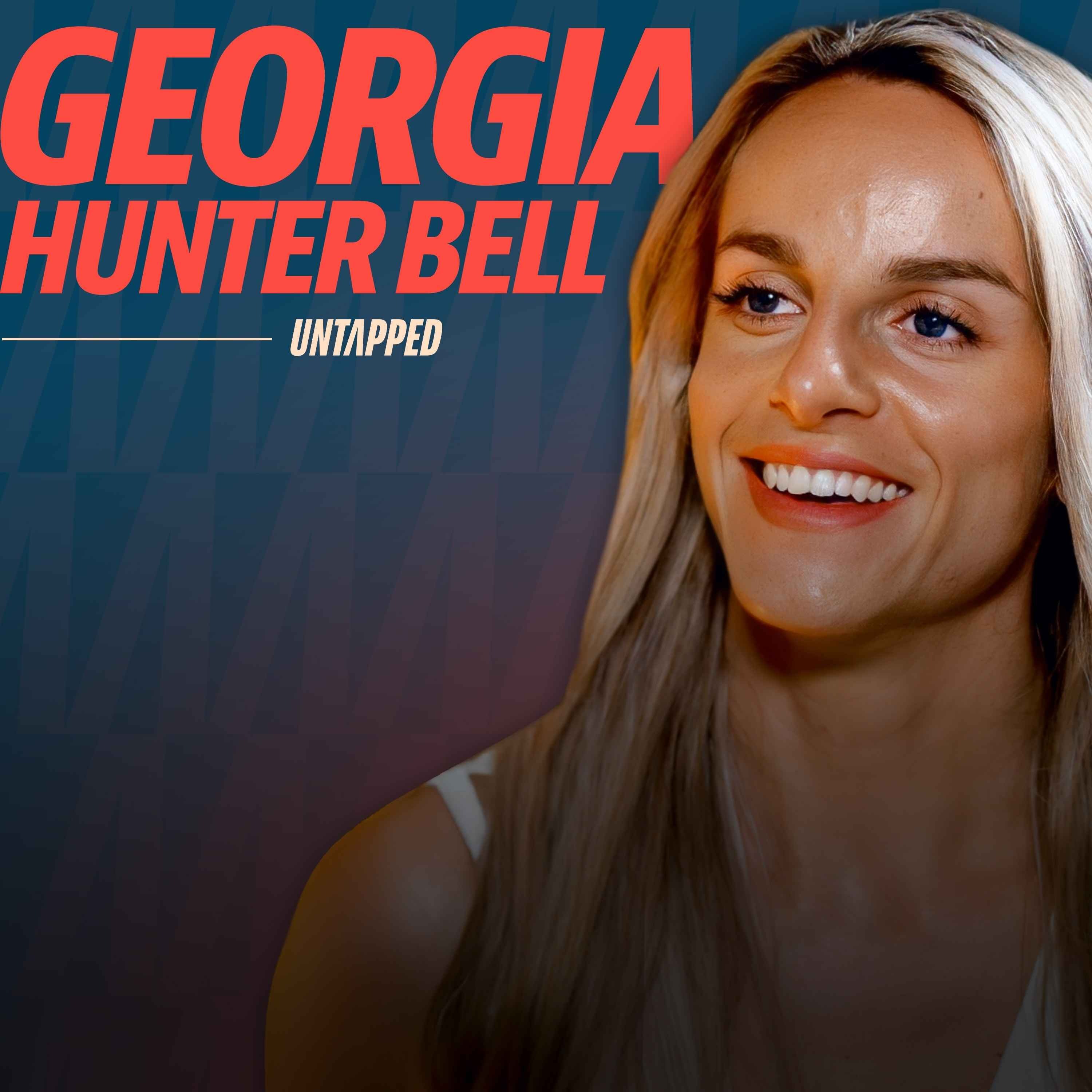
Georgia Hunter-Bell’s comeback from a career-ending injury to Olympic-level success, plus mindset, training tactics, and recovery “hacks” (sleep, nutrition, easy/hard day structure, and mental preparation). She also discusses how to get into running (e.g., parkrun), resilience after losses, and her role in Nike’s attempt to break Faith Kipyegon’s four-minute mile in Paris.
Georgia Hunter-Bell is a UK middle-distance runner (800m/1500m). She was a top UK junior, earned a US track scholarship, then quit running at 23 after stress fractures and years without personal-best progress. She later returned via cycling and parkrun, rejoined her old coach, and won Olympic bronze (Paris) and a world-championship bronze after a major “banker” race went wrong.
recovery is as important as hard training; belief is a performance advantage (underdog mindset helped her); control controllables (training, pacing, competitor research); easy days enable hard track sessions.
her 5K parkrun time (~16+ minutes) reignited hope; a European indoors race as heavy favorite ended in 4th; she later won bronze at worlds; she’ll pace Faith Kipyegon for the four-minute mile spectacle in Paris.
Written by AI. May contain mistakes.
Georgia discusses her early talent in running and the eventual setbacks she faced.
“I'd like to talk in a bit more detail about your career and how you came to taste kind of epic victory and win, you know, medals on the largest stages in the world?”
Georgia explains how a park run reignited her passion for running and led her back to competitive athletics.
“And I had gone from absolutely loving running, loving racing, being so confident.”
The conversation delves into the mental hurdles athletes face during competition and the belief needed to succeed.
“in a time where I felt very hopeless, I'd say.”
Georgia shares insights on managing expectations and pressure as a professional athlete.
“And that's, I think, for professional athletes, that's such a big deal because I've had races.”
Understand how setbacks can fuel resilience and determination.
Explores how competition and loss teach valuable life lessons.
“one of the best feelings you know that you can have if you could bottle that and and you know drink it whenever you want.”
Discusses the delicate balance of encouraging young athletes without overwhelming them.
“Of course, you know, it's also fuel to get back in there and beat them next time.”
Learn about the significance of low-intensity cardio in endurance training.
“It was shin splints that took you out mostly, was it?”
Discover the mental and physical benefits of running and how it transforms lives.
“Like the kind of faster, heavier stuff where you genuinely feel like you're in hell during it.”
Understand why embracing the challenges of running can lead to long-term satisfaction.
“you will get home and you probably won't love the way you feel the first time you go out.”
Experience the thrill of winning an Olympic medal and its emotional impact.
“You might have visualized that moment for four, five, six years, however long it might be.”
Explore the exhilarating experience of racing and the mental challenges it brings.
“is a lot Jesus so it was just like that feeling of knowing that you've done it and then just lying on the track and hearing everything erupt around you and that I think is just the best feeling ever.”
Discussion on the potential of women breaking the four-minute mile and recent performances.
“I can't imagine what it'd be like to race 1500 meters in front of a full like crowd.”
Insight into an upcoming event designed to help a runner break a significant record.
“But still, it's not within the realms of, it's certainly within the realms of possibility, I would have thought, Or even, I was about to say even for you.”
Understanding the importance of teamwork and competitive spirit in training.
“They just look like they're striding out.”
Learn about recovery's critical role in athletic performance and personal insights.
“And our coach very carefully picks who's going to come into the group for the exact purpose.”
Learn how recovery and nutritional strategies can enhance athletic performance.
“Like I think I'm trying to sleep as much just to make up for those years.”
Discover the mindset shifts necessary to achieve your personal best.
“Just, you know, general health and wellness advice.”
Find out how social media management can improve your focus on goals.

Get the gist, explore an idea or ask about something said.
 Claude
On UNTAPPED with Spencer Matthews, what are the key points of this episode?
Searching your listeningAutomatic transcript. May contain errors.
0:01What do you do when everything you've worked for is taken away from you? For Georgia Hunter Bell, a devastating career-ending injury could have meant the end of her story. Instead, it became the beginning of her second act. This is Untapped with me, Spencer Matthews, where we learn and get inspired to untap our potential from the best athletes in the world. In this episode, we dive into Georgia's remarkable journey from Olympic dreams to a new purpose, the power of mindset, and what it really takes to come back when all you've been told is that it's all over. If you haven't already, subscribe or follow Untappd wherever you're listening.
0:36Your support really helps us grow. You'll also be the first to know when new episodes are dropping, and we have some pretty amazing people coming on, so you definitely don't want to be missing out. Right, let's get Untappd with Georgia Hunter-Bell. I'd like to talk in a bit more detail about your career and how you came to taste kind of epic victory and win, you know, medals on the largest stages in the world? Because it wasn't a straightforward path for you, was it? You were a very talented teenager.
1:05Georgia Hunter Bell: Yeah, I was a very good junior. So I kind of knew early that I was decent at running. You get an insight just from things like sports day, like when you're really young, 10, 11, 12 years old, you're not really training, but some kids are just faster than others. And I fell into that category. and then as a teenager continued that became like the top ranked junior over the 800 meters for multiple years in the UK and it was kind of like oh this is a really promising young British athlete hopefully they're going to go on and do something really exciting and that just kind of didn't work out for me like I went over to the US on a full track scholarship with lots of high hopes of one day making the Olympics and being a professional athlete and basically just never ran better than I did in the UK.
1:52Georgia Hunter Bell: And so quit running for what I thought was forever and went into the working world at 23. Because of injury or because you genuinely felt you weren't good enough? Because of injury and I did completely give up on the dream. Like I just thought, if it hasn't happened yet, I haven't run a personal best for years. Like I'm 23 years old now. I've try and continue this running dream. And I kind of need to make a decision about what I'm going to do with my life. And I had gone from absolutely loving running, loving racing, being so confident. That's when I was at my happiest to going to a really dark place with it, you know, dreading racing, dreading training, all through just having stress fractures, having injuries and just feeling so far away from being my best, being the best that I was just like, I need to to step away from this and just accept that I've kind of failed here.
2:53I heard that you were reinvigorated when things started going wrong by a park run. Is that the case?
3:01Georgia Hunter Bell: Well, if you read some of the papers in the run-up to Paris, it really made it sound like I was couched to 5k to Olympic medal, like with a park run. That was really like a story that was pushed um which would be a great story our team here were like that's what it sounded like to me and I was just like how I'm pretty sure that her career didn't bounce back from the park run by the way it's like you know my PR loves the park run it's not yeah but but was there a time when you ran a park run and I think you did it in 16 yeah or something yeah it was just over 16 minutes and yeah it was a time where I so I had fully stopped running never thought I would run back on a track, went into the working world and then gradually found my way back into running, got into cycling, which I was finding fitness from just as something new.
3:48And park run is
3:50Georgia Hunter Bell: obviously just a good way to just challenge yourself. And I thought, let's just see what I can do in a park run and ended up running that pretty decent time for just being on my own. And then that led me to reach out to my old coach, who is my coach now, who's the coach of Keeley and everyone on the team. And I just said, would you coach me again? Like, I know I, you know, walked away and thought that I was never going to make it. And he said to me that he nearly didn't take my call. He was just like, oh, I can't bother to deal with Georgia. You know, it's like a Disney film. It's like an old, you know, that's an old thing.
4:24Georgia Hunter Bell: Surely that ship's sailed. And he was like, well, yeah, let's just go for it and see. And luckily he did. But yeah, Park Run was a way for, it was kind of gave me a bit of hope in a time where I felt very hopeless, I'd say. It's kind of cool that someone like you can get that feeling from a park run when you've been on Olympic podiums. Yeah. I would take that away as a really awesome message to listeners to go and do a park run. That meant so much to me running 16-odd minutes for a 5K and everyone's different. Like I have other people who are absolutely buzzing, you know, in my life when they might run 30 minutes for a park run.
5:11Georgia Hunter Bell: But it's all about how it makes you feel and you seeing those improvements. You gain that self-respect, self-worth. It makes you more motivated when you can see that progress. And then you just stack years and years of that. The goals change. And yeah, so you might get an Olympic medal at the end of it. Can we dig into that a little bit more or the mental side of it? So I can completely relate to plateauing or feeling like you've had, you know, your best race might be behind you. It can be quite a brutal thing. Yeah. Because, you know, you sometimes pull a rabbit out of a hat for no apparent reason and you don't know where that came from.
5:47And you're not sure how to replicate it. Yeah. So in your case, when you're absolutely smashing it and you're being told that, you know, there's a chance you're going to end up at the Olympics. and you are, you know, one of the hottest prospects in the UK. How do you handle the plateau? Yeah. Or even the regression, maybe?
6:06Georgia Hunter Bell: Yeah, it was really hard. Like, they were just really hard years because I had grown up just running was something that just came so easy to me. I just felt so good all the time. And then suddenly other people are catching up. Something that felt really easy last year is feeling a lot harder. And so it was really difficult. And also at that time, I'm going through my teenage years, like your body's changing, you're going through all your hormones and everything. So it was just really mentally tough to try and keep going and stay positive. But I had good performances throughout those years that gave me inklings of hope.
6:44Georgia Hunter Bell: And then I would think, you know, no, I've still got it. That talent hasn't gone away. I just need to nurture it in the right way. And I do think that's a huge, important thing. What are the key things that you did to try to achieve that? Well, I think that now I can look back and see that just because you're a talented kid doesn't mean that you're going to make it. I think there are so many things that you need to make it to the very top where you're winning Olympic medals. You need to have a great team around you, like coaches that know what they're doing. You need to be very resilient. You need to be able to learn things from the losses and be able to come back.
7:19Georgia Hunter Bell: You need the work ethic, obviously. You've got to do the hard work and you need that mental strength too which can take years to develop and definitely did with me to actually stand on the start line and believe that you are capable of winning a medal which is or winning or whatever it might be which is a very daunting and scary thing and it's often quite a delusional thing like on paper how are you going to do this but you really need to get to that point of belief and only when all those things come together as well as the recovery nutrition, everything like that. Those are the people that are able to do it.
7:53The self-belief, the people who believe in themselves, does that ever shift during the race?
7:58Georgia Hunter Bell: I think at the professional level, at the top level, if you don't think you're going to win a race, you absolutely won't. Like there's too many people who are too good, who want it so badly that even if you are slightly mentally off your game, someone's going to come through. So sorry to interrupt you. So when you're lining up for the 1500 meters, say, Yeah. You think, does every single person lining up believe they're going to win? No, I don't think that they do. And that's why the people that truly believe that they are do. Because I think when you get to this top level, everyone is so talented.
8:31Georgia Hunter Bell: Everyone has put in hours of work. They've done all the physical things. But some people will stand there and have doubts. They'll say, I don't know if I can do this. I haven't had a good few races, whatever it might be. and other people stand there telling themselves, I can do this. I'm ready for the moment. And for me last year, because I was such a underdog and this kind of whole story of coming back and being in that shape in an Olympic year was so unlikely that I kind of had no doubts the whole year of racing. And that was almost my superpower against people who were putting a lot of pressure on themselves who had a lot of outside pressure on them.
9:15Georgia Hunter Bell: And it's something that's not tangible, but those people are definitely the most dangerous to race. Hey guys, it's Drew from the comment section. Some days my skin just needs a little coverage and other days I want to go full glam. For those everyday moments like running errands or grabbing coffee, I've been loving the Merit Minimalist Stick because it's a foundation and concealer in one that gives me a really natural skin-like finish. But when I want more coverage, I'm reaching for the Hourglass Vanish Concealer every time. I know I'm not the only one who struggled to find the right foundation or concealer shade, which is why I always shop at Sephora.
9:52They have the best brands all in one place with so many shades, coverage options, and finishes, plus expert beauty advisors, free samples, and shade matching tools both online and in-store. So whether you're looking for barely there coverage or full glam, Sephora can help you find your match.
10:12it's it's such a funny balance though isn't it as well because it's it's almost it's almost beneficial sometimes to be the underdog because there is less pressure riding on you yeah people aren't expecting you to win um you know heavy is the head that wears the crown and such you know that if you're expected to win and uh you know you you have to you have to have the wins to believe the confidence in yourself right like if you're if you're the kind of person that believes you're always going to win and you don't repeatedly, then obviously that confidence gets crushed and you start to realize that your delusions as such are fake.
10:51They're wrong.
10:52Georgia Hunter Bell: I know. And that's, I think, for professional athletes, that's such a big deal because I've had races. So this year is a very different year for me. People expect a lot. I'm no longer the underdog, right? So I'm adjusting to that mentally. And this year, it is harder for me than last year for getting on the start line. And I'm thinking differently. And I think that I've had experiences this year where I went in as the favor and failed. So I had European indoors. I was the dead hot favor. Everyone was just like, this is just a procession. She's just going to go and win. And I completely messed up the race and missed and came fourth.
11:31Georgia Hunter Bell: so didn't even get a medal. And that was very hard after that to get myself back to a place of saying, no, you can do this. Because as you say, once you have evidence that you can't, that allows that doubt to kind of grow inside you. You must have stood next to people who were where you wanted to be mentally, who knew that they were just going to hammer the race and who knew that luck was on their side. And I don't know. And it must be hard to go into a race knowing that. Yeah, definitely. And I think, as you say, once you've had the experience and you have the doubts, you have to really work yourself up to believe in yourself.
12:11Georgia Hunter Bell: I mean, I think that's the key thing. It's like, if you've done all the work, then you have earned the right to stand on the start line and believe you can do it. And so I guess with you going into these marathons, you did a bit of training before to make sure that you actually can do it on the day. Chris Taylor, he was my running coach and he was my logistical head in the desert. He and, you know, we came to the conclusion, obviously, that good preparation is like the antithesis of Jeopardy. And what we're aiming for is a Jeopardy-free trip. You know, we're aiming to be able to complete the task that we've set ourselves and do it well and come back strong.
12:50This was the idea. You know, we're not looking to struggle our way through it to potentially fail. you know, all of those things are realities, but, you know, could be realities. But he said to me on day one, he was like, if we control the controllables, if you put in the time, if you stick to this training regime, if you listen to me, and you do the distances I'm telling you to do at the pace that I'm telling you to do them at, then you will be ready for this event.
13:14Georgia Hunter Bell: Totally. And I feel like you can do stuff to make sure you're ready and do everything right. And then in my event, it's also about knowing your competition really well. So with the 1500 and the 800, it is as much of a mental and intelligent race as it is a physical. It's very tactical. And so you need to know what your competitors' strengths are. Like, are they likely to go out at a really hot pace early doors? Can they do a really big kick so you don't want to see them on your ass like when you're a few meters from the finish line? And I'll go into every race knowing who's in the race, what their season's best is, so what kind of shape they're in, what they've done in the past and you're kind of preparing yourself for all outcomes and I noticed the races that I haven't gone into that with that preparation not only do I feel less ready on the start line but my performance is always worse because there's something surprising someone comes through and does something that I don't even know who that was and actually if I'd taken the time to look it up I would have seen that they just did a crazy race a few weeks ago yeah so me losing that race BBC Sport was like shock we're all in shock and my you know my family my father in law friends had all flown out to watch this race that was a complete banker and I just felt so you know guilty and sad afterwards but then that feeling really stuck with me afterwards in training like I thought about it on every rep when I was in pain like I thought about it when I was going to bed it really did consume me for like weeks afterwards and then a few weeks later I was able to get a bronze medal at the world championships because I was just so determined to right in that wrong and so I sometimes think that you know you need stuff like that to to be able to show that resilience and then now I can look back and say well that was a pretty bad day but look at how you were able to come back and that can make you believe in yourself I think bouncing back is is one of the best feelings you know that you can have if you could bottle that and and you know drink it whenever you want.
15:16That would be great.
15:17Georgia Hunter Bell: Yeah, everyone loves a comeback. Everyone loves a comeback. And it's just, you know, I think life is a series of comebacks, really, isn't it? If you're a driven, competitive person, you know, you're going to lose, you'll always find someone, broadly speaking, I mean, we've had some people in here who are literally the best in the world at things, you know, throughout the course of their life, they have always come up against somebody better at some point, you know, and it's an incredible way of looking at things I think to take loss as as a positive almost like obviously it's painful at the time and it and it you need that grit like I do think you build the losses build the resilience like which makes you have grit and only people that have grit are able to do the tough things which most people would be like I'm just not even touching this I think when you lose as well, if you then dwell in that and you shy away from competition because you don't want to feel that again, that is the difference between, you know, someone who will go on to potentially achieve their full potential or, you know, to get those race results that they're looking for, because it's a really valuable lesson to, you know, I'm a father now, I've got three kids, that would be the most important thing almost at their age to teach them that failing, losing, You know, it's just a part of life.
16:37Yeah. Of course, you know, it's also fuel to get back in there and beat them next time.
16:43Georgia Hunter Bell: I think that's why sports are so good for kids. And that's definitely something that, I mean, hopefully your kids will be able to experience if they do any kind of sport. It's just such an easy way to teach it to them without, you know, always letting them win games, always letting them be, yeah, the person that comes out on top. Like, they need to learn. I always make sure I beat them when we race, yeah. Good, yeah, good. don't let them win no I think we kind of we kind of share it a bit but it is important it is important because yeah they need to yeah they need to know what that's like because otherwise yeah they'll grow up and then they won't know what it's like to lose or not get what they want speaking of running is six years old not to make this all about my kids again but is six years old kind of too young to notice like a like a running talent he just he loves running my son he does athletics at the same track as you and he is good.
17:34Like he wins all of his races. I'm not just saying that like my daughter doesn't and he does but he's got like he's got an amazing stride and like he loves running. He loses every so often if he's paying too much attention to who's watching. So like he does like spin around and check who's seeing him win before he wins. But like that's a bit of me I think. But he's fast. Yeah. I ran a 5K with him the other day. He's six.
18:01Georgia Hunter Bell: Wow. And like he's, I think it's quite like, at what stage would you start to kind of like harness that? Or would you, like, I don't want to be that weird, like, you know, parent that kind of pushes sport on their very young children either, like unnecessarily. But I do think he's like a good runner. Yeah. I think get him into a running club, definitely. At his age? Well, maybe when he gets a bit older. Like there's obviously the kids park run so I think that's a really good step for someone who's a kid who's good at running I think it's only 2k instead of 5 and so that's that's kind of like the appropriate section for them to be in at this point because it's such a fine balance like they have all this potential but you don't want them to burn out by the time they're 12 because they've been or hate it exactly and like yeah I'm a story of someone who did too much, got injured and dropped out totally.
18:57Georgia Hunter Bell: I managed to find a way back. But I just think how many other potential Olympians would we have in the UK if people don't drop out of sport altogether? But there are so many reasons why they might and doing too much too young is definitely a risk. It was shin splints that took you out mostly, was it? I had, yeah, various shin splints that then turned into stress fractures. So that's literally where your bones start to fracture and break. And that goes into a whole procedure of healing, which is like no running. So you're coming back from like such a terrible starting point. It's an awful feeling when you get out of the crutches or the boot that you're in and you're like, oh my gosh, I have to start and build my way back up.
19:36Georgia Hunter Bell: And it's just a really bad cycle. Like a few months goes well, then you get stress fracture. So you start it all over again. And now I'm actually in a really good spot with fitness because I've just had year on year on year of building this base without having to take big blocks out. Touch wood from your injuries. How important is building that base fitness layer through, you know, zone one, zone two, longer stuff, just like getting your really low intensity cardio up, you know, is that for your distance? I obviously don't know, but you know, for longer distance stuff, running for hours, incredibly slowly, like almost so slowly that you feel like you're not working out is so important.
20:24And it's one of those weird sessions because then you kind of don't really feel like you're in a session, which can be nice. Obviously, if you've got like really heavy legs or you're tired or, you know, you've undergone some stress that week or whatever, then it can be quite a nice way to just like have a chat with your mate or make some phone calls or whatever when you're training in inverted commas. But like you do feel that that translates to speed then like when you then go to the track on fresh legs yeah you're like maintaining that you know three minute per kilometer pace is is easier because of the distance that you've put through your legs um is that something that you focus on as well yeah so we'll have easy days and then we'll
21:03Georgia Hunter Bell: have hard days and our group really spurs by that like keely hodgson olympic champion she's my teammate and we've got sarah healy a european champion teammate like we the formula works the easy days are very easy. Like sometimes my husband will be like, I actually cannot run with you because you're going so slow today and I want to go a bit faster. So for me, that's like, I was getting my heart rate at almost like 140, like not very high at all. It's complete recovery. So the next day I can smash it at the track, like go into lactic hell. Like I'm going as fast as I can. Do you like all that? I love those sessions.
21:42Georgia Hunter Bell: Yeah, they're painful. They're hard, but it is really that thing of pushing your limits to see how far you can go. And I think exposing yourself to that kind of intensity in training means that we're prepared for the big races when they go like that. Like, it's not a shock to us. We practice for it. I love that as well, by the way. Like the kind of faster, heavier stuff where you genuinely feel like you're in hell during it. It's just, it's nice because you know, you're kind of, you're paying something. Yeah. You're giving something. Yeah, yeah. You'll be rewarded, you know. It's kind of like it's, I do think it's a give and take, you know, sports.
22:19Like jiu-jitsu, it's very similar. Like the more you give to the track, the more you pay in sweat and tears and blah, and whatever else you want to say.
22:27Georgia Hunter Bell: Sometimes vomit. Yeah, yeah, yeah, exactly. The better you will become. Yeah. You know, it's one of these things as well. And I'd love to get your opinion on how to encourage people that currently don't love running to start running or to develop some habits that might help them become runners. because it is a life-changing sport. You know, when you embrace it and when you get good at it, there's very few better feelings than like running around a park well, you know, like a good pace and your breathing's all fine and you're thinking clearly and you're outdoors and the sun's out. It's like it's an awesome sport.
23:02And it's so natural.
23:03Georgia Hunter Bell: I feel like most people hopefully will be able to do it. Obviously, you know, if you have kind of physical condition, then maybe not. But in terms of things, sports that you can access, like you don't need a bike, you don't need a tennis membership in a court, you don't need a pool, like you just need a pair of trainers. And from that sense, it's lots of people can get into it. And you see the kind of communities that come out to parkrun, parents pushing in buggies, grandparents, like pregnant people, like it's just able to reach so many people. And I think that's what I would just say about people looking to get into running.
23:38Georgia Hunter Bell: It's like the barrier to entry is very low. And you will just enjoy it so much once you get into it, once you just push past that. I mean, it's always hard. As hard as you make it, like a 5k flat out for me now is still as hard as a 5k flat out for me was when I first started. It's all about the effort that you put in. It's relative, isn't it? Exactly. And it's kind of, I feel that almost everyone that starts running is going to hate running, right? Like at the very beginning. I'm not sure that anyone, so if you're new to running and you go running and you do a lap of your local park, you will get home and you probably won't love the way you feel the first time you go out.
24:15So just coming from an Olympic athlete, an Olympic runner, why stick through the pain and why do it in the first place? What has running given you? It's just the highlight of my day.
24:28Georgia Hunter Bell: even when the sessions are hard it the way how it makes me feel afterwards the kind of mental release as well as the physical it's just such a it's just such a thing that I love to do it's allowed me to see the world obviously travel it's allowed me to have many amazing experiences that are just not normal but I think just for the average person they will hopefully feel better once they get into it for a bit and someone once said something to me that's really stuck with me and it's like the time you least feel like going for a run is probably when you need it the most. And that is true. Like you, perhaps you're really tired.
25:03Georgia Hunter Bell: You've had a long day. You just want to lie on the sofa and eat junk food. You might feel better for a second, but afterwards you'll just feel terrible. And running's the opposite of that. You kind of might feel worse when you're doing it, but then at the end you feel refreshed and better. And I love to see friends, family, people that are getting into running later in life. And then they'll message me and say, I'm just really, I'm really loving it at the moment. Like, I don't know how this has happened, but I'm just finding myself wanting to go for runs, wanting to do that. And yeah, I just think it's something that hopefully is accessible for a lot of people.
25:36Wonderful feelings of pride as well when you start to find difficult things easy, you know, like when I think the reason lots of people don't like running is because it is quite hard. Like, you know, it's not the easiest sport if you are, your cardiovascular rate will go, your heart rate will skyrocket. You will begin to sweat if you're not used to it and your body isn't conditioned. You will feel pain, aches. So it's not the easiest thing to do. But when your body begins to adapt to it, it's a very beautiful thing. And you do have to get over that wall just to get into it. But I think that goes for anything.
26:16Georgia Hunter Bell: Every good thing in life. Yeah, exactly. Nothing good is going to come easy. Like you have to, and then it's also doing the work for it is when it feels so special. Like there's a reason that winning Olympic medals is so special. It's because it only comes around every four years. You might have visualized that moment for four, five, six years, however long it might be. So then when you get it, it is the most satisfying feeling, more so than if you just started running the week before. What is the greatest feeling you've ever had in your career? I think it does have to be the Paris Olympic final.
26:51Georgia Hunter Bell: So just kind of walking out into the stadium, it is so loud. Like you just hear the rumble before you get out. Like a Roman gladiator. Like a Roman, honestly, you do feel, it's a very gladiatorial experience. You're standing next to these people who you know well, but they're your competitors and you're going out and history's about to be made and no one knows what's going to happen. Like it's exciting. and so I think in the race I was fourth coming into the home straight and obviously only three people get medals and I just was like I need to give it absolutely everything in my being and before the race I just said I want to make sure that I finished the line and completely collapse like no I couldn't have done a single thing more and so I think just crossing the line which I got in the final step by the skin of my teeth I got a medal and and realizing how fast we had gone we had gone like it was an Olympic record I ran a British record four seconds faster than my previous personal best so like what?
27:55Georgia Hunter Bell: blew off a massive chunk there and then four seconds? which in 1500 is a lot Jesus so it was just like that feeling of knowing that you've done it and then just lying on the track and hearing everything erupt around you and that I think is just the best feeling ever. I hope it stays with me forever. Yeah. I kind of like, I feel like I felt it. Yeah. That's so cool. It's honestly, that is the stuff of dreams, you know? Yeah, it is. Like I just think that's so awesome. And it's just the racing side is really fun. Like you're really pushing yourself to your absolute red but also you're engaging your mental kind of fight or flight the whole time in the race.
28:40Georgia Hunter Bell: So like moves are being made and you have to engage and make sure that you don't get dropped. And if there's a gap, are you going to be able to get there in time? And all these split second decisions, which make up what the end result will be. It's actually just very interesting. Like psychologically to see how it all pans out and who's going to finish on top and then it's just over. Hey guys, it's Drew from the comment section. Some days my skin just needs a little coverage and other days I want to go full glam for those everyday moments like running errands or grabbing coffee I've been loving the merit minimalist stick because it's a foundation and concealer in one that gives me a really Natural skin like finish, but when I want more coverage i'm reaching for the hourglass vanish concealer every time I know i'm not the only one who struggled to find the right foundation or concealer shade Which is why I always shop at sephora They have the best brands all in one place with so many shades, coverage options and finishes, plus expert beauty advisors, free samples and shade matching tools both online and in store.
29:44So whether you're looking for barely there coverage or full glam, Sephora can help you find your match. I can't imagine what it'd be like to race 1500 meters in front of a full like crowd.
29:58Georgia Hunter Bell: Yeah, it's like 80 ,000 people in Paris. The intensity would be insane. And like you would find extra seconds actually, obviously. Oh yeah, if I went down to Battersea Track and tried to run 3.52, not happening. But being in those environments, it does those big pressure moments, like pull out these amazing performances. So 3.52, so you're not a million miles at that pace off a sub four minute mile. Wow. And no woman has ever achieved that. Yeah, no woman has ever achieved that. the four-minute barrier for the mile for men was something that they thought unachievable, no one's ever going to do it.
30:37Georgia Hunter Bell: And then Roger Bannister did it, I think it was about 50 years ago. And then suddenly everyone's doing it. So now guys today are running 340 something, you know, they're well under. I think Josh Kerr ran a 343. Yeah, so like, yeah, yeah. I think it was probably, yeah, that sounds very quick. But yeah, I think it was definitely 340s-ish, somewhere in there. That sounds very quick. We might have to check on that. I did do a story about it, and I believe I'm going to put my eggs in the 3.45 basket. I think 3.40. Yeah, actually, you might be right. I think it's 3.45.56 or something like that. 3.45.34.
31:18Georgia Hunter Bell: Wow. Oh, my God, that is quick. Yeah. That's actually so quick. Fair play, Josh. No, but it is wild. it's like um so you believe then that when the first woman invariably breaks the four minute mile which i mean as i just mentioned you're not far off like in in reality or not right because i suppose you you would need the crowd again you'd need the crowd yeah you need everything but it would be interesting to see if in like 20 years women are breaking it all the time like something that was so impossible suddenly becomes the norm like that's how kind of it works and there is this we're going to try and break the four minute barrier for faith kip yegon who is the greatest of all time three-time olympic champion so think about that over a 12-year period she's come back every time to be the best she's got the world record in the mile already and the 1500 so if anyone's going to do it it is faith she must be like already very close to it so So she's run 407.
32:19Georgia Hunter Bell: So seven seconds over a mile is still a lot to take off. That's for sure. Sorry to keep interrupting you, but if you're running a 453, no, sorry, 353. For 1500. Over 1500. You've got essentially seven seconds to run the last 100 meters, which Usain Bolt can't do. Yeah, yeah, exactly. But still, it's not within the realms of, it's certainly within the realms of possibility, I would have thought, Or even, I was about to say even for you. Would you consider yourself as somebody that could crack this one minute mile? Not yet. But hopefully, if we can watch Faith do it in a few weeks. So like Nike are doing this big thing.
33:02Georgia Hunter Bell: It's very similar to when Kipchoge was going to break two hours for the marathon. Where is this happening? This is happening in Paris in a few weeks time. And it is, they're putting on a whole spectacle. So the stadium is going to be absolutely full. she's gonna have you know custom shoes on her feet she's in a custom body suit i'm part of the pacing team they made her a um yeah a top yeah yeah yeah yeah fit to her specifications she's been training for it for months and it's just about yeah trying and seeing so i'd love to go to this i'm pretty sure it's free entry as long as you get there like they're gonna have people on the track like it's gonna be a whole full thing they she wanted it to be free entry so anyone who wants to come and be there can be there.
33:49Bum out if she gets like one second over or something. Imagine.
33:52Georgia Hunter Bell: Well, even so, it will be a world record. Yeah. So even if she misses, it will still be a world record. She won't miss. Will she have paces? So yeah, she will have paces. So it's going to be a mixture of guys and girls. So I'll be part of the pacing team. So essentially Nike are working out. They've been practicing what is the perfect wind tunnel for Faith. and then people will be positioned around her to get a perfect resistance against the wind and people will be dropping out intermittently and then it will essentially be like her at the end on her own trying to go against the clock so it'll be so exciting it's so exciting just to see it's really going to be either way it's going to be like a historic thing what's what's your minutes per kilometer pace when you're running a 1500 meters flat out oh you know what i actually don't know because you're doing miles yeah because i do it in miles but also like i don't actually look at the pace now i just know what the lap times are like that's what i know so it's about it was about 61 62 seconds per lap for just under four laps yeah it's quick yeah four laps yeah yeah so just under it's it's um it's it's pretty that's remarkable stuff i ran a mile with Mo Farah the other day and Mo in his prime would run a full marathon at that pace that's so scary at like a 250 or a 251 or like 253 I think in his case but like I know like how they do it is the same no but it's like 42.2 kilometers at a 250 kilometer pace yeah is in my personal opinion if you can hold a 250 kilometer pace for a single lap of the track like you're you're very athletic yeah yeah yeah it's a whole other level isn't it of fitness they're doing it for for like a hundred laps I know it's insane it's insane and I feel like yeah once people get into running and they do a lap to see the pace then it really puts it into perspective of how fast people are going well to put it into perspective it's faster than your running machine in the gym goes yeah so like if you get on your running machine in the gym and you crank it up to as high as it'll go like some go to like 22 it's that it's that for two hours and five minutes.
36:09So enjoy.
36:10Georgia Hunter Bell: Insane. And they make it look easy, don't they? That's the thing about it. They just look like they're striding out. But if you got someone like Keely in the run up to Paris, I don't know if you've seen the video, where they get people to do her pace on a treadmill and see how long they can go. And I think the longest person was like 40 seconds. And they're flat out sprinting. But Keely looks like she's... Keely looks all right. She looks all right. She looks like she's chilling. I have seen that clip. Why does everyone fall at the end? Because they literally just can't. The other thing on the side Mo fell three times We had him in here as well Oh yeah He was talking about Like trying to surprise that guy And he fell off it Four times That's bad yeah It's not good I fell off a treadmill In a Barry's boot camp Which is a bad moment for me Yeah I mean I was about to ask you About your biggest low But I suppose it's that Yeah That wasn't a good moment It was a few minutes Into the class And I was like I've just paid£30 for this So I have to just Get back on the treadmill And carry on Why Just out of interest How did you fall off the treadmill Just, I, you know, it's pitch black in there.
37:08I don't know.
37:09Georgia Hunter Bell: Have you never been to a Barry's? I've not been to a Barry's. Okay, yeah. Well. So you train in the dark? They basically like turn off all the lights and then have you sprint flat out on a treadmill. What? Yeah. Yeah. It's interesting. It's not normal, is it? It sounds dangerous. It's a fun workout, but yeah, I just mistimed it and fell off the treadmill, which was, yeah, kind of embarrassing. I'm not surprised if it was pitch black. Yeah. But no, I'm sure I've had more embarrassing moments than that. What is your relationship like, professional relationship, shall we say, with Keeley? Good. Yeah, really good.
37:39Like we're in the same team and we have just a really good team around
37:43Georgia Hunter Bell: us. I think it could easily be that there's friction amongst everyone who is technically competitors, but there just really isn't in our group because some people are better at some things and others are better at others. So like Keeley will kill all the track sessions, but then Sarah will kill all the tempo stuff on the roads and like I might be good at hills so like we're all working off each other and that means that we all get better overall I mean I want to be racing with Keely a lot this year she's just coming back from injury but um having her as a teammate and being in the group is yeah literally just the best thing there must be some like competitiveness between teammates surely there is but it's like so openly competitive that I It doesn't feel like personal.
38:30Georgia Hunter Bell: Yeah, it doesn't feel like personal. And as I say, like, you never know who's going to do the best in the session. It's not like one person is always winning. And I think that's good because it means that we're all, anyone can have a good day, you know. So yeah, you're lucky if you have a training group like that. I think the worst thing would be if you were the best in the group by a mile. Like, number one, how boring. But also, like, you're not going to get any better. Like, you're not going to be able to improve because you don't have anyone pushing you. You have no one challenging you, no one to hang on to.
39:02Georgia Hunter Bell: Like if you can find people that are better than you, it will make you so much better. And so that's what we have. And our coach very carefully picks who's going to come into the group for the exact purpose. And that's not a surprise now. I don't think that as a team across different distances, we're picking up global medals. Do you do relay? No, we don't do the relay in the middle distance events, but I would love it. Like if we had a four by 800 where it was like me, Keeley, Gemma and whoever else, like we would get the world record. But it's only for the sprint, sadly. That is a shame, isn't it?
39:35Georgia Hunter Bell: Real shame. Yeah, real shame. I hope they bring it to future Olympics because yeah, I would love to. What is the longest Relay 400? I think it's 400, yeah. And you guys wouldn't have a stab at that? No, there's some very speedy 400 British athletes that would finish way ahead. I find it unbelievable anyway. So congratulations on your career so far. Thank you. Can you explain just quickly how important is excellent recovery? And the reason I'm asking, because I think loads of people are probably in the same place that, you know, I've been before where you feel like the more you do, the more productive you are.
40:13And like, you know, the more often you run and the harder you push yourself, the quicker you'll make those gains. And I think I now know that to be not accurate. it. I was wondering from a professional standpoint, what do you do to recover well? How important is it? It's so important. You cannot do well if you don't recover.
40:33Georgia Hunter Bell: Like it's as important as the hard training because your body needs to absorb all of that training to be able to improve. And if you're constantly just breaking down your muscles, breaking down your muscles, not getting sleep, not getting nutrition, then your body is not able to absorb that. So you're just going to be run down, get injured. Like I've been through it all myself. So it is so important. That's why how we train is one day hard, one day easy, one day hard, one day easy. You need the easy days. You need a lot of sleep. Like I sleep a lot. I think. How much do you sleep? Go on. I would say eight hours of sleep at night is not enough for me.
41:07Georgia Hunter Bell: Like if I have eight hours, I think I had eight hours last night and I feel like I've done an all nighter, you know, it's not enough. like I need at least like 9 10 honestly um Michael Jordan 12 and after an afternoon nap like if I'm training in the morning and in the evening I'll need to sleep to recover how long would your nap be not too long like 45 minutes just something where I'm just very yeah very horizontal so even if I'm not fully asleep I'm just you know letting myself chill out before I have to go again and I think I was working in the city for years for like seven years I was working a tech sales job and then in the last four years of it trying to train like a pro as well doing both and I was definitely not getting enough sleep because I was waking up at 5am 6am to go train before work then training after work and I was kind of running on fumes or whatever and then now it's almost like catching up to me.
42:09Georgia Hunter Bell: Like I think I'm trying to sleep as much just to make up for those years. And from the day that I stopped working last year in May, my performances went through the roof. So it's literally like as soon as I took out a job that was stopping me from recovering, my body was able to just absorb everything I was doing so much better. And I just got faster and faster and faster. And so I think, yeah, people need to take it as seriously as they take their actual physical training. So what time do you go to bed? I'll be in my bed at 9.30. See, that just sounds so nice. Yeah. Like, I have kids and I do that as well.
42:48Yeah. Vogue and I go to bed at, like…
42:50Georgia Hunter Bell: Like, obviously, if you're out or something, then yeah. We're not, though. We're not. But exactly. If you're at home, I just… Like, one day, I was like, why am I just staying up just to stay up and look at my phone and watch TV? Like, go to bed. We might stay up and watch a bit of TV. But not until like the early hours or whatever. No, no. God. No, it's like it's out at like 11 at the very latest. But this is like the new rock star behavior, I think. It's like in bed by nine, you know, asleep by 11, up at kind of 6.30. Yeah. You know, training hard and softly. Yeah. Caffeine? Caffeine, yeah, yeah, yeah.
43:28You love your caffeine, do you?
43:29Georgia Hunter Bell: I have a caffeine gel like an hour before my race. Oh, this is, okay. Which means it can be difficult to sleep the night after a race, especially like my race in Paris Diamond League this week is at 10 p.m. So I'm going to be having a caffeine gel at 9 p.m. I had eight gels in the London Marathon. All caffeine? Yeah, of course. Oh my God. Carbs and caffeine. Yeah, of course. And that was Jake Dearden's recommendation and Josh Kess. Yeah. He said every 15, 20 minutes, smash a gel. Yeah, yeah. So I said, all right, fine. News to me, I'll do it. It makes a huge difference, yeah. Yeah, massive. Yeah, yeah.
44:04I don't gel during training, ever. Again, I'm not an Olympic athlete.
44:08Georgia Hunter Bell: I would before a hard session. Where it's like flat out effort, I'll take a coffee. My next park run, you better believe I'm gelling up. Oh, yeah. Make sure you do. I will. You'll go so much quicker. I will. So you drink plenty of caffeine? I would say like I'll have two cups of coffee a day. Yeah, okay. Maybe three if I'm feeling extra naughty. Try not. And what about like diet, nutrition? are you strict not so much like I say I'm pretty not strict but I just know what I need to eat to fuel myself so always in that 20 minute gap after exercise never come to the track or wherever I am not prepared with something to get in straight away so usually a chocolate milk or some kind of protein where it's just carbs protein straight away so going back to like breaking down your muscles after you're doing hard effort how can I recover as quick as possible that's a huge thing get that in and then I'll just have a lot of whole foods you know like eggs salmon chicken rice vegetables single ingredient stuff yeah single ingredient stuff exactly and I need that if I'm training again in the afternoon if I have like a big stodgy lunch then I'll have a huge energy crash but then dinner is kind of like you can do anything at dinner I'd say because you're going to bed so it's okay favorite super shoe favorite super shoe I love the the vapor flies like they are the best shoe they have the best you.
45:32Vaporfly or Alphafly?
45:34Georgia Hunter Bell: Vaporfly. Vaporfly? Yeah. Oh yeah. Yeah, yeah. I love the Vaporflies. Some people prefer the Alphaflies, but Vaporflies, I just think they're so quick. They look so good. What tips would you give our listeners? Just, you know, general health and wellness advice. The whole point of this podcast is that we want to equip people with points to take away from our incredible guests so that they can reach their full potential. Not the any of us have reached our full potential. But, you know, how can we do more with what we have? How can we learn about, you know, untapping more of ourselves? Have there been anything, any changes to your, you know, routines that have made a massive difference that you could share with us so that we could try it?
46:19Georgia Hunter Bell: Sure. I mean, I just think in general that everyone has got so much untapped potential. And even though you need to do all the physical work to get to these places, once you open up your mind to accepting that and seeing that you don't have limits and actually conceiving that these crazy things you might be able to do and for everyone that might be different, that is really the power. So I think like give yourself permission to believe in yourself and a lot of people will not do that at the start. So they're always destined to not try and I think yeah look at some of the cases I mean hopefully my case last year on paper should not have made the Olympics at all and yet made it there and got a medal and that's because I was I'd done all the work to get there but I really believed in myself people around me did and I allowed myself to just like dream dream big and I think once you do that you'd be really surprised at what you can achieve yourself um on a more like tangible thing um for things to take away like obviously the recovery stuff super important um yeah make sure that you are doing the really hard days in training as well as the easy days and getting that balance and then just as one more like tangible thing set a timer on all your social media like i just have instagram tiktok set to 45 minutes i'll get a notification if it goes to that point and then hold yourself accountable it's kind of aside from running but we just don't need to be filling our minds with how do you do that by the way is there is there an app that does that for you do it on instagram like you go to your settings and you can just put limits on it and you'll turn it off and it will just come with a notification saying you've been on instagram 45 minutes today now put it away so you have to take the accountability and do it but it's amazing how often i'll just forget about it and i could stay scrolling unless i got that notification so i just feel like it's a good way because you know we've all got goals to achieve like you've got a it kind of resets you in the day to just be like, oh yeah, I've got X, Y, and Z I need to do, and now I need to get on with it.
48:27Georgia Hunter Bell: And so I think anyone can do that. That's very good advice. And Georgia, thanks so much for joining us here on Untapped. It's been a great pleasure having you with us today. Thank you so much for having me. Thanks so much for listening. We hope you enjoyed that episode. And if you want to hear more incredible conversations with extraordinary people to help unlock the potential within all of us, then please subscribe, follow, and review the show wherever you're listening or watching. Thanks again, and we'll catch you next week right here on Untappd.
49:02Hey guys, it's Drew from the comment section. Some days my skin just needs a little coverage, and other days I want to go full glam. For those everyday moments like running errands or grabbing coffee, I've been loving the Merit Minimalist Stick because it's a foundation and concealer in one that gives me a really natural skin-like finish. But when I want more coverage, I'm reaching for the Hourglass Vanish Concealer every time. I know I'm not the only one who struggled to find the right foundation or concealer shade, which is why I always shop at Sephora. They have the best brands all in one place with so many shades, coverage options, and finishes, plus expert beauty advisors, free samples, and shade matching tools both online and in-store.
49:42So whether you're looking for barely there coverage or full glam, Sephora can help you find your match.
Middle-distance runner Georgia Bell opens up about the power of resilience after defeat, sharing how the sting of a disappointing race became the fuel that pushed her through every painful rep in training.
In this episode, Georgia dives into the emotional toll of setbacks, the strength found in recovery, and the crucial role of a trusted support team. She reflects on the importance of believing in yourself, especially when it's hardest, and how running remains her daily anchor, offering clarity and focus both on and off the track.
It’s a story of bouncing back, building belief, and using every challenge as a stepping stone toward something greater.
WHOOP 👉 With 3 new memberships, there is a WHOOP for everyone. Join Spencer in untapping your own potential: https://hppod.co/whoop
Betterhelp 👉 Be at your best with Betterhelp. Click here for 10% off your first month of therapy: http://betterhelp.com/UNTAPPED #AD
Heights 👉 Get 20% off your subscription by using Code: UT20 here: https://hppod.co/heights20
Hosted on Acast. See acast.com/privacy for more information.