Ask ChatGPT

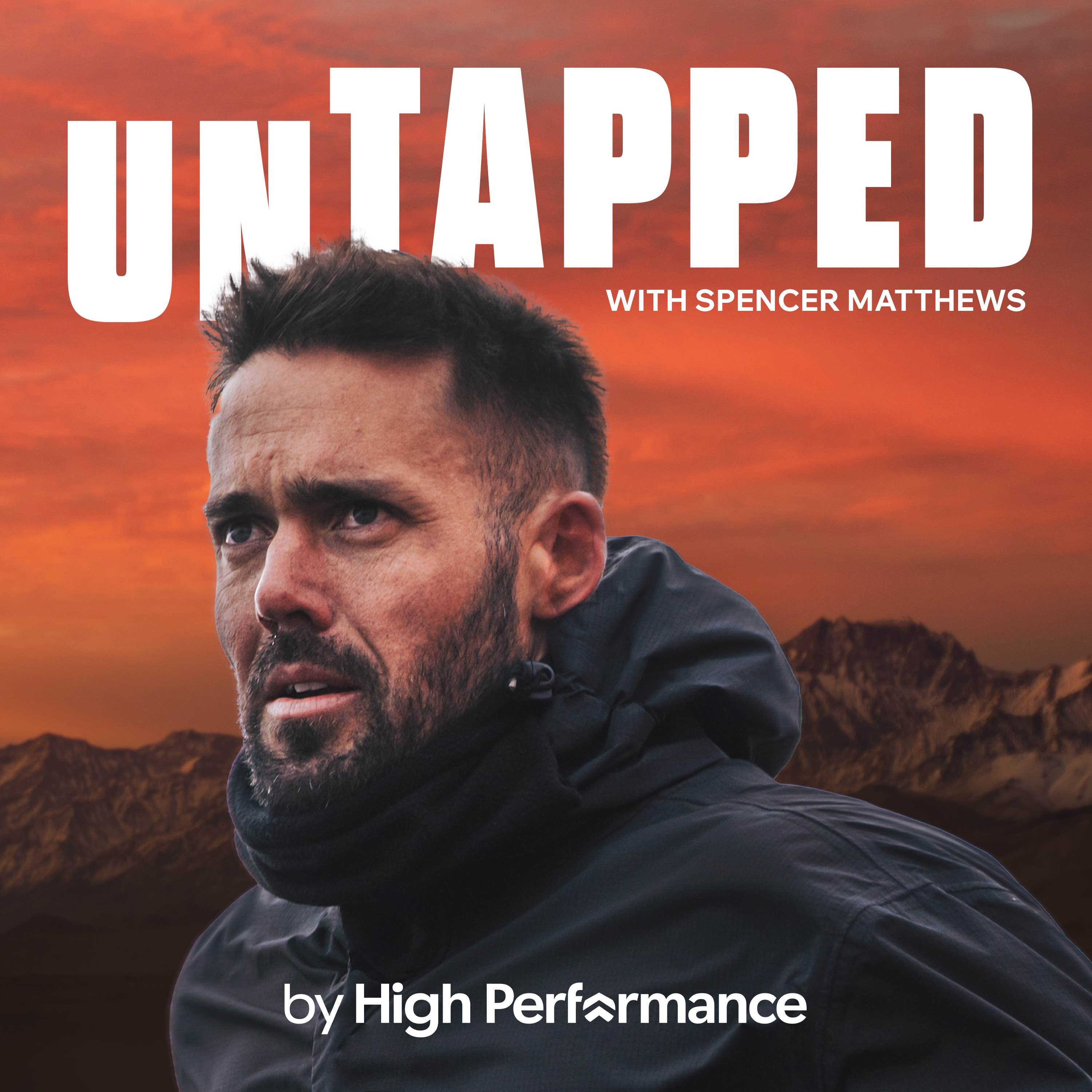
 UNTAPPED with Spencer Matthews
19 Dec 2025 · 32m · 14 chapters

How elite CEO Michael Murray thinks about time, energy, pressure, and staying effective without burning out—using discomfort, discipline, delegation, and “80%” decision-making.
Michael Murray is CEO of Fraser’s Group (formerly Sports Direct), described as one of the UK’s youngest influential business leaders. He started entrepreneurial ventures in his teens, ran bars before 25, joined Sports Direct, and became CEO at 32. Fraser’s employs 30,000+ people across 50+ countries.
Comfort equals regression; discipline beats motivation; perfectionism blocks scaling; “perfection is the enemy of progress” (live by 80%); mistakes and course-correction are necessary; prioritize daily with hard stops; training is “thinking time” for business and longevity.
Pivoting from rugby to cross-country at a rugby school; buying and scaling luxury/fashion ventures (e.g., Matches Fashion misstep leading to administration); investing over £1B in real estate and store expansion; “measured bets” using incomplete information (60% data).
Written by AI. May contain mistakes.
Michael shares his journey transforming Sports Direct into Fraser's Group.
“hopefully will be a really interesting and exciting conversation about human potential my name is spencer matthews i'm the host of untapped uh and untapped was created for exactly for that reason.”
Michael discusses his early entrepreneurial spirit and experiences in business.
“Yeah, so we started this journey seven or eight years ago with an idea of effectively transforming what was just Sports Direct into Fraser's Group.”
Michael explains the importance of living outside the comfort zone for growth.
“my first club night at like 14 years old, a Jesus Eve event.”
Michael discusses how to manage pressure and the balance of perfectionism in business.
“some days, but motivated to keep chipping away as the greater good of what I'm trying to achieve.”
Michael shares his perspective on making mistakes and learning from them.
“And do you ever feel that mistakes are worth making?”
Michael and Spencer discuss the difference between discipline and motivation in achieving goals.
“and happy and delighted all of the time and ready to take on the world.”
Learn how the mindset of winning shapes personal and professional success.
“You know, who was your main source of inspiration when you were growing up?”
Discover the importance of clarity and simplicity in leadership roles.
“You can't just, no matter how much you want something, if it's not working out, you have to pivot and change direction.”
Hear the story of how the interviewee evolved into the CEO role through experience.
“And even in your own case, what does it look like to show up and manage a team of 30 ,000 people?”
Understand the value of making decisions and learning from failures.
“you know a lot more about it than I do now.”
Learn strategies for prioritizing tasks to manage time more effectively.
“I can fall asleep no matter how stressed I am or how busy the day's been or how bad the day's been.”
Learn how elite CEOs approach business challenges and prioritize their tasks effectively.
“Can we actually get to what we thought we were going to be able to do?”
Discover the importance of genuine desire and commitment in achieving success.
“So perhaps somebody is just generally uncomfortable with where they are and like, they want to make the effort to do more with their life.”
Understand how personal values and goals shape one's definition of success.
“And finally, what does success look like to you, Michael?”

Get the gist, explore an idea or ask about something said.
 Claude
On UNTAPPED with Spencer Matthews, what are the key points of this episode?
Searching your listeningAutomatic transcript. May contain errors.
0:00I'm Spencer Matthews and you're listening to Untapped, where elite athletes and inspirational people show us how we can all unlock our true potential. This week, I'm joined by Michael Murray, the CEO of Fraser's Group and one of the youngest and most influential business leaders in the UK. From humble beginnings to leading a multi-billion pound company, Michael's story is built on discipline, resilience and an obsession with progress. In this conversation, we explore the habits, structure and discipline that have powered his rise and what it really takes to stay at the top while staying true to yourself.
0:31Let's get untapped with Michael Murray.
0:44it is afternoon good afternoon everyone uh and thank you so much for joining us today for what hopefully will be a really interesting and exciting conversation about human potential my name is spencer matthews i'm the host of untapped uh and untapped was created for exactly for that reason. I spent 30 days in the Jordanian desert last year, discovering kind of what I was capable of and was quite surprised at times, and came out with the idea of wanting to interview incredible people who have had fascinating careers, athletes and business people, to really understand how they have achieved their potential.
1:27Today we're here with Mike Murray, the CEO of Fraser's Group. He needs no introduction with Sam in your incredible new Sports Direct. Would you like to tell us the plan and how this came to be? First of all, thank you for that introduction. Can we just stop there? That was such a good introduction. Yeah, so we started this journey seven or eight years ago with an idea of effectively transforming what was just Sports Direct into Fraser's Group. But how many in the audience have got brought up buying the first pair of football boots or first pair of running trainers from Sports Threat? Hands up.
2:07So pretty much everyone's got an experience of what Sports Threat was, what they grew up with. My vision was to transform that into a much more premium offering, partnering with brand partners, creating amazing experiences in regional locations, so not just central London, and really partnering with our brands and creating amazing experiences for the local communities. Brands tend to focus specifically on central London, Paris, Berlin, Tokyo. Our strategy, what we've built, is to add value in the regional cities and bring that experience of these great brand stories to regional markets. And this is a huge milestone for us.
2:49We've opened hundreds of these stores now, but this is, I would say, by far the best and the latest iteration. I think everyone who went to the gym today can confirm it's a very unique proposition. I'd love to know more about you as a business person. We go back a bit. We knew each other when we were in our early 20s. You're a year younger than me and spent a bit of time together. Life is quite different now for both of us. you're one of the world's most interesting young CEOs how does that sound when you hear that and were you expecting to become the man you are today to be honest it's not not really about me it was the vision of what I wanted to achieve not necessarily me as a person what I wanted to change what I wanted to achieve I've always been super ambitious super entrepreneur I think I did my first club night at like 14 years old, a Jesus Eve event.
3:46So I've been in business for over half my age. So I've always had that entrepreneurial spirit. Before I even went to university, I was emailing all the club owners saying, I want to run nights in your venue, I want to do barcore, I want to do this. So I was very entrepreneurial. And that takes us back to when we first met, when I was 20, I was probably 21. And I've always had an understanding of where the customer is going and what they want and how to allot the potential and enterprise from doing that. Where do you think you get that from? So I'd say that's quite unusual for a young man or woman to be interested in business in the way that you were at that time in your life.
4:29From my experience, the great founders that I've spoken to often develop an idea, but but only really harness their skill a bit later in life. You know, you ran bars, owned bars, all before the age of 25. You then joined Sports Direct and became CEO at 32. Yeah. You know, that's a huge undertaking. Did you feel ready for the job? Was there any part of you that thought that you might be heading into that role a bit early? No, I think experience is one of the biggest handicaps now because if you've got experience you know how things have been done whereas we are in a world what's changing so fast when you look at things from such a much fresher and untapped perspective you know you you you challenge the status quo and I have an obsession with living outside of the comfort zone if you imagine the the comfort zone if the world around us is always growing, the world around us is always improving, if you are in the comfort zone, you are going backwards.
5:37So I've always been very much wanted to push my ambitions, always pushing where I'm not comfortable, and always coming up with crazy, crazy goals and crazy, crazy visions, some of them which are decades long, and they're not what am I going I do as a New Year's resolution, but where am I going to be when I'm 50? Where am I going to be when I'm 60? You know, I think in such a long time horizon, and I make it big enough, which makes me scared some days, but motivated to keep chipping away as the greater good of what I'm trying to achieve. Do you find that comforts generally, or seeking comforts, is a killer of growth?
6:21100%. If you are in the comfort zone, you are going backwards in life because the world around you is growing. The world around you is progressing. If you think about health and well-being, as you get older, your body deteriorates. If you're not living outside of your comfort zone to push your health, fitness, whether that's sleep, whether that's marathon times, or whether that's mobility, you are naturally going to regress. So you constantly have to think outside of what you would like to do. Would you like to lay in bed and watch Netflix in the morning or anything? Or are you going to go out and go on that run or go and get the ice back or go and get the extra hour of sleep?
6:56It breaks down to all aspects of life. Do you live like that all of the time? So, you know, there's that lovely saying of you don't become old and then become immobile. You become immobile and then you become old. You see all of these incredible senior people who run marathons and triathlons. And there was an amazing Irish woman who recently sets a record, I believe, for running a marathon. I think she ran sub-four hours, she's 82 years old, something like that. You know, if you use your body, you'll be rewarded with, you know, a better body going forwards. If you push yourself to your limits and your potential, you will live a healthier life.
7:36Where do your priorities lie? And sorry, it's a bit of a, to kind of put you on the spot in front of people, it's a bit of a rough question. But when you're doing so many exciting things in the world of business and there's so much pressure on you to perform in a public setting, where do you find the time to take your foot off the gas? And, you know, where do your priorities really lay? I think being in this position, when Fraser's group, we have over 30 ,000 employees operating in over 50 countries. So if you think you can't really do anything to your full potential, and you learn very quickly that if you are a perfectionist, you will not be able to scale what you're trying to achieve.
8:15So you learn quite quickly when you've got such a responsibility and such pressure, you have to be able to delegate, but you have to accept perfection is the enemy of progress. And if you try and be a perfectionist and you try and do things to 100%, a lot of the other plates will drop around you. So I like to live in the 80 % and make sure that I have a much more balanced approach across the board. And if it's not important enough that the decision doesn't need making that day, I won't make it unless I'm in the right move or in the right place or with the right information. I will take a step back and give myself breathing room.
8:59So I won't put myself with the unnecessary pressure, I'll take a step back and just use that 80 % rule. And do you ever feel that mistakes are worth making? 100%. Like if you are not making mistakes, you are not making enough decisions. If you are not making mistakes, you are not pushing yourself out of your confidence enough. You should be making mistakes every day and you should be learning from them. You should be course correcting. You shouldn't be big enough that it affects your whole life. You should take measured bets, I call them. And you've got to be good and you've got to build that muscle up of understanding what is a good decision and a bad decision and what are the risk-reward ratios.
9:37I have to make so many decisions every day. And if I waited for 100 % of the information, I wouldn't make any decisions. So I have to take 60 % of what I'd like in terms of information and make the best decision I can. But it's coming back to that 80%. You know, if I waste this for 100 % of the information to make the perfect decision, I've made one decision, I need to make 20 a day. How do you feel about seeking discomfort in your life outside of business? So in health, on the track, in the park. You and I ran together as well. You're an exceptional athlete, by the way, fast, strong. You know, it's interesting to understand because everyone's favorite excuses are too busy to train.
10:23I don't have the time to become a sub three-hour marathoner. I'm too busy with work. I think it's probably fair to say that very few people are as busy as you with work, and you still find the time. Why is that? Because it's important to me. It's important to me for my mind. So I use my training as my thinking time. I use it as my personal goals, I think, for business. I use it for longevity and where I want to be 50 years from now where my grandkids are going to be I want to play tennis with them and I set my goals accordingly and make sure I treat it as a priority and I think I just don't want to be that guy what gets soft I like to live in that kind of raw dog like grinding, pushing So you would say that you are a very disciplined person we talk about motivation and discipline on this show quite a lot and the contrast between the two of them because I think they're quite easily confused.
11:26My personal opinion is very difficult to be motivated on a daily basis. It's hard to wake up with a full, fully charged sense of drive every single day and feel on top of the world and happy and delighted all of the time and ready to take on the world. You know, some days are harder than other days, full stop. I'd be interested to hear your take on motivation and discipline. You know, discipline is slightly different. I think you are able to choose to do difficult things regularly if you want to, even if you don't feel like doing it. That's the difference. Even on days where you are not motivated, you can still choose to do the difficult thing, even if it feels harder.
12:13What's your relationship with discipline? Yeah, I think consistency is key. You know, look, if you wake up one-one, not feel like you've got the right energy levels, there's no point in going and doing those who train and run a hollow tempo session. You know, you're going to light off the rest of the day. So you try and swap things around, make yourself more flexible. But the number one rule is we don't miss the session. You know, it could be a different session, but we don't miss the session. And it comes back to always having that goals in mind of, okay, if I'm setting these goals, I've got to be, I've got to keep myself honest.
12:41If I let my own standards slip, how am I going to let the company's values slip, my kids' values slip? I have to be true to myself and keep myself honest. Consistency is a big thing for me, making sure every day I show up, I do what I say I'm going to do. Have you had times when that's not the case, where you said you were going to do something or you had planned to deliver something and it's just failed? Yeah, lots of times. I mean, there's lots of big failures we've done, but we've learned from them, you know? I've learned from them. Sometimes I set some goals which were realistic too far. I can always extend them.
13:18I'm not bound by time pressure. I won't put myself back to that age. I won't put myself under that time pressure of, I need to do it by this year. It doesn't happen this year. I roll it into next year. The mission stayed the same. I just keep chipping away. Do you think people are born a certain way? So when I spend time with you, I feel, well, I feel inspired by you as a business owner. I think your mindset is quite infectious. You know, I enjoy talking about building things with you because I feel like it's in your nature to care and love what you're doing, but also you're experienced and knowledgeable.
13:53Do you think that you have always been that way? Could your life have been different if you didn't have what you have today? You know, who was your main source of inspiration when you were growing up? My parents were very young and my dad pushed me very, very hard. I was a runner at school and he literally, there was no compromise. You must win. You know, it wasn't one of the guys just about treating par. It was all about winning and losing. So it was built into me from a very young age that it mattered to win. So that's just been built up in my V &A. It is important to win because that's what makes the world go around.
14:34Winning and losing, it's part of life. And if you don't build that muscle of understanding what losing feels like and what winning feels like, me personally, I believe we start to build a very poor society. I just find it interesting. You know, we've had incredible guests on the show. I think you were kind enough to tell me that you listen to George Russell. His dad used to tell him that his lap times were slower than they really were. right so they'd go to a track and he'd hammer an incredible lack and his dad would give him hell for being slow and add two seconds to the lap time you know so that he was almost confused because he felt that it was incredible and it was but he left feeling a sense of failure when when actually he'd won which i think is you know that's that's a step perhaps um too far although you know he He has ended up in Formula One.
15:28He won a race the other day. You know, George Russell, in my humble opinion, is a future Formula One world champion. How much of his father pushing him in that way played a role in him becoming George Russell? Are there any examples that you can think of? I've got two examples, actually. One when I was a very young child, because I was big into rugby. I thought I was very good when I was younger, like 15, 16, toured Australia. and thought I'm going to be a professional rugby player. So I decided to go to Sedda, which I don't know if people know, Sedda was a really big rugby school. I got there and realised, Jesus, I am not going to rugby.
16:09And I have come into the middle of nowhere for two years. It's back to this understanding and changing direction. It was, I didn't have the privilege of time. I was only going to be there for two years. The guys in the team were all playing for England. There was no chance. Someone had to get injured. Two people had to get injured. So I pivoted, changed direction, but I'm not going to come up to this school for two years to achieve nothing. So I joined the cross-country team and did very well, winning this big race at the school. And that was an important moment for me because it taught me how to not try and you've got to be adaptable.
16:46You've got to be agile. You can't just, no matter how much you want something, if it's not working out, you have to pivot and change direction. don't just keep going in the same direction if the time horizon is too ambitious or if the task is too ambitious try and alter a change for us and that's what really sticks to me from a sport perspective I think from any perspective that's really good advice the wrong relationship the wrong job it's only a matter of time again not that anyone had any insight into our conversation yesterday that we were talking about decades and how you operate you know if you're setting yourself goals in you know how valuable decades are and it's it's pretty easy to get washed into the wrong place at the wrong time you know not to make the conversation about me but I worked in the city for three years when I never had any passion for it of any kind that's completely financially driven I wasn't even earning loads of money because I was you know new and young and it's kind of like it feels like you could have spent that time chasing something else or not to look back, you know, unfavorably at experience.
17:55I think all experience is good experience. But, you know, I don't mind saying I've just got, I have some friends who work a job that they hate and they turn up during a week and they can't wait for Friday. And it's kind of like... Just a comforter. I just feel, I just feel some of them, you know, and I can't speak for everyone. And of course, people's circumstances are different. But, you know, some of these guys that I know could do much more if they wanted to, but they don't, they choose not to. Yeah, I think it's better to make a bad decision than no decision. You know, because bad decision, you can course correct, you can change, move.
18:33If you make no decision, you'll never know. So I always say, it's always better to make a decision than to procrastinate and do nothing. Always pushing, always changing, never get stuck. Don't try and just stick to the game plan if it's not achievable. Try and change direction. always challenge, keep moving. We were talking about discomfort earlier. Do you think it's possible to learn to appreciate discomforts? The muscle, as I like to say, is constantly challenging and pushing yourself into that full place. So it becomes second nature. You might not like public speaking. OK, right, I'm going to go in public speaking, but try and go as many times as possible and get on stage and talk, even if it doesn't really matter or volunteer to speak.
19:20You need to constantly try and push yourself into that uncomfortable state. I don't think, yeah, I mean, if you use an ice bath analogy, you go in the ice bath and, yeah, you'll get comfortable with that. Well, then, okay, it's not cold enough. Now you get ice cold. You've got to keep moving it. Mine doesn't go any colder. What does showing up look like for you? And what does it mean to you to be an exceptional leader? You know, when you take famous CEOs from around the world who run multi-billion dollar businesses, And even in your own case, what does it look like to show up and manage a team of 30 ,000 people?
19:56They have to see clarity. They have to see clarity in a vision, which is broken down into easy steps for them to align themselves with. It is very easy to confuse a strategy, and it's very easy to confuse what we do. It's very difficult to simplify things down to what matters. A lot of what I do is taking the big picture, taking the big vision, breaking it down into one year, and then breaking that down with the heart and how they can then align to that plan. And ultimately staying consistent. Here's my goals. Here's what I'm going to do for the company. I'm going to be transparent and measure how I do.
20:37I expect everybody to be transparent and measure how they do. So we have a system at work where they have to, every course they have to fill in what they set out for the year, how they're doing, score the KPIs, the spokesperson areas. And they have to be realistic. How are you doing? They have to score it yourself. We should be able to self-monitor as business. And I do it from the top. People don't like to talk about bad news. We talk, not to be negative, but we talk a lot about the bad because that's what you improve. The good looks after itself. I like to keep myself honest, stay consistent and simplify things down for everyone so they can align with what makes the overall machine move.
21:17How did you come to be the CEO? You've been in the role for nearly five years. I imagine the advice that you just gave was accumulated over experience over time. I'd love to hear what your first day was like as CEO and how that job came to be yours. It kind of morphed into the role rather than just happened. It wasn't like one day I just became CEO. So we start from there. In 2016 or 17, actually a stall around the corner from here called Aintree, Sporesbrecht was trying to elevate, but didn't really have a clear strategy of how to do it. and the idea was to go and buy real estate. So we actually opened this building here.
22:05We closed the store in Liverpool one. When that closed, we opened this one and we actually opened this whole building. My role to start with was to go and find buildings what Sports Direct could go and occupy and then when their leases came to an end, we'd move into the buildings what we bought and then we'd be able to sell them buildings in the future and because we're selling them with a lease in place, we create value which would help fund all the investment. And that was where I really started. So we invested over a billion pounds in real estate, building this strategy, this pipeline of stores.
22:39And as I was doing the stores, we had obviously different teams what would do the insides of the building. So I'd come around the stores after the Victor and I'd listen to what Mike would say and I'd say, and say, well, we love what you're doing. You've got much bigger stores now, better locations. You're just not getting quite the store execution. If you just did this and you just did that and you just improve the marketing a little bit, we give you access to more and more product. So then that, me being who I am, get more and more, even though it's on my remake, started getting involved in how the stores look, what the marketing's like, even down some automation in the warehouse.
23:15And before you know it, four or five years gone by and I've been around the whole company and it kind of just evolved. We bought funnels at the same time. So we bought funnels in 2017. The idea there would be, if we're going to invest in Sports Direct, and we're going to make sports threat more upmarket, more appealing to customers and brands. Let's do it with luxury fashion as well at the same time. Why not do two jobs at once? So we started on Fowles. We grew from like 14 stores to 80 stores in a very short period of time. Got to know all the brands. And really before I knew it, I was almost acting as, I was a head of elevation at the time, but almost acting as CEO.
23:53And then Mike Ashley is my father in COVID, so I think it's time. You just did it because it seems to be, you know a lot more about it than I do now. It's a different business. What you said you were going to build has become a reality and the reins are over to you. I mean, that was not, you imagine a business which has been run the same for 30 years, super profitable, super simple, and someone comes along in their late 20s and says, right, we're going to change everything you've done and we're going to change the stores, we're going to buy a luxury chain, we're going to get into gyms. I mean, Mike must have just had the biggest headache listening to me with my enthusiasm, but he let me do it.
24:37And we've invested over a billion pounds in this project and we've grown our profits from 2019, like 200 million to like 550 million this year. So the elevation strategy has gone from an idea, a seed to now this massive Goliath with global ambition. Your father who pushed you must be very proud. He always keeps pushing. He's one of them. You've got to keep pushing. You should have done this. You should have done that. Can I talk to you about some of your personal habits? I'm not looking for some unrealistic timeline of 2am workouts and basketball at 4am. I'm not that guy, I don't worry. Mark Wahlberg, if that's to be believed.
25:23But what does your morning routine look like? Are there any behaviors of yours that you rely on in order to show up well? First of all, I'm not one of them guys who's like, yeah, I've got to be grinding at 5 a.m. ice baths right away. I'm not that. A lot of people say we are, but the reality is sleep's important. I make sure I get my eight hours sleep. I need to have that energy and I need to have that enthusiasm to make them decisions. So I've got to make sure I've got energy first. So sleep's important. And then gym is non-negotiable after that. Around seven o 'clock, 6.30 is when I get into the gym.
25:59And that's a non-negotiable one-hour training. And then I have broadly two hours to myself, no meetings. So I don't have any emails on my phone. Generally, no emails. and I sit for two hours and just think and look at emails, decide when I'm going to answer it and think about the things I'm doing that day and how I'm going to approach the decisions I need to make that day. And it could be only three things I need to decide. Well, those three things are going to be big because if it's small, I shouldn't be doing it. Would you see energy and focus as business skills instead of just lifestyle habits.
26:42It crosses over. You know, you need that energy to make them decisions. You know, if you're not about a clear mind, you're going to make the wrong decisions. And life's all about making more good decisions than bad decisions. You need to be at 51 % of them right to be above average. When your place is as full as yours is and you're making these big decisions, when do you switch off, if ever? I'm a good sleeper. I can fall asleep no matter how stressed I am or how busy the day's been or how bad the day's been. Seven, eight minutes, I'm gone. When we talk about bad decisions, you were going to ask me about bad decisions.
27:20I mean, like not everything goes well. You know, like I had to make a decision to buy a business called Matches Fashion. People heard of matches? I had like three days to make a decision. You know, you had like a fraction of the information. and it was a bad decision. We shouldn't have all that business. The reality is we had to make another decision once you made a bad decision of how do you correct it and ultimately have to put that into administration. That's not a great story, but it's proof that once you make a bad decision, don't just try and run with it and go, all right, God's fixed. You've got to be realistic.
28:00Can we actually get to what we thought we were going to be able to do? If the answer is no, then you have to look at what plan B looks like. Why I'm talking about that is because that doesn't mean that we then become scared. Because we've just bought a business now in luxury in the US, 13 stores called The Webster. Similar business to Fanholds, but they've got 13 stores, big business, one of the only wholesale partners to Chanel. out and we have to push ourselves back into the uncomfortable zones and make that push again because it's easy to go, oh, we made that long decision. We're not going to make any more decisions in luxury.
28:37No, no, no. We go, we go. What is one thing that you do every single day to make sure the time doesn't control you? Prioritization. There's only so many hours in a day. And like I said before, you've got to work that 80 % and prioritize of what you want to achieve that day. That's why I the two hours in the morning to go through emails, think about the boards of meetings, what are coming up, what we need to try and achieve out of the meetings. And I have hard stops. I'm not going to just be a busy fool and keep going. Yeah, I could work all night. I could not sleep, but I could be working now.
29:10But there comes a point where you need to really prioritize what you're going to achieve that day and get them jobs done. And then depending on how your energy levels are, do you push for more or do you bank what's been done and then just wait for the next day? And one of the last thoughts that perhaps we'll be able to discuss together is if you had some advice for our listeners at Untappd on how to untap more of their potential. So perhaps somebody is just generally uncomfortable with where they are and like, they want to make the effort to do more with their life. You know, what can they be doing to give themselves the best possible chance of doing more, living a better, healthier, more successful life?
29:55I think first and foremost, people need to ask themselves, do you really want to? Do you really want to do what you're doing? And if you don't, what do you want to do? And are you in love with it or obsessed with it enough to really go that extra mile more than all your competitors or people in your field are willing to go? and ask themselves that question first. Because when you really want to untap your true potential, you need to be able to grind every day and push out of that comfort zone and continue pushing. And if you don't have a genuine desire or love to do it, you will give up. And finally, what does success look like to you, Michael?
30:39Well, it's a moving feast, but it's balanced. It's being a good dad, being a good husband and doing what I say I'm going to do. You know, that's what success looks like to me. You know, I set my goals, tell the company where we're going to go, tell our shareholders. And being successful means achieving more of the things that I say I'm going to do and continue to build on that. Mike, I've really enjoyed our conversation today. Thanks so much for throwing such an incredible event here in Liverpool. I think I can speak for everyone here in saying that we've had an amazing time and congratulations with all of the success you're feeling and seeing.
31:17I think you really deserve it. Thank you. Please do follow or subscribe to the show wherever you're listening. It only takes a moment, but it makes a huge difference to us. We have truly incredible guests every single week and you wouldn't want to miss an episode.
In this special collaboration with Sports Direct, CEO of Fraser's Group Michael Murray joins Spencer Matthews for a straight-talking conversation about ambition, discipline, and breaking out of your comfort zone.
Michael dives into the mindset behind his success, why perfection blocks progress, why mistakes are essential, and why discipline matters more than motivation. He explains the power of decisive action, the importance of adapting when plans don’t work, and how real growth comes from pushing where things feel uncomfortable.
He also shares his approach to leadership, clarity, and balance, revealing what success truly means to him. This episode is packed with practical lessons for anyone looking to elevate their mindset and unlock their potential.
---
GET IN TOUCH
💬 WhatsApp us a message or voicenote ➡️ https://wa.me/message/3WKM4SDWPMAMG1
📸 Instagram: https://www.instagram.com/untapped.podcast/
🎵 TikTok: https://www.tiktok.com/@untapped.podcast
#UNTAPPED #SpencerMatthews
Hosted on Acast. See acast.com/privacy for more information.