Ask ChatGPT

 UNTAPPED with Spencer Matthews
27 Oct 2025 · 44m · 19 chapters
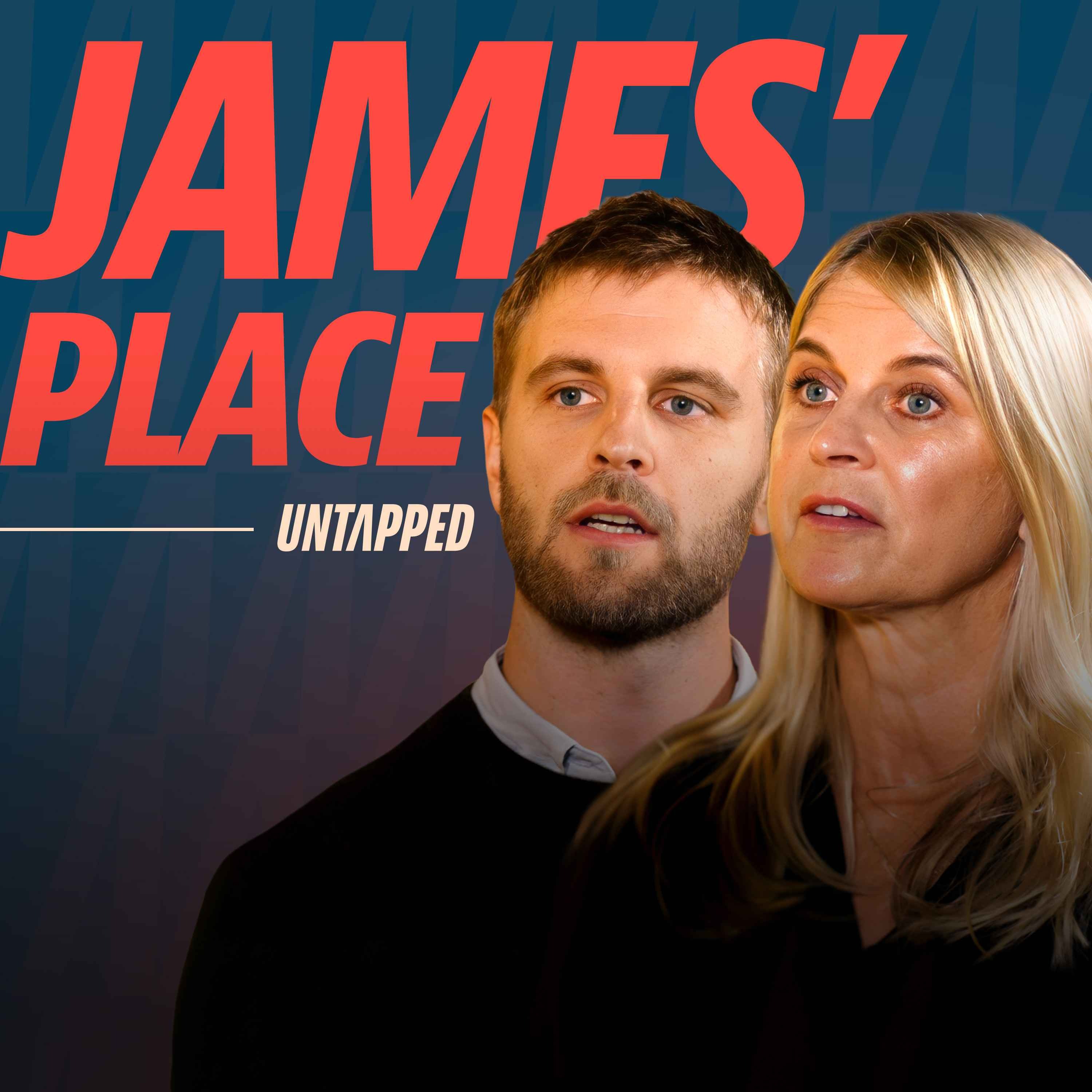
The UK male suicide crisis and how James’s Place (a men-focused suicide intervention charity) aims to prevent deaths by providing rapid, non-clinical support after people fall through the cracks of A&E/GP/walk-in services.
Spencer Matthews (UK reality TV personality and father; raising money via Project 7). Claire Wentworth Stanley (James’s mother). Harry Wentworth Stanley (James’s younger brother; co-speaker). They discuss James Wentworth Stanley, who died by suicide at 21 while studying at university in Newcastle.
James’s family believes faster, better-quality intervention could have saved him. Men are statistically three times more likely to die by suicide than women and suicide is the biggest killer of men under 35 in the UK. James’s Place can see people within 24–48 hours and uses “Lay Your Cards on the Table” to help men articulate feelings.
James sought help after an operation; he reported feeling suicidal at a walk-in centre, but the GP wasn’t called and a referral was delayed by misposted paperwork, arriving after he died.
Written by AI. May contain mistakes.
Discussing the life and tragic death of James, and its impact.
“people show us how we can unlock our true potential.”
The family reflects on creating a charity after their loss.
“He was someone who had such an incredible future.”
Exploring the circumstances and signs leading to James's suicide.
“And so the whole time I had this thing buzzing in the back of my head about a vision, which then became a reality about 10 years after we set up the fund, wasn't it?”
Discussing the failures in the mental health system that impacted James.
“And he said, sure, sure, we can organize it.”
The discussion revolves around the lack of immediate support James received during his suicidal crisis.
“could have made that difference between him taking his life and not.”
The speakers discuss the alarming statistics of male suicide and the societal factors contributing to it.
“I think there obviously are more at-risk groups in certain sections of society, but it's reflected in the men that we see at James' Place.”
A conversation on the stigma surrounding suicide and the need for open discussions about mental health.
“I was having, I had a therapy session once.”
Reflections on how losing James affected the family and their approach to discussing his story.
“But unfortunately, suicide has always been shrouded in stigma and taboo, so no one wants to talk about it.”
Insight into the statistics surrounding suicide and its impact on communities.
“that you and Dad kind of approached things in that way.”
An overview of the unique therapeutic methods used at James' Place to help men articulate their feelings.
“and you fill out the form and the details and you'll be called and come in for a welcome assessment and then we'll take it from there.”
Exploring how therapy can be a regular maintenance tool rather than a last resort.
“Yeah, and for us we're seeing men exclusively who are in crisis.”
Discussing the critical role of James' Place in providing urgent support for men in crisis.
“So it is, yeah, it's non-clinical, but it's manned by trained clinicians.”
Sharing emotional reflections on James and how his memory fuels the mission of helping others.
“James could have been saved if the right service was there at his point of need.”
Harry shares his emotional journey rowing across the Atlantic and honoring James.
“When you look at the numbers as well of the people that were saved by James' place even just last year.”
Discussing how therapy manifests in subtle but significant moments of personal growth.
“I was all over the shop and just so thrilled to see you guys come in safely.”
Discussing the ongoing efforts to provide mental health support and the goal of opening more centers.
“and you've got spares and spares and spares for anything that goes wrong.”
Learn about the partnership and fundraising efforts for James's Place.
“And, you know, we're really quite close now to having that wrapped up.”
Discover the personal experiences that drive Spencer's challenges and commitments.
“And it was very clear very early that the work that you're doing is completely worth supporting and just incredible.”
Hear the expressions of gratitude and future collaboration between Spencer and James's Place.
“Must take a picture of him with us on the challenge as well, if you have one.”

Get the gist, explore an idea or ask about something said.
 Claude
On UNTAPPED with Spencer Matthews, what are the key points of this episode?
Searching your listeningAutomatic transcript. May contain errors.
0:00Los deportes bring families together. Maybe it's watching el partido or cheering from the stands. While you are taking care of everyone else, don't forget to take care of yourself. If you are 45 or older and at average risk, it's time to screen for colon cancer. ColoWard Plus is non-invasive, requires no prep, and can be used at home in about 15 minutes. Habla con tu médico or request ColoWard Plus test online. Hablemos de lo que nos de habla. Available by prescription only. Therapy's biggest impact doesn't show up in some dramatic breakthrough. It shows up in the smallest moments. You bite your tongue instead of escalating.
0:35You put your phone down instead of firing off that text. You say what you actually mean instead of what would hurt someone else the most. Nobody applauds those moments, but they quietly change your life. That's what growing feels like. And that's exactly what Grow Therapy is here for. Grow is therapy that works, covered by insurance. Sessions average$21 with insurance, and some pay as little as$0, depending on their plan. There are no subscriptions, no long-term commitments. You just pay per session. Grow connects you with thousands of high-quality, licensed therapists across the U.S., offering both virtual and in-person sessions, nights and weekends.
1:14You can search by what matters, like insurance, specialty, identity, or availability. and you can book a therapy session in minutes and begin in as little as two days, not the national 48-day average. See if you could pay as little as$0 for therapy in seconds at growtherapy.com slash start now. That's growtherapy.com slash start now. growtherapy.com slash start now. Availability and coverage vary by state and insurance plan. Hi, it's Mark Bittman from the podcast Food with Mark Bittman and the website The Bittman Project. One of the things that makes Whole Foods Market different is their commitment to quality standards.
1:56More than 500 ingredients are banned store-wide to give us peace of mind whether we're browsing through the store or shopping online. And it's been this way since 1980. Their selectivity makes your shopping easier. Shop Whole Foods Market in-store or online. Thank you.
2:19I'm Spencer Matthews and you're listening to Untapped, where elite athletes and inspirational people show us how we can unlock our true potential. This week is a little bit different, and I would like to warn our listeners that in this episode we discuss the topic of suicide, so listener discretion is advised.
2:40James was my eldest son he was my first child who I had when I was 24 so I always felt and I often say that I felt James and I kind of grew up together he was always quite willful always up for fun and games, pranks but he was very loyal and he was much loved by one and all. And so, obviously, losing him has left a massive hole in our lives. James Wentworth Stanley was a bright young man studying at university who tragically took his own life. His family believed that had he received a faster and better quality of intervention, his life could have been saved. And so they set up the charity James's Place to help other men in moments of crisis.
3:37James's mother, Claire, and younger brother, Harry, join me today to tell James's story, discuss the epidemic of male suicide in the UK, and the work that they're doing to try and prevent it. I'm very proud to be raising money for James's place through my Project 7 challenge later this year. And this is an emotional, thought-provoking conversation, and I hope that you enjoy it.
4:02He was someone who had such an incredible future. and I think that's what has always been very hard for us to compute is that he had the world at his feet and he'd lived a very wholesome life up to the age of 21 but there was so much more to come and I think that's often quite hard to contend with but obviously we're going to come on to talk about what has sort of stepped into the void that he left, which is James' place. And that has really been a huge help for all of us in terms of channeling all of our love, energy, emotion that otherwise would have been directed at James into what ultimately is the form he takes right now.
4:56How long after his passing and into your grief did you want to channel his memory into something positive that can help others? well about 18 months after he died we set up a foundation in his name and we wanted to raise money to fund sort of projects that are ongoing in the areas that we felt were important so areas of student mental health and research and it was a learning curve for us it was a huge learning curve. We knew nothing about this area, about suicide prevention and mental health. And we wanted to prevent other families going through what we were going through. We felt very strongly about that.
5:51So we set up the fund. And for about 10 years, we were learning about this arena. And all the time we were doing this, I kept thinking, this is great. And I'm so pleased that were funding other projects. But actually, what I really want to do is I want to create a space that could have saved James's life because he went looking for help and he couldn't find the help. And the fact that he went looking for help, I believe he didn't want to die. So that's a great travesty. And so the whole time I had this thing buzzing in the back of my head about a vision, which then became a reality about 10 years after we set up the fund, wasn't it?
6:45Yeah, and I think it was, you know, I think there was a reflection moment after a while. We'd been very successful at raising money in James's memory, but ultimately we didn't feel that the landscape had changed that much in the sense that the James of that particular point in time if he'd gone and reached out for help that help necessarily wouldn't have been there still, you know, eight or so years on or whatever it was and he would have sort of fallen through the cracks in the system and the terrible outcome that we had in losing James probably would have played out in the same way for the James of that point in time and, you know, now kind of probably almost another ten years on since James' place started, or just shy of.
7:37We feel that in those locations where we have a centre, that the James of today, James was studying in Newcastle when he died. That's where he reached out for help. And he ended up in the A &E department, which is really the last place on earth, really, that someone should be who's in a mental health crisis. and actually now, you know, the James of today in Newcastle, if they took the steps that he did in terms of reaching out to his GP, he would now be referred to James' place and we feel the outcome would have been very different. So excuse the nature of the questions because obviously they're unpleasant and I've lost a sibling as well and it can be hard to talk about.
8:30Can you describe the period before his passing? You say that he reached out for help. Was it clear that he was suffering? Or did it come as a bit of a surprise? So his crisis was basically, he had a minor operation to correct Avaricacil and he had that in early December. and after the operation, he became extremely anxious about the outcome, and he wasn't doing really what the doctor had ordered, so he kept saying to me, you know, I think I might go to the gym, and I said, no, no, no, you've just got to take it easy, and I'd asked him to stay at home and recover, but he wanted to go back up to uni because he had an exam, but it was very clear that he was anxious, but he never said to me he felt suicidal.
9:37He never said once. And 10 days after the operation, he was dead. So there was something very significant. There was something that definitely was a catalyst to this episode. I'd never known we'd never known James have an episode like this before we'd never had any cause for concern before so the whole thing happened so quickly it unfolded so fast didn't it Harry we just we didn't have time and I remember I called my GP probably a week after the operation, I said, listen, I'd like James to go and see the surgeon just to get some, you know, a bit of confidence because he's feeling really insecure about this.
10:30And he said, sure, sure, we can organize it. We'll organize it. No problem. And he said to me, he said, you know, young men of James's age can feel very concerned about this type of thing. And he said, if he gets worse, we'll put him on some antidepressants. So I said, okay, that's great. But we never had time for that. Because three days later, he was gone. So was he on medication at the time? No. He'd had an anaesthetic. That's the only drug he'd had. I mean, it's a huge drug, but it was his first anaesthetic. Obviously, he had an anaesthetic for the general for the operation.
11:13Yeah, it was very bizarre. I obviously didn't have the pleasure of meeting or knowing James, but it sounds very sudden and out of character. Is that fair to you? Yeah, no, definitely. I mean, you know, I think you probably, I think anyone who's gone through what we've gone through in terms of losing a loved one to suicide, you never imagined that it could happen to your inner sanctum. You know, these are awful tragedies that happen to other families. um i always remember thinking you know we're so lucky we had such a we had such a in my in my eyes such a sort of perfect family we've been so fortunate growing up we'd had lots of opportunities lots of you know we were in quite a privileged privileged position and and suddenly our bubble burst seemingly in a flash now i don't remember maybe i was too young i was probably 17 what was age difference between you and James?
12:15Four years. And I don't really remember him being out of sorts. You know, he was always quite high energy. He couldn't see a solution for what was a temporary crisis, something that we could have helped him through, nurtured him out the other side, if we were fully aware of what was going on. And that's true of, you know, all of the men that we see at James's place. These aren't people who've necessarily got long-standing mental health problems. These are typically individuals who have gone through a life event of some form, whether that's, like in James's case, an operation or more commonly something like relationship breakdown um you know those sorts of factors can lead someone into a mental health crisis and for men in particular often the hardest thing is to actually get that into the open and then once it's out in the open and there's a dialogue it's then a case of unpacking it and making sense of it and and bringing that individual out of crisis but you know for James I think he it was relatively internalized.
13:35And the only solution that he could see was to take his own life. And, you know, we have no doubt in our mind that he didn't want to die. James was someone who had everything to live for. And he would have gone on to do such great things. And it's such a tragedy that in his hour of need, the right help wasn't there. And, you know, I suppose that is what fuels us with James's place. And what kind of service do you suppose could have made that difference between him taking his life and not. I suppose the obvious answer would be the kind of service that you provide now. But what would have made a difference in your now professional opinion in those final days?
14:21Unfortunately, what happened with James was the first place he went to was a walk-in centre. He said he was very acutely anxious following an operation and that he felt suicidal. I've got the form. You know, they wrote down exactly where he was. They also wrote down his GP's number. But they never called the GP. And you would have thought if a young man came in saying he felt suicidal, that's a red flag. You know, that's... Why would... So they sent him to A &E. They never rang the GP. They never contacted me, which they probably wouldn't because of patient confidentiality. But they had the GP's number.
15:05They could have called him. And he would have called me immediately. And actually, when our GP got the form, which was sent in the post, second class post to the wrong postcode, he rang me in tears and James was already dead. And he said, I can't believe they didn't call me. so James fell through the net but the sort of service that would have saved him would be I believe what we've set up so he would have been able to have an appointment within 36 hours he would have been seen by somebody who would listen and would help him unpick this crisis that he was kind of creating it was irrational you know what was going on in his head but he couldn't see that so much so that he wouldn't have mentioned it to he didn't mention it and he was such an open i always saw him as an open book so that was another thing for me which was so dark was that he didn't tell me because he was always i felt i always felt james wore his heart on sleeve I always felt that we would talk about anything and he didn't tell me about this.
16:21It's such a frightening concept just generally that somebody like James, and again, obviously, I didn't know James, but from the way you're describing him, it's so strange to understand that a good-looking, privileged young man like James who had the world ahead of him, that this can happen to somebody like that. It can happen to anyone. I think that's fair. I think there obviously are more at-risk groups in certain sections of society, but it's reflected in the men that we see at James' Place. We see men of all ages, from 18 to 80 plus, from all sections of society, from people who can't afford the bus fare to get to the James' Place, all the way to people in very privileged positions.
17:12So, you know, there's certainly a universality to it. And, you know, it's the big suicide's biggest killer of men under the age of 35 in the UK. And men are statistically three times more likely to kill themselves than women. So do we know why that is? I think it's more that men find it harder to articulate their feelings. I think they find it harder to share. They see it as a weakness sometimes. I think men have much higher amounts of feelings of pride and shame. I think that plays a real part. you know men don't like to admit to having problems they probably won't if you say how are you they say I'm fine I'm fine that's why you should always ask twice just in case they're not fine and whereas women and I don't want to generalize here but women we're much you know we'll always ring our girlfriends when we've got a problem and men are less likely to do that That's interesting.
18:28I was having, I had a therapy session once. Sorry, the reason I reacted to what you said was, I was having a therapy session when I was going through something quite difficult. And the therapist said to me, how are you feeling today? And I said, fine. And she said, fine is not a feeling. it's just so true and uh and it was one it was one of the first times that i realized kind of oh that's interesting i never talk about feelings ever i found that really interesting because i would have thought that feeling fine actually was a feeling i feel okay i feel normal i feel fine um yeah but i think it's you know men and men and women are just as you know we all feel um and it's just that point of actually managing your mental health.
19:16And I think women, whether it's necessarily something that's proactive or not, I don't think it necessarily is. It's more just statistically less likely to find themselves in a crisis. And in an ideal world, James' Place wouldn't exist because people wouldn't get to crisis point. Men wouldn't find themselves in a suicidal crisis. The facts are right now there's a desperate need for it. When did you realize that what happened to James wasn't an isolated experience and that it was a crisis that men face? I mean, maybe it was sort of two days after. Someone told me that suicide was the biggest killer of young men in the country and I was just like completely blown away.
20:03And then we sort of realized that actually that meant that statistically the thing that was most likely to kill James was himself. And that's a remarkable way of putting it. The most likely thing that could have killed James is himself is something I've not thought about. That's unbelievable. Because people would think it would be a car accident or... An illness or... Illness, but no, it is suicide. Yeah, as Harry said, it's the biggest killer for men under the age of 35. And we had no idea. And I remember actually that made me quite angry. because I felt, well, we should know. We should be more aware.
20:44And, you know, the government has a responsibility to talk about it and let people know. But unfortunately, suicide has always been shrouded in stigma and taboo, so no one wants to talk about it. It was a criminal act until 1961. Suicide was? Yeah. Who pays the crime? the person who did the act would not be allowed to be buried in a churchyard. And that's where the terminology to commit suicide, that's actually archaic. It's like committing adultery. Terminology we're trying to move away from. Or committing a crime. Yeah, it's committing a crime. So that's why we no longer talk about committing suicide.
21:29We talk about taking your own life because it's not anymore a criminal act. And certain religions consider it a mortal sin. And so it's been shrouded in taboo and stigma for years. So people shy away from talking about it. And people always used to think that if you asked somebody if they felt suicidal, it would put the idea into their head. But if the idea is already there, which it probably is, actually they'll be relieved that you've sussed it and you've realized and you've broached it. The unspeakable thing is actually out there And actually that's typically a relief for the individual who's in the crisis.
22:12But just going back to what mum was saying there, I think I feel very fortunate after we lost James.
22:27Initially the feeling was a lot of shame. that such a thing could have happened to us as a family. And I described earlier how I viewed our family. And actually mum and dad sort of led us all by example, I suppose, in the sense they never shied away from what had happened. And actually I think that's been a huge source of strength for all of us as a family and James' wider family and friends, the fact that we sort of carry him. But yeah, I've always felt just very grateful that you and Dad kind of approached things in that way. It's remarkable to hear you speak that way. Sure, it's much appreciated as well.
23:30there's nothing to be ashamed of I think it's amazing the work that you do by the way I've had the great privilege of going to James's place now a few times meeting your amazing team so impactful and really impressive and I found it deeply moving the first time I was there I had the privilege of meeting some men that have been saved by you
24:01and understanding that they now have a future as a direct result of the work that you have done. Before we dig into what Project 7 is about, could you tell me some figures and stats for listeners who are curious about the suicidal crisis when it comes to both James' place and just the wider problem? So the wider problem is that every year, nearly 6 ,000 people in the UK take their own lives and three quarters of those are male. Men, as Harry said, men under the age of 35 are the biggest cause of death for men under the age of 35, but actually the highest risk group now is middle-aged men. It used to be men around James's age, so sort of between 1925 and now it's more middle-aged men.
25:05For each suicide, around 135 people are affected. So it's not just family and close friends, it's the wider community. It's schools, it's universities, it's, you know, acquaintances. It's a massive, it has a massive sort of domino effect. And the kind of work that takes place at James's Place is what exactly? I mean, I'm obviously familiar with it, but it'd be great to just discuss it so that our listeners can understand a little bit more about why the service is special. how does it differ to the NHS for example and what are the styles of conversation that lead to it being so impactful so basically in order to come to James's place you're either referred by your GP or by A &E or by a friend or loved one, or you can refer yourself.
26:09And if you refer yourself, you go onto our website and you fill out the form and the details and you'll be called and come in for a welcome assessment and then we'll take it from there. The intervention that we do is quite unique. It's very kind of male geared. It's called Lay Your Cards on the Table. And it's very evidence-based. It's not something we just dreamt up. And basically we have a pack of cards with thoughts and feelings and coping strategies, both good and bad. And this is in order to prompt men. It works as a prompt for men who struggle to articulate their feelings. so it will say things like i'm not sleeping i don't want to go out and see my mates um my family would be better off without me things like this so the therapist gets a very clear idea on day one of what's going on and normally that's quite helpful is the kind of reason behind that so that you don't have to volunteer it yourself exactly yeah i mean the reality is is that the likelihood is is that most men using the surface have probably never had any therapy before so you know and they they're likely a bit they might be a bit suspicious about about it they might feel like they're right this is i'll give this a go um and perhaps won't be so willing to to open up so effectively they could the therapist could build a picture of them and what the triggers have been what's led them to that particular place without them needing to even open their mouth so and and it and it also helps them understand certain connections that perhaps they wouldn't have have identified had it not been sort of laid out in front of them I think as well, not speaking for all men, but in the absence of an open mind, when it comes to therapy, it's quite easy to feel like there's something wrong with yourself.
28:25You know, instead of it just being a routine part of general mind maintenance, which is, I think, quite a helpful way to see therapy, that it's not something you turn to when you feel you need it or when you're already in trouble or having an issue. if you were to make the comparison to your body when you're pushing yourself, if your muscles are already shot by the time you're looking to look after them or if you're very, very thirsty by the time you come to have a drink, you're already dehydrated. Yeah, and for us we're seeing men exclusively who are in crisis. So perhaps those steps haven't been taken.
29:18You know, the management of mental health hasn't occurred and they need help to sort of get clarity of thought. So it gets it out. So it's not in you anymore. It's on the table. And that's in itself is such a good thing. It's such a relief. And it's not festering inside you, making you feel anxious. It's out. You've shared it with somebody and it's wholly confidential. I think just the act of sharing it is also an important... Liberating. It's so liberating. And actually I think there's one other important thing to mention, which is often the feedback we get from the men who've used the service is that just by opening the door of James' place the first time they go and seeing this lovely space with a team that's dedicated to helping men in suicidal crisis in that particular location makes them feel less alone.
30:16you know if there's a service like this then it's not just me and and therefore i can get through this you know i'm not i'm not a special case um uh and i think that's that's always been something that's come back to us in feedback that just the the center itself and the the amazing therapists there give hope before they even engage with the therapy because you're trying to make the spaces is non-clinical. So it is, yeah, it's non-clinical, but it's manned by trained clinicians. So it's, they're sort of disguised really, but they're not in white coats or anything. You know, it's a very cozy environment.
30:56And I think the other thing is that we see people very, very quickly. So we see people within, you know, 24, 36, 48 hours, there's no waiting list. I'm assuming that that is one of the main differences to other services. You know, I think we can all appreciate that the NHS does a fine job, generally speaking, but it would not be possible to be seen within 48 hours, say. No. You know, regardless of what kind of crisis you're in. No, it would not be possible. And I think when you're in suicidal crisis, the need is very urgent. It's very important to see someone as soon as possible. Yeah. And I think there's a thing about, you know, if you presented to, say, A &E and you're in cardiac arrest or you'd had an injury, it would be, you know, the situation is critical.
31:53It needs fixing here and now, and you would be prioritized, and the system would cater to that.
32:02sometimes what at least i felt with james is that that urgency didn't exist it was like well he's you're a strapping 21 year old guy you'll be all right you know these other people have got visible ailments that need dealing with right now you sit down there and we'll get to you when we can and james walked out of the a &e department two hours later you know he he that was his hour of need and the opportunity was missed. So, you know, we've identified that as an issue. We feel like James could have been saved if the right service was there at his point of need. And so it's very important to us that we maintain that.
32:47If James could see the work that's being done in his name today, what do you think he'd say? Oh, he'd just be so chuffed. I always feel that he's here just pushing, going, go on, mum. Come on, open one more. Go on, mum. Go on, dad. Go on, Harry. Louisa. pushing us to keep going. It was a risk to open a James's place. It was a very new concept. But it's worked. And I believe he would be proud. I believe he would be, if only he was here, he'd be on board with it. He'd be, yeah, so proud, wouldn't he, Harry? Yeah. I mean, approaching it from a slightly different angle, you know, the first thing he would say is how deeply sorry he was.
33:48I think there's no question that it was an irrational moment. You know, he didn't want to leave this earth and he didn't want to put us all through the pain that we've gone through. but in doing so he's set us all on a slightly different path and I'd like to think that we've sort of seized it with every ounce of energy that we possibly could have and I think he'd be very proud. When you look at the numbers as well of the people that were saved by James' place even just last year. It's a huge percentage of the overall number of people who lost their lives to suicide last year. And I'm deeply honored, by the way, to be working with James's place for Project 7.
34:52And it means the world to me that you've come in to talk about James in such a moving and emotional and honest way he really sounded incredible um and i'm so sorry for your loss we've obviously not met before so he would love what you're doing and he would be he'd just like to be there with you i'd imagine wouldn't you think yeah he would absolutely love it and when harry did his challenge which was rowing across the atlantic with three mates in 2016 there was a you had a bird that followed you didn't you I think it was a storm petrel who you called Boris Boris the bird and we always felt that I mean I wasn't there I was just sweating at home hoping you'd get there safely but Harry said he really felt that was James I feel very blessed to have had the experience we were in one of the most remote parts of the earth.
35:55And we saw the wildlife, we endured the storms and we did it as a unit and we experienced it together. And then we had the, you know, there aren't many challenges where the finish line is literally paradise. You know, you row into English Harbor in Antigua and your family and friends are there, pina colada in hand. it's quite a special place to end up so yeah literally the proudest moment of my life seeing you Roman I think I now know what delirious is I mean I literally I had every emotion racing through my body at that moment when Harry when they lit the flares and they came through it was just so proud of you and your team I just got goosebumps there thinking about you guys arriving in Antigua with you crying I was literally crying, one minute laughing.
36:50I sort of ran down. We were up on the fort. I ran down. I nearly fell over. I was all over the shop and just so thrilled to see you guys come in safely. And they're all hugging each other. Oh, God, it was just incredible.
37:08Therapy's biggest impact doesn't show up in some dramatic breakthrough. It shows up in the smallest moments. You bite your tongue instead of escalating. You put your phone down instead of firing off that text. You say what you actually mean instead of what would hurt someone else the most. Nobody applauds those moments, but they quietly change your life. That's what growing feels like. And that's exactly what Grow Therapy is here for. Grow is therapy that works, covered by insurance. Sessions average$21 with insurance, and some pay as little as$0 depending on their plan. There are no subscriptions, no long-term commitments.
37:45you just pay per session. Grow connects you with thousands of high-quality licensed therapists across the U.S., offering both virtual and in-person sessions, nights and weekends. You can search by what matters, like insurance, specialty, identity, or availability. And you can book a therapy session in minutes and begin in as little as two days, not the national 48-day average. See if you could pay as little as$0 for therapy in seconds at growtherapy.com slash start now. That's growtherapy.com slash start now. growtherapy.com slash start now. Availability and coverage vary by state and insurance plan.
38:26Hi, I'm Jack Ravici, Kramer host of The Best One Yet. At T-Boy, we're always talking about small decisions that can have an outsized impact. One of the simplest is staying hydrated. Whether I'm traveling, getting a workout in, or heading into a busy day, I keep Liquid IV on hand. It's clinically demonstrated to hydrate faster than water alone and contains three times the electrolytes of the leading sports drink, plus eight vitamins and nutrients. It's an easy addition to your daily routine and helps support hydration when you need it most. Shop now at liquidiv.com. Liquid IV hydration that goes wherever life takes you.
38:58Early detection can change everything, but early stage colon cancer often shows no symptoms at all. That's why screening matters If you are 45 or older and at average risk, it's time to screen for colon cancer. Colorware Plus, make it simple. Es una prueba non-invasive, sin preparación, que puedes hacer en casa en unos 15 minutos. This is something you can do on your own time. Tu propio ritmo. Talk to your provider o pídelo en línea hoy mismo. Hablemos de lo que no se habla. Available by prescription only.
39:34If you're enjoying this conversation, please do me a favor. Hit subscribe wherever you're listening or watching. It only takes a few seconds, but it really helps the show. And it means that we can keep bringing you incredible guests. Now, back to the show. How long were you at sea? 39 days. Wow. Yeah. So 39 days unsupported. So everything you need is with you. and you've got spares and spares and spares for anything that goes wrong. And yeah, I mean, in a way it was a sort of, you know, I think it sort of gave me a bit of perspective that the day-to-day that we have, you know, like now, and when you're kind of back home and you've got your family and your job and actually there was this real simplicity to life out there which is quite enviable.
40:26in a way it makes you realize how busy everything is in our worlds and how busy we make our lives and um it may you know i think i've never when we stepped off that boat i've never had clear headed headedness like it you know total clarity of thought because we'd basically been on a 39 day deep meditation and uh and and i think so everyone else we were perhaps a bit strange when we stepped off the boat because I think we were still in a slightly different dimension and perhaps not moving at the same speed as everyone else but um but yeah it was quite an eye-opener amazing stuff congratulations I mean it sounds like such a such an awesome thing to do and I'm sure the memory of of James was so strong with you all the way and Boris the bird I'm sure was almost certainly James I think I've never felt closer to James since losing him than when we were out on the row I mean it was like he was ever present you know we always we always he was the fifth man in the boat that's what we always described him as and he was such a feature of the whole thing and and yeah I mean you know that was the the purpose of as I said the purpose of the row was to to honor James but also to raise money for our first center which was Liverpool and that sort of then kind of brings us to where we are now and we've now opened three centres and we're opening a fourth next year and we're coming to the end of our appeal which was for five centres and the idea being that by 2027 we'll have five centres and so coming on to what you're doing, it's so timely and we're so grateful to you for approaching us and looking to help us close out our appeal.
42:30And, you know, we're really quite close now to having that wrapped up. And, yeah, what you're doing is going to be an instrumental part of helping us get there to five centres. We came to partner on this in such a serendipitous way. I went from not having heard about James's Place because thankfully suicide is not a prevalent thing in my, well, nobody touched wood in my family has ever taken their own life. But I came to hear about James's Place from kind of three different people within the space of, you know three four days as as we were lining up you know exactly what it was that we wanted to achieve with with project seven i had a number of conversations and with people who i you know don't necessarily talk to very often and and all three people um said james's place right off the at the very beginning of the conversation like without any real consideration to you know they It was straight away kind of, you should absolutely help James's place.
43:42And I just thought it was such a coincidence, almost. So I thought, well, James's place it is. So I reached out to your beautiful team and went for a meeting. And it was very clear very early that the work that you're doing is completely worth supporting and just incredible. we're going to do everything we can to raise loads of money for James's place I think it's just tremendous I personally can't wait to get going I'm really excited by it can I ask you a question? of course, yeah what drives you Spencer? what drives you to do challenges like this? generally the shame of my former self essentially I had a shocking relationship with alcohol for many years.
44:34I was really kind of ashamed of who I was becoming at one point.
44:44And, you know, made some quite considerable changes in my life and began to become different and started to feed off that. I've been fortunate to have some remarkable experiences as myself like your transatlantic row um that i found deeply um moving and meaningful um i lost my brother when i was 10 so sorry thank you um and uh in this in a similar way to what how you both feel i i i have seen him in my life a few times uh not as boris the bird but as other things and I have a kind of burning desire for him to be proud of me, I suppose. Also, as a father now, I want my kids to grow up in a world where they feel that things are possible.
45:41You know, I've always had these incredible role models in my family. My mother's the most incredible woman and, you know, very lucky in so many ways. Lots of people that I would love to be proud of me, you know, in my immediate family. But running away from my former self, you know, I spent a fair amount of time on that television show. And just, you know, there's lots of me out there that I don't love. So kind of being as different from that person as I can be, but using that as a source of fuel, I suppose, is relevant to me. I also happen to love it. you know I love adventure I love exploring things pushing myself mentally and physically is something that I care about it's how this podcast came to be you know I left my other shows to pursue this so that I could talk to you know inspiring athletes and people about how we can all do more.
46:43And, you know, I have a general belief that most people can do extraordinary things if they stop imposing mental barriers on themselves.
47:11or older and at average risk, it's time to screen for colon cancer. ColorWord Plus is non-invasive, requires no prep, and can be used at home in about 15 minutes. Hable con tu médico or request ColorWord Plus test online. Hablemos de lo que nos de habla. Available by prescription only. You stopped waiting for permission and started building yourself, your dreams, your credit. Experian Boost could turn your on-time payments into instant FICO score gains. Every bill you paid could become proof of your power. Self-made? Absolutely. Self-funded? Experian could help you get there. Download the Experian app today.
47:47Results will vary. Not all payments are boost eligible. Some may not see improved scores or approval odds. Not all lenders use credit information impacted by Experian Boost. See Experian.com for details. Hey, it's Paige DeSorbo from Giggly Squad, and this episode is supported by Rothy's, the brand famous for chic, comfortable flats. My listeners know I love to start an outfit with the shoes, and there's nothing better than a great flat in the fall. They're timeless, they make everything look more polished, and Rothy's iconic pointed flat, The Point, has been reimagined to be better than ever. It now has a cushioned bouncy insole with much more arch support, so it's comfortable enough to wear all day, and The Point comes in so many gorgeous colors, patterns, and textures.
48:28Discover The Point at rothys.com. That's R-O-T-H-Y-S dot com.
48:38well we are so grateful to you spencer honestly thank you for choosing james's place it's having even even more delighted to be working with you having met you now um obviously we we share some friends in common as well um so i couldn't be more delighted that you've come in to have this conversation and thanks for being so truthful and candid about about james i really have a greater sense of who he was now. Must take a picture of him with us on the challenge as well, if you have one. Maybe Boris will be by your side as well. I'd love that. You never know. Well, we've got plenty of... Hopefully he doesn't arrive in the form of a leopard seal.
49:21But no, we're really looking forward to it. And we'll be in touch, all being well, in every continent, along every step of the way. Well, anything that James's Place can do to support you, you let us know, please. We'll be posting and reposting and storytelling as much as we can. I'll tag you in pretty much everything that we've put out. So, yeah, that'd be wonderful. Thank you. Thank you so much. Well, I mean, you've literally saved thousands of lives. So congrats. Thank you. Thank you. Thank you so much. Please do follow or subscribe to the show wherever you're listening. it only takes a moment, but it makes a huge difference to us.
49:59We have truly incredible guests every single week, and you wouldn't want to miss an episode.
Out of unimaginable loss came a mission to save lives.
Claire and Harry from James’ Place share the powerful story of how personal tragedy became a force for hope and change. After losing James, they recognised the desperate need for a safe, welcoming space where men in crisis could find immediate, compassionate support, something James himself never had access to.
They speak about breaking the stigma around men’s mental health, the importance of open conversation, and the urgent reality that suicide can touch anyone, no matter their background. Through their pioneering, male-focused approach, James’ Place has already helped thousands of men feel seen, supported, and no longer alone.
This is a deeply emotional conversation about love, loss, and turning pain into purpose, a legacy James would be proud of.
WHOOP 👉 Join Spencer in untapping your own potential with 1 month free here:
https://highpfrmc.com/Whoop-au
Heights 👉 Stay sharp like Spencer. 20% off Heights with code UT20: https://highpfrmc.com/ut-simba-au
If you or someone you know is struggling, visit James’ Place for confidential support and a safe space to be heard: https://www.jamesplace.org.uk/
Hosted on Acast. See acast.com/privacy for more information.