 Ask ChatGPT

Defines stress as “pressures” that overwhelm your coping ability, turning into distress that harms fitness via physiological changes and feedback loops. Explains stress-performance tradeoffs (Yerkes-Dodson), why exercise is “hormetic stress” that drives adaptation, and how modern “allostatic load” (light, noise, constant information, anxiety about the future) can overfill the body’s “vessel.” Key claims include: cortisol is a normal circadian backup; chronic excessive stress increases health risks; mindfulness and therapy reduce perceived threat; recovery is about buffering allostatic load, not just soreness.
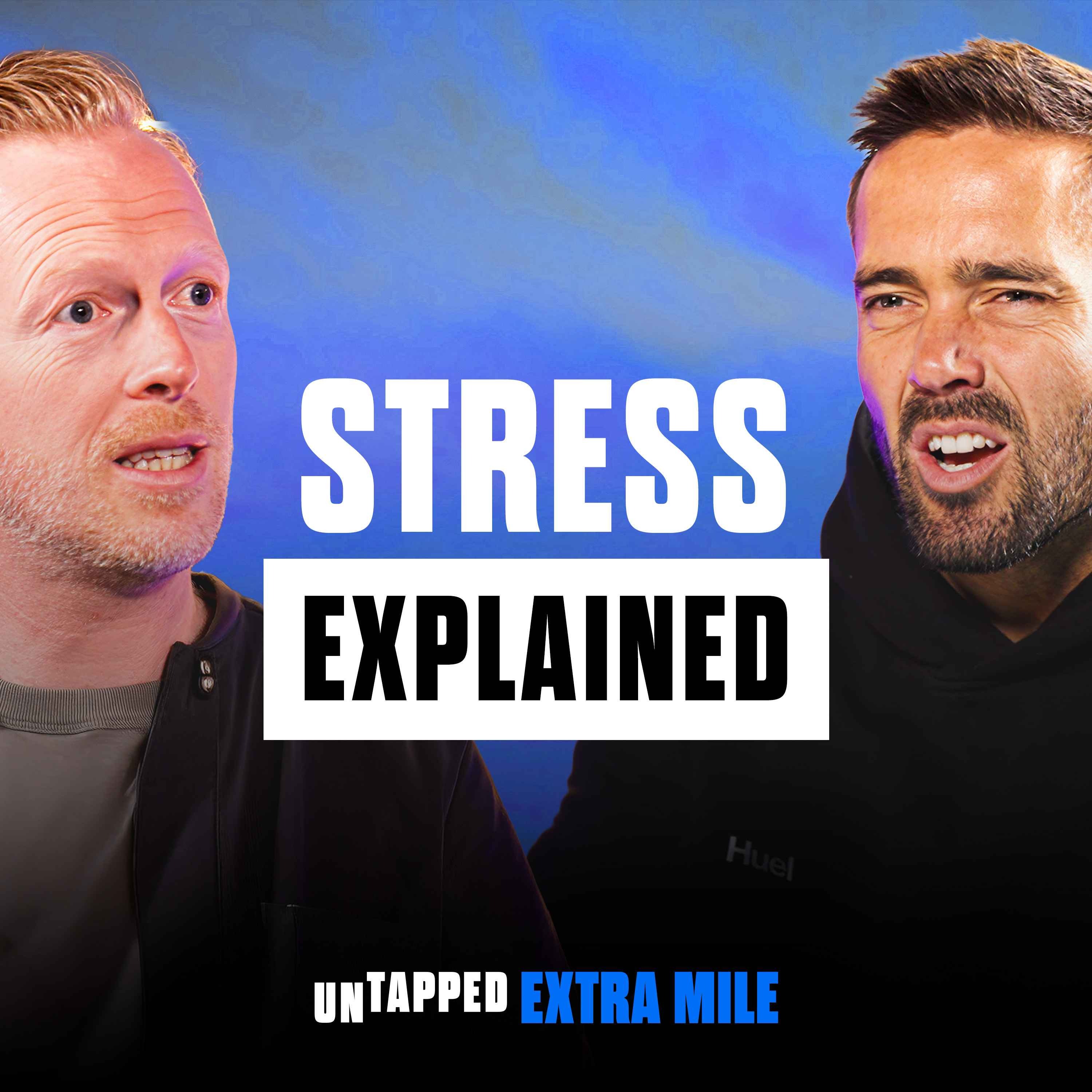
Spencer Matthews and Oli Patrick (hosts; no additional guests named). Backgrounds: Spencer is an athlete/Project 7 participant; Oli is a performance/physiology-focused co-host.
boiling bedroom ruining sleep; running to clear stress; fear of flying (anticipating future threat); 24-hour Snowdon challenge; WHOOP heart-rate-variability tracking; Hans Selye rat stress studies.
Written by AI. May contain mistakes.
Exploration of what stress means, its types, and how it affects individuals.
“People think stress is the negative stuff that weighs us down.”
Hosts share their personal experiences with stress and its effects on their lives.
“So, you know, if I lift some heavy weights in the gym, it's a stress to my bicep, for example.”
Discussion on how exercise can act as a form of stress and its biological implications.
“Oh, I'd be, you know, so much going through my mind.”
Analysis of how pressure can enhance performance and lead to optimal outcomes.
“Have you ever considered how the smallest details can create real emotion?”
Examination of how prolonged stress can lead to physical and psychological health issues.
“People don't feel that's morally conflicted.”
Introduction to the concept of allostatic load and its relevance in modern life.
“And if I'm under excessive stresses beyond my coping capability for too long, I'll move into a state then defined as distress, which is where all the bad things happen.”
Explore how modern sensory overload affects our physiology and stress levels.
“sensory input to you and i today so we've got that constant light which wouldn't have happened before we invented light bulbs and electricity.”
Understand the impact of perception on stress and how mindfulness can help.
“lot of this allostatic load from light, from noise, from exercise, from heat, from emails.”
Explore how perception shapes our anxiety and stress responses.
“So that anxious feeling, that stress goes.”
Learn how cortisol impacts stress and recovery in our lives.
“So your third layer is all the physiological habits that you would lean into deliberately that give you what you would call recovery.”

Get the gist, explore an idea or ask about something said.
 Claude
On UNTAPPED with Spencer Matthews, what are the key points of this episode?
Searching your listeningAutomatic transcript. May contain errors.
0:00Welcome to Untapped The Extra Mile with me, Spencer Matthews. And me, Oli Patrick. Indeed. We're here again. Today we're talking about stress. I think, firstly, what would be good would be to define stress. I think, you know, I hear the word stress and I think bad sleep, mind racing, nail biting, you know, how do I fix this problem as soon as possible? I think, you know, arguments with my wife. I think, you know, delays on product production. I think of all kinds of things that irritate me. Yeah. And that's a really classic sort of depiction of what people think stress is. People think stress is the negative stuff that weighs us down.
0:47I think the broader definition is we sort of don't want to start with the word stress. We want to think of pressures. We all have pressures. You know, we have things that are expected of us. There's lots of different types of stress. There's the stress of a hot room. There's the stress of a difficult emotional relationship. There's the stress of a chemical. There's the stress of an exercise session. So really careful. I don't mean to interrupt you. Please do. But the hot rooms are just death. Like when you said that, I thought, ugh. Until they become a sauna, in which case they are life. Yes, I know.
1:15But just I was thinking more for sleep. Like I had a shocking night's sleep the other night and it was just boiling. and just horrendous. It's a great example. So that stress is talked about in a similar way to you having an argument with someone this morning or someone failing to email you back under expectation. So people struggle with stress because it's all those things. But how does that make sense against the way I feel? And I think if we go to the word pressure, you and I've got lots of pressures or inputs that are required of us today. Some obligations. We have to get our children out of bed and we have to feed them and we have to turn up here.
1:50I wish they'd stay in bed sometimes. Well, amen. And sometimes you get them out of bed. I'm at the tipping point. So you're at that interesting point. We all have pressures. And really when most people think about stress is without any of those pressures, that is unhealthy. If I take to you retirement or you go away for four weeks to a desert island, you will be clawing at the walls because you need those pressures. Not on a desert island. You will be. But there are no walls. That's a very good point. It feels like an unnecessary point to make, but I'm going to accept it. So, you know, all these abundant pressures give us purpose.
2:22They give us the elixir of performance until those pressures overwhelm you. And then those pressures move from positive to negative. And really, when we think of stress, it's when the pressures have overwhelmed an individual's ability to cope. That's actually really, really interesting. I would say, and this is good timing, this episode, because I was stressed yesterday. Yep. And I don't ordinarily feel stress in a kind of, you know, stereotypical way, really. Like I think I'm, I love really busy days. But yesterday, for whatever reason, I don't know, I had a real spanner like chucked into my brain.
3:01Just a couple of things were really bothering me.
3:07And I wasn't on form at all. And I came home from work a little early to help my wife with the kids. And I felt like I was being a bit of a bad parent. Like I just had quite a short fuse. Like I just wasn't very patient with my kids, which fueled them to be even more annoying, you know, obviously because it's a game to them. And then I had to cancel something because I didn't want to go. And then I went for a run, even though it was really late, you know, just because I was kind of behind on my weekly mileage. And, you know, my wife was a little bit annoyed with me because it was very clear that I wasn't fully there.
3:43I wasn't good to be around at all. The run helped. So that's a win right there. But it doesn't have too much to do with stress, although I'm sure you could probably find a way of making it have something to do with stress. It's all got to do with stress. Wonderful. Because you went out, an exercise is also a pressure, an input. We call actually exercise as hormetic stress because the very idea of stress is it's challenging a biological system and our body goes, if that is going to become something I'm regularly exposed to, I will adapt to have it damage me less next time I meet it. So, you know, if I lift some heavy weights in the gym, it's a stress to my bicep, for example.
4:22And my bicep then will take 48 hours to not just reconstruct itself from that damage, but reconstruct itself to a higher level of capability, what we call supercompensation. I'm basically rebuilding, so the same weight will affect me less in three days' time, four days' time. And so stress is a catalyst for change. Stress and pressure is a catalyst for purpose. you know you love that busy schedule i say if you honestly spencer if you had nothing to do you would be as dysfunctional if you had too much to do no no so i'm i would be incapable of sitting around for a day yeah and i think there again we need a volume of pressure to optimize our performance there's a there's a known sort of sports psychology graphic called the yerk dodson inverted you hypothesis of pressure and performance what did you say it's called the jürgen klopp what the york stodson inverted you hypothesis of pressure york stodson two legends they basically said look of course when there's no pressure there's no performance so if you imagine pressure is on your you know your the bottom of your graph and then performance on the the side of your graph then as pressure increases so does performance so if your best time will not be run in whatever race you're doing when no one cares or no one's watching or there's nothing at stake, right?
5:36So you will deliver. You will deliver the 245 because partly you've actually created a pressure by getting lots of people involved in the process, creating lots of external opinion, and that's going to spur you on to do the 245. Well, I have done that on purpose. Yeah. So, you know, I feel - It holds you accountable. Yeah, exactly. So, you know, probably the only reason I ran the session last night when I was angry and in a bad mood and it was 8.30 p.m. or whenever it was when I went running is because hitting, you know, the goal or somewhere near it is quite important because we're publicizing it totally so you've created i would have just probably gone to bed yeah so you've created false pressures to drive performance that's great and they're not false they're very real but you've created them rather than them sort of organically existing so there's a point in everyone where we have the right volume of pressures to optimize performance in an athletic setting or in a in a life setting but then there's a point where those pressures are too great and some people when it comes to the big event they're they're there's too much pressure and they don't perform and those people get called What would you shout at someone from the stands who was the favorite to win 100 meters and then ran a really slow time?
6:39What would you heckle them with? Oh, I'd be, you know, so much going through my mind. I'd be disappointed for them. You know, I'm not sure I'd heckle them. It would just be a shame, you know, for them. In a world where AI is changing every role in every industry, knowing who actually has deep expertise matters more than ever. Upwork connects you with the highly skilled freelance professionals with proven track records, so you can hire with confidence. Upwork gives your business fast access to highly skilled specialists with deep expertise, so you can fill critical skill gaps, launch projects faster, and scale support up or down without committing to full-time headcount.
7:22With Business Plus, you can access the top 1 % of talent on Upwork. AI-powered shortlisting delivers a curated shortlist of top freelancers, matched to your goals in under six hours. No endless searching required. Thousands of growing businesses already trust Upwork to hire highly skilled freelance professionals for everything from one-off projects to ongoing support. It's free to sign up and posting a job is easy. Visit Upwork.com right now and post your job for free. That is Upwork.com to connect with top talent ready to help your business grow. That's U-P-W-O-R-K.com, Upwork.com. Hi, this is Mark Bittman from the podcast Food with Mark Bittman.
8:01Have you ever considered how the smallest details can create real emotion? Lexus does. At Lexus, master craftsmen called Takumi are involved not just in physical craftsmanship, but in sensory details. Things like how a door closes, the click of a switch, the acoustic feedback of controls. Because a car that doesn't make you feel something is a car that stops short of amazing. Experience amazing at your Lexus dealer.
8:56M-I-D-I dot com. Insurance coverage varies. Check with your plan for coverage.
9:03Let's, a more malicious creature might call them a bottler. A bottler, yeah. Or a choker. Yeah. These are phrases. Choke, choke. Yeah, people want you to choke. And what they're saying is, your normal performance, I want to see less of it because the pressure's got to you, right? Yeah. And that's true when there are too many pressures for that individual to cope with. That word cope is a really vital word. Then of course, pressure might deteriorate. And if those pressures are sustained, that might then turn into poor quality psychological and physical health. So right from the 1930s, there was an endocrinologist who basically stressed rats.
9:35He made rats stressed. Here we go with the rats again. I love a rat. Rats are amazing. I don't mind a rat, but I'm just... Why do we test rats just out of a chest? Because they share quite a lot of our genetic material. Do they? Yeah. Rats? It's hard to believe, isn't it? They've got a really quick metabolism. So the cells turn over quicker, so you can expedite testing quicker. They've got a short life cycle. People don't feel that's morally conflicted. I was about to say. People will see a rat in a lab. People don't so much mind about rats, do they? They don't. It's strange. What's the film? Actually, there's a film that says, you know, like, it's a funny scene in a film that basically says, oh, it's not funny at all.
10:23It's the, it's Inglourious Bastards. Yes. Where he says at the table, you know, that we all have an inclination to just dislike rats. Yeah. You know, like if a rat were to crawl across the floorboards, you would want to kill it. You'd want to get it out of your house. Whereas, you know, if something, if a squirrel were to come into your living room, you'd think it was sweet. Whereas actually it's very similar. It's interesting. I don't know why that is, but that is true. And so - Like I like squirrels. I - I wouldn't say that I love rats, but it's funny. It's just the, it's, they could use a rebranding.
10:59Do you know what I mean? I'm not a brand specialist for, again, rodents, but I think principally there was an endocrinologist called Hansel who had no emotional connection with the rodent world. Because if we were to test apes or something that really are quite similar to us, then I think some people might be outraged. You'd have marchers and stuff protesting. Rightly so. We are derived. But why is it rightly so? What about the rats? Because we give rats cocaine and stuff, don't we? Don't we? Because we've done addiction tests on rats and we've just filled them up full of gear and stuff and then they go and have a heart attack and it's like, oh, cocaine's shit.
11:41And we kind of know that anyway, so we probably didn't need to load the rat up full of GAC to kill it. You know, it's weird. I think it's odd. There's a gacked up rat in cage. What are you guys on? There's a different episode on the morality of animal testing. I stand on the shoulders of research scientists, and they have very intelligent ways now with computational models of proving and disparaging. But originally, great shoulders. But originally, some of the data on stress came from a guy called Hans Selye, who I think was Hungarian, and he created this idea of, when he created a stressful environment for these rats, they physically got ill.
12:16So they all got stomach ulcers, but the stress was psychological. So it was nothing he was feeding them that was stressful. It was nothing about the air temperature. He was making them tormented. And as a result of that, they basically got stomach ulcers, their thyroid gland, which runs your metabolism, amazing thing. It shrunk. They had a big gland on top of their kidneys called the adrenal cortex, which got bigger. And we suddenly realized if something is overwhelmed by pressures for too long, it becomes physically unwell. Wow. And that's - That's very interesting. It's important, right? Because people think stress is a psychological problem, a brain problem.
12:51It is a full body problem when it is too much. So when someone goes on stress, it's like the right amount, too much, too little. The word stress is wrong. What we really use is when I have excessive stress or more stress than I can cope with. And if I'm under excessive stresses beyond my coping capability for too long, I'll move into a state then defined as distress, which is where all the bad things happen. and in distress my body is is basically as it's always doing is trying to survive so it's going to change my physiology in a way it thinks will aid my survival right so it thinks that stress because the only stress old oldie people would have met you know medieval you know hundreds of thousands years ago was probably war or famine so lots of the biological adaptations that we encounter under long stress is getting ready for no food or war right we're starting to use this new phrase allostatic load which is there's a whole never heard of it yeah we're all using it yeah it's popular literally i i can't stop hearing that it's everywhere well let me bring it to the mainstream from my little niche group me and my mates are always talking about allostatic load um allostatic load is like the volume of things that are causing some kind of sensory input to you and i today so we've got that constant light which wouldn't have happened before we invented light bulbs and electricity.
14:11We've got fairly... Thomas Edison. Again, before he was... Edison did the light bulb. There you go. Look at that. Yeah. Honestly, are you surprised? No, I think so. You never fail to delight me. Well, I actually took a bit of a gamble there. You know, it could have easily not been Edison. It turns out I think it might be. Edison there. Then you've got noise, constant noise. You invented noise. Cavemen. Cavemen were very noisy. They were. Who made the noise? The, you know, the, what's it called? The mechanical revolution? What's the name? Industrial revolution. Industrial revolution. Thank you, dear Lord.
14:48Thank you, Simon. Thank you. So we've got a whole load of things. Simon, you're on fire. A whole load of things that are new. Did you say the mechanical revolution? I did. Which I think is coming. That's what's happening next.
15:02I'm not, you know, I'm not an expert in these things. What I do know is there's more stuff hitting us from a sensory point of view today than ever before. So some of that is physical, right? Constant heat, that wouldn't be normal. Normally it was hot in the day, cold in the night. Now it's hot all the time. You mentioned it earlier. Constant noise, constant light. You've got a whole new range of things that we don't fully understand, from electromagnetic fields to, again, strange frequencies that are new to our physiology. Countless TV shows. Well, then we're adding a new layer of sensory input, which is asking you to think about things you wouldn't have thought about before.
15:37So 120 years ago, you wouldn't have gone to bed thinking whether that bloke's a serial killer or not, or whether the straight-off hummus is going to be opened and your flights are going to be cancelled in a period of time, or whatever bothered you at Clean Co is going to happen or not happen. And what's interesting about this volume of sensory inputs, they're giving our physiology a new cue, which is overwhelming, which is be ready for something that might happen. right? Anxiety? Well, anxiety is a significant expression of that, which in some cases has a very clear clinical roots and is a medically, you know, conditioned.
16:09For low level anxiety and this sort of sense of trepidation, which is very present, it's being ready for something that might happen that you can't control. Yeah, I know we're talking about stress here. But, you know, obviously, to me, anxiety comes into that. I'm not an anxious person. I don't suffer from anxiety. Anxiety inherently is worrying about something that hasn't happened, right? It's anticipating. so there's some stress there enormously and if you know we go back to the quote of winston churchill's i knew the story of a man who would have had a wonderful life were not for all the terrible things that never happened to him right and i i was using this example recently where i used to have a fear of flying right so and that's quite common quite common and a fear of flying and so if you explore that as a stressful event what is stressful about flying what do i think is going to happen on the airplane.
16:57If you and I go away for a little jaunt. Well, if we went away on a jaunt, I would tell you that you're more likely to die in the car on the way to the airport. It's an emotional feeling. Forget the stats. I'm not a stat man. I would also say that, you know, a plane has never been knocked out of the sky by turbulence and not to worry about the turbulence. I think there's a lot of people taking solace in this. I would hold your hand and I would say, be calm. You're wasting your energy. I'd say save it for Ibiza or wherever we're going.
17:25I might, yeah. I think I would agree. Well, I've never felt calmer on a plane. I think I'd be helpful, I think, in that situation. As helpful as you are, you are trying in all those things to bring me back to the moment I'm in. My brain is in a moment that isn't going to happen, which is a plane crash, right? So I am anticipating that wiggle of the plane when the air stewardess sits down, it's because she's got a message from the captain that we're all going to die. And so I am taking cues in my senses and I am then anticipating a future event, which I get ready for now. So that's where you get people with sweaty palms, dry mouth, heart rate racing.
18:03They might wet themselves if it went too extreme because your physiology doesn't understand whether something is present or future, right? So if I watch something that tells me, get ready for a threat, I get ready for it now. I don't get ready for it later. If you and I say, we're going to go down to the car park and we're going to have a hundred meter race. And the winner of that race has to give the other one a significant sum of money. there'll be different different pots let's let's imagine we had a 10 grand race 50 meter sprint before the gun goes our heart rates will be close to max oh yeah because you're anticipating what you're going to need to deliver over 50 meters your body is always calibrating the inside of it to the outside requirement of the world but not the world that is the world it believes is and this is where we get into stress aren't we fascinating beasts?
18:48I love the human creature I just love it we love a bit of physiology on this show This is just two guys who love a bit of human physiology. The reality of that is, right, it's coming back to a stressful point. When we go back to your Clean Co discussion, the discussion is one thing, but you extrapolating it is where you add that extra load.
19:40Hi, this is Brooke DeVard from Naked Beauty. I am always looking for ways to elevate our daily rituals, and the Kohler Smart Toilet is proof that design changes everything. It's this stunning sculptural piece that feels like quiet luxury for your bathroom. It totally transforms your daily ritual into something elevated with customizable cleansing and touchscreen controls. It's functional art that makes your space feel cleaner and more intentional. A modern home deserves a modern toilet. Experience the difference of Kohler smart toilets. Find more at Kohler.com.
20:18in a world where ai is changing every role in every industry knowing who actually has deep expertise matters more than ever upwork connects you with the highly skilled freelance professionals with proven track records so you can hire with confidence upwork gives your business fast access to highly skilled specialists with deep expertise so you can fill critical skill gaps launch projects faster and scale support up or down without committing to full-time headcount. With Business Plus, you can access the top 1 % of talent on Upwork. AI-powered shortlisting delivers a curated shortlist of top freelancers matched to your goals in under six hours.
20:54No endless searching required. Thousands of growing businesses already trust Upwork to hire highly skilled freelance professionals for everything from one-off projects to ongoing support. It's free to sign up and posting a job is easy. Visit Upwork.com right now and post your job for free. That is Upwork.com to connect with top talent ready to help your business grow. That's U-P-W-O-R-K.com. Upwork.com.
21:22And we have to also bear in mind that we are fundamentally a vessel that can manage an awful lot of this allostatic load from light, from noise, from exercise, from heat, from emails. and then we take something that isn't true and it overfills our vessel and that overfill will manifest in the behaviour that you exhibited with your kids, that grumpiness, that lack of energy, that lack of brain clarity, all those things that people see as the very clear living presentation of stress. But what it really is, those are feedback loops that you have overwhelmed your ability to cope and you then need to come out of that state before you stay in it long enough to become physically unwell.
22:00Can you train your body to deal with stress better? Enormously. So think of, let's imagine me, that I'm flying all the time. If I flew all the time, I would get unwell. I'd get the stomach ulcers and I might have an increased risk of certain cancers and heart disease. So we've got a clear link. Hang on a sec. If you are excessively stressed. So if you are stressed over something that isn't real for a period of time, you can develop cancer. Yeah, you would compromise your immune system. If you are under... That's crazy. But your phrase isn't real. How many stresses are real? Well, I mean, were I to be chucked in a cage with three tigers, that stress is real.
22:41These tigers can eat me and kill me, and they probably will. So that's a very real reason to be stressed. Sat on a Boeing 747, where I think I'm right in saying hundreds of thousands of flights fly every single day and hardly any of them ever crash, is not real. Spencer, if you got chucked in the zoo and there was two doors one said vicious tigers are going to come out of here one said there's no tigers come out at all your body would prepare itself for the tigers even though there are no tigers next to you yeah you would be stressed about the tigers even though they're not there sorry, you asked what stresses were real being in a cage with a tiger is a real stress I've described you not being in a cage with a tiger you're in a cage that might have tigers in it yes I know no no I know I'm but your example that is not real stress yeah but agreed but the tiger is real stress agreed yeah so people always use the fight or flight we're getting to fight or flight here right this is like this is this is project seven stuff this is I'm in the water in Cape Town it's not cold enough to kill me but I feel like it is because it's dark and you know there's a real chance of being eaten by a great white shark but not really it hasn't happened in 50 years so the chances of it are so slim But of course, you're in freezing cold water and pitch black and you feel like you're going to get eaten.
23:58So that stress was alarming and overrode my body to the point where I could barely move. So, you know, in reality, is it dangerous? Probably not. Felt really dangerous. Right, that's the perfect example. Let's take that. So we've got three things we can do, three minimum. Let's imagine you had to swim in those conditions regularly with that threat for a long period of time. if you are under chronic stress for long periods of time we will see a marked increase in certain health risks so you could have increased risks of certain cancers cardiovascular disease, all sorts so how do we stop that happening?
24:32the first option is you control your environment you just don't get in the water you're in the water so the option one is don't go in the water don't do scary things move out of urban areas go and live in the Nordic fjords layer one is how much of the inputs I don't need a good example of that is how many people watch 24-hour news in the evening when they have no impact. Layer two is where we see the biggest operation of stress management, which would be talking therapy, psychologists, psychiatrists, which is how many of those stresses are real and how many are my prediction of a future that I don't control, right?
25:06So on the airplane, the person next to me might've been to see a therapist who taught them through the safety, who got them into the idea that if they're in the moment they're in, they're not going to be in a moment that isn't, right? So one of the greatest techniques that's risen through modern society of recent years is mindfulness. Mindfulness is being connected to the moment you are in, not ruminating on an unwanted past, not predicting a terrifying future, being in the moment you're in. Because if I'm in the moment I'm in, my body will come into that moment, my heart rate will decrease, my blood pressure will come down, my glucose levels will come down, I won't feel stressed.
25:40And if you don't feel stressed, then you won't feel stressed. And I think that second layer is perception, right? And that's that Winston Churchill quote, How many of the stresses that we encounter are real? And how many are us taking the moment we're in and turning it into a thousand moments that don't exist, that I can't control? When you were doing Project 7, were you more nervous before you started or when you actually got going with the task? I know that you probably want me to say that I was more nervous before I got started. And that's true for some of it. I'm very good at not worrying about what could happen.
26:15You are very good at that, it's fair. We know that from previous tests. Even, I don't know when this is going to come out, but next week, I was just sent this challenge that I'm doing. And I was aware roughly of what it was, but didn't really have the detail. It's, you know, something that I'm doing on Thursday. 24-hour challenge. I'm going up all six sides of Snowdon. It's about 96k of running and about 5 ,500 meters of elevation. Oh, my God. And it's going to take about 24 hours all through the night. It'll be horrible. Horrific. And I got it yesterday and I was like, this is shit. Because initially we were going to see how many times we could summit Snowden on the easy route, but we're actually going to do all the routes in 24 hours.
26:59And I literally saw it, looked at it, thought, yeah, I mean, that's a big day out. But I literally, I haven't really thought about it since and I probably won't think about it until I'm doing it. So I won't lose any sleep over that. I won't even consider how to do it. Like, I'll just, I'll pack my, you know, whatever shoes I'm wearing and I'll just, I'll get on with it. And that'll be that, you know, and I won't worry. With Project 7, I was worried about things that I knew were going to be difficult to control, like the 3.9K Antarctic swim in zero degrees. Leopard seals. Yeah. You know, like great white sharks in Cape Town.
27:44bull sharks in Perth. When we're looking at untapped, that ability to not be burdened with a whole load of things that aren't going to happen gives you the confidence to do things that others might not, right? So I think, of course, my ideal answer that you haven't given me is you're more nervous before it starts, and then when it starts, you're then in some degree of control. So that anxious feeling, that stress goes. Lots of people get the sort of pre-football game kicking off nervousness. The whistle goes, they're fine, because they're in the game. People are worried about the thing until they're in it, because when they're in it, they can do something about it.
28:16But this is all perception. And this is the field of psychologists through the ages who will try and help you see the world through a lens that supports you rather than punishes you. And I think they do incredible work in that space, performance psychologists, again, psychologists of all areas. But talking therapy is like me rationalizing how many of those things that I'm predicting are true or not. And most of them, most of them aren't true. There are truths that, you know, there is a true risk. We can't live in the moment we're in and wander through the worst neighborhood of town with our phone, you know, proudly pronounced or go into a lion's cage.
28:51The reason we have anxiety and fear is it protects us from scenarios that would end us. So, you know, we're not trying to turn off this stress response. We're trying to dial it down to these new inputs that it just never imagined it would meet through so many strange sources with content being the oddest thing. like constantly being told that there's something you should be thinking about or worrying about that you can't control, can't influence. That is tipping most people from that beautiful amount of daily pressure into the point where they're feeling overwhelmed. There's a third layer. So I can change my environment, I can change my perception, then I can change my reaction, which is how relaxed my physiology is in those scenarios.
29:31So if I'm on that plane, and I do proper breathing, we were talking about breathing this morning, if I breathe, you know, deliberately with calm exhalation, that's a signal back to my brain that maybe I shouldn't be worried. If I've managed my caffeine, if I've managed my sleep, if I've managed my alcohol, you know, what's so important is when we, you know, you went for that run, such a great example. When your body goes to low level exercise, in many ways, it clears down stress. Low level? Don't judge your exercise by the output, judge it by the effort, right? So just because your zone two happens to be you trotting at some filthy pace and completing a horrific number of k's you're in zone two so you're the same as you know as brian who's trotting at you know eight minute kilometers around around clapham common it's the same effort level and that effort level is is decompressing rather than creating a new stress so if you go in and did a um you know a norwegian protocol or you did have you know intervals at threshold i have that today well that's the wrong session on the day you had yesterday and maybe the right session today and that's why recovery we've got to reframe recovery recovery isn't are you going to get delayed onset of muscle soreness today recovery is do you have enough space in your vessel to absorb a deliberate stress and if you go and lay down a savage exercise session on a day when you got horrible emails and you watched a tragedy on the other side of the world and you had loads of light and loads of unnecessary noise and you've been in a really urban environment, hadn't spoken to anyone, that's when that session can't execute.
31:05And therefore we've got to stop looking at training outside the context of the vessel in which it sits in. I'm Jake Stouck, co-founder and CEO of Serval. We built Serval to automate the IT work that slows companies down. Onboarding, password resets, access to applications, my laptop stopped working. While employees wait for help, their real work is put on hold. IT desperately wants to automate this work, and that's why they need Serval. You just tell Serval what you want to automate in plain English, and it's built. No drag-and-drop workflows, no expensive consultants. Employees get unblocked, and IT teams go from drowning in tickets to building what actually matters.
31:46With Serval, IT becomes the AI engine powering the entire company. This is a new way to run IT. We guarantee you'll automate 50 % of all tickets and we'll prove it to you in a free four-week pilot. Go to serval.com slash tickets. That's S-E-R-V-A-L dot com slash tickets.
32:23loving the Merit Minimalist Stick because it's a foundation and concealer in one that gives me a really natural skin-like finish. But when I want more coverage, I'm reaching for the Hourglass Vanish Concealer every time. I know I'm not the only one who struggled to find the right foundation or concealer shade, which is why I always shop at Sephora. They have the best brands all in one place with so many shades, coverage options, and finishes, plus expert beauty advisors, free samples, and shade matching tools both online and in-store. So whether you're looking for barely there coverage or full glam, Sephora can help you find your match.
32:57Hi, this is Brooke DeVard from Naked Beauty. I am always looking for ways to elevate our daily rituals. And the Kohler Smart Toilet is proof that design changes everything. It's this stunning sculptural piece that feels like quiet luxury for your bathroom. It totally transforms your daily ritual into something elevated with customizable cleansing and touchscreen controls. It's functional art that makes your space feel cleaner and more intentional. A modern home deserves a modern toilet. Experience the difference of Kohler smart toilets. Find more at Kohler.com.
33:37So your third layer is all the physiological habits that you would lean into deliberately that give you what you would call recovery. and I would actually say give you the ability to buffer allostatic load. So cortisol, the stress hormone, good for you, bad for you? I can only imagine that it's kind of good in small doses and shit in large doses. There is the can. Read the back of the label. Like so vital. So without cortisol, it's a very challenging existence. There are medical conditions where you don't have enough cortisol. It's called the stress hormone, which I think is a misbrand. We've spoken about good branding.
34:13The Wolverine stack is good branding. Cortisol being called the stress hormone is bad branding. So cortisol is a fundamental part of our circadian biology, which is that you and I have got a 24-hour clock. We spoke about it a bit in the sleep episode, where fundamentally this morning we'll have woken up because our body would have made lots of cortisol. That helps wake us up and then rises as I encounter a glorious day. And then over the course of the day, it depreciates and drops down so I can fall asleep later on. So it revs me up and then fades away to allow me to chill out later on. if I'm getting inadequate restoration so if I if my body's natural ability to manage stress is a bit overwhelmed so I'm constantly under that pressure my body's constantly ready for threat that's going to both inhibit my daytime recovery but also potentially my quality of sleep both in in its duration and its and its and its architecture as we call it and over time then my body is saying well you you're not you are not bringing back the energy that you're asking of me you're spending all this energy with this busy life, but you're not recouping it.
35:12You're filling up this vessel every day. It's over spilling and you're never emptying it. You're never tipping out all this noise, all this light, all this emails, all these Netflix documentaries. When does it get rid of? And your body goes, well, I get that because you might be at war or it might be at famine. So what I'll do is I'll make more cortisol to offset some of those things. So cortisol is a bit like on a day-to-day basis, we spend out of a savings out of our current account and we have this vessel that fills and empties. But if we do overfill it, we can get away with it for a while and cortisol is our sort of backup savings account.
35:44And our big worry with cortisol is people making too much of it or disrupting their natural release pattern, which is it should be high in the morning, low in the evening. So we either see excessive cortisol produced, or we see cortisol still high in the evening when it should be dropping down. And that often aligns with people saying they feel tired, but wired. It's not a medical diagnosis when people got high cortisol, if you got high medical cortisol is a medical condition called Cushing syndrome. If you've got no cortisol at all, it's an autoimmune disorder called Addison. So the medical fraternity sits in an interesting place with this.
36:16It's very much in the TikTok and the functional medicine domain. I think when we look at cortisol, it's an amazing backup that you and I can keep going even in the face of an overwhelming world. And if we're stuck with too much cortisol, what's really interesting about it, it's made from the same building block as your testosterone and your oestrogens. I was also about to say it's kind of usually paired with dopamine, but not always. Not so much. So dopamine will be that sort of reward mechanism. So it might mean that I'm leaning into habits and behaviors that are increasing my stress levels, but they're on different pathways.
36:49Sorry. So I was going to add to that, that if you were to go out and have not toxic behaviors, but kind of worse behaviors, unhealthy behaviors, so drinking alcohol, smoking cigarettes, you know, watching lots of porn, blah, blah, blah, blah, blah. You know, those will give you large dopamine hits and also trigger cortisol. No, whereas like something like an ice bath would give you the dopamine without the cortisol. That's one of the great theories of the ice baths in terms of why it's used more for psychological well-being, perhaps than our current understanding of physical well-being. I think they are linked in terms of lots of the behaviors that would go into my stress pot would also be the ones that then ask for that increase in cortisol.
37:29But cortisol cortisol gets it is much more associated than with with with sex drive and fertility because if i'm making too much of it for too long then i've got less of the of the building blocks if you like cortisol is made from something called pregnell alone which is like flour and cortisol is a is a cake so i've got flour making my cake but that same flour also makes my eclair and so if i make shed loads of cakes i can't make as many eclairs and the eclairs is the muscle building the androgen sex hormones. Eclairs are delicious. They're amazing. So we love eclairs, cakes less so. That all in mind, this is why stress reduction becomes a major part of increasing both libido and fertility.
38:08And that goes back to the origins of the human being, which is why would I make a baby when it's a famine or a war, right? I've got to survive this before I could think about, again, procreating and reproducing and raising children. Probably didn't stop him. Well, you know, So sex drive is not just testosterone or estrogen. There's many factors in that. But the reality is this is the pathway to which cortisol gets into the conversation. It's not as important a player as getting that day-to-day vessel under control. And actually, we both wear WHOOP. WHOOP is measuring something called heart rate variability, which is looking at the internal, again, nervous system, the autonomic nervous system on a day-to-day basis and saying, how often were Spencer and Ollie ready for threat and anticipating something concerning where we'd see lower heart rate variability and more activity of what we call the sympathetic nervous system.
39:00And how often did they believe there was no threat coming, they were restoring energy, they're in the moment they're in, and we'd see more heart rate variability and more parasympathetic activation. And that's your current account. And that's why those devices have boomed globally because recovery isn't about, did we train hard today? Recovery is, did I get the balance right between allostatic load and my ability to buffer it? If you're listening to this and you're trying to get better at something and you're training hard and you feel like you're plateauing a bit, perhaps question whether or not you're getting your allostatic load right.
39:33I think that's a great observation. That's a great observation. And you'd say controlling those other variables. We know you as an athlete really understand the value of sleep. That is a huge way in which you empty that vessel on a daily basis. but this is the rise of cold, this is the rise of sauna, this is the rise of zone two, this is the rise of what we call biophilia, which is the innate calming nature of nature. So when I'm in the green and the horizon is wide, I move into, again, a calmer state. This is the rise of low and no alcohol. Clean Co is feeding on this and providing to people who haven't got the capacity, on top of all the other things that are going on in their lives, to add alcohol to that mix.
40:15And that's one of the major reasons we need decaffeinated drinks and we need low and no alcohol alternatives. And we need a restorative calm. The biggest rise in the wellness sector globally are these activities of restitution and technologies and places that enable them. And so an athlete is right to not necessarily look at the periodization or the training load or even the nutrition. They've got to go, am I giving my vessel the opportunity to empty overnight, to not fill up with unnecessary noise? and that's if you like stress in the new world and we haven't done fully there is other forms of stress and there's a bigger, bigger piece here but I think for our audience that's a really valuable takeaway that recovery is now a critical part of anybody's lifetime and it's about how we understand and manage stress in an effective way Thanks very much for listening to our stress-based episode we hope that you have learned something I certainly have We look forward to catching you next week for a fresh episode of Untapped, the Extra Mom.
41:14And if you have any stress-related questions, feel free to drop them in the comments and we'll see if we can get back to you.
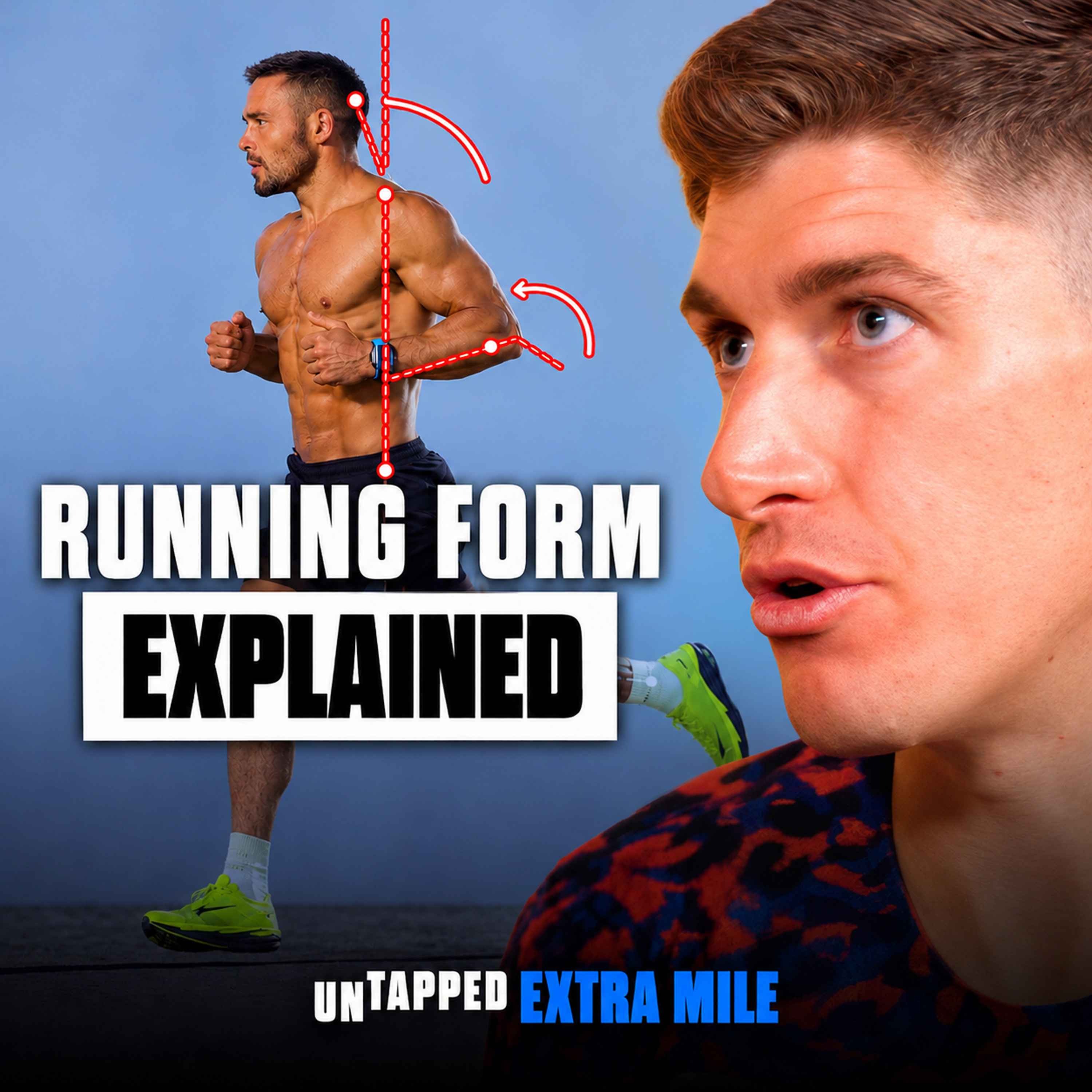
Spencer and Oli explore how stress really affects fitness, recovery and running performance.
They unpack why stress isn’t just “in your head”, how everyday pressure can change your body, and why hard training can backfire when your system is already overloaded. From cortisol and sleep to Zone 2 runs, recovery, anxiety and allostatic load, this is a practical explainer on why runners need to think beyond miles, pace and workouts.
Because sometimes the thing stopping you getting fitter isn’t your training plan — it’s the stress you’re carrying into it.
Postcode Lottery 👉 Discover how Postcode Lottery players are Powering Hope Together. Click here to find out more: https://highpfrmc.com/ut-postcode-au
Better Help 👉 Join Matt in Saying It Louder with 10% off Betterhelp Therapy. Click here: https://highpfrmc.com/otm-betterhelp-au
Do Health 👉 For your long-term health. Head to https://highpfrmc.com/dohealth-ut-au to sign up now
Hosted on Acast. See acast.com/privacy for more information.