Ask ChatGPT
 UNTAPPED with Spencer Matthews
19 Jan 2026 · 47m · 22 chapters
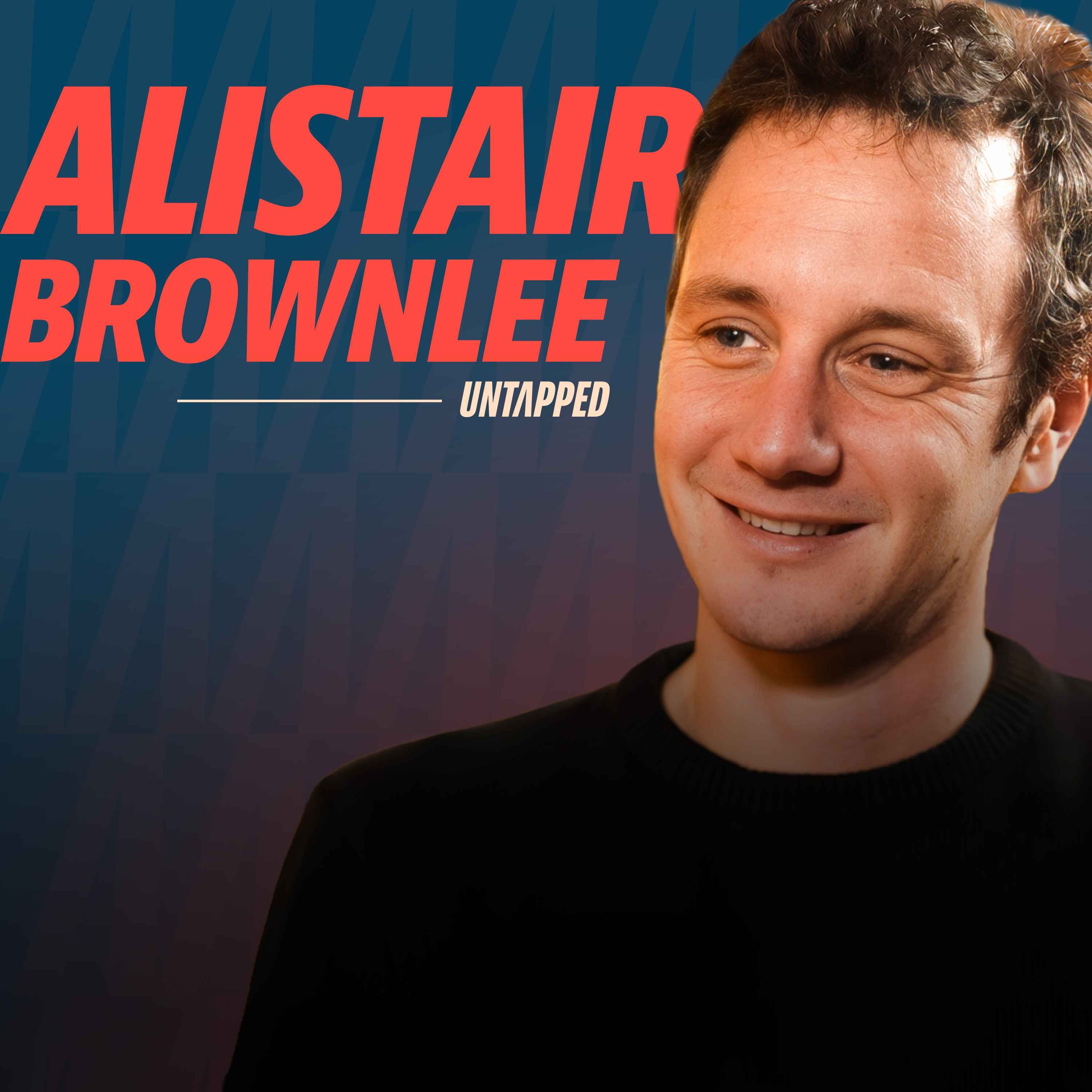
Alistair Brownlee explains how Olympic-level endurance performance is built, focusing on consistent training volume, polarized intensity (mostly low zone 1–2 with a small amount of very hard work), and practical fueling/recovery. He also shares specific race details (Ironman timing, heart rate/power) and advice for amateurs: prioritize sustainability, make training fun, set goals, reduce injury risk, and practice nutrition. He discusses glycogen/carbo loading, heat-focused supplements, and the importance of sleep.
None. The episode features Alistair Brownlee as the main guest; the host is Mark Bittman (Food with Mark Bittman) interviewing him.
Volume drives adaptation; plateaus come from unsustainable routines; don’t “cram” intensity near the top of zone 2; never go to max if you need to train again tomorrow; sleep consistency is crucial; fueling (external carbs after ~2 hours) often determines endurance outcomes.
Brownlee’s ~50-week training structure (about 35+ hours/week; swim 5x/week; bike 6–7 days; run up to ~120 km/week). His 7:40 Ironman (about 50 min swim, ~4 hours bike at ~290–300W, ~2:40 run). The 2016 Mexico World Triathlon Series incident where he helped his brother Johnny over the line, leading to officials deciding not to disqualify them.
Written by AI. May contain mistakes.
Alistair discusses his rigorous training schedule and consistency.
“Plus, it's covered by most major insurances.”
Alistair discusses his rigorous training schedule and consistency.
“You have three World Triathlon Series titles and three Triathlon World Championship titles.”
Alistair explains the significance of building an aerobic base for endurance.
“They're really the three variables that you can play around with to kind of change the physiological load of the session.”
Alistair advises on the balance between intensity and recovery in training.
“It depends, I suppose, on what you're looking to build and what your goals might be.”
Discover why low-intensity training and recovery are crucial for performance.
“So yeah, recovery and risk is a part of that.”
Learn about the impressive specifics of Ironman race times and pacing strategies.
“Yeah, about a close to four-hour bike ride.”
Identify key mistakes people make in their training routines and how to avoid them.
“So I didn't have any of those excuses that got in the way.”
Understand the importance of selecting quality equipment for triathlon success.
“if you're going to spend some money on kit what do you think are the most important things to get behind other than, of course, your delicious gels?”
Explore how advancements in shoe technology have influenced running performance.
“I remember even, you know, 20 years ago, I ran, I think I ran New York when I was either 17 or 18, like years and years, 20 years ago.”
Hear Alistair rank different athletic challenges based on their difficulty.
“I've got years of wear and tear in my calves and Achilles and training in carbon shoes transformed my ability to be able to do that.”
Listen to Alistair recount a touching moment of helping his brother during a race.
“I feel like your seven days of Ironman, seven Ironmans has always got to be harder than that.”
Learn about the dramatic aftermath of a race where rules were challenged.
“He's overheated, so core body temperature got too high, and he's cooling down and drips and all that.”
Explore the dynamics between Alistair and Johnny Brownlee during a pivotal race moment.
“Or did Johnny get the points in the end?”
Understand the principles and practices of carb loading for endurance events.
“Would you do what you feel comfortable with, or would you follow the science?”
Delve into optimal fueling strategies to enhance performance during long races.
“take this supplement for eight days before and it has a massive impact in helping you get rid of heat effectively.”
Learn how to improve your Ironman performance by focusing on key areas.
“What, you think that's inevitable, the slowing down?”
Discover why consistency is fundamental to improving training outcomes.
“but the end of the bike I got off and I was like bent over, could hardly, and thankfully, a lot of the first 10k of the run were uphill.”
Learn why consistency is key to improving fitness and performance.
“So yeah, I'd say, I mean, the fundamentals of performing are always like the training base, like your ultimate aerobic efficiency.”
Discover the journey of becoming a professional athlete and the pivotal moments along the way.
“I think within certain constraints, you can have fun.”
Explore the idea of training for peak performance in multiple disciplines.
“Why do you think you blew up in that race?”
Discuss the challenges of combining strength training with endurance sports.
“Yeah, so we put this kind of concept out and I have to say it got quite a lot more attention than I thought it would.”
Discuss the challenges of combining strength training with endurance sports.
“designed to support memory, focus, attention, and mental clarity.”

Get the gist, explore an idea or ask about something said.
 Claude
On UNTAPPED with Spencer Matthews, what are the key points of this episode?
Searching your listeningAutomatic transcript. May contain errors.
0:00Most women have been there. Something feels off. You don't feel like yourself. Yet your doctor says everything looks fine. Spoiler, it's your hormones. Midi is a virtual care platform built for women by women and offers specialized hormone care from trained clinicians. Plus, it's covered by most major insurances. Getting started is easy. You can book your first visit with a clinician right away. It's not you. It's your hormones. Visit JoinMidi.com to book your first visit. That's JoinMidi.com. Insurance coverage varies. Check with your plan for coverage. You need something from Lowe's, but your day is already jam-packed.
0:36Since MyLowe's Rewards and MyLowe's Pro Rewards members get free same-day delivery, we'll make the run for you. Seriously, just lock in your order and we'll do the rest. See you soon. Members get more at Lowe's. $25 minimum and loyalty membership required. Order eligible items by 2 p.m. Subject to weight and size restrictions and availability. Terms at lowes.com slash shipping terms. Hi, it's Mark Bittman from the podcast Food with Mark Bittman and the website The Bittman Project. One of the things that makes Whole Foods Market different is their commitment to quality standards. More than 500 ingredients are banned store-wide to give us peace of mind whether we're browsing through the store or shopping online.
1:19And it's been this way since 1980. Their selectivity makes your shopping easier. Shop Whole Foods Market in-store or online. Thank you.
1:34Alistair Brownlee, welcome to Untapped. It's great to be here. Thanks for having me. I'm smiling away. I had dinner with my parents last night and my wife, and I was telling my father and my brother that you were coming in, and we all see you as a bit of a national hero. You've had so many incredible sporting moments. And I guess, you know, as far as experts go when it comes to really pushing yourself and training and breaking boundaries. I can't imagine many better people to be speaking with. To set you up and discuss some of your achievements, you're a two-time Olympic gold medalist and the only person to ever defend a triathlon gold.
2:15You have three World Triathlon Series titles and three Triathlon World Championship titles. And what's of particular interest to me is that you have done an Ironman in seven hours and 40 minutes. that is honestly it's incredible could you take me through your training regime in your peak physical condition yeah we could be here all day now it was quite simple so I had a very basic weekly structure that I followed week in week out almost all year round I was trying to train basically 50 weeks of the year and so every Monday Tuesday was the same and Wednesday was the same as every other week and so in total it would add up to somewhere around 35 plus hours and I would swim five times a week, Monday to Friday in the morning, hour and a half, ride my bike six or seven days in the week and at my very peak that run, I'd maybe run ten times a week, so lots of double days, maybe a double day on a Monday, Tuesday, Wednesday, Thursday, Saturday and it added up to 25 kilometers of swimming probably in the region of 500 kilometers of biking and at the most 120 kilometers of running.
3:28A week every week for 50 weeks? Yeah, pretty much, yeah. So consistency was your key? Yeah, consistency is the key to training. I mean, I think at the most fundamental level, the human body is a machine where you give it a stimulus. That stimulus causes some level of damage and you adapt to it. and so the more stimulus you can give it the bigger the adaption and i think it is that simple there's nuances to that you've got to build up over time to be able to cope with that much total load how do you spread the stimulus in terms of the intensities you do but fundamentally the more that you can do the better and and um yeah i think we're actually seeing some of this like live out in the scientific research now that that ultimately volume is a key driver to some of the biggest adaptions that you want from endurance training.
4:18Do you find that by doing the exact same thing on repeat, as you say, kind of consistently the same, that you find yourself in plateaus? So how are you able to become fitter, stronger, faster when your workouts are the same? So yeah, within the week, the workouts wouldn't have been identical. So most of that week, say the majority of the sessions and 32 of those hours are just steady aerobic training and in those yeah i might do an hour run on a wednesday one week and an hour run on a wednesday the next week but i'd probably do a different route and you know do a different route to the day before and the day after um so i varied it up and then the intense sessions of which one or two of each sport per week they were always slightly different and always some form of progressive overload so So week by week, you're adding a repetition or taking the rest down or going slightly faster.
5:16They're really the three variables that you can play around with to kind of change the physiological load of the session. And how frequently would you push yourself into kind of tempo heart rate or would you do the majority of it in zone two? And, you know, I think you hear all the time that you have to go slow to go fast. Obviously, you're very fast. How much speed training would you incorporate into a week? my training was always very polarized i think um that the majority as 32 hours probably ish of that was maybe lower zone two or zone one for people who like a kind of zone model um i think uh the the lower bound like intensity in training actually can be much easier than you think and i think the the biggest mistake people make when training for um endurance sports especially like amateurs actually because they think they've got less time so they try and cram it in and go a bit harder is approach the top of that kind of zone two which is getting close to let's call it the the first kind of um aerobic threshold and that has an effect of yeah you're not getting much more physiological benefits i don't think but it's way more um kind of systemically stressful you're having to burn a lot more carbohydrates and exogenous carbohydrates and um create a lot more fatigue for not much more benefit than going a bit easier.
6:37And then the intensity, the higher end of the intensity was really hard. So a bit of stuff that you might call upper end threshold, but most of it or tempo, but most of it was close to like max, VO2 max, without ever really going max. I mean, that's a really important thing of training. If you want to get up and be able to train again tomorrow, you try, try never go to max. And so, sorry, you're saying that you push as hard as you can for brief periods of time, but the most important part of building a base, essentially, that you can then build on is relatively low heart rate, so around the 130 to 150 mark for extended periods of time.
7:17Yeah, possibly even less, actually, depending on where your heart rate's sat. I mean, I could be in the 120s or even less. I think, think of it, I mean, it's not a perfect analogy, but think of it, you're trying to build like a performance pyramid, and the bottom level of that pyramid is the aerobic base and that's created from adaption at that kind of level of intensity. And unless you've got that enormous base, you can't build the upper levels of the pyramid successfully. And that's really what takes time. That's really what drives the structural physiological adaption. So how big is your heart?
7:52Ultimately, how much blood can that pump out? Your oxygen transfer from your lungs into the blood, your blood capacity to transport the oxygen to the cells. So think of that as like building the capacity to be able to go hard. And then actually the hard bit, like the icing on the cake or the very top of the pyramid, whatever analogy you want to use, happens actually, the adaptions happen really quickly and they can only happen on the base of the pyramid that you're making. And yeah, I think again, my experience and when you kind of read some of the research on this topic is the human body adapts very quickly to that high intensity.
8:28So you actually don't need to do that much of it. If you do it off a low base, you know, you get that benefit from A to B. If you do it off a bigger base, you get that benefit quickly from E to F, and that's a much higher point.
8:42Your daily supplement routine doesn't need to be managing a handful of different bottles. Onnit's Total Human brings key research-based vitamins, minerals, herbs, and amino acids together in convenient day and night packs, one all-in-one product designed to make supplementation easier. The day pack supports cognition, focus, and cellular energy production. At night, the night pack helps you wind down and supports a calm, relaxed state. Less time managing your supplements, more support for your day and night. Shop Total Human now at onnit.com. You need something from Lowe's, but your day is already jam-packed.
9:23Since Milo's Rewards and Milo's Pro Rewards members get free same-day delivery, we'll make the run for you. Seriously, just lock in your order and we'll do the rest. See you soon. Members get more at Lowe's. $25 minimum and loyalty membership required. Order eligible items by 2 p.m. Subject to weight and size restrictions and availability. Terms at lowes.com slash shipping terms. Hi, it's Mark Bittman from the podcast Food with Mark Bittman and the website The Bittman Project. One of the things that makes Whole Foods Market different is their commitment to quality standards. More than 500 ingredients are banned store-wide to give us peace of mind whether we're browsing through the store or shopping online.
10:06And it's been this way since 1980. Their selectivity makes your shopping easier. Shop Whole Foods Market in-store or online. Thank you.
10:21so for people who are um you know busy who aren't professional athletes that don't have simply don't have the time to uh train in kind of perfect conditions you know over a number of different disciplines say and and find that they might have an hour in which to go running do you see a significant difference between running you know a fast 14 15k in that hour and going for a zone two slow, steady run for the hour. It depends, I suppose, on what you're looking to build and what your goals might be. But do you need to spend extended periods of time in the low heart rate zones to build that base?
11:03Or are you saying that an hour here and there will do? I think however much you're doing, the significant percentage of whatever that amount is should be low intensity. So if you've got four hours to train, make sure over two of those hours are really, really steady. I also think in terms of like general health, the actual low intensity stuff is the healthy bit. That's the cardiovascular stress for the building blocks. As I said, the cardiac adaptions, the oxygen transfer adaptions. So in terms of health, the metabolic adaptions, super important. So, you know, if you're and actually the higher intensity stuff, I think is not necessarily always healthy.
11:43so yeah I would always recommend doing that easy stuff and then yeah then it's about balancing the intensities through your week if you've only got four hours make sure two and a half of those hours are low intensity and you're doing a bit at the at the minimum and then you're doing a bit of hard stuff as well to balance it out that's pretty interesting I'm completely guilty of you know if I have 90 minutes or 60 minutes, you know, and that's it for the day to train, I will naturally, you know, gravitate towards the harder the session, the better, you know, because you feel like you're working out more, that you're probably gaining more from it.
12:21You're saying that, you know, that thumping into tempo, heart rate zones and threshold and maintaining that for an extended period of time, although it's a difficult workout, can actually be a detriment to the week, you know, knock-on effects in recovery, sleep, diet, muscle fatigue. You know, it's interesting because it almost feels counterintuitive to go out and run slowly. You know, or if you're somebody that loves running or sports or cycling, you know, going out and, you know, training where you feel like you're kind of not training feels almost too enjoyable for it to feel like you're building anything.
13:01for the average person are there any you know uh anything from your olympic mindset the the you know say me or or anyone else could apply to our daily lives uh that would make a significant difference to the way that we train yeah well firstly i agree and i'm actually really guilty of that now you know because i've i'm not training full-time and i've got various things on if i've got an hour to do something i'm like better make this hour worth it you know so yeah i completely get that um i think don't think of necessarily just harder the better actually um you might get better adaptions kind of it's targeting a different bunch of pathways in the human body as it were and you need to target those pathways and you get you target those pathways by doing different intensities and the easy intensity is really important to be able to do that and so i think there's that and and the other thing you know not only are you not necessarily getting better adaptions um fit a faster stronger whatever you're looking for they're also the risk is massively increased you know the risk between going out and running uh an hour i don't know if you run at five minute k's 12k pretty steady uh compared to smashing it out and trying to run four minute k's and a bit faster and um the risk isn't just a little bit more there it's like probably exponentially more in terms of injury, illness, risk.
14:24So yeah, recovery and risk is a part of that. And training is about how much of it can you compound over long periods of time. And so to do that, you reduce the risk. And that's low intensity. So it's so counterintuitive, but to answer the question, if you actually, it's really liberating to go out and say, actually, the best thing for me to do today is go out and try and whatever that intensity is for you, keep a heart rate at 125, run at 5 minute Ks, that is so enjoyable and actually liberating and it means sport is a different thing, it means it's enjoyable, you come back feeling better than you started all those things so not only is it important I think it's good for you as well.
15:08Looking at Ironman more specifically now obviously we spoke a little bit before I headed off for Project 7 and obviously you're a phenomenal Ironman you know having done one in 7 hours 40 just in passing can you break down the times of each of your individual disciplines in that 7.40 Ironman yeah it was quite a long time ago now and you've done more Ironmans than me as well I've done 7 I've just done the one official the others were done by us but yeah the distances I suppose covered yeah I think I've only done 5 in total so yeah you're getting me on that one the swim was, I don't know exactly, about 50 minutes.
15:5250? Yeah, about a close to four-hour bike ride. And then, whatever, I think the run was like 2.40. That doesn't quite add up, but with a bit of transition. That is, your average time for a man to complete an Ironman is about 12 and a half hours. You did yours in 7.40, swimming 3.8K in 50 minutes and doing the bike in four hours. doing like, you did 180k in four hours. Yeah, so swimming in an Ironman. It's like, it's hard to, it's actually genuinely really difficult to wrap your head around how you've made it around. Well, some people have gone faster. What are you averaging speed? Sorry to... Well, no, four hours is 45k an hour.
16:39So, yeah, I think, so yeah, I'm not sure it's bang on four hours, but close to that. For me, it was, for people who were talking in terms of watts, it's operating somewhere like 300 watts. So 290 to 300 watts. Wow, so you're holding 300 watts for four hours? Yeah. And what heart zone would you be in? That was, you'd see it climb over time, but I'd probably be around 140. It's like, that is just, it's hard to understand, for me anyway. that's unbelievable you would have a heart rate of roughly 140 which is my zone 2 by the way but what's your max heart rate? 178 type thing? 180? something like that I never really hit my max heart rate to be honest sounds like you've been a bit soft getting there you need to go out and go a bit harder if you haven't already noticed this episode is kind of around how people can take away advice to become a better athlete for the average person trying to get fit what what what are the biggest mistakes that you see in training where you know what do people get wrong the number one mistake for the average person is not being consistency and that normally happens because your routine is unsustainable so i love this concept of building the environment that you need to be sustainable and that is creating good habits making life easy for yourself removing the barriers for me that was making sure I always had the kit ready to go, that I had a bike that, you know, wasn't broken without punctures and was ready to literally go out the door, had a bike on the trainer ready to jump on.
18:17So I didn't have any of those excuses that got in the way. So yeah, that's number one. Number two is make it fun. Train with other people, try new routes. Don't be afraid to go and run off road or mountain bike or whatever, just to mix it up. Number three, have a goal. I think it's so and that goal doesn't have to be a crazy event it can just be I don't know to run 5k with your friends whatever that might be and yeah for fuel and recover properly and fuel in sessions performance nutrition and recover after with nutrition and sleep sleep is the biggest driver of recovery the body literally repairs itself yeah if you're going to spend some money on kit what do you think are the most important things to get behind other than, of course, your delicious gels?
19:08Wow, that's quite a question, isn't it? In terms of what? What to do with triathlon? To go as fast as you can or be comfortable? Or what's the... Well, I suppose if we're talking triathlon, you know, the bike is probably the main investment, right? Like, I think if you've got a rubbish bike, you're going to be slower. And if you've got a better bike, you'll be faster. And that's where you're going to make up loads of the time. I'd like to speak specifically about running shoes. I just think, you know, I was having this conversation again with my brother James, he has ran a 304 I think but he he supersedes the super shoe so I remember the kind of shoe that he would run in oh wow that's worth another two or three minutes as well he would have been just fine I think if he had the old super shoe I bought him a pair of Alpha Flies recently just for him to kind of plod around in but he's but yeah I wanted to know you know whether I mean you can run a do you say a 240 marathon today but at your peak what were you running marathons in?
20:10Oh I never did it so yeah I ultimately don't know but yeah the shoes have definitely had a massive impact I think they probably had a a bigger impact on marathon because not only are they fast as you know they definitely mean that you get less of that muscle damage we were talking about so yeah it's interesting now that like all of the rules around marathoning with shoes are just different. I remember even, you know, 20 years ago, I ran, I think I ran New York when I was either 17 or 18, like years and years, 20 years ago. So weird to say, isn't it? And, and I was running in, you know, big boaty, you know, crap shoes that will have been, you know, epic at the time.
20:56And, you know, the idea is you had to run those in and wear them loads and train in them and, you'd never wear new shoes on marathon day. And I was chatting to a professional athlete the other day who also said, still, you should never wear shoes fresh on the box on marathon day. But who am I to disagree with him? But I kind of do disagree with him. You could wear a fresh set of Alpha Flies that have never been worn before, nice stiff plate. They're like a sock, basically. I ran London in brand new Alpha Flies and feet were fine, like perfect. So it's just, would you run in the shoes that you would marathon?
21:31And if you now, like, you know, Alistair Brownlee was going for the fastest marathon that you could go for, are there any rules that you would apply to how and what you wear? So I think it is amazing, shoe technology. You know, I think you think of technology, don't you, as just progressing as a kind of nice line over time. But the fascinating thing about shoes is basically shoe technology didn't really change for decades. And I go back 10 years, I'm running around in the flattest possible, tiniest shoes. And then all of a sudden we had the step change when Nike released the first Alpha Fly and everyone was putting plates in stuff.
22:07And it's amazing. So yeah, I would always use a shoe with a carbon sole. I've always run in Adidas shoes. Almost all the shoes I do most of my running in now actually have a carbon plate in. There's loads of debate about whether you should train or not with carbon plates. I mean, I don't have the answer to that. But one thing that I do know for sure is they've made a massive impact on my ability to run more and faster if I want. I mean, in training. I've got years of wear and tear in my calves and Achilles and training in carbon shoes transformed my ability to be able to do that. So I wish they were around 10 years ago, but never mind.
22:48So yeah, I mean... You wear the Adi Zeros. Adi Zeros and Prime X, which is an illegal shoe to race in, but incredible to training. That's fast. If you're a pro. I could wear it. I don't know if you can. I'd look into it. I'd love to push the borders of legality with what's on my feet in Tokyo, if that's possible. Well, you know, so most, there's a 40 millimeter, sorry, this is really niche. The World Athletics rules is a 40 mil stack height. These have got a 50 mil stack height. Are they better than the Adi Zeros? Yeah. Really? Yeah, yeah. Prime X. Two or three percent better. I've never even fucking heard of these things.
23:25Can you put up a picture? Oh. They're better than the Adizeros? Really? They're faster, yeah. Are they? Yeah, they're a bit heavier, but they've got a bigger stack, yeah. Honestly, you feel like you're running around on mattresses. It's great. It's so good. Did these come out after the Adizero, like the normal ones? Yeah, but they've been around a while now. I'm not talking about the Evos. I'm talking about the ones that everyone wears. Yeah, that's right. All the top athletes wear. So they have a 40 mil or 39 mil stack height and the Primax have 50. So you've got like another centimeter of sole and plate.
23:59Literally, I'm going to buy these so hard that they're going to be at home by the time I get home. Genuinely, I can't wait. Go out and train in them. Honestly, the first run in them is like incredible. What? This is amazing. I can't wait. Prime X, never heard of them. So we've got these four events. Blind rank them in order of their difficulty. Okay. One is the hardest. Yeah, one is the tip top, creme de la creme. Four is a walk and a bath. Four is like piece of shit easy. Okay. Okay. Okay, ready? Olympic gold triathlon. One. Okay.
24:41Spencer's Project 7. Three.
24:47Jamie Lang's ultramarathon man. No. Well, this is difficult now, isn't it? Do I go up or down? Wow. I'm going to go four. Okay, okay. So that leaves two. Yeah. I feel like your seven days of Ironman, seven Ironmans has always got to be harder than that. So yeah. And then William Gouge is 50 marathons in 20 days. Oh yeah. Yeah, yeah, two. That's at two. Okay, fine. We'll be sandwiched between Lang and Gouge, I suppose. Is that right? Now that you've heard those four options, would you still place yourself at the top of that list? It's a bit awkward that I'm talking about myself here, but I think winning an Olympic gold medal in anything is super tough.
25:32Because it's not about the event and getting through the event, it's the preparation, being the best, being the best version of you on that day, coping with all those things, I think, add up for anyone who's performing at that level. I think, yeah, it's tough. Just in passing, I would agree. and I think that I think the difference obviously between the challenges mentioned and your Olympic effort is that yours is a full on race you know and it's kind of like you have to be at the tip top of your game to pull it off and at the end of the day none of us could do that so yes I think you deserve the top spot can I chat to you a bit about that awesome moment that you helped your brother over the line what was going through ahead of the time can you just describe it a bit so what was the event yeah it was the World Series final in Mexico in 2016 and the Olympics had been only I think four weeks before that and we'd come first and second in the Olympics and Johnny was on track to win the world title the world title in triathlon is over a series and that was the last race of the series and he basically had to do well in this race a few places in front of the guy who was also doing well in the series and he was about to be the world champion.
26:50So I'm running, the race had gone pretty much perfectly and I'm running with a kilometer to go. Johnny's winning the race and I'm running with the guy in second. We're in a Mexican holiday resort thinking this is perfect. The end of the year, I won the Olympics. Johnny's going to be world champion. I'm going to out sprint this South African guy to come second. Already thinking about the first beer I'm going to have as soon as I get across this line. it's the last race of the year and yeah I get around the last corner and saw Johnny slumped up against one of the officials I'm like oh no what an idiot how's he managed to mess this up anyway I basically didn't have any time to give it any thought grab him and start running towards the finish line and then I got around a few corners and thought oh bloody hell this is a bit further than I thought so I start regretting it so at this point I'm still dragging him to the finish line and then I started thinking about it more strategically and realized well wait a minute If I can get him to the finish line before we get caught, he could still be world champion.
27:47Wouldn't that be good? So then I'm dragging him faster and Johnny's not conscious and get him to the finish line. Where was the guy who was kind of running with you? Oh, he then, he carried on running at the same pace and won the race. And so he's in front of us celebrating and while I'm dragging Johnny up the finish line, get to the finish line, push Johnny over the finish line first and he's like sparkled out on the floor, gets taken by the doctors, you know, intensive care. He's overheated, so core body temperature got too high, and he's cooling down and drips and all that. And yeah, that was it.
28:20Carnage erupts after the race. But half the athletes, I think, were calling us massive cheats. Half the athletes were like, that's the most amazing thing we've ever seen. I had to go and explain myself to the officials, and it took them ages to decide whether they should disqualify us or not. They thankfully decided not to disqualify us. And then... It would have been carnage if they had, right? I know, imagine that. I remember, by the way, that moment, when that hit the press and it was all over the news. It was incredible. To disqualify you would have been grim for them, I think. Yeah, it was crazy.
28:54I went to bed that night thinking, being a bit like, oh, no, what have I done here? I don't like breaking rules and upsetting people. And then woke up the next morning being like, holy shit. The response to it was incredible. So, yeah, it was really cool. And at first, both of us were like, wait a minute, this doesn't really make sense as getting all this attention and recognition for an event that we ultimately messed up. And then we came around and it was just cool. Amazing exposure for the sport. Really cool exposure for us. And yeah, really special. So what happened in the end? Was your man a world champion?
29:32Or did Johnny get the points in the end? No, Johnny ended up second. Someone else was world champion. What a shame. Yeah, it was a shame, yeah. but what an incredible moment I mean did that how was Johnny's response to it you know in the end because I can't imagine he remembers it yeah I don't think he can remember any of it and yeah I mean to be honest I always deep down quite like it when people ask me about it because I'm like yeah of course I'm the even you know even now it's quite funny that you know more than anything the thing you get asked it's like are you one of those brothers that carried each other and it's like yeah which one are you and I always get I'm the one that carried him so you know at least yeah exactly so i'm like yeah i'm the one that carried him i did the good deed um and i'm forever reminding johnny of that too you know whenever it comes we're having lunch or dinner and it's someone turned to pay that gets brought up this whole idea that um you can top up your glycogen essentially uh you know i'm sure everyone again listening probably knows this but you know we've had jake did and i'm talking about carb loading and and you know eating uh lots of carbs before a big race in the days leading up to the race, glycogen is as topped up as it can be, and then gelling throughout the race so that you don't ever get that, you know, that low, that carb crash, essentially, where your body starts to process energy differently mid-race, which, you know, is that hitting a wall feeling.
30:57Would you do what you feel comfortable with, or would you follow the science? I think the absolute golden rule for any event is don't do something that you haven't practiced a lot and you don't feel comfortable doing. It is like that simple. And yeah, I mean, the evidence that carb loading can be effective is quite good. It definitely doesn't mean it's for everyone. There's different ways of doing it. I'd make sure I'd practiced doing it if I was doing it. I didn't do that much of it. I just relied on the fact that doing less training in the three or four days beforehand and eating normally was going to maximize your glycogen storage.
31:36I mean, some people say actually that many people can't push your glycogen storage levels above a certain level anyway. And yeah, for each molecule of glycogen, effectively, there's four parts water. So you can put on quite considerable amounts of weight, which make you feel heavy on the start line. I was like four kilos heavier, I think, to the start of billing. Yeah, mostly water weight from probably the glycogen pulling it in. I think for most people running marathons, that extreme type of glycogen loading probably isn't that helpful. Say it adds 100 or 200 grams, I mean, that's 400 or 800 calories of extra energy.
32:14Actually, can you just get that in gels or especially two gels in the hour beforehand, for example, is going to make up 80 grams of that and so you haven't had to stuff yourself and feel heavy. so yeah I and I think this is something that I try and talk about a lot that there's so much like information out there of scientific research and various bits of what to do and when in terms of fueling and training you know the point of so many things I do like true fuels is just simplifying that process and it's like look how can we just give you advice that we know is going to work without the downside risk.
32:51And I think for most people, when an endurance event goes wrong, it's probably because of fueling, whether it's what you've done before. And that's another thing, not practicing your nutrition before is an absolute cardinal mistake. I think that's like the number one mistake that people use. So practice nutrition, make it really simple. Yeah, have two or three gels an hour to simplify the process. so tell us a bit about true fuel then when did you when did you come up with this and and and how is it better than other brands yeah it's so true fuels is just over a year old now we've launched two products in the last year which is a gel and electrolyte um and we're launching a really exciting product uh which there's nothing like actually at the moment that helps people uh deal and compete in the heat so um tokyo isn't going to be hot but if it is hot you need to take this supplement for eight days before and it has a massive impact in helping you get rid of heat effectively.
33:49And the gel that you have, what is the carb consistency? Does it have caffeine in it? It's a 40 gram carb gel, a one-to-one multidextrin, so glucose fructose ratio, which is the best to get the carbs into your body for maximum performance. And it's really a unique thing is we have salt in it. Two salt levels, a higher and a lower salt. And we've removed as much as possible in terms of flavorings and any additives for preservatives, which I found my personal experience of using loads of gels. So I would fuel at 120 grams an hour for an Ironman over those eight hours. So a lot of gels you're taking in there.
34:33And by removing all the preservatives and flavors it had a massive impact in me basically just being able to take what i wanted without any stomach problems do you reckon in theory that if you carb up correctly during a threshold or near enough threshold effort for several hours call it three hours two hours 59 for tokyo say the the providing you have that base level of fitness and you know you have the mental capacity to deal with times when they get difficult is this is single-handedly the most important thing to remain on pace the carbs once you do anything over about two hours uh your fueling strategy in the event becomes like the determining factor of your performance yeah um and it does have to be i mean why two hours and it depends for different people um but like if you do the kind of maths, you have 3 ,000 to 4 ,000 calories on board.
35:34You could be burning at 1 ,000 to 1 ,500 if you're going very hard calories per hour. In terms of glycogen, you're burning through that quite quickly. Your ability to take in external carbohydrates has your ability to maintain that after about two hours. I think as you go longer, it gets even more important. Is fueling the limiting factor? in running I'd say the two big limiting factors physiologically are yeah your external fueling once you start you have two plus hours so three hours definitely obviously hydration so taking water if it's all hot but running slightly different than cycling for example because you've got the like the mechanical load of you know just your legs get tired and beaten up as you know from running a marathon whereas cycling is really different you don't have that kind of mechanical deterioration running you do.
36:29And I think whatever, not that I've done lots of marathon running, but whatever you do to prepare for a marathon, you're going to get that kind of biomechanical slowing down in some shape or form because of the impact you've put for your legs. What, you think that's inevitable, the slowing down? Well, not everyone slows down, but your body gets less efficient because of the damage that's happening to the muscles. Are your gels better than those Swedish Morton gels? Oh yeah, definitely. Oh, actually? Yeah, well, we've got less in them. Yeah, less in them. They have something called sodium alginate to form the hydrogel.
37:10It doesn't have that in. And we've got salt, and it means that you don't have to take an extra electrolyte supplement. So it's just one gel with the salt in that you need. Can I have loads of them? Yeah. should I be taking them every this is basically just a chat it's not a podcast I'm listening to this one's tips yeah I'm just here for tips for my Tokyo effort would you take one of your gels every kind of 20 minutes or every 5k something like that I've been in the last two marathons I've taken like a full big like fuck off mental gel with shit loads of carbs in them like every every 20 minutes right so like nine of them I would rather take one before like one at halfway and then like two in the lead up to the end is that not better?
38:01I just feel like it's a lot so there is a personal element to it I think probably like looking at where you're at kind of with metabolism 80 grams of carbs per hour would be like a really good place to be I mean you might get away with less depending on what intensity that three hours is for you I don't really know. But I'm pretty sure with Trufuel's, if you take one on the half hour, you'd be absolutely fine because they're really light. So they've actually got quite a lot of water in them. They've got no flavoring. So yeah, I'd take one just before the start and then one on each half hour. I'm going to make a real effort to do what I feel is right and natural for Tokyo, I think.
38:43Like, you know, I quite like going to bed hungry and waking up feeling, you know, A touch hungry, a touch light. I get benefit from that. It's an interesting point just to gel up quite hard a couple of hours before the race because obviously a gel doesn't take up much space and you'll receive all of the benefits, I imagine, of having a pizza the night before or might sit awkwardly in your stomach or whatever. So anyway, I'll be quite happy to see that it's eight or nine degrees, I think, in Tokyo this year. I won't forget my music. Do you ever run with music? Rarely. If I'm running on my own, I might run with music.
39:26Sometimes I listen to a podcast. Yeah, or yours. Yours, of course. Not.
39:35But yeah, when I was training a lot, I did a lot of training with other people. So I was always like, yeah, it'd be a bit unsociable to stick the earphones in. Yeah, yeah. Before we move on to kind of your top tips for training better this year, Um, I wanted to ask you where you think the most important time is made in an Ironman. So for people who are looking to do an Ironman, um, what should they be focusing on in particular? And, uh, I guess to make it fun, if you, if you were thinking, if you were to pit famous athletes against each other in an Ironman who perhaps aren't known for running Ironmans, um, so to say, take Michael Phelps, you know amazing swimmer uh Pogaccia on the on the bike and Kipchoge on the run who do you reckon comes out on top on that Ironman uh I wouldn't bet against Pogaccia but yeah I'm not I couldn't see Michael Phelps running a marathon sorry Michael maybe you are very good at running marathons but uh and I couldn't see Kipchoge riding a bike or swimming to be fair yeah um but yeah I think um I would also go for Pogaccia yeah I mean it's hard you wouldn't bet against him these days would you but I think the bike, I mean, to state the obvious, the bike is the longest segment of it, right?
40:52So that's where you can probably make the most time up. Swimming is the shortest and I think a lot of people, for most amateur people doing an Ironman, it's just about getting through the swim and it basically not taking too much out of you. So I think look at the swim in that perspective. The bike is, yeah, you can make up the most time there and also not only can you go faster, if you can finish the bike in a relatively, relatively like fresh condition, obviously the marathon is going to be so much more fun. So yeah, the last, although I don't listen to my own advice, when I did the Patagon Man last month, I took a time trial bike and I haven't been on my time trial bike at all, hardly in the last 12 months.
41:35And I actually felt quite good for most of the bike ride, but the end of the bike I got off and I was like bent over, could hardly, and thankfully, a lot of the first 10k of the run were uphill. So it felt like it was appropriate to walk, thankfully. And then I could slowly get running. I still can't wrap my head around you doing 180k in four hours. I just find, like, for me to cycle comfortably at 45k, I need a significant tailwind. Yeah. Or a hill to go down. I mean, it's amazing. I mean, really, really fast bikes, like amazing equipment, a time trial bike, wheels, everything, being as aerodynamic as you can, that can cost you 50 % of your power output, your position on the bike, all the ridiculous equipment, aero helmet, calf, socks, suit, everything, all that makes a big difference.
42:27So yeah, I'd say, I mean, the fundamentals of performing are always like the training base, like your ultimate aerobic efficiency. And then, yeah, focus on the bike and being quick on the bike. Moving on to top tips for training, what's a single most important thing people need to be doing to get better results in their training, no matter what their fitness level is? Sounds like I'm a broken record, but consistency. So consistency in everything, as I said, training, you're way better off training week in, week out, whatever you can. You know, we're talking about doing eight or 10 hours or something, say, doing eight or 10 hours consistently, eight, nine hours, 10 hours, 11 hours, the new hour of doing nothing one week and 20 hours the next week.
43:12And it's that aggregation of like gains over time. I mean, consistency is like the fundamental thing of training. Sleep? Sleep, yeah. Do you sleep consistently? Not as much as I used to. I used to be super consistent. Yeah, like nine hours a night, nap during the day. Really? So quite often do a session or two in the morning, have a nap at session or two. You're like Michael Jordan. he famously apparently sleeps for 12 hours a day does he? wow imagine being able to do that yeah I mean I used to sleep for 12 hours but for very different reasons I was kind of drunk but I think Michael Jordan sleeps a long time for performance but I yeah that'd be difficult I think to do we had Will Ahmed in here the founder of Whoop and he was saying that sleep consistency is more important than the amount of time you actually spend in bed.
44:07You know, going to bed at the same time, waking up at the same time. Basically, to be, you know, an epic animal, you just need to be boring. Yeah. I think it's what it comes down to. Pretty. No, well, you can. I think within certain constraints, you can have fun. But yeah, you do have to be quite consistent. Yeah, you can't do everything, can you? If you want to be like super fit to be able to do crazy adventures, is, yeah, you have to train hard and recover from it. When did you realize that you were an epic athlete? Like, was there a moment when you were a young man or even a teenager where you hit the track and you were just, you know, blazing people?
44:46Like, when did you realize, I can be a professional, you know, I can represent Great Britain, I can be an Olympian? When did you begin to have these thoughts? It happened quite slowly, you know, you do well in your city, Leeds, and then do well in your area than do well in your country and through my teenage years but it wasn't until as an 18 year old I won the world junior championships and at that point I was like yeah I'm good enough to to do this and do it professionally and do it on a world stage and then I had a few years transitioning into the senior ranks and doing okay and then in so in the Olympics in Beijing in 2008 this is a long time ago now I was actually I qualified last minute was like the last pick of the team and with 3k to go of the run I was leading the race just having the absolute best race of my life anyway I blew up and came 12th ultimately absolutely blew up you know kind of staggered across the finish line and I got across the finish line I remember being like really disappointed and then thinking well wait a minute for 90 % of this race I was basically you know with and one of the best in the world I'm only 20 I've just got to find the last 10 % and I can be one at and that would be one of the best and that was, I think, from that point onwards, yeah, that was the big moment.
46:05Why do you think you blew up in that race? Well, it's easy now, looking back on it, if I only knew now what I knew then. I was probably still just a bit young. I think had that race been three or six months later, I think I probably would have won it. I think I didn't really know how to pace and to be efficient with my energy usage and stuff and I think that would have helped for sure. Probably fueling would have also helped and how I trained and prepared beforehand. On a recent episode, I was talking about the concept of what we called an apex athlete. So it's obviously a hybrid athlete, but we've kind of simplified it a bit.
46:50I came up with this concept for basically a fast marathon time and a really strong bench. at the same time. So we were talking about a 110 kilogram bench press for 10 reps and a 250 marathon. So at the same time, so within 24 hours of each other's say, you go and do the bench and then the following morning do your marathon or do it same day, if you like, whatever, it doesn't matter. ChatGPT thought that 50 people in the world could do both those things at the same time because obviously training for either is quite rough and training for one kind of gets in the way of the other. You know, like being top heavy and really strong would slow you down in the marathon and being a really fast marathoner would slow you down on the bench or make you weaker on the bench, I suppose.
47:37My idea is to try and find 50 people that can do these things at once and then pit them off against each other in the Apex Games. What do you think about that? Great idea, yeah. I have, this concept I think is a bit more popular in America. There was an American runner who I've currently forgot his name, who was trying to run a five-minute mile and deadlift 500 pounds. So it's like people trying to... But yeah, I agree. It's really hard because it's like contradictory training, isn't it? Yeah. Yeah, so we put this kind of concept out and I have to say it got quite a lot more attention than I thought it would.
48:15And you had all these athletes commenting and all these strong people commenting and all these really fast people commenting, but only like a few names that were chucked at the post kind of stuck as yeah they could probably do it having reflected on it I think it's probably more than 50 people that could do it but yeah I want to try and find 50 people who can do it and then create like a set of games to see who the greatest apex athlete is on earth I think that would be fun you should come along for the journey how's your bench? terrible I'm so weak I'm trying to do more lifting and gym now than I ever used to to be like you know better all round and more robust and resilient but yeah I am actually just so weak so it's not one for me Alistair thanks so much for joining us and taking the time to chat tons of incredible takeaways there for both me and my listeners thanks so much hope to see you soon thank you thanks for having me thanks so much for listening we hope you enjoyed that episode.
49:21And if you want to hear more incredible conversations with extraordinary people to help unlock the potential within all of us, then please subscribe, follow and review the show wherever you're listening or watching. Thanks again, and we'll catch you next week, right here on Untappd.
49:50Brain is Onnit's daily nootropic formula for cognitive support, designed to support memory, focus, attention, and mental clarity. Its formula with science-driven ingredients include theanine and Hooperzine A to support focus and memory, and it's caffeine-free. So when you're deep in the work, AlphaBrain helps support enhanced productivity and tune-out distractions. Get focused on what matters. Shop AlphaBrain now at onnit.com. You need something from Lowe's. But your day is already jam-packed. Since Milo's Rewards and Milo's Pro Rewards members get free same-day delivery, we'll make the run for you.
50:30Seriously, just lock in your order and we'll do the rest. See you soon. Members get more at Lowe's. $25 minimum and loyalty membership required. Order eligible items by 2 p.m. Subject to weight and size restrictions and availability. Terms at lowes.com slash shipping terms. I'm Jake Stouck, co-founder and CEO of Serval. We built Serval to automate the IT work that slows companies down. Onboarding, password resets, access to applications, my laptop stopped working. While employees wait for help, their real work is put on hold. IT desperately wants to automate this work, and that's why they need Serval.
51:08You just tell Serval what you want to automate in plain English, and it's built. No drag-and-drop workflows, no expensive consultants. Employees get unblocked and IT teams go from drowning in tickets to building what actually matters. With Serval, IT becomes the AI engine powering the entire company. This is a new way to run IT. We guarantee you'll automate 50 % of all tickets and we'll prove it to you in a free four-week pilot. Go to serval.com slash tickets. That's S-E-R-V-A-L dot com slash tickets.
51:46Thank you.
Olympic champion Alistair Brownlee strips elite performance back to what actually works, and why going easier, not harder, is often the smartest move.
In this episode, Alistair challenges hustle culture head-on, explaining why sustainable training beats hero workouts, and how compounding consistency over time matters more than short bursts of suffering. He breaks down the fundamentals, building an aerobic base, managing risk, and designing your environment so discipline doesn’t rely on willpower alone.
Alistair also reflects on defining moments from his career, including the brutal honesty of Beijing 2008, where coming up short became a data point rather than a failure. He shares practical insights on fueling, decision-making under pressure, and the clarity that comes from knowing what you can, and can’t, control.
This episode is about mastery without ego, systems over shortcuts, and building performance that lasts.
Huel 👉 Limited Time Offer - Get Huel’s full High-Protein Starter Kit with my exclusive offer of 30% OFF online with my code UT here: https://highpfrmc.com/ut-huel-yt
New Customers Only. Code only valid for the bundle. Thank you to Huel for partnering and supporting our show!
WHOOP 👉 Join Spencer in untapping your own potential with 1 month free here:
https://highpfrmc.com/Whoop-au
Heights 👉 Stay sharp like Spencer. 20% off Heights with code UT20: https://highpfrmc.com/ut-vitals-au
Bon Charge 👉 Recharge faster, train smarter, perform at your best. Use code UT15 for 15% off. Click here: https://highpfrmc.com/UT_Boncharge_YT
Visit Seattle 👉Start planning your perfect summer of football by searching Visit Seattle on social media, or discover more at:
https://highpfrmc.com/visitseattle-ut-au
Hosted on Acast. See acast.com/privacy for more information.