Ask ChatGPT
 UNTAPPED with Spencer Matthews
29 Sep 2025 · 47m · 20 chapters
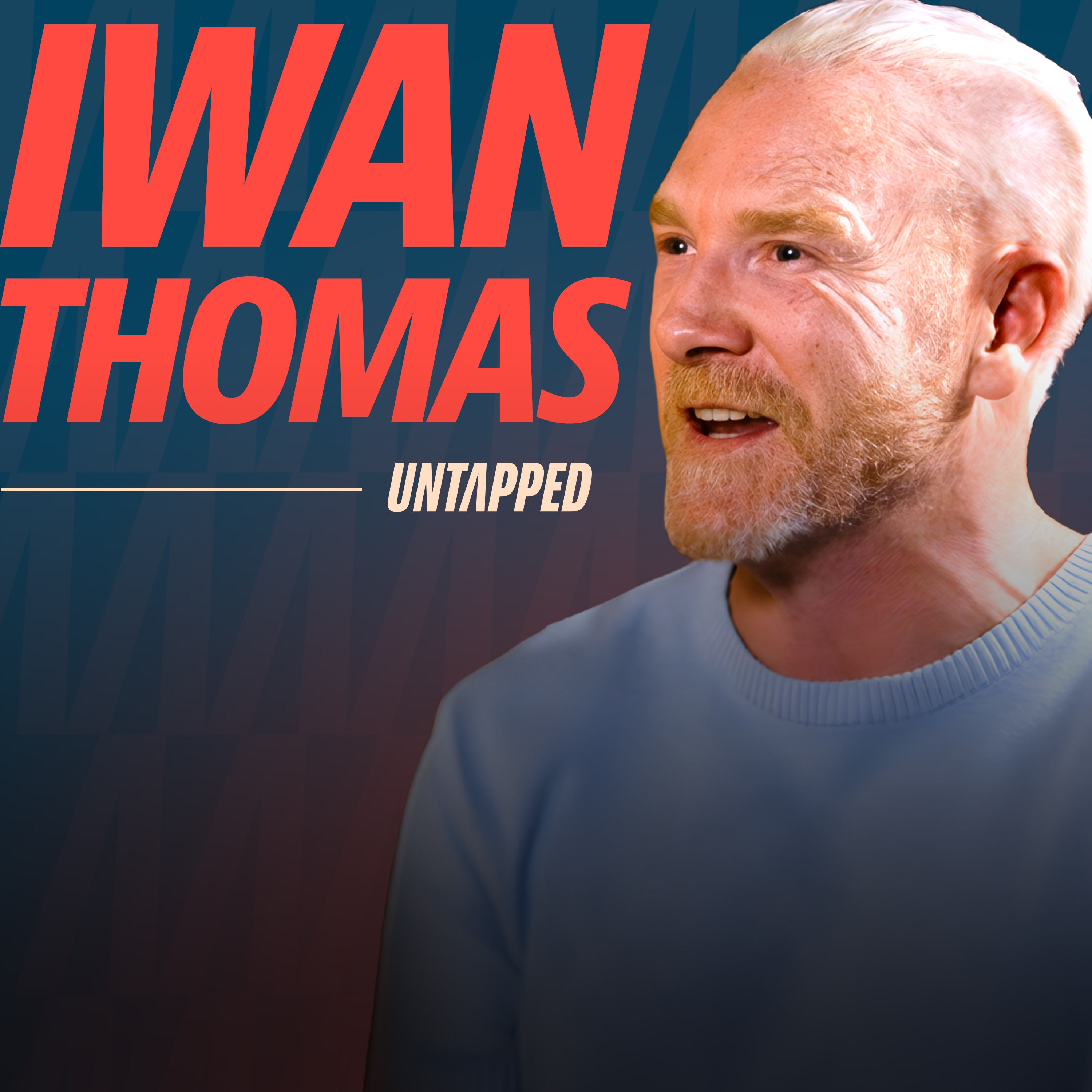
Ewan Thomas, Britain’s elite 400m runner, discusses his Olympic/World-level training mindset, race tactics and splits, a major 1997 World Championships mistake vs Michael Johnson, and the long-delayed awarding of a 1997 relay gold due to doping. He also reflects on training “sadism,” injury-driven identity collapse, and mental health, plus his views on doping testing in Britain.
Ewan Thomas is an Olympic 400m runner and European/Commonwealth champion. He set the British 400m record in 1997 (44 seconds) and won major titles in 1998. He later received a 1997 4x400m gold medal nearly 28 years after the U.S. team’s doping case.
Race pressure starts hours before the blocks; he “glided” on the back straight and digs in over the last 50m. In 1997 he attacked Johnson too hard, led at 200–280m, then dropped to sixth. He says he never suspected doping personally; Britain tests heavily. He describes a dark period after injuries, including thoughts of disappearing.
1997 World Championships (lane 2 vs Johnson lane 4); 1998 season (European champion, World Cup, Commonwealth Games); 1997 U.S. 4x400m doping involving Antonio Pettigrew; receiving a “plain” gold medal decades later; Matthew Hudson Smith breaking his British record.
Written by AI. May contain mistakes.
Ewan discusses his Olympic training, achievements, and notable races.
“It's a great pleasure to meet you properly.”
Ewan describes the process and experience of having a wax figure made.
“I thought, oh, that was great, it's going to last forever.”
Ewan elaborates on his mental approach and physical sensations during a race.
“because the year after I got it, I started getting injuries.”
Ewan shares insights on the physical and mental challenges of racing.
“So people will talk about lactic acid in the 400.”
Ewan recounts a memorable race where he misjudged his strategy against Michael Johnson.
“Hey, I've got the campaign brief ready, built from last quarter's data and the competitive landscape.”
Iwan discusses his intense experience and tactics during a critical race.
“And I got to about 280 and I was still winning.”
Iwan shares how he first discovered his talent for the 400 meters.
“there's no way I'm going to feel like I'm running through sand in the last 100 metres this year.”
Iwan recounts his rapid ascent in athletics from school to international competitions.
“what made you enter that particular race?”
Iwan reflects on the doping scandal involving the US team and its impact on his career.
“I mean, it's amazing that you've received your gold medal, but it's also remarkable that it took so long.”
Iwan Thomas shares his views on doping in sports and his personal experiences.
“But I'd like to think in Britain, we have such a strong system in terms of, I actually think many ways.”
Iwan reflects on his training regime and the intensity he embraced.
“Have you always loved training and pushing yourself as hard as you can go?”
Discussion on the psychological aspects of pushing oneself in sports.
“I bet he's not throwing up and he's certainly not walking up 97 steps.”
The conversation explores the relationship between running, growth, and dedication.
“And although that will likely never be possible for a normal human of my age, you know, something like a sub three hour marathon is quite achievable.”
Iwan discusses his feelings about his British record being broken.
“Yeah, but I think it's a wonderful thing and also I think we're probably both fortunate in the sense that we enjoy the training.”
Iwan talks about the impact of injuries on his identity as an athlete.
“25 years by 100th of a second Was it kind of painful in any way?”
Iwan opens up about his darkest moments and the importance of seeking help.
“My dream was to, you know, one day try and, you know, make a living out of something I loved doing, which was running from A to B as quick as I could.”
Iwan Thomas shares his struggles with identity and mental health post-athletics.
“Because, not right, but at the time, it just felt like my world was ending because what I did was ending.”
Iwan discusses the pressures from his father and reflects on parenting his own children.
“Do you feel athletes nowadays get enough support for post career or with their mental health?”
Iwan highlights the lack of mental health support for athletes post-career.
“Just three kids, that's the only noise I get.”
Iwan shares tips on challenging oneself and being kind to oneself.
“And if you want to hear more incredible conversations with extraordinary people to help unlock the potential within all of us, then please subscribe, follow and review the show wherever you're listening or watching.”

Get the gist, explore an idea or ask about something said.
 Claude
On UNTAPPED with Spencer Matthews, what are the key points of this episode?
Searching your listeningAutomatic transcript. May contain errors.
0:00I'm Spencer Matthews and you're listening to Untapped, where elite athletes and inspirational people show us how we can untap more of our potential. This week we're joined by Ewan Thomas, Olympic 400m runner, European and Commonwealth champion, and one of Britain's greatest athletes. Ewan's career was built on an obsession with training harder than anyone else. He spent years chasing glory, only to be cheated out of a World Championship gold medal that he finally received nearly 30 years later. I can't wait for you to hear Ewan's story. Let's get Untapped with Ewan Thomas. Ewan Thomas, welcome to Untappd.
0:32Thanks for having me. It's a great pleasure to meet you properly. Yeah. I think our paths have crossed a little bit. We have. I've met you a few times, but never sat down like this. No, and looking forward to it. I mean, you're an incredibly accomplished athlete. And I'd love to go through some of those times in your life. I mean, you're several times over world champion, European champion. What would you say the height of your achievements were? the 44 seconds 400 meter record. I think the British record in 97 was obviously on paper the fastest I ever ran, but I actually had races where I think I could have run quicker than that.
1:09And it's a weird one in sport. Sometimes when you're running really relaxed and you don't think you're running that fast in a qualifying round, you look at the clock and you think, what? That was easy. But I think for me, my best year undoubtedly was 1998. So in that year, I became the European champion. I won the World Cup and I won the Commonwealth Games all over the 400 individual, as well as relay goals as well. And, you know, was runner-up to Michael Owen in sports personality, had a Madame Tussauds waxworks, all these kind of things that, at the time I'm young, I took for granted. I thought, oh, that was great, it's going to last forever.
1:40And unfortunately, the human body doesn't last forever. And I subsequently got lots of injuries a year after that. And I think looking back, 98 was the year where I look back and think that was the best year of my life on a track. That's incredible. What was it like to have a Madame Tussauds wax made of you? Bizarre. Very bizarre because when they wrote to me, first of all, my initial reaction was, wow, it was such an honour because I was voted by the British public to be in there. And then when they came round, they put me in this turntable, had me in these skimpy little pants and put little dots all over my body.
2:13And they literally, I'll say this politely, they measure everything. They literally, everything is so exact. And then they brought out a box full of eyes. I was like, what's going on? And they have to match your eyeballs up. And that was bizarre. I think I was melted down pretty quickly though, because the year after I got it, I started getting injuries. So I only visited my waxwork once. So let's go back to 1998 and your running highs. I would love it from your perspective, if you can take me through the feeling and sensation of one of your best 400 meters. So how do you feel on the line? are you calm or are you excited?
2:55And do you almost feel like you're wasting energy in the anticipation? And what do you do to calm yourself? Or do you even want to be calm? I'm really interested to understand how you are at the start line. And then I'd actually love to be taken through kind of each hundred meters because I'm at the track a lot. And obviously I'm nothing like you. No, listen, you're an animal. I know how fast you can run. You get it though, you get it. I understand it, but I'd be interested I'd be interested as a total amateur in comparison to you, kind of how you break down your split, even if you have splits, and how you feel as you're going around the track.
3:31But start with the start, please. Well, the start actually starts hours before you get on the running blocks. It genuinely starts when you get on that bus from the hotel or the Olympic Village to the warm-up track because that's when you see your rivals for the first time. And that's when you can win or lose a race. It's not a case of the best athlete on the day is always going to win. Sometimes it's a person who's the toughest up there. And I used to love seeing my rivals, be it on that bus or the warm-up track, hours before you actually race, because I could get in their heads. And there was athletes I raced who I would leave alone.
4:03The Michael Johnsons of this world, don't even look at them. They're in the zone, they're doing their own thing. But there were certain athletes who I knew, if I almost looked slightly bigger in warm-up, so I'd literally stand like a peacock and I'd think, right, I reckon I look six foot four. I'm not, I'm six foot two, but I could look at them in a certain way and I'd be listening to music and, you know, I would be able to definitely affect their performance before they'd even gotten the block. So the race would start long before the start. But if you're talking the physical race, you've done your warmup, you're physically warm, you're ready.
4:35This is a time when you then have to say goodbye to your coach. There's no listening to any music. There's no phones. There's no contact with the outside world. It's just you versus your seven rivals. So you go to the first call room, you're then taken to a second call room. Normally, you'll have to get on a bus from that call room to the main stadium. And that's another time when you can just stare at your rivals. But sorry, it's taking me back. I used to love competing. Genuinely, I would turn into a different person when I get to race day. And anyway, you get to the starting blocks, your kits come off, the whistle normally goes wherever country is, a whistle which indicates take your kit off and then there'll be a kit carrier who takes your kit and then you might have one last glance at your rivals and although you shouldn't look at them because you're just doing your own thing I was very self-aware of where my main rivals were if I was in lane four Johnson was lane five you know let's say Butch Reynolds was in lane three I'd know all my rivals and how they would run and I would not allow them to affect me some athletes would go off a lot harder some would get into their running a bit more smoothly but you're getting your blocks at this point I'd be really fired up but I'd be trying to hold that nervous energy as well and i used to always just remember telling myself i've trained harder than anyone here i want it more than them and i've no doubt we'll talk about training later but the sacrifices i would make through training hard in the winter i would always remember that so i'd get in the blocks i'd look around i'd be pumped up but i'd also try and just hold that in a little bit and basically as soon as that gun goes it it doesn't matter what you've done prior to that it's it's all there and then and the noise of the crowd you have to block that out but basically I would get up to running quite quickly so the first sort of 50 metres you would be sprinting like as fast as you can go getting up to speed as quick as you can and then you'd come off the first bend and then down the back straight so you're into the second 100 you try and relax but not slow down so when I say relax you've got to just totally be at ease with yourself ignore everyone around you take momentum and I would know exactly how fast I was running and that wouldn't be a pre-planned race strategy with my coach.
6:37It wouldn't be like go through the first 110, seven, then relax, do 11 flat. But I would get a feeling of my body and I'd know where I was at down the back straight. And the back straight was my favorite part of the race because you're not fatigued at all. And you just feel like you're floating. When you're running well, it doesn't feel like you're trying hard at all. And I would literally glide down that back straight. And I, myself and Roger Black have got a very long stride length compared to a lot of other athletes. So it would feel like I was eating up the ground. You'd have someone like Jamie Balsh, it was a lot smaller, it was cadence was good, little stride length, was I would just be galloping past him.
7:10I would just feel great. And then you get to the 200 metre mark. Of course, you're halfway now, but this is a point in the race where you don't want to switch off. You have to really start to concentrate because you've spent the back straight maintaining that speed, but not fatiguing yourself. So you're actually relaxed at speed, but you are running quicker than it feels. And then that top bend is a part of the race where I used to just love to wind it up a little bit, start thinking about my race and then normally I would see the steeplechase barrier which is 150 meters to go and that would be my point like let's go so you work hard you work hard for that 50 meters so you'll know the track really well so you come into the home straight off the top end and you and you're feeling great now you're flying 300 meters you'd go through at about 30 31 point something and I knew it all comes down to that last 100 meters really unless you are up against and Michael Johnson, who was better than all of us, you're pretty much all eight of you of a very similar ability.
8:05But I felt what I had more than anyone. I felt I had the ability to dig in. And I didn't fear pain. In fact, I thrived off pain. So people will talk about lactic acid in the 400. The last 50 meters, it hurts. It's all heart. But I used to love that. So 50 meters to go, the race is really on now. And I would never look at the finish line. I would always look at 10 meters past the finish line. Because I thought if I'm concentrating on finishing there, then I'm already telling my body I'm nearly done. I'd look 10 meters past. And sometimes I'd look for a face in the crowd, someone who looked quite nice or someone familiar, and I'd just focus on that and I would blank out any pain.
8:43And I used to just tell myself, if I'm hurting, they're hurting more. And one race I remember where I really had to dig in, it wasn't the quickest race, it was a World Cup in South Africa. And it was any time in my career I can honestly say I was thinking about the money, because that was a good prize money. So it was 50 grand for first. it dropped down to 30 for second and then 20 for third I remember there was three of us in the line and I remember just thinking you are not losing this money and I just dug in and yeah you go through the line and quite often when you've run a fast time you don't feel that tired it's hard to explain of course you are but the adrenaline is still going and you come through the finish line and if you've won a race you just feel on top of the world and likewise if you've lost you're just you're gutted you can never control what your opponents do.
9:29I used to, you know, come off a race. I wouldn't mind losing to Michael Johnson if I've made a good account of myself and I've run really well, I've executed my race and I'm absolutely blowing at the finish line and I'm knackered for what I couldn't have done anymore. I can't control them. But if I'd ever finish a race where I've not run well, I'd hate myself. I'd like literally, I'd go back to the hotel in a right half and I just couldn't wait for the next race to redeem myself. But yeah, the 400 metres hurts but it's a nice hurt. Please do follow or subscribe to the show wherever you're listening.
10:01It only takes a moment, but it makes a huge difference to us. We have truly incredible guests every single week, and you wouldn't want to miss an episode.
10:11Therapy's biggest impact doesn't show up in some dramatic breakthrough. It shows up in the smallest moments. You bite your tongue instead of escalating. You put your phone down instead of firing off that text. You say what you actually mean instead of what would hurt someone else the most. Nobody applauds those moments, but they quietly change your life. That's what growing feels like, and that's exactly what Grow Therapy is here for. Grow is therapy that works, covered by insurance. Sessions average$21 with insurance, and some pay as little as$0, depending on their plan. There are no subscriptions, no long-term commitments.
10:48You just pay per session. Grow connects you with thousands of high-quality, licensed therapists across the U.S., offering both virtual and in-person sessions, nights and weekends. You can search by what matters, like insurance, specialty, identity, or availability. And you can book a therapy session in minutes and begin in as little as two days, not the national 48-day average. See if you could pay as little as$0 for therapy in seconds at growtherapy.com slash start now. That's growtherapy.com slash start now. GrowTherapy.com Start now. Availability and coverage vary by state and insurance plan.
11:30Hey y 'all, Kelly Clarkson here with Wayfair. You know my favorite compliment during the holidays? Your house feels so cozy. That's when I know everyone's comfortable enough to kick off their shoes, grab more dessert, and stay a little longer. Wayfair makes it easy with everything from dining furniture to festive guest room essentials all in one place. So whether you're hosting for an afternoon or all weekend, everyone feels right at home. Get holiday guests ready at Wayfair.com or on the Wayfair app today. Wayfair, every style, every home. Hey, I've got the campaign brief ready, built from last quarter's data and the competitive landscape.
12:05Approved? Oh, agents, where would we be without you? Somewhere with a lot more tabs open. Create your first Monday agent in minutes at monday.com.
12:19how quickly can a race go wrong you know not talking about um injuries or things that you can't control you know like in your mind when you come out the blocks because obviously the 400 meters is just one lap yeah but it's also nearly half a kilometer it's it's you know it's longer than you think it is can it go wrong early yes or you know because obviously the last 50 meters can be painful, but can it go bad early? Yeah, I've got a great example for you and it pains me to this day. I'm proud of how I approached this race, but I also totally messed it up. So it was the World Championships 1997.
12:55Michael Johnson was definitely beatable that year. He'd been injured and I'd got the British record. I was in the shape of my life and we were running really similar times. Now, with all due respect to Roger Black, the year before in the 96 Olympics, he'd famously run for second. I wasn't going to try and beat Johnson. I was in that race. I did try and beat him, but I was nowhere near him. But that year, 97, Johnson was beatable. No one had ever tried to attack him. So I thought, I'm going to put him under pressure. I had lane two. I'm not saying it's easier nowadays, but in my day, it was a lot tougher in terms of we had four rounds in four days.
13:26He had heats, quarterfinal, semifinal, final. You know, it was brutal. Four 400s, consecutive days, is tough. But I felt I could beat him. And I remember I had lane two, he had lane four. And I just thought, I'm going to go to him. I'm going to go the first 100 flat out. I'm going to put him under pressure. and I remember I went out so hard to put this into perspective. My PB for 200 at the time was 21-1. I went through Athens' 400 final in 20.7. So I've caught Johnson up. I've caught the stagger up at 200 metres. He glanced across thinking, what the hell is this idiot doing? And I got to 200 and I thought, I'm taking him today.
14:00I'm flying. I got to 250 and I thought, uh-oh. And I got to about 280 and I was still winning. I was about six metres in the lead. and I remember the great David Coleman saying, Ewan Thomas is relying on strength now and I went from first to sixth in the space of five metres. I was gone. It's like someone had jumped on my back and I was running through sand and I remember with 100 to go thinking, you idiot. And I could have easily run and got a silver medal but I was going for gold only but I misjudged it so much. Instead of going slightly faster, I just went flat out and I just thought, I bet he buckles under pressure and he didn't.
14:39but my legs buckled and I came sixth. And I was ranked two in the world that year. And I was devastated. It must be so hard to control, though. Like, I guess that is, that's the task. Because you can all run faster than you are going over a shorter period of time, right? So it's kind of, it must be so difficult to control it, even on a completely different distance. So take a marathon, for example. You know, the best strategy you can have in a marathon, statistically is to set off quite a lot slower than your average marathon pace should end up at. So say if you're going for a sub three marathon, which, you know, is a 4.15 pace, you know, 4.14, if you want to be safe, you know, you should set off at like a 4.20, 4.25 and get comfortable at that pace for a little while and then, you know, build it in and then end strong and then end fast, you know, and it's kind of like you're really rolling the dice, obviously.
15:36That's hard to do it when the crowd, you know what it's like, the crowd are there, your adrenaline. Really hard, and probably feel great, but you pay for it later. It's discipline, but... But it's even more, the margins so much less in what you do, like getting it right, playing your opponent. It's, I find it incredible. I love watching the 400 and 800, because it's actually so tactical. I'm not sure people who just, you know, watch athletics kind of fully understand what's going on on the track. I think people think you always turn up and like you said earlier, it's just one lap. How hard can it be?
16:08But I think for me, if I hadn't messed up so badly in 97, I wouldn't have had the great season the following year. Because to give you an example, in the European Championship final, Mark Richardson was in lane six, I was in lane three and he went off really hard in the European final and the old me would have chased him thinking, catch him up. But I knew he'd gone off too hard. He was scared because I was inside, the lane inside him. So I held back a little bit and I won by over half a second. So I think if I hadn't had the sheer disappointment of 97, and also the fuel and the fire that gave me throughout the whole winter of 98, I carry that pain.
16:40And I remember thinking, there's no way I'm going to feel like I'm running through sand in the last 100 metres this year. And I trained so much harder. Even though I used to train like an animal, 90, 98 winter, I honestly, I held that pain. It was pain. It was mental pain that I put myself through by messing up the world champ final that the following year I wasn't going to lose. I learned from my mistake. What was it about the 400 metres that attracted you to it? Obviously, it's what you were best at, but how did you discover that? Well, my life story kind of goes back to school sports day. I did five events on sports day.
17:16I won all five events. I broke all five school records. But the last event was the 400. And I've got a wonderful picture of me coming through the finish line. And the other guys are about 80 metres behind. And I just thought, wow, I must be the best at this. and the PE teacher saw I had a bit of talent, entered me into the county championships the following week over 400. I won that and then I went to the English schools. I came second and before I knew it, I was in Korea at Seoul at the World Junior Championships. I was going, what on earth am I doing here? I didn't even train. So the 400 kind of chose me if I'm honest.
17:46I would have liked to be a 200 meter runner, but I wasn't quick enough. So yeah, the 400 and me were just perfectly matched because as I said earlier, I had the right balance of speed, endurance, strength stupidity and guts I had it just right for the 400 the team managing the night before had to show me where the changeover lines were on the track and everyone was saying to me you know the likes of Darren Cramble Paula Radcliffe Jamie Balsh all these athletes who've been training for years as youngsters were saying to me what club do you belong to I said hey I don't belong to a club who's your coach I haven't got a coach I literally I came back from the world junior championships and everyone was thinking who on earth's this kid like I was straight out of school I'd done school sports day I think two 400 metre races and I was on a world stage with the best athletes in the world thinking I don't belong here.
18:32That's insane. Yeah, it happened really quickly for me. And you just not run 400 metres at school before. I hadn't done athletics. You just nuked everyone and became like straight away that's a crazy story. Should we make a film? My love was BMX racing so as a kid I went to the world champs two world champs fourth in the Europeans at BMX racing. So because I did BMXing, yeah, that's about it. Can you juggle? Not very well. I was quite good at rugby as well at school. Rugby, football, BMXing, but athletics found me. In the end, it was the right move. I find it absolutely astounding that that's kind of how you were discovered.
19:12Yeah, sports day. Sports day? Yeah. Kevin Johnston, my PE teacher, if it hadn't been for him, then I wouldn't be here talking to you as an ex-athlete. What made you do the sports day? what made you enter that particular race? Were you aware that you were fast over that distance? Yeah, I knew I was pretty good. Basically, it was just a bit of a grudge thing, really. My parents had moved abroad. They'd sent me to boarding school. I didn't want to be there. My older brother had gone to that school. He held the school 100 and 200-meter records. So I knew I was going to try and beat those. And I said to the PE teacher, can I try five events?
19:44He said, no one's ever tried five in one day. So I said, what events work with the timetable? So I did high jump. I won that school record 100 metre broke my brother's record won that 200 won that long jump won that 400 metre last race of the day thought I'd give it everything I've got and I absolutely spanked it and yeah and here I am as an ex-professional 400 metre runner just crazy I genuinely think that that is just so funny if it hadn't been for my PE teacher I wouldn't have been an athlete and he died recently bless him so he was a massive inspiration to me he saw something in me that I didn't I just thought I'd beat my brother's school records.
20:22I'd phone him up, have a laugh. But I ended up breaking five records and I think four of which still stand and that was like 30 odd years ago. And so when you're in Seoul, just quickly, you're looking around. Did you have a... Arrogance is the wrong word because there's a fine line between arrogance and confidence and people's ability. You said you felt like a bit of a fish out of water. You didn't use those words. Imposter syndrome. I didn't feel I belonged there at all. I actually said to people, I've only done school sports in a couple of races, but I'd run quick enough. Once again, the stopwatch doesn't lie.
20:56I'd run faster than other kids in the country. I was selected. And a few people were put out by that as well. You had quite a few athletes who'd been training for years and years. He was his kid. Never heard of him. But was it the kind of naivety that was exciting? So like when you lined up, I guess you had nothing to lose. I suppose the innocence of youth and I had no fear. I had nothing to prove. I went to this World Junior Championships. I never thought I'd even do athletics when I got back. I thought, oh, this is a good story to say what I did in the summer. And then I went back from there, went to university, started to train a little bit, ran even quicker, progressively got better and better, and, yeah, became the British record holder.
21:31But, yeah, when I went to the World Junior Championships, it definitely was a fish out of water. I didn't know what I was doing. Do you find that the pressure becomes different when you are expected to win? Yeah, definitely. there's a different it's easy to be an underdog and to believe in yourself and to shock people but when you're at the top everyone wants to beat you and when you're expected to win that's a definite different pressure but I also feel pressure was something I used to thrive off as well it was only pressure's only what you put on yourself and I liked it people were talking about me and saying I wonder how quick he's going to run today I've heard he's been running well in training that was something I liked and I also like the doubt I was going yeah I've heard he's had a bit of an injury he's not going to win this one I used to love that.
22:16There's nothing better than a bit of doubt for fuel. I love it. You have a remarkable story. You won silver at the World Championships in the 400-meter relay. Was it in 97? No, it's seven. Yeah, seven champs. The US team that won were doping. Yeah. And you've just received your gold medal 28 years later. It's crazy. It's amazing. I mean, it's amazing that you've received your gold medal, but it's also remarkable that it took so long. Can you go into the story a bit more? Were you aware of any wrongdoing by them at the time? No, not at all. And the athlete actually who failed the drugs test, Antonio Pettigrew, rest his soul, because he very sadly took his life over this whole incident.
22:58So, yeah, we'd just lost out to America in the 4x4. They'd beaten us a year before in the Atlanta Olympics, and we'd got even closer at the world champs. And I remember Pettigrew was a very, I mean, I'm no expert on drugs, but he didn't look like your big, average, bad skid. He was like a whippet, this pedigree. He was skinny. So when we found out he'd failed a drugs test, on the one hand, I was fuming because anyone who would outdo me of a medal through cheating, I've got no time for. But I actually respected him because he wasn't caught in 1997. He was caught three or four years later. And he put his hand up.
23:30He said, look, if I'm going to be honest, I was cheating back in 1997. And he didn't need to do that. So respect to him for being honest. But it was a bit of a bittersweet because as you said, it took 28 years for us to get that gold medal. We didn't have our moment in the sunshine in Athens. We didn't do the lap of honour as British champions, world champions. We lost out on sponsorship money. I personally lost out on a big bonus from my shoe sponsors at the time. So it's a bit of a hollow victory, really. And also, the more I get into it, it gets worse. So our gold medal, so every medal you get from a major championships, it will have some significance to that country.
24:06So the Athens medals, our silver was beautiful. It had Greek mythology on it. and the actual medal itself is pretty beautiful looking. So I thought when we were going to get the gold, great, the Americans are going to physically give back the gold medals or the IAAF will take a mould from those gold medals and we're going to get that. The medal we got was actually just almost like when you get at Christmas, like a chocolate one. It's just a plain gold medal with a stamp on it saying IAAF World Champions. So it doesn't even... Why would they do that? I don't know. That's really... Well, not on.
24:36No, it's disappointing. Yeah. And it's difficult because I'm still involved with the sport, so I can't be too critical. But my only thoughts of why it took so long is because maybe they just didn't want to highlight drugs in sport any more than they have to. But in a weird way, although it took so long, it was really nice how it happened because in 1997, if I'd been world champion, I would have been a 23-year-old semi-arrogant athlete who would have gone, yeah, cool, I'm a world champion as well. I just would have loved it at the time, but that would have been that. But the fact I'm now 51 and my parents were in the stadium when I got the gold medal, my boy Teddy was there and I actually physically gave him the medal, he still got it.
25:16It was quite nice that I could share that moment in front of 60 ,000 British fans and my family, whereas if it happened in Athens, I would have just been on my own. So yes, of course, we deserved it back then, it would have been great. But in a weird way, I say I'm a bit wiser now, a bit more mature. It was quite nice for my family to witness it. was the gentleman who took his own life was that as a direct result of this do you think? I believe so yeah I believe so when the news broke that he'd failed a drugs test and we were going to be awarded gold he sadly took his life very soon after that so you know my heart goes out to his family because yes sport has been a part of my life it's massive but I'd never wanted anyone to you know lose their life over something the guilt he felt it's powerful stuff that that even all these years later, he felt, you know, the guilt to do that.
26:08It's horrific because he genuinely was a really good guy as well. You get to know athletes on the circuit and Pettigrew was someone who I admired as an athlete and I liked as a guy, you know. And yes, they stripped us of a gold medal that was rightly ours, but I'd rather have him here still and the silver medal. You know, it's sad.
26:32Hey, y 'all. Kelly Clarkson here with Wayfair. You know my favorite compliment during the holidays? Your house feels so cozy. That's when I know everyone's comfortable enough to kick off their shoes, grab more dessert, and stay a little longer. Wayfair makes it easy, with everything from dining furniture to festive guest room essentials all in one place. So whether you're hosting for an afternoon or all weekend, everyone feels right at home. Get holiday guests ready at Wayfair.com or on the Wayfair app today.
27:27Wayfair, every style, every home. covered by insurance. Sessions average$21 with insurance and some pay as little as$0, depending on their plan. There are no subscriptions, no long-term commitments. You just pay per session. Grow connects you with thousands of high-quality, licensed therapists across the U.S., offering both virtual and in-person sessions, nights and weekends. You can search by what matters, like insurance, specialty, identity, or availability, and you can book a therapy session in minutes and begin in as little as two days, not the national 48-day average. See if you could pay as little as$0 for therapy in seconds at growtherapy.com slash start now.
28:09That's growtherapy.com slash start now. growtherapy.com slash start now. Availability and coverage vary by state and insurance plan. This is Nick and Jack from The Best One Yet, and we are excited to tell you about Walmart Business. Staying ahead of business trends means moving fast and adapting quickly. Walmart Business helps you simplify operations so you can focus on building the next big thing. Find exactly what your organization needs with their ever-expanding business assortment and everyday low prices. Keep your momentum going fast with reliable shipping and fulfillment. Eligible organizations can take advantage of tax-free shopping, both in-store and online, saving you more while getting you everything you need.
28:48It's Walmart built for your business. Sign up for a free Walmart business account today at business.walmart.com.
29:00What is the current state of doping in athletics? Is it like it used to be? And was it very prominent? It's a weird one because people often ask me that, like, did you see any wrongdoings? and I honestly didn't. Athletics is a very individual sport so it's not like you train with your rivals, you've got your own little training group. So I never even heard rumours about any athletes who might be taking this or that and I never used to line up looking at people with any suspicion. Maybe I'm ignorant to it or a bit naive but I used to honestly line up and look at my rivals and think, yeah, we're all the same, we're all clean, I wonder who's better today, who wants it more.
29:38And I think it's very sad. Unfortunately, sport is big business and people will always try and bend the rules to become quicker, faster, stronger. And unfortunately, because of the financial rewards in sport, people will push the boundaries. But I'd like to think in Britain, we have such a strong system in terms of, I actually think many ways. I was tested so much more than many people. I think almost like a policeman who has to catch enough people for speed and they have to get their quota of people. I think British athletes get tested a lot and perhaps a lot more than in other countries. So I'd like to think 99.999 % of British athletes wouldn't even think.
30:19I mean, I was brought up to do the right thing. I can look in the mirror and say to my kids, your daddy's an Olympic silver medalist. Well, you didn't get a gold daddy. No, I didn't. But I know everything I did in my career was totally legit, totally clean. And I can't really obviously speak for everybody else. People will burn the rules. But I'd like to think the sport is in a good place. Have you always loved training and pushing yourself as hard as you can go? Yeah. I miss it. When we were talking earlier about some of the stuff you do, your range of strengths and speed and stamina, everything you do, there's a slight tinge of jealousy, if I'm honest.
30:54I wish I was your age and still my body able to do what you do because I used to love training. I'd go to training and I'd know the session and whereas some of my group might go, oh, shit, we've got six frees tonight or four minutes recovery. I'd be, yeah, bring it on. I love it because I know I'm going to be sick tonight and I know this is harder than Mark Richardson or Roger Black is training and I used to love training hard. In fact, maybe I'm not quite right in the head because where I used to train, there was three car parks and I used to park at Southampton Ski Centre and all my mates would say, why don't you park by the track?
31:26He said, get out of your car, you're there. I used to make an excuse that, oh, it's a bit less private, I'll park somewhere else. The truth is, I used to park where I park because I knew it was something like 97 steps down but more importantly 97 steps back up to my car and I know my rivals wouldn't do that and if I wasn't at least sick once during training and then having to stop and puke up the steps on the way back then I hadn't trained hard enough so I used to love the fact that my quads would get an extra workout just walking back to my car there was something almost sadistic about 400m training that I miss today that I still train hard, I still try and push myself but those days when I was in my mid-20s it was like I was an animal at training I'd miss it so much I do love that feeling of not being able to give anymore like you know to your point the vomiting I think if I'm being honest I haven't thrown up in a while because I feel you know my fitness is about on track with what I need to deliver at the moment right so but I still you know I'll go to the track and I'll really push myself to the point where it's you know difficult to walk home type of thing you're retching though yeah oh yeah I get some retching I try not to run my 400s on a full stomach anyway I don't even know if it's good I shouldn't be saying it's good to be sick at training but all I know is my coach was very old school and when I trained it was a lot less scientific than it is today and I truly felt if my legs weren't on fire and if I wasn't throwing up two or three times after a session and I couldn't get off the track for half an hour I was flat on my back for half an hour then I hadn't trained hard enough and maybe that's incorrect but in my head I'd think what's Michael Johnson in Texas doing right now?
33:07I bet he's not throwing up and he's certainly not walking up 97 steps. And that was my mentality. I bet he's not throwing up. No, he was better than me so I had to train harder than him to even try and compete against him. So that was my way of, my approach to training was everything. And in the long run it wasn't good because I had three good years and then my body gave up on me. But it's interesting your use of the word sadistic because it's obviously you could use that in many ways, but enjoying pushing yourself beyond what's reasonable or like accepted socially. Like if, you know, if I'm running a really hard 10K in Battersea Park and I bend over, you know, to vomit on the side of the pavement, you'd get people looking at you like, you know, you're pushing yourself too hard or whatever.
33:55But I agree with you that unless you're feeling that, that's where the growth is, essentially. It's when you simply can't give any more. You're spent. Your body's having to adapt to manage high-pressure situations like that so that when you next push the exact same session, maybe you'll feel a little bit less sick because your body's done it. So you have to push even harder to achieve the same sadistic results. you know but it's there's nothing and running is is one of these beautiful things i see it in a similar category to kind of jujitsu right like the longer you give to it the more you turn up the better you're going to be right like i used to look at people who could run sub three-hour marathons as aliens right because it's just like i couldn't hold that pace for 500 meters and you just go how are they doing it for 42k you know like like in the same way that you might look at a Mo Farah or a Kipchoge and go, how are they running 21 kilometers an hour for two hours?
34:56You know, it's just insane stuff. And although that will likely never be possible for a normal human of my age, you know, something like a sub three hour marathon is quite achievable. If you just turn up and you do the work, you know, and you just give yourself to the sport, the same way you'll be a black belt in seven years. If you turn up to jiu-jitsu four times a week, you know, you're going to get your black belt. Simple, you know, and it's like you will get your sub three hour marathon if you put the time in. Talking to you as a really elite athlete who's achieved things that ordinary people can't, it's not quite the same.
35:30You can't go and become a world record holding 400 meter guy. No, but the beauty of running is the stopwatch doesn't lie. So you can progress and I can't run a sub three marathon, but when you do it, you're going to probably say to me next time, I'm going for 245, I'm going for whatever it might be. And you can measure how good you are and that's what I liked about athletics it doesn't matter if the selectors didn't like me if I ran quick enough they've got to pick me and you don't have to like my personality I might be a bit loud for you when I finish a race but you can say he's bloody good though and that's the beauty of doing something like athletics you can prove yourself and you know going back to the training how hard it was I mean we can go really deep on this but I don't know whether it's a form of self-harming pushing yourself that much or something else is missing in my psyche in my personality I'm trying to prove myself to my dad to myself I don't know what it is but I genuinely even to this day really miss not just the buzz of competition but the pain of training and as you said finishing a session when you know you've absolutely given your all I mean not everyone can do that you have to be slightly different up there you need to be able to switch on there and and and that's something I miss and I still try and find that that buzz if you want that acceptance but yeah, sport was a way for me to express myself and training was a way for me to just prove myself every day.
36:49Yeah, but I think it's a wonderful thing and also I think we're probably both fortunate in the sense that we enjoy the training. I think I chat to some people who run really fast marathons but they don't really love running so they're doing it for like a different reason. I really enjoy running. I enjoy training hard. I enjoy being in physical good condition and healthy and I think it works well for mental health as well, looking after your physical body. But I always find it funny that when I chat to some people who just don't like, you know, training's a chore to them and they'll do it because, you know, they know that it's good for them but actually they don't love doing it.
37:26And I think I always feel, you know, quite fortunate that I enjoy, you know, pushing myself through the mill. It just reminds me of a story actually, the British champs this year. There was a 400 metre runner after Farnham. He was chucking his guts up. He was throwing up. and I saw him and I went over to him, tapped on his back. I said, you'll miss this one day. He went, what are you talking about? I said, you'll miss it one day. And I now look back and I think you get to an age where you can't push your body quite as much as you did. And I think he got it when I sat him down. I said, one day you won't be able to do that, mate.
37:54One day you won't be able to run a personal best and push yourself this much. You'll be old and your body won't allow you to do that. And it's, yeah, like you said, it's, for me, I don't understand the people who don't enjoy what they do because for you to get the best out of yourself, you've got to more than love it. running was my life and it's given me a wonderful life and I owe it everything and sport is great I don't get how some people don't enjoy sport whether it's watching it or playing it but I think it's mega When Matthew Hudson Smith ran 400 metres and beat your record that you held for over 20 years 25 years 25 years by 100th of a second Was it kind of painful in any way?
38:39Or was it exciting and interesting that somebody else has come along and who's performing at that level? Can you remember how it felt? Yeah, I remember clearly. And people might be surprised by this. But genuinely, it was great. It had become a burden in a weird way. I had the British record so long. And everywhere I went, especially at athletics meetings when I'm working, I get introduced as you and someone still the British record holder. And it was hanging over me in a weird way. I've moved on from that now. You know, I was an athlete, but there's more to me now. I'm a dad. I do all sorts in my life.
39:10And it almost was like, at last, someone's got it. And I genuinely was chuffed for him. Yes, on a selfish note, it's nice, and it's in an arrogant way to say I'm the fastest Briton ever. And it was nice to say that, but time's come and go. I'm honestly happy for him, and I'm surprised I had it for such a long time. There were a number of athletes over the last 25 years who came and tried to get it and got nowhere near it. So it was about time. and he's a good guy so I'm happy for him but obviously it was nice to have it but yeah it's got to move on and you know we can go on and I can sit like an old man and start talking about the running spikes they use nowadays and the carbon plates and you know but no for my time I had it for a long long time and I was really proud of that but I'm proud the event has moved on When your identity was tied more to just being an athlete you know Britain's fastest 400 metre runner how frightening was being injured from time to time because obviously the wrong injury could end a career did you ever have any thoughts around what might come next if the wrong injury happened at the wrong time you know taking you out of your prime say yeah no I wish I had sort of looked at the bigger picture at times when I was injured because when I was injured I never really thought about anything apart from getting back to being the athlete I once was.
40:32And when that became evident it wasn't going to happen because my body couldn't handle training more than three days a week, I got into a real dark place for a long, long time, of which I didn't speak about at the time. I just bottled it up and, you know, it was really hard because all I ever wanted to be was an athlete. All through university, I didn't really want to be at uni. I went because my parents wanted me to. My dream was to, you know, one day try and, you know, make a living out of something I loved doing, which was running from A to B as quick as I could. So when that looked like it was going to be taken away from me, it was really difficult in terms of, you know, I talk about the British record going and it was a nice, it was a burden to me.
41:08But on the same hand, you know, I was an athlete. So when I lost that identity through injuries and eventually when I had to quit, that was the toughest time, I think, really, not knowing what I was going to do. Because I was an athlete. That's what I wanted to be. In your book, Brutal, you talk about a particularly dark moment in which you reference wanting to disappear. what did you mean by that and can you elaborate on it i was just really low i'd been through the highs when you know i'd won just about everything and then i was injured and i remember watching the championships on tv and i just thought i don't even know if i want a beer anymore because i couldn't see a life without track and field i couldn't see who i could potentially be without being you and thomas the athlete it was such a big part of my life it was my identity so when And it was slipping away.
41:56I just thought, I don't even know if I want to be here. Because, not right, but at the time, it just felt like my world was ending because what I did was ending. And without that, who am I? But I now look here and sit here with three beautiful kids and think, I can't believe I even contemplated not being here because there's so much more to me than athletics. But at the time, I couldn't see through it. I couldn't see a way out. well in the moment were you considering ending it i i i was sat on the edge of the solent and i'd just been watching the major championships on tv and i never ever drank at home but i was drinking on this occasion and i remember i threw the empty bottle into the wall and i just thought i'm just going to go in after it who's going to care and loads of people would have cared and i think the most selfish thing out of all of this is i never reached out for help because i saw asking for help as a sign of weakness.
42:53I now see it as a sign of strength. But back then, I just felt I couldn't open up to my family. I didn't want them to worry. I couldn't open up to my close friends. I didn't want them to know how dark I was feeling because they all saw me as this happy-go-lucky guy. You know, I was always the life and soul of the party. And on the track, I was the big, strong guy. That's the guy in lane three, the big, tall, blonde guy. He's going to win it, you know. And without that, I just thought, I've let everyone down. I just felt I was letting people down and if I didn't have sport there was no point being around and that's that's not right at all but at the time that's how I felt I just wanted to be brutally honest in the book about how on the one hand sport has made me but it also physically and more importantly mentally broke me and I think people quite often write books autobiographies and they're about oh look at me I was young I was talented oh look how great I didn't want to be that person.
43:43I wanted to write a book showing the darker side of sport, showing the loneliness, the pressures, the depression, stuff that comes with it, because it isn't all happy. And yes, it has brought me many great memories, but sport also brought me some really dark times. So in the book, I addressed that. And I actually was quite worried when I wrote the book about how it would affect my family. I talked very honestly in the book about how strict my father has been with me, still is, how I often felt as an athlete, nothing was ever good enough, I could never please him, you know, I win the European Championships by over half a second, everyone's like, oh my God, it's amazing, my dad was like, well, you could have run a bit faster, why did you ease up and the back straight, and it was his way of keeping me on my feet, he's ex-military, and it's the way he is, he's a different generation, but in the book, I was very honest about my relationship with my dad, and I was very worried how he would receive that, and I didn't tell him before the book came out, and when he read it, in a strange way, it's brought us closer together because you know he didn't realize he had made me feel like that in parts of my life and it addressed some certain issues and it was it was very good for me to write the book that's wonderful yeah that must have felt like uh a small a sort of small risk with your relationship no like a big risk yeah a big risk i should have i should have told my dad and other people what i was going to put in the book but my fear if i'd done that then they said oh don't don't put that and change it and I wanted to be brutally honest about everything on this and I'm not going to sit here and say I've come from anything but a very privileged middle class upbringing but that doesn't mean it wasn't tough and it doesn't mean that I didn't find growing up very very tough at times and I didn't feel the pressure of sport because I did and I just wanted to let people know that it's not all rosy and yes medals are fantastic and yes when you win it's great but when that phone does stop ringing and when that life stops it was tough as well interesting again in the past we've spoken to very high performing athletes who also had you know what they would describe as a father that pushed them George Russell recently came on and said you know despite also having a wonderful upbringing that his father would like tamper with his lap times to make him think he was slower yeah which i think was you know and then obviously you think of really famous examples like the williams sisters and you know whoever else but you know how much for how much of your father being militant on you contributed to you being the athlete that you turned out to be do you suppose everything truly do and now that i'm a dad I look back and I think all my dad ever did was his best and acted and brought me up in the way that he thought was best for me and I think now that I've got three young boys I can totally see it he's so different with my boys though it's wonderful to see he's an amazing he's an amazing dad first and foremost but he's an amazing granddad as well and I think he's probably learned from I hate to say the word mistakes but he's probably learned from the way he brought me up and he's different around my children but I'm very grateful to my dad for the way he was because let's just say perhaps my dad was full of you know credit and oh well done you've run 45-2 that's amazing son it wasn't 45-2 wasn't good enough so if he hadn't pushed me I wouldn't have run 44-3 perhaps and you know I've got brilliant parents and luckily they're still around and I love my mum and dad dearly and although my dad was very tough on me I think he's helped shape the man I am.
47:17Do you feel athletes nowadays get enough support for post career or with their mental health? Are athletes supported, do you think? Not enough. Definitely not in my day. I think they're very far and few between athletes who finish on a high. So you'd have someone like Jessica Ennis Hill who finishes on Olympic silver and says, I'm going to retire now. And especially in my sport of track and field, there's probably a very small amount of athletes who've made enough money to say that's me. Like a Mo Farrell would have done very, very well out of it. But yet he still continues to be busy because he's a winner in life.
47:52But most athletes will have to find themselves. They'll have to find another job. They'll have to find another career. They'll have to find themselves and reinvent themselves. So I don't think the governing bodies out there really do enough for athletes towards the end of their career because it's almost like you're a commodity. And when you're done, you're retired. That's fine. He's gone. Let's find the next 400 metre runner to run for Great Britain. Who's going to win us more medals? and you're forgotten about. And I think for me especially, because I didn't have that closure and I didn't finish on my terms, I had a lot of years where I didn't know what I was going to do and I had no support whatsoever.
48:27No one would ever check up on me. So I was saying, you know, perhaps you should think about this post-sport or, you know, we're here if you need to talk to anybody. I'm sure some sports do provide that form of service, but I think it's no surprise for me anyway that a lot of people have mental health issues after sport because you've gone from such a high, whether you're a Premier League footballer scoring in front of 50 ,000, earning an absolute fortune, or you're an athlete winning a medal in front of 100 ,000, that buzz when it's gone is very, very hard to replace. The silence is everything.
48:59You know, I used to love the noise of the crowd and I don't get that noise anymore. Just three kids, that's the only noise I get. You know, so it's really difficult to replace that. And I think if you don't have something set up or a great network around you, a great support network, be it loved ones or work colleagues look out for you, it can be a really, really lonely place when you stop competing. It's a dark place. Well, I think your career speaks for itself and you'll always be remembered as a legend. I hope so. Thank you. Kids bring you down to earth very, very, very easily. I ran a 10K yesterday and I don't know where I came, but I was right near the back and my kids were like, Dad, you didn't even win a medal.
49:38You didn't even win it. I said, I did get a medal, but you weren't top three. No, I wasn't. But no, I feel very fortunate to sit here and to speak to brilliant people like yourself, having made a living out of something I truly love doing. I would have been an athlete for nothing. It never was about money for me. It was about being the best version of myself, trying to make the British public proud of me, trying to win medals. And that was enough for me. So to have made an actual living from something I love doing, I said I wasn't religious, but I'm blessed. I'm very lucky. We like to ask all of our guests for some actionable tips for our listeners to untap more of their potential.
50:18So things that people can do in their daily lives to live a better, fuller life. What would your tips be? Always challenge yourself. I think set realistic goals. Don't set yourself up for a disappointment. For example, if you say, I'm going to go and try the 400 meters after listening to this, you're not going to run 44 seconds or if you do you're in the wrong job you need to be professional but I think just challenge yourself and also be kind to yourself as well I think we're all very self-critical and the world we live in it's very easy to compare with other people or did they say comparison is a thief of joy and I think we live in a world where we want to be as good as we can be but I think be kind to yourself as well and if you do something well it's all right to applaud yourself.
51:07Give yourself a break. But do something that scares you as well and do something that challenges you. So, you know, if you've never run a 10K, go and enter a 10K. Just do something where you can be proud of. Look at yourself in the mirror and do something every day that makes yourself proud. Ewan, thanks so much for joining us. Thank you. I don't know if that was the right action. It was lovely. Yeah, I just think be nice to yourselves. There's enough horrible people out there. So do something every day where you challenge yourself physically and mentally. And when you do it, tell yourself, well done.
51:40Thanks so much for listening. We hope you enjoyed that episode. And if you want to hear more incredible conversations with extraordinary people to help unlock the potential within all of us, then please subscribe, follow and review the show wherever you're listening or watching. Thanks again. We'll catch you next week right here on Untappd.
52:06So you're not worried about hosting the whole family for the holidays? Why would I be? Wayfair had everything I needed to get the house holiday ready. What if Mike brings his cheerful dogs? My tree has tons of five-star reviews telling me how sturdy it is. But what if everyone's plus one brings a plus one? We'll see how extendable this extendable table really is. And extra chairs are on the way. Okay. What if there's a blizzard and everyone has to sleep over? Ready to go with extra bedding and towels. From guest-ready essentials to holiday decor you can trust, Wayfair delivers. Hi, this is Monica Reinagle of Nutrition Diva.
52:40Today's show is sponsored by Nature Raised Farms. Grocery shopping can be a little overwhelming, especially if you're reading labels. And in my opinion, chicken shouldn't be complicated. Which is why I appreciate Nature Raised Farms. It's chicken that's just chicken. And their lightly breaded chicken nuggets are free from gluten, dairy, and soy. Look for nature-raised farms on your next grocery trip and feel more confident about your choices. Hello, I'm Monica Reinagle, host of the Nutrition Diva podcast. Summer is here, and with it, the hot and sticky weather. A morning working in the garden, or maybe on the golf course, can leave you more depleted than you realize.
53:19And plain water isn't always the most efficient way to restore the balance. That's where Liquid IV comes in. Its science-backed formula is clinically proven to hydrate faster than water alone. Whether you're exercising, playing outside, or simply surviving a summer heat wave, it's an easy way to stay hydrated. Shop now at liquidiv.com. Liquid IV, hydration that goes wherever life takes you.
Olympic 400m champion Iwan Thomas opens up about the mindset and methods that made him one of Britain’s fastest ever athletes.
In this episode:
🏃♂️The brutal training regime behind his 44-second 400m record
🔥 What it was really like to line up against Michael Johnson
💉 The hidden truth about doping in athletics
😫 How to push through pain, control adrenaline, and train smarter to run faster
💔 A raw conversation about mental health and dealing with the darkest moments in sport, including the lowest point of his career
Whether you’re chasing your next PB, curious about Olympic-level training, or want to know the untold stories from athletics, this conversation is packed with lessons you can use today.
WHOOP 👉 Join Spencer in untapping your own potential with 1 month free here: https://highpfrmc.com/Whoop-au
Heights 👉 Stay sharp like Spencer, with Vitals. 20% off Heights with code UT20 https://highpfrmc.com/ut-vitals-au
Hosted on Acast. See acast.com/privacy for more information.