Ask ChatGPT
 UNTAPPED with Spencer Matthews
7 Sep 2026 · 56m · 21 chapters
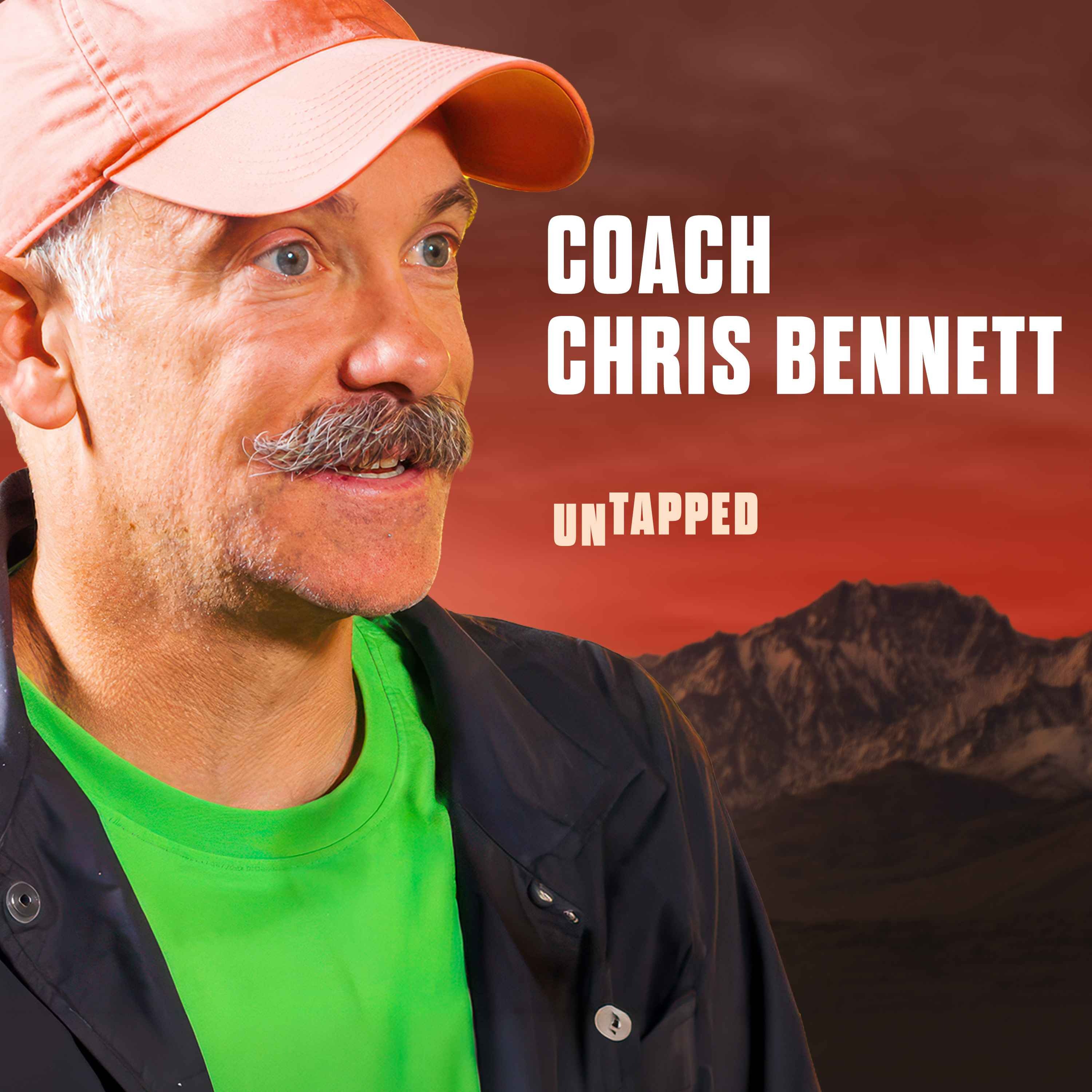
Comparing elite performances (Josh Kerr’s mile vs Sebastian Sawe’s marathon) and extracting training/mental lessons from world-record attempts; then broad coaching philosophy on goals, potential, flow, and cross-discipline running (track/road/trails).
Bennett, Nike’s running head coach (former Nike Farm Team coach/athlete at Stanford; coached post-collegiate runners). He discusses performances by elite athletes including Josh Kerr (elite miler targeting world record in London), Sebastian Sawe (marathon time comparison), and others (Safan Hassan, Yomif Kejelcha, Andy Butchart, Matt Centrowitz, Sebastian Coe, Hisham El Guerrouge).
Great performances require vulnerability and being open to failure; “race your best” matters more than chasing the clock; honesty about uncontrollable factors (weather, sleep, illness) doesn’t excuse underperformance; “personal record” vs “personal best” (tactical/proudest race) differ; potential is about how close you get to what you can do now, not just the fastest time.
Kerr’s world-record pressure in London; Centrowitz’s Rio 1500 as his “best race” despite a faster 15-year-old time; Matt Centrowitz’s 349 vs 330; comparisons of track vs road potential; goal-setting context (course/weather differences like Chicago vs New York).
Written by AI. May contain mistakes.
A discussion on the relative excitement and difficulty of marathon versus mile performances.
“Whose performance, albeit very different, do you think is a better and more exciting human performance?”
Exploration of the pressures athletes face when aiming for world records.
“I don't know what it's like to run that fast.”
How vulnerability influences athletic performance and the potential for failure.
“And as you mentioned, we are in the golden age of miling.”
Discussing various external factors that impact an athlete's performance on race day.
“You have to fully go in and say, here I am.”
An explanation of how personal records differ from personal best performances in athletics.
“You don't know you've run your fastest until enough time goes by where you realize that was my fastest.”
Learn about the differences between tactical and fast races, and the mindset of athletes during competitions.
“It's ridiculous, but that was very slow.”
Discussion on the most impressive distance runners of today and the evolving landscape of running events.
“I would probably have to say Safan Hassan would probably be the one that comes to mind.”
Insights on the benefits of cross-discipline training and encouraging athletes to explore different running events.
“I was in a, and still am, in a long term relationship with the Pegasus.”
Exploring the advancements in running shoe technology and their impact on athlete performance over the years.
“Maybe we'd do some, like, push-ups and stuff, or we'd go to the weight room, and it was like, let's bench and see how much we can bench.”
Understanding how athletes can define their limits and set reasonable goals based on their training and potential.
“But I think the next step is going to be this.”
Explore the nuances between marathon performance and potential, emphasizing the importance of context.
“And I knew some 410 milers that blew me away that they could run 410.”
Discuss the concept of potential, emphasizing that it's an ongoing journey rather than a fixed point.
“Speaking of potential, this show was originally, when I was conceiving it, going to be called Untapped Potential.”
Understand how finding joy in running can enhance performance and mental resilience.
“The point is, is that potential isn't just one thing.”
Learn about the importance of focusing on personal bests over strict timing metrics in races.
“So the key is to understand like you play football, like you play tennis, like you play all these other sports.”
Learn to prioritize racing your best over focusing solely on time.
“They were running the times I wanted to run at the start.”
Understand how to set realistic yet challenging goals for athletes.
“And how important is it for the goal to be achievable and reasonable?”
Explore the deeper life lessons that running can impart beyond physical training.
“It's in respecting all the work you've already done.”
Discover how to maintain a positive relationship with running and yourself.
“And I thought also maybe if you can learn these things, because I'm biased, I think runners are great people.”
Understand the coaching philosophy that empowers runners globally.
“Yeah, the titles are kind of ridiculous.”
Learn about the coaching philosophy focused on empowering runners and its global impact.
“But the option is if you want to come on Monday, great.”
An introduction to Workday as the AI platform enhancing business operations.
“Guessing is for game shows, not your business.”

Get the gist, explore an idea or ask about something said.
 Claude
On UNTAPPED with Spencer Matthews, what are the key points of this episode?
Searching your listeningAutomatic transcript. May contain errors.
0:02Whose performance, albeit very different, do you think is a better and more exciting human performance? Sebastian Saue's marathon time or Josh Kerr's mile time? Oh, that's tough. I was asked last night at dinner and immediately I kind of, my mind went straight to Saue. It's like, you know, that's obviously harder. But then, of course, you then deliberate on it and it's probably not as straightforward. And I thought, well, I can't believe I'm with you tomorrow. So you're the perfect person to ask. Yeah, I don't know if there's a right answer. So this isn't a cop-out. I think this is just reality.
0:40I think when you're comparing two things like that, which for me are like works of art, okay? I think a lot of times sports can cross over into art. And I think both of those performances are works of art. So it would be like asking, you know, what's a better, you know, Cure song, just like Heaven or In Between Days. And I'm going to say emphatically, it's got to be just like heaven. And someone else is going to say, are you kidding me? It's in between days. There is no way to break the tie, right? I mean, so I would say depending on the mood I'm in this morning since we were already talking about the mile, I would probably go with Kers.
1:18But I'm also biased. I trained to run the mile. I don't know what it's like to run that fast. I know what it is to train as hard as you can and to race as hard as you can and to see the time on the clock. I also know how hard it is to pick a day and say, I'm going to do this. I think with Kerr, the extra expectation was he said he was going to try to break the world record. And the mile world record has been around for over a generation. I mean, we're going back to Hisham El-Garouge. There have been a lot of great milers that have not done it. than to add the extra expectation of the crowd. He did it in London.
1:57So you're almost setting yourself up for failure in that situation. But I think anytime you say you're going to try to break a world record, you are almost guaranteed to fail. Why do you think he's setting himself up for failure being in London? Well, because you're, well, one, you're setting yourself up for almost, you know, the guarantee of failure because you're saying you're going to break a world record. So the odds are against you because it's the world record. And for over 25 years, no one was able to do it. Now, you're saying on this specific day in front of a crowd that is anticipating, hoping that I'm going to do it, and in some ways expecting I'm going to do it because I called my shot, you are putting a lot of pressure on yourself.
2:43So the added pressure you have to deal with. It's such an incredible clip. I just loved watching it so much. Oh, it was absolutely incredible. And I think his last 150 was, I mean, still, it was a visceral kind of reaction to watching it. So anytime you watch a world record, it's incredibly special. A lot of times you're just as surprised as the athlete is because many times the best way to compete is not to be chasing the clock. It's to be just competing with the athletes that you're with. But again, he from the gun was chasing this greatness. And then with 150 to go, there was no one left to chase.
3:24And that's really difficult. And you could make the same case in the marathon. Okay. I mean, the marathon, obviously, it had a barrier, which was two hours. But Kerr was chasing a barrier as well, which was the world record. So again, I'm sure there are listeners saying, you got to be kidding me. It's 42.2K. You got to go with the marathon. But it's not the distance that decides the greatness. You know, it's what you have to do to cover that distance that decides the greatness. So don't immediately assume that the longer is harder or that the shorter is tougher. So that's a very relatable thing to understand in running, that shorter, faster distances, you know, can be far more punishing.
4:02I think that the general assumption when you look at running is longer is harder, which of course isn't true when you actually dig into it. You know, like crunching out the hardest possible 5k that you can achieve is harder than running a marathon that you're not racing. You know, you can run a marathon holding your mate's hand, having a chat, you know, like obviously that's easier than really exerting yourself. As a coach, as, you know, Nike's head coach, how would you break down Josh Kerr's performance? What went into that moment for him? Obviously, he's been one of the best milers for a very, very long time.
4:47So there's been a lot of consistent excellence with him. Okay, so that's the first thing. And as you mentioned, we are in the golden age of miling. I mean, again, you have to go back to the late 70s, early 80s, I think, for the last time to just look at this diversity of characters that you have here that on any given day are running times that 10 years ago, you would have by far been the best miler on the planet. And now you could be fifth, sixth, seventh, or eighth in a race. But in order to do what he did, and by the way, remove the world record from this equation. This goes to anybody who is lining up for a marathon or a 5K or a 10K or their first 1 ,500 on the track at 16 years old.
5:29If you want to do something better than you've ever done before, you have to be vulnerable, 100 % vulnerable in order to get 100 % effort. which means you have to have your arms wide open and take shots. And what I mean by that is you have to be okay with the fact that odds are you're not going to be able to achieve this because everything is stacked against you. The odds of you doing the greatest performance you've ever given on this day, it's a very small percentage of a chance that you can do that, which means you have to be okay with failing. And you can't protect yourself. You can't be defensive.
6:09You can't be guarded. You have to fully go in and say, here I am. And if I fail, I'm going to fail in an extraordinary fashion. And that's what's beautiful about sports. Sports gives you the opportunity to have a safe environment to fail in an extraordinary manner. But that line of failure and success, that's the line that you're running on. If you want your greatest possible success, you have to be totally open to the fact that this is most likely going to lead to failure. That's what was so exciting to watch was that he was riding a very, very thin line. And a second in this direction or in that direction, it could have led to missing the world record by a second or five seconds.
6:53And that's what I'm always fascinated about is that somebody can put it all together on one day. Because if you imagine in any other aspect of your life that you say, all right, nine months out on this specific day, I'm going to do something better than I've ever done before. Now, you could say, all right, well, now we have to train towards that. Yeah, but it's not just the training. I mean, think of all the other things that go on in your life. Think about a conversation you've had over the previous nine months that devastated you, that stressed you out. Think about the fact that you hung out with a friend and five days later, you're like, my throat hurts.
7:27And your friend's like, hey, I just found out I have strep throat. And you're like, oh my goodness, you gave me strep throat. You could be on a plane and two rows in front of you, A guy named Frank can sneeze, and now you're at 95 % as opposed to 98%. And that's the difference between the world record performance and being three quarters of a second off. And here's the other thing. When you're that close to giving the best performance you've ever given, that doesn't mean you're going to continue to be able to give performances like that. That might have been it. And now you're always going to be close, but never that close again.
7:59You just don't know. You don't know you've run your fastest until enough time goes by where you realize that was my fastest. So to put it all together is extraordinary. And I think to me, anytime I see somebody that's willing to put it all on the line, that's what I'm most fascinated about is that all of these things can come together. It takes an incredible amount of strength, and I don't mean physical, and it takes an incredible amount of courage to say that I'm going to try.
8:28Hi, it's Brooke DeVard, host of Naked Beauty, and I want to talk about how I upgrade my hosting experience. There's a moment just before guests arrive when my home stops feeling like a series of rooms and it becomes an atmosphere. The light settles, the air shifts, and then the beautiful scent of jasmine, rose, and fig fill the air. It feels warm and considered. That's what Pura does. It turns fragrance into environment. A collection of beautiful, clean fragrances, all controlled from your phone. Choose your sense of place at Pura.com. This ad is sponsored by ZocDoc. Hi, it's Danny Pellegrino from Everything Iconic.
9:00Have you been putting off that annual doctor's appointment because you don't want to make the call? Or maybe you've been meaning to find a new dentist, but you have no idea where to start. I find that's especially true when you move. It's hard to find your people. I've been there, which is why I use ZocDoc. Now, as a busy podcaster, parent, and someone who's always juggling a million things, I love anything that makes life easier. and ZocDoc lets you search and compare local in-network doctors with over 250 ,000 providers across more than 200 specialties. You can read reviews from real patients, find a provider who feels like the right fit, see actual appointment openings, and book instantly.
9:35I recently had a last-minute health issue pop up and needed to see someone fast. Instead of calling around or sitting on hold, I found a doctor on ZocDoc and booked an appointment in just a few minutes. It made the whole process so much less stressful. Now, taking care of your health just got easier. Download the ZocDoc app today. That's ZocDoc, Z-O-C-D-O-C, and book that appointment on your to-do list. Losing weight can feel like a roller coaster, full of ups, downs, and being thrown for loops, like when someone brings donuts into the office or your kid's dino nuggets start giving you that look again.
10:11That's why there's Noom. They combine GLP-1s to quiet the food noise with healthy habits that help you keep it quiet, even if you get off the meds. Their program is designed to make weight loss a smooth ride, helping you understand what drives you, so you can build better habits to not just lose weight, but keep it off. Noom. Lose for keeps. Get started at Noom.com. Not all customers will clinically qualify for medications. Individual results may vary.
10:41so how do you coach mentality around all of that when there's so much on the line and when you know we'll move off josh kerr in a second but it's a great example right because it's it's just so hard right to pull off sure what he did i'm assuming he he can't allow all of these things to to get in his head or it may affect his performance well i think first it's it's it all comes with honesty. I mean, and as I mentioned, you have to be okay with the fact that this might not work out. I mean, and that's, again, I think that's just the reality. As a coach, I used to always tell my athletes when I was working with athletes, like on a day-to-day basis, and they were heading into competition, that my goal as a coach was to get you to the starting line with the opportunity, the chance to achieve what you want to achieve.
11:26What happens on the other side of the starting line, I have no control over, and you only have some control over. I mean, the weather plays a part. The people that you're competing with play a part. You know, the psychology of you that morning plays a part. How your sleep was last night and the night before, and two days before, and five days before, it all plays a part. All of these things are going to factor in to how that performance is going to go. All we're trying to do is get you to a point where this might happen. So you have to be okay with the fact that it might not happen. But do you think that by being okay that it might not happen, that it almost gives you an option to fail?
12:10I think that there's a lot of room there for discussion. I don't think being honest that this might not work out means that you're giving yourself an excuse to not give your best. I think those are two very, very different things. I mean, I think it's very important to understand that if, using Josh as an example, if it was 15 degrees warmer that day, is he going to grit his way to the world record? No way. If it's really windy that day, is he setting the world record? I don't care how tough he thinks he is. If there's a 20-mile-an-hour headwind, he's not breaking anything. He's not even breaking a personal best.
12:50So the reality has to be taken into account. And the reality is, no, there's no guarantee you're setting the world record. There's just none. I don't care how mentally tough you are. What you want is to be mentally tough enough to say, regardless of the situation, I'm going to give my best, which is why there's a difference between your personal record and your personal best, which your personal record might be the fastest you've ever run. Your personal best would be the best race you've ever run. They're not always the same thing. I mean, a great example would be Matt Centrowitz, who was a great American runner who won the Olympic gold medal in Rio running 349 for 1500, a time that he ran when he was 15.
13:27So if you were to ask him, what's your best race that you've ever run? And he says, well, the fastest race was 330. Okay, was that your best race? And he'd say, no, I mean, the strategically savviest, grittiest, toughest, most exciting race I'm most proud of, my best race was probably Rio. Because I was surrounded by athletes that were as good as me or better than me. And I raced better than every single one of them on the one day that it mattered most. And I'm the Olympic champion, and I will be forever. That's my best race. Yeah, but that's 19 seconds slower than your fastest race. So my point, 19 seconds is crazy.
14:06It's ridiculous, but that was very slow. It was incredibly slow because it was a tactical race. It was a championship race. It's not always super fast. So my point is, if you're not being honest with the athlete, then guess what? you are ready to do this, okay? It doesn't mean the time is going to reflect your fitness. That's just reality. I mean, if the pacing is off by just a second and a half, there's only so much that Kerr can do at world record pace to make that up. The point is, if you know that, okay, it might not work out, but that's not an excuse to try your best. You see, I think an athlete is more willing to say, I don't care what's going on.
14:43I don't care what the clock reads. I don't care how hot it is or how windy it is. I'm going to race my best. And that may not mean the clock says the same thing as your goal. But your goal should first and foremost be, how do I race my best? Who is the most impressive distance runner in the world right now, in your opinion? It's a great question. I would probably have to say Safan Hassan would probably be the one that comes to mind. She could be world-class at the 800 meters all the way to the marathon. I don't think there's anyone else in the world that has that kind of range. Kajelcha's 56-minute half marathon recently, 56 and change.
15:22Yeah, incredible. It's difficult to comprehend it, you know. Are there many people out there in a similar kind of range to him at the moment? In the half marathon? Probably not. You probably have people that could potentially be in that range or still running on the track. You know, we have a unique sport where we have different disciplines. So obviously there's the track, there's the roads, there's ultra. And sometimes, I would imagine, it makes sense, that you're going to have some of the best road runners are not running on the road. They're still running on the track. And in the past, there's kind of been this trajectory where once you feel like you've left your opportunity behind you to really be one of the great track athletes.
16:13You move to the roads. What we're seeing now is a lot of people kind of moving just immediately to the roads. There's a lot of money there. There's a lot of excitement there because of the half and the full and the running boom that we're in. But there are a number of very, very good track athletes that you imagine would, if they crossed over to the roads, would they be able to do this? I think that's where you're going to have to find probably the next generation of great athletes. They're going to be challenging sub two in the marathon, 56, 57 minutes. It sounds incredible in the half, but they're probably right now running fives and tens on the track.
16:47Andy Buchat is an extraordinary athlete. I think he has aspirations now to take stuff out to the road. I love him as a character and as a runner. It's interesting that the two almost feel like different sports. They are in many ways. Yeah, they are. Which I think is exciting. And I think the masses of runners don't understand that this entire sport, which is inclusive of the track and the trails and the roads, are for them. Most people that are introduced to the sport as athletes, they're introduced to the roads. And they think the trajectory for them is, well, I'll build up enough endurance to eventually do 42.2K.
17:29As opposed to thinking, you know, you can race on the track. Oh, I'm not that fast. Stop with the diminishing of yourself. Like the track is a ton of fun. You can buy some spikes. You got some around here. You can get on the track. Cross country is awesome for you. Ultras are great for you. Trail races are great for you. There should be more crossover. I would love it if the elites crossed over more. I would love it if we saw more track athletes jump onto the roads, if we saw some of these great marathoners and half marathoners step on the track. Because one thing that we would see, which I think would also be good, is we would see these titans of the road in many cases get slammed on the track.
18:10And then you'd see the track athletes get on the road and get slammed on the roads. And I would love for them to meet and cross country and get muddy and then try some ultras. Like I think we need more crossover. I just don't know if the masses understand that all of these starting lines are open to them. And I think it would be great if some of the elites, if you're listening, maybe you can lead the way. You're wearing Vamiro pluses. I am. Are these your, is this a long lasting love affair? This is new. This is kind of early in, I will call it a love affair. I was in a, and still am, in a long term relationship with the Pegasus.
18:50That was the first pair of shoes I ever got when I was just a kid. I mean, I was a nerd like most boys are. So I was into like mythology and Clash of the Titans and all of that stuff. And, you know, Pegasus was a winged horse. I was like, I'm in. I don't care. I want those. And Joan Benoit Samuelson, who had just won the 84 Olympics in ads, she was wearing Pegasus. I'm like, this is it. Like, this is the shoe I want. And that was years and years and years. You can do the math of how many years I was basically just rocking the Pegasus. And it wasn't, there were other shoes that I liked, but there weren't any shoes that really, you know, caught my eye enough to say, Peg, I'm going to maybe investigate this.
19:32The Vamero's, I must say, it was hot and heavy right off the bat. You know, we went straight from flirting to basically almost like moving in together. And now I'm in this, you know, it's a throuple. And I'm trying to get the Pegasus to realize like, hey, sweetie, it's 2026. You got to be open to this. So now there's me, there's the Pegasus, and there's Vomero. And personally, I've never been happier. I'd like to believe the Vomero and Pegasus are okay with this situation as well. How far have shoes come? So if we're looking at Nike as an organization, which makes sense in today's episode, How impressive are old performances based on what was available 15, 20 years ago?
20:18We were talking about Seb Coe. Is his, you know, 800 meter performance more special than today's athletes because of the lack of tech in the shoes? And just how different are today's shoes versus, say, I don't know, call it 10 years ago? Well, first, that's a question that comes up a ton because we're having all of these incredible performances today. And everyone loves to try to say, well, what's better? Was it, you know, Coe's 800 in 1979 or the one we saw two years? I mean, I wouldn't say that one's greater or lesser. I would say that it's equal. The performances are equal. If you were the best half miler in the world in 1979, how are you going to say that the best half miler in 2026 is greater or lesser?
21:06I mean, you could play the game of, well, if Coe knew what everyone knew now and had access to all these things, he would run faster. Well, they are running faster now. So maybe Coe would be running as fast as they are. We don't know. And you can do vice versa. If the athletes today had to go to 1979, knowing what they know today, would they be at a disadvantage? Sure. Sure. But if they don't know, and they're training to their fullest, I don't think you'd see much difference in times. I don't see that. Like, you have to remember, everything has its own error. And to compare what's going on, well, now we have to break down, like, are they eating the same?
21:45Are they sleeping the same? Are they working out the same? Like, you can't say the athletes look stronger today than they do in the 80s. Well, of course they do. They're working out more. When I was running for Nike, I ran for a post-collegiate team. It was called the Nike Farm Team. It was based at Stanford University. It was a group of about 30 athletes after college that were – it was an Olympic development team. I wasn't trying to make the Olympics. I was never going to be that good. I was trying to make the U.S. Olympic trials. So I was like a step down. But I remember after about two years of training with this Nike professional team, Stanford University's team, which was the best collegiate team in the United States.
22:24They came to practice. We shared a track with them, and they led us through drills. We hadn't done drills. We're talking about hurdle drills. We're talking about agility drills. We just ran. Maybe we'd do some, like, push-ups and stuff, or we'd go to the weight room, and it was like, let's bench and see how much we can bench. We didn't know. These younger runners that were conceivably, you could say they were at a lesser level than us because we were professional, but some of them were faster than even we were. But they were younger than us. They had been doing this. they introduced to us this idea of it's about more than just running you're going to need to do drills you're going to have to be a better athlete there's a lot of ways to become stronger that are before and beyond the finish line of your runs and you know it was mind-blowing to me think wow I haven't been doing any of this and we were terrible at it you know these young athletes were perfect balance going through the hurdles and we were stumbling over them but what we thought was, wow, if we're this bad at this, imagine how good we're going to be when we get good at this.
23:25And it's the same thing. Yes, Coe ran remarkably well, incredibly well, 141 in the 800. I mean, this is ridiculous times. Would he have run 139 now? Maybe. Are we going to see a 139 pretty soon? Yeah. Would someone running 141 today be able to run 141 in 1979? I don't know. Maybe, maybe not. All I know is that if you're the best in 79, I think that's equal to being the best in 2026. When you said that you weren't chasing the Olympics, you were chasing the trials because you weren't good enough. Yeah, I wasn't. What was the difference between you and them? So, I mean, you're an exceptional runner, an amazing coach.
24:10What's the difference between your standard and getting to the Olympics? Well, I mean, there's a whole host of things. Some of it was talent and talent in a number of different ways. Some people were just naturally faster than me. Some people were naturally stronger than me. But some people also worked harder than me. Some people had a better mindset than I did. Some people were far more consistent in how they ran and how they viewed the sport and how tough they were on themselves and how kind they were to themselves. I mean, there was a whole host of things. It wasn't just one thing. There was also not just one thing that led me to where I was in terms of my position in the sport.
24:50And it wasn't me sacrificing any performance or future in the sport to acknowledge I wasn't going to run 332. I wasn't. There's nothing wrong with understanding you have limits. We all have limits. I realized that I had limits, but it didn't limit me. How does one define their limits? So if you are a confidence, ambitious person and you set your sights on something, when is it reasonable to place a limit on a goal? Well, I think you have to place a limit on the goal based on the training that you can do right now. So I can't train right now. If we imagine I'm 22, okay, and I just run 343 for 1 ,500 meters, okay?
25:39That's like about a 401 mile, all right? Which you have done. Which I have done. So if we imagine I'm just that kid again, and it's now time to sit down with my coach and say, what's next? And I say, well, I just ran 343. I want to start training to run 330. My coach would say, you can't do the training to run 330. And to personalize this for people out there, if you've just run 358 in the marathon, and you're super excited about it, and you're charged up, and it's your first marathon, and you're thinking, all right, I just ran 358 in the marathon. I want to train to run 220. Your coach is going to say, we can't start training to run 220.
26:17We can start to see if we can make the physical adjustments to run 340 maybe because you're running four days a week. I think we could probably, in a healthy way, add an extra day. We're going to add the volume. We're going to add a little intensity. You're going to have to add some recovery and some lifestyle changes. But I think the next step is going to be this. Some lifestyle changes. You don't just say, you know what? But because I've got great willpower, I'm going to start running 220 marathon training. That's not how the world works. So I know it's great on a poster. You have no limits.
26:51But this also is not a knock and it's not something that says like, I'm going to destroy your dreams. It is, I think, if you want to reach your potential, you have to live in the here and the now. And that's the only person that can train. It doesn't mean that you can't run 220, but we can't start running to do 220 right now. I know it's just an example that you're using, but is 220 where you see the kind of cutoff for normal people? I see 220 to 230 as the kind of, you know, you're a very, very serious, you know, runner who is not elite. I look at how you measure performance a little bit differently.
27:35All right. And I'll give you an example. I had friends that were sub four minute milers that I thought were not as good runners as people I knew that were 405 or 410 milers. And the reason why was, and again, this is to me a measurement of potential. So both these people are committing their lives at this point to run a mile as fast as they can. I knew that some of these 358 milers should be 350 milers. They were that good. And I knew some 410 milers that blew me away that they could run 410. I thought, there's just no way you're going to be able to run 410. Just the tools in your toolbox lead me to believe 415 at best.
28:19So when I'm comparing the 358 miler to the 410 miler, yes, the 358 miler is a faster miler. The 410 miler, though, is a better miler. and to me that's the more elite miler yes faster means faster it doesn't always mean elite the way i define it now yes you can look at some of the greatest milers in the world or the greatest marathoners in the world but there are people who run 217 and it's their full-time job more or less and there are people who run 222 that will finish five minutes behind them so you can be hanging out the finish line, see the 217 runner go by, that 222 runner, you're waiting and you're waiting and you're waiting.
29:00Keep in mind, these are both extraordinary times. But that 222 marathoner, as you mentioned, has a full-time job, doesn't get to double, doesn't get to race consistently, doesn't have a professional coach, never gets to see a massage therapist. Now, if you ask yourself, who's the better marathoner? I'd probably say based on potential, the 222 marathoner is better than the 217. That's what, from a coaching perspective, because the clock doesn't always tell you the entire story. It tells you the time, but that's about it. So I would tell people out there, before you start saying, I'm not a real runner, I'm not a real marathoner, I've only done this.
29:39It's not about the time and the clock. It's about how close you are to your potential. And your potential isn't when I do 100%. It's when you do 100 % of what you're capable of doing at this time. So if you have a full-time job and you've run 327 in the marathon, you may have one of the best performances in the entire London Marathon field, regardless of where your finished place says you finished.
30:01Hi, it's Brooke DeVard, host of Naked Beauty, and I want to talk about how I upgrade my hosting experience. There's a moment just before guests arrive when my home stops feeling like a series of rooms and it becomes an atmosphere. The light settles, the air shifts, and then the beautiful scent of jasmine, rose, and fig fill the air. It feels warm and considered. That's what Pura does. It turns fragrance into environment. A collection of beautiful, clean fragrances, all controlled from your phone. Choose your sense of place at Pura.com. Mod.com is changing the way people battle excessive fatigue.
30:34Ever hit a wall in the middle of the day and a third coffee just doesn't do it anymore? Here's what's actually happening. Coffee only briefly blocks adenosine, the chemical that tires you out. When it stops working, your system is flooded and you crash. Modafinil is a prescription treatment that works in a completely different way. Modafinil works by stimulating multiple receptors in the brain associated with wakefulness, including dopamine, serotonin, norepinephrine, histamine, glutamate, and orexin. It's a more complete solution that gives you 10 to 12 hours of steady focus and energy. To learn more, go to mod.com.
31:15Fill out your intake form, meet with a licensed provider, and if approved, Mod Alert ships straight to your door. Go to mod.com to get started. That's mod.com. In a world where AI is changing every role in every industry, knowing who actually has deep expertise matters more than ever. Upwork connects you with the highly skilled freelance professionals with proven track records, so you can hire with confidence. Upwork gives your business fast access to highly skilled specialists with deep expertise, so you can fill critical skill gaps, launch projects faster, and scale support up or down without committing to full-time headcount.
31:54With Business Plus, you can access the top 1 % of talent on Upwork. AI-powered shortlisting delivers a curated shortlist of top freelancers matched to your goals in under six hours. No endless searching required. Thousands of growing businesses already trust Upwork to hire highly skilled freelance professionals for everything from one-off projects to ongoing support. It's free to sign up, and posting a job is easy. Visit Upwork.com right now and post your job for free. That is Upwork.com to connect with top talent ready to help your business grow. That's U-P-W-O-R-K.com, Upwork.com.
32:33Speaking of potential, this show was originally, when I was conceiving it, going to be called Untapped Potential. And it was originally, before it became very running focused, just about potential generally, human potential. What does it mean to have extraordinary potential? and how can people tap into that more? As you put it, we all have potential that we're not tapping into. I mean, that's just reality because you're never going to reach your full potential. And I think it's the same thing as like this idea of perfection, a perfect race, a perfect runner. There is no perfect. Perfect is a direction.
33:13It is not a destination. You can head there, but you're never going to get there. And sometimes people will look at that and say like, oh, that's a bit of a downer. And I'm like, oh, absolutely not. Can you imagine arriving at perfection? That would be depressing. I mean, you can break it down to like a perfect cookie that you had. Delicious. Delicious. This is the perfect cookie. And now afterwards, you realize you will never, ever, ever have a cookie as good as that one. That's terrible. Imagine being at seven years of age, being like, I just had the perfect cookie. And for the rest of my life, every cookie I have, no matter how good it is, I'm always going to look back and go, there was a better one and there will never be another one.
33:55There will never, ever be a better cookie. That's the same thing as your potential. You always have more potential. The point is, is that potential isn't just one thing. You were talking earlier about a run you had yesterday, literally yesterday, and you were glowing as you talked about it. And it wasn't an unexpected incredible run. You just said, you know, I put my shoes on and I went for a run. And next thing you know, the music was hitting right. You were floating. And at the end, you said, I wish I could have run for hours and hours and hours. And I thought, I've been there before. Yeah. That may have been your best run ever so far.
34:32It might've been your best run you've ever had in August. It might've been the best run you've ever had while listening to James Blunt. There are so many different ways you can define best run ever. James Blunt's a legend. Can we just say? There we go. You said it. There we go. My playlist is slightly different, but that's okay. I will give him a shot next time, and maybe my run will be close to perfection. I don't want to interrupt your flow on perfection, but just when it comes to music. Yeah. So flow interrupted, but that's okay. I don't want to interrupt the flow, but I'm going to do it anyway.
35:06So here we go. No, I will if you don't mind, just because I'll forget it. Whether I mind or not, you already did it. It doesn't matter. Is it possible that by listening to, say, a James Blunt instead of, you know, an Eminem? Sure. Is it possible to find flow states kind of more easily, even at much faster paces with calmer music? Absolutely. Like, because I've always gravitated towards... You don't need the beats per minute stuff. You don't need to do that stuff. Oh, God. It's so intense sometimes. Like, sometimes I'll race and I'll race to like... No. BPM kind of, you know, 180 BPM rap. Totally.
35:46It's quite stark. It's violence. It is, but it's just... James Blunt floating. The alternative works too. Maybe it's Eminem instead of James Blunt, depending on the situation. What we do is, here's a simple thing to just remember. Running is not complicated. Runners are complicated, but running is not complicated. And that is just something to remember. We overcomplicate everything. The questions I get, and again, flow state of my answer, completely gone now, people. We're probably not even going to go back to it. So somebody somewhere listening is like, I want to hear the end of what you were saying.
36:25I don't even know what I was talking about before this. James Blunt. But the point is, yeah, it all comes back to James Blunt. The point is that we overcomplicate something that is so uncomplicated, all right? And we bring in things like, what's my cadence? How many beats per minute do I need to listen to? Do I need to like every third stride breathe in or is it breathe out? No one taught you how to breathe. Nobody taught you how to run. You know how to do these things. What we do is we stop listening to ourselves and we start listening to metrics and apps and nonsense online when it's just go out.
37:00No one coached you yesterday. You had a great run. You know why? You just listen to yourself whether you realized it or not. You started out, you eased into the run. You gave yourself some grace to go from not running to running. And then suddenly you felt some things like, hey, I'm finding a rhythm. That's okay, I'm gonna stay in this rhythm. That's okay. And you know what? Next thing you know, whether you realized it or not, as your body warmed up to this mentally, emotionally, physically, the pace probably picked up if you were gonna look at a chart. And you're like, okay, whether you knew it or not, you're running faster, maintaining an easy effort.
37:32You allowed yourself to enjoy it. It doesn't mean you're not giving an effort. People sometimes equate, if I'm enjoying this, I'm not working hard enough. BS, that's not true. You will work harder if you're enjoying it. And what you found was at the end of this run that you could have continued and cut off was something really, really important. You can get better at this sport if you just enjoy it more. And that's the key. If you think these athletes that are setting world records, okay, don't love the sport, you're wrong. And if some of them are like, you know what, I never loved it, I will tell you this.
38:10They would have run faster if they did. Absolutely, without a doubt. The problem is we think because we're told by some of these charlatans that if you're not running hard, you're hardly running. Or if, you know, go hard or go home. These are the same people that probably are burnout mentally or get injured a lot. The reality is this. if you can make your work feel like play, you can work really, really hard and you don't have to recover as much. I don't mean physically, I mean mentally and emotionally, which you have to take into account. So the key is to understand like you play football, like you play tennis, like you play all these other sports.
38:51If you can try to figure out how to play running, one, you'll be able to run forever. But two, you'll be able to run as close to your potential as you possibly can. I learned a really valuable lesson the other night. I raced a 10k and failed miserably. And this is something that I run an average of 16 kilometers a day, something like that. So 10k is not a big deal to me. And neither was this race. It wasn't a meaningful race. but being me I took it quite seriously and I became obsessed with splits yeah I'm sure it's a normal thing that happens and the time and the strategy the race strategy and took it kind of way too seriously yeah but then did something really out of character just just bailed on it which which I really regret because it's just such a strange thing for me to do, right?
39:56So like pulled up, threw up, spent maybe 30, 40 seconds like throwing up this really quite, I don't know, we don't need to go to see that. A sandwich in a gel, yeah. Yeah, but it wasn't like a nice easy throw up. It wasn't that kind of pull up, throw up, carry on. It was like a really kind of rough, you know, sticky, anyway. All right, wow, there we go. Got it all out. Hated everything about it, actually. And I love running. And I found that, you know, that obsession to put a number on a board was quite rough. And I guess like things would be different if it were a marathon, I guess. Right? Like if you...
40:37to be though i think like if but if i were falling behind like i'm aiming for a 245 in in valencia if i if i if my splits fell off at 30k i'm obviously gonna run the marathon anyway right like i'm i'm not gonna go well i'm behind so screw this but here's the thing which is interesting and i i think you bring up a really good point though is that uh this this intense commitment to the clock. And again, when I was trying to run a fast 15, there was a season and looking back, it's probably the season where I was maybe the most fit I'd ever been. And it's probably my most disappointing season because I went in every single 1500 with a in my head, this was the split I wanted for 400 for 800 for 1200.
41:19And if we were a little off, it threw me way off. And it didn't stop other athletes in the race from running really well. It stopped me from running really well because I thought if I'm not on pace, I'm not going to get back on pace. And what I failed to realize was the other athletes were focusing on competing against each other. I was not competing against anyone. I was competing against the clock. And once the clock beat me, I couldn't win anything. The other athletes, they didn't give a crap. We were slow through four, eight and 1200, but they wanted to beat each other. They wanted to compete with each other.
41:52They raced each other. Their last 400s and 600s were flying. I had already given up. I had conceded to the clock. They were running the times I wanted to run at the start. I thought that wasn't possible. And it wasn't if I was just chaining myself to the clock. If I had unshackled myself and just said, I'm going to race these other blokes and I'm going to get them to the starting line, I would have run far faster. Now, the other thing is this. If you start with, I'm going to race my best. That's the key. F the clock. I'm going to race my best. That's your best chance to eventually run the times you want to run.
42:29Also, though, understand that sometimes the best run, just like the best race, is no run or no race. You have to just be consistently honest with yourself because sometimes at 20K in a marathon, the right thing to do is to walk off the course. But the only way you're going to be able to walk off the course and not regret it is if you're consistently honest with yourself. Because if you walk off the course because it was hard, and guess what? You signed up for a marathon, man. It's going to be hard. That's a regret. But if you walk off the course because you're a little sick or you're a little hurt, and by competing all the way to the end, one, you're going to set yourself up for not achieving any of the goals, inclusive of the time goal, but also not running a smart race, a safe race, you know, but also putting yourself in a position where you're worse for having raced physically, emotionally, like you have to stop.
43:29That doesn't mean you're a failure and it doesn't mean you're a coward. I think it's takes just as much strength sometimes to walk away from a starting line as it does to cross one. And that's just, again, that comes down to though, understanding you as an athlete, you did that in a race. And I love the fact that you said you regretted it. But what that probably means is you knew you still could have run, had a good race that you would have been proud of, even though you stopped for 40 minutes and had this epic, violent, disgusting, horrible, no good vomit, 40 second vomit. But you could have still finished and been proud of yourself and been better for having raced and understood that guess what, even though something came my way that I was not expecting, I handled it.
44:09And I went into this race in a miserable fashion mentally because I was focusing on the wrong things. We can find so many great learnings from our worst races. And that's what you have to be open to. How do you coach athletes to set goals? And how important is it for the goal to be achievable and reasonable? Well, it depends, first of all, on what you want out of it. I mean, you know, and I always think when you're setting a goal, it should be something you can't do right now when you set the goal. I mean, that's the reality of it. A goal should be something that at the time is unreachable, okay?
44:44And that's where the training comes in to try to get as close as you can to reach it with the possibility that you have to adjust the goal along the way because life gets in the way and maybe you have to slow down the goal or you've made such a jump, you actually have to make the goal even harder than the original goal. So there's that gray area at the start. But for me, if you're thinking about a great goal, it should be something you can't do right now. But like I said, especially with marathoners, so many of you ruin the experience because you don't put the proper context in. I have athletes that say, I ran this at Chicago, so I'm going to try to run faster at New York.
45:21And I'm like, you do know the course is far different in New York. Like these are not the same courses. And they're like, well, but it's a marathon. I'm like, yeah, the only thing they share is the distance. It is not the same. It's a far more difficult course, which means a 245 in Chicago and a 246 in New York, I'd say the New York performance is a more impressive performance. Yes, it's a minute slower. But if you're not taking that into account, and some people get confused because they think everything's the same. So I usually say, I'm going to let you race a mile downhill, and we're going to see what you run.
45:58Then we're going to train for two weeks. and then we're going to run a mile straight uphill and I want you to run a better performance. You tell me what a better performance would be. Is it faster? Because I'm going to tell you something. You ain't running faster. It's not the same thing. So you have to one, go in there and this is separate from the goal. This is me assuming you know the context of I'm going to the course. This is what the weather's most likely like. But we also discount all the work it takes to get in the position to potentially achieve the goal. We think that the real, you know, heroic aspect of the marathon is the 42.2K between the start and finish lines.
46:36I would disagree. I don't think it's marathon day that keeps people away from the marathon. I think it's all the days leading up to the marathon that keep people away from trying to do a marathon. And if you've done a marathon, you understand just how hard it is to string together 14, 16, 18, 20 weeks in a row towards this goal that may not be achieved. That's what makes it so difficult. That's why 1 % of the world attempt to take on a marathon. It's not race day. Everybody loves race day. It's can you show up on another damn Tuesday to do another stupid tempo run when your motivation isn't there and work was tough.
47:14Well, I don't know if you can do that or not. But when you get to the starting line on race day and you've done it, if you don't realize that what makes a goal truly extraordinary is not the accomplishment of the goal, but what you've done to try to achieve that goal, then you're missing out on a lot of success that you've earned already. And I will also tell you this, if you want your best chance at achieving the goal on the other side of the starting line on race day, confidence comes from you acknowledging and appreciating all the work you've done leading up to race day. That's where confidence comes.
47:46Not from you believing you can do something you haven't done before. It's in respecting all the work you've already done. and most runners do not acknowledge that. All they think about is if it doesn't happen on race day, everything that happened before race day didn't really happen. And that's an awful way to look at it. Your book is called, This is About Running, This is Not About Running. Which part is not about running? All of it is not about running and all of it is about running. I mean, that's kind of the cheesy answer, but it's the truth. That kind of philosophy came from when I first started coaching and I coached teenagers.
48:25And the reality was that every moment I spent with them had to be about more than just running. I mean, 14 through 18 is a turbulent period of time, those four years for kids. And that was the age group I was coaching. So I knew that they had a lot going on in their life. And this was an opportunity to spend two or three hours with them where, yes, I'm going to get you to go faster and I'm going to get you to go further. And we're going to be successful on the track and on the cross-country course. But I will have failed as a coach if you're not better able to handle everything that's happening outside of practice in your life.
48:58And the reality is if you can take care of the runner, the runner can take care of the running. So I had to make sure that the lessons they were learning in practice, yes, they're about running. They're about building endurance so you can run further. But it's also about the ability to endure through all of the slings and arrows that life throws at you. So, I mean, that was where it came from. And that's kind of been my philosophy, whether it's, you know, was coaching kids or it's coaching adults or, you know, working with, you know, the large events or major races. And I think that's what's resonated the most, that if you can allow your running to be about more than running, then running can help you get better at more than running.
49:37And the other thing is, is I could have called it, this is not about running. This is about running. because I think that the book will resonate for people that don't look at themselves as runners and run or people who just don't run because one of the other reasons why I wrote the book was the idea that all these people that I run with whether it's guided runs through the Nike Run Club app or I meet in person or they read my newsletter or they listen to my podcast you shouldn't have to get these lessons from running 10 ,000 kilometers or running for 100 ,000 minutes Like, what if you got all the lessons that runners have earned, this earned wisdom that you get over miles and meters and minutes of running, but you could sit down on your couch with a cup of tea and you can get those lessons.
50:22It's no different than reading a book by a prime minister or a president or a great chef who says, these are the things I learned in the kitchen through 30 years of working behind the scenes and having to struggle and have breakthroughs and barriers to bust down. It's the same thing with running. And I thought also maybe if you can learn these things, because I'm biased, I think runners are great people. And they're the best versions of themselves after they run. I mean, I'm sure you've seen it and I'm sure you've lived it. You finish a run and suddenly you're giving up your seat on the tube. You're less likely to give somebody the finger who cuts you off on the road.
50:59You know, you walk in and you're like, I deserve this raise because now suddenly you've got the confidence or you're in a bad relationship and you're like, You don't deserve me because now you feel good about yourself and successful just because you went for a run. So there's a ripple effect that the world's better if we have more people running. And I'm not just talking about running like, you know, for distance or duration, just to go out there just to be a better version of yourself. Oddly enough, or maybe not oddly, when you do run for those reasons, it does help your performance too. So there's no tradeoff that's a negative here.
51:33If you're a runner and you love the book, I think it's going to help you be a better runner. And if you're not a runner, there's probably a better chance you may find yourself on a starting line going for a run. But even if you don't, you're going to hopefully find those other starting lines in your life that lead to opening up a book, starting a new chapter, going back to school, and you're going to be better able to take on those challenges. I love what you just said, and it resonates enormously with me. It's just a net positive experience. And I love that, you know, what you give is what it gives you.
52:07You know, it's a really interesting relationship. It can be quite a cruel relationship as well, I find running. If it's cruel, all right, listen, this is a great one because people bring this up. I'll tell you this. It is 100 % a relationship. I'm glad you used the word. I will say this though. Unlike other relationships, running 100 % of the time wants what's best for you. Always. Running isn't selfish. running is never going to be the cruel partner. Running may be honest with you, but it will never be cruel with you. If your relationship suddenly gets awkward or toxic, it ain't running. It's the runner.
52:46It's the runner that's abusing the relationship. And if you go back and think like, oh, I went through this period and running wasn't worth it. No, no, no, running was fine. Running didn't tell you to run 15K. You were tired. Running was there and ready to do 5K. Running was there to not measure the run. Running was like, we can just go to the end of the block and come back and call it a day. Running was in fact, if you need to, take some time away from me. I'll be here waiting for you when you come back. Because right now, I don't think this is the best time for us to be together for you. And when you're ready, I'll be ready for you.
53:22It's the runner that abuses the relationship. So just remember, running always wants you to have what's best for you. Always remember that. And if you feel like the relationship's getting distorted and maybe it's not positive, it's a wonderful time to stop, pause, and say, how am I screwing this relationship up? And like all great relationships, sometimes the best thing to do is just take some time. Maybe running just needs to, you know, leave the room, move out for a little bit. You'll come back if it's meant to be. but it's probably the runner, not the runner. So if there is any cruelty, look in the mirror.
54:03It always has been me. Yes, absolutely. It always has been you. And when the relationship is at its best, it's also you. I think that's the other side of it. It's not just when things are negative. When things are really, really positive, it's because you are getting the best out of running and running's getting the best out of you. But it always begins and starts and ends and finishes with the runner. you joined Nike as sorry you joined Nike I know it's in the UK everyone says Nike I know but I think people listening to this it's Nike it is Nike I say Nike people say Nike this is not actually a case of well I say no there's a right way and there's a wrong way to say things it is incorrect to say Nike and it is in fact Nike, the Greek goddess of victory.
55:01Yes, all you have to do is go to the Greeks. They will tell you. The Greeks, they know a lot. They know their stuff about gods and goddesses. Yes, they do indeed. The Greeks. But yes, so you did join Nike as the global head coach and now you're senior director of Nike running, which is an amazing post, by the way, to have congratulations. What a career you've had. Yeah, the titles are kind of ridiculous. I started in 2014 in New York City, basically just working in New York City. And it started just as a conversation of we've got some runners meeting at our stores, just meeting informally and going for runs.
55:37And it was kind of put as a hypothetical. If you were coaching them, what would you do? And I went through this whole thing. Well, on Mondays, we would do this. And Tuesdays, we would do this. And Wednesdays and Thursdays. And I had seven days of training. And they're like, well, they're not elite athletes. I said, yeah, but I would treat them like elite athletes. And I don't mean treat them as elite athletes, meaning the intensity would be through the roof. I was just like every day there'd be a purpose to what we're doing. You don't have to come every day. But the option is if you want to come on Monday, great.
56:02If you want to come on Thursday, terrific. We're doing something different. If we don't see you for a month, fantastic. You know, on Wednesdays, it's going to be a nice recovery run in Central Park. The point is, is what we wanted was everyone that met with us left as a better, smarter runner. Because the goal is, at least for me as a coach, that every time we meet, you need me less. to the point where I get demoted. Like my goal is inevitably to lose my job to you. You should become your own best coach. I'm not one of those coaches that wants you to need me more and more. I want you to need me less and less.
56:32And it worked out really well in New York City and it started to expand. They said, well, can you do this in Boston? So I did it there. And then it was, what about Toronto and Chicago and LA? And then it was London and Berlin. And suddenly it was, well, we need you to move out to Oregon. and it became a more global position. Do you play a part in shoe development and what's coming down the line? I play a very small part. I mean, I know most of the brilliant nerds that work on it and I talk to them. And I mean, any kind of advice I can give is based on the fact that I spend so much time on the ground.
57:09So I'm around runners just nonstop all the time, which is a huge benefit because I get to hear what they're saying And I get to, you know, get asked questions all the time, of which I know a small fraction of the answers. But I get to hear what they're asking about. I get to hear what they love and what they enjoy. But, you know, as we mentioned beforehand, in terms of product development, I'm terrible in the job. Because whenever I test shoes, I just have almost nothing to say if I love the shoe. So they want to hear what's good, what's bad, what your feelings were. And I inevitably, to the point where I don't get asked anymore.
57:46to test the shoes. Because what would happen is I would wear a pair of shoes. And if I loved them, I'd come back like, oh, crap, here it comes. They're like, so what'd you think? And I'm like, I'm so sorry. I forgot to do what you said, which is think about the shoes, which to me is the ultimate compliment. That is the ultimate compliment. First and foremost, the shoes need to be comfortable. So comfortable, you take them for granted. And that to me is like, that's the shoe I want. I don't want to be thinking about my shoe on the run. I want to be thinking about whether or not your advice to listen to James Blunt was a good idea or not.
58:21So I can come back to you and say, the run was a disaster. What are you talking about? Or never been more inspired. It was as if I was floating on air. I don't want to be thinking about the shoes. If the shoes are doing their job, they're doing their job almost like behind the scenes, right? You shouldn't be thinking about your shoes. To me, that's an excellent, great pair of shoes. And that's not usually what they want to hear, which is, I forgot about them. But it's also a good reminder in life that most of those things and people that you can count on, you probably take for granted. The people in your life that are always there for you, you probably say thank you to the least because you just expect them to be there and listen to you and support you and all of those things like a great pair of shoes.
59:09Most people, the shoes that they love, they rarely are saying, wow, thank you for another run where I took you for granted and didn't think about you. So just if you have people in your life that are like a great pair of shoes and are there protecting you and supporting you at all times, just give them a little tip of the cap or an acknowledgement or a hug or a kiss or something like that. Coach Bennett, I've really enjoyed the conversation. So have I, I know. Thank you so much. I could chat to you all day long. If I didn't have a flight, this was going to be the longest episode in your entire catalog.
59:42Because we, I don't know if people realize this, we had to shut up a number of times prior to recording because we were talking. And then in between on breaks, we were doing the same thing. So there's a behind the scenes episode that isn't even part of the episode that might be just as good as the actual episode. I looked down at my watch for the first time a few minutes ago and noticed that we've been talking for an hour and 26 minutes. And genuinely, I have so many more things to ask you. But in the interest of time and your flights, perhaps one day we can get you back on. I would love to come back on.
1:00:20And before I go, let me just say thank you for having me on. And also thank you for doing what you do because we are in the midst of this epic running boom, which is really the new normal. It just is what it is. And there's a lot of bad information out there. And I think it's great that people can come here and you start with a point of view of just, you love the sport and you have a passion for it. Everything else comes from that. And if you don't have that, then nothing worthy is going to come from it. So thank you for leading from there and sharing that because it's important and it'll be more important than ever the more people we have in the sport.
1:00:55You're a wonderful man. Thank you very much for coming in.
1:01:11Hi, it's Brooke DeVard, host of Naked Beauty, and I want to talk about how I upgrade my hosting experience. There's a moment just before guests arrive when my home stops feeling like a series of rooms and it becomes an atmosphere. The light settles, the air shifts, and then the beautiful scent of jasmine, rose, and fig fill the air. It feels warm and considered. That's what Pura does. It turns fragrance into environment. A collection of beautiful, clean fragrances, all controlled from your phone. Choose your sense of place at Pura.com. Hi, I'm Jack Ravici, Kramer host of The Best One Yet. At T-Boy, we're always talking about small decisions that can have an outsized impact.
1:01:45One of the simplest is staying hydrated. Whether I'm traveling, getting a workout in, or heading into a busy day, I keep Liquid IV on hand. It's clinically demonstrated to hydrate faster than water alone and contains three times the electrolytes of the leading sports drink, plus eight vitamins and nutrients. It's an easy addition to your daily routine and helps support hydration when you need it most. Shop now at liquidiv.com. Liquid IV hydration that goes wherever life takes you. Guessing is for game shows, not your business. Workday is the enterprise AI platform for HR, finance and IT with AI grounded in your context to get work done and done right.
1:02:23It's a new work day.
Running isn't complicated. Runners are complicated. Nike Running Global Head Coach Chris Bennett joins Spencer to challenge the obsession with pace, PBs and performance metrics, and explain what actually makes you a better runner.
Chris shares why enjoyment can unlock better performance, how confidence is built through the work you do before race day, and why your fastest race isn't always your best. He also explains why knowing when not to run can be just as important as pushing through.
From coaching millions of runners through Nike Run Club to changing the way we think about goals and success, Chris reveals why becoming a better runner isn't just about getting faster, it's about getting closer to your potential.
Chris 'Coach' Bennett's book: 'This Is About Running, This Is Not About Running: Lessons for Between and Beyond the Start and Finish Line,' is out now: https://amzn.eu/d/03NMsq2Q
Heights 👉 Get 20% off your first month of any subscription at https://highpfrmc.com/UT_Heights_AU and use untappedpod at checkout
GQ Box 👉 Treat yourself or someone else and use code UNTAPPED20 for an extra 20% off at: https://highpfrmc.com/GQ_AU
Robinhood 👉 Head to robinhood.com/untapped to get started and claim your free stock
Hosted on Acast. See acast.com/privacy for more information.