Ask ChatGPT
 UNTAPPED with Spencer Matthews
9 Mar 2026 · 39m · 12 chapters
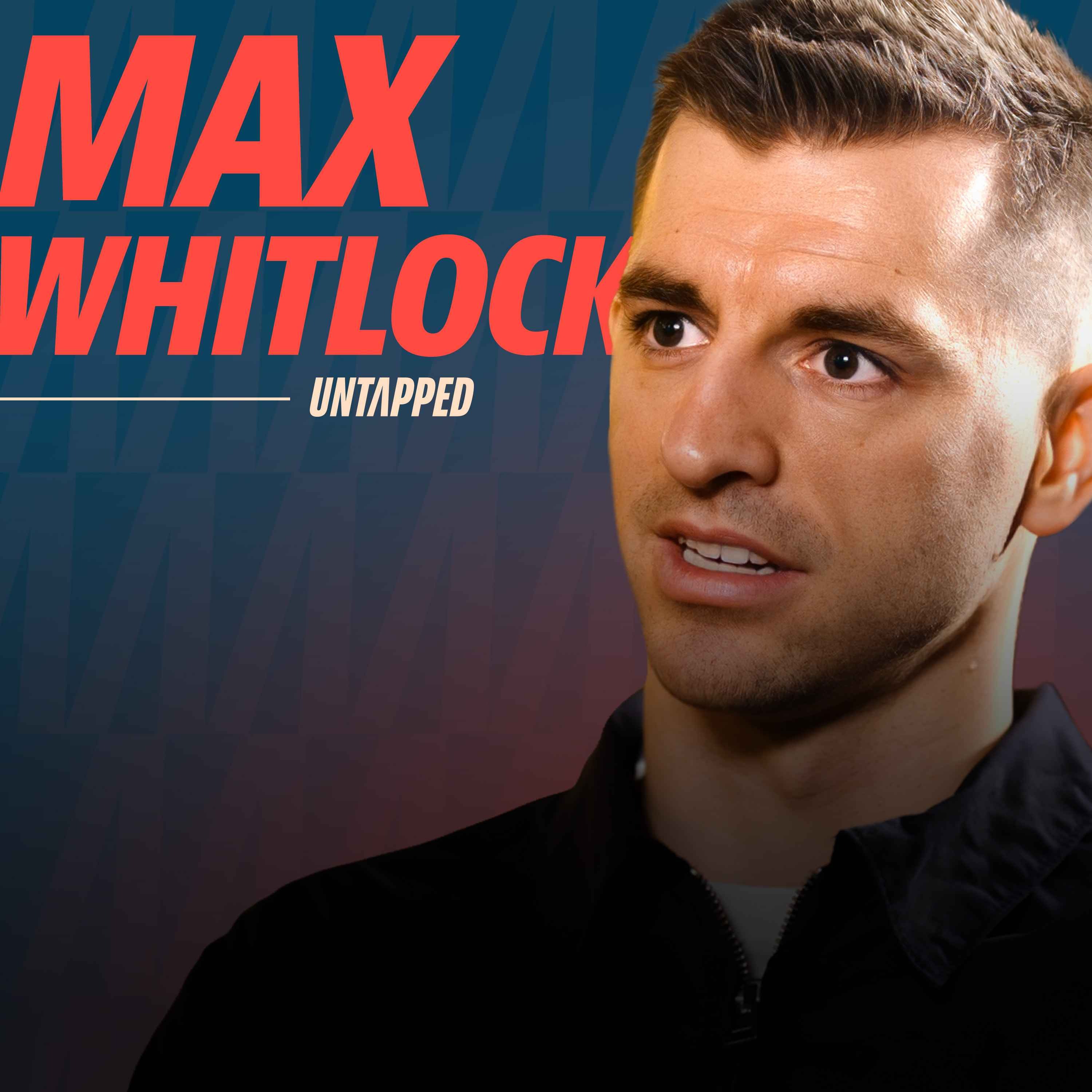
Olympic pommel horse specialist Max Whitlock discusses functional strength and gymnastics training without weights, how he manages risk vs. execution, and the psychology of pressure and consistency. He also explains what non-gymnasts can do—especially mastering handstand shaping—to build the base for other skills. He reflects on mental health after Olympic peaks (Tokyo gold, later feeling lost), then describes his return for a fifth Olympics after finishing Paris 2024 without a medal.
Max Whitlock is a British Olympic gymnast and pommel horse specialist; he’s competed across multiple Olympic cycles (London 2012, Rio 2016, Tokyo, Paris 2024) and has Olympic medals, including individual gold on pommel.
Gymnastics uses bodyweight “general conditioning” early, then becomes skill-specific; routines are built for tiny margins and judged by panels; he downplays big events by treating every competition like the same “job”; consistency plus uncomfortable-pressure simulations prepares him.
Learning a breakdancing “air flare” via YouTube and later aiming to adapt a new first-of-its-kind pommel element called “the Whitlock”; COVID Tokyo prep with no audience by simulating pressure in an empty hall; feeling “lost” at home after Tokyo when his target pathway disappeared; setting a new challenge to return and aiming for a medal.
Written by AI. May contain mistakes.
Max discusses the specifics of training routines and balancing risk in gymnastics.
“My stuff is specific to how to make Pomer Horse basically better in every single way.”
Max shares his ambition to create a unique move named after him.
“I was kind of known for it's called an air flare.”
Max explains the importance of the handstand in gymnastics and how to master it.
“After this, can we have a little play around?”
Max discusses the pressure of Olympic performance and the quest for perfection.
“That's what would make me feel kind of content, closure with the sport.”
Discover the intense pressures and challenges faced by Olympic gymnasts during training and competitions.
“you'd like to strive for perfect but it's never going to be perfect.”
Explore strategies gymnasts use to handle pressure and expectations during competitions.
Learn about the advantages of running on a track versus in a park.
“I was adamant I was done, and I tried to pick up a few things to try and almost tick that box.”
Explore the mental health challenges faced by athletes after achieving success.
“I can't run the way I run on a track, which is annoying, obviously, because marathons are...”
Discuss the feelings of uncertainty and loss experienced post-Olympics.
“You've spoken about that being not negative, but the difficulty surrounding that and the effect that it may have had on your mental health.”
Understand how setting new goals can help regain motivation.
“to give me purpose I like because you'd hit it because I've hit it but almost that was then parked and I was looking looking forwards and I could see nothing that I wanted to go for looking ahead.”
Learn about the motivations behind returning to gymnastics for a final Olympic run.
Hear key insights from an athlete on consistency and finding passion.
“Finding something you love makes it easy to be consistent over a long period of time.”

Get the gist, explore an idea or ask about something said.
 Claude
On UNTAPPED with Spencer Matthews, what are the key points of this episode?
Searching your listeningAutomatic transcript. May contain errors.
0:03Max Whitlock. It's a pleasure to have you in the Untappd studio. How are you feeling? I'm good. It's good to be here. Thanks for having me in. I can't imagine the physical strain that a professional gymnast is under. You know, you have extreme levels of strength and flexibility. how do you build the strength i mean anyone listening to this uh will probably be familiar with with what you guys can do but even little things you know i imagine that you can hold a handstand for you know a day and you can you know where can you can you when you're on hoops can you can you hold them out absolutely level i mean i wouldn't be able right now i think in my prime to be honest absolutely level i'd struggle still um i think gymnastics and i think that goes almost goes to your point it's so specific in terms of what we do I never lift weights I don't do any weights or anything like that it's all body weight and it's when you're young it's kind of broad so we call it like general conditioning still body weight but it's like lifts the hands down as a young kid it's dips it's like leg lifts it's all stuff like that those types of exercises and as you get older you keep kind of that general conditioning in but you reduce that and then you add in specific conditioning and that's basically geared to what skills you need to learn, need to improve.
1:26So for me, if I was a ring specialist, which I don't do rings anymore, I'd be working on my condition, be so geared to be able to make sure that is flat, make sure my positions, everything, all the strengths that I need for rings, I'd do everything to complement that. So I don't do any of that stuff. My stuff is specific to how to make Pomer Horse basically better in every single way. There must be some moves that are super high risk, but if you pull them off, you'll win for sure type of thing. So there must be like the perfect routine basically, but people don't go for it because there's a really high chance of messing it up.
2:06So where do you find the line between something that you know is achievable and something that is risky and impressive enough to take home the gold? I think over the many years that I've done pommel, I always kind of lean on the side of massive risk. For some reason, that's what I like to do. I like to challenge myself a bit. And for many years, I'm quite proud to hold kind of the highest difficulty routine on pommel horse. And I think what that done was put me in a position where I fall into the mindset, which I like, and I don't watch anybody. I don't know anyone else's routines, really. I don't watch them when they compete.
2:42I don't really watch people when they're training too much. Because you know yours is hard enough. Well, it's not almost like that in an arrogant way, but it's almost like if I have the highest difficulty, all I need to do is my job, and that's go through a perfect routine. If I go through a perfect routine, then I would always put myself in a position to have the potential to get a title. You still never know. We're in a sport that is judged. It's not based on crossing the line first, which is the most frustrating thing about our sport, because it's hard. We're judged by a panel of judges and it's who they perceive as the best sometimes as well.
3:16So yeah, I almost would like to keep that in terms of just focusing on myself, not watching others and almost push the balance because I will always push it as much as I can. I'm now in the process of trying to get my own skill on the pome horse. If I manage to do that, that will put me massively above a lot of start scores that I've been told about right now and where competitors are at. So there's loads of ways that I want to push the boundaries with it. And I'll keep doing that, but based on my terms. Do you see your own skills, so like something that nobody else has done? Yeah, so it'll be called the Whitlock.
3:49If I achieve it, you get to assign your name to it. It'll be kind of the first of its kind. On a pommel, it'll be the first flighted element, so it'll change pommels slightly. But if I do it, it will almost just like give me a massive step up. So it excites me. I'm getting excited talking about it because if I actually do achieve it, the advantage I'll have will be huge. because I'm here and everyone's scores are kind of condensed and close by the new changes that are coming to our sport. Everyone's going to be a lot closer. So if I can get that skill, it will just jump me up. Are you allowed to say all this?
4:24Yeah, I'll talk about it. I want to kind of document the journey of trying to get it done. So what does it look like? So it's a breakdancing move. I was kind of known when I'd done floor, I was kind of known for it's called an air flare. I learned it by every single day. I learnt by watching YouTube videos of breakdancers and then I got it in my floor routine and now I want to put it on the pumble horse but that's the way you say managing risk and managing balance that almost is like I like to downplay things a little bit but this almost in my head feels nuts so that makes me just want to get it done even more because the risk factor would be it would be ridiculous in terms of general pumble horse routines that are out there now it'd be crazy so you're leaving the pommel horse it's like an aerial thing it will be it'll be like it's hard to explain it can I show can I show something and then you can tell me if this is the right thing would that help oh yeah yeah yeah is it like that yeah let's have a look so it's quite hard to see because it's so you basically what I'd end up doing is can you do that like here on the floor not right now but you can do that yeah that's sick isn't it
5:36Therapy's biggest impact doesn't show up in some dramatic breakthrough. It shows up in the smallest moments. You bite your tongue instead of escalating. You put your phone down instead of firing off that text. You say what you actually mean instead of what would hurt someone else the most. Nobody applauds those moments, but they quietly change your life. That's what growing feels like. And that's exactly what Grow Therapy is here for. Grow is therapy that works, covered by insurance. Sessions average$21 with insurance, and some pay as little as$0, depending on their plan. There are no subscriptions, no long-term commitments.
6:13You just pay per session. Grow connects you with thousands of high-quality, licensed therapists across the U.S., offering both virtual and in-person sessions, nights and weekends. You can search by what matters, like insurance, specialty, identity, or availability. And you can book a therapy session in minutes and begin in as little as two days, not the national 48-day average. See if you could pay as little as$0 for therapy in seconds at growtherapy.com slash start now. That's growtherapy.com slash start now. growtherapy.com slash start now. Availability and coverage vary by state and insurance plan.
6:56During Lowe's Pro Savings Days, my Lowe's Pro Rewards members can save up to 20 % when they buy more job site materials. Save 20 % when you buy 30 or more select bats and rolls or fiberglass insulation. 24 more cartons or pails of joint compound, tape, and bead. Or when you spend$200 or more on 3M painting and job site essentials. Members get more at Lowe's. Valid through 925, while supplies last. Selection varies by location. Program subject to terms and conditions. See Lowe's.com slash terms for details. subject to change. Hey guys, it's Drew from the comment section. Some days my skin just needs a little coverage and other days I want to go full glam.
7:32For those everyday moments like running errands or grabbing coffee, I've been loving the Merit Minimalist Stick because it's a foundation and concealer in one that gives me a really natural skin-like finish. But when I want more coverage, I'm reaching for the Hourglass Vanish Concealer every time. I know I'm not the only one who struggled to find the right foundation or concealer shade, which is why I always shop at Sephora. They have the best brands all in one place with so many shades, coverage options, and finishes, plus expert beauty advisors, free samples, and shade matching tools both online and in-store.
8:04So whether you're looking for barely there coverage or full glam, Sephora can help you find your match.
8:14After this, can we have a little play around? Yeah, of course you can. I remember practicing that so much because I was like obsessed with trying to get this skill because not many gymnasts done it it was very very rare it would be unique but I practiced it so much that I was like basically struggling to walk because my groin was so bad and it made every piece suffer but I was determined to get this skill but if I do it it'll be going from like one end of the pommel over the handles and then trying to catch it on the other end when you pull that out in LA literally we'll be there of course because you're going to sort us out some tickets we're going to say we spoke about that We've seen it before.
8:50That'd be cool. That'd be cool. That's sick, mate. And if I could sort you out tickets, I would. But tickets are an absolute nightmare when you get to it. I will just... Carrying a camera usually works. That's a whole other story, that is. So we'll just, you know... Just walk in. Have you seen the people that walk in with a ladder and they get in anywhere? Yeah, but exactly, mate. So, yeah. You want to... High-vis jackets. That's the dream. There we go. I think that's helpful. Flexibility, obviously, a key role of being a gymnast. and I think we can all agree that being strong and flexible is healthy.
9:21Is there anything that we can take out of your foundation, the normal folk like myself and others can do at home in order to achieve more strength and flexibility without the goal of being a gymnast, of course? There's one move in gymnastics that's probably the foundation of the whole of gymnastics. If you don't really master it as a gymnast when you're young, every piece every apparatus will be hard and that's a handstand it's the one skill that every kid wants to be able to do obviously it's the one skill that most people think that when they say gymnastics a handstand but it actually is when you get down to specifics it's the most important skill my coach has said it from day one you've got to master a handstand and that's not just being able to just hold it can you walk around on your hands like no worries yeah or just whatever how long could you spend in a handstand I'd like to think a couple few minutes maybe like I used to walk would you be able to to handstand in here hands hands to the lift yeah get in the lift go down and like handstand and order a coffee could you do that I'd like to think so yeah that's sick isn't it that's unreal isn't it isn't that so cool I'd love to be able to handstand like that no chance and it's not to say like you can learn a handstand at any age but then being able to if you can master a handstand when I say mastering a handstand it's like the shaping in gymnastics is really important because most skills like my coach always explains is most skills go through handstand so mastering it would be like your perfect handstand shape you can see what we're going to be doing after the episode anyway so we'll well I can give you like free exercises to master a handstand so we can do that I'd love that that'd be great I'd love that actually I mean broadly speaking you know i'm not going to be busting out the handstands you never know in public yeah why not what happens in the event right if you're turning up to la you you you're perfect mentality good prep you pull off the whitlock you've done everything you can yeah couldn't couldn't have done any more perfect routine in your eyes and you still come short are you happy that you've done everything that you could have possibly done and left it all on the table and pulled off a special move that nobody else has ever done and and and or do you need the validation from the judges that it was the best
11:56um i think if i couldn't have done any more and in terms of if i actually pulled off a perfect routine in LA then I have to be able to be content and happy with what I've done if I make a small mistake that's where I don't know how I feel and I think that's that's the hard and dangerous bit and I think we're talking about the tiniest margins tiny tiny tiny margins um I think time will tell I think with that I I don't know what in my head I'm thinking now the result that's the medal, bringing home a medal is what I'm chasing. That's what would make me feel kind of content, closure with the sport.
12:35But who knows? Along that journey, I see who I am. I'm always like, I'm mega competitive. So I'm going to always fight for that. Just out of interest, how many times would you pull off the routine perfectly in preparation for the games? Okay, so if my routine was, if I weren't adding in the Whitlock, my routine would basically pretty much stay the same. But you're not going to bust out the Whitlock for the first time at the Games. No, you'll never ever do it. I mean, I'd be stupid, but yeah. If I wasn't doing the Whitlock and it wasn't in the plans, my routine would stay fairly pretty similar from now until LA.
13:15And if you look at my routine since I was probably about kind of young teens, the structure is actually similar. So it doesn't change too much. I think the number of repetitions is almost hard to say because it's done over so many years, almost decades. But I think this exact routine, you go into, we do about two, three-month build-up towards each competition, but a routine only kind of comes together about a month before. So you're not actually, I'd like to say we're doing thousands, but it's impossible to be able to do that. Okay. No, I was just interested to know kind of how many times it would be bang on perfect.
13:52I suppose a lot. like you'd smash it out of the park loads in preparation for it? When you're younger you do more. As you get older you have to accept that preparation you'd like to strive for perfect but it's never going to be perfect. It's strenuous, it's hard. To put a routine together is hard. You're pushing boundaries. To complete a routine in training you're almost happy with it as well. So I've gone to competitions and Olympic Games like Tokyo for example where I've made a handful which is not ideal. so like the chance of being consistent in the time that you have to perform the percentage isn't massive and I think that's why our sport is so hard because I can't just absolutely guarantee or can't write down or the coach can't say you need to do 200 clean perfect routines before we go to this comp In training for the Olympics do you ever just like jump on the pommel and just like slip straight away?
14:46Like do you ever do anything that just goes like completely is outrageous. Yeah, yeah.
14:55Very, very, very, very, very rarely in my scenario on pommel horse. So it happens more now, but I was kind of known on pommel day, even in training, I wouldn't fall off. And I think that is really important. So every time on pommel, even in training, like I would really try hard not to fall off. But I've now become, I've had to adapt to be able to be like I've got to understand the process a bit I'm not a young spring chicken like 21 years old I remember when I was in those times and I felt almost like invincible I could just go and go and go and go but it's a different ball game I'm playing with now I know the feeling do you know what we talk about this as gymnasts as well I was talking about literally the other day with my coach like gymnastics is such a hard sport but compared to gymnastics now and when I was young, I didn't have children or anything like that.
15:51Oh, it's easy. It's almost like a different sport now. So now when I see younger gymnasts moaning about it's really hard. Recovery is 10 times easier. Now I'm trying to squeeze in recovery and all this stuff around life. And I think it just gets so, so tough the older you get and you're competing against these young, fresh, invincible feeling, peak gymnasts. There's no kind of age, there's no like, you're a bit older so you sit in this category. Everyone's against everyone. So it's tough. I find it really interesting that psychology around pressure and the pressure that people put on themselves.
16:33Yeah. You know, because ultimately your goals are your own. It's different for you, obviously, when you're representing your country and there's an expectation around you to win. Still your own, I agree. but it's it's you know like when whenever you're chasing anything whether that be building a business or uh even a relationship or whatever it's it's it's your own thing right creating a pressure system around it is very much uh like a storm in a teacup it's your own uh demons that you're kind of you know hunting down it's it's it's like going into a fight kind of knowing you're going to lose it's just really unhelpful to the mentality of that fight or the session yeah and I think I experienced that and I can relate completely to that because you know I've gone and I've been lucky and fortunate enough to go through quite a few Olympic cycles and I think back from when it started my first Olympic games in London 2012 being 19 years old kind of like just hoping to make the team zero expectancy zero kind of pressure almost just me just trying to prove maybe trying to get my name out there to then fast forward and you go through and you get game results along the way pressure and expectancy just goes like that pressure is naturally goes like that but expectancy just absolutely rockets i think that plonked on on top of pressure is is actually really hard to deal with so i think yeah now i'm almost in positions where i'm trying to um not completely eliminate pressure i think pressure is really good but i think remove as much as possible in terms of expectancy how does that change your preparation going into a games when the the the pressure is on you to to win um it happened gradually for me and i think that's been a massive long learning curve so you go from a young 19 year old with none of that on their shoulders to then gaining a bronze medal and a bronze medal as a team you're getting a little bit of expectancy but not loads but we almost just put gymnastics on a map so everything was a positive um and it was always always on the up from there but as soon as kind of I went to um the next Olympics four years later so Rio 2016 I it was all kind of internal so I wanted to have the potential to get a gold medal to get a title when I actually did that that's when it completely changed and a big kind of stand-up moment was um 2018 I went to um European championships and I got silver I went to the world championships and I got silver and I was perceived as I failed the year and I think that kind of hit quite hard because like the tiny tiny margins in our sport like even at the Worlds I come second but I was joint first but because of the ruling I was knocked second that's just the way it works so I scored the same score as first place but because I got that silver medal I was seen as I've failed and I think that was really tough and from then on I almost okay realized okay this is the new this is the new game now I've got to play and I've got to kind of navigate and manage and I think for me I didn't change anything in terms of preparation I think I'm so routine I'm so structured as a person almost like potentially too much and it probably did get too much at some points in my career but I'm so kind of methodical with everything I do so the preparation kind of didn't change.
19:56But I think it was the mindset. And I think that's the most important thing. I'm involved in a sport where it's, you don't have time to redeem yourself. You get one shot. If you make a small mistake, it's done. It's finished. And that could be on the first qualification competition that you do. So we have different rounds, different processes that we have to go through in a comp. You muck up the first one, that's your whole comp done.
20:25My Lowe's Pro Rewards members can save up to 20 % when they buy more job site materials. Save 20 % when you buy 30 or more select bats and rolls or fiberglass insulation. 24 more cartons or pails of joint compound, tape, and bead. Or when you spend$200 or more on 3M painting and job site essentials. Members get more at Lowe's. Valid through 925, while supplies last. Selection varies by location. Program subject to terms and conditions. See Lowe's.com slash terms for details. Subject to change. Hi, I'm Nick, co-host of The Best One Yet. You optimize your workouts, your portfolios, and that rando startup idea that hit you in the middle of the shower.
20:59But if you're not hydrated, you're already playing catch-up. So we keep a stash of Liquid IV in our studio. One stick mixed into 16 ounces of water is clinically demonstrated to hydrate faster than water alone with three times the electrolytes of the leading sports drink, plus eight vitamins and nutrients. Whether you're traveling, exercising, or podcasting, the best business news ever, Liquid IV makes it easy to stay hydrated wherever life takes you. So shop now at liquidiv.com. Liquid IV hydration that goes wherever life takes you. Hey guys, it's Drew from the comment section. Some days my skin just needs a little coverage and other days I wanna go full glam.
21:33For those everyday moments like running errands or grabbing coffee, I've been loving the Merit Minimalist Stick because it's a foundation and concealer in one that gives me a really natural skin-like finish. But when I want more coverage, I'm reaching for the Hourglass Vanish Concealer every time. I know I'm not the only one who struggled to find the right foundation or concealer shade, which is why I always shop at Sephora. They have the best brands all in one place with so many shades, coverage options and finishes, plus expert beauty advisors, free samples and shade matching tools both online and in store.
22:06So whether you're looking for barely there coverage or full glam, Sephora can help you find your match.
22:15It's such a - That's hard. It's so unforgiving, isn't it? Every four years as well for the Olympics you know you you get entered into a competition and you slip and it's you're done when you when you frame it like that particularly when you're at the top of your game like the pressure comes down to that like that single event in four years time it's a difficult thing to imagine how you handle that to be honest I think one thing that I try and do is downplay the big events and make the small events seem bigger i think that's something i've kind of tried to do throughout my whole career so that when i get to olympic games almost do the opposite and i try and downplay it so i try and look at every competition as exactly the same my job is the same and my job remains the same the routine stays the same when i whether i go and it's in front of 100 people or six million people like it doesn't change at all and i almost try and put myself in my shoes where I'm like it doesn't matter about any other competitor it doesn't matter about anything else I don't really watch anyone else I've just got one job to do so I try and make as much as I possibly can around it consistent but don't get me wrong like you can naturally when you're in the Olympic Village and you're surrounded by these different environments it naturally naturally feels bigger so it's really really hard to kind of downplay something like a an Olympic Games but I think that's the tough thing about sport and I think that's something if you're a gymnast you've got to thrive off of those you've got to get it right that time, that place, that moment and I think that's something that almost is crazy and it's horrible but it excites me loads as well So you mentioned in big moments kind of almost lightening the mood around it and making it less of a pressure pot if you will how do you do the opposite so for the smaller events and for the bigger moments how do you how do you choose how to dial it up or down I think for me it's all about just that thought process so it's all in my own head so almost I'm playing games in my own head so for the trials the smaller competitions I put to the forefront the importance of what they mean and I think for me I do that in the training on the lead up towards it but I do it in the comp as well because I want to put myself under more pressure in those less pressure environments because I'm always kind of zooming out looking at the bigger picture and where I'm trying to go to so I'm trying to prepare for the major event that's coming up in a say a few months time and I want to make sure that I can not just actually just make these small stepping stones right i want to make sure i'm making them right to prepare for the big one i think that's something i've always just kind of done throughout my career and i think that's something that i try and put myself in uncomfortable environments to prepare for something to try and feel comfortable with the uncomfortable if that makes sense during training during training yeah and i think that's really important i think there's there's two there's two sides to kind of me preparing for competitions and i think they almost sound slightly hypocritical but i'll try and kind of explain it as clear as I possibly can.
25:29I think you've got one side that, one thing that helps me prepare is consistency massively. So like I said, I'm so routined. The way I brush my teeth, the way I shower, the way I do my hair, the way I like everything in the mornings, the way I get to gym, the way I warm up is exactly the same every day. The way I condition and what I do, the order, everything. And then I like to think I go out, I compete. I compete routines, that's what I do. so if I'm just doing a routine when it matters that's not going to help consistency so as soon as it comes to competition day I'm almost like I'm almost like kind of like robot mode done it a million times muscle moment kicks in I don't have to think too much where's this, where's that everything's sorted so in my head everything's checked off and that helps me mentally to be ready but then on the almost on the flip side which is completely opposite during those times in certain periods of that preparation time, I have to do things where I put myself in uncomfortable environments.
26:31So for example, a good example of that is before Tokyo Olympics, it was COVID Games, a time that we almost didn't know how to prepare for an Olympics that was going to be unlike any other Olympic Games with our experience. No audiences, training at home, my diploma was in my garden because we was at home, we were stuck in our houses, all this stuff. So there was loads of stuff that I kind of had to adapt to. but there was one thing that we knew and that was no audience or very very little so what we'd done we'd done everything the same so I pulled up to the gym the same the morning was the same the way I warmed up was the same but the pommel horse we put it into an empty hall we went live with the team selectors to add more pressure we're judging there everything was done to try and replicate the position or trying the feeling that I'd feel as it come to the Olympic games that puma routine that moment so consistency is key but also to be able to kind of throw yourself in where you wouldn't feel comfortable because you never ever feel comfortable when it gets to that competition time you're not going to feel 100 % comfortable so if you prepare for that then that can massively help did you get your 20 minute 5k I know you didn't with Anya but have you got it yet come on mate 20 minutes what did I do 20 minutes and 20 seconds yeah yeah Is that something you're working towards?
27:50I'd be focusing on the Olympics, no? Yeah, I think I've got to do that now, yeah. For me, I obviously retired. I had a year and a half out of sport. I was adamant I was done, and I tried to pick up a few things to try and almost tick that box. I'd done a couple of high rocks and stuff like that. I found a bit more of a love for running, and I thought, I'll set a challenge. and like it was a short build up to it I managed to scrape off I can't remember what it was was it like nine minutes in like six weeks from where I was at that time so it was hard but getting below the 20 would be tough what shoes were you wearing?
28:32I was wearing the the you know the Adidas ones the ones that everyone wears Adidas Zero Pro 4s Adidas ones yeah yeah yeah yeah the ones that feel like yeah were you doing it in a park or on a track? We've done it in Battersea Park. You'll find it easier on a track, just so you know. Okay. If you want... There we go, I could have shaved off to 20 seconds. Yeah, yeah, if you want, I'll pace you to a, like, 1955 around the track. You'll get it. If you missed it by 20 seconds in a park, you'll get it on the track. There's something about the track. Really? It's way easier, yeah, yeah. I can, like, yeah, I'm way faster on track.
29:10I can't run the way I run on a track, which is annoying, obviously, because marathons are... I'm not around a track. But if they were, seriously, if you like, we'll go to the track, bring your 80 zeros, and I'll pace you to a 1955. You'll get it. You won't believe the difference. Really? Yeah, yeah. I go to the track for an ego boost. Because you smash a session at the track and you leave it, and it's like you feel, it's way faster. I think it's, I think it's the psychology of just being in a lane and having nothing around you. I don't know what it is, but it's like... Do you think you get small wins as well?
29:55Because around a track, you almost complete a lap and you almost can see progress clearly. Yeah, so you know where you are with it as well. And it's kind of like, you know that two laps is 800 metres, you know that you've only got 12 laps to do. So it's quite, I don't know what it is, but I would advise, if you're looking to smash a 5K, go to the track. That annoys me now because I could have done it. Mate, you'll probably end up running like an 1850 or something. Seriously. That much quicker? You'll knock a bunch of time off. I don't know if this is everyone, but like I ran at a 3.45 pace for 17.5k the other day on a track and I could never do that in a park never nowhere near it like I'd be lucky to run at a 4 minute like at 20 minute 5k pace for that distance in a park like I'm not sure I could even do that so it's very very different I was like running 15 seconds a kilometre faster around the track it's a bit odd So we've spoken already a little bit about the pressures of success in your field and being the face of British athletics.
31:13You've spoken about that being not negative, but the difficulty surrounding that and the effect that it may have had on your mental health. Can we dig into that a bit? yeah yeah I think um I mean we touched on it in terms of winning a gold medal or getting to kind of pinnacle of your sport and then what's the kind of the aftermath of it what does it look like after and I think for many years when I was young growing up I was someone that looked at that and I looked at athletes that were talking about that that they struggled after getting to a point like that in their career but I couldn't comprehend it at all because I never felt and I never experienced anything like it when I was young growing up going to even London 2012 I after that I had three weeks out of sport like just having a bit of a break and I come back in I was fired up I was ready so there was almost like I almost saw coming home and getting back to normality as a another high like I was always quite level playing like it was just smooth sailing type thing and I think um as I got older the sport got tougher um and everything and then um yeah I started to kind of realize what athletes were talking about I think after Tokyo Olympic Games was a moment that stood out for me I retained my Olympic gold and the moment was just crazy like that is such a surreal feeling like that was what I dreamt of doing that was my main mission my main targets but you know there was a period after it where I loved it.
32:48I stepped out of the sport for a bit, had some time off and I enjoyed the freedom. But that kind of then kind of wore off. And then I found myself in a position where I was completely lost. I felt like it didn't matter that I'd just got Olympic gold like three months ago. I literally didn't care about it. And I felt I didn't know where I was moving forwards. And I think for me, then I just felt completely useless. what do you think might have contributed to those feelings i'm just interested to understand kind of where you are when you're feeling those things are you are you at home are you not training are you in public but kind of not being recognized like not that that matters but like what's triggering the feelings of you know i'm not sure i care about this and and and why why were you starting to feel low?
33:42I was at home. For me, when it comes to external stuff, it doesn't matter to me too much in terms of that, in terms of causing a negative effect on how I'm feeling. I'm quite kind of thick skinned on stuff. But I think for me, it was more about my own goals, my own targets, my own pathway. I'd worked from seven years old, setting the next target, and I knew the pathway to get to it. And I think all of a sudden, after Tokyo it had almost just stopped and I think I didn't know I didn't know where I was going I couldn't see like a clear pathway I didn't have a target ambitions and almost like something to give me purpose I like because you'd hit it because I've hit it but almost that was then parked and I was looking looking forwards and I could see nothing that I wanted to go for looking ahead.
34:33I think that was hard for me. I've always been someone that I get a result that's great and they mean, I'm not going to say they don't mean a lot because they mean the world to me and they mean so much. But I have always then parked it, forgot about it and I moved forward because I think that's been something throughout my career that's helped me get the next result. And I think the next result is always harder than the previous one. So I almost look at each new competition as a clean slate. I'm starting again, I go again, forget about results. Is there something about it being Olympic gold though, where you just go, well, the next achievement can only be as good as this one?
35:09No, I've never fallen into that trap of what's kind of more to do in the sport because I think that does drive me. But I think in that moment, I felt like it didn't matter what I'd done and I didn't know my plans to move forwards. And I thought, you know, I wasn't sure where I was going with the sport, where I was continuing it. If I don't, what I do, all of this stuff. And I think I was almost left in a place where I just felt completely lost. I had no direction. And I think that for me was someone that always likes to keep busy. I feel like every minute of the day, which is a habit I need to get out of, it's a nightmare.
35:45So I always want to be busy. I always want to be doing stuff, the new idea, the new project, everything. And I think all of a sudden I'd lost something that kind of gave me the real purpose to push forwards. and I think from then I learned a lot because I learned how much the sport has actually given me not in terms of opportunities or anything like that but actually just for me like just for providing me with something that just almost is so fulfilling, it's crazy Do you have a dark moment in mind for when you had lost your way a bit and were feeling a bit lost and if so how did you get out of it?
36:23Yeah, I was sitting on a sofa at home and just almost couldn't get out of this rut of just feeling like a complete waste of space, useless. I feel like I'm someone that I almost like the chase, the ideas, the kind of feeling of what I'm going for and that drives me massively. I think I was missing that and I think that's something, talking to people around me is something that massively helped me. I kept it quite close just people very very close to me family and I think almost just that the soundboard that they were being but almost as well a bit of brainstorming I think that helped me a lot brainstorming with kind of no pressure and then it was the really the big thing that really kind of helped was setting that new target that kind of really gets me going like that i would absolutely feel mega excited to take on that it's just almost like a really ambitious ambitious challenge that will be very very hard to do um that's what i needed and that's what i was missing so i think the challenge is i've got that now and i'm back i've committed to go towards my fifth olympic games and it it will have to be my final one games it's crazy but i'm like so you've been you've been competing at the olympics 20 years yeah it will be like yeah yeah the fifth Olympics is I'm old as a gymnast I know I'm old because my daughter my little girl is like learning how to draw portraits at the moment at school and she's learning different face shapes and stuff and the other day she went to me she's like I can't work out your face shape and then she got her finger and done the outline around this around here and almost said you've got like a heart shape I was like thanks Willow there used to be hair and the return to sport then what are your expectations now that we know that the expectations of others should be cast aside what are you hoping for what is your target, what's your aim and how are you working towards it so the main reason why I am back is because I finished on Paris 2024 Olympic Games and I come fourth and it was my first Olympics that I didn't bring back a medal and I couldn't I was I was adamant I was done I said before Paris I'm finishing after it and it felt like the right time and it actually probably was the right time but it just didn't finish the right way I completely feel like I've left I left it open-ended and it was just like scraping away at me all the time I couldn't get rid of the feeling that I need to change that and I now have an opportunity where if I fast forward 20 30 years would I look back and regret not carrying on for two and a half years massively so I've got an opportunity where I still feel I got more left in the tank and I want to change that end of my career and what that looks like so I want to go there I know chasing a high is dangerous to finish on but I wouldn't want to not grab that and I want to finish it with a better result and I think the The only obvious answer is to finish it with bringing back a medal.
39:42And I'm going to work as hard as I possibly can to make it possible. That's pretty cool. And by the sounds of things, you'll be going in with the mentality that we spoke about for the middle chunk of this interview about nothing to lose, really. Would you be calling yourself an underdog in these games? Or are there going to be some frightened competitors, the fact that you're back? I'd like to get in the mindset that I am back to an underdog. I'm happy with that. I'm actually really comfortable with that because that drives me massively. There is probably the hardest pommel horse field in terms of the amount of good pommel horse workers that I'm hearing people are telling me out there than there ever probably has been.
40:28So it's not going to be easy, but I love that. I'm like massively excited for that. and I think if I'm going back in as retired, old, 33-year-old gymnast that's the underdog, have I still got it? That's something that I'll thrive off. So I'm happy and I almost want to take that mindset on because proving people wrong has been something I've had to do for a lot of my career and if I can come back into that like a young kind of Max going to compete, then yeah, I'm all for that. It sounds like the making of an awesome Netflix documentary when you win goals. I mean, it'd be good, wouldn't it? Yeah.
41:06It will be good. If I can just finish it like that, yeah. But I think it would feel complete and I think, I don't know if it's dangerous or not, but that's what I'm searching for. I'm searching to feel like my career is complete. I want to squeeze everything I possibly can out of it and I feel like going to my fifth Olympic Games, 10 plus years over peak, pushing it as much as I ever have done, if not more, I can't squeeze any more out of it. So we'll see. This journey is going to be exciting. And yeah, I'm raring to go for it.
41:42During Lowe's Pro Savings Days, my Lowe's Pro Rewards members can save up to 20 % when they buy more job site materials. Save 20 % when you buy 30 or more select bats and rolls or fiberglass insulation. 24 more cartons or pails of joint compound, tape and bead. Or when you spend$200 or more on 3M painting and job site essentials. members get more at Lowe's. Valid through 925, while supplies last. Selection varies by location. Program subject to terms and conditions. See Lowe's.com slash terms for details. Subject to change. Hi, I'm Nick, co-host of The Best One Yet. You optimize your workouts, your portfolios, and that rando startup idea that hit you in the middle of the shower.
42:18But if you're not hydrated, you're already playing catch-up. So we keep a stash of liquid IV in our studio. One stick mixed into 16 ounces of water is clinically demonstrated to hydrate faster than water alone with three times the electrolytes of the leading sports drink, plus eight vitamins and nutrients. Whether you're traveling, exercising, or podcasting, the best business news ever, Liquid IV makes it easy to stay hydrated wherever life takes you. So shop now at liquidiv.com. Liquid IV hydration that goes wherever life takes you. Hey guys, it's Drew from the comment section. Some days my skin just needs a little coverage and other days I wanna go full glam.
42:52For those everyday moments like running errands or grabbing coffee, I've been loving the Merit Minimalist Stick because it's a foundation and concealer in one that gives me a really natural skin-like finish. But when I want more coverage, I'm reaching for the Hourglass Vanish Concealer every time. I know I'm not the only one who struggled to find the right foundation or concealer shade, which is why I always shop at Sephora. They have the best brands all in one place with so many shades, coverage options, and finishes, plus expert beauty advisors, free samples, and shade matching tools both online and in-store.
43:24So whether you're looking for barely there coverage or full glam, Sephora can help you find your match.
43:33well you look like a 19 year old athlete in in his prime so i wouldn't worry about it myself and uh we here will be watching uh avidly as along with the rest of the country and and really wish you the best of luck thanks so much for taking the time to come in thank you very much for having me great uh great conversation great to have you uh maybe we'll leave our listeners with just some parting tips from you about how they can best untap their potential? I started with something I love. Finding something you love makes it easy to be consistent over a long period of time. So being consistent is absolutely key.
44:12Dedicating yourself to something and never being afraid of trying it. I think I'm giving it a good go, trying to come back now, where hopefully I'll be seen as the underdog. You can almost sit in that mindset of that and push it to where you, you know, ambitious targets, push it to where you think that others may think that's impossible. I think that's always a good place to start. And if you pull out the Whitlock in LA on the pommel, we're expecting a gold medal, are we? I'd have to do the rest of your team clean, but if I do it, let's hope so. I want the potential to get a title. That's all I'm asking for.
44:51if I can get in that position, then it's anyone's game. Good luck, brother. Thank you very much.
Olympic gold medalist Max Whitlock steps into the spotlight to share the mindset that has powered his rise to the top of the gymnastics world.
What fuels his relentless pursuit of excellence? How does he balance the commitment needed for Olympic glory with family, mental health, and personal growth? Max pulls back the curtain on the sacrifices behind his success, the pressures of living under constant scrutiny, and why passion and consistency have been key to his long-term achievements.
He also reflects on the pivotal moments of his journey, including how glandular fever in 2013 forced him to completely rethink his training approach, and how he’s never had perfect preparation since, yet still achieved Olympic gold. Max shares the powerful mindset shift that helped him navigate pressure, including his "nothing to lose" mentality that allowed him to excel at 19, and how it continued to guide him through later challenges.
Max opens up about the raw, honest side of success, sharing the emotional aftermath of his Tokyo 2020 victory, when he felt empty despite achieving his long-term goal. He discusses how success doesn’t always solve your problems and the struggle with post-achievement emptiness.
This episode is all about chasing success with purpose, managing pressure with honesty, and staying grounded through the highs and lows of building a legacy that lasts.
WHOOP 👉 Join Spencer in untapping your own potential with 1 month free here: https://highpfrmc.com/UT-WHOOP-au1
Eight Sleep 👉 If you’re ready to upgrade your nights and unlock more energy in your days, start with Eight Sleep. Use code UT for £350 off the Pod 5 Ultra here
Randox Health 👉 Take care of your health today and into the future. Save 20% on all health checks now with the code untapped at: https://highpfrmc.com/UT_Randoxhealth_au
Heights 👉 Stay sharp like Spencer. 20% off Heights with code UT20: https://highpfrmc.com/ut-vitals-au1
Visit Seattle 👉Start planning your perfect summer of football by searching Visit Seattle on social media, or discover more at:
https://highpfrmc.com/visitseattle-ut-au
Hosted on Acast. See acast.com/privacy for more information.